EP2154896A2 - Adaptive Wiederherstellung für Videokodierung - Google Patents
Adaptive Wiederherstellung für Videokodierung Download PDFInfo
- Publication number
- EP2154896A2 EP2154896A2 EP20090003775 EP09003775A EP2154896A2 EP 2154896 A2 EP2154896 A2 EP 2154896A2 EP 20090003775 EP20090003775 EP 20090003775 EP 09003775 A EP09003775 A EP 09003775A EP 2154896 A2 EP2154896 A2 EP 2154896A2
- Authority
- EP
- European Patent Office
- Prior art keywords
- block
- restoration
- adaptive
- quantization
- coupled
- Prior art date
- Legal status (The legal status is an assumption and is not a legal conclusion. Google has not performed a legal analysis and makes no representation as to the accuracy of the status listed.)
- Ceased
Links
Images


Classifications
-
- H—ELECTRICITY
- H04—ELECTRIC COMMUNICATION TECHNIQUE
- H04N—PICTORIAL COMMUNICATION, e.g. TELEVISION
- H04N19/00—Methods or arrangements for coding, decoding, compressing or decompressing digital video signals
- H04N19/10—Methods or arrangements for coding, decoding, compressing or decompressing digital video signals using adaptive coding
- H04N19/134—Methods or arrangements for coding, decoding, compressing or decompressing digital video signals using adaptive coding characterised by the element, parameter or criterion affecting or controlling the adaptive coding
- H04N19/146—Data rate or code amount at the encoder output
- H04N19/147—Data rate or code amount at the encoder output according to rate distortion criteria
-
- H—ELECTRICITY
- H04—ELECTRIC COMMUNICATION TECHNIQUE
- H04N—PICTORIAL COMMUNICATION, e.g. TELEVISION
- H04N19/00—Methods or arrangements for coding, decoding, compressing or decompressing digital video signals
- H04N19/10—Methods or arrangements for coding, decoding, compressing or decompressing digital video signals using adaptive coding
- H04N19/102—Methods or arrangements for coding, decoding, compressing or decompressing digital video signals using adaptive coding characterised by the element, parameter or selection affected or controlled by the adaptive coding
- H04N19/117—Filters, e.g. for pre-processing or post-processing
-
- H—ELECTRICITY
- H04—ELECTRIC COMMUNICATION TECHNIQUE
- H04N—PICTORIAL COMMUNICATION, e.g. TELEVISION
- H04N19/00—Methods or arrangements for coding, decoding, compressing or decompressing digital video signals
- H04N19/10—Methods or arrangements for coding, decoding, compressing or decompressing digital video signals using adaptive coding
- H04N19/134—Methods or arrangements for coding, decoding, compressing or decompressing digital video signals using adaptive coding characterised by the element, parameter or criterion affecting or controlling the adaptive coding
- H04N19/136—Incoming video signal characteristics or properties
-
- H—ELECTRICITY
- H04—ELECTRIC COMMUNICATION TECHNIQUE
- H04N—PICTORIAL COMMUNICATION, e.g. TELEVISION
- H04N19/00—Methods or arrangements for coding, decoding, compressing or decompressing digital video signals
- H04N19/10—Methods or arrangements for coding, decoding, compressing or decompressing digital video signals using adaptive coding
- H04N19/169—Methods or arrangements for coding, decoding, compressing or decompressing digital video signals using adaptive coding characterised by the coding unit, i.e. the structural portion or semantic portion of the video signal being the object or the subject of the adaptive coding
- H04N19/17—Methods or arrangements for coding, decoding, compressing or decompressing digital video signals using adaptive coding characterised by the coding unit, i.e. the structural portion or semantic portion of the video signal being the object or the subject of the adaptive coding the unit being an image region, e.g. an object
- H04N19/172—Methods or arrangements for coding, decoding, compressing or decompressing digital video signals using adaptive coding characterised by the coding unit, i.e. the structural portion or semantic portion of the video signal being the object or the subject of the adaptive coding the unit being an image region, e.g. an object the region being a picture, frame or field
-
- H—ELECTRICITY
- H04—ELECTRIC COMMUNICATION TECHNIQUE
- H04N—PICTORIAL COMMUNICATION, e.g. TELEVISION
- H04N19/00—Methods or arrangements for coding, decoding, compressing or decompressing digital video signals
- H04N19/46—Embedding additional information in the video signal during the compression process
-
- H—ELECTRICITY
- H04—ELECTRIC COMMUNICATION TECHNIQUE
- H04N—PICTORIAL COMMUNICATION, e.g. TELEVISION
- H04N19/00—Methods or arrangements for coding, decoding, compressing or decompressing digital video signals
- H04N19/60—Methods or arrangements for coding, decoding, compressing or decompressing digital video signals using transform coding
- H04N19/61—Methods or arrangements for coding, decoding, compressing or decompressing digital video signals using transform coding in combination with predictive coding
-
- H—ELECTRICITY
- H04—ELECTRIC COMMUNICATION TECHNIQUE
- H04N—PICTORIAL COMMUNICATION, e.g. TELEVISION
- H04N19/00—Methods or arrangements for coding, decoding, compressing or decompressing digital video signals
- H04N19/80—Details of filtering operations specially adapted for video compression, e.g. for pixel interpolation
- H04N19/82—Details of filtering operations specially adapted for video compression, e.g. for pixel interpolation involving filtering within a prediction loop
Definitions
- This invention relates to a coding system capable of video encoding and decoding with adaptive restoration for fidelity enhancement, according to the pre-characterizing clauses of claims 1, 7, 11 and 16.
- Video coding standards such as ITU-T standards denoted as H.26x and ISO/IEC standards denoted as MPEG-x
- H.26x and ISO/IEC standards denoted as MPEG-x
- These video coding methods include various coding stages such as intra prediction, transform from spatial domain to frequency domain, quantization, entropy coding, motion estimation and motion compensation, in order to code successive frames.
- These coding techniques can often result in quantization errors, for example, the quantization errors at block boundaries become visible as 'edging' on blocks of video frames.
- deblocking filters In order to compensate for these blocking effects, conventional coders employ various methods such as deblocking filters to smooth pixels at the boundaries of each block. Deblocking filters can only work on pixels at the boundaries of blocks, however, and cannot compensate for errors within the blocks. Recent developments, therefore, have seen the utilization of Wiener filters, which work to improve picture quality by minimizing the mean square error between an original signal and a noisy signal (i.e. a signal having quantization errors).
- Wiener filtering is not the most appropriate method for reducing quantization errors. If Wiener filtering is the only option for reducing quantization errors, the received pictures will not always be of a guaranteed quality.
- the invention aims at providing means of adaptive filtering that can provide a best method of fidelity enhancement, regardless of the original quantization errors.
- the coding system comprises: an inter prediction block, for performing prediction on macroblocks of a current frame and generating prediction information according to restored reconstructed samples of a reference frame; a transform and quantization block, coupled to the prediction block, for performing transform and quantization processes on prediction residues; a reconstruction loop, coupled between the transform and quantization block and the inter prediction block, for reconstructing the current frame to generate the restored reconstructed samples.
- the reconstruction loop comprises at least one adaptive restoration block, for performing restoration according to information derived from the current frame by considering a plurality of restoration methods, selecting one or more candidate restoration method according to a cost function result or an analysis result, and generating adaptive restoration information corresponding to a final restoration method; and an entropy coding unit, coupled to the transform and quantization block and adaptive restoration block, for encoding the prediction information and adaptive restoration information to generate an encoded bitstream.
- a method comprises: receiving a current frame; performing a plurality of restoration methods on processed data of the current frame or a reference frame according to a plurality of candidate restoration methods, respectively; comparing cost functions for the candidate restoration methods to select a restoration method; and encoding the current frame according to a final restoration method.
- a coding system comprises a decoding block, for receiving and decoding an encoded bitstream to derive residues, prediction information, and adaptive restoration information; and a reconstruction loop, for reconstructing a current frame according to the residues and prediction information.
- the reconstruction loop comprises an adaptive restoration block capable of performing multiple restoration methods, and the adaptive restoration block performs restoration on processed data by selecting one of the restoration methods according to the adaptive restoration information.
- the following description discloses adaptive restoration methods and apparatus, for selecting an optimal restoration method according to cost function and/or analysis results. This is achieved through the utilization of an adaptive restoration (AR) block in the encoder and decoder for encoding and decoding video data utilizing a plurality of restoration methods.
- An optimal restoration method will be selected, AR parameters associated with said restoration method are encoded and embedded into the encoded bitstream, and then the decoder decodes these embedded parameters in order to perform restoration at the decoder side. In this way, not only is uniformity of coding preserved, but in-block quantization errors are reduced.
- a more sophisticated method of selecting a restoration method involves first analyzing a current frame in order to determine which restoration methods would be likely to have the greatest effect on the cost function, and which restoration methods do not need to be tested. Once the analysis is complete, the encoder will select only one or some restoration methods from the plurality of available restoration methods in the adaptive restoration block as candidate restoration methods, and test each one in turn to see which has the most effect on minimizing the rate and distortion cost function.
- restoration methods to enhance fidelity by canceling errors
- examples of the restoration method include, but are not limited to, Kalman filtering, noise reduction, deblurring, Wiener filtering, regression and regularization. It should be noted that, as the aim of the adaptive restoration technique is to choose between candidate restoration methods according to cost function and/or analysis results, all possible restoration methods fall within the scope of the present invention.
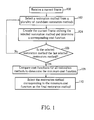
- FIGS. 1 and 2 are, respectively, flowcharts illustrating a first and a second encoding method with adaptive restoration. The steps of FIG 1 are as follows:
- the steps of FIG. 2 are:
- the candidate restoration methods are all restoration methods available in the adaptive restoration block.
- the candidate methods are first selected in Step 202, through analysis results. The method then proceeds as in FIG.1 .
- step 202 of FIG. 2 only selects one candidate restoration method after analyzing the current frame, and thus the encoder utilizes this candidate restoration method for encoding without computing and comparing the cost function.
- steps 104 and 206 the cost function of each candidate restoration method is determined. The steps of selecting and testing a candidate restoration method are repeated until all candidate restoration methods have been tested. The cost function for each respective restoration method is then compared, and the cost function having the minimum value is thereby determined to select the corresponding candidate method as the final restoration method that will be utilized by the encoder and decoder.
- step 202 analyzes information used during encoding, where the information can be derived from reference frames, motion vectors, textures, transform results, quantization results, prediction errors, reconstructed errors, or a combination thereof.
- the parameters associated with the final restoration method are also encoded as adaptive restoration (AR) information, and this coded AR information is sent with the encoded bitstream to the decoder.
- AR adaptive restoration
- the encoded AR information can be placed in the header of the bitstream, in other embodiments the encoded AR information can be placed in the tail of the bitstream or any other point in the bitstream, and all modifications fall within the scope of the present invention.
- the AR information is received by the decoder, it is utilized to perform adaptive restoration according to the final restoration method.
- the encoding methods illustrated in FIGS. 1 and 2 are frame adaptation of multiple restoration methods, that is, the restoration method selection process is repeated when receiving a new frame. It should be noted that encoding methods with macroblock adaptation, slice adaptation, quad-tree partition adaptation, picture adaptation, or group of picture adaptation of multiple restoration methods also fall within the scope of the claimed invention. For example, in an embodiment of an encoding method, a new restoration method is selected out of a plurality of restoration methods when receiving N slices of video data.
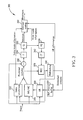
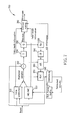
- FIG.3 is a diagram illustrating a first embodiment of an encoder 300 showing a first location of the adaptive restoration (AR) block 360.
- the AR block 360 is located between the reference frame buffer 330 and the motion estimation / motion compensation (ME/MC) block 320.
- deblocked samples from the deblocking filter 340 are input to the AR block 360 through reference frame buffer 330, which can then perform restoration on one or a plurality of reference frames.
- the AR information is encoded and embedded in the bitstream by the entropy coding block 380.
- the AR block 360 in this embodiment tries to restore the reference frame stored in the reference frame buffer 330 in order to minimize a difference of matched blocks between the current frame and reference frame. It is assumed that those skilled in the pertinent art are familiar with the general operation of encoders and decoders. Therefore, for the purposes of illustrating the present invention, detailed operations of conventional functional blocks will not be described in the following.
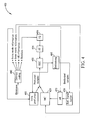
- FIG.4 is a diagram of a decoder 400 according to the first embodiment.
- the decoder 400 also includes an AR block 470 between the reference frame buffer 430 and the motion compensation (MC) block 420.
- the AR information that was embedded in the encoded bitstream is retrieved by an entropy coding block 440 in the decoder 400 and utilized by the AR block 470 for decoding the bitstream with higher fidelity.
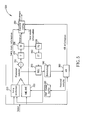
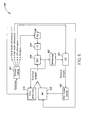
- FIG.5 is a diagram of an encoder 500 according to a second embodiment of the present invention.
- the AR block 360 is located after the deblocking filter 340 but before the reference frame buffer 330. It is also possible to merge the deblocking filter 340 and the AR block 360, and in this case deblocking becomes one of the adaptive restoration methods.
- FIG.6 is a diagram of a decoder 600 according to the second embodiment, where the AR block 470 is in a corresponding position.
- the AR block 470 in the decoder should ideally be in a location corresponding to the location of the AR block 360 in the encoder, for ensuring the best possible restoration result.
- the AR block 360 restores processed data of a current frame to reduce the difference between the processed and unprocessed data of the current frame.
- the processed data of the current frame in this embodiment are processed by the intra prediction block 310 or inter prediction block 320, transform block 334, quantization block 336, inverse quantization block 338, inverse transform block 330, reconstruction block 370, and deblocking filter 340.
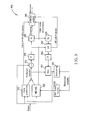
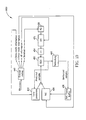
- FIGS. 7 ⁇ 10 show different locations of the AR block 360, 470 in an encoder 700, 900 and a decoder 800, 1000, respectively, corresponding to third and fourth embodiments of the present invention.
- Functional blocks illustrated in FIGS. 7 ⁇ 10 have the same numerals as their equivalent devices in FIGS. 3 - 6 , for simplicity.
- the AR block 360 in the encoder 700, 900 and the AR block 470 in the decoder 800, 1000 also have, respectively, the same numerals as the first and second embodiments of the present invention.
- FIG. 7 ⁇ 10 show different locations of the AR block 360, 470 in an encoder 700, 900 and a decoder 800, 1000, respectively, corresponding to third and fourth embodiments of the present invention.
- Functional blocks illustrated in FIGS. 7 ⁇ 10 have the same numerals as their equivalent devices in FIGS. 3 - 6 , for simplicity.
- the AR block 360 in the encoder 700, 900 and the AR block 470 in the decoder 800, 1000 also have, respectively
- the AR block 360 is located between an inverse transform (IT) block 330 and a reconstruction (REC) block 370, for restoring processed data of a current frame being processed by the intra prediction block 310 or inter prediction (ME/MC) block 320, transform block 334, quantization block 336, inverse quantization block 338, and inverse transform block 330.
- the AR block 360 of the third embodiment reduces the difference between the above described processed data and data output from the subtractor 332.
- I inverse transform
- REC reconstruction
- the AR block 360 is located between an inverse quantization block 338 and inverse transform block 330, for restoring processed data of a current frame being processed by the intra prediction block 310 or inter prediction (ME/MC) block 320, transform block 334, quantization block 336, and inverse quantization block 338.
- the AR block 360 of the fourth embodiment reduces the difference between the above described processed data and data output from the transform block 334.
- the disclosed apparatus are not limited to only one adaptive restoration block in an encoder and decoder, respectively. It is possible to have more than one adaptive restoration block positioned at different locations (e.g. shown in the first - fourth embodiments) in an encoder and decoder, respectively, and those skilled in the art should see that a combination of one or more of the disclosed locations of the AR block as shown in FIGS. 3 ⁇ 10 also falls within the scope of the present invention.
- each of the adaptive restoration blocks in the encoder performs only one restoration method, and each adaptive restoration block is enabled or disabled according to cost function results or an analysis result.
- an embodiment of an encoder with multiple AR blocks decides to enable a combination of AR blocks by calculating a cost function for each considered combination of enabling AR blocks and selecting a combination of AR blocks corresponding to a minimum cost function to be enabled.
- an embodiment of an encoder with multiple AR blocks decides to enable a combination of AR blocks by analyzing video data and determining one or more considered combination of AR blocks.
- the encoder may analyze current frame or information used during encoding, such as information derived from reference frames, motion vectors, textures, transform results, quantization results, prediction errors, reconstructed errors, or a combination thereof. If there is more than one considered combination, the encoder computes the cost function corresponding to each considered combination and selects a combination of AR blocks with a minimum cost function. If there is only one considered combination, the encoder enables the adaptive restoration blocks that belong to this considered combination.
- one or more adaptive restoration block in the encoder is capable of performing multiple restoration methods, and thus the encoder enables a combination of adaptive restoration blocks, and selects a final restoration method for each enabled adaptive restoration block.
- adaptive restoration information including which adaptive restoration block(s) belongs to the selected combination is encoded and embedded in the encoded bitstream
- decoders supporting multiple adaptive restoration blocks retrieve the adaptive restoration information from the encoded bitstream, and enable/disable each of the adaptive restoration blocks according to the adaptive restoration information.
- the above disclosure provides methods and apparatus for selecting between a plurality of candidate restoration methods or selecting to enable a combination of adaptive restoration blocks according to cost functions and analysis results, in order to code video data at a high fidelity for reducing quantization errors.
- the coding process covers both spatial and temporal adaptation, and can be applied to all available restoration methods.
- the decoder can perform restoration to ensure maximum reduction of quantization errors in a decoded bitstream.
Landscapes
- Engineering & Computer Science (AREA)
- Multimedia (AREA)
- Signal Processing (AREA)
- Compression Or Coding Systems Of Tv Signals (AREA)
Applications Claiming Priority (1)
| Application Number | Priority Date | Filing Date | Title |
|---|---|---|---|
| US12/192,147 US8325801B2 (en) | 2008-08-15 | 2008-08-15 | Adaptive restoration for video coding |
Publications (2)
| Publication Number | Publication Date |
|---|---|
| EP2154896A2 true EP2154896A2 (de) | 2010-02-17 |
| EP2154896A3 EP2154896A3 (de) | 2015-06-17 |
Family
ID=41395105
Family Applications (1)
| Application Number | Title | Priority Date | Filing Date |
|---|---|---|---|
| EP09003775.5A Ceased EP2154896A3 (de) | 2008-08-15 | 2009-03-16 | Adaptive Wiederherstellung für Videokodierung |
Country Status (4)
| Country | Link |
|---|---|
| US (2) | US8325801B2 (de) |
| EP (1) | EP2154896A3 (de) |
| CN (1) | CN101651830B (de) |
| TW (1) | TWI383685B (de) |
Families Citing this family (5)
| Publication number | Priority date | Publication date | Assignee | Title |
|---|---|---|---|---|
| US8804826B2 (en) | 2010-04-13 | 2014-08-12 | Blackberry Limited | Methods and devices for incorporating deblocking into encoded video |
| CN103379318B (zh) * | 2012-04-12 | 2018-01-19 | 中兴通讯股份有限公司 | 一种视频码流编码方法和装置 |
| KR20150047691A (ko) | 2013-10-24 | 2015-05-06 | 삼성전자주식회사 | 엑스선 영상 장치 및 그 제어 방법 |
| US10834419B2 (en) * | 2016-04-13 | 2020-11-10 | Qualcomm Incorporated | Conformance constraint for collocated reference index in video coding |
| US10880564B2 (en) * | 2016-10-01 | 2020-12-29 | Qualcomm Incorporated | Transform selection for video coding |
Citations (3)
| Publication number | Priority date | Publication date | Assignee | Title |
|---|---|---|---|---|
| US7317759B1 (en) * | 2002-02-28 | 2008-01-08 | Carnegie Mellon University | System and methods for video compression mode decisions |
| WO2008057308A2 (en) * | 2006-11-08 | 2008-05-15 | Thomson Licensing | Methods and apparatus for in-loop de-artifact filtering |
| WO2008085109A1 (en) * | 2007-01-09 | 2008-07-17 | Telefonaktiebolaget Lm Ericsson (Publ) | Adaptive filter representation |
Family Cites Families (33)
| Publication number | Priority date | Publication date | Assignee | Title |
|---|---|---|---|---|
| EP0309669B1 (de) | 1987-09-30 | 1992-12-30 | Siemens Aktiengesellschaft | Verfahren zur szenenmodellgestützten Bilddatenreduktion für digitale Fernsehsignale |
| EP0525408A3 (en) | 1991-07-01 | 1993-12-22 | Eastman Kodak Co | Method for multiframe wiener restoration of noisy and blurred image sequences |
| US6160503A (en) * | 1992-02-19 | 2000-12-12 | 8×8, Inc. | Deblocking filter for encoder/decoder arrangement and method with divergence reduction |
| JP3954656B2 (ja) * | 1994-09-29 | 2007-08-08 | ソニー株式会社 | 画像符号化装置及び方法 |
| WO1998041012A1 (en) * | 1997-03-12 | 1998-09-17 | Matsushita Electric Industrial Co., Ltd. | Mpeg decoder providing multiple standard output signals |
| US6125147A (en) | 1998-05-07 | 2000-09-26 | Motorola, Inc. | Method and apparatus for reducing breathing artifacts in compressed video |
| JP2002164790A (ja) * | 2000-11-28 | 2002-06-07 | Canon Inc | 圧縮ストリーム復号化装置及び方法並びに記憶媒体 |
| US6909745B1 (en) * | 2001-06-05 | 2005-06-21 | At&T Corp. | Content adaptive video encoder |
| CN101448162B (zh) * | 2001-12-17 | 2013-01-02 | 微软公司 | 处理视频图像的方法 |
| KR20030076869A (ko) | 2002-03-23 | 2003-09-29 | 엘지전자 주식회사 | 텔레비전의 필터장치 |
| US7068722B2 (en) * | 2002-09-25 | 2006-06-27 | Lsi Logic Corporation | Content adaptive video processor using motion compensation |
| KR100922941B1 (ko) * | 2002-11-04 | 2009-10-22 | 삼성전자주식회사 | 에너지에 기반한 적응적인 이산코사인 변환/역이산코사인변환 장치 및 방법 |
| HUP0301368A3 (en) | 2003-05-20 | 2005-09-28 | Amt Advanced Multimedia Techno | Method and equipment for compressing motion picture data |
| US7609297B2 (en) * | 2003-06-25 | 2009-10-27 | Qst Holdings, Inc. | Configurable hardware based digital imaging apparatus |
| US7567617B2 (en) * | 2003-09-07 | 2009-07-28 | Microsoft Corporation | Predicting motion vectors for fields of forward-predicted interlaced video frames |
| KR20050031653A (ko) | 2003-09-30 | 2005-04-06 | 대한민국(전남대학교총장) | 디지털 텔레비젼 수신기의 디씨 옵셋 보정기 |
| US7400679B2 (en) * | 2004-04-29 | 2008-07-15 | Mediatek Incorporation | Adaptive de-blocking filtering apparatus and method for MPEG video decoder |
| US8731054B2 (en) | 2004-05-04 | 2014-05-20 | Qualcomm Incorporated | Method and apparatus for weighted prediction in predictive frames |
| US7728844B2 (en) | 2004-07-09 | 2010-06-01 | Nokia Corporation | Restoration of color components in an image model |
| JP4800712B2 (ja) * | 2004-09-10 | 2011-10-26 | パナソニック株式会社 | 動画符号化装置、動画符号化方法及び動画撮像装置 |
| BRPI0515943B1 (pt) * | 2004-09-29 | 2018-10-16 | Thomson Res Funding Corporation | método e aparelho para codificação e decodificação de vídeo de atualização de resolução reduzida |
| DE602005015067D1 (de) * | 2004-09-30 | 2009-08-06 | Toshiba Kk | Informationsbearbeitungsgerät und Programm |
| KR100703760B1 (ko) * | 2005-03-18 | 2007-04-06 | 삼성전자주식회사 | 시간적 레벨간 모션 벡터 예측을 이용한 비디오인코딩/디코딩 방법 및 장치 |
| US8009740B2 (en) * | 2005-04-08 | 2011-08-30 | Broadcom Corporation | Method and system for a parametrized multi-standard deblocking filter for video compression systems |
| KR101088375B1 (ko) * | 2005-07-21 | 2011-12-01 | 삼성전자주식회사 | 가변 블록 변환 장치 및 방법 및 이를 이용한 영상부호화/복호화 장치 및 방법 |
| CA2610276C (en) * | 2005-07-22 | 2013-01-29 | Mitsubishi Electric Corporation | Image encoder and image decoder, image encoding method and image decoding method, image encoding program and image decoding program, and computer readable recording medium recorded with image encoding program and computer readable recording medium recorded with image decoding program |
| US20080123977A1 (en) | 2005-07-22 | 2008-05-29 | Mitsubishi Electric Corporation | Image encoder and image decoder, image encoding method and image decoding method, image encoding program and image decoding program, and computer readable recording medium recorded with image encoding program and computer readable recording medium recorded with image decoding program |
| WO2007044556A2 (en) | 2005-10-07 | 2007-04-19 | Innovation Management Sciences, L.L.C. | Method and apparatus for scalable video decoder using an enhancement stream |
| EP1841230A1 (de) | 2006-03-27 | 2007-10-03 | Matsushita Electric Industrial Co., Ltd. | Adaptives Wiener-Filter zur Videokodierung |
| BRPI0714233A2 (pt) * | 2006-07-18 | 2013-01-15 | Thomson Licensing | mÉtodos e aparelho para filtragem de referÊncia adaptativa |
| US8199812B2 (en) * | 2007-01-09 | 2012-06-12 | Qualcomm Incorporated | Adaptive upsampling for scalable video coding |
| EP2140684B1 (de) | 2007-04-12 | 2018-08-15 | Thomson Licensing DTV | Verfahren und vorrichtung zur zusammenführung der skip-direct kodierungsmodus für videokodierung und dekodierung |
| US8331438B2 (en) * | 2007-06-05 | 2012-12-11 | Microsoft Corporation | Adaptive selection of picture-level quantization parameters for predicted video pictures |
-
2008
- 2008-08-15 US US12/192,147 patent/US8325801B2/en active Active
-
2009
- 2009-03-16 EP EP09003775.5A patent/EP2154896A3/de not_active Ceased
- 2009-04-20 TW TW098113036A patent/TWI383685B/zh active
- 2009-04-22 CN CN200910131088XA patent/CN101651830B/zh active Active
-
2012
- 2012-11-05 US US13/668,316 patent/US8798141B2/en active Active
Patent Citations (3)
| Publication number | Priority date | Publication date | Assignee | Title |
|---|---|---|---|---|
| US7317759B1 (en) * | 2002-02-28 | 2008-01-08 | Carnegie Mellon University | System and methods for video compression mode decisions |
| WO2008057308A2 (en) * | 2006-11-08 | 2008-05-15 | Thomson Licensing | Methods and apparatus for in-loop de-artifact filtering |
| WO2008085109A1 (en) * | 2007-01-09 | 2008-07-17 | Telefonaktiebolaget Lm Ericsson (Publ) | Adaptive filter representation |
Non-Patent Citations (1)
| Title |
|---|
| ANONYMOUS: "Brute-force search - Wikipedia", 4 August 2008 (2008-08-04), XP055417973, Retrieved from the Internet <URL:https://en.wikipedia.org/w/index.php?title=Brute-force_search&oldid=229803804> [retrieved on 20171023] * |
Also Published As
| Publication number | Publication date |
|---|---|
| CN101651830A (zh) | 2010-02-17 |
| US8325801B2 (en) | 2012-12-04 |
| CN101651830B (zh) | 2011-07-06 |
| US8798141B2 (en) | 2014-08-05 |
| EP2154896A3 (de) | 2015-06-17 |
| TWI383685B (zh) | 2013-01-21 |
| US20100040141A1 (en) | 2010-02-18 |
| US20130058400A1 (en) | 2013-03-07 |
| TW201008287A (en) | 2010-02-16 |
Similar Documents
| Publication | Publication Date | Title |
|---|---|---|
| RU2684478C1 (ru) | Способ и устройство для предоставления компенсационных смещений для набора восстановленных выборок изображения | |
| US10979707B2 (en) | Method and apparatus of adaptive inter prediction in video coding | |
| CN102972022B (zh) | 滤波器的定位和选择 | |
| KR101460608B1 (ko) | 필터링된 예측 블록을 이용한 영상 부호화, 복호화 방법 및장치 | |
| JP4601966B2 (ja) | 動映像符号化及び復号化方法、並びにその装置 | |
| KR102287414B1 (ko) | 손실 비디오 코딩을 위한 저복잡도 혼합 도메인 협력 인-루프 필터 | |
| US10368103B2 (en) | Method and apparatus for image encoding/decoding | |
| US9392280B1 (en) | Apparatus and method for using an alternate reference frame to decode a video frame | |
| US11375237B2 (en) | Method and apparatus for image encoding/decoding | |
| US20110249742A1 (en) | Coupled video pre-processor and codec including reference picture filter that minimizes coding expense during pre-processing mode transitions | |
| US8798141B2 (en) | Adaptive restoration for video coding | |
| CN111757116B (zh) | 具有限制的重建缓冲器的视频编码设备以及关联的视频编码方法 | |
| US20070025438A1 (en) | Elastic storage | |
| US20250184510A1 (en) | Method for decoding video from video bitstream representing video | |
| US20110228850A1 (en) | Method of processing a video sequence and associated device | |
| KR20130069452A (ko) | 적응적 밴드 오프셋 구간을 이용한 인-루프 필터링 방법 및 장치, 그리고 적응적 밴드 오프셋 구간을 이용한 부호화 및 복호화 장치 |
Legal Events
| Date | Code | Title | Description |
|---|---|---|---|
| PUAI | Public reference made under article 153(3) epc to a published international application that has entered the european phase |
Free format text: ORIGINAL CODE: 0009012 |
|
| AK | Designated contracting states |
Kind code of ref document: A2 Designated state(s): AT BE BG CH CY CZ DE DK EE ES FI FR GB GR HR HU IE IS IT LI LT LU LV MC MK MT NL NO PL PT RO SE SI SK TR |
|
| AX | Request for extension of the european patent |
Extension state: AL BA RS |
|
| PUAL | Search report despatched |
Free format text: ORIGINAL CODE: 0009013 |
|
| AK | Designated contracting states |
Kind code of ref document: A3 Designated state(s): AT BE BG CH CY CZ DE DK EE ES FI FR GB GR HR HU IE IS IT LI LT LU LV MC MK MT NL NO PL PT RO SE SI SK TR |
|
| AX | Request for extension of the european patent |
Extension state: AL BA RS |
|
| RIC1 | Information provided on ipc code assigned before grant |
Ipc: H04N 7/50 00000000ALI20150508BHEP Ipc: H04N 7/26 00000000AFI20150508BHEP Ipc: G06T 5/00 20060101ALI20150508BHEP |
|
| 17P | Request for examination filed |
Effective date: 20151209 |
|
| RBV | Designated contracting states (corrected) |
Designated state(s): AT BE BG CH CY CZ DE DK EE ES FI FR GB GR HR HU IE IS IT LI LT LU LV MC MK MT NL NO PL PT RO SE SI SK TR |
|
| AKX | Designation fees paid |
Designated state(s): AT BE BG CH CY CZ DE DK EE ES FI FR GB GR HR HU IE IS IT LI LT LU LV MC MK MT NL NO PL PT RO SE SI SK TR |
|
| AXX | Extension fees paid |
Extension state: RS Extension state: AL Extension state: BA |
|
| 17Q | First examination report despatched |
Effective date: 20160707 |
|
| RAP1 | Party data changed (applicant data changed or rights of an application transferred) |
Owner name: HFI INNOVATION INC. |
|
| 18R | Application refused |
Effective date: 20180412 |