EP2154902A1 - Verfahren und system zur zugangskontrolle des heimat-knoten-b - Google Patents
Verfahren und system zur zugangskontrolle des heimat-knoten-b Download PDFInfo
- Publication number
- EP2154902A1 EP2154902A1 EP08757841A EP08757841A EP2154902A1 EP 2154902 A1 EP2154902 A1 EP 2154902A1 EP 08757841 A EP08757841 A EP 08757841A EP 08757841 A EP08757841 A EP 08757841A EP 2154902 A1 EP2154902 A1 EP 2154902A1
- Authority
- EP
- European Patent Office
- Prior art keywords
- home node
- information
- access
- authentication
- security
- Prior art date
- Legal status (The legal status is an assumption and is not a legal conclusion. Google has not performed a legal analysis and makes no representation as to the accuracy of the status listed.)
- Withdrawn
Links
Images




Classifications
-
- H—ELECTRICITY
- H04—ELECTRIC COMMUNICATION TECHNIQUE
- H04W—WIRELESS COMMUNICATION NETWORKS
- H04W12/00—Security arrangements; Authentication; Protecting privacy or anonymity
- H04W12/06—Authentication
-
- H—ELECTRICITY
- H04—ELECTRIC COMMUNICATION TECHNIQUE
- H04W—WIRELESS COMMUNICATION NETWORKS
- H04W12/00—Security arrangements; Authentication; Protecting privacy or anonymity
- H04W12/08—Access security
- H04W12/086—Access security using security domains
-
- H—ELECTRICITY
- H04—ELECTRIC COMMUNICATION TECHNIQUE
- H04W—WIRELESS COMMUNICATION NETWORKS
- H04W84/00—Network topologies
- H04W84/02—Hierarchically pre-organised networks, e.g. paging networks, cellular networks, WLAN [Wireless Local Area Network] or WLL [Wireless Local Loop]
- H04W84/04—Large scale networks; Deep hierarchical networks
- H04W84/042—Public Land Mobile systems, e.g. cellular systems
- H04W84/045—Public Land Mobile systems, e.g. cellular systems using private Base Stations, e.g. femto Base Stations, home Node B
-
- H—ELECTRICITY
- H04—ELECTRIC COMMUNICATION TECHNIQUE
- H04W—WIRELESS COMMUNICATION NETWORKS
- H04W92/00—Interfaces specially adapted for wireless communication networks
- H04W92/04—Interfaces between hierarchically different network devices
- H04W92/10—Interfaces between hierarchically different network devices between terminal device and access point, i.e. wireless air interface
-
- H—ELECTRICITY
- H04—ELECTRIC COMMUNICATION TECHNIQUE
- H04W—WIRELESS COMMUNICATION NETWORKS
- H04W92/00—Interfaces specially adapted for wireless communication networks
- H04W92/04—Interfaces between hierarchically different network devices
- H04W92/12—Interfaces between hierarchically different network devices between access points and access point controllers
Definitions
- the present invention relates to a method for a home Node B to access a mobile network, and in particular, to a method for controlling access from a home Node B to a mobile network.
- the present invention relates to a home Node B access control system, and in particular, to a system that controls a home node B to access a mobile network effectively.
- the deployment of network nodes are generally planned by the operator beforehand, and the network is deployed according to such a plan.
- the users in the same area in the network share the resources of the cell.
- the service brings an impact onto other users.
- the network coverage is limited, especially in indoor areas.
- the home Node B covers the hotspots such as home premises and office areas.
- the home Node B accesses the mobile communication network through an Internet to obtain wireless communication services.
- the home Node B overcomes the bottleneck of air interface resources in the wireless data service, enables a user to enjoy high-rate and high-bandwidth network services, optimizes the network coverage, and provides better services for the user.
- the home Node B that requests to access the network needs to be controlled effectively.
- the network node access control is exercised in two modes.
- the first mode the time and the place of accessing a wide-coverage basestation (namely, a macro Node B) and the configuration at the time of access are known to the wireless network. Therefore, the access of a macro Node B is planned by the operator beforehand. To let a macro Node B access the network, the operator needs only to configure the access parameters according to the network planning data, without a special control mechanism.
- the network planning may cover the Node B or not.
- the operator lets the macro Node B access the network by using the network planning data in view of the first mode described above; if the network planning does not cover the Node B, for example, a home Node B, the operator allows the home Node B to access the network directly without special access control, and rejects the call requests from illegal home Node Bs (including illegal accessing nodes and illegal location of the accessing node) in the network operation process.
- the network planning covers the Node B, for example, a macro Node B
- the operator allows the home Node B to access the network directly without special access control, and rejects the call requests from illegal home Node Bs (including illegal accessing nodes and illegal location of the accessing node) in the network operation process.
- One aspect of the present invention is to provide a home Node B access control method, another aspect of the present invention is to provide a home Node B access control system, and another aspect of the present invention is to provide a communication device.
- the present invention provides a home Node B access control method, which generally includes:
- This method ensures security of the mobile network, stability of the wireless environment, and implementation of the operator policies, and provides better services for the users.
- the present invention provides a home Node B access control system, which generally includes:
- the present invention also provides a communication device, which is adapted to control the home Node B access and generally includes:
- the system under the present invention enhances the network security, avoids waste of network resources, facilitates the user and the operator, and reduces costs.
- a home Node B access control method includes:
- the method under the present invention controls the home Node B access automatically after the home Node B is powered on and needs to access the network, without involving manual operation or indication of network planning data. Therefore, the operator and the user use the home Node B more easily, and the home Node B accesses the network more easily and cost-efficiently. Besides, the method performs access control before the network allocates network resources to the home Node B, thus avoiding waste of network resources, and preventing the unqualified home Node Bs from accessing the network.
- the home Node B accesses the mobile network through the Internet
- the network is unable to predict or plan the access time and the access place of the home Node B. Therefore, the home Node B access imposes new requirements on the network resource management.
- the change of the home Node B access place exerts certain influence on the allocation and coordination of network resources, the wireless environment, and the charging policies of the operator. Therefore, the home Node B access needs to be controlled with a policy.
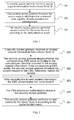
- this embodiment differs from the first embodiment in that: The security access gateway forwards the access request information to the network node capable of authentication for authenticating, and the authentication is a process of the device authentication server authenticating the physical identifier of the home Node B; the security access gateway checks whether the corresponding device authentication server exists according to the device authentication server information in the access request information. If the corresponding device authentication server exists, the security access gateway forwards the access request information to the device authentication server; otherwise, the security access gateway rejects the access; after receiving the access request information, the device authentication server authenticates the home Node B, and selects the EMS as a device authentication server to authenticate the physical identifier of the home Node B.
- each home Node B of a different model from a different manufacturer can access only the corresponding EMS. If the home Node B is incompatible with the accessed EMS when sending access request information, the network may reject the access, and allocate no resource.
- the home Node B sends the access request information to the security access gateway.
- the access request information includes the device identifier information of the home Node B.
- the device identifier information includes the information such as manufacturer identifier and device model.
- the security access gateway judges whether the corresponding EMS exists according to the manufacturer identifier included in the access request information. If the corresponding EMS exists, the security access gateway forwards the access request information to the EMS, or else rejects the access.
- Step 203 After receiving the access request information, the EMS authenticates the home Node B.
- Step 204 The EMS returns an authentication result to the security access gateway.
- Step 205 The security access gateway performs access control for the home Node B according to the authentication result.
- the security access gateway receives the authentication result, and allows the home Node B to access the network if the authentication succeeds, or rejects the home Node B from accessing the network if the authentication fails.
- the EMS authenticates the home Node B in the following way:
- the identity and subscription information of the requesting home Node B need to be authenticated in order to prevent illegal or unauthorized home Node Bs from accessing the network and prevent malicious access of home Node Bs.
- this embodiment differs from the first embodiment and the second embodiment in that:
- the security access gateway forwards the access request information to the network node capable of authentication for authenticating, and the authentication is an access authentication process performed by the subscription information authentication server according to the identifier information of the home Node B.
- the home Node B sends the access request information to the security access gateway in the mobile network.
- the access request information includes the identifier information of the home Node B.
- the identifier information includes the subscription identifier information of the home Node B.
- the subscription information authentication server may be an AAA server, and the access request information includes the home Node B identifier information.
- the subscription information authentication server authenticates the identity of the home Node B, and judges the legality of the home Node B identity and the correctness of the access rights (such as payment information).
- the subscription information authentication server returns an authentication result to the security access gateway.
- the security access gateway decides whether to accept or reject the access of the home Node B according to the authentication result returned by the subscription information authentication server.
- this embodiment differs from the first, second and third embodiments in that:
- the security access gateway forwards the access request information to the network node capable of authentication for authenticating, and the authentication is an access authentication process performed by the subscription information authentication server according to measurement information of the home Node B.
- the home Node B When the home Node B accesses the network, the home Node B needs to provide the information about measurement for the surroundings, and the access authentication is performed according to the measurement information.
- the measurement information may be obtained by measuring the surroundings after the home Node B is powered on; or the mobile station bound to the home Node B measures the surroundings of the home Node B to obtain the measurement information.
- the measurement includes at least the identifier of the existing cell/basestation in the position of the home Node B.
- the home Node B needs to perform the measurement automatically after power-on.
- the home Node B sends access request information to the access gateway through the Internet.
- the access request information includes the surroundings measurement information.
- the detailed access control steps are as follows:
- the access gateway forwards the measurement information to the subscription information authentication server.
- the subscription information authentication server analyzes the existing cell/basestation identifier in the measurement information of the home Node B, and judges the area where the home Node B resides.
- this embodiment differs from the first, second, third and fourth embodiments in that:
- the security access gateway forwards the access request information to the network node capable of authentication for authenticating, and the authentication is an access authentication process performed by the subscription information authentication server according to geographic location information of the home Node B.
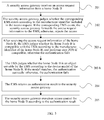
- the home Node B After being powered on, the home Node B sends access request information to the access gateway through the Internet.
- the detailed access control steps are as follows:
- the security access gateway After receiving the access request information, the security access gateway triggers the corresponding physical location measurement entity to perform positioning measurement for the home Node B according to the relevant information in the access request information.
- the physical location measurement entity in the network searches for the geographic location of the home Node B according to the access request information, and returns the positioning measurement information to the security access gateway.
- the physical location measurement entity in the network may perform positioning measurement for the home Node B through a Global Positioning System (GPS) mechanism or an Observed Time Difference of Arrival (OTDOA) mechanism, and report the result to the access gateway.
- GPS Global Positioning System
- OTDOA Observed Time Difference of Arrival
- the subscription information authentication server returns an authentication result to the security access gateway.
- the security access gateway decides whether to accept or reject the access of the home Node B according to the authentication result returned by the subscription information authentication server.
- the security access gateway forwards the access request information to the network node capable of authentication for authenticating, and the authentication is: After receiving the access request information forwarded by the security access gateway, the subscription information authentication server analyzes and authenticates the network address information of the home Node B in the access request information.
- the home Node B accesses the network of the mobile operator through the Internet.
- the security access gateway controls the access according to the Internet address information of the home Node B. More specifically: First, the home Node B sends access request information to the security access gateway through the Internet. The access request information includes the Internet address information of the home Node B. Afterward, the security access gateway analyzes the Internet address information of the home Node B, and controls the access according to the address information. There are two access control modes: The first mode is access control performed according to the area of the Internet address information of the home Node B; and the second mode is access control performed according to the binding relation between the home Node B and the Internet address.
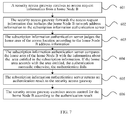
- the Internet addresses are allocated according to geographic areas. For example, the Internet Protocol (IP) addresses are allocated according to geographic areas. Therefore, the security access gateway may determine whether the home Node B can access the network according to the home location of the Internet address of the home Node B. As shown in FIG. 7 , in the first access control mode, the subscription information authentication server determines the home location of the access location of the home Node B according to the Internet address information of the home Node B, compares the access location with the location which is entitled to access, and controls the access according to the comparison result.
- the detailed access control steps are as follows:
- the subscription information server may set that only the home Node Bs of specified network addresses can access the network, and reject the access from the home Node Bs outside the specified network addresses.
- the detailed access control steps are as follows:
- the access control is performed according to the binding relation between the home Node B and the Internet address. As shown in FIG. 9 , the detailed access control steps are as follows:
- the information about the Internet address that may be accessed by the user is provided for the user, where the Internet address information includes access port information.
- the network binds the Internet address information with the identifier information of the home Node B, and stores the binding relation information into the subscription information authentication server.
- the security access gateway controls the access through the binding relation between the home Node B identifier information and the address information.
- the address information is not limited to a specific address, and may be a narrow range of addresses.
- the address information may include a group of IP addresses; for a user with a variable IP address, the address information may include port information of the Internet access point, for instance, a layer-2 physical port of the TCP/IP protocol.
- the security access gateway compares the actually accessed address of the home Node B with the address information in the binding relation information stored in the subscription information authentication server. If the Internet address information of the home Node B accords with the binding relation information, the security access gateway accepts the access, or else rejects the access.
- a transport-layer security link is established between the home Node B and the mobile network before the home Node B accesses the mobile network through the Internet.
- the security link may be established through the security technologies such as Virtual Private Network (VPN) and IpSec.
- VPN Virtual Private Network
- IpSec In the process of establishing security link, mutual authentication needs to be performed between the mobile network and the home Node B through security information.
- the security information may be unrelated to the home Node B itself.
- the security credential used by the IpSec may be unrelated to the home Node B itself, and may be another username, password or credential.
- the security information may be somewhat related to the information of the home Node B, for example, in a binding relation with the manufacturer or serial number of the home Node B.
- the EMS After completion of the authentication, the EMS performs control to allocate the corresponding resources (such as link resources and wireless resources) to the home Node B, thus completing the access process. Therefore, for the home Node B access control, the access gateway is a control point. Through the support of other network function nodes, the control is exercised before the network allocates the corresponding resources to the home Node B. As shown in FIG. 10 , the detailed access control steps are as follows:
- the home Node B After receiving the authentication success information sent by the security access gateway, the home Node B authenticates the transport-layer security link of the security access gateway according to the transport-layer security link authentication information of the security access gateway. If the authentication succeeds, the transport-layer security link is established successfully; otherwise, the establishment of the transport-layer security link fails.
- the home Node B Before a transport-layer security link is established between the home Node B and the mobile network, the home Node B needs to know the address of the security access gateway.
- the address of the security access gateway may be preset on the home Node B, for example, by the mobile operator or the user.
- the automatic address allocation server of the public network configures the address of the security access gateway for the home Node B.
- the access control method provided in each embodiment above is a solution to an aspect of the access control process.
- any of such methods or a combination of such methods can be applied.
- the specific method to be applied is determined according to the access policies in view of the actual conditions.
- the program may be stored in a computer-readable storage medium. When being executed, the program performs steps of the foregoing method embodiments.
- the storage medium may be any medium suitable for storing program codes, for example, Read Only Memory (ROM), Random Access Memory (RAM), magnetic disk, or compact disk.
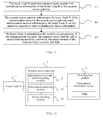
- a home Node B access control system provided in this embodiment includes:
- the security access gateway 2 When the home Node B 1 accesses the mobile network, the security access gateway 2 of the mobile network needs to be accessed first. A security link is established between the home Node B 1 and the mobile network.
- the security access gateway 2 includes an information receiving and forwarding module 21, which is adapted to receive and forward information.
- the information analyzing module 22 is connected with the information receiving and forwarding module 21, and is adapted to analyze the received information.
- the access deciding module 23 is connected with the information analyzing module 22, and is adapted to control the home Node B access according to the analysis result.
- the information receiving and forwarding module 21 After the information receiving and forwarding module 21 receives the access request information of the home Node B and the access request information is analyzed by the information analyzing module, the information receiving and forwarding module 21 forwards the access request information to the first function module 3, and the first function module 3 performs access authentication for the home Node B according to the access request information.
- the first function module 3 is a device authentication server, EMS, or subscription information authentication server, or another network function entity capable of authentication. Additionally, the first function module 3 stores the information required for authentication. For example, the subscription information authentication server stores the home Node B subscription information, and the information about the IP address segment entitled to access. After the authentication succeeds, the security access gateway receives the authentication result.
- the access deciding module 23 controls the home Node B 1 access according to the authentication result, and the EMS performs control to allocate the corresponding resources (such as link resource and radio resource) to the home Node B 1, thus completing the access process.
- the security access gateway is a control point. Through the support of other network function nodes, the control is performed before the network allocates the corresponding resources to the home Node B.
- This system sufficiently fulfills the high-speed, convenience, and cost-efficiency requirements imposed by the user onto the wireless network, and fulfills the network development requirements.
- the number of home Node Bs in a network will be huge. The operators need to spare effort in the home Node B access, and the users expect to use the services of the home Node B conveniently.
- Such requirements are fulfilled by the home Node B access control system provided herein.
- a communication device is provided in an embodiment of the present invention to control the home Node B access.
- the communication device includes:
- the communication device may be a security access gateway or another network element function entity.
Landscapes
- Engineering & Computer Science (AREA)
- Computer Security & Cryptography (AREA)
- Computer Networks & Wireless Communication (AREA)
- Signal Processing (AREA)
- Mobile Radio Communication Systems (AREA)
Priority Applications (1)
| Application Number | Priority Date | Filing Date | Title |
|---|---|---|---|
| EP12188601A EP2549787A1 (de) | 2007-06-25 | 2008-06-25 | Zugangssteuerung eines Home Node B |
Applications Claiming Priority (2)
| Application Number | Priority Date | Filing Date | Title |
|---|---|---|---|
| CN2007101234942A CN101335984B (zh) | 2007-06-25 | 2007-06-25 | 家用微型基站接入控制方法及系统 |
| PCT/CN2008/071432 WO2009000206A1 (en) | 2007-06-25 | 2008-06-25 | Method and system for access control of home node b |
Publications (2)
| Publication Number | Publication Date |
|---|---|
| EP2154902A1 true EP2154902A1 (de) | 2010-02-17 |
| EP2154902A4 EP2154902A4 (de) | 2010-06-30 |
Family
ID=40185201
Family Applications (2)
| Application Number | Title | Priority Date | Filing Date |
|---|---|---|---|
| EP12188601A Withdrawn EP2549787A1 (de) | 2007-06-25 | 2008-06-25 | Zugangssteuerung eines Home Node B |
| EP08757841A Withdrawn EP2154902A4 (de) | 2007-06-25 | 2008-06-25 | Verfahren und system zur zugangskontrolle des heimat-knoten-b |
Family Applications Before (1)
| Application Number | Title | Priority Date | Filing Date |
|---|---|---|---|
| EP12188601A Withdrawn EP2549787A1 (de) | 2007-06-25 | 2008-06-25 | Zugangssteuerung eines Home Node B |
Country Status (4)
| Country | Link |
|---|---|
| US (2) | US20100095368A1 (de) |
| EP (2) | EP2549787A1 (de) |
| CN (1) | CN101335984B (de) |
| WO (1) | WO2009000206A1 (de) |
Cited By (3)
| Publication number | Priority date | Publication date | Assignee | Title |
|---|---|---|---|---|
| CN103179615A (zh) * | 2013-03-29 | 2013-06-26 | 电信科学技术第四研究所 | 基于td-lte与传感器网络的无线传输系统及传输方法 |
| PT106607A (pt) * | 2012-10-30 | 2014-04-30 | Univ Aveiro | Método de controlo de acesso para rede de sensores com suporte para ipv6 |
| US9066268B2 (en) | 2009-01-22 | 2015-06-23 | Zte Corporation | Method and system for controlling network access during HNB handover |
Families Citing this family (40)
| Publication number | Priority date | Publication date | Assignee | Title |
|---|---|---|---|---|
| US8418241B2 (en) * | 2006-11-14 | 2013-04-09 | Broadcom Corporation | Method and system for traffic engineering in secured networks |
| WO2009155818A1 (zh) * | 2008-06-23 | 2009-12-30 | 华为技术有限公司 | 一种接入设备位置验证方法、接入设备、网络设备及系统 |
| CN101902788B (zh) * | 2009-05-26 | 2013-09-04 | 鼎桥通信技术有限公司 | 宏基站ue切入家庭基站的方法控制家庭基站干扰的方法 |
| CN101932121B (zh) * | 2009-06-19 | 2014-12-10 | 中兴通讯股份有限公司 | 移动终端通过家庭基站系统访问本地网络的方法及系统 |
| CN102461234B (zh) * | 2009-06-23 | 2016-08-03 | 夏普株式会社 | 移动通信系统、移动站装置、位置管理装置以及通信方法 |
| CN101588580A (zh) * | 2009-06-30 | 2009-11-25 | 华为技术有限公司 | 一种用户接入控制方法、家庭基站网关及系统 |
| CN101945390B (zh) * | 2009-07-08 | 2013-12-04 | 华为技术有限公司 | 一种准入控制方法及装置 |
| CN102056347B (zh) * | 2009-11-09 | 2014-07-09 | 华为终端有限公司 | 一种转移核心网ip业务的方法、设备及系统 |
| CN101729599B (zh) * | 2009-11-20 | 2013-03-13 | 中国电信股份有限公司 | 移动终端利用宽带网络访问互联网的方法及系统 |
| CN101754422B (zh) * | 2009-12-30 | 2012-08-08 | 上海华为技术有限公司 | 网络发现方法、装置和接入点 |
| EP2378802B1 (de) * | 2010-04-13 | 2013-06-05 | Alcatel Lucent | Drahtloses Kommunikationsnetzwerk und Verfahren zur Authentifizierung einer Nachricht |
| CN101841886A (zh) * | 2010-04-15 | 2010-09-22 | 中兴通讯股份有限公司 | 一种lipa数据流的传输方法及系统 |
| CN101925064A (zh) * | 2010-06-12 | 2010-12-22 | 中兴通讯股份有限公司 | 一种H(e)NB系统的SIPTO决策方法和装置 |
| CN102098757A (zh) * | 2011-02-14 | 2011-06-15 | 中兴通讯股份有限公司 | 控制用户接入网络的方法、装置和系统 |
| CN102215597B (zh) * | 2011-05-30 | 2016-01-20 | 杭州华三通信技术有限公司 | 一种接入策略管理方法和设备 |
| CN102238548A (zh) * | 2011-08-09 | 2011-11-09 | 陈佳阳 | 内外网分离架构的无线路由器及其共享无线网络的方法 |
| CN102255785B (zh) * | 2011-08-11 | 2014-05-07 | 杭州华三通信技术有限公司 | 一种vpls中的网络隔离方法及其装置 |
| CN102300284A (zh) * | 2011-09-21 | 2011-12-28 | 华为技术有限公司 | 一种微基站接入网络的方法和微基站 |
| CN102355710A (zh) * | 2011-10-08 | 2012-02-15 | 中国联合网络通信集团有限公司 | 家庭基站位置限制方法、装置和系统 |
| CN103096311B (zh) * | 2011-10-31 | 2018-11-09 | 中兴通讯股份有限公司 | 家庭基站安全接入的方法及系统 |
| CN103188680B (zh) * | 2011-12-28 | 2016-01-20 | 中国移动通信集团广东有限公司 | 无线网络的接入方法、装置与dhcp服务端 |
| WO2013131741A1 (en) * | 2012-03-07 | 2013-09-12 | Nokia Siemens Networks Oy | Access mode selection based on user equipment selected access network identity |
| CN102638797B (zh) * | 2012-04-24 | 2016-08-03 | 华为技术有限公司 | 接入无线网络的方法、终端、接入网节点和鉴权服务器 |
| CN103391544B (zh) * | 2012-05-10 | 2017-04-26 | 华为技术有限公司 | 基站接入控制方法、相应的装置以及系统 |
| CN102694681B (zh) * | 2012-05-17 | 2015-10-14 | 中国联合网络通信集团有限公司 | 适配管理实体、基站自配置方法及系统 |
| CN102695194B (zh) * | 2012-05-17 | 2014-10-22 | 中国联合网络通信集团有限公司 | 网元管理系统、基站自配置方法及系统 |
| CN104380774B (zh) * | 2012-11-22 | 2018-06-26 | 华为技术有限公司 | 网元接入方法、系统及设备 |
| WO2014084110A1 (ja) | 2012-11-30 | 2014-06-05 | 株式会社糖鎖工学研究所 | 糖鎖付加リンカー、糖鎖付加リンカーと生理活性物質とを含む化合物またはその塩、及びそれらの製造方法 |
| CN104703121B (zh) * | 2013-12-04 | 2018-07-20 | 华为技术有限公司 | 控制设备访问的方法、系统及网络侧设备 |
| CN105376740B (zh) * | 2014-08-15 | 2019-12-06 | 深圳市中兴微电子技术有限公司 | 一种安全的重建方法、设备和系统 |
| CN104185245A (zh) * | 2014-08-26 | 2014-12-03 | 京信通信系统(中国)有限公司 | 一种限制基站的接入位置的方法、装置和系统 |
| CN104796896B (zh) * | 2015-04-29 | 2019-04-12 | 北京奇艺世纪科技有限公司 | 一种无线网络授权访问的方法、装置及系统 |
| CN105282159B (zh) * | 2015-10-30 | 2021-08-13 | 青岛海尔智能家电科技有限公司 | 一种验证用户身份的方法、装置及智能终端 |
| CN108353284A (zh) * | 2015-11-03 | 2018-07-31 | 瑞典爱立信有限公司 | 通信系统中的网关节点的选择 |
| CN109831783B (zh) * | 2017-11-23 | 2022-03-04 | 中国电信股份有限公司 | 开通微基站的方法和系统 |
| CN110830333B (zh) * | 2018-08-09 | 2022-09-13 | 中兴通讯股份有限公司 | 智能家居设备接入认证方法、装置、网关及存储介质 |
| CN113949586B (zh) * | 2020-12-22 | 2024-06-14 | 技象科技(南京)有限公司 | 分布式高效物联网设备接入系统 |
| CN116017634A (zh) * | 2022-12-09 | 2023-04-25 | 中国电信股份有限公司 | 设备接入方法、装置、电子设备和计算机可读存储介质 |
| CN116319593A (zh) * | 2023-02-27 | 2023-06-23 | 深圳供电局有限公司 | 一种安全接入网关的网络访问方法、系统及可读介质 |
| CN119325090A (zh) * | 2024-09-30 | 2025-01-17 | 中国移动通信有限公司研究院 | 一种家庭基站位置验证方法、装置、节点和存储介质 |
Family Cites Families (16)
| Publication number | Priority date | Publication date | Assignee | Title |
|---|---|---|---|---|
| US5732387A (en) * | 1995-12-04 | 1998-03-24 | Motorola | Method and apparatus for call establishment in a satellite communication system |
| US7020069B1 (en) * | 1998-02-06 | 2006-03-28 | Cisco Technology, Inc. | Medium access control protocol for OFDM wireless networks |
| JP3570310B2 (ja) * | 1999-10-05 | 2004-09-29 | 日本電気株式会社 | 無線lanシステムにおける認証方法と認証装置 |
| GB2357009A (en) * | 1999-12-02 | 2001-06-06 | Orange Personal Comm Serv Ltd | Dual mode phone and cellularly linked cordless base station |
| JP3628250B2 (ja) * | 2000-11-17 | 2005-03-09 | 株式会社東芝 | 無線通信システムで用いられる登録・認証方法 |
| US20050239453A1 (en) * | 2000-11-22 | 2005-10-27 | Vikberg Jari T | Mobile communication network |
| US7117015B2 (en) * | 2002-10-25 | 2006-10-03 | Intel Corporation, Inc | Internet base station |
| EP1661413A4 (de) * | 2003-08-06 | 2011-07-20 | Intel Corp | System und verfahren zum automatischen konfigurieren und integrieren einer funkbasisstation in ein existierendes drahtloses zellulares kommunikationsnetz mit voller bidirektionaler roaming- und weiterreichungs-fähigkeit |
| US6923669B1 (en) * | 2004-02-13 | 2005-08-02 | Zyvex Corporation | Microconnectors and non-powered microassembly therewith |
| US7206610B2 (en) * | 2004-10-28 | 2007-04-17 | Interdigital Technology Corporation | Method, system and components for facilitating wireless communication in a sectored service area |
| CN101510821A (zh) * | 2005-09-14 | 2009-08-19 | 美商内数位科技公司 | 用于保护高吞吐量站的方法和设备 |
| JP5080481B2 (ja) * | 2005-10-04 | 2012-11-21 | テレフオンアクチーボラゲット エル エム エリクソン(パブル) | Ip接続の無線基地局に対する無線ネットワーク制御局の選択 |
| US7990912B2 (en) * | 2007-04-02 | 2011-08-02 | Go2Call.Com, Inc. | VoIP enabled femtocell with a USB transceiver station |
| EP2165548A1 (de) * | 2007-06-21 | 2010-03-24 | QUALCOMM Incorporated | Verfahren und vorrichtung zur bestimmung der position einer basisstation in einem zellulären kommunikationsnetzwerk |
| EP3291636B1 (de) * | 2007-10-25 | 2020-04-29 | Cisco Technology, Inc. | Kooperatives gateway für mobile knoten |
| US7995482B2 (en) * | 2009-06-08 | 2011-08-09 | Alcatel-Lucent Usa Inc. | Femto base stations and methods for operating the same |
-
2007
- 2007-06-25 CN CN2007101234942A patent/CN101335984B/zh active Active
-
2008
- 2008-06-25 EP EP12188601A patent/EP2549787A1/de not_active Withdrawn
- 2008-06-25 WO PCT/CN2008/071432 patent/WO2009000206A1/zh not_active Ceased
- 2008-06-25 EP EP08757841A patent/EP2154902A4/de not_active Withdrawn
-
2009
- 2009-12-14 US US12/637,124 patent/US20100095368A1/en not_active Abandoned
-
2012
- 2012-10-25 US US13/660,505 patent/US20130045716A1/en not_active Abandoned
Cited By (3)
| Publication number | Priority date | Publication date | Assignee | Title |
|---|---|---|---|---|
| US9066268B2 (en) | 2009-01-22 | 2015-06-23 | Zte Corporation | Method and system for controlling network access during HNB handover |
| PT106607A (pt) * | 2012-10-30 | 2014-04-30 | Univ Aveiro | Método de controlo de acesso para rede de sensores com suporte para ipv6 |
| CN103179615A (zh) * | 2013-03-29 | 2013-06-26 | 电信科学技术第四研究所 | 基于td-lte与传感器网络的无线传输系统及传输方法 |
Also Published As
| Publication number | Publication date |
|---|---|
| CN101335984B (zh) | 2011-11-16 |
| US20100095368A1 (en) | 2010-04-15 |
| WO2009000206A1 (en) | 2008-12-31 |
| CN101335984A (zh) | 2008-12-31 |
| US20130045716A1 (en) | 2013-02-21 |
| EP2154902A4 (de) | 2010-06-30 |
| EP2549787A1 (de) | 2013-01-23 |
Similar Documents
| Publication | Publication Date | Title |
|---|---|---|
| EP2154902A1 (de) | Verfahren und system zur zugangskontrolle des heimat-knoten-b | |
| US9654962B2 (en) | System and method for WLAN roaming traffic authentication | |
| US11523332B2 (en) | Cellular network onboarding through wireless local area network | |
| RU2316903C2 (ru) | Способ проверки полномочий доступа пользователя в беспроводной локальной сети | |
| EP2553898B1 (de) | Verfahren und system zur authentifizierung eines zugangspunktes | |
| KR101210245B1 (ko) | 비(non)-3GPP액세스시스템 신뢰 유형의 획득방법, 시스템 및 장치 | |
| CN105359589B (zh) | 使移动终端能够漫游到无线局域网的网络架构 | |
| US7899441B2 (en) | Method for resolving and accessing selected service in wireless local area network | |
| US20060184795A1 (en) | System and method of reducing session transfer time from a cellular network to a Wi-Fi network | |
| EP2016750A2 (de) | Vorrichtung und verfahren für vereinfachte authentifizierung drahtloser bimodaler geräte | |
| WO2009061753A1 (en) | Wlan access integration with physical access control system | |
| CN104581875B (zh) | 微型基站接入方法和系统 | |
| US20230171603A1 (en) | Onboarding Devices in Standalone Non-Public Networks | |
| CN102006646A (zh) | 一种切换方法和切换设备 | |
| US8226340B1 (en) | Framework for access control without barring location area code | |
| EP3114865B1 (de) | Verwendung von diensten eines mobilen paketkernnetzwerkes | |
| KR100590862B1 (ko) | 사설 무선 고속 데이터 시스템의 데이터 호 처리 장치 및그 방법 | |
| US7801517B2 (en) | Methods, systems, and computer program products for implementing a roaming controlled wireless network and services | |
| CN104602235B (zh) | 微型基站接入方法和系统 | |
| KR102739752B1 (ko) | 5g 비공중망 접속 제어를 수행하는 인증 서버, 접속 제어 방법 및 단말의 접속 방법 | |
| KR101468427B1 (ko) | 데이터 서비스 트래픽 제어 시스템 및 방법 | |
| WO2010124608A1 (zh) | 紧急业务的实现方法及家用基站 |
Legal Events
| Date | Code | Title | Description |
|---|---|---|---|
| PUAI | Public reference made under article 153(3) epc to a published international application that has entered the european phase |
Free format text: ORIGINAL CODE: 0009012 |
|
| 17P | Request for examination filed |
Effective date: 20091209 |
|
| AK | Designated contracting states |
Kind code of ref document: A1 Designated state(s): AT BE BG CH CY CZ DE DK EE ES FI FR GB GR HR HU IE IS IT LI LT LU LV MC MT NL NO PL PT RO SE SI SK TR |
|
| AX | Request for extension of the european patent |
Extension state: AL BA MK RS |
|
| A4 | Supplementary search report drawn up and despatched |
Effective date: 20100602 |
|
| DAX | Request for extension of the european patent (deleted) | ||
| 17Q | First examination report despatched |
Effective date: 20101026 |
|
| STAA | Information on the status of an ep patent application or granted ep patent |
Free format text: STATUS: THE APPLICATION IS DEEMED TO BE WITHDRAWN |
|
| 18D | Application deemed to be withdrawn |
Effective date: 20121228 |