EP2157741B1 - Verfahren zur steuerung der header-komprimierung bei der drahtlosen kommunikation und drahtlose station und sendeeinrichtung - Google Patents
Verfahren zur steuerung der header-komprimierung bei der drahtlosen kommunikation und drahtlose station und sendeeinrichtung Download PDFInfo
- Publication number
- EP2157741B1 EP2157741B1 EP07743211.0A EP07743211A EP2157741B1 EP 2157741 B1 EP2157741 B1 EP 2157741B1 EP 07743211 A EP07743211 A EP 07743211A EP 2157741 B1 EP2157741 B1 EP 2157741B1
- Authority
- EP
- European Patent Office
- Prior art keywords
- missing
- transmitter
- data segment
- header compression
- state
- Prior art date
- Legal status (The legal status is an assumption and is not a legal conclusion. Google has not performed a legal analysis and makes no representation as to the accuracy of the status listed.)
- Not-in-force
Links
Images







Classifications
-
- H—ELECTRICITY
- H04—ELECTRIC COMMUNICATION TECHNIQUE
- H04W—WIRELESS COMMUNICATION NETWORKS
- H04W28/00—Network traffic management; Network resource management
- H04W28/02—Traffic management, e.g. flow control or congestion control
- H04W28/06—Optimizing the usage of the radio link, e.g. header compression, information sizing, discarding information
Definitions
- the present invention relates to a method of controlling header compression in wireless communication, a base station, and a transmitter.
- the present invention is suitable for use in, for example, mobile communication that transmits and receives packet data.
- JP2004187326A refers to a data transmitting method using a packet creating means for creating, in accordance with packet judgement information Jp, any one of either a non-compressed packet Pa stored without compressing the transmission information or a compressed packet Pb stored while compressing the transmission information, and a transmission means for transmitting each of packets, wherein the compressed packet Pb stores differential information based on the transmission information in the latest non-compressed packet Pa which is transmitted before the compressed packet.
- S3G Super 3G
- 3GPP Third Generation Partnership Project
- LTE Long Term Evolution
- 3G third-generation
- the standard achieves high-speed transmission in mobile communication, and provides an advanced service environment such as high-speed video distribution. Furthermore, it is expected as a system to provide effective frequency utilization.
- Fig. 10 illustrates a configuration of an S3G system.
- Each wireless base station (E-UTRAN Node-B, abbreviated as eNB) has a function as a wireless base station (Node-B) in generations before S3G and a function as a radio network controller (RNC).
- Node-B wireless base station
- RNC radio network controller
- An access gateway manages and controls a plurality of eNBs, and relays transmission between an user equipment (UE) and an inter access system anchor (IASA).
- the IASA has a router function and is connected to an IP Multimedia Subsystem (IMS). It is also connected to a home subscriber service (HSS) for storing subscriber profiles.
- IMS IP Multimedia Subsystem
- HSS home subscriber service
- this system is upgraded from an existing circuit-switched mobile system until a conventional 3G system including voice communication to an all-IP mobile system, the VoIP is also applied to voice communication, which can be subjected to packet communication together with data communication.
- Fig. 11 illustrates a protocol stack that transforms real-time data (such as voice communication call) in the S3G system into IP packets.
- Table 1 lists a functional overview of each protocol.
- Table 1 Protocol overview Protocol Functional overview Regulation PHY/Ether Physical layer/Ethernet(R) These are defined as basic interfaces for LAN/WAN, and either Physical layer or Ethernet(R), or varying combinations of both can be used.
- IEEE802-related regulation MAC Medium Access Control Performs, for example, scheduling, priority control, error correction by HARQ (Hybrid Automatic Repeat request), and transport format selection.
- TS.25.321 RLC Radio Link Control Error correction by ARQ In-sequence delivery of an upper-layer PDU (Protocol Data Unit)
- TS.25.322 GRE Generic Routing Encapsulation Used for encapsulation of other protocols.
- RFC2784 S1-FP S1 Interface Frame Packet A Protocol applied to the interface (S1 Interface) between an aGW and an eNB. The detail of the current protocol field is undefined.
- PDCP Packet Data Convergence Protocol Performs header compression (ROHC: RObust Header Compression) of TCP/IP.
- ROHC RObust Header Compression
- TS.25.323 MIP Mobile IP Manages correspondence between a Home Address (HoA) used by a Mobile Node (MN) in the home link (the network to which the MN originally belongs) and a Care of Address (CoA) used in an external link (a visited network by the MN).
- HoA Home Address
- MN Mobile Node
- CoA Care of Address
- RFC3220 IPv4
- IPv6 IPv6
- IPSec IP Security protocol Ensures security (for encryption) in the IP layer.
- a transport mode and a tunnel mode are available.
- RFC2002, 2406 IP Internet Protocol Layer 3 function used in the Internet. Provides a data routing function.
- RFC791 UDP User Datagram Protocol A connectionless transmission protocol Low reliability but light-load processing.
- RFC768 RTP Real-time Transport Protocol Provides a framework for transmission of real-time media such as audio and video. Uses a profile or a payload format depending on application.
- RFC1889 RTCP RTP Control Protocol Controls a session for data transmission in RTP (Real-time Transport Protocol), checks data transmission, and transmits information between a sender and a receiver.
- Real-time data is transmitted using a RTP/UDP/IP header.
- the RTP/UDP/IP header constitutes a significant overhead for audio data, and attachment of the header without modification leads to low communication efficiency. Furthermore, line quality in the wireless zone is lower than that in the cable zone, and the wireless zone has narrow bandwidth. This requires further header compression compared to the cable zone.
- a PDCP protocol is applied between an aGW and a UE to perform Robust Header Compression (ROHC) for an RTP/UDP/IP header.
- the wireless zone can increase the utilization efficiency of transmission (wireless) bandwidth.
- the ROHC performed by the PDCP protocol has three compression states; IR, FO, and SO depending on the compression level (see Table 2).
- Table 2 Compression states of ROHC (1) Initialization and Refresh(IR) Initialization state: Transmits uncompressed full header. (2) First Order (FO) Header updating: Transmits parts such as a destination address of which the value ordinarily does not vary, but varies by a change in session. (3) Second Order (SO) Operation state: Transmits only minimum field.
- the transmission modes and the header compression states above are selectively applied depending on a system and a service.
- a wireless band for voice communication is limited in a mobile system, an improvement in the utilization efficiency is indispensable and transmission of useless data must be avoided as much as possible.
- transition from a lower state to an upper state (IR to FO, FO to SO, or IR to SO) is preferably made immediately.
- the timer value for transition from an upper state to a lower state (SO to FO, FO to IR, or SO to IR) is preferably large.
- the O mode or the R mode which needs a response from UE, affects the upstream band. Furthermore, the round-trip time is long because of notification from a UE to an aGW, which may not be available for real-time voice communication. For example, when a reception error at a UE 400 is notified to an aGW (an ROHC compressor), selection of transition of the compression state is delayed in response to the delayed arrival of the notification to the aGW, which may cause needless wireless transmission in the downstream direction.
- an aGW an ROHC compressor
- ROHC processing When ROHC processing is applied to voice communication in a mobile system, only the U mode, which does not perform feedback from a UE to an aGW, is used, and state transition in the ROHC processing is preferably limited to only the transition between the IR state and the SO state, as illustrated in Fig. 13 .
- the transition from the IR state to the SO state is performed, for example, by transmission of one packet of header-uncompressed data (hereinafter referred to uncompressed data).
- the transition from the SO state to the IR state is performed, for example, at the end of a timer value (100 ms).
- Fig. 14 illustrates a header format of IP/UDP/RTP. As illustrated in Fig. 14 , all the headers (40 to 100 bytes) are transmitted in the IR state, whereas only the sequence number (SN, 2 bytes) in the RTP header is transmitted in the SO state.
- Fig. 15 illustrates a transmission image (direction from an aGW to a UE) of audio packets in this exemplary application.
- the audio packets are transmitted at constant intervals (20 ms), and uncompressed data segments are transmitted at intervals of 100 ms.
- Figs. 16 and 17 illustrate examples of packet formats after processing in function blocks of two nodes.
- Figs. 16 and 17 illustrate exemplary formats in an uncompressed condition and in a compressed condition, respectively.
- ciphering is performed from the PDCP field to the AMR field by a PDCP processor of an aGW, and deciphering is performed by the UE.
- the packet is divided into multiple RLC protocol data units (RLC-PDUs). If a space is generated by the division, padding data is inserted.
- RLC-PDUs RLC protocol data units
- padding data is inserted.
- the audio packet is divided into three RLC-PDUs in the uncompressed condition.
- the audio packet is transmitted in one packet without division.
- Fig. 18 illustrates a system configuration of the ROHC processing applied to voice transmission in the above mobile system.
- Fig. 19 illustrates a processing sequence in the system. In Fig. 19 , however, only the processing sequence for the downstream (from the NW to the UE) communication is illustrated.
- the system illustrated in Fig. 18 includes, for example, an upper-level network device 100 (hereinafter also referred to as NW 100) that constitutes an upper-level network (NW) equivalent to an IASA illustrated in Fig. 10 , an aGW 200, an eNB 300, and a UE 400.
- NW 100 an upper-level network device 100
- NW an upper-level network
- aGW 200 an eNB 300
- UE 400 UE 400
- the aGW 200 includes an upper-level device interface (IF) 201, a PDCP processor 202, an S1-FP transmission processor 203, and an S1-FP reception processor 204.
- the eNB 300 includes an S1-FP reception processor 301, an S1-FP transmission processor 302, an RLC processor 303, a MAC processor 304, and a wireless terminator (a physical layer (PHY) processor) 305.
- the MAC processor and the PHY processor may be collectively called MAC/PHY processor.
- the PDCP processor 202 of the aGW 200 includes an ROHC controller 221, an ROHC compressor 222, a ciphering (encryption) processor 223, a deciphering (decryption) processor 224, and an ROHC decoder (ROHC decompressor) 225.
- the RLC processor 303 of the eNB 300 includes a PDCP-SDU divider (an RLC-PDU generator) 331 and a PDCP-SDU generator (an RLC terminator) 332.
- the UE 400 includes, for example, a MAC/PHY processor 401, an RLC processor 402, and a PDCP processor 403 as illustrated in Fig. 18 , focusing attention on downstream functions.
- audio data (AMR/RTP/UDP/IP packet data) received from the upper-level network through the upper-level device interface 201 is applied to the PDCP processor 202.
- PDCP processor 202 After PDPC [sic] protocol processing (ROHC processing) by the ROHC compressor 222, the data is ciphered (encrypted) by the ciphering processor 223, and then is transmitted to the S1-FP transmission processor 203.
- the S1-FP transmission processor 203 converts the protocol fields of the packet received from the PDCP processor 202 (the ciphering processor 223) into a protocol (S1-FP) used in the inter-device IF between the aGW 200 and the eNB 300 (for example, attachment of an S1-FP header), and then transmits the packet to the eNB 300.
- the S1-FP reception processor 301 receives the packet (the S1-FP packet) transmitted from the aGW 200 (the S1-FP transmission processor 203), and then transmits the packet to the RLC processor 303, for example, after termination processing of the S1-FP header.
- the PDCP-SDU divider (the RLC-PDU generator) 331 generates data of the RLC layer (RLC-PDU) from the received packet (the PDCP packet) transmitted from the S1-FP reception processor 301.
- the divider 331 divides the SDU (PDCP-SDU) of the received packet into RLC packets (RLC-PDUs) as needed, and then transmits them to the MAC processor 304.
- the MAC processor 304 transmits the RLC packet (RLC-PDU) from the RLC processor 303 to the wireless terminator (the PHY processor) 305 after the required MAC processing at the MAC layer.
- the wireless terminator 305 generates a transmission wireless signal from the data that is subjected to such MAC processing, and then transmits the signal to the UE 400.
- the MAC/PHY processor 401 subjects the wireless signal received from the eNB 300 to required processing (termination processing) at the physical layer and the MAC layer
- the RLC processor 402 subjects the signal to RLC termination processing
- the PDCP processor 403 subjects the signal to deciphering processing and PDCP termination processing (for example, decompression processing) to decode the audio data (AMR/RTP/UDP/IP packet data).
- the process of upstream audio data is the reverse of the above process. Consequently, in the UE 400, the audio data to be transmitted is subjected to required processing in the PDCP, ciphering (encryption), and the MAC/PHY protocol, and then is transmitted to the eNB 300 by a wireless signal.
- the eNB 300 subjects the signal received from the UE 400 to required processing at the physical layer and the MAC layer in the wireless terminator 305 and the MAC processor 304, and then transmits the signal to the PDCP-SDU generator (the RLC termination processor) 332 in the RLC processor 303 to generate a PDCP packet (PDCP-SDU).
- the PDCP packet is transmitted to the aGW 200 after conversion into the inter-device IF protocol (S1-FP) in the S1-FP transmission processor 302.
- the upstream data (the S1-FP packet) transmitted from the eNB 300 is received by the S1-FP reception processor 204, and then is transmitted to the PDCP processor 202 after converting into the inter-device IF protocol (PDCP). Then, the data is subjected to deciphering processing and ROHC decoding processing by the deciphering processor 224 and the ROHC decoder 225, respectively, in the PDCP processor 202, and then is transmitted to the NW 100 through the upper-level device IF 201.
- PDCP inter-device IF protocol
- header compression by the ROHC in PDCP leads to efficient utilization of a transmission line.
- Fig. 20 for example, if missing of an uncompressed data segment occurs due to some factors at an intermediate node such as the eNB 300, compressed data segments cannot be decoded during a certain time until the UE 400 can receive the subsequent uncompressed data segment (in the meantime, silence occurs).
- RLC processing has three modes: an AM mode, a UM mode, and a TM mode.
- the UM mode or the TM mode that does not require a response from the counterpart is applied to an audio packet.
- the RLC discard function operates in the UM mode.
- Fig. 21 illustrates such a case.
- the UE 400 when discard of an uncompressed data segment is generated by the RLC discard function in the RLC processor 303 of the eNB 300, the UE 400 cannot receive the uncompressed data segment (see the dotted arrow). For this reason, the UE 400 (the PDCP processor 403) cannot decompress the header of received compressed data segments until the subsequent uncompressed data segment can be normally received, so that audio data segments (AMR/RTP/UDP/IP packet data segments) cannot be decoded correctly. Compressed data segments that cannot be decoded are discarded by the UE 400.
- the UE 400 cannot receive normally an compressed [sic] data segment addressed to the UE 400 due to discard or missing of the data segment, for example, on the midway, such as the eNB 300, the UE 400 cannot decompress the compressed header of packet data (compressed data segments) to be subsequently received. This significantly precludes voice reproduction until the subsequent uncompressed data segment is received.
- the compressed data segments received by the UE 400 before this time are wastefully discarded, resulting in loss of the downstream wireless band (wireless resources).
- the present invention has been accomplished in view of such problems, and one object of the present invention is to suppress loss of wireless resources when a receiver cannot correctly receive uncompressed data.
- Another object of the present invention is to detect incorrect reception of an uncompressed data segment at a receiver at an early stage before data transmission in the wireless zone.
- the present invention provides a method of controlling header compression, a wireless base station, and a transmitter, described in Aspects (1) to (19) below.
- an eNB (a wireless base station), which is an intermediate node between an aGW provided with an ROHC compressor function and a UE provided with an ROHC decompressor function, can detect an error (discard or missing) of an audio packet (PDCP-PDU) addressed to the UE by an RLC discard function, for example.
- the eNB Upon detecting the error, the eNB notifies generation of error of the PDCP-PDU to the aGW, which is the end node of the PDCP, and causes the aGW to lower a header compression level of the ROHC (from SO to IR or from FR to IR).
- a time period during which compressed data segments cannot be decompressed (decoded) that is, the silence period at the UE can be reduced, resulting in an improvement in quality of real-time communication such as voice communication.
- the eNB corresponds to an intermediate node in the communication path between the aGW and the UE, and can provide feedback on error generation notification to the aGW in an early stage, so that the aGW can reflect the notification to the PDCP compression control of the ROHC.
- the aGW can relieve audio data that was uncompressed and discarded at the UE by changing the compression state of the ROHC to the IR state and transmitting an uncompressed data segment, upon receiving the error generation notification.
- transition from the IR state to the SO state (upper state) while missing of a downstream packet does not occur (normal condition) is performed, for example, by transmission of one uncompressed data packet.
- transition from the SO state to the IR state (lower state) is performed, for example, at the end of a timer value (100 ms).
- IP/UDP/RTP header has the same format as that illustrated in Fig. 14 . All the headers (40 to 100 bytes) are transmitted in the IR state, whereas only the sequence number (SN, 2 bytes) in the RTP header is transmitted in the SO state.
- Audio packets (the direction from the aGW to the UE) are transmitted as illustrated in the image of Fig. 15 .
- audio packets are transmitted at constant intervals (20 ms), and uncompressed data segments are transmitted at intervals of 100 ms.
- the packet formats in the uncompressed condition and the compressed condition are basically the same as those illustrated in Figs. 16 and 17 , respectively.
- Fig. 1 is a block diagram illustrating a structure of a wireless communication system according to the first embodiment of the present invention.
- the wireless communication system illustrated in Fig. 1 like the system illustrated in Fig. 18 , also includes an upper-level NW device 10 (hereinafter also referred to as an NW 10) that configures an upper-level network (NW), and corresponds to, for example, IASA illustrated in Fig. 10 , an aGW 20, an eNB 30, and a UE 40.
- NW upper-level NW device 10
- NW upper-level network
- the system illustrated in Fig. 1 includes the aGW 20 as a transmitter that (adaptively) controls the header compression states of real-time data segments (downstream packets) such as audio data segments addressed to the UE 40 to a compressed or uncompressed state and transmits the data segments, the eNB 30 as a wireless base station that receives data addressed from the aGW 20 to the UE 40 and transmits the data segments to the UE 40, and the UE 40 as a wireless terminal that decodes header-compressed data segments from the eNB 30 based on a received header-uncompressed data segment.
- real-time data segments downstream packets
- the eNB 30 as a wireless base station that receives data addressed from the aGW 20 to the UE 40 and transmits the data segments to the UE 40
- the UE 40 as a wireless terminal that decodes header-compressed data segments from the eNB 30 based on a received header-uncompressed data segment.
- the aGW 20 includes an upper-level device interface (IF) 21, a PDCP processor 22, an S1-FP transmission processor 23, and an S1-FP reception processor 24.
- the eNB 30 includes an S1-FP reception processor 31, an S1-FP transmission processor 32, an RLC processor 33, a MAC processor 34, a wireless terminator (physical layer (PHY) processor) 35, and a discard notification controller 36.
- the MAC processor and the PHY processor may be collectively called MAC/PHY processor.
- the PDCP processor 22 of the aGW 20 includes an ROHC controller 22A provided with a correspondence table 22a that matches the sequence numbers (SNs) in S1-FP, which are described below, and SNs in PDCP, an ROHC compressor 22B, a ciphering (encryption) processor 22C, a deciphering (decoding) processor 22D, and an ROHC decoder (ROHC decompressor) 22E.
- ROHC controller 22A provided with a correspondence table 22a that matches the sequence numbers (SNs) in S1-FP, which are described below, and SNs in PDCP
- an ROHC compressor 22B includes a ciphering (encryption) processor 22C, a deciphering (decoding) processor 22D, and an ROHC decoder (ROHC decompressor) 22E.
- ROHC decoder ROHC decompressor
- the RLC processor 33 includes a PDCP-SDU divider (an RLC-PDU generator) 33A provided with a correspondence table 33a that matches the sequence numbers (SNs) in S1-FP, which are described below, and SNs in RLC, an RLC discard detector 33B, and a PDCP-SDU generator (an RLC terminator) 33C.
- the MAC processor 34 includes a discard detector 34A.
- the discard notification controller 36 of the eNB 30 includes an SN retrieving processor 36A that is provided with a correspondence table 36a that matches sequence numbers (SNs) in S1-FP, which are described below, and SNs in RLC, and a discard notification packet generating processor 36B.
- SNs sequence numbers
- the UE 40 includes, for example, a MAC/PHY processor 41, an RLC processor 42, and a PDCP processor 43 as illustrated in Fig. 3 , focusing attention on downstream functions.
- the upper-level device IF 21 is a communication interface between the aGW 20 and the NW 10.
- the IF 21 has a function that transmits downstream data segments (downstream packets), for example, audio data segments addressed from the NW 10 to the UE 40 to the ROHC compressor 22B of the PDCP processor 22, and transmits upstream data segments (upstream packets), for example, audio data segments received from the ROHC decompressor 22E of the PDCP processor 22 to the NW 10.
- the S1-FP transmission processor 23 has a function that converts downstream data segments (PDCP packets), which are received from the PDCP processor 22 after ROHC processing and ciphering processing by the PDCP processor 22, into the inter-device IF protocol (S1-FP) (for example, attachment of an S1-FP header) to the eNB 30, and then transmits the data segments to the eNB 30.
- the processor 23 also has a function that attaches sequence numbers (SNs) in S1-FP, other than sequence numbers (SNs) in PDCP, to the S1-FP headers during the protocol conversion.
- the S1-FP reception processor 24 has a function that converts protocol fields of upstream data segments (S1-FP packets) received from the eNB 30 (the S1-FP transmission processor 32) into PDCP (for example, termination of an S1-FP header), and then transmits the data segments to the deciphering processor 22D of the PDCP processor 22.
- the processor 24 also has the following functions:
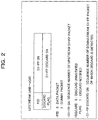
- the data packet (the dummy packet) and the discard notification packet are determined based on, for example, S1-FP header information that is attached by the S1-FP transmitter 32 of the eNB 30 as illustrated in Fig. 2 .
- the S1-FP reception processor 24 determines whether packets received from the eNB 30 (the S1-FP transmission processor 32) are data packets or dummy packets based on the information of the PID field during protocol conversion from S1-FP to PDCP, and then transmits the packets to the deciphering processor 22D if they are data packets or discards the packets if they are dummy packets. Furthermore, the processor 24 determines whether any of the received packets is the discard notification packet based on information set in the discard flag field, and then can notify the discard SN set in the discard SN field to the ROHC controller 22A.
- packet discard notification from the eNB 30 to the aGW 20 is performed using a data packet by attaching the S1-FP header (PID field: 0, discard flag field: 1, and discard SN) to the data packet if an upstream PDCP packet (a data packet) to the aGW 20 is present.
- S1-FP header PID field: 0, discard flag field: 1, and discard SN
- the ROHC compressor 22B has a function that performs ROHC processing (compression) to downstream data segments (PDCP packets) addressed from the upper-level device IF 21 to the UE 40 under control (compression control) from the ROHC processor 22A.
- the compressor 22B also has a function that notifies sequence numbers (SNs) of the downstream data segments to the ROHC controller 22A for creating the correspondence table 22a.
- the ciphering processor 22C has a function that performs ciphering (encryption) processing to downstream data segments after ROHC compression control by the ROHC compressor 22B.
- the ROHC controller 22A has a function that manages the compression states of ROHC (three states IR, FO, and SO) and controls compression processing (a header compression level) of the ROHC compressor 22B.
- the controller 22A also has a function that checks (determines) which of the three states was a compression state of a discarded downstream data segment, determines the header compression level of the next PDCP packet to be transmitted depending on the checked results, and then notifies the level to the ROHC compressor 22B, upon notification of an SN (SN in S1-FP) of a downstream data segment discarded by the eNB 30 from the S1-FP reception processor 24.
- the controller 22A controls the compression state of the ROHC compressor 22B into the IR state so as to transmit the subsequent downstream data segments in an uncompressed state. If discarded downstream data segment is a compressed data segment, the controller 22A can maintain the compression state of the ROHC compressor 22B in the current state because the receiver (the UE 40) can decodes the compressed data segments based on a received uncompressed data segment.
- the ROHC controller 22A of this embodiment must manage which downstream data segment (PDCP packet) was discarded (especially, whether a discarded data segment was an uncompressed data segment or a compressed data segment), and which of the three states was a header compression level of the discarded downstream data segment.
- PDCP packet downstream data segment
- the ROHC controller 22A of this embodiment must manage which downstream data segment (PDCP packet) was discarded (especially, whether a discarded data segment was an uncompressed data segment or a compressed data segment), and which of the three states was a header compression level of the discarded downstream data segment.
- the ROHC controller 22A of this embodiment functions as managing means generating and updating correspondence information (the correspondence table 22a) that matches SNs (SNs in PDCP) of downstream data segments (PDCP packets) subjected to ROHC processing by the ROHC compressor 22B and SNs (SNs in S1-FP) attached to the downstream data segments by the S1-FP transmission processor 23.
- the ROHC controller 22A can grasp the compression state (the header compression level) of each downstream data segment (PDCP packet) by receiving notification of SNs in PDCP from the ROHC compressor 22B, so that the ROHC controller 22A can also create the correspondence table 22a for matching of SNs in PDCP, SNs in S1-FP, and compression states of PDCP packets.
- the ROHC controller 22A can determine a header compression state of a discarded data segment based on a discard SN received from the eNB 30 together with discard notification by the S1-FP reception processor 24 and the correspondence table 22a. In sum, the ROHC controller 22A also functions as determination means to determine the state.
- the deciphering processor 22D has a function that performs required deciphering processing to upstream PDCP packets (data packets) transmitted from the S1-FP reception processor 24.
- the ROHC decompressor 22E has a function that performs header decompression processing of ROHC to the upstream data packets after the deciphering processing, and transmits the packets to the NW 10 through the upper-level device IF 21.
- the S1-FP reception processor 31 has a function that converts the protocol fields of received packets (S1-FP packets) from the aGW 20 (the S1-FP transmission processor 23) into PDCP (for example, termination of S1-FP headers), and then transmits the packets to the RLC processor 33 (the PDCP-SDU divider (the RLC-PDU generator) 33A).
- the processor 31 also has a function that monitors SNs attached to the S1-FP headers by the aGW 20 (the S1-FP transmission processor 23), detects missing (SN dropout) of a S1-FP packet, and notifies the SN to the discard notification controller 36 (the SN retrieving processor 36A).
- the PDCP-SDU divider (the RLC-PDU generator) 33A generates data segments (RLC-PDUs) of the RLC layer from received packets (PDCP packets) transmitted from the S1-FP reception processor 31.
- the divider 33A has a function that divides SDUs (PDCP-SDUs) of received packets as needed into generate RLC packets (RLC-PDUs) and that transmits the packets to the MAC processor 34.
- the divider 33A also has a function that creates the corresponding table 33a matching SNs in S1-FP to SNs of generated RLC packets during the generation process of the RLC packets and that notifies contents of the correspondence table 33a to the discard notification controller 36 (the SN retrieving processor 36A).
- the RLC discard detector 33B has a function that detects discard (missing) of an RLC packet by the RLC discard function during the generation of the RLC packets by the RLC-PDU generator 33A and that notifies the SN (the SN in RLC) of the discarded RLC packet to the SN retrieving processor 36A of the discard notification controller 36 upon detection of the discard.
- the PDCP-SDU generator (the RLC terminator) 33C has a function that generates (for example, termination of RLC headers) PDCP packets (PDCP-SDUs) from upstream data segments (RLC packets) that are transmitted from the UE 40 and are processed by the MAC processor 34, and then transmits the packets to the discard notification controller 36 (the discard notification packet generating processor 36B).
- the discard detector 34A has a function that monitors SNs (SNs in RLC) of RLC packets transmitted from the RLC processor 33 (the RLC-PDU generator 33A), and detects discard (missing) of a RLC packet and that notifies the SN (the SN in RLC) of the RLC packet to the SN retrieving processor 36A of the discard notification controller 36 upon reception of the discard.
- the eNB 30 of this embodiment can detect missing of data segments received from the aGW 20 (downstream data segments) in any of the three layers S1-FP, RLC, and MAC (the S1-FP reception processor 31, the RLC discard detector 33B, and the discard detector 34B [sic]), and can notifies (collects) the results of the detection to the discard notification controller 36 (the SN retrieving processor 36A).
- the wireless terminator 35 has a function that performs required wireless transmission processing (for example, DA conversion, modulation, up-conversion, power amplification) for downstream data segments after the required MAC processing by the MAC processor 34 to generate a downstream wireless signal and then transmits the signal to the UE 40, and another function that performs required wireless reception processing (for example, low-noise amplification, down-conversion, demodulation, AD conversion) for an upstream wireless signal received from the UE 40, and then transmits the signal to the MAC processor 34.
- required wireless transmission processing for example, DA conversion, modulation, up-conversion, power amplification
- required wireless reception processing for example, low-noise amplification, down-conversion, demodulation, AD conversion
- the discard notification controller 36 has a function that notifies the discard (missing) to the ROHC controller 22A of the eGW [sic] 20 if the discard (missing) of downstream data segment is detected by any one of the S1-FP reception processor 31, the RLC discard detector 33B, and the discard detector 34B [sic].
- the SN retrieving processor 36A has the correspondence table 36a that matches SNs in S1-FP to SNs in RLC, for example, in a memory (not illustrated), and has a function that identifies the SN (the SN in S1-FP) of the discarded S1-FP packet by searching the correspondence table 36a for the SN, upon notification of the SN in the RLC from the RLC discard detector 33B of the RLC processor 33 or the discard detector 34A of the MAC processor 34, and then notifies the SN (the discard SN) to the S1-FP transmission processor 32.
- the SN retrieving processor 36A does not need to retrieve the table if the S1-FP reception processor 31 detects discard of an S1-FP packet and notifies the SN in the S1-FP, and directly notifies the SN as a discard SN to the S1-FP transmission processor 32.
- the correspondence table 36a is generated and updated by receiving contents notification of the correspondence table 33a generated during generation of RLC packets by the RLC-PDU generator 33A from the RLC processor 33.
- the discard notification packet generating processor 36B performs discard notification to the eGW [sic] 20 (the ROHC controller 22A) using a PDCP packet if upstream data segments (PDCP packets) from the RLC processor 33 (the PDCP-SDU generator 33C) are present, upon reception of notification of discard generation of downstream data segments from the SN retrieving processor 36A. For this reason, the processor 36B has a function that transmits the PDCP packet to the S1-FP transmission processor 32 without processing, generates a dummy data segment (a dummy packet) if upstream data segments are not present, and then transmits the data segment to the S1-FP transmission processor 32.
- the S1-FP transmission processor 32 has a function that converts (for example, attaches an S1-FP header) protocol fields of the upstream PDCP packet from the discard notification packet generating processor 36B into the inter-device IF protocol (S1-FP) between the processor 32 and the aGW 20, and then transmits the packet to the aGW 20 (the S1-FP reception processor 24).
- the processor 32 also has a function that attaches an S1-FP header containing a discard flag (1), a PID (0 or 1), an SN in upstream S1-FP, and a notified discard SN to the upstream PDCP packet (the data packet or the dummy packet), as is described in Fig. 2 , upon reception of notification of an SN (a discard SN) in S1-FP from the discard notification packet generating processor 36B.
- the MAC/PHY processor 41 has a function that receives a wireless signal transmitted from the eNB 30, that subjects the signal to required wireless reception processing (for example, low-noise amplification, down-conversion, demodulation, AD conversion), and that subjects received downstream packets after the wireless reception processing to required MAC processing.
- required wireless reception processing for example, low-noise amplification, down-conversion, demodulation, AD conversion
- the RLC processor 42 has a function that subjects the packets (RLC packets) received from the MAC/PHY processor 41 to required RLC processing (for example, termination of RLC headers).
- the PDCP processor 43 has a function that subject the received packets after the RLC processing to required PDCP processing (for example, termination of PDCP headers and header decoding of the ROHC), and then reproduces audio data segments.
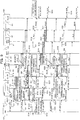
- Fig. 3 illustrates a sequence when a downstream data segment (an uncompressed data segment) is discarded by the RLC discard function (timeout) at the eNB 20 [sic]
- Fig. 4 illustrates a sequence when a downstream data segment (a compressed data segment) is discarded at the eNB 20 [sic].
- the aGW 20 When the aGW 20 receives a downstream packet from the NW 10 (Step S1), the aGW 20 subjects the downstream packet to ROHC processing (here, the IR state and uncompression processing) and ciphering processing by the ROHC compressor 22B and the ciphering processor 22C of the PDCP processor 22, and then transmits the packet to the S1-FP transmission processor 23 (Step S2). Then, the S1-FP transmission processor 23 attaches an SN (0) in S1-FP to the S1-FP header in the packet, and then transmits the packet to the eNB 30 (Step S3). The S1-FP transmission processor 23 attaches an SN in S1-FP to the downstream packet by incrementing the SN in the S1-FP every time receiving a downstream packet (a PDCP packet) from the PDCP processor 22.
- ROHC processing here, the IR state and uncompression processing
- ciphering processing by the ROHC compressor 22B and the ciphering processor 22C of the
- the S1-FP reception processor 31 receives the downstream packet, and then transmits the packet to the RLC processor 33 after termination of the S1-FP header (Step S4). Then, the RLC-PDU generator 33A of the RLC processor 33 generates an RLC-PDU. At that time, when discard of a PDCP packet is generated by the RLC discard function (timeout) (Step S5), an uncompressed data segment does not reach the UE 40 (see the dotted arrows).
- the UE 40 If the UE 40 receives a downstream packet transmitted from the NW 10 to the aGW 20 subsequent to the uncompressed data segment after the downstream packet is header-compressed by the PDCP processor 22 (the ROHC compressor 22B) of the aGW 20 in a compressed state other than the IR state (here, the SO state) through the eNB 30 (Steps S6 to S13), the UE 40 cannot decompress the header of the compressed data segment and thus cannot decode the received packet.
- the PDCP processor 22 the ROHC compressor 22B of the aGW 20 in a compressed state other than the IR state (here, the SO state) through the eNB 30
- the RLC processor 33A (the RLC discard detector 33B) of the eNB 30 detects the discard of the uncompressed data segment, and notifies the SN (the SN in RLC) of the discarded RLC packet to the discard notification controller 36 (the SN retrieving processor 36A).
- the S1-FP reception processor 24 of the aGW 20 receives the upstream S1-FP packet, and determines that the received packet is a discard notification packet by termination of the S1-FP header. Then, the processor 24 notifies the discard SN to the ROHC controller 22A of the PDCP processor 22 (Step A3).
- the data packet is transmitted to the deciphering processor 22D for deciphering processing, and then is transmitted to the NW 10 through the upper-level device IF 21 after ROHC decoding processing of the ROHC decompressor 22E.
- the ROHC controller 22A receiving the notification of the discard SN from the S1-FP reception processor 24 searches the correspondence table 22a for the notified discard SN, and then identifies (determines) whether the discarded PDCP packet is an uncompressed data or a compressed data.
- the controller 22A since the ROHC controller 22A determines that the discarded data segment is an uncompressed data segment, the controller 22A causes a compression state to vary to the IR state, and then controls the state of the ROHC processing of the ROHC compressor 22B to an uncompressed state (Step A4).
- a downstream packet which is received from the NW 10 (Step S14) and should be transmitted to the eNB 30, is transferred to the S1-FP transmission processor 23 as an uncompressed data segment without header compression (Step S15), and then is transmitted from the S1-FP transmission processor 23 to the UE 40 through the eNB 30 (Steps S16 to S19).
- the UE 40 can receive a new uncompressed data segment within a shorter time since discard of an uncompressed data segment occurs at the eNB 30, compared to conventional processing, and can receive the uncompressed data segment normally (Steps S20 to S22). Even if the subsequently received compressed data segment is incomplete, the compressed header can be decompressed based on the uncompressed data segment previously received.
- the silence period generated by the missing of the uncompressed data segment can be significantly reduced compared to conventional processing (see Fig. 20 ).
- the aGW 20 can control the compression state of the ROHC to the IR state by receiving missing notification of the downstream packet from the eNB 30, which is an intermediate node, at an early stage, and can suppress transmission of useless downstream packets (compressed data segments) that cannot be decompressed by the UE 40. Therefore, loss of the downstream wireless band of the wireless zone (between the eNB 20 and the UE 40) can be suppressed. (In the Case Where Compressed Data is Discarded)
- the S1-FP reception processor 31 receives the downstream packet, and then transmits the packet to the RLC processor 33 after termination of the S1-FP header (Step S4). Then, the RLC-PDU generator 33A of the RLC processor 33 generates an RLC-PDU. The generated RLC-PDU is transmitted to the MAC processor 34, and then is subjected to required MAC processing in the MAC processor 34. Then, the RLC-PDU is transmitted to the wireless terminator 35, and is transmitted to the UE 40 after required wireless transmission processing (Steps S5 and S6).
- the UE 40 performs decoding processing of the downstream packet in the MAC/PHY processor 41, the RLC processor 42, and the PDCP processor 43, upon reception of the downstream packet (RLC-PDU) (Steps S7 to S9).
- the aGW 20 When the aGW 20 receives the subsequent downstream packet from the NW 10 (Step S10), the aGW 20 subjects the downstream packet to the ROHC processing (header compression of the SO state) and ciphering processing in the ROHC compressor 22B and the ciphering processor 22C of the PDCP processor 22 under assumption that the compression state of ROHC processing varies from the IR state to the SO state, and then transmits the packet to the S1-FP transmission processor 23 (Step S11).
- the S1-FP reception processor 31 receives the downstream packet (the compressed data segment), and then transmits the packet to the RLC processor 33A, for example, after the termination of the S1-FP header (Step S13).
- the RLC processor 33 generates an RLC-PDU from the transmitted downstream packet (the PDCP packet) in the RLC-PDU generator 33A.
- the RLC discard function timeout
- the compression state by the ROHC compressor 22B of the aGW 20 may not be changed. Consequently, the eNB 30 notifies a discard SN to the ROHAC [sic] controller 22A of the aGW 20 using the S1-FP header of an upstream packet in the same manner as that of discard of an uncompressed data segment when the RLC discard detector 33B detects the discard of the compressed data segment (Steps B1 to B3).
- the ROHC controller 22A searches the correspondence table 22a for the notified discard SN, and maintains the current state (the SO state) without changing the compression state of ROHC processing if the S1-FP packet corresponding to the discard SN is a header-compressed data segment (Step B4).
- the S1-FP reception processor 31 or the discard detector 34A of the MAC processor 34 When discard or missing of a downstream packet is detected by the S1-FP reception processor 31 or the discard detector 34A of the MAC processor 34, the result of the detection (discard or missing notification) is collected to the discard notification controller 36, and the controller 36 performs discard or missing notification to the aGW20 (the ROHC controller 22A) by an upstream packet (a data packet or a dummy packet).
- the discard detector 34A of the MAC processor 34 when missing of a downstream packet is detected by the discard detector 34A of the MAC processor 34, an SN in RLC is notified to the discard notification processor 36.
- the processor 36 searches the correspondence table 36a for the SN in RLC, acquires the SN in S1-FP corresponding to the notified SN, and then notifies the SN as the discard SN to the ROHC controller 22A of the aGW 20.
- the eNB 30 can notify (send feedback) the situation to the aGW 20 immediately, and can change the compression state of the ROHC to the IR state (uncompressed state). This can reduce the time period when compressed data segments cannot be decoded correctly due to incorrect reception of an uncompressed data segment by the UE 40.
- the downstream band in the wireless zone from the eNB 30 to the UE 40 can be suppressed.
- the number of compressed data segments that cannot be decoded and are discarded by UE 40 can be reduced.
- the UE 40 can detect incorrect reception of an uncompressed data segment at an early stage before transmission of the data segment to the wireless zone, and then can notify the situation to the aGW 20, so that the aGW 20 can change the header compression state of a downstream packet addressed to the UE 40 to the IR state at the early stage. This can suppress loss of the downstream wireless resources.
- missing notification from the eNB 30 to the aGW 20 is performed using an upstream packet (a user data segment) addressed from the UE 40 to the aGW 20, so that the utilization efficiency of communication resources from a wireless base station to a transmitter can be improved.
- the eNB 30 (the discard notification packet generator 36B) generates a discard notification packet and transmits the packet to the aGW 20, preventing delay in the discard notification.
- the eNB 30 manages the correspondence of continuity (SNs) of the downstream packets before and after the protocol conversion by the correspondence tables 36a and 33a, so that the eNB 30 identify the SN of the missing packet before the protocol conversion. This enables the eNB 30 to surely notify the SN of the missing packet to the aGW 20.
- SNs continuity
- the above-mentioned embodiment assumes that the S1-FP transmission processor 23 of the aGW 20 attaches an SN in S1-FP to each of the downstream packets. This is because the ciphering processor 22C of the aGW 20 performs ciphering processing to a PDCP-PDU (a payload portion including a PDCP header) for data encryption, so that the eNB 30 cannot recognize the SN in PDCP even if the eNB 30 detects discard.
- PDCP-PDU a payload portion including a PDCP header
- the aGW 20 cannot determine which down stream packet (that is, either an uncompressed data segment or a compressed data segment) is discarded. For this reason, if the aGW 20 changes the compression state to the IR state in the case where the compressed data segment is discarded, the aGW 20 transmits unnecessary uncompressed data segments. This may adversely affect the downstream wireless band.
- SNs in S1-FP in addition to SNs in DPCP are attached to downstream packets addressed to the eNB 30, and the correspondence table 22a manages the correspondence between the packets and the SNs together with a correspondence between the packets and compression states.
- the aGW 20 can therefore identify whether the discarded packet is an uncompressed data segment or a compressed data segment, can change the compression state of ROHC processing to the IR state only if the discarded packet is an uncompressed data segment, and can transmit the uncompressed data segments.
- the eNB 30 may perform only discard notification to the aGW 20, and the aGW 20 may unconditionally change the compression state to the IR state, and then transmit the uncompressed data segments, upon reception of the discard notification.
- Fig. 6 illustrates the processing sequence
- the controller 36 notifies the generation of the discard packet to the aGW 20 (the ROHC controller 22A) using an upstream packet (a data packet or a dummy packet) through the S1-FP transmission controller 32 (Steps C1 to C3).
- Step C4 Since the ROHC controller 22A that receives the notification cannot identify the discard SN, it unconditionally changes the compression state of the ROHC of the ROHC compressor 22B to the IR state and then transmits the subsequence downstream packet as an uncompressed data segment (Step C4).
- the other operations are the same as those described in Fig. 4 (Steps S1 to S32).
- the operation when discard or missing of a downstream packet is detected by the S1-FP reception processor 31 or the discard detector 34A of the MAC processor 34 is also the same as that described above.
- the aGW 20 determines whether the downstream packet in which an error (discard or missing) occurs is an uncompressed data segment or a compressed data segment.
- the ROHC controller 22A of the aGW 20 searches the correspondence table 22a for the discard SN notified by an upstream packet (a discard notification packet) from the eNB 20 [sic], and determines the compression state of the discarded downstream packet.
- the eNB 30 can also determine whether the downstream packet in which an error occurs is an uncompressed data segment or a compressed data segment. If the downstream packet in which an error occurs is a compressed data segment, as described above, the UE 400 [sic] can decompress the compressed data segments that are just received, based on an uncompressed data segment that has been already received. Therefore, the UE 40 does not perform error generation notification to the aGW 20 (the ROHC controller 22A), and can perform the error generation notification to the aGW 20 only the case where the downstream packet in which an error occurs is an uncompressed data segment.
- the volume of downstream packets from the eNB 30 to the aGW 20 can be reduced, resulting in efficient utilization of the upstream transmission band between the eNB 30 and the aGW 20.
- Fig. 7 illustrates a configuration of a wireless communication system according to the second embodiment of the present invention to achieve such a function.
- the wireless communication system illustrated in Fig. 1 [sic] differs from the system described in the first embodiment (see Fig. 1 ) in that the wireless communication system has an S1-FP transmission processor 23a instead of the S1-FP transmission processor 23 in the aGW 20, an S1-FP reception processor 31a instead of the S1-FP reception processor 31, and an SN retrieving processor 36C (a correspondence table 36c) instead of the SN retrieving processor 36A in the eNB 30.
- the components designated by the same reference numerals as above have the same or similar functions as those of the components described above, unless otherwise noted.
- the S1-FP transmission processor 23a of the aGW 20 has a function that converts the protocol fields of downstream data segments (PDCP packets) (for example, attachment of an S1-FP header), which are received from the PDCP processor 22 after ROHC processing and ciphering processing in the PDCP processor 22, into the inter-device IF protocol (S1-FP) between the aGW 20 and the eNB 30, and then transmits the data segments to the eNB 30.
- PDCP packets for example, attachment of an S1-FP header
- S1-FP inter-device IF protocol
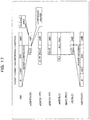
- the S1-FP transmission processor 23a of this embodiment has a function that attaches, for example, flag (F) information indicating the header compression (0: presence of header compression, 1: absence of header compression) of the ROHC to the S1-FP header together with a sequence number (an SN) in S1-FP, aside from a sequence number (an SN) in PDCP, as illustrated in Fig. 8 .
- the information on the presence or absence of the header compression can be received from the PDCP processor 22 together with PDCP packets from the PDCP processor 22 (the deciphering processor 22C).
- the S1-FP reception processor 31a of the eNB 30 converts (for example, termination of an S1-FP header) the protocol fields of the packets (S1-FP packets) received from the aGW 20 (the S1-FP transmission processor 23a) into PDCP, and then transmits the packets to the RLC processor 33 (the PDCP-SDU divider (the RLC-PDU generator) 33A).
- the processor 31a of this embodiment also has the following functions:
- the SN retrieving processor 36C has a function that detects the SN (a discarded SN) in S1-FP of a discarded downstream packet, and then notifies the SN to the discard notification packet generating processor 36B.
- the processor 36C of this embodiment also has the following functions:
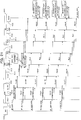
- the S1-FP reception processor 31a receives the downstream packet, and then transmits the packet to the RLC processor 33 after termination of the S1-FP header (Step S4). Then, the RLC-PDU generator 33A of the RLC processor 33 generates an RLC-PDU.
- the RLC discard function timeout
- the UE 40 If the UE 40 receives the downstream packet transmitted from the NW 10 to the aGW 20, subsequent to the uncompressed data segment after the packet is header-compressed by the PDCP processor 22 (the ROHC compressor 22B) of the aGW 20 in a compressed state other than the IR state (the SO state) through the eNB 30 (Steps S6 to S13), the UE 40 cannot decompress the compressed data segment and thus cannot decode the received packet.
- the RLC processor 33A (the RLC discard detector 33B) of the eNB 30 detects the discard of the uncompressed data segment, and notifies the SN (SN in RLC) of the discarded RLC packet to the discard notification controller 36 (the SN retrieving processor 36C). Then, an SN in S1-FP corresponding to the SN in RLC and flag information is retrieved from the correspondence table 36c.
- the S1-FP transmission processor 32 attaches an S1-FP header (see Fig. 2 ) including a discard flag (1), a PID (0 or 1), an upstream SN in S1-FP, and the notified discard SN (0) to an upstream PDCP packet (a data packet or a dummy packet) transmitted from the discard notification packet generating processor 36B, and then transmits the upstream PDCP packet to the aGW 20 (Step D3).
- the S1-FP reception processor 24 of the aGW 20 receives the upstream S1-FP packet, determines the received packet as a discard notification packet after termination of the S1-FP header, and then notifies the discard SN to the ROHC controller 22A of the PDCP processor 22 (Step D4).
- the data packet is transmitted to the deciphering processor 22D for deciphering processing, and then is transmitted to the NW 10 through the upper-level device IF 21 after ROHC decoding processing in the ROHC decompressor 22E.
- the ROHC processor 22A controls the state of the ROHC processing in the ROHC compressor 22B to an uncompressed state (the IR state) upon reception of the notification of the discarded SN from the S1-FP reception processor 24 (Step D5).
- a downstream packet received by the NW 10 (Step S14) and to be transmitted to the eNB 30 at this time is transferred to the S1-FP transmission processor 23a without header compression as an uncompressed data segment (Step S15), and then is transmitted from the S1-FP transmission processor 23a to the UE 40 through the eNB 30 (Steps S16 to S19).
- the UE 40 can receive a new uncompressed data segment within a shorter time since discard of an uncompressed data segment occurs at the eNB 30, compared to conventional processing, and can receive the uncompressed data segment normally (Steps S20 to S22). Even if the subsequently received compressed data segment is incomplete, the compressed header can be decompressed based on the uncompressed data segment previously received.
- the aGW 20 when the aGW 20 receives the subsequent downstream packet from the NW 10 (Step S23), the aGW 20 subjects the downstream packet to ROHC processing (compression) and ciphering processing in the ROHC compressor 22B of the PDCP processor 22 and the ciphering processor 22C, and then transmit the packet to the S1-FP transmission processor 23a (Step S24).
- the S1-FP reception processor 31a receives the downstream packet, and then transmits the packet to the RLC processor 33 after termination of the S1-FP header (Step S26).
- the RLC-PDU generator 33A of the RLC processor 33 generates an RLC-PDU.
- the packet a compressed data segment
- the packet does not reach the UE 40.
- the RLC processor 33A (the RLC discard detector 33B) of the eNB 30 detects the discard of the compressed data segment, and notifies the SN (the SN in RLC) of the discarded RLC packet to the discard notification controller 36 (the SN retrieving processor 36C).
- the SN (3) in S1-FP corresponding to the SN in RLC and the flag information are retrieved from the correspondence table 36c.
- F is set to 0 (a compressed data segment)
- the SN retrieving processor 36C notifies the retrieved SN (3) to neither the S1-FP transmission processor 32 nor the discard notification packet generator 36B. Consequently, the discard SN (3) is not notified to the aGW 20 (Steps D7 and D8).
- the discard detector 34A of the MAC processor 34 detects discard or missing of a downstream packet, the detector 34A notifies the SN in RLC to the discard notification controller 36C.
- the subsequent processing is the same as described above.
- the eNB 30 can determine whether a received packet is a compressed data segment or an uncompressed data segment by setting a flag (a header compression flag (F)) for determining a compressed data segment or an uncompressed data segment to the S1-FP header.
- a header compression flag F
- the SN retrieving processor 36C manages the correspondence between the SN of the packet in S1-FP received from the aGW 20, the header compression flag (F), and the SN in RLC using the correspondence table 36c in the processor 36C. Thereby, upon reception of the discard notification from the RLC processor 33 (or the MAC processor 34), the processor 36C determines whether the corresponding SN of the downstream packet in RLC is a compressed data segment or an uncompressed data segment, and then performs notification to the S1-FP transmission processor 32 and the discard notification packet generating processor 36B only for the uncompressed data segment, as in the first embodiment.
- the RLC processor 33 and the MAC processor 34 detect the discard of a downstream packet, only an SN of a compressed data segment in S1-FP is notified to the aGW 20, and unnecessary discard notification (transmission of a dummy packet) from the eNB 30 to the aGW 20 is reduced. Consequently, utilization efficiency of upstream communication resources, for example, the upstream transmission band, from the eNB 30 to the aGW 20 can be improved.
- the discard notification controller 36 performs notification to the aGW 20 regardless of a header-compression state as in the first embodiment because the processor 31a cannot determine whether the packet is a header-compressed packet or a header-uncompressed packet.
- a target of control (timing of control) of the compression state is the subsequent downstream packet addressed to the UE 40 just after the aGW 20 (the ROHC controller 22A) receives a discard notification from the eNB 30, the controlled target is not necessarily the subsequent packet.
- the third or fourth downstream packet after the subsequent packet (second packet) may be a controlled target as long as a silence period at the receiver is an acceptable range.
- compression or uncompression control that deals with missing notification is a necessary and sufficient condition.
- the present invention can suppress loss of wireless resources in the wireless zone from a wireless base station to a wireless terminal by reduction of a time period when header-compressed data segments cannot be decoded correctly due to incorrect reception of a header-uncompressed data segment by the wireless terminal. Consequently, the present invention is significantly useful in the field of radio communication technology, for example, of mobile communication technology.
Landscapes
- Engineering & Computer Science (AREA)
- Computer Networks & Wireless Communication (AREA)
- Signal Processing (AREA)
- Mobile Radio Communication Systems (AREA)
Claims (15)
- Verfahren zum Steuern der Kopfzeilenkompression in einer drahtlosen Kommunikation für ein drahtloses Kommunikationssystem, aufweisend einen Sender (20), der die Kopfzeilenkompressionszustände von Datensegmenten, die an ein drahtloses Endgerät (40) adressiert werden, in einen komprimierten oder nicht komprimierten Zustand steuert, und der Sender (20) die Datensegmente überträgt, eine drahtlose Basisstation (30), welche die Datensegmente empfängt, die von dem Sender an das drahtlose Endgerät (40) adressiert werden, und die drahtlose Basisstation (30) die Datensegmente an das drahtlose Endgerät (40) überträgt, wobei das drahtlose Endgerät (40) die kopfzeilenkomprimierten Datensegmente von der drahtlosen Basisstation auf der Basis eines empfangenen nicht kopfzellenkomprimierten Datensegmentes decodiert, wobei das Verfahren dadurch gekennzeichnet ist, dass :die drahtlose Basisstation (30) die Benachrichtigung eines Fehlens an den Sender (20) vornimmt, wenn sie das Fehlen des Empfangs der Datensegmente von dem Sender (20) detektiert; undder Sender (20) einen Kopfzeilenkompressionszustand des fehlenden Datensegmentes beim Empfangen der Benachrichtigung des Fehlens bestimmt, und einen Kopfzeilenkompressionszustand des darauffolgenden Datensegmentes, das an das drahtlose Endgerät adressiert ist, in einen nicht komprimierten Zustand steuert, wenn es sich bei dem bestimmten Kopfzeilenkompressionszustand des fehlenden Datensegmentes um einen nicht komprimierten Zustand handelt.
- Verfahren zum Steuern der Kopfzeilenkompression nach Anspruch 1, wobei
der Sender (20) an jedes der Datensegmente, die an das drahtlose Endgerät adressiert werden, eine Sequenznummer anhängt, und die Übereinstimmungsinformationen verwaltet, welche die Sequenznummer in Übereinstimmung mit den Informationen bringen, die angeben, ob es sich bei dem Kopfzeilenkompressionszustand des Datensegmentes um einen komprimierten oder nicht komprimierten Zustand handelt;
die drahtlose Basisstation (30) das Fehlen durch Überwachen der Sequenznummern der Datensegmente detektiert, die von dem Sender empfangen werden, und dem Sender die Sequenznummer des fehlenden Datensegmentes und die Benachrichtigung des Fehlens meldet; und
der Sender (20) einen Kopfzeilenkompressionszustand des fehlenden Datensegmentes auf der Basis der Sequenznummer bestimmt, die von der drahtlosen Basisstation und den Korrespondenzinformationen gemeldet wird, und die Kopfzeilenkompressionszustände der darauffolgenden Datensegmente, die an das drahtlose Endgerät adressiert werden, in einen nicht komprimierten Zustand steuert, wenn es sich bei dem Kopfzeilenkompressionszustand des fehlenden Datensegmentes um einen nicht komprimierter Zustand handelt. - Verfahren zum Steuern der Kopfzeilenkompression nach Anspruch 2, wobei
der Sender (20) die Kopfzeilenkompressionszustände der darauffolgenden Datensegmente, die an das drahtlose Endgerät (40) adressiert werden, nicht wechselt, wenn es sich bei dem Kopfzeilenkompressionszustand des fehlenden Datensegmentes um einen komprimierten Zustand handelt. - Verfahren zum Steuern der Kopfzeilenkompression nach Anspruch 1, wobei
der Sender (20) an jedes der Datensegmente, die an das drahtlose Endgerät (40) adressiert werden, eine Sequenznummer und Kennzeicheninformationen anhängt, die angeben, ob es sich bei dem Kopfzeilenkompressionszustand des Datensegmentes um einen komprimierten oder nicht komprimierten Zustand handelt;
die drahtlose Basisstation (30) die Sequenznummer und den Kopfzeilenkompressionszustand des fehlenden Datensegmentes durch Überwachen der Sequenznummern und der Kennzeicheninformationen der Datensegmente bestimmt, die von dem Sender (20) empfangen werden, und die Benachrichtigung des Fehlens an den Sender nur dann vornimmt, wenn es sich bei dem Kopfzeilenkompressionszustand des fehlenden Datensegmentes um einen nicht komprimierten Zustand handelt; und
der Sender (20) die Kopfzeilenkompressionszustände der darauffolgenden Datensegmente, die an das drahtlose Endgerät adressiert werden, in einen nicht komprimierten Zustand steuert, wenn die Benachrichtigung des Fehlens von der drahtlosen Basisstation (30) empfangen wird. - Verfahren zum Steuern der Kopfzeilenkompression in drahtloser Kommunikation nach irgendeinem der Ansprüche 1 bis 4, wobei
die drahtlose Basisstation (30) die Benachrichtigung des Fehlens an den Sender (20) durch Anhängen der Benachrichtigungsinformationen des Fehlens an das Datensegment vornimmt, das von dem drahtlosen Endgerät (40) empfangen wird und an den Sender (20) adressiert wird. - Verfahren zum Steuern der Kopfzeilenkompression nach irgendeinem der Ansprüche 1 bis 4, wobei
die drahtlose Basisstation (30) die Benachrichtigung des Fehlens an den Sender (20) durch Erzeugen eines Datensegmentes, an das die Benachrichtigung des Fehlens angehängt wird, und durch Übertragen der Datensegmente an den Sender (20) vornimmt. - Verfahren zum Steuern der Kopfzeilenkompression nach irgendeinem der Ansprüche 1 bis 4, wobei
die drahtlose Basisstation (30) die Benachrichtigung des Fehlens durch Anhängen der Benachrichtigungsinformationen des Fehlens an das Datensegment vornimmt, wenn ein Datensegment, das von dem drahtlosen Endgerät (40) empfangen wird, und an den Sender (20) adressiert wird, vorhanden ist, oder durch Erzeugen eines Datensegmentes, an das die Benachrichtigungsinformationen des Fehlens angehängt werden und durch Übertragen des Datensegmentes an den Sender (20), wenn das Datensegment, das an den Sender (20) adressiert wird, in dem Fall der Übertragung der Benachrichtigung an den Sender (20), nicht vorhanden ist. - Verfahren zum Steuern der Kopfzeilenkompression nach Anspruch 2 oder 3, wobei
die drahtlose Basisstation (30) die Übereinstimmung von Sequenznummern vor und nach der Protokollumwandlung, die während der Übertragung der Datensegmente, die von dem Sender (20) empfangen werden, an den drahtlosen Sender (40) durchgeführt wird, verwaltet, und die Sequenznummer des fehlenden Datensegmentes vor der Protokollumwandlung auf der Basis der Übereinstimmung beim Detektieren des Fehlens nach der Protokollumwandlung identifiziert. - Drahtlose Basisstation (30), die in einem drahtlosen Kommunikationssystem eingesetzt werden soll, aufweisend einen Sender (20), der die Datensegmente, nach dem Steuern der Kopfzeilenkompressionszustände der Datensegmente, die an ein drahtloses Endgerät (40) adressiert werden, in einen komprimierten oder nicht komprimierten Zustand, überträgt, die drahtlose Basisstation (30), welche die Datensegmente empfängt, die von dem Sender (20) an das drahtlose Endgerät (40) adressiert werden, und die Datensegmente an das drahtlose Endgerät (40) überträgt, wobei das drahtlose Endgerät (40) die kopfzeilenkomprimierten Datensegmente von der drahtlosen Basisstation (30) auf der Basis des empfangenen nicht kopfzeilenkomprimierten Datensegmentes decodiert, wobei die drahtlose Basisstation (30) Folgendes umfasst:Detektierungsmittel eines Fehlens (36C), die dazu ausgestaltet sind, das Fehlen des Empfangs der Datensegmente von dem Sender zu detektieren, und einen Kopfzeilenkompressionszustand des fehlenden Datensegmentes zu bestimmen; undSteuerungsmittel der Benachrichtigung des Fehlens (32), die dazu ausgestaltet sind, die Benachrichtigung des Fehlens an den Sender zu übertragen, wenn es sich bei dem bestimmten Kopfzeilenkompressionszustand des fehlenden Datensegmentes um einen nicht komprimierten Zustand handelt.
- Drahtlose Basisstation (30) nach Anspruch 9, wobei
die Mittel zum Detektieren (36C) des Fehlens (36C) des Weiteren dazu ausgestaltet sind, das Fehlen der Datensegmente durch Überwachen der Sequenznummern der Datensegmente zu detektieren, die durch den Sender angehängt werden, und
die Steuerungsmittel der Benachrichtigung des Fehlens (32) des Weiteren dazu ausgestaltet sind, dem Sender die Sequenznummer des fehlenden Datensegmentes zusammen mit der Benachrichtigung des Fehlens zu melden. - Drahtlose Basisstation (30) nach Anspruch 9, wobei
die Mittel zum Detektieren des Fehlens (36C) des Weiteren dazu ausgestaltet sind, die Sequenznummer des fehlenden Datensegmentes und den Kopfzeilenkompressionszustand des fehlenden Datensegmentes durch Überwachen der Sequenznummer zu bestimmen, die durch den Sender (20) an jedes der Datensegmente angehängt wird,
und die Kennzeicheninformationen angeben, ob es sich bei den Kopfzeilenkompressionszuständen der Datensegmente um einen komprimierten oder nicht komprimierten Zustand handelt, und
die Steuerungsmittel der Benachrichtigung des Fehlens (32) des Weiteren dazu ausgestaltet sind, die Benachrichtigung des Fehlens an den Sender nur dann durchzuführen, wenn es sich bei dem identifizierten Kopfzeilenkompressionszustand um einen nicht komprimierten Zustand handelt. - Drahtlose Basisstation (30) nach Anspruch 10, wobei
die Steuerungsmittel der Benachrichtigung des Fehlens (32) aufweisen Mittel, welche die Übereinstimmung der Sequenznummern vor und nach der Protokollumwandlung verwalten, die während der Übertragung der Datensegmente, die von dem Sender (20) empfangen werden, an das drahtlose Endgerät (40) durchgeführt wird, und Mittel, welche die Sequenznummer des fehlenden Datensegmentes vor der Protokollumwandlung auf der Basis der Übereinstimmung beim Detektieren des Fehlens nach der Protokollumwandlung identifizieren. - Sender (20), der in einem drahtlosen Kommunikationssystem eingesetzt werden soll, wobei der Sender (20) die Kopfzeilenkompressionszustände der Datensegmente, die an ein drahtloses Endgerät (40) adressiert werden, in einen komprimierten oder nicht komprimierten Zustand steuert, und der Sender (20) die Datensegmente überträgt, eine drahtlose Basisstation (30), welche die Datensegmente empfängt, die von dem Sender an das drahtlose Endgerät (40) adressiert werden, und der Sender (20) die Datensegmente an das drahtlose Endgerät (40) überträgt, und das drahtlose Endgerät (40), das die kopfzeilenkomprimierten Datensegmente von der drahtlosen Basisstation (30) auf der Basis des empfangenen nicht kopfzeilenkomprimierten Datensegmentes decodiert, wobei der Sender (20) des Weiteren Folgendes umfasst:Empfangsmittel (24), die dazu ausgestaltet sind, die Benachrichtigung des Fehlens zu empfangen, die von der drahtlosen Basisstation (30) übertragen wird, wenn die drahtlose Basisstation (30) das Fehlen der Datensegmente detektiert; undSteuerungsmittel (22A), die dazu ausgestaltet sind, einen Kopfzeilenkompressionszustand des fehlenden Datensegmentes zu bestimmen, wenn die Empfangsmittel (24) die Benachrichtigung des Fehlens empfangen, und einen Kopfzeilenkompressionszustand des darauffolgenden Datensegmentes, das an das drahtlose Endgerät (40) adressiert wird, in einen nicht komprimierten Zustand zu steuern, wenn es sich bei dem bestimmten Kopfzeilenkompressionszustand des fehlenden Datensegmentes um einen nicht komprimierten Zustand handelt.
- Sender (20) nach Anspruch 13, wobei
die Steuerungsmittel (22A) Folgendes aufweisen:Mittel zum Anhängen der Sequenznummer (23), die dazu ausgestaltet sind, eine Sequenznummer an jedes der Datensegmente anzuhängen, die an das drahtlose Endgerät (40) adressiert werden;Verwaltungsmittel (22a), die dazu ausgestaltet sind, die Übereinstimmungsinformationen zu verwalten, welche die Sequenznummern in Übereinstimmung mit den Informationen bringen, die angeben, ob es sich bei den Kopfzeilenkompressionszuständen der Datensegmente um einen komprimierten oder nicht komprimierten Zustand handelt;Bestimmungsmittel, die dazu ausgestaltet sind, den Kopfzeilenkompressionszustand des fehlenden Datensegmentes auf der Basis der Sequenznummer des fehlenden Datensegmentes, das von der drahtlosen Basisstation (30) zusammen mit der Benachrichtigung des Fehlens durch die Empfangsmittel (24) empfangen wird, und die Übereinstimmungsinformationen der Verwaltungsmittel (22a) zu bestimmen, undSteuerungsmittel der Kopfzeilenkompression, die dazu ausgestaltet sind, die darauffolgenden Datensegmente, die an das drahtlose Endgerät (40) adressiert werden, in einen nicht komprimierten Zustand zu steuern, wenn es sich bei dem Kopfzeilenkompressionszustand des fehlenden Datensegmentes um einem nicht komprimierten Zustand handelt. - Sender (20) nach Anspruch 14, wobei
die Steuerungsmittel der Kopfzeilenkompression (22A) die Kopfzeilenkompressionszustände der darauffolgenden Datensegmente, die an das drahtlose Endgerät (40) adressiert werden, wenn es sich bei dem Kopfzeilenkompressionszustand des fehlenden Datensegmentes um einen komprimierten Zustand handelt, als Ergebnis der Bestimmung durch die Bestimmungsmittel, nicht wechseln.
Applications Claiming Priority (1)
| Application Number | Priority Date | Filing Date | Title |
|---|---|---|---|
| PCT/JP2007/059776 WO2008139594A1 (ja) | 2007-05-11 | 2007-05-11 | 無線通信のヘッダ圧縮制御方法並びに無線基地局及び送信装置 |
Publications (3)
| Publication Number | Publication Date |
|---|---|
| EP2157741A1 EP2157741A1 (de) | 2010-02-24 |
| EP2157741A4 EP2157741A4 (de) | 2013-10-02 |
| EP2157741B1 true EP2157741B1 (de) | 2017-03-29 |
Family
ID=40001825
Family Applications (1)
| Application Number | Title | Priority Date | Filing Date |
|---|---|---|---|
| EP07743211.0A Not-in-force EP2157741B1 (de) | 2007-05-11 | 2007-05-11 | Verfahren zur steuerung der header-komprimierung bei der drahtlosen kommunikation und drahtlose station und sendeeinrichtung |
Country Status (4)
| Country | Link |
|---|---|
| US (1) | US8189594B2 (de) |
| EP (1) | EP2157741B1 (de) |
| JP (1) | JP4930587B2 (de) |
| WO (1) | WO2008139594A1 (de) |
Families Citing this family (17)
| Publication number | Priority date | Publication date | Assignee | Title |
|---|---|---|---|---|
| KR100995621B1 (ko) * | 2006-02-24 | 2010-11-22 | 후지쯔 가부시끼가이샤 | 에러 제어 장치 |
| EP2023683B1 (de) * | 2007-08-09 | 2011-05-18 | Nokia Siemens Networks Oy | Mobiles Kommunikationsendgerät, Kommunikationsstation, Kommunikationsnetzwerk und Kommunikationsverfahren |
| JP5127745B2 (ja) * | 2009-02-23 | 2013-01-23 | 三菱電機株式会社 | 無線通信システムおよび通信制御方法 |
| KR101472100B1 (ko) * | 2010-12-22 | 2014-12-11 | 주식회사 케이티 | 무선통신 시스템에서 기지국 장비 및 데이터 처리 방법 |
| CN102547848B (zh) * | 2011-01-04 | 2015-08-05 | 华为技术有限公司 | 一种处理业务数据流的方法和装置 |
| CN102857356A (zh) * | 2011-06-27 | 2013-01-02 | 华为技术有限公司 | 发送数据包、超帧号更新和维护、数据处理的方法及装置 |
| CN103179094B (zh) * | 2011-12-22 | 2019-10-01 | 南京中兴软件有限责任公司 | Ip报文头的发送、接收方法、发送装置以及接收装置 |
| CN103428246B (zh) * | 2012-05-21 | 2018-01-19 | 中兴通讯股份有限公司 | 分组数据汇聚协议层对上行ip包进行重传的方法及终端 |
| US9236936B2 (en) * | 2012-08-31 | 2016-01-12 | Hughes Network Systems, Llc | System and method for low-complexity, high-speed preprocessing of encapsulated packets in a broadband communications network |
| US9325762B2 (en) * | 2012-12-11 | 2016-04-26 | Qualcomm Incorporated | Method and apparatus for efficient signaling for compression |
| US9526066B2 (en) * | 2013-08-30 | 2016-12-20 | Qualcomm Incorporated | Methods, access point and wireless device for optimizing the modulation and coding scheme (MCS) used for exchanging probe request and probe responses between an access point and a wireless device |
| KR102192165B1 (ko) | 2013-11-25 | 2020-12-16 | 삼성전자주식회사 | 전자 장치에서 헤더 압축된 패킷을 처리하기 위한 장치 및 방법 |
| KR102273873B1 (ko) * | 2014-09-24 | 2021-07-06 | 삼성전자 주식회사 | Lte 시스템을 이용한 호 수행 방법 및 장치 |
| JP6524771B2 (ja) * | 2015-03-23 | 2019-06-05 | 日本電気株式会社 | 通信装置、パケット伝送方法、及び、プログラム |
| JP7024259B2 (ja) * | 2017-08-29 | 2022-02-24 | トヨタ自動車株式会社 | 情報処理システム、情報処理方法、プログラム、及び情報処理装置 |
| JP2019161342A (ja) * | 2018-03-09 | 2019-09-19 | 日本電信電話株式会社 | Rtp変換装置及びrtp変換方法 |
| US11681659B2 (en) * | 2021-05-21 | 2023-06-20 | Red Hat, Inc. | Hybrid file compression model |
Family Cites Families (20)
| Publication number | Priority date | Publication date | Assignee | Title |
|---|---|---|---|---|
| JP3112006B2 (ja) * | 1998-07-10 | 2000-11-27 | 日本電気株式会社 | データ転送制御方法およびその装置 |
| JP3702893B2 (ja) * | 1999-08-06 | 2005-10-05 | 松下電器産業株式会社 | データ伝送方法,データ伝送装置,及びデータ受信装置 |
| EP1601157B1 (de) | 1999-08-06 | 2020-01-15 | Godo Kaisha IP Bridge 1 | Datensende- und -empfangsgerät und verfahren |
| US7315544B2 (en) * | 2000-01-21 | 2008-01-01 | Bytemobile, Inc. | Global sequence numbers in wireless communications systems and methods |
| US7539130B2 (en) * | 2000-03-28 | 2009-05-26 | Nokia Corporation | Method and system for transmitting and receiving packets |
| FI112014B (fi) | 2000-06-28 | 2003-10-15 | Nokia Corp | Tiedonsiirtoresurssien varaus pakettivälitteisessä tiedonsiirrossa |
| US20040136380A1 (en) | 2000-09-12 | 2004-07-15 | Daiji Ido | Packet transmitter, packet receiver and packet transmission method |
| JP3323484B2 (ja) * | 2000-09-12 | 2002-09-09 | 松下電器産業株式会社 | パケット送信装置、パケット受信装置およびパケット伝送方法 |
| FI111493B (fi) * | 2000-09-22 | 2003-07-31 | Nokia Corp | Kontekstitunnisteen määrittäminen otsikkokenttien kompressoinnissa |
| FI110739B (fi) * | 2000-10-18 | 2003-03-14 | Nokia Corp | Otsikkokenttien kompressoinnin määrittäminen datapakettiyhteydelle |
| FI118244B (fi) | 2001-06-27 | 2007-08-31 | Nokia Corp | Otsikkokenttien kompressiotunnisteen välittäminen datapakettiyhteydellä |
| JP3617967B2 (ja) * | 2001-09-28 | 2005-02-09 | 松下電器産業株式会社 | ヘッダ圧縮パケット受信装置及び方法 |
| KR100896484B1 (ko) | 2002-04-08 | 2009-05-08 | 엘지전자 주식회사 | 이동통신시스템에서 데이터 전송 무선통신방법 및 무선통신장치 |
| US7286536B2 (en) * | 2002-10-28 | 2007-10-23 | Nokia Corporation | Method and system for early header compression |
| JP4176576B2 (ja) * | 2003-08-01 | 2008-11-05 | 株式会社エヌ・ティ・ティ・ドコモ | データ流入量制御方法、基地局及び制御局 |
| US7924731B2 (en) * | 2004-11-15 | 2011-04-12 | Telefonaktiebolaget Lm Ericsson (Publ) | Method and apparatus for handling out-of-sequence packets in header decompression |
| JP2006287284A (ja) * | 2005-03-31 | 2006-10-19 | Nec Corp | 無線通信システム及びそのヘッダ圧縮制御方法 |
| US8804765B2 (en) * | 2005-06-21 | 2014-08-12 | Optis Wireless Technology, Llc | Dynamic robust header compression |
| US7733867B2 (en) * | 2005-08-26 | 2010-06-08 | Alcatel-Lucent Usa Inc. | Header compression for real time internet applications |
| US8027328B2 (en) * | 2006-12-26 | 2011-09-27 | Alcatel Lucent | Header compression in a wireless communication network |
-
2007
- 2007-05-11 EP EP07743211.0A patent/EP2157741B1/de not_active Not-in-force
- 2007-05-11 JP JP2009513931A patent/JP4930587B2/ja not_active Expired - Fee Related
- 2007-05-11 WO PCT/JP2007/059776 patent/WO2008139594A1/ja not_active Ceased
-
2009
- 2009-10-22 US US12/604,274 patent/US8189594B2/en not_active Expired - Fee Related
Also Published As
| Publication number | Publication date |
|---|---|
| EP2157741A4 (de) | 2013-10-02 |
| JP4930587B2 (ja) | 2012-05-16 |
| JPWO2008139594A1 (ja) | 2010-07-29 |
| EP2157741A1 (de) | 2010-02-24 |
| US20100039942A1 (en) | 2010-02-18 |
| WO2008139594A1 (ja) | 2008-11-20 |
| US8189594B2 (en) | 2012-05-29 |
Similar Documents
| Publication | Publication Date | Title |
|---|---|---|
| EP2157741B1 (de) | Verfahren zur steuerung der header-komprimierung bei der drahtlosen kommunikation und drahtlose station und sendeeinrichtung | |
| US9357039B2 (en) | Header elimination for real time internet applications | |
| CA2429571C (en) | Method and system for transmission of headerless data packets over a wireless link | |
| US8532106B2 (en) | Header compression mechanism for transmitting RTP packets over wireless links | |
| JP6025880B2 (ja) | データ伝送方法、装置及びシステム | |
| US8331399B2 (en) | Re-using sequence number by multiple protocols for wireless communication | |
| US20070291788A1 (en) | Method and apparatus for reducing transmission overhead | |
| EP2203990B1 (de) | Speicher zur bereitstellung eines leitungsvermittelten bzw. cs-dienstes unter verwendung von hsdpa (high-speed-downlink-packet-access) oder hsupa (high-speed-uplink-packet-access) | |
| US8737358B2 (en) | Method for providing seamless transition between networks following different protocols | |
| US7733867B2 (en) | Header compression for real time internet applications | |
| CN108141790A (zh) | 在解压缩失败的情况下的时间戳修复机制 | |
| KR20170004598A (ko) | 헤더 압축을 이용한 패킷 통신 방법 및 장치 | |
| EP1873994A1 (de) | Verfahren und Vorrichtung zur Sicherung der Dienstqualität | |
| CN115516843B (zh) | 无线通信网络中使用的装置、电路及处理数据帧的方法 | |
| AU2005200565B2 (en) | Method of resuming header decompression in a multimedia broadcast/multicast service system | |
| US20060034249A1 (en) | Header compression between a compressor and a decompressor | |
| Faria | Robust Header Compression over IEEE 802 Networks | |
| KR20110124271A (ko) | 강건한 데이터 송신 | |
| Ayed et al. | Enhancing robust header compression over IEEE 802 networks |
Legal Events
| Date | Code | Title | Description |
|---|---|---|---|
| PUAI | Public reference made under article 153(3) epc to a published international application that has entered the european phase |
Free format text: ORIGINAL CODE: 0009012 |
|
| 17P | Request for examination filed |
Effective date: 20091209 |
|
| AK | Designated contracting states |
Kind code of ref document: A1 Designated state(s): AT BE BG CH CY CZ DE DK EE ES FI FR GB GR HU IE IS IT LI LT LU LV MC MT NL PL PT RO SE SI SK TR |
|
| AX | Request for extension of the european patent |
Extension state: AL BA HR MK RS |
|
| RIC1 | Information provided on ipc code assigned before grant |
Ipc: H04L 12/56 20060101AFI20100304BHEP Ipc: H04W 4/00 20090101ALI20100304BHEP |
|
| DAX | Request for extension of the european patent (deleted) | ||
| A4 | Supplementary search report drawn up and despatched |
Effective date: 20130902 |
|
| RIC1 | Information provided on ipc code assigned before grant |
Ipc: H04W 4/00 20090101AFI20130827BHEP |
|
| REG | Reference to a national code |
Ref country code: DE Ref legal event code: R079 Ref document number: 602007050389 Country of ref document: DE Free format text: PREVIOUS MAIN CLASS: H04L0012560000 Ipc: H04W0004000000 |
|
| GRAP | Despatch of communication of intention to grant a patent |
Free format text: ORIGINAL CODE: EPIDOSNIGR1 |
|
| RIC1 | Information provided on ipc code assigned before grant |
Ipc: H04W 4/00 20090101AFI20160928BHEP |
|
| INTG | Intention to grant announced |
Effective date: 20161019 |
|
| GRAS | Grant fee paid |
Free format text: ORIGINAL CODE: EPIDOSNIGR3 |
|
| GRAA | (expected) grant |
Free format text: ORIGINAL CODE: 0009210 |
|
| REG | Reference to a national code |
Ref country code: FR Ref legal event code: PLFP Year of fee payment: 11 |
|
| AK | Designated contracting states |
Kind code of ref document: B1 Designated state(s): AT BE BG CH CY CZ DE DK EE ES FI FR GB GR HU IE IS IT LI LT LU LV MC MT NL PL PT RO SE SI SK TR |
|
| REG | Reference to a national code |
Ref country code: GB Ref legal event code: FG4D |
|
| REG | Reference to a national code |
Ref country code: CH Ref legal event code: EP |
|
| REG | Reference to a national code |
Ref country code: AT Ref legal event code: REF Ref document number: 880770 Country of ref document: AT Kind code of ref document: T Effective date: 20170415 |
|
| REG | Reference to a national code |
Ref country code: IE Ref legal event code: FG4D |
|
| REG | Reference to a national code |
Ref country code: DE Ref legal event code: R096 Ref document number: 602007050389 Country of ref document: DE |
|
| PG25 | Lapsed in a contracting state [announced via postgrant information from national office to epo] |
Ref country code: FI Free format text: LAPSE BECAUSE OF FAILURE TO SUBMIT A TRANSLATION OF THE DESCRIPTION OR TO PAY THE FEE WITHIN THE PRESCRIBED TIME-LIMIT Effective date: 20170329 Ref country code: GR Free format text: LAPSE BECAUSE OF FAILURE TO SUBMIT A TRANSLATION OF THE DESCRIPTION OR TO PAY THE FEE WITHIN THE PRESCRIBED TIME-LIMIT Effective date: 20170630 Ref country code: LT Free format text: LAPSE BECAUSE OF FAILURE TO SUBMIT A TRANSLATION OF THE DESCRIPTION OR TO PAY THE FEE WITHIN THE PRESCRIBED TIME-LIMIT Effective date: 20170329 |
|
| REG | Reference to a national code |
Ref country code: NL Ref legal event code: MP Effective date: 20170329 |
|
| REG | Reference to a national code |
Ref country code: AT Ref legal event code: MK05 Ref document number: 880770 Country of ref document: AT Kind code of ref document: T Effective date: 20170329 |
|
| PG25 | Lapsed in a contracting state [announced via postgrant information from national office to epo] |
Ref country code: BG Free format text: LAPSE BECAUSE OF FAILURE TO SUBMIT A TRANSLATION OF THE DESCRIPTION OR TO PAY THE FEE WITHIN THE PRESCRIBED TIME-LIMIT Effective date: 20170629 Ref country code: SE Free format text: LAPSE BECAUSE OF FAILURE TO SUBMIT A TRANSLATION OF THE DESCRIPTION OR TO PAY THE FEE WITHIN THE PRESCRIBED TIME-LIMIT Effective date: 20170329 Ref country code: LU Free format text: LAPSE BECAUSE OF NON-PAYMENT OF DUE FEES Effective date: 20170531 Ref country code: LV Free format text: LAPSE BECAUSE OF FAILURE TO SUBMIT A TRANSLATION OF THE DESCRIPTION OR TO PAY THE FEE WITHIN THE PRESCRIBED TIME-LIMIT Effective date: 20170329 |
|
| PG25 | Lapsed in a contracting state [announced via postgrant information from national office to epo] |
Ref country code: NL Free format text: LAPSE BECAUSE OF FAILURE TO SUBMIT A TRANSLATION OF THE DESCRIPTION OR TO PAY THE FEE WITHIN THE PRESCRIBED TIME-LIMIT Effective date: 20170329 |
|
| PG25 | Lapsed in a contracting state [announced via postgrant information from national office to epo] |
Ref country code: AT Free format text: LAPSE BECAUSE OF FAILURE TO SUBMIT A TRANSLATION OF THE DESCRIPTION OR TO PAY THE FEE WITHIN THE PRESCRIBED TIME-LIMIT Effective date: 20170329 Ref country code: RO Free format text: LAPSE BECAUSE OF FAILURE TO SUBMIT A TRANSLATION OF THE DESCRIPTION OR TO PAY THE FEE WITHIN THE PRESCRIBED TIME-LIMIT Effective date: 20170329 Ref country code: SK Free format text: LAPSE BECAUSE OF FAILURE TO SUBMIT A TRANSLATION OF THE DESCRIPTION OR TO PAY THE FEE WITHIN THE PRESCRIBED TIME-LIMIT Effective date: 20170329 Ref country code: CZ Free format text: LAPSE BECAUSE OF FAILURE TO SUBMIT A TRANSLATION OF THE DESCRIPTION OR TO PAY THE FEE WITHIN THE PRESCRIBED TIME-LIMIT Effective date: 20170329 Ref country code: ES Free format text: LAPSE BECAUSE OF FAILURE TO SUBMIT A TRANSLATION OF THE DESCRIPTION OR TO PAY THE FEE WITHIN THE PRESCRIBED TIME-LIMIT Effective date: 20170329 Ref country code: EE Free format text: LAPSE BECAUSE OF FAILURE TO SUBMIT A TRANSLATION OF THE DESCRIPTION OR TO PAY THE FEE WITHIN THE PRESCRIBED TIME-LIMIT Effective date: 20170329 |
|
| PG25 | Lapsed in a contracting state [announced via postgrant information from national office to epo] |
Ref country code: IS Free format text: LAPSE BECAUSE OF FAILURE TO SUBMIT A TRANSLATION OF THE DESCRIPTION OR TO PAY THE FEE WITHIN THE PRESCRIBED TIME-LIMIT Effective date: 20170729 Ref country code: PT Free format text: LAPSE BECAUSE OF FAILURE TO SUBMIT A TRANSLATION OF THE DESCRIPTION OR TO PAY THE FEE WITHIN THE PRESCRIBED TIME-LIMIT Effective date: 20170731 Ref country code: PL Free format text: LAPSE BECAUSE OF FAILURE TO SUBMIT A TRANSLATION OF THE DESCRIPTION OR TO PAY THE FEE WITHIN THE PRESCRIBED TIME-LIMIT Effective date: 20170329 |
|
| REG | Reference to a national code |
Ref country code: CH Ref legal event code: PL |
|
| REG | Reference to a national code |
Ref country code: DE Ref legal event code: R097 Ref document number: 602007050389 Country of ref document: DE |
|
| PG25 | Lapsed in a contracting state [announced via postgrant information from national office to epo] |
Ref country code: MC Free format text: LAPSE BECAUSE OF FAILURE TO SUBMIT A TRANSLATION OF THE DESCRIPTION OR TO PAY THE FEE WITHIN THE PRESCRIBED TIME-LIMIT Effective date: 20170329 Ref country code: DK Free format text: LAPSE BECAUSE OF FAILURE TO SUBMIT A TRANSLATION OF THE DESCRIPTION OR TO PAY THE FEE WITHIN THE PRESCRIBED TIME-LIMIT Effective date: 20170329 |
|
| PLBE | No opposition filed within time limit |
Free format text: ORIGINAL CODE: 0009261 |
|
| STAA | Information on the status of an ep patent application or granted ep patent |
Free format text: STATUS: NO OPPOSITION FILED WITHIN TIME LIMIT |
|
| REG | Reference to a national code |
Ref country code: IE Ref legal event code: MM4A |
|
| PG25 | Lapsed in a contracting state [announced via postgrant information from national office to epo] |
Ref country code: CH Free format text: LAPSE BECAUSE OF NON-PAYMENT OF DUE FEES Effective date: 20170531 Ref country code: LI Free format text: LAPSE BECAUSE OF NON-PAYMENT OF DUE FEES Effective date: 20170531 |
|
| 26N | No opposition filed |
Effective date: 20180103 |
|
| PG25 | Lapsed in a contracting state [announced via postgrant information from national office to epo] |
Ref country code: LU Free format text: LAPSE BECAUSE OF NON-PAYMENT OF DUE FEES Effective date: 20170511 |
|
| REG | Reference to a national code |
Ref country code: FR Ref legal event code: PLFP Year of fee payment: 12 |
|
| REG | Reference to a national code |
Ref country code: BE Ref legal event code: MM Effective date: 20170531 |
|
| PG25 | Lapsed in a contracting state [announced via postgrant information from national office to epo] |
Ref country code: IE Free format text: LAPSE BECAUSE OF NON-PAYMENT OF DUE FEES Effective date: 20170511 |
|
| PGFP | Annual fee paid to national office [announced via postgrant information from national office to epo] |
Ref country code: GB Payment date: 20180329 Year of fee payment: 12 |
|
| PG25 | Lapsed in a contracting state [announced via postgrant information from national office to epo] |
Ref country code: SI Free format text: LAPSE BECAUSE OF FAILURE TO SUBMIT A TRANSLATION OF THE DESCRIPTION OR TO PAY THE FEE WITHIN THE PRESCRIBED TIME-LIMIT Effective date: 20170329 |
|
| PGFP | Annual fee paid to national office [announced via postgrant information from national office to epo] |
Ref country code: DE Payment date: 20180502 Year of fee payment: 12 |
|
| PG25 | Lapsed in a contracting state [announced via postgrant information from national office to epo] |
Ref country code: BE Free format text: LAPSE BECAUSE OF NON-PAYMENT OF DUE FEES Effective date: 20170531 |
|
| PGFP | Annual fee paid to national office [announced via postgrant information from national office to epo] |
Ref country code: IT Payment date: 20180522 Year of fee payment: 12 Ref country code: FR Payment date: 20180412 Year of fee payment: 12 |
|
| PG25 | Lapsed in a contracting state [announced via postgrant information from national office to epo] |
Ref country code: MT Free format text: LAPSE BECAUSE OF NON-PAYMENT OF DUE FEES Effective date: 20170511 |
|
| PG25 | Lapsed in a contracting state [announced via postgrant information from national office to epo] |
Ref country code: HU Free format text: LAPSE BECAUSE OF FAILURE TO SUBMIT A TRANSLATION OF THE DESCRIPTION OR TO PAY THE FEE WITHIN THE PRESCRIBED TIME-LIMIT; INVALID AB INITIO Effective date: 20070511 |
|
| PG25 | Lapsed in a contracting state [announced via postgrant information from national office to epo] |
Ref country code: CY Free format text: LAPSE BECAUSE OF NON-PAYMENT OF DUE FEES Effective date: 20170329 |
|
| REG | Reference to a national code |
Ref country code: DE Ref legal event code: R119 Ref document number: 602007050389 Country of ref document: DE |
|
| GBPC | Gb: european patent ceased through non-payment of renewal fee |
Effective date: 20190511 |
|
| PG25 | Lapsed in a contracting state [announced via postgrant information from national office to epo] |
Ref country code: TR Free format text: LAPSE BECAUSE OF FAILURE TO SUBMIT A TRANSLATION OF THE DESCRIPTION OR TO PAY THE FEE WITHIN THE PRESCRIBED TIME-LIMIT Effective date: 20170329 |
|
| PG25 | Lapsed in a contracting state [announced via postgrant information from national office to epo] |
Ref country code: DE Free format text: LAPSE BECAUSE OF NON-PAYMENT OF DUE FEES Effective date: 20191203 Ref country code: GB Free format text: LAPSE BECAUSE OF NON-PAYMENT OF DUE FEES Effective date: 20190511 Ref country code: IT Free format text: LAPSE BECAUSE OF NON-PAYMENT OF DUE FEES Effective date: 20190511 |
|
| PG25 | Lapsed in a contracting state [announced via postgrant information from national office to epo] |
Ref country code: FR Free format text: LAPSE BECAUSE OF NON-PAYMENT OF DUE FEES Effective date: 20190531 |