EP2158753B1 - Auswahl von audio-signalen zum kombinieren in einer audio-konferenz - Google Patents
Auswahl von audio-signalen zum kombinieren in einer audio-konferenz Download PDFInfo
- Publication number
- EP2158753B1 EP2158753B1 EP08718301.8A EP08718301A EP2158753B1 EP 2158753 B1 EP2158753 B1 EP 2158753B1 EP 08718301 A EP08718301 A EP 08718301A EP 2158753 B1 EP2158753 B1 EP 2158753B1
- Authority
- EP
- European Patent Office
- Prior art keywords
- audio
- signal
- activity
- signals
- measure
- Prior art date
- Legal status (The legal status is an assumption and is not a legal conclusion. Google has not performed a legal analysis and makes no representation as to the accuracy of the status listed.)
- Not-in-force
Links
Images


Classifications
-
- H—ELECTRICITY
- H04—ELECTRIC COMMUNICATION TECHNIQUE
- H04M—TELEPHONIC COMMUNICATION
- H04M3/00—Automatic or semi-automatic exchanges
- H04M3/42—Systems providing special services or facilities to subscribers
- H04M3/56—Arrangements for connecting several subscribers to a common circuit, i.e. affording conference facilities
-
- H—ELECTRICITY
- H04—ELECTRIC COMMUNICATION TECHNIQUE
- H04M—TELEPHONIC COMMUNICATION
- H04M3/00—Automatic or semi-automatic exchanges
- H04M3/42—Systems providing special services or facilities to subscribers
- H04M3/56—Arrangements for connecting several subscribers to a common circuit, i.e. affording conference facilities
- H04M3/563—User guidance or feature selection
- H04M3/565—User guidance or feature selection relating to time schedule aspects
-
- G—PHYSICS
- G10—MUSICAL INSTRUMENTS; ACOUSTICS
- G10L—SPEECH ANALYSIS TECHNIQUES OR SPEECH SYNTHESIS; SPEECH RECOGNITION; SPEECH OR VOICE PROCESSING TECHNIQUES; SPEECH OR AUDIO CODING OR DECODING
- G10L25/00—Speech or voice analysis techniques not restricted to a single one of groups G10L15/00 - G10L21/00
- G10L25/78—Detection of presence or absence of voice signals
-
- H—ELECTRICITY
- H04—ELECTRIC COMMUNICATION TECHNIQUE
- H04M—TELEPHONIC COMMUNICATION
- H04M3/00—Automatic or semi-automatic exchanges
- H04M3/22—Arrangements for supervision, monitoring or testing
- H04M3/2236—Quality of speech transmission monitoring
-
- H—ELECTRICITY
- H04—ELECTRIC COMMUNICATION TECHNIQUE
- H04M—TELEPHONIC COMMUNICATION
- H04M3/00—Automatic or semi-automatic exchanges
- H04M3/42—Systems providing special services or facilities to subscribers
- H04M3/56—Arrangements for connecting several subscribers to a common circuit, i.e. affording conference facilities
- H04M3/568—Arrangements for connecting several subscribers to a common circuit, i.e. affording conference facilities audio processing specific to telephonic conferencing, e.g. spatial distribution, mixing of participants
- H04M3/569—Arrangements for connecting several subscribers to a common circuit, i.e. affording conference facilities audio processing specific to telephonic conferencing, e.g. spatial distribution, mixing of participants using the instant speaker's algorithm
-
- H—ELECTRICITY
- H04—ELECTRIC COMMUNICATION TECHNIQUE
- H04M—TELEPHONIC COMMUNICATION
- H04M7/00—Arrangements for interconnection between switching centres
- H04M7/006—Networks other than PSTN/ISDN providing telephone service, e.g. Voice over Internet Protocol (VoIP), including next generation networks with a packet-switched transport layer
Definitions
- the present invention relates to communication systems. More particularly the present invention relates to a method and apparatus for transmitting and decoding data in a communication system.
- a communication network which can link together two communication terminals so that the terminals can send information to each other in a call or other communication event.
- Information may include speech, text, images or video.
- Modern communication systems are based on the transmission of digital signals.
- Analogue information such as speech is input into an analogue to digital converter at the transmitter of one terminal and converted into a digital signal.
- the digital signal is then encoded and placed in data packets for transmission over a channel to the receiver of another terminal.
- VoIP Voice over IP
- a group of participating terminals may be connected together via a host.
- the host is arranged to collect incoming signals from each participating terminal and combine the signals before sending the combined signals to the participating terminals.
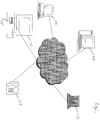
- FIG. 1 shows a group of participating terminals 110, 112, 113, 114 and 116 connected via the internet 104.
- a host 115 resides in a participating terminal 116.
- the host may be provided by a host sever.
- the number of signals that are decoded is proportional to the number of participating terminals. For conference calls with a large number of participating terminals decoding each signal provided from the participating terminals places a large burden on the resources of the host.
- a participating terminal may be a persona! computer or a mobile phone with limited processing resources. Therefore the burden placed on the resources of the host can be a particular problem if the host resides in one of the participating terminals. For example if the CPU (Central Processing Unit) usage of the host is too high this will result in poor sound quality during the conference call.
- CPU Central Processing Unit
- One known method of reducing the number of signals that the host is required to decode is achieved by transmitting a bit in each data packet to indicate whether the signal contains speech.
- the host is arranged to examine the bit in the packet before fully decoding the packet. Only packets that are indicated to include speech are then decoded by the host.
- the host may determine that the decoded packet of a signal is not required in the mixed signal if for example the speech contained in the packet is too quiet. As such the number of signals that have been decoded will exceed the number of signals included in the mixed signal.
- WO0217579 and US6418125 propose criteria to restrict the number of streams to be mixed according to limitations in the device's processing capacity.
- An alternative method is described in US2002/085697 , in which a packet-based conference bridge receives, from the individual packet-based terminals within a voice conference, speech indication signals, which could be a talking/listening indication, an energy level indicator or another parameter that a talker selection algorithm could use to select the terminals as talkers.
- a further alternative method of reducing the number of signals that are decoded by the host requires each signal to be encoded with the same encoding scheme.
- the host may use knowledge of the encoding scheme to analyse the encoded bit stream to estimate the speech strength in each signal. The host may then determine which signals should be decoded from the relative speech strengths of the signals.
- a method of transmitting a combined audio signal to at least one of a plurality of participants in a communication event comprising; receiving an audio signal from each of said plurality of participants together with audio activity information associated with each of said received audio signals; analysing a measure of audio activity for each received audio signal based on the audio activity information associated with each of said received audio signals, wherein said measure of audio activity allows audio signals comprising audio activity to be compared; selecting a set of audio signals from said received audio signals based on the analysed measure of audio activity for each audio signal, wherein the selecting comprises selecting a predetermined number of audio signals having the highest measure of audio activity, wherein the predetermined number is adjusted in dependence on a resource usage of a host device; decoding said set of audio signals; and combining said set of audio signals to generate said combined audio signal to be transmitted to said at least one of said plurality of participants.
- a host device arranged to transmit a combined audio signal to at least one of a plurality of participants in a communication event comprising; a receiver arranged to receive an audio signal from each of said plurality of participants together with audio activity information associated with each of said received audio signals; a comparator arranged to compare a measure of audio activity for each received audio signal to a measure of audio activity within an active audio range based on the audio activity information associated with each of said received audio signals, and to select a set of audio signals from said received audio signals based on the measure of audio activity for each audio signal, wherein the comparator is arranged to select a predetermined number of audio signals having the highest measure of audio activity, wherein the predetermined number of audio signals is adjusted in dependence on a resource usage of the host device; a decoder arranged to decode said set of audio signals; and a combiner arranged to combine said set of audio signals to generate said combined audio signal to be transmitted to said at least one of said plurality of participants.
- a participant device participant in a communication event with a plurality of other participant devices, via the host device of the second aspect of the present invention, said participant device comprising; input means for receiving an audio signal from a user of said participant device, wherein the audio signal comprises a plurality of data packets; an audio activity information determiner arranged to determine a measure of audio activity in the received audio signal and to generate audio activity information associated with the received audio signal, wherein said measure of audio activity allows audio signals comprising audio activity to be compared; and a transmitter arranged to transmit the audio signal and the associated information to a host device arranged to transmit the audio signal to said plurality of other participant devices based on the audio activity information associated with the audio signal.
- a communication system comprising the host device of the second aspect of the present invention and a plurality of participant devices of the third aspect of the present invention participant in a communication event.
- the host By providing information with the audio signal that allows the host to determine the level of speech activity in the audio signal the host is able to determine more accurately which signals need to be decoded.
- the host By providing information relating to the audio activity of a data packet in a plurality of bits the host has greater flexibility in the manner that a signal is selected.
- embodiments of the present invention are independent of the encoding scheme used to encode the audio signal.
- the communications network is a VoIP network provided by the internet.
- the communication network may be a PSTN (Public Switched Telephone Network) or a GSM (Global System for Mobile Communications) network.
- the terminals 110, 112, 113, 114 and 116 may be, for example, a personal computer, a gaming device, a personal digital assistant, a suitably enabled mobile phone, a television or other device able to connect to the network 104.
- a terminal may be directly connected to the communication network 104, or via another communication network (not shown).
- conferencing host 115 resides in a participating terminal 116 as shown.
- the host 115 may be provided by a host server.
- the host may be implemented as software running on a processor in a participating terminal or a host server.
- the host may be implemented as hardware in either the terminal or a host server.
- the user of each terminal participating in a conference call inputs an audio signal to the terminal.
- the terminal transmits the audio signal input from the user to the host 115.
- the host 115 is arranged to decode and combine selected signals received from the terminals participating in the conference call. A combined signal is then transmitted from the host to each of the participating terminals.
- the participating terminals are arranged to transmit information relating to the speech activity level of the signal received from user of the terminal to the host 115.
- the host 115 may then select which signals received from the participating terminals to decode based on the speech activity level information provided with each signal.
- FIG. 2 is a diagram showing the transmission of data from the participating terminals 110, 112, 113, 114 and 116 to the host 115.
- Each participating terminal comprises a transmitting circuitry 210.
- the host 115 comprises receiving circuitry 217.
- the transmitting circuitry 210 of terminal 110 is shown in detail.
- the transmitting circuitry 210 includes a pre-processor 212, an encoder 214, a speech activity level calculator 215 and a network layer 216.
- components of the transmitting circuitry may be implemented as software running on the terminal. In alternative embodiment of the invention the components of the transmitting circuitry may be implemented as hardware in the terminal.
- the terminal 110 may receive an audio signal from the user of the terminal 110 via a microphone. Alternatively the signal may be received from a media data storage device such as a CD (compact disc).
- the signal may be input to the pre-processor via an analogue to digital converter (not shown).
- the pre-processor 212 is arranged to reduce noise and echo from the input signal.
- the pre-processor may also adjust the signal level by controlling the gain that is applied to the signal.
- the pre-processor may also be arranged to control the analogue gain which is applied before the signal is sampled by the analogue to digital converter.
- the output signal from the pre-processor is then input into the encoder 214 and the speech activity level calculator 215.
- the encoder 214 is arranged to encode the digital signal according to an encoding scheme and to output encoded data packets to the network layer 216.
- the speech activity calculator 215 analyses the speech activity information in the audio signal output from the pre-processor 212.
- the speech activity calculator 215 is arranged to determine a measure of speech activity in the signal output from the pre-processor. In one embodiment of the invention this may be determined directly from the amplitude of the audio signal. However in a preferred embodiment of the invention the speech activity may be determined from an estimation of the signal plus noise to noise ratio (SNNR) of the signal output from the pre-processor 212 as will be described hereinafter.
- SNNR signal plus noise to noise ratio
- the speech activity calculator is arranged to output information on the measure of the speech activity level in the signal to the network layer 216.
- the information on speech activity in the signal may then be transmitted to the host 115 together with the data packet containing the part of the signal to which the information of speech activity relates.
- the measure of speech activity of the part of the signal contained in the data packet is represented by a series of bits.
- the measure of speech activity represented by the series of bits will indicate the level of active speech in the signal. As such the series of bits will indicate not only the presence of speech but also the level of active speech present in the data packet. This enables that the level of active speech in the data packet may be compared to the level of active speech in other data packets received at the host 115.
- the series of bits may be contained in a single byte of data, hereinafter referred to as the speech activity level byte. In alternative embodiments of the invention the series of bits may be contained in more or less than one byte of data.
- the network layer 216 is arranged to transmit the data packets containing the audio signal together with the measure of speech activity for each data packet to the host 115 via the network 104.
- the receiving circuitry 217 includes a jitter buffer 221, a packet selection block 218, a decoder 219 and a mixer block 220.
- components of the receiving circuitry 217 may be implemented as software running on the terminal 116. In alternative embodiment of the invention the components of the receiving circuitry may be implemented as hardware in the terminal 116.
- the receiving circuitry 217 receives the data packets from each participating terminal together with the speech activity level byte associated with each data packet.
- the receiving circuitry temporarily stores the received data packets and the associated speech activity bytes in the jitter buffer 221.
- a data packet received from each participating terminal is output together with its associated speech activity byte from the jitter buffer to the packet selection block.
- the packet selection block 218 is arranged to analyse the speech activity byte for each data packet received from the jitter buffer. In accordance with an embodiment of the invention the packet selection block 218 is arranged to select which signals to output to the decoder 219 from the information provided in the speech activity level byte.
- the speech level activity byte may define the level of active speech present in the data packet.
- the packet selection block 218 may be arranged to compare the level of speech activity in data packet to a measure of active speech in another data packet or from a threshold value within an active speech range.
- the packet selection block 218 is arranged to select a predetermined number N of signals that have the highest speech activity levels.
- the predetermined number N may be adjusted in dependence on the CPU usage of the host server 115. For example if the CPU usage of the host server 115 is low then the predetermined number N of signals that are decoded is set to be higher than if the CPU usage of the host server is high.
- the packet selection block 218 may be arranged to select any signals that have a level of speech activity above a predefined threshold. In one embodiment of the invention this may be carried out in combination with selecting N signals with the highest speech activity, such that if any signals in addition to the N signals have a speech activity level that is higher than the threshold value these signals will also be selected for decoding by the packet selection block 218. Alternatively the number of signals selected by the packet selection block having a speech activity level above the threshold may be restricted to N signals.
- the packet selection block 128 may be arranged to select signals using algorithms that involve hysteresis of the speech level values. Hysteresis in the selection process is obtained by favouring the selection of audio signals having high speech activity levels over time. In this case signals having high speech activity levels will not be easily interrupted unless a competing signal clearly is more active.
- the packet selection block 218 is arranged to analyse the speech activity byte of packets stored in the jitter buffer when deciding which signals to output to the decoder.
- the packet selection block 128 may take into account the speech activity levels of subsequent parts of the signal when deciding which signals to decode. As speech activity level estimators often have a small delay due to temporal smoothing, this embodiment will select a signal from a participant immediately before the participant has a high speech activity level.
- the data provided in the packets of each selected signal is output to the decoder block 14 in the form of a bit stream. Accordingly the decoder block 219 receives a bit stream for each selected signal from the packet selection block 218. The data packet provided in each unselected signal is discarded.
- the decoder block 219 is arranged to decode each bit stream according to the encoding scheme used to encode each signal in the participating terminals.
- the decoded bit streams are output from the decoder block 219 to the mixer block 220.
- the mixer block is arranged to combine the decoded signals received from the decoder block 219 into one signal to be transmitted to each participating terminal 110, 112, 113 and 114.
- the signal to be transmitted to each participating terminal is encoded according to the encoding scheme used by each terminal before it is transmitted to each terminal via the network 104.
- Figure 3 shows a detailed diagram of the speech activity level block 215 referred to in Figure 2 .
- the speech activity level calculator block 215 comprises a filter and decimate block 301, energy calculation blocks 302, 303, 304 and 305, noise level estimation blocks 306, 307 and 308, and SNNR calculation blocks 309, 310 and 311.
- the speech level activity block further comprises an averaging block 312, a sigmoid block 313 and a power scaling block 314.
- components of the speech activity level calculator block may be implemented as software running on the terminal. In an alternative embodiment of the invention the components of the speech activity level calculator block may be implemented as hardware in the terminal.
- the filter and decimate block 301 of the speech activity level calculator 215 receives the audio input signal from the pre-processor block 212.
- the signal input into the filter and decimate block 301 comprises a series of time domain speech frames.
- the speech frames of the input signal have been sampled at 16 kHz in the pre-processing block 212.
- the filter and decimate block 301 comprises a filter bank that is arranged to filter each frame of the input time domain signal into four frequency bands.
- the frequency content of the input signal ranges from 0 Hz to the Nyquist frequency which is half of the sampling frequency. If the input signal is sampled at 16 kHz the Nyquist frequency is 8 kHz.
- the filter bank is arranged to filter the signal into four uniform frequency bands each 2 kHz wide of 0-2 kHz, 2-4 kHz, 4-6 kHz and 6-8 kHz respectively. Each frequency band is then input into a separate energy calculation block 302, 303, 304 and 305 where the energy for each frequency band is calculated.
- the energy of the two highest frequency bands 4-6 kHz and 6-8 kHz are added in the summation block 317 to achieve three energy level outputs for non uniform frequency bands 0-2 kHz, 2-4 kHz, and 4-8 kHz.
- the energy level outputs for the three non uniform frequency bands are each temporally smoothed by first order auto regressive filters (not shown).
- the smoothed signal energy levels for the frequency bands 0-2 kHz, 2-4 kHz and 4-8 kHz are each input into to separate noise level estimator blocks 306, 307 and 308.
- the noise level estimator blocks 306, 307 and 308 are arranged to estimate the noise level for the frequency bands 0-2 kHz, 2-4 kHz and 4-8 kHz respectively.
- the smoothed signal energy levels for the frequency bands 0-2 kHz, 2-4 kHz and 4-8 kHz are also each input into separate SNNR calculation blocks 309, 310 and 311.
- Each SNNR block is also arranged to receive an output from a noise level estimator block.
- Each SNNR block 309, 310 and 311 is then arranged to calculate the SNNR energy ratio in decibels (dB) in a frequency band based on the noise energy level in the frequency band output from a noise level estimator block and the smoothed energy level of the frequency band.
- Each SNNR block 309, 310 and 311 is arranged to output the SNNR energy ratio for a frequency band to the averaging block 312.
- the averaging block 312 is arranged to calculate the average SNNR value provided from the SNNR blocks to obtain the SNNR value of the analyzed frame.
- the SNNR value of the analysed frame is output from the averaging block 312 to the sigmoid block 313.
- the sigmoid block is arranged to apply a sigmoid function to limit the range of the SNNR values between 0 and 1.
- the sigmoid block 313 is also arranged to provide a 'hang-over mechanism' meaning that immediately after the detection of speech activity the hang over mechanism will cause the sigmoid block to indicate speech activity for a period of time. High speech activity levels will cause the sigmoid block to indicate speech activity for a longer hang over period than low speech activity levels. Zero speech activity levels have no hang-over time at all.
- the output of the sigmoid block 313 is input into the power scaling block 314.
- the power scaling block 314 also receives an input value for the total energy of the frame.
- the energy of the frame is provided to the power scaling block from mixer 316.
- Mixer 316 is connected to mixer 315 and mixer 317.
- Mixer 315 receives the energy values from energy calculation blocks 302 and 303, while mixer 317 receives the energy values from energy calculation blocks 304 and 305.
- the power scaling block 314 is arranged to scale the output of the sigmoid block by a fixed downscaling factor before upscaling the output by a value dependent on the frame energy. For a low energy signal, the output can be no higher than 0.8 and for a high energy signal, the output can be no higher than 1.
- the output of the power scaling block is the measure of the speech activity level to be included in the speech activity byte.
- the speech activity level is a combined measure of the SNNR as determined by the sigmoid block and the energy of the frame.
Landscapes
- Engineering & Computer Science (AREA)
- Multimedia (AREA)
- Signal Processing (AREA)
- Computer Vision & Pattern Recognition (AREA)
- Data Exchanges In Wide-Area Networks (AREA)
- Telephonic Communication Services (AREA)
Claims (15)
- Verfahren zum Übertragen eines kombinierten Audiosignals zu wenigstens einem von mehreren Teilnehmern (110, 112, 113, 114, 116) in einem Kommunikationsereignis wie einer Konferenz, wobei das Verfahren von einem Host-Gerät (115) ausgeführt wird und Folgendes beinhaltet:Empfangen eines Audiosignals von jedem der genannten mehreren Teilnehmer (110, 112, 113, 114, 116) zusammen mit mit jedem der genannten empfangenen Audiosignale assoziierten Audioaktivitätsinformationen;Analysieren eines Maßes an Audioaktivität für jedes empfangene Audiosignal auf der Basis der mit jedem genannten empfangenen Audiosignal assoziierten Audioaktivitätsinformationen, wobei das genannte Maß an Audioaktivität das Vergleichen von Audiosignalen zulässt, die Audioaktivität haben;Auswählen eines Satzes von Audiosignalen aus den genannten empfangenen Audiosignalen auf der Basis des analysierten Maßes an Audioaktivität für jedes Audiosignal, wobei das Auswählen das Auswählen einer vorbestimmten Anzahl von Audiosignalen mit dem höchsten Maß an Audioaktivität beinhaltet, wobei die vorbestimmte Anzahl in Abhängigkeit von einem CPU-Gebrauch des Host-Geräts (115) justiert wird;Decodieren des genannten Satzes von Audiosignalen; undKombinieren des genannten Satzes von Audiosignalen zum Erzeugen des genannten kombinierten Audiosignals, das zu dem genannten wenigstens einen der genannten mehreren Teilnehmer (110, 112, 113, 114, 116) zu übertragen ist.
- Verfahren nach Anspruch 1, wobei das genannte Empfangen das Empfangen des Audiosignals als eine Mehrzahl von Datenpaketen beinhaltet.
- Verfahren nach Anspruch 2, wobei die genannten Audioaktivitätsinformationen mit jedem Datenpaket assoziiert sind, wobei die genannten mit jedem Datenpaket assoziierten Audioaktivitätsinformationen mehrere Bits umfassen.
- Verfahren nach Anspruch 3, das ferner den Schritt des vorübergehenden Speicherns der Datenpakete jedes empfangenen Signals zusammen mit den mit jedem gespeicherten Datenpaket assoziierten Audioaktivitätsinformationen in einem Datenspeicher beinhaltet.
- Verfahren nach einem vorherigen Anspruch, wobei das genannte Empfangen, Analysieren, Auswählen, Decodieren, Kombinieren und Übertragen der Audiosignale von dem Host-Gerät (115) durchgeführt wird.
- Verfahren nach einem vorherigen Anspruch, wobei das Auswählen das Auswählen von Audiosignalen mit einem Maß an Audioaktivität über einer vorbestimmten Schwelle beinhaltet.
- Verfahren nach einem vorherigen Anspruch, wobei das Maß an Audioaktivität vom Signal-plus-Rauschen-zu-RauschVerhältnis des Audiosignals und/oder von der Energie des Signals abhängig ist.
- Host-Gerät (115), ausgelegt zum Übertragen eines kombinierten Audiosignals zu wenigstens einem von mehreren Teilnehmern (110, 112, 113, 114, 116) in einem Kommunikationsereignis wie einer Konferenz, das Folgendes umfasst:einen Empfänger (217), ausgelegt zum Empfangen eines Audiosignals von jedem der genannten mehreren Teilnehmer (110, 112, 113, 114, 116) zusammen mit mit jedem der genannten empfangenen Audiosignale assoziierten Audioaktivitätsinformationen;einen Komparator (218), ausgelegt zum Vergleichen eines Maßes an Audioaktivität für jedes empfangene Audiosignal mit einem Maß an Audioaktivität innerhalb eines aktiven Audiobereichs auf der Basis der mit jedem der genannten empfangenen Audiosignale assoziierten Audioaktivitätsinformationen, und zum Auswählen eines Satzes von Audiosignalen aus den genannten empfangenen Audiosignalen auf der Basis des Maßes an Audioaktivität für jedes Audiosignal, wobei der Komparator (218) zum Auswählen einer vorbestimmten Anzahl von Audiosignalen mit dem höchsten Maß an Audioaktivität ausgelegt ist, wobei die vorbestimmte Anzahl von Audiosignalen in Abhängigkeit von einem CPU-Gebrauch des Host-Geräts (115) justiert wird;einen Decoder (219), ausgelegt zum Decodieren des genannten Satzes von Audiosignalen; undeinen Kombinator (220), ausgelegt zum Kombinieren des genannten Satzes von Audiosignalen zum Erzeugen des genannten kombinierten Audiosignals, das zu dem genannten wenigstens einen der genannten mehreren Teilnehmer (110, 112, 113, 114, 116) zu übertragen ist.
- Gerät nach Anspruch 8, wobei der Empfänger zum Empfangen des Audiosignals als mehrere Datenpakete ausgelegt ist.
- Gerät nach Anspruch 9, wobei die genannten Audioaktivitätsinformationen mit jedem Datenpaket assoziiert sind, wobei die genannten mit jedem Datenpaket assoziierten Audioaktivitätsinformationen mehrere Bits umfassen.
- Gerät nach einem der Ansprüche 8 bis 10, wobei der Komparator (218) zum Auswählen von Audiosignalen mit einem Maß an Audioaktivität über einer vorbestimmten Schwelle ausgelegt ist.
- Gerät nach Anspruch 11, wobei das Maß an Audioaktivität vom Signal-plus-Rauschen-zu-RauschVerhältnis des Audiosignals und/oder von der Energie in dem Signal abhängig ist.
- Host-Gerät (115) nach einem der Ansprüche 8 bis 12, wobei sich das Host-Gerät (115) entweder in einem der genannten mehreren Teilnehmer (110, 112, 113, 114, 116) befindet, zu dem das kombinierte Audiosignal übertragen wird, oder ein Server ist.
- Kommunikationssystem, das das Host-Gerät (115) nach einem der Ansprüche 8 bis 12 und ein Teilnehmergerät (110, 112, 113, 114, 116) umfasst, ausgelegt zum Teilnehmen an einem Kommunikationsereignis wie einer Konferenz mit mehreren anderen Teilnehmergeräten (110, 112, 113, 114, 116) über das Host-Gerät (115), wobei das genannte Teilnehmergerät Folgendes umfasst:Eingabemittel zum Eingeben eines Audiosignals von einem Benutzer des genannten Teilnehmergeräts, wobei das Audiosignal mehrere Datenpakete umfasst;ein Audioaktivitätsinformationsbestimmer (215), ausgelegt zum Bestimmen eines Maßes an Audioaktivität im empfangenen Audiosignal und zum Erzeugen von mit dem empfangenen Audiosignal assoziierten Audioaktivitätsinformationen, erlaubt das Vergleichen von Audiosignalen, die Audioaktivität haben; undeinen Sender (210), ausgelegt zum Übertragen des Audiosignals und der assoziierten Informationen zu dem Host-Gerät (115), ausgelegt zum Übertragen des Audiosignals zu den genannten mehreren anderen Teilnehmergeräten (110, 112, 113, 114, 116) auf der Basis der mit dem Audiosignal assoziierten Audioaktivitätsinformationen.
- Computerprogrammprodukt, das Programmcode umfasst, der bei Ausführung durch ein Host-Gerät (115) wie das der Ansprüche 8 bis 12 die Schritte gemäß dem Verfahren nach einem der Ansprüche 1 bis 7 ausführt.
Applications Claiming Priority (2)
| Application Number | Priority Date | Filing Date | Title |
|---|---|---|---|
| GBGB0710878.0A GB0710878D0 (en) | 2007-06-06 | 2007-06-06 | Method of transmitting data in a communication system |
| PCT/EP2008/053688 WO2008148591A1 (en) | 2007-06-06 | 2008-03-27 | Method of transmitting data in a communication system |
Publications (2)
| Publication Number | Publication Date |
|---|---|
| EP2158753A1 EP2158753A1 (de) | 2010-03-03 |
| EP2158753B1 true EP2158753B1 (de) | 2018-04-25 |
Family
ID=38318850
Family Applications (1)
| Application Number | Title | Priority Date | Filing Date |
|---|---|---|---|
| EP08718301.8A Not-in-force EP2158753B1 (de) | 2007-06-06 | 2008-03-27 | Auswahl von audio-signalen zum kombinieren in einer audio-konferenz |
Country Status (5)
| Country | Link |
|---|---|
| US (1) | US8358600B2 (de) |
| EP (1) | EP2158753B1 (de) |
| CA (1) | CA2689230C (de) |
| GB (1) | GB0710878D0 (de) |
| WO (1) | WO2008148591A1 (de) |
Families Citing this family (7)
| Publication number | Priority date | Publication date | Assignee | Title |
|---|---|---|---|---|
| US8660247B1 (en) | 2009-04-06 | 2014-02-25 | Wendell Brown | Method and apparatus for content presentation in association with a telephone call |
| CN102065265B (zh) * | 2009-11-13 | 2012-10-17 | 华为终端有限公司 | 实现混音的方法、装置和系统 |
| US8855106B1 (en) * | 2011-10-05 | 2014-10-07 | Google Inc. | System and process for realtime/neartime call analytics with speaker separation |
| CN103561174A (zh) * | 2013-11-05 | 2014-02-05 | 英华达(南京)科技有限公司 | 一种提高信噪比的方法和系统 |
| CN110072021B (zh) * | 2014-02-28 | 2022-01-07 | 杜比实验室特许公司 | 一种在音频电话会议混合系统中的方法、装置和计算机可读介质 |
| WO2016169608A1 (en) * | 2015-04-24 | 2016-10-27 | Huawei Technologies Co., Ltd. | An audio signal processing apparatus and method for modifying a stereo image of a stereo signal |
| US10425727B2 (en) | 2016-03-17 | 2019-09-24 | Sonova Ag | Hearing assistance system in a multi-talker acoustic network |
Citations (6)
| Publication number | Priority date | Publication date | Assignee | Title |
|---|---|---|---|---|
| US5844994A (en) * | 1995-08-28 | 1998-12-01 | Intel Corporation | Automatic microphone calibration for video teleconferencing |
| EP1496700A2 (de) * | 2003-06-30 | 2005-01-12 | Nortel Networks Limited | Vorrichtung, Verfahren und Computerprogramm zur Unterstützung von Videokonferenzen in einem Kommunikationssystem |
| US20050094580A1 (en) * | 2003-11-04 | 2005-05-05 | Stmicroelectronics Asia Pacific Pte., Ltd. | System and method for an endpoint participating in and managing multipoint audio conferencing in a packet network |
| US20050286664A1 (en) * | 2004-06-24 | 2005-12-29 | Jingdong Chen | Data-driven method and apparatus for real-time mixing of multichannel signals in a media server |
| US20060064301A1 (en) * | 1999-07-26 | 2006-03-23 | Aguilar Joseph G | Parametric speech codec for representing synthetic speech in the presence of background noise |
| WO2007041651A2 (en) * | 2005-10-03 | 2007-04-12 | Divitas Networks, Inc. | Enhancing user experience during handoffs in wireless communication |
Family Cites Families (4)
| Publication number | Priority date | Publication date | Assignee | Title |
|---|---|---|---|---|
| US6940826B1 (en) | 1999-12-30 | 2005-09-06 | Nortel Networks Limited | Apparatus and method for packet-based media communications |
| US6956828B2 (en) * | 2000-12-29 | 2005-10-18 | Nortel Networks Limited | Apparatus and method for packet-based media communications |
| US20030174657A1 (en) | 2002-03-18 | 2003-09-18 | Wenlong Qin | Method, system and computer program product for voice active packet switching for IP based audio conferencing |
| US7660244B2 (en) * | 2005-06-20 | 2010-02-09 | Alcatel-Lucent Usa Inc. | Method and apparatus for quality-of-service based admission control using a virtual scheduler |
-
2007
- 2007-06-06 GB GBGB0710878.0A patent/GB0710878D0/en not_active Ceased
- 2007-12-20 US US12/004,494 patent/US8358600B2/en not_active Expired - Fee Related
-
2008
- 2008-03-27 EP EP08718301.8A patent/EP2158753B1/de not_active Not-in-force
- 2008-03-27 CA CA2689230A patent/CA2689230C/en active Active
- 2008-03-27 WO PCT/EP2008/053688 patent/WO2008148591A1/en not_active Ceased
Patent Citations (6)
| Publication number | Priority date | Publication date | Assignee | Title |
|---|---|---|---|---|
| US5844994A (en) * | 1995-08-28 | 1998-12-01 | Intel Corporation | Automatic microphone calibration for video teleconferencing |
| US20060064301A1 (en) * | 1999-07-26 | 2006-03-23 | Aguilar Joseph G | Parametric speech codec for representing synthetic speech in the presence of background noise |
| EP1496700A2 (de) * | 2003-06-30 | 2005-01-12 | Nortel Networks Limited | Vorrichtung, Verfahren und Computerprogramm zur Unterstützung von Videokonferenzen in einem Kommunikationssystem |
| US20050094580A1 (en) * | 2003-11-04 | 2005-05-05 | Stmicroelectronics Asia Pacific Pte., Ltd. | System and method for an endpoint participating in and managing multipoint audio conferencing in a packet network |
| US20050286664A1 (en) * | 2004-06-24 | 2005-12-29 | Jingdong Chen | Data-driven method and apparatus for real-time mixing of multichannel signals in a media server |
| WO2007041651A2 (en) * | 2005-10-03 | 2007-04-12 | Divitas Networks, Inc. | Enhancing user experience during handoffs in wireless communication |
Also Published As
| Publication number | Publication date |
|---|---|
| CA2689230A1 (en) | 2008-12-11 |
| US8358600B2 (en) | 2013-01-22 |
| EP2158753A1 (de) | 2010-03-03 |
| CA2689230C (en) | 2015-05-12 |
| US20080304429A1 (en) | 2008-12-11 |
| GB0710878D0 (en) | 2007-07-18 |
| WO2008148591A1 (en) | 2008-12-11 |
Similar Documents
| Publication | Publication Date | Title |
|---|---|---|
| EP2055055B1 (de) | Einstellung eines jitter-speichers | |
| EP2130203B1 (de) | Verfahren zum senden von daten in einem kommunikationssystem | |
| US8284922B2 (en) | Methods and systems for changing a communication quality of a communication session based on a meaning of speech data | |
| EP2786552B1 (de) | Verfahren zur auswahl aktiver kanäle in einer klangmischung für telekonferenzen mit mehreren parteien | |
| US20210035596A1 (en) | Speech signal cascade processing method, terminal, and computer-readable storage medium | |
| EP2158753B1 (de) | Auswahl von audio-signalen zum kombinieren in einer audio-konferenz | |
| EP2245826A1 (de) | Verfahren und vorrichtung zur erkennung und unterdrückung von echo in netzwerken | |
| US9917945B2 (en) | In-service monitoring of voice quality in teleconferencing | |
| GB2476041A (en) | Soft transition between the audio bandwidth of a signal before and after a switch in sampling rate | |
| US6697342B1 (en) | Conference circuit for encoded digital audio | |
| JP7597300B2 (ja) | 音声データ処理方法と装置及びコンピュータ機器とプログラム | |
| JP4955696B2 (ja) | エコー検出 | |
| US7076316B2 (en) | Method and apparatus for controlling an operative setting of a communications link | |
| US20050286664A1 (en) | Data-driven method and apparatus for real-time mixing of multichannel signals in a media server | |
| CN111628992B (zh) | 一种多人通话控制方法、装置、电子设备及存储介质 | |
| US8509460B2 (en) | Sound mixing apparatus and method and multipoint conference server | |
| WO2005046096A1 (ja) | 受信装置および方法 | |
| HK40028507B (en) | Multi-person call control method and device, electronic apparatus and storage medium | |
| HK40028507A (en) | Multi-person call control method and device, electronic apparatus and storage medium | |
| AU2012200349A1 (en) | Method of transmitting data in a communication system |
Legal Events
| Date | Code | Title | Description |
|---|---|---|---|
| PUAI | Public reference made under article 153(3) epc to a published international application that has entered the european phase |
Free format text: ORIGINAL CODE: 0009012 |
|
| 17P | Request for examination filed |
Effective date: 20091214 |
|
| AK | Designated contracting states |
Kind code of ref document: A1 Designated state(s): AT BE BG CH CY CZ DE DK EE ES FI FR GB GR HR HU IE IS IT LI LT LU LV MC MT NL NO PL PT RO SE SI SK TR |
|
| AX | Request for extension of the european patent |
Extension state: AL BA MK RS |
|
| 111Z | Information provided on other rights and legal means of execution |
Free format text: AT BE BG CH CY CZ DE DK EE ES FI FR GB GR HR HU IE IS IT LT LU LV MC MT NL NO PL PT RO SE SI SK TR Effective date: 20100304 |
|
| DAX | Request for extension of the european patent (deleted) | ||
| RAP1 | Party data changed (applicant data changed or rights of an application transferred) |
Owner name: SKYPE |
|
| D11X | Information provided on other rights and legal means of execution (deleted) | ||
| STAA | Information on the status of an ep patent application or granted ep patent |
Free format text: STATUS: EXAMINATION IS IN PROGRESS |
|
| 17Q | First examination report despatched |
Effective date: 20161028 |
|
| GRAP | Despatch of communication of intention to grant a patent |
Free format text: ORIGINAL CODE: EPIDOSNIGR1 |
|
| STAA | Information on the status of an ep patent application or granted ep patent |
Free format text: STATUS: GRANT OF PATENT IS INTENDED |
|
| RIC1 | Information provided on ipc code assigned before grant |
Ipc: H04M 3/56 20060101AFI20170921BHEP Ipc: G10L 25/78 20130101ALN20170921BHEP |
|
| INTG | Intention to grant announced |
Effective date: 20171012 |
|
| INTG | Intention to grant announced |
Effective date: 20171012 |
|
| GRAS | Grant fee paid |
Free format text: ORIGINAL CODE: EPIDOSNIGR3 |
|
| GRAJ | Information related to disapproval of communication of intention to grant by the applicant or resumption of examination proceedings by the epo deleted |
Free format text: ORIGINAL CODE: EPIDOSDIGR1 |
|
| GRAL | Information related to payment of fee for publishing/printing deleted |
Free format text: ORIGINAL CODE: EPIDOSDIGR3 |
|
| STAA | Information on the status of an ep patent application or granted ep patent |
Free format text: STATUS: EXAMINATION IS IN PROGRESS |
|
| GRAR | Information related to intention to grant a patent recorded |
Free format text: ORIGINAL CODE: EPIDOSNIGR71 |
|
| STAA | Information on the status of an ep patent application or granted ep patent |
Free format text: STATUS: GRANT OF PATENT IS INTENDED |
|
| GRAA | (expected) grant |
Free format text: ORIGINAL CODE: 0009210 |
|
| STAA | Information on the status of an ep patent application or granted ep patent |
Free format text: STATUS: THE PATENT HAS BEEN GRANTED |
|
| INTC | Intention to grant announced (deleted) | ||
| RIC1 | Information provided on ipc code assigned before grant |
Ipc: G10L 25/78 20130101ALN20180227BHEP Ipc: H04M 3/56 20060101AFI20180227BHEP |
|
| INTG | Intention to grant announced |
Effective date: 20180312 |
|
| AK | Designated contracting states |
Kind code of ref document: B1 Designated state(s): AT BE BG CH CY CZ DE DK EE ES FI FR GB GR HR HU IE IS IT LI LT LU LV MC MT NL NO PL PT RO SE SI SK TR |
|
| REG | Reference to a national code |
Ref country code: GB Ref legal event code: FG4D |
|
| REG | Reference to a national code |
Ref country code: CH Ref legal event code: EP |
|
| REG | Reference to a national code |
Ref country code: AT Ref legal event code: REF Ref document number: 994071 Country of ref document: AT Kind code of ref document: T Effective date: 20180515 |
|
| REG | Reference to a national code |
Ref country code: IE Ref legal event code: FG4D |
|
| REG | Reference to a national code |
Ref country code: DE Ref legal event code: R096 Ref document number: 602008054982 Country of ref document: DE |
|
| REG | Reference to a national code |
Ref country code: NL Ref legal event code: FP |
|
| REG | Reference to a national code |
Ref country code: LT Ref legal event code: MG4D |
|
| PG25 | Lapsed in a contracting state [announced via postgrant information from national office to epo] |
Ref country code: ES Free format text: LAPSE BECAUSE OF FAILURE TO SUBMIT A TRANSLATION OF THE DESCRIPTION OR TO PAY THE FEE WITHIN THE PRESCRIBED TIME-LIMIT Effective date: 20180425 Ref country code: PL Free format text: LAPSE BECAUSE OF FAILURE TO SUBMIT A TRANSLATION OF THE DESCRIPTION OR TO PAY THE FEE WITHIN THE PRESCRIBED TIME-LIMIT Effective date: 20180425 Ref country code: LT Free format text: LAPSE BECAUSE OF FAILURE TO SUBMIT A TRANSLATION OF THE DESCRIPTION OR TO PAY THE FEE WITHIN THE PRESCRIBED TIME-LIMIT Effective date: 20180425 Ref country code: FI Free format text: LAPSE BECAUSE OF FAILURE TO SUBMIT A TRANSLATION OF THE DESCRIPTION OR TO PAY THE FEE WITHIN THE PRESCRIBED TIME-LIMIT Effective date: 20180425 Ref country code: NO Free format text: LAPSE BECAUSE OF FAILURE TO SUBMIT A TRANSLATION OF THE DESCRIPTION OR TO PAY THE FEE WITHIN THE PRESCRIBED TIME-LIMIT Effective date: 20180725 Ref country code: BG Free format text: LAPSE BECAUSE OF FAILURE TO SUBMIT A TRANSLATION OF THE DESCRIPTION OR TO PAY THE FEE WITHIN THE PRESCRIBED TIME-LIMIT Effective date: 20180725 Ref country code: SE Free format text: LAPSE BECAUSE OF FAILURE TO SUBMIT A TRANSLATION OF THE DESCRIPTION OR TO PAY THE FEE WITHIN THE PRESCRIBED TIME-LIMIT Effective date: 20180425 |
|
| PG25 | Lapsed in a contracting state [announced via postgrant information from national office to epo] |
Ref country code: HR Free format text: LAPSE BECAUSE OF FAILURE TO SUBMIT A TRANSLATION OF THE DESCRIPTION OR TO PAY THE FEE WITHIN THE PRESCRIBED TIME-LIMIT Effective date: 20180425 Ref country code: GR Free format text: LAPSE BECAUSE OF FAILURE TO SUBMIT A TRANSLATION OF THE DESCRIPTION OR TO PAY THE FEE WITHIN THE PRESCRIBED TIME-LIMIT Effective date: 20180726 Ref country code: LV Free format text: LAPSE BECAUSE OF FAILURE TO SUBMIT A TRANSLATION OF THE DESCRIPTION OR TO PAY THE FEE WITHIN THE PRESCRIBED TIME-LIMIT Effective date: 20180425 |
|
| REG | Reference to a national code |
Ref country code: AT Ref legal event code: MK05 Ref document number: 994071 Country of ref document: AT Kind code of ref document: T Effective date: 20180425 |
|
| PG25 | Lapsed in a contracting state [announced via postgrant information from national office to epo] |
Ref country code: PT Free format text: LAPSE BECAUSE OF FAILURE TO SUBMIT A TRANSLATION OF THE DESCRIPTION OR TO PAY THE FEE WITHIN THE PRESCRIBED TIME-LIMIT Effective date: 20180827 |
|
| REG | Reference to a national code |
Ref country code: DE Ref legal event code: R097 Ref document number: 602008054982 Country of ref document: DE |
|
| PG25 | Lapsed in a contracting state [announced via postgrant information from national office to epo] |
Ref country code: SK Free format text: LAPSE BECAUSE OF FAILURE TO SUBMIT A TRANSLATION OF THE DESCRIPTION OR TO PAY THE FEE WITHIN THE PRESCRIBED TIME-LIMIT Effective date: 20180425 Ref country code: RO Free format text: LAPSE BECAUSE OF FAILURE TO SUBMIT A TRANSLATION OF THE DESCRIPTION OR TO PAY THE FEE WITHIN THE PRESCRIBED TIME-LIMIT Effective date: 20180425 Ref country code: DK Free format text: LAPSE BECAUSE OF FAILURE TO SUBMIT A TRANSLATION OF THE DESCRIPTION OR TO PAY THE FEE WITHIN THE PRESCRIBED TIME-LIMIT Effective date: 20180425 Ref country code: EE Free format text: LAPSE BECAUSE OF FAILURE TO SUBMIT A TRANSLATION OF THE DESCRIPTION OR TO PAY THE FEE WITHIN THE PRESCRIBED TIME-LIMIT Effective date: 20180425 Ref country code: CZ Free format text: LAPSE BECAUSE OF FAILURE TO SUBMIT A TRANSLATION OF THE DESCRIPTION OR TO PAY THE FEE WITHIN THE PRESCRIBED TIME-LIMIT Effective date: 20180425 Ref country code: AT Free format text: LAPSE BECAUSE OF FAILURE TO SUBMIT A TRANSLATION OF THE DESCRIPTION OR TO PAY THE FEE WITHIN THE PRESCRIBED TIME-LIMIT Effective date: 20180425 |
|
| PG25 | Lapsed in a contracting state [announced via postgrant information from national office to epo] |
Ref country code: IT Free format text: LAPSE BECAUSE OF FAILURE TO SUBMIT A TRANSLATION OF THE DESCRIPTION OR TO PAY THE FEE WITHIN THE PRESCRIBED TIME-LIMIT Effective date: 20180425 |
|
| PLBE | No opposition filed within time limit |
Free format text: ORIGINAL CODE: 0009261 |
|
| STAA | Information on the status of an ep patent application or granted ep patent |
Free format text: STATUS: NO OPPOSITION FILED WITHIN TIME LIMIT |
|
| 26N | No opposition filed |
Effective date: 20190128 |
|
| PG25 | Lapsed in a contracting state [announced via postgrant information from national office to epo] |
Ref country code: SI Free format text: LAPSE BECAUSE OF FAILURE TO SUBMIT A TRANSLATION OF THE DESCRIPTION OR TO PAY THE FEE WITHIN THE PRESCRIBED TIME-LIMIT Effective date: 20180425 |
|
| PG25 | Lapsed in a contracting state [announced via postgrant information from national office to epo] |
Ref country code: MC Free format text: LAPSE BECAUSE OF FAILURE TO SUBMIT A TRANSLATION OF THE DESCRIPTION OR TO PAY THE FEE WITHIN THE PRESCRIBED TIME-LIMIT Effective date: 20180425 |
|
| REG | Reference to a national code |
Ref country code: CH Ref legal event code: PL |
|
| PG25 | Lapsed in a contracting state [announced via postgrant information from national office to epo] |
Ref country code: LU Free format text: LAPSE BECAUSE OF NON-PAYMENT OF DUE FEES Effective date: 20190327 |
|
| REG | Reference to a national code |
Ref country code: BE Ref legal event code: MM Effective date: 20190331 |
|
| PG25 | Lapsed in a contracting state [announced via postgrant information from national office to epo] |
Ref country code: IE Free format text: LAPSE BECAUSE OF NON-PAYMENT OF DUE FEES Effective date: 20190327 Ref country code: CH Free format text: LAPSE BECAUSE OF NON-PAYMENT OF DUE FEES Effective date: 20190331 Ref country code: LI Free format text: LAPSE BECAUSE OF NON-PAYMENT OF DUE FEES Effective date: 20190331 |
|
| PG25 | Lapsed in a contracting state [announced via postgrant information from national office to epo] |
Ref country code: BE Free format text: LAPSE BECAUSE OF NON-PAYMENT OF DUE FEES Effective date: 20190331 |
|
| PG25 | Lapsed in a contracting state [announced via postgrant information from national office to epo] |
Ref country code: TR Free format text: LAPSE BECAUSE OF FAILURE TO SUBMIT A TRANSLATION OF THE DESCRIPTION OR TO PAY THE FEE WITHIN THE PRESCRIBED TIME-LIMIT Effective date: 20180425 |
|
| REG | Reference to a national code |
Ref country code: NL Ref legal event code: PD Owner name: MICROSOFT TECHNOLOGY LICENSING, LLC; US Free format text: DETAILS ASSIGNMENT: CHANGE OF OWNER(S), ASSIGNMENT; FORMER OWNER NAME: SKYPE Effective date: 20200417 |
|
| REG | Reference to a national code |
Ref country code: DE Ref legal event code: R081 Ref document number: 602008054982 Country of ref document: DE Owner name: MICROSOFT TECHNOLOGY LICENSING LLC, REDMOND, US Free format text: FORMER OWNER: SKYPE, DUBLIN 2, IE Ref country code: DE Ref legal event code: R082 Ref document number: 602008054982 Country of ref document: DE Representative=s name: PAGE, WHITE & FARRER GERMANY LLP, DE |
|
| PG25 | Lapsed in a contracting state [announced via postgrant information from national office to epo] |
Ref country code: MT Free format text: LAPSE BECAUSE OF NON-PAYMENT OF DUE FEES Effective date: 20190327 |
|
| REG | Reference to a national code |
Ref country code: GB Ref legal event code: 732E Free format text: REGISTERED BETWEEN 20200820 AND 20200826 |
|
| PG25 | Lapsed in a contracting state [announced via postgrant information from national office to epo] |
Ref country code: CY Free format text: LAPSE BECAUSE OF FAILURE TO SUBMIT A TRANSLATION OF THE DESCRIPTION OR TO PAY THE FEE WITHIN THE PRESCRIBED TIME-LIMIT Effective date: 20180425 |
|
| PG25 | Lapsed in a contracting state [announced via postgrant information from national office to epo] |
Ref country code: IS Free format text: LAPSE BECAUSE OF FAILURE TO SUBMIT A TRANSLATION OF THE DESCRIPTION OR TO PAY THE FEE WITHIN THE PRESCRIBED TIME-LIMIT Effective date: 20180825 |
|
| PG25 | Lapsed in a contracting state [announced via postgrant information from national office to epo] |
Ref country code: HU Free format text: LAPSE BECAUSE OF FAILURE TO SUBMIT A TRANSLATION OF THE DESCRIPTION OR TO PAY THE FEE WITHIN THE PRESCRIBED TIME-LIMIT; INVALID AB INITIO Effective date: 20080327 |
|
| P01 | Opt-out of the competence of the unified patent court (upc) registered |
Effective date: 20230517 |
|
| PGFP | Annual fee paid to national office [announced via postgrant information from national office to epo] |
Ref country code: NL Payment date: 20240220 Year of fee payment: 17 |
|
| PGFP | Annual fee paid to national office [announced via postgrant information from national office to epo] |
Ref country code: DE Payment date: 20240220 Year of fee payment: 17 Ref country code: GB Payment date: 20240220 Year of fee payment: 17 |
|
| PGFP | Annual fee paid to national office [announced via postgrant information from national office to epo] |
Ref country code: FR Payment date: 20240220 Year of fee payment: 17 |
|
| REG | Reference to a national code |
Ref country code: DE Ref legal event code: R119 Ref document number: 602008054982 Country of ref document: DE |
|
| REG | Reference to a national code |
Ref country code: NL Ref legal event code: MM Effective date: 20250401 |
|
| GBPC | Gb: european patent ceased through non-payment of renewal fee |
Effective date: 20250327 |
|
| PG25 | Lapsed in a contracting state [announced via postgrant information from national office to epo] |
Ref country code: NL Free format text: LAPSE BECAUSE OF NON-PAYMENT OF DUE FEES Effective date: 20250401 |
|
| PG25 | Lapsed in a contracting state [announced via postgrant information from national office to epo] |
Ref country code: DE Free format text: LAPSE BECAUSE OF NON-PAYMENT OF DUE FEES Effective date: 20251001 |
|
| PG25 | Lapsed in a contracting state [announced via postgrant information from national office to epo] |
Ref country code: GB Free format text: LAPSE BECAUSE OF NON-PAYMENT OF DUE FEES Effective date: 20250327 |
|
| PG25 | Lapsed in a contracting state [announced via postgrant information from national office to epo] |
Ref country code: FR Free format text: LAPSE BECAUSE OF NON-PAYMENT OF DUE FEES Effective date: 20250331 |