EP2159683B1 - Procédé et dispositif pour répartir une tâche d'impression selon les caractéristiques des produits d'impression - Google Patents
Procédé et dispositif pour répartir une tâche d'impression selon les caractéristiques des produits d'impression Download PDFInfo
- Publication number
- EP2159683B1 EP2159683B1 EP09165473.1A EP09165473A EP2159683B1 EP 2159683 B1 EP2159683 B1 EP 2159683B1 EP 09165473 A EP09165473 A EP 09165473A EP 2159683 B1 EP2159683 B1 EP 2159683B1
- Authority
- EP
- European Patent Office
- Prior art keywords
- objects
- rules
- reference objects
- lists
- Prior art date
- Legal status (The legal status is an assumption and is not a legal conclusion. Google has not performed a legal analysis and makes no representation as to the accuracy of the status listed.)
- Active
Links
Images

Classifications
-
- B—PERFORMING OPERATIONS; TRANSPORTING
- B41—PRINTING; LINING MACHINES; TYPEWRITERS; STAMPS
- B41F—PRINTING MACHINES OR PRESSES
- B41F33/00—Indicating, counting, warning, control or safety devices
- B41F33/0009—Central control units
-
- G—PHYSICS
- G06—COMPUTING OR CALCULATING; COUNTING
- G06F—ELECTRIC DIGITAL DATA PROCESSING
- G06F3/00—Input arrangements for transferring data to be processed into a form capable of being handled by the computer; Output arrangements for transferring data from processing unit to output unit, e.g. interface arrangements
- G06F3/12—Digital output to print unit, e.g. line printer, chain printer
- G06F3/1201—Dedicated interfaces to print systems
- G06F3/1202—Dedicated interfaces to print systems specifically adapted to achieve a particular effect
- G06F3/1203—Improving or facilitating administration, e.g. print management
- G06F3/1205—Improving or facilitating administration, e.g. print management resulting in increased flexibility in print job configuration, e.g. job settings, print requirements, job tickets
-
- G—PHYSICS
- G06—COMPUTING OR CALCULATING; COUNTING
- G06F—ELECTRIC DIGITAL DATA PROCESSING
- G06F3/00—Input arrangements for transferring data to be processed into a form capable of being handled by the computer; Output arrangements for transferring data from processing unit to output unit, e.g. interface arrangements
- G06F3/12—Digital output to print unit, e.g. line printer, chain printer
- G06F3/1201—Dedicated interfaces to print systems
- G06F3/1223—Dedicated interfaces to print systems specifically adapted to use a particular technique
- G06F3/1237—Print job management
- G06F3/1241—Dividing a job according to job requirements, e.g. black/white and colour pages, covers and body of books, tabs
-
- G—PHYSICS
- G06—COMPUTING OR CALCULATING; COUNTING
- G06F—ELECTRIC DIGITAL DATA PROCESSING
- G06F3/00—Input arrangements for transferring data to be processed into a form capable of being handled by the computer; Output arrangements for transferring data from processing unit to output unit, e.g. interface arrangements
- G06F3/12—Digital output to print unit, e.g. line printer, chain printer
- G06F3/1201—Dedicated interfaces to print systems
- G06F3/1223—Dedicated interfaces to print systems specifically adapted to use a particular technique
- G06F3/1237—Print job management
- G06F3/1253—Configuration of print job parameters, e.g. using UI at the client
-
- G—PHYSICS
- G06—COMPUTING OR CALCULATING; COUNTING
- G06F—ELECTRIC DIGITAL DATA PROCESSING
- G06F3/00—Input arrangements for transferring data to be processed into a form capable of being handled by the computer; Output arrangements for transferring data from processing unit to output unit, e.g. interface arrangements
- G06F3/12—Digital output to print unit, e.g. line printer, chain printer
- G06F3/1201—Dedicated interfaces to print systems
- G06F3/1278—Dedicated interfaces to print systems specifically adapted to adopt a particular infrastructure
- G06F3/1285—Remote printer device, e.g. being remote from client or server
Definitions
- the present invention relates to a method for producing a printed product according to a print job, wherein the print job comprises at least one reference object, which may itself comprise at least one base object.
- the print job comprises at least one reference object, which may itself comprise at least one base object.
- at least one job file should be provided which comprises input variables which are assigned to the base objects and / or the reference objects and which describe the desired properties of these reference objects.
- the invention relates to a device for carrying out the method described.
- output devices are available. These are printing machines that can image different formats of substrates with different grammages in different ways.
- these output devices may be digital printing presses or conventional offset printing presses. In the case of digital printing presses or even offset presses, one can still differentiate between machines that produce pure black and white prints or those that produce color prints.
- different printing presses may be provided for carrying out the printing process.
- All desired properties of the resulting printed product are provided in a print job within a file. It can be this For example, to act a job file that explicitly contains only the desired properties of the printed product or in addition to this includes PDF's, which include the contents of each page or sheet of the print job.
- This job file can then be stored, for example, in the form of a job data format (JDF). Often, this information is also treated as a job ticket data that contains all the parameters necessary to complete the print job.
- JDF job data format
- this file can also be a list to a location of the image data, eg. B. in the form of PDF's, deposited.
- These data may be z. B. to paper size but also to be finishing information for a further postpress treatment of the printed product.
- the print job can be transferred to the press via a network or via a computer connected to the press.
- a network or via a computer connected to the press.
- different printing machines can be available as output devices.
- a print job can describe a wide variety of types of printed products. It can be a brochure, a catalog, a newspaper, a book or something similar. Depending on the desired print product, the print job may include a wide variety of sheets of artwork. These print templates can be provided to be printed in color or black / white or with special colors, it can also be provided that is provided for individual sheets substrate with a higher grammage or for some pages coated or uncoated paper is provided in addition, certain pages be provided, which are rasterized differently from other pages. It can also be provided sheets of different format.
- the patent application US 2006/0290979 A1 describes an apparatus and method for processing print job data.
- parts of device information from several printing machines are queried by a control computer, and based on the queried device information and print job data, which are the pages to be printed and different Paper types, the appropriate printing machine is selected, which is able to process the print job without changing the substrate during the printing process.
- the device has a device manager which communicates periodically with each printing press and queries and manages corresponding device information.
- the print jobs are structured so that the individual pages are assigned corresponding paper types. This data and assignment are taken into account in the processing of the print job by selecting the appropriate presses.
- US 2002/0186384 A1 is a computer-based method that maximizes the printing speed when processing a print job.
- the method includes the steps of capturing print pages of the print job, providing an information index on the print page locations and print jobs, and determining whether the pages in the print job meet certain criteria based on the index information.
- a so-called job splitter is used, which decomposes the print job into a plurality of print page groups, if corresponding print pages of the print job meet certain conditions. This plurality of groups of print pages is then sent to multiple printers, based on the information in the index.
- the present invention is based on the object to overcome the above-described difficulties of the prior art.
- a rule set with at least one rule is provided.
- the reference objects and / or the base objects covered by them are assessed in such a way that a true / false relationship between the rule and an input variable of the reference object or of the base object can be established.
- the individual reference objects are assigned according to the selection by this rule or the entire rule set according to lists. These final lists of the rule set are assigned sets of output variables.
- the printed product is then generated according to these output variables.
- the reference objects may be a sheet that includes multiple pages as base objects. Alternatively, it is also possible for a reference object to be a single page comprising different document parts.
- the rule is a selection rule.
- the input variables are desired properties of the base objects or reference objects. Desired properties can z. Example: a specific format of a page or an entire sheet, a desired grammage of the sheet or the page covered by it, or a color image on a printed page, the rest of the sheet comprising this page being printed in black and white.
- the rule may be: a print page contains colored elements.
- the print page is then a base object, which is covered by an arc as a reference object.
- the rule set or rule then generates a list of reference objects, in this case arcs, corresponding to the statement, a base object, that is to say one page comprises colored elements, and a second list, which is the reference objects, that is to say Arcs are associated with the base objects, that is, include pages that have no exclusively colored elements.
- these lists are each assigned a set of output variables.
- output variables for example, printing presses can be provided here, which on the one hand can print in color and, on the other hand, print black and white, e.g. B.
- this may be digital presses with color printing and a second digital press alone with a black and white printing unit.
- the printing machine with the color printing units is then assigned to the list as output variable, the reference objects with pages which have colored elements comprise the black-and-white printing machine then the second list.
- the individual reference objects, ie sheets are then imaged on the corresponding printing presses and then reworked, sorted or else stapled and / or folded.
- an input z. B. is a format or a desired grammage of a page or a sheet. With appropriate rules that assess this desired property of the page or the arc, that is a base object or a reference object, each corresponding lists with associated sheets are generated. These lists are then as output variables z. B.
- these lists may also be assigned special printing presses as further output variables. Subsequently, the printed sheets, which are to be produced on a substrate with a higher grammage, then generated accordingly.
- the rule set comprises at least two rules that are processed successively, each subsequent rule assessing the input variables of the reference objects that were assigned by the preceding rules of a specific list, and branching the reference objects according to the assessment further lists assigns, wherein the last according to the rule set branched lists each sets of output variables are assigned, according to which the printed product is generated.
- lists of reference objects each corresponding to a very specific set of input variables.
- they may be sheets comprising individual pages having colored elements, the sheets being to be printed on substrates of a particular grammage.
- a list branched out for this purpose could include, for example, sheets, wherein the substrates should be painted before the actual printing in a special way.
- a second branched list generated in parallel therewith would then comprise non-lacquered substrates, but the other properties are identical to the first list.
- lists can be generated, each comprising reference objects, ie sheets or pages, which are special Make demands on the printing process. These special requirements are then assigned to the lists in the form of the output variables.
- rule sets can automatically form which contain at least one rule for each property of the printed product or parts of the printed product according to the information stored in a data file, regardless of whether this property was previously known to the executing system.
- a rule can in particular also branch to more than two parallel lists.
- a selection of rules is made available, from which a rule set can be constructed, which assigns the reference objects lists with desired sets of output variables.
- a set of rules can be generated individually, to the conditions, eg. B. is adapted in a pressroom by a printer.
- already stored rules are provided in the system, as well as rules that have just been created. These created rules can advantageously also be stored in the system, as the originally existing.
- the lists the assigned reference objects are stored in the job file itself.
- This can be z. B. be provided in the form of a job data format JDF. This can be processed in a particularly simple manner by corresponding data processing systems.
- a job splitter for performing the method, which splits a list of reference objects according to a rule set.
- this rule set can comprise a plurality of rules which, depending on properties, ie input variables of the base objects or reference objects, then assign the corresponding reference objects to specific lists.
- an assignment module which assigns output variables to the lists. These output quantities correspond to possible output devices or desired content properties of the printed product. They are assigned to the reference objects of a list on the basis of the input variables, ie the desired properties of base objects of the reference objects or the properties of the reference objects themselves.
- this assignment module an assignment of the reference objects, that is to say the sheet or the pages, to the different output devices, printing machines or further processing devices, as well as to the different possible printing substrates, thus takes place.
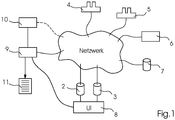
- Fig. 1 a system is shown by means of which rule sets 11 can be created for a subsequent breakdown of a print job.
- the printing units 4, 5 may be, for example, the total amount of all printing presses provided in a printing room, while the further processing devices 6 may be, for example, a selection of further processing devices 6 which can work with printed products produced in the printing presses 4, 5.
- the rule database 2 can already be a variety of rules, which result from the possible output variables of the printing business, be provided.
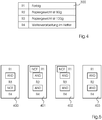
- Such rules R1 to R4 are for example in FIG. 4 shown.
- These output variables are possible properties of printed products which can be produced by the existing means in the printing operation. These may be characteristics of printing presses from platesetters, from Be further processing facilities or even properties of provided consumables.
- the consumables may be z. B. to different colors, paints or paper types.
- the rules thus provided in the rule database 2 can also be used for z. B. consumables have placeholders, which are filled only in the actual creation of the rule sets 11. These placeholders can be, for example, properties of the printing paper, such as its grammage.
- the actual selectable weights may then be replaced when creating the rule sets 11, taking into account the actual types of paper available in the printing shop.
- a connection of a database for consumables 7 to the described network 1 can be provided.
- Frequently recurring and complete rule sets to be used can already be stored in a rule set database 3, so that a quick access for known printed products to the rule sets associated therewith is possible.
- ident numbers can be provided which connects the stored rule sets in the rule set database 3 with already known printed products. Such an ID number can also be generated via the input variables of the printed product to be produced.
- a processing device 8 can be provided by means of which a user interface (UI) can directly manipulate or create rules of the rule database 2, rule sets of the rule set database 3 or also resulting rule sets in the rule setter 9 by a user.
- the rule setting device 9 can access the connected printing presses 4, 5 and further processing machines 6 as well as the described databases 2, 3 and 7 via the network 1.
- the properties of the connected machines and devices 4, 5, 6 as well as the consumables provided in the database 7 can serve as output variables which limit the possibilities of created rule sets 11 to the extent that only printed products are generated by combinations of these output quantities assigned to the devices and consumables correspond.
- an input quantity providing device 10 is connected to the rule set position device 9.
- Input variables 10 provide input variables of the printed product to be generated.
- the total number of input variables of a printed product results in a limitation of the possible rule sets 11 which are generated in the rule setter 9.
- the rule setter 9 generates rule sets 11 depending on the input size providing means 10 provided and of the possible outputs provided via the network 1, which split by a downstream job splitter 102 the predetermined print job.
- rule sets 11 can be created in such a way that they can be assigned to the exact combinations of input variables which result from the individual parts of the printed product.
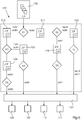
- FIG. 2 It is shown how, from print job information 100 with the application of an analysis tool 101, input variables 112 are finally provided in the input quantity providing device 10.
- the print job information 100 is a file containing all information about the nature of the print product to be created. This file can be z. B. be a JDF or at least include. In addition, one or more PDF, which include the print templates for the print product to be created, also be part of this print job information 100.
- the print job information 100 is supplied to an analysis tool 101, which may be a preflight tool.
- the analysis tool 101 determines on which pages or on which sheet of the printed product which properties are necessary. These properties are generally stored directly in the JDF or alternatively can be used from another database. Due to this analysis of the analysis tool 101 becomes a Total amount of possible properties of the printed product to be generated generated. Furthermore, combinations of these properties are recognized, which are assigned to the individual components of the printed product. In this way, individual blocks are created on combinations of input variables 112, which are to be assigned to at least parts of the printed product, without it being necessary to consider which pages of the printed product or which sheets of the printed product correspond to surface combinations of input variables. However, it may simply be provided that only the total amount of all input variables 112 is determined and stored.
- FIG. 2 shows how the print job information 100 with the print templates in the form of PDF's further processed.
- the print job information 100 is fed to a job splitter which, based on the rule sets 11 generated as described, splits the print jobs to such an extent that lists are generated within the print job information 100 which represent an assignment of the individual components of the print product to possible combinations of the output variables.
- These lists can be stored in the form of assignment tables in a common JDF. But it is also possible to create different JDF's already at this point. In FIG. 2 It is shown that in this way different job information 103-106 are generated with corresponding lists L3-L6 by which the print templates are assigned to the combination output variables.
- This job information can be stored in a shared JDF or can be passed on separately.
- the lists thus obtained are fed to an assignment module 107, which assigns the lists of print templates associated with the lists to the individual printing systems 108-111 on the basis of the lists.
- the printing systems 108-111 are determined so that they always correspond exactly to a combination of output variables of the individual lists L3-L6.
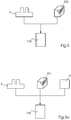
- FIGS. 34 and 3a Examples of possible printing systems 108-111 are shown in FIGS. 34 and 3a shown.
- a printing system is defined as the group of means that together make up at least part of the printed product. Ie. It consists of the amount of machines that process and process the substrates for the printed product and the substrate itself.
- the printing system 108 shown which consists of at least one printing press 4 and the necessary for a part of the printed product substrates with the substrate 200.
- the printing machine 4 may be, for example, a two-color printing machine which prints the type of substrate 200 with one or two colors, depending on the specification.
- a further printing system 109 is shown, which consists of the printing press 4, a printing material 201 and the further processing device 6. Further components of a printing system may be all the means which provide output quantities for the assignment according to that of the assignment module 107.
- the type of printing material 201 may be a printing material which has a greater grammage than the type of substrate 200, and the further processing unit 6 may be here for example.
- certain rules R1 to RN can be provided in a rule database 2, which can be accessed via a network 1 or directly, in order to create rule sets 11 in the rule setter 9.
- Rule R1 relates to the color of the part of the printed product. About this rule determines whether at least a part z. B. an arc colored elements. This can be checked if z. As a page that is to be printed with a sheet is colored or whether all sides of a sheet are not colored. The bow is thus a reference object whose assessment of the sparkleness of its basic objects, the individual pages are used.
- Rule R4 concerns further processing in a stapler. Over this parts of the printing material, d. H. single sheets are separated from the sheets, which are stapled and which are not stapled.
- the rules R2, R3 can be stored as a common rule in the rule database 2. They relate to the paper weight, ie the grammage of the substrate to be used. Insofar as the grammage is a variable property of the printing material which can assume different values, it may be provided that in the rule database 2 the exact Weight is provided as a placeholder and only in the rule setter 9 this placeholder filled with the values that result from the input variables of the printed product.
- rule R2 with a paper weight of 80 g and for R3 with a paper weight of 120 g. Since there are only two alternatives, only one rule R2 or R3 was sufficient here.
- the rules can be prioritized accordingly.
- rule sets 400 to 403 are shown, which each describe parts of a printed product according to the input variables.
- the rule set 400 is composed of the rules R1, R3 and R4. These rules are linked together according to the operators of Boul'al algebra. In the cases shown here, only the operators AND and NOT are used. Other Boul'sche operators, such. B. OR can of course also find use.
- the rule set 400 a part of the printed product is described, which should be colored and should have a paper weight of 120 g and should not be stapled.
- the rule set 401 describes another part of the printed product, which is not colored, ie black and white, is to have a paper weight of 80 g and should be provided for further processing in a stapler.
- the rule set 402 describes a part of the printed product, which is not colored, has a paper weight of 120 g and is to be processed in a stapler.
- the rule set 403 describes a colored component of the printed product, which should have a paper weight of 80 g and should be provided for further processing in the stapler.
- the print job info 100 is passed to the job splitter 102.
- the print job info 100 with the included list of all components of the print job is supplied to the first rule R1, and according to the decision of the job splitter 102 via a component such.
- a corresponding decision apparatus can be provided in the job splitter 102.
- These partial lists are also stored in the job information or in intermediate jobs 500, 501. Thus, the information which components of the print job correspond to Rule R1 is stored.
- the intermediate jobs 500, 501 are then respectively forwarded to a decision apparatus according to the rule R2. Again, it comes again to the decision whether ingredients and if, which components correspond to the intermediate jobs 501, 500 of the rule R2 or not. It then comes to corresponding job information 103 to 106 with lists L3 to L6, which contain the information about which components of the print job are assigned in what way the rules R1, R2. As is clear from the rulesets 400 to 403, the query for the rules R1, R2 is actually sufficient to assign a unique assignment to these rule sets 400 to 403 of the components of the print job.
- the individual print job information of the job information 103 to 106 can be supplied for clarification nor a decision apparatus according to the rule R4, wherein according to the logic of the rule sets 400 to 403 always only one result is to be expected.
- the lists L3 to L6 are therefore not split.
- the job information 103 to 106 generated using the rule sets 400 to 403 with the lists L3 to L6 are then supplied to the assignment module 107 separately or together in a job information. Due to the true / false properties of the individual lists P3 to L6, the lists are assigned to the output variables of the printing systems 108 to 111. On these printing systems 108 to 111, the components of the printed product according to the printing job 100 can then be automatically generated according to the needs of the individual components.
- a descriptive example may be, for example, the production of a printed product in the form of a 32-page brochure with an edition of 200 copies.
- This booklet should be saddle-stitched, with the cover of the booklet in C, M, Y, K colors, ie colored on heavy paper, such as 120 g.
- the inner pages should be on 80g paper to be printed. All pages should be black and white, except for the middle side, which should have a color image.
- the output variables are a black-and-white offset printing press, a digital printing machine for color, a saddle stitching device and the two types of printing paper with 80 g and 120 g. Based on the available printing presses and further processing facilities and types of printing materials, the output variables are given, which essentially correspond to the possible input variables, color, black and white, saddle stitching, heavy paper 120 g, light paper 80 g.
- a preflight tool analyzes the print information for this print job and determines what the input quantities are.
- the lists 1 to 3 in an assignment module 107 are then fed to the printing systems, consisting of printing press, printing material type and further processing device.
- List 1 is supplied to the printing systems consisting of a black and white offset printing machine plus heavy substrate plus saddle stitching device.
- List 2 is supplied to the printing systems consisting of offset press plus plain paper plus saddle stitching, and list 3 is fed to a color digital press plus regular stock plus saddle stitching.
- RIPs and platesetters can be assigned to the individual printing systems to generate the raster bitmap and the printing form to create the final component of the printed product.
- the components of the print job are then created in the printing presses and then fed together to the saddle stitcher and stapled according to the specifications from the job information.
Landscapes
- Engineering & Computer Science (AREA)
- Theoretical Computer Science (AREA)
- Human Computer Interaction (AREA)
- Physics & Mathematics (AREA)
- General Engineering & Computer Science (AREA)
- General Physics & Mathematics (AREA)
- Inking, Control Or Cleaning Of Printing Machines (AREA)
Claims (7)
- Procédé pour la génération d'un produit d'impression selon une tâche d'impression, la tâche d'impression comprenant au moins un élément d'objet de référence qui peut comporter lui-même au moins un objet de base, au moins un fichier de job étant préparé, qui comporte les grandeurs d'entrée, lesquelles sont attribuées aux objets de bases et/ou aux objets de référence et décrivent les propriétés souhaitées de ces objets de référence respectivement de ces objets de base,
l'objet de référence étant soi une feuille imprimée qui comprend plusieurs pages en tant qu'objets de base, ou l'objet de référence étant une page unique qui comprend des parties de documents différentes,
les propriétés souhaitées des objets de base ou des objets de référence étant un format défini d'une page ou de toute une feuille d'impression, un grammage souhaité de la feuille d'impression ou la page entourée par cette dernière ou une image colorée sur une page imprimée, le reste de la feuille d'impression, qui comprend cette page, étant imprimé en noir et blanc,
caractérisé en ce
que des groupes de règles (400, 403) sont préparées avec deux règles (R1, R2, R3, R4),
au moins ces deux règles (R1, R2, R3, R4) attribuant des listes aux objets de référence (L1, L2, L3, L4, L5, L6), listes qui évaluent au moins une grandeur d'entrée (112) des objets de référence et/ou des objets de base comprises par ces derniers sur la base d'une relation Vrai/Faux,
qu'au moins deux règles (R1, R2, R3, R4) sont traitées successivement, chaque règle suivante (R1, R2, R3, R4) évaluant les grandeurs d'entrée (112) des objets de référence, qui ont été associés à une liste définie (L1, L2, L3, L4, L5, L6) par les règles précédentes (R1, R2, R3, R4) et selon l'évaluation les objets de références étant associés par ramification à d'autres listes (L1, L2, L3, L4, L5, L6), les dernières listes ramifiées (L3, L4, L5, L6) étant associées respectivement aux grandeurs de sortie selon les groupes de règles (400, 403), selon lesquelles le produit d'impression est généré, des grandeurs de sortie correspondant à des appareils de sortie possibles et/ou supports d'impression possibles. - Procédé selon la revendication 2,
caractérisé en ce
que des règles (R1, R2, R3, R4) sont à nouveau générées sur la base de grandeurs d'entrée (112). - Procédé selon l'une des revendications précédentes 1 ou 2,
caractérisé en ce
qu'une sélection de règles (R1, R2, R3, R4) est mise à disposition à partir desquelles peut être formé un groupe de règles (400, 403), qui attribue les objets de références à des listes (L1, L2, L3, L4, L5, L6) avec des groupes souhaités de grandeurs de sortie. - Procédé selon l'une des revendications précédentes 1 à 3,
caractérisé en ce
que les listes (L1, L2, L3, L4, L5, L6) des objets de références associés sont stockées dans le fichier de tâche (100). - Procédé selon l'une des revendications précédentes 1 à 4,
caractérisé en ce
que les règles (R1, R2, R3, R4) d'un groupe de règles (400, 403) sont constituées en fonction des grandeurs de sortie disponibles et des considérations économiques. - Dispositif pour la génération d'un produit d'impression conformément à une tâche d'impression pour la mise en oeuvre d'un procédé selon l'une des revendications précédentes, présentant
un séparateur de job (102) ;
la tâche d'impression comprenant au moins un objet de référence, qui peut comprendre lui-même au moins un objet de base, l'objet de référence étant soit une feuille qui peut comprendre plusieurs feuilles en tant qu'objet de base, ou l'objet de référence étant une feuille unique qui comprend des parties de document différentes,
caractérisé en ce que le séparateur de job est conçu pour séparer au moins une liste (L1, L2, L3, L4, L5, L6) d'objets de référence selon des groupes de règles (400, 403) en au moins deux autres listes ramifiées (L1, L2, L3, L4, L5, L6),
les groupes de règles (400, 403) comprenant aux moins deux règles (R1, R2, R3, R4),
qui évaluent des objets de base contenus dans les objets de référence et/ou des objets de référence selon une relation Vrai/Faux et attribuent les objets de référence associés à des listes correspondantes (L1, L2, L3, L4, L5, L6),
les relations Vrai/Faux étant utilisées sur des grandeurs d'entrée (112) des objets de base respectivement des objets de référence, qui décrivent les propriétés souhaitées des objets de base respectivement des objets de référence, les propriétés souhaitées des objets de base ou des objets de référence étant un format défini d'une page ou de toute une feuille d'impression, un grammage souhaité de la feuille d'impression ou la page entourée par cette dernière ou une image colorée sur une page imprimée, le reste de la feuille d'impression, qui comprend cette page, étant imprimé en noir et blanc. - Dispositif selon la revendication 6,
caractérisé par
un module d'attribution (107) pour l'attribution de listes (L1, L2, L3, L4, L5, L6) d'objets de référence à des grandeurs de sortie sur la base de grandeurs d'entrée d'objets de base respectivement d'objets de référence dont tous les objets de référence correspondent à une liste (L3, L4, L5, L6).
Applications Claiming Priority (1)
| Application Number | Priority Date | Filing Date | Title |
|---|---|---|---|
| DE102008039661A DE102008039661A1 (de) | 2008-08-26 | 2008-08-26 | Aufteilung eines Druckauftrages nach Eigenschaften der Druckprodukte |
Publications (2)
| Publication Number | Publication Date |
|---|---|
| EP2159683A1 EP2159683A1 (fr) | 2010-03-03 |
| EP2159683B1 true EP2159683B1 (fr) | 2018-10-03 |
Family
ID=41061232
Family Applications (1)
| Application Number | Title | Priority Date | Filing Date |
|---|---|---|---|
| EP09165473.1A Active EP2159683B1 (fr) | 2008-08-26 | 2009-07-15 | Procédé et dispositif pour répartir une tâche d'impression selon les caractéristiques des produits d'impression |
Country Status (3)
| Country | Link |
|---|---|
| US (1) | US8810811B2 (fr) |
| EP (1) | EP2159683B1 (fr) |
| DE (1) | DE102008039661A1 (fr) |
Families Citing this family (8)
| Publication number | Priority date | Publication date | Assignee | Title |
|---|---|---|---|---|
| US9036200B2 (en) | 2010-09-14 | 2015-05-19 | Hewlett-Packard Development Company, L.P. | Job processing by dividing a job into sub-jobs for rendering and streaming |
| US8860984B2 (en) * | 2011-02-28 | 2014-10-14 | Ricoh Company, Ltd | Workflow generation in a print shop environment |
| US8693014B2 (en) | 2011-02-28 | 2014-04-08 | Ricoh Company, Ltd | Job ticket translation in a print shop architecture |
| US9652184B2 (en) * | 2011-02-28 | 2017-05-16 | Ricoh Company, Ltd. | Workflow regeneration in a print shop environment |
| US9329808B2 (en) | 2011-03-24 | 2016-05-03 | Ricoh Company, Ltd. | User interfaces for rule-based workflow generation in a print shop environment |
| DE102013113280A1 (de) * | 2013-01-16 | 2014-07-31 | manroland sheetfed GmbH | Vorrichtung und Verfahren zur automatischen Farbvoreinstellung |
| US9311027B2 (en) | 2013-03-28 | 2016-04-12 | Hewlett-Packard Development Company, L.P. | Document generation based on target device availability |
| EP3862186A1 (fr) * | 2020-02-05 | 2021-08-11 | Heidelberger Druckmaschinen AG | Traitement flexible de la séquence d'opération d'impression (job queue) |
Family Cites Families (11)
| Publication number | Priority date | Publication date | Assignee | Title |
|---|---|---|---|---|
| US5467434A (en) * | 1992-08-28 | 1995-11-14 | Xerox Corporation | Apparatus and method for determining printer option availability and representing conflict resolution in a combination of print job selections |
| EP0729090A1 (fr) * | 1995-01-06 | 1996-08-28 | Océ-Nederland B.V. | Appareil d'impression |
| US6657741B1 (en) * | 1995-08-07 | 2003-12-02 | Tr Systems, Inc. | Multiple print engine system with selectively distributed ripped pages |
| US6930795B1 (en) * | 1999-04-23 | 2005-08-16 | Electronics For Imaging, Inc. | Printing method and apparatus having multiple raster image processors |
| US6650431B1 (en) * | 1998-12-04 | 2003-11-18 | Ricoh Company, Ltd. | Processing documents with multiple output devices |
| US6934047B2 (en) * | 2001-02-06 | 2005-08-23 | Eastman Kodak Company | Integration of color pages on a black and white printer managed by a raster imaging processor |
| US20020186384A1 (en) * | 2001-06-08 | 2002-12-12 | Winston Edward G. | Splitting a print job for improving print speed |
| US20040184105A1 (en) * | 2003-03-21 | 2004-09-23 | Sharp Laboratories Of America, Inc. | Color and black and white pre-rip print-job splitting |
| JP4630743B2 (ja) * | 2005-06-24 | 2011-02-09 | キヤノン株式会社 | 情報処理装置及びその制御方法、プログラム |
| US8120813B2 (en) * | 2006-03-31 | 2012-02-21 | Konica Minolta Laboratory U.S.A., Inc. | Method for printing mixed color and black and white documents |
| US7812980B2 (en) * | 2006-09-28 | 2010-10-12 | Konica Minolta Systems Lab., Inc. | Print shop management method and apparatus for printing mixed color and black and white documents |
-
2008
- 2008-08-26 DE DE102008039661A patent/DE102008039661A1/de not_active Withdrawn
-
2009
- 2009-07-15 EP EP09165473.1A patent/EP2159683B1/fr active Active
- 2009-08-26 US US12/547,527 patent/US8810811B2/en active Active
Non-Patent Citations (1)
| Title |
|---|
| None * |
Also Published As
| Publication number | Publication date |
|---|---|
| US8810811B2 (en) | 2014-08-19 |
| EP2159683A1 (fr) | 2010-03-03 |
| US20100053657A1 (en) | 2010-03-04 |
| DE102008039661A1 (de) | 2010-03-04 |
Similar Documents
| Publication | Publication Date | Title |
|---|---|---|
| EP2159683A1 (fr) | Procédé et dispositif pour répartir une tâche d'impression selon les caractéristiques des produits d'impression | |
| EP1155363B1 (fr) | Systeme d'impression | |
| DE10223750B4 (de) | Computerbasiertes Verfahren, Computerprogramm, Computer und System zum Maximieren einer Druckgeschwindigkeit einer Druckaufgabe | |
| CH707803B1 (de) | Produktionsplanungs- und -steuerungssystem und Reportingsystem für Druckmaschinen. | |
| EP2902203A1 (fr) | Procédé et dispositif destinés à la commande et au réglage d'un processus d'impression numérique | |
| EP3151176A1 (fr) | Procede de planification et d'attribution de productions | |
| EP3007057A1 (fr) | Procede d'optimisation de la sequence de production | |
| WO2009019248A2 (fr) | Procédé de production d'un modèle | |
| DE102006056858A1 (de) | Druckqualität prüfendes System und Druckqualität prüfendes Verfahren | |
| DE102017205469A1 (de) | Verfahren zur Bestimmung der Reihenfolge bei der Abarbeitung von Druckaufträgen und eine Druckmaschine mit Steuerungsrechner | |
| DE102007009968A1 (de) | Auto-Produktionssteuerung | |
| DE102017205470A1 (de) | Verfahren zur Bestimmung der Reihenfolge bei der Abarbeitung von Druckaufträgen und eine Druckmaschine mit Steuerungsrechner | |
| EP2157780B1 (fr) | Procédé et dispositif d'impression de diverses utilisations sur une feuille d'impression | |
| DE10245530B4 (de) | Verfahren, Softwareprodukt und Computer zum Erzeugen eines IPDS-Datenstromes | |
| DE102017205471A1 (de) | Verfahren zur Bestimmung der Reihenfolge bei der Abarbeitung von Druckaufträgen und eine Druckmaschine mit Steuerungsrechner | |
| DE102017215049B3 (de) | Datengestützte Bestimmung von Druckplattenwechseln | |
| DE102012207289B4 (de) | Verfahren zur Verfolgung von Sendungen bei deren Erzeugung und Vorrichtung zur Erzeugung einer Mehrzahl von Sendungen | |
| DE102004047326A1 (de) | Verfahren und System zum automatischen Auswählen eines Gerätes zum Bearbeiten eines Dokumentenbearbeitungsauftrages | |
| EP2108518B1 (fr) | Procédé d'illustration pour variantes de feuilles de versions de produits d'impression | |
| DE102006005634B3 (de) | Verfahren zur Herstellung eines Druckwerks | |
| DE102021101124B4 (de) | Verfahren zur Planung von Produktionsabläufen von Aufträgen auf bedruckstoffverarbeitenden Maschinen | |
| DE60027843T2 (de) | Anfragenkodierung für Ausgabe von Probekopien in Dokumentzusammenstellungsbäumen | |
| EP3742278A1 (fr) | Données de commande relatives aux pages | |
| EP3104299B1 (fr) | Production de marques a un stade preliminaire d'un processus d'impression | |
| EP1272924A2 (fr) | Procede de production et d'emission d'un document |
Legal Events
| Date | Code | Title | Description |
|---|---|---|---|
| PUAI | Public reference made under article 153(3) epc to a published international application that has entered the european phase |
Free format text: ORIGINAL CODE: 0009012 |
|
| AK | Designated contracting states |
Kind code of ref document: A1 Designated state(s): AT BE BG CH CY CZ DE DK EE ES FI FR GB GR HR HU IE IS IT LI LT LU LV MC MK MT NL NO PL PT RO SE SI SK SM TR |
|
| AX | Request for extension of the european patent |
Extension state: AL BA RS |
|
| 17P | Request for examination filed |
Effective date: 20100903 |
|
| 17Q | First examination report despatched |
Effective date: 20100928 |
|
| STAA | Information on the status of an ep patent application or granted ep patent |
Free format text: STATUS: EXAMINATION IS IN PROGRESS |
|
| GRAP | Despatch of communication of intention to grant a patent |
Free format text: ORIGINAL CODE: EPIDOSNIGR1 |
|
| STAA | Information on the status of an ep patent application or granted ep patent |
Free format text: STATUS: GRANT OF PATENT IS INTENDED |
|
| INTG | Intention to grant announced |
Effective date: 20180607 |
|
| RIN1 | Information on inventor provided before grant (corrected) |
Inventor name: WEBER, MATHIAS-HENRY, DR. |
|
| GRAS | Grant fee paid |
Free format text: ORIGINAL CODE: EPIDOSNIGR3 |
|
| GRAA | (expected) grant |
Free format text: ORIGINAL CODE: 0009210 |
|
| STAA | Information on the status of an ep patent application or granted ep patent |
Free format text: STATUS: THE PATENT HAS BEEN GRANTED |
|
| AK | Designated contracting states |
Kind code of ref document: B1 Designated state(s): AT BE BG CH CY CZ DE DK EE ES FI FR GB GR HR HU IE IS IT LI LT LU LV MC MK MT NL NO PL PT RO SE SI SK SM TR |
|
| REG | Reference to a national code |
Ref country code: GB Ref legal event code: FG4D Free format text: NOT ENGLISH |
|
| REG | Reference to a national code |
Ref country code: CH Ref legal event code: EP Ref country code: AT Ref legal event code: REF Ref document number: 1049336 Country of ref document: AT Kind code of ref document: T Effective date: 20181015 |
|
| REG | Reference to a national code |
Ref country code: DE Ref legal event code: R096 Ref document number: 502009015333 Country of ref document: DE |
|
| REG | Reference to a national code |
Ref country code: IE Ref legal event code: FG4D Free format text: LANGUAGE OF EP DOCUMENT: GERMAN |
|
| RAP2 | Party data changed (patent owner data changed or rights of a patent transferred) |
Owner name: HEIDELBERGER DRUCKMASCHINEN AG |
|
| REG | Reference to a national code |
Ref country code: NL Ref legal event code: MP Effective date: 20181003 |
|
| REG | Reference to a national code |
Ref country code: LT Ref legal event code: MG4D |
|
| PG25 | Lapsed in a contracting state [announced via postgrant information from national office to epo] |
Ref country code: NL Free format text: LAPSE BECAUSE OF FAILURE TO SUBMIT A TRANSLATION OF THE DESCRIPTION OR TO PAY THE FEE WITHIN THE PRESCRIBED TIME-LIMIT Effective date: 20181003 |
|
| PG25 | Lapsed in a contracting state [announced via postgrant information from national office to epo] |
Ref country code: LV Free format text: LAPSE BECAUSE OF FAILURE TO SUBMIT A TRANSLATION OF THE DESCRIPTION OR TO PAY THE FEE WITHIN THE PRESCRIBED TIME-LIMIT Effective date: 20181003 Ref country code: HR Free format text: LAPSE BECAUSE OF FAILURE TO SUBMIT A TRANSLATION OF THE DESCRIPTION OR TO PAY THE FEE WITHIN THE PRESCRIBED TIME-LIMIT Effective date: 20181003 Ref country code: BG Free format text: LAPSE BECAUSE OF FAILURE TO SUBMIT A TRANSLATION OF THE DESCRIPTION OR TO PAY THE FEE WITHIN THE PRESCRIBED TIME-LIMIT Effective date: 20190103 Ref country code: NO Free format text: LAPSE BECAUSE OF FAILURE TO SUBMIT A TRANSLATION OF THE DESCRIPTION OR TO PAY THE FEE WITHIN THE PRESCRIBED TIME-LIMIT Effective date: 20190103 Ref country code: PL Free format text: LAPSE BECAUSE OF FAILURE TO SUBMIT A TRANSLATION OF THE DESCRIPTION OR TO PAY THE FEE WITHIN THE PRESCRIBED TIME-LIMIT Effective date: 20181003 Ref country code: ES Free format text: LAPSE BECAUSE OF FAILURE TO SUBMIT A TRANSLATION OF THE DESCRIPTION OR TO PAY THE FEE WITHIN THE PRESCRIBED TIME-LIMIT Effective date: 20181003 Ref country code: LT Free format text: LAPSE BECAUSE OF FAILURE TO SUBMIT A TRANSLATION OF THE DESCRIPTION OR TO PAY THE FEE WITHIN THE PRESCRIBED TIME-LIMIT Effective date: 20181003 Ref country code: CZ Free format text: LAPSE BECAUSE OF FAILURE TO SUBMIT A TRANSLATION OF THE DESCRIPTION OR TO PAY THE FEE WITHIN THE PRESCRIBED TIME-LIMIT Effective date: 20181003 Ref country code: IS Free format text: LAPSE BECAUSE OF FAILURE TO SUBMIT A TRANSLATION OF THE DESCRIPTION OR TO PAY THE FEE WITHIN THE PRESCRIBED TIME-LIMIT Effective date: 20190203 Ref country code: FI Free format text: LAPSE BECAUSE OF FAILURE TO SUBMIT A TRANSLATION OF THE DESCRIPTION OR TO PAY THE FEE WITHIN THE PRESCRIBED TIME-LIMIT Effective date: 20181003 |
|
| PG25 | Lapsed in a contracting state [announced via postgrant information from national office to epo] |
Ref country code: GR Free format text: LAPSE BECAUSE OF FAILURE TO SUBMIT A TRANSLATION OF THE DESCRIPTION OR TO PAY THE FEE WITHIN THE PRESCRIBED TIME-LIMIT Effective date: 20190104 Ref country code: SE Free format text: LAPSE BECAUSE OF FAILURE TO SUBMIT A TRANSLATION OF THE DESCRIPTION OR TO PAY THE FEE WITHIN THE PRESCRIBED TIME-LIMIT Effective date: 20181003 Ref country code: PT Free format text: LAPSE BECAUSE OF FAILURE TO SUBMIT A TRANSLATION OF THE DESCRIPTION OR TO PAY THE FEE WITHIN THE PRESCRIBED TIME-LIMIT Effective date: 20190203 |
|
| REG | Reference to a national code |
Ref country code: DE Ref legal event code: R097 Ref document number: 502009015333 Country of ref document: DE |
|
| PG25 | Lapsed in a contracting state [announced via postgrant information from national office to epo] |
Ref country code: DK Free format text: LAPSE BECAUSE OF FAILURE TO SUBMIT A TRANSLATION OF THE DESCRIPTION OR TO PAY THE FEE WITHIN THE PRESCRIBED TIME-LIMIT Effective date: 20181003 Ref country code: IT Free format text: LAPSE BECAUSE OF FAILURE TO SUBMIT A TRANSLATION OF THE DESCRIPTION OR TO PAY THE FEE WITHIN THE PRESCRIBED TIME-LIMIT Effective date: 20181003 |
|
| PLBE | No opposition filed within time limit |
Free format text: ORIGINAL CODE: 0009261 |
|
| STAA | Information on the status of an ep patent application or granted ep patent |
Free format text: STATUS: NO OPPOSITION FILED WITHIN TIME LIMIT |
|
| PG25 | Lapsed in a contracting state [announced via postgrant information from national office to epo] |
Ref country code: RO Free format text: LAPSE BECAUSE OF FAILURE TO SUBMIT A TRANSLATION OF THE DESCRIPTION OR TO PAY THE FEE WITHIN THE PRESCRIBED TIME-LIMIT Effective date: 20181003 Ref country code: SK Free format text: LAPSE BECAUSE OF FAILURE TO SUBMIT A TRANSLATION OF THE DESCRIPTION OR TO PAY THE FEE WITHIN THE PRESCRIBED TIME-LIMIT Effective date: 20181003 Ref country code: EE Free format text: LAPSE BECAUSE OF FAILURE TO SUBMIT A TRANSLATION OF THE DESCRIPTION OR TO PAY THE FEE WITHIN THE PRESCRIBED TIME-LIMIT Effective date: 20181003 Ref country code: SM Free format text: LAPSE BECAUSE OF FAILURE TO SUBMIT A TRANSLATION OF THE DESCRIPTION OR TO PAY THE FEE WITHIN THE PRESCRIBED TIME-LIMIT Effective date: 20181003 |
|
| 26N | No opposition filed |
Effective date: 20190704 |
|
| PG25 | Lapsed in a contracting state [announced via postgrant information from national office to epo] |
Ref country code: SI Free format text: LAPSE BECAUSE OF FAILURE TO SUBMIT A TRANSLATION OF THE DESCRIPTION OR TO PAY THE FEE WITHIN THE PRESCRIBED TIME-LIMIT Effective date: 20181003 |
|
| PG25 | Lapsed in a contracting state [announced via postgrant information from national office to epo] |
Ref country code: MC Free format text: LAPSE BECAUSE OF FAILURE TO SUBMIT A TRANSLATION OF THE DESCRIPTION OR TO PAY THE FEE WITHIN THE PRESCRIBED TIME-LIMIT Effective date: 20181003 |
|
| REG | Reference to a national code |
Ref country code: CH Ref legal event code: PL |
|
| GBPC | Gb: european patent ceased through non-payment of renewal fee |
Effective date: 20190715 |
|
| PG25 | Lapsed in a contracting state [announced via postgrant information from national office to epo] |
Ref country code: TR Free format text: LAPSE BECAUSE OF FAILURE TO SUBMIT A TRANSLATION OF THE DESCRIPTION OR TO PAY THE FEE WITHIN THE PRESCRIBED TIME-LIMIT Effective date: 20181003 |
|
| REG | Reference to a national code |
Ref country code: BE Ref legal event code: MM Effective date: 20190731 |
|
| PG25 | Lapsed in a contracting state [announced via postgrant information from national office to epo] |
Ref country code: GB Free format text: LAPSE BECAUSE OF NON-PAYMENT OF DUE FEES Effective date: 20190715 |
|
| PG25 | Lapsed in a contracting state [announced via postgrant information from national office to epo] |
Ref country code: CH Free format text: LAPSE BECAUSE OF NON-PAYMENT OF DUE FEES Effective date: 20190731 Ref country code: LI Free format text: LAPSE BECAUSE OF NON-PAYMENT OF DUE FEES Effective date: 20190731 Ref country code: LU Free format text: LAPSE BECAUSE OF NON-PAYMENT OF DUE FEES Effective date: 20190715 Ref country code: BE Free format text: LAPSE BECAUSE OF NON-PAYMENT OF DUE FEES Effective date: 20190731 |
|
| PG25 | Lapsed in a contracting state [announced via postgrant information from national office to epo] |
Ref country code: FR Free format text: LAPSE BECAUSE OF NON-PAYMENT OF DUE FEES Effective date: 20190731 |
|
| PG25 | Lapsed in a contracting state [announced via postgrant information from national office to epo] |
Ref country code: IE Free format text: LAPSE BECAUSE OF NON-PAYMENT OF DUE FEES Effective date: 20190715 |
|
| REG | Reference to a national code |
Ref country code: AT Ref legal event code: MM01 Ref document number: 1049336 Country of ref document: AT Kind code of ref document: T Effective date: 20190715 |
|
| PG25 | Lapsed in a contracting state [announced via postgrant information from national office to epo] |
Ref country code: AT Free format text: LAPSE BECAUSE OF NON-PAYMENT OF DUE FEES Effective date: 20190715 |
|
| PG25 | Lapsed in a contracting state [announced via postgrant information from national office to epo] |
Ref country code: CY Free format text: LAPSE BECAUSE OF FAILURE TO SUBMIT A TRANSLATION OF THE DESCRIPTION OR TO PAY THE FEE WITHIN THE PRESCRIBED TIME-LIMIT Effective date: 20181003 |
|
| PG25 | Lapsed in a contracting state [announced via postgrant information from national office to epo] |
Ref country code: MT Free format text: LAPSE BECAUSE OF FAILURE TO SUBMIT A TRANSLATION OF THE DESCRIPTION OR TO PAY THE FEE WITHIN THE PRESCRIBED TIME-LIMIT Effective date: 20181003 Ref country code: HU Free format text: LAPSE BECAUSE OF FAILURE TO SUBMIT A TRANSLATION OF THE DESCRIPTION OR TO PAY THE FEE WITHIN THE PRESCRIBED TIME-LIMIT; INVALID AB INITIO Effective date: 20090715 |
|
| PG25 | Lapsed in a contracting state [announced via postgrant information from national office to epo] |
Ref country code: MK Free format text: LAPSE BECAUSE OF FAILURE TO SUBMIT A TRANSLATION OF THE DESCRIPTION OR TO PAY THE FEE WITHIN THE PRESCRIBED TIME-LIMIT Effective date: 20181003 |
|
| P01 | Opt-out of the competence of the unified patent court (upc) registered |
Effective date: 20230425 |
|
| PGFP | Annual fee paid to national office [announced via postgrant information from national office to epo] |
Ref country code: DE Payment date: 20250731 Year of fee payment: 17 |