EP2163023B1 - Réseau sans fil et procédé de communication de paquets agrégés - Google Patents
Réseau sans fil et procédé de communication de paquets agrégés Download PDFInfo
- Publication number
- EP2163023B1 EP2163023B1 EP07861015A EP07861015A EP2163023B1 EP 2163023 B1 EP2163023 B1 EP 2163023B1 EP 07861015 A EP07861015 A EP 07861015A EP 07861015 A EP07861015 A EP 07861015A EP 2163023 B1 EP2163023 B1 EP 2163023B1
- Authority
- EP
- European Patent Office
- Prior art keywords
- aggregation
- originator
- mac
- mac frames
- frame
- Prior art date
- Legal status (The legal status is an assumption and is not a legal conclusion. Google has not performed a legal analysis and makes no representation as to the accuracy of the status listed.)
- Not-in-force
Links
- 238000000034 method Methods 0.000 title claims abstract description 27
- 230000002776 aggregation Effects 0.000 claims abstract description 135
- 238000004220 aggregation Methods 0.000 claims abstract description 135
- 238000004891 communication Methods 0.000 claims description 59
- 230000004044 response Effects 0.000 claims description 6
- 238000001514 detection method Methods 0.000 claims description 3
- 108700026140 MAC combination Proteins 0.000 claims description 2
- 238000006243 chemical reaction Methods 0.000 claims description 2
- 230000005540 biological transmission Effects 0.000 description 8
- 230000015654 memory Effects 0.000 description 6
- 230000008569 process Effects 0.000 description 3
- 230000008030 elimination Effects 0.000 description 2
- 238000003379 elimination reaction Methods 0.000 description 2
- 230000006870 function Effects 0.000 description 2
- 230000009471 action Effects 0.000 description 1
- 230000008901 benefit Effects 0.000 description 1
- 230000036772 blood pressure Effects 0.000 description 1
- 230000003247 decreasing effect Effects 0.000 description 1
- 238000005516 engineering process Methods 0.000 description 1
- 230000007246 mechanism Effects 0.000 description 1
- 230000005404 monopole Effects 0.000 description 1
- 230000003287 optical effect Effects 0.000 description 1
- 239000002699 waste material Substances 0.000 description 1
Images



Classifications
-
- H—ELECTRICITY
- H04—ELECTRIC COMMUNICATION TECHNIQUE
- H04L—TRANSMISSION OF DIGITAL INFORMATION, e.g. TELEGRAPHIC COMMUNICATION
- H04L1/00—Arrangements for detecting or preventing errors in the information received
- H04L1/12—Arrangements for detecting or preventing errors in the information received by using return channel
- H04L1/16—Arrangements for detecting or preventing errors in the information received by using return channel in which the return channel carries supervisory signals, e.g. repetition request signals
- H04L1/1607—Details of the supervisory signal
- H04L1/1614—Details of the supervisory signal using bitmaps
-
- H—ELECTRICITY
- H04—ELECTRIC COMMUNICATION TECHNIQUE
- H04L—TRANSMISSION OF DIGITAL INFORMATION, e.g. TELEGRAPHIC COMMUNICATION
- H04L1/00—Arrangements for detecting or preventing errors in the information received
- H04L1/0078—Avoidance of errors by organising the transmitted data in a format specifically designed to deal with errors, e.g. location
- H04L1/0083—Formatting with frames or packets; Protocol or part of protocol for error control
-
- H—ELECTRICITY
- H04—ELECTRIC COMMUNICATION TECHNIQUE
- H04L—TRANSMISSION OF DIGITAL INFORMATION, e.g. TELEGRAPHIC COMMUNICATION
- H04L1/00—Arrangements for detecting or preventing errors in the information received
- H04L1/12—Arrangements for detecting or preventing errors in the information received by using return channel
- H04L1/16—Arrangements for detecting or preventing errors in the information received by using return channel in which the return channel carries supervisory signals, e.g. repetition request signals
- H04L1/1607—Details of the supervisory signal
- H04L1/1621—Group acknowledgement, i.e. the acknowledgement message defining a range of identifiers, e.g. of sequence numbers
-
- H—ELECTRICITY
- H04—ELECTRIC COMMUNICATION TECHNIQUE
- H04W—WIRELESS COMMUNICATION NETWORKS
- H04W12/00—Security arrangements; Authentication; Protecting privacy or anonymity
- H04W12/10—Integrity
- H04W12/106—Packet or message integrity
-
- H—ELECTRICITY
- H04—ELECTRIC COMMUNICATION TECHNIQUE
- H04L—TRANSMISSION OF DIGITAL INFORMATION, e.g. TELEGRAPHIC COMMUNICATION
- H04L1/00—Arrangements for detecting or preventing errors in the information received
- H04L1/004—Arrangements for detecting or preventing errors in the information received by using forward error control
- H04L1/0056—Systems characterized by the type of code used
- H04L1/0061—Error detection codes
Definitions
- Some embodiments pertain to wireless communications. Some embodiments pertain to the communication of an aggregation of packets.
- Some wireless communication networks such as high-throughput (HT) wireless local area networks (HT-WLAN) have attempted to increase the throughput of a communication channel by the aggregation of packets.
- HT high-throughput
- HT-WLAN wireless local area networks
- IFS interframe spacing
- the elimination of the IFS as well as the elimination of overhead issues associated with transmitting individual packets helps to increase throughput.
- One issue with these networks is that improper receipt of the aggregation may result in an increase in the average end-to-end (ETE) delay, particularly when the responder is unable to identify the originator.
- ETE average end-to-end
- wireless networks and methods that may reduce the average ETE delay of packets.
- wireless networks and methods that increase throughput and utilize the channel more efficiently.
- EP 1571773 A2 describes a communication apparatus which includes a frame generating device configured to generate a physical frame containing a plurality of MAC frames.
- EP 1589704 A2 discloses a communication apparatus which comprises a generating means for generating a single physical frame including a plurality of MAC frames.
- WO 2006/134704 A1 discloses a wireless communication apparatus which includes means for generating a physical frame including an acknowledgement frame.
- FIG. 1 illustrates a wireless communication network in accordance with some embodiments of the present invention.
- Wireless communication network 100 may include two or more wireless communication devices, such as wireless communication device 103 and wireless communication device 113. Wireless communication devices 103 and 113 may communicate therebetween using wireless communication signals, discussed in more detail below.
- Wireless communication device 103 may comprise media-access control (MAC) layer circuitry 104, physical (PHY) layer circuitry 102, and one or more antennas 101.
- Wireless communication device 113 may comprise MAC layer circuitry 114, PHY layer circuitry 112, and one or more antennas 111.
- Wireless communication device 103 may originate packets and may be referred to as originator 153, and wireless communication device 113 may respond to the receipt of packets from wireless communication device 103 and may be referred to as responder 163. It should be noted that either wireless communication device 103 or wireless communication device 113 may operate as an originator of packets, and either wireless communication device 103 or wireless communication device 113 may operate as a responder to packets.
- MAC layer circuitry 104 may aggregate a plurality of MAC frames to generate aggregation 150 for transmission by PHY layer circuitry 102 using one or more of antennas 101.
- PHY layer circuitry 112 may receive aggregation 150 through one or more of antennas 111.
- Aggregation 150 may comprise a plurality MAC frames and an aggregation header frame that at least identifies originator 153.
- MAC layer circuitry 114 may check the integrity of each of the MAC frames using integrity checking portions of each MAC frame to determine which of the MAC frames were received properly.
- MAC circuitry 114 may identify an address of originator 153 from the aggregation header frame and PHY layer circuitry 112 may transmit block acknowledge (BA) 154 to originator 153.
- BA 154 may indicate that none of the MAC frames (other than the aggregation header frame) of aggregation 150 were received properly.
- PHY layer circuitry 112 may parse the frames of aggregation 150 in the order in which they are received.
- the address of the originator may be determined from the aggregation header frame prior to determining if other frames of aggregation 150 are received properly. It should be noted that there is no requirement to identify the address of the originator from the aggregation header frame only after when the address of the originator cannot be identified from the other frames of aggregation 150.
- the aggregation header frame may be much shorter than the MAC frames of aggregation 150, there is a much greater probability that it will be received properly by responder 163, and therefore a much greater probability that responder 163 will generate BA 154.
- responder 163 may treat the aggregation header frame as another MAC frame, allowing it to easily identify originator 153. In conventional systems, when no MAC frames are received properly, responder 163 will be unable to generate BA 154 because the originator's address cannot be properly determined.
- the inclusion of the aggregation header frame in aggregation 150 may reduce the average ETE delay of packets transmitted between originator 153 and responder 163, may increase the throughput of the channel, and may utilize the channel more efficiently.
- the inclusion of the aggregation header frame in aggregation 150 may also improve the stability of the link between originator 153 and responder 163.
- wireless communication devices 103 and 113 are illustrated as having several separate functional elements, one or more of the functional elements may be combined and may be implemented by combinations of software-configured elements such as processing elements including digital signal processors (DSPs), and/or other hardware elements.
- DSPs digital signal processors
- some elements may comprise one or more microprocessors, DSPs, application specific integrated circuits (ASICs), radio-frequency integrated circuits (RFICs) and combinations of various hardware and logic circuitry for performing at least the functions described herein.
- the functional elements of wireless communication devices 103 and 113 may refer to one or more processes operating on one or more processing elements.
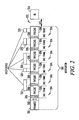
- FIG. 2 illustrates an aggregation and block acknowledge in accordance with some embodiments of the present invention.
- Aggregation 200 may correspond to aggregation 150 ( FIG. 1 ) and block acknowledge (BA) 214 may correspond to BA 154 ( FIG. 1 ), although the scope of the invention is not limited in this respect.
- Aggregation 200 comprises aggregation header (AH) frame 202 followed by a plurality of MAC frames 204.
- Each of MAC frames 204 may comprise header 206, payload 208, and an integrity checking portion (not separately illustrated).
- responder 163 may receive aggregation 200 from originator 153 ( FIG. 1 ) and may check the integrity of each of MAC frames 204 using integrity checking portions to determine which of MAC frames 204 were received properly.
- responder 163 may identify the address of originator 153 from aggregation header frame 202 and may transmit BA 214 to originator 153 using the address of originator 153.
- BA 214 may indicate that none of MAC frames 204 were received properly.
- Interference 210 is illustrated in FIG. 2 as being present during the receipt of each of MAC frames 204 causing each of MAC frames 204 to be received improperly.
- the integrity check performed by responder 163 on each of MAC frames 204 may indicate that none of MAC frames were received properly and therefore the address of originator 153 cannot be determined from any of headers 206.
- Interference 210 may be caused by many sources, including other wireless communication devices in nearby wireless networks, although the scope of the invention is not limited in this respect.
- BA 214 may be an implicit BA that responder 163 may generate in response to aggregation 200, unlike an explicit BA which is generated in response to a block acknowledge request (BAR) frame from originator 153.
- originator 153 in response to receipt of BA 214, originator 153 may refrain from entering a retransmit state and does not need to send a BAR frame to the responder 163 to request a BA. In this way, originator 153 does not need to send a BAR requesting a BA, avoiding the loss of time associated with the BAR transmission.
- the addition of aggregation header frame 202 may give responder 163 an additional chance to identify the originator's address and to respond to it with BA frame 214.
- the ETE delay may be decreased by an average of 10% in a peer-to-peer connection.
- originator 153 may send a BAR to request the status of MAC frames 204.
- Responder 163 will respond back with a BA indicating that no MAC frames 204 were received properly.
- the use of aggregation header frame 202 reduces this waste of time and bandwidth.
- originator 153 when originator 153 receives BA 214 indicating that none of MAC frames 204 were received properly, originator 153 may resend aggregation 200 at the same rate, may resend aggregation 200 at a lower rate, or may delay resending aggregation and continue to utilize the medium for the transmission of other data.
- originator 153 may resend the MAC frames that were not received properly as part of another aggregation either at the same rate or at a lower rate, or originator 153 may delay resending the MAC frames that were not received properly and may continue to utilize the medium for the transmission of other data.
- responder 163 may identify the address of originator 153 from header 206 of one of MAC frames 204 that was received properly. Responder 163 may transmit BA 214 to originator 153 using the address of originator 153. BA 214 may identify which of MAC frames 204 were received properly.
- BA 214 may include a bitmap that indicates that none of MAC frames 204 were received properly when none of MAC frames 204 were received properly.
- aggregation header frame 202 may be treated as one of MAC frames 204 and the bitmap may indicate that aggregation header frame 202 was received properly.
- the bitmap may identify which of MAC frames 204 were received properly.
- the integrity checking portion of each of MAC frames 204 may comprise a cyclic-redundancy check (CRC) value calculated over the entire MAC frame 204 and included at the end of each MAC frame 204.
- Responder 163 may check the integrity each MAC frame 204 by performing a CRC for each MAC frame 204, although other types of integrity checks may be used.
- the CRC value may comprise 32-bits (e.g., a CRC32), although the scope of the invention is not limited in this respect.
- aggregation 200 may be a physical packet, such as a Protocol Data Unit (PDU) or a Physical Layer Conversion Protocol (PLCP) Protocol Data Unit (PPDU).
- PDU Protocol Data Unit
- PLCP Physical Layer Conversion Protocol
- PPDU Physical Layer Conversion Protocol
- aggregation 200 may include preamble 201 for packet detection.
- MAC frames 204 comprise either MAC data packets or MAC Protocol Data Unit (MPDUs), although other types of individual frames may also be suitable.
- aggregation header frame 202 may comprise a MAC frame having only a header portion and without a payload portion. In these embodiments, aggregation header frame 202 may be devoid of data. In these embodiments, the plurality of MAC frames 204 of aggregation 200, including aggregation header frame 202, are concatenated together without any IFS therebetween to form aggregation 200. In these embodiments, responder 163 may treat aggregation header frame 202 as another MAC frame allowing it to easily identify originator 153, although the scope of the invention is not limited in this respect.
- aggregation header frame 202 is much shorter than MAC frames 204, there is a much greater probability that it will be received properly by responder 163 and therefore a much greater probability that responder 163 will generate BA 214.
- Aggregation header frame 202 may include a field for the originator's address. Aggregation header frame 202 may also include a field for the responder's address, a field for the frame type, a quality-of-service (QoS) field and/or a sequence control field.
- the QoS filed may include information regarding QoS.
- aggregation header frame 202 may be referred to as a QOS Null Frame, although the scope of the invention is not limited in this respect.
- aggregation header frame 202 may be no greater than 30 bytes.
- MAC frames 204 may range from up to 1000 bytes to 1500 bytes or more when high-quality video is being received or large files are being downloaded. MAC frames 204 may be on the order of 300 to 500 bytes when voice packets are being received.
- the maximum number of MAC frames 204 in aggregation 200 may be limited to the number of frames that the bitmap field can identify, which may be sixty-four, although the scope of the invention is not limited in this respect.
- the size of aggregation 200 may be limited to 64KB, although the scope of the invention is not limited in this respect as aggregation 200 may be much larger.
- MAC frames 204 may be 10 to 20 or more times larger than aggregation header frame 202 allowing aggregation header frame 202 to be easily received properly, although the scope of the invention is not limited in this respect.
- MAC frame headers 206 may be 24 bytes.
- aggregation header frame 202 may be similar to one or more of headers 206, although the scope of the invention is not limited in this respect.
- BA 214 may be transmitted after a short interframe spacing (SIFS) 212 following aggregation 200.
- SIFS short interframe spacing
- aggregation header frame 202 may include an integrity checking portion (e.g., a CRC).
- an integrity checking portion e.g., a CRC.
- responder 163 may perform an integrity check on aggregation header frame 202 prior to identifying the address of originator 153 from aggregation header frame 202.
- aggregation 200 may also include preamble 201 for use by PHY layer 112 ( FIG. 1 ) to detect aggregation 200 (i.e., packet detection) and to generate a channel estimate.
- Preamble 201 may also include information about the duration of aggregation 200 as well as rate information for use by PHY layer 112 ( FIG. 1 ) in decoding and demodulating aggregation 200, although the scope of the invention is not limited in this respect.
- FIG. 3 is a flow chart of a procedure for communicating aggregated packets in accordance with some embodiments of the present invention.
- Procedure 300 may be performed by a responder, such as responder 163 ( FIG. 1 ).
- Operation 302 comprises receiving an aggregation, such as aggregation 200 ( FIG. 2 ), from an originator comprising a plurality of MAC frames and an aggregation header frame.
- an aggregation such as aggregation 200 ( FIG. 2 )
- an originator comprising a plurality of MAC frames and an aggregation header frame.
- Operation 304 comprises checking the integrity of the MAC frames using integrity checking portions to determine which of the MAC frames were received properly.
- Operation 306 comprises determining if any of the MAC frames of the aggregation (other than the aggregation header frame) are received properly. When none of the MAC frames of the aggregation (other than the aggregation header frame) are received properly, operations 308 and 310 are performed. When at least one of the MAC frames of the aggregation (other than the aggregation header frame) is received properly, operations 312 and 314 are performed.
- Operation 308 comprises identifying an address of the originator from the aggregation header frame.
- operations 304, 306, and 308 may be performed concurrently in which PHY layer circuitry 112 ( FIG. 1 ) may parse the frames of aggregation 200 ( FIG. 2 ) in the order in which they are received.
- the address of the originator may be determined from aggregation header frame 202 ( FIG. 2 ) prior to determining if MAC frames 204 ( FIG. 2 ) are received properly. It should be noted that there is no requirement to identify the address of the originator from the aggregation header frame only after when the address of the originator cannot be identified from headers 206 ( FIG. 2 ).
- Operation 310 comprises transmitting a BA to the originator using the address of the originator determined from the aggregation header frame.
- the BA may indicate that none of the MAC frames were received properly.
- the originator may refrain from entering a retransmit state and may not need to send a BAR frame to the responder to request a BA, as indicated in operation 316.
- Operation 312 comprises identifying the address of the originator from a header 206 ( FIG. 2 ) of one of the MAC frames that was received properly.
- the address of the originator may be identified from aggregation header frame 202 ( FIG. 2 ) and/or header 206 ( FIG. 2 ) of one of MAC frames 204 ( FIG. 2 ).
- Operation 314 comprises transmitting a BA to the originator.
- the BA may identify which of the MAC frames were received properly.
- the originator may refrain from entering the retransmit state to request a BA by sending a BAR frame.
- the originator can retransmit the MAC frames that were indicated in the BA as improperly received without using a BAR frame.
- procedure 300 Although the individual operations of procedure 300 are illustrated and described as separate operations, one or more of the individual operations may be performed concurrently, and nothing requires that the operations be performed in the order illustrated.
- FIG. 4 illustrates an average packet delay in accordance with some embodiments of the present invention in comparison with an average packet delay of some conventional systems.
- Graph 402 illustrates the average packet delay in accordance with some embodiments of the present invention that use aggregation header frame 202 ( FIG. 2 ).
- Graph 404 illustrates the average packet delay without the use of aggregation header frame 202 ( FIG. 2 ).
- the average packet delay illustrated by graph 402 may be about 10% lower than the average packet delay illustrated by graph 404.
- Graphs 402 and 404 were generated by simulating a peer-to-peer connection between two wireless communication devices.
- Some embodiments of the present invention may be suitable for use for time-sensitive, high bandwidth information, such as video streaming particularly in bandwidth limited situations, and in situations with high interference (e.g.,., where stations from neighboring WLANS may cause errors), although the scope of the invention is not limited in this respect.
- wireless communication device 103 and/or wireless communication device 113 may be part of a personal digital assistant (PDA), a laptop or portable computer with wireless communication capability, a web tablet, a wireless telephone, a wireless headset, a pager, an instant messaging device, a digital camera, an access point, a television, a medical device (e.g., a heart rate monitor, a blood pressure monitor, etc.), or other device that may receive and/or transmit information wirelessly.
- PDA personal digital assistant
- wireless communication device 103 and/or wireless communication device 113 may communicate in accordance with one or more communication techniques and/or standards.
- wireless communication device 103 and/or wireless communication device 113 may communicate orthogonal frequency division multiplexed (OFDM) communication signals over a multicarrier communication channel.
- the OFDM signals may comprise a plurality of orthogonal subcarriers.
- wireless communication device 103 and/or wireless communication device 113 may be a wireless local area network (WLAN) communication station such as a wireless access point (AP), base station, or a mobile device including a Wireless Fidelity (WiFi) device.
- WLAN wireless local area network
- AP wireless access point
- WiFi Wireless Fidelity
- wireless communication device 103 and/or wireless communication device 113 may be part of a broadband wireless access (BWA) network communication station, such as a Worldwide Interoperability for Microwave Access (WiMax) communication station, although the scope of the invention is not limited in this respect.
- BWA broadband wireless access
- WiMax Worldwide Interoperability for Microwave Access
- wireless communication device 103 and/or wireless communication device 113 may communicate in accordance with specific communication standards, such as the Institute of Electrical and Electronics Engineers (IEEE) standards including IEEE 802.11 (a), 802.11 (b), 802.11 (g), 802.11 (h) and/or 802.11(n) standards and/or proposed specifications for WLANs, although the scope of the invention is not limited in this respect as they may also be suitable to transmit and/or receive communications in accordance with other techniques and standards.
- IEEE Institute of Electrical and Electronics Engineers
- wireless communication device 103 and/or wireless communication device 113 may communicate in accordance with the IEEE 802.16-2004 and the IEEE 802.16(e) standards for wireless metropolitan area networks (WMANs) including variations and evolutions thereof, although the scope of the invention is not limited in this respect as they may also be suitable to transmit and/or receive communications in accordance with other techniques and standards.
- WMANs wireless metropolitan area networks
- IEEE 802.11 and IEEE 802.16 standards please refer to "IEEE Standards for Information Technology -- Telecommunications and Information Exchange between Systems" - Local Area Networks - Specific Requirements - Part 11 "Wireless LAN Medium Access Control (MAC) and Physical Layer (PHY), ISO/IEC 8802-11: 1999", and Metropolitan Area Networks - Specific Requirements - Part 16: "Air Interface for Fixed Broadband Wireless Access Systems,” May 2005 and related amendments/versions.
- IEEE Standards for Information Technology -- Telecommunications and Information Exchange between Systems - Local Area Networks - Specific Requirements - Part 11
- MAC Medium Access Control
- PHY Physical Layer
- ISO/IEC 8802-11 1999
- Metropolitan Area Networks - Specific Requirements - Part 16 Air Interface for Fixed Broadband Wireless Access Systems
- Antennas 101 and 111 may comprise one or more directional or omnidirectional antennas, including, for example, dipole antennas, monopole antennas, patch antennas, loop antennas, microstrip antennas, or other types of antennas suitable for transmission of radio-frequency (RF) signals.
- RF radio-frequency
- a single antenna with multiple apertures may be used instead of two or more antennas.
- each aperture may be considered a separate antenna.
- antennas 101 and antennas 111 may be effectively separated to take advantage of spatial diversity and the different channel characteristics that may result between each of antennas 101 and each of antennas 111.
- a computing device includes one or more processing elements coupled with computer-readable memory that may be volatile or non-volatile memory or a combination thereof.
- Embodiments of the invention may be implemented in one or a combination of hardware, firmware, and software. Embodiments of the invention may also be implemented as instructions stored on a machine-readable medium, which may be read and executed by at least one processor to perform the operations described herein.
- a machine-readable medium may include any mechanism for storing or transmitting information in a form readable by a machine (e.g., a computer).
- a machine-readable medium may include read-only memory (ROM), random-access memory (RAM), magnetic disk storage media, optical storage media, flash-memory devices, and others.
Landscapes
- Engineering & Computer Science (AREA)
- Computer Networks & Wireless Communication (AREA)
- Signal Processing (AREA)
- Computer Security & Cryptography (AREA)
- Mobile Radio Communication Systems (AREA)
Abstract
Claims (16)
- Procédé exécuté par un destinataire (113) pour accuser réception de trames dans une agrégation (200) comprenant les étapes consistant à :recevoir une agrégation (150, 200) à partir d'un expéditeur, l'agrégation comprenant une pluralité de trames de couche de contrôle d'accès au support (MAC) (204) ;vérifier l'intégrité des trames MAC (204) en utilisant des parties de contrôle d'intégrité pour déterminer quelles trames MAC (204) ont été reçues correctement ;caractérisé en ce que :l'agrégation comprend une trame d'en-tête d'agrégation (202) qui identifie l'expéditeur (103) ; etlorsqu'aucune des trames MAC (204) de l'agrégation n'est reçue correctement, le procédé comprend en outre les étapes consistant à :identifier l'expéditeur (103) à partir de la trame d'en-tête d'agrégation (202) ; ettransmettre un accusé de réception de bloc, (en anglais « block acknowledge » - BA, (154, 214) à l'expéditeur (103), le BA (154, 214) indiquant qu'aucune des trames MAC (204) n'a été reçue correctement,dans lequel la trame d'en-tête d'agrégation (202) comprend une partie de contrôle d'intégrité à utiliser pour effectuer un contrôle d'intégrité sur la trame d'en-tête d'agrégation (202) avant d'identifier l'expéditeur (103) à partir de la trame d'en-tête d'agrégation (202) lorsqu'aucune des trames MAC (204) n'est reçue correctement.
- Procédé selon la revendication 1, dans lequel le BA (154, 214) est un BA implicite ; et
dans lequel, en réponse à la réception du BA implicite, l'expéditeur (103) s'abstient de passer dans un état de retransmission pour s'abstenir de transmettre une trame de requête d'accusé de réception de bloc au destinataire pour demander un BA. - Procédé selon la revendication 1, dans lequel chacune des trames MAC (204) de l'agrégation (200) comprend un en-tête (206) et une charge utile (208) ; et comprend une partie de contrôle d'intégrité ;
dans lequel, lorsqu'au moins l'une des trames MAC (204) de l'agrégation (150, 200) est reçue correctement, le procédé comprend en outre les étapes consistant à :identifier l'expéditeur à partir de l'en-tête (206) de l'une des trames MAC (204) qui a été reçue correctement ou de la trame d'en-tête d'agrégation (202) ; ettransmettre un BA (154, 214) à l'expéditeur, le BA (154, 214) identifiant quelles trames MAC (204) ont été reçues correctement. - Procédé selon la revendication 3, dans lequel le BA (154, 214) comprend un topogramme binaire, dans lequel le topogramme binaire indique qu'aucune des trames MAC (204) n'a été reçue correctement lorsqu'aucune des trames MAC (204) n'a été reçue correctement, et dans lequel le topogramme binaire identifie quelles trames MAC (204) ont été reçues correctement quand au moins l'une des trames MAC (204) a été reçue correctement.
- Procédé selon la revendication 3, dans lequel la partie de contrôle d'intégrité de chacune des trames MAC (204) comprend une valeur de contrôle de redondance cyclique (CRC) calculée sur l'ensemble des trames MAC (204) et incluse à la fin de chaque trame MAC (204), et dans lequel le contrôle de l'intégrité comprend l'étape consistant à effectuer un CRC pour chaque trame MAC (204).
- Procédé selon la revendication 1, dans lequel l'agrégation (150, 200) comprend une unité de données de protocole de conversion de couche physique et comprend un préambule (201) à utiliser dans la détection de paquets, et dans lequel les trames MAC (204) comprennent des unités de données de protocole MAC.
- Procédé selon la revendication 1, dans lequel la trame d'en-tête d'agrégation (202) comprend une trame MAC ayant un en-tête et sans une charge utile, et dans lequel la pluralité de trames MAC (204) de l'agrégation, y compris la trame d'en-tête d'agrégation (202), sont concaténées ensemble sans espace intertrame entre elles pour former l'agrégation (150, 200).
- Procédé selon la revendication 7, dans lequel la trame d'en-tête d'agrégation (202) comprend une zone d'adresse de l'expéditeur et un ou plusieurs d'un champ d'adresse de destinataire, d'un champ de type de trame, d'un champ de qualité de service et d'un champ de contrôle de séquence.
- Procédé selon la revendication 8, dans lequel la trame d'en-tête d'agrégation (202) n'est pas supérieure à 30 octets, et dans lequel l'agrégation (150, 200) est d'au moins 1000 octets ; ou
dans lequel la trame d'en-tête d'agrégation (202) n'est pas supérieure à 5 pour cent de la taille de l'agrégation (150, 200). - Procédé selon la revendication 3, dans lequel le BA (154, 214) est transmis après un court espacement intertrame (212) après l'agrégation (150, 200).
- Dispositif de communication sans fil (113) comprenant :des circuits de couche de contrôle d'accès au support (MAC) (114) pour contrôler l'intégrité des trames d'une agrégation (150, 200) reçues à partir d'un expéditeur (103) en utilisant des parties de contrôle d'intégrité pour déterminer quelles trames MAC (204) ont été reçues correctement, l'agrégation (150, 200) comprenant une pluralité de trames MAC (204),caractérisé en ce que l'agrégation (150, 200) comprend en outre une trame d'en-tête d'agrégation (202) qui identifie l'expéditeur (103),dans lequel, lorsqu'aucune des trames MAC (204) de l'agrégation (150, 200) n'est reçue correctement, les circuits MAC (114) identifient l'expéditeur (103) à partir de la trame d'en-tête d'agrégation (202), et le dispositif de communication sans fil (113) transmet un accusé de réception de bloc (en anglais « block acknowledge » - BA) (154, 214) à l'expéditeur (103), le BA (154, 214) indiquant qu'aucune des trames MAC (204) n'a été reçue correctement,et dans lequel la trame d'en-tête d'agrégation (202) comprend une partie de contrôle d'intégrité pour une utilisation dans l'exécution d'un contrôle d'intégrité sur la trame d'en-tête d'agrégation (202) avant d'identifier l'expéditeur (103) à partir de la trame d'en-tête d'agrégation (202) lorsqu'aucune des trames MAC (204) n'est reçue correctement.
- Dispositif de communication sans fil (113) selon la revendication 11, dans lequel le BA (154, 214) est un BA implicite et dans lequel, en réponse à la réception du BA implicite, l'expéditeur (103) s'abstient de passer dans un état de retransmission pour s'abstenir de transmettre une trame de requête d'accusé de réception de bloc au destinataire pour demander un BA.
- Dispositif de communication sans fil (113) selon la revendication 11, dans lequel chacune des trames MAC (204) de l'agrégation (150, 200) comprend un en-tête (206) et une charge utile (208) et comprend une partie de contrôle d'intégrité,
dans lequel, lorsqu'au moins l'une des trames MAC (204) de l'agrégation (150, 200) est reçue correctement :les circuits de couche MAC (114) identifient l'expéditeur (103) à partir de l'en-tête (206) de l'une des trames MAC (204) qui a été reçue correctement ou de la trame d'en-tête d'agrégation (202) ; etle BA (154, 214) est transmis à l'expéditeur (103), le BA (154, 214) identifiant quelles trames MAC (204) ont été reçues correctement. - Dispositif de communication sans fil (113) selon la revendication 13, dans lequel la trame d'en-tête d'agrégation (202) comprend une trame MAC ayant un en-tête et sans une charge utile, et dans lequel la pluralité de trames MAC (204) de l'agrégation, y compris la trame d'en-tête d'agrégation (202), sont concaténées ensemble sans espace intertrame entre elles pour former l'agrégation (150, 200).
- Dispositif de communication sans fil (113) selon la revendication 14, dans lequel la trame d'en-tête d'agrégation (202) comprend une zone d'adresse de l'expéditeur et un ou plusieurs d'un champ d'adresse de destinataire, d'un champ de type de trame, d'un champ de qualité de service et d'un champ de contrôle de séquence.
- Dispositif de communication sans fil (113) selon la revendication 15, dans lequel la trame d'en-tête d'agrégation (202) n'est pas supérieure à 5 pour cent de la taille de l'agrégation (150, 200).
Applications Claiming Priority (1)
| Application Number | Priority Date | Filing Date | Title |
|---|---|---|---|
| PCT/RU2007/000332 WO2009002201A1 (fr) | 2007-06-18 | 2007-06-18 | Réseau sans fil et procédé de communication de paquets agrégés |
Publications (2)
| Publication Number | Publication Date |
|---|---|
| EP2163023A1 EP2163023A1 (fr) | 2010-03-17 |
| EP2163023B1 true EP2163023B1 (fr) | 2012-06-06 |
Family
ID=39521875
Family Applications (1)
| Application Number | Title | Priority Date | Filing Date |
|---|---|---|---|
| EP07861015A Not-in-force EP2163023B1 (fr) | 2007-06-18 | 2007-06-18 | Réseau sans fil et procédé de communication de paquets agrégés |
Country Status (6)
| Country | Link |
|---|---|
| US (1) | US8270437B2 (fr) |
| EP (1) | EP2163023B1 (fr) |
| JP (1) | JP5242679B2 (fr) |
| KR (1) | KR101133817B1 (fr) |
| CN (1) | CN101689971B (fr) |
| WO (1) | WO2009002201A1 (fr) |
Families Citing this family (9)
| Publication number | Priority date | Publication date | Assignee | Title |
|---|---|---|---|---|
| US8270437B2 (en) | 2007-06-18 | 2012-09-18 | Intel Corporation | Wireless network and method for communicating aggregated packets |
| US20100046367A1 (en) * | 2008-08-20 | 2010-02-25 | Qualcomm Incorporated | Power and resource efficient appdu based approach with scheduled data transmission times for wlan |
| KR101711657B1 (ko) * | 2009-10-20 | 2017-03-02 | 한국전자통신연구원 | 고용량 무선 통신 시스템에서의 자원 관리 방법 |
| KR101607867B1 (ko) | 2011-07-27 | 2016-04-01 | 삼성전자 주식회사 | 세탁기와 그 밸런서 |
| US9538395B2 (en) * | 2013-03-15 | 2017-01-03 | Qualcomm Incorporated | Method and apparatus for mitigating the impact of short interference bursts |
| US9948367B2 (en) * | 2014-11-03 | 2018-04-17 | Qualcomm Incorporated | Methods and apparatus for acknowledging multiple user uplink transmissions |
| US9906342B2 (en) * | 2014-11-10 | 2018-02-27 | Huawei Technologies Co., Ltd. | System and method for low-payload acknowledgment |
| WO2016146145A1 (fr) * | 2015-03-13 | 2016-09-22 | Nokia Solutions And Networks Oy | Charge utile de test d'agrégation de réseau de communication |
| US10057806B2 (en) | 2015-04-30 | 2018-08-21 | Newracom, Inc. | Multi-user communication in wireless networks |
Family Cites Families (15)
| Publication number | Priority date | Publication date | Assignee | Title |
|---|---|---|---|---|
| DE3412128C1 (de) * | 1984-03-31 | 1985-05-09 | Dr. Johannes Heidenhain Gmbh, 8225 Traunreut | Positionsmesseinrichtung |
| CA2526894A1 (fr) * | 2003-08-20 | 2005-03-03 | Nippon Telegraph And Telephone Corporation | Procede et dispositif de communication par paquets |
| JP4528541B2 (ja) * | 2004-03-05 | 2010-08-18 | 株式会社東芝 | 通信装置、通信方法、および通信システム |
| JP4047836B2 (ja) * | 2004-04-02 | 2008-02-13 | 株式会社東芝 | 通信装置、通信システム、通信方法、および通信制御プログラム |
| JP4086304B2 (ja) | 2004-04-23 | 2008-05-14 | 株式会社東芝 | 通信装置、通信システム、および通信制御プログラム |
| JP4068592B2 (ja) * | 2004-05-28 | 2008-03-26 | 株式会社東芝 | 無線通信装置 |
| KR100604885B1 (ko) * | 2004-07-13 | 2006-07-31 | 삼성전자주식회사 | Mac 데이터를 합체하는 무선 통신 디바이스 및 방법 |
| JP4440037B2 (ja) * | 2004-08-11 | 2010-03-24 | 株式会社東芝 | 通信装置及び通信方法 |
| US7882412B2 (en) * | 2004-10-05 | 2011-02-01 | Sanjiv Nanda | Enhanced block acknowledgement |
| WO2006041673A2 (fr) * | 2004-10-08 | 2006-04-20 | Interdigital Technology Corporation | Extensions de commande d'acces au support d'un reseau local sans fil pour rendement energetique de station et gestion de ressources |
| JP2006173867A (ja) * | 2004-12-14 | 2006-06-29 | Matsushita Electric Ind Co Ltd | 無線通信装置 |
| US7873018B2 (en) * | 2005-06-16 | 2011-01-18 | Nokia Corporation | Scheduling data transmissions to improve power efficiency in a wireless network |
| JP4364165B2 (ja) | 2005-06-17 | 2009-11-11 | 株式会社東芝 | 無線通信装置 |
| JP4760557B2 (ja) * | 2006-06-08 | 2011-08-31 | 株式会社日立製作所 | 無線通信システムおよび無線通信装置 |
| US8270437B2 (en) | 2007-06-18 | 2012-09-18 | Intel Corporation | Wireless network and method for communicating aggregated packets |
-
2007
- 2007-06-18 US US12/601,915 patent/US8270437B2/en not_active Expired - Fee Related
- 2007-06-18 JP JP2010512104A patent/JP5242679B2/ja not_active Expired - Fee Related
- 2007-06-18 CN CN200780053391.1A patent/CN101689971B/zh not_active Expired - Fee Related
- 2007-06-18 WO PCT/RU2007/000332 patent/WO2009002201A1/fr not_active Ceased
- 2007-06-18 EP EP07861015A patent/EP2163023B1/fr not_active Not-in-force
- 2007-06-18 KR KR1020097026570A patent/KR101133817B1/ko not_active Expired - Fee Related
Also Published As
| Publication number | Publication date |
|---|---|
| WO2009002201A1 (fr) | 2008-12-31 |
| CN101689971B (zh) | 2015-11-25 |
| CN101689971A (zh) | 2010-03-31 |
| US8270437B2 (en) | 2012-09-18 |
| JP2010529806A (ja) | 2010-08-26 |
| KR20100009597A (ko) | 2010-01-27 |
| JP5242679B2 (ja) | 2013-07-24 |
| EP2163023A1 (fr) | 2010-03-17 |
| KR101133817B1 (ko) | 2012-04-06 |
| US20100172334A1 (en) | 2010-07-08 |
Similar Documents
| Publication | Publication Date | Title |
|---|---|---|
| US10225061B2 (en) | Method and apparatus for receiving frame | |
| EP2163023B1 (fr) | Réseau sans fil et procédé de communication de paquets agrégés | |
| CN107210842B (zh) | 在无线lan中无需数据帧的重复传输而恢复错误的方法和设备 | |
| US10033485B2 (en) | Managing acknowledgement messages from multiple destinations for multi user MIMO transmissions | |
| US10349288B2 (en) | Method and device for receiving frame | |
| KR101864977B1 (ko) | 무선랜에서 재전송 방법 및 장치 | |
| US10476648B2 (en) | Method and apparatus for transmitting frame | |
| US8204005B2 (en) | Wireless communication device and method for dynamic bidirectional aggregation of MAC frames with delayed channel access in a wireless network | |
| US10251085B2 (en) | Method and device for transmitting frame including error check bits for header in wireless LAN | |
| JP6321174B2 (ja) | 送信の機会(txop)をシェアすること | |
| KR101890758B1 (ko) | 무선 통신들에서 ndp cf_end 제어 프레임을 생성 및 송신하기 위한 방법 및 디바이스 | |
| US20170311310A1 (en) | Method and device for allocating uplink transmission resource on basis of buffer status information in wireless lan | |
| EP3281322A1 (fr) | Trame d'agrégation de trame de commande | |
| EP3588826B1 (fr) | Compteur de trame de transmission | |
| US20250220714A1 (en) | Data Unit Delivery for Relay Communications | |
| HK1184606A (en) | Apparatus and method for managing acknowledgement messages from multiple destinations for multi user mimo transmissions |
Legal Events
| Date | Code | Title | Description |
|---|---|---|---|
| PUAI | Public reference made under article 153(3) epc to a published international application that has entered the european phase |
Free format text: ORIGINAL CODE: 0009012 |
|
| 17P | Request for examination filed |
Effective date: 20091216 |
|
| AK | Designated contracting states |
Kind code of ref document: A1 Designated state(s): AT BE BG CH CY CZ DE DK EE ES FI FR GB GR HU IE IS IT LI LT LU LV MC MT NL PL PT RO SE SI SK TR |
|
| AX | Request for extension of the european patent |
Extension state: AL BA HR MK RS |
|
| DAX | Request for extension of the european patent (deleted) | ||
| 17Q | First examination report despatched |
Effective date: 20101105 |
|
| RIC1 | Information provided on ipc code assigned before grant |
Ipc: H04L 1/00 20060101ALI20111019BHEP Ipc: H04L 1/16 20060101AFI20111019BHEP Ipc: H04L 12/28 20060101ALI20111019BHEP |
|
| GRAP | Despatch of communication of intention to grant a patent |
Free format text: ORIGINAL CODE: EPIDOSNIGR1 |
|
| GRAS | Grant fee paid |
Free format text: ORIGINAL CODE: EPIDOSNIGR3 |
|
| GRAA | (expected) grant |
Free format text: ORIGINAL CODE: 0009210 |
|
| AK | Designated contracting states |
Kind code of ref document: B1 Designated state(s): AT BE BG CH CY CZ DE DK EE ES FI FR GB GR HU IE IS IT LI LT LU LV MC MT NL PL PT RO SE SI SK TR |
|
| REG | Reference to a national code |
Ref country code: GB Ref legal event code: FG4D |
|
| REG | Reference to a national code |
Ref country code: CH Ref legal event code: EP Ref country code: AT Ref legal event code: REF Ref document number: 561449 Country of ref document: AT Kind code of ref document: T Effective date: 20120615 |
|
| REG | Reference to a national code |
Ref country code: IE Ref legal event code: FG4D |
|
| REG | Reference to a national code |
Ref country code: DE Ref legal event code: R096 Ref document number: 602007023233 Country of ref document: DE Effective date: 20120802 |
|
| REG | Reference to a national code |
Ref country code: NL Ref legal event code: VDEP Effective date: 20120606 |
|
| PG25 | Lapsed in a contracting state [announced via postgrant information from national office to epo] |
Ref country code: SE Free format text: LAPSE BECAUSE OF FAILURE TO SUBMIT A TRANSLATION OF THE DESCRIPTION OR TO PAY THE FEE WITHIN THE PRESCRIBED TIME-LIMIT Effective date: 20120606 Ref country code: LT Free format text: LAPSE BECAUSE OF FAILURE TO SUBMIT A TRANSLATION OF THE DESCRIPTION OR TO PAY THE FEE WITHIN THE PRESCRIBED TIME-LIMIT Effective date: 20120606 Ref country code: CY Free format text: LAPSE BECAUSE OF FAILURE TO SUBMIT A TRANSLATION OF THE DESCRIPTION OR TO PAY THE FEE WITHIN THE PRESCRIBED TIME-LIMIT Effective date: 20120606 Ref country code: FI Free format text: LAPSE BECAUSE OF FAILURE TO SUBMIT A TRANSLATION OF THE DESCRIPTION OR TO PAY THE FEE WITHIN THE PRESCRIBED TIME-LIMIT Effective date: 20120606 |
|
| REG | Reference to a national code |
Ref country code: AT Ref legal event code: MK05 Ref document number: 561449 Country of ref document: AT Kind code of ref document: T Effective date: 20120606 |
|
| REG | Reference to a national code |
Ref country code: LT Ref legal event code: MG4D Effective date: 20120606 |
|
| PG25 | Lapsed in a contracting state [announced via postgrant information from national office to epo] |
Ref country code: SI Free format text: LAPSE BECAUSE OF FAILURE TO SUBMIT A TRANSLATION OF THE DESCRIPTION OR TO PAY THE FEE WITHIN THE PRESCRIBED TIME-LIMIT Effective date: 20120606 Ref country code: GR Free format text: LAPSE BECAUSE OF FAILURE TO SUBMIT A TRANSLATION OF THE DESCRIPTION OR TO PAY THE FEE WITHIN THE PRESCRIBED TIME-LIMIT Effective date: 20120907 Ref country code: LV Free format text: LAPSE BECAUSE OF FAILURE TO SUBMIT A TRANSLATION OF THE DESCRIPTION OR TO PAY THE FEE WITHIN THE PRESCRIBED TIME-LIMIT Effective date: 20120606 |
|
| PG25 | Lapsed in a contracting state [announced via postgrant information from national office to epo] |
Ref country code: NL Free format text: LAPSE BECAUSE OF FAILURE TO SUBMIT A TRANSLATION OF THE DESCRIPTION OR TO PAY THE FEE WITHIN THE PRESCRIBED TIME-LIMIT Effective date: 20120606 Ref country code: RO Free format text: LAPSE BECAUSE OF FAILURE TO SUBMIT A TRANSLATION OF THE DESCRIPTION OR TO PAY THE FEE WITHIN THE PRESCRIBED TIME-LIMIT Effective date: 20120606 Ref country code: MC Free format text: LAPSE BECAUSE OF NON-PAYMENT OF DUE FEES Effective date: 20120630 Ref country code: SK Free format text: LAPSE BECAUSE OF FAILURE TO SUBMIT A TRANSLATION OF THE DESCRIPTION OR TO PAY THE FEE WITHIN THE PRESCRIBED TIME-LIMIT Effective date: 20120606 Ref country code: EE Free format text: LAPSE BECAUSE OF FAILURE TO SUBMIT A TRANSLATION OF THE DESCRIPTION OR TO PAY THE FEE WITHIN THE PRESCRIBED TIME-LIMIT Effective date: 20120606 Ref country code: BE Free format text: LAPSE BECAUSE OF FAILURE TO SUBMIT A TRANSLATION OF THE DESCRIPTION OR TO PAY THE FEE WITHIN THE PRESCRIBED TIME-LIMIT Effective date: 20120606 Ref country code: IS Free format text: LAPSE BECAUSE OF FAILURE TO SUBMIT A TRANSLATION OF THE DESCRIPTION OR TO PAY THE FEE WITHIN THE PRESCRIBED TIME-LIMIT Effective date: 20121006 Ref country code: AT Free format text: LAPSE BECAUSE OF FAILURE TO SUBMIT A TRANSLATION OF THE DESCRIPTION OR TO PAY THE FEE WITHIN THE PRESCRIBED TIME-LIMIT Effective date: 20120606 Ref country code: CZ Free format text: LAPSE BECAUSE OF FAILURE TO SUBMIT A TRANSLATION OF THE DESCRIPTION OR TO PAY THE FEE WITHIN THE PRESCRIBED TIME-LIMIT Effective date: 20120606 |
|
| REG | Reference to a national code |
Ref country code: CH Ref legal event code: PL |
|
| REG | Reference to a national code |
Ref country code: CH Ref legal event code: PL |
|
| PG25 | Lapsed in a contracting state [announced via postgrant information from national office to epo] |
Ref country code: PL Free format text: LAPSE BECAUSE OF FAILURE TO SUBMIT A TRANSLATION OF THE DESCRIPTION OR TO PAY THE FEE WITHIN THE PRESCRIBED TIME-LIMIT Effective date: 20120606 Ref country code: IT Free format text: LAPSE BECAUSE OF FAILURE TO SUBMIT A TRANSLATION OF THE DESCRIPTION OR TO PAY THE FEE WITHIN THE PRESCRIBED TIME-LIMIT Effective date: 20120606 Ref country code: PT Free format text: LAPSE BECAUSE OF FAILURE TO SUBMIT A TRANSLATION OF THE DESCRIPTION OR TO PAY THE FEE WITHIN THE PRESCRIBED TIME-LIMIT Effective date: 20121008 |
|
| REG | Reference to a national code |
Ref country code: IE Ref legal event code: MM4A |
|
| PLBE | No opposition filed within time limit |
Free format text: ORIGINAL CODE: 0009261 |
|
| STAA | Information on the status of an ep patent application or granted ep patent |
Free format text: STATUS: NO OPPOSITION FILED WITHIN TIME LIMIT |
|
| PG25 | Lapsed in a contracting state [announced via postgrant information from national office to epo] |
Ref country code: CH Free format text: LAPSE BECAUSE OF NON-PAYMENT OF DUE FEES Effective date: 20120630 Ref country code: IE Free format text: LAPSE BECAUSE OF NON-PAYMENT OF DUE FEES Effective date: 20120618 Ref country code: LI Free format text: LAPSE BECAUSE OF NON-PAYMENT OF DUE FEES Effective date: 20120630 Ref country code: DK Free format text: LAPSE BECAUSE OF FAILURE TO SUBMIT A TRANSLATION OF THE DESCRIPTION OR TO PAY THE FEE WITHIN THE PRESCRIBED TIME-LIMIT Effective date: 20120606 Ref country code: ES Free format text: LAPSE BECAUSE OF FAILURE TO SUBMIT A TRANSLATION OF THE DESCRIPTION OR TO PAY THE FEE WITHIN THE PRESCRIBED TIME-LIMIT Effective date: 20120917 |
|
| 26N | No opposition filed |
Effective date: 20130307 |
|
| REG | Reference to a national code |
Ref country code: FR Ref legal event code: ST Effective date: 20130426 |
|
| REG | Reference to a national code |
Ref country code: DE Ref legal event code: R097 Ref document number: 602007023233 Country of ref document: DE Effective date: 20130307 |
|
| PG25 | Lapsed in a contracting state [announced via postgrant information from national office to epo] |
Ref country code: MT Free format text: LAPSE BECAUSE OF FAILURE TO SUBMIT A TRANSLATION OF THE DESCRIPTION OR TO PAY THE FEE WITHIN THE PRESCRIBED TIME-LIMIT Effective date: 20120606 Ref country code: BG Free format text: LAPSE BECAUSE OF FAILURE TO SUBMIT A TRANSLATION OF THE DESCRIPTION OR TO PAY THE FEE WITHIN THE PRESCRIBED TIME-LIMIT Effective date: 20120906 |
|
| PG25 | Lapsed in a contracting state [announced via postgrant information from national office to epo] |
Ref country code: FR Free format text: LAPSE BECAUSE OF NON-PAYMENT OF DUE FEES Effective date: 20120806 |
|
| PG25 | Lapsed in a contracting state [announced via postgrant information from national office to epo] |
Ref country code: TR Free format text: LAPSE BECAUSE OF FAILURE TO SUBMIT A TRANSLATION OF THE DESCRIPTION OR TO PAY THE FEE WITHIN THE PRESCRIBED TIME-LIMIT Effective date: 20120606 |
|
| PG25 | Lapsed in a contracting state [announced via postgrant information from national office to epo] |
Ref country code: LU Free format text: LAPSE BECAUSE OF NON-PAYMENT OF DUE FEES Effective date: 20120618 |
|
| PG25 | Lapsed in a contracting state [announced via postgrant information from national office to epo] |
Ref country code: HU Free format text: LAPSE BECAUSE OF FAILURE TO SUBMIT A TRANSLATION OF THE DESCRIPTION OR TO PAY THE FEE WITHIN THE PRESCRIBED TIME-LIMIT Effective date: 20070618 |
|
| PGFP | Annual fee paid to national office [announced via postgrant information from national office to epo] |
Ref country code: DE Payment date: 20180605 Year of fee payment: 12 |
|
| PGFP | Annual fee paid to national office [announced via postgrant information from national office to epo] |
Ref country code: GB Payment date: 20180613 Year of fee payment: 12 |
|
| REG | Reference to a national code |
Ref country code: DE Ref legal event code: R119 Ref document number: 602007023233 Country of ref document: DE |
|
| GBPC | Gb: european patent ceased through non-payment of renewal fee |
Effective date: 20190618 |
|
| PG25 | Lapsed in a contracting state [announced via postgrant information from national office to epo] |
Ref country code: DE Free format text: LAPSE BECAUSE OF NON-PAYMENT OF DUE FEES Effective date: 20200101 Ref country code: GB Free format text: LAPSE BECAUSE OF NON-PAYMENT OF DUE FEES Effective date: 20190618 |