EP2163268B1 - Procédé de fixation d'anticorps sur la surface d'un instrument médical - Google Patents
Procédé de fixation d'anticorps sur la surface d'un instrument médical Download PDFInfo
- Publication number
- EP2163268B1 EP2163268B1 EP07816530.5A EP07816530A EP2163268B1 EP 2163268 B1 EP2163268 B1 EP 2163268B1 EP 07816530 A EP07816530 A EP 07816530A EP 2163268 B1 EP2163268 B1 EP 2163268B1
- Authority
- EP
- European Patent Office
- Prior art keywords
- antibody
- scaffold
- instrument
- buffer solution
- body material
- Prior art date
- Legal status (The legal status is an assumption and is not a legal conclusion. Google has not performed a legal analysis and makes no representation as to the accuracy of the status listed.)
- Active
Links
Images


Classifications
-
- A—HUMAN NECESSITIES
- A61—MEDICAL OR VETERINARY SCIENCE; HYGIENE
- A61L—METHODS OR APPARATUS FOR STERILISING MATERIALS OR OBJECTS IN GENERAL; DISINFECTION, STERILISATION OR DEODORISATION OF AIR; CHEMICAL ASPECTS OF BANDAGES, DRESSINGS, ABSORBENT PADS OR SURGICAL ARTICLES; MATERIALS FOR BANDAGES, DRESSINGS, ABSORBENT PADS OR SURGICAL ARTICLES
- A61L31/00—Materials for other surgical articles, e.g. stents, stent-grafts, shunts, surgical drapes, guide wires, materials for adhesion prevention, occluding devices, surgical gloves, tissue fixation devices
- A61L31/04—Macromolecular materials
- A61L31/043—Proteins; Polypeptides; Degradation products thereof
- A61L31/047—Other specific proteins or polypeptides not covered by A61L31/044 - A61L31/046
-
- A—HUMAN NECESSITIES
- A61—MEDICAL OR VETERINARY SCIENCE; HYGIENE
- A61L—METHODS OR APPARATUS FOR STERILISING MATERIALS OR OBJECTS IN GENERAL; DISINFECTION, STERILISATION OR DEODORISATION OF AIR; CHEMICAL ASPECTS OF BANDAGES, DRESSINGS, ABSORBENT PADS OR SURGICAL ARTICLES; MATERIALS FOR BANDAGES, DRESSINGS, ABSORBENT PADS OR SURGICAL ARTICLES
- A61L27/00—Materials for grafts or prostheses or for coating grafts or prostheses
- A61L27/14—Macromolecular materials
- A61L27/22—Polypeptides or derivatives thereof, e.g. degradation products
- A61L27/227—Other specific proteins or polypeptides not covered by A61L27/222, A61L27/225 or A61L27/24
-
- A—HUMAN NECESSITIES
- A61—MEDICAL OR VETERINARY SCIENCE; HYGIENE
- A61L—METHODS OR APPARATUS FOR STERILISING MATERIALS OR OBJECTS IN GENERAL; DISINFECTION, STERILISATION OR DEODORISATION OF AIR; CHEMICAL ASPECTS OF BANDAGES, DRESSINGS, ABSORBENT PADS OR SURGICAL ARTICLES; MATERIALS FOR BANDAGES, DRESSINGS, ABSORBENT PADS OR SURGICAL ARTICLES
- A61L27/00—Materials for grafts or prostheses or for coating grafts or prostheses
- A61L27/50—Materials characterised by their function or physical properties, e.g. injectable or lubricating compositions, shape-memory materials, surface modified materials
- A61L27/54—Biologically active materials, e.g. therapeutic substances
-
- A—HUMAN NECESSITIES
- A61—MEDICAL OR VETERINARY SCIENCE; HYGIENE
- A61L—METHODS OR APPARATUS FOR STERILISING MATERIALS OR OBJECTS IN GENERAL; DISINFECTION, STERILISATION OR DEODORISATION OF AIR; CHEMICAL ASPECTS OF BANDAGES, DRESSINGS, ABSORBENT PADS OR SURGICAL ARTICLES; MATERIALS FOR BANDAGES, DRESSINGS, ABSORBENT PADS OR SURGICAL ARTICLES
- A61L29/00—Materials for catheters, medical tubing, cannulae, or endoscopes or for coating catheters
- A61L29/04—Macromolecular materials
- A61L29/044—Proteins; Polypeptides; Degradation products thereof
- A61L29/048—Other specific proteins or polypeptides not covered by A61L29/045 - A61L29/047
-
- A—HUMAN NECESSITIES
- A61—MEDICAL OR VETERINARY SCIENCE; HYGIENE
- A61L—METHODS OR APPARATUS FOR STERILISING MATERIALS OR OBJECTS IN GENERAL; DISINFECTION, STERILISATION OR DEODORISATION OF AIR; CHEMICAL ASPECTS OF BANDAGES, DRESSINGS, ABSORBENT PADS OR SURGICAL ARTICLES; MATERIALS FOR BANDAGES, DRESSINGS, ABSORBENT PADS OR SURGICAL ARTICLES
- A61L29/00—Materials for catheters, medical tubing, cannulae, or endoscopes or for coating catheters
- A61L29/14—Materials characterised by their function or physical properties, e.g. lubricating compositions
- A61L29/16—Biologically active materials, e.g. therapeutic substances
-
- A—HUMAN NECESSITIES
- A61—MEDICAL OR VETERINARY SCIENCE; HYGIENE
- A61L—METHODS OR APPARATUS FOR STERILISING MATERIALS OR OBJECTS IN GENERAL; DISINFECTION, STERILISATION OR DEODORISATION OF AIR; CHEMICAL ASPECTS OF BANDAGES, DRESSINGS, ABSORBENT PADS OR SURGICAL ARTICLES; MATERIALS FOR BANDAGES, DRESSINGS, ABSORBENT PADS OR SURGICAL ARTICLES
- A61L31/00—Materials for other surgical articles, e.g. stents, stent-grafts, shunts, surgical drapes, guide wires, materials for adhesion prevention, occluding devices, surgical gloves, tissue fixation devices
- A61L31/14—Materials characterised by their function or physical properties, e.g. injectable or lubricating compositions, shape-memory materials, surface modified materials
- A61L31/16—Biologically active materials, e.g. therapeutic substances
-
- A—HUMAN NECESSITIES
- A61—MEDICAL OR VETERINARY SCIENCE; HYGIENE
- A61L—METHODS OR APPARATUS FOR STERILISING MATERIALS OR OBJECTS IN GENERAL; DISINFECTION, STERILISATION OR DEODORISATION OF AIR; CHEMICAL ASPECTS OF BANDAGES, DRESSINGS, ABSORBENT PADS OR SURGICAL ARTICLES; MATERIALS FOR BANDAGES, DRESSINGS, ABSORBENT PADS OR SURGICAL ARTICLES
- A61L2300/00—Biologically active materials used in bandages, wound dressings, absorbent pads or medical devices
- A61L2300/20—Biologically active materials used in bandages, wound dressings, absorbent pads or medical devices containing or releasing organic materials
- A61L2300/252—Polypeptides, proteins, e.g. glycoproteins, lipoproteins, cytokines
- A61L2300/256—Antibodies, e.g. immunoglobulins, vaccines
Definitions
- the present invention belongs to the field of medical instruments, and relates to a method for fixing antibody on the surface of a medical instrument.
- the method for fixing the antibody on the solid surface generally includes chemical bonding and physical adsorption.
- the method of chemical bonding generally includes the steps of forming an aldehyde group and a carboxy group on the solid surface firstly and fixing the antibody by chemical grafting.
- Two key points call for solution when fixing the antibody on the solid surface: 1) degree to which the antibody is firmly fixed on the solid surface; 2) the maintenance of the activity of the antibody on the solid surface.
- the most commonly used method is to form an aldehyde group and a carboxy group on the solid surface, such as the surface of glass, metal and plastic firstly and then fix the antibody on the solid surface by chemical grafting.
- This method has advantages of high degree for firmly fixing the antibody well, but can reduce the activity of the antibody to a certain extent.
- the method of physical adsorption is simple and able to keep good activity of the antibody on the solid surface, but is hard to maintain the degree to which the antibody is firmly fixed.
- how to fix these biological products on the surface of the medical instrument remains a key technical problem left to be solved.
- WO2008/061431 discloses a method for fixing monoclonal antibody on the surface of the medical stent.
- the stent surface comprises holes with multicrystal phase structure prepared by chemical corrosion, electrochemical corrosion, anodic oxidation, micro-arc oxidation or micro-arc nitridation.
- US5728420 discloses a method for making a medical device having a glycoprotein immobilized on the substrate surface.
- the method includes oxidizing 1,2 dihydroxy moieties with a periodate to form an aldehyde-functional material.
- CN1961978 discloses a method for preparing a drug carrier or gene carrier support comprising the steps of preparing holes in the surface of the instrument and detecting after fixing.
- the object of the present invention is to provide a method for fixing antibody on the surface of a medical instrument, which may improve the degree to which the antibody is firmly fixed on the surface of a medical instrument and keep high activity of antibody on the surface of the medical instrument.
- the technical solution of the present invention is as mentioned in the claims. It concerns a method for fixing antibody on the surface of a medical instrument, mainly includes 1 pre-treating the instrument surface, 2 preparing holes, 3 post-treating the instrument surface and 4 fixing the antibody; first, preparing multicrystal phase structure which has holes of the same size in the surface of the instrument by chemical corrosion, electrochemical corrosion, anodic oxidation, micro-arc oxidation, or micro-arc nitridation; and then immersing the bare metal scaffold which has holes in its surface into a buffer solution containing antibody, adjusting the pH value of the antibody buffer solution, fixing the antibody on the surface of the instrument by the attraction between positive and negative charge and physical adsorption effect of holes; finally, confirming the effectiveness of the fixed antibody by artificial simulation hemodynamics and detecting method of antibody activity in the scaffold surface.
- the step 1 of pre-treating the instrument surface includes: washing the instrument surface by ultrasonic to remove impurities, using 99.5% concentration of analytical reagent acetone solution or 75% concentration of medical ethanol solvent to wash the scaffold body material for 5 - 15min by 28 - 100kHz ultrasonic to remove the impurities on the body material, putting the washed body material into a dryer to dry for 30 - 60min at 30 - 40°C, and then taking out the body material left to be used.
- the step 2 of preparing holes includes: directly preparing holes of the same size in the instrument by acid solution corrosion; immersing the instrument material into the 0 - 100 °C corrosion solution; and the corrosion solution is preferably hydrochloric acid at concentration of 1 - 38% or the hydrochloric acid mixed acid solution with 1 - 38% hydrochloric acid mixed with 1 - 98% vitriol; and then forming single nanometer-size holes by corrosion for 1min ⁇ 480h; and the corrosion time varies according to the concentration and temperature.
- the step 3 of post-treating the instrument surface includes: using 99.5% concentration of analytical reagent acetone solution and distilled water in sequence to wash the body material for 5 - 15min using 28 ⁇ 100kHz ultrasonic; and finally putting the washed body material into a dryer to dry for 30 - 60min at 30 - 40°C, and then taking out the body material left to be used, or preparing 1 - 38% concentration of hydrochloric acid solution with distilled water and then immersing the body material into the prepared solution and putting the solution containing the body material into an incubator at 20°C and then taking out the body material after 30min - 48h.
- the instrument includes scaffold, catheter, guide wire, heart pacemakers, heart valves, surgical implant materials, implant hard tissue, and non-metal medical instruments whose substrate is ceramics, organic polymer, inorganic substance or metal oxide; the scaffold is balloon-expandable, self-expanding, vessel or non-vessel stent, stent whose substrate is stainless steel, nickel-titanium memory alloy, cobalt-based alloy, titanium or titanium alloy; and the scaffold made by wire weaving, tube laser cutting, die casting or welding.
- the biological product antibodies include one or more of the following substances: heparin, anti-platelet membrane glycoprotein (GPIIb/IIIa) receptor antagonists, antibody-treating cancer drug, abciximab, biological peptides, CD34 antibody, CD31 antibody and CD133 antibody.
- the step 4 of fixing the antibody includes:
- Conducting step 5 of directly detecting the antibody activity after fixing the antibody includes: performing fluorescence coloring through the specific reaction of CD34 antigen-antibody using fluorescein isothiocyanate (FITC) labeled mouse anti-human CD34 antibody and detecting the antibody activity on the scaffold surface by photo-detection of fluorescence using fluorescence microscope .
- FITC fluorescein isothiocyanate
- Step 5 of directly detecting the antibody activity includes:
- step 6 of indirectly detecting the antibody activity is conducted: detecting the antibody activity on the scaffold surface with 3-amino-9-ethyl-carbazole (AEC) staining kit after cascade amplification of goat anti-mouse IgG secondary antibody labeled by horseradish peroxidase (HRP) .
- AEC 3-amino-9-ethyl-carbazole
- step 6 of indirectly detecting the antibody activity includes:
- step 7 of detecting the content of the antibody on surface is conducted: indirectly detecting the content of the antibody on the scaffold surface by tetramethylbenzidine (TMB) chromogenic after cascade amplification of horseradish peroxidase (HRP) labeled goat anti-mouse IgG secondary antibody.
- TMB tetramethylbenzidine
- step 7 of detecting the content of the antibody on surface includes:
- step 8 of detecting the firm degree of the antibody is conducted: putting the scaffold with the fixed mouse anti-human CD34 antibody on its surface into fluid artificial simulated body fluid, such as a phosphate buffer solution, whose pressure is 100mmHg and flow rate is 91 cm / s, performing a scouring experiment, when the scaffold is in a normal state or in a state after the balloon dilation; finally, using the method step 6 described to detect the antibody activity on the scaffold surface and using the method of step to quantify the antibody on the scaffold.
- fluid artificial simulated body fluid such as a phosphate buffer solution, whose pressure is 100mmHg and flow rate is 91 cm / s
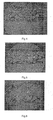
- a method for fixing antibody on the surface of medical instrument mainly includes 1 pre-treating the instrument surface, 2 preparing holes, 3 post-treating the instrument surface, 4 fixing the antibody, and 5 detecting the antibody activity, etc; first, preparing the surface which has holes of the same size 100 ⁇ 1000 nm and multicrystal phase structure in the surface of the medical instrument, such as the 316L stainless steel bare metal scaffold, by chemical corrosion, electrochemical corrosion, anodic oxidation, micro-arc oxidation, or micro-arc nitridation. As shown in Fig. 1 , it is the scanning electron microscope photo of the processed surface of 316L stainless steel stent, wherein:
- the instrument includes scaffold, catheter, guide wire, heart pacemakers, heart valves, surgical implant materials, implant hard tissue, and non-metal medical instruments whose substrate is ceramics, organic polymer, inorganic substance or metal oxide; the scaffold is balloon-expandable, self-expanding, vessel or non-vessel stent whose substrate is stainless steel, nickel-titanium memory alloy, cobalt-based alloy, titanium or titanium alloy; and the scaffold is made by wire weaving, tube laser cutting, die casting or welding.
- the biological product includes one or more of the following substances: heparin, anti-platelet membrane glycoprotein (GPIIb / IIIa) receptor antagonists, antibody-treating cancer drug, abciximab, biological peptides, CD34 antibody, CD31 antibody and CD133 antibody.
- heparin anti-platelet membrane glycoprotein (GPIIb / IIIa) receptor antagonists
- antibody-treating cancer drug abciximab
- biological peptides CD34 antibody
- CD31 antibody CD31 antibody
- CD133 antibody CD133 antibody
- the method of fixing antibody CD34 on the scaffold surface based on the antigen-antibody binding reaction and the fluorescence detection of the antibody activity have the steps as follows:
- the method of fixing antibody CD34 on the scaffold surface based on the antigen-antibody binding reaction and the immunohistochemistry detection of the antibody activity, and the method of fixing antibody CD34 on the scaffold surface is the same as the steps 1 and 2 disclosed in example 1;
- example 5 makes the control of the relative contents of antibodies fixed with the holes under different craft conditions, and the steps thereof is as follows:
- the present invention provides a method for fixing antibody on the surface of medical instruments.
- the method can promote the degree to which the antibody is firmly fixed on the surface of the instrument and keep high activity of the antibody on the surface of the medical instrument.
- the practicality in industry thereof is shown as follows:
Landscapes
- Health & Medical Sciences (AREA)
- Life Sciences & Earth Sciences (AREA)
- General Health & Medical Sciences (AREA)
- Veterinary Medicine (AREA)
- Public Health (AREA)
- Epidemiology (AREA)
- Animal Behavior & Ethology (AREA)
- Chemical & Material Sciences (AREA)
- Medicinal Chemistry (AREA)
- Engineering & Computer Science (AREA)
- Biomedical Technology (AREA)
- Molecular Biology (AREA)
- Vascular Medicine (AREA)
- Surgery (AREA)
- Heart & Thoracic Surgery (AREA)
- Dermatology (AREA)
- Oral & Maxillofacial Surgery (AREA)
- Transplantation (AREA)
- Materials For Medical Uses (AREA)
- Peptides Or Proteins (AREA)
Claims (9)
- Procédé de fixation d'un anticorps à la surface d'un instrument médical, caractérisé en ce que le procédé inclut① un prétraitement de la surface de l'instrument en lavant la surface de l'instrument par ultrasons afin d'éliminer les impuretés, où une solution d'acétone de qualité réactif analytique à une concentration de 99,5 % ou un solvant d'éthanol de qualité médicale à une concentration de 75 % est utilisé(e) pour laver le matériau du corps de support pendant 5-15 minutes en utilisant des ultrasons à 28-100 kHz afin d'éliminer les impuretés sur le matériau de corps, en séchant le matériau de corps lavé dans une étuve à 30-40 °C pendant 30-60 minutes, puis en retirant le matériau de corps de l'étuve ;② la préparation d'une structure en phase polycristalline qui présente des trous de taille identique à la surface de l'instrument en raison d'une corrosion chimique, une corrosion électrochimique, une oxydation anodique, une oxydation par micro-arc, ou une nitruration par micro-arc ;③ un post-traitement de la surface de l'instrument :en utilisant une solution d'acétone de qualité réactif analytique à 99,5 % et de l'eau distillée de manière séquentielle afin de laver le matériau de corps pendant 5-15 minutes en utilisant des ultrasons à 28-100 kHz ; en séchant le matériau de corps lavé dans une étuve à 30-40 °C pendant 30-60 minutes, puis en retirant le matériau de corps de l'étuve, ouen préparant une solution d'acide chlorhydrique à 1-38 % avec de l'eau distillée, en immergeant le matériau de corps dans la solution préparée, en plaçant la solution contenant le matériau de corps dans un incubateur à 20 °C pendant 30 minutes-48 heures, puis en retirant le matériau de corps de l'incubateur ;④ la fixation de l'anticorps en immergeant le support de métal nu qui présente des trous à sa surface dans une solution tampon contenant un anticorps destiné à une incubation, en ajustant la valeur du pH de la solution tampon contenant l'anticorps, moyennant quoi l'anticorps est fixé sur la surface de l'instrument par l'attraction exercée entre une charge positive et négative et l'effet d'adsorption physique des trous ; et⑤ enfin, la confirmation de l'efficacité de l'anticorps fixé par une simulation artificielle de l'hémodynamique et la détection de l'activité de l'anticorps à la surface de l'instrument.
- Procédé selon la revendication 1, dans lequel l'étape ② de préparation de trous de taille identique dans l'instrument est réalisée par une corrosion avec une solution acide, où l'instrument est immergé dans la solution corrosive à 0-100 °C, où la solution corrosive est de préférence de l'acide chlorhydrique à une concentration de 1-38 % ou une solution acide mélangée avec de l'acide chlorhydrique contenant 1-38 % d'acide chlorhydrique mélangé avec 1-98 % de vitriol ; puis des trous individuels de l'ordre du nanomètre sont formés par une corrosion pendant 1 minute-480 heures, le temps de corrosion variant en fonction de la concentration et de la température.
- Procédé selon la revendication 1, dans lequel l'instrument inclut un support, un cathéter, un fil-guide, des stimulateurs cardiaques, des valves cardiaques, des matériaux d'implant chirurgical, un implant de tissu dur, et des instruments médicaux non métalliques dont le substrat est la céramique, un polymère organique, une substance inorganique ou un oxyde métallique ; le support étant un stent vasculaire ou non vasculaire à expansion par ballonnet, auto-expansible, un stent dont le substrat est l'acier inoxydable, un alliage à mémoire de forme en nickel-titane, un alliage à base de cobalt, le titane ou un alliage de titane ; et le support est fabriqué par tissage de fils métalliques, découpe de tubes au laser, moulage sous pression ou soudage.
- Procédé selon la revendication 1, dans lequel les anticorps du produit biologique incluent une ou plusieurs des substances suivantes : l'héparine, des antagonistes des récepteurs de la glycoprotéine de la membrane plaquettaire (GPIIb/IIIa), un médicament de traitement du cancer à base d'anticorps, l'abciximab, des peptides biologiques, un anticorps CD34, un anticorps CD31 et un anticorps CD133.
- Procédé selon la revendication 1, dans lequel l'étape ④ de fixation de l'anticorps inclut :(1) l'immersion du support qui présente des trous à sa surface dans une solution tampon phosphate ou une solution tampon carbonate contenant 0,1-100 µg/ml d'anticorps CD34 destinée à une incubation pendant 20-60 minutes à 25-37 °C, puis le retrait de l'instrument ;(2) le lavage du support à 3 reprises, pendant 5 minutes, à chaque fois en utilisant une solution tampon phosphate et la ventilation de l'instrument pendant 15 minutes à température ambiante, puis la conservation de l'instrument à 4 °C une fois qu'il est sec.
- Procédé selon la revendication 1, dans lequel l'activité de l'anticorps après la fixation de l'anticorps est ⑤ directement détectée en réalisant une coloration par fluorescence par l'intermédiaire de la réaction spécifique de l'anticorps-antigène CD34 en utilisant un anticorps murin anti-humain CD34 marqué par l'isothiocyanate de fluorescéine (FITC) et en détectant l'activité de l'anticorps à la surface de l'instrument par une photodétection de la fluorescence en utilisant un microscope à fluorescence.
- Procédé selon la revendication 1, dans lequel après l'étape ④ de fixation de l'anticorps, l'activité de l'anticorps est ⑥ indirectement détectée en détectant l'activité de l'anticorps à la surface du support en utilisant un kit de coloration au 3-amino-9-éthyl-carbazole (AEC) suite à une amplification en cascade de l'anticorps par un anticorps secondaire de chèvre anti-IgG murine marqué par la peroxydase du raifort (HRP).
- Procédé selon la revendication 1, dans lequel à l'étape ④ de fixation de l'anticorps, le taux d'anticorps à la surface est ⑦ détectée en détectant indirectement le taux de l'anticorps à la surface de l'instrument par le chromogène tétraméthylbenzidine (TMB) suite à une amplification en cascade d'un anticorps secondaire de chèvre anti-IgG murine marqué par la peroxydase du raifort (HRP) ; les étapes étant les suivantes :(1) l'immersion du support présentant l'anticorps à sa surface dans une solution tampon phosphate contenant 500 µl d'albumine de sérum bovin (ASB) à 5-10 % pour une incubation à 25-37 °C pendant 30 minutes-2 heures puis un retrait du support pour qu'il sèche à l'air ;(2) l'immersion du support dans une solution tampon phosphate contenant un anticorps de chèvre anti-IgG murine marqué par la peroxydase du raifort (HRP) pour une incubation à 25-37 °C pendant 20 minutes-30 minutes puis un retrait du support ;(3) le lavage du support à 3 reprises, pendant 5 minutes, à chaque fois avec une solution tampon phosphate ; le placement du support dans 500 µl d'une solution tampon de substrat TMB ; la solution tampon de substrat TMB de 500 µl étant constituée de, par exemple, 0,5 ml d'éthanol anhydre à 10 mg/5 ml mélangé avec 5 ml de solution tampon substrat ; la solution tampon substrat étant constituée de, par exemple, 1,42 g de Na2HPO4 mélangé avec 0,96 g de citrate de sodium auquel on ajoute de l'eau distillée à 50 ml ; après le lavage, un ajout de 32 µl de peroxyde d'hydrogène à 0,75 % dans une solution tampon phosphate pour une incubation pendant 15 minutes puis un ajout de 250 µl d'une solution d'acide sulfurique 2 M afin de terminer la réaction ;(4) l'utilisation d'un lecteur de microplaques afin de mesurer l'absorbance de la solution à 492 nm ; l'enrobage d'un anticorps CD34 présentant une concentration connue sur une plaque ELISA selon les différents gradients de concentration de 1/10, 1/20, 1/50, 1/100, 1/500, 1/1 000 et 1/10 000, puis un tracé d'une courbe d'étalonnage par simulation de la concentration de l'anticorps CD34 à A492 nm ;(5) la détermination de la quantité de l'anticorps à la surface du support en fonction de l'absorbance mesurée et de la courbe d'étalonnage.
- Procédé selon la revendication 1, dans lequel après l'étape ④ de fixation de l'anticorps, lequel anticorps est un anticorps murin anti-humain CD34, la fermeté d'adhésion de l'anticorps est ⑧ détectée par : le placement du support qui possède l'anticorps murin anti-humain CD34 fixé à sa surface dans un liquide corporel simulé artificiellement, comme une solution tampon phosphate dont la pression est de 100 mmHg et le débit est de 91 cm/s, la réalisation d'une expérience de lessivage, lorsque le support est dans un état normal ou dans un état après dilatation du ballonnet ; enfin, l'utilisation du procédé de l'étape ⑥ tel que défini selon la revendication 7 pour détecter l'activité de l'anticorps à la surface du support, et l'utilisation du procédé de l'étape ou tel que défini selon la revendication 8 pour quantifier l'anticorps sur le support.
Applications Claiming Priority (2)
| Application Number | Priority Date | Filing Date | Title |
|---|---|---|---|
| CN2007101076436A CN101310778B (zh) | 2007-05-23 | 2007-05-23 | 一种在医疗器械表面固定抗体的方法 |
| PCT/CN2007/002916 WO2008141495A1 (fr) | 2007-05-23 | 2007-10-10 | Procédé de fixation d'anticorps sur la surface d'un instrument médical |
Publications (3)
| Publication Number | Publication Date |
|---|---|
| EP2163268A1 EP2163268A1 (fr) | 2010-03-17 |
| EP2163268A4 EP2163268A4 (fr) | 2012-10-24 |
| EP2163268B1 true EP2163268B1 (fr) | 2014-01-22 |
Family
ID=40031390
Family Applications (1)
| Application Number | Title | Priority Date | Filing Date |
|---|---|---|---|
| EP07816530.5A Active EP2163268B1 (fr) | 2007-05-23 | 2007-10-10 | Procédé de fixation d'anticorps sur la surface d'un instrument médical |
Country Status (4)
| Country | Link |
|---|---|
| US (1) | US8361536B2 (fr) |
| EP (1) | EP2163268B1 (fr) |
| CN (1) | CN101310778B (fr) |
| WO (1) | WO2008141495A1 (fr) |
Cited By (2)
| Publication number | Priority date | Publication date | Assignee | Title |
|---|---|---|---|---|
| US12150850B2 (en) | 2018-03-01 | 2024-11-26 | Titanium Textiles Ag | Tension-free titanium metal knitted fabric for surgically shaping soft tissues |
| US12186193B2 (en) | 2018-03-01 | 2025-01-07 | Titanium Textiles Ag | Titanium matrix based on a tension-free metal warp knit fabric for guided tissue regeneration |
Families Citing this family (14)
| Publication number | Priority date | Publication date | Assignee | Title |
|---|---|---|---|---|
| CN101310778B (zh) | 2007-05-23 | 2012-06-06 | 乐普(北京)医疗器械股份有限公司 | 一种在医疗器械表面固定抗体的方法 |
| US9760566B2 (en) | 2011-03-31 | 2017-09-12 | Microsoft Technology Licensing, Llc | Augmented conversational understanding agent to identify conversation context between two humans and taking an agent action thereof |
| US9842168B2 (en) | 2011-03-31 | 2017-12-12 | Microsoft Technology Licensing, Llc | Task driven user intents |
| US10642934B2 (en) | 2011-03-31 | 2020-05-05 | Microsoft Technology Licensing, Llc | Augmented conversational understanding architecture |
| CN102727991B (zh) * | 2011-04-08 | 2014-10-01 | 乐普(北京)医疗器械股份有限公司 | 医疗器械表面实施载药固药控释的方法 |
| US9064006B2 (en) | 2012-08-23 | 2015-06-23 | Microsoft Technology Licensing, Llc | Translating natural language utterances to keyword search queries |
| CN104826177B (zh) * | 2015-06-01 | 2017-11-28 | 巩晓东 | 一种在医疗器械表面固定乙肝抗体的方法 |
| CN106338301A (zh) * | 2016-04-10 | 2017-01-18 | 天津海河标测技术检测有限公司 | 一种对重复使用医疗器械的清洗方式进行确认的试验方法 |
| CN112930202B (zh) * | 2018-08-24 | 2023-10-27 | 扩凡科技有限公司 | 血管装置和用于制备血管装置的方法 |
| CN111249601A (zh) * | 2018-11-30 | 2020-06-09 | 上海微创医疗器械(集团)有限公司 | 一种多孔球囊及其制备方法 |
| CN111304415B (zh) * | 2020-02-26 | 2022-03-04 | 江苏康瑞新材料科技股份有限公司 | 奥氏体不锈钢医疗器械零件的加工工艺 |
| CN111304427B (zh) * | 2020-02-26 | 2022-03-08 | 江苏康瑞新材料科技股份有限公司 | 马氏体不锈钢医疗器械零件的加工工艺 |
| CN111647045B (zh) * | 2020-06-17 | 2022-05-27 | 清华大学深圳国际研究生院 | 一种cd133拮抗多肽及其衍生物与应用 |
| CN114910542B (zh) * | 2022-04-28 | 2023-09-22 | 中国民航大学 | 基于血小板膜的电化学抗污传感器及构建方法与其在检测cd44中的应用 |
Family Cites Families (12)
| Publication number | Priority date | Publication date | Assignee | Title |
|---|---|---|---|---|
| US5728420A (en) * | 1996-08-09 | 1998-03-17 | Medtronic, Inc. | Oxidative method for attachment of glycoproteins to surfaces of medical devices |
| US20060194008A1 (en) * | 1999-09-22 | 2006-08-31 | Princeton University | Devices with multiple surface functionality |
| US20100254900A1 (en) * | 2002-03-18 | 2010-10-07 | Campbell Phil G | Biocompatible polymers and Methods of use |
| US20040078090A1 (en) * | 2002-10-18 | 2004-04-22 | Francois Binette | Biocompatible scaffolds with tissue fragments |
| WO2004112863A1 (fr) * | 2003-06-20 | 2004-12-29 | Mcgill University | Implant recouvert d'une membrane biodegradable comportant du chitosane |
| US20060034884A1 (en) * | 2004-08-10 | 2006-02-16 | Stenzel Eric B | Coated medical device having an increased coating surface area |
| CN1278743C (zh) * | 2004-08-13 | 2006-10-11 | 重庆大学 | 药物洗脱性血管支架的制备方法 |
| CN200980747Y (zh) | 2006-06-14 | 2007-11-28 | 北京乐普医疗器械有限公司 | 药物洗脱器械的药物释放结构 |
| CN200980748Y (zh) | 2006-08-01 | 2007-11-28 | 北京乐普医疗器械有限公司 | 一种药物洗脱器械的多孔药物释放结构 |
| WO2008061431A1 (fr) * | 2006-11-20 | 2008-05-29 | Lepu Medical Technology (Beijing) Co., Ltd. | Stent à plusieurs couches de médicaments |
| CN100435861C (zh) * | 2006-11-27 | 2008-11-26 | 中国医学科学院生物医学工程研究所 | 载药或载基因支架的制备方法 |
| CN101310778B (zh) | 2007-05-23 | 2012-06-06 | 乐普(北京)医疗器械股份有限公司 | 一种在医疗器械表面固定抗体的方法 |
-
2007
- 2007-05-23 CN CN2007101076436A patent/CN101310778B/zh active Active
- 2007-10-10 WO PCT/CN2007/002916 patent/WO2008141495A1/fr not_active Ceased
- 2007-10-10 EP EP07816530.5A patent/EP2163268B1/fr active Active
- 2007-10-10 US US12/593,110 patent/US8361536B2/en active Active
Cited By (2)
| Publication number | Priority date | Publication date | Assignee | Title |
|---|---|---|---|---|
| US12150850B2 (en) | 2018-03-01 | 2024-11-26 | Titanium Textiles Ag | Tension-free titanium metal knitted fabric for surgically shaping soft tissues |
| US12186193B2 (en) | 2018-03-01 | 2025-01-07 | Titanium Textiles Ag | Titanium matrix based on a tension-free metal warp knit fabric for guided tissue regeneration |
Also Published As
| Publication number | Publication date |
|---|---|
| EP2163268A1 (fr) | 2010-03-17 |
| EP2163268A4 (fr) | 2012-10-24 |
| CN101310778B (zh) | 2012-06-06 |
| CN101310778A (zh) | 2008-11-26 |
| US8361536B2 (en) | 2013-01-29 |
| US20100112189A1 (en) | 2010-05-06 |
| WO2008141495A1 (fr) | 2008-11-27 |
Similar Documents
| Publication | Publication Date | Title |
|---|---|---|
| EP2163268B1 (fr) | Procédé de fixation d'anticorps sur la surface d'un instrument médical | |
| Liao et al. | A single nanowire sensor for intracellular glucose detection | |
| Wang et al. | A novel Ca-Mg-P/PDA composite coating of Mg alloys to improve corrosion resistance for orthopedic implant materials | |
| Chen et al. | Improving the in vitro cell differentiation and in vivo osseointegration of titanium dental implant through oxygen plasma immersion ion implantation treatment | |
| Huang et al. | Nitrogen plasma immersion ion implantation treatment to enhance corrosion resistance, bone cell growth, and antibacterial adhesion of Ti-6Al-4V alloy in dental applications | |
| Zhen et al. | A review on in vitro corrosion performance test of biodegradable metallic materials | |
| Middleton et al. | Fibronectin silanized titanium alloy: a bioinductive and durable coating to enhance fibroblast attachment in vitro | |
| Shin et al. | Enhanced osteogenic differentiation of human mesenchymal stem cells on Ti surfaces with electrochemical nanopattern formation | |
| Fan et al. | Adhesion of neural cells on silicon wafer with nano-topographic surface | |
| Säuberlich et al. | Cell culture tests for assessing the tolerance of soft tissue to variously modified titanium surfaces | |
| CN106404915A (zh) | 一种细胞牵引力的实时与定量测定方法 | |
| Nagaraja et al. | Oxide layer formation, corrosion, and biocompatibility of nitinol cardiovascular devices | |
| Martin et al. | Characterization and analysis of osteopontin‐immobilized poly (2‐hydroxyethyl methacrylate) surfaces | |
| Mishra et al. | Surface functionalization of gallium nitride for biomedical implant applications | |
| Zhou et al. | Iron surface functionalization system-Iron oxide nanostructured arrays with polycaprolactone coatings: Biodegradation, cytocompatibility, and drug release behavior | |
| Alvarez-Lopez et al. | Improved cell adhesion to activated vapor silanization-biofunctionalized Ti-6Al-4V surfaces with ECM-derived oligopeptides | |
| Du et al. | Amperometric alcohol sensors based on protein multilayers composed of avidin and biotin‐labeled alcohol oxidase | |
| Yue et al. | Dealloyed nano-porous TiCu coatings with controlled copper release for cardiovascular devices | |
| McNichols et al. | Investigating surface topology and cyclic‐RGD peptide functionalization on vascular endothelialization | |
| CN102698323B (zh) | 一种抗凝血材料的制备方法 | |
| EP2307594B1 (fr) | Traitement biomimétique à base de silicium pour l'ostéo-intégration de substrats métalliques | |
| Erdogan et al. | Nanostructured 316L Stainless Steel Stent Surfaces Improve Corrosion Resistance, and Enhance Endothelization and Hemocompatibility | |
| Tarnowski et al. | Oxygen transport characteristics of refunctionalized fluoropolymeric membranes and their application in the design of biosensors based upon the Clark-type oxygen probe | |
| Deguchi et al. | Heterogeneous role of integrins in fibroblast response to small cyclic mechanical stimulus generated by a nanoporous gold actuator | |
| Gao et al. | Scanning electrochemical microscopy coupled with intracellular standard addition method for quantification of enzyme activity in single intact cells |
Legal Events
| Date | Code | Title | Description |
|---|---|---|---|
| PUAI | Public reference made under article 153(3) epc to a published international application that has entered the european phase |
Free format text: ORIGINAL CODE: 0009012 |
|
| 17P | Request for examination filed |
Effective date: 20090807 |
|
| AK | Designated contracting states |
Kind code of ref document: A1 Designated state(s): AT BE BG CH CY CZ DE DK EE ES FI FR GB GR HU IE IS IT LI LT LU LV MC MT NL PL PT RO SE SI SK TR |
|
| AX | Request for extension of the european patent |
Extension state: AL BA HR MK RS |
|
| DAX | Request for extension of the european patent (deleted) | ||
| REG | Reference to a national code |
Ref country code: DE Ref legal event code: R079 Ref document number: 602007034939 Country of ref document: DE Free format text: PREVIOUS MAIN CLASS: A61L0027000000 Ipc: A61L0027220000 |
|
| A4 | Supplementary search report drawn up and despatched |
Effective date: 20120920 |
|
| RIC1 | Information provided on ipc code assigned before grant |
Ipc: A61L 27/54 20060101ALI20120914BHEP Ipc: A61L 27/22 20060101AFI20120914BHEP Ipc: A61L 31/16 20060101ALI20120914BHEP Ipc: A61L 29/16 20060101ALI20120914BHEP Ipc: A61L 31/04 20060101ALI20120914BHEP Ipc: A61L 29/04 20060101ALI20120914BHEP Ipc: A61F 2/02 20060101ALI20120914BHEP |
|
| GRAP | Despatch of communication of intention to grant a patent |
Free format text: ORIGINAL CODE: EPIDOSNIGR1 |
|
| INTG | Intention to grant announced |
Effective date: 20130729 |
|
| GRAS | Grant fee paid |
Free format text: ORIGINAL CODE: EPIDOSNIGR3 |
|
| GRAA | (expected) grant |
Free format text: ORIGINAL CODE: 0009210 |
|
| AK | Designated contracting states |
Kind code of ref document: B1 Designated state(s): AT BE BG CH CY CZ DE DK EE ES FI FR GB GR HU IE IS IT LI LT LU LV MC MT NL PL PT RO SE SI SK TR |
|
| REG | Reference to a national code |
Ref country code: GB Ref legal event code: FG4D |
|
| REG | Reference to a national code |
Ref country code: CH Ref legal event code: EP |
|
| REG | Reference to a national code |
Ref country code: AT Ref legal event code: REF Ref document number: 650453 Country of ref document: AT Kind code of ref document: T Effective date: 20140215 |
|
| REG | Reference to a national code |
Ref country code: IE Ref legal event code: FG4D |
|
| REG | Reference to a national code |
Ref country code: DE Ref legal event code: R096 Ref document number: 602007034939 Country of ref document: DE Effective date: 20140227 |
|
| REG | Reference to a national code |
Ref country code: NL Ref legal event code: VDEP Effective date: 20140122 |
|
| REG | Reference to a national code |
Ref country code: AT Ref legal event code: MK05 Ref document number: 650453 Country of ref document: AT Kind code of ref document: T Effective date: 20140122 |
|
| REG | Reference to a national code |
Ref country code: LT Ref legal event code: MG4D |
|
| PG25 | Lapsed in a contracting state [announced via postgrant information from national office to epo] |
Ref country code: IS Free format text: LAPSE BECAUSE OF FAILURE TO SUBMIT A TRANSLATION OF THE DESCRIPTION OR TO PAY THE FEE WITHIN THE PRESCRIBED TIME-LIMIT Effective date: 20140522 Ref country code: LT Free format text: LAPSE BECAUSE OF FAILURE TO SUBMIT A TRANSLATION OF THE DESCRIPTION OR TO PAY THE FEE WITHIN THE PRESCRIBED TIME-LIMIT Effective date: 20140122 |
|
| PG25 | Lapsed in a contracting state [announced via postgrant information from national office to epo] |
Ref country code: AT Free format text: LAPSE BECAUSE OF FAILURE TO SUBMIT A TRANSLATION OF THE DESCRIPTION OR TO PAY THE FEE WITHIN THE PRESCRIBED TIME-LIMIT Effective date: 20140122 Ref country code: SE Free format text: LAPSE BECAUSE OF FAILURE TO SUBMIT A TRANSLATION OF THE DESCRIPTION OR TO PAY THE FEE WITHIN THE PRESCRIBED TIME-LIMIT Effective date: 20140122 Ref country code: NL Free format text: LAPSE BECAUSE OF FAILURE TO SUBMIT A TRANSLATION OF THE DESCRIPTION OR TO PAY THE FEE WITHIN THE PRESCRIBED TIME-LIMIT Effective date: 20140122 Ref country code: PT Free format text: LAPSE BECAUSE OF FAILURE TO SUBMIT A TRANSLATION OF THE DESCRIPTION OR TO PAY THE FEE WITHIN THE PRESCRIBED TIME-LIMIT Effective date: 20140522 Ref country code: ES Free format text: LAPSE BECAUSE OF FAILURE TO SUBMIT A TRANSLATION OF THE DESCRIPTION OR TO PAY THE FEE WITHIN THE PRESCRIBED TIME-LIMIT Effective date: 20140122 Ref country code: CY Free format text: LAPSE BECAUSE OF FAILURE TO SUBMIT A TRANSLATION OF THE DESCRIPTION OR TO PAY THE FEE WITHIN THE PRESCRIBED TIME-LIMIT Effective date: 20140122 Ref country code: FI Free format text: LAPSE BECAUSE OF FAILURE TO SUBMIT A TRANSLATION OF THE DESCRIPTION OR TO PAY THE FEE WITHIN THE PRESCRIBED TIME-LIMIT Effective date: 20140122 |
|
| PG25 | Lapsed in a contracting state [announced via postgrant information from national office to epo] |
Ref country code: BE Free format text: LAPSE BECAUSE OF FAILURE TO SUBMIT A TRANSLATION OF THE DESCRIPTION OR TO PAY THE FEE WITHIN THE PRESCRIBED TIME-LIMIT Effective date: 20140122 Ref country code: LV Free format text: LAPSE BECAUSE OF FAILURE TO SUBMIT A TRANSLATION OF THE DESCRIPTION OR TO PAY THE FEE WITHIN THE PRESCRIBED TIME-LIMIT Effective date: 20140122 |
|
| REG | Reference to a national code |
Ref country code: DE Ref legal event code: R097 Ref document number: 602007034939 Country of ref document: DE |
|
| PG25 | Lapsed in a contracting state [announced via postgrant information from national office to epo] |
Ref country code: DK Free format text: LAPSE BECAUSE OF FAILURE TO SUBMIT A TRANSLATION OF THE DESCRIPTION OR TO PAY THE FEE WITHIN THE PRESCRIBED TIME-LIMIT Effective date: 20140122 Ref country code: EE Free format text: LAPSE BECAUSE OF FAILURE TO SUBMIT A TRANSLATION OF THE DESCRIPTION OR TO PAY THE FEE WITHIN THE PRESCRIBED TIME-LIMIT Effective date: 20140122 Ref country code: RO Free format text: LAPSE BECAUSE OF FAILURE TO SUBMIT A TRANSLATION OF THE DESCRIPTION OR TO PAY THE FEE WITHIN THE PRESCRIBED TIME-LIMIT Effective date: 20140122 Ref country code: CZ Free format text: LAPSE BECAUSE OF FAILURE TO SUBMIT A TRANSLATION OF THE DESCRIPTION OR TO PAY THE FEE WITHIN THE PRESCRIBED TIME-LIMIT Effective date: 20140122 |
|
| PG25 | Lapsed in a contracting state [announced via postgrant information from national office to epo] |
Ref country code: PL Free format text: LAPSE BECAUSE OF FAILURE TO SUBMIT A TRANSLATION OF THE DESCRIPTION OR TO PAY THE FEE WITHIN THE PRESCRIBED TIME-LIMIT Effective date: 20140122 Ref country code: SK Free format text: LAPSE BECAUSE OF FAILURE TO SUBMIT A TRANSLATION OF THE DESCRIPTION OR TO PAY THE FEE WITHIN THE PRESCRIBED TIME-LIMIT Effective date: 20140122 |
|
| PLBE | No opposition filed within time limit |
Free format text: ORIGINAL CODE: 0009261 |
|
| STAA | Information on the status of an ep patent application or granted ep patent |
Free format text: STATUS: NO OPPOSITION FILED WITHIN TIME LIMIT |
|
| 26N | No opposition filed |
Effective date: 20141023 |
|
| REG | Reference to a national code |
Ref country code: DE Ref legal event code: R097 Ref document number: 602007034939 Country of ref document: DE Effective date: 20141023 |
|
| REG | Reference to a national code |
Ref country code: DE Ref legal event code: R119 Ref document number: 602007034939 Country of ref document: DE |
|
| PG25 | Lapsed in a contracting state [announced via postgrant information from national office to epo] |
Ref country code: LU Free format text: LAPSE BECAUSE OF FAILURE TO SUBMIT A TRANSLATION OF THE DESCRIPTION OR TO PAY THE FEE WITHIN THE PRESCRIBED TIME-LIMIT Effective date: 20141010 Ref country code: SI Free format text: LAPSE BECAUSE OF FAILURE TO SUBMIT A TRANSLATION OF THE DESCRIPTION OR TO PAY THE FEE WITHIN THE PRESCRIBED TIME-LIMIT Effective date: 20140122 Ref country code: MC Free format text: LAPSE BECAUSE OF FAILURE TO SUBMIT A TRANSLATION OF THE DESCRIPTION OR TO PAY THE FEE WITHIN THE PRESCRIBED TIME-LIMIT Effective date: 20140122 |
|
| REG | Reference to a national code |
Ref country code: CH Ref legal event code: PL |
|
| REG | Reference to a national code |
Ref country code: IE Ref legal event code: MM4A |
|
| PG25 | Lapsed in a contracting state [announced via postgrant information from national office to epo] |
Ref country code: LI Free format text: LAPSE BECAUSE OF NON-PAYMENT OF DUE FEES Effective date: 20141031 Ref country code: DE Free format text: LAPSE BECAUSE OF NON-PAYMENT OF DUE FEES Effective date: 20150501 Ref country code: CH Free format text: LAPSE BECAUSE OF NON-PAYMENT OF DUE FEES Effective date: 20141031 |
|
| REG | Reference to a national code |
Ref country code: FR Ref legal event code: ST Effective date: 20150630 |
|
| PG25 | Lapsed in a contracting state [announced via postgrant information from national office to epo] |
Ref country code: FR Free format text: LAPSE BECAUSE OF NON-PAYMENT OF DUE FEES Effective date: 20141031 |
|
| PG25 | Lapsed in a contracting state [announced via postgrant information from national office to epo] |
Ref country code: IE Free format text: LAPSE BECAUSE OF NON-PAYMENT OF DUE FEES Effective date: 20141010 |
|
| PG25 | Lapsed in a contracting state [announced via postgrant information from national office to epo] |
Ref country code: BG Free format text: LAPSE BECAUSE OF FAILURE TO SUBMIT A TRANSLATION OF THE DESCRIPTION OR TO PAY THE FEE WITHIN THE PRESCRIBED TIME-LIMIT Effective date: 20140122 |
|
| PG25 | Lapsed in a contracting state [announced via postgrant information from national office to epo] |
Ref country code: GR Free format text: LAPSE BECAUSE OF FAILURE TO SUBMIT A TRANSLATION OF THE DESCRIPTION OR TO PAY THE FEE WITHIN THE PRESCRIBED TIME-LIMIT Effective date: 20140423 Ref country code: IT Free format text: LAPSE BECAUSE OF FAILURE TO SUBMIT A TRANSLATION OF THE DESCRIPTION OR TO PAY THE FEE WITHIN THE PRESCRIBED TIME-LIMIT Effective date: 20140122 |
|
| PG25 | Lapsed in a contracting state [announced via postgrant information from national office to epo] |
Ref country code: MT Free format text: LAPSE BECAUSE OF FAILURE TO SUBMIT A TRANSLATION OF THE DESCRIPTION OR TO PAY THE FEE WITHIN THE PRESCRIBED TIME-LIMIT Effective date: 20140122 Ref country code: HU Free format text: LAPSE BECAUSE OF FAILURE TO SUBMIT A TRANSLATION OF THE DESCRIPTION OR TO PAY THE FEE WITHIN THE PRESCRIBED TIME-LIMIT; INVALID AB INITIO Effective date: 20071010 Ref country code: TR Free format text: LAPSE BECAUSE OF FAILURE TO SUBMIT A TRANSLATION OF THE DESCRIPTION OR TO PAY THE FEE WITHIN THE PRESCRIBED TIME-LIMIT Effective date: 20140122 |
|
| PGFP | Annual fee paid to national office [announced via postgrant information from national office to epo] |
Ref country code: GB Payment date: 20251022 Year of fee payment: 19 |