EP2163330A2 - Mischungen zur Bildung von porösen Konstrukten - Google Patents
Mischungen zur Bildung von porösen Konstrukten Download PDFInfo
- Publication number
- EP2163330A2 EP2163330A2 EP09252071A EP09252071A EP2163330A2 EP 2163330 A2 EP2163330 A2 EP 2163330A2 EP 09252071 A EP09252071 A EP 09252071A EP 09252071 A EP09252071 A EP 09252071A EP 2163330 A2 EP2163330 A2 EP 2163330A2
- Authority
- EP
- European Patent Office
- Prior art keywords
- green body
- extractable material
- metal powder
- composition
- diol
- Prior art date
- Legal status (The legal status is an assumption and is not a legal conclusion. Google has not performed a legal analysis and makes no representation as to the accuracy of the status listed.)
- Withdrawn
Links
- 239000000203 mixture Substances 0.000 title claims abstract description 111
- 239000000463 material Substances 0.000 claims abstract description 92
- 238000000034 method Methods 0.000 claims abstract description 66
- 229910052751 metal Inorganic materials 0.000 claims abstract description 61
- 239000002184 metal Substances 0.000 claims abstract description 61
- 239000000843 powder Substances 0.000 claims abstract description 60
- 229920005862 polyol Polymers 0.000 claims abstract description 39
- 150000003077 polyols Chemical class 0.000 claims abstract description 39
- 229920001477 hydrophilic polymer Polymers 0.000 claims abstract description 25
- 239000007943 implant Substances 0.000 claims abstract description 10
- 238000005245 sintering Methods 0.000 claims abstract description 10
- PEDCQBHIVMGVHV-UHFFFAOYSA-N Glycerine Chemical compound OCC(O)CO PEDCQBHIVMGVHV-UHFFFAOYSA-N 0.000 claims description 45
- FAPWRFPIFSIZLT-UHFFFAOYSA-M Sodium chloride Chemical compound [Na+].[Cl-] FAPWRFPIFSIZLT-UHFFFAOYSA-M 0.000 claims description 22
- 239000002904 solvent Substances 0.000 claims description 16
- 235000011187 glycerol Nutrition 0.000 claims description 15
- RTAQQCXQSZGOHL-UHFFFAOYSA-N Titanium Chemical compound [Ti] RTAQQCXQSZGOHL-UHFFFAOYSA-N 0.000 claims description 11
- 239000011780 sodium chloride Substances 0.000 claims description 11
- 239000003960 organic solvent Substances 0.000 claims description 9
- 239000003125 aqueous solvent Substances 0.000 claims description 8
- 238000010438 heat treatment Methods 0.000 claims description 8
- ATRRKUHOCOJYRX-UHFFFAOYSA-N Ammonium bicarbonate Chemical compound [NH4+].OC([O-])=O ATRRKUHOCOJYRX-UHFFFAOYSA-N 0.000 claims description 7
- 239000001099 ammonium carbonate Substances 0.000 claims description 7
- 239000010936 titanium Substances 0.000 claims description 7
- LYCAIKOWRPUZTN-UHFFFAOYSA-N Ethylene glycol Chemical compound OCCO LYCAIKOWRPUZTN-UHFFFAOYSA-N 0.000 claims description 6
- -1 or pentinediol Chemical compound 0.000 claims description 6
- 159000000000 sodium salts Chemical class 0.000 claims description 6
- 229910052719 titanium Inorganic materials 0.000 claims description 6
- 229910000013 Ammonium bicarbonate Inorganic materials 0.000 claims description 5
- 235000012538 ammonium bicarbonate Nutrition 0.000 claims description 5
- PUPZLCDOIYMWBV-UHFFFAOYSA-N (+/-)-1,3-Butanediol Chemical compound CC(O)CCO PUPZLCDOIYMWBV-UHFFFAOYSA-N 0.000 claims description 4
- NLXLAEXVIDQMFP-UHFFFAOYSA-N Ammonia chloride Chemical compound [NH4+].[Cl-] NLXLAEXVIDQMFP-UHFFFAOYSA-N 0.000 claims description 4
- TWRXJAOTZQYOKJ-UHFFFAOYSA-L Magnesium chloride Chemical compound [Mg+2].[Cl-].[Cl-] TWRXJAOTZQYOKJ-UHFFFAOYSA-L 0.000 claims description 4
- CSNNHWWHGAXBCP-UHFFFAOYSA-L Magnesium sulfate Chemical compound [Mg+2].[O-][S+2]([O-])([O-])[O-] CSNNHWWHGAXBCP-UHFFFAOYSA-L 0.000 claims description 4
- UFWIBTONFRDIAS-UHFFFAOYSA-N Naphthalene Chemical compound C1=CC=CC2=CC=CC=C21 UFWIBTONFRDIAS-UHFFFAOYSA-N 0.000 claims description 4
- PXHVJJICTQNCMI-UHFFFAOYSA-N Nickel Chemical compound [Ni] PXHVJJICTQNCMI-UHFFFAOYSA-N 0.000 claims description 4
- 229920003171 Poly (ethylene oxide) Polymers 0.000 claims description 4
- 239000004721 Polyphenylene oxide Substances 0.000 claims description 4
- WCUXLLCKKVVCTQ-UHFFFAOYSA-M Potassium chloride Chemical compound [Cl-].[K+] WCUXLLCKKVVCTQ-UHFFFAOYSA-M 0.000 claims description 4
- DNIAPMSPPWPWGF-UHFFFAOYSA-N Propylene glycol Chemical compound CC(O)CO DNIAPMSPPWPWGF-UHFFFAOYSA-N 0.000 claims description 4
- VSCWAEJMTAWNJL-UHFFFAOYSA-K aluminium trichloride Chemical compound Cl[Al](Cl)Cl VSCWAEJMTAWNJL-UHFFFAOYSA-K 0.000 claims description 4
- WERYXYBDKMZEQL-UHFFFAOYSA-N butane-1,4-diol Chemical compound OCCCCO WERYXYBDKMZEQL-UHFFFAOYSA-N 0.000 claims description 4
- OWBTYPJTUOEWEK-UHFFFAOYSA-N butane-2,3-diol Chemical compound CC(O)C(C)O OWBTYPJTUOEWEK-UHFFFAOYSA-N 0.000 claims description 4
- 238000002156 mixing Methods 0.000 claims description 4
- 229920000570 polyether Polymers 0.000 claims description 4
- 229920002451 polyvinyl alcohol Polymers 0.000 claims description 4
- YPFDHNVEDLHUCE-UHFFFAOYSA-N propane-1,3-diol Chemical compound OCCCO YPFDHNVEDLHUCE-UHFFFAOYSA-N 0.000 claims description 4
- 238000007493 shaping process Methods 0.000 claims description 4
- LWIHDJKSTIGBAC-UHFFFAOYSA-K tripotassium phosphate Chemical compound [K+].[K+].[K+].[O-]P([O-])([O-])=O LWIHDJKSTIGBAC-UHFFFAOYSA-K 0.000 claims description 4
- JIAARYAFYJHUJI-UHFFFAOYSA-L zinc dichloride Chemical compound [Cl-].[Cl-].[Zn+2] JIAARYAFYJHUJI-UHFFFAOYSA-L 0.000 claims description 4
- 239000004372 Polyvinyl alcohol Substances 0.000 claims description 3
- CZMRCDWAGMRECN-UGDNZRGBSA-N Sucrose Chemical compound O[C@H]1[C@H](O)[C@@H](CO)O[C@@]1(CO)O[C@@H]1[C@H](O)[C@@H](O)[C@H](O)[C@@H](CO)O1 CZMRCDWAGMRECN-UGDNZRGBSA-N 0.000 claims description 3
- 229930006000 Sucrose Natural products 0.000 claims description 3
- DPXJVFZANSGRMM-UHFFFAOYSA-N acetic acid;2,3,4,5,6-pentahydroxyhexanal;sodium Chemical compound [Na].CC(O)=O.OCC(O)C(O)C(O)C(O)C=O DPXJVFZANSGRMM-UHFFFAOYSA-N 0.000 claims description 3
- 239000001768 carboxy methyl cellulose Substances 0.000 claims description 3
- OEIJHBUUFURJLI-UHFFFAOYSA-N octane-1,8-diol Chemical compound OCCCCCCCCO OEIJHBUUFURJLI-UHFFFAOYSA-N 0.000 claims description 3
- 235000019812 sodium carboxymethyl cellulose Nutrition 0.000 claims description 3
- 229920001027 sodium carboxymethylcellulose Polymers 0.000 claims description 3
- 238000003756 stirring Methods 0.000 claims description 3
- 239000005720 sucrose Substances 0.000 claims description 3
- KIUKXJAPPMFGSW-DNGZLQJQSA-N (2S,3S,4S,5R,6R)-6-[(2S,3R,4R,5S,6R)-3-Acetamido-2-[(2S,3S,4R,5R,6R)-6-[(2R,3R,4R,5S,6R)-3-acetamido-2,5-dihydroxy-6-(hydroxymethyl)oxan-4-yl]oxy-2-carboxy-4,5-dihydroxyoxan-3-yl]oxy-5-hydroxy-6-(hydroxymethyl)oxan-4-yl]oxy-3,4,5-trihydroxyoxane-2-carboxylic acid Chemical compound CC(=O)N[C@H]1[C@H](O)O[C@H](CO)[C@@H](O)[C@@H]1O[C@H]1[C@H](O)[C@@H](O)[C@H](O[C@H]2[C@@H]([C@@H](O[C@H]3[C@@H]([C@@H](O)[C@H](O)[C@H](O3)C(O)=O)O)[C@H](O)[C@@H](CO)O2)NC(C)=O)[C@@H](C(O)=O)O1 KIUKXJAPPMFGSW-DNGZLQJQSA-N 0.000 claims description 2
- OZCRKDNRAAKDAN-HNQUOIGGSA-N (e)-but-1-ene-1,4-diol Chemical compound OCC\C=C\O OZCRKDNRAAKDAN-HNQUOIGGSA-N 0.000 claims description 2
- 239000004358 Butane-1, 3-diol Substances 0.000 claims description 2
- UXVMQQNJUSDDNG-UHFFFAOYSA-L Calcium chloride Chemical compound [Cl-].[Cl-].[Ca+2] UXVMQQNJUSDDNG-UHFFFAOYSA-L 0.000 claims description 2
- 229920002134 Carboxymethyl cellulose Polymers 0.000 claims description 2
- FBPFZTCFMRRESA-FSIIMWSLSA-N D-Glucitol Natural products OC[C@H](O)[C@H](O)[C@@H](O)[C@H](O)CO FBPFZTCFMRRESA-FSIIMWSLSA-N 0.000 claims description 2
- FBPFZTCFMRRESA-KVTDHHQDSA-N D-Mannitol Chemical compound OC[C@@H](O)[C@@H](O)[C@H](O)[C@H](O)CO FBPFZTCFMRRESA-KVTDHHQDSA-N 0.000 claims description 2
- FBPFZTCFMRRESA-JGWLITMVSA-N D-glucitol Chemical compound OC[C@H](O)[C@@H](O)[C@H](O)[C@H](O)CO FBPFZTCFMRRESA-JGWLITMVSA-N 0.000 claims description 2
- SQUHHTBVTRBESD-UHFFFAOYSA-N Hexa-Ac-myo-Inositol Natural products CC(=O)OC1C(OC(C)=O)C(OC(C)=O)C(OC(C)=O)C(OC(C)=O)C1OC(C)=O SQUHHTBVTRBESD-UHFFFAOYSA-N 0.000 claims description 2
- FYYHWMGAXLPEAU-UHFFFAOYSA-N Magnesium Chemical compound [Mg] FYYHWMGAXLPEAU-UHFFFAOYSA-N 0.000 claims description 2
- 229930195725 Mannitol Natural products 0.000 claims description 2
- 229920000877 Melamine resin Polymers 0.000 claims description 2
- ZOKXTWBITQBERF-UHFFFAOYSA-N Molybdenum Chemical compound [Mo] ZOKXTWBITQBERF-UHFFFAOYSA-N 0.000 claims description 2
- 229910021586 Nickel(II) chloride Inorganic materials 0.000 claims description 2
- 239000004743 Polypropylene Substances 0.000 claims description 2
- 239000004146 Propane-1,2-diol Substances 0.000 claims description 2
- UIIMBOGNXHQVGW-DEQYMQKBSA-M Sodium bicarbonate-14C Chemical compound [Na+].O[14C]([O-])=O UIIMBOGNXHQVGW-DEQYMQKBSA-M 0.000 claims description 2
- 229910001069 Ti alloy Inorganic materials 0.000 claims description 2
- ZJCCRDAZUWHFQH-UHFFFAOYSA-N Trimethylolpropane Chemical compound CCC(CO)(CO)CO ZJCCRDAZUWHFQH-UHFFFAOYSA-N 0.000 claims description 2
- XSQUKJJJFZCRTK-UHFFFAOYSA-N Urea Chemical compound NC(N)=O XSQUKJJJFZCRTK-UHFFFAOYSA-N 0.000 claims description 2
- TVXBFESIOXBWNM-UHFFFAOYSA-N Xylitol Natural products OCCC(O)C(O)C(O)CCO TVXBFESIOXBWNM-UHFFFAOYSA-N 0.000 claims description 2
- QCWXUUIWCKQGHC-UHFFFAOYSA-N Zirconium Chemical compound [Zr] QCWXUUIWCKQGHC-UHFFFAOYSA-N 0.000 claims description 2
- WAIPAZQMEIHHTJ-UHFFFAOYSA-N [Cr].[Co] Chemical class [Cr].[Co] WAIPAZQMEIHHTJ-UHFFFAOYSA-N 0.000 claims description 2
- 229910001615 alkaline earth metal halide Inorganic materials 0.000 claims description 2
- 229910052782 aluminium Inorganic materials 0.000 claims description 2
- XAGFODPZIPBFFR-UHFFFAOYSA-N aluminium Chemical compound [Al] XAGFODPZIPBFFR-UHFFFAOYSA-N 0.000 claims description 2
- 235000012501 ammonium carbonate Nutrition 0.000 claims description 2
- 235000019270 ammonium chloride Nutrition 0.000 claims description 2
- OHJMTUPIZMNBFR-UHFFFAOYSA-N biuret Chemical compound NC(=O)NC(N)=O OHJMTUPIZMNBFR-UHFFFAOYSA-N 0.000 claims description 2
- 235000019437 butane-1,3-diol Nutrition 0.000 claims description 2
- 239000001110 calcium chloride Substances 0.000 claims description 2
- 229910001628 calcium chloride Inorganic materials 0.000 claims description 2
- 239000004202 carbamide Substances 0.000 claims description 2
- 150000001720 carbohydrates Chemical class 0.000 claims description 2
- 235000014633 carbohydrates Nutrition 0.000 claims description 2
- ZPWVASYFFYYZEW-UHFFFAOYSA-L dipotassium hydrogen phosphate Chemical compound [K+].[K+].OP([O-])([O-])=O ZPWVASYFFYYZEW-UHFFFAOYSA-L 0.000 claims description 2
- 229910000396 dipotassium phosphate Inorganic materials 0.000 claims description 2
- 235000019797 dipotassium phosphate Nutrition 0.000 claims description 2
- XBMOWLAOINHDLR-UHFFFAOYSA-N dipotassium;hydrogen phosphite Chemical compound [K+].[K+].OP([O-])[O-] XBMOWLAOINHDLR-UHFFFAOYSA-N 0.000 claims description 2
- BNIILDVGGAEEIG-UHFFFAOYSA-L disodium hydrogen phosphate Chemical compound [Na+].[Na+].OP([O-])([O-])=O BNIILDVGGAEEIG-UHFFFAOYSA-L 0.000 claims description 2
- 229910000397 disodium phosphate Inorganic materials 0.000 claims description 2
- 235000019800 disodium phosphate Nutrition 0.000 claims description 2
- 229940093476 ethylene glycol Drugs 0.000 claims description 2
- PSHLNTOPOCHINM-UHFFFAOYSA-N hept-1-ene-1,1-diol Chemical compound CCCCCC=C(O)O PSHLNTOPOCHINM-UHFFFAOYSA-N 0.000 claims description 2
- XRVUFNZZLJWIBD-UHFFFAOYSA-N hex-1-ene-1,1-diol Chemical compound CCCCC=C(O)O XRVUFNZZLJWIBD-UHFFFAOYSA-N 0.000 claims description 2
- ACCCMOQWYVYDOT-UHFFFAOYSA-N hexane-1,1-diol Chemical compound CCCCCC(O)O ACCCMOQWYVYDOT-UHFFFAOYSA-N 0.000 claims description 2
- 229920002674 hyaluronan Polymers 0.000 claims description 2
- 229960003160 hyaluronic acid Drugs 0.000 claims description 2
- CDAISMWEOUEBRE-GPIVLXJGSA-N inositol Chemical compound O[C@H]1[C@H](O)[C@@H](O)[C@H](O)[C@H](O)[C@@H]1O CDAISMWEOUEBRE-GPIVLXJGSA-N 0.000 claims description 2
- 229960000367 inositol Drugs 0.000 claims description 2
- 239000000832 lactitol Substances 0.000 claims description 2
- VQHSOMBJVWLPSR-JVCRWLNRSA-N lactitol Chemical compound OC[C@H](O)[C@@H](O)[C@@H]([C@H](O)CO)O[C@@H]1O[C@H](CO)[C@H](O)[C@H](O)[C@H]1O VQHSOMBJVWLPSR-JVCRWLNRSA-N 0.000 claims description 2
- 235000010448 lactitol Nutrition 0.000 claims description 2
- 229960003451 lactitol Drugs 0.000 claims description 2
- 229910052749 magnesium Inorganic materials 0.000 claims description 2
- 239000011777 magnesium Substances 0.000 claims description 2
- 229910001629 magnesium chloride Inorganic materials 0.000 claims description 2
- 229910052943 magnesium sulfate Inorganic materials 0.000 claims description 2
- 235000019341 magnesium sulphate Nutrition 0.000 claims description 2
- VQHSOMBJVWLPSR-WUJBLJFYSA-N maltitol Chemical compound OC[C@H](O)[C@@H](O)[C@@H]([C@H](O)CO)O[C@H]1O[C@H](CO)[C@@H](O)[C@H](O)[C@H]1O VQHSOMBJVWLPSR-WUJBLJFYSA-N 0.000 claims description 2
- 239000000845 maltitol Substances 0.000 claims description 2
- 235000010449 maltitol Nutrition 0.000 claims description 2
- 229940035436 maltitol Drugs 0.000 claims description 2
- 239000000594 mannitol Substances 0.000 claims description 2
- 235000010355 mannitol Nutrition 0.000 claims description 2
- 229960001855 mannitol Drugs 0.000 claims description 2
- JDSHMPZPIAZGSV-UHFFFAOYSA-N melamine Chemical compound NC1=NC(N)=NC(N)=N1 JDSHMPZPIAZGSV-UHFFFAOYSA-N 0.000 claims description 2
- HEBKCHPVOIAQTA-UHFFFAOYSA-N meso ribitol Natural products OCC(O)C(O)C(O)CO HEBKCHPVOIAQTA-UHFFFAOYSA-N 0.000 claims description 2
- 229910052750 molybdenum Inorganic materials 0.000 claims description 2
- 239000011733 molybdenum Substances 0.000 claims description 2
- 239000000178 monomer Substances 0.000 claims description 2
- 229910000402 monopotassium phosphate Inorganic materials 0.000 claims description 2
- 235000019796 monopotassium phosphate Nutrition 0.000 claims description 2
- 229910000403 monosodium phosphate Inorganic materials 0.000 claims description 2
- 235000019799 monosodium phosphate Nutrition 0.000 claims description 2
- 229910052759 nickel Inorganic materials 0.000 claims description 2
- QMMRZOWCJAIUJA-UHFFFAOYSA-L nickel dichloride Chemical compound Cl[Ni]Cl QMMRZOWCJAIUJA-UHFFFAOYSA-L 0.000 claims description 2
- 229910052758 niobium Inorganic materials 0.000 claims description 2
- 239000010955 niobium Substances 0.000 claims description 2
- GUCVJGMIXFAOAE-UHFFFAOYSA-N niobium atom Chemical compound [Nb] GUCVJGMIXFAOAE-UHFFFAOYSA-N 0.000 claims description 2
- MLDWIYATQASALW-UHFFFAOYSA-N pent-1-ene-1,1-diol Chemical compound CCCC=C(O)O MLDWIYATQASALW-UHFFFAOYSA-N 0.000 claims description 2
- WXZMFSXDPGVJKK-UHFFFAOYSA-N pentaerythritol Chemical compound OCC(CO)(CO)CO WXZMFSXDPGVJKK-UHFFFAOYSA-N 0.000 claims description 2
- UWJJYHHHVWZFEP-UHFFFAOYSA-N pentane-1,1-diol Chemical compound CCCCC(O)O UWJJYHHHVWZFEP-UHFFFAOYSA-N 0.000 claims description 2
- PJNZPQUBCPKICU-UHFFFAOYSA-N phosphoric acid;potassium Chemical compound [K].OP(O)(O)=O PJNZPQUBCPKICU-UHFFFAOYSA-N 0.000 claims description 2
- 229920001155 polypropylene Polymers 0.000 claims description 2
- 229920000036 polyvinylpyrrolidone Polymers 0.000 claims description 2
- 239000001267 polyvinylpyrrolidone Substances 0.000 claims description 2
- 235000013855 polyvinylpyrrolidone Nutrition 0.000 claims description 2
- 239000001103 potassium chloride Substances 0.000 claims description 2
- 235000011164 potassium chloride Nutrition 0.000 claims description 2
- 229910000160 potassium phosphate Inorganic materials 0.000 claims description 2
- 235000011009 potassium phosphates Nutrition 0.000 claims description 2
- OTYBMLCTZGSZBG-UHFFFAOYSA-L potassium sulfate Chemical compound [K+].[K+].[O-]S([O-])(=O)=O OTYBMLCTZGSZBG-UHFFFAOYSA-L 0.000 claims description 2
- 229910052939 potassium sulfate Inorganic materials 0.000 claims description 2
- 235000011151 potassium sulphates Nutrition 0.000 claims description 2
- 235000013772 propylene glycol Nutrition 0.000 claims description 2
- 229960004063 propylene glycol Drugs 0.000 claims description 2
- CDAISMWEOUEBRE-UHFFFAOYSA-N scyllo-inosotol Natural products OC1C(O)C(O)C(O)C(O)C1O CDAISMWEOUEBRE-UHFFFAOYSA-N 0.000 claims description 2
- AJPJDKMHJJGVTQ-UHFFFAOYSA-M sodium dihydrogen phosphate Chemical compound [Na+].OP(O)([O-])=O AJPJDKMHJJGVTQ-UHFFFAOYSA-M 0.000 claims description 2
- 239000000600 sorbitol Substances 0.000 claims description 2
- 229960002920 sorbitol Drugs 0.000 claims description 2
- 235000010356 sorbitol Nutrition 0.000 claims description 2
- 229910001220 stainless steel Inorganic materials 0.000 claims description 2
- 239000010935 stainless steel Substances 0.000 claims description 2
- 229960004793 sucrose Drugs 0.000 claims description 2
- 229910052715 tantalum Inorganic materials 0.000 claims description 2
- GUVRBAGPIYLISA-UHFFFAOYSA-N tantalum atom Chemical compound [Ta] GUVRBAGPIYLISA-UHFFFAOYSA-N 0.000 claims description 2
- WFKWXMTUELFFGS-UHFFFAOYSA-N tungsten Chemical compound [W] WFKWXMTUELFFGS-UHFFFAOYSA-N 0.000 claims description 2
- 229910052721 tungsten Inorganic materials 0.000 claims description 2
- 239000010937 tungsten Substances 0.000 claims description 2
- 125000000391 vinyl group Chemical group [H]C([*])=C([H])[H] 0.000 claims description 2
- 229920002554 vinyl polymer Polymers 0.000 claims description 2
- 239000000811 xylitol Substances 0.000 claims description 2
- HEBKCHPVOIAQTA-SCDXWVJYSA-N xylitol Chemical compound OC[C@H](O)[C@@H](O)[C@H](O)CO HEBKCHPVOIAQTA-SCDXWVJYSA-N 0.000 claims description 2
- 235000010447 xylitol Nutrition 0.000 claims description 2
- 229960002675 xylitol Drugs 0.000 claims description 2
- 239000011592 zinc chloride Substances 0.000 claims description 2
- 235000005074 zinc chloride Nutrition 0.000 claims description 2
- 229910052726 zirconium Inorganic materials 0.000 claims description 2
- ALQSHHUCVQOPAS-UHFFFAOYSA-N Pentane-1,5-diol Chemical compound OCCCCCO ALQSHHUCVQOPAS-UHFFFAOYSA-N 0.000 claims 1
- 229920002125 Sokalan® Polymers 0.000 claims 1
- 229960005150 glycerol Drugs 0.000 claims 1
- MHIBEGOZTWERHF-UHFFFAOYSA-N heptane-1,1-diol Chemical compound CCCCCCC(O)O MHIBEGOZTWERHF-UHFFFAOYSA-N 0.000 claims 1
- SXCBDZAEHILGLM-UHFFFAOYSA-N heptane-1,7-diol Chemical compound OCCCCCCCO SXCBDZAEHILGLM-UHFFFAOYSA-N 0.000 claims 1
- XXMIOPMDWAUFGU-UHFFFAOYSA-N hexane-1,6-diol Chemical compound OCCCCCCO XXMIOPMDWAUFGU-UHFFFAOYSA-N 0.000 claims 1
- 239000004584 polyacrylic acid Substances 0.000 claims 1
- 235000010413 sodium alginate Nutrition 0.000 claims 1
- 239000003795 chemical substances by application Substances 0.000 abstract description 13
- 239000002245 particle Substances 0.000 description 34
- XLYOFNOQVPJJNP-UHFFFAOYSA-N water Substances O XLYOFNOQVPJJNP-UHFFFAOYSA-N 0.000 description 13
- 239000011148 porous material Substances 0.000 description 8
- 238000009826 distribution Methods 0.000 description 6
- 238000003754 machining Methods 0.000 description 6
- 238000002360 preparation method Methods 0.000 description 6
- 238000001223 reverse osmosis Methods 0.000 description 6
- CSCPPACGZOOCGX-UHFFFAOYSA-N Acetone Chemical compound CC(C)=O CSCPPACGZOOCGX-UHFFFAOYSA-N 0.000 description 4
- 239000000047 product Substances 0.000 description 4
- 150000003839 salts Chemical class 0.000 description 4
- 238000005204 segregation Methods 0.000 description 4
- 239000002202 Polyethylene glycol Substances 0.000 description 3
- 150000001298 alcohols Chemical class 0.000 description 3
- 230000015572 biosynthetic process Effects 0.000 description 3
- 239000003517 fume Substances 0.000 description 3
- 239000004615 ingredient Substances 0.000 description 3
- 239000007788 liquid Substances 0.000 description 3
- 238000004519 manufacturing process Methods 0.000 description 3
- 239000011159 matrix material Substances 0.000 description 3
- 230000000399 orthopedic effect Effects 0.000 description 3
- 229920001223 polyethylene glycol Polymers 0.000 description 3
- 239000007787 solid Substances 0.000 description 3
- 238000003860 storage Methods 0.000 description 3
- 239000012298 atmosphere Substances 0.000 description 2
- 210000000988 bone and bone Anatomy 0.000 description 2
- 230000000295 complement effect Effects 0.000 description 2
- 239000000470 constituent Substances 0.000 description 2
- 238000011109 contamination Methods 0.000 description 2
- 239000006185 dispersion Substances 0.000 description 2
- 238000001704 evaporation Methods 0.000 description 2
- 230000008020 evaporation Effects 0.000 description 2
- 125000002887 hydroxy group Chemical group [H]O* 0.000 description 2
- 239000002923 metal particle Substances 0.000 description 2
- 239000006262 metallic foam Substances 0.000 description 2
- 230000009965 odorless effect Effects 0.000 description 2
- 235000019422 polyvinyl alcohol Nutrition 0.000 description 2
- 210000001519 tissue Anatomy 0.000 description 2
- 231100000331 toxic Toxicity 0.000 description 2
- 230000002588 toxic effect Effects 0.000 description 2
- GUBGYTABKSRVRQ-XLOQQCSPSA-N Alpha-Lactose Chemical compound O[C@@H]1[C@@H](O)[C@@H](O)[C@@H](CO)O[C@H]1O[C@@H]1[C@@H](CO)O[C@H](O)[C@H](O)[C@H]1O GUBGYTABKSRVRQ-XLOQQCSPSA-N 0.000 description 1
- 239000004215 Carbon black (E152) Substances 0.000 description 1
- 229910001111 Fine metal Inorganic materials 0.000 description 1
- GUBGYTABKSRVRQ-QKKXKWKRSA-N Lactose Natural products OC[C@H]1O[C@@H](O[C@H]2[C@H](O)[C@@H](O)C(O)O[C@@H]2CO)[C@H](O)[C@@H](O)[C@H]1O GUBGYTABKSRVRQ-QKKXKWKRSA-N 0.000 description 1
- BQCADISMDOOEFD-UHFFFAOYSA-N Silver Chemical compound [Ag] BQCADISMDOOEFD-UHFFFAOYSA-N 0.000 description 1
- 229910000883 Ti6Al4V Inorganic materials 0.000 description 1
- 239000000783 alginic acid Substances 0.000 description 1
- 235000010443 alginic acid Nutrition 0.000 description 1
- 229920000615 alginic acid Polymers 0.000 description 1
- 229960001126 alginic acid Drugs 0.000 description 1
- 150000004781 alginic acids Chemical class 0.000 description 1
- 230000000712 assembly Effects 0.000 description 1
- 238000000429 assembly Methods 0.000 description 1
- 230000008468 bone growth Effects 0.000 description 1
- 239000003054 catalyst Substances 0.000 description 1
- 238000005056 compaction Methods 0.000 description 1
- 150000001875 compounds Chemical class 0.000 description 1
- 230000001010 compromised effect Effects 0.000 description 1
- 238000000354 decomposition reaction Methods 0.000 description 1
- 150000002016 disaccharides Chemical class 0.000 description 1
- 238000004090 dissolution Methods 0.000 description 1
- 238000011049 filling Methods 0.000 description 1
- 239000012467 final product Substances 0.000 description 1
- 239000008240 homogeneous mixture Substances 0.000 description 1
- 229930195733 hydrocarbon Natural products 0.000 description 1
- 150000002430 hydrocarbons Chemical class 0.000 description 1
- 238000003384 imaging method Methods 0.000 description 1
- 238000007654 immersion Methods 0.000 description 1
- 230000001788 irregular Effects 0.000 description 1
- 239000008101 lactose Substances 0.000 description 1
- 230000007774 longterm Effects 0.000 description 1
- 238000005259 measurement Methods 0.000 description 1
- 239000013528 metallic particle Substances 0.000 description 1
- 150000002772 monosaccharides Chemical class 0.000 description 1
- 238000000879 optical micrograph Methods 0.000 description 1
- 239000011236 particulate material Substances 0.000 description 1
- 229920001495 poly(sodium acrylate) polymer Polymers 0.000 description 1
- 229920000642 polymer Polymers 0.000 description 1
- 238000007670 refining Methods 0.000 description 1
- 229910052709 silver Inorganic materials 0.000 description 1
- 239000004332 silver Substances 0.000 description 1
- 239000000758 substrate Substances 0.000 description 1
- 150000004043 trisaccharides Chemical class 0.000 description 1
- 238000009827 uniform distribution Methods 0.000 description 1
- 150000003672 ureas Chemical class 0.000 description 1
Images
Classifications
-
- A—HUMAN NECESSITIES
- A61—MEDICAL OR VETERINARY SCIENCE; HYGIENE
- A61L—METHODS OR APPARATUS FOR STERILISING MATERIALS OR OBJECTS IN GENERAL; DISINFECTION, STERILISATION OR DEODORISATION OF AIR; CHEMICAL ASPECTS OF BANDAGES, DRESSINGS, ABSORBENT PADS OR SURGICAL ARTICLES; MATERIALS FOR BANDAGES, DRESSINGS, ABSORBENT PADS OR SURGICAL ARTICLES
- A61L27/00—Materials for grafts or prostheses or for coating grafts or prostheses
- A61L27/02—Inorganic materials
- A61L27/04—Metals or alloys
-
- A—HUMAN NECESSITIES
- A61—MEDICAL OR VETERINARY SCIENCE; HYGIENE
- A61L—METHODS OR APPARATUS FOR STERILISING MATERIALS OR OBJECTS IN GENERAL; DISINFECTION, STERILISATION OR DEODORISATION OF AIR; CHEMICAL ASPECTS OF BANDAGES, DRESSINGS, ABSORBENT PADS OR SURGICAL ARTICLES; MATERIALS FOR BANDAGES, DRESSINGS, ABSORBENT PADS OR SURGICAL ARTICLES
- A61L27/00—Materials for grafts or prostheses or for coating grafts or prostheses
- A61L27/50—Materials characterised by their function or physical properties, e.g. injectable or lubricating compositions, shape-memory materials, surface modified materials
- A61L27/56—Porous materials, e.g. foams or sponges
-
- B—PERFORMING OPERATIONS; TRANSPORTING
- B22—CASTING; POWDER METALLURGY
- B22F—WORKING METALLIC POWDER; MANUFACTURE OF ARTICLES FROM METALLIC POWDER; MAKING METALLIC POWDER; APPARATUS OR DEVICES SPECIALLY ADAPTED FOR METALLIC POWDER
- B22F3/00—Manufacture of workpieces or articles from metallic powder characterised by the manner of compacting or sintering; Apparatus specially adapted therefor ; Presses and furnaces
- B22F3/10—Sintering only
- B22F3/11—Making porous workpieces or articles
- B22F3/1121—Making porous workpieces or articles by using decomposable, meltable or sublimatable fillers
-
- C—CHEMISTRY; METALLURGY
- C22—METALLURGY; FERROUS OR NON-FERROUS ALLOYS; TREATMENT OF ALLOYS OR NON-FERROUS METALS
- C22C—ALLOYS
- C22C14/00—Alloys based on titanium
-
- A—HUMAN NECESSITIES
- A61—MEDICAL OR VETERINARY SCIENCE; HYGIENE
- A61L—METHODS OR APPARATUS FOR STERILISING MATERIALS OR OBJECTS IN GENERAL; DISINFECTION, STERILISATION OR DEODORISATION OF AIR; CHEMICAL ASPECTS OF BANDAGES, DRESSINGS, ABSORBENT PADS OR SURGICAL ARTICLES; MATERIALS FOR BANDAGES, DRESSINGS, ABSORBENT PADS OR SURGICAL ARTICLES
- A61L2400/00—Materials characterised by their function or physical properties
- A61L2400/18—Modification of implant surfaces in order to improve biocompatibility, cell growth, fixation of biomolecules, e.g. plasma treatment
Definitions
- the present invention pertains to, among other things, the preparation of mixtures that can be used for the production of porous metal constructs.
- Porous metal constructs are widely used as, among other things, orthopedic implants, supports for catalysts, bone growth substrates, and filters.
- the "space holder” method is a well known process for making metallic foam structures and employs dissolvable or otherwise removable space-holding materials that are combined with metallic powders and subsequently removed from the combination by various methods, including heat evaporation or liquid dissolution, leaving behind a porous matrix formed from the metallic powder. The porous matrix material is then sintered to further strengthen the matrix structure.
- Numerous variations on the space holder concept are known in the art. See, e.g., U.S. Pat. Nos. 3,852,045 ; 6,849,230 ; U.S. Pub. Nos. 2005/0249625 ; 2006/0002810 .
- the mixture that results from the combination of space-holding materials and metallic powder features an even spatial distribution of the respective particle types.
- the positioning of the space-holding materials determines where, following processing to remove the space holder, pores will be present; therefore, a homogeneous distribution of space-holding particles will yield a construct having an even distribution of pores.
- Structural uniformity can provide numerous benefits. For example, orthopedic implants having uniform porosity are more likely to possess mechanical stability and to permit homogeneous ingrowth of bone and tissue, thereby leading to improved biological fixation.
- Water or organic solvents may be used in small, controlled quantities to ensure a well-mixed combination of metallic powder and space holder material.
- water and organic solvents can gradually evaporate if the combination is stored for several days without commencing additional processing steps, and such evaporation can result in the segregation of the respective constituents of the combination.
- Other methods are said to involve the mixture of space holder material with liquid organics such as alcohols, isoparafinic solvents, acetone, or polyethylene glycol, followed by addition of metal powder in order to form mixtures that may be used for the preparation of porous metal articles. See, e.g., U.S. Pub. Nos. 2006/0002810 , 2006/0228247 .
- organic solvents may be undesirably toxic, expensive, combustible, and/or volatile, while the high viscosity of polyethylene glycol may make mixing difficult.
- drawbacks to such methods that justify a need for additional techniques for the preparation of mixtures that can be used to form constructs having uniform or otherwise controllable porosity.
- One aspect of the present invention provides methods comprising combining at least one metal powder with an extractable material and a composition comprising a polyol, a hydrophilic polymer, or both, thereby forming a mixture in which the metal powder and the extractable material assume respective positions.
- the present methods may further comprise shaping the mixture into a shaped object and compacting the shaped object to form a green body.
- the extractable material may be removed from the green body, and the green body may be sintered to form a porous metal construct for use as, for example, an implant.
- green bodies and implants that are formed in accordance with such methods.
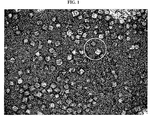
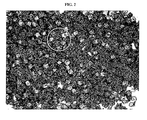
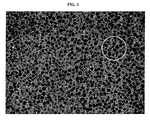
- FIGS. 1-3 illustrate the tendency of a mixture comprising metal powder, space holder material, and reverse osmosis (RO) water to segregate after storage for four days following initial preparation of such mixture, as compared with the ability of mixtures that are prepared in accordance with the present invention to remain well-mixed up to and exceeding the same period of time.
- RO reverse osmosis
- the phrase "about 8" preferably refers to a value of 7.2 to 8.8, inclusive; as another example, the phrase “about 8%” preferably refers to a value of 7.2% to 8.8%, inclusive.
- all ranges are inclusive and combinable. For example, when a range of "1 to 5" is recited, the recited range should be construed as including ranges “1 to 4", “1 to 3", “1-2", “1-2 & 4-5", "1-3 & 5", and the like.
- a list of alternatives is positively provided, such listing can be interpreted to mean that any of the alternatives may be excluded, e.g., by a negative limitation in the claims.
- a range of "1 to 5" when a range of "1 to 5" is recited, the recited range may be construed as including situations whereby any of 1, 2, 3, 4, or 5 are negatively excluded; thus, a recitation of "1 to 5" may be construed as “1 and 3-5, but not 2", or simply "wherein 2 is not included.”
- the present invention pertains to, among other things, methods for forming mixtures that have and can retain a uniform distribution of metallic particles relative to particles of extractable material, as well as green bodies and sintered porous metal constructs (including implants) that are produced in accordance with such methods.
- the present methods may employ safe, biocompatible, odorless, inexpensive, low volatility homogenizing agents and do not otherwise involve potentially harmful or inefficient processing steps.
- the methods disclosed in U.S. Pub. Nos. 2006/0228247 involve the use of liquid organics such as alcohols, isoparafinic solvents, acetone, or polyethylene glycol as homogenizing agents; these agents are used to coat particles of space holder material, to which metal powder is subsequently added.
- the prescribed homogenizing agents are undesirably toxic, combustible, volatile, and/or high viscosity, which can present dangers or processing challenges during large-quantity product manufacture. Certain organic agents are also likely to evaporate relatively quickly from particle mixtures, thereby preventing long-term storage prior to subsequent processing steps. Furthermore, the step of addition of metal powder to the coated particles of space holder material can present safety issues, as the likelihood is high that metal particles will become airborne during the addition step. Also, the combination of metal powder and coated space holder material is said to be accomplished through the use of a v-blender, on which residual deposits are likely to form; the removal of such deposits may be difficult and will lower the efficiency of the process. As described herein, the present invention suffers from none of these drawbacks.
- methods comprising combining at least one metal powder with an extractable material and a composition comprising a polyol, a hydrophilic polymer, or both, thereby forming a mixture in which the metal powder and the extractable material assume respective positions.
- polyols and/or hydrophilic polymers to prepare the present mixtures confers numerous advantages. Such compounds are typically safe, biocompatible, odorless, inexpensive, and are characterized by low volatility.
- the homogenizing agents of the present invention allow the metal powder and the extractable material to maintain their respective positions within the mixture for extended periods of time prior to any additional processing steps.
- the present methods need not (but nonetheless may, if desired) comprise the step of first combining a homogenizing agent with an extractable material, followed by adding a metal powder to the combination of the homogenizing agent and the extractable material, thereby reducing the probability that fine metal powder will become airborne and present a safety hazard during the manufacturing process.
- each of the metal powder, extractable material, and composition comprising a polyol, a hydrophilic polymer, or both may be mixed together in a single step.
- a subcombination of the metal powder and extractable material may be formed prior to combining the metal powder and the extractable material with the composition. The subcombination may be formed as a substantially homogeneous blend of the metal powder and the extractable material.
- a substantially homogenous mixture or blend of two particulate materials is characterized by a mostly even spatial distribution of the particles of the two materials relative to one another; when the subcombination comprises a major component and a minor component, the mixture may be a substantially uniform dispersion of the particles comprising the minor component among the particles comprising the major component.
- a substantially homogenous mixture of particles including one or more of blending, shaking, and stirring.
- Other techniques for forming a mixture of the metal powder and an extractable material will also be readily appreciated. See, e.g., U.S. Pat. Nos. 3,852,045 , 6,849,230 ; U.S. Pub. Nos.
- the mixture of the metal powder, extractable material, and composition comprising a polyol, a hydrophilic polymer, or both may also be formed using blending, shaking, stirring, or any other suitable technique. Preferably, formation of the mixture results in a substantially homogenous blend of the respective constituents.
- preparation of the subcombination and/or the mixture of the metal powder, extractable material, and composition may be accomplished by agitating the ingredients together in a closed container using a conventional shaker.
- a shaker in accordance with the present invention is convenient and safe: a shaker is readily maintained and cleaned in between batches, and a closed container precludes the potentially dangerous dispersion of metal powder particles into the ambient atmosphere.
- the subcombination may comprise metal powder in an amount that is about 5 percent by volume to about 45 percent by volume, preferably about 15 percent by volume to about 40 percent by volume, the balance of the subcombination comprising the extractable material.
- the composition with which the metal powder and extractable material are combined may comprise a polyol.
- the polyol may be present in the composition in an amount that constitutes about 5 percent by volume to about 80 percent by volume, about 10 percent by volume to about 70 percent by volume, about 20 percent by volume to about 60 percent by volume, or about 25 percent by volume to about 50 percent by volume.
- the balance of the composition may comprise water.
- the solution viscosity of the composition may be about 2 to about 20 centistokes at 20°C.
- Polyols are well known among those skilled in the art and constitute alcohols comprising two or more hydroxyl groups.
- polyols comprising three or more hydroxyl groups are preferred; for example, glycerol represents a highly preferred polyol for use in forming the present compositions.
- polyols include sorbitol, mannitol, xylitol, inositol, polyol sucrose, lactitol, maltitol, ethylene glycol, propane-1,2-diol, propane-1,3-diol, butane-1,4-diol, butane-1,3-diol, butane-2,3-diol, butene-1,4-diol, a pentanediol isomer, pentenediol, pentinediol, a hexanediol isomer, hexenediol, hexinediol, a heptanediol diol isomer,
- composition with which the metal powder and extractable material are combined may also or alternatively comprise a hydrophilic polymer.
- the hydrophilic polymer may be present in the composition in an amount that constitutes no more than about 5 percent by volume, no more than about 3 percent by volume, or no more than about 2 percent by volume of said composition.
- the balance of the composition may comprise water.
- the solution viscosity of may be about 5 to about 25 centistokes at 20°C.
- Hydrophilic polymers are well known among those skilled in the art.
- Nonlimiting examples of suitable hydrophilic polymers include polyvinyl alcohols, polyvinyl pyrrolidone, polyethylene oxide, sodium salts of polyacrylic acid, sodium salts of carboxyl methyl cellulose, sodium salts of alginic acid, sodium salts of hyaluronic acid, polyether polyol, polyether polyol modified with hydrophilic vinyl monomer, polytetramethylene polyol, or any combination thereof.
- composition comprising a polyol, a hydrophilic polymer, or both comprises both one or more polyols and one or more hydrophilic polymers
- the total complement of polyol and the total complement of hydrophilic polymer are preferably present in amounts that correspond to the respective ranges recited above.
- the balance of such compositions comprising both one or more polyols and one or more hydrophilic polymers may comprise water.
- the amount of composition comprising a polyol, a hydrophilic polymer, or both in the mixture may be about 0.3% to about 1.5% by volume. In preferred embodiments, the amount of composition comprising a polyol, a hydrophilic polymer, or both in the mixture may be about 0.6% to about 0.75% by volume, the balance of the mixture comprising the metal powder and extractable material.
- the metal powder may comprise any biocompatible metal, nonlimiting examples of which include titanium, a titanium alloy (e.g., Ti-6Al-4V), a cobalt-chromium alloy, aluminum, molybdenum, tantalum, magnesium, niobium, zirconium, stainless steel, nickel, tungsten, or any combination thereof.
- a titanium alloy e.g., Ti-6Al-4V
- cobalt-chromium alloy aluminum, molybdenum, tantalum, magnesium, niobium, zirconium, stainless steel, nickel, tungsten, or any combination thereof.
- the metal powder particles may be substantially uniform or may constitute a variety of shapes and sizes, e.g., may vary in terms of their three-dimensional configuration and/or may vary in terms of their respective major dimension.
- particle size may be from about 20 ⁇ m to about 100 ⁇ m, from about 25 ⁇ m to about 50 ⁇ m, and from about 50 ⁇ m to about 80 ⁇ m.
- the metal powder particles may be spheroids, roughly cylindrical, platonic solids, polyhedrons, plate- or tile-shaped, irregularly shaped, or any combination thereof.
- the metal powder comprises particles that are substantially similarly shaped and substantially similarly sized.
- the extractable material may be a material that is soluble in an aqueous solvent, an organic solvent, or both, and may include a salt, a sugar, a solid hydrocarbon, a urea derivative, a polymer, or any combination thereof.
- Nonlimiting examples include ammonium bicarbonate, urea, biuret, melamine, ammonium carbonate, naphthalene, sodium bicarbonate, sodium chloride, ammonium chloride, calcium chloride, magnesium chloride, aluminum chloride, potassium chloride, nickel chloride, zinc chloride, ammonium bicarbonate, sodium hydrogen phosphate, sodium dihydrogen phosphate, potassium dihydrogen phosphate, potassium hydrogen phosphate, potassium hydrogen phosphite, potassium phosphate, magnesium sulfate, potassium sulfate, alkaline earth metal halides, crystalline carbohydrates (including sucrose and lactose or other materials classified as monosaccharides, disaccharides, or trisaccharides), polyvinyl alcohol, polyethylene
- the particles constituting the extractable material may be substantially uniform or may constitute a variety of shapes and sizes, e.g., may vary in terms of their three-dimensional configuration and/or may vary in terms of their respective major dimension.
- the extractable material can be present in a wide variety of particle sizes and particle size distributions suitable to produce a desired pore size and pore size distribution. Certain preferred particle size ranges are from about 200 ⁇ m to about 600 ⁇ m, from about 200 ⁇ m to about 300 ⁇ m, and from about 425 ⁇ m to about 600 ⁇ m.
- the extractable material particles may be spheroids, roughly cylindrical, platonic solids, polyhedrons, plate- or tile-shaped, irregularly shaped, or any combination thereof.
- the extractable material comprises particles that are substantially similarly shaped and substantially similarly sized.
- the size and shape of the pores of the porous body that is produced from the mixture of the metal powder, the extractable material, and the composition roughly correspond to the size and shape of the particles of the extractable material, one skilled in the art will readily appreciate that the characteristics of the particles of the extractable material may be selected according to the desired configuration of the pores of the resulting porous product.
- the porosity of the porous body that is formed using the extractable material of this type will be substantially uniform.
- the use of an inventive composition comprising a polyol, a hydrophilic polymer, or both permits the formation of a stable mixture of the composition, the metal powder, and the extractable material and more homogeneity of structure.
- Prior techniques did not produce porous constructs having the degree of uniformity that can be achieved in accordance with the present methods, even when the extractable materials were selected for the uniformity of particle size and shape.
- the present invention provides for stable mixtures of metal powder and extractable materials that do not segregate during prolonged periods of storage (for example, for at least four days, at least one week, at least ten days, or at least two weeks) following the combination of the metal powder and extractable material with the composition comprising a polyol, a hydrophilic polymer, or both, but the present invention also provides porous bodies (including both green bodies and sintered bodies) that possess substantially uniform porosity when such porous bodies are produced in accordance with the disclosed methods.
- substantially uniform porosity refers to the characteristic of a green body, or a porous body that is produced from a green body, whereby the porosity does not significantly vary across the body.
- the porosity of the body varies by a standard deviation of no more than about 3, where porosity is measured in terms of percentage. In yet other embodiments, the porosity of the body varies by a standard deviation of no more than about 2.
- the present methods may further comprise shaping the mixture of the at least one metal powder, the extractable material, and the composition comprising a polyol, a hydrophilic polymer, or both, in order to form a shaped object, and compacting the shaped object to form a green body.
- the present invention is also directed to green bodies that are produced in accordance with any process described herein.
- the shaping process can comprise filling a mold with the mixture, the mold having at least roughly the three-dimensional parameters of the desired final porous product, allowing for subsequent processing steps such as machining.
- the mold need not be designed to produce near-net shape parts or parts whose molded form resembles the desired final, sintered part; molds may produce generic shapes, such as bars, rods, plates, or blocks, that may be subsequently machined in the green state to produce a part that after sintering-induced shrinkage closely approximates the desired shape of the final product, with optional machining of the sintered part.
- Molds and mold assemblies for such purposes are well known among those skilled the art and may allow for the preparation of bodies that are, for example, spheroid, ovoid, hemispherical, cuboid, cylindrical, toroid, conical, concave hemispherical (i.e., cup-shaped), plate- or tile-shaped, irregular, or that adopt any other desired three-dimensional conformation.
- the resulting shaped object may be compacted to form the green body.
- the shaped object is compacted while contained within a mold assembly.
- Compacting may be uniaxial, multi-axial, or isostatic.
- a cold isostatic press is used to compact the shaped object into the green body.
- the resulting green body may be removed from the mold and processed. Processing may include machining or otherwise refining the shape of the green body.
- the green body may then be exposed to a solvent in which the extractable material is soluble.
- the extractable material may be soluble in an aqueous solvent, an organic solvent, or both.
- the exposure of the green body to the solvent may comprise immersing the green body in the solvent, for example, by immersing the green body in a bath comprising the solvent for a time sufficient to remove at least some of the extractable material.
- the removal of extractable material from the green body can range from partial to complete.
- the exposure of the green body to the solvent in which the extractable material is soluble preferably removes the extractable material from at least the surface of the green body to a depth at least about 1 mm, at least about 3 mm, at least about 5 mm, at least about 7 mm, or at least about 10 mm from any given surface of the green body.
- the composition comprising the polyol, hydrophilic polymer, or both may also be soluble in an aqueous solvent, an organic solvent, or both.
- the composition may be removed from the green body during the process of exposing the green body to a solvent in which the extractable material is soluble.
- the composition comprises glycerol
- the composition can be removed from the green body using water, and if the extractable material is soluble in an aqueous solvent, then the extractable material and the composition may be removed from the green body during a single processing step.
- the solubility of the composition may permit the effectively complete removal thereof from the green body, and under such circumstances no contamination of the green body (or any sintered porous body produced from the green body) by the composition will occur.
- the extractable material is insoluble in aqueous or organic solvent, and is removable under heating conditions.
- the green body may be heated for a time and under conditions effective to evaporate at least some of the extractable material yet substantially maintain the metal powder in its position in the green body.
- the removal of extractable material from the green body can range from partial to complete, and the heating of the green body preferably removes the extractable material from at least the surface of the green body, down to at least about 5% of the total depth of the green body.
- the thermal removal of extractable material is performed at temperatures much lower than sintering temperature, in order to avoid contamination of the green body material with C, N, O, or H from organic space holders.
- the thermal removal of extractable material may occur at less than about 100°C, which is sufficient to cause the decomposition of some extractable materials, such as ammonium bicarbonate.
- the removal of the extractable material under heating conditions may occur before, after, or contemporaneously with the removal of the composition.
- the composition may be removable under the same heating conditions as are effective for the removal of the extractable material.
- the composition is soluble in an aqueous solvent, organic solvent, or both, and the removal of the composition, for example, by immersion of the green body in a bath comprising the appropriate solvent or solvents, may be performed prior to or following the removal of the extractable material by heating.
- the resulting porosity of the green body may be about 50% to about 95%, preferably about 60% to about 85%.
- the present methods may further comprise sintering the green body.
- Sintering is typically performed in a vacuum furnace and those skilled in the art will readily appreciate the appropriate conditions for sintering a green body comprising a metal powder. Sintering may be followed by additional processing steps, including machining to refine the shape characteristics of the sintered body.
- the present invention is also directed to sintered porous bodies that are made in accordance with the described methods.
- the sintered porous bodies may comprise implants, such as orthopedic implants used to replace or repair any damaged or otherwise compromised element or portion of an element of a skeletal system.
- the present implants are characterized by substantially uniform porosity and therefore provide numerous benefits associated with this property, such as mechanical stability and homogeneous ingrowth of bone and tissue, thereby leading to improved biological fixation.
- a first mixture comprising titanium metal powder, NaCl extractable material, and glycerol solution was prepared.
- a second mixture comprising titanium metal powder, NaCl and reverse osmosis (RO) water was also prepared, and both mixtures were placed under a fume hood in separate open containers. Both mixtures were left undisturbed under the fume hood for a period of four days. As shown in FIG. 1 , the mixture that was prepared using RO water did not remain well-mixed following the four-day period; the circled portion of FIG. 1 clearly shows the segregation of NaCl particles from the particles of titanium.
- a third mixture comprising titanium metal powder, NaCl extractable material, and glycerol solution, was prepared and placed under a fume hood in an open container and left undisturbed for a period of one week. The mixture was subsequently compacted using a cold isostatic press before the image provided in FIG. 3 was taken. As may be easily observed from FIG. 3 (circled portion), the salt portion of the mixture remained mixed with Ti powder; as will be readily appreciated by one of ordinary in the art, a homogeneous, compacted mixture can only result if the uncompacted mixture was also homogenous.
- mixtures of metal powder, extractable material, and a composition comprising a polyol, a hydrophilic polymer, or both remain well-mixed following the combination of the respective ingredients, even when stored in a container that is exposed to the ambient atmosphere for at least as long as seven days.
- mixtures that are prepared using traditional methods, such as combining the metal powder and extractable material with water do not remain as well-mixed and evince segregation between the metal particles and the particles of extractable materials, respectively.
- the first mixture comprised a combination of titanium powder, NaCl, and 25% by volume glycerol solution as a homogenizing agent.
- the second mixture included the same ingredients but used a 50% glycerol solution instead of a 25% solution, and the third mixture also included titanium powder and NaCl, but made use of reverse osmosis (RO) water as the homogenizing agent rather than glycerol.
- RO reverse osmosis
- Each of the three mixtures were subsequently compacted, exposed to aqueous solvent to remove the NaCl particles, and sintered to form a porous body.
- the three samples were otherwise alike with respect to titanium powder particle size, salt particle size, green porosity, the total quantity of homogenizing agent combined with the titanium powder and NaCl, compaction pressure, sintering temperature, and sintering time.
- the porosity of each of the three samples was measured by an imaging process using Image-Pro®Plus software (Media Cybernetics, Inc., Silver Spring, MD). Each sample was sectioned into four pieces and each piece was cold mounted and then grinded and polished to reveal the original porous structure. Two optical microscope images (50x magnification) were taken from each section, providing a total of eight images from each sample. In the acquired images, metal scaffold material appears dark and pores appear white, which permits measurement of the metal foam porosity based on the areas respectively occupied by the metal and pores. As shown in Table 1, below, the samples prepared using glycerol solution each feature porosities that have a standard deviation that is only about one half of the standard deviation of the porosity of the sample that is prepared using RO water.
Landscapes
- Health & Medical Sciences (AREA)
- Chemical & Material Sciences (AREA)
- General Health & Medical Sciences (AREA)
- Public Health (AREA)
- Medicinal Chemistry (AREA)
- Oral & Maxillofacial Surgery (AREA)
- Transplantation (AREA)
- Epidemiology (AREA)
- Life Sciences & Earth Sciences (AREA)
- Animal Behavior & Ethology (AREA)
- Mechanical Engineering (AREA)
- Dermatology (AREA)
- Veterinary Medicine (AREA)
- Engineering & Computer Science (AREA)
- Materials Engineering (AREA)
- Dispersion Chemistry (AREA)
- Metallurgy (AREA)
- Organic Chemistry (AREA)
- Inorganic Chemistry (AREA)
- Manufacturing & Machinery (AREA)
- Powder Metallurgy (AREA)
- Prostheses (AREA)
Applications Claiming Priority (1)
| Application Number | Priority Date | Filing Date | Title |
|---|---|---|---|
| US9219908P | 2008-08-27 | 2008-08-27 |
Publications (2)
| Publication Number | Publication Date |
|---|---|
| EP2163330A2 true EP2163330A2 (de) | 2010-03-17 |
| EP2163330A3 EP2163330A3 (de) | 2010-04-21 |
Family
ID=41559467
Family Applications (1)
| Application Number | Title | Priority Date | Filing Date |
|---|---|---|---|
| EP09252071A Withdrawn EP2163330A3 (de) | 2008-08-27 | 2009-08-26 | Mischungen zur Bildung von porösen Konstrukten |
Country Status (6)
| Country | Link |
|---|---|
| US (1) | US20100098574A1 (de) |
| EP (1) | EP2163330A3 (de) |
| JP (1) | JP2010059545A (de) |
| CN (1) | CN101811189A (de) |
| AU (1) | AU2009212800A1 (de) |
| ZA (1) | ZA200905932B (de) |
Cited By (2)
| Publication number | Priority date | Publication date | Assignee | Title |
|---|---|---|---|---|
| GR1007326B (el) * | 2010-03-04 | 2011-06-27 | Δημητριος Νικολαου Τσιπας | Παραγωγη πορωδων υλικων ανοικτου κελιου με χρηση κρυσταλλικων υδατοδιαλυτων υδατανθρακων ως πληρωτικο μεσο |
| CN118204495A (zh) * | 2024-02-03 | 2024-06-18 | 哈尔滨工业大学(威海) | 一种多孔钽融合器及其制备方法 |
Families Citing this family (30)
| Publication number | Priority date | Publication date | Assignee | Title |
|---|---|---|---|---|
| US6558426B1 (en) | 2000-11-28 | 2003-05-06 | Medidea, Llc | Multiple-cam, posterior-stabilized knee prosthesis |
| US8128703B2 (en) | 2007-09-28 | 2012-03-06 | Depuy Products, Inc. | Fixed-bearing knee prosthesis having interchangeable components |
| US20110035017A1 (en) * | 2007-09-25 | 2011-02-10 | Depuy Products, Inc. | Prosthesis with cut-off pegs and surgical method |
| US20110035018A1 (en) * | 2007-09-25 | 2011-02-10 | Depuy Products, Inc. | Prosthesis with composite component |
| US8715359B2 (en) | 2009-10-30 | 2014-05-06 | Depuy (Ireland) | Prosthesis for cemented fixation and method for making the prosthesis |
| US8632600B2 (en) | 2007-09-25 | 2014-01-21 | Depuy (Ireland) | Prosthesis with modular extensions |
| US9204967B2 (en) | 2007-09-28 | 2015-12-08 | Depuy (Ireland) | Fixed-bearing knee prosthesis having interchangeable components |
| US9119723B2 (en) | 2008-06-30 | 2015-09-01 | Depuy (Ireland) | Posterior stabilized orthopaedic prosthesis assembly |
| US8206451B2 (en) | 2008-06-30 | 2012-06-26 | Depuy Products, Inc. | Posterior stabilized orthopaedic prosthesis |
| US8236061B2 (en) | 2008-06-30 | 2012-08-07 | Depuy Products, Inc. | Orthopaedic knee prosthesis having controlled condylar curvature |
| US9168145B2 (en) | 2008-06-30 | 2015-10-27 | Depuy (Ireland) | Posterior stabilized orthopaedic knee prosthesis having controlled condylar curvature |
| US8192498B2 (en) | 2008-06-30 | 2012-06-05 | Depuy Products, Inc. | Posterior cructiate-retaining orthopaedic knee prosthesis having controlled condylar curvature |
| US8828086B2 (en) | 2008-06-30 | 2014-09-09 | Depuy (Ireland) | Orthopaedic femoral component having controlled condylar curvature |
| US8187335B2 (en) | 2008-06-30 | 2012-05-29 | Depuy Products, Inc. | Posterior stabilized orthopaedic knee prosthesis having controlled condylar curvature |
| US11213397B2 (en) | 2009-05-21 | 2022-01-04 | Depuy Ireland Unlimited Company | Prosthesis with surfaces having different textures and method of making the prosthesis |
| US9101476B2 (en) | 2009-05-21 | 2015-08-11 | Depuy (Ireland) | Prosthesis with surfaces having different textures and method of making the prosthesis |
| ES2459718T3 (es) | 2009-10-30 | 2014-05-12 | Depuy (Ireland) | Prótesis de fijación sin cemento |
| EP2319462B1 (de) | 2009-10-30 | 2013-04-03 | DePuy Products, Inc. | Prothese mit Verbundstoffkomponente |
| ES2406154T3 (es) | 2009-10-30 | 2013-06-05 | Depuy Products, Inc. | Prótesis con extensiones modulares |
| DK2617392T3 (da) | 2009-10-30 | 2015-02-16 | Depuy Synthes Products Llc | Protese med overflader med forskellige teksturer |
| EP2319460A1 (de) | 2009-10-30 | 2011-05-11 | DePuy Products, Inc. | Prothese mit stumpfen Zapfen |
| US9011547B2 (en) | 2010-01-21 | 2015-04-21 | Depuy (Ireland) | Knee prosthesis system |
| CN105056296B (zh) * | 2011-09-29 | 2018-01-30 | 重庆润泽医药有限公司 | 一种替代牙骨的医用多孔钽材料及其制备方法 |
| US9949837B2 (en) | 2013-03-07 | 2018-04-24 | Howmedica Osteonics Corp. | Partially porous bone implant keel |
| US9237953B2 (en) | 2013-03-15 | 2016-01-19 | Depuy (Ireland) | Mechanical assembly of pegs to prosthesis |
| JP6673682B2 (ja) * | 2015-12-11 | 2020-03-25 | 住友電気工業株式会社 | 焼結体の製造方法 |
| CN108856713B (zh) * | 2018-05-29 | 2020-06-05 | 东莞华晶粉末冶金有限公司 | Sus201不锈钢注射成型喂料及其制备方法 |
| CN110961636B (zh) * | 2019-12-23 | 2022-03-15 | 江苏恒科新材料有限公司 | 一种用于纺丝组件的烧结金属过滤芯及其制备方法 |
| CN112853157B (zh) * | 2020-12-31 | 2021-11-30 | 广州湘龙高新材料科技股份有限公司 | 一种钴铬钼钨硅合金棒材及其制备方法 |
| CN112809006B (zh) * | 2020-12-31 | 2021-11-30 | 广州湘龙高新材料科技股份有限公司 | 一种钴铬钼钨硅合金棒材的制备方法 |
Citations (8)
| Publication number | Priority date | Publication date | Assignee | Title |
|---|---|---|---|---|
| US3852045A (en) | 1972-08-14 | 1974-12-03 | Battelle Memorial Institute | Void metal composite material and method |
| US6849230B1 (en) | 1999-09-14 | 2005-02-01 | Stratec Medical Ag | Mixture of two particulate phases used in the production of a green compact that can be sintered at higher temperatures |
| US20050249625A1 (en) | 2002-06-03 | 2005-11-10 | Martin Bram | Method for producing highly porous metallic moulded bodies close to the desired final contours |
| US20060002810A1 (en) | 2004-07-02 | 2006-01-05 | Grohowski Joseph A Jr | Porous metal articles having a predetermined pore character |
| WO2006005150A1 (en) | 2004-07-15 | 2006-01-19 | Serguei Vatchiants | Processes for production of foamed aluminum bodies from coated aluminum powder |
| US20060228247A1 (en) | 2004-07-02 | 2006-10-12 | Grohowski Joseph A | Controlled porosity article |
| EP1813688A1 (de) * | 2004-11-15 | 2007-08-01 | Mitsubishi Materials Corporation | Titan- oder titanlegierungssinterkörper einer schwammform mit hervorragender druckfestigkeit |
| JP2007242574A (ja) | 2006-03-13 | 2007-09-20 | Hitachi Metal Precision:Kk | 多孔質液体保持部材およびアルコール保持部材 |
Family Cites Families (3)
| Publication number | Priority date | Publication date | Assignee | Title |
|---|---|---|---|---|
| CN1098749A (zh) * | 1993-08-07 | 1995-02-15 | 四平市铁东区宏光化学材料厂 | 金属多孔体的制作方法 |
| EA200702019A1 (ru) * | 2005-03-18 | 2008-02-28 | Синвеншен Аг | Способ изготовления пористых спечённых металлсодержащих материалов |
| CN101195162B (zh) * | 2006-12-04 | 2010-08-11 | 上海材料研究所 | 一种多孔金属蜂窝结构件的制备方法 |
-
2009
- 2009-08-13 US US12/540,617 patent/US20100098574A1/en not_active Abandoned
- 2009-08-25 AU AU2009212800A patent/AU2009212800A1/en not_active Abandoned
- 2009-08-26 EP EP09252071A patent/EP2163330A3/de not_active Withdrawn
- 2009-08-26 JP JP2009195045A patent/JP2010059545A/ja active Pending
- 2009-08-26 ZA ZA2009/05932A patent/ZA200905932B/en unknown
- 2009-08-27 CN CN200910205752A patent/CN101811189A/zh active Pending
Patent Citations (8)
| Publication number | Priority date | Publication date | Assignee | Title |
|---|---|---|---|---|
| US3852045A (en) | 1972-08-14 | 1974-12-03 | Battelle Memorial Institute | Void metal composite material and method |
| US6849230B1 (en) | 1999-09-14 | 2005-02-01 | Stratec Medical Ag | Mixture of two particulate phases used in the production of a green compact that can be sintered at higher temperatures |
| US20050249625A1 (en) | 2002-06-03 | 2005-11-10 | Martin Bram | Method for producing highly porous metallic moulded bodies close to the desired final contours |
| US20060002810A1 (en) | 2004-07-02 | 2006-01-05 | Grohowski Joseph A Jr | Porous metal articles having a predetermined pore character |
| US20060228247A1 (en) | 2004-07-02 | 2006-10-12 | Grohowski Joseph A | Controlled porosity article |
| WO2006005150A1 (en) | 2004-07-15 | 2006-01-19 | Serguei Vatchiants | Processes for production of foamed aluminum bodies from coated aluminum powder |
| EP1813688A1 (de) * | 2004-11-15 | 2007-08-01 | Mitsubishi Materials Corporation | Titan- oder titanlegierungssinterkörper einer schwammform mit hervorragender druckfestigkeit |
| JP2007242574A (ja) | 2006-03-13 | 2007-09-20 | Hitachi Metal Precision:Kk | 多孔質液体保持部材およびアルコール保持部材 |
Cited By (2)
| Publication number | Priority date | Publication date | Assignee | Title |
|---|---|---|---|---|
| GR1007326B (el) * | 2010-03-04 | 2011-06-27 | Δημητριος Νικολαου Τσιπας | Παραγωγη πορωδων υλικων ανοικτου κελιου με χρηση κρυσταλλικων υδατοδιαλυτων υδατανθρακων ως πληρωτικο μεσο |
| CN118204495A (zh) * | 2024-02-03 | 2024-06-18 | 哈尔滨工业大学(威海) | 一种多孔钽融合器及其制备方法 |
Also Published As
| Publication number | Publication date |
|---|---|
| EP2163330A3 (de) | 2010-04-21 |
| US20100098574A1 (en) | 2010-04-22 |
| ZA200905932B (en) | 2011-05-25 |
| CN101811189A (zh) | 2010-08-25 |
| AU2009212800A1 (en) | 2010-03-18 |
| JP2010059545A (ja) | 2010-03-18 |
Similar Documents
| Publication | Publication Date | Title |
|---|---|---|
| EP2163330A2 (de) | Mischungen zur Bildung von porösen Konstrukten | |
| US8871142B2 (en) | Implants with roughened surfaces | |
| Brovarone et al. | Macroporous bioactive glass-ceramic scaffolds for tissue engineering | |
| US8383187B2 (en) | Rough porous constructs | |
| US20110052660A1 (en) | Ceramic scaffolds for bone repair | |
| US20100221136A1 (en) | Porous Metallic Structures | |
| Terrazas et al. | Microstructure and mechanical properties of Ti-6Al-4V-5% hydroxyapatite composite fabricated using electron beam powder bed fusion | |
| WO2007146063A1 (en) | Controlled porosity article | |
| KR101757177B1 (ko) | 다공성 금속 임플란트의 제조 방법 및 이에 의해 제조된 다공성 금속 임플란트 | |
| CN108273126A (zh) | 一种径向梯度医用复合材料的制备方法 | |
| Effect of sintering processing on property of porous Ti using space holder technique | ||
| Wang et al. | Laser powder bed fusion printed poly-ether-ether-ketone/bioactive glass composite scaffolds with dual-scale pores for enhanced osseointegration and bone ingrowth | |
| EP4376906B1 (de) | Poröse hydrophile verbundmaterialien zur förderung des knochenwachstums | |
| WO2025054444A1 (en) | Porous polyether-ether-ketone (peek) scaffolds and methods of making and use thereof | |
| JP3619869B2 (ja) | 人工骨 | |
| Čapek et al. | Porous magnesium for medical applications-influence of powder size on mechanical properties | |
| Neto et al. | An Overview of Highly Porous Titanium Processed via Metal Injection Molding in Combination with the Space Holder Method. Metals 2022, 12, 783 | |
| Tuncer et al. | Effects of production method and space holder material on microstructure of porous titanium | |
| Wiria et al. | Selective laser melting of novel titanium-tantalum alloy as orthopedic biomaterial | |
| Arifvianto | Synthesis and evaluation of porous titanium scaffolds prepared with the space holder method for bone tissue engineering | |
| Saedon et al. | Surface Characterization of Porous Ti-6Al-4V Dental Implant by Metal Injection Molding with Palm Stearin Binder System | |
| Fazlen et al. | Fabrication and characterization of porous Ti-6Al-7Nb alloys by space holder technique using magnesium as spacer for biomedical applications | |
| Sun et al. | Study on Microstructure and Properties of Selective Laser Melting and Forming Porous Skeleton | |
| Abdullah et al. | Processing of porous stainless steel by compaction method using egg shell as space holder | |
| WO2009151604A1 (en) | Methods for making ceramic articles, including ceramic scaffolds for bone repair |
Legal Events
| Date | Code | Title | Description |
|---|---|---|---|
| PUAI | Public reference made under article 153(3) epc to a published international application that has entered the european phase |
Free format text: ORIGINAL CODE: 0009012 |
|
| AK | Designated contracting states |
Kind code of ref document: A2 Designated state(s): AT BE BG CH CY CZ DE DK EE ES FI FR GB GR HR HU IE IS IT LI LT LU LV MC MK MT NL NO PL PT RO SE SI SK SM TR |
|
| AX | Request for extension of the european patent |
Extension state: AL BA RS |
|
| PUAL | Search report despatched |
Free format text: ORIGINAL CODE: 0009013 |
|
| AK | Designated contracting states |
Kind code of ref document: A3 Designated state(s): AT BE BG CH CY CZ DE DK EE ES FI FR GB GR HR HU IE IS IT LI LT LU LV MC MK MT NL NO PL PT RO SE SI SK SM TR |
|
| AX | Request for extension of the european patent |
Extension state: AL BA RS |
|
| RIC1 | Information provided on ipc code assigned before grant |
Ipc: A61L 27/00 20060101ALI20100318BHEP Ipc: C22C 14/00 20060101ALI20100318BHEP Ipc: B22F 9/24 20060101ALI20100318BHEP Ipc: B22F 3/11 20060101AFI20100127BHEP |
|
| RIN1 | Information on inventor provided before grant (corrected) |
Inventor name: SMITH, BRYAN Inventor name: KING, RICHARD S. Inventor name: LIU, HENGDA D. |
|
| 17P | Request for examination filed |
Effective date: 20101011 |
|
| 17Q | First examination report despatched |
Effective date: 20101115 |
|
| STAA | Information on the status of an ep patent application or granted ep patent |
Free format text: STATUS: THE APPLICATION IS DEEMED TO BE WITHDRAWN |
|
| 18D | Application deemed to be withdrawn |
Effective date: 20120127 |