EP2166478A2 - API-Prüfvorrichtung und Statusmonitor - Google Patents
API-Prüfvorrichtung und Statusmonitor Download PDFInfo
- Publication number
- EP2166478A2 EP2166478A2 EP09170813A EP09170813A EP2166478A2 EP 2166478 A2 EP2166478 A2 EP 2166478A2 EP 09170813 A EP09170813 A EP 09170813A EP 09170813 A EP09170813 A EP 09170813A EP 2166478 A2 EP2166478 A2 EP 2166478A2
- Authority
- EP
- European Patent Office
- Prior art keywords
- state
- api call
- api
- flag
- user
- Prior art date
- Legal status (The legal status is an assumption and is not a legal conclusion. Google has not performed a legal analysis and makes no representation as to the accuracy of the status listed.)
- Withdrawn
Links
Images






Classifications
-
- G—PHYSICS
- G06—COMPUTING OR CALCULATING; COUNTING
- G06F—ELECTRIC DIGITAL DATA PROCESSING
- G06F21/00—Security arrangements for protecting computers, components thereof, programs or data against unauthorised activity
- G06F21/50—Monitoring users, programs or devices to maintain the integrity of platforms, e.g. of processors, firmware or operating systems
- G06F21/52—Monitoring users, programs or devices to maintain the integrity of platforms, e.g. of processors, firmware or operating systems during program execution, e.g. stack integrity ; Preventing unwanted data erasure; Buffer overflow
- G06F21/53—Monitoring users, programs or devices to maintain the integrity of platforms, e.g. of processors, firmware or operating systems during program execution, e.g. stack integrity ; Preventing unwanted data erasure; Buffer overflow by executing in a restricted environment, e.g. sandbox or secure virtual machine
-
- G—PHYSICS
- G06—COMPUTING OR CALCULATING; COUNTING
- G06F—ELECTRIC DIGITAL DATA PROCESSING
- G06F21/00—Security arrangements for protecting computers, components thereof, programs or data against unauthorised activity
- G06F21/50—Monitoring users, programs or devices to maintain the integrity of platforms, e.g. of processors, firmware or operating systems
- G06F21/52—Monitoring users, programs or devices to maintain the integrity of platforms, e.g. of processors, firmware or operating systems during program execution, e.g. stack integrity ; Preventing unwanted data erasure; Buffer overflow
Definitions
- the present invention relates to an API checking device and a state monitor implemented by software or hardware in devices such as mobile phones, PDAs, and PCs, and particularly relates to an API checking device disposed in a closed execution environment and a state monitor disposed in an open execution environment.
- VMM virtual machine monitor
- OSs operating systems
- the following two execution environments can be safely isolated from each other and executed on respective OSs.
- first execution environment hereinafter, referred to as open execution environment
- programs other than trusted programs can also be executed freely or under given restriction.
- closed execution environment predetermined processing is executed on the basis of an application program interface (API) call from the open execution environment, and only the trusted programs are executed.
- API application program interface
- the API functions provided by the closed execution environment can be called from the open execution environment.
- sensitive functions and data to be protected can be used in a state where those functions and data are isolated in the closed execution environment, while free install of a program in the open execution environment is permitted (for example, U.S. Patent No. 7325083 ).
- a check mode set in accordance with a state of the open execution environments and that of the closed execution environment as checking means having processing load lower than that of check of the argument or the data and not being dependent only on the access control by the OS.
- An API checking device within the closed execution environment acquires status information on whether a program necessary for the API call (cooperation) and an unauthorized program are running in the open execution environment. When the necessary program is running and the unauthorized program is not running, the API call is permitted. Otherwise, the check mode may be set to a user warning mode for warning a user and urging the user to perform a confirmation.
- cooperation may fail, causing a failure. Therefore, measures such as warning the user in advance are needed.
- a user confirmation waiting state is kept until the user has replied to warning.
- other cooperation requests APIT call
- issuance processing of a new cooperation request from the open execution environment in this state causes wasteful virtual machine switching and wasteful communication between virtual machines.
- checking means having lower processing load can exclude an unauthorized or unsuitable API call as a first filter.
- check having higher processing load such as check of the argument and the viruses may be executed. For that reason, delay of processing of the API call may increase to deteriorate response.
- an object of the present invention is to provide an API checking device and a state monitor in a device including an open execution environment and a closed execution environment, the API checking device and the state monitor capable of ensuring safety and reliability of cooperation by an API call between the open execution environment and the closed execution environment with low overhead.
- a first aspect of the present invention provides an API checking device disposed in a closed execution environment in a device including an open execution environment in which a program other than a trusted program can also be executed freely or under a given restriction; and the closed execution environment in which predetermined processing is executed on the basis of an API call that calls an application program interface from the open execution environment and only the trusted program is executed, and the API checking device includes an API check request reception unit configured to receive a determination request to request determination of whether to permit the API call within the closed execution environment from the open execution environment, a state information acquiring unit configured to acquire state information showing a state of the device, a check mode setting unit configured to set a check mode for the API call on the basis of the state information acquired by the state information acquiring unit, a determining unit configured to determine whether to permit the API call on the basis of the check mode set by the check mode setting unit, and to generate a check result of the API call, and a check result outputting unit configured to output the check result
- a device including an open execution environment and a closed execution environment, it is possible to provide an API checking device and a state monitor that is capable of ensuring safety and reliability of cooperation by an API call between the open execution environment and the closed execution environment with low overhead.
- a Second aspect of the present invention provides a state monitor disposed in an open execution environment in a device including the open execution environment in which a program other than a trusted program can also be executed freely or under a given restriction, and the closed execution environment in which predetermined processing is executed on the basis of an API call that calls an application program interface from the open execution environment and only the trusted program is executed, and the state monitor includes a state manager configured to acquire a state of the device and maintain state information indicating the acquired state of the device, and a permission determining unit configured to determine whether to permit the API call within the closed execution environment from the open execution environment on the basis of the state information.
- Fig. 1 is a functional block diagram of a device 100 according to this embodiment.
- a virtual machine monitor (VMM) 110 is provided, the VMM being software or hardware that can operate a plurality of operating systems (OSs) in parallel on one CPU (not shown).
- OSs operating systems
- an open execution environment 120 and a closed execution environment 130 are implemented as OSs, respectively.
- the device 100 includes the open execution environment 120 and the closed execution environment 130.
- a program (untrusted program P2) other than a permitted program P1 can also be executed freely or under given restriction.
- API 131 an application program interface 131
- a state monitor 200 is disposed in the open execution environment 120.
- the state monitor 200 monitors a state of the program executed in the open execution environment 120, and notifies an API checking device 300 of status information, showing the state thereof.
- the API checking device 300 is disposed in the closed execution environment 130.
- the APT checking device 300 checks validity of the API call by the program executed in the open execution environment 120.
- the open execution environments 120 and the closed execution environment 130 communicate with each other using inter victual machine (VM) communication function. While it is assumed that the state monitor 200 and the API checking device 300 are each mounted as a device driver in this embodiments, the state monitor 200 and the API checking device 300 may be each mounted as software on OS such as middleware, or may be mounted as hardware.
- VM victual machine
- the state monitor 200 includes a state manager 201, a permission determining unit 203, and a state information notifying unit 205.
- a state manager 201 As shown in Fig. 1 , the state monitor 200 includes a state manager 201, a permission determining unit 203, and a state information notifying unit 205.
- function of each block will be described.
- the state manager 201 acquires a state of the device 100, and maintains state information showing the state acquired.
- Fig. 2 shows an example of the state information.
- the state manager 201 can maintain an untrusted flag as the state information on the device 100.
- the untrusted flag is set when the untrusted program P2 determined as untrusted is cunning in the open execution environment 120, or when the untrusted program P2 is installed in the device 100.
- the untrusted flag is reset when the untrusted program P2 is not executed or when the untrusted program P2 is not installed in the device 100.
- Examples of the untrusted program may include debugger software, a program that connects and communicates with an external PC and the like using USB or Bluetooth, and viruses or spyware programs that resemble a game, etc.
- Identification of the untrusted program can be attained by check of existence of a digital signature, for example.
- a program without the digital signature of a particular organization (terminal manufacturer, communication operator, particular software vender, etc.) is considered to be untrusted.
- trusted programs may be written in a white list, and a program other than the programs may be considered to be untrusted.
- untrusted programs may be written in a black list, and the programs may be considered to be untrusted.
- the state manager 201 may also maintain the permit flag as the state information.
- the permit flag is set when an mandatory program P3 mandatory to normal execution of the API call to the closed execution environment 130 is properly running in the open execution environment 120, or when the mandatory program P3 is installed in the device 100.
- the permit flag is reset when the mandatory program P3 is failed or when the mandatory program P3 is not installed in the device 100. Failure of the mandatory program P3 can be detected by confirming existence of a reply.
- the state manager 201 can request the mandatory program P3 of the reply.
- Examples of the mandatory program P3 may include the inter VM communication function, and a virus scanning program for protecting the security of the open execution environment 120. Further, when applications capable of calling API of the closed execution environment 130 are limited, applications permitted its API call are also included.
- the state manager 201 can maintain a user operation API inhibit flag as the state information, the user operation API inhibit flag set only when the device 100 is in a local lock state, a remote lock state, or an no-input operation state.
- the local lock state is a state in which the device 100 is locked so that the user cannot operate the device 100 unless the user inputs an authorized PIN or password, or presses a particular button.
- the device 100 shifts to the local lock state.
- the remote lock state is a state in which the device 100 is locked on the basis of a request from a server that manages the device 100 or a request from a remote user so that the device 100 may not be operated.
- the lock state can be acquired through an API provided by software that manages the state of the device, such as an OS and middleware.
- the no-input operation state is a state in which the device 100 receives no input operation for a predetermined period. Presence of operation in a certain period from the present can be determined, for example, by collecting logs using a device driver of a keypad.
- acquisition of an execution state or an installation state of a program can be attained by: utilization of process management function or application management function of an OS; scan of a RAM (not shown) ; confirmation of a flag or data written by each program in a particular area; receiving of a notification issued when a program activates; and the like.
- the state manager 201 maintains the state information by storing the state information in storage such as a RAM or a hard disk.
- the state information is desirably maintained in a secured place in which the state information cannot be tampered.
- the state manager 201 can receive and maintain a lock release wait cooperation suppression flag (LRW-CSF) as the state information from the API checking device 300 disposed in the closed execution environment 130, the LRW-CSF set when the local lock state or the remote lock state changes to another state.
- the state manager 201 may also receive and maintain a user confirmation wait cooperation suppression flag (UCW-CSF) as the state information from the API checking devices 300, the UCW-CSF set when a predetermined period elapses in a user confirmation waiting state in the closed execution environment 130.
- LRW-CSF lock release wait cooperation suppression flag
- UCW-CSF user confirmation wait cooperation suppression flag
- the state manager 201 resets the UCM-CSF when a predetermined timeout time elapses.
- the state manager 201 determines a state as the user confirmation waiting state when there is no reply to the API call for a predetermined period after the API call is demanded. Then, the state manager 201 sets the UCW-CSF.
- the permission determining unit 203 determines whether to permit the API call within the closed execution environment 130 from the open execution environments 120 on the basis of the state information maintained by the state manager 201. Specifically, when a program (application etc.) calls the inter VM communication function, the inter VM communication function inquires of the state monitor 200 whether to permit the API call. The permission determining unit 203 replies to the inquiry with a determination result on whether to permit the API call or not, Alternatively, the program may inquire of the state monitor 200, and when the API call is permitted, the program may access the inter VM communication function to execute the API call.
- the permission determining unit 203 can prohibit (suppress) the API call.
- the permission determining unit 203 may also warn the user in accordance with the state information. Then, the permission determining unit 203 can refuse the API call after asking the user whether to permit the API call or without performing the asking. For example, when the untrusted flag has been set, the permission determining unit 203 warns the user that "processing is interrupted because the system may not be normal," and prohibits the API call.
- the permission determining unit 203 can warn the user in accordance with the state information. Then, the permission determining unit 203 may determine to refuse the API call after asking the user whether to permit the API call or without performing the asking. For example, when the permit flag has been reset, the permission determining unit 203 warns the user that "the system may not be normal. Continue processing?" Once the permission determining unit 203 performs this warning, further warning may be omitted. For example, once the permission determining unit 203 warns after start of the device 100, further warning may be omitted until restart of the device 100. Alternatively, the permission determining unit 203 may inquire of the user whether to continue warning.
- the permission determining unit 203 can permit the API call of which a type is permitted only when requested by operation of the user. Moreover, when there is no reply to the API call for a predetermined period after the API call is demanded, the state manager 201 determiners that the user confirmation waiting state is effective and sets the UCW-CSF. When the UCW-CSF has been set, the permission determining unit 203 prohibits the API call permitted only when requested by operation of the user
- the state information notifying unit 205 notifies the API checking device 300 of the state information. Specifically, the state information notifying unit 205 notified the API checking device 300 of the state information by using message passing, a shared memory, etc. Notification of the state information may be one way communication from the state monitor 200 to the API checking device 300, or the state monitor 200 may receive acknowledgment from the API checking device 300. A notified content may be encrypted, or a MAC (message authorization code) or a digital signature may be attached to the content.
- MAC message authorization code
- the state information notifying unit 205 notifies the API checking device 300 disposed in the closed execution environment 130 of the state information. Note that, the API checking device 300 does not always need to be disposed in the closed execution environment 130.
- Fig. 3 shows a suppression procedure of the API call in accordance with the lock state or the operating state.
- the program calls the inter VM communication function, and the inter VM communication function inquires of the state monitor 200 whether to permit the API call.
- Step 31 is executed when the device 100 is in the local lock state or the remote lock state, or when the device 100 is in the no-input operation state where the device 100 receives no input operation for a predetermined period.
- the state manager 201 sets the user operation API inhibit flag, and maintains the state.
- Step 32 is executed when the local lock state or the remote lock state of the device 100 is canceled, or when the device 100 receives an input operation in the no-input operation state.
- the state manager 201 resets the user operation API inhibit flag, and maintains the state.
- Step 33 is executed when the inter VM communication function inquires of the state monitor 200.
- the permission determining unit 203 checks whether the user operation API inhibit flag has been set. when the user operation API inhibit flag has been set (YES in Step 33), in Step 34, the permission determining unit 203 checks whether the API call is the type of API call permitted only when requested by operation of the user,
- Step 35 the permission determining unit 203 determines to prohibit (suppress) the API call, and replies to the inter VM communication function.
- Step 36 the permission determining unit 203 determines to permit the API call, and replies to the inter VM communication function. (2.4.2) Notification procedure of the state information
- Fig. 4 shows a notification procedure of the state information.
- the state manager 201 detects change of a program execution state (flag state) in the open execution environment 120, and maintains the change as the state information.
- the state manager 201 sets the untrusted flag when one or more untrusted programs P2 are executed or installed in the open execution environment 120.
- the state manager 201 also sets the permit flag when the mandatory program P3 mandatory to normal execution of the API call of the closed execution environment 130 is properly running or installed in the open execution environment 120.
- Step 42 the permission determining unit 203 detects change of a flag, and executes processing corresponding to the changed flag.
- the permission determining unit 203 executes processing in Step 43.
- the permission determining unit 203 executes processing in Step 45.
- the permission determining unit 203 executes processing in Step 47.
- Step 43 the state information notifying unit 205 notifies the API checking device 300 of the state information on the permit flag.
- Step 44 when the permit flag has been reset, the state information notifying unit 205 may warn the user that the system (device 100) is not normal, as an option. In that case, the state monitor 200 may restart the device 100 for restoration after asking the user.
- Step 45 the state information, notifying unit 205 notifies the API checking device 300 of the state information on the untrusted flag.
- Step 46 when the untrusted flag has been set, the state information notifying unit 205 may warn the user that the system (devices 100) is not normal, as an option. In that case, the state monitor 200 may restart the device 100 for restoration after asking the user.
- Step 47 the state information notifying unit 205 notifies the API checking device 300 as the state information on the permit flag and the untrusted flag.
- Step 48 the state information notifying unit 205 may restart the device 100 for restoration in a same manner as in Steps 44 and 46 mentioned above.
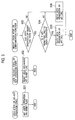
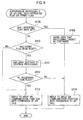
- Figs. 5 and 6 each show a suppression procedure of the API call with the entrusted flag or the permit flag.
- the suppression procedure shown in Fig. 5 and that shown in Fig. 6 are similar to the notification procedure of the state information mentioned above, more detailed description will be given on setting of the untrusted flag and the permit flag, here.
- Step 101 the state manager 201 is called when change of the execution state or installation state of the program in the open execution environment 120 is detected,
- Step 102 the state manager 201 determines whether one or more untrusted programs P2 are running in the open execution environment 120.
- Step 103 the state manager 201 determines whether one or more untrusted programs P2 are installed in the open execution environment 120.
- Step 104 the state manager 201 sets the untrusted flag.
- Step 105 the state manager 201 determines whether the mandatory program P3 mandatory to normal execution of the API call of the closed execution environment 130 is properly running in the open execution environment 120.
- Step 106 the state manager 201 determines whether the mandatory program P3 is installed in the open execution environment 120.
- Step 107 the state manager 201 resets the permit flag.
- Step 108 Processing in Step 108 shown in Fig. 6 is executed when the inter VM communication function inquires of the state monitor 200.
- the state manager 201 determines whether the untrusted flag has been set.
- Step 109 the state information notifying unit 205 warns the user that the system (device 100) is not normal and the processing cannot be continued. Then, in Step 114, the permission determining unit 203 determines to prohibit (suppress) the API call, and replies to the inter VM communication function.
- Step 110 the state manager 201 determines whether the permit flag has been reset.
- Step 111 the state information notifying unit 205 checks with the user whether to continue the processing although the system is not normal.
- Step 112 the state information notifying unit 205 determines whether a reply from the user requests continuation of the processing.
- Step 113 the permission determining unit 203 determines to permit the API call, and replies to the inter VM communication function.
- the permit flag has been set (NO in Step 110)
- Step 113 the permission determining unit 203 determiner to permit the API call, and replies to the inter VM communication function.
- Step 114 the permission determining unit 203 determines to prohibit (suppress) the API call, and replies to the inter VM communication function. (2.4.4) Suppression procedure of the API call with the cooperation suppression flag (CSF)
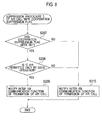
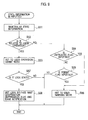
- Fig. 7 and Fig. 8 show a suppression procedure of the API call with the cooperation suppression flag (lock release wait cooperation suppression flag (LRW-CSF) and user confirmation wait cooperation suppression flag (UCW-CSF)).
- the program calls the inter VM communication function, and the inter VM communication function inquires of the state monitor 200 whether to prohibit (suppress) the API call.
- Step 201 the state manager 201 receives at least one of the LRW-CSF and the UCN-CSF from the API checking device 300, and maintains the received flag.
- Step 202 the state manager 201 determines whether the received flag is the UCW-CSF.
- Step 203 the state manager 201 determiners whether the UCW-CSF has been set.
- Step 204 When the UCW-CSF has been set (YES in Step 203) in Step 204, the state manager 201 sets a specified timeout time and terminate the process.
- Step 205 shown in Fig. 7 (b) is executed periodically.
- the state manager 201 periodically determines whether the set timeout time elapses.
- Step 206 the state manager 201 resets the UCW-CSF.
- Step 207 shown in Fig. 8 is executed when the inter VM communication function inquires of the state monitor 200.
- the state manager 201 determines whether the LRW-CSF or the UCW-CSF has been set.
- Step 208 the state manager 201 checks whether the API call is the API call permitted only when requested by operation of the user.
- Step 209 the permission determining unit 203 determines to prohibit (suppress) the API call, and replies to the inter VM communication function.
- Step 210 the permission determining unit 203 determines to permit the API call, and replies to the inter VM communication function.
- the API checking device 300 From function to process the API call of the closed execution environment 130 or the inter VM communication function on the closed execution environment 130 side, the API checking device 300 receives a determination request on whether to permit the API call to the closed execution environment 130 from the open execution environment 120. Then, the API checking device 300 answers the state monitor 200 on whether to permit or refuse the API call.
- the API checking device 300 includes an API check request reception unit 301, a state information acquiring unit 303, a check mode setting unit 305, a determining unit 307, a check result outputting unit 309, an API restriction manager 311, and an integrity checking unit 313.
- the API check request reception unit 301 receives a determination request that requests determination of whether to permit the API call from the open execution environment 120 to the closed execution environment 130. Specifically, the API check request reception unit 301 receives the determination request from the function to process the API call of the closed execution environment 130 or the inter VM communication function on the closed execution environment 130 side.
- the API check request reception unit 301 can receive a determination request including a program identifier of an API call source.
- the program identifier of the API call source may be any of a name of a program, a unique number of a program, a hash value of a program, and an identification number specified by a program when the program calls the API 131, and the like.
- the API check request reception unit 301 may also receive the program identifier of the API call source and the determination request including a type of the API 131.
- the type of the API 131 may be any of a name, category name, a number, a number of a category, and a hash value of the API 131.
- an identification number specified by the program when the program calls the API 131 may be used also as the program identifier and the type of the API 131.
- the state information acquiring unit 303 acquires the state information of the device 100 from the state monitor 200 or OSs/middleware disposed in the closed execution environment 130. The state information acquiring unit 303 then maintains the acquired state information. The state information acquiring unit 303 maintains the acquired state information by storing the acquired state information in storage such as a RAM or a hard disk. The state information acquiring unit 303 also acquires the state information from the state monitor 200 using message passing, a shared memory, etc. provided by the inter VM communication function.
- Fig. 2 shows a specific example of the state information. Notification of the state information may be one-way communication from the state monitor 200 to the API checking device 300, or when acknowledgement is demanded, acknowledgement (ACK) may be transmitted to the state monitor 200. Additionally, when a MAC or a digital signature is attached to the state information or the state information is encrypted, the state information acquiring unit 303 executes verification or decoding as necessary.
- the state information acquiring unit 303 can acquire the local lock state, the remote lock state, or the no-input operation state as the state information.
- the state information acquiring unit 303 can acquire the state information safely.
- the state information may be tampered and the state information acquiring unit 303 cannot always acquire the correct state information.
- the state information acquiring unit 303 may set the LRW-CSF in the local lock state or the remote lock state, and notify the state monitor 200 that the flag has been set. Similarly, the state information acquiring unit 303 may set the UCM-CSF when a predetermined period elapses in the user confirmation waiting state, and notify the state monitor 200 that the flag has been set.
- the state information acquiring unit 303 sets the LRN-CSF according to a state after change. Simultaneously, the state information acquiring unit 303 notifies the state monitor 200 of the LRW-CSF according to the state after change.
- the state information acquiring unit 303 may reset the UCW-CSF and notify the state monitor 200 that the UCW-CSF has been reset. Further, predetermined timeout time is exceeded while the UCN-CSF is being set, the state information acquiring unit 303 may omit the notifying the state monitor 200 of the UCW-CSF reset.
- the state information acquiring unit 303 uses the untrusted flag and the permit flag as the state information in the same manner as in the case of the state manager 201 mentioned above.
- the untrusted flag and the permit flag may be set from the state monitor 200 that operates in the open execution environment 120, or set from the virtual machine monitor 110 when the virtual machine monitor 110 manages the untrusted flag. Examples of the untrusted program P2, the determination method thereof, etc. are the same as those of the state manager 201.
- the state information acquiring unit 303 may also acquire a permit flag list as the state information (see Fig. 2 ), the permit flag list including a list of permit flags each set with respect to corresponding one of a plurality of permitted programs P1 to which the API call to the closed execution environment 130 is permitted when the permitted program P1 is running in the open execution environment 120 or is installed in the device 100.
- the state information acquiring unit 303 may also request the state monitor 200 to notify the state information (a) when the API call is performed a predetermined number of times, (b) when the API call is refused a predetermined number of times, and (c) when a predetermined period elapses after the last API call is performed. With such a notification, even if notification of the state information fails, inconsistency of the state information between the state monitor 200 and the API checking device 300 is eliminated in next notification.
- the API checking device 300 may determine that a failure has occurred, and may take a countermeasure. For example, the API checking device 300 can execute a countermeasure, such as prohibition of the API call, restart of the device, or restart of the device after notifying the user.
- the check mode setting unit 305 sets an check mode for the API call on the basis of the state information acquired by the state information acquiring unit 303.
- the check mode denotes a policy of check to the API call.
- the check mode setting unit 305 sets the check mode to a user operation inhibit mode when the state information is the local lock state, the remote lock state, or the no-input operation state.
- the user operation inhibit mode is a mode that prohibits the API call of the type permitted only when requested by operation of the user.
- the check mode setting unit 305 may set the check mode to a user warning mode that warns the user in accordance with the state information when the untrusted flag has been set or when the permit flag has been reset.
- the check mode setting unit 305 may also set the check mode to the user warning mode when the check mode is set on the basis of a state of the permit flag, or when the flag corresponding to the program identifier received by the API check request reception unit 301 is reset.
- the check mode setting unit 305 may set the check mode to an check omission mode that unconditionally permits the API call of the same type as the API call determined to be permitted or the API call including the program identifier indicating the same API call source as the API call determined to be permitted, for a predetermined number of times or for a predetermined period. Additionally, when a configuration of the device 100 is changed while the check mode is being set to the check omission mode, the check mode setting unit 305 may terminate the check omission made.
- the change of configuration means, for example, activation/deactivation of application or installing/uninstalling of application.
- the determining unit 307 determines whether to permit the API call on the basis of the check mode set by the check mode setting unit 305.
- the determining unit 307 also generates a check result of the API call on the basis of the determination result.
- the determining unit 307 determines to prohibit the API call.
- the determining unit 307 can warn the user in accordance with the state information, and can refuse the APT call after asking the user whether to permit the API call or without performing the asking.
- the content of the warning to the user may be the same as that of the permission determining unit 203 mentioned above.
- the determining unit 307 generates any of prohibition of the API call, permission of the API call, and refusal of the APT call as the check result.
- the determining unit 307 may also generate the check result together with a code indicating a reason of the check result.
- the code indicates, for example, prohibition because the API call is not the API call on the basis of the user operation, or refusal because the mandatory program P3 mandatory to mandatory of the API call is not properly running.
- the determining unit 307 may warn the user, and refuse the API call after asking the user whether to permit the API call or without performing the asking.
- the check mode is being set to the check omission mode, the determining unit 307 generates the check result indicating omission of the check of the API call.
- the determining unit 307 can inquire of the API restriction manager 311 on the basis of the determination request received by the API check request reception unit 301. Thereafter, when the program identifier included in the determination request corresponds to the type of the API call which is permitted, the determining unit 307 may permit the API call. Furthermore, when the permit flag has been set in the permit flag list, the determining unit 307 can inquire of the API restriction manager 311. Thereafter, when the program identifier included in the determination request corresponds to the type of the API call which is permitted and when an inquiry flag has been set and a condition of an API call argument is satisfied, the determining unit 307 can inquire of the user about the device 100.
- the determining unit 307 permits the API call when the user permits the API call.
- the determining unit 307 permits the API call when the user permits the API call.
- Upon inquiry of the user in order to avoid interference by the untrusted program in the open execution environment 120, it is desirable to present an inquiry message to the user and to input an input from the user to the inquiry outside the open execution environments 120, for example, in the closed execution environment 130.
- the determining unit 307 may check a format such as a size, a type of the API call argument, a value, and a range of the value, or may scan the transferred data to check for the viruses. Furthermore, the determining unit 307 may check a history of a sequence of the API calls, and check whether order relation of particular API calls is correct.
- the check result outputting unit 309 outputs the check result of the API call generated by the determining unit 307 to a determination requesting source (processing function of the API 131, etc.) that requests determination of the API call.
- the determination requesting source is the function for processing the API call of the closed execution environment 130, the inter VM communication function on the closed execution environment 130 side, and the like, as mentioned above.
- the determination request source may omit more detailed API check in order to reduce resource consumption.
- the more detailed API check is, for example, check of a format such as a size, a type of the API call argument, a value, a range of the value, or virus check on the transferred data.
- the API restriction manager 311 manages the type of the API 131 and the program identifier that permits or refuses the API call of the type.
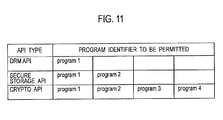
- Fig. 11 shows an example of the API 131 restricted by the API restriction manager 311.
- a DRM API a secure storage API
- a crypto API a crypto API
- Only program1 is permitted in the DRM API.
- Program1 and program2 are permitted in the secure storage API.
- Program1, program2, program3, and program4 are permitted in the code API.
- the API restriction manager 311 In addition to the type of the API 131 and the program identifier that permits or refuses the API call of the type, the API restriction manager 311 also can manage the inquiry flag indicating whether to inquire of the user of the device 100 whether to permit the API call, and a condition of the API call argument used for determination of whether to inquire. For example, in the API 131 that accesses a website of a URL specified by the API call argument, when the URL has a particular domain name, the API restriction manager 311 can inquire of the user. As another example, when the condition is not specified, the API restriction manager 311 can inquire of the user unconditionally.
- the integrity checking unit 313 checks integrity of a state monitor program that provides function as the state monitor 200.
- the integrity checking unit 313 prohibits the API call when tampering with the state monitor program is detected.
- the integrity checking unit 313 maintains a correct hash value of a program code.
- the integrity checking unit 313 calculates the hash value of the program code periodically or when a particular event occurs, and compares the calculated hash value with the correct hash value. When the comparison result has no coincidence, the integrity checking unit 313 can determine that there has been tampering. Examples of the particular event include a case where there is access (read or write) to a memory or a file area where the state monitor program is stored, a case where there is a particular API call of the closed execution environment 130, and a case where a particular API call or a system call in the open execution environment 120 is performed.
- the integrity checking unit 313 may check presence of tampering with an OS, middleware, and an application program within the open execution environment 120 except the state monitor 200. When detecting tampering with these, the integrity checking unit 313 can prohibit the API call.
- the integrity checking unit 313 may be implemented as a part of a VMM (virtual machine monitor).
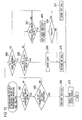
- Fig. 9 shows the setting procedure of the check mode by the API checking device 300.
- the setting procedure of the check mode is executed when the state information is inputted from the state monitor 200 to the API checking device 300 (state information acquiring unit 303), when the state information acquiring unit 303 detects change of the state information, or when the state information acquiring unit 303 is notified of the state information.
- Step 51 the state information acquiring unit 303 maintains the inputted state information.
- the state information acquiring unit 303 determines whether the inputted state information is a state related to user operation. Specifically, the state information acquiring unit 303 determines whether it is the local lock state, the remote lock state, or the no-input operation state.
- Step 53 the check mode setting unit 305 sets the check mode to the user operation inhibit mode.
- Step 57 the state information acquiring unit 303 determines whether the inputted state information shows any of the local lock state and the remote lock state.
- Step 58 the state information acquiring unit 303 sets the LRW-CSF, and notifies the state monitor 200 that the LRW-CSF has been set.
- Step 54 the state information acquiring unit 303 determines whether the inputted state information is the untrusted flag.
- Step 55 the state information acquiring unit 303 determines whether the inputted state information is the permit flag.
- Step 56 the check mode setting unit 305 sets the check mode to the user warning mode.
- Fig. 10 shows a check procedure of the API call by the API checking device 300.
- the check procedure of the API call is executed when the API check request reception unit 301 receives the determination request to determine whether to permit the API call from the open execution environment 120 to the closed execution environment 130 from the processing function of the API 131 of the closed execution environment 130, the inter VM communication function on the closed execution environment 130 side, etc.
- the determination request may include the program identifier of the API call source.
- Step 61 the determining unit 307 checks for the check mode set, and determines whether the check mode has been set to the user operation inhibit mode.
- Step 62 the determining unit 307 determines whether the API call is the API call of the type permitted only when requested by operation of the user.
- Step 63 the determining unit 307 generates prohibition of the API call as a check result.
- Step 64 the determining unit 307 determines whether the check mode has been set to the user warning mode.
- Step 65 the determining unit 307 determines whether the untrusted flag has been set.
- Step 66 the determining unit 307 performs warning in accordance with the state information.
- Step 67 the determining unit 307 determines whether the permit flag has been reset.
- Step 68 the determining unit 307 checks with the user whether to permit the API call.
- Step 69 the determining unit 307 determines whether the user has permitted the API call.
- Step 70 the determining unit 307 generates refusal of the API call as the check result.
- Step 71 the determining unit 307 generates permission of the API call as the check result.
- Step 72 the check result outputting unit 309 responds to the processing function of the API 131, the communication function for the VMs, and the like, with the check result generated by the determining unit 307.
- the determining unit 307 may check whether the program corresponding to "the program identifier of the API call source" included in the determination request is reset with respect to the permit flag.
- the permit flag has been reset, in order to show that the program is not executed, there is a possibility that an unauthorized program is performing the API call by spoofing as an authorized program. Then, warning to the user may be performed, or the API call may be refused.
- the check mode is set to the user operation inhibit mode.
- cooperation of the API call of the type permitted only when requested by operation of the user can be prohibited.
- the unauthorized program can be prohibited from freely making such an API call of cooperation function.
- an unauthorized API call can be prevented, and the overhead can be suppressed at the same time.
- the state information can be acquired and permission of the API call can be determined with relatively lower processing load.
- check can be executed safely with relatively lower processing load.
- the detection is dependent not only on access control by the OS, and overhead caused by check processing of an argument or data can be suppressed.
- the state of the LRW-CSF and that of the UCW-CSF are notified to the open execution environment 120 from the closed execution environment 130.
- cooperation of an invalid API call is suppressed.
- exhaustion of a battery of the device 100 can be suppressed.
- termination of cooperation suppression concerning waiting for confirmation by the user can be omitted by using a timer. Accordingly, a frequency of notification of the state can be minimized, and consumption of resources concerning notification can be reduced.
- check of the API call succeeds, check of the API call of a particular type can be omitted (thinned out) for the specified number of times of the API call. Accordingly, safety and overhead, which are in a relationship of a trade-off, can be adjusted to an appropriate level.
- the user can be warned in accordance with the state information. For this reason, before the API call is executed, the user can know information on safety and reliability of the open execution environment 120. The user can take appropriate measures, such as determining permission of the API call and storing data not stored yet, on the basis of the information.
- the check result can be generated together with the code indicating a reason for the check result of the API call. For this reason, when the APT call by the program or the user fails, the reason can be recognized. In other words, the reason for the refusal of the API call source can be identified, whether because the API call is not the API call on the basis of the user operation, whether because the mandatory program P3 mandatory to execution of the API call is failed, or the like. Thereby, appropriate measures can be taken. For example, when the mandatory program P3 is failed, the user can restore the device 100 to the normal state by restarting the device 100.
- the check omission mode is provided in this embodiment. Accordingly, reduction in a frequency of check of the API call can be expected without greatly sacrificing the safety, the reduction leading to reduction in deterioration of response and reduction in resource consumption. Moreover, in this embodiment, the check omission mode is terminated after the configuration of the system is changed. For this reason, certain level of safety can also be secured.
- the user of the device 100 may be inquired of in a situation in which: the program identifier included in the determination request corresponds to the type to which the API call is permitted; the inquiry flag has been set; and the condition of the argument of the API call is satisfied. For this reason, fine access control of the API call can be performed for each program, and reliability and safety can be improved.
- the user of the device 100 can be inquired of in a situation in which: the program identifier included in the determination request corresponds to the type to which the API call is permitted; the inquiry flag has been set; and the condition of the argument of the API call is satisfied. For this reason, permission of a particular API call can be determined on the basis of confirmation by the user.
- the integrity checking unit 313 that checks the integrity of the state monitor program providing function as the state monitor 200 is provided. For this reason, when the state monitor 200 is attacked, prohibition of the API call can prevent the damages from spreading.
- the API checking device 300 disposed in the closed execution environment 130 is notified of the state information. For this reason, before the API call is executed, the user can be notified of information on the safety or reliability of the open execution environment 120 on the closed execution environment 130 side.
- the open execution environment 120 and the closed execution environment 130 may be formed using a multi CPU (or multi core).
- Fig. 12 is a functional block diagram of a device 100A in which the open execution environment 120 and the closed execution environment 130 are formed by using a CPU 111A and a CPU 111B in a multi core configuration. Since the configuration of the state monitor 200 and that of the API checking device 300 are the same as those of the device 100 mentioned above, description thereof will be omitted.
- a virtual machine such as JavaVM may be used to form an open execution environment
- a host OS may be used to form a closed execution environment.
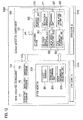
- Fig. 13 is a functional block diagram of a device 100B in which a virtual machine and a host OS are used.
- the open execution environment 120A is formed by the JavaVM
- the closed execution environment 130A is formed by the host OS. Since the configuration of the state monitor 200 and that of the API checking device 300 are the same as those of the device 100 mentioned above, description thereof will be omitted.
- state monitor 200 and the API checking device 300 each may be provided independently.
Landscapes
- Engineering & Computer Science (AREA)
- Computer Security & Cryptography (AREA)
- Software Systems (AREA)
- Theoretical Computer Science (AREA)
- Computer Hardware Design (AREA)
- Physics & Mathematics (AREA)
- General Engineering & Computer Science (AREA)
- General Physics & Mathematics (AREA)
- Debugging And Monitoring (AREA)
- Data Exchanges In Wide-Area Networks (AREA)
Applications Claiming Priority (2)
| Application Number | Priority Date | Filing Date | Title |
|---|---|---|---|
| JP2008242637 | 2008-09-22 | ||
| JP2009196691A JP4653230B2 (ja) | 2008-09-22 | 2009-08-27 | Api検査装置及び状態監視装置 |
Publications (2)
| Publication Number | Publication Date |
|---|---|
| EP2166478A2 true EP2166478A2 (de) | 2010-03-24 |
| EP2166478A3 EP2166478A3 (de) | 2010-12-08 |
Family
ID=41396138
Family Applications (1)
| Application Number | Title | Priority Date | Filing Date |
|---|---|---|---|
| EP09170813A Withdrawn EP2166478A3 (de) | 2008-09-22 | 2009-09-21 | API-Prüfvorrichtung und Statusmonitor |
Country Status (4)
| Country | Link |
|---|---|
| US (1) | US8413230B2 (de) |
| EP (1) | EP2166478A3 (de) |
| JP (1) | JP4653230B2 (de) |
| CN (1) | CN101685487A (de) |
Cited By (7)
| Publication number | Priority date | Publication date | Assignee | Title |
|---|---|---|---|---|
| EP2562673A1 (de) * | 2011-08-24 | 2013-02-27 | Pantech Co., Ltd. | Vorrichtung und Verfahren zur Sicherung eines mobilen Endgerätes |
| WO2014019815A1 (en) * | 2012-08-03 | 2014-02-06 | Alcatel Lucent | Mandatory protection control in virtual machines |
| EP2787725A4 (de) * | 2011-11-30 | 2015-07-01 | Japan Broadcasting Corp | Empfangsvorrichtung, programm und empfangsverfahren |
| EP2933745A1 (de) * | 2014-04-14 | 2015-10-21 | Samsung Electronics Co., Ltd | Verfahren und Vorrichtung für herunterladbares DRM in einer vertrauenswürdigen Ausführungsumgebung |
| CN106415575A (zh) * | 2014-06-25 | 2017-02-15 | 英特尔公司 | 硬件配置报告系统 |
| US20180019880A1 (en) * | 2016-03-29 | 2018-01-18 | Huawei International Pte. Ltd. | System and method for verifying integrity of an electronic device |
| CN111209561A (zh) * | 2018-11-21 | 2020-05-29 | 成都鼎桥通信技术有限公司 | 终端设备的应用调用方法、装置与终端设备 |
Families Citing this family (44)
| Publication number | Priority date | Publication date | Assignee | Title |
|---|---|---|---|---|
| US20120297485A1 (en) * | 2010-12-08 | 2012-11-22 | Manabu Maeda | Information processing device and information processing method |
| US9003543B2 (en) * | 2010-12-21 | 2015-04-07 | Microsoft Technology Licensing, Llc | Providing a security boundary |
| US20120192155A1 (en) * | 2011-01-20 | 2012-07-26 | Microsoft Corporation | Code advisor for web compatibility and interoperability |
| KR101839607B1 (ko) * | 2011-08-02 | 2018-03-22 | 주식회사 케이티 | 단말 보안을 수행하는 사용자 단말 및 서비스 서버 장치 |
| KR101285394B1 (ko) * | 2011-08-24 | 2013-08-23 | 주식회사 팬택 | 휴대 단말 시스템의 대기 상태에서의 퍼미션 제어 장치 |
| CN102710631A (zh) * | 2012-05-28 | 2012-10-03 | 华为技术有限公司 | 一种数据传输方法、设备及系统 |
| KR101955461B1 (ko) * | 2012-10-23 | 2019-03-11 | 에스케이플래닛 주식회사 | Api 실행 제어를 위한 시스템 및 방법 |
| JP6079208B2 (ja) * | 2012-12-19 | 2017-02-15 | 株式会社ソシオネクスト | マイクロコンピュータ,そのミドルウエア及びマイクロコンピュータの動作方法 |
| JP6343900B2 (ja) * | 2013-10-10 | 2018-06-20 | 富士通株式会社 | 通信端末、通信処理方法および通信処理プログラム |
| JP5984148B2 (ja) | 2014-05-13 | 2016-09-06 | インターナショナル・ビジネス・マシーンズ・コーポレーションInternational Business Machines Corporation | 遠隔手続き呼び出しを制御する装置及び方法 |
| US9513671B2 (en) | 2014-08-01 | 2016-12-06 | Microsoft Technology Licensing, Llc | Peripheral retention device |
| US10191986B2 (en) | 2014-08-11 | 2019-01-29 | Microsoft Technology Licensing, Llc | Web resource compatibility with web applications |
| US9705637B2 (en) | 2014-08-19 | 2017-07-11 | Microsoft Technology Licensing, Llc | Guard band utilization for wireless data communication |
| US9397723B2 (en) | 2014-08-26 | 2016-07-19 | Microsoft Technology Licensing, Llc | Spread spectrum wireless over non-contiguous channels |
| US10044695B1 (en) | 2014-09-02 | 2018-08-07 | Amazon Technologies, Inc. | Application instances authenticated by secure measurements |
| US9491111B1 (en) | 2014-09-03 | 2016-11-08 | Amazon Technologies, Inc. | Securing service control on third party hardware |
| US9754116B1 (en) | 2014-09-03 | 2017-09-05 | Amazon Technologies, Inc. | Web services in secure execution environments |
| US9577829B1 (en) | 2014-09-03 | 2017-02-21 | Amazon Technologies, Inc. | Multi-party computation services |
| US10061915B1 (en) | 2014-09-03 | 2018-08-28 | Amazon Technologies, Inc. | Posture assessment in a secure execution environment |
| US9442752B1 (en) * | 2014-09-03 | 2016-09-13 | Amazon Technologies, Inc. | Virtual secure execution environments |
| US9246690B1 (en) | 2014-09-03 | 2016-01-26 | Amazon Technologies, Inc. | Secure execution environment services |
| US9584517B1 (en) | 2014-09-03 | 2017-02-28 | Amazon Technologies, Inc. | Transforms within secure execution environments |
| US10079681B1 (en) * | 2014-09-03 | 2018-09-18 | Amazon Technologies, Inc. | Securing service layer on third party hardware |
| US9424048B2 (en) | 2014-09-15 | 2016-08-23 | Microsoft Technology Licensing, Llc | Inductive peripheral retention device |
| CN104484224B (zh) * | 2014-12-18 | 2019-04-09 | 北京奇安信科技有限公司 | 一种服务器进程控制方法、装置及系统 |
| US20160182536A1 (en) * | 2014-12-19 | 2016-06-23 | Ca, Inc. | Adapting user terminal application operation responsive to measured user behavior |
| US9552481B1 (en) * | 2014-12-30 | 2017-01-24 | Symantec Corporation | Systems and methods for monitoring programs |
| CN104869166A (zh) * | 2015-05-28 | 2015-08-26 | 北京呈创科技股份有限公司 | 桌面云集群系统及桌面云集群中的信息交互方法 |
| CN105630536A (zh) * | 2015-07-17 | 2016-06-01 | 宇龙计算机通信科技(深圳)有限公司 | 一种信息处理方法及装置 |
| US9769169B2 (en) | 2015-09-25 | 2017-09-19 | Intel Corporation | Secure sensor data transport and processing |
| US9984132B2 (en) * | 2015-12-31 | 2018-05-29 | Samsung Electronics Co., Ltd. | Combining search results to generate customized software application functions |
| US11243997B2 (en) | 2017-08-09 | 2022-02-08 | The Nielsen Company (Us), Llc | Methods and apparatus to determine sources of media presentations |
| JP7119685B2 (ja) * | 2018-07-17 | 2022-08-17 | コニカミノルタ株式会社 | 情報処理装置、情報処理装置の制御方法、およびプログラム |
| US11050850B1 (en) | 2019-01-07 | 2021-06-29 | Allstate Insurance Company | System and methods for application programming interface validation and testing |
| US11635990B2 (en) | 2019-07-01 | 2023-04-25 | Nutanix, Inc. | Scalable centralized manager including examples of data pipeline deployment to an edge system |
| US11501881B2 (en) * | 2019-07-03 | 2022-11-15 | Nutanix, Inc. | Apparatus and method for deploying a mobile device as a data source in an IoT system |
| US10893116B1 (en) | 2019-07-03 | 2021-01-12 | Nutanix, Inc. | Apparatuses and methods for edge computing application deployment in an IoT system |
| US11172047B2 (en) | 2019-09-30 | 2021-11-09 | Mastercard International Incorporated | Systems and methods for use in network service interface bundling |
| US12155731B2 (en) | 2019-10-09 | 2024-11-26 | Nutanix, Inc. | Platform-as-a-service deployment including service domains |
| US11818134B1 (en) * | 2020-09-30 | 2023-11-14 | Amazon Technologies, Inc. | Validating application programming interface (API) requests to infrastructure systems hosted in a cloud computing environment |
| US12306733B2 (en) | 2020-10-21 | 2025-05-20 | Nutanix, Inc. | Key value store in a clustered containerized system |
| US11726764B2 (en) | 2020-11-11 | 2023-08-15 | Nutanix, Inc. | Upgrade systems for service domains |
| US11665221B2 (en) | 2020-11-13 | 2023-05-30 | Nutanix, Inc. | Common services model for multi-cloud platform |
| US11736585B2 (en) | 2021-02-26 | 2023-08-22 | Nutanix, Inc. | Generic proxy endpoints using protocol tunnels including life cycle management and examples for distributed cloud native services and applications |
Citations (2)
| Publication number | Priority date | Publication date | Assignee | Title |
|---|---|---|---|---|
| JP2006242637A (ja) | 2005-03-01 | 2006-09-14 | Denso Corp | 回転検出装置およびその設計方法 |
| US7325083B2 (en) | 2002-11-18 | 2008-01-29 | Arm Limited | Delivering data processing requests to a suspended operating system |
Family Cites Families (17)
| Publication number | Priority date | Publication date | Assignee | Title |
|---|---|---|---|---|
| IL132915A (en) * | 1999-11-14 | 2004-05-12 | Networks Assoc Tech Inc | Method for secure function execution by calling address validation |
| US7203948B2 (en) * | 2001-09-29 | 2007-04-10 | Siebel Systems, Inc. | Method, apparatus, and system for implementing caching of view custom options in a framework to support web-based applications |
| US7962545B2 (en) * | 2002-12-27 | 2011-06-14 | Intel Corporation | Dynamic service registry for virtual machines |
| US7624272B2 (en) * | 2003-03-31 | 2009-11-24 | Intel Corporation | Platform information for digital signatures |
| US20050108562A1 (en) * | 2003-06-18 | 2005-05-19 | Khazan Roger I. | Technique for detecting executable malicious code using a combination of static and dynamic analyses |
| US7634807B2 (en) * | 2003-08-08 | 2009-12-15 | Nokia Corporation | System and method to establish and maintain conditional trust by stating signal of distrust |
| US20050132122A1 (en) * | 2003-12-16 | 2005-06-16 | Rozas Carlos V. | Method, apparatus and system for monitoring system integrity in a trusted computing environment |
| US7330981B2 (en) * | 2004-04-23 | 2008-02-12 | Microsoft Corporation | File locker and mechanisms for providing and using same |
| US20060070066A1 (en) * | 2004-09-30 | 2006-03-30 | Grobman Steven L | Enabling platform network stack control in a virtualization platform |
| JP4664055B2 (ja) * | 2004-12-10 | 2011-04-06 | 株式会社エヌ・ティ・ティ・ドコモ | プログラム分割装置、プログラム実行装置、プログラム分割方法及びプログラム実行方法 |
| US7886294B2 (en) * | 2004-12-28 | 2011-02-08 | Sap Ag | Virtual machine monitoring |
| US7426653B2 (en) * | 2005-04-13 | 2008-09-16 | Progress Software Corporation | Fault tolerant distributed lock management |
| US7587724B2 (en) * | 2005-07-13 | 2009-09-08 | Symantec Corporation | Kernel validation layer |
| US7725737B2 (en) * | 2005-10-14 | 2010-05-25 | Check Point Software Technologies, Inc. | System and methodology providing secure workspace environment |
| US7971104B2 (en) * | 2006-10-24 | 2011-06-28 | Shlomi Dolev | Apparatus and methods for stabilization of processors, operating systems and other hardware and/or software configurations |
| JP4288292B2 (ja) * | 2006-10-31 | 2009-07-01 | 株式会社エヌ・ティ・ティ・ドコモ | オペレーティングシステム監視設定情報生成装置及びオペレーティングシステム監視装置 |
| US8763115B2 (en) * | 2007-08-08 | 2014-06-24 | Vmware, Inc. | Impeding progress of malicious guest software |
-
2009
- 2009-08-27 JP JP2009196691A patent/JP4653230B2/ja not_active Expired - Fee Related
- 2009-09-18 US US12/562,574 patent/US8413230B2/en not_active Expired - Fee Related
- 2009-09-21 EP EP09170813A patent/EP2166478A3/de not_active Withdrawn
- 2009-09-21 CN CN200910176280A patent/CN101685487A/zh active Pending
Patent Citations (2)
| Publication number | Priority date | Publication date | Assignee | Title |
|---|---|---|---|---|
| US7325083B2 (en) | 2002-11-18 | 2008-01-29 | Arm Limited | Delivering data processing requests to a suspended operating system |
| JP2006242637A (ja) | 2005-03-01 | 2006-09-14 | Denso Corp | 回転検出装置およびその設計方法 |
Cited By (15)
| Publication number | Priority date | Publication date | Assignee | Title |
|---|---|---|---|---|
| CN103108074A (zh) * | 2011-08-24 | 2013-05-15 | 株式会社泛泰 | 用于保护移动终端的设备和方法 |
| EP2562673A1 (de) * | 2011-08-24 | 2013-02-27 | Pantech Co., Ltd. | Vorrichtung und Verfahren zur Sicherung eines mobilen Endgerätes |
| EP2787725A4 (de) * | 2011-11-30 | 2015-07-01 | Japan Broadcasting Corp | Empfangsvorrichtung, programm und empfangsverfahren |
| US9374377B2 (en) | 2012-08-03 | 2016-06-21 | Alcatel Lucent | Mandatory protection control in virtual machines |
| EP2696303A1 (de) * | 2012-08-03 | 2014-02-12 | Alcatel Lucent | Verpflichtende Zugriffssteuerung (MAC) in virtuellen Maschinen |
| WO2014019815A1 (en) * | 2012-08-03 | 2014-02-06 | Alcatel Lucent | Mandatory protection control in virtual machines |
| EP2933745A1 (de) * | 2014-04-14 | 2015-10-21 | Samsung Electronics Co., Ltd | Verfahren und Vorrichtung für herunterladbares DRM in einer vertrauenswürdigen Ausführungsumgebung |
| CN106415575A (zh) * | 2014-06-25 | 2017-02-15 | 英特尔公司 | 硬件配置报告系统 |
| EP3161710A4 (de) * | 2014-06-25 | 2017-11-29 | Intel Corporation | Hardwarekonfigurationsmeldesysteme |
| CN106415575B (zh) * | 2014-06-25 | 2020-03-20 | 英特尔公司 | 硬件配置报告系统 |
| US20180019880A1 (en) * | 2016-03-29 | 2018-01-18 | Huawei International Pte. Ltd. | System and method for verifying integrity of an electronic device |
| KR20180013854A (ko) * | 2016-03-29 | 2018-02-07 | 후아웨이 인터내셔널 피티이. 엘티디. | 전자 디바이스의 무결성을 검증하기 위한 시스템 및 방법 |
| US10659237B2 (en) * | 2016-03-29 | 2020-05-19 | Huawei International Pte. Ltd. | System and method for verifying integrity of an electronic device |
| CN111209561A (zh) * | 2018-11-21 | 2020-05-29 | 成都鼎桥通信技术有限公司 | 终端设备的应用调用方法、装置与终端设备 |
| CN111209561B (zh) * | 2018-11-21 | 2023-01-31 | 成都鼎桥通信技术有限公司 | 终端设备的应用调用方法、装置与终端设备 |
Also Published As
| Publication number | Publication date |
|---|---|
| CN101685487A (zh) | 2010-03-31 |
| US8413230B2 (en) | 2013-04-02 |
| US20100077473A1 (en) | 2010-03-25 |
| JP4653230B2 (ja) | 2011-03-16 |
| JP2010097594A (ja) | 2010-04-30 |
| EP2166478A3 (de) | 2010-12-08 |
Similar Documents
| Publication | Publication Date | Title |
|---|---|---|
| US8413230B2 (en) | API checking device and state monitor | |
| US12197566B2 (en) | Method and system for preventing and detecting security threats | |
| US8621628B2 (en) | Protecting user mode processes from improper tampering or termination | |
| JP4556144B2 (ja) | 情報処理装置、復旧装置、プログラム及び復旧方法 | |
| US7823203B2 (en) | Method and device for detecting computer network intrusions | |
| CN108647513B (zh) | 一种基于TrustZone的共享库安全隔离方法及系统 | |
| US20070118646A1 (en) | Preventing the installation of rootkits on a standalone computer | |
| JP5346608B2 (ja) | 情報処理装置およびファイル検証システム | |
| WO2006022161A1 (ja) | 情報通信装置及びプログラム実行環境制御方法 | |
| US20050125694A1 (en) | Security policy update supporting at least one security service provider | |
| US8887302B2 (en) | System, method and computer program product for utilizing code stored in a protected area of memory for securing an associated system | |
| US20070079373A1 (en) | Preventing the installation of rootkits using a master computer | |
| US20140026228A1 (en) | Information processing apparatus and control method | |
| CN112446029B (zh) | 可信计算平台 | |
| WO2014143029A1 (en) | Generic privilege escalation prevention | |
| US20140025954A1 (en) | Information processing device, information processing method, and computer program product | |
| CN109711161B (zh) | 一种监控方法及电子设备 | |
| US20040064732A1 (en) | Method and device for detecting computer intrusion | |
| EP3079057B1 (de) | Verfahren und vorrichtung zur durchführung einer introspektion einer virtuellen maschine | |
| KR20200041639A (ko) | 차량용 소프트웨어 업데이트 장치 및 그 제어 방법 | |
| US20200244461A1 (en) | Data Processing Method and Apparatus | |
| KR20250142200A (ko) | 리눅스 임베디드 장치 | |
| CN120611116A (zh) | 机密计算方法、系统、设备、存储介质及产品 | |
| CN111291355A (zh) | 变电站系统 | |
| CN116982044A (zh) | 一种用于安卓系统的隐私数据保护方法 |
Legal Events
| Date | Code | Title | Description |
|---|---|---|---|
| PUAI | Public reference made under article 153(3) epc to a published international application that has entered the european phase |
Free format text: ORIGINAL CODE: 0009012 |
|
| 17P | Request for examination filed |
Effective date: 20090921 |
|
| AK | Designated contracting states |
Kind code of ref document: A2 Designated state(s): AT BE BG CH CY CZ DE DK EE ES FI FR GB GR HR HU IE IS IT LI LT LU LV MC MK MT NL NO PL PT RO SE SI SK SM TR |
|
| AX | Request for extension of the european patent |
Extension state: AL BA RS |
|
| PUAL | Search report despatched |
Free format text: ORIGINAL CODE: 0009013 |
|
| AK | Designated contracting states |
Kind code of ref document: A3 Designated state(s): AT BE BG CH CY CZ DE DK EE ES FI FR GB GR HR HU IE IS IT LI LT LU LV MC MK MT NL NO PL PT RO SE SI SK SM TR |
|
| AX | Request for extension of the european patent |
Extension state: AL BA RS |
|
| GRAP | Despatch of communication of intention to grant a patent |
Free format text: ORIGINAL CODE: EPIDOSNIGR1 |
|
| RIC1 | Information provided on ipc code assigned before grant |
Ipc: G06F 21/52 20130101ALI20160315BHEP Ipc: G06F 21/53 20130101AFI20160315BHEP |
|
| INTG | Intention to grant announced |
Effective date: 20160407 |
|
| STAA | Information on the status of an ep patent application or granted ep patent |
Free format text: STATUS: THE APPLICATION IS DEEMED TO BE WITHDRAWN |
|
| 18D | Application deemed to be withdrawn |
Effective date: 20160818 |