EP2172246A2 - Verfahren zur Behandlung von Alzheimer und zur koginitiven Verbesserung - Google Patents
Verfahren zur Behandlung von Alzheimer und zur koginitiven Verbesserung Download PDFInfo
- Publication number
- EP2172246A2 EP2172246A2 EP10000734A EP10000734A EP2172246A2 EP 2172246 A2 EP2172246 A2 EP 2172246A2 EP 10000734 A EP10000734 A EP 10000734A EP 10000734 A EP10000734 A EP 10000734A EP 2172246 A2 EP2172246 A2 EP 2172246A2
- Authority
- EP
- European Patent Office
- Prior art keywords
- bryostatin
- pkc
- disease
- alzheimer
- compounds
- Prior art date
- Legal status (The legal status is an assumption and is not a legal conclusion. Google has not performed a legal analysis and makes no representation as to the accuracy of the status listed.)
- Granted
Links
Images



Classifications
-
- A—HUMAN NECESSITIES
- A61—MEDICAL OR VETERINARY SCIENCE; HYGIENE
- A61K—PREPARATIONS FOR MEDICAL, DENTAL OR TOILETRY PURPOSES
- A61K31/00—Medicinal preparations containing organic active ingredients
- A61K31/33—Heterocyclic compounds
- A61K31/335—Heterocyclic compounds having oxygen as the only ring hetero atom, e.g. fungichromin
- A61K31/365—Lactones
-
- A—HUMAN NECESSITIES
- A61—MEDICAL OR VETERINARY SCIENCE; HYGIENE
- A61K—PREPARATIONS FOR MEDICAL, DENTAL OR TOILETRY PURPOSES
- A61K31/00—Medicinal preparations containing organic active ingredients
-
- A—HUMAN NECESSITIES
- A61—MEDICAL OR VETERINARY SCIENCE; HYGIENE
- A61K—PREPARATIONS FOR MEDICAL, DENTAL OR TOILETRY PURPOSES
- A61K31/00—Medicinal preparations containing organic active ingredients
- A61K31/33—Heterocyclic compounds
- A61K31/335—Heterocyclic compounds having oxygen as the only ring hetero atom, e.g. fungichromin
- A61K31/365—Lactones
- A61K31/366—Lactones having six-membered rings, e.g. delta-lactones
-
- A—HUMAN NECESSITIES
- A61—MEDICAL OR VETERINARY SCIENCE; HYGIENE
- A61K—PREPARATIONS FOR MEDICAL, DENTAL OR TOILETRY PURPOSES
- A61K9/00—Medicinal preparations characterised by special physical form
- A61K9/0012—Galenical forms characterised by the site of application
- A61K9/0053—Mouth and digestive tract, i.e. intraoral and peroral administration
-
- A—HUMAN NECESSITIES
- A61—MEDICAL OR VETERINARY SCIENCE; HYGIENE
- A61P—SPECIFIC THERAPEUTIC ACTIVITY OF CHEMICAL COMPOUNDS OR MEDICINAL PREPARATIONS
- A61P23/00—Anaesthetics
-
- A—HUMAN NECESSITIES
- A61—MEDICAL OR VETERINARY SCIENCE; HYGIENE
- A61P—SPECIFIC THERAPEUTIC ACTIVITY OF CHEMICAL COMPOUNDS OR MEDICINAL PREPARATIONS
- A61P25/00—Drugs for disorders of the nervous system
-
- A—HUMAN NECESSITIES
- A61—MEDICAL OR VETERINARY SCIENCE; HYGIENE
- A61P—SPECIFIC THERAPEUTIC ACTIVITY OF CHEMICAL COMPOUNDS OR MEDICINAL PREPARATIONS
- A61P25/00—Drugs for disorders of the nervous system
- A61P25/08—Antiepileptics; Anticonvulsants
-
- A—HUMAN NECESSITIES
- A61—MEDICAL OR VETERINARY SCIENCE; HYGIENE
- A61P—SPECIFIC THERAPEUTIC ACTIVITY OF CHEMICAL COMPOUNDS OR MEDICINAL PREPARATIONS
- A61P25/00—Drugs for disorders of the nervous system
- A61P25/14—Drugs for disorders of the nervous system for treating abnormal movements, e.g. chorea, dyskinesia
-
- A—HUMAN NECESSITIES
- A61—MEDICAL OR VETERINARY SCIENCE; HYGIENE
- A61P—SPECIFIC THERAPEUTIC ACTIVITY OF CHEMICAL COMPOUNDS OR MEDICINAL PREPARATIONS
- A61P25/00—Drugs for disorders of the nervous system
- A61P25/14—Drugs for disorders of the nervous system for treating abnormal movements, e.g. chorea, dyskinesia
- A61P25/16—Anti-Parkinson drugs
-
- A—HUMAN NECESSITIES
- A61—MEDICAL OR VETERINARY SCIENCE; HYGIENE
- A61P—SPECIFIC THERAPEUTIC ACTIVITY OF CHEMICAL COMPOUNDS OR MEDICINAL PREPARATIONS
- A61P25/00—Drugs for disorders of the nervous system
- A61P25/28—Drugs for disorders of the nervous system for treating neurodegenerative disorders of the central nervous system, e.g. nootropic agents, cognition enhancers, drugs for treating Alzheimer's disease or other forms of dementia
-
- A—HUMAN NECESSITIES
- A61—MEDICAL OR VETERINARY SCIENCE; HYGIENE
- A61P—SPECIFIC THERAPEUTIC ACTIVITY OF CHEMICAL COMPOUNDS OR MEDICINAL PREPARATIONS
- A61P3/00—Drugs for disorders of the metabolism
- A61P3/02—Nutrients, e.g. vitamins, minerals
-
- A—HUMAN NECESSITIES
- A61—MEDICAL OR VETERINARY SCIENCE; HYGIENE
- A61P—SPECIFIC THERAPEUTIC ACTIVITY OF CHEMICAL COMPOUNDS OR MEDICINAL PREPARATIONS
- A61P3/00—Drugs for disorders of the metabolism
- A61P3/08—Drugs for disorders of the metabolism for glucose homeostasis
-
- A—HUMAN NECESSITIES
- A61—MEDICAL OR VETERINARY SCIENCE; HYGIENE
- A61P—SPECIFIC THERAPEUTIC ACTIVITY OF CHEMICAL COMPOUNDS OR MEDICINAL PREPARATIONS
- A61P35/00—Antineoplastic agents
-
- A—HUMAN NECESSITIES
- A61—MEDICAL OR VETERINARY SCIENCE; HYGIENE
- A61P—SPECIFIC THERAPEUTIC ACTIVITY OF CHEMICAL COMPOUNDS OR MEDICINAL PREPARATIONS
- A61P39/00—General protective or antinoxious agents
- A61P39/02—Antidotes
-
- A—HUMAN NECESSITIES
- A61—MEDICAL OR VETERINARY SCIENCE; HYGIENE
- A61P—SPECIFIC THERAPEUTIC ACTIVITY OF CHEMICAL COMPOUNDS OR MEDICINAL PREPARATIONS
- A61P43/00—Drugs for specific purposes, not provided for in groups A61P1/00-A61P41/00
-
- Y—GENERAL TAGGING OF NEW TECHNOLOGICAL DEVELOPMENTS; GENERAL TAGGING OF CROSS-SECTIONAL TECHNOLOGIES SPANNING OVER SEVERAL SECTIONS OF THE IPC; TECHNICAL SUBJECTS COVERED BY FORMER USPC CROSS-REFERENCE ART COLLECTIONS [XRACs] AND DIGESTS
- Y02—TECHNOLOGIES OR APPLICATIONS FOR MITIGATION OR ADAPTATION AGAINST CLIMATE CHANGE
- Y02A—TECHNOLOGIES FOR ADAPTATION TO CLIMATE CHANGE
- Y02A50/00—TECHNOLOGIES FOR ADAPTATION TO CLIMATE CHANGE in human health protection, e.g. against extreme weather
- Y02A50/30—Against vector-borne diseases, e.g. mosquito-borne, fly-borne, tick-borne or waterborne diseases whose impact is exacerbated by climate change
Definitions
- the present invention relates to the modulation of ⁇ -secretase and cognitive enhancement.
- the invention further relates to compounds for treatment of conditions associated with amyloid processing such as Alzheimer's Disease and compositions for the treatment of such conditions.
- ADHD Attention Deficit Hyperactivity Disorder
- Other conditions include general dementias associated with other neurological diseases, aging, and treatment of conditions that can cause deleterious effects on mental capacity, such as cancer treatments, stroke/ischemia, and mental retardation.
- cognition enhancers or activators that have been developed are generally classified to include nootropics, vasodilators, metabolic enhancers, psychostimulants, cholinergic agents, biogenic amine drugs, and neuropeptides.
- Vasodilators and metabolic enhancers e.g. dihydroergotoxine
- cognition enhancers typically only metabolic drugs are employed for clinical use, as others are still in the investigation stage.
- piracetam activates the peripheral endocrine system, which is not appropriate for Alzheimer's disease due to the high concentration of steroids produced in patients while tacrine, a cholinergic agent, has a variety of side effects including vomiting, diarrhea, and hepatotoxicity.
- Alzheimer's Disease is typically associated with the formation of plaques through the accumulation of amyloid precursor protein. Attempts to illicit an immunological response through treatment against amyloid and plaque formation have been done in animal models, but have not been successfully extended to humans.
- cholinesterase inhibitors only produce some symptomatic improvement for a short time and in only a fraction of the Alzheimer's Disease patients with mid to moderate symptoms and are thus only a useful treatment for a small portion of the overall patient population. Even more critical is that present efforts at improving cognition do not result in treatment of the disease condition, but are merely ameliorative of the symptoms. Current treatments do not modify the disease progression. These treatments have also include the use of a "vaccine" to treat the symptoms of Alzheimer's Disease patients which, while the theoretically plausible and effective in mice tests, have been shown to cause severe adverse reactions in humans.
- Alzheimer's disease is associated with extensive loss of specific neuronal subpopulations in the brain with memory loss being the most universal symptom.
- Katzman, R. (1986) New England Journal of Medicine 314:964 ).
- Alzheimer's disease is well characterized with regard to neuropathological changes. However, abnormalities have been reported in peripheral tissue supporting the possibility that Alzheimer's disease is a systematic disorder with pathology of the central nervous system being the most prominent.
- Connolly, G., Fibroblast models of neurological disorders: fluorescence measurement studies, Review, TiPS Col. 19, 171-77 (1998 ) For a discussion of Alzheimer's disease links to a genetic origin and chromosomes 1, 14, and 21 see St. George-Hyslop, P.
- ⁇ -amyloid and tau are proteins most consistently identified in the brains of patients with Alzheimer's disease to play a role in the physiology or pathophysiology of brain.
- ⁇ -amyloid and tau are proteins most consistently identified in the brains of patients with Alzheimer's disease to play a role in the physiology or pathophysiology of brain.
- K + and Ca 2+ channels have been demonstrated to play key roles in memory storage and recall.
- potassium channels have been found to change during memory storage.
- This observation coupled with the almost universal symptom of memory loss in Alzheimer's patents, led to the investigation of potassium channel function as a possible site of Alzheimer's disease pathology and the effect of PKC modulation on cognition.
- PKC was identified as one of the largest gene families of non-receptor sereine-threonine protein kinases. Since the discovery of PKC in the early eighties by Nishizuka and coworkers ( Kikkawa et al., J. Biol. Chem., 257, 13341 (1982 ), and its identification as a major receptor of phorbol esters ( Ashendel et al., Cancer Res., 43, 4333 (1983 )), a multitude of physiological signaling mechanisms have been ascribed to this enzyme. The intense interest in PKC stems from its unique ability to be activated in vitro by calcium and diacylglycerol (and its phorbol ester mimetics), an effector whose formation is coupled to phospholipid turnover by the action of growth and differentiation factors.
- the PKC gene family consists presently of 11 genes which are divided into four subgrounds: 1) classical PKC ⁇ , ⁇ 1 , ⁇ 2 ( ⁇ 1 and ⁇ 2 are alternatively spliced forms of the same gene) and ⁇ , 2) novel PKC ⁇ , ⁇ , ⁇ and ⁇ , 3) atypical PKC ⁇ , ⁇ , ⁇ and ⁇ and 4) PKC ⁇ .
- PKC ⁇ resembles the novel PKC isoforms but differs by having a putative transmembrane domain (reviewed by Blohe et al., Cancer Metast. Rev. 13, 411 (1994 ); Ilug et al., Biochem j., 291, 329 (1993 ); Kikkawa et al., Ann. Rev. Biochem.
- the ⁇ , ⁇ 1 , ⁇ 2 , and ⁇ isoforms are Ca 2+ , phospholipid and diacylglycerol-dependent and represent the classical isoforms of PKC, whereas the other isoforms are activated by phospholipid and diacylglycerol but are not dependent on Ca 2+ . All isoforms encompass 5 variable (V1-V5) regions, and the ⁇ , ⁇ , ⁇ isoforms contain four (C1-C4) structural domains which are highly conserved.
- All isoforms except PKC ⁇ , ⁇ and ⁇ lack the C2 domain, and the ⁇ , ⁇ and isoforms also lack nine of two cysteine-rich zinc finger domains in C1 to which diacylglycerol binds.
- the C1 domain also contains the pseudosubstrate sequence which is highly conserved among all isoforms, and which serves an autoregulatory function by blocking the substrate-binding site to produce an inactive conformation of the enzyme ( House et al., Science, 238, 1726 (1987 )).
- PKC isoforms are thought to have highly specialized roles in signal transduction in response to physiological stimuli ( Nishizuka, Cancer, 10, 1892 (1989 )), as well as in neoplastic transformation and differentiation ( Glazer, Protein Kinase C. J.F. Kuo, ed., Oxford U. Press (1994) at pages 171-198 ).
- PKC modulators see PCT/US97/08141 , U.S. Patent Nos. 5,652,232 ; 6,043,270 ; 6,080,784 ; 5,891,906 ; 5,962,498 ; 5,955,501 ; 5,891,870 and 5,962,504 .
- PKC has proven to be an exciting target for the modulation of APP processing. It is well established that PKC plays a role in APP processing. Phorbol esters for instance have been shown to significantly increase the relative amount of non-amyloidogenic soluble APP (sAPP) secreted through PKC activation. Activation of PKC by phorbol ester does not appear to result in a direct phosphorylation of the APP molecule, however. Irrespective of the precise site of action, phorbol-induced PKC activation results in an enhanced or favored ⁇ -secretase, non-amyloidogenic pathway.
- sAPP non-amyloidogenic soluble APP
- PKC activation is an attractive approach for influencing the production of non-deleterious sAPP and even producing beneficial sAPP and at the same time reduce the relative amount of A ⁇ peptides.
- Phorbol esters are not suitable compounds for eventual drug development because of their tumor promotion activity. ( Ibarreta, et al., Benzolactam (BL) enhances sAPP secretion in fibroblasts and in PC12 cells, NeuroReport, Vol. 10 No. 5&6, pp 1034-40 (1999 )).
- PKC isozymes play different, sometimes opposing, roles in biological processes, providing two directions for pharmacological exploitation.
- One is the design of specific (preferably, isozyme specific) inhibitors of PKC. This approach is complicated by the fact that the catalytic domain is not the domain primarily responsible for the isotype specificity of PKC.
- the other approach is to develop isozyme-selective, regulatory site-directed PKC activators. These may provide a way to override the effect of other signal transduction pathways with opposite biological effects. Alternatively, by inducing down-regulation of PKC after acute activation, PKC activators may cause long term antagonism. Bryostatin is currently in clinical trials as an anti-cancer agent.
- the bryostatin are known to bind to the regulatory domain of PKC and to activate the enzyme.
- Bryostatin is an example of isozyme-selective activators of PKC.
- Compounds in addition to bryostatins have been found to modulate PKC. (see for example WO 97/43268 )
- the methods and compositions of the present invention fulfill these needs and will greatly improve the clinical treatment for Alzheimer's disease and other neurodegenerative diseases, as well as, provide for improved cognitive enhancement.
- the methods and compositions also provide treatment and/or enhancement of the cognitive state through the modulation of ⁇ -secretase.
- the invention relates to compounds, compositions, and methods for the treatment of conditions associated with enhancement/improvement of cognitive ability.
- the present invention further relates to compounds, compositions and methods for the treatment of conditions associated with amyloid processing, such as Alzheimer's Disease, which provides for improved/enhanced cognitive ability in the subject treated.
- the compounds and compositions of the present invention are selected from macrocyclic lactones (i.e. bryostatin and neristatin class).
- the invention in another aspect relates to macrocyclic lactone compounds, compositions and methods that modulate ⁇ -secretase activity.
- macrocyclic lactone compounds compositions and methods that modulate ⁇ -secretase activity.
- bryostatin and neristatin class compounds are of particular interest.
- bryostatin-1 are of further interest.
- Another aspect of the invention relates to the bryostatin and neristatin class compounds, as a PKC activator, to alter conditions associated with amyloid processing in order to enhance the ⁇ -secretase pathway to generate soluble ⁇ -amyloid precursor protein ( ⁇ APP) so as to prevent ⁇ -amyloid aggregation and improve/enhance cognitive ability.
- Such activation for example, can be employed in the treatment of Alzheimer's Disease.
- bryostatin-1 is particularly interest.
- the invention in another aspect, relates to a method for treating plaque formation, such as that associated with Alzheimer's Disease, and improving/enhancing the cognitive state of the subject comprising administering to the subject an effective amount of macrocyclic lactone to activate PKC.
- the PKC activator is of the bryostatin or neristatin class of compounds.
- the compound is bryostatin-1.
- compositions for treating plaque formation and improving/enhancing cognitive ability comprising: (i) a macrocyclic lactone in an amount effective to elevate soluble ⁇ -amyloid, generate soluble ⁇ APP and prevent ⁇ -amyloid aggregation; and (ii) a pharmaceutically effective carrier.
- the composition is used to improve/enhance cognitive ability associated with Alzheimer's Disease.
- the macrocyclic lactone is preferably selected from the bryostatin or neristatin class compounds, particularly bryostatin-1.
- the activation of PKC isoenzymes results in improved cognitive abilities.
- the improved cognitive ability is memory.
- the improved cognitive ability is learning.
- the improved cognitive ability is attention.
- PKC's isoenzymes are activated by a macrocyclic lactone (i.e. bryostatin class and neristatin class).
- bryostatin-1 through 18 and neristatin is used to activate the PKC isoenzyme.
- bryostatin-1 is used.
- the invention comprises a composition of PKC isoenzyme activator administered in a amount effective to improve cognitive abilities.
- the PKC isoenzyme activator is selected from macrocyclic lactones (i.e. bryostatin class and neristatin class).
- the amount of PKC activator administered is in an amount effective to increase the production of sAPP.
- the amount of composition administered does not cause myalgia.
- the PKC isoenzymes are activated in subjects, which are suffering or have suffered from neurological diseases, strokes or hypoxia. In a more preferred embodiment the PKC isoenzyme is activated in Alzheimer's Disease subjects or models.
- the PKC activation results in the modulation of amyloid precursor protein metabolism. Further the modulation by the PKC activation results in an increase in the alpha secretase pathway. The alpha secretase pathway results in non-toxic, non-amyloidogenic fragments related to cognitive impairment. As a result the cognitive condition of the subject improves. In another embodiment of the invention the PKC activation reduces the amyloidogenic and toxic fragments Abeta 40 and Ab42.
- Another embodiment of the invention is a method of improving cognitive ability through the activation of PKC isoenzymes.
- the PKC activation occurs in "normal" subjects.
- the PKC activation occurs in subjects suffering from a disease, deteriorating cognitive faculties, or malfunctioning cognition.
- the method is a method for treating Alzheimer's Disease.
- the modulation of PKC is through the use of a non-tumor promoting agent resulting in improved cognitive abilities.
- the PKC activator is selected from bryostatin-1 through bryostatin-18 and neristatin.
- bryostatin-1 is used.
- bryostatin-1 is used in combination with a non-bryostatin class compound to improve cognitive ability and reduce side effects.
- the modulation of PKC through macrocyclic lactones is used in vitro for the testing of conditions associated with Alzheimer's Disease.
- the in vitro use may include for example, the testing of fibroblast cells, blood cells, or the monitoring of ion channel conductance in cellular models.
- the compounds and compositions are administered through oral and/or injectable forms including intravenously and intraventricularly.
- the present invention therefore provides a method of treating impaired memory or a learning disorder in a subject, the method comprising administering thereto a therapeutically effective amount of one of the present compounds.
- the present compounds can thus be used in the therapeutic treatment of clinical conditions in which memory defects or impaired learning occur. In this way memory and learning can be improved. The condition of the subject can thereby be improved.
- compositions and methods have utility in treating clinical conditions and disorders in which impaired memory or a learning disorder occurs, either as a central feature or as an associated symptom.
- Examples such conditions which the present compounds can be used to treat include Alzheimer's disease, multi-infarct dementia and the Lewy-body variant of Alzheimer's disease with or without association with Parkinson's disease; Creutzfeld-Jakob disease and Korsakow's disorder.
- compositions and methods can also be used to treat impaired memory or learning which is age-associated, is consequent upon electro-convulsive therapy or which is the result of brain damage caused, for example, by stroke, an anesthetic accident, head trauma, hypoglycemia, carbon monoxide poisoning, lithium intoxication or a vitamin deficiency.
- the compounds have the added advantage of being non-tumor promoting and already being involved in phase II clinical trials.
- the invention relates to a pharmaceutical composition for enhancing cognition, preventing and/or treating cognition disorders. More particularly, it relates to the pharmaceutical composition comprising macrocyclic lactones (i.e. bryostatin class and neristatin class) and their derivatives as the active ingredient for enhancing cognition, preventing and/or treating cognition disorders.
- macrocyclic lactones i.e. bryostatin class and neristatin class
- the pharmaceutical composition comprises macrocyclic lactones, particularly the bryostatin and neristatin class, or a pharmaceutically acceptable salt or derivative thereof, and a pharmaceutically acceptable carrier or excipient.
- composition according to the invention is useful in the enhancement of cognition, prophylaxis and/or treatment of cognition disorders, wherein cognition disorders include, but are not limited to, disorders of learning acquisition, memory consolidation, and retrieval, as described herein.
- the invention concerns a method for the treatment of amyloidosis associated with neurological diseases, including Alzheimer's disease by administering to a patient an effective amount of at least one agent that modulates or affects the phosphorylation of proteins in mammalian cells.
- the invention also provides a method for treating Alzheimer's disease comprising administering to a patient an effective amount of a macrocyclic lactone (i.e. bryostatin class and neristatin class).
- a macrocyclic lactone i.e. bryostatin class and neristatin class.
- the bryostatin or neristatin class compounds may be used in the above methods in combination with different phorbol esters to prevent or reduce tumorogentic response in the subject.
- Memory loss and impaired learning ability are features of a range of clinical conditions. For instance, loss of memory is the most common symptom of dementia states including Alzheimer's disease. Memory defects also occur with other kinds of dementia such as multi-infarct dementia (MID), a senile dementia caused by cerebrovascular deficiency, and the Lewy-body variant of Alzheimer's disease with or without association with Parkinson's disease, or Creutzfeld-Jakob disease. Loss of memory is a common feature of brain-damaged patients.
- MID multi-infarct dementia
- senile dementia caused by cerebrovascular deficiency
- Lewy-body variant of Alzheimer's disease with or without association with Parkinson's disease
- Creutzfeld-Jakob disease Creutzfeld-Jakob disease. Loss of memory is a common feature of brain-damaged patients.
- Brain damage may occur, for example, after a classical stroke or as a result of an anesthetic accident, head trauma, hypoglycemia, carbon monoxide poisoning, lithium intoxication, vitamin (B1, thiamine and B12) deficiency, or excessive alcohol use or Kosakow's disorder.
- Memory impairment may furthermore be age-associated; the ability to recall information such as names, places and words seems to decrease with increase age.
- Transient memory loss may also occur in patients, suffering from a major depressive disorder, after electro-convulsive therapy (ECT).
- ECT electro-convulsive therapy
- Alzheimer's disease is in fact the most important clinical entity responsible for progressive dementia in ageing populations, whereas hypoxia/stroke is responsible for significant memory defects not related to neurological disorders.
- Alzheimer's disease is characterized by progressive memory impairments, loss of language and visuospatial skills and behavior deficits ( McKhann et al., 1986, Neurology, 34:939-944 ).
- the cognitive impairment of individuals with Alzheimer's disease is the result of degeneration of neuronal cells located in the cerebral cortex, hippocampus, basal forebrain and other brain regions.
- Histologic analyzes of Alzheimer's disease brains obtained at autopsy demonstrated the presence of neurofibrillary tangles (NFT) in perikarya and axons of degenerating neurons, extracellular neuritic (senile) plaques, and amyloid plaques inside and around some blood vessels of affected brain regions.
- NFT neurofibrillary tangles
- Neurofibrillary tangles are abnormal filamentous structures containing fibers (about 10 nm in diameter) that are paired in a helical fashion, therefore also called paired helical filaments. Neuritic plaques are located at degenerating nerve terminals (both axonal and dendritic), and contain a core compound of amyloid protein fibers. In summary, Alzheimer's disease is characterized by certain neuropathological features including intracellular neurofibrillary tangles, primarily composed of cytoskeletal proteins, and extracellular parenchymal and cerebrosvascular amyloid.
- AD Alzheimer's disease
- APP amyloid precursor protein
- amyloid precursor protein determines the production of fragments that later aggregate forming the amyloid deposits characteristic of Alzheimer's disease (AD), known as senile or AD plaques.
- AD Alzheimer's disease
- APP processing is an early and key pathophysiological event in AD.
- APP processing pathways Three alternative APP processing pathways have been identified.
- the previously termed "normal" processing involves the participation of an enzyme that cleaves APP within the A ⁇ sequence at residue Lysl6 (or between Lysl6 and Leu17; APP770 nomenclature), resulting in non-amyloidogenic fragments: a large N-terminus ectodomain and a small 9 kDa membrane bound fragment.
- This enzyme yet to be fully identified, is known as ⁇ -secretase.
- Two additional secretases participate in APP processing.
- One alternative pathway involves the cleavage of APP outside the A ⁇ domain, between Met671 and Asp672 (by ⁇ -secretase) and the participation of the endosomal-lysomal system.
- cultured cells transfected with this mutation or the APP 717 mutation secrete larger amounts of A ⁇ . More recently, carriers of other APP mutations and PS1 and PS2 mutations have been shown to secrete elevated amounts of a particular form, long (42-43 amino acids) A ⁇ .
- the PKC isoenzymes provides a critical, specific and rate limiting molecular target through which a unique correlation of biochemical, biophysical, and behavioral efficacy can be demonstrated and applied to subjects to improve cognitive ability.
- PKC protein kinase
- Alterations in PKC, as well alterations in calcium regulation and potassium (K + ) channels are included among alterations in fibroblasts in Alzheimer's disease (AD) patients.
- PKC activation has been shown to restore normal K + channel function, as measured by TEA-induced [Ca 2+ ] elevations.
- Further patch-clamp data substantiates the effect of PKC activators on restoration of 113psK + channel activity.
- PKC activator-based restoration of K + channels has been established as an approach to the investigation of AD pathophysiology, and provides a useful model for AD therapeutics. (See pending applications 09/652,656 herein incorporated in its entirety.)
- AD Alzheimer's disease
- animal neuronal cells peripheral tissues from Alzheimer's disease (AD) patients and animal neuronal cells permitted the identification of a number of cellular/molecular alterations reflecting comparable processes in the AD brain and thus, of pathophysiological relevance (Baker et al., 1988; Scott, 1993; Huang, 1994; Scheuner et al., 1996; Etcheberrigaray & Alkon, 1997; Gasparini et al., 1997). Alteration of potassium channel function has been identified in fibroblasts (Etcheberrigaray et al., 1993) and in blood cells (Bondy et al., 1996) obtained from AD patients.
- ⁇ -amyloid widely accepted as a major player in AD pathophysiology (Gandy & Greengard, 1994; Selkoe, 1994; Yankner, 1996), was capable of inducing an AD-like K + channel alteration in control fibroblasts (Etcheberrigaray et al., 1994). Similar or comparable effects of ⁇ -amyloid on K + channels have been reported in neurons from laboratory animals (Good et al., 1996; also for a review see Fraser et al., 1997).
- fibroblasts with known dysfunctional K + channels treated with PKC activators restore channel activity as monitored by the presence/absence of TEA-induced calcium elevations.
- assays based on tetraethylammonium chloride (TEA)-induced [Ca 2+ ] elevation have been used to show functional 113pS K + channels that are susceptible to TEA blockade (Etcheberrigaray et al., 1993, 1994; Hirashima et al., 1996).
- TEA tetraethylammonium chloride
- TEA-induced [Ca 2+ ] elevations and K + channel activity observed in fibroblasts from control individuals are virtually absent in fibroblasts from AD patients (Etcheberrigaray et al., 1993; Hirashima et al., 1996).
- PKC activators can restore the responsiveness of AD fibroblast cell lines to the TEA challenge.
- immunoblot evidence from these studies demonstrate that this restoration is related to a preferential participation of the ⁇ isoform.
- the present inventors have also observed that activation of protein kinase C favors the ⁇ -secretase processing of the Alzheimer's disease (AD) amyloid precursor protein (APP), resulting in the generation of non-amyloidogenic soluble APP (sAPP). Consequently, the relative secretion of amyloidogenic A 1-40 and A 1-42(3) is reduced. This is particularly relevant since fibroblasts and other cells expressing APP and presenilin AD mutations secrete increased amounts of total A ⁇ and/or increased ratios of A 1-42(3) /A 1-40.
- PKC defects have been found in AD brain ( ⁇ and ⁇ isoforms) and in fibroblasts ( ⁇ -isoform) from AD patients.
- Synapses are considered a critical site at final targets through which memory-related events realize their functional expression, whether the events involve changed gene expression and protein translation, altered kinase activities, or modified signaling cascades.
- a few proteins have been implicated in associative memory including Ca 2+ /calmodulin II kinases, protein kinase C, calexcitin, a 22-kDa learning-associated Ca 2+ binding protein, and type II ryanodine receptors.
- the modulation of PKC through the administration of macrocyclic lactones provides a mechanism to effect synaptic modification.
- the area of memory and learning impairment is rich in animal models that are able to demonstrate different features of memory and learning processes. (See, for example, Hollister, L.E., 1990, Pharmacopsychiat., 23, (Suppl II) 33-36 ).
- the available animal models of memory loss and impaired learning involve measuring the ability of animals to remember a discrete event. These tests include the Morris Water Maze and the passive avoidance procedure. In the Morris Water Maze, animals are allowed to swim in a tank divided into four quadrants, only one of which has a safety platform beneath the water. The platform is removed and the animals are tested for how long they search the correct quadrant verse the incorrect quadrants.
- abnormal is meant to include individuals who have not been diagnosis with or currently display diminished or otherwise impaired cognitive function.
- the different cognitive abilities may be tested and evaluated through known means well established in the art, including but not limited to tests from basic motor-spatial skills to more complex memory recall testing.
- tests used for cognitive ability for non-primates include the Morris Water Maze, Radial Maze, T Maze, Eye Blink Conditioning, Delayed Recall, and Cued Recall while for primate subjects test may include Eye Blink, Delayed Recall, Cued Recall, Face Recognition, Minimental, and ADAS-Cog. Many of these tests are typically used in the mental state assessment for patients suffering from AD. Similarly, the evaluation for animal models for similar purposes with well describe in the literature.
- bryostatin class and neristatin class macrocyclic lactones
- bryostatin-1 has been shown to activate PKC and proven to be devoid of tumor promotion activity.
- Bryostatin-1 as a PKC activator, is also particularly useful since the dose response curve of bryostatin-1 is biphasic.
- bryostatin-1 demonstrates differential regulation of PKC isozymes, including PKC ⁇ , PKC ⁇ , and PKC ⁇ .
- Bryostatin-1 has undergone toxicity and safety studies in animals and humans and is actively being investigated as an anti-cancer agent.
- Bryostatin-1's use in the studies has determined that the main adverse reaction in humans is myalgia, limiting the maximum dose to 40 mg/m 2 .
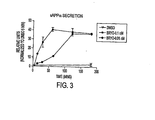
- the present invention has utilized concentrations of 0.1 nM of bryostatin-1 to cause a dramatic increase of sAPP secretion.
- Bryostatin-1 has been compared to a vehicle alone and to another PKC activator, benzolactam (BL), used at a concentration 10,000 times higher. Also bryostatin used at 0.01 nM still proved effective to increase sAPP secretion. (See Figure 1 ).
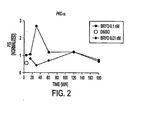
- PKC translocation shows that a measure of activation is maximal at 30 min, followed by a partial decline, which remains higher than basal translocation levels up to six hours.
- Macrocyclic lactones, and particularly bryostatin-1 is described in U.S. Patent 4,560,774 .
- Macrocyclic lactones and their derivatives are described elsewhere in the art for instance in U.S. Patent 6,187,568 , U.S. Patent 6,043,270 , U.S. Patent 5,393,897 , U.S. Patent 5,072,004 , U.S. Patent 5,196,447 , U.S. Patent 4,833,257 , and U.S. Patent 4,611,066 .
- the above patents describe various compounds and various uses for macrocyclic lactones including their use as an antiinflammatory or anti-tumor agent.
- bryostatin class compounds can be found in: Differential Regulation of Protein Kinase C Isozymes by Bryostatin 1 and Phorbol 12-Myristate 13-Acetate in NIH 3T3 Fibroblasts, Szallasi et al., Journal of Biological Chemistry, Vol. 269, No. 3, pp.
- Bryostatin 1 an Activator of Protein Kinase C, Zhang et al., Cancer Research 56, 802-808 (1996 ); Bryostatin 1, an activator of protein kinase C, inhibits tumor promotion by phorbol esters in SENCAR mouse skin, Hennings et al., Carcinogenesis vol. 8, no. 9, pp 1343-46 (1987 ); Phase II Trial of Bryostatin 1 in Patients with Relapse Low-Grade Non-Hodgkin's Lymphoma and Chronic Lymphocytic Leukemia, Varterasian et al., Clinical Cancer Research, Vol. 6, pp. 825-28 (2000 ); and Review Article: Chemistry and Clinical Biology of the Bryostatins, Mutter et al., Bioorganic & Medicinal Chemistry 8, pp. 1841-1860 (2000 ),
- Macrocyclic lactones including the bryostatin class, represent known compounds, originally derived from Bigula neritina L. While multiple uses for macrocyclic lactones, particularly the bryostatin class are known, the relationship between macrocyclic lactones and cognition enhancement was previously unknown.
- the examples of the compounds that may be used in the present invention include macrocyclic lactones (i.e. bryostatin class and neristatin class compounds). While specific embodiments of these compounds are described in the examples and detailed description, it should be understood that the compounds disclosed in the references and derivatives thereof could also be used for the present compositions and methods.
- macrocyclic lactones i.e. bryostatin class and neristatin class compounds. While specific embodiments of these compounds are described in the examples and detailed description, it should be understood that the compounds disclosed in the references and derivatives thereof could also be used for the present compositions and methods.
- macrocyclic lactone compounds and their derivatives are amenable to combinatorial synthetic techniques and thus libraries of the compounds can be generated to optimize pharmacological parameters, including, but not limited to efficacy and safety of the compositions. Additionally, these libraries can be assayed to determine those members that preferably modulate ⁇ -secretase and/or PKC.
- Combinatorial libraries high throughput screening of natural products and fermentation broths has resulted in the discovery of several new drugs.
- generation and screening of chemical diversity is being utilized extensively as a major technique for the discovery of lead compounds, and this is certainly a major fundamental advance in the area of drug discovery.
- combinatorial techniques provide for a valuable tool for the optimization of desired biological activity.
- the subject reactions readily lend themselves to the creation of combinatorial libraries of compounds for the screening of pharmaceutical, or other biological or medically-related activity or material-related qualities.
- a combinatorial library for the purposes of the present invention is a mixture of chemically related compounds, which may be screened together for a desired property; said libraries may be in solution or covalently linked to a solid support.
- the preparation of many related compounds in a single reaction greatly reduces and simplifies the number of screening processes that need to be carried out. Screening for the appropriate biological property may be done by conventional methods.
- the present invention also provides methods for determining the ability of one or more inventive compounds to bind to effectively modulate ⁇ -secretase and/or PKC.
- the present compounds can be administered by a variety of routes and in a variety of dosage forms including those for oral, rectal, parenteral (such as subcutaneous, intramuscular and intravenous), epidural, intrathecal, intra-articular, topical and boccal administration.
- parenteral such as subcutaneous, intramuscular and intravenous
- epidural such as subcutaneous, intramuscular and intravenous
- intrathecal such as intrathecal
- intra-articular intra-articular
- topical and boccal administration a variety of dosage forms
- the dose range for adult human beings will depend on a number of factors including the age, weight and condition of the patient and the administration route.
- fine powders or granules containing diluting, dispersing and/or surface-active agents may be presented in a draught, in water or a syrup, in capsules or sachets in the dry state, in a non-aqueous suspension wherein suspending agents may be included, or in a suspension in water or a syrup.
- suspending agents may be included, or in a suspension in water or a syrup.
- flavouring, preserving, suspending, thickening or emulsifying agents can be included.
- Other compounds which may be included by admixture are, for example, medically inert ingredients, e.g. solid and liquid diluent, such as lactose, dextrose, saccharose, cellulose, starch or calcium phosphate for tablets or capsules, olive oil or ethyl oleate for soft capsules and water or vegetable oil for suspensions or emulsions; lubricating agents such as silica, talc, stearic acid, magnesium or calcium stearate and/or polyethylene glycols; gelling agents such as colloidal clays; thickening agents such as gum tragacanth or sodium alginate, binding agents such as starches, Arabic gums, gelatin, methylcellulose, carboxymethylcellulose or polyvinylpyrrolidone; disintegrating agents such as starch, alginic acid, alginates or sodium starch glycolate; effervescing mixtures; dyestuff; sweeteners; wetting agents such as lecithin, polysorbates or
- Liquid dispersions for oral administration may be syrups, emulsions or suspensions.
- the syrups may contain as carrier, for example, saccharose or saccharose with glycerol and/or mannitol and/or sorbitol.
- a syrup for diabetic patient can contain as carriers only products, for example sorbitol, which do not metabolize to glucose or which metabolize only a very small amount to glucose.
- the suspensions and the emulsions may contain a carrier, for example a natural gum, agar, sodium alginate, pectin, methylcellulose, carboxymethylcellulose or polyvinyl alcohol.
- Suspension or solutions for intramuscular injection may contain, together with the active compound, a pharmaceutically acceptable carrier such as sterile water, olive oil, ethyl oleate, glycols such as propylene glycol and, if desired, a suitable amount of lidocaine hydrochloride.
- Solutions for intravenous injection or infusion may contain a carrier, for example, sterile water that is generally Water for Injection. Preferably, however, they may take the form of a sterile, aqueous, isotonic saline solution.
- the present compounds may be encapsulated within liposomes. The present compounds may also utilize other known active agent delivery systems.
- the present compounds may also be administered in pure form unassociated with other additives, in which case a capsule, sachet or tablet is the preferred dosage form.
- Tablets and other forms of presentation provided in discrete units conveniently contain a daily dose, or an appropriate fraction thereof, of one of the present compounds.
- units may contain from 5 mg to 500 mg, but more usually from 10 mg to 250 mg, of one of the present compounds.
- compositions of the invention can be demonstrated using standard pharmacological models that are known in the art.
- inventive compositions can be incorporated or encapsulated in a suitable polymer matrix or membrane for site-specific delivery, or can be functionalized with specific targeting agents, capable of effecting site specific delivery. These techniques, as well as other drug delivery techniques are well known in the art.
- Cultured skin fibroblasts were obtained from the Coriell Cell Repositories and grown using the general guidelines established for their culture with slight modifications (Cristofalo & Carptentier, 1988; Hirashima et al., 1996).
- the culture medium in which cells were grown was Dulbecco's modified Eagle's medium (GIBCO) supplemented with 10% calf serum (Biofluids, Inc.).
- Fibroblasts from control cell lines (AC), cases AG07141 and AG06241, and a familial AD (FAD) case (AG06848) were utilized.
- the pellets were re-suspended in the following homogenization buffer: 20 mM Tris-HCl, pH 7.5, 2 mM EDTA, 2mM EGTA, 5 mM DTT, 0.32 M sucrose, and protease inhibitor cocktail (Sigma). Hemogenates were obtained by sonication, and centrifuged at ⁇ 12,00g for 20 minutes, and the supernatants were used as the cytosolic fraction. The pellets were homogenized in the same buffer containing 1.0% Triton X-100, incubated in ice for 45 minutes, and centrifuged at ⁇ 12,000g for 20 minutes. The supernatant from this batch was used as the membranous fraction.
- the concentration of secreted APP was measured using conventional immunoblotting techniques, with minor modifications the protocol. Precipitated protein extracts each dish/treatment were loaded to freshly prepared 10% acrylamide Tris HCl minigels and separated SDPAGE. The volume of sample loaded was corrected for total cell protein per dish. Proteins were then electrophoretically transferred to PVDF membranes. Membranes were saturated with 5% non-fat dry milk to block non-specific binding. Blocked membranes were incubated overnight at 4°C with the commercially available antibody 6E10 (1:500), which recognizes sAPP-alpha in the conditioned medium (SENETEK).
- Bryostatin-1 elicits a powerful response, demonstrating the activation of PKC. It should be noted the activation of PKC is easily detectable 30 minutes after delivery, following a dose of only 0.1 nM of bryostatin-1.
- AD cell lines exhibit both defective PKC and impaired sAPP secretion (Bergamaschi et al., 1995; Govoni et al., 1996).
- ⁇ -amyloid has been shown to induce an AD-like K + channel defect in fibroblasts (Etcheberrigaray et al., 1994) and to block K + currents in cultured neurons (Good et al., 1996). Therefore, we suggest a mechanistic link such that an isozyme-specific PKC defect may lead to abnormal APP processing that, among other possible deleterious effects, alters K + channel function.
- Recent preliminary data also suggest that, perhaps in a vicious cyclical manner, ⁇ -amyloid in turn causes reductions of PKC (Favit et al., 1997).
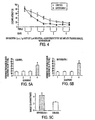
- Bryostatin is capable of being used at concentrations to improve cognition that are 300 to 300,000 times lower than the concentration used to treat tumors.
- the above example further shows that cognitive ability can be improved in non-diseased subjects as compared to other non-diseased subjects through the administration of bryostatin-1.
- PKC activators particularly byrostatin-1
- phase II studies for AD treatment/cognitive enhancement could be expedited.
- bryostatin-1's lipophilic nature provides increased blood brain barrier transport.
- the present invention would allow for intravenous, oral, intraventricullar, and other known methods for administration.
Landscapes
- Health & Medical Sciences (AREA)
- Public Health (AREA)
- General Health & Medical Sciences (AREA)
- Veterinary Medicine (AREA)
- Pharmacology & Pharmacy (AREA)
- Medicinal Chemistry (AREA)
- Animal Behavior & Ethology (AREA)
- Chemical & Material Sciences (AREA)
- Life Sciences & Earth Sciences (AREA)
- Organic Chemistry (AREA)
- Nuclear Medicine, Radiotherapy & Molecular Imaging (AREA)
- General Chemical & Material Sciences (AREA)
- Chemical Kinetics & Catalysis (AREA)
- Engineering & Computer Science (AREA)
- Bioinformatics & Cheminformatics (AREA)
- Epidemiology (AREA)
- Neurosurgery (AREA)
- Neurology (AREA)
- Biomedical Technology (AREA)
- Diabetes (AREA)
- Nutrition Science (AREA)
- Psychology (AREA)
- Obesity (AREA)
- Hematology (AREA)
- Physiology (AREA)
- Emergency Medicine (AREA)
- Hospice & Palliative Care (AREA)
- Psychiatry (AREA)
- Pain & Pain Management (AREA)
- Anesthesiology (AREA)
- Toxicology (AREA)
- Endocrinology (AREA)
- Pharmaceuticals Containing Other Organic And Inorganic Compounds (AREA)
- Medicines That Contain Protein Lipid Enzymes And Other Medicines (AREA)
- Acyclic And Carbocyclic Compounds In Medicinal Compositions (AREA)
Applications Claiming Priority (3)
| Application Number | Priority Date | Filing Date | Title |
|---|---|---|---|
| US36208002P | 2002-03-07 | 2002-03-07 | |
| US10/167,491 US6825229B2 (en) | 2002-03-07 | 2002-06-13 | Methods for Alzheimer's Disease treatment and cognitive enhancement |
| EP03716386.2A EP1490050B1 (de) | 2002-03-07 | 2003-03-07 | Bryostatin-1 zur verwendung in der alzheimer krankheitsbehandlung und kognitiven verbesserung |
Related Parent Applications (3)
| Application Number | Title | Priority Date | Filing Date |
|---|---|---|---|
| EP03716386.2A Division EP1490050B1 (de) | 2002-03-07 | 2003-03-07 | Bryostatin-1 zur verwendung in der alzheimer krankheitsbehandlung und kognitiven verbesserung |
| EP03716386.2A Division-Into EP1490050B1 (de) | 2002-03-07 | 2003-03-07 | Bryostatin-1 zur verwendung in der alzheimer krankheitsbehandlung und kognitiven verbesserung |
| EP03716386.2 Division | 2003-03-07 |
Publications (3)
| Publication Number | Publication Date |
|---|---|
| EP2172246A2 true EP2172246A2 (de) | 2010-04-07 |
| EP2172246A3 EP2172246A3 (de) | 2010-05-05 |
| EP2172246B1 EP2172246B1 (de) | 2017-08-30 |
Family
ID=27807411
Family Applications (2)
| Application Number | Title | Priority Date | Filing Date |
|---|---|---|---|
| EP10000734.3A Expired - Lifetime EP2172246B1 (de) | 2002-03-07 | 2003-03-07 | Bryostatine zur Behandlung von Alzheimer-Krankheit und kognitiver Verbesserung |
| EP03716386.2A Expired - Lifetime EP1490050B1 (de) | 2002-03-07 | 2003-03-07 | Bryostatin-1 zur verwendung in der alzheimer krankheitsbehandlung und kognitiven verbesserung |
Family Applications After (1)
| Application Number | Title | Priority Date | Filing Date |
|---|---|---|---|
| EP03716386.2A Expired - Lifetime EP1490050B1 (de) | 2002-03-07 | 2003-03-07 | Bryostatin-1 zur verwendung in der alzheimer krankheitsbehandlung und kognitiven verbesserung |
Country Status (7)
| Country | Link |
|---|---|
| US (4) | US6825229B2 (de) |
| EP (2) | EP2172246B1 (de) |
| JP (1) | JP2005527512A (de) |
| AU (1) | AU2003220096A1 (de) |
| CA (1) | CA2477973A1 (de) |
| ES (1) | ES2639578T3 (de) |
| WO (1) | WO2003075850A2 (de) |
Families Citing this family (33)
| Publication number | Priority date | Publication date | Assignee | Title |
|---|---|---|---|---|
| US6825229B2 (en) * | 2002-03-07 | 2004-11-30 | Blanchette Rockefeller Neurosciences Institute | Methods for Alzheimer's Disease treatment and cognitive enhancement |
| US20070037871A1 (en) * | 2002-07-02 | 2007-02-15 | Blanchette Rockefeller Neurosciences Instiute | Pkc activation as a means for enhancing sappalpha secretion and improving cognition using bryostatin type compounds |
| US20050065205A1 (en) * | 2002-03-07 | 2005-03-24 | Daniel Alkon | Methods for Alzheimer's disease treatment and cognitive enhance |
| US20080004332A1 (en) * | 2002-03-07 | 2008-01-03 | Alkon Daniel L | Methods for alzheimer's disease treatment and cognitive enhancement |
| CA2490494A1 (en) * | 2002-07-02 | 2004-01-15 | Blanchette Rockefeller Neurosciences Institute | Pkc activation as a means for enhancing sapp.alpha. secretion and improving cognition using bryostatin type compounds |
| TW201207390A (en) | 2004-05-18 | 2012-02-16 | Brni Neurosciences Inst | Method for screening agent for antidepressant activity |
| WO2006094673A2 (en) * | 2005-03-08 | 2006-09-14 | Ludwig-Maximilians-Universität München | Synergistic mixtures of c6- to c12-alkanedi0ls and tropolone (derivatives) |
| US20070054890A1 (en) * | 2005-07-29 | 2007-03-08 | Alkon Daniel L | Protein synthesis required for long-term memory is induced by PKC activation on days preceding associative learning |
| WO2007044094A1 (en) * | 2005-10-11 | 2007-04-19 | Blanchette Rockefeller Neurosciences Institute | Alzheimer's disease-specific alterations of the erk1/erk2 phosphorylation ratio as alzheimer's disease-specific molecular biomarkers (adsmb) |
| US20170319541A9 (en) * | 2006-07-28 | 2017-11-09 | Blanchette Rockefeller Neuroscience Institute | Methods of stimulating cellular growth, synaptic remodeling and consolidation of long-term memory |
| EP2762136A1 (de) * | 2006-07-28 | 2014-08-06 | Blanchette Rockefeller Neurosciences, Institute | Verfahren zur Stimulierung von Zellwachstum, synaptischer Umformung und Verfestigung des Langzeitgedächtnisses |
| ATE491705T1 (de) * | 2006-08-04 | 2011-01-15 | Toyama Chemical Co Ltd | Verstärker der aktivität von proteinkinase c, enthaltend ein alkyletherderivat oder ein salz davon |
| CN101848726A (zh) * | 2007-02-09 | 2010-09-29 | 布朗歇特洛克菲勒神经科学研究所 | 苔藓抑素、苔藓抑素类似物和其它相关物质对头部创伤引起的记忆缺陷和脑损伤的疗效 |
| KR101109797B1 (ko) * | 2007-03-09 | 2012-04-06 | 콸콤 인코포레이티드 | 비편향 트레이닝 시퀀스들을 사용한 직교 불균형 완화 |
| US9994585B2 (en) | 2007-12-31 | 2018-06-12 | Aphios Corporation | Transplantation therapies |
| WO2009099563A2 (en) * | 2008-02-05 | 2009-08-13 | Blanchette Rockefeller Neurosciences Institute | Combination of a nmda receptor channel blocker and a pkc activator for treatment of alzheimer's disease |
| WO2009129361A2 (en) | 2008-04-16 | 2009-10-22 | University Of Utah Research Foundation | Macrocyclic compounds and methods of making and using thereof |
| EP2669386A1 (de) | 2008-07-28 | 2013-12-04 | Blanchette Rockefeller Neurosciences Institute | Stimulierte ausgelöste genomische Profilmarker von Morbus Alzheimer |
| US20110023152A1 (en) * | 2008-12-04 | 2011-01-27 | Sigma-Aldrich Co. | Genome editing of cognition related genes in animals |
| ES2538208T3 (es) * | 2010-02-22 | 2015-06-18 | Blanchette Rockefeller Neurosciences Institute | Alteraciones específicas de la enfermedad de Alzheimer de los niveles de proteína quinasa C épsilon (PKC-épsilon) |
| EP2590642B1 (de) | 2010-07-08 | 2018-03-14 | Daniel L. Alkon | Pkc-aktivatoren und antikoagulans für einen therapieplan zur behandlung von apoplexie |
| JP6062362B2 (ja) * | 2010-08-19 | 2017-01-18 | ブランシェット・ロックフェラー・ニューロサイエンスィズ・インスティテュート | Pkc活性化剤を使用した、異常な樹状突起棘に関連した認知障害の治療 |
| WO2013071282A1 (en) | 2011-11-13 | 2013-05-16 | Blanchette Rockefeller Neurosciences Institute | Pkc activators and combinations thereof |
| US9034347B2 (en) * | 2011-12-19 | 2015-05-19 | Arphios Corporation | Drug delivery system and method for the treatment of neuro-degenerative disease |
| JP6579956B2 (ja) | 2012-11-28 | 2019-09-25 | アフィオス コーポレーション | 神経変性疾患および他の疾患の治療のための併用治療薬および方法 |
| WO2014145316A1 (en) | 2013-03-15 | 2014-09-18 | Alkon Daniel L | Methods for identifying neuroprotective pkc activators |
| US20180217163A1 (en) * | 2015-05-11 | 2018-08-02 | Daniel L. Alkon | Treatment of neurodegenerative conditions using pkc activators after determining the presence of the apoe4 allele |
| US20180256537A1 (en) | 2015-09-23 | 2018-09-13 | Tapan K. Khan | Methods for survival and rejuvenation of dermal fibroblasts using pkc activators |
| WO2017062924A1 (en) | 2015-10-08 | 2017-04-13 | Alkon Daniel L | Dosing regimens of pkc activators |
| JP2019514961A (ja) * | 2016-05-04 | 2019-06-06 | ニューロトロープ バイオサイエンス インコーポレイテッド | レット症候群を処置するための方法及び組成物 |
| US20190350898A1 (en) * | 2018-05-18 | 2019-11-21 | Neurotrope Bioscience, Inc. | Methods and compositions for treatment of alzheimer's disease |
| US12297244B2 (en) | 2019-06-05 | 2025-05-13 | Rensselaer Polytechnic Institute | Systems and methods for inhibiting γ-secretase production of amyloid-β peptides |
| JP2024501636A (ja) * | 2020-12-16 | 2024-01-15 | シナプトジェニクス,インコーポレイテッド | Pkc活性化剤を使用した筋萎縮性側索硬化症の治療 |
Citations (27)
| Publication number | Priority date | Publication date | Assignee | Title |
|---|---|---|---|---|
| US4560774A (en) | 1982-11-17 | 1985-12-24 | Arizona State University | Macrocyclic lactones |
| US4611066A (en) | 1984-08-10 | 1986-09-09 | Arizona State University | Bryostatins 4 to 8 |
| US4833257A (en) | 1986-07-28 | 1989-05-23 | Arizona Board Of Regents | Compositions of matter and methods of using same |
| WO1991007087A1 (en) | 1989-11-13 | 1991-05-30 | Affymax Technologies N.V. | Spatially-addressable immobilization of anti-ligands on surfaces |
| US5072004A (en) | 1990-12-31 | 1991-12-10 | Arizona Board Of Regents Acting On Behalf Of Arizona State University | Synthetic conversion of bryostatin 2 into bryostatin 1 |
| WO1992010092A1 (en) | 1990-12-06 | 1992-06-25 | Affymax Technologies N.V. | Very large scale immobilized polymer synthesis |
| US5196447A (en) | 1991-08-08 | 1993-03-23 | Arizona Board Of Regents, A Body Corporate Of The State Of Arizona, Acting On Behalf Of Arizona State University | Neristatin 1 |
| WO1993009668A1 (en) | 1991-11-22 | 1993-05-27 | Affymax Technology N.V. | Combinatorial strategies for polymer synthesis |
| WO1993020242A1 (en) | 1992-03-30 | 1993-10-14 | The Scripps Research Institute | Encoded combinatorial chemical libraries |
| US5288514A (en) | 1992-09-14 | 1994-02-22 | The Regents Of The University Of California | Solid phase and combinatorial synthesis of benzodiazepine compounds on a solid support |
| WO1994008051A1 (en) | 1992-10-01 | 1994-04-14 | The Trustees Of Columbia University In The City Of New York | Complex combinatorial chemical libraries encoded with tags |
| US5359115A (en) | 1992-03-26 | 1994-10-25 | Affymax Technologies, N.V. | Methods for the synthesis of phosphonate esters |
| US5362899A (en) | 1993-09-09 | 1994-11-08 | Affymax Technologies, N.V. | Chiral synthesis of alpha-aminophosponic acids |
| US5393897A (en) | 1993-07-02 | 1995-02-28 | Arizona Board Of Regents Acting On Behalf Of Arizona State University | Isolation and structure of spongistatins 5,7,8 and 9 |
| US5580748A (en) | 1993-05-03 | 1996-12-03 | The United States Of America As Represented By The Department Of Health And Human Services | Diagnostic tests for alzheimers disease |
| US5652232A (en) | 1993-09-30 | 1997-07-29 | Shionogi & Co., Ltd. | Benzolactam derivatives |
| WO1997043268A1 (en) | 1996-05-10 | 1997-11-20 | Georgetown University | 8-hydrocarbyl substituted benzodizocine derivatives, their preparation and their use as protein kinase c (=pkc) modulators |
| US5891870A (en) | 1986-06-11 | 1999-04-06 | Procyon Pharmaceuticals, Inc. | Protein kinase C modulators Q |
| US5891906A (en) | 1986-06-11 | 1999-04-06 | Procyon Pharmaceuticals, Inc. | Polyacetate-derived phorboids having anti-inflammatory and other uses |
| US5955501A (en) | 1986-06-11 | 1999-09-21 | Procyon Pharmaceuticals, Inc. | Protein kinase C modulators O |
| US5962498A (en) | 1986-06-11 | 1999-10-05 | Procyon Pharmaceuticals, Inc. | Protein kinase C modulators. C. indolactam structural-types with anti-inflammatory activity |
| US5962504A (en) | 1997-09-08 | 1999-10-05 | Georgetown University | Substituted 2-pyrrolidinone activators of PKC |
| US6043270A (en) | 1986-06-11 | 2000-03-28 | Procyon Pharmaceuticals, Inc. | Protein kinase C modulators V |
| US6080784A (en) | 1986-06-11 | 2000-06-27 | Procyon Pharmaceuticals, Inc. | Protein kinase C modulators N |
| US6080582A (en) | 1993-05-03 | 2000-06-27 | The United States Of America As Represented By The Department Of Health And Human Services | Cell tests for Alzheimer's disease |
| US6187568B1 (en) | 1994-11-10 | 2001-02-13 | Pfizer Inc | Macrocyclic lactone compounds and their production process |
| US9708141B2 (en) | 2014-07-10 | 2017-07-18 | Konica Minolta, Inc. | Sheet transport device and image forming system |
Family Cites Families (45)
| Publication number | Priority date | Publication date | Assignee | Title |
|---|---|---|---|---|
| FI840260L (fi) | 1983-01-27 | 1984-07-28 | Ciba Geigy Ag | Pyrrolidinonderivat och foerfarande foer deras framstaellning. |
| ATE97321T1 (de) | 1988-01-13 | 1993-12-15 | Univ Arizona State | Immunmodulierende bryostatine. |
| US4833139A (en) | 1988-01-25 | 1989-05-23 | Hoechst-Roussel Pharmaceuticals, Inc. | Enhancing cholinergic activity with 5-substituted 1-[4-(1-pyrrolidinyl)-2-butynyl]-2-pyrrolidinones and related compounds |
| DE3827974A1 (de) | 1988-08-18 | 1990-02-22 | Boehringer Mannheim Gmbh | Kombinationspraeparate von proteinkinase-c-inhibitoren mit lipiden, lipid-analoga, cytostatica oder inhibitoren von phospholipasen |
| US4994472A (en) | 1989-08-02 | 1991-02-19 | Hoechst-Roussel Pharmaceuticals Incorporated | 1-(pyridinylamino)-2-pyrrolidinones as pain relievers |
| JP2578001B2 (ja) * | 1989-12-11 | 1997-02-05 | 明治製菓株式会社 | 抗痴呆薬 |
| US5981165A (en) | 1991-07-08 | 1999-11-09 | Neurospheres Holdings Ltd. | In vitro induction of dopaminergic cells |
| JPH06279311A (ja) * | 1993-03-26 | 1994-10-04 | Sagami Chem Res Center | プロテインキナーゼcアイソザイムの活性化剤 |
| US5545636A (en) | 1993-12-23 | 1996-08-13 | Eli Lilly And Company | Protein kinase C inhibitors |
| US5430053A (en) * | 1994-04-19 | 1995-07-04 | Arizona Board Of Regents Acting On Behalf Of Arizona State University | Isolation and structure of dictyostatin 1 |
| US5625232A (en) | 1994-07-15 | 1997-04-29 | Texas Instruments Incorporated | Reliability of metal leads in high speed LSI semiconductors using dummy vias |
| GB9509572D0 (en) * | 1995-05-11 | 1995-07-05 | Cancer Res Campaign Tech | Cancer therapy |
| GB9620390D0 (en) * | 1996-09-30 | 1996-11-13 | Eisai London Res Lab Ltd | Substances and their uses |
| US6458373B1 (en) | 1997-01-07 | 2002-10-01 | Sonus Pharmaceuticals, Inc. | Emulsion vehicle for poorly soluble drugs |
| GB9701675D0 (en) | 1997-01-28 | 1997-03-19 | Bridgeman Keith | Composition for the treatment of parkinson's disease |
| US5981168A (en) | 1998-05-15 | 1999-11-09 | The University Of British Columbia | Method and composition for modulating amyloidosis |
| US6048891A (en) | 1998-12-17 | 2000-04-11 | Loma Linda University Medical Center | Use of γ-tocopherol and its oxidative metabolite LLU-α in the treatment of natriuretic disease |
| DE19943198A1 (de) | 1999-09-09 | 2001-03-15 | Meyer Lucas Gmbh & Co | Therapeutikum zur Behebung zentralnervöser Funktionsstörungen |
| CA2393026A1 (en) | 1999-11-30 | 2001-06-07 | Paul A. Wender | Bryostatin analogues, synthetic methods and uses |
| JP2001240581A (ja) * | 2000-02-29 | 2001-09-04 | Senju Pharmaceut Co Ltd | アミノベンズアミド誘導体およびその用途 |
| WO2001068137A2 (en) | 2000-03-14 | 2001-09-20 | Brown University Research Foundation | Compositions for regulating memory consolidation |
| US20040019018A1 (en) * | 2000-04-28 | 2004-01-29 | Lixin Qlao | Rigid pyrrolidone modulators of pkc |
| AUPQ801700A0 (en) | 2000-06-07 | 2000-06-29 | Peplin Research Pty Ltd | Enzyme and viral activation |
| US20030050302A1 (en) * | 2000-08-31 | 2003-03-13 | Neurologic, Inc. | Treatment of conditions associated with amyloid processing using PKC activators |
| ATE327747T1 (de) | 2000-10-09 | 2006-06-15 | Matthias Dr Med Rath | Therapeutische kombination des ascorbats mit lysin und arginin für verhinderung und behandlung des krebses |
| US6689385B2 (en) | 2000-11-03 | 2004-02-10 | Chronorx Llc | Formulations for the treatment of insulin resistance and type 2 diabetes mellitus |
| AUPR215700A0 (en) | 2000-12-19 | 2001-01-25 | Fujisawa Pharmaceutical Co., Ltd. | Carboxylic acid compound having cyclopropane ring |
| IL157465A0 (en) | 2001-03-01 | 2004-03-28 | Pfizer Products Inc Pfizer Pro | Use of gabaa inverse agonists in combination with nicotine receptor partial agonists, estrogen, selective estrogen modulators, or vitamin e for the treatment of cognitive disorders |
| WO2002083877A1 (en) | 2001-04-11 | 2002-10-24 | Stem Cell Therapeutics Inc. | Production of tyrosine hydroxylase positive neurons |
| EP1385938A1 (de) | 2001-04-23 | 2004-02-04 | Nsgene A/S | Methode und kulturmedium zur herstellung von neuronalenzellen ausdrücken tyrosin hydroxylase |
| WO2002087423A2 (en) | 2001-05-02 | 2002-11-07 | Blanchette Rockefeller Neurosciences Institute | Carbonic anhydrase activators for enhancing learning and memory |
| CA2401452A1 (en) | 2001-09-04 | 2003-03-04 | Uri Saragovi | Combination of antioxidant substances for the treatment of alzheimer's disease |
| JP4568464B2 (ja) | 2001-11-07 | 2010-10-27 | 雪印乳業株式会社 | 記憶障害予防治療剤 |
| US6821979B2 (en) | 2002-03-07 | 2004-11-23 | Blanchette Rockefeller Neurosciences Institute | Synergistic enhancement of cognitive ability |
| US20050065205A1 (en) * | 2002-03-07 | 2005-03-24 | Daniel Alkon | Methods for Alzheimer's disease treatment and cognitive enhance |
| US6825229B2 (en) | 2002-03-07 | 2004-11-30 | Blanchette Rockefeller Neurosciences Institute | Methods for Alzheimer's Disease treatment and cognitive enhancement |
| CA2490494A1 (en) * | 2002-07-02 | 2004-01-15 | Blanchette Rockefeller Neurosciences Institute | Pkc activation as a means for enhancing sapp.alpha. secretion and improving cognition using bryostatin type compounds |
| US20040229292A1 (en) | 2002-11-26 | 2004-11-18 | Sebastiano Cavallaro | Use of FGF-18 in the diagnosis and treatment of memory disorders |
| US7803400B2 (en) | 2002-12-03 | 2010-09-28 | Blanchette Rockefeller Neurosciences Institute | Artificial low-density lipoprotein carriers for transport of substances across the blood-brain barrier |
| EA008864B1 (ru) | 2003-09-30 | 2007-08-31 | Нью Ривер Фармасьютикалз Инк. | Фармацевтические композиции для предотвращения передозировки или неправильного употребления лекарственных средств |
| TW201207390A (en) | 2004-05-18 | 2012-02-16 | Brni Neurosciences Inst | Method for screening agent for antidepressant activity |
| US20070054890A1 (en) | 2005-07-29 | 2007-03-08 | Alkon Daniel L | Protein synthesis required for long-term memory is induced by PKC activation on days preceding associative learning |
| WO2007044094A1 (en) | 2005-10-11 | 2007-04-19 | Blanchette Rockefeller Neurosciences Institute | Alzheimer's disease-specific alterations of the erk1/erk2 phosphorylation ratio as alzheimer's disease-specific molecular biomarkers (adsmb) |
| EP2762136A1 (de) | 2006-07-28 | 2014-08-06 | Blanchette Rockefeller Neurosciences, Institute | Verfahren zur Stimulierung von Zellwachstum, synaptischer Umformung und Verfestigung des Langzeitgedächtnisses |
| CN101848726A (zh) | 2007-02-09 | 2010-09-29 | 布朗歇特洛克菲勒神经科学研究所 | 苔藓抑素、苔藓抑素类似物和其它相关物质对头部创伤引起的记忆缺陷和脑损伤的疗效 |
-
2002
- 2002-06-13 US US10/167,491 patent/US6825229B2/en not_active Expired - Lifetime
-
2003
- 2003-03-07 EP EP10000734.3A patent/EP2172246B1/de not_active Expired - Lifetime
- 2003-03-07 WO PCT/US2003/007101 patent/WO2003075850A2/en not_active Ceased
- 2003-03-07 JP JP2003574126A patent/JP2005527512A/ja not_active Withdrawn
- 2003-03-07 ES ES10000734.3T patent/ES2639578T3/es not_active Expired - Lifetime
- 2003-03-07 EP EP03716386.2A patent/EP1490050B1/de not_active Expired - Lifetime
- 2003-03-07 CA CA002477973A patent/CA2477973A1/en not_active Abandoned
- 2003-03-07 AU AU2003220096A patent/AU2003220096A1/en not_active Abandoned
-
2004
- 2004-09-03 US US10/933,536 patent/US20050037984A1/en not_active Abandoned
-
2013
- 2013-03-27 US US13/851,161 patent/US9539235B2/en not_active Expired - Fee Related
-
2015
- 2015-11-02 US US14/929,731 patent/US9446020B2/en not_active Expired - Fee Related
Patent Citations (27)
| Publication number | Priority date | Publication date | Assignee | Title |
|---|---|---|---|---|
| US4560774A (en) | 1982-11-17 | 1985-12-24 | Arizona State University | Macrocyclic lactones |
| US4611066A (en) | 1984-08-10 | 1986-09-09 | Arizona State University | Bryostatins 4 to 8 |
| US5891870A (en) | 1986-06-11 | 1999-04-06 | Procyon Pharmaceuticals, Inc. | Protein kinase C modulators Q |
| US6080784A (en) | 1986-06-11 | 2000-06-27 | Procyon Pharmaceuticals, Inc. | Protein kinase C modulators N |
| US6043270A (en) | 1986-06-11 | 2000-03-28 | Procyon Pharmaceuticals, Inc. | Protein kinase C modulators V |
| US5962498A (en) | 1986-06-11 | 1999-10-05 | Procyon Pharmaceuticals, Inc. | Protein kinase C modulators. C. indolactam structural-types with anti-inflammatory activity |
| US5955501A (en) | 1986-06-11 | 1999-09-21 | Procyon Pharmaceuticals, Inc. | Protein kinase C modulators O |
| US5891906A (en) | 1986-06-11 | 1999-04-06 | Procyon Pharmaceuticals, Inc. | Polyacetate-derived phorboids having anti-inflammatory and other uses |
| US4833257A (en) | 1986-07-28 | 1989-05-23 | Arizona Board Of Regents | Compositions of matter and methods of using same |
| WO1991007087A1 (en) | 1989-11-13 | 1991-05-30 | Affymax Technologies N.V. | Spatially-addressable immobilization of anti-ligands on surfaces |
| WO1992010092A1 (en) | 1990-12-06 | 1992-06-25 | Affymax Technologies N.V. | Very large scale immobilized polymer synthesis |
| US5072004A (en) | 1990-12-31 | 1991-12-10 | Arizona Board Of Regents Acting On Behalf Of Arizona State University | Synthetic conversion of bryostatin 2 into bryostatin 1 |
| US5196447A (en) | 1991-08-08 | 1993-03-23 | Arizona Board Of Regents, A Body Corporate Of The State Of Arizona, Acting On Behalf Of Arizona State University | Neristatin 1 |
| WO1993009668A1 (en) | 1991-11-22 | 1993-05-27 | Affymax Technology N.V. | Combinatorial strategies for polymer synthesis |
| US5359115A (en) | 1992-03-26 | 1994-10-25 | Affymax Technologies, N.V. | Methods for the synthesis of phosphonate esters |
| WO1993020242A1 (en) | 1992-03-30 | 1993-10-14 | The Scripps Research Institute | Encoded combinatorial chemical libraries |
| US5288514A (en) | 1992-09-14 | 1994-02-22 | The Regents Of The University Of California | Solid phase and combinatorial synthesis of benzodiazepine compounds on a solid support |
| WO1994008051A1 (en) | 1992-10-01 | 1994-04-14 | The Trustees Of Columbia University In The City Of New York | Complex combinatorial chemical libraries encoded with tags |
| US5580748A (en) | 1993-05-03 | 1996-12-03 | The United States Of America As Represented By The Department Of Health And Human Services | Diagnostic tests for alzheimers disease |
| US6080582A (en) | 1993-05-03 | 2000-06-27 | The United States Of America As Represented By The Department Of Health And Human Services | Cell tests for Alzheimer's disease |
| US5393897A (en) | 1993-07-02 | 1995-02-28 | Arizona Board Of Regents Acting On Behalf Of Arizona State University | Isolation and structure of spongistatins 5,7,8 and 9 |
| US5362899A (en) | 1993-09-09 | 1994-11-08 | Affymax Technologies, N.V. | Chiral synthesis of alpha-aminophosponic acids |
| US5652232A (en) | 1993-09-30 | 1997-07-29 | Shionogi & Co., Ltd. | Benzolactam derivatives |
| US6187568B1 (en) | 1994-11-10 | 2001-02-13 | Pfizer Inc | Macrocyclic lactone compounds and their production process |
| WO1997043268A1 (en) | 1996-05-10 | 1997-11-20 | Georgetown University | 8-hydrocarbyl substituted benzodizocine derivatives, their preparation and their use as protein kinase c (=pkc) modulators |
| US5962504A (en) | 1997-09-08 | 1999-10-05 | Georgetown University | Substituted 2-pyrrolidinone activators of PKC |
| US9708141B2 (en) | 2014-07-10 | 2017-07-18 | Konica Minolta, Inc. | Sheet transport device and image forming system |
Non-Patent Citations (36)
| Title |
|---|
| ALKON, D.L. ET AL., BEHAVIORAL AND NEURAL BIOLOGY, vol. 44, 1985, pages 278 |
| ALKON, D.L., SCIENCE, vol. 226, 1984, pages 1037 |
| ASHENDEL ET AL., CANCER RES., vol. 43, 1983, pages 4333 |
| BARNES, J.M. ET AL., BR. J. PHARMACOL., vol. 98, 1989, pages 693P |
| BARNES, J.M. ET AL., PHARMACOL. BIOCHEM. BEHAV., vol. 35, 1990, pages 955 - 962 |
| BLOHE ET AL., CANCER METAST. REV., vol. 13, 1994, pages 411 |
| BLONDELLE ET AL., TRENDSANAL. CHEM., vol. 14, 1995, pages 83 |
| CHEN ET AL., JACSI, vol. 1 6, 1994, pages 266 1 |
| COLLIN, C. ET AL., BIOPHYSICS JOURNAL, vol. 55, 1988, pages 955 |
| CONNOLLY, G.: "Fibroblast models of neurological disorders: fluorescence measurement studies", REVIEW, TIPS COL., vol. 19, 1998, pages 171 - 77, XP004121094, DOI: doi:10.1016/S0165-6147(98)01202-4 |
| COSTALL, B. ET AL., NEUROPHARMACOL, vol. 26, 1987, pages 195 - 200 |
| COSTALL, B. ET AL., PHARMACOL. BIOCHEM. BEHAV., vol. 32, 1989, pages 777 - 785 |
| CRAWLEY, J. N., PHARMACOL. BIOCHEM. BEHAV., vol. 15, 1981, pages 695 - 699 |
| ETCHEBERRIGARAY ET AL.: "Calcium responses are altered in fibroblasts from Alzheimer's patients and presymptomatic PS1 carriers: a potential tool for early diagnosis", ALZHEIMER'S REPORTS, vol. 3, no. 5-6, 2000, pages 305 - 312 |
| ETCHEBERRIGARAY, R. ET AL., PROCEEDING OF THE NATIONAL ACADEMY OF SCIENCE, vol. 89, 1992, pages 7184 |
| GLAZER: "Protein Kinase C.", 1994, OXFORD U. PRESS, pages: 171 - 198 |
| HARDY, J.: "Molecular genetics of Alzheimer's disease", ACTA NEUROL SCAND: SUPPLEMENT, vol. 165, 1996, pages 13 - 17 |
| HENNINGS ET AL., CARCINOGENESIS, vol. 8, no. 9, 1987, pages 1343 - 46 |
| HOUSE ET AL., SCIENCE, vol. 238, 1987, pages 1726 |
| HUG ET AL., BIOCHEM J., vol. 291, 1993, pages 329 |
| IBARRETA ET AL.: "Benzolactam (BL) enhances sAPP secretion in fibroblasts and in PC12 cells", NEUROREPORT, vol. 10, no. 5-6, 1999, pages 1034 - 40 |
| KATZMAN, R., NEW ENGLAND JOURNAL OF MEDICINE, vol. 314, 1986, pages 964 |
| KERR ET AL., JACS I, vol. 1 5, 1993, pages 252 |
| KIKKAWA ET AL., ANN. REV. BIOCHEM., vol. 58, 1989, pages 31 |
| KIKKAWA ET AL., J. BIOL. CHEM., vol. 257, 1982, pages 13341 |
| MCKHANN ET AL., NEUROLOGY, vol. 34, 1986, pages 939 - 944 |
| MUTTER ET AL., BIOORGANIC & MEDICINAL CHEMISTRY, vol. 8, 2000, pages 1841 - 1860 |
| NISHIZUKA, CANCER, vol. 10, 1989, pages 1892 |
| SANCHEZ-ANDRES, J.V.; ALKON, D.L., JOURNAL OF NEUROBIOLOGY, vol. 65, 1991, pages 796 |
| SELKOE, D., ALZHEIMER'S DISEASE: GENES, PROTEINS, AND THERAPY, PHYSIOLOGICAL REVIEWS, vol. 81, no. 2, 2001 |
| ST. GEORGE-HYSLOP, P. H. ET AL., SCIENCE, vol. 235, 1987, pages 885 |
| SZALLASI ET AL., JOURNAL OF BIOLOGICAL CHEMISTRY, vol. 269, no. 3, 1994, pages 2118 - 24 |
| TANZI; RUDOLPH ET AL.: "The Gene Defects Responsible for Familial Alzheimer's Disease", NEUROBIOLOGY OF DISEASE, vol. 3, 1996, pages 159 - 168 |
| VARTERASIAN ET AL., CLINICAL CANCER RESEARCH, vol. 6, 2000, pages 825 - 28 |
| WEBB ET AL.: "Protein kinase C isozymes: a review of their structure, regulation and role in regulating airways smooth muscle tone and mitogenesis", BRITISH JOURNAL OF PHARMACOLOGY, vol. 130, 2000, pages 1433 - 52 |
| ZHANG ET AL., CANCER RESEARCH, vol. 56, 1996, pages 802 - 808 |
Also Published As
| Publication number | Publication date |
|---|---|
| US20160051509A1 (en) | 2016-02-25 |
| US6825229B2 (en) | 2004-11-30 |
| EP1490050A4 (de) | 2008-07-30 |
| AU2003220096A1 (en) | 2003-09-22 |
| US9446020B2 (en) | 2016-09-20 |
| US20030171356A1 (en) | 2003-09-11 |
| AU2003220096A8 (en) | 2003-09-22 |
| US20130281522A1 (en) | 2013-10-24 |
| WO2003075850A3 (en) | 2004-01-08 |
| EP2172246A3 (de) | 2010-05-05 |
| WO2003075850A2 (en) | 2003-09-18 |
| US20050037984A1 (en) | 2005-02-17 |
| WO2003075850A9 (en) | 2004-02-19 |
| JP2005527512A (ja) | 2005-09-15 |
| ES2639578T3 (es) | 2017-10-27 |
| CA2477973A1 (en) | 2003-09-18 |
| EP2172246B1 (de) | 2017-08-30 |
| US9539235B2 (en) | 2017-01-10 |
| EP1490050A2 (de) | 2004-12-29 |
| EP1490050B1 (de) | 2019-01-30 |
Similar Documents
| Publication | Publication Date | Title |
|---|---|---|
| US9446020B2 (en) | Methods for Alzheimer'S disease treatment and cognitive enhancement | |
| US9066923B2 (en) | Methods for Alzheimer's disease treatment and cognitive enhancement | |
| US20130072550A1 (en) | PKC ACTIVATION AS A MEANS FOR ENHANCING sAPPalpha SECRETION AND IMROVING COGNITION USING BRYOSTATIN TYPE COMPOUNDS | |
| US20110245307A1 (en) | Methods for Alzheimer's Disease Treatment and Cognitive Enhancement | |
| JP2012041348A (ja) | sAPPα分泌を増強させる及びブリオスタチン型化合物を用いて認知を改善させるための手段としてのPKC活性化 | |
| US20130231384A1 (en) | Methods of stimulating cellular growth, synaptic remodeling and consolidation of long-term memory | |
| US20090030055A1 (en) | PKC activation as a means for enhancing sAPPALPHA secretion and improving cognition using bryostatin type compounds | |
| US20070037871A1 (en) | Pkc activation as a means for enhancing sappalpha secretion and improving cognition using bryostatin type compounds |
Legal Events
| Date | Code | Title | Description |
|---|---|---|---|
| PUAI | Public reference made under article 153(3) epc to a published international application that has entered the european phase |
Free format text: ORIGINAL CODE: 0009012 |
|
| PUAL | Search report despatched |
Free format text: ORIGINAL CODE: 0009013 |
|
| AC | Divisional application: reference to earlier application |
Ref document number: 1490050 Country of ref document: EP Kind code of ref document: P |
|
| AK | Designated contracting states |
Kind code of ref document: A2 Designated state(s): AT BE BG CH CY CZ DE DK EE ES FI FR GB GR HU IE IT LI LU MC NL PT RO SE SI SK TR |
|
| AK | Designated contracting states |
Kind code of ref document: A3 Designated state(s): AT BE BG CH CY CZ DE DK EE ES FI FR GB GR HU IE IT LI LU MC NL PT RO SE SI SK TR |
|
| RAP1 | Party data changed (applicant data changed or rights of an application transferred) |
Owner name: BLANCHETTE ROCKEFELLER NEUROSCIENCES, INSTITUTE |
|
| RIN1 | Information on inventor provided before grant (corrected) |
Inventor name: ETCHEBERRIGARAY, RENE Inventor name: ALKON, DANIEL L. |
|
| RIN1 | Information on inventor provided before grant (corrected) |
Inventor name: ALKON, DANIEL L. Inventor name: ETCHEBERRIGARAY, RENE |
|
| 17P | Request for examination filed |
Effective date: 20101011 |
|
| 17Q | First examination report despatched |
Effective date: 20101214 |
|
| 17Q | First examination report despatched |
Effective date: 20121004 |
|
| REG | Reference to a national code |
Ref country code: DE Ref legal event code: R079 Ref document number: 60350572 Country of ref document: DE Free format text: PREVIOUS MAIN CLASS: A61P0025000000 Ipc: A61K0031366000 |
|
| GRAP | Despatch of communication of intention to grant a patent |
Free format text: ORIGINAL CODE: EPIDOSNIGR1 |
|
| STAA | Information on the status of an ep patent application or granted ep patent |
Free format text: STATUS: GRANT OF PATENT IS INTENDED |
|
| INTG | Intention to grant announced |
Effective date: 20170316 |
|
| RIC1 | Information provided on ipc code assigned before grant |
Ipc: A61P 25/00 20060101ALI20170308BHEP Ipc: A61P 25/28 20060101ALI20170308BHEP Ipc: A61K 31/366 20060101AFI20170308BHEP Ipc: A61P 25/16 20060101ALI20170308BHEP |
|
| GRAS | Grant fee paid |
Free format text: ORIGINAL CODE: EPIDOSNIGR3 |
|
| GRAA | (expected) grant |
Free format text: ORIGINAL CODE: 0009210 |
|
| STAA | Information on the status of an ep patent application or granted ep patent |
Free format text: STATUS: THE PATENT HAS BEEN GRANTED |
|
| AC | Divisional application: reference to earlier application |
Ref document number: 1490050 Country of ref document: EP Kind code of ref document: P |
|
| AK | Designated contracting states |
Kind code of ref document: B1 Designated state(s): AT BE BG CH CY CZ DE DK EE ES FI FR GB GR HU IE IT LI LU MC NL PT RO SE SI SK TR |
|
| REG | Reference to a national code |
Ref country code: GB Ref legal event code: FG4D |
|
| REG | Reference to a national code |
Ref country code: CH Ref legal event code: EP |
|
| REG | Reference to a national code |
Ref country code: AT Ref legal event code: REF Ref document number: 922891 Country of ref document: AT Kind code of ref document: T Effective date: 20170915 |
|
| REG | Reference to a national code |
Ref country code: NL Ref legal event code: FP Ref country code: IE Ref legal event code: FG4D |
|
| REG | Reference to a national code |
Ref country code: SE Ref legal event code: TRGR |
|
| REG | Reference to a national code |
Ref country code: DE Ref legal event code: R096 Ref document number: 60350572 Country of ref document: DE |
|
| REG | Reference to a national code |
Ref country code: ES Ref legal event code: FG2A Ref document number: 2639578 Country of ref document: ES Kind code of ref document: T3 Effective date: 20171027 |
|
| REG | Reference to a national code |
Ref country code: AT Ref legal event code: MK05 Ref document number: 922891 Country of ref document: AT Kind code of ref document: T Effective date: 20170830 |
|
| PG25 | Lapsed in a contracting state [announced via postgrant information from national office to epo] |
Ref country code: AT Free format text: LAPSE BECAUSE OF FAILURE TO SUBMIT A TRANSLATION OF THE DESCRIPTION OR TO PAY THE FEE WITHIN THE PRESCRIBED TIME-LIMIT Effective date: 20170830 Ref country code: FI Free format text: LAPSE BECAUSE OF FAILURE TO SUBMIT A TRANSLATION OF THE DESCRIPTION OR TO PAY THE FEE WITHIN THE PRESCRIBED TIME-LIMIT Effective date: 20170830 |
|
| PG25 | Lapsed in a contracting state [announced via postgrant information from national office to epo] |
Ref country code: BG Free format text: LAPSE BECAUSE OF FAILURE TO SUBMIT A TRANSLATION OF THE DESCRIPTION OR TO PAY THE FEE WITHIN THE PRESCRIBED TIME-LIMIT Effective date: 20171130 Ref country code: GR Free format text: LAPSE BECAUSE OF FAILURE TO SUBMIT A TRANSLATION OF THE DESCRIPTION OR TO PAY THE FEE WITHIN THE PRESCRIBED TIME-LIMIT Effective date: 20171201 |
|
| REG | Reference to a national code |
Ref country code: FR Ref legal event code: PLFP Year of fee payment: 16 |
|
| PG25 | Lapsed in a contracting state [announced via postgrant information from national office to epo] |
Ref country code: CZ Free format text: LAPSE BECAUSE OF FAILURE TO SUBMIT A TRANSLATION OF THE DESCRIPTION OR TO PAY THE FEE WITHIN THE PRESCRIBED TIME-LIMIT Effective date: 20170830 Ref country code: DK Free format text: LAPSE BECAUSE OF FAILURE TO SUBMIT A TRANSLATION OF THE DESCRIPTION OR TO PAY THE FEE WITHIN THE PRESCRIBED TIME-LIMIT Effective date: 20170830 Ref country code: RO Free format text: LAPSE BECAUSE OF FAILURE TO SUBMIT A TRANSLATION OF THE DESCRIPTION OR TO PAY THE FEE WITHIN THE PRESCRIBED TIME-LIMIT Effective date: 20170830 |
|
| PG25 | Lapsed in a contracting state [announced via postgrant information from national office to epo] |
Ref country code: SK Free format text: LAPSE BECAUSE OF FAILURE TO SUBMIT A TRANSLATION OF THE DESCRIPTION OR TO PAY THE FEE WITHIN THE PRESCRIBED TIME-LIMIT Effective date: 20170830 Ref country code: EE Free format text: LAPSE BECAUSE OF FAILURE TO SUBMIT A TRANSLATION OF THE DESCRIPTION OR TO PAY THE FEE WITHIN THE PRESCRIBED TIME-LIMIT Effective date: 20170830 |
|
| REG | Reference to a national code |
Ref country code: DE Ref legal event code: R097 Ref document number: 60350572 Country of ref document: DE |
|
| PLBE | No opposition filed within time limit |
Free format text: ORIGINAL CODE: 0009261 |
|
| STAA | Information on the status of an ep patent application or granted ep patent |
Free format text: STATUS: NO OPPOSITION FILED WITHIN TIME LIMIT |
|
| 26N | No opposition filed |
Effective date: 20180531 |
|
| PG25 | Lapsed in a contracting state [announced via postgrant information from national office to epo] |
Ref country code: SI Free format text: LAPSE BECAUSE OF FAILURE TO SUBMIT A TRANSLATION OF THE DESCRIPTION OR TO PAY THE FEE WITHIN THE PRESCRIBED TIME-LIMIT Effective date: 20170830 |
|
| REG | Reference to a national code |
Ref country code: CH Ref legal event code: PL |
|
| PG25 | Lapsed in a contracting state [announced via postgrant information from national office to epo] |
Ref country code: MC Free format text: LAPSE BECAUSE OF FAILURE TO SUBMIT A TRANSLATION OF THE DESCRIPTION OR TO PAY THE FEE WITHIN THE PRESCRIBED TIME-LIMIT Effective date: 20170830 |
|
| REG | Reference to a national code |
Ref country code: BE Ref legal event code: MM Effective date: 20180331 |
|
| REG | Reference to a national code |
Ref country code: IE Ref legal event code: MM4A |
|
| PG25 | Lapsed in a contracting state [announced via postgrant information from national office to epo] |
Ref country code: LU Free format text: LAPSE BECAUSE OF NON-PAYMENT OF DUE FEES Effective date: 20180307 |
|
| PG25 | Lapsed in a contracting state [announced via postgrant information from national office to epo] |
Ref country code: IE Free format text: LAPSE BECAUSE OF NON-PAYMENT OF DUE FEES Effective date: 20180307 |
|
| PG25 | Lapsed in a contracting state [announced via postgrant information from national office to epo] |
Ref country code: BE Free format text: LAPSE BECAUSE OF NON-PAYMENT OF DUE FEES Effective date: 20180331 Ref country code: LI Free format text: LAPSE BECAUSE OF NON-PAYMENT OF DUE FEES Effective date: 20180331 Ref country code: CH Free format text: LAPSE BECAUSE OF NON-PAYMENT OF DUE FEES Effective date: 20180331 |
|
| REG | Reference to a national code |
Ref country code: DE Ref legal event code: R082 Ref document number: 60350572 Country of ref document: DE Representative=s name: FARAGO PATENTANWAELTE, DE Ref country code: DE Ref legal event code: R082 Ref document number: 60350572 Country of ref document: DE Representative=s name: FARAGO PATENTANWALTS- UND RECHTSANWALTSGESELLS, DE |
|
| PG25 | Lapsed in a contracting state [announced via postgrant information from national office to epo] |
Ref country code: TR Free format text: LAPSE BECAUSE OF FAILURE TO SUBMIT A TRANSLATION OF THE DESCRIPTION OR TO PAY THE FEE WITHIN THE PRESCRIBED TIME-LIMIT Effective date: 20170830 |
|
| PGFP | Annual fee paid to national office [announced via postgrant information from national office to epo] |
Ref country code: GB Payment date: 20200327 Year of fee payment: 18 Ref country code: IT Payment date: 20200323 Year of fee payment: 18 Ref country code: DE Payment date: 20200327 Year of fee payment: 18 Ref country code: NL Payment date: 20200326 Year of fee payment: 18 Ref country code: SE Payment date: 20200327 Year of fee payment: 18 |
|
| PG25 | Lapsed in a contracting state [announced via postgrant information from national office to epo] |
Ref country code: PT Free format text: LAPSE BECAUSE OF FAILURE TO SUBMIT A TRANSLATION OF THE DESCRIPTION OR TO PAY THE FEE WITHIN THE PRESCRIBED TIME-LIMIT Effective date: 20170830 Ref country code: HU Free format text: LAPSE BECAUSE OF FAILURE TO SUBMIT A TRANSLATION OF THE DESCRIPTION OR TO PAY THE FEE WITHIN THE PRESCRIBED TIME-LIMIT; INVALID AB INITIO Effective date: 20030307 |
|
| PG25 | Lapsed in a contracting state [announced via postgrant information from national office to epo] |
Ref country code: CY Free format text: LAPSE BECAUSE OF FAILURE TO SUBMIT A TRANSLATION OF THE DESCRIPTION OR TO PAY THE FEE WITHIN THE PRESCRIBED TIME-LIMIT Effective date: 20170830 |
|
| PGFP | Annual fee paid to national office [announced via postgrant information from national office to epo] |
Ref country code: FR Payment date: 20200325 Year of fee payment: 18 |
|
| PGFP | Annual fee paid to national office [announced via postgrant information from national office to epo] |
Ref country code: ES Payment date: 20200401 Year of fee payment: 18 |
|
| REG | Reference to a national code |
Ref country code: DE Ref legal event code: R119 Ref document number: 60350572 Country of ref document: DE |
|
| REG | Reference to a national code |
Ref country code: NL Ref legal event code: MM Effective date: 20210401 |
|
| GBPC | Gb: european patent ceased through non-payment of renewal fee |
Effective date: 20210307 |
|
| PG25 | Lapsed in a contracting state [announced via postgrant information from national office to epo] |
Ref country code: NL Free format text: LAPSE BECAUSE OF NON-PAYMENT OF DUE FEES Effective date: 20210401 Ref country code: SE Free format text: LAPSE BECAUSE OF NON-PAYMENT OF DUE FEES Effective date: 20210308 Ref country code: DE Free format text: LAPSE BECAUSE OF NON-PAYMENT OF DUE FEES Effective date: 20211001 Ref country code: GB Free format text: LAPSE BECAUSE OF NON-PAYMENT OF DUE FEES Effective date: 20210307 Ref country code: FR Free format text: LAPSE BECAUSE OF NON-PAYMENT OF DUE FEES Effective date: 20210331 |
|
| PG25 | Lapsed in a contracting state [announced via postgrant information from national office to epo] |
Ref country code: IT Free format text: LAPSE BECAUSE OF NON-PAYMENT OF DUE FEES Effective date: 20210307 |
|
| REG | Reference to a national code |
Ref country code: ES Ref legal event code: FD2A Effective date: 20220523 |
|
| PG25 | Lapsed in a contracting state [announced via postgrant information from national office to epo] |
Ref country code: ES Free format text: LAPSE BECAUSE OF NON-PAYMENT OF DUE FEES Effective date: 20210308 |