EP2174585A1 - Olfaktorisches Identifizierungstestkit zur Bestimmung von neurologischen Störungen - Google Patents
Olfaktorisches Identifizierungstestkit zur Bestimmung von neurologischen Störungen Download PDFInfo
- Publication number
- EP2174585A1 EP2174585A1 EP08425634A EP08425634A EP2174585A1 EP 2174585 A1 EP2174585 A1 EP 2174585A1 EP 08425634 A EP08425634 A EP 08425634A EP 08425634 A EP08425634 A EP 08425634A EP 2174585 A1 EP2174585 A1 EP 2174585A1
- Authority
- EP
- European Patent Office
- Prior art keywords
- kit
- tester
- odor
- testers
- test
- Prior art date
- Legal status (The legal status is an assumption and is not a legal conclusion. Google has not performed a legal analysis and makes no representation as to the accuracy of the status listed.)
- Withdrawn
Links
- 208000012902 Nervous system disease Diseases 0.000 title claims description 9
- 208000025966 Neurological disease Diseases 0.000 title claims description 9
- 238000013095 identification testing Methods 0.000 title description 33
- 239000003205 fragrance Substances 0.000 claims abstract description 60
- 239000000758 substrate Substances 0.000 claims abstract description 18
- 230000009965 odorless effect Effects 0.000 claims abstract description 11
- 239000003086 colorant Substances 0.000 claims abstract description 3
- 238000012360 testing method Methods 0.000 claims description 134
- 238000000034 method Methods 0.000 claims description 30
- 244000299461 Theobroma cacao Species 0.000 claims description 23
- 235000019219 chocolate Nutrition 0.000 claims description 18
- 241000219109 Citrullus Species 0.000 claims description 16
- 235000012828 Citrullus lanatus var citroides Nutrition 0.000 claims description 16
- 240000007926 Ocimum gratissimum Species 0.000 claims description 16
- 230000004044 response Effects 0.000 claims description 16
- 244000290333 Vanilla fragrans Species 0.000 claims description 15
- 235000019504 cigarettes Nutrition 0.000 claims description 15
- 239000000123 paper Substances 0.000 claims description 15
- 240000003538 Chamaemelum nobile Species 0.000 claims description 14
- 235000007866 Chamaemelum nobile Nutrition 0.000 claims description 14
- 235000007232 Matricaria chamomilla Nutrition 0.000 claims description 14
- 235000009508 confectionery Nutrition 0.000 claims description 14
- 235000010676 Ocimum basilicum Nutrition 0.000 claims description 13
- 235000021110 pickles Nutrition 0.000 claims description 12
- 240000002234 Allium sativum Species 0.000 claims description 11
- 244000291473 Musa acuminata Species 0.000 claims description 11
- 235000004611 garlic Nutrition 0.000 claims description 11
- 241000723377 Coffea Species 0.000 claims description 10
- 101100117236 Drosophila melanogaster speck gene Proteins 0.000 claims description 10
- 240000008693 Glycyrrhiza lepidota Species 0.000 claims description 10
- 235000011430 Malus pumila Nutrition 0.000 claims description 10
- 235000015103 Malus silvestris Nutrition 0.000 claims description 10
- 244000178231 Rosmarinus officinalis Species 0.000 claims description 10
- 235000013351 cheese Nutrition 0.000 claims description 10
- 235000016213 coffee Nutrition 0.000 claims description 10
- 235000013353 coffee beverage Nutrition 0.000 claims description 10
- 235000007119 Ananas comosus Nutrition 0.000 claims description 9
- 241000717739 Boswellia sacra Species 0.000 claims description 9
- 241001572165 Coffea benghalensis Species 0.000 claims description 9
- 239000004863 Frankincense Substances 0.000 claims description 9
- 244000061176 Nicotiana tabacum Species 0.000 claims description 9
- 235000004338 Syringa vulgaris Nutrition 0.000 claims description 9
- 244000297179 Syringa vulgaris Species 0.000 claims description 9
- 244000223014 Syzygium aromaticum Species 0.000 claims description 9
- 235000016639 Syzygium aromaticum Nutrition 0.000 claims description 9
- 235000009499 Vanilla fragrans Nutrition 0.000 claims description 9
- 235000012036 Vanilla tahitensis Nutrition 0.000 claims description 9
- 235000020094 liqueur Nutrition 0.000 claims description 9
- 239000005416 organic matter Substances 0.000 claims description 9
- 235000010603 pastilles Nutrition 0.000 claims description 9
- 239000004033 plastic Substances 0.000 claims description 9
- 239000000454 talc Substances 0.000 claims description 9
- 229910052623 talc Inorganic materials 0.000 claims description 9
- 238000005406 washing Methods 0.000 claims description 9
- 244000060011 Cocos nucifera Species 0.000 claims description 8
- 235000013162 Cocos nucifera Nutrition 0.000 claims description 8
- 235000006040 Prunus persica var persica Nutrition 0.000 claims description 8
- 235000014121 butter Nutrition 0.000 claims description 8
- 238000003745 diagnosis Methods 0.000 claims description 8
- WEEGYLXZBRQIMU-UHFFFAOYSA-N 1,8-cineole Natural products C1CC2CCC1(C)OC2(C)C WEEGYLXZBRQIMU-UHFFFAOYSA-N 0.000 claims description 7
- 235000001674 Agaricus brunnescens Nutrition 0.000 claims description 7
- 235000001453 Glycyrrhiza echinata Nutrition 0.000 claims description 7
- 235000006200 Glycyrrhiza glabra Nutrition 0.000 claims description 7
- 235000017382 Glycyrrhiza lepidota Nutrition 0.000 claims description 7
- 244000165082 Lavanda vera Species 0.000 claims description 7
- 235000010663 Lavandula angustifolia Nutrition 0.000 claims description 7
- 240000007673 Origanum vulgare Species 0.000 claims description 7
- 239000001102 lavandula vera Substances 0.000 claims description 7
- 235000018219 lavender Nutrition 0.000 claims description 7
- 229940010454 licorice Drugs 0.000 claims description 7
- 235000002020 sage Nutrition 0.000 claims description 7
- 239000000344 soap Substances 0.000 claims description 7
- CSCPPACGZOOCGX-UHFFFAOYSA-N Acetone Chemical compound CC(C)=O CSCPPACGZOOCGX-UHFFFAOYSA-N 0.000 claims description 6
- 244000161283 Allium x proliferum Species 0.000 claims description 6
- 244000003034 Arancio amaro Species 0.000 claims description 6
- 241000531303 Mentha x rotundifolia Species 0.000 claims description 6
- 235000007265 Myrrhis odorata Nutrition 0.000 claims description 6
- 235000002637 Nicotiana tabacum Nutrition 0.000 claims description 6
- 235000012550 Pimpinella anisum Nutrition 0.000 claims description 6
- 240000001987 Pyrus communis Species 0.000 claims description 6
- 240000001329 Salvia pomifera Species 0.000 claims description 6
- 241000378145 Toxicoscordion venenosum Species 0.000 claims description 6
- 229960005233 cineole Drugs 0.000 claims description 6
- 235000013601 eggs Nutrition 0.000 claims description 6
- 239000000295 fuel oil Substances 0.000 claims description 6
- 235000020232 peanut Nutrition 0.000 claims description 6
- 239000000779 smoke Substances 0.000 claims description 6
- 241000234282 Allium Species 0.000 claims description 5
- 235000002732 Allium cepa var. cepa Nutrition 0.000 claims description 5
- 235000005979 Citrus limon Nutrition 0.000 claims description 5
- 244000131522 Citrus pyriformis Species 0.000 claims description 5
- WEEGYLXZBRQIMU-WAAGHKOSSA-N Eucalyptol Chemical compound C1C[C@H]2CC[C@]1(C)OC2(C)C WEEGYLXZBRQIMU-WAAGHKOSSA-N 0.000 claims description 5
- 235000018290 Musa x paradisiaca Nutrition 0.000 claims description 5
- 240000004760 Pimpinella anisum Species 0.000 claims description 5
- 235000009827 Prunus armeniaca Nutrition 0.000 claims description 5
- 244000018633 Prunus armeniaca Species 0.000 claims description 5
- 240000005809 Prunus persica Species 0.000 claims description 5
- 235000009470 Theobroma cacao Nutrition 0.000 claims description 5
- 239000000463 material Substances 0.000 claims description 5
- 235000013997 pineapple juice Nutrition 0.000 claims description 5
- 244000144725 Amygdalus communis Species 0.000 claims description 4
- 244000025254 Cannabis sativa Species 0.000 claims description 4
- 235000013628 Lantana involucrata Nutrition 0.000 claims description 4
- 235000006679 Mentha X verticillata Nutrition 0.000 claims description 4
- 235000002899 Mentha suaveolens Nutrition 0.000 claims description 4
- 235000001636 Mentha x rotundifolia Nutrition 0.000 claims description 4
- 235000006677 Monarda citriodora ssp. austromontana Nutrition 0.000 claims description 4
- 235000008331 Pinus X rigitaeda Nutrition 0.000 claims description 4
- 241000018646 Pinus brutia Species 0.000 claims description 4
- 235000011613 Pinus brutia Nutrition 0.000 claims description 4
- 235000003893 Prunus dulcis var amara Nutrition 0.000 claims description 4
- 241000220317 Rosa Species 0.000 claims description 4
- 244000016195 Allium triquetrum Species 0.000 claims description 3
- 241001280437 Allium unifolium Species 0.000 claims description 3
- 244000144730 Amygdalus persica Species 0.000 claims description 3
- 244000099147 Ananas comosus Species 0.000 claims description 3
- 241001674736 Anthemis cretica subsp. anatolica Species 0.000 claims description 3
- 241000726315 Apple scar skin viroid Species 0.000 claims description 3
- 244000276331 Citrus maxima Species 0.000 claims description 3
- 241000675108 Citrus tangerina Species 0.000 claims description 3
- 241000227999 Coffea canephora Species 0.000 claims description 3
- 241000001612 Conradina glabra Species 0.000 claims description 3
- 244000050287 Conradina verticillata Species 0.000 claims description 3
- 244000000626 Daucus carota Species 0.000 claims description 3
- 235000002767 Daucus carota Nutrition 0.000 claims description 3
- 240000002515 Encephalartos caffer Species 0.000 claims description 3
- 244000028883 Ephedra nevadensis Species 0.000 claims description 3
- 244000157072 Hylocereus undatus Species 0.000 claims description 3
- 240000001822 Ilex glabra Species 0.000 claims description 3
- 240000003553 Leptospermum scoparium Species 0.000 claims description 3
- 244000024873 Mentha crispa Species 0.000 claims description 3
- 240000007249 Mimosa pigra Species 0.000 claims description 3
- 240000000793 Pinus armandii Species 0.000 claims description 3
- 241001611556 Pluchea odorata Species 0.000 claims description 3
- 241001061526 Pluteus cervinus Species 0.000 claims description 3
- 240000009233 Prunus brigantina Species 0.000 claims description 3
- 240000002381 Prunus davidiana Species 0.000 claims description 3
- 235000014443 Pyrus communis Nutrition 0.000 claims description 3
- 240000008254 Rosa chinensis Species 0.000 claims description 3
- 240000002439 Sorghum halepense Species 0.000 claims description 3
- 244000073851 badasse Species 0.000 claims description 3
- 244000306207 beach strawberry Species 0.000 claims description 3
- 239000006071 cream Substances 0.000 claims description 3
- 235000013399 edible fruits Nutrition 0.000 claims description 3
- 235000011197 perejil Nutrition 0.000 claims description 3
- 238000002360 preparation method Methods 0.000 claims description 3
- 239000002453 shampoo Substances 0.000 claims description 3
- 244000105624 Arachis hypogaea Species 0.000 claims description 2
- 235000016623 Fragaria vesca Nutrition 0.000 claims description 2
- 240000009088 Fragaria x ananassa Species 0.000 claims description 2
- 235000011363 Fragaria x ananassa Nutrition 0.000 claims description 2
- 244000062780 Petroselinum sativum Species 0.000 claims description 2
- 235000011389 fruit/vegetable juice Nutrition 0.000 claims description 2
- 230000003287 optical effect Effects 0.000 claims description 2
- 238000012216 screening Methods 0.000 abstract description 4
- 235000019645 odor Nutrition 0.000 description 82
- 230000035943 smell Effects 0.000 description 47
- 208000018737 Parkinson disease Diseases 0.000 description 21
- 238000013102 re-test Methods 0.000 description 16
- 238000010586 diagram Methods 0.000 description 15
- 208000012898 Olfaction disease Diseases 0.000 description 9
- 230000008786 sensory perception of smell Effects 0.000 description 9
- 206010002653 Anosmia Diseases 0.000 description 8
- 238000011161 development Methods 0.000 description 8
- 230000018109 developmental process Effects 0.000 description 8
- 238000002474 experimental method Methods 0.000 description 8
- 230000008447 perception Effects 0.000 description 8
- 230000004064 dysfunction Effects 0.000 description 7
- 230000007436 olfactory function Effects 0.000 description 7
- 241000234671 Ananas Species 0.000 description 6
- 230000006735 deficit Effects 0.000 description 6
- 230000035945 sensitivity Effects 0.000 description 6
- 208000037265 diseases, disorders, signs and symptoms Diseases 0.000 description 5
- 239000011159 matrix material Substances 0.000 description 5
- 239000000126 substance Substances 0.000 description 5
- 241000282414 Homo sapiens Species 0.000 description 4
- 206010050515 Hyposmia Diseases 0.000 description 4
- 206010034018 Parosmia Diseases 0.000 description 4
- 235000019558 anosmia Nutrition 0.000 description 4
- 238000011109 contamination Methods 0.000 description 4
- 239000011521 glass Substances 0.000 description 4
- 210000003128 head Anatomy 0.000 description 4
- 235000019559 hyposmia Nutrition 0.000 description 4
- 239000007788 liquid Substances 0.000 description 4
- 230000001953 sensory effect Effects 0.000 description 4
- XAGFODPZIPBFFR-UHFFFAOYSA-N aluminium Chemical compound [Al] XAGFODPZIPBFFR-UHFFFAOYSA-N 0.000 description 3
- 229910052782 aluminium Inorganic materials 0.000 description 3
- 230000008901 benefit Effects 0.000 description 3
- 230000000723 chemosensory effect Effects 0.000 description 3
- 238000010790 dilution Methods 0.000 description 3
- 239000012895 dilution Substances 0.000 description 3
- 201000010099 disease Diseases 0.000 description 3
- 239000003094 microcapsule Substances 0.000 description 3
- UDCIYVVYDCXLSX-SDNWHVSQSA-N n-[(4-amino-2-methylpyrimidin-5-yl)methyl]-n-[(e)-5-hydroxy-3-(propyldisulfanyl)pent-2-en-2-yl]formamide Chemical compound CCCSS\C(CCO)=C(/C)N(C=O)CC1=CN=C(C)N=C1N UDCIYVVYDCXLSX-SDNWHVSQSA-N 0.000 description 3
- 210000001331 nose Anatomy 0.000 description 3
- 230000001575 pathological effect Effects 0.000 description 3
- 230000000638 stimulation Effects 0.000 description 3
- 208000030090 Acute Disease Diseases 0.000 description 2
- 208000017667 Chronic Disease Diseases 0.000 description 2
- LFQSCWFLJHTTHZ-UHFFFAOYSA-N Ethanol Chemical compound CCO LFQSCWFLJHTTHZ-UHFFFAOYSA-N 0.000 description 2
- 240000001238 Gaultheria procumbens Species 0.000 description 2
- 235000007297 Gaultheria procumbens Nutrition 0.000 description 2
- 241000282412 Homo Species 0.000 description 2
- JUJWROOIHBZHMG-UHFFFAOYSA-N Pyridine Chemical compound C1=CC=NC=C1 JUJWROOIHBZHMG-UHFFFAOYSA-N 0.000 description 2
- 230000001154 acute effect Effects 0.000 description 2
- 238000000540 analysis of variance Methods 0.000 description 2
- 125000003118 aryl group Chemical group 0.000 description 2
- 230000015556 catabolic process Effects 0.000 description 2
- 230000006378 damage Effects 0.000 description 2
- 238000006731 degradation reaction Methods 0.000 description 2
- 239000003599 detergent Substances 0.000 description 2
- 208000035475 disorder Diseases 0.000 description 2
- 238000011156 evaluation Methods 0.000 description 2
- 230000006870 function Effects 0.000 description 2
- 238000009499 grossing Methods 0.000 description 2
- 238000012562 intraclass correlation Methods 0.000 description 2
- 238000010988 intraclass correlation coefficient Methods 0.000 description 2
- 238000001990 intravenous administration Methods 0.000 description 2
- 238000012417 linear regression Methods 0.000 description 2
- 238000005259 measurement Methods 0.000 description 2
- 230000006996 mental state Effects 0.000 description 2
- 230000002906 microbiologic effect Effects 0.000 description 2
- 208000015122 neurodegenerative disease Diseases 0.000 description 2
- 230000000926 neurological effect Effects 0.000 description 2
- 210000000056 organ Anatomy 0.000 description 2
- 238000010831 paired-sample T-test Methods 0.000 description 2
- 230000035807 sensation Effects 0.000 description 2
- 235000019615 sensations Nutrition 0.000 description 2
- 239000000243 solution Substances 0.000 description 2
- 238000007619 statistical method Methods 0.000 description 2
- 238000003860 storage Methods 0.000 description 2
- 238000010200 validation analysis Methods 0.000 description 2
- 240000006409 Acacia auriculiformis Species 0.000 description 1
- 235000000832 Ayote Nutrition 0.000 description 1
- 241000766026 Coregonus nasus Species 0.000 description 1
- 240000004244 Cucurbita moschata Species 0.000 description 1
- 235000009854 Cucurbita moschata Nutrition 0.000 description 1
- 235000009804 Cucurbita pepo subsp pepo Nutrition 0.000 description 1
- 238000012313 Kruskal-Wallis test Methods 0.000 description 1
- 241000589902 Leptospira Species 0.000 description 1
- 240000009023 Myrrhis odorata Species 0.000 description 1
- 208000027089 Parkinsonian disease Diseases 0.000 description 1
- 206010034010 Parkinsonism Diseases 0.000 description 1
- 240000009164 Petroselinum crispum Species 0.000 description 1
- 208000020764 Sensation disease Diseases 0.000 description 1
- 238000010162 Tukey test Methods 0.000 description 1
- 238000001793 Wilcoxon signed-rank test Methods 0.000 description 1
- 230000009471 action Effects 0.000 description 1
- 230000032683 aging Effects 0.000 description 1
- 235000020224 almond Nutrition 0.000 description 1
- VREFGVBLTWBCJP-UHFFFAOYSA-N alprazolam Chemical compound C12=CC(Cl)=CC=C2N2C(C)=NN=C2CN=C1C1=CC=CC=C1 VREFGVBLTWBCJP-UHFFFAOYSA-N 0.000 description 1
- 230000004075 alteration Effects 0.000 description 1
- 235000019568 aromas Nutrition 0.000 description 1
- 230000001174 ascending effect Effects 0.000 description 1
- 244000052616 bacterial pathogen Species 0.000 description 1
- 235000013361 beverage Nutrition 0.000 description 1
- 230000005540 biological transmission Effects 0.000 description 1
- 238000004364 calculation method Methods 0.000 description 1
- 210000004027 cell Anatomy 0.000 description 1
- 230000008859 change Effects 0.000 description 1
- 238000012512 characterization method Methods 0.000 description 1
- 239000003795 chemical substances by application Substances 0.000 description 1
- 238000004140 cleaning Methods 0.000 description 1
- 230000007547 defect Effects 0.000 description 1
- 230000003412 degenerative effect Effects 0.000 description 1
- 210000001787 dendrite Anatomy 0.000 description 1
- 230000001419 dependent effect Effects 0.000 description 1
- 230000000249 desinfective effect Effects 0.000 description 1
- 238000001514 detection method Methods 0.000 description 1
- 239000012153 distilled water Substances 0.000 description 1
- 239000012154 double-distilled water Substances 0.000 description 1
- 229940079593 drug Drugs 0.000 description 1
- 239000003814 drug Substances 0.000 description 1
- 210000005069 ears Anatomy 0.000 description 1
- 230000000694 effects Effects 0.000 description 1
- 230000003203 everyday effect Effects 0.000 description 1
- 230000006872 improvement Effects 0.000 description 1
- 210000000867 larynx Anatomy 0.000 description 1
- 239000003550 marker Substances 0.000 description 1
- 230000003340 mental effect Effects 0.000 description 1
- OSWPMRLSEDHDFF-UHFFFAOYSA-N methyl salicylate Chemical compound COC(=O)C1=CC=CC=C1O OSWPMRLSEDHDFF-UHFFFAOYSA-N 0.000 description 1
- 230000004770 neurodegeneration Effects 0.000 description 1
- 230000000626 neurodegenerative effect Effects 0.000 description 1
- 238000010984 neurological examination Methods 0.000 description 1
- 230000007935 neutral effect Effects 0.000 description 1
- -1 orange Substances 0.000 description 1
- 238000004806 packaging method and process Methods 0.000 description 1
- 238000003825 pressing Methods 0.000 description 1
- 230000003304 psychophysiological effect Effects 0.000 description 1
- 235000015136 pumpkin Nutrition 0.000 description 1
- UMJSCPRVCHMLSP-UHFFFAOYSA-N pyridine Natural products COC1=CC=CN=C1 UMJSCPRVCHMLSP-UHFFFAOYSA-N 0.000 description 1
- 238000011002 quantification Methods 0.000 description 1
- 108020003175 receptors Proteins 0.000 description 1
- 102000005962 receptors Human genes 0.000 description 1
- 230000009467 reduction Effects 0.000 description 1
- 235000021572 root beer Nutrition 0.000 description 1
- 235000019561 smell disorders Nutrition 0.000 description 1
- 239000007921 spray Substances 0.000 description 1
- 208000024891 symptom Diseases 0.000 description 1
- 210000001519 tissue Anatomy 0.000 description 1
- 238000013519 translation Methods 0.000 description 1
- 238000012795 verification Methods 0.000 description 1
- XLYOFNOQVPJJNP-UHFFFAOYSA-N water Substances O XLYOFNOQVPJJNP-UHFFFAOYSA-N 0.000 description 1
Images



Classifications
-
- G—PHYSICS
- G09—EDUCATION; CRYPTOGRAPHY; DISPLAY; ADVERTISING; SEALS
- G09B—EDUCATIONAL OR DEMONSTRATION APPLIANCES; APPLIANCES FOR TEACHING, OR COMMUNICATING WITH, THE BLIND, DEAF OR MUTE; MODELS; PLANETARIA; GLOBES; MAPS; DIAGRAMS
- G09B23/00—Models for scientific, medical, or mathematical purposes, e.g. full-sized devices for demonstration purposes
- G09B23/28—Models for scientific, medical, or mathematical purposes, e.g. full-sized devices for demonstration purposes for medicine
-
- A—HUMAN NECESSITIES
- A61—MEDICAL OR VETERINARY SCIENCE; HYGIENE
- A61B—DIAGNOSIS; SURGERY; IDENTIFICATION
- A61B5/00—Measuring for diagnostic purposes; Identification of persons
- A61B5/40—Detecting, measuring or recording for evaluating the nervous system
- A61B5/4005—Detecting, measuring or recording for evaluating the nervous system for evaluating the sensory system
- A61B5/4011—Evaluating olfaction, i.e. sense of smell
-
- A—HUMAN NECESSITIES
- A61—MEDICAL OR VETERINARY SCIENCE; HYGIENE
- A61B—DIAGNOSIS; SURGERY; IDENTIFICATION
- A61B5/00—Measuring for diagnostic purposes; Identification of persons
- A61B5/40—Detecting, measuring or recording for evaluating the nervous system
- A61B5/4005—Detecting, measuring or recording for evaluating the nervous system for evaluating the sensory system
- A61B5/4017—Evaluating sense of taste
Definitions
- the present invention relates to an olfactory identification test kit for determining neurological disorders.
- smell quantification tests may be of help in the diagnosis and treatment of impairments of this sense and may be further useful in assessing important neurological diseases in man, while still in the subclinical stage.
- the olfactory system allows man to sense the presence of osmically active molecules in the environment and to perceive the intensity and type of odor, and possibly to identify it.
- Oyaizu S A clinical study of the diagnosis of olfactory disturbance by means of a standard olfactory acuity test. Nippon Jibiinkoka Gakkai Kaiho. 1978 aug 20; 81(8): 780-8 . 1978 Olfactory testing: rules for odor identification. 4. Cain WS, Krause RJ. Olfactory testing: rules for odor identification. Neurol Res. 1979; 1(1): 1-9 . 1979 The pyridine scale. 5. Sherman AH, Amoore JE, Weigel V. The piridine scale for clinical measurement of olfactory threshold: a quantitative reevaluation. Otolaryngol Head Neck Surg. 1979 nov-dec; 87(6):717-33 .
- the main methods for assessing olfactory function may be substantially divided into the following 3 basic groups:
- hyposmia has been generally employed to indicate a hypofunction of the sensory system, of the quantitative type (hyposmia proper) the qualitative type (dysosmia), or a combination of both.
- smell threshold tests are ill suited for use in clinical practice. Nonetheless, it should be noted that the results obtained by this type of test have been very useful for diagnosis of selective anosmias and crucial for formulating theories about olfactory signal perception and translation: a) primary smells; b) specific smell receptors (for classes of odor molecules) present on dendrites of olfactory cells (see references #66-75). Hypothesis and theories have been extensively demonstrated with time (see reference #76).
- Odor discrimination tests assess the skill of a person to perceive more or less similar smells as different. These are useful tests, whose further development and clinical use are desirable.
- a first problem is that, in humans, the ability to identify an odor out of its formal context, e.g. the odor of coffee out of the context of a classical cup and/or of any other assistance (color, particular circumstance), that might help to identify it as a hot aromatic beverage to be consumed early in the morning "to wake up", etc., is an incredibly difficult test for people that have no particular skill therefor.
- That kind of odor identification test could onlu essentially demonstrate a very serious alteration of the olfactory system (i.e. "I cannot smell odors"), providing rather rough information. Less severe or slight smell impairment levels could not be ascertained because the odor identification request led to no concrete information, as both patients and healthy individuals made a considerable number of errors.
- test also had the drawback that it had to be prepared anew after a few days because, upon contact with air and microbiological agents, odors changed and degraded, generating distorted olfactory perceptions.
- test was not designed to be disposable, the same containers being used for several persons; this involved microbiological pollution, as well as the transmission of germs.
- the object of the present invention is to provide an odor identification test suitable for the Italian population, that is disposable, practical and handy, and that is suitable for mass screening, provides reliable results and is easy to use.
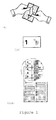
- the invention relates to a kit comprising a set of testers and directions for use. Further features and advantages of the invention will become readily apparent from the following detailed description, referring to exemplary and non-limiting embodiments of the invention and to the annexed drawings, in which:
- the term "item” is intended to designate a system composed of a set of at least three possible answers to the question "This smell is or resembles more to?” or other similar questions.
- Each set of said at least three answers has the same mark as the tester with which the item is associated. Therefore, the total number of items is equal to the total number of testers of one kit.
- only one of said at least three possible answers is right, i.e. only one corresponds to the odorant adhered to the tester with which the item is associated by a common mark.
- each item consists of a set of four possible answers.
- each tester and its item are designated by an integer.
- the kit of the invention includes a set of 30 to 40 testers, such range having been found, as shown in the examples below, a convenient and advantageous compromise between the reliability of olfactory response results and the level of attention that the subjects are required to have during the test. More preferably, the kit of the invention comprises a set of 33 testers, as the best compromise between the two above requirements.
- said list is composed of the following items, each marked by an integer, with a single tester corresponding thereto, and marked by the same integer: 1 a.
- the information provided in the directions for use of the kit are as follows:
- such information conveniently and advantageously allows collection of olfactory response data even without requiring the presence of specially skilled personnel, i.e. doctors or paramedical personnel, while ensuring high response reliability and test repeatability.
- the indication under (c) of rubbing the microencapsulated odorant by a piece of paper conveniently allows the microcapsules to be broken and release the aroma by a light rubbing action.
- More invasive means such as rigid pointed, flat-pointed or strongly abrasive objects are not suitable for the purpose, because they are liable to damage the tester, even without sufficiently breaking the microcapsules, like in the case of pointed objects.
- the tester inadvertently contact the nose skin, it is recommended to rub the nostril skin with a water moistened handkerchief or tissue. After that, the test may be continued and terminated.
- the directions for use of the kit may be in the form of written text, images, pictures, videos or a combination thereof.
- directions for use may be conveniently provided in paper form or on optical media, such as CD-ROM or DVD, or through remote consultation, such as from an appropriate Internet or Intranet site, or a combination thereof.
- the step described under (e) of the above directions for use which requires the selection of one answer (i.e. the answer that is believed to be the right one) to the question: "This smell is or resembles more to?” may be carried out by striking through, circling, filling in or otherwise marking the selected answer, appropriately depending on the media on which such directions are provided, and in any case in a perfectly clear and unmistakable manner.
- the present invention relates to the use of testers for the preparation of a kit of the invention for collecting olfactory response data to be employed in the diagnosis of neurological diseases.
- the present invention relates to a method for collection and assessment of olfactory responses in the diagnosis of neurological diseases, said method including the steps of:
- Example 1 Preparing tester sets; Using tester sets; Checking the intensity of olfactory stimulation
- odorants were in microencapsulated form according to prior art methods and were applied to suitable substrates, particularly, in this Example, in a card, to form the testers of the present invention.
- the testers had the same color, i.e. the color of the card, the same color and format of the number written thereon, the same color, shape, position and size of the area on which the microencapsulated aroma is located.
- the different odorants have the same neutral color (e.g. ivory-white).
- the testers are only differentiated by the number that designates them and by the odor that corresponds to that identification number (Table 2). Each tester is physical separated from the others and may be inserted in a packet.
- the microencapsulated odorant on the tester was smelled as follows: 1) the area with the microencapsulated odorant was rubbed lightly 3-4 times using a small piece of paper, to break the microcapsules and release the aroma; 2) then, the rubbed area was brought to 1 cm from the nostrils, without touching the nostril skin with the tester and 3) the area was sniffed one or more times. If needed, the procedure was started anew. Then, the spent testers and paper pieces were thrown into a bin with a cover, about one meter and a half on one side of the table used for the experiment.
- a new piece of paper had to be used for each tester, to rub the microencapsulated odorant thereon, to prevent any olfactory contamination with the preceding odorant.
- the tester sniffing sequence had to match the sequence provided in Table 2. Therefore, the first tester to be used was the one marked as number 1, the second was the one marked as number 2 and so on to the tester number 45.
- each tester prepared as described above and correctly employed according to the directions for use was found to be able to release the aroma with an intensity well above the threshold and hence easily perceivable by the human olfactory system.
- Example 2 Preparing kits of the invention; preparing a multiple and forced choice matrix
- This Example was based on the use of the testers no. 1 to no. 33 as described above, which correspond to the odors no. 1 to no. 33 listed in Table 2 and listed again in the same order in Table 3 for convenience.
- the kit of the present Example comprised a set of 33 testers and a list of 33 items, each composed of four answer options, one right answer and three wrong answers, each corresponding to a letter of the alphabet: a., b., c., d., listed on a sheet separate from the tester (see Table 4 below); each item was associated with the following question: "This smell is or resembles more to?” (Table 4).
- test has no time restrictions, wherefore the subject can think and sniff as long as he/she wishes before giving an answer, for each item. Nonetheless, there should be no pause between the selection of an answer and the administration of the next tester.
- the test shall always be administered from the tester no. 1 to the last tester, i.e. the tester no. 33 in this
- a new piece of paper has to be used for each tester, to rub the microencapsulated odorant thereon, to prevent any olfactory contamination with the preceding odorant. Some aroma remains on the piece of paper that is used to rub the tester.
- Table 4 lists the multiple-choice matrix.
- the number that designates each group of four answers (a, b, c, d) identifies the corresponding tester with which it is uniquely associated.
- the right odor for each tester is named and numbered in Table 3.
- the tester no. 1 corresponds to the odor no. 1 listed in Table 3 and so on.
- Example 3 Administering the test to a group of healthy subjects (controls) of different age and sex classes.
- the test was administered by a neurologist and an otolaryngologist.
- the latter had conducted a well-targeted anamnestic study and subjected to anterior rhinoscopy all the subjects selected for the test, to exclude any rhinosinusopathia.
- the examined subjects did not suffer from acute or chronic diseases of any organ or apparatus, showed no sign of mental decay and all had a score over 27 on the Mini Mental State Examination (#30).
- Controls the number of errors was examined in 5 ten-year age ranges (30-39; 40-49; 50-59; 60-69; 70-79) separately for men and women.
- the number of healthy subjects being examined, divided by age classes and sex, is indicated in the tables below.
- the differences among age classes in the number of errors made during the test was evaluated using the non-parametric Kruskal-Wallis test and the analysis of variance (ANOVA). Multiple comparisons were made by the Tukey test. The ratio of the number of errors to age was also assessed by a smoothing spline (statistical method).
- Example 4 Administering the kit of the invention to healthy subjects (controls) and patients suffering from Parkinson's disease
- Kits prepared according to Example 2 comprising sets of 33 testers, were used.
- the subjects under examination (both healthy subjects and patients) belonged to three ten-year age classes: 50-59, 60-69, 70-79.
- the controls i.e. the healthy subjects
- the Parkinson's disease patients were 131 and 25, 155 and 47, 128 and 61 respectively.
- the healthy subjects and the patients were evaluated by a neurologist and an otolaryngologist who had conducted a well-targeted anamnestic study and subjected all the subjects (healthy subjects and patients) to anterior rhinoscopy, to exclude individuals suffering from rhinosinusopathia.
- the controls and patients had a score over 27 on the Mini Mental State Examination (see reference #30).
- the subjects with Parkinson's disease were treated in neurological centers dedicated to the study and treatment of this disease. The criteria suggested by Gelb et al. were used for the diagnosis of Parkinson's disease (see reference #80).
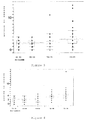
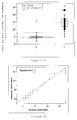
- Parkinson's disease patients showed a number of errors significantly higher than Controls (p ⁇ 0.0001)(Tables 7-9, Figures 7-9 ). This difference was found both in female and in male subjects (Tables 10-15, Figures 10-15 ).
- the kit of the invention was found to be effective in detecting olfactory impairments in Parkinson's disease patients in all age classes under examination.
- Test score reference values for different age classes and sexes expressed as a maximum number of errors in test response, above which the scores are to be deemed pathological and indicative of hypofunction of the sensory system, have been determined using the method that will be referred to as no. 1: values determined from scores found in control subjects for different age classes and sexes, considering as a limit the mean + twice the standard deviation of the number of errors in test response.
- test reference values were also determined with the method that will be referred to as no. 2:( using the ROC curve).
- the method 1 was used, considering as a reference the value corresponding to the mean + twice the standard deviation, of the number of errors made by the control subjects in those age classes.
- the reference value was calculated using both methods mentioned above: 1) considering as a reference the value corresponding to the mean + twice the standard deviation, calculated using the scores recorded in the group of control subjects of that age class and sex; 2) using the ROC curve, calculated using the test results obtained both from the control subjects of that age class and sex and those collected in Parkinson's disease patients of the same age class and sex; in this case, the reference value was determined by selecting the value of the number of errors having both the highest specificity and the highest sensitivity.
- Table 16 shows the reference limits calculated for male and female subjects and all age classes under examination.
- ROC curve reference values are also shown, associated with sensitivity, specificity and Youden index values. Based on the available data, the reference values determined using the ROC curve (method 2) are very close to those determined using the method 1 and have a good discriminating capacity, as confirmed by their high specificity and sensitivity.
- Table 16 Reference values ranked by sex and age class Reference limit Age class No. Controls No. Pathol. Mean (std. dev.) Mean + 2*d.s. ROC Sensitivity Specificity Youden I. F M F M F M F M F M F M F M 30 ⁇ Age ⁇ 40 35 33 1.88 (1.34) 2.15 (1.17) 4.6 4.5 40 ⁇ Age ⁇ 50 60 57 2.13 (1.25) 2.24 (1.09) 4.6 4.4 50 ⁇ Age ⁇ 60 68 62 7 18 2.12 (1.45) 2.60 (1.11) 5.0 4.8 4. 5 4.5 1.00 0.95 0.95 0.95 0.95 0.95 60 ⁇ Age ⁇ 70 92 60 13 34 2.90 (1.87) 3.33 (1.24) 6.6 5.8 6. 5 6.5 0.92 0.94 0.96 0.98 0.88 0.92 70 ⁇ Age ⁇ 80 61 66 30 31 4.31 (1.75) 4.54 (1.29) 7.8 7.1 7. 5 7.5 0.93 0.93 0.98 0.97 0.90 0.90 0.90
- Example 5 consistency of test results, when the test is administered to the same subject twice, at different times Test-retest experiment.
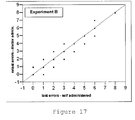
- the olfactory test of the present patent was administered to the same subjects a first time (test stage) and a second time (retest stage) after a few months. Result consistency was assessed by statistical analysis. More in detail, two experiments were conducted: A and B.
- Experiment A The test was administered (test stage) by a doctor to a group of 57 subjects (32 women and 25 men) having an average age of 59.9 years old (39-77 range). After six months, the same subjects were administered the test a second time (retest stage). The second administration was carried out by paramedical personnel. The consistency of the scores obtained from the two separate administrations by a doctor and a paramedical worker respectively was assessed using: Linear Regression, Pearson, Spearman and Lin Correlation Coefficient, Intraclass Correlation, Paired Sample t-test and Bland & Altman plot.
- Experiment B A group of subjects other than those of the Experiment A was instructed for self-administration of the test in accordance with the directions of use of the invention. Then, 50 subjects (25 women and 25 men) having an average age of 53.3 years old (25-78 range) self-administered the test (test stage). After three months, the test was administered to the same individuals (retest stage) by a doctor. The consistency of the scores obtained from the two separate administrations by self-administration and a doctor respectively was assessed using: Linear Regression, Pearson, Spearman and Lin Correlation Coefficient, Intraclass Correlation, Paired Sample t-test and Bland & Altman plot.
- Kits prepared according to Example 2 comprising sets of 33 testers, were used.
- the kit of the present invention has a high sensitivity in detecting olfactory identification impairments in Parkinson's disease patients.
- the test was also found to be reliable in test-retest frameworks and, due to its easy use, to allow administration not only by doctors but also by instructed paramedical personnel, as well as self-administration, by simply following the directions for use provided in the kit.
- kit is conveniently disposable, practical and handy, and is further suitable for mass screening.
Landscapes
- Health & Medical Sciences (AREA)
- Life Sciences & Earth Sciences (AREA)
- Engineering & Computer Science (AREA)
- Physics & Mathematics (AREA)
- General Health & Medical Sciences (AREA)
- Medical Informatics (AREA)
- Public Health (AREA)
- Pathology (AREA)
- Biophysics (AREA)
- Biomedical Technology (AREA)
- Heart & Thoracic Surgery (AREA)
- Physiology (AREA)
- Molecular Biology (AREA)
- Surgery (AREA)
- Animal Behavior & Ethology (AREA)
- Neurosurgery (AREA)
- Neurology (AREA)
- Veterinary Medicine (AREA)
- General Physics & Mathematics (AREA)
- Medicinal Chemistry (AREA)
- Algebra (AREA)
- Computational Mathematics (AREA)
- Chemical & Material Sciences (AREA)
- Mathematical Analysis (AREA)
- Mathematical Optimization (AREA)
- Mathematical Physics (AREA)
- Pure & Applied Mathematics (AREA)
- Business, Economics & Management (AREA)
- Educational Administration (AREA)
- Educational Technology (AREA)
- Theoretical Computer Science (AREA)
- Fats And Perfumes (AREA)
Priority Applications (1)
| Application Number | Priority Date | Filing Date | Title |
|---|---|---|---|
| EP08425634A EP2174585A1 (de) | 2008-09-29 | 2008-09-29 | Olfaktorisches Identifizierungstestkit zur Bestimmung von neurologischen Störungen |
Applications Claiming Priority (1)
| Application Number | Priority Date | Filing Date | Title |
|---|---|---|---|
| EP08425634A EP2174585A1 (de) | 2008-09-29 | 2008-09-29 | Olfaktorisches Identifizierungstestkit zur Bestimmung von neurologischen Störungen |
Publications (1)
| Publication Number | Publication Date |
|---|---|
| EP2174585A1 true EP2174585A1 (de) | 2010-04-14 |
Family
ID=40266064
Family Applications (1)
| Application Number | Title | Priority Date | Filing Date |
|---|---|---|---|
| EP08425634A Withdrawn EP2174585A1 (de) | 2008-09-29 | 2008-09-29 | Olfaktorisches Identifizierungstestkit zur Bestimmung von neurologischen Störungen |
Country Status (1)
| Country | Link |
|---|---|
| EP (1) | EP2174585A1 (de) |
Cited By (11)
| Publication number | Priority date | Publication date | Assignee | Title |
|---|---|---|---|---|
| WO2016161261A1 (en) * | 2015-04-03 | 2016-10-06 | Olfaxis, Llc | Apparatus, method, and system for testing human olfactory systems |
| CN107260128A (zh) * | 2017-06-13 | 2017-10-20 | 中生方政生物技术股份有限公司 | 一种嗅觉障碍检测试剂盒及其应用 |
| WO2019010172A1 (en) | 2017-07-03 | 2019-01-10 | The Rockefeller University | COMPOSITIONS AND METHODS FOR UNIVERSAL CLINICAL TEST FOR OLFACTORY DYSFUNCTION |
| WO2019067519A1 (en) * | 2017-09-29 | 2019-04-04 | Olfaxis, Llc | SYSTEMS AND METHODS FOR OLFACTORY TESTING |
| US10682087B2 (en) | 2015-04-03 | 2020-06-16 | Olfaxis, Llc | Apparatus, method, and system for testing human olfactory systems |
| CN112625797A (zh) * | 2019-10-09 | 2021-04-09 | 爱普香料集团股份有限公司 | 适合于中国人群嗅觉的嗅觉识别册的香精组合制备方法 |
| US11337640B2 (en) * | 2020-10-16 | 2022-05-24 | Monell Chemical Senses Center | Multifunctional smell test |
| US20230414789A1 (en) * | 2020-07-15 | 2023-12-28 | Contemporary Health Systems, Llc | Sense indicator composition |
| USD1010664S1 (en) | 2020-09-12 | 2024-01-09 | u-Smell-it LLC | Display screen with a graphical user interface |
| WO2025231149A1 (en) * | 2024-04-30 | 2025-11-06 | Concord Fragrances Llc | Method and system for evaluation and diagnosis of olfactory capacity in humans |
| WO2025262264A1 (de) * | 2024-06-21 | 2025-12-26 | Fraunhofer-Gesellschaft zur Förderung der angewandten Forschung e.V. | Testsystem zur messung der chemosensorischen wahrnehmung einer person |
Citations (2)
| Publication number | Priority date | Publication date | Assignee | Title |
|---|---|---|---|---|
| US20030113701A1 (en) * | 2001-12-13 | 2003-06-19 | William Gartner | Self-scoring method and apparatus for early self-screening of neurological disease |
| WO2006135368A1 (en) * | 2005-06-10 | 2006-12-21 | The Trustrees Of Columbia University In The City Of New York | Olfactory identification tests for cognitive diseases and disorders |
-
2008
- 2008-09-29 EP EP08425634A patent/EP2174585A1/de not_active Withdrawn
Patent Citations (2)
| Publication number | Priority date | Publication date | Assignee | Title |
|---|---|---|---|---|
| US20030113701A1 (en) * | 2001-12-13 | 2003-06-19 | William Gartner | Self-scoring method and apparatus for early self-screening of neurological disease |
| WO2006135368A1 (en) * | 2005-06-10 | 2006-12-21 | The Trustrees Of Columbia University In The City Of New York | Olfactory identification tests for cognitive diseases and disorders |
Non-Patent Citations (62)
| Title |
|---|
| "Panel on Comunicative Disorders to National Advisory Neurological and Comunicative Disorders and Stroke Council", 1979, NIH PUBLICATION |
| AMOORE JE.: "Specific anosmia and primary odors. In: Theories of Odor and Odor Measurements", 1968, pages: 71 |
| AMOORE JE.: "Specific anosmia and the concept of primary odors", CHEM SENSES, vol. 2, 1977, pages 267 |
| AMOORE JE.: "Specific anosmia: a clue to the olfactory code", NATURE, vol. 214, 1967, pages 1095 |
| AMOORE JE; FORRESTER LJ.: "Specific anosmia to trethylamine: the first primary odor", J CHEM ECOL, vol. 2, 1976, pages 49 |
| AMOORE JE; FORRESTER LJ; BUTTERY RG.: "Specific anosmia to 1-pyrroline: the spermous primary odor", J CHEM ECOL, no. 1, 1975, pages 291 |
| AMOORE JE; FORRESTER LJ; PELOSI P.: "Specific anosmia to isobutyraldehyde: the malty primary odor.", CHEM. SENSES, vol. 1976, no. 2, 1976, pages 17 |
| AMOORE JE; PELOSI P; FORRESTER LJ.: "Specific anosmia to 5-a-androsten-16-en-3-one and w-penta- decalactone: the urinous and musky primary odors", CHEM SENSES, vol. 2, 1977, pages 401 |
| ANSARI KA; JOHNSON AJ.: "Olfactory function in patients with Parkinson's disease", CHRONIC DIS., vol. 28, 1975, pages 493 - 497, XP023090643, DOI: doi:10.1016/0021-9681(75)90058-2 |
| BERENDSE HW; BOOIJ J; FRANCOR CM ET AL.: "Subclinical dopaminergic dysfunction in asymptomatic Parkinson's disease patient's relatives with a decreased sense of smell", ANN NEUROL, vol. 50, 2001, pages 34 - 41 |
| BONUCCELLI U ET AL.: "Olfactory deficits in Parkinson's disease", NEUROLOGY, vol. 42, no. 3, 1992, pages 440 - 990 |
| BONUCCELLI U ET AL.: "Parkinson's disease and Progressive Supranuclear Palsy: differences in performance on an odor identification test", PROCEEDINGS, 10TH INTERNATIONAL SYMPOSIUM ON PARKINSON'S DISEASE, 1991 |
| BRAAK H ET AL.: "Staging of the brain pathology related to sporadic Parkinson's disease", NEUROBIOLOGICAL AGING, vol. 24, 2003, pages 197 - 211 |
| BRAMERSON A ET AL.: "Prevalence of olfactory impairment in older adults", JAMA, vol. 288, 2002, pages 2307 - 2312 |
| BUCK L; AXEL A.: "A novel multigene family may encode odorant receptors: a molecular basis for odor recognition", CELL, vol. 65, 1991, pages 175 - 187, XP023913184, DOI: doi:10.1016/0092-8674(91)90418-X |
| CAIN WS.: "Sumner's 'On testing the sense of smell' revisited", YALE JOURNAL OF BIOLOGY AND MEDICINE, vol. 55, 1982, pages 515 - 519 |
| CRINO PB ET AL.: "eta-amyloid peptide and amyloid precursor proteins in olfactory mucosa of patients with Alzheimer's disease, Parkinson's disease and Down syndrome", ANN OTOL RHINOL LARYNGOL, vol. 104, 1995, pages 665 - 661 |
| DAMM M ET AL.: "Epidemiologie und Terapie von Reichstorungen in Deutschland, Osterreich und Schweiz", HNO, vol. 52, 2004, pages 112 - 120 |
| DANIEL SE; HAWKES CH.: "Preliminary diagnosis of Parkinson's disease using olfactory bulb pathology", LANCET, vol. 340, 1992, pages 186 |
| DEEMS DA ET AL.: "Smell and taste disorders: a study of 750 patients from the University of Pennsylvania Smell and Taste Center", ARCH OTORHINO LARYNGOL HEAD NECK SURG., vol. 117, 1991, pages 519 - 528, XP009074086 |
| DOTY RL ET AL.: "Bilateral olfactory dysfunction in early stage treated and untreated idiopathic Parkinson's disease", J NEUROL NEUROSURG PSYCHIATR, vol. 55, 1992, pages 138 - 42 |
| DOTY RL ET AL.: "Bilateral olfactory dysfunction in early stage treated and untreated idiopathic Parkinson's disease", J NEUROL NEUROSURG PSYCHIATRY, vol. 55, 1992, pages 138 - 42 |
| DOTY RL; DEEMS DA; STELLAR S.: "Olfactory dysfunction in parkinsonism: a general deficit unrelated to neurologic signs, disease stage, or disease duration", NEUROLOGY, vol. 38, no. 8, 1988, pages 1237 - 44 |
| FEDERICO G ET AL.: "Mucus of the human olfactory epithelium contains the insuline-like growth factor-I- system which is altered in some neurodegenerative diseases", BRAIN RESEARCH, vol. 835, 1999, pages 306 - 14 |
| FOLSTEIN MF; FOLSTEIN SE; MACHUG PR.: "Mini Mental Satate": a pratical method for grading the cognitive state of patients for the clinician", J PSICHIATR RES, vol. 12, 1975, pages 189 - 198 |
| FRASNELLI JA ET AL.: "Olfactory function in chronic renal failure", AM J RHINOL, vol. 16, 2002, pages 275 - 279 |
| GELB DJ; OLIVER E; GILMAN S.: "Diagnostic criteria for Parkinson disease", ARCH NEUROL, vol. 56, 1999, pages 33 - 39 |
| GILBERT AN; WYSOCKI CJ.: "The smell survey results", NATL GEOGR MAG, 1987, pages 172 - 514 |
| HAWKES C.: "Olfaction in Neurodegenerative Disorders", MOVEMENT DISORDERS, vol. 18, no. 4, 2003, pages 364 - 372 |
| HAWKES C; MUSSADIQ S.: "Why bother testing the sense of smell", PRACTICAL NEUROLOGY, vol. 5, 2005, pages 224 - 29 |
| HAWKES CH.: "Olfaction in neurodegenerative disorders", MOV DISORD, vol. 18, 2003, pages 364 - 72 |
| HAWKES CH; SHEPHARD BC; DANIEL SE.: "Olfaction disorders in Parkinson's disease", J NEUROL NEUROSURG PSYCHIATRY, vol. 62, 1997, pages 436 - 46 |
| HUMMEL T; WELGE-LÜESSEN A.: "Assesment of olfactory function", vol. 63, 2006, ADV OTORHINOLARYNGOL. BASEL, KARGER, pages: 84 - 98 |
| JORGENSEN MB; BUCH NH.: "Studies on the sense of smell and taste in diabetics", ARCH OTOLARYNGOL, vol. 53, 1961, pages 539 - 545 |
| LANDIS BN; KONNERTH CG; KUMMEL T.: "A study on the frequency of olfactory dysfunction", LARYNGOSCOPE, vol. 114, 2004, pages 1764 - 1769 |
| MAREMMANI C ET AL.: "Deficit di identificazione di odori nell'atassia cerebellare idiopatica e nel morbo di Parkinson", NUOVA RIVISTA DI NEUROLOGIA, vol. 3, no. 6, 1993, pages 223 - 26 |
| MAREMMANI C ET AL.: "Estratto dagli Atti della 18a Riunione LIMPE, Taormina", 21 November 1991, PUBL D. GUANELLA, article "Deficit di identificazione di odori in Parkinsoniani "de novo": risultati preliminari", pages: 261 - 268 |
| MAREMMANI C, NOCITA G, ROSSI G, BONUCCELLI U, MURATORIO A: "Un test quantitativo per la funzione olfattiva: standardizzazione e dati normativi", NUOVA RIV DI NEUROLOGIA, vol. 3, no. 2, April 1993 (1993-04-01), pages 58 - 64, XP009111525 * |
| MAREMMANI C.: "Deficit olfattivi nelle malattie neurodegenerative. Tesi di Dottorato di Ricerca. Corso di Dottorato di Ricerca in Discipline Neurologiche e Neurosensoriali", VI CICLO. ANNO ACCADEMICO, 1992, pages 1993 |
| MARKOPOPULOU K; LARSEN KW; WSZOLEK EK ET AL.: "Olfactory dysfunction in familial parkinsonism", NEUROLOGY, vol. 49, 1997, pages 1262 - 67 |
| MOCRIEFF RW., THE CHEMICAL SENSES, 1951 |
| MONTGOMERY EB JR; BAKER KB; LYONS K ET AL.: "Abnormal performance on the PD test battery by asymptomatic first-degree relatives", NEUROLOGY, vol. 52, 1999, pages 757 - 62 |
| MULLER A ET AL.: "Olfactory function in Parkinsonian syndromes", J CLIN NEUROSCI, vol. 9, 2002, pages 521 - 524 |
| MURPHY C ET AL.: "Prevalence of Olfactory impairment in older adults", JAMA, vol. 13, 2002, pages 2307 - 12 |
| NORDIN S; MONSCH AU; MURPHY C.: "Unawareness of smell loss in normal aging and Alzheimer's disease: discrepancy between self-reported and diagnosed smell sensitivita", J GERONTOL, vol. 50, 1995, pages 187 |
| OLSSON P ET AL.: "Prevalence of self-reported allergic and non allergic rhinitis symptoms in Stockholm: relation to age, gender, olfactory sense, and smoking", ACTA OTOLARYNGOL, vol. 123, 2003, pages 75 - 80 |
| PEARCE RKB; HAWKES CH; DANIEL SE.: "The anterior olfactory nucleus in Parkinson's disease", MOV DISORD, vol. 10, 1995, pages 283 - 287 |
| PELOSI P; PISANELLI AM.: "Specific anosmia to 1,8-cineole: the camphor primary odour", CHEM SENSES, vol. 6, 1981, pages 87 - 90 |
| PELOSI P; VITI R.: "Specific anosmia to 1- carvone: the minty primary odor.", CHE SENSES, vol. 3, 1978, pages 313 - 337 |
| PFAFFMANN C.: "Olfaction and Taste: Proceedings", 1969, ROCKFELLER UNIVERSITY PRESS |
| QUINN NP; ROSSOR MN; MARSDEN CD.: "Olfactory threshold in Parkinson's disease", J NEUROL NEUROSURG PSYCHIATRY, vol. 50, 1987, pages 88 - 89 |
| RABIN M.; CAIN WS.: "Odor recognition: Familiarity, identifiability, and encoding consistency", JOURNAL OF EXPERIMENTAL PSYCHOLOGY: LEARNING, MEMORY, AND COGNITION, vol. 10, 1984, pages 316 - 325 |
| ROSS W; PETROVITCH H; ABBOTT RD ET AL.: "Association of olfactory dysfunction with risk of future Parkinson's disease", MOV DISORD, vol. 20, no. 10, 2005, pages 439 |
| SIMMEN D ET AL: "[Screening of olfaction with smell diskettes]", LARYNGO- RHINO- OTOLOGIE MAR 1999, vol. 78, no. 3, March 1999 (1999-03-01), pages 125 - 130, XP009111420, ISSN: 0935-8943 * |
| SOMMER U; HUMMEL T; CORMANN K ET AL.: "Detection of presymptomatic Parkinson's disease: combining smell test, transcranial sonography and SPECT", MOV DISORD, vol. 19, 2004, pages 1196 - 202 |
| STIASNY- KOLSTER K ET AL.: "Combination of 'idiopathic' REM sleep behaviour disorder and olfactory dysfunction as possible indicator for a-synucleinopathy demonstrated by dopamine transporter FP-CIT-SPECT", BRAIN, vol. 128, 2005, pages 126 - 137 |
| STIASNY-KOLSTER K ET AL.: "Combination of "idiopathic" REM sleep behaviour disorder and olfactory dysfunction as possible indicator for a-synucleinpathy demonstrated by dopamine transporter FP-CIT-SPECT", BRAIN, vol. 128, 2005, pages 126 - 37 |
| SUMNER D.: "On testing the sense of smell", THE LANCET, 3 November 1962 (1962-11-03), pages 895 - 896 |
| TISSINGH G; BERENDSE HW; BERGAMS P ET AL.: "Loss of olfaction in de novo and treated Parkinson's disease: possible implication for early diagnosis", MOV DISORD, vol. 16, 2001, pages 41 - 46 |
| VAN DAM FS ET AL.: "Deterioration of olfaction and gustation as a consequence of total laryngectomy", LARYGOSCOPE, vol. 109, 1999, pages 1150 - 1155 |
| WARD CD; HESS WA; CALNE DB.: "Olfactory impairment in Parkinson's disease", NEUROLOGY, vol. 33, 1988, pages 943 - 46 |
| WENNING GK ET AL.: "Olfactory function in atypical parkinsonian syndromes", ACTA NEUROL SCAND, vol. 91, 1995, pages 247 - 250 |
Cited By (17)
| Publication number | Priority date | Publication date | Assignee | Title |
|---|---|---|---|---|
| US11478183B2 (en) | 2015-04-03 | 2022-10-25 | Olfaxis, Llc | Apparatus, method, and system for testing human olfactory systems |
| US10682087B2 (en) | 2015-04-03 | 2020-06-16 | Olfaxis, Llc | Apparatus, method, and system for testing human olfactory systems |
| US10980467B2 (en) | 2015-04-03 | 2021-04-20 | Olfaxis, Llc | Apparatus, method, and system for testing human olfactory systems |
| WO2016161261A1 (en) * | 2015-04-03 | 2016-10-06 | Olfaxis, Llc | Apparatus, method, and system for testing human olfactory systems |
| CN107260128A (zh) * | 2017-06-13 | 2017-10-20 | 中生方政生物技术股份有限公司 | 一种嗅觉障碍检测试剂盒及其应用 |
| WO2019010172A1 (en) | 2017-07-03 | 2019-01-10 | The Rockefeller University | COMPOSITIONS AND METHODS FOR UNIVERSAL CLINICAL TEST FOR OLFACTORY DYSFUNCTION |
| EP4635407A3 (de) * | 2017-07-03 | 2026-01-07 | The Rockefeller University | Zusammensetzungen und verfahren für einen universellen klinischen test auf olfaktorische dysfunktion |
| EP3648613A4 (de) * | 2017-07-03 | 2021-03-31 | The Rockefeller University | Zusammensetzungen und verfahren für einen universellen klinischen test für olfaktorische funktionsstörungen |
| US12364429B2 (en) | 2017-07-03 | 2025-07-22 | The Rockefeller University | Compositions and methods for a universal clinical test for olfactory dysfunction |
| US11986310B2 (en) | 2017-09-29 | 2024-05-21 | Olfaxis, Llc | Olfactory test systems and methods |
| WO2019067519A1 (en) * | 2017-09-29 | 2019-04-04 | Olfaxis, Llc | SYSTEMS AND METHODS FOR OLFACTORY TESTING |
| CN112625797A (zh) * | 2019-10-09 | 2021-04-09 | 爱普香料集团股份有限公司 | 适合于中国人群嗅觉的嗅觉识别册的香精组合制备方法 |
| US20230414789A1 (en) * | 2020-07-15 | 2023-12-28 | Contemporary Health Systems, Llc | Sense indicator composition |
| USD1010664S1 (en) | 2020-09-12 | 2024-01-09 | u-Smell-it LLC | Display screen with a graphical user interface |
| US11337640B2 (en) * | 2020-10-16 | 2022-05-24 | Monell Chemical Senses Center | Multifunctional smell test |
| WO2025231149A1 (en) * | 2024-04-30 | 2025-11-06 | Concord Fragrances Llc | Method and system for evaluation and diagnosis of olfactory capacity in humans |
| WO2025262264A1 (de) * | 2024-06-21 | 2025-12-26 | Fraunhofer-Gesellschaft zur Förderung der angewandten Forschung e.V. | Testsystem zur messung der chemosensorischen wahrnehmung einer person |
Similar Documents
| Publication | Publication Date | Title |
|---|---|---|
| Hummel et al. | ‘Sniffin’sticks': olfactory performance assessed by the combined testing of odor identification, odor discrimination and olfactory threshold | |
| Cameron et al. | Odor identification testing in children and young adults using the smell wheel | |
| Haehner et al. | A clinical approach towards smell loss in Parkinson's disease | |
| Mueller et al. | A new procedure for the short screening of olfactory function using five items from the “Sniffin’Sticks” identification test kit | |
| Davidson et al. | Rapid clinical evaluation of anosmia: the alcohol sniff test | |
| Cardesín et al. | Barcelona Smell Test-24 (BAST-24): validation and smell characteristics in the healthy Spanish population | |
| Fujio et al. | Evaluation of card-type odor identification test for Japanese patients with olfactory disturbance | |
| JP6666327B2 (ja) | 純粋嗅剤に対する嗅覚検知閾値の左右差を検知するための改良された方法 | |
| Cowart et al. | Clinical disorders of smell and taste | |
| Cho et al. | The Korean version of the Sniffin’stick (KVSS) test and its validity in comparison with the cross-cultural smell identification test (CC-SIT) | |
| Eysenck et al. | Salivary response to lemon juice as a measure of introversion | |
| Doty | Olfactory dysfunction and its measurement in the clinic and workplace | |
| US12364429B2 (en) | Compositions and methods for a universal clinical test for olfactory dysfunction | |
| US20150177202A1 (en) | Odor threshold test | |
| Doty | Olfaction and multiple chemical sensitivity | |
| Mackay-Sim et al. | Australian norms for a quantitative olfactory function test | |
| WO2017155975A1 (en) | Biomarkers in nasal exhaled breath | |
| Landis et al. | Olfactory function improves following hemodialysis | |
| Kremer et al. | Clinical validation of a new olfactory test | |
| Vodicka et al. | Screening of olfactory function using odourized markers | |
| Yoshino et al. | Validation study of a novel approach for assessment of retronasal olfactory function with combination of odor thresholds and identification | |
| Tran et al. | Development and validation of the Vietnamese smell identification test | |
| Rösler et al. | Total tau protein immunoreactivity in lumbar cerebrospinal fluid of patients with Alzheimer's disease | |
| Koskinen et al. | Correspondence between three olfactory tests and suprathreshold odor intensity ratings | |
| Bonfils et al. | Screening of olfactory function using the Biolfa® olfactory test: investigations in patients with dysosmia |
Legal Events
| Date | Code | Title | Description |
|---|---|---|---|
| PUAI | Public reference made under article 153(3) epc to a published international application that has entered the european phase |
Free format text: ORIGINAL CODE: 0009012 |
|
| AK | Designated contracting states |
Kind code of ref document: A1 Designated state(s): AT BE BG CH CY CZ DE DK EE ES FI FR GB GR HR HU IE IS IT LI LT LU LV MC MT NL NO PL PT RO SE SI SK TR |
|
| AX | Request for extension of the european patent |
Extension state: AL BA MK RS |
|
| AKY | No designation fees paid | ||
| REG | Reference to a national code |
Ref country code: DE Ref legal event code: 8566 |
|
| STAA | Information on the status of an ep patent application or granted ep patent |
Free format text: STATUS: THE APPLICATION IS DEEMED TO BE WITHDRAWN |
|
| 18D | Application deemed to be withdrawn |
Effective date: 20101015 |