EP2176340B1 - Composition de polypropylène stérilisable et résistant aux chocs - Google Patents
Composition de polypropylène stérilisable et résistant aux chocs Download PDFInfo
- Publication number
- EP2176340B1 EP2176340B1 EP08786914A EP08786914A EP2176340B1 EP 2176340 B1 EP2176340 B1 EP 2176340B1 EP 08786914 A EP08786914 A EP 08786914A EP 08786914 A EP08786914 A EP 08786914A EP 2176340 B1 EP2176340 B1 EP 2176340B1
- Authority
- EP
- European Patent Office
- Prior art keywords
- propylene
- polypropylene composition
- ethylene
- heterophasic polypropylene
- content
- Prior art date
- Legal status (The legal status is an assumption and is not a legal conclusion. Google has not performed a legal analysis and makes no representation as to the accuracy of the status listed.)
- Not-in-force
Links
Images



Classifications
-
- C—CHEMISTRY; METALLURGY
- C08—ORGANIC MACROMOLECULAR COMPOUNDS; THEIR PREPARATION OR CHEMICAL WORKING-UP; COMPOSITIONS BASED THEREON
- C08L—COMPOSITIONS OF MACROMOLECULAR COMPOUNDS
- C08L23/00—Compositions of homopolymers or copolymers of unsaturated aliphatic hydrocarbons having only one carbon-to-carbon double bond; Compositions of derivatives of such polymers
- C08L23/02—Compositions of homopolymers or copolymers of unsaturated aliphatic hydrocarbons having only one carbon-to-carbon double bond; Compositions of derivatives of such polymers not modified by chemical after-treatment
- C08L23/10—Homopolymers or copolymers of propene
- C08L23/14—Copolymers of propene
- C08L23/142—Copolymers of propene at least partially crystalline copolymers of propene with other olefins
-
- C—CHEMISTRY; METALLURGY
- C08—ORGANIC MACROMOLECULAR COMPOUNDS; THEIR PREPARATION OR CHEMICAL WORKING-UP; COMPOSITIONS BASED THEREON
- C08J—WORKING-UP; GENERAL PROCESSES OF COMPOUNDING; AFTER-TREATMENT NOT COVERED BY SUBCLASSES C08B, C08C, C08F, C08G or C08H
- C08J5/00—Manufacture of articles or shaped materials containing macromolecular substances
- C08J5/18—Manufacture of films or sheets
-
- C—CHEMISTRY; METALLURGY
- C08—ORGANIC MACROMOLECULAR COMPOUNDS; THEIR PREPARATION OR CHEMICAL WORKING-UP; COMPOSITIONS BASED THEREON
- C08L—COMPOSITIONS OF MACROMOLECULAR COMPOUNDS
- C08L23/00—Compositions of homopolymers or copolymers of unsaturated aliphatic hydrocarbons having only one carbon-to-carbon double bond; Compositions of derivatives of such polymers
- C08L23/02—Compositions of homopolymers or copolymers of unsaturated aliphatic hydrocarbons having only one carbon-to-carbon double bond; Compositions of derivatives of such polymers not modified by chemical after-treatment
- C08L23/04—Homopolymers or copolymers of ethene
- C08L23/08—Copolymers of ethene
- C08L23/0807—Copolymers of ethene with unsaturated hydrocarbons only containing four or more carbon atoms
- C08L23/0815—Copolymers of ethene with unsaturated hydrocarbons only containing four or more carbon atoms with aliphatic 1-olefins containing one carbon-to-carbon double bond
-
- C—CHEMISTRY; METALLURGY
- C08—ORGANIC MACROMOLECULAR COMPOUNDS; THEIR PREPARATION OR CHEMICAL WORKING-UP; COMPOSITIONS BASED THEREON
- C08L—COMPOSITIONS OF MACROMOLECULAR COMPOUNDS
- C08L23/00—Compositions of homopolymers or copolymers of unsaturated aliphatic hydrocarbons having only one carbon-to-carbon double bond; Compositions of derivatives of such polymers
- C08L23/02—Compositions of homopolymers or copolymers of unsaturated aliphatic hydrocarbons having only one carbon-to-carbon double bond; Compositions of derivatives of such polymers not modified by chemical after-treatment
- C08L23/10—Homopolymers or copolymers of propene
-
- C—CHEMISTRY; METALLURGY
- C08—ORGANIC MACROMOLECULAR COMPOUNDS; THEIR PREPARATION OR CHEMICAL WORKING-UP; COMPOSITIONS BASED THEREON
- C08L—COMPOSITIONS OF MACROMOLECULAR COMPOUNDS
- C08L23/00—Compositions of homopolymers or copolymers of unsaturated aliphatic hydrocarbons having only one carbon-to-carbon double bond; Compositions of derivatives of such polymers
- C08L23/02—Compositions of homopolymers or copolymers of unsaturated aliphatic hydrocarbons having only one carbon-to-carbon double bond; Compositions of derivatives of such polymers not modified by chemical after-treatment
- C08L23/10—Homopolymers or copolymers of propene
- C08L23/12—Polypropene
-
- C—CHEMISTRY; METALLURGY
- C08—ORGANIC MACROMOLECULAR COMPOUNDS; THEIR PREPARATION OR CHEMICAL WORKING-UP; COMPOSITIONS BASED THEREON
- C08L—COMPOSITIONS OF MACROMOLECULAR COMPOUNDS
- C08L23/00—Compositions of homopolymers or copolymers of unsaturated aliphatic hydrocarbons having only one carbon-to-carbon double bond; Compositions of derivatives of such polymers
- C08L23/02—Compositions of homopolymers or copolymers of unsaturated aliphatic hydrocarbons having only one carbon-to-carbon double bond; Compositions of derivatives of such polymers not modified by chemical after-treatment
- C08L23/16—Ethylene-propylene or ethylene-propylene-diene copolymers
-
- C—CHEMISTRY; METALLURGY
- C08—ORGANIC MACROMOLECULAR COMPOUNDS; THEIR PREPARATION OR CHEMICAL WORKING-UP; COMPOSITIONS BASED THEREON
- C08J—WORKING-UP; GENERAL PROCESSES OF COMPOUNDING; AFTER-TREATMENT NOT COVERED BY SUBCLASSES C08B, C08C, C08F, C08G or C08H
- C08J2323/00—Characterised by the use of homopolymers or copolymers of unsaturated aliphatic hydrocarbons having only one carbon-to-carbon double bond; Derivatives of such polymers
- C08J2323/02—Characterised by the use of homopolymers or copolymers of unsaturated aliphatic hydrocarbons having only one carbon-to-carbon double bond; Derivatives of such polymers not modified by chemical after treatment
- C08J2323/10—Homopolymers or copolymers of propene
Definitions
- the present invention relates to heterophasic polypropylene compositions which are sterilisable and have a high impact strength as well as improved optical properties both before and after a step of heat sterilisation. Furthermore, the present invention relates to films comprising such a heterophasic polypropylene composition, and to the use of said compositions for the production of films. Finally, the present invention is directed to the use of such films as packaging material for medicals and/or food.
- compositions and films comprising said compositions with high sterilisation resistance are gaining more and more interest, particularly in the field of packaging materials for medicals and food.
- the requirements for such films are high transparency (i.e. low haze) and impact resistance. It is desirable that both properties are maintained after a step of heat sterilisation, which is however difficult to achieve for both properties.
- sterilisation resistance a minimisation of both the loss of transparency (i.e. the increase in haze) and the impact resistance after heat sterilisation is meant.
- a further requirement for modern packaging applications for medicals and food is a certain softness of the material, which should remain as low as possible.
- Polypropylene compositions with high impact resistance are known in the art and are e.g. disclosed in EP 0 170 255 A1 . Therein polypropylene compositions having a high impact resistance and an improved whitening resistance are described. Said compositions comprise a polypropylene (60-90 parts by weight) having an isotacticity index > 90 and an ethylene/1-butene polymeric fraction (10-40 parts by weight) containing 50-95 wt% of ethylene and consisting of a crystalline fraction (20-95 wt%) and an amorphous fraction (5-80 wt%) distinguished by the amount of xylene solubles. The invention was based on the substitution of a propylene-ethylene rubber with said ethylene-1-butene rubber. This document and the prior art disclosed therein is typical for the use of heterophasic polymer compositions comprising a polypropylene base resin and a rubber which is known to improve the impact resistance.
- EP 0 373 660 A2 discloses propylene polymer compositions having good transparency and improved impact resistance. Said compositions comprise 70-98 wt% of a crystalline copolymer of propylene with ethylene and/or a C 2 -C 8 -alpha-olefin and 2-30 wt% of an elastomeric propylene-ethylene copolymer along with suitable ratios between the intrinsic viscosity of the different phases.
- WO 97/49744 discloses a polyolefin composition with high transparency and high flexibility and is based on the finding that the balance between flexibility and transparency of heterophasic polyolefin compositions can be further improved by increasing the amount of the elastomeric phase and at the same time decreasing the ethylene content of said elastomeric phase.
- a composition comprising 10-20 parts by weight of a homopolymer of propylene or a copolymer of propylene (at least 95 wt% of propylene derived units) with ethylene and/or one or more a C 2 -C 6 -alpha-olefins; 5-20 parts by weight of a propylene copolymer fraction containing ethylene derived units and being insoluble in xylene; and 60-80 parts by weight of a propylene copolymer fraction being soluble in xylene and containing 15-25 wt% of units derived from a comonomer selected from ethylene and mixtures of ethylene with one or more C 2 -C 6 -alpha-olefins; and wherein the sum of the latter two fractions amounts 80-90 wt% of the total polyolefin composition.
- US 6,511,755 B1 is directed to a polypropylene film for high-temperature sterilisation packing with excellent transparency and impact resistance at low temperature and additionally prevented deterioration of transparency after heating.
- a polypropylene composition is disclosed comprising a crystalline polypropylene-alpha-olefin copolymer (90-98.5 wt% of propylene) and a copolymer of propylene and an alpha-olefin (20-55 wt% of alpha-olefin), the preferred comonomer for both fractions being ethylene.
- EP 1 135 440 B1 is directed to impact-resistant polyolefin compositions for food-contact applications with a good balance of processability, mechanical properties and optical properties.
- the disclosed compositions comprise 60-95 wt% of a crystalline polypropylene component having a MFR 2 of 2.5-50 g/10 min and containing 20-80 wt% of a first fraction having a MFR 2 of 0.5-8 g/10 min and 20-80 wt% of a second fraction; and 5-40 wt% of a copolymer of ethylene with 10-40 wt% of one or more C 4 -C 10 -alpha-olefins.
- compositions of the prior art are heterophasic and comprise a base resin which is a random copolymer of propylene and ethylene and comprise as a second component an elastomeric copolymer comprising at least two comonomers selected from ethylene and alpha-olefins, the so called rubber, often an ethylene-propylene rubber, EPR.
- base resin which is a random copolymer of propylene and ethylene
- elastomeric copolymer comprising at least two comonomers selected from ethylene and alpha-olefins, the so called rubber, often an ethylene-propylene rubber, EPR.
- the impact resistance of a heterophasic propylene copolymer having a matrix copolymer of propylene and ethylene is improved as compared to a heterophasic propylene copolymer having a matrix propylene homopolymer.
- the impact resistance increases with increasing comonomer, content, e.g. ethylene content.
- heterophasic systems are also known to be dependent on the EPR particles and on the content of comonomer in the matrix resin.
- EPR particles the optical properties of heterophasic systems are also known to be dependent on the EPR particles and on the content of comonomer in the matrix resin.
- the refractive index is directly related to the density of the two phases in case of alpha-olefin polymers and is therefore inter alia dependent on the content of comonomer of both phases.
- the matrix of a heterophasic propylene random copolymer has a density in between 0.900 and 0.905 g/cm 3 whereas the density of an ethylene-propylene rubber is 0.860-0.880 g/cm 3 . Therefore, these systems are usually not highly transparent.
- One method of improving the transparency of such compositions is to add a linear low density polyethylene with a typical density of 0.915-0.923 g/cm 3 .
- the particle size of the dispersed phase is tailored to be less than 400 nm.
- the particle size of the dispersed phase is influenced by the ratio of viscosity of the matrix resin and the dispersed phase and by the content of comonomer, in particular the content of ethylene, of both the dispersed fraction and the matrix resin.
- a propylene homopolymer has a melting point of about 165 °C
- a propylene copolymer containing 5 wt% of ethylene has a melting point of 138-140 °C.
- Heat sterilisation is currently carried out by a treatment with saturated steam at 121°C for 30 minutes. Where in this application the term "heat sterilisation” is used, it stands for these conditions mentioned above.
- polyolefin compositions which are used for films for medical packaging and for food packaging should have a certain softness. This required softness, together with high transparency high impact resistance, was not achievable with polyolefin compositions from the prior art. It is also desirable that an eventual increase in stiffness after heat sterilisation is as small as possible (or even negative).
- an increasing content of a comonomer, particularly ethylene, in the matrix resin improves the impact resistance and the transparency of the known heterophasic compositions but at the same time deteriorates the sterilisation resistance, i.e. deteriorates both impact resistance and transparency after the step of heat sterilisation.
- the present invention is based on the surprising finding that the above mentioned object can be achieved by providing a polypropylene composition comprising a matrix resin and an elastomeric resin as a dispersed phase, wherein the matrix resin comprises a propylene homopolymer and a propylene copolymer and wherein the dispersed phase comprises an ethylene-propylene rubber.
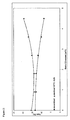
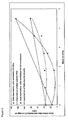
- the conflict of objectives is solved by the surprising finding that the melting temperature of the heterophasic polypropylene composition as a function of the content of comonomer of the matrix resin shows a deviation from linear behaviour. It is thereby possible to select a content of comonomer of the matrix resin which is high enough to ensure high transparency and high impact resistance but at the same time is low enough to avoid the unfavourable effects of decreasing melting temperature of the heterophasic polypropylene composition on sterilisation resistance as discussed above.
- the present invention provides a cast film according to claim 1 and a heterophasic polypropylene composition according to claim 10
- Cast film comprising a heterophasic polypropylene composition comprising a matrix resin which comprises
- the melting point of the heterophasic polypropylene composition is at least 150 °C, more preferably at least 155°C, still more preferably at least 158 °C.
- heterophasic polypropylene composition Generally, higher melting temperatures of the heterophasic polypropylene composition are preferred.
- the content of comonomer in the matrix resin is 0.5 to 3.0 wt% band on the entire matrix resin without any additives.
- Component (A) may consist of a single propylene homopolymer fraction, but (A) may also comprise a mixture of different propylene homopolymer fractions. This also applies for all preferred embodiments of component (A).
- the propylene homopolymer, the propylene copolymer, or the ethylene-propylene rubber comprise more than one fraction
- these fractions may have a different average molecular weight, a different molecular weight distribution, or in case of the propylene copolymer and of the ethylene-propylene rubber, a different content of comonomer.
- molecular weight where used herein denotes the weight average molecular weight M w .
- the comonomer of propylene copolymer (B) is ethylene and/or a C 4 -C 10 alpha-olefin like 1-butene, 1-pentene, 1-hexene, 1-heptene, 1-octene or a mixture thereof.
- the comonomer is ethylene.
- the heterophasic polypropylene composition according to the invention comprises 10 - 85 wt% of the propylene homopolymer (A), 10 - 85 wt% of the propylene copolymer (B) and 5-30 wt% of the ethylene-propylene rubber (C).
- component (A) has an MFR 2 of 1 - 8 g/10 min.
- component (B) has an MFR 2 of 1 - 8 g/10 min.
- the comonomer content of component (B) is 2 - 5 wt%.
- component (B) is a random propylene-ethylene copolymer.
- the intrinsic viscosity of the xylene soluble content of the heterophasic polypropylene composition is from 1 - 2 dl/g.
- the xylene soluble content of the heterophasic polypropylene composition has a content of propylene of more than 50 wt%, still more preferably of more than 55 wt%. It is further preferred that the content of propylene is not more than 80 wt%.
- the propylene homopolymer (A) has a xylene solubles content of up to 2.5 wt%, more preferably of ⁇ 1.5 wt%, based on the propylene homopolymer (A).
- the propylene-ethylene random copolymer (B) has a xylene solubles content of 0.5 - 10 wt%, still more preferably of 1 - 9 wt%, most preferably of 1.5 - 8 wt%.
- the melting point of the heterophasic polypropylene composition according to the particular preferred embodiment mentioned above is at least 145°C, more preferably 150 °C, still more preferably at least 155°C, and particular preferred at least 158 °C.
- the MFR 2 of the heterophasic polypropylene composition according to the invention is from 0.5 to 20 g/10 min, preferably from 1 to 8 g/10 min.
- the impact strength of the inventive heterophasic polypropylene composition according to the Charpy notched impact strength test according to ISO 179 1eA is preferably at least 10 kJ/m 2 at +23 °C, more preferably at least 25 kJ/m 2 , still more preferably at least 30 kJ/m 2 and most preferably at least 34 kJ/m 2 , and at a temperature of -20°C at least 1.5 kJ/m 2 .
- the impact strength of the inventive heterophasic polypropylene composition according to the Charpy notched impact strength test according to ISO 179 1eA is preferably at least 25 kJ/m 2 at +23 °C, more preferably at least 35 kJ/m 2 , still more preferably at least 45 kJ/m 2 and most preferably at least 60 kJ/m 2 and at a temperature of -20°C at least 1.2 kJ/m 2 .
- the haze of the inventive heterophasic polypropylene composition is preferably ⁇ 40 %, more preferably ⁇ 31 % when measured on a 60 ⁇ 60 ⁇ 0.5 mm plaques according to ASTM D 1003-92.
- the haze of the inventive heterophasic polypropylene composition is preferably below 50 %, more preferably below 45 % when measured on a 60 ⁇ 60 ⁇ 0.5 mm plaques according to ASTM D 1003-92.
- the increase in haze ( ⁇ (haze)) of the inventive heterophasic polypropylene composition before and after a step of heat sterilization at 121 °C for 0.5 h is preferably below 50 %, based on the haze before heat sterilization.
- the intrinsic viscosity of the xylene soluble content of the inventive heterophasic polypropylene composition is preferably below 2 dl/g, more preferably below 1.8 dl/g.
- the present invention is also directed to a film comprising the inventive heterophasic polypropylene compositions mentioned above.
- the film consists of the inventive heterophasic polypropylene compositions mentioned above.
- the film is a cast film or a blown film.
- the film is non-oriented or mono- or biaxially oriented.
- the film is a cast film.
- a 100 ⁇ m thick cast film made of the heterophasic propylene composition of the present invention preferably shows a transparency above 85 %, more preferred above 90 % and even more preferred above 93 % according to the measurement of ASTM D 1003-92.
- the haze of such a film is preferably below 20 %, more preferably below 15 % and still more preferably below 13.4 % according to the measurement of ASTM D 1003-92.
- a 100 ⁇ m thick film made of the heterophasic propylene composition of the present invention preferably shows a transparency above 85 %, more preferred above 88 % and even more preferred above 91 % according to the measurement of ASTM D 1003-92.
- the haze of such a treated film is preferably below 22 %, more preferably below 19 %, still more preferably not more than 17 % according to the measurement of ASTM D 1003-92.
- the increase in haze ( ⁇ (haze)) of such a film after and before such a treatment is preferably 70 % or less, more preferably 50 % or less, still more preferably 30 % or less, in each case based on the haze before heat sterilisation.
- the impact strength of such a film before heat sterilisation is preferably at least 13 J/mm according to ISO 7765-2, more preferably at least 17 J/mm.
- the impact strength of such a film is preferably at least 9.0 J/mm.
- the present invention is also directed to the use of any of the inventive heterophasic polypropylene compositions mentioned above for producing a film, particularly a cast film.
- the present invention is also directed to the use of a film, preferably a cast film, comprising, preferably consisting of, any of the inventive heterophasic polypropylene compositions mentioned above as a packaging material for medical applications and/or food.
- inventive heterophasic polypropylene compositions mentioned above may be produced by separately preparing each of the polymers (A), (B) and (C) and mixing the resins afterwards as known in the art.
- inventive heterophasic polypropylene compositions mentioned above are produced in a sequential multi-step process utilising reactors coupled in series and using different conditions in each reactor.
- the propylene homopolymer (A) is produced in the first reactor, followed by production of the propylene random copolymer (B) in a second reactor in the presence of propylene homopolymer (A) and followed by the production of ethylene-propylene rubber (C) in the presence of (A) and (B).
- the homopolymer (A) is produced in a slurry reactor, still more preferred in a loop reactor.
- the copolymer fraction (B) is produced in a gas phase reactor.
- the ethylene-propylene rubber (C) is produced in a gas phase reactor.
- each of the fractions is prepared in its own reactor, wherein the reactors are connected in series and the process is carried out in the presence of all fractions produced before.
- heterophasic propylene compositions of the invention may be produced by separate polymerisation of each of its components and by melt blending the components.
- heterophasic propylene compositions of the invention may further be produced by polymerising a heterophasic propylene copolymer comprising a propylene homopolymer (A) matrix and an ethylene-propylene rubber (C) and by melt blending the heterophasic propylene copolymer with a separately polymerised propylene random copolymer (B).
- heterophasic propylene compositions of the invention may further be produced by polymerising a heterophasic propylene random copolymer (also called RAHECO) comprising a propylene random copolymer (B) matrix and an ethylene-propylene rubber (C) and by melt blending the heterophasic propylene random copolymer with a separately polymerised propylene homopolymer (A).
- a heterophasic propylene random copolymer also called RAHECO
- RAHECO a heterophasic propylene random copolymer
- B propylene random copolymer
- C ethylene-propylene rubber
- heterophasic propylene compositions of the invention may be produced by polymerising a heterophasic propylene random copolymer comprising a propylene random copolymer (B) matrix and an ethylene-propylene rubber (C) and by melt blending the heterophasic propylene random copolymer with a separately polymerised heterophasic propylene copolymer comprising a propylene homopolymer (A) matrix and an ethylene-propylene rubber (C).
- the polymerisation process for the production of the random propylene copolymers according to the invention may be a continuous process or a batch process utilising known methods and operating in liquid phase, optionally in the presence of an inert diluent, or in gas phase or by mixed liquid-gas techniques.
- the random propylene copolymer may be produced by single- or multistage process polymerisation of propylene and ⁇ -olefin and/or ethylene such as bulk polymerisation, gas phase polymerisation, slurry polymerisation, solution polymerisation or combinations thereof using conventional catalysts.
- the copolymer is made either in one or two loop reactor(s) or in a combination of loop and gas phase reactor. Those processes are well known to one skilled in the art.
- the process is preferably carried out in the presence of a stereospecific catalyst system.
- a suitable catalyst for the polymerisation of the propylene polymer is any stereospecific catalyst for propylene polymerisation which is capable of polymerising and copolymerising propylene and ⁇ -olefin-comonomers at a temperature of 40 to 110°C and at a pressure from 10 to 100 bar.
- Ziegler Natta catalysts as well as metallocene catalysts are suitable catalysts.
- any ordinary stereospecific Ziegler-Natta catalysts can be used.
- An essential component in those catalysts are solid catalyst components comprising a titanium compound having at least one titanium-halogen bond, an internal electron donor compound and a magnesium halide in active form as a carrier for both the titanium component and the donor compound.
- the catalysts can contain - as internal electron donor - compounds selected from ethers, ketones, lactones, compounds containing N, P and/or S atoms and esters of mono and dicarboxylic acids.
- Preferred are aromatic esters like benzoates or phthalates, e.g. ethyl benzoate or, diisobutylphtalate, or diethers like 2,2-diisopropyl-1,3-dimethoxypropene.
- a further essential component of the catalyst is a cocatalyst, an organoaluminium compound, such as an alkylaluminium compound, preferably triethyl-aluminium (TEAI) or tri-isobutyl-aluminium.
- an organoaluminium compound such as an alkylaluminium compound, preferably triethyl-aluminium (TEAI) or tri-isobutyl-aluminium.
- an external electron donor is generally used.
- Particularly preferred external donors are dicyclopentyldimethoxysilane and cyclohexyldimethoxymethylsilane.
- Preferred slurry reactors are loop reactors.
- Preferred reactor arrangements for producing the random propylene copolymer are a single loop reactor or two consecutive loop reactors or a loop reactor followed by a gas phase reactor.
- the catalyst system Before the catalyst system is used in the actual polymerisation process it is optionally pre-polymerised with small amounts of ⁇ -olefins, preferably propylene, in order to enhance catalyst performance and to improve the morphology of the end product.
- ⁇ -olefins preferably propylene
- the optionally prepolymerised catalyst system and a monomer feed comprised of propylene, and one or more of ethylene and/or C 4 -C 10 ⁇ -olefins is fed into a reactor.
- the C 4 - C 10 ⁇ -olefin can be any one or mixtures of 1-butene, 4-methyl-1-pentene, 1-hexene or 1-octene. Particularly preferred are ethylene and 1-butene.
- the amount of comonomer in the feed can be up to 40 wt%.
- Polymerisation can be carried out in the presence of the previously mentioned organoaluminium compound and an external donor compound at temperatures lower than 110 °C and pressures in the range of 10 to 100 bar, preferably 30 to 70 bar.
- the polymerisation is carried out in such conditions that 50 to 100 wt%, preferably 75 to 99 wt% of the end product is polymerised in the first reactor.
- a suitable metallocene catalyst comprises a metallocene/activator reaction product, which is typically impregnated in a porous support at maximum internal pore volume.
- the catalyst complex comprises a ligand which is typically bridged, and a transition metal of group IVa ... VIa, and an organoaluminium compound.
- the catalytic metal compound is typically a metal halide, e.g. ZrCl 2 .
- a polymer is produced, in which the content of comonomer is in the range of up to 18.0 wt%, preferably up to 10 wt%. Hydrogen is added, when desired, into the first reactor for adjusting the molecular weight of polymer, as conventional.
- the reaction medium is optionally transferred into a second reactor, which can be a gas phase reactor. If the second reactor is also a loop reactor, the same range of polymerisation conditions is available as for the first reactor.,
- the polymerisation can be carried out at a temperature of 60 to 90°C and at a pressure higher than 5 bar, preferably higher than 10 bar.
- propylene and other monomers can be added into the second reactor.
- Hydrogen can also be added into the gas phase reactor, if desired.
- the precise control of the polymerisation conditions and reaction parameters is within the state of the art. After the polymerisation in the first and the optional second reactor is finished, the polymer product is recovered by conventional procedures.
- the resulting polymer particles may be pelletised in a conventional compounding extruder with various additives, which are generally used in thermoplastic polymer compositions, such as stabilisers, antioxidants, acid neutralising agents, ultraviolet absorbers, antistatic agents.
- additives which are generally used in thermoplastic polymer compositions, such as stabilisers, antioxidants, acid neutralising agents, ultraviolet absorbers, antistatic agents.
- Production of propylene homopolymer (A) may be performed in an analogous manner, with the exception, that no comonomer (ethylene) is used in the polymerisation.
- Ethylene-propylene rubbers can either be synthesised in the latter step(s) of a multistage process, where in the first step(s) a random copolymer and/or a propylene homopolymer is synthesised or, alternatively, ethylene-propylene rubber can be polymerised separately and mixed with the random copolymer and the homopolymer component in a separate melt blending step.
- An ethylene propylene rubber may be produced by known polymerisation processes such as solution, suspension and gas-phase polymerisation using conventional catalysts.
- Ziegler Natta catalysts as well as metallocene catalysts are suitable catalysts.
- a widely used process is the solution polymerisation. Ethylene, propylene and catalyst systems are polymerised in an excess of hydrocarbon solvent. Stabilisers and oils, if used, are added directly after polymerisation. The solvent and unreacted monomers are then flashed off with hot water or steam, or with mechanical devolatilisation. The polymer, which is in crumb form, is dried with dewatering in screens, mechanical presses or drying ovens. The crumb is formed into wrapped bales or extruded into pellets.
- the suspension polymerisation process is a modification of bulk polymerisation.
- the monomers and catalyst system are injected into the reactor filled with propylene.
- the polymerisation takes place immediately, forming crumbs of polymer that are not soluble in the propylene. Flashing off the propylene and comonomer completes the polymerisation process.
- the gas-phase polymerisation technology consists of one or more vertical fluidised beds. Monomers and nitrogen in gas form along with catalyst are fed to the reactor and solid product is removed periodically. Heat of reaction is removed through the use of the circulating gas that also serves to fluidise the polymer bed. Solvents are not used, thereby eliminating the need for solvent stripping, washing and drying.
- a multistage polymerisation process which utilises, firstly, a reactor setup as outlined above, i.e. a polymerisation process based on a first polymerisation step in at least one slurry reactor and an optional second polymerisation step preferably comprising at least one gas phase reactor, for producing the random propylene copolymer, and, secondly, at least one additional polymerisation step(s) in one or more gas phase reactors.
- a preferred reactor setup is a combination of bulk slurry loop reactor(s) and gas phase reactor(s), particularly one loop reactor and one gas phase reactor (random copolymer in loop and EPR in gas phase) or two loop reactors and one or two gas phase reactors (random copolymer in loops and EPR in gas phases) or one loop and two gas phases (random copolymer in loop and EPR in gas phases or random copolymer in loop and first gas phase and EPR in second gas phase) or one loop and three gas phases (random copolymer in loop and first gas phase and EPR in second and third gas phases).
- the produced random copolymer is transferred into a gas phase reactor, where EPR is produced, afterwards the product is optionally transferred into a further gas phase reactor, where an optional further (or final) part of the EPR is produced.
- the monomer feed (especially ethylene) to the gas phase reactor(s) where the EPR is produced is adjusted such that the final ethylene content of the RAHECO is between 6 - 30 wt%. Further, the monomer feed (especially ethylene) to the gas phase reactor(s) where the EPR is produced is adjusted such that the final ethylene content of the xylene soluble fraction of the RAHECO is between 20 - 60 wt%.
- the polymer product (RAHECO) is recovered by conventional procedures.
- the resulting polymer particles may be pelletised in a conventional compounding extruder with various additives, which are generally used in thermoplastic polymer compositions, such as stabilisers, antioxidants, acid neutralising agents, ultraviolet absorbers, antistatic agents.
- Heterophasic propylene copolymers may be produced in an analogous manner, with the exception, that no comonomer (ethylene) is fed to the first polymerization step(s) where the matrix polymer is produced.
- additives conventionally used in such polypropylene compositions for example antioxidants, neutralizer, inorganic fillers, antiblocking agents, nucleating agents, lubricants or antistatic agents, may be added to the composition before, during or after the blending step of the polymer components in a manner known in the art.
- the amount of such conventional additives is 10 wt% or less, preferably 5 wt% or less, of the total polymer composition.
- the polypropylene composition can be used in various applications, like film or injection moulding application, which are produced by any method known in the art.
- the produced film of the present invention may be a cast or blown film consisting of one or more layers, wherein at least one layer comprises the polypropylene composition of the present invention, and can be non-oriented or mono- or biaxially oriented.
- the melt flow rate is determined according to ISO 1133 and it is indicated in g/10 min.
- the MFR is an indication of the flowability and thus the processability of the polymer. The higher the melt flow rate, the lower the viscosity of the polymer.
- the MFR of propylene compositions and polymers is measured with a load of 2.16 kg at 230 °C.
- the impact strength is determined as Charpy Notched Impact Strength according to ISO 179-1 eA at +23 °C and at -20°C on injection moulded specimens of 80 x 10 x 4 mm prepared according to EN ISO 1873-2.
- the impact strength of films is determined according to ISO 7765-2 at 23 C on monolayer cast films with a thickness of 100 ⁇ m.
- the flexural modulus was determined according to ISO 178 on injection moulded specimens of 80 x 10 x 4 mm prepared according to EN ISO 1873-2.
- Transparency of films was measured according to ASTM D 1003/92 on monolayer cast films with a thickness of 100 ⁇ m.
- Haze of plaques was determined according to ASTM D 1003/92 on injection moulded plaques of 60 x 60 x 0.5 mm prepared according to EN ISO 1873-2.
- Haze of films was measured according to ASTM D 1003/92 on monolayer cast films with a thickness of 100 ⁇ m.
- ⁇ (haze) is obtained by dividing the difference between the haze after heat sterilization and the haze before heat sterilization with the haze before heat sterilization, multiplied by 100.
- the melting temperature is determined by differential scanning calorimetry (DSC) according to ISO 3146; it is taken as the maximum of the melting peak over the temperature during the second heating scan of a sequence heating/cooling/heating of +10 / -10 / +10 K/min.
- DSC differential scanning calorimetry
- the part of the sample which is molten at 121 °C is extracted from the DSC trace of the second heating scan determined according to ISO 3146; it represents the fraction of the area of the propylene homopolymer or propylene random copolymer peak up to 121°C of out of the total area of the melt enthalpy of the propylene homopolymer or propylene random copolymer.
- Intrinsic Viscosity was measured according to DIN ISO 1628-1 (October 1999) in decalin at 135 °C.
- Xylene solubles were determined at 23°C according ISO 6427.
- Component (A) comes from the matrix of the block copolymer.
- Component (B) comes from the matrix of the propylene-ethylene random copolymer.
- component (C) is the rubber of both copolymers.
- the films were produced in cast film technology on a PM 30 film extruder (producer: Pant-Schiffbau Geng-Mayer GmbH, Germany), with a barrel diameter of 30 mm and a slot die of 200 x 0.55 mm in combination with a chill- and a takeup-roll. Melt temperature was 260°C in the die; the chill-roll was kept at 15°C and the takeup roll at 20°C. A film thickness of 100 ⁇ m was adjusted through the ratio between extruder output and takeoff speed.
- Example 1 shows properties and test results of the six different polymer compositions produced.
- Examples 1 (matrix which is a pure random copolymer) and 6 (matrix which is a pure homopolymer) are comparative Examples.
- Example 1 shows the best haze and the best impact strength due to its high content of ethylene in the matrix and the matrix being composed of a copolymer only.
- Example 1 shows the worst haze which is not acceptable in the field of medicals and food packaging. Even if the haze of Examples 2 to 5 according to the invention is higher before the step of heat sterilization than the haze of Example 1, after the step of heat sterilization the increase in haze is not as strong as in Example 1 and the haze is also less than in Example 1. This can perfectly be seen when looking at the values of ⁇ (haze).
- the plaques behave different. Before the step of heat sterilization the haze decreases with increasing content of ethylene, however, after the step of heat sterilization the worse haze is on the same level in all Examples. However, the impact strength is improved after the step of heat sterilization and is the best in the Examples having the highest content of ethylene in the matrix.
Landscapes
- Chemical & Material Sciences (AREA)
- Health & Medical Sciences (AREA)
- Chemical Kinetics & Catalysis (AREA)
- Medicinal Chemistry (AREA)
- Polymers & Plastics (AREA)
- Organic Chemistry (AREA)
- Engineering & Computer Science (AREA)
- Manufacturing & Machinery (AREA)
- Materials Engineering (AREA)
- Crystallography & Structural Chemistry (AREA)
- Compositions Of Macromolecular Compounds (AREA)
- Manufacture Of Macromolecular Shaped Articles (AREA)
Abstract
Claims (11)
- Film coulé comprenant une composition de polypropylène hétérophasique comprenant une résine matricielle qui comprend(A) de 10 à 85 % en poids, sur la base de la composition de polypropylène hétérophasique d'un homopolymère, de propylène ayant un MFR2 mesuré selon la norme ISO 1133 de 1 à8g/10minet(B) de 10 à 85 % en poids, sur la base de la composition de polypropylène hétérophasique, d'un copolymère aléatoire de propylène-éthylène ayant un MFR2 mesuré selon la norme ISO 1133 de 1 à 8 g/10 min et une teneur en comonomères de 2 à 5 % en poids ;
et une phase dispersée qui comprend(C) de 5 à 30 % en poids, sur la base de la composition de polypropylène hétérophasique, d'un caoutchouc d'éthylène-propylène ;
dans lequel(i) le point de fusion de la composition de polypropylène hétérophasique mesuré selon la norme ISO 3146 est d'au moins 145°C ;(ii) la teneur en éthylène de la résine matricielle est de 0,5 à 3,0 % en poids par FTIR sur la base de la totalité de la résine matricielle sans aucun additif ;(iii) la teneur soluble dans le xylène de la composition de polypropylène hétérophasique a une viscosité intrinsèque mesurée selon la norme DIN ISO 1628-1 (dans la décaline à 135°C) de 1 à 2 dl/g et une teneur en propylène de plus de 50 à 80 % en poids. - Film coulé selon la revendication 1, dans lequel le film coulé est stérilisé.
- Film coulé selon la revendication 1 ou 2, dans lequel la teneur en comonomère dans la résine matricielle est d'au moins 0,8 % sur la base de la totalité de la résine matricielle sans aucun additif.
- Film coulé selon l'une quelconque des revendications 1 à 3, ayant un trouble mesuré selon la norme ASTM D 1003/92 inférieur à 13,5 %, mesuré sur un film coulé de 100 µm.
- Film coulé selon l'une quelconque des revendications 1 à 3, ayant un trouble mesuré selon la norme ASTM D 1003/92 inférieur à 17 %, mesuré sur un film coulé de 100 µm à l'issue d'une étape de stérilisation thermique à 121°C pendant 0,5 h.
- Film coulé selon l'une quelconque des revendications 1 à 3, ayant une valeur Δ (trouble) de 70 % ou moins.
- Film coulé selon l'une quelconque des revendications 1 à 3, ayant une résistance au choc d'au moins 13 J/mm selon la norme ISO 7765-2.
- Film coulé selon l'une quelconque des revendications 1 à 3, ayant à l'issue d'une étape de stérilisation thermique à 121°C pendant 0,5 h une résistance au choc d'au moins 9,0 J/mm selon la norme ISO 7765-2.
- Utilisation d'un film coulé selon l'une quelconque des revendications 1 à 8 en tant que matériau de conditionnement pour des produits médicaux et/ou alimentaires.
- Composition de polypropylène hétérophasique comprenant une résine matricielle qui comprend(A) de 10 à 85 % en poids, sur la base de la composition de polypropylène hétérophasique, d'un homopolymère de propylène ayant• un MFR2 mesuré selon la norme ISO 1133 de 1 à 8 g/10 min et• une teneur soluble dans le xylène mesurée selon la norme ISO 6427 ≤ 1,5 % en poids sur la base de l'homopolymère de propylène et• où le point de fusion de la composition de polypropylène hétérophasique est d'au moins 145°C (ISO 3146)(B) de 10 à 85 % en poids, sur la base de la composition de polypropylène hétérophasique, d'un copolymère aléatoire de propylène-éthylène ayant un MFR2 mesuré selon la norme ISO 1133 de 1 à 8 g/10 min et une teneur en comonomères de 2 à 5 % en poids ;
dans laquelle la teneur en éthylène de la résine matricielle est de 0,5 à 3,0 % en poids, sur la base de la totalité de la résine matricielle sans aucun additif ;
et une phase dispersée qui comprend(C) de 5 à 30 %, sur la base de la composition de polypropylène hétérophasique, d'un caoutchouc d'éthylène-propylène,
dans laquelle la teneur soluble dans le xylène de la composition de polypropylène hétérophasique a une viscosité intrinsèque de 1 à 2 dl/g et une teneur en propylène de plus de 50 à 80 % en poids, et dans laquelle da plus le point de fusion de la composition polypropylene hétérophasique est au moins 145° C (ISO 3146). - Composition de polypropylène hétérophasique selon la revendication 10, dans laquelle la teneur en comonomère dans la résine matricielle est d'au moins 0,8 %, sur la base de la totalité de la résine matricielle sans aucun additif.
Priority Applications (2)
| Application Number | Priority Date | Filing Date | Title |
|---|---|---|---|
| EP12161630A EP2471857A1 (fr) | 2007-08-08 | 2008-08-06 | Composition en polyprophylène stérilisable et à fort impact |
| EP08786914A EP2176340B1 (fr) | 2007-08-08 | 2008-08-06 | Composition de polypropylène stérilisable et résistant aux chocs |
Applications Claiming Priority (3)
| Application Number | Priority Date | Filing Date | Title |
|---|---|---|---|
| EP07114025A EP2022824A1 (fr) | 2007-08-08 | 2007-08-08 | Composition en polyprophylène stérilisable et à fort impact |
| PCT/EP2008/060306 WO2009019277A1 (fr) | 2007-08-08 | 2008-08-06 | Composition de polypropylène stérilisable et résistant aux chocs |
| EP08786914A EP2176340B1 (fr) | 2007-08-08 | 2008-08-06 | Composition de polypropylène stérilisable et résistant aux chocs |
Related Child Applications (1)
| Application Number | Title | Priority Date | Filing Date |
|---|---|---|---|
| EP12161630.4 Division-Into | 2012-03-28 |
Publications (2)
| Publication Number | Publication Date |
|---|---|
| EP2176340A1 EP2176340A1 (fr) | 2010-04-21 |
| EP2176340B1 true EP2176340B1 (fr) | 2012-07-18 |
Family
ID=38739993
Family Applications (3)
| Application Number | Title | Priority Date | Filing Date |
|---|---|---|---|
| EP07114025A Withdrawn EP2022824A1 (fr) | 2007-08-08 | 2007-08-08 | Composition en polyprophylène stérilisable et à fort impact |
| EP08786914A Not-in-force EP2176340B1 (fr) | 2007-08-08 | 2008-08-06 | Composition de polypropylène stérilisable et résistant aux chocs |
| EP12161630A Ceased EP2471857A1 (fr) | 2007-08-08 | 2008-08-06 | Composition en polyprophylène stérilisable et à fort impact |
Family Applications Before (1)
| Application Number | Title | Priority Date | Filing Date |
|---|---|---|---|
| EP07114025A Withdrawn EP2022824A1 (fr) | 2007-08-08 | 2007-08-08 | Composition en polyprophylène stérilisable et à fort impact |
Family Applications After (1)
| Application Number | Title | Priority Date | Filing Date |
|---|---|---|---|
| EP12161630A Ceased EP2471857A1 (fr) | 2007-08-08 | 2008-08-06 | Composition en polyprophylène stérilisable et à fort impact |
Country Status (5)
| Country | Link |
|---|---|
| US (1) | US8173747B2 (fr) |
| EP (3) | EP2022824A1 (fr) |
| CN (1) | CN101772541A (fr) |
| RU (1) | RU2443729C2 (fr) |
| WO (1) | WO2009019277A1 (fr) |
Cited By (1)
| Publication number | Priority date | Publication date | Assignee | Title |
|---|---|---|---|---|
| EP2829557A1 (fr) | 2013-07-22 | 2015-01-28 | Basell Poliolefine Italia S.r.l. | Article stérilisable constitué d'un copolymère de propylène |
Families Citing this family (46)
| Publication number | Priority date | Publication date | Assignee | Title |
|---|---|---|---|---|
| EP2022824A1 (fr) | 2007-08-08 | 2009-02-11 | Borealis Technology Oy | Composition en polyprophylène stérilisable et à fort impact |
| EP2030996A1 (fr) * | 2007-08-31 | 2009-03-04 | Borealis Technology Oy | Compositions de polyoléfine dotées de propriétés optiques et mécaniques améliorées |
| US8653198B2 (en) | 2009-03-26 | 2014-02-18 | Fina Technology, Inc. | Method for the preparation of a heterophasic copolymer and uses thereof |
| KR101765964B1 (ko) * | 2009-10-13 | 2017-08-07 | 바셀 폴리올레핀 이탈리아 에스.알.엘 | 프로필렌 중합체 조성물 |
| EP2390279A1 (fr) * | 2009-12-17 | 2011-11-30 | ExxonMobil Chemical Patents Inc. | Composition en polypropylène avec plastifiant pour films stérilisables |
| EP2338657A1 (fr) * | 2009-12-23 | 2011-06-29 | Borealis AG | Polypropylène hétérophasique avec équilibre amélioré entre la raideur et la transparence |
| EP2338656A1 (fr) * | 2009-12-23 | 2011-06-29 | Borealis AG | Polypropylène hétérophasique avec équilibre amélioré entre la raideur et la transparence |
| CN102884124B (zh) * | 2010-05-20 | 2015-02-18 | 巴塞尔聚烯烃意大利有限责任公司 | 丙烯聚合物组合物 |
| WO2011160953A1 (fr) | 2010-06-23 | 2011-12-29 | Basell Poliolefine Italia Srl | Composition de polyoléfine pour systèmes de tuyauterie et feuilles |
| EP2585530B1 (fr) | 2010-06-23 | 2017-08-30 | Basell Poliolefine Italia S.r.l. | Tuyaux et composition de polyoléfine pour leur fabrication |
| EP2585527B1 (fr) * | 2010-06-23 | 2015-01-14 | Basell Poliolefine Italia S.r.l. | Composition de polyoléfine pour systèmes de tuyauterie et feuilles |
| EP2471858B1 (fr) * | 2010-12-06 | 2017-02-08 | Borealis AG | Polypropylène hétérophasique agant rigidité et transparence améliorées et résistance à l'impact acceptable |
| ES2605038T3 (es) | 2011-10-31 | 2017-03-10 | Borealis Ag | Mezcla de polipropileno con mejor balance entre SIT y punto de fusión |
| WO2013092620A1 (fr) | 2011-12-23 | 2013-06-27 | Borealis Ag | Copolymère de propylène destiné à des articles moulés par injection ou à des films |
| EP2639268A1 (fr) * | 2012-03-13 | 2013-09-18 | Basell Poliolefine Italia S.r.l. | Compositions de polymère en propylène |
| EP2831169B1 (fr) * | 2012-03-29 | 2016-07-20 | Borealis AG | Polypropylène mou présentant des propriétés optiques améliorées |
| ES2830249T3 (es) * | 2013-03-14 | 2021-06-03 | Braskem America Inc | Copolímeros de impacto de polipropileno con turbidez baja |
| US9115279B2 (en) | 2013-03-15 | 2015-08-25 | Asahi Kasei Plastics North America, Inc. | Polypropylene compounds with high impact performance and improved stress whitening resistance |
| DE202013103803U1 (de) * | 2013-08-22 | 2014-11-24 | Kobusch-Sengewald Gmbh | Mehrschichtfolie |
| CN103571107A (zh) * | 2013-11-08 | 2014-02-12 | 苏州新颖新材料科技股份有限公司 | 一种高抗冲树脂抑菌薄膜及其制备方法 |
| DE102013113120B4 (de) * | 2013-11-27 | 2023-06-29 | Loparex Germany Gmbh & Co. Kg | Folie für Etiketten und Abdeckbahnen |
| EP3087132B1 (fr) * | 2013-12-24 | 2020-04-22 | Abu Dhabi Polymers Co. Ltd (Borouge) Llc | Résistance supérieure aux chocs à basse température résultant de la conception du caoutchouc |
| BR112016016575B1 (pt) * | 2014-02-06 | 2021-09-28 | Basell Poliolefine Italia S.R.L. | Composição de polipropileno, processo para sua preparação, folha e artigo termoformado obtidos a partir da mesma |
| CA2946800C (fr) * | 2014-05-07 | 2018-05-15 | Borealis Ag | Melanges de polypropylene-polyethylene presentant des proprietes ameliorees |
| BR112016026375B1 (pt) * | 2014-05-28 | 2021-07-06 | Basell Poliolefine Italia S.R.L. | composição de polilefina, folhas e sistemas de cano, e encaixe para sistemas de cano |
| WO2016057124A1 (fr) * | 2014-10-06 | 2016-04-14 | Exxonmobil Chemical Patents Inc. | Polyoléfine thermoplastique contenant un élastomère d'éthylène amorphe |
| BR112018013363B1 (pt) | 2015-12-30 | 2022-03-29 | Braskem America, Inc | Composição polimérica, e, artigo fabricado |
| US11000148B2 (en) | 2016-06-28 | 2021-05-11 | Berry Plastics Corporation | Beverage-brewing package |
| CN109890892B (zh) | 2016-10-25 | 2021-11-16 | 博里利斯股份公司 | 具有改善的机械和光学性能的高流动性异相聚丙烯共聚物 |
| EP3574025B1 (fr) * | 2017-01-30 | 2023-03-15 | Borealis AG | Composition de polyoléfine hétérophasique présentant des propriétés optiques améliorées |
| RU2669049C1 (ru) * | 2017-06-28 | 2018-10-05 | Федеральное государственное бюджетное военное образовательное учреждение высшего образования Военно-медицинская академия им. С.М. Кирова Министерства обороны Российской Федерации (ВМедА) | Способ лечения протяженных стриктур передней уретры у мужчин |
| KR102549873B1 (ko) | 2017-06-29 | 2023-06-29 | 보레알리스 아게 | 폴리프로필렌 조성물의 제조 방법 |
| EA201992724A1 (fr) | 2017-06-29 | 2020-06-04 | ||
| PL3456776T3 (pl) * | 2017-09-13 | 2020-09-21 | Borealis Ag | Kompozycja polipropylenowa |
| CN111372989B (zh) | 2017-12-14 | 2023-07-18 | 博里利斯股份公司 | 用于制备聚丙烯组合物的方法 |
| GB201809708D0 (en) | 2018-06-13 | 2018-08-01 | Obrist Closures Switzerland | Beverage capsule |
| RU2754224C1 (ru) * | 2018-07-13 | 2021-08-30 | Бореалис Аг | Композиция гетерофазного полипропилена с улучшенным балансом свойств |
| WO2020064313A1 (fr) | 2018-09-26 | 2020-04-02 | Borealis Ag | Copolymère statistique de propylène destiné à être utilisé dans des applications de film |
| EP3647328B1 (fr) * | 2018-10-31 | 2023-09-06 | Borealis AG | Réduction des valeurs de cov et de brouillard de grades de polypropylène par aération |
| CN113056508B (zh) * | 2018-11-23 | 2023-08-04 | 博里利斯股份公司 | 具有改善的光学性能和抗致白性的聚丙烯组合物 |
| ES2906707T3 (es) | 2019-05-16 | 2022-04-20 | Borealis Ag | Composición heterofásica de polipropileno |
| AU2021282236B2 (en) * | 2020-05-25 | 2024-05-23 | Borealis Ag | Layer element suitable as integrated backsheet for a bifacial photovoltaic module |
| JP2022065628A (ja) * | 2020-10-15 | 2022-04-27 | ハンファ トータル ペトロケミカル カンパニー リミテッド | 耐電圧特性に優れた絶縁体用ポリオレフィン樹脂組成物およびそれにより製造された成形品 |
| US12325579B2 (en) | 2020-10-22 | 2025-06-10 | Berry Global, Inc. | Beverage capsule cup with enhanced material distribution |
| US20250277107A1 (en) * | 2021-04-14 | 2025-09-04 | Basell Poliolefine Italia S.R.L. | Propylene polymer compositions |
| CN117321132A (zh) * | 2021-06-01 | 2023-12-29 | 泰国聚乙烯有限公司 | 抗冲共聚物聚丙烯组合物及由该组合物获得的模塑制品 |
Family Cites Families (15)
| Publication number | Priority date | Publication date | Assignee | Title |
|---|---|---|---|---|
| LU34844A1 (fr) * | 1955-12-23 | |||
| IT1141988B (it) | 1981-03-06 | 1986-10-08 | Montedison Spa | Procedimento per la preparazione di copolimeri elastomerici etilene propilene |
| IT1206128B (it) | 1984-07-30 | 1989-04-14 | Himont Inc | Composizioni polipropileniche resistenti all'urto aventi migliorata resistenza allo sbiancamento. |
| IT1227893B (it) | 1988-12-14 | 1991-05-14 | Himont Inc Centerville Road Ne | Composizioni polipropileniche aventi buona trasparenza e migliorata resistenza all'urto |
| US5331047A (en) * | 1993-02-17 | 1994-07-19 | Himont Incorporated | Olefin polymer films |
| IT1275452B (it) | 1995-06-30 | 1997-08-07 | Enichem Elastomers | Procedimento per la preparazione di copolimeri etilene-propilene |
| DE69723657T2 (de) | 1996-06-24 | 2004-06-09 | Basell Poliolefine Italia S.P.A. | Elastoplastische polyolefinmasse mit hoher durchsichtigkeit und biegsamkeit |
| WO2000011079A1 (fr) * | 1998-08-21 | 2000-03-02 | Chisso Corporation | Film de polypropylene et film de polypropylene multicouches |
| US6441094B1 (en) | 1999-09-14 | 2002-08-27 | Baselltech Usa Inc. | Impact resistant polyolefin compositions |
| EP1236769A1 (fr) * | 2001-02-21 | 2002-09-04 | Borealis Technology Oy | Polymere de propylene heterophase |
| US6812286B2 (en) * | 2002-08-15 | 2004-11-02 | Fina Technology, Inc. | Clear impact-resistant syndiotactic polypropylene |
| WO2004056567A2 (fr) * | 2002-12-19 | 2004-07-08 | Toray Plastics (America), Inc. | Film de polypropylene oriente de maniere biaxiale a haute transmission ^d'oxygene |
| ITMI20032009A1 (it) * | 2003-10-16 | 2005-04-17 | Moplefan Spa | Pellicola piana trasparente e colorata per l'applicazione nella etichettatura a stampaggio |
| ES2313133T3 (es) * | 2005-01-14 | 2009-03-01 | Borealis Polymers Oy | Composicion de polimero heterofasico y proceso para su preparacion. |
| EP2022824A1 (fr) | 2007-08-08 | 2009-02-11 | Borealis Technology Oy | Composition en polyprophylène stérilisable et à fort impact |
-
2007
- 2007-08-08 EP EP07114025A patent/EP2022824A1/fr not_active Withdrawn
-
2008
- 2008-08-06 RU RU2010107995/05A patent/RU2443729C2/ru not_active IP Right Cessation
- 2008-08-06 US US12/733,082 patent/US8173747B2/en not_active Expired - Fee Related
- 2008-08-06 EP EP08786914A patent/EP2176340B1/fr not_active Not-in-force
- 2008-08-06 WO PCT/EP2008/060306 patent/WO2009019277A1/fr not_active Ceased
- 2008-08-06 CN CN200880102094A patent/CN101772541A/zh active Pending
- 2008-08-06 EP EP12161630A patent/EP2471857A1/fr not_active Ceased
Cited By (2)
| Publication number | Priority date | Publication date | Assignee | Title |
|---|---|---|---|---|
| EP2829557A1 (fr) | 2013-07-22 | 2015-01-28 | Basell Poliolefine Italia S.r.l. | Article stérilisable constitué d'un copolymère de propylène |
| WO2015010857A1 (fr) | 2013-07-22 | 2015-01-29 | Basell Poliolefine Italia S.R.L. | Article stérilisable fait d'un copolymère de propylène |
Also Published As
| Publication number | Publication date |
|---|---|
| WO2009019277A1 (fr) | 2009-02-12 |
| CN101772541A (zh) | 2010-07-07 |
| US20100249329A1 (en) | 2010-09-30 |
| RU2443729C2 (ru) | 2012-02-27 |
| EP2176340A1 (fr) | 2010-04-21 |
| RU2010107995A (ru) | 2011-09-20 |
| US8173747B2 (en) | 2012-05-08 |
| EP2022824A1 (fr) | 2009-02-11 |
| EP2471857A1 (fr) | 2012-07-04 |
Similar Documents
| Publication | Publication Date | Title |
|---|---|---|
| US8173747B2 (en) | Sterilisable and tough impact polypropylene composition | |
| CN102066478B (zh) | 通过多级方法生产的具有高流动性和优异的表面质量的热塑性聚烯烃 | |
| AU2002362692B2 (en) | Crystalline propylene copolymer compositions having improved sealability and optical properties and reduced solubility | |
| EP2397517B1 (fr) | Compositions de polymères de propylène dotées d'un équilibre supérieur d'impact/extractibles de l'hexane | |
| EP2638108B1 (fr) | Copolymère de propylène hétérophasique souple | |
| CN102666709B (zh) | 具有改进加工性的软聚烯烃组合物 | |
| EP2084223B1 (fr) | Compositions de polyoléfines | |
| KR20080086439A (ko) | 프로필렌 단일중합체 성분을 포함하는 폴리프로필렌 조성물 | |
| US20080188622A1 (en) | Propylene-based copolymer material, film made therefrom, and method for producing propylene-based copolymer material | |
| EP2794756A1 (fr) | Procédé de préparation d'un copolymère hétérophasique de propylène | |
| EP1824928B1 (fr) | Nouveaux melanges propylene-polymere | |
| WO2008019722A1 (fr) | Composition de polypropylène transparente améliorée | |
| AU2002362692A1 (en) | Crystalline propylene copolymer compositions having improved sealability and optical properties and reduced solubility | |
| EP0792914A1 (fr) | Composition de polyolefine et article moule a partir de ladite composition | |
| EP1659151A1 (fr) | Nouvelles compositions polymères de propylene | |
| KR20080087082A (ko) | 프로필렌 공중합체 성분을 포함하는 폴리프로필렌 조성물 | |
| WO2001085839A1 (fr) | Compositions polyolefiniques ayant une meilleure tenacite a basse temperature et procedes correspondants | |
| KR101678243B1 (ko) | 사출 성형에 적합한 폴리올레핀 마스터배치 및 조성물 | |
| EP2666817B1 (fr) | Composition de polyoléfine hétérophasique molle dotée d'extractibles c6 faibles | |
| JP2007092050A (ja) | プロピレン系樹脂組成物、その製造方法および射出成形体 | |
| JP2007063396A (ja) | ポリプロピレン系樹脂組成物、およびその組成物からなるフィルムまたはシート | |
| CN101583661A (zh) | 具有低硬度和低光泽度的聚烯烃组合物 | |
| JP2003213068A (ja) | ポリプロピレン樹脂組成物、その樹脂組成物の製造方法およびその樹脂組成物からなるフィルム | |
| JP2005325193A (ja) | オレフィン系樹脂組成物および該樹脂組成物からなるフィルム |
Legal Events
| Date | Code | Title | Description |
|---|---|---|---|
| PUAI | Public reference made under article 153(3) epc to a published international application that has entered the european phase |
Free format text: ORIGINAL CODE: 0009012 |
|
| 17P | Request for examination filed |
Effective date: 20100208 |
|
| AK | Designated contracting states |
Kind code of ref document: A1 Designated state(s): AT BE BG CH CY CZ DE DK EE ES FI FR GB GR HR HU IE IS IT LI LT LU LV MC MT NL NO PL PT RO SE SI SK TR |
|
| AX | Request for extension of the european patent |
Extension state: AL BA MK RS |
|
| DAX | Request for extension of the european patent (deleted) | ||
| 17Q | First examination report despatched |
Effective date: 20101029 |
|
| GRAP | Despatch of communication of intention to grant a patent |
Free format text: ORIGINAL CODE: EPIDOSNIGR1 |
|
| GRAS | Grant fee paid |
Free format text: ORIGINAL CODE: EPIDOSNIGR3 |
|
| GRAA | (expected) grant |
Free format text: ORIGINAL CODE: 0009210 |
|
| AK | Designated contracting states |
Kind code of ref document: B1 Designated state(s): AT BE BG CH CY CZ DE DK EE ES FI FR GB GR HR HU IE IS IT LI LT LU LV MC MT NL NO PL PT RO SE SI SK TR |
|
| REG | Reference to a national code |
Ref country code: GB Ref legal event code: FG4D |
|
| REG | Reference to a national code |
Ref country code: DE Ref legal event code: R082 Ref document number: 602008017293 Country of ref document: DE Representative=s name: MAIWALD PATENTANWALTSGESELLSCHAFT MBH, DE Ref country code: DE Ref legal event code: R082 Ref document number: 602008017293 Country of ref document: DE Representative=s name: MAIWALD PATENTANWALTS- UND RECHTSANWALTSGESELL, DE |
|
| REG | Reference to a national code |
Ref country code: CH Ref legal event code: EP |
|
| REG | Reference to a national code |
Ref country code: AT Ref legal event code: REF Ref document number: 567020 Country of ref document: AT Kind code of ref document: T Effective date: 20120815 Ref country code: IE Ref legal event code: FG4D |
|
| REG | Reference to a national code |
Ref country code: DE Ref legal event code: R096 Ref document number: 602008017293 Country of ref document: DE Effective date: 20120906 |
|
| REG | Reference to a national code |
Ref country code: NL Ref legal event code: VDEP Effective date: 20120718 |
|
| REG | Reference to a national code |
Ref country code: AT Ref legal event code: MK05 Ref document number: 567020 Country of ref document: AT Kind code of ref document: T Effective date: 20120718 |
|
| REG | Reference to a national code |
Ref country code: LT Ref legal event code: MG4D Effective date: 20120718 |
|
| PG25 | Lapsed in a contracting state [announced via postgrant information from national office to epo] |
Ref country code: NO Free format text: LAPSE BECAUSE OF FAILURE TO SUBMIT A TRANSLATION OF THE DESCRIPTION OR TO PAY THE FEE WITHIN THE PRESCRIBED TIME-LIMIT Effective date: 20121018 Ref country code: BE Free format text: LAPSE BECAUSE OF FAILURE TO SUBMIT A TRANSLATION OF THE DESCRIPTION OR TO PAY THE FEE WITHIN THE PRESCRIBED TIME-LIMIT Effective date: 20120718 Ref country code: CY Free format text: LAPSE BECAUSE OF FAILURE TO SUBMIT A TRANSLATION OF THE DESCRIPTION OR TO PAY THE FEE WITHIN THE PRESCRIBED TIME-LIMIT Effective date: 20120718 Ref country code: IS Free format text: LAPSE BECAUSE OF FAILURE TO SUBMIT A TRANSLATION OF THE DESCRIPTION OR TO PAY THE FEE WITHIN THE PRESCRIBED TIME-LIMIT Effective date: 20121118 Ref country code: HR Free format text: LAPSE BECAUSE OF FAILURE TO SUBMIT A TRANSLATION OF THE DESCRIPTION OR TO PAY THE FEE WITHIN THE PRESCRIBED TIME-LIMIT Effective date: 20120718 Ref country code: LT Free format text: LAPSE BECAUSE OF FAILURE TO SUBMIT A TRANSLATION OF THE DESCRIPTION OR TO PAY THE FEE WITHIN THE PRESCRIBED TIME-LIMIT Effective date: 20120718 Ref country code: AT Free format text: LAPSE BECAUSE OF FAILURE TO SUBMIT A TRANSLATION OF THE DESCRIPTION OR TO PAY THE FEE WITHIN THE PRESCRIBED TIME-LIMIT Effective date: 20120718 Ref country code: FI Free format text: LAPSE BECAUSE OF FAILURE TO SUBMIT A TRANSLATION OF THE DESCRIPTION OR TO PAY THE FEE WITHIN THE PRESCRIBED TIME-LIMIT Effective date: 20120718 |
|
| PG25 | Lapsed in a contracting state [announced via postgrant information from national office to epo] |
Ref country code: SI Free format text: LAPSE BECAUSE OF FAILURE TO SUBMIT A TRANSLATION OF THE DESCRIPTION OR TO PAY THE FEE WITHIN THE PRESCRIBED TIME-LIMIT Effective date: 20120718 Ref country code: PT Free format text: LAPSE BECAUSE OF FAILURE TO SUBMIT A TRANSLATION OF THE DESCRIPTION OR TO PAY THE FEE WITHIN THE PRESCRIBED TIME-LIMIT Effective date: 20121119 Ref country code: GR Free format text: LAPSE BECAUSE OF FAILURE TO SUBMIT A TRANSLATION OF THE DESCRIPTION OR TO PAY THE FEE WITHIN THE PRESCRIBED TIME-LIMIT Effective date: 20121019 Ref country code: PL Free format text: LAPSE BECAUSE OF FAILURE TO SUBMIT A TRANSLATION OF THE DESCRIPTION OR TO PAY THE FEE WITHIN THE PRESCRIBED TIME-LIMIT Effective date: 20120718 Ref country code: LV Free format text: LAPSE BECAUSE OF FAILURE TO SUBMIT A TRANSLATION OF THE DESCRIPTION OR TO PAY THE FEE WITHIN THE PRESCRIBED TIME-LIMIT Effective date: 20120718 Ref country code: SE Free format text: LAPSE BECAUSE OF FAILURE TO SUBMIT A TRANSLATION OF THE DESCRIPTION OR TO PAY THE FEE WITHIN THE PRESCRIBED TIME-LIMIT Effective date: 20120718 |
|
| REG | Reference to a national code |
Ref country code: CH Ref legal event code: PL |
|
| PG25 | Lapsed in a contracting state [announced via postgrant information from national office to epo] |
Ref country code: NL Free format text: LAPSE BECAUSE OF FAILURE TO SUBMIT A TRANSLATION OF THE DESCRIPTION OR TO PAY THE FEE WITHIN THE PRESCRIBED TIME-LIMIT Effective date: 20120718 Ref country code: MC Free format text: LAPSE BECAUSE OF NON-PAYMENT OF DUE FEES Effective date: 20120831 |
|
| PG25 | Lapsed in a contracting state [announced via postgrant information from national office to epo] |
Ref country code: LI Free format text: LAPSE BECAUSE OF NON-PAYMENT OF DUE FEES Effective date: 20120831 Ref country code: ES Free format text: LAPSE BECAUSE OF FAILURE TO SUBMIT A TRANSLATION OF THE DESCRIPTION OR TO PAY THE FEE WITHIN THE PRESCRIBED TIME-LIMIT Effective date: 20121029 Ref country code: RO Free format text: LAPSE BECAUSE OF FAILURE TO SUBMIT A TRANSLATION OF THE DESCRIPTION OR TO PAY THE FEE WITHIN THE PRESCRIBED TIME-LIMIT Effective date: 20120718 Ref country code: CH Free format text: LAPSE BECAUSE OF NON-PAYMENT OF DUE FEES Effective date: 20120831 Ref country code: EE Free format text: LAPSE BECAUSE OF FAILURE TO SUBMIT A TRANSLATION OF THE DESCRIPTION OR TO PAY THE FEE WITHIN THE PRESCRIBED TIME-LIMIT Effective date: 20120718 Ref country code: CZ Free format text: LAPSE BECAUSE OF FAILURE TO SUBMIT A TRANSLATION OF THE DESCRIPTION OR TO PAY THE FEE WITHIN THE PRESCRIBED TIME-LIMIT Effective date: 20120718 Ref country code: DK Free format text: LAPSE BECAUSE OF FAILURE TO SUBMIT A TRANSLATION OF THE DESCRIPTION OR TO PAY THE FEE WITHIN THE PRESCRIBED TIME-LIMIT Effective date: 20120718 |
|
| REG | Reference to a national code |
Ref country code: IE Ref legal event code: MM4A |
|
| PLBE | No opposition filed within time limit |
Free format text: ORIGINAL CODE: 0009261 |
|
| STAA | Information on the status of an ep patent application or granted ep patent |
Free format text: STATUS: NO OPPOSITION FILED WITHIN TIME LIMIT |
|
| PG25 | Lapsed in a contracting state [announced via postgrant information from national office to epo] |
Ref country code: SK Free format text: LAPSE BECAUSE OF FAILURE TO SUBMIT A TRANSLATION OF THE DESCRIPTION OR TO PAY THE FEE WITHIN THE PRESCRIBED TIME-LIMIT Effective date: 20120718 |
|
| 26N | No opposition filed |
Effective date: 20130419 |
|
| PG25 | Lapsed in a contracting state [announced via postgrant information from national office to epo] |
Ref country code: IE Free format text: LAPSE BECAUSE OF NON-PAYMENT OF DUE FEES Effective date: 20120806 Ref country code: BG Free format text: LAPSE BECAUSE OF FAILURE TO SUBMIT A TRANSLATION OF THE DESCRIPTION OR TO PAY THE FEE WITHIN THE PRESCRIBED TIME-LIMIT Effective date: 20121018 |
|
| REG | Reference to a national code |
Ref country code: DE Ref legal event code: R097 Ref document number: 602008017293 Country of ref document: DE Effective date: 20130419 |
|
| PG25 | Lapsed in a contracting state [announced via postgrant information from national office to epo] |
Ref country code: MT Free format text: LAPSE BECAUSE OF FAILURE TO SUBMIT A TRANSLATION OF THE DESCRIPTION OR TO PAY THE FEE WITHIN THE PRESCRIBED TIME-LIMIT Effective date: 20120718 |
|
| PG25 | Lapsed in a contracting state [announced via postgrant information from national office to epo] |
Ref country code: TR Free format text: LAPSE BECAUSE OF FAILURE TO SUBMIT A TRANSLATION OF THE DESCRIPTION OR TO PAY THE FEE WITHIN THE PRESCRIBED TIME-LIMIT Effective date: 20120718 |
|
| PG25 | Lapsed in a contracting state [announced via postgrant information from national office to epo] |
Ref country code: LU Free format text: LAPSE BECAUSE OF NON-PAYMENT OF DUE FEES Effective date: 20120806 |
|
| PG25 | Lapsed in a contracting state [announced via postgrant information from national office to epo] |
Ref country code: HU Free format text: LAPSE BECAUSE OF FAILURE TO SUBMIT A TRANSLATION OF THE DESCRIPTION OR TO PAY THE FEE WITHIN THE PRESCRIBED TIME-LIMIT Effective date: 20080806 |
|
| REG | Reference to a national code |
Ref country code: FR Ref legal event code: PLFP Year of fee payment: 9 |
|
| REG | Reference to a national code |
Ref country code: FR Ref legal event code: PLFP Year of fee payment: 10 |
|
| REG | Reference to a national code |
Ref country code: FR Ref legal event code: PLFP Year of fee payment: 11 |
|
| PGFP | Annual fee paid to national office [announced via postgrant information from national office to epo] |
Ref country code: IT Payment date: 20190829 Year of fee payment: 12 |
|
| PG25 | Lapsed in a contracting state [announced via postgrant information from national office to epo] |
Ref country code: IT Free format text: LAPSE BECAUSE OF NON-PAYMENT OF DUE FEES Effective date: 20200806 |
|
| PGFP | Annual fee paid to national office [announced via postgrant information from national office to epo] |
Ref country code: FR Payment date: 20210819 Year of fee payment: 14 |
|
| PGFP | Annual fee paid to national office [announced via postgrant information from national office to epo] |
Ref country code: GB Payment date: 20210820 Year of fee payment: 14 Ref country code: DE Payment date: 20210819 Year of fee payment: 14 |
|
| REG | Reference to a national code |
Ref country code: DE Ref legal event code: R119 Ref document number: 602008017293 Country of ref document: DE |
|
| GBPC | Gb: european patent ceased through non-payment of renewal fee |
Effective date: 20220806 |
|
| PG25 | Lapsed in a contracting state [announced via postgrant information from national office to epo] |
Ref country code: FR Free format text: LAPSE BECAUSE OF NON-PAYMENT OF DUE FEES Effective date: 20220831 Ref country code: DE Free format text: LAPSE BECAUSE OF NON-PAYMENT OF DUE FEES Effective date: 20230301 |
|
| PG25 | Lapsed in a contracting state [announced via postgrant information from national office to epo] |
Ref country code: GB Free format text: LAPSE BECAUSE OF NON-PAYMENT OF DUE FEES Effective date: 20220806 |