EP2178138B1 - Positives aktives elektrodenmaterial für eine lithiumsekundärbatterie, herstellungsverfahren dafür und lithiumsekundärbatterie - Google Patents
Positives aktives elektrodenmaterial für eine lithiumsekundärbatterie, herstellungsverfahren dafür und lithiumsekundärbatterie Download PDFInfo
- Publication number
- EP2178138B1 EP2178138B1 EP08791482.6A EP08791482A EP2178138B1 EP 2178138 B1 EP2178138 B1 EP 2178138B1 EP 08791482 A EP08791482 A EP 08791482A EP 2178138 B1 EP2178138 B1 EP 2178138B1
- Authority
- EP
- European Patent Office
- Prior art keywords
- positive electrode
- electrode active
- active material
- atoms
- calcium
- Prior art date
- Legal status (The legal status is an assumption and is not a legal conclusion. Google has not performed a legal analysis and makes no representation as to the accuracy of the status listed.)
- Not-in-force
Links
Images


Classifications
-
- H—ELECTRICITY
- H01—ELECTRIC ELEMENTS
- H01M—PROCESSES OR MEANS, e.g. BATTERIES, FOR THE DIRECT CONVERSION OF CHEMICAL ENERGY INTO ELECTRICAL ENERGY
- H01M4/00—Electrodes
- H01M4/02—Electrodes composed of, or comprising, active material
- H01M4/36—Selection of substances as active materials, active masses, active liquids
- H01M4/48—Selection of substances as active materials, active masses, active liquids of inorganic oxides or hydroxides
- H01M4/50—Selection of substances as active materials, active masses, active liquids of inorganic oxides or hydroxides of manganese
- H01M4/505—Selection of substances as active materials, active masses, active liquids of inorganic oxides or hydroxides of manganese of mixed oxides or hydroxides containing manganese for inserting or intercalating light metals, e.g. LiMn2O4 or LiMn2OxFy
-
- C—CHEMISTRY; METALLURGY
- C01—INORGANIC CHEMISTRY
- C01G—COMPOUNDS CONTAINING METALS NOT COVERED BY SUBCLASSES C01D OR C01F
- C01G51/00—Compounds of cobalt
- C01G51/40—Complex oxides containing cobalt and at least one other metal element
- C01G51/42—Complex oxides containing cobalt and at least one other metal element containing alkali metals, e.g. LiCoO2
-
- C—CHEMISTRY; METALLURGY
- C01—INORGANIC CHEMISTRY
- C01G—COMPOUNDS CONTAINING METALS NOT COVERED BY SUBCLASSES C01D OR C01F
- C01G53/00—Compounds of nickel
- C01G53/40—Complex oxides containing nickel and at least one other metal element
- C01G53/42—Complex oxides containing nickel and at least one other metal element containing alkali metals, e.g. LiNiO2
-
- H—ELECTRICITY
- H01—ELECTRIC ELEMENTS
- H01M—PROCESSES OR MEANS, e.g. BATTERIES, FOR THE DIRECT CONVERSION OF CHEMICAL ENERGY INTO ELECTRICAL ENERGY
- H01M10/00—Secondary cells; Manufacture thereof
- H01M10/05—Accumulators with non-aqueous electrolyte
- H01M10/052—Li-accumulators
-
- H—ELECTRICITY
- H01—ELECTRIC ELEMENTS
- H01M—PROCESSES OR MEANS, e.g. BATTERIES, FOR THE DIRECT CONVERSION OF CHEMICAL ENERGY INTO ELECTRICAL ENERGY
- H01M4/00—Electrodes
- H01M4/02—Electrodes composed of, or comprising, active material
- H01M4/36—Selection of substances as active materials, active masses, active liquids
- H01M4/362—Composites
-
- H—ELECTRICITY
- H01—ELECTRIC ELEMENTS
- H01M—PROCESSES OR MEANS, e.g. BATTERIES, FOR THE DIRECT CONVERSION OF CHEMICAL ENERGY INTO ELECTRICAL ENERGY
- H01M4/00—Electrodes
- H01M4/02—Electrodes composed of, or comprising, active material
- H01M4/36—Selection of substances as active materials, active masses, active liquids
- H01M4/48—Selection of substances as active materials, active masses, active liquids of inorganic oxides or hydroxides
- H01M4/52—Selection of substances as active materials, active masses, active liquids of inorganic oxides or hydroxides of nickel, cobalt or iron
- H01M4/525—Selection of substances as active materials, active masses, active liquids of inorganic oxides or hydroxides of nickel, cobalt or iron of mixed oxides or hydroxides containing iron, cobalt or nickel for inserting or intercalating light metals, e.g. LiNiO2, LiCoO2 or LiCoOxFy
-
- C—CHEMISTRY; METALLURGY
- C01—INORGANIC CHEMISTRY
- C01P—INDEXING SCHEME RELATING TO STRUCTURAL AND PHYSICAL ASPECTS OF SOLID INORGANIC COMPOUNDS
- C01P2002/00—Crystal-structural characteristics
- C01P2002/50—Solid solutions
- C01P2002/52—Solid solutions containing elements as dopants
-
- C—CHEMISTRY; METALLURGY
- C01—INORGANIC CHEMISTRY
- C01P—INDEXING SCHEME RELATING TO STRUCTURAL AND PHYSICAL ASPECTS OF SOLID INORGANIC COMPOUNDS
- C01P2002/00—Crystal-structural characteristics
- C01P2002/70—Crystal-structural characteristics defined by measured X-ray, neutron or electron diffraction data
- C01P2002/72—Crystal-structural characteristics defined by measured X-ray, neutron or electron diffraction data by d-values or two theta-values, e.g. as X-ray diagram
-
- C—CHEMISTRY; METALLURGY
- C01—INORGANIC CHEMISTRY
- C01P—INDEXING SCHEME RELATING TO STRUCTURAL AND PHYSICAL ASPECTS OF SOLID INORGANIC COMPOUNDS
- C01P2002/00—Crystal-structural characteristics
- C01P2002/70—Crystal-structural characteristics defined by measured X-ray, neutron or electron diffraction data
- C01P2002/74—Crystal-structural characteristics defined by measured X-ray, neutron or electron diffraction data by peak-intensities or a ratio thereof only
-
- C—CHEMISTRY; METALLURGY
- C01—INORGANIC CHEMISTRY
- C01P—INDEXING SCHEME RELATING TO STRUCTURAL AND PHYSICAL ASPECTS OF SOLID INORGANIC COMPOUNDS
- C01P2004/00—Particle morphology
- C01P2004/60—Particles characterised by their size
- C01P2004/61—Micrometer sized, i.e. from 1-100 micrometer
-
- C—CHEMISTRY; METALLURGY
- C01—INORGANIC CHEMISTRY
- C01P—INDEXING SCHEME RELATING TO STRUCTURAL AND PHYSICAL ASPECTS OF SOLID INORGANIC COMPOUNDS
- C01P2006/00—Physical properties of inorganic compounds
- C01P2006/12—Surface area
-
- C—CHEMISTRY; METALLURGY
- C01—INORGANIC CHEMISTRY
- C01P—INDEXING SCHEME RELATING TO STRUCTURAL AND PHYSICAL ASPECTS OF SOLID INORGANIC COMPOUNDS
- C01P2006/00—Physical properties of inorganic compounds
- C01P2006/40—Electric properties
-
- Y—GENERAL TAGGING OF NEW TECHNOLOGICAL DEVELOPMENTS; GENERAL TAGGING OF CROSS-SECTIONAL TECHNOLOGIES SPANNING OVER SEVERAL SECTIONS OF THE IPC; TECHNICAL SUBJECTS COVERED BY FORMER USPC CROSS-REFERENCE ART COLLECTIONS [XRACs] AND DIGESTS
- Y02—TECHNOLOGIES OR APPLICATIONS FOR MITIGATION OR ADAPTATION AGAINST CLIMATE CHANGE
- Y02E—REDUCTION OF GREENHOUSE GAS [GHG] EMISSIONS, RELATED TO ENERGY GENERATION, TRANSMISSION OR DISTRIBUTION
- Y02E60/00—Enabling technologies; Technologies with a potential or indirect contribution to GHG emissions mitigation
- Y02E60/10—Energy storage using batteries
Definitions
- the present invention relates to a positive electrode active material for lithium secondary batteries, a method for producing the same, and particularly to a lithium secondary battery excellent in cycle characteristics and safety.
- lithium-ion secondary batteries have been put in practical use as a power source of small electronic equipment such as laptop personal computers, cellular phones, and video cameras.
- the lithium-ion secondary battery it has been reported by Mizushima et al. in 1980 ("Material Research Bulletin" vol.15, P.783-789 (1980 )) that lithium cobaltate is useful as a positive electrode active material of a lithium-ion secondary battery. Since then, extensive research and development on a lithium-based composite oxide has been carried out, and a number of proposals have been made.
- LiNiO 2 and a lithium composite oxide in which a part of nickel (Ni) is replaced with another transition metal are liable to undergo gelation when kneaded with a binder resin, which causes a problem in kneading or coating properties. This is probably caused by a large amount of residual Li sources as an alkali source.
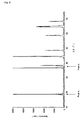
- the positive electrode active material thus produced contains Ca atoms on the surface of the particles thereof, has a diffraction peak of CaO derived from the Ca atoms when the positive electrode active material is analyzed by X-ray diffraction, and has a reduced amount of residual Li 2 CO 3 as a Li source. Further, a lithium secondary battery using the positive electrode active material is particularly excellent in cycle characteristics and safety.
- a first aspect of the present invention provides a positive electrode active material for lithium secondary batteries according to claim 1.
- y in the formula is in the range of 0 ⁇ y ⁇ 0.5, and is particularly preferably in the range of more than 0 and 0.4 or less in terms of the safety of lithium secondary batteries.
- z in the formula is in the range of 0 ⁇ z ⁇ 0.5, and particularly preferably in the range of more than 0 and 0.4 or less because the initial discharge capacity of lithium secondary batteries tends to be high.
- the positive electrode active material according to the present invention has an average particle size determined by a laser particle size distribution measurement method of from 1 to 30 ⁇ m, preferably from 5 to 25 ⁇ m. It is preferred that the average particle size be within these ranges because this allows a coating film having a uniform thickness to be formed.
- the positive electrode active material preferably has an average particle size of from 7 to 15 ⁇ m because the lithium secondary battery using this positive electrode active material has a balanced performance from the viewpoint of cycle characteristics and safety.
- the method of the present invention comprises furthermore a multistage firing including a firing at a temperature in the range of 200 to 400°C followed by a firing at a temperature in the range of 700 to 900°C.
- the composite oxyhydroxide can be obtained by yielding a precipitate of the composite hydroxide according to the above-described coprecipitation operation followed by blowing air into the reaction mixture to oxidize the composite oxide.
- the composite oxide can be obtained by yielding a precipitate of the composite hydroxide according to the above-described coprecipitation operation followed by heat-treating the precipitate, for example, at 200 to 500°C.
- the composite carbonate can be obtained by preparing the aqueous solution containing nickel, cobalt, and Me atoms and the aqueous solution of a complexing agent in the same manner as in the above-described coprecipitation operation and mixing the resulting aqueous solutions with the aqueous alkali solution as an aqueous solution of alkali carbonate or alkali hydrogen carbonate.
- the compound containing nickel, cobalt, and Me atoms have an average particle size as determined by a laser light scattering method of from 1 to 30.0 ⁇ m, preferably from 5.0 to 25.0 ⁇ m because such a compound has good reactivity.
- the preferred composition of the compound containing nickel, cobalt, and Me atoms is the molar ratio of y and z in the formula of the lithium composite oxide represented by general formula (1) as described above.
- the compound containing nickel, cobalt, and Me atoms may be a commercially available product.
- lithium compound used as the second raw material examples include an oxide, a hydroxide, a carbonate, a nitrate, and an organic acid salt of lithium.
- lithium hydroxide is particularly preferably used from the viewpoint of its reactivity with the compound containing nickel, cobalt, and Me atoms used as the first raw material. It is particularly preferred that the lithium compound have an average particle size as determined by a laser light scattering method of from 1 to 100 ⁇ m, preferably from 5 to 80 ⁇ m because such a compound has good reactivity.
- the calcium compound used as the third raw material is a component for reducing the residual Li 2 CO 3 in the positive electrode active material of the present invention.
- the calcium compound comprises calcium phosphate, calcium hydroxide, calcium hydrogen phosphate, calcium carbonate, calcium hypophosphite, and calcium phosphite.
- calcium phosphate and calcium hydroxide are preferred in that these compounds are highly effective in reducing the amount of residual Li 2 CO 3 and can impart excellent cycle characteristics and safety to the lithium secondary batteries using the positive electrode active material of the present invention.
- the physical properties and the like of the calcium compound is not limited, but it is particularly preferred that the calcium compound have an average particle size as determined by a laser light scattering method of from 1 to 30 ⁇ m, preferably from 5 to 10 ⁇ m because such a compound has good reactivity and is significantly effective in reducing the amount of residual Li 2 CO 3 .
- the compound containing nickel, cobalt, and Me atoms, the lithium compound, and the calcium compound used as the first to third raw materials, respectively preferably have an impurity content as low as possible in order to produce a high purity positive electrode active material.
- the positive electrode active material for lithium secondary batteries of the present invention can be obtained by firing a mixture comprising the compound containing nickel, cobalt, and Me atoms as the first raw material, the lithium compound as the second raw material, and the calcium compound as the third raw material so that the amount of the calcium compound added is determined in a specific range.
- the compound containing nickel, cobalt, and Me atoms as the first raw material, the lithium compound as the second raw material, and the calcium compound as the third raw material are mixed in a predetermined ratio.
- the mixing may be a dry process or a wet process, but a dry process is preferred because production is simple. In the case of dry blending, it is preferable to use a blender or the like so that raw materials are uniformly mixed.
- the blending ratio of the first raw material and the third raw material is determined so that the ratio of calcium atoms (Ca) in the calcium compound as the third raw material to the total amount (M) of nickel, cobalt, and Me atoms in the compound containing nickel, cobalt, and Me atoms as the first raw material is in the range of from 0.001 to 0.05, preferably from 0.005 to 0.03 in terms of the molar ratio (Ca/M).
- the amount of residual Li 2 CO 3 is reduced to 0.5% by weight or less, preferably to 0.4% by weight or less, most preferably to 0.3% by weight or less by determining the amount of Ca atoms blended in the above-described range.
- the resulting lithium secondary battery using such a positive electrode active material is particularly excellent in cycle characteristics and safety.
- the molar ratio (Ca/M) of Ca atoms is less than 0.001, the resulting lithium secondary battery will not have good cycle characteristics, and if the molar ratio (Ca/M) of Ca atoms exceeds 0.05, the resulting lithium secondary battery will have a reduced initial discharge capacity. Therefore, these molar ratios are not preferred.
- the ratio of lithium atoms (Li) in the lithium compound as the second raw material to the total amount (M) of nickel, cobalt, and Me atoms in the compound containing nickel, cobalt, and Me atoms as the first raw material is preferably determined in the range of from 0.98 to 1.2, preferably from 1.0 to 1.1 in terms of the molar ratio (Li/M).
- the resulting lithium secondary battery using such a positive electrode active material has high discharge capacity and is excellent in cycle characteristics by determining the amount of Li atoms blended in the above-described range.
- the resulting lithium secondary battery tends to show a rapid reduction in the initial discharge capacity, and if the molar ratio of Li atoms exceeds 1.2, the resulting lithium secondary battery tends to have a reduced cycle characteristics. Therefore, these molar ratios are not preferred.
- a mixture in which the raw materials are uniformly mixed is fired.
- the mixture is fired in the air or in an oxygen environment by multistage firing.
- the mixture is slowly fired at a temperature range of about 200 to 400°C where moisture contained in the raw materials disappears and then rapidly heated to a temperature range of 700 to 900°C followed by being fired for 1 to 30 hours.
- the firing may be performed any number of times as needed.
- a fired mixture is ground, and then the ground fired mixture may be fired again for the purpose of obtaining uniform powder characteristics.
- the positive electrode active material of the present invention obtained in this way has the above powder characteristics.
- Examples of the form of the current collector include foil, film, sheet, net, punched product, lath body, porous material, foam, fiber, and molded product of nonwoven fabric.
- the thickness of the current collector is not particularly limited, and is preferably in the range of from 1 to 500 ⁇ m.
- the negative electrode is formed by coating and drying a negative electrode material on a negative electrode current collector.
- the negative electrode current collector is not particularly limited as long as it is an electronic conductor which does not cause a chemical change in a constituted battery.
- Examples of the negative electrode current collector include stainless steel, nickel, copper, titanium, aluminum, baked carbon, those prepared by surface-treating the surface of copper or stainless steel with carbon, nickel, titanium, or silver, and an aluminum-cadmium alloy. Further, these materials may be used in the state where the surface thereof is oxidized, or may be used in the state where the surface of the current collector is imparted with unevenness by surface treatment.
- Examples of the form of the current collector include foil, film, sheet, net, punched product, lath body, porous material, foam, fiber, and molded product of nonwoven fabric.
- the thickness of the current collector is, but is not particularly limited, preferably in the range of from 1 to 500 ⁇ m.
- Examples of the metal composite oxide include compounds such as Sn p (M 1 ) 1-p (M 2 ) q O r (wherein M 1 represents one or more elements selected from Mn, Fe, Pb, and Ge; M 2 represents one or more elements selected from Al, B, P, Si, Group 1 elements, Group 2 elements, and Group 3 elements of the Periodic Table, and halogen elements; and p, q, and r are represented by the formulae 0 ⁇ p ⁇ 1, 1 ⁇ q ⁇ 3, and 1 ⁇ r ⁇ 8, respectively), Li x Fe 2 O 3 (0 ⁇ x ⁇ 1), and Li x WO 2 (0 ⁇ x ⁇ 1).
- the separator there is used an insulating thin film having high ion permeability and a predetermined mechanical strength.
- An olefinic polymer such as polypropylene, or glass fiber, or a sheet or nonwoven fabric made of polyethylene or the like is used because these materials have organic solvent resistance and hydrophobicity.
- the pore size of the separator may be generally within the range useful for batteries, and it is, for example, from 0.01 to 10 ⁇ m.
- the thickness of the separator may be within the general range for batteries, and it is, for example, from 5 to 300 ⁇ m. Note that, when a solid electrolyte such as a polymer is used as an electrolyte to be described below, the solid electrolyte may also be used as the separator.
- organic solid electrolyte examples include a polymer containing an ionic dissociation group such as a polyethylene derivative, a polyethylene oxide derivative or a polymer containing the same, a polypropylene oxide derivative or a polymer containing the same, a phosphoric ester polymer, polyphosphazene, polyaziridine, polyethylene sulfide, polyvinyl alcohol, polyvinylidene fluoride, and polyhexafluoropropylene, and a mixture of the polymer containing an ionic dissociation group and the above nonaqueous electrolyte solution.
- an ionic dissociation group such as a polyethylene derivative, a polyethylene oxide derivative or a polymer containing the same, a polypropylene oxide derivative or a polymer containing the same, a phosphoric ester polymer, polyphosphazene, polyaziridine, polyethylene sulfide, polyvinyl alcohol, polyvinylidene fluoride, and
- the inorganic solid electrolyte is an amorphous material (glass)
- the following compounds can be contained in the inorganic solid electrolyte: compounds containing oxygen such as lithium phosphate (Li 3 PO 4 ), lithium oxide (Li 2 O), lithium sulfate (Li 2 SO 4 ), phosphorus oxide (P 2 O 5 ), and lithium borate (Li 3 BO 3 ); and compounds containing nitrogen such as Li 3 PO 4-x N 2x/3 (wherein x is represented by the formula 0 ⁇ x ⁇ 4), Li 4 SiO 4-x N 2x/3 (wherein x is represented by the formula 0 ⁇ x ⁇ 4), Li 4 GeO 4-x N 2x/3 (wherein x is represented by the formula 0 ⁇ x ⁇ 4), and Li 3 BO 3-x N 2x/3 (wherein x is represented by the formula 0 ⁇ x ⁇ 3).
- Addition of the compounds containing oxygen or the compounds containing nitrogen will increase the clearance between the amorphous
- the lithium salt there is used a material which is dissolved in the above nonaqueous electrolyte.
- the lithium salt include LiCl, LiBr, LiI, LiClO 4 , LiBF 4 , LiB 10 Cl 10 , LiPF 6 , LiCF 3 SO 3 , LiCF 3 CO 2 , LiAsF 6 , LiSbF 6 , LiB 10 Cl 10 , LiAlCl 4 , CH 3 SO 3 Li, CF 3 SO 3 Li, (CF 3 SO 2 ) 2 NLi, chloroborane lithium, lower aliphatic carboxylic acid lithium, 4-phenyl lithium borate, and imides, and a salt obtained by mixing two or more of the above lithium salts.
- the lithium secondary battery according to the present invention is a lithium secondary battery excellent in battery performance, particularly cycle characteristics, and the shape of the battery may be any shape, such as a button, a sheet, a cylinder, a square, and a coin type.
- Ca 3 (PO 4 ) 2 and Ca(OH) 2 there were used those manufactured by Junsei Chemical Co., Ltd.
- BaHPO 4 and Ba(OH) 2 ⁇ 8H 2 O there were used those manufactured by Kanto Chemical Co., Inc.
- positive electrode active materials to which calcium phosphate is not added were prepared as Comparative Examples 1, 4, and 5.
- the manufactured lithium secondary battery was operated under the following conditions at room temperature to evaluate the following battery performance.
- the positive electrode active material of the present invention is excellent in coating stability, has an initial discharge of 160 (mAH/g) or more which is a practical level, and has a capacity maintenance rate of 90% or more, indicating that this positive electrode active material is excellent also in cycle characteristics.
- the positive electrode active materials in Comparative Examples 1 and 2 and Comparative Examples 4 to 9 have poor coating stability; and the positive electrode active material in Comparative Example 3 is excellent in coating stability but has a capacity maintenance rate of less than 90%, indicating that it has a problem in cycle characteristics.
Landscapes
- Chemical & Material Sciences (AREA)
- Inorganic Chemistry (AREA)
- Organic Chemistry (AREA)
- Chemical Kinetics & Catalysis (AREA)
- Electrochemistry (AREA)
- General Chemical & Material Sciences (AREA)
- Composite Materials (AREA)
- Engineering & Computer Science (AREA)
- Manufacturing & Machinery (AREA)
- Battery Electrode And Active Subsutance (AREA)
- Inorganic Compounds Of Heavy Metals (AREA)
Claims (7)
- Aktives positive für Lithium-Akkumulatorenbatterien, umfassend ein gemischtes Lithiumoxid, welches Li, Ni, Co und Me in den in der folgenden allgemeinen Formel (1) angegebenen relativen Mengen enthält:
LixNi1-y-zCoyMezO2 (1),
worin Me für ein Metallelement mit einer Ordnungszahl von 11 oder mehr außer Co une Ni steht; und x, y und z durch die folgenden Formeln 0,98 ≤ x ≤ 1,20, 0 < y ≤ 0,5 bzw. 0 < z ≤ 0,5 angegeben werden mit der Maßgabe, dass y + z < 1, und welches des Weiteren Ca-Atome enthält, wobei der Gehalt an Ca-Atomen 0,04 is 2,1 Gew.-% basierend auf dem aktiven positive Elektrode-Material beträgt; und dadurch gekennzeichnet, dass, wenn das aktive positive Elektrode-Material durch Röntgenbeugung unter Verwendung von Cu-Kα-Strahlung als Strahlungsquelle analysiert wird, das Intensitätsverhältnis b/a von b, dem Beugungspeak bei 2θ = 18,7 ± 0,2°, zu a, dem Beugungspeak bei 2θ = 37,4 ± 0,2°, abgeleitet von CaO, 10 bis 150 beträgt. - Verfahren zum Herstellen des aktiven positive Elektrode-Materials für Lithium-Akkumulatorenbatterien nach Anspruch 1, welches umfasst, eine Verbindung, welche Nickel-, Cobalt- und Me-Atome enthält, mit einer Lithiumverbindung und einer Calciumverbindung zu vermischen und die resultierende Mischung zu brennen.
- Aktives positive Elektrode-Material für Lithium-Akkumulatorenbatterien nach Anspruch 1 oder Anspruch 2, wobei Me für ein Mn-Atom oder ein Al-Atom steht.
- Verfahren zum Herstellen eines aktiven positive Elektrode-Materials für Lithium-Akkumulatorenbatterien, wobei das Verfahren umfasst: Mischen einer Verbindung, Welche Nickel-, Cobalt- und Me-Atome, wobei Me für ein Metallelement mit einer Ordnungszahl von 11 oder mehr außer Co und Ni steht, enthält, mit einer Lithiumverbindung und einer Calciumverbindung und Brennen des resultierenden Gemischs, um ein aktives positive Elektrode-Material, welches Ca-Atome enthält, herzustellen, dadurch gekennzeichnet, dass eine oder mehrere Calciumverbindungen, ausgewählt aus der Gruppe bestehend aus Calciumphosphat, Calciumhydroxid, Calciumhydrogenphosphat, Calciumcarbonat, Calciumhypophosphit und Calciumphosphit, als die Calciumverbindung verwendet werden; und die Menge der Calciumverbindung, welche hinzu gegeben wird, im Bereich von 0,001 bis 0,05 als das Molverhältnis Ca/M von Ca-Atomen in der Calciumverbindung zu der Gesamtmenge M von Ni-Atomen, Co-Atomen und Me-Atomen in der Nickel-, Cobalt- und Me-Atome enthaltenden Verbindung bestimmt wird; und dadurch gekennzeichnet, dass das Brennen ein in mehreren Stufen erfolgendes Brennen ist, welches ein Brennen bei einer Temperatur im Bereich von 200 bis 400°C, gefolgt von einem Brennen bei einer Temperatur im Bereich von 700 bis 900°C, umfasst.
- Verfahren zum Herstellen eines aktiven positive Elektrode-Materials für Lithium-Akkumulatorenbatterien nach Anspruch 4, wobei die Nickel-, Cobalt- und Mm-atome enthaltende Verbindung ein gemischtes Hydroxid, welches alle von den Nickel-, Cobalt- und Me-Atomen enthält, ist.
- Verfahren zum Herstellen eines aktiven positive Elektrode-Materials für Lithium-Akkumulatorenbatterien nach Anspruch 4 der 5, wobei die Calciumverbindung Calciumphosphat oder Calciumhydroxid ist.
- Lithium-Akkumulatorenbatterie, gekennzeichnet durch Verwenden des aktiven positive Elektrode-Materials für Lithium-Akkumulatorenbatterien nach einem der Ansprüche 1 bis 3.
Applications Claiming Priority (2)
| Application Number | Priority Date | Filing Date | Title |
|---|---|---|---|
| JP2007193933A JP5341325B2 (ja) | 2007-07-25 | 2007-07-25 | リチウム二次電池用正極活物質、その製造方法及びリチウム二次電池 |
| PCT/JP2008/063230 WO2009014158A1 (ja) | 2007-07-25 | 2008-07-24 | リチウム二次電池用正極活物質、その製造方法及びリチウム二次電池 |
Publications (3)
| Publication Number | Publication Date |
|---|---|
| EP2178138A1 EP2178138A1 (de) | 2010-04-21 |
| EP2178138A4 EP2178138A4 (de) | 2011-12-21 |
| EP2178138B1 true EP2178138B1 (de) | 2013-04-17 |
Family
ID=40281407
Family Applications (1)
| Application Number | Title | Priority Date | Filing Date |
|---|---|---|---|
| EP08791482.6A Not-in-force EP2178138B1 (de) | 2007-07-25 | 2008-07-24 | Positives aktives elektrodenmaterial für eine lithiumsekundärbatterie, herstellungsverfahren dafür und lithiumsekundärbatterie |
Country Status (6)
| Country | Link |
|---|---|
| US (2) | US20110020704A1 (de) |
| EP (1) | EP2178138B1 (de) |
| JP (1) | JP5341325B2 (de) |
| KR (1) | KR101478861B1 (de) |
| CN (1) | CN101765934B (de) |
| WO (1) | WO2009014158A1 (de) |
Families Citing this family (33)
| Publication number | Priority date | Publication date | Assignee | Title |
|---|---|---|---|---|
| CN103069623B (zh) * | 2010-08-09 | 2015-07-22 | 株式会社村田制作所 | 电极活性物质及具备该电极活性物质的非水电解质二次电池 |
| KR101440886B1 (ko) | 2011-06-22 | 2014-09-18 | 삼성에스디아이 주식회사 | 고체 전해질, 그 제조방법 및 이를 채용한 리튬 전지 |
| JP6226430B2 (ja) * | 2012-01-17 | 2017-11-08 | エルジー・ケム・リミテッド | 正極活物質、及びこれを含み、不純物またはスウェリング制御のためのリチウム二次電池、並びに生産性が向上した正極活物質の製造方法 |
| JP6201277B2 (ja) * | 2013-09-13 | 2017-09-27 | 住友金属鉱山株式会社 | 非水系電解質二次電池用正極活物質とその製造方法 |
| US9391327B2 (en) * | 2013-11-22 | 2016-07-12 | Samsung Sdi Co, Ltd. | Positive electrode for rechargeable lithium battery, preparing same, and rechargeable lithium battery |
| WO2016160703A1 (en) | 2015-03-27 | 2016-10-06 | Harrup Mason K | All-inorganic solvents for electrolytes |
| JP6827695B2 (ja) * | 2016-02-02 | 2021-02-10 | 日本化学産業株式会社 | リチウムイオン二次電池用正極活物質 |
| WO2017146248A1 (ja) * | 2016-02-26 | 2017-08-31 | 三井金属鉱業株式会社 | 層構造を有するリチウム金属複合酸化物 |
| JP6970368B2 (ja) * | 2016-06-07 | 2021-11-24 | 住友金属鉱山株式会社 | リチウム化合物粉体、このリチウム化合物粉体の製造方法、および非水系電解質二次電池用正極活物質の製造方法 |
| WO2018016525A1 (ja) * | 2016-07-22 | 2018-01-25 | ユミコア | リチウム金属複合酸化物粉末 |
| US10707531B1 (en) | 2016-09-27 | 2020-07-07 | New Dominion Enterprises Inc. | All-inorganic solvents for electrolytes |
| CN112020762B (zh) | 2018-04-22 | 2024-04-26 | 艾普诺瓦泰克公司 | 增强型薄膜器件 |
| WO2021059728A1 (ja) * | 2019-09-27 | 2021-04-01 | パナソニックIpマネジメント株式会社 | 非水電解質二次電池用正極活物質、及び非水電解質二次電池 |
| EP3813240A1 (de) | 2019-10-25 | 2021-04-28 | Epinovatech AB | Gleichstrom-wechselstrom-umrichterschaltung |
| WO2021095360A1 (ja) * | 2019-11-14 | 2021-05-20 | パナソニックIpマネジメント株式会社 | 非水電解質二次電池用正極活物質、及び非水電解質二次電池 |
| US20230032577A1 (en) * | 2019-11-29 | 2023-02-02 | Panasonic Intellectual Property Management Co., Ltd. | Positive-electrode active material for nonaqueous-electrolyte secondary battery, method for producing positive-electrode active material for nonaqueous-electrolyte secondary battery, and nonaqueous-electrolyte secondary battery |
| EP3836227A1 (de) | 2019-12-11 | 2021-06-16 | Epinovatech AB | Halbleiterschichtstruktur |
| JP6734491B1 (ja) * | 2020-01-17 | 2020-08-05 | 住友化学株式会社 | 全固体リチウムイオン電池用正極活物質、電極及び全固体リチウムイオン電池 |
| EP4521491A3 (de) * | 2020-01-24 | 2025-03-26 | Epinovatech AB | Festkörperbatterie-schichtstruktur und verfahren zu deren herstellung |
| JP7692183B2 (ja) * | 2020-01-31 | 2025-06-13 | パナソニックIpマネジメント株式会社 | 非水電解質二次電池用正極活物質、非水電解質二次電池用正極活物質の製造方法、及び非水電解質二次電池 |
| EP3866189B1 (de) | 2020-02-14 | 2022-09-28 | Epinovatech AB | Mmic-frontend-modul |
| EP3879706A1 (de) | 2020-03-13 | 2021-09-15 | Epinovatech AB | Feldprogrammierbare gate-array-vorrichtung |
| CN115398671A (zh) * | 2020-03-31 | 2022-11-25 | 松下知识产权经营株式会社 | 二次电池用正极和二次电池 |
| EP3907877A1 (de) | 2020-05-07 | 2021-11-10 | Epinovatech AB | Induktionsmaschine |
| EP3916804A1 (de) | 2020-05-29 | 2021-12-01 | Epinovatech AB | Vertikaler hemt und verfahren zur herstellung eines vertikalen hemts |
| CN121307013A (zh) * | 2020-05-29 | 2026-01-09 | 松下知识产权经营株式会社 | 非水电解质二次电池用正极活性物质和非水电解质二次电池 |
| EP4090139B1 (de) | 2021-05-10 | 2023-10-25 | Epinovatech AB | Stromwandlervorrichtung |
| EP4101945B1 (de) | 2021-06-09 | 2024-05-15 | Epinovatech AB | Vorrichtung zur durchführung von wasserelektrolyse und system dafür |
| US20250379228A1 (en) * | 2022-06-29 | 2025-12-11 | Panasonic Intellectual Property Management Co., Ltd. | Positive electrode active material for nonaqueous electrolyte secondary batteries, method for producing positive electrode active material for nonaqueous electrolyte secondary batteries, and nonaqueous electrolyte secondary battery |
| EP4550466A4 (de) * | 2022-06-29 | 2025-12-24 | Panasonic Ip Man Co Ltd | Positivelektrodenaktivmaterial für eine sekundärzelle mit wasserfreiem elektrolyt und sekundärzelle mit wasserfreiem elektrolyt |
| CN115472776B (zh) * | 2022-11-01 | 2023-03-14 | 宁德新能源科技有限公司 | 电化学装置及电子装置 |
| JP7353454B1 (ja) | 2022-11-25 | 2023-09-29 | 住友化学株式会社 | リチウム金属複合酸化物、リチウム二次電池用正極活物質、リチウム二次電池用正極及びリチウム二次電池 |
| WO2026070395A1 (ja) * | 2024-09-27 | 2026-04-02 | パナソニックIpマネジメント株式会社 | 非水電解質二次電池用正極活物質および非水電解質二次電池 |
Family Cites Families (15)
| Publication number | Priority date | Publication date | Assignee | Title |
|---|---|---|---|---|
| JP2561556B2 (ja) | 1990-08-24 | 1996-12-11 | 本田技研工業株式会社 | リチウム二次電池用正極活物質 |
| JP3884796B2 (ja) | 1996-07-12 | 2007-02-21 | 日本化学工業株式会社 | Ni−Co系複合水酸化物の製造方法 |
| JP3842348B2 (ja) | 1996-09-02 | 2006-11-08 | 日本化学工業株式会社 | Ni−Mn系複合水酸化物の製造方法 |
| JPH1081520A (ja) | 1996-09-02 | 1998-03-31 | Nippon Chem Ind Co Ltd | Mn−Co系複合水酸化物、その製造方法及びリチウム二次電池用正極活物質用原料 |
| JP2002100356A (ja) * | 2000-09-25 | 2002-04-05 | Seimi Chem Co Ltd | リチウム二次電池 |
| JP2002201028A (ja) | 2000-11-06 | 2002-07-16 | Tanaka Chemical Corp | 高密度コバルトマンガン共沈水酸化ニッケル及びその製造法 |
| JP4325112B2 (ja) * | 2000-12-28 | 2009-09-02 | ソニー株式会社 | 正極活物質及び非水電解質二次電池 |
| JP2004111076A (ja) * | 2002-09-13 | 2004-04-08 | Sony Corp | 正極活物質及び非水電解質二次電池 |
| JP4217710B2 (ja) * | 2003-04-17 | 2009-02-04 | Agcセイミケミカル株式会社 | リチウム−ニッケル−コバルト−マンガン含有複合酸化物の製造方法 |
| JP5105341B2 (ja) * | 2003-11-17 | 2012-12-26 | パナソニック株式会社 | 非水電解液二次電池 |
| CN100487962C (zh) * | 2005-03-23 | 2009-05-13 | 松下电器产业株式会社 | 锂离子二次电池及其制备方法 |
| JP5208353B2 (ja) | 2005-03-31 | 2013-06-12 | 東洋炭素株式会社 | 正極活物質及びその製造方法 |
| JP4781004B2 (ja) * | 2005-04-28 | 2011-09-28 | パナソニック株式会社 | 非水電解液二次電池 |
| US20090181305A1 (en) * | 2005-06-14 | 2009-07-16 | Masatoshi Nagayama | Non-Aqueous Electrolyte Secondary Battery |
| JP4938286B2 (ja) | 2005-11-02 | 2012-05-23 | 東洋炭素株式会社 | リチウムイオン二次電池 |
-
2007
- 2007-07-25 JP JP2007193933A patent/JP5341325B2/ja not_active Expired - Fee Related
-
2008
- 2008-07-24 EP EP08791482.6A patent/EP2178138B1/de not_active Not-in-force
- 2008-07-24 CN CN2008801002079A patent/CN101765934B/zh active Active
- 2008-07-24 WO PCT/JP2008/063230 patent/WO2009014158A1/ja not_active Ceased
- 2008-07-24 KR KR1020107001532A patent/KR101478861B1/ko active Active
- 2008-07-24 US US12/667,191 patent/US20110020704A1/en not_active Abandoned
-
2012
- 2012-03-21 US US13/426,188 patent/US20120175552A1/en not_active Abandoned
Also Published As
| Publication number | Publication date |
|---|---|
| JP2009032467A (ja) | 2009-02-12 |
| US20120175552A1 (en) | 2012-07-12 |
| US20110020704A1 (en) | 2011-01-27 |
| JP5341325B2 (ja) | 2013-11-13 |
| CN101765934B (zh) | 2013-03-06 |
| WO2009014158A1 (ja) | 2009-01-29 |
| EP2178138A1 (de) | 2010-04-21 |
| EP2178138A4 (de) | 2011-12-21 |
| KR101478861B1 (ko) | 2015-01-02 |
| CN101765934A (zh) | 2010-06-30 |
| KR20100049556A (ko) | 2010-05-12 |
Similar Documents
| Publication | Publication Date | Title |
|---|---|---|
| EP2178138A1 (de) | Positives aktives elektrodenmaterial für eine lithiumsekundärbatterie, herstellungsverfahren dafür und lithiumsekundärbatterie | |
| JP5490458B2 (ja) | リチウム二次電池用正極活物質、その製造方法及びリチウム二次電池 | |
| JP5732351B2 (ja) | コバルト酸リチウムの製造方法 | |
| US8003256B2 (en) | Positive electrode active material having magnesium atoms and sulfate groups, method for manufacturing the same, and lithium secondary battery having the same | |
| JP5749650B2 (ja) | リチウム二次電池用正極活物質、その製造方法及びリチウム二次電池 | |
| JP5897356B2 (ja) | リチウム二次電池用正極活物質の製造方法 | |
| US20080241693A1 (en) | Lithium transition metal complex oxide for lithium ion secondary battery cathode active material and method for producing the same, lithium ion secondary battery cathode active material, and lithium ion secondary battery | |
| KR20120054532A (ko) | 리튬 이차전지용 양극 활물질, 그 제조방법 및 리튬 이차전지 | |
| JP5490457B2 (ja) | リチウム二次電池用正極活物質、その製造方法及びリチウム二次電池 | |
| CN102668187A (zh) | 锂二次电池用正极活性物质、其制造方法和锂二次电池 | |
| KR100854241B1 (ko) | 리튬 코발트계 복합 산화물, 그의 제조 방법, 리튬 이차전지 정극 활성 물질 및 리튬 이차 전지 | |
| JP2009534288A (ja) | 電極活性材料の作製方法 | |
| JP5897357B2 (ja) | リチウム二次電池正極活物質の製造方法、リチウム二次電池用正極活物質及びリチウム二次電池 | |
| JP4754209B2 (ja) | リチウムコバルト系複合酸化物粉末の製造方法 | |
| JP4271488B2 (ja) | リチウムコバルト系複合酸化物、その製造方法、リチウム二次電池正極活物質及びリチウム二次電池 | |
| JP5508322B2 (ja) | リチウムコバルト系複合酸化物粉末、リチウム二次電池正極活物質及びリチウム二次電池 | |
| JP7851901B2 (ja) | リチウム二次電池用正極活物質、その製造方法及びリチウム二次電池 | |
| KR20260045901A (ko) | 리튬 2차 전지용 양극 활물질 및 리튬 2차 전지 | |
| KR20060102522A (ko) | 망간산리튬, 그의 제조 방법, 리튬 이차 전지 정극 부활성물질, 리튬 이차 전지 정극 활성 물질 및 리튬 이차 전지 |
Legal Events
| Date | Code | Title | Description |
|---|---|---|---|
| PUAI | Public reference made under article 153(3) epc to a published international application that has entered the european phase |
Free format text: ORIGINAL CODE: 0009012 |
|
| 17P | Request for examination filed |
Effective date: 20100203 |
|
| AK | Designated contracting states |
Kind code of ref document: A1 Designated state(s): AT BE BG CH CY CZ DE DK EE ES FI FR GB GR HR HU IE IS IT LI LT LU LV MC MT NL NO PL PT RO SE SI SK TR |
|
| AX | Request for extension of the european patent |
Extension state: AL BA MK RS |
|
| DAX | Request for extension of the european patent (deleted) | ||
| A4 | Supplementary search report drawn up and despatched |
Effective date: 20111123 |
|
| RIC1 | Information provided on ipc code assigned before grant |
Ipc: C01G 53/00 20060101ALI20111115BHEP Ipc: H01M 4/525 20100101ALI20111115BHEP Ipc: H01M 10/052 20100101AFI20111115BHEP Ipc: H01M 4/505 20100101ALI20111115BHEP |
|
| REG | Reference to a national code |
Ref country code: DE Ref legal event code: R079 Ref document number: 602008023919 Country of ref document: DE Free format text: PREVIOUS MAIN CLASS: H01M0004520000 Ipc: H01M0010052000 |
|
| GRAP | Despatch of communication of intention to grant a patent |
Free format text: ORIGINAL CODE: EPIDOSNIGR1 |
|
| RIC1 | Information provided on ipc code assigned before grant |
Ipc: C01G 53/00 20060101ALI20121024BHEP Ipc: H01M 4/36 20060101ALI20121024BHEP Ipc: H01M 4/525 20100101ALI20121024BHEP Ipc: H01M 4/505 20100101ALI20121024BHEP Ipc: H01M 10/052 20100101AFI20121024BHEP |
|
| GRAS | Grant fee paid |
Free format text: ORIGINAL CODE: EPIDOSNIGR3 |
|
| GRAA | (expected) grant |
Free format text: ORIGINAL CODE: 0009210 |
|
| AK | Designated contracting states |
Kind code of ref document: B1 Designated state(s): AT BE BG CH CY CZ DE DK EE ES FI FR GB GR HR HU IE IS IT LI LT LU LV MC MT NL NO PL PT RO SE SI SK TR |
|
| REG | Reference to a national code |
Ref country code: GB Ref legal event code: FG4D |
|
| REG | Reference to a national code |
Ref country code: CH Ref legal event code: EP |
|
| REG | Reference to a national code |
Ref country code: IE Ref legal event code: FG4D |
|
| REG | Reference to a national code |
Ref country code: AT Ref legal event code: REF Ref document number: 607792 Country of ref document: AT Kind code of ref document: T Effective date: 20130515 |
|
| REG | Reference to a national code |
Ref country code: DE Ref legal event code: R096 Ref document number: 602008023919 Country of ref document: DE Effective date: 20130613 |
|
| REG | Reference to a national code |
Ref country code: AT Ref legal event code: MK05 Ref document number: 607792 Country of ref document: AT Kind code of ref document: T Effective date: 20130417 |
|
| REG | Reference to a national code |
Ref country code: LT Ref legal event code: MG4D |
|
| REG | Reference to a national code |
Ref country code: NL Ref legal event code: VDEP Effective date: 20130417 |
|
| PG25 | Lapsed in a contracting state [announced via postgrant information from national office to epo] |
Ref country code: SI Free format text: LAPSE BECAUSE OF FAILURE TO SUBMIT A TRANSLATION OF THE DESCRIPTION OR TO PAY THE FEE WITHIN THE PRESCRIBED TIME-LIMIT Effective date: 20130417 Ref country code: NO Free format text: LAPSE BECAUSE OF FAILURE TO SUBMIT A TRANSLATION OF THE DESCRIPTION OR TO PAY THE FEE WITHIN THE PRESCRIBED TIME-LIMIT Effective date: 20130717 Ref country code: PT Free format text: LAPSE BECAUSE OF FAILURE TO SUBMIT A TRANSLATION OF THE DESCRIPTION OR TO PAY THE FEE WITHIN THE PRESCRIBED TIME-LIMIT Effective date: 20130819 Ref country code: ES Free format text: LAPSE BECAUSE OF FAILURE TO SUBMIT A TRANSLATION OF THE DESCRIPTION OR TO PAY THE FEE WITHIN THE PRESCRIBED TIME-LIMIT Effective date: 20130728 Ref country code: FI Free format text: LAPSE BECAUSE OF FAILURE TO SUBMIT A TRANSLATION OF THE DESCRIPTION OR TO PAY THE FEE WITHIN THE PRESCRIBED TIME-LIMIT Effective date: 20130417 Ref country code: AT Free format text: LAPSE BECAUSE OF FAILURE TO SUBMIT A TRANSLATION OF THE DESCRIPTION OR TO PAY THE FEE WITHIN THE PRESCRIBED TIME-LIMIT Effective date: 20130417 Ref country code: SE Free format text: LAPSE BECAUSE OF FAILURE TO SUBMIT A TRANSLATION OF THE DESCRIPTION OR TO PAY THE FEE WITHIN THE PRESCRIBED TIME-LIMIT Effective date: 20130417 Ref country code: LT Free format text: LAPSE BECAUSE OF FAILURE TO SUBMIT A TRANSLATION OF THE DESCRIPTION OR TO PAY THE FEE WITHIN THE PRESCRIBED TIME-LIMIT Effective date: 20130417 Ref country code: IS Free format text: LAPSE BECAUSE OF FAILURE TO SUBMIT A TRANSLATION OF THE DESCRIPTION OR TO PAY THE FEE WITHIN THE PRESCRIBED TIME-LIMIT Effective date: 20130817 Ref country code: BE Free format text: LAPSE BECAUSE OF FAILURE TO SUBMIT A TRANSLATION OF THE DESCRIPTION OR TO PAY THE FEE WITHIN THE PRESCRIBED TIME-LIMIT Effective date: 20130417 Ref country code: GR Free format text: LAPSE BECAUSE OF FAILURE TO SUBMIT A TRANSLATION OF THE DESCRIPTION OR TO PAY THE FEE WITHIN THE PRESCRIBED TIME-LIMIT Effective date: 20130718 |
|
| PG25 | Lapsed in a contracting state [announced via postgrant information from national office to epo] |
Ref country code: HR Free format text: LAPSE BECAUSE OF FAILURE TO SUBMIT A TRANSLATION OF THE DESCRIPTION OR TO PAY THE FEE WITHIN THE PRESCRIBED TIME-LIMIT Effective date: 20130417 Ref country code: PL Free format text: LAPSE BECAUSE OF FAILURE TO SUBMIT A TRANSLATION OF THE DESCRIPTION OR TO PAY THE FEE WITHIN THE PRESCRIBED TIME-LIMIT Effective date: 20130417 Ref country code: BG Free format text: LAPSE BECAUSE OF FAILURE TO SUBMIT A TRANSLATION OF THE DESCRIPTION OR TO PAY THE FEE WITHIN THE PRESCRIBED TIME-LIMIT Effective date: 20130717 Ref country code: LV Free format text: LAPSE BECAUSE OF FAILURE TO SUBMIT A TRANSLATION OF THE DESCRIPTION OR TO PAY THE FEE WITHIN THE PRESCRIBED TIME-LIMIT Effective date: 20130417 Ref country code: CY Free format text: LAPSE BECAUSE OF FAILURE TO SUBMIT A TRANSLATION OF THE DESCRIPTION OR TO PAY THE FEE WITHIN THE PRESCRIBED TIME-LIMIT Effective date: 20130417 |
|
| PG25 | Lapsed in a contracting state [announced via postgrant information from national office to epo] |
Ref country code: CZ Free format text: LAPSE BECAUSE OF FAILURE TO SUBMIT A TRANSLATION OF THE DESCRIPTION OR TO PAY THE FEE WITHIN THE PRESCRIBED TIME-LIMIT Effective date: 20130417 Ref country code: DK Free format text: LAPSE BECAUSE OF FAILURE TO SUBMIT A TRANSLATION OF THE DESCRIPTION OR TO PAY THE FEE WITHIN THE PRESCRIBED TIME-LIMIT Effective date: 20130417 Ref country code: EE Free format text: LAPSE BECAUSE OF FAILURE TO SUBMIT A TRANSLATION OF THE DESCRIPTION OR TO PAY THE FEE WITHIN THE PRESCRIBED TIME-LIMIT Effective date: 20130417 Ref country code: SK Free format text: LAPSE BECAUSE OF FAILURE TO SUBMIT A TRANSLATION OF THE DESCRIPTION OR TO PAY THE FEE WITHIN THE PRESCRIBED TIME-LIMIT Effective date: 20130417 |
|
| PLBE | No opposition filed within time limit |
Free format text: ORIGINAL CODE: 0009261 |
|
| STAA | Information on the status of an ep patent application or granted ep patent |
Free format text: STATUS: NO OPPOSITION FILED WITHIN TIME LIMIT |
|
| PG25 | Lapsed in a contracting state [announced via postgrant information from national office to epo] |
Ref country code: IT Free format text: LAPSE BECAUSE OF FAILURE TO SUBMIT A TRANSLATION OF THE DESCRIPTION OR TO PAY THE FEE WITHIN THE PRESCRIBED TIME-LIMIT Effective date: 20130417 Ref country code: MC Free format text: LAPSE BECAUSE OF FAILURE TO SUBMIT A TRANSLATION OF THE DESCRIPTION OR TO PAY THE FEE WITHIN THE PRESCRIBED TIME-LIMIT Effective date: 20130417 Ref country code: NL Free format text: LAPSE BECAUSE OF FAILURE TO SUBMIT A TRANSLATION OF THE DESCRIPTION OR TO PAY THE FEE WITHIN THE PRESCRIBED TIME-LIMIT Effective date: 20130417 Ref country code: RO Free format text: LAPSE BECAUSE OF FAILURE TO SUBMIT A TRANSLATION OF THE DESCRIPTION OR TO PAY THE FEE WITHIN THE PRESCRIBED TIME-LIMIT Effective date: 20130417 |
|
| REG | Reference to a national code |
Ref country code: CH Ref legal event code: PL |
|
| 26N | No opposition filed |
Effective date: 20140120 |
|
| REG | Reference to a national code |
Ref country code: IE Ref legal event code: MM4A |
|
| PG25 | Lapsed in a contracting state [announced via postgrant information from national office to epo] |
Ref country code: CH Free format text: LAPSE BECAUSE OF NON-PAYMENT OF DUE FEES Effective date: 20130731 Ref country code: LI Free format text: LAPSE BECAUSE OF NON-PAYMENT OF DUE FEES Effective date: 20130731 |
|
| REG | Reference to a national code |
Ref country code: DE Ref legal event code: R097 Ref document number: 602008023919 Country of ref document: DE Effective date: 20140120 |
|
| PG25 | Lapsed in a contracting state [announced via postgrant information from national office to epo] |
Ref country code: IE Free format text: LAPSE BECAUSE OF NON-PAYMENT OF DUE FEES Effective date: 20130724 |
|
| PG25 | Lapsed in a contracting state [announced via postgrant information from national office to epo] |
Ref country code: TR Free format text: LAPSE BECAUSE OF FAILURE TO SUBMIT A TRANSLATION OF THE DESCRIPTION OR TO PAY THE FEE WITHIN THE PRESCRIBED TIME-LIMIT Effective date: 20130417 Ref country code: MT Free format text: LAPSE BECAUSE OF FAILURE TO SUBMIT A TRANSLATION OF THE DESCRIPTION OR TO PAY THE FEE WITHIN THE PRESCRIBED TIME-LIMIT Effective date: 20130417 |
|
| PG25 | Lapsed in a contracting state [announced via postgrant information from national office to epo] |
Ref country code: HU Free format text: LAPSE BECAUSE OF FAILURE TO SUBMIT A TRANSLATION OF THE DESCRIPTION OR TO PAY THE FEE WITHIN THE PRESCRIBED TIME-LIMIT; INVALID AB INITIO Effective date: 20080724 Ref country code: LU Free format text: LAPSE BECAUSE OF NON-PAYMENT OF DUE FEES Effective date: 20130724 |
|
| REG | Reference to a national code |
Ref country code: FR Ref legal event code: PLFP Year of fee payment: 9 |
|
| REG | Reference to a national code |
Ref country code: FR Ref legal event code: PLFP Year of fee payment: 10 |
|
| REG | Reference to a national code |
Ref country code: FR Ref legal event code: PLFP Year of fee payment: 11 |
|
| PGFP | Annual fee paid to national office [announced via postgrant information from national office to epo] |
Ref country code: DE Payment date: 20240719 Year of fee payment: 17 |
|
| PGFP | Annual fee paid to national office [announced via postgrant information from national office to epo] |
Ref country code: GB Payment date: 20240723 Year of fee payment: 17 |
|
| PGFP | Annual fee paid to national office [announced via postgrant information from national office to epo] |
Ref country code: FR Payment date: 20240729 Year of fee payment: 17 |
|
| REG | Reference to a national code |
Ref country code: DE Ref legal event code: R119 Ref document number: 602008023919 Country of ref document: DE |
|
| GBPC | Gb: european patent ceased through non-payment of renewal fee |
Effective date: 20250724 |
|
| PG25 | Lapsed in a contracting state [announced via postgrant information from national office to epo] |
Ref country code: GB Free format text: LAPSE BECAUSE OF NON-PAYMENT OF DUE FEES Effective date: 20250724 |
|
| PG25 | Lapsed in a contracting state [announced via postgrant information from national office to epo] |
Ref country code: DE Free format text: LAPSE BECAUSE OF NON-PAYMENT OF DUE FEES Effective date: 20260203 |
|
| PG25 | Lapsed in a contracting state [announced via postgrant information from national office to epo] |
Ref country code: FR Free format text: LAPSE BECAUSE OF NON-PAYMENT OF DUE FEES Effective date: 20250731 |