EP2178243A1 - Vergebührungsverfahren, system, geräte und nachrichtenverarbeitungsgeräte - Google Patents
Vergebührungsverfahren, system, geräte und nachrichtenverarbeitungsgeräte Download PDFInfo
- Publication number
- EP2178243A1 EP2178243A1 EP08748573A EP08748573A EP2178243A1 EP 2178243 A1 EP2178243 A1 EP 2178243A1 EP 08748573 A EP08748573 A EP 08748573A EP 08748573 A EP08748573 A EP 08748573A EP 2178243 A1 EP2178243 A1 EP 2178243A1
- Authority
- EP
- European Patent Office
- Prior art keywords
- message
- receiver
- charging
- information
- media
- Prior art date
- Legal status (The legal status is an assumption and is not a legal conclusion. Google has not performed a legal analysis and makes no representation as to the accuracy of the status listed.)
- Withdrawn
Links
Images








Classifications
-
- H—ELECTRICITY
- H04—ELECTRIC COMMUNICATION TECHNIQUE
- H04L—TRANSMISSION OF DIGITAL INFORMATION, e.g. TELEGRAPHIC COMMUNICATION
- H04L12/00—Data switching networks
- H04L12/02—Details
- H04L12/14—Charging, metering or billing arrangements specially adapted for data communications, e.g. authentication, authorisation and accounting [AAA] framework
-
- H—ELECTRICITY
- H04—ELECTRIC COMMUNICATION TECHNIQUE
- H04L—TRANSMISSION OF DIGITAL INFORMATION, e.g. TELEGRAPHIC COMMUNICATION
- H04L12/00—Data switching networks
- H04L12/02—Details
- H04L12/14—Charging, metering or billing arrangements specially adapted for data communications, e.g. authentication, authorisation and accounting [AAA] framework
- H04L12/1403—Architecture for metering, charging or billing
-
- H—ELECTRICITY
- H04—ELECTRIC COMMUNICATION TECHNIQUE
- H04L—TRANSMISSION OF DIGITAL INFORMATION, e.g. TELEGRAPHIC COMMUNICATION
- H04L12/00—Data switching networks
- H04L12/02—Details
- H04L12/14—Charging, metering or billing arrangements specially adapted for data communications, e.g. authentication, authorisation and accounting [AAA] framework
- H04L12/1485—Tariff-related aspects
-
- H—ELECTRICITY
- H04—ELECTRIC COMMUNICATION TECHNIQUE
- H04L—TRANSMISSION OF DIGITAL INFORMATION, e.g. TELEGRAPHIC COMMUNICATION
- H04L51/00—User-to-user messaging in packet-switching networks, transmitted according to store-and-forward or real-time protocols, e.g. e-mail
- H04L51/58—Message adaptation for wireless communication
-
- H—ELECTRICITY
- H04—ELECTRIC COMMUNICATION TECHNIQUE
- H04M—TELEPHONIC COMMUNICATION
- H04M15/00—Arrangements for metering, time-control or time indication ; Metering, charging or billing arrangements for voice wireline or wireless communications, e.g. VoIP
-
- H—ELECTRICITY
- H04—ELECTRIC COMMUNICATION TECHNIQUE
- H04M—TELEPHONIC COMMUNICATION
- H04M15/00—Arrangements for metering, time-control or time indication ; Metering, charging or billing arrangements for voice wireline or wireless communications, e.g. VoIP
- H04M15/80—Rating or billing plans; Tariff determination aspects
-
- H—ELECTRICITY
- H04—ELECTRIC COMMUNICATION TECHNIQUE
- H04M—TELEPHONIC COMMUNICATION
- H04M15/00—Arrangements for metering, time-control or time indication ; Metering, charging or billing arrangements for voice wireline or wireless communications, e.g. VoIP
- H04M15/80—Rating or billing plans; Tariff determination aspects
- H04M15/8016—Rating or billing plans; Tariff determination aspects based on quality of service [QoS]
-
- H—ELECTRICITY
- H04—ELECTRIC COMMUNICATION TECHNIQUE
- H04M—TELEPHONIC COMMUNICATION
- H04M15/00—Arrangements for metering, time-control or time indication ; Metering, charging or billing arrangements for voice wireline or wireless communications, e.g. VoIP
- H04M15/80—Rating or billing plans; Tariff determination aspects
- H04M15/8022—Determining tariff or charge band
-
- H—ELECTRICITY
- H04—ELECTRIC COMMUNICATION TECHNIQUE
- H04M—TELEPHONIC COMMUNICATION
- H04M15/00—Arrangements for metering, time-control or time indication ; Metering, charging or billing arrangements for voice wireline or wireless communications, e.g. VoIP
- H04M15/80—Rating or billing plans; Tariff determination aspects
- H04M15/8027—Rating or billing plans; Tariff determination aspects based on network load situation
-
- H—ELECTRICITY
- H04—ELECTRIC COMMUNICATION TECHNIQUE
- H04M—TELEPHONIC COMMUNICATION
- H04M15/00—Arrangements for metering, time-control or time indication ; Metering, charging or billing arrangements for voice wireline or wireless communications, e.g. VoIP
- H04M15/80—Rating or billing plans; Tariff determination aspects
- H04M15/8044—Least cost routing
-
- H—ELECTRICITY
- H04—ELECTRIC COMMUNICATION TECHNIQUE
- H04M—TELEPHONIC COMMUNICATION
- H04M15/00—Arrangements for metering, time-control or time indication ; Metering, charging or billing arrangements for voice wireline or wireless communications, e.g. VoIP
- H04M15/82—Criteria or parameters used for performing billing operations
-
- H—ELECTRICITY
- H04—ELECTRIC COMMUNICATION TECHNIQUE
- H04W—WIRELESS COMMUNICATION NETWORKS
- H04W4/00—Services specially adapted for wireless communication networks; Facilities therefor
- H04W4/24—Accounting or billing
-
- H—ELECTRICITY
- H04—ELECTRIC COMMUNICATION TECHNIQUE
- H04L—TRANSMISSION OF DIGITAL INFORMATION, e.g. TELEGRAPHIC COMMUNICATION
- H04L67/00—Network arrangements or protocols for supporting network services or applications
- H04L67/50—Network services
- H04L67/56—Provisioning of proxy services
- H04L67/565—Conversion or adaptation of application format or content
-
- H—ELECTRICITY
- H04—ELECTRIC COMMUNICATION TECHNIQUE
- H04M—TELEPHONIC COMMUNICATION
- H04M2215/00—Metering arrangements; Time controlling arrangements; Time indicating arrangements
- H04M2215/28—SMS billing
-
- H—ELECTRICITY
- H04—ELECTRIC COMMUNICATION TECHNIQUE
- H04M—TELEPHONIC COMMUNICATION
- H04M2215/00—Metering arrangements; Time controlling arrangements; Time indicating arrangements
- H04M2215/74—Rating aspects, e.g. rating parameters or tariff determination apects
-
- H—ELECTRICITY
- H04—ELECTRIC COMMUNICATION TECHNIQUE
- H04M—TELEPHONIC COMMUNICATION
- H04M2215/00—Metering arrangements; Time controlling arrangements; Time indicating arrangements
- H04M2215/74—Rating aspects, e.g. rating parameters or tariff determination apects
- H04M2215/7414—QoS
-
- H—ELECTRICITY
- H04—ELECTRIC COMMUNICATION TECHNIQUE
- H04M—TELEPHONIC COMMUNICATION
- H04M2215/00—Metering arrangements; Time controlling arrangements; Time indicating arrangements
- H04M2215/74—Rating aspects, e.g. rating parameters or tariff determination apects
- H04M2215/7421—Determine tariff or charge band
-
- H—ELECTRICITY
- H04—ELECTRIC COMMUNICATION TECHNIQUE
- H04M—TELEPHONIC COMMUNICATION
- H04M2215/00—Metering arrangements; Time controlling arrangements; Time indicating arrangements
- H04M2215/74—Rating aspects, e.g. rating parameters or tariff determination apects
- H04M2215/7428—Load situation, e.g. Current network load, traffic load or available resources
-
- H—ELECTRICITY
- H04—ELECTRIC COMMUNICATION TECHNIQUE
- H04M—TELEPHONIC COMMUNICATION
- H04M2215/00—Metering arrangements; Time controlling arrangements; Time indicating arrangements
- H04M2215/74—Rating aspects, e.g. rating parameters or tariff determination apects
- H04M2215/745—Least cost routing, e.g. Automatic or manual, call by call or by preselection
-
- H—ELECTRICITY
- H04—ELECTRIC COMMUNICATION TECHNIQUE
- H04M—TELEPHONIC COMMUNICATION
- H04M2215/00—Metering arrangements; Time controlling arrangements; Time indicating arrangements
- H04M2215/78—Metric aspects
Definitions
- the present disclosure relates to the communications field, and in particular, to a charging method, a charging system, a charging apparatus, and a message processing apparatus.
- the message service is one of the data services widely applied in mobile communications.
- the message service provides a method for sending a message from one entity to another.
- message services include: Short Message Service (SMS), Multimedia Message Service (MMS), Instant Message (IM) service, and Push-to-Talk over Cellular (PoC) service.
- SMS Short Message Service
- MMS Multimedia Message Service
- IM Instant Message
- PoC Push-to-Talk over Cellular
- an independent service engine needs to be set for each type of message services based on the corresponding technical specifications. Through the independent service engine, the corresponding message service may be provided for users to bring different user experiences.
- the Converged IP Message (CPM) group of the Open Mobile Alliance (OMA) puts forward a converged message service.
- This service enables the communication with the existing message services to maximize the interworking between different message-service users.
- the sender does not need to know the message service type (such as SMS, MMS, IM, and PoC) used by the receiver, and the CPM system may determine the most suitable message service type used by the receiver according to the current state (carried in the information such as registration information and presence information) of the receiver.
- FIG. 1 shows the basic framework of the CPM system, in which the CPM client sends a message to other clients in the following two modes:
- the CPM client sends a message to other clients in ordinary mode. Specifically, the CPM client directly sends the message to a CPM client in the home domain or other domains through a CPM conversation server of the home domain, or sends the message to a non-CPM client through an interworking function module.
- the CPM conversation server judges the message service type used by the receiver according to the CPM user preference.
- the interworking function module performs protocol or message conversion between CPM and non-CPM (such as SMS, MMS, IM, and PoC), that is, converts the CPM protocol or message into a non-CPM protocol or message, and vice versa.
- the CPM client sends a message to other clients in store-and-forward mode.
- the CPM client may store the content that needs to be sent on the network beforehand, for example, on the media & message storage module.
- the message sent to the CPM conversation server may carry a Uniform Resource Locator (URL).
- the CPM conversation server obtains the content that needs to be forwarded on the network according to the URL of a media resource, and combines the content newly added on the CPM client with the content to be forwarded into a new message.
- the CPM conversation server sends the new message to another CPM client directly, or sends the new message to a non-CPM client through an interworking function module.
- the CPM client sends a message that carries the URL of the media resource to the media & message storage module.
- the media & message storage module searches for the content that needs to be forwarded according to the URL of the media resource, and combines the content newly added on the CPM client and the content that needs to be forwarded into a new message.
- the media & message storage module sends the URL of the combined message to the CPM client, and the CPM client sends the URL of the combined message to the CPM conversation server.
- the CPM conversation server obtains the message from the media & message storage module according to the URL of the combined message, and sends the message to another CPM client directly, or sends the message to a non-CPM client through the interworking function module.
- a charging apparatus and a message processing apparatus are provided.
- a charging method includes:
- a charging system includes:
- a charging system includes:
- a charging apparatus includes:
- a message processing apparatus includes:
- a charging system includes a charging apparatus according to any one of claims 19-11, and message processing apparatus according to any one of claims 12-15.
- the information about the network resource usage of the receiver is obtained, and is used as a basis for charging. Therefore, the charging is performed differently for different network resources used by the receiver when the receiver receives a message, and the charging is more precise, diversified, and flexible.
- a charging system in an embodiment of the present disclosure includes a message processing apparatus and a charging apparatus.
- the message processing apparatus is adapted to receive a message from a sender, judge information about the network resource usage of a receiver according to the message, and send a charging request to the charging apparatus, where the charging request carries the information about the network resource usage of the receiver.
- the charging apparatus is adapted to perform charging according to the information about the network resource usage of the receiver. Specifically, the charging apparatus may perform rating for the communication according to the information about the network resource usage of the receiver and the charging policy. According to the rating result, the charging apparatus authenticates a user account, and deducts an expense from the user account.
- the charging policy may be preset in the charging apparatus, or generated by the charging apparatus dynamically, or obtained by the charging apparatus from another network element.
- the user account may be a sender account, a receiver account, or a third-party account. Further, the charging apparatus may return a charging response to the message processing apparatus according to the charging result.
- the information about the network resource usage of the receiver includes but is not limited to: message service type used by the receiver, and/or information about message media combination.
- the message service type used by the receiver includes but is not limited to SMS, MMS, IM, PoC, and CPM.
- the message processing apparatus may judge the message service type used by the receiver according to the service presence information or subscription information of the receiver, the message service type used by the receiver and set by the receiver, or the message route information. Further, the service presence information or subscription information of the receiver, or the information set by the receiver about the message service type used by the receiver may be stored in the message processing apparatus beforehand, or stored in another network element or database.
- the message processing apparatus After receiving the message, the message processing apparatus obtains the foregoing information from the message processing apparatus itself, or another network element or database according to the receiver ID in the message, and judges the message service type used by the receiver. Moreover, the message processing apparatus may judge the message service type used by the receiver according to the message route information carried in the message.
- the information about message media combination includes but is not limited to: message media combination mode, message media type, and message media size, or any combination thereof.
- the message media combination modes include: combining the media directly on the terminal of a sender, and/or combining the media stored on the network.
- the type of the message media includes: type of the message media combined directly on the terminal of the sender, and/or type of the message media combined on the network.
- the size of the message media includes: size of the message media combined directly on the terminal of the sender, and/or size of the message media combined on the network.
- the message processing apparatus may judge the message media combination mode according to whether the received message carries the newly added message content and/or the address ID such as a URL of the media resource stored on the network.
- the message processing apparatus determines that the received message carries the newly added message content, the message may be obtained by combining the media directly on the terminal of a sender; if the message processing apparatus determines that the received message carries the address ID of the media resource stored on the network, the message may be obtained by combining the media stored on the network. Further, the message processing apparatus may judge the type of the media directly combined on the terminal of the sender and/or the size of the message media according to the media type and/or media size of the message content newly added in the message, and judge the type and/or size of the message media combined on the network according to the media type and/or media size of the message content which is stored, forwarded and obtained from the network according to the address ID.
- the message processing apparatus is further adapted to: judge the message service type used by the sender, and report the message service type used by the sender to the charging apparatus.
- the charging apparatus further performs charging according to the message service type used by the sender and the information about the network resource usage of the receiver.
- the message service type used by the sender includes but is not limited to SMS, MMS, IM, PoC, and CPM.
- the message processing apparatus may judge the message service type used by the sender according to the protocol of the received message.
- the message processing apparatus may judge whether the message service type used by the sender is SMS according to whether the protocol of the received message is a Short Message Peer to Peer (SMPP) protocol, or judge the message service type used by the sender according to the feature tag in the received message, or judge the message service type used by the sender according to the route information of the message.
- SMS Short Message Peer to Peer
- a charging system in an embodiment of the present disclosure includes a first message processing apparatus, a second message processing apparatus, and a charging apparatus.
- the first message processing apparatus is adapted to: receive a message from a sender, judge information about message media combination according to the message, and send a first charging request to the charging apparatus, where the first charging request carries the information about message media combination.
- the information about message media combination includes but is not limited to: message media combination mode, message media type, and message media size, or any combination thereof.
- the method employed by the first message processing apparatus to judge the information about message media combination is detailed in the foregoing embodiment, and is not described further.
- the second message processing apparatus is adapted to: judge the message service type used by the receiver according to the message and send a second charging request to the charging apparatus, where the second charging request carries the message service type used by the receiver.
- the method employed by the second message processing apparatus to judge the message service type used by the receiver is detailed in the foregoing embodiment, and is not described further.
- the charging apparatus is adapted to perform charging according to the information about message media combination in the first charging request and/or the message service type used by the receiver in the second charging request. Specifically, the charging apparatus may perform rating for the communication according to the information about message media combination and/or the message service type used by the receiver as well as the charging policy. According to the rating result, the charging apparatus authenticates the user account, and deducts an expense from the user account.
- the charging policy may be preset in the charging apparatus, or generated by the charging apparatus dynamically, or obtained by the charging apparatus from another network element.
- the user account may be a sender account, a receiver account, or a third-party account. Further, the charging apparatus may return a charging response to the first message processing apparatus and/or the second message processing apparatus according to the charging result.
- first charging request or the second charging request may carry a charging ID.
- the charging apparatus may associate the first charging request with the second charging request according to the charging IDs.
- the first charging request may carry other charging-related information.
- the charging-related information includes the quantity of receivers and role of each receiver.
- the charging apparatus may perform charging according to the information about message media combination in the first charging request, other charging-related information, and/or the message service type used by the receiver in the second charging request.
- FIG. 4 is a flowchart of a charging method in an embodiment of the present disclosure.
- the charging method includes:
- this embodiment may include step 43, in which a response is sent according to the charging result.
- the charging apparatus may return a charging response to the message processing apparatus according to the charging result.
- the information about the network resource usage of the receiver includes but is not limited to: message service type used by the receiver, and/or information about combination of message media of the receiver.
- the message service type used by the receiver includes but is not limited to SMS, MMS, IM, PoC, and CPM.
- the information about message media combination includes but is not limited to: message media combination mode, message media type, and message media size, or any combination thereof.
- the media types of message contents include but are not limited to: video media, audio media, and static media (such as text media).
- the message media combination modes include: combining the media directly on the terminal of a sender, and/or combining the media stored on the network.
- the type of the message media includes: type of the message media combined directly on the terminal of the sender, and/or type of the message media combined on the network;
- the size of the message media includes: size of the message media combined directly on the terminal of the sender, and/or size of the message media combined on the network.
- FIG. 5 is a flowchart of a charging method in an embodiment of the present disclosure.
- the charging method includes the following steps:
- this embodiment may include step 53, in which a response is sent according to the charging result.
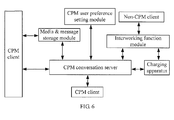
- FIG. 6 shows a structure of a CPM charging system in an embodiment of the present disclosure.
- the CPM client is adapted to: receive or send a CPM message, or send or receive a CPM session. Further, the CPM client may send or receive a message or session through a Session Initiation Protocol (SIP).
- SIP Session Initiation Protocol
- the CPM conversation server is adapted to: receive the CPM message and the CPM session, and route the message or CPM session to the CPM client of the home domain or another domain, or send the message to a non-CPM client through an interworking function module.
- the CPM conversation server may send the received message to another CPM client directly, or obtain from the network (such as a media & message storage module) a message that needs to be sent by the sender according to the URL in the received message.
- the obtained message is combined with the newly added message to be sent by the sender into a CPM message.
- the CPM conversation server may judge the information about the network resource usage of the receiver, for example, message service type used by the receiver, and/or information about message media combination, and interact with the charging apparatus to report the determined information about the network resource usage of the receiver to the charging apparatus. Further, the CPM conversation server may judge the information about the network resource usage of the receiver according to the preference setting of the receiver, or the service presence information or subscription information of the receiver, or the information set by the receiver about the message service type used by the receiver, or route information of the message, or the media type and size of the message content.
- the CPM conversation server judges the message service type used by the receiver according to the preference setting of the receiver, or the service presence information or subscription information of the receiver, or the information set by the receiver about the message service type used by the receiver, or route information of the message; and judges the information about message media combination according to the media type and size of the message content.
- the interworking function module is adapted to: perform the gateway function between the CPM service and the non-CPM service, and convert a CPM message into a non-CPM message and route the message to a non-CPM domain, or convert a non-CPM message into a CPM message. Further, the interworking function module may interact with the charging apparatus to judge the message service type used by the receiver and report the type to the charging apparatus.
- the interworking function module may judge the message service type used by the receiver according to the preference setting of the receiver, or the service presence information or subscription information of the receiver, or the information set by the receiver about the message service type used by the receiver, or the message route information, or the media type of the message content.
- the preference setting of the receiver, or the service presence information or subscription information of the receiver, or the information set by the receiver about the message service type used by the receiver may be stored in a CPM user preference setting module or in another network element or database.
- the charging apparatus performs charging according to the reported information about the network resource usage of the receiver, and returns a charging response to the CPM conversation server and/or the interworking function module.
- the CPM client may be a CPM User Equipment (UE), which communicates with other UEs through a SIP message or sets up a session connection with other UEs through a SIP INVITE message and then sends the specific message contents to other UEs through the session connection.
- UE User Equipment
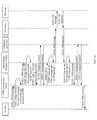
- a sender sends a message to a receiver.
- the sender is a CPM UE, and the receiver is a CPM UE.
- the sender sends a CPM message to the receiver.
- the message service type used by the receiver is CPM, and the message service type used by the receiver is judged by the CPM conversation server, and reported to the charging apparatus directly.
- the process of the method includes the following steps:
- the CPM conversation server communicates with the charging apparatus twice (steps S703-S704 and steps S707-S708) to complete rating and expense deduction for this communication separately.
- the CPM conversation server may communicate with the charging apparatus only once. That is, steps S703-S704 and steps S707-S708 are not simultaneously required.
- the charging apparatus after receiving a charging request from the CPM conversation server, the charging apparatus performs rating for this communication according to the message service type used by the sender and/or the message service type used by the receiver in the charging request, and judges whether the balance of the user account is sufficient for this communication. If the balance is sufficient, the charging apparatus deducts an expense from the user account.
- step S704 both rating and expense deduction are performed in step S704 at the same time, and it is not necessary to perform steps S707-S708.
- step S703 and step S704 are not required. That is, after receiving the message from the sender, the CPM conversation server does not request the charging apparatus to perform rating, but forwards the message to the receiver directly. After receiving a response from the receiver, the CPM conversation server sends a charging request to the charging apparatus in step S707.
- the charging request carries the message service type used by the sender and/or the message service type used by the receiver in this communication.
- step S708 the charging apparatus performs rating and charging for the communication according to the message service type used by the sender and/or the message service type used by the receiver in the charging request.
- the technical solution provided in this embodiment is also applicable to offline charging. That is, the charging process does not affect the message service.
- Offline charging is a technology well known to those skilled in the art, and therefore, no embodiment of applying the technical solution under the present disclosure to offline charging is provided here.
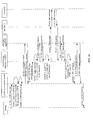
- the sender sends a message to a receiver.
- the sender is a CPM UE, and the receiver is an IM UE.
- the sender sends a CPM message to the receiver.
- the message service type used by the receiver is IM, and the message service type used by the receiver is judged by the CPM conversation server, and reported to the charging apparatus directly.
- the process of the method includes the following steps:
- the CPM conversation server communicates with the charging apparatus twice (steps S803-S804 and steps S813-5814) to complete rating and expense deduction for this communication separately.
- the CPM conversation server may communicate with the charging apparatus only once. That is, steps S803-S804 and steps S807-S808 are not simultaneously required.
- the charging apparatus after receiving a charging request from the CPM conversation server, the charging apparatus performs rating for this communication according to the message service type used by the sender and the message service type used by the receiver in the charging request, and judges whether the balance of the user account is sufficient for this communication. If the balance is sufficient, the charging apparatus deducts an expense from the user account.
- step S803 and step S804 are not required. That is, after receiving the message from the sender, the CPM conversation server does not request the charging apparatus to perform rating, but forwards the message to the receiver directly. After receiving a response from the receiver, the CPM conversation server sends a charging request to the charging apparatus in step S813.
- the charging request carries the message service type used by the sender and/or the message service type used by the receiver in this communication.
- step S814 the charging apparatus performs rating and expense deduction for the communication according to the message service type used by the sender and/or the message service type used by the receiver in the charging request.
- the technical solution provided in this embodiment is also applicable to offline charging. That is, the charging process does not affect the message service.
- Offline charging is a technology well known to those skilled in the art, and therefore, no embodiment of applying the technical solution under the present disclosure to offline charging is provided here.
- the sender sends a group message to multiple receivers, for example, two receivers.
- the sender is a CPM UE; one receiver is an IM UE, and the other receiver is a PoC UE.
- the sender sends a CPM message to the receivers.
- the types of messages used by the receivers are IM and PoC respectively, and the types of messages used by the receivers are judged by the CPM conversation server, and reported to the charging apparatus directly.
- the process of the method includes the following steps:
- the CPM conversation server communicates with the charging apparatus twice (steps S903-S904 and steps S913-S914) to complete rating and expense deduction for this message service separately. It should be noted that in this embodiment, the CPM conversation server may communicate with the charging apparatus only once. That is, steps S903-S904 and steps S918-S919 are not simultaneously required. The details are provided in the second embodiment, and are thus omitted in this embodiment and the subsequent embodiments.
- the sender sends a message to one receiver.
- the sender is a CPM UE, and the receiver is an IM UE.
- the sender sends a CPM message to the receiver.
- the message service type used by the receiver is IM, and the message service type used by the receiver is judged by the interworking function module, and notified to the CPM conversation server, and is reported by the CPM conversation server to the charging apparatus.
- the process of the method includes the following steps:
- the sender sends a message to a receiver.
- the sender is a CPM UE, and the receiver is an IM UE.
- the sender sends a CPM message to the receiver.
- the message service type used by the receiver is IM, and the message service type used by the receiver is judged by the interworking function module, and reported to the charging apparatus directly.
- the process of the method includes the following steps:
- the sender sends a message to a receiver.
- the sender is an IM UE, and the receiver is a CPM UE.
- the sender sends an IM message to the receiver.
- the message service type used by the receiver is CPM, and the message service type used by the receiver is judged by the CPM conversation server, and reported to the charging apparatus directly.
- the process of the method includes the following steps:
- the sender sends a message to a receiver.
- the message carries a message content newly added by the user and the URL of the message content stored on the media & message storage module.
- the sender is a CPM UE; the receiver is a CPM UE; the message service type used by the receiver is CPM; and the information about message media combination is obtained by the CPM conversation server and reported to the charging apparatus directly.
- the information about message media combination includes: message media combination mode, message media type, and message media size.
- the process of the method includes the following steps:
- the sender sends a message to a receiver.
- the message carries a message content newly added by the user and the URL of the message content stored on the media & message storage module.
- the sender is a CPM UE; the receiver is an IM UE; the message service type used by the receiver is IM; and the information about message media combination (in this embodiment, the information about message media combination includes: message media combination mode, message media type, and message media size) is obtained by the CPM conversation server and reported to the charging apparatus directly.
- the message service type used by the receiver is judged by the interworking function module and reported to the charging apparatus directly.
- a charging ID is used to associate the information reported by the CPM conversation server with the information reported by the interworking function module.
- the process of the method includes the following steps:
- the charging ID may be generated by the CPM conversation server, or generated by the charging apparatus and allocated to the CPM conversation server. Further, the charging ID may be a session ID or an ID generated for the special purpose of associating the charging information.
- the sender sets up a connection with the receiver first through a SIP INVITE message, and sends the specific message content to the receiver through this connection.
- the sender is a CPM UE, and the receiver is an IM UE.
- the process of the method includes the following steps:
- the charging response returned by the charging apparatus to the CPM conversation server may further carry a parameter which monitors the change of the message service type used by the session participant. This parameter instructs the CPM conversation server to report the updated type to the charging apparatus once the message service type used by the session participant is updated.
- the Trigger-Type field in the CCA message may be set to CHANGE_of_MESSAGING_SERVICES, which instructs the CPM conversation server to monitor the message service type used by the session participant and report the updated type to the charging apparatus once the type is updated.
- the program may be stored in a computer-readable storage medium. When being executed, the program performs the steps of the foregoing method embodiments.
- the storage medium may be any medium capable of storing program codes, for example, a Read-Only Memory (ROM), a Random Access Memory (RAM), a magnetic disk, and a compact disk.
- FIG. 16 shows a structure of a charging apparatus in an embodiment of the present disclosure.
- the charging apparatus includes an obtaining unit 161 and a charging unit 162.
- the obtaining unit 161 is adapted to obtain information about the network resource usage of a receiver; and the charging unit 162 is adapted to perform charging according to the information about the network resource usage of the receiver.
- the information about the network resource usage of the receiver includes but is not limited to: message service type used by the receiver, and/or information about message media combination.
- the information about message media combination includes but is not limited to: message media combination mode, message media type, and message media size, or any combination thereof.
- the charging apparatus includes a responding unit 163, which is adapted to send a charging response according to the charging result.
- the obtaining unit 161 may include a receiving subunit 1611 and a resolving subunit 1612.
- the receiving subunit 1611 is adapted to receive a charging request which carries the information about the network resource usage of the receiver.
- the resolving subunit 1612 is adapted to resolve the charging request to obtain the information about the network resource usage of the receiver.
- FIG. 17 shows a structure of a message processing apparatus in an embodiment of the present disclosure.
- the message processing apparatus includes:
- the information about the network resource usage of the receiver includes but is not limited to: message service type used by the receiver, and/or information about message media combination.
- the information about message media combination includes but is not limited to: message media combination mode, message media type, and message media size, or any combination thereof.
- the judging unit 172 may obtain the service presence information or subscription information of the receiver or the message service type information used by the receiver set by the receiver according to the receiver ID in the message, and judge the message service type used by the receiver according to the obtained service presence information or subscription information of the receiver, or the message service type information used by the receiver set by the receiver.
- the judging unit 172 may also judge the message service type used by the receiver according to the message route information; and may judge the information about message media combination according to the newly added message content in the message and/or the media resource address ID carried in the message and stored on the network.
- the information about the network resource usage of the receiver is obtained, and is used as a basis for charging. Therefore, the charging is performed differently for different network resources used by the receiver when the receiver receives a message. Specifically, the charging is performed differently according to different types of messages used by the receiver, different modes of combining the message media, the message media type, and the message media size, thus improving the precision, diversity and flexibility of charging.
Landscapes
- Engineering & Computer Science (AREA)
- Computer Networks & Wireless Communication (AREA)
- Signal Processing (AREA)
- Quality & Reliability (AREA)
- Business, Economics & Management (AREA)
- Accounting & Taxation (AREA)
- Data Exchanges In Wide-Area Networks (AREA)
- Mobile Radio Communication Systems (AREA)
- Telephonic Communication Services (AREA)
- Information Transfer Between Computers (AREA)
- Management, Administration, Business Operations System, And Electronic Commerce (AREA)
Applications Claiming Priority (2)
| Application Number | Priority Date | Filing Date | Title |
|---|---|---|---|
| CN2007100757115A CN101364880B (zh) | 2007-08-09 | 2007-08-09 | 计费方法、系统和装置以及消息处理装置 |
| PCT/CN2008/070967 WO2009018730A1 (en) | 2007-08-09 | 2008-05-15 | Charging method, system, equipment and message processing equipment |
Publications (2)
| Publication Number | Publication Date |
|---|---|
| EP2178243A1 true EP2178243A1 (de) | 2010-04-21 |
| EP2178243A4 EP2178243A4 (de) | 2010-09-01 |
Family
ID=40340947
Family Applications (1)
| Application Number | Title | Priority Date | Filing Date |
|---|---|---|---|
| EP08748573A Withdrawn EP2178243A4 (de) | 2007-08-09 | 2008-05-15 | Vergebührungsverfahren, system, geräte und nachrichtenverarbeitungsgeräte |
Country Status (3)
| Country | Link |
|---|---|
| EP (1) | EP2178243A4 (de) |
| CN (1) | CN101364880B (de) |
| WO (1) | WO2009018730A1 (de) |
Families Citing this family (6)
| Publication number | Priority date | Publication date | Assignee | Title |
|---|---|---|---|---|
| CN102868988B (zh) * | 2011-07-05 | 2016-03-30 | 中国电信股份有限公司 | 无线网络中基于策略计费控制的业务处理方法与系统 |
| CN103517247B (zh) * | 2012-06-29 | 2017-08-25 | 华为技术有限公司 | 基于网络融合的计费方法和装置 |
| CN103490910B (zh) * | 2013-10-17 | 2017-04-12 | 金陵科技学院 | 一种实现会话内容计费的方法 |
| CN103595545A (zh) * | 2013-11-25 | 2014-02-19 | 金陵科技学院 | 一种实现会话内容计费的方法 |
| CN105813033B (zh) * | 2014-12-30 | 2020-03-31 | 中国移动通信集团公司 | 一种即时消息与短信间通信的方法、装置及系统 |
| CN113961489B (zh) * | 2021-10-28 | 2023-07-14 | 苏州浪潮智能科技有限公司 | 数据访问的方法、装置、设备及存储介质 |
Family Cites Families (6)
| Publication number | Priority date | Publication date | Assignee | Title |
|---|---|---|---|---|
| CN1224225C (zh) * | 2001-04-09 | 2005-10-19 | 株式会社Ntt都科摩 | 通信数据量测定系统 |
| CN100384198C (zh) * | 2002-11-12 | 2008-04-23 | 华为技术有限公司 | 预付费多媒体消息服务业务的实现方法 |
| KR100619844B1 (ko) * | 2004-03-30 | 2006-09-13 | 엘지전자 주식회사 | Mms 콘텐츠 전송방법 |
| EP1886458B2 (de) * | 2005-05-25 | 2016-03-02 | Optis Wireless Technology, LLC | Verfahren und vorrichtung zum identifizieren eines ims-dienstes |
| CN101009572B (zh) * | 2006-01-24 | 2012-07-04 | 朗迅科技公司 | 对于ims会话期间的媒体改变的ims预算控制 |
| CN100420191C (zh) * | 2006-03-30 | 2008-09-17 | 华为技术有限公司 | 计费装置和方法 |
-
2007
- 2007-08-09 CN CN2007100757115A patent/CN101364880B/zh not_active Expired - Fee Related
-
2008
- 2008-05-15 EP EP08748573A patent/EP2178243A4/de not_active Withdrawn
- 2008-05-15 WO PCT/CN2008/070967 patent/WO2009018730A1/zh not_active Ceased
Also Published As
| Publication number | Publication date |
|---|---|
| WO2009018730A1 (en) | 2009-02-12 |
| CN101364880A (zh) | 2009-02-11 |
| CN101364880B (zh) | 2013-10-09 |
| EP2178243A4 (de) | 2010-09-01 |
Similar Documents
| Publication | Publication Date | Title |
|---|---|---|
| JP5209736B2 (ja) | 移動通信端末機の呼処理システム、及びその呼処理方法 | |
| EP2178243A1 (de) | Vergebührungsverfahren, system, geräte und nachrichtenverarbeitungsgeräte | |
| JP5417438B2 (ja) | ショートメッセージ配信に対する課金 | |
| KR20050056936A (ko) | 무선이동 단말기상에서 그룹 쳇 작업기간을디스플레이하는 방법 및 시스템 | |
| EP2486708A1 (de) | Verfahren und ip-kurznachrichten-gateway (ip-sm-gw) für einen veknüpfungsdienst zwischen einem konvergierten ip-nachrichten (cpm)- und einem kurznachrichten (sms)-dienst | |
| CN105307173A (zh) | 通信网络架构、基于通信网络架构的接入认证方法及系统 | |
| KR101096539B1 (ko) | 과금 방법, 네트워크 시스템, 과금 시스템, 및 애플리케이션 서버 | |
| CN104954977A (zh) | 手机短信应用融合第三方通讯应用的通讯方法及装置 | |
| KR20040048086A (ko) | 멀티미디어 메시지를 송수신하는 이동 통신 시스템 및 방법 | |
| EP2248359A2 (de) | Cpm-dienstbereitstellungssystem und verfahren zum interworking mit nicht-cpm-dienst | |
| US12143900B2 (en) | Sending or receiving SMS by internet messaging application without using internet | |
| CN101321362B (zh) | 计费方法和系统及装置 | |
| CN102017668B (zh) | 通信服务管理系统、短消息服务管理系统、通信中继设备、通信服务管理方法以及短消息服务管理方法 | |
| US20110191427A1 (en) | Communication method adapted for users using multiple communication facilities | |
| KR101354087B1 (ko) | 인스턴트 메시지 취소 시스템 및 방법 | |
| EP2187584A1 (de) | Ein nachrichtenzuordnungsverfahren, anwenderendgerät und server | |
| CN112311677B (zh) | 一种融合通信中实现信令路由的方法及装置 | |
| KR100621200B1 (ko) | 인스턴트 메시징 서비스 이용에 대한 과금 정보 수집 방법및 시스템 | |
| CN101442722B (zh) | 基于sip协议的消息在传统网络中路由的方法和设备 | |
| CN101047668B (zh) | 扩展信息发送方法 | |
| EP2081394A1 (de) | Verfahren und vorrichtung zur implementierung der gruppenübertragung von kurznachrichten | |
| KR20090072284A (ko) | 지능형 여행 추천 시스템 및 방법, 이를 사용하는 유무선복합망 시스템 | |
| CN107426093A (zh) | 一种消息发送方法及终端 | |
| CN114554425B (zh) | 4g和5g融合集群通信方法、系统、存储介质和电子装置 | |
| EP2561642B1 (de) | Verfahren und vorrichtung im zusammenhang mit der vergebührung in einem multimedia-ip-subsystem |
Legal Events
| Date | Code | Title | Description |
|---|---|---|---|
| PUAI | Public reference made under article 153(3) epc to a published international application that has entered the european phase |
Free format text: ORIGINAL CODE: 0009012 |
|
| 17P | Request for examination filed |
Effective date: 20100115 |
|
| AK | Designated contracting states |
Kind code of ref document: A1 Designated state(s): AT BE BG CH CY CZ DE DK EE ES FI FR GB GR HR HU IE IS IT LI LT LU LV MC MT NL NO PL PT RO SE SI SK TR |
|
| AX | Request for extension of the european patent |
Extension state: AL BA MK RS |
|
| A4 | Supplementary search report drawn up and despatched |
Effective date: 20100730 |
|
| DAX | Request for extension of the european patent (deleted) | ||
| 17Q | First examination report despatched |
Effective date: 20110315 |
|
| STAA | Information on the status of an ep patent application or granted ep patent |
Free format text: STATUS: THE APPLICATION IS DEEMED TO BE WITHDRAWN |
|
| 18D | Application deemed to be withdrawn |
Effective date: 20140304 |