EP2178294A1 - Bildverarbeitungsvorrichtung und Verfahren zur Steuerung derselben - Google Patents
Bildverarbeitungsvorrichtung und Verfahren zur Steuerung derselben Download PDFInfo
- Publication number
- EP2178294A1 EP2178294A1 EP09163138A EP09163138A EP2178294A1 EP 2178294 A1 EP2178294 A1 EP 2178294A1 EP 09163138 A EP09163138 A EP 09163138A EP 09163138 A EP09163138 A EP 09163138A EP 2178294 A1 EP2178294 A1 EP 2178294A1
- Authority
- EP
- European Patent Office
- Prior art keywords
- information
- image processing
- processing apparatus
- base station
- time zone
- Prior art date
- Legal status (The legal status is an assumption and is not a legal conclusion. Google has not performed a legal analysis and makes no representation as to the accuracy of the status listed.)
- Withdrawn
Links
Images


Classifications
-
- H—ELECTRICITY
- H04—ELECTRIC COMMUNICATION TECHNIQUE
- H04N—PICTORIAL COMMUNICATION, e.g. TELEVISION
- H04N7/00—Television systems
- H04N7/08—Systems for the simultaneous or sequential transmission of more than one television signal, e.g. additional information signals, the signals occupying wholly or partially the same frequency band, e.g. by time division
-
- G—PHYSICS
- G04—HOROLOGY
- G04G—ELECTRONIC TIME-PIECES
- G04G9/00—Visual time or date indication means
- G04G9/0076—Visual time or date indication means in which the time in another time-zone or in another city can be displayed at will
-
- G—PHYSICS
- G04—HOROLOGY
- G04R—RADIO-CONTROLLED TIME-PIECES
- G04R20/00—Setting the time according to the time information carried or implied by the radio signal
- G04R20/20—Setting the time according to the time information carried or implied by the radio signal the radio signal being an AM/FM standard signal, e.g. RDS
- G04R20/24—Decoding time data; Circuits therefor
-
- H—ELECTRICITY
- H04—ELECTRIC COMMUNICATION TECHNIQUE
- H04N—PICTORIAL COMMUNICATION, e.g. TELEVISION
- H04N21/00—Selective content distribution, e.g. interactive television or video on demand [VOD]
- H04N21/40—Client devices specifically adapted for the reception of or interaction with content, e.g. set-top-box [STB]; Operations thereof
- H04N21/41—Structure of client; Structure of client peripherals
- H04N21/422—Input-only peripherals, i.e. input devices connected to specially adapted client devices, e.g. global positioning system [GPS]
- H04N21/42204—User interfaces specially adapted for controlling a client device through a remote control device; Remote control devices therefor
-
- H—ELECTRICITY
- H04—ELECTRIC COMMUNICATION TECHNIQUE
- H04N—PICTORIAL COMMUNICATION, e.g. TELEVISION
- H04N21/00—Selective content distribution, e.g. interactive television or video on demand [VOD]
- H04N21/40—Client devices specifically adapted for the reception of or interaction with content, e.g. set-top-box [STB]; Operations thereof
- H04N21/41—Structure of client; Structure of client peripherals
- H04N21/426—Internal components of the client ; Characteristics thereof
-
- H—ELECTRICITY
- H04—ELECTRIC COMMUNICATION TECHNIQUE
- H04N—PICTORIAL COMMUNICATION, e.g. TELEVISION
- H04N21/00—Selective content distribution, e.g. interactive television or video on demand [VOD]
- H04N21/40—Client devices specifically adapted for the reception of or interaction with content, e.g. set-top-box [STB]; Operations thereof
- H04N21/43—Processing of content or additional data, e.g. demultiplexing additional data from a digital video stream; Elementary client operations, e.g. monitoring of home network or synchronising decoder's clock; Client middleware
- H04N21/434—Disassembling of a multiplex stream, e.g. demultiplexing audio and video streams, extraction of additional data from a video stream; Remultiplexing of multiplex streams; Extraction or processing of SI; Disassembling of packetised elementary stream
- H04N21/4348—Demultiplexing of additional data and video streams
-
- H—ELECTRICITY
- H04—ELECTRIC COMMUNICATION TECHNIQUE
- H04N—PICTORIAL COMMUNICATION, e.g. TELEVISION
- H04N21/00—Selective content distribution, e.g. interactive television or video on demand [VOD]
- H04N21/40—Client devices specifically adapted for the reception of or interaction with content, e.g. set-top-box [STB]; Operations thereof
- H04N21/47—End-user applications
- H04N21/485—End-user interface for client configuration
-
- H—ELECTRICITY
- H04—ELECTRIC COMMUNICATION TECHNIQUE
- H04N—PICTORIAL COMMUNICATION, e.g. TELEVISION
- H04N21/00—Selective content distribution, e.g. interactive television or video on demand [VOD]
- H04N21/40—Client devices specifically adapted for the reception of or interaction with content, e.g. set-top-box [STB]; Operations thereof
- H04N21/47—End-user applications
- H04N21/488—Data services, e.g. news ticker
-
- H—ELECTRICITY
- H04—ELECTRIC COMMUNICATION TECHNIQUE
- H04N—PICTORIAL COMMUNICATION, e.g. TELEVISION
- H04N21/00—Selective content distribution, e.g. interactive television or video on demand [VOD]
- H04N21/80—Generation or processing of content or additional data by content creator independently of the distribution process; Content per se
- H04N21/81—Monomedia components thereof
- H04N21/8126—Monomedia components thereof involving additional data, e.g. news, sports, stocks, weather forecasts
-
- H—ELECTRICITY
- H04—ELECTRIC COMMUNICATION TECHNIQUE
- H04N—PICTORIAL COMMUNICATION, e.g. TELEVISION
- H04N5/00—Details of television systems
- H04N5/44—Receiver circuitry for the reception of television signals according to analogue transmission standards
Definitions
- Methods and apparatus consistent with the present invention relate to an image processing and controlling the same, and more particularly, to an image processing apparatus and a method of controlling the same, which allow a user to set various items more conveniently and easily when he/she uses an image processing apparatus for the first time.
- a user who purchased an image processing apparatus may set basic items.
- the user initializes the image processing apparatus and resets the set basic item.
- the user inputs information on the basic item(s) manually in first booting or plug & play for the image processing apparatus. For example, the user directly inputs information on his/her nationality or language or information on standard time zone of a corresponding region.
- an image processing apparatus including: a storing unit which stores information on a standard time zone; a receiving unit which receives a broadcasting signal containing base station information; and a controller which detects the base station information from the broadcasting signal and sets the standard time zone corresponding to the base station information by referring to the storing unit.
- the controller may set the standard time zone corresponding to the base station information most frequently detected.
- the base station information may be a Cell ID.
- the controller may detect the Cell ID from transport stream (TPS) information contained in the broadcasting signal.
- the controller may set the standard time zone at an initial booting or initialization of the image processing apparatus.
- the storing unit may store information on the standard time zone corresponding to each base station information.
- the image processing apparatus may further include an output unit which outputs a user menu to allow a user to set the standard time zone.
- the controller may set at least one of country information and language information corresponding to the base station information. According to an aspect of the invention, the controller may provide at least one of weather information and news information corresponding to the detected base station information. According to an aspect of the invention, the controller may set the standard time zone based on information input from a user.
- a control method of an image processing apparatus including: storing information on a standard time zone; receiving a broadcasting signal containing base station information; and detecting the base station information from the broadcasting signal and setting the standard time zone corresponding to the base station information by referring to the storing unit.
- the setting the standard time zone may include setting the standard time zone corresponding to the base station information most frequently detected.
- the base station information may be a Cell ID.
- the detecting the base station information may include detecting the Cell ID from transport stream (TPS) information contained in the broadcasting signal.
- the setting the standard time zone may include setting the standard time zone at an initial booting or initialization of the image processing apparatus.
- the storing information may include storing information on the standard time zone corresponding to each base station information.
- the control method may further include outputting a user menu to allow a user to set the standard time zone.
- the setting the standard time zone may include setting at least one of country information and language information corresponding to the base station information.
- the setting the standard time zone may include providing at least one of weather information and news information corresponding to the detected base station information.
- the setting the standard time zone may include setting the standard time zone based on information input from a user.
- various basic items can be automatically set at an initial setting of the image processing apparatus using information contained in a digital broadcasting signal, thereby providing convenience for a user.
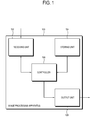
- FIG. 1 is a view showing a configuration of an image processing apparatus according to an exemplary embodiment of the present invention.
- FIG. 2 is a view showing Cell IDs for respective regions of New Zealand.
- FIG. 3 is a view showing a control process of an image processing apparatus according to a first embodiment of the invention.
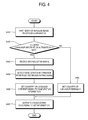
- FIG. 4 is a view showing a control process of an image processing apparatus according to a second embodiment of the invention.
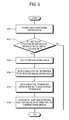
- FIG. 5 is a view showing a control process of an image processing apparatus according to a third embodiment of the invention.
- FIG. 1 is a view showing a configuration of an image processing apparatus according to an exemplary embodiment of the present invention.
- An image processing apparatus 100 of an exemplary embodiment of the present invention is preferably, but not necessarily, a digital TV, but, without being limited thereto, may be any image processing apparatus such as a desktop computer, a notebook computer, a mobile terminal, a personal digital assistant (PDA) or any apparatus which can conduct bidirectional communication with a base station.
- a digital TV preferably, but not necessarily, a digital TV
- PDA personal digital assistant
- the image processing apparatus 100 may include a receiving unit 102, a storing unit 104, a controller 106 and an output unit 108.
- the receiving unit 102 receives broadcasting signals which contain base station information.
- the receiving unit 102 may include a tuner (not shown) which selects a broadcasting signal of a desired channel from the received broadcasting signals, a demodulator (not shown) which demodulates the broadcasting signal selected in the tuner into an original signal, etc.
- the broadcasting signals may be received in the form of a transport stream.
- the base station information may be a Cell ID, which will be described in detail later with reference to FIG. 2 .
- the storing unit 104 stores information on a standard time zone. Specifically, the storing unit 104 may store information on a standard time zone corresponding to the base station information.
- the controller 106 detects the base station information from the received broadcasting signals and sets a time zone to be a standard time zone corresponding to the base station information by referring to the storing unit 104.
- the set time zone is a time zone of the image processing apparatus.
- the controller 106 may set the time zone to be a standard time zone corresponding to base station information most frequently detected.
- broadcasting signals broadcasted from base stations are transmitted to users located within coverage of the base stations.
- users located within coverage of a particular base station may receive a broadcasting signal broadcasted from a different base station.
- a Cell ID most frequently detected may be determined to be a value representing a region at which a user is currently located. If a region corresponding to the base station information most frequently detected is determined to be the region at which the user is located, it is possible to set to a more precise standard time zone.
- the controller 106 may set the time zone at an initial booting or initialization of the image processing apparatus 100. For example, when a user sets a basic function by first powering the image processing apparatus 100 on or newly sets a basic function by initializing the image processing apparatus 100, the image processing apparatus 100 may automatically set the time zone.
- the controller 106 sets a present date or time according to the set time zone.
- controller 106 may set the time zone to be the standard time zone according to information manually input by the user.
- the controller 106 may set at least one of country information and language information corresponding to the detected base station information, which will be described later with reference to FIG. 4 .
- the controller 106 may further provide at least one of stocks, weather and news information of a region corresponding to the detected base station information, which will be described later with reference to FIG. 5 .
- the output unit 108 may output a user menu through which a user can set the time zone.
- the output unit 108 may be implemented as a liquid crystal display (LCD), an organic light emitting display (OLED), a plasma display panel (PDP) or the like.
- FIG. 2 is a view showing Cell IDs for respective regions of New Zealand.
- the base station information contained in a broadcasting signal may be a Cell ID.
- a Cell ID is contained in a broadcasting signal.
- the Cell ID is a value representing a region at which a user is currently located, and has a unique value for each region. Accordingly, the use of the Cell ID value allows the user to know the region at which the user is located. Since Cell IDs have not to be overlapped with each other for each region, the Cell ID are decided according to rule by a nation.
- a broadcasting region of New Zealand generally consists of 7 regions: Auckland (210), Waikato-Bay of Plenty, Hawke Bay, Manawatu, Wellington, Wales and Dunedin.
- the above regions are each divided into several sub regions.
- each sub region has its own unique Cell ID value.
- TVNZ 242, TVWorks 244 and Kordia 246 correspond to broadcasting stations which broadcast respective broadcasting signals.
- Each broadcasting station broadcasts the broadcasting signal including a Cell ID.
- Cell ID values sent from different broadcasting stations are different from each other, but the last three digits of the Cell IDs are fixed for each region.
- a Cell ID broadcasted to a sub region 'pine hill' 212 by the TVNZ broadcasting station 242 is 10101
- a Cell ID broadcasted to the sub region 'pine hill' 212 by the TVWorks broadcasting station 244 is 20101
- a Cell ID broadcasted to the sub region 'pine hill' 212 by the Kordia broadcasting station 246 is 30101.
- later three digits of the Cell IDs are all fixed at XX101. Accordingly, a user can know unique Cell ID information of a corresponding sub region irrespective of which broadcasting station broadcasts a broadcasting signal.
- values of a transmitter address 220 are equal to values of a Cell ID 230.
- the transmitter address 220 is an equipment ID of a broadcasting station which is not contained in a broadcasting signal.
- the Cell ID is carried on transport stream (TPS) information contained in a broadcasting signal broadcasted from a transmitter, i.e., a broadcasting station. Accordingly, the image processing apparatus can detect the Cell ID from the TPS information contained in the broadcasting signal.
- TPS transport stream
- FIG. 3 is a view showing a control process of an image processing apparatus according to a first embodiment of the invention.
- the image processing apparatus can automatically set time corresponding to a current region.
- a user first boots the purchased image processing apparatus 100 by powering the image processing apparatus 100 on or initializes the image processing apparatus 100 to newly set a function (S301).
- the image processing apparatus 100 determines whether or not a time zone is automatically set (S302). If it is determined that the time zone is not automatically set, the user may set the time zone to be the standard time zone manually (S306). Accordingly the user inputs or selects his/her region where he/she is located.
- the time zone is the time zone of the image processing apparatus.
- the image processing apparatus 100 receives a broadcasting signal broadcasted from a broadcasting station (S303).
- the image processing apparatus 100 detects base station information from the received broadcasting signal (S304).
- the base station information contained in the broadcasting signal may be a Cell ID.
- the image processing apparatus 100 may detect the Cell ID from TPS information contained in the broadcasting signal.
- the image processing apparatus 100 pre-stores information on a standard time zone corresponding to a Cell ID for each region as is specified in each national specification.
- the image processing apparatus 100 sets the time zone to be the standard time zone corresponding to the base station information (S305).
- the image processing apparatus 100 sets current date or time according to the set standard time zone (S307).
- the current time has to be set according to a region in which the user is located.
- the user has to newly set a time zone.
- the time zone is automatically found and set using the Cell ID information contained in the broadcasting signal, as described above, the user need not input the information separately. This may enhance convenience of a user for the image processing apparatus.
- FIG. 4 is a view showing a control process of an image processing apparatus according to a second embodiment of the invention.
- a user sets not only time information but also country and language information. Accordingly, in the second embodiment of the invention, country or language information of a region in which the user is currently located is automatically set using Cell ID information contained in a broadcasting signal.
- the user first boots the purchased image processing apparatus 100 by powering the image processing apparatus 100 on or initializes the image processing apparatus 100 to newly set a function (S401).
- the image processing apparatus 100 determines whether or not country or language information is automatically set (S402). If it is determined that the information is not automatically set, the user sets the country or language information manually (S406).
- the image processing apparatus 100 receives a broadcasting signal broadcasted from a broadcasting station (S403).
- the image processing apparatus 100 detects base station information from the received broadcasting signal (S404).
- the base station information contained in the broadcasting signal may be a Cell ID.
- the Cell ID is a value representing a region at which the user is currently located, and has a unique value for each region.
- the Cell ID is defined in each national specification for each corresponding nation. Therefore, when Cell ID information is obtained, the country or language information can also be known from the obtained Cell ID information.
- the image processing apparatus 100 sets the country or language information corresponding to the base station information (S405). Thereafter, the image processing apparatus 100 outputs a broadcasting signal based on the set information (S407). For example, an audio or a caption can be output based on the set language information. In addition, the image processing apparatus can output a terrestrial broadcasting according to a standard corresponding to the set country information.
- the user can automatically set the country or language information, which would have otherwise been input one by one to set basic functions, using the Cell ID information.
- FIG. 5 is a view showing a control process of an image processing apparatus according to a third embodiment of the invention.
- the image processing apparatus 100 may provide at least one of stocks, weather and news information of a region corresponding to base station information detected from a broadcasting signal.
- the user powers the image processing apparatus on (S501).
- the information provided in this embodiment is not information set in an initial use, such as standard time zone, and country and language information. Rather, since the information provided in this embodiment is information varied in real time, there is a need to provide this information whenever the image processing apparatus 100 is powered on because of the nature of this information.
- the image processing apparatus 100 determines whether or not the user sets a function of providing information about a region in which the user is located (S502). If it is determined that the user does not set the information providing function, the process is ended.
- the image processing apparatus 100 receives a broadcasting signal broadcasted from a broadcasting station (S503).
- the image processing apparatus 100 detects base station information from the received broadcasting signal (S504).
- the base station information contained in the broadcasting signal may be a Cell ID.
- the image processing apparatus 100 obtains regional information corresponding to the detected base station information (S505). In this case, the image processing apparatus 100 provides the user with at least one of stocks, weather and news for a corresponding region (S506). Thus, a control process of the image processing apparatus according to the third embodiment of the invention is ended.
- the user can receive various kinds of information related to the region in which the user is located, without separate settings.
Landscapes
- Engineering & Computer Science (AREA)
- Multimedia (AREA)
- Signal Processing (AREA)
- Physics & Mathematics (AREA)
- General Physics & Mathematics (AREA)
- Human Computer Interaction (AREA)
- Two-Way Televisions, Distribution Of Moving Picture Or The Like (AREA)
Applications Claiming Priority (1)
| Application Number | Priority Date | Filing Date | Title |
|---|---|---|---|
| KR1020080102717A KR20100043618A (ko) | 2008-10-20 | 2008-10-20 | 영상처리장치 및 영상처리장치의 제어 방법 |
Publications (1)
| Publication Number | Publication Date |
|---|---|
| EP2178294A1 true EP2178294A1 (de) | 2010-04-21 |
Family
ID=41404186
Family Applications (1)
| Application Number | Title | Priority Date | Filing Date |
|---|---|---|---|
| EP09163138A Withdrawn EP2178294A1 (de) | 2008-10-20 | 2009-06-18 | Bildverarbeitungsvorrichtung und Verfahren zur Steuerung derselben |
Country Status (3)
| Country | Link |
|---|---|
| US (1) | US20100100843A1 (de) |
| EP (1) | EP2178294A1 (de) |
| KR (1) | KR20100043618A (de) |
Families Citing this family (2)
| Publication number | Priority date | Publication date | Assignee | Title |
|---|---|---|---|---|
| JP4257371B2 (ja) * | 2007-06-29 | 2009-04-22 | シャープ株式会社 | デジタル放送受信装置 |
| US8773706B2 (en) * | 2010-03-29 | 2014-07-08 | Konica Minolta Laboratory U.S.A., Inc. | Apparatus, systems, and methods for dynamic language customization |
Citations (5)
| Publication number | Priority date | Publication date | Assignee | Title |
|---|---|---|---|---|
| DE19512285A1 (de) * | 1995-04-04 | 1996-10-10 | Mb Video Gmbh | Verfahren und Vorrichtung zur automatischen Zeiteinstellung an einem Videogerät |
| US20020176324A1 (en) * | 2001-05-28 | 2002-11-28 | Kazuhide Ishihara | Digital broadcast receiver |
| EP1500948A1 (de) * | 2003-07-22 | 2005-01-26 | Microsoft Corporation | Benutzung der ungefähren Position einer von Umgebungssignalen bestimmten Vorrichtung |
| KR20050048783A (ko) | 2003-11-20 | 2005-05-25 | 엘지전자 주식회사 | 방송 수신기에서의 자동 시각 설정방법 |
| US20080083008A1 (en) * | 2006-09-29 | 2008-04-03 | Samsung Electronics Co., Ltd. | Broadcasting receiving apparatus and control method thereof |
Family Cites Families (6)
| Publication number | Priority date | Publication date | Assignee | Title |
|---|---|---|---|---|
| US6728533B2 (en) * | 2001-01-25 | 2004-04-27 | Sharp Laboratories Of America, Inc. | Clock for mobile phones |
| KR100605168B1 (ko) * | 2004-11-23 | 2006-07-31 | 삼성전자주식회사 | 시간 자동 설정방법 및 이를 적용한 디지털 방송 수신기 |
| KR100651522B1 (ko) * | 2005-12-14 | 2006-11-30 | 삼성전자주식회사 | 이동통신 단말기에서 시간 정보를 동기화시키기 위한 방법및 장치 |
| US7664527B2 (en) * | 2006-08-04 | 2010-02-16 | At&T Mobility Ii Llc | Network identity and timezone (NITZ) functionality for non-3GPP devices |
| KR100756337B1 (ko) * | 2006-09-29 | 2007-09-06 | 삼성전자주식회사 | 이동통신단말기의 기준시각 갱신 방법 및 장치 |
| US20090252070A1 (en) * | 2007-01-12 | 2009-10-08 | Connors Dennis P | Airlink management in a wireless broadcast system |
-
2008
- 2008-10-20 KR KR1020080102717A patent/KR20100043618A/ko not_active Ceased
-
2009
- 2009-06-17 US US12/486,226 patent/US20100100843A1/en not_active Abandoned
- 2009-06-18 EP EP09163138A patent/EP2178294A1/de not_active Withdrawn
Patent Citations (5)
| Publication number | Priority date | Publication date | Assignee | Title |
|---|---|---|---|---|
| DE19512285A1 (de) * | 1995-04-04 | 1996-10-10 | Mb Video Gmbh | Verfahren und Vorrichtung zur automatischen Zeiteinstellung an einem Videogerät |
| US20020176324A1 (en) * | 2001-05-28 | 2002-11-28 | Kazuhide Ishihara | Digital broadcast receiver |
| EP1500948A1 (de) * | 2003-07-22 | 2005-01-26 | Microsoft Corporation | Benutzung der ungefähren Position einer von Umgebungssignalen bestimmten Vorrichtung |
| KR20050048783A (ko) | 2003-11-20 | 2005-05-25 | 엘지전자 주식회사 | 방송 수신기에서의 자동 시각 설정방법 |
| US20080083008A1 (en) * | 2006-09-29 | 2008-04-03 | Samsung Electronics Co., Ltd. | Broadcasting receiving apparatus and control method thereof |
Also Published As
| Publication number | Publication date |
|---|---|
| US20100100843A1 (en) | 2010-04-22 |
| KR20100043618A (ko) | 2010-04-29 |
Similar Documents
| Publication | Publication Date | Title |
|---|---|---|
| US10338878B2 (en) | Digital device and method of processing data the same | |
| KR101885377B1 (ko) | 서비스 목록 표시 방법 및 그를 이용한 영상 표시 장치 | |
| JP2004502354A (ja) | 電子プログラムガイド機能を有するリモコン及び放送受信セットとこれを利用したサービスシステム及びその方法 | |
| US8209716B2 (en) | Apparatus and method for managing video audio setting information and program | |
| KR100713505B1 (ko) | 디지털 방송 수신 단말기의 선호 채널 공유 방법 | |
| KR101358325B1 (ko) | 외부로부터 수신된 환경 설정 값에 따라 환경을 설정하는방송수신장치 및 그의 환경설정방법 | |
| US20070141980A1 (en) | Digital broadcasting reception apparatus and method for displaying broadcasting channel information using the same | |
| EP2178294A1 (de) | Bildverarbeitungsvorrichtung und Verfahren zur Steuerung derselben | |
| EP2200291A2 (de) | Bildverarbeitungsvorrichtung und Verfahren zur Steuerung derselben | |
| KR101361519B1 (ko) | 영상처리장치 및 그 제어방법 | |
| KR20120009536A (ko) | 디스플레이장치 및 그의 제어 방법 | |
| KR100770890B1 (ko) | 디지털 비디오 방송 단말기의 파일타입 검출장치 및 방법 | |
| US20080034390A1 (en) | Method for notifying esg update in digital broadcasting reception terminal | |
| US12556647B2 (en) | TV and control method thereof | |
| US20100180309A1 (en) | Method and system for providing a unicast service in a mobile digital broadcasting service | |
| US20070294727A1 (en) | Method and system for providing ESG in a digital video broadcasting system | |
| KR20110077315A (ko) | 터치 스크린 기기에 의한 원격 제어가 가능한 av 기기 및 이에 사용되는 터치 스크린 기기 | |
| US20120157028A1 (en) | Apparatus and method for providing information in portable terminal | |
| KR100813731B1 (ko) | 영상표시기기의 부가정보 디스플레이 장치 및 방법 | |
| KR20140061118A (ko) | 디지털 디바이스 및 그 신호 처리방법 | |
| KR101265631B1 (ko) | 방송 수신기 및 이를 이용한 채널 맵 갱신 방법 | |
| KR101633108B1 (ko) | 네트워크 tv의 컨텐츠 정보 제공 방법 | |
| JP2008301419A (ja) | テレビジョン受信装置 | |
| KR20070000751A (ko) | 디지털 멀티미디어 방송 단말기에서 검색어 입력을 통한방송 프로그램 검색 방법 | |
| US20110246940A1 (en) | Electronic device, manual provision system having the same, and manual provision method |
Legal Events
| Date | Code | Title | Description |
|---|---|---|---|
| PUAI | Public reference made under article 153(3) epc to a published international application that has entered the european phase |
Free format text: ORIGINAL CODE: 0009012 |
|
| AK | Designated contracting states |
Kind code of ref document: A1 Designated state(s): AT BE BG CH CY CZ DE DK EE ES FI FR GB GR HR HU IE IS IT LI LT LU LV MC MK MT NL NO PL PT RO SE SI SK TR |
|
| AX | Request for extension of the european patent |
Extension state: AL BA RS |
|
| 17P | Request for examination filed |
Effective date: 20101014 |
|
| 17Q | First examination report despatched |
Effective date: 20101108 |
|
| RAP1 | Party data changed (applicant data changed or rights of an application transferred) |
Owner name: SAMSUNG ELECTRONICS CO., LTD. |
|
| STAA | Information on the status of an ep patent application or granted ep patent |
Free format text: STATUS: THE APPLICATION IS DEEMED TO BE WITHDRAWN |
|
| 18D | Application deemed to be withdrawn |
Effective date: 20120619 |