EP2179737A2 - Modulierung der Reaktion auf Steroide - Google Patents
Modulierung der Reaktion auf Steroide Download PDFInfo
- Publication number
- EP2179737A2 EP2179737A2 EP09167538A EP09167538A EP2179737A2 EP 2179737 A2 EP2179737 A2 EP 2179737A2 EP 09167538 A EP09167538 A EP 09167538A EP 09167538 A EP09167538 A EP 09167538A EP 2179737 A2 EP2179737 A2 EP 2179737A2
- Authority
- EP
- European Patent Office
- Prior art keywords
- oligonucleotide
- use according
- seq
- steroid
- sequence
- Prior art date
- Legal status (The legal status is an assumption and is not a legal conclusion. Google has not performed a legal analysis and makes no representation as to the accuracy of the status listed.)
- Granted
Links
Images




Classifications
-
- A—HUMAN NECESSITIES
- A61—MEDICAL OR VETERINARY SCIENCE; HYGIENE
- A61K—PREPARATIONS FOR MEDICAL, DENTAL OR TOILETRY PURPOSES
- A61K45/00—Medicinal preparations containing active ingredients not provided for in groups A61K31/00 - A61K41/00
- A61K45/06—Mixtures of active ingredients without chemical characterisation, e.g. antiphlogistics and cardiaca
-
- A—HUMAN NECESSITIES
- A61—MEDICAL OR VETERINARY SCIENCE; HYGIENE
- A61K—PREPARATIONS FOR MEDICAL, DENTAL OR TOILETRY PURPOSES
- A61K31/00—Medicinal preparations containing organic active ingredients
- A61K31/70—Carbohydrates; Sugars; Derivatives thereof
- A61K31/7088—Compounds having three or more nucleosides or nucleotides
-
- A—HUMAN NECESSITIES
- A61—MEDICAL OR VETERINARY SCIENCE; HYGIENE
- A61P—SPECIFIC THERAPEUTIC ACTIVITY OF CHEMICAL COMPOUNDS OR MEDICINAL PREPARATIONS
- A61P1/00—Drugs for disorders of the alimentary tract or the digestive system
- A61P1/04—Drugs for disorders of the alimentary tract or the digestive system for ulcers, gastritis or reflux esophagitis, e.g. antacids, inhibitors of acid secretion, mucosal protectants
-
- A—HUMAN NECESSITIES
- A61—MEDICAL OR VETERINARY SCIENCE; HYGIENE
- A61P—SPECIFIC THERAPEUTIC ACTIVITY OF CHEMICAL COMPOUNDS OR MEDICINAL PREPARATIONS
- A61P11/00—Drugs for disorders of the respiratory system
-
- A—HUMAN NECESSITIES
- A61—MEDICAL OR VETERINARY SCIENCE; HYGIENE
- A61P—SPECIFIC THERAPEUTIC ACTIVITY OF CHEMICAL COMPOUNDS OR MEDICINAL PREPARATIONS
- A61P11/00—Drugs for disorders of the respiratory system
- A61P11/06—Antiasthmatics
-
- A—HUMAN NECESSITIES
- A61—MEDICAL OR VETERINARY SCIENCE; HYGIENE
- A61P—SPECIFIC THERAPEUTIC ACTIVITY OF CHEMICAL COMPOUNDS OR MEDICINAL PREPARATIONS
- A61P17/00—Drugs for dermatological disorders
- A61P17/06—Antipsoriatics
-
- A—HUMAN NECESSITIES
- A61—MEDICAL OR VETERINARY SCIENCE; HYGIENE
- A61P—SPECIFIC THERAPEUTIC ACTIVITY OF CHEMICAL COMPOUNDS OR MEDICINAL PREPARATIONS
- A61P19/00—Drugs for skeletal disorders
- A61P19/02—Drugs for skeletal disorders for joint disorders, e.g. arthritis, arthrosis
-
- A—HUMAN NECESSITIES
- A61—MEDICAL OR VETERINARY SCIENCE; HYGIENE
- A61P—SPECIFIC THERAPEUTIC ACTIVITY OF CHEMICAL COMPOUNDS OR MEDICINAL PREPARATIONS
- A61P29/00—Non-central analgesic, antipyretic or antiinflammatory agents, e.g. antirheumatic agents; Non-steroidal antiinflammatory drugs [NSAID]
-
- A—HUMAN NECESSITIES
- A61—MEDICAL OR VETERINARY SCIENCE; HYGIENE
- A61P—SPECIFIC THERAPEUTIC ACTIVITY OF CHEMICAL COMPOUNDS OR MEDICINAL PREPARATIONS
- A61P35/00—Antineoplastic agents
-
- A—HUMAN NECESSITIES
- A61—MEDICAL OR VETERINARY SCIENCE; HYGIENE
- A61P—SPECIFIC THERAPEUTIC ACTIVITY OF CHEMICAL COMPOUNDS OR MEDICINAL PREPARATIONS
- A61P43/00—Drugs for specific purposes, not provided for in groups A61P1/00-A61P41/00
-
- C—CHEMISTRY; METALLURGY
- C12—BIOCHEMISTRY; BEER; SPIRITS; WINE; VINEGAR; MICROBIOLOGY; ENZYMOLOGY; MUTATION OR GENETIC ENGINEERING
- C12N—MICROORGANISMS OR ENZYMES; COMPOSITIONS THEREOF; PROPAGATING, PRESERVING, OR MAINTAINING MICROORGANISMS; MUTATION OR GENETIC ENGINEERING; CULTURE MEDIA
- C12N15/00—Mutation or genetic engineering; DNA or RNA concerning genetic engineering, vectors, e.g. plasmids, or their isolation, preparation or purification; Use of hosts therefor
- C12N15/09—Recombinant DNA-technology
- C12N15/11—DNA or RNA fragments; Modified forms thereof; Non-coding nucleic acids having a biological activity
- C12N15/117—Nucleic acids having immunomodulatory properties, e.g. containing CpG-motifs
-
- C—CHEMISTRY; METALLURGY
- C12—BIOCHEMISTRY; BEER; SPIRITS; WINE; VINEGAR; MICROBIOLOGY; ENZYMOLOGY; MUTATION OR GENETIC ENGINEERING
- C12N—MICROORGANISMS OR ENZYMES; COMPOSITIONS THEREOF; PROPAGATING, PRESERVING, OR MAINTAINING MICROORGANISMS; MUTATION OR GENETIC ENGINEERING; CULTURE MEDIA
- C12N2310/00—Structure or type of the nucleic acid
- C12N2310/10—Type of nucleic acid
- C12N2310/17—Immunomodulatory nucleic acids
-
- C—CHEMISTRY; METALLURGY
- C12—BIOCHEMISTRY; BEER; SPIRITS; WINE; VINEGAR; MICROBIOLOGY; ENZYMOLOGY; MUTATION OR GENETIC ENGINEERING
- C12N—MICROORGANISMS OR ENZYMES; COMPOSITIONS THEREOF; PROPAGATING, PRESERVING, OR MAINTAINING MICROORGANISMS; MUTATION OR GENETIC ENGINEERING; CULTURE MEDIA
- C12N2310/00—Structure or type of the nucleic acid
- C12N2310/30—Chemical structure
- C12N2310/31—Chemical structure of the backbone
- C12N2310/312—Phosphonates
- C12N2310/3125—Methylphosphonates
-
- C—CHEMISTRY; METALLURGY
- C12—BIOCHEMISTRY; BEER; SPIRITS; WINE; VINEGAR; MICROBIOLOGY; ENZYMOLOGY; MUTATION OR GENETIC ENGINEERING
- C12N—MICROORGANISMS OR ENZYMES; COMPOSITIONS THEREOF; PROPAGATING, PRESERVING, OR MAINTAINING MICROORGANISMS; MUTATION OR GENETIC ENGINEERING; CULTURE MEDIA
- C12N2310/00—Structure or type of the nucleic acid
- C12N2310/30—Chemical structure
- C12N2310/31—Chemical structure of the backbone
- C12N2310/313—Phosphorodithioates
-
- C—CHEMISTRY; METALLURGY
- C12—BIOCHEMISTRY; BEER; SPIRITS; WINE; VINEGAR; MICROBIOLOGY; ENZYMOLOGY; MUTATION OR GENETIC ENGINEERING
- C12N—MICROORGANISMS OR ENZYMES; COMPOSITIONS THEREOF; PROPAGATING, PRESERVING, OR MAINTAINING MICROORGANISMS; MUTATION OR GENETIC ENGINEERING; CULTURE MEDIA
- C12N2310/00—Structure or type of the nucleic acid
- C12N2310/30—Chemical structure
- C12N2310/31—Chemical structure of the backbone
- C12N2310/314—Phosphoramidates
-
- C—CHEMISTRY; METALLURGY
- C12—BIOCHEMISTRY; BEER; SPIRITS; WINE; VINEGAR; MICROBIOLOGY; ENZYMOLOGY; MUTATION OR GENETIC ENGINEERING
- C12N—MICROORGANISMS OR ENZYMES; COMPOSITIONS THEREOF; PROPAGATING, PRESERVING, OR MAINTAINING MICROORGANISMS; MUTATION OR GENETIC ENGINEERING; CULTURE MEDIA
- C12N2310/00—Structure or type of the nucleic acid
- C12N2310/30—Chemical structure
- C12N2310/31—Chemical structure of the backbone
- C12N2310/315—Phosphorothioates
-
- C—CHEMISTRY; METALLURGY
- C12—BIOCHEMISTRY; BEER; SPIRITS; WINE; VINEGAR; MICROBIOLOGY; ENZYMOLOGY; MUTATION OR GENETIC ENGINEERING
- C12N—MICROORGANISMS OR ENZYMES; COMPOSITIONS THEREOF; PROPAGATING, PRESERVING, OR MAINTAINING MICROORGANISMS; MUTATION OR GENETIC ENGINEERING; CULTURE MEDIA
- C12N2310/00—Structure or type of the nucleic acid
- C12N2310/30—Chemical structure
- C12N2310/31—Chemical structure of the backbone
- C12N2310/318—Chemical structure of the backbone where the PO2 is completely replaced, e.g. MMI or formacetal
- C12N2310/3181—Peptide nucleic acid, PNA
-
- C—CHEMISTRY; METALLURGY
- C12—BIOCHEMISTRY; BEER; SPIRITS; WINE; VINEGAR; MICROBIOLOGY; ENZYMOLOGY; MUTATION OR GENETIC ENGINEERING
- C12N—MICROORGANISMS OR ENZYMES; COMPOSITIONS THEREOF; PROPAGATING, PRESERVING, OR MAINTAINING MICROORGANISMS; MUTATION OR GENETIC ENGINEERING; CULTURE MEDIA
- C12N2310/00—Structure or type of the nucleic acid
- C12N2310/30—Chemical structure
- C12N2310/32—Chemical structure of the sugar
-
- C—CHEMISTRY; METALLURGY
- C12—BIOCHEMISTRY; BEER; SPIRITS; WINE; VINEGAR; MICROBIOLOGY; ENZYMOLOGY; MUTATION OR GENETIC ENGINEERING
- C12N—MICROORGANISMS OR ENZYMES; COMPOSITIONS THEREOF; PROPAGATING, PRESERVING, OR MAINTAINING MICROORGANISMS; MUTATION OR GENETIC ENGINEERING; CULTURE MEDIA
- C12N2310/00—Structure or type of the nucleic acid
- C12N2310/30—Chemical structure
- C12N2310/32—Chemical structure of the sugar
- C12N2310/321—2'-O-R Modification
-
- C—CHEMISTRY; METALLURGY
- C12—BIOCHEMISTRY; BEER; SPIRITS; WINE; VINEGAR; MICROBIOLOGY; ENZYMOLOGY; MUTATION OR GENETIC ENGINEERING
- C12N—MICROORGANISMS OR ENZYMES; COMPOSITIONS THEREOF; PROPAGATING, PRESERVING, OR MAINTAINING MICROORGANISMS; MUTATION OR GENETIC ENGINEERING; CULTURE MEDIA
- C12N2310/00—Structure or type of the nucleic acid
- C12N2310/30—Chemical structure
- C12N2310/32—Chemical structure of the sugar
- C12N2310/323—Chemical structure of the sugar modified ring structure
- C12N2310/3231—Chemical structure of the sugar modified ring structure having an additional ring, e.g. LNA, ENA
-
- C—CHEMISTRY; METALLURGY
- C12—BIOCHEMISTRY; BEER; SPIRITS; WINE; VINEGAR; MICROBIOLOGY; ENZYMOLOGY; MUTATION OR GENETIC ENGINEERING
- C12N—MICROORGANISMS OR ENZYMES; COMPOSITIONS THEREOF; PROPAGATING, PRESERVING, OR MAINTAINING MICROORGANISMS; MUTATION OR GENETIC ENGINEERING; CULTURE MEDIA
- C12N2310/00—Structure or type of the nucleic acid
- C12N2310/30—Chemical structure
- C12N2310/32—Chemical structure of the sugar
- C12N2310/323—Chemical structure of the sugar modified ring structure
- C12N2310/3233—Morpholino-type ring
Definitions
- the present invention relates to a method for modulating responsiveness to steroids in a patient.
- the invention relates a method to reverse steroid resistance or improve steroid responsiveness in a patient thereby allowing the subject to be treated with steroids such that steroids reach the desired anti-inflammatory effect.
- the present invention also relates to the use of the oligonucleotides used in the inventive method for the manufacture of a medicament.
- Inflammation is a complex disease involving many factors and cell types. From a disease perspective, many years of research have taught us that inflammatory disorder such as asthma, rheumatoid arthritis, ulcerative colitis, and Cohn's disease and others have a distinct inflammatory cytokine profile. These profiles are the result of the nature of the responding lymphocytes. In other words, inflammation cannot be considered as just “inflammation” but rather that different inflammatory diseases are associated with different secreted cytokines that enhance the proliferation and differentiation of certain sub-populations of T helper cells.
- an immune response is largely dictated by the profile of the foreign antigen to which the immune system has been exposed. This event sets into motion a series of events that ultimately leads to the generation of humoral and cell-mediated immunity. These two different effector functions are brought about by the presence of two subpopulations of helper T cells. As also indicated, different inflammatory diseases can be segregated as being either Th1 or Th2, depending on the cytokine profile seen.
- Bacterial DNA has immune stimulatory effects capable of activating B cells and natural killer cells, but vertebrate DNA does not (reviewed in Krieg, 1998, Applied Oligonucleotide Technology, C. A. Stein and A. M. Krieg, (Eds.), John Wiley and Sons, Inc. , New York, NY, pp. 431-448 ). It is now understood that these immune stimulatory effects of bacterial DNA are a result of the presence of unmethylated CpG dinucleotides, in particular base contexts (CpG motifs), which are common in bacterial DNA, but methylated and underrepresented in vertebrate DNA (Krieg et al, 1995 ).
- CpG motifs base contexts
- the immune stimulatory effects of bacterial DNA can be mimicked with synthetic oligodeoxynucleotides (ODN) containing these CpG motifs.
- ODN oligodeoxynucleotides
- Such CpG ODN have highly stimulatory effects on human and murine leukocytes, inducing B cell proliferation; cytokine and immunoglobulin secretion; natural killer (NK) cell lytic activity and IFN-gamma secretion; and activation of dendritic cells (DCs) and other antigen presenting cells to express costimulatory molecules and secrete cytokines, especially theTh1 -like cytokines that are important in promoting the development of Th1-like T cell responses.
- DCs dendritic cells
- oligonucleotides containing CpG motifs induce certain cytokines
- human and mouse cells respond to CpG motif oligonucleotides by enhanced secretion of interferon-gamma (IFN-gamma) (Iho et al., 1999: Cowdery et al., 1996) IL-1, IL-6, TNF-alpha and IL-12 (Stacey et al., 1996; Jakob et al., 1998 and Sparwasser et al., 1998).
- IFN-gamma interferon-gamma
- CpG containing oligonucleotides are largely considerd to induce a Th1 profile both in vitro and in vivo (Zimmermann et al., 1998; Kline, 2000).
- cytokine profile As already indicated in the background introduction to inflammation, there is a specific cytokine profile that becomes prominent in various types of inflammatory diseases. For example in asthmatic patients there are high levels of IL-4 and low levels of IFN-gamma. This cytokine picture would indicate that asthma is a Th2 type of disease. Rheumatoid arthritis by contrast is better associated with a Th1 type of inflammation characterized in that high levels of IFN-gamma and lower levels of IL-4 are seen.
- corticosteroid resistance has been most extensively studied in asthmatic patients and to a lesser degree in ulcerative colitis where evidence over the years has accumulated, pointing to a number of cytokine abnormalities. Both diseases are classified as Th2 type and interferons as well IL-10 have been implicated as being important factors in the pathogenesis of corticosteroid resistance.
- immunostimulatory oligonucleotides that are able to induce endogenous production of such cytokines, such as interferons and IL-10, are able to influence the inflammatory status of setroid resistance or steroid dependent patients in a beneficial manner.
- Interferons play crucial roles in the regulation of a wide variety of innate and adaptive immune responses.
- Type I interferons IFN-alpha/beta
- type II interferon IFN-gamma
- Interferons have also found their place in the successful treatment of various human diseases such as benign neoplastic (Gill et al, 1995) and viral diseases (Niederau et al, 1996; Zeuzem et al, 2000).
- Musch et al (2002) demonstrated a high response rate in corticosteroid refractory ulcerative colitis patients when given INF-beta i.v.
- the pilot study enrolled 25 severely ill ulcerative colitis patients proving refractory to basic medication. All patients where on corticosteroids at the time of cytokine treatment. Following treatment, 22 of the 25 (88%) went into remission within 3 weeks with a strong decrease in clinical activity index (CAI) noted 1 week after initiating treatment. The mean length of response was 13 months.
- CAI clinical activity index
- IL-10 Another cytokine that has received interest in the pathogenesis of corticosteroid resistance is IL-10.
- This cytokine is believed to have potent anti-inflammatory effects in that it can suppress the production of pro-inflammatory cytokines. It also has broad implications in the development of certain inflammatory diseases, most noticeably allergy and asthma (Hawrylowicz et al, 2005), as well as playing a central role in the regulation of immune responses. It is believed that corticosteroids exert their anti-inflammatory effects in part by enhancing IL-10 production (Richards et al, 2005).
- GI gastrointestinal
- IBD inflammatory bowel disease
- UC ulcerative colitis
- a study in asthmatics compared the response to a steroid (prednisone) in both steroid resistant and steroid sensitive patients.
- the patients were first given a "washout" period of one week before administration of the steroid.
- Cytokine profiles before administration and 1 week after indicated that those patients that responded to the steroid moved from a Th2 type to a more Th1 like status.
- those patients that failed to respond to the administered steroid remained Th2 type (Naseer et al., 1997).
- Steroid resistance or dependence is still a major clinical concern for a large number of patients afflicted with inflammatory diseases as current therapies rely on the use of potent immunomodulators that can induce serious side-effects.
- a simple straightforward method to enhance steroid efficacy in a steroid unresponsive individual with little risk of unwanted side-effects would essentially improve anti-inflammatory treatment, thus ameliorating the disease in question, and increasing the quality and length of life for a large number of patients.
- the present invention relates to the surprising discovery of a method for enhancing steroid efficacy in a steroid refractory or steroid dependent patient afflicted with an inflammatory condition not responding or responding poorly or inadequately to anti-inflammatory treatment or there is an inability to wean the anti-inflammatory treatment dosing level down.
- the present invention also relates to the use of the above mentioned oligonucleotides for the manufacture of a medicament for enhancing steroid efficacy in a steroid refractory patient afflicted with an inflammatory condition not responding or responding poorly or inadequately to anti-inflammatory treatment.
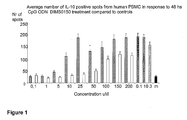
- PBMC were incubated in medium (basal) or with increasing concentrations (0.1, 1, 5, 10, 25, 100, 150 or 200 ⁇ M) of the CpG containing DIMS0150 or, or its GpC control IDX0526, or the CpG ODNs, IDX0910 (0.1 or 10 ⁇ M) and IDX0900 (3 ⁇ M) for 48 hours before detection of IL-10 positive spots.
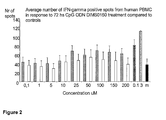
- PBMC were incubated in medium (basal) or with increasing concentrations (0.1, 1, 5, 10, 25, 50 100, 150 or 200 ⁇ M) of the CpG containing DIMS0150, or its GpC control IDX0526, or the CpG ODNs IDX0910 (at 0. 1 ⁇ M) and IDX0900 (at 3 ⁇ M) for 72 hours before detection of IFN-gamma positive spots.
- Each bar of the histogram represents the average results from ten different blood donors. Samples were performed and analysed in triplicate for each experiment/blood donor. Note that IDX0910 at 0,1 ⁇ M was tested on eight donors and 10 ⁇ M was tested on four individuals.
- Figure 4A is a graph showing the IL-10 production in response to 48 hrs stimulation with DIMS0150 as quantified by ELISA.
- PBMC were incubated with increasing concentrations (0.1, 1, 5, 10, 25, 50, 100, 150 or 200 ⁇ M) of DIMS0150 or its GpC control IDX0526.
- This graph represents results from an experiment in PBMC from one of two donors performed and analysed in duplicate.
- Figure 4B is a graph showing the IFN-gamma production in response to 48 hrs stimulation with DIMS0150 as quantified by ELISA.
- PBMC peripheral blood mononuclear cells
- IFN-gamma production in response to 48 hrs stimulation with DIMS0150 as quantified by ELISA.
- PBMC peripheral blood mononuclear cells
- increasing concentrations 0.1, 1, 5, 10, 25, 50, 100, 150, 200 or 300 ⁇ M
- cells were left in medium (basal) or treated with CpG ODNs, IDX0910 (0.1 ⁇ M and 1 ⁇ M) or IDX0900 (3 ⁇ M). This experiment was performed in cells from one blood donor and each sample was performed and analysed in duplicate.
- Figure 4C is a graph showing the IFN-alpha production in response to 48 hrs stimulation with DIMS0150 as quantified by ELISA.
- PBMC peripheral blood mononuclear cells
- concentrations 0.1, 1, 5, 10, 25, 50, 100, 150, 200 or 300 ⁇ M
- cells were left in medium (basal) or treated with CpG ODNs, IDX0910 (0.1 ⁇ M and 1 ⁇ M) and IDX0900 (3 ⁇ M).
- This graph represents results from an experiment in PBMC from one of two donors performed and analyzed in duplicate.
- Figure 5 is a graph showing the comparison of IL-10 production in human PBMC upon stimulation with a variety of CpG ODNs and their reversed controls as quantified by ELISA.
- PBMC were treated with increasing concentrations (from left to right, as indicated by the triangle: 0.1, 1, 10 or 100 ⁇ M) of DIMS0150, IDX0250, IDX0920 and IDX 0910 ODNs and their respective negative control GpC ODNs together with the non-CpG containing ODN IDX0304 for 48 hours before collection of supernatants and subsequent analysis.
- Cells left untreated in medium exhibited the basal level of IL-10 in PBMC.
- Supernatants were collected after 48 hours followed by subsequent analysis. This experiment was performed on cells from one blood donor and all samples were performed and analysed in duplicate.
- Figure 6 is a graph showing the comparison of IFN-gamma production in human PBMC upon stimulation with a variety of CpG ODNs as quantified by ELISA.
- PBMC were treated with increasing concentrations (from left to right, as indicated by the triangle: 0.1, 1, 10 or 100 ⁇ M) of DIMS0150, IDX0250, IDX0920 and IDX 0910 ODNs and their respective negative control GpC ODNs together with the non-CpG containing ODN IDX0304 for 48 hours before collection of supernatants and subsequent analysis.
- Cells left untreated in medium exhibited the basal level of IFN-gamma in PBMC.
- Supernatants were collected after 48 hours followed by subsequent analysis. This experiment was performed on cells from one blood donor and all samples were performed and analysed in duplicate.
- Figure 7 is a graph showing the IFN-gamma production from mouse splenocytes in response to 48 hs of CpG-stimulation as quantified by ELISA.
- Mouse splenocytes were treated with increasing concentrations (from left to right, as indicated by the triangles: 0.1, 1, 10 or 100 ⁇ M) of DIMS0150, IDX0250, IDX0920, IDX0910 ODNs and their respective negative control GpC ODNs compared to the non CpG-containing ODN control IDX0304 for 48 hours before collection of supernatants and subsequent analysis.
- Cells left untreated in medium exhibit the basal level of IFN-gamma in splenocytes.
- Supernatants were collected after 48 hours of stimulation followed by subsequent analysis. Note that this experiment was performed in cells from one mouse spleen and all samples were performed and analyzed in duplicate.
- Figure 8 is a graph showing the IL-10 production from mouse splenocytes in response to 48 hs of CpG-stimulation as quantified by ELISA.
- Mouse splenocytes were treated with increasing concentrations (from left to right, as indicated by the triangle: 0.1, 1, 10 or 100 ⁇ M) of DIMS0150, IDX0250, IDX0920 and IDX 0910 ODNs and their respective negative control GpC ODNs together with the non-CpG containing ODN IDX0304 for 48 hours before collection of supernatants and subsequent analysis.
- Cells left untreated in medium exhibited the basal level of IL-10 in splenocytes.
- Supernatants were collected after 48 hours followed by subsequent analysis. This experiment was performed on cells from one mouse spleen and all samples were performed and analysed in duplicate.
- Figure 9A and B shows the IL-10 release from human PBMC in response to DIMS0150 and truncated versions of SEQ.ID.NO.1 as depicted in table 1.
- Figure 10A and B shows the IL-10 and IL-6 release from human PBMC pre-incubated with varying concentrations of chloroquine in response to stimulation with CpG compounds and controls, respectively.
- steroid resistant and steroid refractory refers to patients having inflammatory diseases in which administration of steroid treatment, typically effective in patients having such diseases, is ineffective.
- steroid resistant and steroid refractory patients include, but are not limited to, patients who do not respond or respond poorly or inadequately as judged by common appropriate physiological parameters to systemic or topical administered steroids.
- Two types of steroid resistant patients have been described i.e. acquired steroid resistance (Type I) and primary steroid resistance (Type II), both of which are comprised in the present invention.
- steroid dependence refers to patients with the inability to be weaned off systemic or topical administered steroid treatment.
- references describing immunostimulatory activity of polynucleotides include, but are not limited to, Krug et al. (2001); Bauer et al. (2001); Klinman et al. (1999); Jahn-Schmid et al. (1999) and Tighe et al. (2000).
- immunostimulatory sequences include: Tokunaga et al. (1992); Yamamoto et al. (1992) and EP 468,520 ; WO 96/02555 ; WO 97/28259 ; WO 98/16247 ; US Pat. Nos. 6,339,068 , 6,406,705 , 6,426,334 and 6,426,336 .
- oligonucleotide refers to a polynucleoside formed from a plurality of linked individual nucleoside units. Such oligonucleotides can be obtained from existing nucleic acid sources, including genomic or cDNA, but are preferably produced by synthetic methods. The nucleoside residues can be coupled to each other by any of the numerous known internucleoside linkages.
- internucleoside linkages include, without limitation, the natural internucleoside phosphodiester bond or indeed modified internucleosides such as, but not limited to, phosphorothioate, phosphorodithioate, alkylphosphonate, alkylphosphonothioate, phosphotriester, phosphoramidate, siloxane, carbonate, carboalkoxy, acetamidate, carbamate, morpholino, borano, thioether, bridged phosphoramidate, bridged methylene phosphonate, bridged phosphorothioate, and sulfone internucleoside linkages.
- modified internucleosides such as, but not limited to, phosphorothioate, phosphorodithioate, alkylphosphonate, alkylphosphonothioate, phosphotriester, phosphoramidate, siloxane, carbonate, carboalkoxy, acetamidate, carbamate, morpholino
- oligonucleotide also encompasses polynucleosides having one or more stereospecific internucleoside linkage (e. g., (Rp)-or(Sp)-phosphorothioate, alkylphosphonate, or phosphotriester linkages).
- the terms “oligonucleotide” and “dinucleotide” are expressly intended to include polynucleosides and dinucleosides having any such internucleoside linkage, whether or not the linkage comprises a phosphate group.
- these internucleoside linkages may be phosphodiester, phosphorothioate, or phosphorodithioate linkages, or combinations thereof.
- oligonucleotide also encompasses polynucleosides having additional substituents including, without limitation, protein groups, lipophilic groups, intercalating agents, diamines, folic acid, cholesterol and adamantane.
- oligonucleotide also encompasses any other nucleobase containing polymer, including, without limitation, peptide nucleic acids (PNA), peptide nucleic acids with phosphate groups (PHONA), locked nucleic acids (LNA), morpholino-backbone oligonucleotides, and oligonucleotides having backbone sections with alkyl linkers or amino linkers.
- PNA peptide nucleic acids
- PONA peptide nucleic acids with phosphate groups
- LNA locked nucleic acids
- morpholino-backbone oligonucleotides oligonucleotides having backbone sections with alkyl linkers or amino linkers.
- the oligonucleotides of the invention can include naturally occurring nucleosides, modified nucleosides, or mixtures thereof.
- modified nucleoside is a nucleoside that includes a modified heterocyclic base, a modified sugar moiety, or a combination thereof.
- the modified nucleoside is a non-natural pyrimidine or purine nucleoside, as herein described.
- the modified nucleoside is a 2'-substituted ribonucleoside an arabinonucleoside or a 2'- deoxy-2'-substituted-arabinoside.
- oligonucleotide includes hybrid and chimeric oligonucleotides.
- a "chimeric oligonucleotide” is an oligonucleotide having more than one type of internucleoside linkage within its sequence structure.
- One preferred example of such a chimeric oligonucleotide is a chimeric oligonucleotide comprising a phosphorothioate, phosphodiester or phosphorodithioate region and non-ionic linkages such as alkylphosphonate or alkylphosphonothioate linkages ( Pederson et al. U. S. Patent Nos. 5,635, 377 and 5,366, 878 ).
- hybrid oligonucleotide is an oligonucleotide having more than one type of nucleoside.
- One preferred example of such a hybrid oligonucleotide comprises a ribonucleotide or 2'-substitutedribonucleotide region,and a deoxyribonucleotide region ( Metelev and Agrawal, U. S. Patent No. 5,652, 355,6 , 346,614 and 6,143,881 ).
- the term “immunomodulatory oligonucleotide” refers to an oligonucleotide as described above that induces an immune response either stimulating the immune system or repressing the immune system or both in an organism when administered to a vertebrate, such as a mammal.
- a vertebrate such as a mammal.
- mammal includes, without limitation rats, mice, cats, dogs, horses, cattle, cows, pigs, rabbits, non-human primates, and humans.
- the immunomodulatory oligonucleotide comprises at least one naturally occurring phosphodiester, or one modified phosphorothioate, or phosphorodithioate internucleoside linkage, however preferred linkages or indeed backbone modifications including, without limitation, methylphosphonates, methylphosphonothioates, phosphotriesters, phosphothiotriesters, phosphorothioates, phosphorodithioates, triester prodrugs, sulfones, sulfonamides, sulfamates, formacetal, N-methylhydroxylamine, carbonate, carbamate, morpholino, boranophosphonate, phosphoramidates, especially primary amino-phosphoramidates, N3 phosphoramidates and N5 phosphoramidates, and stereospecific linkages (e. g., (Rp)-or (Sp)-phosphorothioate, alkylphosphonate, or phosphotriester linkages).
- immunomodulatory response describes the change of an immune response when challenged with an immunomodulatory oligonucleotide. This change is measurable often through the release of certain cytokines such as interferons as well as other physiological parameters such as proliferation.
- the response can equally be one that serves to stimulate the immune system as well as to repress the immune system depending on the cytokines induced by the immunomodulatory oligonucleotide in question.
- the immunomodulatory oligonucleotide comprises an immunostimulatory dinucleotide of formula 5'-Pyr-Pur-3', wherein Pyr is a natural or synthetic pyrimidine nucleoside and Pur is a natural or synthetic purine nucleoside.
- the immunomodulatory oligonucleotide comprises an immunostimulatory dinucleotide of formula 5'-Pur*-Pur-3', wherein Pur* is a synthetic purine nucleoside and Pur is a natural or synthetic purine nucleoside.
- the dinucleotide is expressed as RpG, C*pG or YZ, in which case respectively,R, C*, or Y represents a synthetic purine.
- a particularly preferred synthetic purine is 2-oxo-7- deaza-8-methyl-purine.
- species-specificity (sequence dependence) of the immunostimulatory effect is overcome and cytokine profile is improved.
- pyrimidine nucleoside refers to a nucleoside wherein the base component of the nucleoside is a monocyclic nucleobase.
- purine nucleoside refers to a nucleoside wherein the base component of the nucleoside is a bicyclic nucleobase.
- a “synthetic" pyrimidine or purine nucleoside includes a non-naturally occurring pyrimidine or purine base, a non-naturally occurring sugar moiety, or a combination thereof.
- the sugar moiety of the nucleoside can be a non-naturally occurring sugar moiety.
- a "naturally occurring sugar moiety” is a sugar moiety that occurs naturally as part of a nucleic acid, e. g., ribose and 2'- deoxyribose
- a "non-naturally occurring sugar moiety” is any sugar that does not occur naturally as part of a nucleic acid, but which can be used in the backbone for an oligonucleotide, for example but mot limited to hexose.
- Arabinose and arabinose derivatives are examples of preferred sugar moieties.
- Preferred immunostimulatory moieties according to the invention further include nucleosides having sugar modifications, including, without limitation, 2'-substituted pentose sugars including, without limitation,2'-O-methylribose,2'-O-methoxyethylribose, 2'-O-propargylribose, and 2'-deoxy-2'-fluororibose; 3'-substituted pentose sugars, including, without limitation, 3'-O-methylribose ; 1', 2'-dideoxyribose; arabinose; substituted arabinose sugars, including, without limitation,1'-methylarabinose, 3'-hydroxymethylarabinose, 4'-hydroxymethylarabinose, 3'-hydroxyarabinose and 2'-substituted arabinose sugars; hexose sugars, including, without limitation, 1,5- anhydrohexitol; and alpha-anomers.
- preferred immunostimulatory moieties according to the invention further include oligonucleotides having other carbohydrate backbone modifications and replacements, including peptide nucleic acids (PNA), peptide nucleic acids with phosphate groups (PHONA), locked nucleic acids (LNA), morpholino backbone oligonucleotides, and oligonucleotides having backbone linker sections having a length of from about 2 angstroms to about 200 angstroms, including without limitation, alkyl linkers or amino linkers.
- the alkyl linker may be branched or unbranched, substituted or unsubstituted, and chirally pure or a racemic mixture.
- alkyl linkers have from about 2 to about 18 carbon atoms. In some preferred embodiments such alkyl linkers have from about 3 to about 9 carbon atoms.
- Some alkyl linkers include one or more functional groups selected from the group consisting of hydroxy, amino, thiol, thioether, ether, amide, thioamide, ester, urea, and thioether.
- preferred immunostimulatory moieties according to the invention further include DNA isoforms, including, without limitation, -L-deoxyribonucleosides and a-deoxyribonucleosides.
- Preferred immunostimulatory moieties according to the invention incorporate 3' modifications, and further include nucleosides having unnatural internucleoside linkage positions, including, without limitation, 2'-5', 2'-2', 3'-3'and 5'- 5' linkages.
- the immunomodulatory oligonucleotide according to the invention comprise at least five nucleosides linked via internucleoside linkage or a functionalized nucleobase or sugar via a non-nucleotidic linker.
- a "non- nucleotidic linker" is any moiety that can be linked to the oligonucleotides by way of covalent or non-covalent linkages.
- Non-covalent linkages include, but are not limited to, electrostatic interaction, hydrophobic interactions,-stacking interactions, and hydrogen bonding.
- the term "non- nucleotidic linker" is not meant to refer to an internucleoside linkage, as described above, e. g. a phosphodiester, phosphorothioate, or phosphorodithioate functional group, that directly connects the 3'-hydroxyl groups of two nucleosides.
- a direct 3'-3'linkage is considered to be a "nucleotidic linkage.”
- the non-nucleotidic linker is a metal, including, without limitation, gold particles. In some other embodiments, the non-nucleotidic linker is a soluble or insoluble biodegradable polymer bead.
- the non-nucleotidic linker is an organic moiety having functional groups that permit attachment to the oligonucleotide. Such attachment preferably is by any stable covalent linkage.
- the non-nucleotidic linker is a biomolecule, including, without limitation, polypeptides, antibodies, lipids, antigens, allergens, and oligosaccharides.
- the non-nucleotidic linker is a small molecule.
- a small molecule is an organic moiety having a molecular weight of less than 1,000 Da.
- the small molecule is an aliphatic or aromatic hydrocarbon, either of which optionally can include, either in the linear chain connecting the oligonucleotides or appended to it, one or more functional groups selected from the group consisting of hydroxy, amino, thiol, thioether, ether, amide, thioamide, ester, urea, and thiourea.
- the small molecule can be cyclic or acyclic.
- Examples of small molecule linkers include, but are not limited to, amino acids, carbohydrates, cyclodextrins, adamantane, cholesterol, haptens and antibiotics. However, for purposes of describing the non-nucleotidic linker, the term "small molecule" is not intended to include a nucleoside.
- the small molecule linker is glycerol or a glycerol homolog of the formula HO- (CH2) o-CH (OH)- (CH2) p-OH, wherein o and p independently are integers from 1 to about 6, from 1 to about 4, or from 1 to about 3.
- the small molecule linker is a derivative of 1, 3-diamino-2-hydroxypropane. Some such derivatives have the formula HO-(CH2) m-C (O) NH-CH2-CH(OH)-CH2-NHC(O)-m-OH, wherein m is an integer from 0 to about 10, from 0 to about 6, from 2 to about 6, or from 2 to about 4.
- Modified or substituted oligonucleotides are often preferred over native forms because of desirable properties such as, for example, enhanced cellular uptake, enhanced affinity for nucleic acid target and increased stability in the presence of nucleases.
- An oligonucleotide is usually comprised of more than two (2), and typically more than ten (10) and up to one hundred (100) or more deoxyribonucleotides or ribonucelotides, although preferably between about eight (8) and about forty (40), most preferably between about eight (8) and about twenty (20). The exact size will depend on many factors, which in turn depends on the ultimate function or use of the oligonucleotide.
- the oligonucleotide may be generated in any manner, including chemical synthesis, DNA replication, reverse transcription, or a combination thereof.
- the oligonucleotides can be administered by any appropriate administration route, such as, but not limited to, inhalation, ophthalmic, intranasal, parenteral, oral, intradermal and rectal administration. If the patient is also on steroid treatment or other anti-inflammatory treatments such as the use of immunomodulators, the steroids and immunomodulators can be administered together with the oligonucleotides or separately.
- the route of administration of the oligonucleotides is independent of the route of administration of steroids.
- terapéuticaally effective amount as used herein relates to an amount sufficient to enhance steroid efficacy to some beneficial degree, preferably to enhance by at least about 30 percent, more preferably by at least 50 percent, and even more preferable by at least 90 percent. Most preferably the steroid resistance is treated.
- steroid is used to encompass both corticosteroids and glucocorticosteroids.
- CG containing oligonucleotide is used to encompass an oligonucleotide having at least one unmethylated CG dinucleotide within its entire sequence length and being preferably 8 to 100 nucleic acid bases in length.
- the expression "enhance steroid efficacy” is here used to encompass a steroid sparing effect, evident as a clinical picture where a simultaneous or sequential treatment with a CG containing oligonucleotide, preferably a pre-treatment, is shown to reduce the steroid dose necessary to manage inflammation.
- the expression “enhance steroid efficacy” is also intended to encompass a synergistic use of a CG containing oligonucleotide and a steroid, either simultaneously or substantially simultaneously, or sequentially or substantially simultaneously, shown to reduce the steroid dose necessary to manage inflammation.
- steroid resistance or "steroid refractory” are used to encompass a patient failing to respond adequately to a current therapeutic regime deemed to be normally effective and sufficient to treat the disease in question.
- steroid dependent is used to encompass a patient with an observed inability to be weaned off current therapy without compromising the patient status or increasing the severity of the symptoms of the disease in question.
- the invention provides pharmaceutical formulations comprising an immunomodulatory oligonucleotide, according to the invention and a physiologically acceptable carrier.
- physiologically acceptable refers to a material that does not interfere with the effectiveness of the immunomodulatory oligonucleotide and is compatible with a biological system such as a cell, cell culture, tissue, or organism.
- the biological system is a living organism, such as a vertebrate.
- carrier encompasses any excipient, diluent, filler, salt, buffer, stabilizer, solubilizer, lipid, or other material well known in the art for use in pharmaceutical formulations. It will be understood that the characteristics of the carrier, excipient, or diluent will depend on the route of administration for a particular application. The preparation of pharmaceutically acceptable formulations containing these materials are described in, e. g., Remington's Pharmaceutical Sciences, 18th Edition, ed. A. Gennaro, Mack Publishing Co., Easton, PA, 1990.
- an immunomodulating oligonucleotide in a pharmaceutically acceptable mixture will vary depending on several factors, including the dosage of the compound to be administered, the pharmacokinetic characteristics of the compound(s) employed, the age, sex and condition of the patient, as well as the route of administration.
- Effective amounts of immunomodulating oligonucleotides for enhancing steroid efficacy in a steroid resistant or steroid dependent patient would broadly range between about 0.01 ⁇ g to about 100 mg per kg of body weight, preferably about 0.1 ⁇ g to about 10 mg, and most preferably about 1 ⁇ g to about 5 mg per kg of body weight of a recipient mammal.
- immunomodulatory oligonucleotide are administered in combination with, but not limited to, anti-inflammatory agents such as TNF-anti-bodies, non-steroidal anti-inflammatory drugs (NSAIDs) such as ibuprofen, naproxen aspirin and other salicylates and cox-2 inhibitors, such as celecoxib (Celebrex ® ), corticosteroids (inhaled, oral, rectal), mast cell stabilizers, and leukotriene modifier drugs.
- NSAIDs non-steroidal anti-inflammatory drugs
- corticosteroids inhaled, oral, rectal
- mast cell stabilizers such as leukotriene modifier drugs.
- the term "in combination with” means in the course of treating the same disease in the same patient, and includes administering the immunomodulatory oligonucleotide in any order, including simultaneous administration, as well as temporally spaced order of up to several months apart.
- Such combination treatment may also include more than a single administration of the immunomodulatory oligonucleotide. More preferable the immunomodulatory oligonucleotide of the invention is given to a steroid resistant or steroid dependent patient after that patient has started steroid therapy, and is on a stable dosing regime.
- the present invention relates to a method for enhancing steroid efficacy in a steroid refractory patient afflicted with an inflammatory condition not responding or responding poorly or inadequately to anti-inflammatory treatment.
- Oligonucleotides to be used according to the present invention are also exemplified in Table 1.
- the patient is currently on corticosteroid treatment, the patient is steroid dependent and currently on corticosteroid treatment or the patient is currently on anti-inflammatory treatment.
- the method according to the invention is for enhancing steroid efficacy in a patient afflicted with an inflammatory condition.
- the inflammatory condition is selected from the group consisting of ulcerative colitis (UC), Crohn's disease (CD), rheumatoid arthritis, psoriasis, emphysema, asthma and chronic obstructive pulmonary disease (COPD).
- UC ulcerative colitis
- CD Crohn's disease
- COPD chronic obstructive pulmonary disease
- the inflammatory condition is ulcerative colitis and in another embodiment the inflammatory condition is Crohn's disease.
- the oligonucleotide used in the inventive method can be modified according to methods known for the skilled person and as defined above.
- at least one nucleotide of the oligonucleotide has a phosphate backbone modification, wherein the phosphate backbone modification is a phosphorothioate or phosphorodithioate modification.
- the modification can occur at one or more nucleotides at any position along the entire length of the oligonucleotide.
- the nucleic acid backbone includes the phosphate backbone modification on the 5' inter-nucleotide linkages.
- the nucleic acid backbone includes the phosphate backbone modification on the 3' inter-nucleotide linkages.
- the oligonucleotide can be composed of an analogue or mimic of DNA, including but not restricted to the following: methylphosphonate, N3'->P5'-phosphoramidate, morpholino, peptide nucleic acid (PNA), locked nucleic acid (LNA), arabinosyl nucleic acid (ANA), fluoro-arabinosyl nucleic acid (FANA) methoxy-ethyl nucleic acid (MOE).
- PNA peptide nucleic acid
- LNA locked nucleic acid
- ANA arabinosyl nucleic acid
- FANA fluoro-arabinosyl nucleic acid methoxy-ethyl nucleic acid
- the oligonucleotide used in the inventive method can comprise at least one modified sugar moiety nucleobase as defined above.
- the modified sugar moiety is, for example, a 2'-O-methoxyethyl sugar moiety.
- the oligonucleotide is administered in combination with corticosteroids.
- the present invention also relates to the use of an oligonucleotide having the sequence:
- oligonucleotides used in the method as defined above can also be used for the manufacture of the medicament.
- the patient is currently on corticosteroid treatment, the patient is steroid dependent and currently on corticosteroid treatment or the patient is currently on anti-inflammatory treatment.
- the oligonucleotide is administered in combination with corticosteroids.
- the inflammatory condition is selected from the group consisting of ulcerative colitis (UC), Crohn's disease (CD), rheumatoid arthritis, psoriasis, emphysema, asthma and chronic obstructive pulmonary disease (COPD).
- UC ulcerative colitis
- CD Crohn's disease
- COPD chronic obstructive pulmonary disease
- the inflammatory condition is ulcerative colitis and in another embodiment the inflammatory condition is Crohn's disease.
- the immunomodulatory oligonucleotide of the invention is illustrated by SEQ.ID.No 1 (DIMS0150) and serves as an example of immunomodulatory DNA based oligonucleotides containing a CpG motif.
- the invention disclosed the surprising finding that when such immunomodulatory oligonucleotide as denoted by SEQ.ID.N0.1 is administered to a patient suffering from an inflammatory condition of the bowel (i.e ulcerative colitis and Crohns disease), and who were equally not responding to steroid therapies and were on concomitant steroid therapy, there was a rapid and pronounced improvement of such patients and the dose of administered steroids could be reduced.
- SEQ.ID.NO.1 functions as an immunomodulatory oligonucleotide and that varying lengths of SEQ.ID.NO.1 retain activity.
- the latter examples are summaries of clinical data in patients with ulcerative colitis and Crohns disease receiving a single rectal administration of SEQ.ID.NO.1.
- ODNs were used for stimulation experiments using human peripheral blood monocytes (PBMC) or mouse splenocytes.
- PBMC peripheral blood monocytes
- the ODNs used are listed in Table 1.
- the dinucleotide motif was "reversed", and as such function as controls Table 1.
- the lyophilized ODNs used (see Table 1) - all except human DIMS0150 - were first diluted in a small volume of distilled water. After thorough mixing, each ODN was further diluted with water in a series of different dilutions. The optical density (OD) A260/A280 was determined in at least five or more samples of each dilution using a spectrophotometer (SmartSpec 3000, BioRad). The average concentration of all readings, for all dilutions, was calculated in order to determine the concentration of the stock. These stock solutions were all stored at -20° C.
- one portion of the concentrated stock solution was diluted further, in order to obtain one high and one low concentrated stock solution (1 ⁇ g/ ⁇ l and 20 ⁇ g/ ⁇ l respectively).
- the concentration was determined in the same manner, measuring OD using a spectrophotometer as mentioned above.
- DIMS0150 was diluted in distilled water and the concentration was determined in a similar way as mentioned for the lyophilized ODNs.
- PBMC peripheral blood mononuclear cells
- FCS heat inactivated fetal calf serum
- a spleen was excised from a C57 BL/6 mouse (mice were ordered from MTC animal unit, Karolinska Institutet) and a single cell suspension prepared under sterile conditions by using a nylon cell strainer (Cell strainer 100 ⁇ M, BD Falcon). Cells were then washed once in complete RPMI 1640 (RPMI 1640 containing 5% heat inactivated FCS, 2 mM L-glutamine, 100 U/ml penicillin and 100 ⁇ g/ml streptomycin) at 1200 rpm for 7-10 minutes.
- RPMI 1640 RPMI 1640 containing 5% heat inactivated FCS, 2 mM L-glutamine, 100 U/ml penicillin and 100 ⁇ g/ml streptomycin
- the supernatant was decanted and cells were resuspended in 1 ml red blood cell lysing buffer (Sigma) and incubated for a maximum of two minutes at room temperature. Another 5 ml complete medium was added before centrifugation performed as previously described. After decanting the supernatant, cell pellet was resuspended in complete medium and cell numbers were determined in 0, 4% Trypan blue solution.
- PBMC peripheral blood mononuclear cells
- ELISpot MABTech AB, Sweden
- the PDVF-plate was coated overnight at +4°C with a specific coating-antibody for IFN-alpha, IFN-gamma or IL-10 (included in ELISpot kits; IFN-alpha, IFN-gamma and IL-10 from MABTech AB, Sweden) respectively.
- PBMC were then seeded at 500 000 cells/well in complete RPMIc. Directly after seeding, cells were treated with the respective oligonucleotides (ODN).
- ODSN oligonucleotides
- ODN-concentrations were added to the specific wells giving final ODN-concentrations of 0.1, 1, 5, 10, 25, 50, 100, 150 and 200 ⁇ M in a total volume of 100 ⁇ l/well.
- Samples were prepared in triplicates. After treatment, cells were incubated in a humified incubator at 5% carbon dioxide at 37°C.
- IFN-alpha was analyzed for 2, 10 and 3 donors at 24, 48 and 72hrs, respectively.
- IFN-gamma was analyzed for 2, 7 and 5 donors at 24, 48 and 72hrs, respectively.
- IL-10 was analyzed for 5 and 4 donors at 48 and 72hrs, respectively. Detection and counting of cytokine producing cells was performed by following the manufacturer's manual.
- the ELISpot reader software was AID 2.3.3 located at Center for Molecular Medicine, CMM, Karolinska Hospital, Solna, Sweden.
- PBMC peripheral blood mononuclear cells
- the immunostimulatory activity of the CpG containing ODN, DIMS0150 was evaluated in human PBMC.
- the hypothesis was that PBMC incubated with different concentrations of DIMS0150 for different periods of time would stimulate cytokine production in a CpG dependent manner.
- three cytokines that are well known to be produced by PBMC in response to CpG DNA, namely IFN-alpha, IL-10 and IFN-gamma were chosen.
- PBMC from different healthy donors all showed time (data not shown) and dose dependent cytokine production as analysed by ELISpot in response to DIMS0150.
- IL-10 was the most responding cytokine after 48hrs stimulation with DIMS0150 ( Figure 1 .).
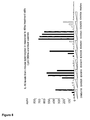
- DIMS0150 was less potent at inducing IFN-alpha and IFN-gamma in PBMC at all concentrations and time points tested, represented by 72hrs for IFN-gamma (see figure 2 ) and 48hrs for IFN-alpha (see figure 3 ).
- a CpG reverted form of DIMS0150, IDX0526 was also included in all experiments in order to evaluate the CpG dependency of potential cytokine production.
- PBMC treated with the IDX0526 showed no or reduced production of all three cytokines studied compared to stimulation with DIMS0150 (see figures 1 , 2 and 3 ).
- ELISA analyses were performed. PBMC were incubated with increasing concentrations of DIMS0150 and the supernatants were analyzed for levels of IL-10, IFN-alpha and IFN-gamma. In agreement with those results obtained by ELISpot data, using concentrations between 0.1 and 200 ⁇ M (or 300 ⁇ M for IFN-alpha and IFN-gamma) resulted in a CpG dependent dose response of all the cytokines after 48hrs incubation (see figures 4 A , B and C ). Since ELISpot and ELISA measure different parameters ( i . e .
- the ELISA measurements should be considered as complementary information regarding the actual amount being produced at an particular concentration, regardless of the number of cells secreting the cytokine of interest.
- the dose response pattern may appear different when comparing results from those different techniques.
- the individual variance in response to DIMS0150 as analysed by quantitative ELISA has been less extensively investigated (1-3 donors), in comparison to ELISpot.
- IDX0250 was also included in this experimental set up, since this ODN sequence also contains a CpG dinucleotide and may act as CpG DNA.
- the CpG flanking bases in IDX0250 differ slightly to DIMS0150 and this may influence the level of cytokine response in PBMC upon stimulation.
- PBMC peripheral blood mononuclear cells
- IL-10 and IFN-gamma DIMS0150 and the IDX0250 gave rise to a similar IL-10 response at 100 ⁇ M ( Figure 5 .) but at the lowest concentrations (0.1 ⁇ M to 1 ⁇ M), none of these ODNs stimulated IL-10 production of PBMC.
- PBMC incubation with IDX0910 or IDX0920 reached the highest IL-10 production at the lower concentrations used.
- IDX0250 was more potent than DIMS0150, indicating that sequences surrounding the CpG also have impact on level of response ( Figure 7 ).
- the most pronounced IFN-gamma levels was found in supernatants from cells stimulated with the CpG ODN, IDX0920 at the lower concentrations used.
- analysing the supernatants for levels of IL-10 showed similar pattern to what was observed when measuring IFN-gamma. None of the GpC reversed ODN controls induced IFN-gamma, but IDX0925 induced some level of IL-10 also in the murine system.
- PBMC from healthy volunteers prepared using standard procedure.
- Cells were plated onto 96-well cultural plate with density of 5x10⁶ cells per well in RPMIc containing 5 % FCS (Gibco).
- Chloroquine (CQ) a known TLR9 inhibitor and Concavalin A (Con A) were purchased from Sigma, prepared and stored as stock solutions (5 mg/ml).
- Immunostimulatory oligonucleotides SEQ.ID.NO.11 (IDX-0912b), SEQ.ID.NO.9 (IDX-0920) and SEQ.ID.NO 1 (DIMS0150) were added to cultivation medium at optimal working concentrations that were determined previously: 1 uM, 10uM and 100uM, respectively.
- Cells were pre-incubated in the cell incubator (37C, 5%CO2) 40 min with 0; 1; 10 or 50ug/ml CQ. Then IS ODNs were added to cultivation medium.
- Con A was added to positive control group of cells at final concentration of 20 ug/ml.
- Peripheral blood cell concentrates were obtained from healthy blood donors from the Karolinska University Hospital Blood Bank.
- Peripheral blood mononuclear cells PBMCs
- PBMCs Peripheral blood mononuclear cells
- Ficoll-Paque Amersham Biosciences AB, Uppsala, Sweden
- PBS phosphate-buffered saline
- the cells were diluted to 10 x 10 6 cells/mL in complete culture medium, RPMIc [RPMI 1640 medium supplemented with 25 mg/mL gentamicin, 2 mM L-glutamine, 100 IU/mL penicillin, 100 mg/mL streptomycin (Gibco BRL, Life Technologies Ltd), 5mM Hepes, and 10% (v/v) heat-inactivated fetal calf serum (FCS, Hyclone, Logan,UT, USA)].
- Isolated PBMCs were cultured in 48-well culture plates (2x 10 6 cells in 400 ⁇ l medium/well) in the presence of different oligo dinucleotides (ODNs) (Table I) at the final concentration of 10 or 100 ⁇ M.
- RPMIc RPMIc alone served as negative control.
- the cells were incubated for 48 hrs, at 37° C in a humid condition with 6% CO2 in air.
- Cell supernatants were collected and analysed for the presence of cytokine by utilizing the cytometric bead array (CBA) (Becton Dickinson) according to the manufacturer's protocol on a FACSCalibur flow cytometer followed by analysis using CeliQuest software (Becton Dickinson).
- CBA cytometric bead array
- CeliQuest software Betcton Dickinson
- Figures 10A and 10B indicate that decreasing the length of SEQ.ID.NO.1 by truncating the sequence through the removal nucleotides from each end of the oligonucleotide, activity is still retained regarding IL-10 stimulation.
- IDX-0031 b1 a truncated 13 mer of the original SEQ.ID.N0.1, is still able to induce IL-10 at a concentration of 100uM.
- activity is seen up to truncated 15 mer version (IDX-0027b1) from the original SEQ.ID.No.1.
- Doses levels used were 3 mg and 30mg given as a single rectal administration Clinical response at week 1 i) SEQ.ID.NO.1 5/7 (71 %) responders ii) Placebo 1/4 (25%) responders
- immunomodulatory oligonucleotides that contain a CpG dinucleotide within their sequence such as example SEQ.ID.NO.1 are able to induce certain cytokines for which there exists evidence of their role in modulating steroid responsiveness, as mentioned in background art.
- immunomodulatory oligonucleotides that induce the production of interferons and IL-10, for example, may prove beneficial.
Landscapes
- Health & Medical Sciences (AREA)
- Life Sciences & Earth Sciences (AREA)
- Chemical & Material Sciences (AREA)
- Engineering & Computer Science (AREA)
- General Health & Medical Sciences (AREA)
- Veterinary Medicine (AREA)
- Public Health (AREA)
- Pharmacology & Pharmacy (AREA)
- Organic Chemistry (AREA)
- Animal Behavior & Ethology (AREA)
- Medicinal Chemistry (AREA)
- Bioinformatics & Cheminformatics (AREA)
- Chemical Kinetics & Catalysis (AREA)
- General Chemical & Material Sciences (AREA)
- Nuclear Medicine, Radiotherapy & Molecular Imaging (AREA)
- Genetics & Genomics (AREA)
- Biomedical Technology (AREA)
- Molecular Biology (AREA)
- Zoology (AREA)
- Biotechnology (AREA)
- General Engineering & Computer Science (AREA)
- Epidemiology (AREA)
- Wood Science & Technology (AREA)
- Pulmonology (AREA)
- Immunology (AREA)
- Biophysics (AREA)
- Microbiology (AREA)
- Biochemistry (AREA)
- Rheumatology (AREA)
- Physics & Mathematics (AREA)
- Plant Pathology (AREA)
- Orthopedic Medicine & Surgery (AREA)
- Physical Education & Sports Medicine (AREA)
- Pain & Pain Management (AREA)
- Dermatology (AREA)
- Pharmaceuticals Containing Other Organic And Inorganic Compounds (AREA)
- Medicinal Preparation (AREA)
- Steroid Compounds (AREA)
- Preparation Of Compounds By Using Micro-Organisms (AREA)
Priority Applications (3)
| Application Number | Priority Date | Filing Date | Title |
|---|---|---|---|
| SI200631691T SI2179737T1 (sl) | 2005-07-01 | 2006-06-30 | Modulacija reakcije na stereoide |
| PL09167538T PL2179737T3 (pl) | 2005-07-01 | 2006-06-30 | Sposób do modulowania wrażliwości na steroidy |
| CY20131101008T CY1114602T1 (el) | 2005-07-01 | 2013-11-14 | Ρυθμιση αποκρισιμοτητας σε στεροειδη |
Applications Claiming Priority (2)
| Application Number | Priority Date | Filing Date | Title |
|---|---|---|---|
| US69605005P | 2005-07-01 | 2005-07-01 | |
| EP06748071A EP1904077B1 (de) | 2005-07-01 | 2006-06-30 | Modulierung der reaktion auf steroide |
Related Parent Applications (2)
| Application Number | Title | Priority Date | Filing Date |
|---|---|---|---|
| WOPCT/SE2006/050232 Previously-Filed-Application | 2006-06-30 | ||
| EP06748071.5 Division | 2006-06-30 |
Publications (3)
| Publication Number | Publication Date |
|---|---|
| EP2179737A2 true EP2179737A2 (de) | 2010-04-28 |
| EP2179737A3 EP2179737A3 (de) | 2010-08-25 |
| EP2179737B1 EP2179737B1 (de) | 2013-08-14 |
Family
ID=37604740
Family Applications (2)
| Application Number | Title | Priority Date | Filing Date |
|---|---|---|---|
| EP06748071A Not-in-force EP1904077B1 (de) | 2005-07-01 | 2006-06-30 | Modulierung der reaktion auf steroide |
| EP09167538.9A Not-in-force EP2179737B1 (de) | 2005-07-01 | 2006-06-30 | Modulierung der Reaktion auf Steroide |
Family Applications Before (1)
| Application Number | Title | Priority Date | Filing Date |
|---|---|---|---|
| EP06748071A Not-in-force EP1904077B1 (de) | 2005-07-01 | 2006-06-30 | Modulierung der reaktion auf steroide |
Country Status (11)
| Country | Link |
|---|---|
| US (2) | US8148341B2 (de) |
| EP (2) | EP1904077B1 (de) |
| JP (2) | JP5208734B2 (de) |
| AT (1) | ATE439135T1 (de) |
| DE (1) | DE602006008473D1 (de) |
| DK (1) | DK2179737T3 (de) |
| ES (2) | ES2330884T3 (de) |
| PL (1) | PL2179737T3 (de) |
| PT (1) | PT2179737E (de) |
| SI (1) | SI2179737T1 (de) |
| WO (1) | WO2007004979A1 (de) |
Cited By (1)
| Publication number | Priority date | Publication date | Assignee | Title |
|---|---|---|---|---|
| EP4035659A1 (de) | 2016-11-29 | 2022-08-03 | PureTech LYT, Inc. | Exosome zur ausgabe von therapeutischen wirkstoffen |
Families Citing this family (14)
| Publication number | Priority date | Publication date | Assignee | Title |
|---|---|---|---|---|
| ATE439135T1 (de) * | 2005-07-01 | 2009-08-15 | Index Pharmaceuticals Ab | Modulierung der reaktion auf steroide |
| AU2006266503B2 (en) * | 2005-07-01 | 2011-12-08 | Index Pharmaceuticals Ab | Immunostimulatory method |
| AU2006306805A1 (en) | 2005-10-28 | 2007-05-03 | Index Pharmaceuticals Ab | Composition and method for the prevention, treatment and/or alleviation of an inflammatory disease |
| JP5547637B2 (ja) * | 2007-10-05 | 2014-07-16 | インデックス・ファーマシューティカルズ・アクチエボラーグ | 浮腫を治療または軽減するための新規な化合物およびその使用方法 |
| ES2639852T3 (es) | 2007-10-26 | 2017-10-30 | Academisch Ziekenhuis Leiden | Medios y métodos para contrarrestar los trastornos musculares |
| USRE48468E1 (en) | 2007-10-26 | 2021-03-16 | Biomarin Technologies B.V. | Means and methods for counteracting muscle disorders |
| EP2119783A1 (de) | 2008-05-14 | 2009-11-18 | Prosensa Technologies B.V. | Verfahren für effizientes Exon (44)-Skipping bei Duchenne-Muskeldystrophie und entsprechende Mittel |
| CA2728276A1 (en) * | 2008-06-18 | 2009-12-23 | Index Pharmaceuticals Ab | Combination therapies against cancer |
| WO2010053435A2 (en) * | 2008-11-04 | 2010-05-14 | Index Pharmaceuticals Ab | Compounds and methods for the treatment of inflammatory diseases of the cns |
| WO2012084991A1 (en) * | 2010-12-21 | 2012-06-28 | Index Pharmaceuticals Ab | Biologically active oligonucleotides capable of modulating the immune system ii |
| EP2596806A1 (de) | 2011-11-25 | 2013-05-29 | Index Pharmaceuticals AB | Verfahren zur Vorbeugung einer Dickdarmresektion |
| NZ627896A (en) | 2012-01-27 | 2016-11-25 | Biomarin Technologies B V | Rna modulating oligonucleotides with improved characteristics for the treatment of duchenne and becker muscular dystrophy |
| GB201707503D0 (en) * | 2017-05-10 | 2017-06-21 | Index Pharmaceuticals Ab | New Therapy 3 |
| GB201707501D0 (en) * | 2017-05-10 | 2017-06-21 | Index Pharmaceuticals Ab | New therapy 2 |
Citations (10)
| Publication number | Priority date | Publication date | Assignee | Title |
|---|---|---|---|---|
| EP0468520A2 (de) | 1990-07-27 | 1992-01-29 | MITSUI TOATSU CHEMICALS, Inc. | Palindromische DNS-Sequenz enthaltende immunostimulierende Mittel |
| WO1996002555A1 (en) | 1994-07-15 | 1996-02-01 | The University Of Iowa Research Foundation | Immunomodulatory oligonucleotides |
| WO1997028259A1 (en) | 1996-01-30 | 1997-08-07 | The Regents Of The University Of California | Gene expression vectors which generate an antigen specific immune response and methods of using the same |
| WO1998016247A1 (en) | 1996-10-11 | 1998-04-23 | The Regents Of The University Of California | Immunostimulatory polynucleotide/immunomodulatory molecule conjugates |
| US6339068B1 (en) | 1997-05-20 | 2002-01-15 | University Of Iowa Research Foundation | Vectors and methods for immunization or therapeutic protocols |
| US6406705B1 (en) | 1997-03-10 | 2002-06-18 | University Of Iowa Research Foundation | Use of nucleic acids containing unmethylated CpG dinucleotide as an adjuvant |
| US6426336B1 (en) | 1996-10-04 | 2002-07-30 | The Regents Of The University Of California | Method for treating allergic lung disease |
| US6426334B1 (en) | 1997-04-30 | 2002-07-30 | Hybridon, Inc. | Oligonucleotide mediated specific cytokine induction and reduction of tumor growth in a mammal |
| US20030050268A1 (en) | 2001-03-29 | 2003-03-13 | Krieg Arthur M. | Immunostimulatory nucleic acid for treatment of non-allergic inflammatory diseases |
| US20030087848A1 (en) | 2000-02-03 | 2003-05-08 | Bratzler Robert L. | Immunostimulatory nucleic acids for the treatment of asthma and allergy |
Family Cites Families (65)
| Publication number | Priority date | Publication date | Assignee | Title |
|---|---|---|---|---|
| US5149797A (en) * | 1990-02-15 | 1992-09-22 | The Worcester Foundation For Experimental Biology | Method of site-specific alteration of rna and production of encoded polypeptides |
| US6346614B1 (en) * | 1992-07-23 | 2002-02-12 | Hybridon, Inc. | Hybrid oligonucleotide phosphorothioates |
| TW244371B (de) * | 1992-07-23 | 1995-04-01 | Tri Clover Inc | |
| US5652355A (en) * | 1992-07-23 | 1997-07-29 | Worcester Foundation For Experimental Biology | Hybrid oligonucleotide phosphorothioates |
| CA2105595A1 (en) * | 1992-09-23 | 1994-03-24 | Ramaswamy Narayanan | Antisense polynucleotides |
| US6429199B1 (en) * | 1994-07-15 | 2002-08-06 | University Of Iowa Research Foundation | Immunostimulatory nucleic acid molecules for activating dendritic cells |
| US6239116B1 (en) * | 1994-07-15 | 2001-05-29 | University Of Iowa Research Foundation | Immunostimulatory nucleic acid molecules |
| US6207646B1 (en) | 1994-07-15 | 2001-03-27 | University Of Iowa Research Foundation | Immunostimulatory nucleic acid molecules |
| US20030078223A1 (en) * | 1996-01-30 | 2003-04-24 | Eyal Raz | Compositions and methods for modulating an immune response |
| SE9602300D0 (sv) | 1996-06-11 | 1996-06-11 | Karolinska Innovations Ab | New composition and methods |
| WO1998037919A1 (en) | 1997-02-28 | 1998-09-03 | University Of Iowa Research Foundation | USE OF NUCLEIC ACIDS CONTAINING UNMETHYLATED CpG DINUCLEOTIDE IN THE TREATMENT OF LPS-ASSOCIATED DISORDERS |
| DK1005368T3 (da) | 1997-03-10 | 2010-01-04 | Ottawa Hospital Res Inst | Anvendelse af nukleinsyrer, der indeholder ikke-metyleret CpG dinukleotid i kombination med alun som hjælpestoffer |
| US6589940B1 (en) * | 1997-06-06 | 2003-07-08 | Dynavax Technologies Corporation | Immunostimulatory oligonucleotides, compositions thereof and methods of use thereof |
| US6133246A (en) * | 1997-08-13 | 2000-10-17 | Isis Pharmaceuticals Inc. | Antisense oligonucleotide compositions and methods for the modulation of JNK proteins |
| AU760549B2 (en) * | 1998-04-03 | 2003-05-15 | University Of Iowa Research Foundation, The | Methods and products for stimulating the immune system using immunotherapeutic oligonucleotides and cytokines |
| CA2328602A1 (en) | 1998-05-06 | 1999-11-11 | University Of Iowa Research Foundation | Methods for the prevention and treatment of parasitic infections and related diseases using cpg oligonucleotides |
| JP2002514397A (ja) | 1998-05-14 | 2002-05-21 | コーリー ファーマシューティカル ゲーエムベーハー | CpGオリゴヌクレオチドを用いる造血調節の方法 |
| SI1077722T1 (sl) * | 1998-05-22 | 2007-02-28 | Ottawa Health Research Inst | Metode in produkti za induciranje sluznicne imunosti |
| US6562798B1 (en) | 1998-06-05 | 2003-05-13 | Dynavax Technologies Corp. | Immunostimulatory oligonucleotides with modified bases and methods of use thereof |
| JP4663047B2 (ja) * | 1998-07-13 | 2011-03-30 | 株式会社半導体エネルギー研究所 | レーザー照射装置及び半導体装置の作製方法 |
| JP2002521489A (ja) | 1998-07-27 | 2002-07-16 | ユニバーシティ オブ アイオワ リサーチ ファウンデーション | CpGオリゴヌクレオチドの立体異性体および関連する方法 |
| NZ517929A (en) * | 1999-09-25 | 2004-02-27 | Univ Iowa Res Found | Immunostimulatory nucleic acids |
| EP1688147A1 (de) | 1999-09-27 | 2006-08-09 | Coley Pharmaceutical Group, Inc. | Verfahren mittels durch Nukleinsäuren induziertes immunstimulatorisches Interferon |
| US6949520B1 (en) * | 1999-09-27 | 2005-09-27 | Coley Pharmaceutical Group, Inc. | Methods related to immunostimulatory nucleic acid-induced interferon |
| AU783118B2 (en) | 1999-09-27 | 2005-09-29 | Coley Pharmaceutical Gmbh | Methods related to immunostimulatory nucleic acid-induced interferon |
| US7223398B1 (en) * | 1999-11-15 | 2007-05-29 | Dynavax Technologies Corporation | Immunomodulatory compositions containing an immunostimulatory sequence linked to antigen and methods of use thereof |
| US20020156033A1 (en) * | 2000-03-03 | 2002-10-24 | Bratzler Robert L. | Immunostimulatory nucleic acids and cancer medicament combination therapy for the treatment of cancer |
| US20040131628A1 (en) * | 2000-03-08 | 2004-07-08 | Bratzler Robert L. | Nucleic acids for the treatment of disorders associated with microorganisms |
| US20020107212A1 (en) | 2000-03-10 | 2002-08-08 | Nest Gary Van | Methods of reducing papillomavirus infection using immunomodulatory polynucleotide sequences |
| US6649341B1 (en) * | 2000-04-19 | 2003-11-18 | Board Of Supervisors Of Louisiana State University And Agricultural And Mechanical College | Human glucocorticoid receptor 1A promoter and splice variants |
| EP1296714B1 (de) | 2000-06-22 | 2009-08-26 | University Of Iowa Research Foundation | Kombination von CpG und Antikörpern gegen CD19,CD20,CD22 oder CD40 zur Prävention oder Behandlung von Krebs. |
| US20020198165A1 (en) * | 2000-08-01 | 2002-12-26 | Bratzler Robert L. | Nucleic acids for the prevention and treatment of gastric ulcers |
| JP2005500806A (ja) * | 2000-09-15 | 2005-01-13 | コーリー ファーマシューティカル ゲーエムベーハー | CpGに基づく免疫アゴニスト/免疫アンタゴニストの高スループットスクリーニングのためのプロセス |
| US6294382B1 (en) * | 2000-11-27 | 2001-09-25 | Isis Pharmaceuticals, Inc. | Antisense modulation of SRC-1 expression |
| WO2002053141A2 (en) | 2000-12-14 | 2002-07-11 | Coley Pharmaceutical Group, Inc. | Inhibition of angiogenesis by nucleic acids |
| JP2002257827A (ja) * | 2001-03-01 | 2002-09-11 | Jenokkusu Soyaku Kenkyusho:Kk | ステロイド応答性の検査方法 |
| AU2002256359A1 (en) * | 2001-04-24 | 2002-11-05 | Epigenesis Pharmaceuticals, Inc. | Antisense and anti-inflammatory based compositions to treat respiratory disorders |
| JP4397571B2 (ja) * | 2001-09-25 | 2010-01-13 | 株式会社半導体エネルギー研究所 | レーザ照射方法およびレーザ照射装置、並びに半導体装置の作製方法 |
| CN1633598A (zh) * | 2001-10-05 | 2005-06-29 | 科勒制药股份公司 | Toll样受体3信号传导的激动剂和拮抗剂 |
| US20050238660A1 (en) * | 2001-10-06 | 2005-10-27 | Babiuk Lorne A | Cpg formulations and related methods |
| US7105048B2 (en) * | 2001-11-30 | 2006-09-12 | Semiconductor Energy Laboratory Co., Ltd. | Laser irradiation apparatus |
| JP3949564B2 (ja) * | 2001-11-30 | 2007-07-25 | 株式会社半導体エネルギー研究所 | レーザ照射装置及び半導体装置の作製方法 |
| WO2003066649A1 (en) * | 2002-02-04 | 2003-08-14 | Biomira Inc. | Immunostimulatory, covalently lipidated oligonucleotides |
| EP3006043B1 (de) * | 2002-04-04 | 2019-05-29 | Zoetis Belgium S.A. | Immunostimulatorische g,u-haltige oligoribonucleotide |
| US6977775B2 (en) * | 2002-05-17 | 2005-12-20 | Sharp Kabushiki Kaisha | Method and apparatus for crystallizing semiconductor with laser beams |
| JP4474108B2 (ja) * | 2002-09-02 | 2010-06-02 | 株式会社 日立ディスプレイズ | 表示装置とその製造方法および製造装置 |
| US20060257851A1 (en) * | 2002-11-26 | 2006-11-16 | Itzhak Bentwich | Bioinformatically detectable group of novel viral regulatory genes and uses thereof |
| WO2004058159A2 (en) | 2002-12-23 | 2004-07-15 | Dynavax Technologies Corporation | Branched immunomodulatory compounds and methods of using the same |
| JP5102959B2 (ja) | 2002-12-23 | 2012-12-19 | ダイナバックス テクノロジーズ コーポレイション | 免疫刺激配列オリゴヌクレオチド及びその使用方法 |
| CA2512484A1 (en) * | 2003-01-16 | 2004-05-08 | Hybridon, Inc. | Modulation of immunostimulatory properties of oligonucleotide-based compounds by utilizing modified immunostimulatory dinucleotides |
| AU2004224761A1 (en) * | 2003-03-26 | 2004-10-07 | Cytos Biotechnology Ag | HIV-peptide-carrier-conjugates |
| AU2004226605A1 (en) * | 2003-04-02 | 2004-10-14 | Coley Pharmaceutical Group, Ltd. | Immunostimulatory nucleic acid oil-in-water formulations for topical application |
| MXPA05012421A (es) | 2003-05-16 | 2006-02-22 | Hybridon Inc | Tratamiento sinergistico de cancer usando inmunomeros junto con agentes quimioterapeuticos. |
| US20050175630A1 (en) * | 2003-12-23 | 2005-08-11 | Eyal Raz | Immunogenic compositions and methods of use thereof |
| US20050158325A1 (en) * | 2003-12-30 | 2005-07-21 | 3M Innovative Properties Company | Immunomodulatory combinations |
| WO2005080567A1 (de) | 2004-02-20 | 2005-09-01 | Mologen Ag | Substituiertes, nicht-kodierendes nukleinsäuremolekül zur therapeutischen und prophylaktischen immunstimulation in menschen und höheren tieren |
| JP2007523173A (ja) | 2004-02-20 | 2007-08-16 | イデラ ファーマシューティカルズ インコーポレイテッド | 修飾免疫調節オリゴヌクレオチドにより誘導された強力な粘膜免疫応答 |
| SE0400399D0 (sv) | 2004-02-20 | 2004-02-20 | Index Pharmaceuticals Ab | Methods and compositions for the treatment or prevention of secondary ischemic injury |
| JP4942646B2 (ja) | 2004-06-15 | 2012-05-30 | イデラ ファーマシューティカルズ インコーポレイテッド | 免疫賦活オリゴヌクレオチドマルチマー |
| JP5072197B2 (ja) * | 2004-06-18 | 2012-11-14 | 株式会社半導体エネルギー研究所 | レーザ照射装置およびレーザ照射方法 |
| WO2006015560A1 (de) | 2004-08-09 | 2006-02-16 | Mologen Ag | Immunmodulierendes mittel in verbindung mit chemotherapeutischen massnahmen |
| JP2008514187A (ja) | 2004-09-01 | 2008-05-08 | ダイナバックス テクノロジーズ コーポレイション | 先天性免疫応答及び自己免疫疾患の阻害法及び阻害用組成物 |
| JP2008535859A (ja) | 2005-04-08 | 2008-09-04 | コーリー ファーマシューティカル グループ,インコーポレイテッド | 感染症によって悪化した喘息を治療するための方法 |
| ATE439135T1 (de) * | 2005-07-01 | 2009-08-15 | Index Pharmaceuticals Ab | Modulierung der reaktion auf steroide |
| AU2006266503B2 (en) * | 2005-07-01 | 2011-12-08 | Index Pharmaceuticals Ab | Immunostimulatory method |
-
2006
- 2006-06-30 AT AT06748071T patent/ATE439135T1/de not_active IP Right Cessation
- 2006-06-30 US US11/917,748 patent/US8148341B2/en not_active Expired - Fee Related
- 2006-06-30 PL PL09167538T patent/PL2179737T3/pl unknown
- 2006-06-30 DK DK09167538.9T patent/DK2179737T3/da active
- 2006-06-30 PT PT91675389T patent/PT2179737E/pt unknown
- 2006-06-30 WO PCT/SE2006/050232 patent/WO2007004979A1/en not_active Ceased
- 2006-06-30 ES ES06748071T patent/ES2330884T3/es active Active
- 2006-06-30 SI SI200631691T patent/SI2179737T1/sl unknown
- 2006-06-30 ES ES09167538T patent/ES2435531T3/es active Active
- 2006-06-30 JP JP2008519236A patent/JP5208734B2/ja not_active Expired - Fee Related
- 2006-06-30 DE DE602006008473T patent/DE602006008473D1/de active Active
- 2006-06-30 EP EP06748071A patent/EP1904077B1/de not_active Not-in-force
- 2006-06-30 EP EP09167538.9A patent/EP2179737B1/de not_active Not-in-force
-
2012
- 2012-03-01 US US13/410,121 patent/US8569257B2/en not_active Expired - Fee Related
- 2012-07-03 JP JP2012149039A patent/JP5886699B2/ja not_active Expired - Fee Related
Patent Citations (10)
| Publication number | Priority date | Publication date | Assignee | Title |
|---|---|---|---|---|
| EP0468520A2 (de) | 1990-07-27 | 1992-01-29 | MITSUI TOATSU CHEMICALS, Inc. | Palindromische DNS-Sequenz enthaltende immunostimulierende Mittel |
| WO1996002555A1 (en) | 1994-07-15 | 1996-02-01 | The University Of Iowa Research Foundation | Immunomodulatory oligonucleotides |
| WO1997028259A1 (en) | 1996-01-30 | 1997-08-07 | The Regents Of The University Of California | Gene expression vectors which generate an antigen specific immune response and methods of using the same |
| US6426336B1 (en) | 1996-10-04 | 2002-07-30 | The Regents Of The University Of California | Method for treating allergic lung disease |
| WO1998016247A1 (en) | 1996-10-11 | 1998-04-23 | The Regents Of The University Of California | Immunostimulatory polynucleotide/immunomodulatory molecule conjugates |
| US6406705B1 (en) | 1997-03-10 | 2002-06-18 | University Of Iowa Research Foundation | Use of nucleic acids containing unmethylated CpG dinucleotide as an adjuvant |
| US6426334B1 (en) | 1997-04-30 | 2002-07-30 | Hybridon, Inc. | Oligonucleotide mediated specific cytokine induction and reduction of tumor growth in a mammal |
| US6339068B1 (en) | 1997-05-20 | 2002-01-15 | University Of Iowa Research Foundation | Vectors and methods for immunization or therapeutic protocols |
| US20030087848A1 (en) | 2000-02-03 | 2003-05-08 | Bratzler Robert L. | Immunostimulatory nucleic acids for the treatment of asthma and allergy |
| US20030050268A1 (en) | 2001-03-29 | 2003-03-13 | Krieg Arthur M. | Immunostimulatory nucleic acid for treatment of non-allergic inflammatory diseases |
Non-Patent Citations (1)
| Title |
|---|
| "Remington's Pharmaceutical Sciences", 1990, MACK PUBLISHING CO. |
Cited By (1)
| Publication number | Priority date | Publication date | Assignee | Title |
|---|---|---|---|---|
| EP4035659A1 (de) | 2016-11-29 | 2022-08-03 | PureTech LYT, Inc. | Exosome zur ausgabe von therapeutischen wirkstoffen |
Also Published As
| Publication number | Publication date |
|---|---|
| US8148341B2 (en) | 2012-04-03 |
| SI2179737T1 (sl) | 2014-02-28 |
| US20120172420A1 (en) | 2012-07-05 |
| DK2179737T3 (da) | 2013-11-11 |
| EP2179737B1 (de) | 2013-08-14 |
| JP2008544984A (ja) | 2008-12-11 |
| ATE439135T1 (de) | 2009-08-15 |
| ES2330884T3 (es) | 2009-12-16 |
| PT2179737E (pt) | 2013-12-05 |
| DE602006008473D1 (de) | 2009-09-24 |
| US20080318885A1 (en) | 2008-12-25 |
| US8569257B2 (en) | 2013-10-29 |
| JP5208734B2 (ja) | 2013-06-12 |
| JP5886699B2 (ja) | 2016-03-16 |
| EP2179737A3 (de) | 2010-08-25 |
| WO2007004979A1 (en) | 2007-01-11 |
| EP1904077A1 (de) | 2008-04-02 |
| PL2179737T3 (pl) | 2014-01-31 |
| ES2435531T3 (es) | 2013-12-20 |
| JP2012193192A (ja) | 2012-10-11 |
| EP1904077B1 (de) | 2009-08-12 |
Similar Documents
| Publication | Publication Date | Title |
|---|---|---|
| US8592390B2 (en) | Immunostimulatory method | |
| US8569257B2 (en) | Method for modulating responsiveness to steroids | |
| AU2012200661B2 (en) | Immunostimulatory method | |
| US8895522B2 (en) | Composition and method for the prevention, treatment and/or alleviation of an inflammatory disease | |
| HK40008229A (en) | Method for prevention of colectomy |
Legal Events
| Date | Code | Title | Description |
|---|---|---|---|
| PUAI | Public reference made under article 153(3) epc to a published international application that has entered the european phase |
Free format text: ORIGINAL CODE: 0009012 |
|
| 17P | Request for examination filed |
Effective date: 20090810 |
|
| AC | Divisional application: reference to earlier application |
Ref document number: 1904077 Country of ref document: EP Kind code of ref document: P |
|
| AK | Designated contracting states |
Kind code of ref document: A2 Designated state(s): AT BE BG CH CY CZ DE DK EE ES FI FR GB GR HU IE IS IT LI LT LU LV MC NL PL PT RO SE SI SK TR |
|
| PUAL | Search report despatched |
Free format text: ORIGINAL CODE: 0009013 |
|
| AK | Designated contracting states |
Kind code of ref document: A3 Designated state(s): AT BE BG CH CY CZ DE DK EE ES FI FR GB GR HU IE IS IT LI LT LU LV MC NL PL PT RO SE SI SK TR |
|
| 17Q | First examination report despatched |
Effective date: 20111118 |
|
| GRAP | Despatch of communication of intention to grant a patent |
Free format text: ORIGINAL CODE: EPIDOSNIGR1 |
|
| RIC1 | Information provided on ipc code assigned before grant |
Ipc: C12N 15/117 20100101ALI20121213BHEP Ipc: A61K 31/712 20060101ALI20121213BHEP Ipc: A61K 45/06 20060101ALI20121213BHEP Ipc: A61K 31/7125 20060101ALI20121213BHEP Ipc: A61K 31/7088 20060101AFI20121213BHEP Ipc: A61P 29/00 20060101ALI20121213BHEP |
|
| GRAJ | Information related to disapproval of communication of intention to grant by the applicant or resumption of examination proceedings by the epo deleted |
Free format text: ORIGINAL CODE: EPIDOSDIGR1 |
|
| GRAP | Despatch of communication of intention to grant a patent |
Free format text: ORIGINAL CODE: EPIDOSNIGR1 |
|
| GRAS | Grant fee paid |
Free format text: ORIGINAL CODE: EPIDOSNIGR3 |
|
| GRAA | (expected) grant |
Free format text: ORIGINAL CODE: 0009210 |
|
| AC | Divisional application: reference to earlier application |
Ref document number: 1904077 Country of ref document: EP Kind code of ref document: P |
|
| AK | Designated contracting states |
Kind code of ref document: B1 Designated state(s): AT BE BG CH CY CZ DE DK EE ES FI FR GB GR HU IE IS IT LI LT LU LV MC NL PL PT RO SE SI SK TR |
|
| REG | Reference to a national code |
Ref country code: GB Ref legal event code: FG4D |
|
| REG | Reference to a national code |
Ref country code: AT Ref legal event code: REF Ref document number: 626382 Country of ref document: AT Kind code of ref document: T Effective date: 20130815 Ref country code: CH Ref legal event code: EP |
|
| REG | Reference to a national code |
Ref country code: IE Ref legal event code: FG4D |
|
| REG | Reference to a national code |
Ref country code: DE Ref legal event code: R096 Ref document number: 602006037910 Country of ref document: DE Effective date: 20131010 |
|
| REG | Reference to a national code |
Ref country code: DK Ref legal event code: T3 Effective date: 20131108 |
|
| REG | Reference to a national code |
Ref country code: SE Ref legal event code: TRGR |
|
| REG | Reference to a national code |
Ref country code: NL Ref legal event code: T3 |
|
| REG | Reference to a national code |
Ref country code: RO Ref legal event code: EPE |
|
| REG | Reference to a national code |
Ref country code: PT Ref legal event code: SC4A Free format text: AVAILABILITY OF NATIONAL TRANSLATION Effective date: 20131129 |
|
| REG | Reference to a national code |
Ref country code: ES Ref legal event code: FG2A Ref document number: 2435531 Country of ref document: ES Kind code of ref document: T3 Effective date: 20131220 |
|
| REG | Reference to a national code |
Ref country code: PL Ref legal event code: T3 |
|
| REG | Reference to a national code |
Ref country code: EE Ref legal event code: FG4A Ref document number: E008655 Country of ref document: EE Effective date: 20131125 |
|
| REG | Reference to a national code |
Ref country code: GR Ref legal event code: EP Ref document number: 20130402421 Country of ref document: GR Effective date: 20140102 |
|
| REG | Reference to a national code |
Ref country code: SK Ref legal event code: T3 Ref document number: E 15411 Country of ref document: SK |
|
| PLBE | No opposition filed within time limit |
Free format text: ORIGINAL CODE: 0009261 |
|
| STAA | Information on the status of an ep patent application or granted ep patent |
Free format text: STATUS: NO OPPOSITION FILED WITHIN TIME LIMIT |
|
| 26N | No opposition filed |
Effective date: 20140515 |
|
| REG | Reference to a national code |
Ref country code: HU Ref legal event code: AG4A Ref document number: E019776 Country of ref document: HU |
|
| REG | Reference to a national code |
Ref country code: DE Ref legal event code: R097 Ref document number: 602006037910 Country of ref document: DE Effective date: 20140515 |
|
| REG | Reference to a national code |
Ref country code: FR Ref legal event code: PLFP Year of fee payment: 11 |
|
| REG | Reference to a national code |
Ref country code: FR Ref legal event code: PLFP Year of fee payment: 12 |
|
| REG | Reference to a national code |
Ref country code: FR Ref legal event code: PLFP Year of fee payment: 13 |
|
| PGFP | Annual fee paid to national office [announced via postgrant information from national office to epo] |
Ref country code: NL Payment date: 20210628 Year of fee payment: 16 Ref country code: MC Payment date: 20210622 Year of fee payment: 16 Ref country code: LU Payment date: 20210628 Year of fee payment: 16 Ref country code: LT Payment date: 20210615 Year of fee payment: 16 Ref country code: IT Payment date: 20210622 Year of fee payment: 16 Ref country code: GR Payment date: 20210625 Year of fee payment: 16 Ref country code: FI Payment date: 20210618 Year of fee payment: 16 Ref country code: EE Payment date: 20210622 Year of fee payment: 16 Ref country code: FR Payment date: 20210625 Year of fee payment: 16 Ref country code: SK Payment date: 20210615 Year of fee payment: 16 Ref country code: PT Payment date: 20210609 Year of fee payment: 16 Ref country code: RO Payment date: 20210616 Year of fee payment: 16 |
|
| PGFP | Annual fee paid to national office [announced via postgrant information from national office to epo] |
Ref country code: GB Payment date: 20210625 Year of fee payment: 16 Ref country code: DK Payment date: 20210622 Year of fee payment: 16 Ref country code: CH Payment date: 20210622 Year of fee payment: 16 Ref country code: BG Payment date: 20210621 Year of fee payment: 16 Ref country code: TR Payment date: 20210611 Year of fee payment: 16 Ref country code: SI Payment date: 20210609 Year of fee payment: 16 Ref country code: LV Payment date: 20210622 Year of fee payment: 16 Ref country code: IE Payment date: 20210618 Year of fee payment: 16 Ref country code: SE Payment date: 20210622 Year of fee payment: 16 Ref country code: PL Payment date: 20210604 Year of fee payment: 16 Ref country code: HU Payment date: 20210614 Year of fee payment: 16 Ref country code: AT Payment date: 20210618 Year of fee payment: 16 Ref country code: BE Payment date: 20210628 Year of fee payment: 16 |
|
| PGFP | Annual fee paid to national office [announced via postgrant information from national office to epo] |
Ref country code: IS Payment date: 20210624 Year of fee payment: 16 |
|
| PGFP | Annual fee paid to national office [announced via postgrant information from national office to epo] |
Ref country code: CY Payment date: 20210610 Year of fee payment: 16 Ref country code: CZ Payment date: 20210630 Year of fee payment: 16 |
|
| PGFP | Annual fee paid to national office [announced via postgrant information from national office to epo] |
Ref country code: DE Payment date: 20210827 Year of fee payment: 16 Ref country code: ES Payment date: 20210713 Year of fee payment: 16 |
|
| REG | Reference to a national code |
Ref country code: DE Ref legal event code: R119 Ref document number: 602006037910 Country of ref document: DE |
|
| REG | Reference to a national code |
Ref country code: FI Ref legal event code: MAE |
|
| REG | Reference to a national code |
Ref country code: EE Ref legal event code: MM4A Ref document number: E008655 Country of ref document: EE Effective date: 20220630 |
|
| REG | Reference to a national code |
Ref country code: DK Ref legal event code: EBP Effective date: 20220630 |
|
| REG | Reference to a national code |
Ref country code: LT Ref legal event code: MM4D Effective date: 20220630 |
|
| PG25 | Lapsed in a contracting state [announced via postgrant information from national office to epo] |
Ref country code: RO Free format text: LAPSE BECAUSE OF NON-PAYMENT OF DUE FEES Effective date: 20220630 Ref country code: MC Free format text: LAPSE BECAUSE OF NON-PAYMENT OF DUE FEES Effective date: 20220630 Ref country code: LV Free format text: LAPSE BECAUSE OF NON-PAYMENT OF DUE FEES Effective date: 20220630 Ref country code: FI Free format text: LAPSE BECAUSE OF NON-PAYMENT OF DUE FEES Effective date: 20220630 Ref country code: CZ Free format text: LAPSE BECAUSE OF NON-PAYMENT OF DUE FEES Effective date: 20220630 Ref country code: CY Free format text: LAPSE BECAUSE OF NON-PAYMENT OF DUE FEES Effective date: 20220630 |
|
| REG | Reference to a national code |
Ref country code: CH Ref legal event code: PL |
|
| REG | Reference to a national code |
Ref country code: NL Ref legal event code: MM Effective date: 20220701 Ref country code: SK Ref legal event code: MM4A Ref document number: E 15411 Country of ref document: SK Effective date: 20220630 |
|
| REG | Reference to a national code |
Ref country code: AT Ref legal event code: MM01 Ref document number: 626382 Country of ref document: AT Kind code of ref document: T Effective date: 20220630 |
|
| REG | Reference to a national code |
Ref country code: BE Ref legal event code: MM Effective date: 20220630 |
|
| REG | Reference to a national code |
Ref country code: SE Ref legal event code: EUG |
|
| GBPC | Gb: european patent ceased through non-payment of renewal fee |
Effective date: 20220630 |
|
| PG25 | Lapsed in a contracting state [announced via postgrant information from national office to epo] |
Ref country code: NL Free format text: LAPSE BECAUSE OF NON-PAYMENT OF DUE FEES Effective date: 20220701 |
|
| REG | Reference to a national code |
Ref country code: SI Ref legal event code: KO00 Effective date: 20230215 |
|
| PG25 | Lapsed in a contracting state [announced via postgrant information from national office to epo] |
Ref country code: SE Free format text: LAPSE BECAUSE OF NON-PAYMENT OF DUE FEES Effective date: 20220701 Ref country code: PT Free format text: LAPSE BECAUSE OF NON-PAYMENT OF DUE FEES Effective date: 20230102 Ref country code: LU Free format text: LAPSE BECAUSE OF NON-PAYMENT OF DUE FEES Effective date: 20220630 Ref country code: LT Free format text: LAPSE BECAUSE OF NON-PAYMENT OF DUE FEES Effective date: 20220630 Ref country code: LI Free format text: LAPSE BECAUSE OF NON-PAYMENT OF DUE FEES Effective date: 20220630 Ref country code: IE Free format text: LAPSE BECAUSE OF NON-PAYMENT OF DUE FEES Effective date: 20220630 Ref country code: FR Free format text: LAPSE BECAUSE OF NON-PAYMENT OF DUE FEES Effective date: 20220630 Ref country code: CH Free format text: LAPSE BECAUSE OF NON-PAYMENT OF DUE FEES Effective date: 20220630 Ref country code: AT Free format text: LAPSE BECAUSE OF NON-PAYMENT OF DUE FEES Effective date: 20220630 |
|
| PG25 | Lapsed in a contracting state [announced via postgrant information from national office to epo] |
Ref country code: SK Free format text: LAPSE BECAUSE OF NON-PAYMENT OF DUE FEES Effective date: 20220630 Ref country code: SI Free format text: LAPSE BECAUSE OF NON-PAYMENT OF DUE FEES Effective date: 20220701 Ref country code: HU Free format text: LAPSE BECAUSE OF NON-PAYMENT OF DUE FEES Effective date: 20220701 Ref country code: GR Free format text: LAPSE BECAUSE OF NON-PAYMENT OF DUE FEES Effective date: 20230109 Ref country code: GB Free format text: LAPSE BECAUSE OF NON-PAYMENT OF DUE FEES Effective date: 20220630 Ref country code: EE Free format text: LAPSE BECAUSE OF NON-PAYMENT OF DUE FEES Effective date: 20220630 Ref country code: DE Free format text: LAPSE BECAUSE OF NON-PAYMENT OF DUE FEES Effective date: 20230103 Ref country code: BE Free format text: LAPSE BECAUSE OF NON-PAYMENT OF DUE FEES Effective date: 20220630 |
|
| PG25 | Lapsed in a contracting state [announced via postgrant information from national office to epo] |
Ref country code: IT Free format text: LAPSE BECAUSE OF NON-PAYMENT OF DUE FEES Effective date: 20220630 Ref country code: DK Free format text: LAPSE BECAUSE OF NON-PAYMENT OF DUE FEES Effective date: 20220630 |
|
| REG | Reference to a national code |
Ref country code: ES Ref legal event code: FD2A Effective date: 20230731 |
|
| PG25 | Lapsed in a contracting state [announced via postgrant information from national office to epo] |
Ref country code: PL Free format text: LAPSE BECAUSE OF NON-PAYMENT OF DUE FEES Effective date: 20220630 |
|
| PG25 | Lapsed in a contracting state [announced via postgrant information from national office to epo] |
Ref country code: ES Free format text: LAPSE BECAUSE OF NON-PAYMENT OF DUE FEES Effective date: 20220701 |
|
| PG25 | Lapsed in a contracting state [announced via postgrant information from national office to epo] |
Ref country code: BG Free format text: LAPSE BECAUSE OF NON-PAYMENT OF DUE FEES Effective date: 20220630 |
|
| PG25 | Lapsed in a contracting state [announced via postgrant information from national office to epo] |
Ref country code: TR Free format text: LAPSE BECAUSE OF NON-PAYMENT OF DUE FEES Effective date: 20220630 |
|
| PG25 | Lapsed in a contracting state [announced via postgrant information from national office to epo] |
Ref country code: IS Free format text: LAPSE BECAUSE OF NON-PAYMENT OF DUE FEES Effective date: 20230105 |