EP2179850A2 - Thermokopfherstellungsverfahren, Thermokopf und Drucker - Google Patents
Thermokopfherstellungsverfahren, Thermokopf und Drucker Download PDFInfo
- Publication number
- EP2179850A2 EP2179850A2 EP09173940A EP09173940A EP2179850A2 EP 2179850 A2 EP2179850 A2 EP 2179850A2 EP 09173940 A EP09173940 A EP 09173940A EP 09173940 A EP09173940 A EP 09173940A EP 2179850 A2 EP2179850 A2 EP 2179850A2
- Authority
- EP
- European Patent Office
- Prior art keywords
- hollow portion
- upper substrate
- heating
- thermal head
- concave portion
- Prior art date
- Legal status (The legal status is an assumption and is not a legal conclusion. Google has not performed a legal analysis and makes no representation as to the accuracy of the status listed.)
- Granted
Links
- 238000004519 manufacturing process Methods 0.000 title claims abstract description 47
- 238000010438 heat treatment Methods 0.000 claims abstract description 177
- 239000000758 substrate Substances 0.000 claims abstract description 153
- 239000011521 glass Substances 0.000 claims abstract description 22
- 230000004927 fusion Effects 0.000 claims description 17
- 239000004033 plastic Substances 0.000 claims description 12
- 230000007246 mechanism Effects 0.000 claims description 7
- 239000005357 flat glass Substances 0.000 abstract description 68
- 239000010410 layer Substances 0.000 description 66
- 238000005338 heat storage Methods 0.000 description 52
- 239000010408 film Substances 0.000 description 21
- 238000005530 etching Methods 0.000 description 14
- 239000000463 material Substances 0.000 description 14
- 230000001681 protective effect Effects 0.000 description 10
- 230000009477 glass transition Effects 0.000 description 8
- 238000009413 insulation Methods 0.000 description 7
- 230000001965 increasing effect Effects 0.000 description 6
- 230000004048 modification Effects 0.000 description 6
- 238000012986 modification Methods 0.000 description 6
- 238000005498 polishing Methods 0.000 description 6
- 230000015572 biosynthetic process Effects 0.000 description 5
- 238000000034 method Methods 0.000 description 5
- 238000003825 pressing Methods 0.000 description 5
- 238000001039 wet etching Methods 0.000 description 5
- KRHYYFGTRYWZRS-UHFFFAOYSA-N Fluorane Chemical compound F KRHYYFGTRYWZRS-UHFFFAOYSA-N 0.000 description 4
- 230000017525 heat dissipation Effects 0.000 description 4
- 229920002120 photoresistant polymer Polymers 0.000 description 4
- 238000005488 sandblasting Methods 0.000 description 4
- 238000005229 chemical vapour deposition Methods 0.000 description 3
- 238000001312 dry etching Methods 0.000 description 3
- 239000003822 epoxy resin Substances 0.000 description 3
- 238000001020 plasma etching Methods 0.000 description 3
- 229920000647 polyepoxide Polymers 0.000 description 3
- 238000004544 sputter deposition Methods 0.000 description 3
- 239000010409 thin film Substances 0.000 description 3
- VYPSYNLAJGMNEJ-UHFFFAOYSA-N Silicium dioxide Chemical compound O=[Si]=O VYPSYNLAJGMNEJ-UHFFFAOYSA-N 0.000 description 2
- 238000005299 abrasion Methods 0.000 description 2
- 239000012790 adhesive layer Substances 0.000 description 2
- 229910052782 aluminium Inorganic materials 0.000 description 2
- 230000005540 biological transmission Effects 0.000 description 2
- 239000003365 glass fiber Substances 0.000 description 2
- 238000000059 patterning Methods 0.000 description 2
- 230000008569 process Effects 0.000 description 2
- 230000000630 rising effect Effects 0.000 description 2
- 239000000126 substance Substances 0.000 description 2
- WGTYBPLFGIVFAS-UHFFFAOYSA-M tetramethylammonium hydroxide Chemical compound [OH-].C[N+](C)(C)C WGTYBPLFGIVFAS-UHFFFAOYSA-M 0.000 description 2
- 238000007740 vapor deposition Methods 0.000 description 2
- 229910018125 Al-Si Inorganic materials 0.000 description 1
- 229910018520 Al—Si Inorganic materials 0.000 description 1
- OKTJSMMVPCPJKN-UHFFFAOYSA-N Carbon Chemical compound [C] OKTJSMMVPCPJKN-UHFFFAOYSA-N 0.000 description 1
- GRYLNZFGIOXLOG-UHFFFAOYSA-N Nitric acid Chemical compound O[N+]([O-])=O GRYLNZFGIOXLOG-UHFFFAOYSA-N 0.000 description 1
- 229910052581 Si3N4 Inorganic materials 0.000 description 1
- 229910003564 SiAlON Inorganic materials 0.000 description 1
- 239000000853 adhesive Substances 0.000 description 1
- 230000001070 adhesive effect Effects 0.000 description 1
- XAGFODPZIPBFFR-UHFFFAOYSA-N aluminium Chemical compound [Al] XAGFODPZIPBFFR-UHFFFAOYSA-N 0.000 description 1
- 229910052799 carbon Inorganic materials 0.000 description 1
- 239000000919 ceramic Substances 0.000 description 1
- 230000008859 change Effects 0.000 description 1
- 238000004140 cleaning Methods 0.000 description 1
- 229910052681 coesite Inorganic materials 0.000 description 1
- 238000001816 cooling Methods 0.000 description 1
- 229910052802 copper Inorganic materials 0.000 description 1
- 238000005260 corrosion Methods 0.000 description 1
- 230000007797 corrosion Effects 0.000 description 1
- 229910052906 cristobalite Inorganic materials 0.000 description 1
- 230000000694 effects Effects 0.000 description 1
- 230000002708 enhancing effect Effects 0.000 description 1
- 229910052737 gold Inorganic materials 0.000 description 1
- 238000007733 ion plating Methods 0.000 description 1
- 239000007788 liquid Substances 0.000 description 1
- 238000003754 machining Methods 0.000 description 1
- 229910052751 metal Inorganic materials 0.000 description 1
- 239000002184 metal Substances 0.000 description 1
- 238000002156 mixing Methods 0.000 description 1
- 229910021421 monocrystalline silicon Inorganic materials 0.000 description 1
- 229910017604 nitric acid Inorganic materials 0.000 description 1
- 230000002093 peripheral effect Effects 0.000 description 1
- 229910052697 platinum Inorganic materials 0.000 description 1
- 238000003672 processing method Methods 0.000 description 1
- 230000003252 repetitive effect Effects 0.000 description 1
- 229920005989 resin Polymers 0.000 description 1
- 239000011347 resin Substances 0.000 description 1
- 239000004065 semiconductor Substances 0.000 description 1
- 229910021332 silicide Inorganic materials 0.000 description 1
- FVBUAEGBCNSCDD-UHFFFAOYSA-N silicide(4-) Chemical compound [Si-4] FVBUAEGBCNSCDD-UHFFFAOYSA-N 0.000 description 1
- 239000000377 silicon dioxide Substances 0.000 description 1
- 229910052709 silver Inorganic materials 0.000 description 1
- 239000007787 solid Substances 0.000 description 1
- 229910052682 stishovite Inorganic materials 0.000 description 1
- PBCFLUZVCVVTBY-UHFFFAOYSA-N tantalum pentoxide Inorganic materials O=[Ta](=O)O[Ta](=O)=O PBCFLUZVCVVTBY-UHFFFAOYSA-N 0.000 description 1
- 229910052905 tridymite Inorganic materials 0.000 description 1
Images





Classifications
-
- B—PERFORMING OPERATIONS; TRANSPORTING
- B41—PRINTING; LINING MACHINES; TYPEWRITERS; STAMPS
- B41J—TYPEWRITERS; SELECTIVE PRINTING MECHANISMS, i.e. MECHANISMS PRINTING OTHERWISE THAN FROM A FORME; CORRECTION OF TYPOGRAPHICAL ERRORS
- B41J2/00—Typewriters or selective printing mechanisms characterised by the printing or marking process for which they are designed
- B41J2/315—Typewriters or selective printing mechanisms characterised by the printing or marking process for which they are designed characterised by selective application of heat to a heat sensitive printing or impression-transfer material
- B41J2/32—Typewriters or selective printing mechanisms characterised by the printing or marking process for which they are designed characterised by selective application of heat to a heat sensitive printing or impression-transfer material using thermal heads
- B41J2/335—Structure of thermal heads
- B41J2/33585—Hollow parts under the heater
-
- B—PERFORMING OPERATIONS; TRANSPORTING
- B41—PRINTING; LINING MACHINES; TYPEWRITERS; STAMPS
- B41J—TYPEWRITERS; SELECTIVE PRINTING MECHANISMS, i.e. MECHANISMS PRINTING OTHERWISE THAN FROM A FORME; CORRECTION OF TYPOGRAPHICAL ERRORS
- B41J2/00—Typewriters or selective printing mechanisms characterised by the printing or marking process for which they are designed
- B41J2/315—Typewriters or selective printing mechanisms characterised by the printing or marking process for which they are designed characterised by selective application of heat to a heat sensitive printing or impression-transfer material
- B41J2/32—Typewriters or selective printing mechanisms characterised by the printing or marking process for which they are designed characterised by selective application of heat to a heat sensitive printing or impression-transfer material using thermal heads
- B41J2/335—Structure of thermal heads
- B41J2/3359—Manufacturing processes
-
- Y—GENERAL TAGGING OF NEW TECHNOLOGICAL DEVELOPMENTS; GENERAL TAGGING OF CROSS-SECTIONAL TECHNOLOGIES SPANNING OVER SEVERAL SECTIONS OF THE IPC; TECHNICAL SUBJECTS COVERED BY FORMER USPC CROSS-REFERENCE ART COLLECTIONS [XRACs] AND DIGESTS
- Y10—TECHNICAL SUBJECTS COVERED BY FORMER USPC
- Y10T—TECHNICAL SUBJECTS COVERED BY FORMER US CLASSIFICATION
- Y10T29/00—Metal working
- Y10T29/49—Method of mechanical manufacture
- Y10T29/49401—Fluid pattern dispersing device making, e.g., ink jet
Definitions
- the present invention relates to a thermal head, a printer, and a thermal head manufacturing method.
- thermal head which is used in a thermal printer often installed to a portable information equipment terminal typified by a compact hand-held terminal, and which is used to perform printing on a thermal recording medium based on printing data with the aid of selective driving of a plurality of heating elements (for example, see Patent Document JP 2007-320197 A ).
- thermal head in a printer in which a thermal head is installed, thermal paper is pressed, with a predetermined pressing force, against a head portion formed above the heating portion by a platen roller. Therefore, the thermal head is required to have heating efficiency for improving printing quality as described above, and required to have strength for withstanding the pressing force of the platen roller.
- the heat storage layer which supports the heating resistors, thin enhances the heat insulation performance and improves the heating efficiency proportionally.
- the strength for supporting the heating resistors is reduced.
- the heat storage layer should therefore be set to a desired thickness in order to improve the heating efficiency and strength of the thermal head.
- JP 2007-320197 describes a thermal head manufacturing method in which the hollow portion is formed by forming a gap within a convex portion, which is formed on one surface of the upper substrate, and closing up the gap through fusion-bonding of the flat lower substrate to the other surface of the upper substrate.
- the present invention has been made in view of the above-mentioned circumstances, and an object of the present invention is therefore to provide a thermal head, a printer, and a thermal head manufacturing method capable of manufacturing stably the thermal head, in which improvements in heating efficiency and strength are achieved.
- the present invention provides the following means.
- the present invention provides a thermal head manufacturing method comprising: a concave portion forming step of forming a concave portion on one surface of a supporting substrate; a bonding step of bonding an upper substrate, which is made of glass shaped like a substantially flat board, to the one surface of the supporting substrate where the concave portion has been formed in the concave portion forming step, in a manner that hermetically seals the concave portion and forms a hollow portion; a heating step of heating the supporting substrate and the upper substrate which have been bonded together in the bonding step, to thereby soften the upper substrate and expand gas trapped inside the hollow portion; and a heating resistor forming step of forming a heating resistor on the upper substrate so as to be opposed to the hollow portion, wherein the heating step concavely curves a surface of the upper substrate that is on the hollow portion side.
- the upper substrate placed directly under the heating resistor functions as a heat storage layer.
- the hollow portion functions as a hollow heat insulating layer to prevent heat generated in a heating portion of the heating resistor from being transmitted to the supporting substrate through an intermediation of the heat storage layer.
- the heating step curves the hollow portion side surface of the upper substrate into a concave shape, thereby increasing the thickness dimension of the hollow heat insulating layer and enhancing the heat insulation performance. A thermal head high in heating efficiency is thus manufactured.
- an upper substrate shaped like a substantially flat board makes it possible to apply a substantially uniform load to a surface opposite to the hollow portion side surface (hereinafter referred to as "heating resistor side surface") in the bonding step.
- heating resistor side surface a surface opposite to the hollow portion side surface
- a thermal head easier to set the heat storage layer to a desired thickness and improved in heating efficiency and strength can be manufactured stably.
- Examples of employable method of bonding the supporting substrate and the upper substrate together include anodic bonding and bonding with the use of an adhesive.
- the upper substrate in the heating step, may be deformed by plastic deformation so as to rise up toward an opposite side from the hollow portion.
- a thermal head can be manufactured that has a heat storage layer deformed so as to protrude toward the outside of the hollow portion, in other words, deformed so as to rise up toward the heating resistor side.
- the present invention described above may include a leveling step of leveling a surface of the upper substrate which has been deformed by plastic deformation in the heating step that is opposite from the hollow portion.
- the heating resistor can be formed on the leveled upper substrate in the heating resistor forming step, thus making it easier to level the heating portion of the heating resistor which comes into contact with an object to be printed.
- Examples of employable processing methods for leveling the surface of the upper substrate include polishing.
- deformation of a surface of the upper substrate that is opposite from the hollow portion may be controlled.
- thermo head having a heat storage layer that is substantially flat on its heating resistor side surface can be manufactured efficiently.
- the present invention provides a thermal head manufacturing method, comprising: a concave portion forming step of forming a concave portion on one surface of a supporting substrate; a bonding step of bonding by heat fusion an upper substrate, which is made of glass shaped like a substantially flat board, to the one surface of the supporting substrate where the concave portion has been formed in the concave portion forming step, in a manner that hermetically seals the concave portion and forms a hollow portion; and a heating resistor forming step of forming a heating resistor on the upper substrate so as to be opposed to the hollow portion, wherein the bonding step concavely curves a surface of the upper substrate that is on the hollow portion side by utilizing expansion of gas trapped inside the hollow portion and softening of the upper substrate during the heat fusion.
- an upper substrate shaped like a substantially flat board can be used and there is no need for an additional step of curving a surface of the upper substrate.
- the number of manufacturing steps is therefore reduced, and a thermal head improved in heating efficiency and strength can be manufactured in a simple and stable manner.
- the upper substrate in the bonding step, may be deformed by plastic deformation so as to rise up toward an opposite side from the hollow portion.
- the present invention described above may include a leveling step of leveling a surface of the upper substrate which has been deformed by plastic deformation in the bonding step that is opposite from the hollow portion.
- deformation of a surface of the upper substrate that is opposite from the hollow portion may be controlled.
- the present invention provides a thermal head comprising: a supporting substrate which has a concave portion on a surface; an upper substrate made of glass which is bonded to the surface of the supporting substrate to hermetically seal the concave portion and form a hollow portion; and a heating resistor which is provided on the upper substrate so as to be opposed to the hollow portion, wherein the upper substrate is deformed by expansion of gas within the hollow portion and softening of the upper substrate from heating, so that a substantially flat shape of the upper substrate is deformed to protrude toward the heating resistor side.
- the hollow portion functions as a hollow heat insulating layer to prevent heat generated by the heating resistor from being transmitted to the supporting substrate through the upper substrate, namely, the heat storage layer. This increases the amount of heat conducted upward above the heating resistor to be used for printing or the like, thereby improving the heat efficiency.
- This also increases the thickness dimension of the hollow portion and improves the heat insulation performance compared to the case where the hollow portion side surface of the upper substrate is flat.
- the heating portion of the heating resistor rising up to form a convex shape, a better contact with an object to be printed is accomplished. The heat transmission efficiency is thus enhanced.
- the present invention provides a thermal head comprising: a supporting substrate which has a concave portion on a surface; an upper substrate made of glass which is bonded to the surface of the supporting substrate to hermetically seal the concave portion and form a hollow portion; and a heating resistor which is provided on the upper substrate so as to be opposed to the hollow portion, wherein the upper substrate comprises a hollow portion side surface, which is deformed from a substantially flat shape into a concavely curved shape by expansion of gas within the hollow portion and softening of the upper substrate from heating, and a heating resistor side surface, which is made substantially flat.
- the heating portion of the heating resistor is substantially flat in conformity with the substantially flat shape of the heating resistor side surface of the upper substrate, and therefore creates less friction with an object to be printed.
- the amount of wear of the heating portion is thus reduced and the durability is improved while high heat insulation performance is maintained.
- the present invention provides a printer comprising: the thermal head according to the present invention described above; and a pressurizing mechanism which presses an object to be printed against the heating resistor of the thermal head.
- the thermal head is high in heating efficiency and less power is consumed in printing on an object to be printed. Further, the thickness of the heat storage layer fluctuates little, which substantially uniformizes the contact pressure between the heating resistor and an object to be printed, and makes excellent quality printing possible with low power.
- An effect of the present invention is that a thermal head and a printer improved in heating efficiency and strength are provided, and that the thermal head can be manufactured stably.
- thermal printer (printer) 10 and a thermal head 1 according to a first embodiment of the present invention, and a manufacturing method A of the thermal head 1 as well, are described below with reference to the drawings.
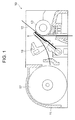
- the thermal printer 10 includes: as illustrated in FIG. 1 , a main body frame 11; a platen roller 13 arranged horizontally; the thermal head 1 arranged oppositely to an outer peripheral surface of the platen roller 13; a heat dissipation plate 15 (see FIG. 3 ) supporting the thermal head 1; a paper feeding mechanism 17 for feeding between the platen roller 13 and the thermal head 1 an object to be printed such as thermal paper 12; and a pressure mechanism 19 for pressing the thermal head 1 against the thermal paper 12 with a predetermined pressing force.
- the thermal head 1 and the thermal paper 12 are pressed by the operation of the pressure mechanism 19. With this, load of the platen roller 13 is applied to the thermal head 1 through an intermediation of the thermal paper 12.
- the heat dissipation plate 15 is a plate-shaped member made of metal such as aluminum, a resin, ceramics, glass, or the like, and serves for fixation and heat dissipation of the thermal head 1.
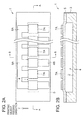
- the thermal head 1 has a plate shape as illustrated in FIG. 2A .
- the thermal head 1 includes: a rectangular supporting substrate 3 fixed on the heat dissipation plate 15; a heat storage layer 5 made of thin plate glass 5a (upper substrate, see FIG. 5 ) bonded onto one surface of the supporting substrate 3; a plurality of heating resistors 7 provided on the heat storage layer 5; electrode portions 8A, 8B connected to the heating resistors 7; and a protective film 9 covering the heating resistors 7 and the electrode portions 8A, 8B so as to protect the same from abrasion and corrosion.
- an arrow Y of FIG. 2A indicates a feeding direction of the thermal paper 12 by the paper feeding mechanism 17.
- the supporting substrate 3 is, for example, an insulating glass substrate having a thickness of approximately 300 ⁇ m to 1 mm. On the surface on the heat storage layer 5 side of the supporting substrate 3, there is formed a rectangular concave portion 2 extending in a longitudinal direction. Note that, it is desirable that the supporting substrate 3 be a glass substrate made of the same material as that of the heat storage layer 5, or a glass substrate having similar characteristics.
- the heat storage layer 5 is constituted by a thin plate glass 5a having a thickness of approximately 0 to 50 ⁇ m.
- the heat storage layer 5 is bonded to one surface of the supporting substrate 3 where the concave portion 2 is formed, in a manner that hermetically seals the concave portion 2. With the heat storage layer 5 covering the concave portion 2, a hollow portion 4 is formed between the heat storage layer 5 and the supporting substrate 3.
- the hollow portion 4 functions as a hollow heat insulating layer that prevents heat generated by the heating resistors 7 from entering the supporting substrate 3 from the heat storage layer 5, and has an uninterrupted structure facing all of the heating resistors 7.
- the hollow portion functioning as a hollow heat insulating layer, the amount of heat conducted upward above the heating resistors 7 to be used for printing or the like is made larger than the amount of heat conducted to the heat storage layer 5, which is below the heating resistors 7. The heating efficiency can thus be improved.
- the heat storage layer 5 has a curved shape that protrudes toward the outside of the hollow portion 4 and rise up toward the heating resistors 7 side.
- a surface 5B of the heat storage layer 5 that is on the hollow portion side (hereinafter referred to as “hollow portion side surface”) has a concavely curved shape
- a surface 5C of the heat storage layer 5 that is on the opposite side from the hollow portion 4 (hereinafter referred to as “heating resistor side surface”) has a convexly curved shape.
- the thickness dimension of the hollow heat insulating layer is larger at a point closer to the center of the concave portion 2 in the width direction than at a point near an edge of the concave portion 2 in the width direction.
- the heat storage layer 5 is shaped such that a thickness dimension t1 near the center of the concave portion 2 in the width direction is smaller than a thickness dimension t2 near the edge of the concave portion 2 in the width direction.
- the heating resistors 7 are each provided so as to straddle the concave portion 2 in its width direction on an upper end surface of the heat storage layer 5, and are arranged at predetermined intervals in the longitudinal direction of the concave portion 2. In other words, each of the heating resistors 7 is provided to be opposed to the hollow portion 4 through an intermediation of the heat storage layer 5 so as to be situated above the hollow portion 4.
- the electrode portions 8A, 8B serve to heat the heating resistors 7, and are constituted by a common electrode 8A connected to one end of each of the heating resistors 7 in a direction orthogonal to the arrangement direction of the heating resistors 7, and individual electrodes 8B connected to the other end of each of the heating resistors 7.
- the common electrode 8A is integrally connected to all the heating resistors 7, and the individual electrodes 8B are connected to the heating resistors 7, respectively.
- heating portion 7A is a portion of each of the heating resistors 7 on which the electrode portions 8A, 8B do not overlap, that is, a portion of each of the heating resistors 7 which is a region between the connecting surface of the common electrode 8A and the connecting surface of each of the individual electrodes 8B and is situated substantially directly above the hollow portion 4.
- the heating portion 7A is shaped to curve after the shape of the heating resistor side surface 5c of the heat storage layer 5 and to rise up toward the protective film 9.
- manufacturing method A for the thermal head 1 constructed as described above (hereinafter, simply referred to as “manufacturing method A”) is described.
- the manufacturing method A includes a concave portion forming step in which the concave portion 2 is formed on one surface of the supporting substrate 3, a bonding step in which the thin plate glass 5a shaped like a substantially flat board is bonded to the one surface of the supporting substrate 3 where the concave portion 2 has been formed, and a heating resistor forming step in which the heating resistors 7 are formed on the thin plate glass 5a.
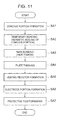
- the bonding step includes a temporary bonding step in which the thin plate glass 5a and the supporting substrate 3 are stuck together and a main bonding step in which the thin plate glass 5a and the supporting substrate 3 are fused by heat fusion through heat treatment. A concrete description on those steps are given below with reference to a flow chart of FIG. 11 .
- the concave portion 2 are formed so as to be opposed to a region in which the heating resistors 7 are formed (Step A1, concave portion forming step).
- the concave portion 2 is formed by performing, for example, sandblasting, dry etching, wet etching, or laser machining on the one surface of the supporting substrate 3.
- the one surface of the supporting substrate 3 is covered with a photoresist material, and the photoresist material is exposed to light using a photomask of a predetermined pattern, whereby there is cured a portion other than the region in which the concave portion 2 is formed.
- etching masks (not shown) having etching windows formed in the region in which the concave portion 2 is formed can be obtained.
- the sandblasting is performed on the one surface of the supporting substrate 3, and the concave portion 2 having a predetermined depth is formed. It is desirable that the depth of the concave portion 2 be, for example, 10 ⁇ m or more and half or less of the thickness of the supporting substrate 3.
- etching such as dry etching and wet etching
- etching masks having the etching windows formed in the region in which the concave portion 2 is formed are formed on the surface of the supporting substrate 3. In this state, by performing the etching on the one surface of the supporting substrate 3, the concave portion 2 having the predetermined depth is formed.
- etching process there are used, for example, wet etching using hydrofluoric acid-based etchant or the like, and dry etching such as reactive ion etching (RIE) and plasma etching.
- RIE reactive ion etching
- wet etching using the etchant such as tetramethylammonium hydroxide solution, KOH solution, and mixing solution of hydrofluoric acid and nitric acid.
- the etching mask is removed completely from the one surface of the supporting substrate 3 and the surface of the supporting substrate 3 is cleaned.
- the thin plate glass 5a having a thickness of about 5 ⁇ m to 100 ⁇ m and shaped like a substantially flat board is bonded to the one surface of the supporting substrate 3 in a manner that hermetically seals the concave portion 2 (Step A2, temporary bonding step).
- the thin plate glass 5a is bonded at room temperature directly to the supporting substrate 3, instead of using an adhesive layer.
- the surface of the supporting substrate 3 is covered with the thin plate glass 5a, in other words, the opening of the concave portion 2 is covered with the thin plate glass 5a, whereby the hollow portion 4 is formed between the supporting substrate 3 and the thin plate glass 5a.
- the depth of the concave portion 2 it is possible to easily control the thickness of the hollow heat insulating layer.
- Step A3 heat treatment is performed on the temporarily bonded supporting substrate 3 and the thin plate glass 5a to bond the two by heat fusion (Step A3, main bonding step).
- the heat treatment is performed at a temperature equal to or higher than the glass transition point of the supporting substrate 3 and the thin plate glass 5a, and a temperature equal to or lower than the softening point of the supporting substrate 3 and the thin plate glass 5a.
- a glass transition point is a temperature at which the slope of a thermal expansion curve changes rapidly, in other words, a temperature at which a glass structure shifts from a solid state to a liquid state.
- a softening point is a temperature higher than the glass transition point at which glass starts to soften and deform from its own weight.
- the softening point is a temperature at which the glass fiber starts to lengthen from its own weight.
- the precision of glass shape cannot be kept in a temperature range above the softening point due to warping or stretching.
- This embodiment successfully keeps the precision of the shapes of the supporting substrate 3 and the thin plate glass 5a by bonding the two at a temperature equal to or lower than the softening point.
- the heat treatment in the bonding step raises the pressure of gas trapped inside the hollow portion 4.
- a force applied to the thin plate glass 5a in a direction in which the gas expands causes softening deformation.
- the expansion of the gas within the hollow portion 4 and the softening of the thin plate glass 5a during the heat fusion results in plastic deformation that causes the thin plate glass 5a to protrude toward the outside of the hollow portion 4.
- the thickness dimension of the hollow heat insulating layer is increased and the heat insulation performance is improved compared to the case where the hollow portion side surface 5B of the thin plate glass 5a is flat.
- the use of the thin plate glass 5a shaped like a substantially flat board makes it possible to apply a substantially uniform load to the heating resistor side surface 5C upon bonding.
- the thin plate glass 5a having the thickness allowing easy manufacture and handling thereof may be bonded onto the supporting substrate 3, and then, the thin plate glass 5a may be additionally processed by the etching, the polishing, or the like so that the thin plate glass 5a has a desired thickness (Step A4, thinning step). With this process, as illustrated in FIG. 7 , it is possible to easily form the extremely thin heat storage layer 5 over the one surface of the supporting substrate 3 at low cost.
- etching of the thin plate glass 5a there can be used various types of etching adopted for forming the concave portion 2 as described above.
- polishing of the thin plate glass 5a for example, there can be used chemical mechanical polishing (CMP) which is used for high-accuracy polishing of a semiconductor wafer and the like.
- CMP chemical mechanical polishing
- the heating resistors 7, the common electrode 8A, the individual electrodes 8B, and the protective film 9 are subsequently formed on the heat storage layer 5 (heating resistor forming step and the like).
- the heating resistors 7, the common electrode 8A, the individual electrodes 8B, and the protective film 9 can be manufactured by using a well-known manufacturing method for a conventional thermal head.
- a thin film is formed from a heating resistor material such as a Ta-based material or a silicide-based material on the heat storage layer 5 by a thin film forming method such as sputtering, chemical vapor deposition (CVD), or vapor deposition.
- the thin film of a heating resistor material is molded by lift-off, etching, or the like to form the heating resistors 7 having a desired shape as illustrated in FIG. 8 (Step A5, heating resistor forming step).
- the heating portion 7A of each of the heating resistors 7 is curved after the shape of the heating resistor side surface 5C of the heat storage layer 5, so that the heating portion 7A has a convexly rising shape. This way, a better contact with the thermal paper 12 is accomplished and the heat transmission efficiency is enhanced.
- the film formation with use of a wiring material such as Al, Al-Si, Au, Ag, Cu, and Pt is performed on the heat storage layer 5 by using sputtering, vapor deposition, or the like.
- the film thus obtained is formed by lift-off or etching, or the wiring material is screen-printed and is, for example, burned thereafter, to thereby, as illustrated in FIG. 9 , form the common electrode 8A and the individual electrodes 8B which have the desired shape (Step A6).
- the heating resistors 7, the common electrode 8A, and the individual electrodes 8B are formed in an appropriate order.
- the patterning is performed on the photoresist material by using a photomask.
- the film formation with use of a protective film material such as SiO 2 , Ta 2 O 5 , SiAlON, Si 3 N 4 , or diamond-like carbon is performed on the heat storage layer 5 by sputtering, ion plating, CVD, or the like, whereby, as illustrated in FIG. 10 , the protective film 9 is formed (Step A7).
- a protective film material such as SiO 2 , Ta 2 O 5 , SiAlON, Si 3 N 4 , or diamond-like carbon is performed on the heat storage layer 5 by sputtering, ion plating, CVD, or the like, whereby, as illustrated in FIG. 10 , the protective film 9 is formed (Step A7).
- the thermal head 1 illustrated in FIG. 2A is manufactured.
- the thermal printer 10 and the thermal head 1 according to this embodiment are increased in the thickness dimension of the hollow heat insulating layer and accordingly improved in heat insulation performance by giving the hollow portion 4, that is, the hollow portion side surface 5B of the thin plate glass 5a, which forms the hollow heat insulating layer, a convexly curved shape.
- the heating efficiency of the thermal head 1 is thus improved and the thermal printer 10 consumes less power when printing on a printing material.
- the use of the thin plate glass 5a shaped like a substantially flat board makes it easier to set the heat storage layer 5 to a desired thickness and reduces fluctuations in the thickness of the heat storage layer 5, compared to conventional upper substrates which have a convex portion on their heating resistor side surfaces.
- heat fusion in the bonding step utilizes the expansion of gas trapped inside the hollow portion 4 and the softening of the thin plate glass 5a, and hence there is no need for an additional step of curving a surface of the thin plate glass 5a.
- the thermal head 1 improved in heating efficiency and strength can therefore be manufactured in a simple and stable manner.
- the thin plate glass 5a therefore makes the heat storage layer 5 that has excellent reliability and durability.
- glass hardly changes in mechanical and chemical properties from heat treatment at a temperature equal to or lower than the softening point, and does not change in shape unless a heavy load is applied, which means that the thickness of the heat storage layer 5 changes little upon bonding.
- the thickness of the heat storage layer 5a can therefore be controlled with higher precision compared to when a dielectric dry film sheet or an epoxy resin dry film sheet is used which shrinks from heat treatment and becomes thinner than its initial thickness after the heat treatment.
- the use of glass also allows the heat storage layer 5 to be thinned by wet etching or the like, or to be increased in film thickness by forming a film, after the bonding. Further, the supporting substrate 3 and the thin plate glass 5a can be bonded by heat fusion without applying any other load to the thin plate glass 5a than its own weight. This eliminates the need for an apparatus that applies a load such as a pressing machine, unlike dielectric dry film sheets and epoxy resin dry film sheets which require a heavy load to bond with a substrate, and the bonding step can be carried out with a simple equipment that includes only a heat treatment furnace and a few others.
- This embodiment can be modified as follows.
- a first modification example may include applying a load during a period in which the temperature is equal to or lower than the glass transition point, subsequently lifting the load and, in this state, raising the temperature to a set temperature which is equal to or lower than the softening point, and then cooling until room temperature is reached again.
- the bonding strength is enhanced while the thin plate glass 5a is deformed so as to protrude toward the outside of the hollow portion 4.
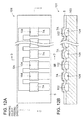
- a thermal head 101 according to a second modification example may be, for example, as illustrated in FIGS. 12(a) and 12(b) , where a concave portion 102 is formed in each region of a supporting substrate 103 that faces one of the heating resistors 7, so that an individual hollow portion 104 is provided for each of the heating resistors 7.
- the heat storage layer 5 is supported by the supporting substrate 103 at short distance intervals.
- the hollow portions 104 enhance the strength against external load of the heat storage layer 5 which supports the heating resistors 7.
- a thermal head 201 according to a second embodiment of the present invention, and a manufacturing method B of the thermal head 201 as well, are described below with reference to the drawings.
- the thermal head 201 differs from the first embodiment in that a heating resistor side surface 205C of a heat storage layer 205 is flat as illustrated in FIG. 13 .
- the heat storage layer 205 includes a hollow portion side surface 5B which is concavely curved and the heating resistor side surface 205C which is substantially flat.
- a heating portion 207A of each heating resistors 207 has a substantially flat shape which takes after the shape of the heating resistor side surface 205C of the heat storage layer 205.
- the manufacturing method B of the thus structured thermal head 201 is described below.
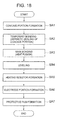
- the manufacturing method B includes, as illustrated in a flow chart of FIG. 18 , a leveling step in place of the plate thinning step of the manufacturing method A.
- the leveling step is for leveling the heating resistor side surface 205C of a thin glass plate 205a which has been deformed by plastic deformation in a bonding step.
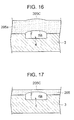
- a concave formation step, a temporary bonding step, a main bonding step (Steps A1 to A3, see FIGS. 14 to 16 ), and a heating resistor forming step and subsequent steps (Steps A5 to A7) in the manufacturing method B are the same as those in the manufacturing method A of the first embodiment.
- the heating resistor side surface 205C of the thin plate glass 205a is leveled by polishing, and, as illustrated in FIG. 17 , processed so that the heat storage layer 205 has a desired thickness dimension (Step B4, leveling step).
- the manufacturing method B where the heating resistor 207 is formed on the leveled thin plate glass 205a in the heating resistor forming step it is easy to form the heating portion 207A into a flat shape. Further, by giving the heating portion 207A a substantially flat shape, friction with the thermal paper 12 is reduced. The amount of wear of the heating portion 207A is thus reduced and the durability is improved while high heat insulation performance is maintained. In addition, compared to the case where the heating resistor side surface 205C is curved convexly, a thickness dimension t3 near the center of the concave portion 2 in the width direction is reduced further and the heating efficiency is enhanced even more.
- This embodiment can be modified as follows.
- the manufacturing method B where the heating resistor side surface 205C of the thin plate glass 205a is leveled in the leveling step may be changed into a manufacturing method C which, instead of having the leveling step, controls the deformation of the heating resistor side surface 205C of the thin plate glass 205a during the heat fusion in the bonding step.
- the manufacturing method C may include executing the concave portion forming step (see FIG. 19 ) and the temporary bonding step (see FIG. 20 ) and, in the subsequent main bonding step, heating the thin plate glass 205a at a temperature equal to or higher than the glass transition point and equal to or lower than the softening point while applying a substantially uniform load to the heating resistor side surface 205C of the thin plate glass 205a, to thereby fuse the supporting substrate 3 and the thin plate glass 205a together by heat fusion.
- the concave portion forming step see FIG. 19
- the temporary bonding step see FIG. 20
- the hollow portion side surface 5B of the thin plate glass 205a is curved concavely through substrate deformation upon heat treatment, whereas the heating resistor side surface 205C is leveled by the load applied to the thin plate glass 205a.
- a step of leveling the heating resistor side surface 205C can thus be omitted.
- a plate thinning step (see FIG. 22 ) may be conducted subsequently.
- the step of bonding the thin plate glass 5a or 205a to the supporting substrate 3 and the step of deforming the thin plate glass 5a or 205a may be separate steps.
- a manufacturing method D includes a bonding step in which the thin plate glass 5a or 205a is bonded to one surface of the supporting substrate 3 or 103 where the concave portion 2 has been formed in a concave portion forming step, and hence the concave portion 2 is hermetically sealed forming the hollow portion 4, and a heating step in which the supporting substrate 3 or 103 and thin plate glass 5a or 205a bonded together in the bonding step are heated to soften the thin plate glass 5a or 205a as well as to expand gas trapped inside the hollow portion 4.
- the thin plate glass 5a or 205a may be deformed in the heating step.
- the thin plate glass 5a or 205a may be deformed by plastic deformation so as to protrude toward the outside of the hollow portion 4, or may be deformed by plastic deformation in a manner that makes the heating resistor side surface 5C or 205C substantially flat while curving the hollow portion side surface 5B concavely.
- the manufacturing method D may include a leveling step, or, instead of including a leveling step, may control the deformation of the heating resistor side surface 205C during the heat fusion in the bonding step.
- direct bonding by heat fusion may be replaced by bonding of the supporting substrate 3 or 103 and the thin plate glass 5a or 205a with the use of an adhesive layer.
Landscapes
- Engineering & Computer Science (AREA)
- Manufacturing & Machinery (AREA)
- Electronic Switches (AREA)
Applications Claiming Priority (1)
| Application Number | Priority Date | Filing Date | Title |
|---|---|---|---|
| JP2008276054A JP5408695B2 (ja) | 2008-10-27 | 2008-10-27 | サーマルヘッドの製造方法 |
Publications (3)
| Publication Number | Publication Date |
|---|---|
| EP2179850A2 true EP2179850A2 (de) | 2010-04-28 |
| EP2179850A3 EP2179850A3 (de) | 2010-11-24 |
| EP2179850B1 EP2179850B1 (de) | 2012-02-29 |
Family
ID=41579006
Family Applications (1)
| Application Number | Title | Priority Date | Filing Date |
|---|---|---|---|
| EP09173940A Not-in-force EP2179850B1 (de) | 2008-10-27 | 2009-10-23 | Thermokopfherstellungsverfahren, Thermokopf und Drucker |
Country Status (4)
| Country | Link |
|---|---|
| US (1) | US8189021B2 (de) |
| EP (1) | EP2179850B1 (de) |
| JP (1) | JP5408695B2 (de) |
| AT (1) | ATE547254T1 (de) |
Cited By (5)
| Publication number | Priority date | Publication date | Assignee | Title |
|---|---|---|---|---|
| EP2327554A1 (de) * | 2009-11-30 | 2011-06-01 | Seiko Instruments Inc. | Thermokopf, Herstellungsverfahren dafür und Drucker |
| EP2422988A1 (de) * | 2010-08-25 | 2012-02-29 | Seiko Instruments Inc. | Thermokopf, Thermodrucker und Verfahren zur Herstellung des Thermokopfs |
| EP2492101A1 (de) * | 2011-02-23 | 2012-08-29 | Seiko Instruments Inc. | Thermokopf und Verfahren zu dessen Herstellung sowie Drucker |
| CN102649367A (zh) * | 2011-02-23 | 2012-08-29 | 精工电子有限公司 | 热头及其制造方法、以及打印机 |
| CN103129156A (zh) * | 2011-12-01 | 2013-06-05 | 精工电子有限公司 | 热敏头的制造方法和热敏打印机 |
Families Citing this family (5)
| Publication number | Priority date | Publication date | Assignee | Title |
|---|---|---|---|---|
| JP2007245667A (ja) * | 2006-03-17 | 2007-09-27 | Sony Corp | サーマルヘッド及びプリンタ装置 |
| JP5541660B2 (ja) * | 2009-08-06 | 2014-07-09 | セイコーインスツル株式会社 | サーマルヘッドの製造方法 |
| JP5424387B2 (ja) * | 2009-08-06 | 2014-02-26 | セイコーインスツル株式会社 | サーマルヘッドおよびサーマルヘッドの製造方法 |
| JP5668910B2 (ja) * | 2010-03-08 | 2015-02-12 | セイコーインスツル株式会社 | サーマルヘッド、プリンタおよびサーマルヘッドの製造方法 |
| JP5794727B2 (ja) * | 2011-03-02 | 2015-10-14 | セイコーインスツル株式会社 | サーマルヘッドおよびプリンタ |
Citations (1)
| Publication number | Priority date | Publication date | Assignee | Title |
|---|---|---|---|---|
| JP2007320197A (ja) | 2006-06-01 | 2007-12-13 | Sony Corp | サーマルヘッド、サーマルヘッドの製造方法及びプリンタ装置 |
Family Cites Families (10)
| Publication number | Priority date | Publication date | Assignee | Title |
|---|---|---|---|---|
| JPS5838110B2 (ja) * | 1979-05-29 | 1983-08-20 | セイコーエプソン株式会社 | インクジエツトヘツドの製造方法 |
| JPS606478A (ja) * | 1983-06-24 | 1985-01-14 | Hitachi Ltd | 感熱記録ヘツド |
| JP3057813B2 (ja) * | 1991-05-23 | 2000-07-04 | 富士ゼロックス株式会社 | サーマルヘッドおよびその製造方法 |
| US6335750B2 (en) * | 1999-02-12 | 2002-01-01 | Kabushiki Kaisha Toshiba | Thermal print head |
| JP2001113738A (ja) * | 1999-08-11 | 2001-04-24 | Riso Kagaku Corp | 厚膜式サーマルヘッド |
| JP2001253104A (ja) * | 2000-03-09 | 2001-09-18 | Shinko Electric Co Ltd | サーマルヘッド |
| JP4895344B2 (ja) * | 2005-09-22 | 2012-03-14 | セイコーインスツル株式会社 | 発熱抵抗素子、これを用いたサーマルヘッド及びプリンタ |
| US7843476B2 (en) * | 2006-03-17 | 2010-11-30 | Sony Corporation | Thermal head and printer |
| JP2007245672A (ja) * | 2006-03-17 | 2007-09-27 | Sony Corp | サーマルヘッド及びこれを備えたプリンタ装置 |
| JP5139696B2 (ja) * | 2007-02-28 | 2013-02-06 | セイコーインスツル株式会社 | サーマルヘッドとその製造方法、及びサーマルプリンタ |
-
2008
- 2008-10-27 JP JP2008276054A patent/JP5408695B2/ja active Active
-
2009
- 2009-10-23 EP EP09173940A patent/EP2179850B1/de not_active Not-in-force
- 2009-10-23 AT AT09173940T patent/ATE547254T1/de active
- 2009-10-26 US US12/589,593 patent/US8189021B2/en not_active Expired - Fee Related
Patent Citations (1)
| Publication number | Priority date | Publication date | Assignee | Title |
|---|---|---|---|---|
| JP2007320197A (ja) | 2006-06-01 | 2007-12-13 | Sony Corp | サーマルヘッド、サーマルヘッドの製造方法及びプリンタ装置 |
Cited By (13)
| Publication number | Priority date | Publication date | Assignee | Title |
|---|---|---|---|---|
| US8379070B2 (en) | 2009-11-30 | 2013-02-19 | Seiko Instruments Inc. | Thermal head, manufacturing method therefor, and printer |
| EP2327554A1 (de) * | 2009-11-30 | 2011-06-01 | Seiko Instruments Inc. | Thermokopf, Herstellungsverfahren dafür und Drucker |
| EP2422988A1 (de) * | 2010-08-25 | 2012-02-29 | Seiko Instruments Inc. | Thermokopf, Thermodrucker und Verfahren zur Herstellung des Thermokopfs |
| CN102431312A (zh) * | 2010-08-25 | 2012-05-02 | 精工电子有限公司 | 热头、热敏打印机及热头的制造方法 |
| CN102431312B (zh) * | 2010-08-25 | 2015-10-07 | 精工电子有限公司 | 热头、热敏打印机及热头的制造方法 |
| US8477166B2 (en) | 2010-08-25 | 2013-07-02 | Seiko Instruments Inc. | Thermal head, thermal printer and manufacturing method for the thermal head |
| EP2492101A1 (de) * | 2011-02-23 | 2012-08-29 | Seiko Instruments Inc. | Thermokopf und Verfahren zu dessen Herstellung sowie Drucker |
| CN102649368A (zh) * | 2011-02-23 | 2012-08-29 | 精工电子有限公司 | 热头及其制造方法、以及打印机 |
| US8629892B2 (en) | 2011-02-23 | 2014-01-14 | Seiko Instruments Inc. | Thermal head, method of manufacturing thermal head, and printer equipped with thermal head |
| CN102649367A (zh) * | 2011-02-23 | 2012-08-29 | 精工电子有限公司 | 热头及其制造方法、以及打印机 |
| CN102649368B (zh) * | 2011-02-23 | 2015-11-18 | 精工电子有限公司 | 热头及其制造方法、以及打印机 |
| CN103129156A (zh) * | 2011-12-01 | 2013-06-05 | 精工电子有限公司 | 热敏头的制造方法和热敏打印机 |
| CN103129156B (zh) * | 2011-12-01 | 2016-08-03 | 精工电子有限公司 | 热敏头的制造方法和热敏打印机 |
Also Published As
| Publication number | Publication date |
|---|---|
| US8189021B2 (en) | 2012-05-29 |
| ATE547254T1 (de) | 2012-03-15 |
| JP2010100021A (ja) | 2010-05-06 |
| US20100118105A1 (en) | 2010-05-13 |
| JP5408695B2 (ja) | 2014-02-05 |
| EP2179850B1 (de) | 2012-02-29 |
| EP2179850A3 (de) | 2010-11-24 |
Similar Documents
| Publication | Publication Date | Title |
|---|---|---|
| EP2179850B1 (de) | Thermokopfherstellungsverfahren, Thermokopf und Drucker | |
| US8111273B2 (en) | Thermal head, printer, and manufacturing method for thermal head | |
| JP4895344B2 (ja) | 発熱抵抗素子、これを用いたサーマルヘッド及びプリンタ | |
| EP1780020A2 (de) | Heizwiderstandselement, Herstellungsverfahren dafür, Thermokopf, Drucker | |
| EP2364855B1 (de) | Thermokopf, Drucker und Verfahren zur Herstellung des Thermokopfs | |
| EP2298562B1 (de) | Thermokopf und Drucker | |
| US8189022B2 (en) | Thermal head, thermal printer, and manufacturing method for thermal head | |
| EP2327554B1 (de) | Thermokopf, Herstellungsverfahren dafür und Drucker | |
| US6529224B2 (en) | Thermal head enabling continuous printing without print quality deterioration | |
| JP4895411B2 (ja) | 発熱抵抗素子、サーマルヘッド及びプリンタ | |
| JP5273786B2 (ja) | サーマルヘッド、プリンタおよびサーマルヘッドの製造方法 | |
| US8624946B2 (en) | Thermal head, method of manufacturing thermal head, and printer equipped with thermal head | |
| JP2007320197A (ja) | サーマルヘッド、サーマルヘッドの製造方法及びプリンタ装置 | |
| US7956880B2 (en) | Heating resistor element component, thermal printer, and manufacturing method for a heating resistor element component | |
| EP2492101B1 (de) | Thermokopf und Verfahren zu dessen Herstellung sowie Drucker | |
| JP5181328B2 (ja) | 発熱抵抗素子部品およびサーマルプリンタ | |
| US8189020B2 (en) | Thermal head, thermal printer, and manufacturing method for thermal head |
Legal Events
| Date | Code | Title | Description |
|---|---|---|---|
| PUAI | Public reference made under article 153(3) epc to a published international application that has entered the european phase |
Free format text: ORIGINAL CODE: 0009012 |
|
| AK | Designated contracting states |
Kind code of ref document: A2 Designated state(s): AT BE BG CH CY CZ DE DK EE ES FI FR GB GR HR HU IE IS IT LI LT LU LV MC MK MT NL NO PL PT RO SE SI SK SM TR |
|
| AX | Request for extension of the european patent |
Extension state: AL BA RS |
|
| PUAL | Search report despatched |
Free format text: ORIGINAL CODE: 0009013 |
|
| AK | Designated contracting states |
Kind code of ref document: A3 Designated state(s): AT BE BG CH CY CZ DE DK EE ES FI FR GB GR HR HU IE IS IT LI LT LU LV MC MK MT NL NO PL PT RO SE SI SK SM TR |
|
| AX | Request for extension of the european patent |
Extension state: AL BA RS |
|
| 17P | Request for examination filed |
Effective date: 20110524 |
|
| GRAP | Despatch of communication of intention to grant a patent |
Free format text: ORIGINAL CODE: EPIDOSNIGR1 |
|
| GRAS | Grant fee paid |
Free format text: ORIGINAL CODE: EPIDOSNIGR3 |
|
| GRAA | (expected) grant |
Free format text: ORIGINAL CODE: 0009210 |
|
| AK | Designated contracting states |
Kind code of ref document: B1 Designated state(s): AT BE BG CH CY CZ DE DK EE ES FI FR GB GR HR HU IE IS IT LI LT LU LV MC MK MT NL NO PL PT RO SE SI SK SM TR |
|
| REG | Reference to a national code |
Ref country code: GB Ref legal event code: FG4D Ref country code: CH Ref legal event code: EP |
|
| REG | Reference to a national code |
Ref country code: AT Ref legal event code: REF Ref document number: 547254 Country of ref document: AT Kind code of ref document: T Effective date: 20120315 |
|
| REG | Reference to a national code |
Ref country code: IE Ref legal event code: FG4D |
|
| REG | Reference to a national code |
Ref country code: DE Ref legal event code: R096 Ref document number: 602009005603 Country of ref document: DE Effective date: 20120426 |
|
| REG | Reference to a national code |
Ref country code: NL Ref legal event code: VDEP Effective date: 20120229 |
|
| LTIE | Lt: invalidation of european patent or patent extension |
Effective date: 20120229 |
|
| PG25 | Lapsed in a contracting state [announced via postgrant information from national office to epo] |
Ref country code: LT Free format text: LAPSE BECAUSE OF FAILURE TO SUBMIT A TRANSLATION OF THE DESCRIPTION OR TO PAY THE FEE WITHIN THE PRESCRIBED TIME-LIMIT Effective date: 20120229 Ref country code: IS Free format text: LAPSE BECAUSE OF FAILURE TO SUBMIT A TRANSLATION OF THE DESCRIPTION OR TO PAY THE FEE WITHIN THE PRESCRIBED TIME-LIMIT Effective date: 20120629 Ref country code: NL Free format text: LAPSE BECAUSE OF FAILURE TO SUBMIT A TRANSLATION OF THE DESCRIPTION OR TO PAY THE FEE WITHIN THE PRESCRIBED TIME-LIMIT Effective date: 20120229 Ref country code: NO Free format text: LAPSE BECAUSE OF FAILURE TO SUBMIT A TRANSLATION OF THE DESCRIPTION OR TO PAY THE FEE WITHIN THE PRESCRIBED TIME-LIMIT Effective date: 20120529 Ref country code: HR Free format text: LAPSE BECAUSE OF FAILURE TO SUBMIT A TRANSLATION OF THE DESCRIPTION OR TO PAY THE FEE WITHIN THE PRESCRIBED TIME-LIMIT Effective date: 20120229 |
|
| PG25 | Lapsed in a contracting state [announced via postgrant information from national office to epo] |
Ref country code: GR Free format text: LAPSE BECAUSE OF FAILURE TO SUBMIT A TRANSLATION OF THE DESCRIPTION OR TO PAY THE FEE WITHIN THE PRESCRIBED TIME-LIMIT Effective date: 20120530 Ref country code: LV Free format text: LAPSE BECAUSE OF FAILURE TO SUBMIT A TRANSLATION OF THE DESCRIPTION OR TO PAY THE FEE WITHIN THE PRESCRIBED TIME-LIMIT Effective date: 20120229 Ref country code: FI Free format text: LAPSE BECAUSE OF FAILURE TO SUBMIT A TRANSLATION OF THE DESCRIPTION OR TO PAY THE FEE WITHIN THE PRESCRIBED TIME-LIMIT Effective date: 20120229 Ref country code: BE Free format text: LAPSE BECAUSE OF FAILURE TO SUBMIT A TRANSLATION OF THE DESCRIPTION OR TO PAY THE FEE WITHIN THE PRESCRIBED TIME-LIMIT Effective date: 20120229 Ref country code: PT Free format text: LAPSE BECAUSE OF FAILURE TO SUBMIT A TRANSLATION OF THE DESCRIPTION OR TO PAY THE FEE WITHIN THE PRESCRIBED TIME-LIMIT Effective date: 20120629 |
|
| REG | Reference to a national code |
Ref country code: AT Ref legal event code: MK05 Ref document number: 547254 Country of ref document: AT Kind code of ref document: T Effective date: 20120229 |
|
| PG25 | Lapsed in a contracting state [announced via postgrant information from national office to epo] |
Ref country code: CY Free format text: LAPSE BECAUSE OF FAILURE TO SUBMIT A TRANSLATION OF THE DESCRIPTION OR TO PAY THE FEE WITHIN THE PRESCRIBED TIME-LIMIT Effective date: 20120229 |
|
| PG25 | Lapsed in a contracting state [announced via postgrant information from national office to epo] |
Ref country code: DK Free format text: LAPSE BECAUSE OF FAILURE TO SUBMIT A TRANSLATION OF THE DESCRIPTION OR TO PAY THE FEE WITHIN THE PRESCRIBED TIME-LIMIT Effective date: 20120229 Ref country code: SE Free format text: LAPSE BECAUSE OF FAILURE TO SUBMIT A TRANSLATION OF THE DESCRIPTION OR TO PAY THE FEE WITHIN THE PRESCRIBED TIME-LIMIT Effective date: 20120229 Ref country code: RO Free format text: LAPSE BECAUSE OF FAILURE TO SUBMIT A TRANSLATION OF THE DESCRIPTION OR TO PAY THE FEE WITHIN THE PRESCRIBED TIME-LIMIT Effective date: 20120229 Ref country code: PL Free format text: LAPSE BECAUSE OF FAILURE TO SUBMIT A TRANSLATION OF THE DESCRIPTION OR TO PAY THE FEE WITHIN THE PRESCRIBED TIME-LIMIT Effective date: 20120229 Ref country code: SI Free format text: LAPSE BECAUSE OF FAILURE TO SUBMIT A TRANSLATION OF THE DESCRIPTION OR TO PAY THE FEE WITHIN THE PRESCRIBED TIME-LIMIT Effective date: 20120229 Ref country code: CZ Free format text: LAPSE BECAUSE OF FAILURE TO SUBMIT A TRANSLATION OF THE DESCRIPTION OR TO PAY THE FEE WITHIN THE PRESCRIBED TIME-LIMIT Effective date: 20120229 Ref country code: EE Free format text: LAPSE BECAUSE OF FAILURE TO SUBMIT A TRANSLATION OF THE DESCRIPTION OR TO PAY THE FEE WITHIN THE PRESCRIBED TIME-LIMIT Effective date: 20120229 |
|
| PG25 | Lapsed in a contracting state [announced via postgrant information from national office to epo] |
Ref country code: SK Free format text: LAPSE BECAUSE OF FAILURE TO SUBMIT A TRANSLATION OF THE DESCRIPTION OR TO PAY THE FEE WITHIN THE PRESCRIBED TIME-LIMIT Effective date: 20120229 |
|
| PLBE | No opposition filed within time limit |
Free format text: ORIGINAL CODE: 0009261 |
|
| STAA | Information on the status of an ep patent application or granted ep patent |
Free format text: STATUS: NO OPPOSITION FILED WITHIN TIME LIMIT |
|
| PG25 | Lapsed in a contracting state [announced via postgrant information from national office to epo] |
Ref country code: AT Free format text: LAPSE BECAUSE OF FAILURE TO SUBMIT A TRANSLATION OF THE DESCRIPTION OR TO PAY THE FEE WITHIN THE PRESCRIBED TIME-LIMIT Effective date: 20120229 |
|
| 26N | No opposition filed |
Effective date: 20121130 |
|
| REG | Reference to a national code |
Ref country code: DE Ref legal event code: R097 Ref document number: 602009005603 Country of ref document: DE Effective date: 20121130 |
|
| PG25 | Lapsed in a contracting state [announced via postgrant information from national office to epo] |
Ref country code: ES Free format text: LAPSE BECAUSE OF FAILURE TO SUBMIT A TRANSLATION OF THE DESCRIPTION OR TO PAY THE FEE WITHIN THE PRESCRIBED TIME-LIMIT Effective date: 20120609 |
|
| PG25 | Lapsed in a contracting state [announced via postgrant information from national office to epo] |
Ref country code: MC Free format text: LAPSE BECAUSE OF NON-PAYMENT OF DUE FEES Effective date: 20121031 |
|
| REG | Reference to a national code |
Ref country code: IE Ref legal event code: MM4A |
|
| PG25 | Lapsed in a contracting state [announced via postgrant information from national office to epo] |
Ref country code: IE Free format text: LAPSE BECAUSE OF NON-PAYMENT OF DUE FEES Effective date: 20121023 Ref country code: BG Free format text: LAPSE BECAUSE OF FAILURE TO SUBMIT A TRANSLATION OF THE DESCRIPTION OR TO PAY THE FEE WITHIN THE PRESCRIBED TIME-LIMIT Effective date: 20120529 |
|
| PG25 | Lapsed in a contracting state [announced via postgrant information from national office to epo] |
Ref country code: MT Free format text: LAPSE BECAUSE OF FAILURE TO SUBMIT A TRANSLATION OF THE DESCRIPTION OR TO PAY THE FEE WITHIN THE PRESCRIBED TIME-LIMIT Effective date: 20120229 |
|
| PG25 | Lapsed in a contracting state [announced via postgrant information from national office to epo] |
Ref country code: TR Free format text: LAPSE BECAUSE OF FAILURE TO SUBMIT A TRANSLATION OF THE DESCRIPTION OR TO PAY THE FEE WITHIN THE PRESCRIBED TIME-LIMIT Effective date: 20120229 |
|
| PG25 | Lapsed in a contracting state [announced via postgrant information from national office to epo] |
Ref country code: LU Free format text: LAPSE BECAUSE OF NON-PAYMENT OF DUE FEES Effective date: 20121023 Ref country code: SM Free format text: LAPSE BECAUSE OF FAILURE TO SUBMIT A TRANSLATION OF THE DESCRIPTION OR TO PAY THE FEE WITHIN THE PRESCRIBED TIME-LIMIT Effective date: 20120229 |
|
| REG | Reference to a national code |
Ref country code: CH Ref legal event code: PL |
|
| GBPC | Gb: european patent ceased through non-payment of renewal fee |
Effective date: 20131023 |
|
| PG25 | Lapsed in a contracting state [announced via postgrant information from national office to epo] |
Ref country code: CH Free format text: LAPSE BECAUSE OF NON-PAYMENT OF DUE FEES Effective date: 20131031 Ref country code: GB Free format text: LAPSE BECAUSE OF NON-PAYMENT OF DUE FEES Effective date: 20131023 Ref country code: HU Free format text: LAPSE BECAUSE OF FAILURE TO SUBMIT A TRANSLATION OF THE DESCRIPTION OR TO PAY THE FEE WITHIN THE PRESCRIBED TIME-LIMIT Effective date: 20091023 Ref country code: LI Free format text: LAPSE BECAUSE OF NON-PAYMENT OF DUE FEES Effective date: 20131031 |
|
| PG25 | Lapsed in a contracting state [announced via postgrant information from national office to epo] |
Ref country code: MK Free format text: LAPSE BECAUSE OF FAILURE TO SUBMIT A TRANSLATION OF THE DESCRIPTION OR TO PAY THE FEE WITHIN THE PRESCRIBED TIME-LIMIT Effective date: 20120229 |
|
| REG | Reference to a national code |
Ref country code: FR Ref legal event code: PLFP Year of fee payment: 8 |
|
| REG | Reference to a national code |
Ref country code: FR Ref legal event code: PLFP Year of fee payment: 9 |
|
| PGFP | Annual fee paid to national office [announced via postgrant information from national office to epo] |
Ref country code: FR Payment date: 20170918 Year of fee payment: 9 |
|
| PGFP | Annual fee paid to national office [announced via postgrant information from national office to epo] |
Ref country code: IT Payment date: 20171024 Year of fee payment: 9 |
|
| PGFP | Annual fee paid to national office [announced via postgrant information from national office to epo] |
Ref country code: DE Payment date: 20181009 Year of fee payment: 10 |
|
| PG25 | Lapsed in a contracting state [announced via postgrant information from national office to epo] |
Ref country code: FR Free format text: LAPSE BECAUSE OF NON-PAYMENT OF DUE FEES Effective date: 20181031 |
|
| PG25 | Lapsed in a contracting state [announced via postgrant information from national office to epo] |
Ref country code: IT Free format text: LAPSE BECAUSE OF NON-PAYMENT OF DUE FEES Effective date: 20181023 |
|
| REG | Reference to a national code |
Ref country code: DE Ref legal event code: R119 Ref document number: 602009005603 Country of ref document: DE |
|
| PG25 | Lapsed in a contracting state [announced via postgrant information from national office to epo] |
Ref country code: DE Free format text: LAPSE BECAUSE OF NON-PAYMENT OF DUE FEES Effective date: 20200501 |