EP2180958B1 - Polyurethanbeschichtung - Google Patents
Polyurethanbeschichtung Download PDFInfo
- Publication number
- EP2180958B1 EP2180958B1 EP08826865A EP08826865A EP2180958B1 EP 2180958 B1 EP2180958 B1 EP 2180958B1 EP 08826865 A EP08826865 A EP 08826865A EP 08826865 A EP08826865 A EP 08826865A EP 2180958 B1 EP2180958 B1 EP 2180958B1
- Authority
- EP
- European Patent Office
- Prior art keywords
- polyol
- isocyanate
- composition
- diisocyanate
- monomer
- Prior art date
- Legal status (The legal status is an assumption and is not a legal conclusion. Google has not performed a legal analysis and makes no representation as to the accuracy of the status listed.)
- Not-in-force
Links
Classifications
-
- C—CHEMISTRY; METALLURGY
- C07—ORGANIC CHEMISTRY
- C07C—ACYCLIC OR CARBOCYCLIC COMPOUNDS
- C07C217/00—Compounds containing amino and etherified hydroxy groups bound to the same carbon skeleton
- C07C217/02—Compounds containing amino and etherified hydroxy groups bound to the same carbon skeleton having etherified hydroxy groups and amino groups bound to acyclic carbon atoms of the same carbon skeleton
- C07C217/04—Compounds containing amino and etherified hydroxy groups bound to the same carbon skeleton having etherified hydroxy groups and amino groups bound to acyclic carbon atoms of the same carbon skeleton the carbon skeleton being acyclic and saturated
- C07C217/28—Compounds containing amino and etherified hydroxy groups bound to the same carbon skeleton having etherified hydroxy groups and amino groups bound to acyclic carbon atoms of the same carbon skeleton the carbon skeleton being acyclic and saturated having one amino group and at least two singly-bound oxygen atoms, with at least one being part of an etherified hydroxy group, bound to the carbon skeleton, e.g. ethers of polyhydroxy amines
-
- B—PERFORMING OPERATIONS; TRANSPORTING
- B05—SPRAYING OR ATOMISING IN GENERAL; APPLYING FLUENT MATERIALS TO SURFACES, IN GENERAL
- B05D—PROCESSES FOR APPLYING FLUENT MATERIALS TO SURFACES, IN GENERAL
- B05D3/00—Pretreatment of surfaces to which liquids or other fluent materials are to be applied; After-treatment of applied coatings, e.g. intermediate treating of an applied coating preparatory to subsequent applications of liquids or other fluent materials
- B05D3/02—Pretreatment of surfaces to which liquids or other fluent materials are to be applied; After-treatment of applied coatings, e.g. intermediate treating of an applied coating preparatory to subsequent applications of liquids or other fluent materials by baking
-
- C—CHEMISTRY; METALLURGY
- C07—ORGANIC CHEMISTRY
- C07C—ACYCLIC OR CARBOCYCLIC COMPOUNDS
- C07C217/00—Compounds containing amino and etherified hydroxy groups bound to the same carbon skeleton
- C07C217/02—Compounds containing amino and etherified hydroxy groups bound to the same carbon skeleton having etherified hydroxy groups and amino groups bound to acyclic carbon atoms of the same carbon skeleton
- C07C217/04—Compounds containing amino and etherified hydroxy groups bound to the same carbon skeleton having etherified hydroxy groups and amino groups bound to acyclic carbon atoms of the same carbon skeleton the carbon skeleton being acyclic and saturated
- C07C217/28—Compounds containing amino and etherified hydroxy groups bound to the same carbon skeleton having etherified hydroxy groups and amino groups bound to acyclic carbon atoms of the same carbon skeleton the carbon skeleton being acyclic and saturated having one amino group and at least two singly-bound oxygen atoms, with at least one being part of an etherified hydroxy group, bound to the carbon skeleton, e.g. ethers of polyhydroxy amines
- C07C217/30—Compounds containing amino and etherified hydroxy groups bound to the same carbon skeleton having etherified hydroxy groups and amino groups bound to acyclic carbon atoms of the same carbon skeleton the carbon skeleton being acyclic and saturated having one amino group and at least two singly-bound oxygen atoms, with at least one being part of an etherified hydroxy group, bound to the carbon skeleton, e.g. ethers of polyhydroxy amines having the oxygen atom of at least one of the etherified hydroxy groups further bound to a carbon atom of a six-membered aromatic ring
-
- C—CHEMISTRY; METALLURGY
- C08—ORGANIC MACROMOLECULAR COMPOUNDS; THEIR PREPARATION OR CHEMICAL WORKING-UP; COMPOSITIONS BASED THEREON
- C08G—MACROMOLECULAR COMPOUNDS OBTAINED OTHERWISE THAN BY REACTIONS ONLY INVOLVING UNSATURATED CARBON-TO-CARBON BONDS
- C08G18/00—Polymeric products of isocyanates or isothiocyanates
-
- C—CHEMISTRY; METALLURGY
- C08—ORGANIC MACROMOLECULAR COMPOUNDS; THEIR PREPARATION OR CHEMICAL WORKING-UP; COMPOSITIONS BASED THEREON
- C08G—MACROMOLECULAR COMPOUNDS OBTAINED OTHERWISE THAN BY REACTIONS ONLY INVOLVING UNSATURATED CARBON-TO-CARBON BONDS
- C08G18/00—Polymeric products of isocyanates or isothiocyanates
- C08G18/06—Polymeric products of isocyanates or isothiocyanates with compounds having active hydrogen
- C08G18/28—Polymeric products of isocyanates or isothiocyanates with compounds having active hydrogen characterised by the compounds used containing active hydrogen
- C08G18/30—Low-molecular-weight compounds
- C08G18/32—Polyhydroxy compounds; Polyamines; Hydroxyamines
- C08G18/3271—Hydroxyamines
-
- C—CHEMISTRY; METALLURGY
- C08—ORGANIC MACROMOLECULAR COMPOUNDS; THEIR PREPARATION OR CHEMICAL WORKING-UP; COMPOSITIONS BASED THEREON
- C08G—MACROMOLECULAR COMPOUNDS OBTAINED OTHERWISE THAN BY REACTIONS ONLY INVOLVING UNSATURATED CARBON-TO-CARBON BONDS
- C08G18/00—Polymeric products of isocyanates or isothiocyanates
- C08G18/06—Polymeric products of isocyanates or isothiocyanates with compounds having active hydrogen
- C08G18/28—Polymeric products of isocyanates or isothiocyanates with compounds having active hydrogen characterised by the compounds used containing active hydrogen
- C08G18/30—Low-molecular-weight compounds
- C08G18/32—Polyhydroxy compounds; Polyamines; Hydroxyamines
- C08G18/3271—Hydroxyamines
- C08G18/3278—Hydroxyamines containing at least three hydroxy groups
- C08G18/3284—Hydroxyamines containing at least three hydroxy groups containing four hydroxy groups
-
- C—CHEMISTRY; METALLURGY
- C09—DYES; PAINTS; POLISHES; NATURAL RESINS; ADHESIVES; COMPOSITIONS NOT OTHERWISE PROVIDED FOR; APPLICATIONS OF MATERIALS NOT OTHERWISE PROVIDED FOR
- C09D—COATING COMPOSITIONS, e.g. PAINTS, VARNISHES OR LACQUERS; FILLING PASTES; CHEMICAL PAINT OR INK REMOVERS; INKS; CORRECTING FLUIDS; WOODSTAINS; PASTES OR SOLIDS FOR COLOURING OR PRINTING; USE OF MATERIALS THEREFOR
- C09D175/00—Coating compositions based on polyureas or polyurethanes; Coating compositions based on derivatives of such polymers
- C09D175/04—Polyurethanes
Definitions
- the invention relates generally to the formation of diols and polyols and formation of polyurethanes therefrom.
- Epoxy compounds have been reacted with amines to form thermosets. However there have not been reports of the formation of reaction products from epoxies and amines having sufficiently low viscosity to be used as solvent free coatings.
- Polyurethanes have been made from alcohols and isocyanates. These reactions may cure quickly, even at low temperatures.
- the polymers are generally flexible, tough, and have good adhesion, but have inferior chemical resistance in comparison to epoxy resins.
- Polyurethanes can suffer from cathodic disbondment, in general due to the nature of the diols, which are susceptible to hydrolysis under alkaline conditions.
- Polyether diols are also used, but suffer from high water pick-up. The traditional focus for polyurethanes has been for the decorative and automotive markets.
- a polymer containing multiple hydroxyl groups can be cross-linked with isocyanates.
- the starting polymer may be a solid or have a high viscosity.
- the polymer may need to be dissolved in a solvent in order to perform the cross-linking. The solvent must then be removed from the system, typically by evaporation.
- polymers with terminal hydroxyl groups such as poly(ethylene giycoi) may aiso be cross-linked with an isocyanate. These polymers may also be a solid or have a high viscosity, requiring the use of a solvent.
- a low molecular weight polyol such as low molecular weight poly(ethylene glycol) can be cross-linked with an isocyanate.
- These polyols suffer from the drawback that they are not compatible or soluble in the isocyanate.
- thermosets Low molecular weigh esters and acrylics have been reacted with isocyanates to form thermosets. However, these polymers suffer from hydrolysis under alkaline conditions.
- US 2004/143086 A1 discloses a composition comprising a polyol monomer and a polyisocyanate which are mixed together as they are sprayed onto a surface to be coated with the thermoset.
- the polyol monomer may be produced from a reaction between an epoxy and an amine. Either the epoxy contains more than one epoxide group, the amine contains a hydroxyl group, or both. No solvent or catalyst was was used.
- U.S. Patent No. 3,346,517 discloses a coating composition prepared from the tetrakis-(2-hydroxypropyl) derivative of N,N-bis-(3-aminopropyl) lauryl amine. It further discloses tetrol derived from the reaction between a diamine and propylene oxide.
- the desirable system would have the chemical resistance of a polyepoxide and the curing and mechanical properties of a polyurethane.
- the invention comprises a polyurethane coating made by: applying to a surface a polyol composition and an isocyanate composition, such that a mixture of the polyol composition and the isocyanate composition is formed during the application; and allowing the mixture to cure to the polyurethane coating.
- the polyol composition comprises a polyol monomer selected from the chemical formula: or wherein x is an average degree of polymerization.
- the polyol monomer is free of epoxy groups and amino hydrogens.
- the isocyanate composition comprises an isocyanate compound having at least two isocyanate groups.
- the polyol composition or the isocyanate composition comprises a water scavenger.
- the polyol composition or the isocyanate composition comprises a polyurethane catalyst.
- the invention further comprises the above method of making the polyurethane coating.
- the coating is made by the mixture of the polyol composition and the isocyanate composition on a surface.
- the two compositions may be solvent free.
- the curing reaction produces a urethane group from a hydroxyl and an isocyanate.
- the entire process can be VOC (volatile organic compound) free.
- the polyol composition comprises certain polyol monomers described below.
- they may be made by reacting a di-primary amine with a mono glycidyl ether in a 1:4 stoichiometric ratio. This produces a compound with two tertiary amine groups and at least four hydroxyl groups.
- certain JEFFAMINE ® compounds (Huntsman Performance Products) may be used, such as amine-terminated polypropylene glycol, amine-terminated poly(ethylene glycol-co-propylene glycol) as shown in formula (1).
- the values x, y, and z represent average degrees of polymerization and need not be integers.
- suitable values for x may range from, are not limited to, about 2.5 to about 68.
- suitable values for y may range from, are not limited to, about 2.0 to about 39, and for x+z, from about 1.2 to about 6.0.
- Addition components may be included in the polyol composition, the isocyanate composition, or both.
- a water scavenger is include, such as molecular sieves, oxazolidines, and calcium sulfate. Water may react with isocyanate, which may not be desirable. Although the reaction is partially self-catalyzed by the tertiary amine groups, a polyurethane catalyst is used. Substances that catalyze polyurethane reactions are known in the art and include, but are not limited to, organotins, metal alkoxides, metal carboxylates, and metal acetoacetates.
- Pigments or fillers such as TiO 2 , colored pigments, inert fillers, calcium carbonate, barium sulfate, and silicates may be included.
- Flowing agents or leveling agents such as acrylic polymers, acrylic copolymers, acetobutyrates, silicones, and polyfluorinated chemicals may be used to improve the surface characteristics by reducing the surface tension.
- a defoaming or degassing agent may be used, such as silicones polyfluorinated chemicals, and those agents of the acrylic type. It is possible to add pigments, fillers, and additives to both components in order to achieve any desirable mixing ratio.
- the coating may be applied by means of a double feed or plural component spraying pump, using either an impingement gun or a gun equipped with a static mixer. Preheating of both components may allow for good atomization and spray pattern.
- the plural component pump may have a continuously variable mixing ratio or a mixing ratio from 5 to 1 up to 1 to 1.
- the polyol monomer can be made by reacting certain classes of amines with certain classes of epoxy compounds. Instead of the usual polymerization of these materials, a smaller molecule is formed. There may be no chain growth beyond a central epoxy or amine reacting in one or more epoxide ring-opening reactions.
- the resulting polyol monomer will have at least one secondary hydroxyl group and one or more primary and/or secondary hydroxyl groups.
- the monomer must have at least two hydroxyl groups in order to form a thermoset with a polyisocyanate. This may be achieved by using a primary amines, a primary amino alcohol, a secondary amino alcohol, a polyamine, or a polyepoxy.
- the polyol monomer may be nonsaponifiable.
- the polyol monomers are shown below.
- the polyol monomer may have a viscosity suitable for reacting with an isocyanate under ambient conditions in the absence of a solvent. When the viscosity is too high, it may not be possible to achieve adequate mixing with the polyisocyanate to form a thermoset. It may also be possible to reduce the viscosity of the polyol monomer to a suitable viscosity by reacting it with the polyisocyanate at an elevated temperature. Suitable polyol monomers may have molecular weights in the range of about 200 to about 3000.
- Reactions between a secondary amine that is not an alcohol amine and a monoepoxy do not ordinarily produce a polyol monomer.
- the result has a single secondary hydroxyl group.
- Such a compound can be used as an additive as described below.
- polyol monomers may be made from combinations of more than one amine and/or epoxies.
- the inclusion of an alcohol, in the manner disclosed in the US 2004/142177 is also within the scope of the claimed invention. This is also the case for thermosets made from these polyol monomers and methods of making the same.
- the alcohol additive is not considered to be a solvent or a VOC, as it is consumed during curing by reacting with an isocyanate group.
- the reaction of the amine and the epoxy can be performed by any means known in the art.
- the reaction may occur very quickly such that no catalyst or solvent is required.
- the reaction may be controlled through steric hindrance by choosing the starting materials to form a secondary or tertiary structure.
- the molar ratio of the amine and epoxy may be chosen to result in a desired degree of reaction and quantity of hydroxyl groups.
- the polyol monomer may be less compatible with aliphatic isocyanates than with other isocyanates.
- thermoset can be formed by reacting the polyol monomer with a polyisocyanate according to formula (2).
- R-OH represents the polyol monomer as described above.
- the hydroxyl group can be from the original amine, or can be generated from the reaction of amine and epoxy.
- the formula shows only a single cross-link.
- the R group has at least one other hydroxyl group and the R 4 group has at least one other isocyanate group so that a thermoset is formed.
- An example possible structure of the thermoset is shown below.
- the polyol monomer was made from butyl glycidyl ether and diethanolamine. Such a polyol monomer can then be reacted with diphenylmethane diisocyanate.
- the reaction can be solvent free. This results in no release of volatile organic compounds.
- the reaction can be performed by any means known in the art.
- the reaction can be catalyzed by any catalyst known in the art to catalyze this reaction including, but not limited to, organometallic catalysts including those based on Sn, K, Ti, and Zn and tertiary amine catalysts.
- Aromatics include toluene diisocyanate and diphenyl methane diisocyanate. Aliphatics include hexamethylene diisocyanate dimers and trimers, 4.4-dicyclohexylmethane-diisocyanate, and isophorone diisocyanate. Others include tetramethylxylene diisocyanate.
- polyisocyanates include, but are not limited to, hexamethylene diisocyanate, diphenylmethane diisocyanate, cycloaliphatic polyisocyanates, aliphatic polyisocyanates, an isocyanurate, biuret of toluene diisocyanate, and biuret of hexamethylene diisocyanate.
- polyisocyanate includes both monomeric isocyanates and polymeric isocyanates that contain more than one isocyanate functional group.
- polyisocyanate includes both monomeric isocyanates and polymeric isocyanates that contain more than one isocyanate functional group, and the mention of any polyisocyanate includes both monomeric and polymeric forms.
- polyisocyanates are commercially available from Bayer including Desmodur N aliphatic isocyanates based on hexamethylene diisocyanate (N3200, N3300, and N3600), Desmodur W bis(4-isocyanatocyclohexyl) methane, and Mondur CD, MRS, and E based on diphenylmethane diisocyanate.
- primary hydroxyl groups are more reactive with the polyisocyanate than secondary hydroxyl groups.
- the amine, epoxy, and polyisocyanate can be chosen to produce a thermoset with desired properties including degree of cross-linking, mechanical properties, adhesion, and chemical resistance.
- the polyol monomer and the polyisocyanate may, for example, be mixed in a stoichiometric ratio, meaning that the molar ratio of reactive hydroxyl groups (including any in an alcohol additive) to isocyanate groups is about 1:1.
- the polyol monomer and the polyisocyanate may be stored separately and mixed together when needed to make the thermoset.
- the mixture can be applied as a coating, as the mixture may have a low viscosity suitable for forming coatings.
- the mixture can then cure to form the thermoset. Curing times may be from a few seconds to the order of minutes and may be done at any temperatures including, but not limited to, about 10°C or below.
- the reaction may proceed more favorably when there is no contamination by water. Water may cause porosity or foaming.
- the polyol monomer and the polyisocyanate can be mixed together as they are sprayed onto a surface to be coated with the thermoset. This method allow for little to no reaction until the mixture has been applied to the surface.
- the spraying may be done with plural component spray equipment, which may include a static mixer and/or an impingement mixer.
- the additive may be a monofunctional alcohol or a polyol.
- a monofunctional alcohol may be made by reacting a secondary amine that is not an alcohol with a monoepoxy, as shown in formula (3).
- the product of formula (2) may also be used.
- R 1 , R 2 , and R 3 may be the same or different from those in the polyol monomer. However, using the same R 1 , R 2 , and R 3 may not have a lower viscosity than the polyol monomer.
- An advantage of using this monofunctional alcohol additive is that is may be chemically similar to the polyol monomer.
- the lower viscosity of the additive can help to reduce the viscosity of the reaction mixture, as would a solvent.
- the additive reacts with the polyol monomer and polyisocyanate and is consumed in the reaction. Since the incorporated additive is chemically similar to the polyol monomer, the properties of the thermoset are not substantially affected by the presence of the additive.
- the additive may also be made by the method disclosed in the previously referenced US 2004/142177 .
- Other low molecular weight alcohols may also be used. The choice may depend on the desired amount of viscosity reduction.
- the thermoset may have desirable toughness, abrasion resistance, flexibility, and adhesion strength as is generally found in polyurethanes.
- the thermoset may also have the chemical resistance, including hydrolytic stability and cathodic protection, of an epoxy resin. It may be resistant to caustic soda, methanol, and hydrocarbon fuel.
- the properties can be adjusted to form materials from tough, hard films to soft, pliable materials, fitting a wide range of applications. The properties are highly dependant on the starting materials used.
- the properties may be designed into the thermoset by choosing the isocyanate or combination of isocyanates, degree of polymeric isocyanate formation, and choice of polyol monomer.
- thermoset may be useful as a coating, which can be made as described above.
- Suitable substrates for the coating include, but are not limited to, steel, metal, and concrete.
- a tank lining is one application of such a coating. Such a lining may have good adhesion and chemical resistance. It may not be necessary to use a primer or topcoat.
- thermoset may also be useful as a repair compound.
- Higher viscosity materials than are used for coatings may be appropriate, as the compound may fill a three-dimensional void.
- a composite may also be made using the thermoset by reacting the polyol monomer and the polyisocyanate in the presence of a fiber material, such as glass fibers or carbon fibers.
- the fibers may impart additional mechanical strength to the composite.
- the coatings may be applied as corrosion protection for steel or any other metal. They may allow for fast cure, single coat/multiple pass applications and may be characterized by good chemical resistance, water resistance, and hydrolytic stability.
- the coatings may be compatible with cathodic protection systems based on either anodes or impressed current.
- the coatings may resist ballast tank water, potable water, grey water, and sewage water as well as fuel for ships and aircraft.
- the coatings may be resistant to hot boiling water for extended periods of time.
- the mixture will peak at 120°C but can be higher if not placed into water bath at or around 60°C.
- An excessive exotherm greater than 150-160°C should be avoided as it can result in etherification of secondary alcohols.
- the reaction product is then gently heated to 120°C over a period of about one hour.
- the reaction product is vacuum distilled to remove all unreacted materials, water, and volatiles beginning at 120°C and allowed to cool to approximately 90°C. Vacuum distillation continues until no further violent boiling is observed. This signifies that all moisture and unreacted glycidyl ether has been removed. Usually no more than one to three percent of volatiles are removed this way.
- the resulting product is cooled and placed in a suitable storage container for future use.
- thermosets The thermoset was made by mixing together a polyol monomer and a polyisocyanate. The mixture solidified without the use of a catalyst or heating. The thermoset was formed as a shaped article, such as a disk.
- thermosets from ethanolamine - Polyol monomers made from the reaction of ethanolamine and a variety of monoepoxies including butyl glycidyl ether and phenyl glycidyl ether were reacted with a variety of polyisocyanates including triisocyanurates, hexamethylene diisocyanates, hexamethylene triisocyanates, diphenylmethylene diisocyanates, and bis(4-isocyanatocyclohexyl) methane. All formed tough thermosets.
- thermosets from polyamines - Polyol monomers made from the reaction of butyl glycidyl ether with polyamines including diethylene triamine, ethylene diamine, 1,2-cyclohexane diamine, xylylene diamine, isophorone diamine, and N- ⁇ -hydroxyethyl ethylene diamine were reacted with a variety of polyisocyanates including triisocyanurates, hexamethylene diisocyanates, hexamethylene triisocyanates, diphenylmethylene diisocyanates, and bis(4-isocyanatocyclohexyl) methane. All formed tough thermosets.
- Paint formulations - Coatings were made using the formulations shown below.
- Raw material Composition Amount (g) m -xylylenediamine/butyl glycidyl ether copolymer (polyol) polyol 417.06 titanium dioxide (pigment) Polyol 397.20 Molsiv 5A powder (water scavenger, UOP) polyol 97.56 fumed silica (thixotropic agent) polyol 14.06 Coroc A72-A-260 (flowing agent, CCP) polyol 8.18 dibutyl tin dilaurate (catalyst) polyol 1.18 Z-6020 (defoamer, Dow Coming) polyol 2.85 Mondur CD (isocyanate, Bayer) isocyanate 335.28
- Raw material Composition Amount (g) m -xylylenediamine/butyl glycidyl ether copolymer (polyol) polyol 584.68 titanium dioxide (pigment) polyol 579.73 Molsiv 5A powder (water scavenger, UOP) polyol 136.81 fumed silica (thixotropic agent) polyol 45.91 Coroc A72-A-260 (flowing agent, CCP) polyol 11.45 dibutyl tin dilaurate (catalyst) polyol 1.65 Z-6020 (, Dow Coming) polyol 3.93 Mondur CD (isocyanate, Bayer) isocyanate 192.34 Desmodur E-28 (isocyanate, Bayer) isocyanate 769.35
- primary hydroxyl groups are more reactive with the polyisocyanate than secondary hydroxyl groups.
- the amine, epoxy, and polyisocyanate can be chosen to produce a thermoset with desired properties including degree of cross-linking, mechanical properties, adhesion, and chemical resistance.
- the polyol monomer and the polyisocyanate may, for example, be mixed in a stoichiometric ratio, meaning that the molar ratio of reactive hydroxyl groups (including any in an alcohol additive) to isocyanate groups is about 1:1.
- the polyol monomer and the polyisocyanate may be stored separately and mixed together when needed to make the thermoset.
- the mixture can be applied as a coating, as the mixture may have a low viscosity suitable for forming coatings.
- the mixture can then cure to form the thermoset. Curing times may be from a few seconds to the order of minutes and may be done at any temperatures including, but not limited to, about 10°C or below.
- the reaction may proceed more favorably when there is no contamination by water. Water may cause porosity or foaming.
- the polyol monomer and the polyisocyanate can be mixed together as they are sprayed onto a surface to be coated with the thermoset. This method allow for little to no reaction until the mixture has been applied to the surface.
- the spraying may be done with plural component spray equipment, which may include a static mixer and/or an impingement mixer.
- the additive may be a monofunctional alcohol or a polyol.
- a monofunctional alcohol may be made by reacting a secondary amine that is not an alcohol with a monoepoxy, as shown in formula (7).
- the products of formulas (2) through (6) may also be used.
- R 1 , R 2 , and R 3 may be the same or different from those in the polyol monomer. However, using the same R 1 , R 2 , and R 3 may not have a lower viscosity than the polyol monomer.
- An advantage of using this monofunctional alcohol additive is that is may be chemically similar to the polyol monomer.
- the lower viscosity of the additive can help to reduce the viscosity of the reaction mixture, as would a solvent.
- the additive reacts with the polyol monomer and polyisocyanate and is consumed in the reaction. Since the incorporated additive is chemically similar to the polyol monomer, the properties of the thermoset are not substantially affected by the presence of the additive.
- the additive may also be made by the method disclosed in the previously referenced U.S. Patent application number 10/346,099 .
- Other low molecular weight alcohols may also be used. The choice may depend on the desired amount of viscosity reduction.
- the thermoset may have desirable toughness, abrasion resistance, flexibility, and adhesion strength as is generally found in polyurethanes.
- the thermoset may also have the chemical resistance, including hydrolytic stability and cathodic protection, of an epoxy resin. It may be resistant to caustic soda, methanol, and hydrocarbon fuel.
- the properties can be adjusted to form materials from tough, hard films to soft, pliable materials, fitting a wide range of applications. The properties are highly dependant on the starting materials used.
- the properties may be designed into the thermoset by choosing the isocyanate or combination of isocyanates, degree of polymeric isocyanate formation, and choice of polyol monomer.
- thermoset may be useful as a coating, which can be made as described above.
- Suitable substrates for the coating include, but are not limited to, steel, metal, and concrete.
- a tank lining is one application of such a coating. Such a lining may have good adhesion and chemical resistance. It may not be necessary to use a primer or topcoat.
- thermoset may also be useful as a repair compound.
- Higher viscosity materials than are used for coatings may be appropriate, as the compound may fill a three-dimensional void.
- a composite may also be made using the thermoset by reacting the polyol monomer and the polyisocyanate in the presence of a fiber material, such as glass fibers or carbon fibers.
- the fibers may impart additional mechanical strength to the composite.
- the coatings may be applied as corrosion protection for steel or any other metal. They may allow for fast cure, single coat/multiple pass applications and may be characterized by good chemical resistance, water resistance, and hydrolytic stability.
- the coatings may be compatible with cathodic protection systems based on either anodes or impressed current.
- the coatings may resist ballast tank water, potable water, grey water, and sewage water as well as fuel for ships and aircraft.
- the coatings may be resistant to hot boiling water for extended periods of time.
- the mixture will peak at 120°C but can be higher if not placed into water bath at or around 60°C.
- An excessive exotherm greater than 150-160°C should be avoided as it can result in etherification of secondary alcohols.
- the reaction product is then gently heated to 120°C over a period of about one hour.
- the reaction product is vacuum distilled to remove all unreacted materials, water, and volatiles beginning at 120°C and allowed to cool to approximately 90°C. Vacuum distillation continues until no further violent boiling is observed. This signifies that all moisture and unreacted glycidyl ether has been removed. Usually no more than one to three percent of volatiles are removed this way.
- the resulting product is cooled and placed in a suitable storage container for future use.
- thermosets The thermoset was made by mixing together a polyol monomer and a polyisocyanate. The mixture solidified without the use of a catalyst or heating. The thermoset was formed as a shaped article, such as a disk.
- thermosets from ethanolamine - Polyol monomers made from the reaction of ethanolamine and a variety of monoepoxies including butyl glycidyl ether and phenyl glycidyl ether were reacted with a variety of polyisocyanates including triisocyanurates, hexamethylene diisocyanates, hexamethylene triisocyanates, diphenylmethylene diisocyanates, and bis(4-isocyanatocyclohexyl) methane. All formed tough thermosets.
- thermosets from polyamines - Polyol monomers made from the reaction of butyl glycidyl ether with polyamines including diethylene triamine, ethylene diamine, 1,2-cyclohexane diamine, xylylene diamine, isophorone diamine, and N- ⁇ -hydroxyethyl ethylene diamine were reacted with a variety of polyisocyanates including triisocyanurates, hexamethylene diisocyanates, hexamethylene triisocyanates, diphenylmethylene diisocyanates, and bis(4-isocyanatocyclohexyl) methane. All formed tough thermosets.
- Paint formulations - Coatings were made using the formulations shown below.
- Raw material Composition Amount (g) m -xylylenediamine/butyl glycidyl ether copolymer (polyol) polyol 417.06 titanium dioxide (pigment) polyol 397.20 Molsiv 5A powder (water scavenger. UOP) polyol 97.56 fumed silica (thixotropic agent) polyol 14.06 Coroc A72-A-260 (flowing agent, CCP) polyol 8.18 dibutyl tin dilaurate (catalyst) polyol 1.18 Z-6020 (defoamer, Dow Corning) polyol 2.85 Mondur CD (isocyanate, Bayer) isocyanate 335.28
- Raw material Composition Amount (g) m -xylytenediamine/butyl glycidyl ether copolymer (polyol) polyol 584.68 titanium dioxide (pigment) polyol 579.73 Molsiv 5A powder (water scavenger, UOP) polyol 136.81 fumed silica (thixotropic agent) polyol 45.91 Coroc A72-A-260 (flowing agent, CCP) polyol 11.45 dibutyl tin dilaurate (catalyst) polyol 1.65 Z-6020 ( , Dow Corning) polyol 3.93 Mondur CD (isocyanate, Bayer) isocyanate 192.34 Desmodur E-28 (isocyanate, Bayer) isocyanate 769.35
Landscapes
- Chemical & Material Sciences (AREA)
- Organic Chemistry (AREA)
- Health & Medical Sciences (AREA)
- Chemical Kinetics & Catalysis (AREA)
- Medicinal Chemistry (AREA)
- Polymers & Plastics (AREA)
- Life Sciences & Earth Sciences (AREA)
- Engineering & Computer Science (AREA)
- Materials Engineering (AREA)
- Wood Science & Technology (AREA)
- Polyurethanes Or Polyureas (AREA)
- Paints Or Removers (AREA)
Claims (10)
- Ein Verfahren zur Herstellung einer Polyurethanbeschichtung umfassend:Aufbringen einer Polyolzusammensetzung und einer Isocyanatzusammensetzung auf eine Oberfläche, so dass eine Mischung der Polyolzusammensetzung und der Isocyanatzusammensetzung gebildet wird; undAushärtenlassen der Mischung zur Polyurethanbeschichtung;wobei die Polyolzusammensetzung ein Polyol-Monomer umfasst, welches ausgewählt wird unter der Formel:

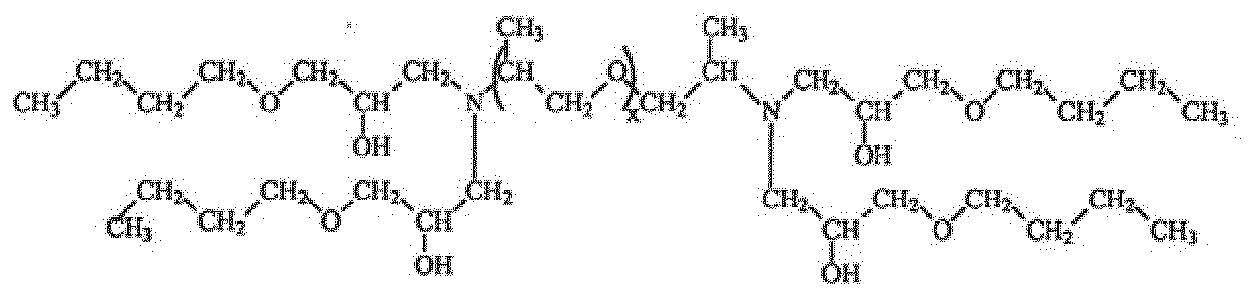 wobei x ein durschnittlicher Polymerisationsgrad ist,wobei das Polyol-Monomer frei von Epoxygruppen und Amino-Wasserstoffen ist;wobei die Isocyanatzusammensetzung eine Isocyanatverbindung umfasst, welche mindestens zwei Isocyanatgruppen aufweist;wobei die Polyolzusammensetzung oder die Isocyanatzusammensetzung einen Wasser-Scavenger umfasst; undwobei die Polyolzusammensetzung oder die Isocyanatzusammensetzung einen Polyurethan-Katalysator umfasst.
 - Das Verfahren gemäß Anspruch 1, wobei das Polyol-Monomer folgende Formel aufweist:
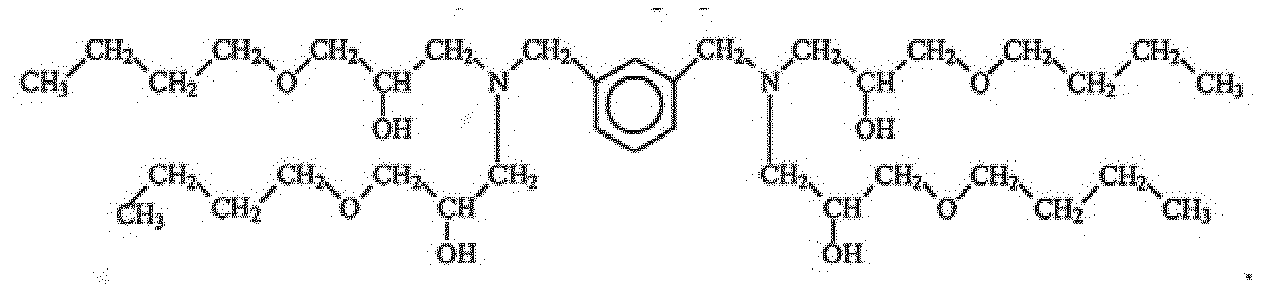
- Die Methode gemäß Anspruch 1, wobei das Polyol-Monomer folgende Formel aufweist:

- Die Methode gemäß irgendeinem der Ansprüche 1-3, wobei die Polyolzusammensetzung oder die Isocyanatzusammensetzung ein Pigment umfasst.
- Die Methode gemäß irgendeinem der Ansprüche 1-3, wobei die Polyolzusammensetzung oder die Isocyanatzusammensetzung einen inerten Füllstoff umfasst.
- Die Methode gemäß irgendeinem der Ansprüche 1-3, wobei die Polyolzusammensetzung oder die Isocyanatzusammensetzung ein Entschäumungsadditiv umfasst.
- Die Methode gemäß irgendeinem der Ansprüche 1-3, wobei das Polyisocyanat ausgewählt wird unter Toluoldiisocyanat, Diphenylmethandiisocyanat, Hexamethylendiisocyanat-Dimeren und -Trimeren, 4,4-Dicyclohexyl-methandiisocyanat, Isophrondiisocyanat, Tetramethylxylendiisocyanat, Hexamethylendiisocyanat, cycloaliphatischen Polyisocyanaten, aliphatischen Polyisocyanaten, einem Addukt von Toluoldiisocyanate und Glycerin, Biuret von Toluoldiisocyanat und Biuret von Hexamethylendiisocyanat.
- Die Methode gemäß irgendeinem der Ansprüche 1-3, wobei der Aufbringungsschritt unter Verwendung einer Mehrkomponenten-Sprühpumpe durchgeführt wird.
- Die Methode gemäß irgendeinem der Ansprüche 1-3, wobei die Polyolzusammensetzung oder die Isocyanatzusammensetzung im Wesentlichen frei von Lösungsmitteln sind.
- Eine Polyurethanbeschichtung hergestellt mit dem Verfahren gemäß irgendeinem der Ansprüche 1-9.
Applications Claiming Priority (2)
| Application Number | Priority Date | Filing Date | Title |
|---|---|---|---|
| US11/828,399 US7622541B2 (en) | 2003-01-17 | 2007-07-26 | Polyurethane coating |
| PCT/US2008/077587 WO2009018588A2 (en) | 2007-07-26 | 2008-09-25 | Polyurethane coating |
Publications (3)
| Publication Number | Publication Date |
|---|---|
| EP2180958A2 EP2180958A2 (de) | 2010-05-05 |
| EP2180958A4 EP2180958A4 (de) | 2011-12-28 |
| EP2180958B1 true EP2180958B1 (de) | 2013-01-23 |
Family
ID=40316934
Family Applications (1)
| Application Number | Title | Priority Date | Filing Date |
|---|---|---|---|
| EP08826865A Not-in-force EP2180958B1 (de) | 2007-07-26 | 2008-09-25 | Polyurethanbeschichtung |
Country Status (5)
| Country | Link |
|---|---|
| US (1) | US7622541B2 (de) |
| EP (1) | EP2180958B1 (de) |
| KR (1) | KR20110046384A (de) |
| GB (1) | GB2466895A (de) |
| WO (1) | WO2009018588A2 (de) |
Families Citing this family (11)
| Publication number | Priority date | Publication date | Assignee | Title |
|---|---|---|---|---|
| KR101512623B1 (ko) * | 2008-01-23 | 2015-04-21 | 다우 글로벌 테크놀로지스 엘엘씨 | 에폭시 수지 경화제 조성물, 및 이러한 경화제 조성물을 함유하는 에폭시 수지 조성물 |
| WO2013012699A2 (en) * | 2011-07-15 | 2013-01-24 | 3M Innovative Properties Company | Polyurethane based coating compositions |
| EP2653464B1 (de) * | 2012-04-20 | 2017-09-27 | Rohm and Haas Company | Benzylaminhydrophobe |
| EP2865724A1 (de) * | 2013-10-27 | 2015-04-29 | "Latvian State Institute of Wood Chemistry" Derived public person | Verfahren zur Herstellung von sprühaufgebrachten Polyurethanbeschichtungen auf Metallkonstruktionen |
| KR101596152B1 (ko) * | 2014-07-24 | 2016-02-23 | 이영재 | 해양 시설물의 보수, 보강용 소재 |
| US11697706B2 (en) | 2018-04-20 | 2023-07-11 | Adaptive 3D Technologies | Sealed isocyanates |
| US11739177B2 (en) | 2018-04-20 | 2023-08-29 | Adaptive 3D Technologies | Sealed isocyanates |
| US11911956B2 (en) | 2018-11-21 | 2024-02-27 | Adaptive 3D Technologies | Using occluding fluids to augment additive manufacturing processes |
| CN109651803A (zh) * | 2018-12-29 | 2019-04-19 | 河北邦泰氨纶科技有限公司 | 一种消防水带衬里用tpu及其制备方法 |
| CN110540634A (zh) * | 2019-09-16 | 2019-12-06 | 杭州至华新材料科技有限公司 | 耐热耐水性聚氨酯及制备方法 |
| JP2023507645A (ja) * | 2019-12-19 | 2023-02-24 | ケメタル ゲゼルシャフト ミット ベシュレンクテル ハフツング | 燃料タンク外部用シーラントとしてのポリウレアコーティングシステム |
Family Cites Families (27)
| Publication number | Priority date | Publication date | Assignee | Title |
|---|---|---|---|---|
| DE442024C (de) * | 1925-07-15 | 1927-03-19 | Hermann Schulze | Herstellung von Rohsulfiden der Erdalkalien |
| US1980538A (en) * | 1932-12-24 | 1934-11-13 | Gen Aniline Works Inc | beta.gammar-hydroxypropyloxyalkylamino benzenes and the gammar-alkylesters thereof |
| US2712015A (en) * | 1951-05-10 | 1955-06-28 | Ind Rayon Corp | Allyl ethers |
| US3346517A (en) | 1963-12-23 | 1967-10-10 | Gen Mills Inc | Polyurethanes formed from fatty amine polyols |
| US3354209A (en) * | 1964-02-19 | 1967-11-21 | Hercules Inc | Poly(dihydroxyalkyl) tertiary amines |
| US3367991A (en) * | 1965-01-27 | 1968-02-06 | Celanese Coatings Co | Thermosetting mixture of epoxide resinamine addition products and amine-aldehyde resins |
| DE2344843C3 (de) * | 1973-09-06 | 1980-01-03 | Ruetgerswerke Ag, 6000 Frankfurt | Polymerisierbare Mischungen mit hoher Reaktivität unter der Einwirkung von ionisierenden Strahlen |
| US3902735A (en) * | 1974-06-03 | 1975-09-02 | Caterpillar Tractor Co | Hydraulic counterweight removal mechanism |
| CA1111598A (en) * | 1976-01-14 | 1981-10-27 | Joseph R. Marchetti | Amine acide salt-containing polymers for cationic electrodeposition |
| JPS53117091A (en) * | 1977-03-22 | 1978-10-13 | Unitika Ltd | Photosensitive polyamide |
| US4166132A (en) * | 1977-08-18 | 1979-08-28 | Pfizer Inc. | Antiviral amine derivatives of glycerol and propanediols |
| US4163815A (en) * | 1977-09-19 | 1979-08-07 | Ford Motor Company | Catalyzed polyisocyanate coating compositions |
| US4182898A (en) * | 1978-01-20 | 1980-01-08 | Anderson Development Company | Stable and storable polyester-polyether co-prepolymers |
| US4520185A (en) * | 1984-08-31 | 1985-05-28 | Sternson Limited | Alkanolamine linked epoxy-urethanes |
| US4569951A (en) * | 1985-01-18 | 1986-02-11 | The Dow Chemical Company | Polymers prepared by reaction of a polyisocyanate with a secondary amine terminated adduct of a primary amine compound and a polyepoxide |
| US4940770A (en) * | 1988-11-14 | 1990-07-10 | Texaco Chemical Co. | Novel compositions from polyoxyalkylene amines and epoxides |
| US6353079B1 (en) * | 1999-08-03 | 2002-03-05 | The Dow Chemical Company | Epoxy resin and epoxy di (meth)acrylate from hydroxyaliphatic bisphenol |
| US6331583B1 (en) * | 2000-04-04 | 2001-12-18 | Air Products And Chemicals, Inc. | Acid catalyzed polymerization of aqueous epoxy resin emulsions and uses thereof |
| EP1184364B1 (de) * | 2000-04-07 | 2010-07-28 | Mitsui Chemicals, Inc. | Kammförmiges diol, wasserlösliche polyurethane und ihre verwendung |
| JP2002129095A (ja) * | 2000-10-20 | 2002-05-09 | Kansai Paint Co Ltd | 水性被覆組成物 |
| AT409965B (de) * | 2000-11-15 | 2002-12-27 | Solutia Austria Gmbh | Wässrige bindemittel auf basis von epoxidharzen |
| WO2002068131A1 (en) * | 2001-02-17 | 2002-09-06 | Hehr International Inc. | Polyamine-epoxide adduct and polyurea prepared therefrom |
| US6506921B1 (en) * | 2001-06-29 | 2003-01-14 | Virginia Tech Intellectual Properties, Inc. | Amine compounds and curable compositions derived therefrom |
| US6656977B2 (en) * | 2001-07-20 | 2003-12-02 | Air Products And Chemical, Inc. | Alkyl glycidyl ether-capped polyamine foam control agents |
| GB0128221D0 (en) * | 2001-11-24 | 2002-01-16 | Avecia Ltd | Aqueous urethane dispersants |
| US7615604B2 (en) * | 2003-01-17 | 2009-11-10 | The United States Of America As Represented By The Secretary Of The Navy | Diols formed by ring-opening of epoxies |
| US7241504B2 (en) | 2003-01-17 | 2007-07-10 | The United States Of America As Represented By The Secretary Of The Navy | Diols formed by ring-opening of epoxies |
-
2007
- 2007-07-26 US US11/828,399 patent/US7622541B2/en not_active Expired - Fee Related
-
2008
- 2008-09-25 KR KR1020107003661A patent/KR20110046384A/ko not_active Withdrawn
- 2008-09-25 GB GB1006577A patent/GB2466895A/en not_active Withdrawn
- 2008-09-25 WO PCT/US2008/077587 patent/WO2009018588A2/en not_active Ceased
- 2008-09-25 EP EP08826865A patent/EP2180958B1/de not_active Not-in-force
Also Published As
| Publication number | Publication date |
|---|---|
| EP2180958A2 (de) | 2010-05-05 |
| WO2009018588A3 (en) | 2009-03-19 |
| EP2180958A4 (de) | 2011-12-28 |
| KR20110046384A (ko) | 2011-05-04 |
| US7622541B2 (en) | 2009-11-24 |
| GB2466895A (en) | 2010-07-14 |
| WO2009018588A2 (en) | 2009-02-05 |
| US20070261602A1 (en) | 2007-11-15 |
| GB201006577D0 (en) | 2010-06-02 |
Similar Documents
| Publication | Publication Date | Title |
|---|---|---|
| EP2180958B1 (de) | Polyurethanbeschichtung | |
| US7615604B2 (en) | Diols formed by ring-opening of epoxies | |
| CN103204983B (zh) | 脂族聚异氰酸酯预聚物和使用其的聚氨基甲酸酯树脂涂料组合物 | |
| CN107922584B (zh) | 封端多异氰酸酯组合物、单液型涂覆组合物、涂膜、及涂装物品 | |
| EP3197965B1 (de) | Sprühbare polyurethanbeschichtung | |
| CN101711262A (zh) | 用于改进固化控制的异氰酸酯-环氧配方 | |
| CN101072806B (zh) | 封闭的异氰酸酯和它们在涂料组合物中的用途 | |
| CN113508149B (zh) | 封端异氰酸酯、多层膜的制造方法及多层膜 | |
| EP3674341B1 (de) | Polyisocyanatmischung, beschichtungszusammensetzung und beschichtungsfilm | |
| EP3207073B1 (de) | Epoxidzusammensetzung mit elastifikator auf acrylatbasis | |
| JP2020143231A (ja) | ブロックポリイソシアネート組成物、水系塗料組成物及び塗膜 | |
| EP3877437B1 (de) | Beschichtungszusammensetzung | |
| US5138016A (en) | Isocyanurate-free oxazolidone compound made from epoxy and a hindered isocyanate compound and a novel catalyst for their production | |
| CA1104437A (en) | Catalyzed polyisocyanate coating compositions | |
| US7241504B2 (en) | Diols formed by ring-opening of epoxies | |
| HUP0202030A2 (en) | Polyamines comprising urea groups, for epoxide resins, and their use | |
| US6432485B1 (en) | Epoxide/amine based aqueous coating agents and use thereof in multicoat lacquers | |
| MXPA02000909A (es) | Sistemas reactivos sin disolventes que endurecen a temperatura ambiente y su uso para la elaboracion de pegamentos, masas de sellado, masas de relleno, piezas de moldeo o recubrimientos. | |
| CA1267152A (en) | Polyisocyanates and resin compositions thereof | |
| EP4688893A1 (de) | Epoxidgruppenterminierte und isocyanuratgruppenhaltige polyoxazolidinone und deren verwendung in beschichtungszusammensetzungen | |
| CN110511350A (zh) | 一种聚碳型水性聚氨酯及其制备方法 | |
| AU2007338831B2 (en) | Thermal curable powder coating composition | |
| JP3813241B2 (ja) | 低温硬化性1液型ウレタン系塗料組成物 | |
| EP0197543B1 (de) | Polyisocyanate und ihre Harzmasse | |
| JP2000159862A (ja) | 1成分熱硬化性塗料組成物 |
Legal Events
| Date | Code | Title | Description |
|---|---|---|---|
| PUAI | Public reference made under article 153(3) epc to a published international application that has entered the european phase |
Free format text: ORIGINAL CODE: 0009012 |
|
| 17P | Request for examination filed |
Effective date: 20100217 |
|
| AK | Designated contracting states |
Kind code of ref document: A2 Designated state(s): AT BE BG CH CY CZ DE DK EE ES FI FR GB GR HR HU IE IS IT LI LT LU LV MC MT NL NO PL PT RO SE SI SK TR |
|
| AX | Request for extension of the european patent |
Extension state: AL BA MK RS |
|
| A4 | Supplementary search report drawn up and despatched |
Effective date: 20111125 |
|
| RIC1 | Information provided on ipc code assigned before grant |
Ipc: B05D 3/02 20060101AFI20111121BHEP Ipc: C08G 18/00 20060101ALI20111121BHEP Ipc: C09D 175/04 20060101ALI20111121BHEP Ipc: C07C 217/30 20060101ALI20111121BHEP Ipc: C07C 217/28 20060101ALI20111121BHEP Ipc: C08G 18/32 20060101ALI20111121BHEP |
|
| 17Q | First examination report despatched |
Effective date: 20120413 |
|
| DAX | Request for extension of the european patent (deleted) | ||
| GRAP | Despatch of communication of intention to grant a patent |
Free format text: ORIGINAL CODE: EPIDOSNIGR1 |
|
| GRAS | Grant fee paid |
Free format text: ORIGINAL CODE: EPIDOSNIGR3 |
|
| GRAA | (expected) grant |
Free format text: ORIGINAL CODE: 0009210 |
|
| AK | Designated contracting states |
Kind code of ref document: B1 Designated state(s): AT BE BG CH CY CZ DE DK EE ES FI FR GB GR HR HU IE IS IT LI LT LU LV MC MT NL NO PL PT RO SE SI SK TR |
|
| REG | Reference to a national code |
Ref country code: GB Ref legal event code: FG4D |
|
| REG | Reference to a national code |
Ref country code: CH Ref legal event code: EP |
|
| REG | Reference to a national code |
Ref country code: AT Ref legal event code: REF Ref document number: 594658 Country of ref document: AT Kind code of ref document: T Effective date: 20130215 Ref country code: CH Ref legal event code: EP |
|
| REG | Reference to a national code |
Ref country code: IE Ref legal event code: FG4D |
|
| REG | Reference to a national code |
Ref country code: DE Ref legal event code: R096 Ref document number: 602008021908 Country of ref document: DE Effective date: 20130321 |
|
| REG | Reference to a national code |
Ref country code: NL Ref legal event code: T3 |
|
| REG | Reference to a national code |
Ref country code: AT Ref legal event code: MK05 Ref document number: 594658 Country of ref document: AT Kind code of ref document: T Effective date: 20130123 |
|
| REG | Reference to a national code |
Ref country code: LT Ref legal event code: MG4D |
|
| PG25 | Lapsed in a contracting state [announced via postgrant information from national office to epo] |
Ref country code: BG Free format text: LAPSE BECAUSE OF FAILURE TO SUBMIT A TRANSLATION OF THE DESCRIPTION OR TO PAY THE FEE WITHIN THE PRESCRIBED TIME-LIMIT Effective date: 20130423 Ref country code: BE Free format text: LAPSE BECAUSE OF FAILURE TO SUBMIT A TRANSLATION OF THE DESCRIPTION OR TO PAY THE FEE WITHIN THE PRESCRIBED TIME-LIMIT Effective date: 20130123 Ref country code: SE Free format text: LAPSE BECAUSE OF FAILURE TO SUBMIT A TRANSLATION OF THE DESCRIPTION OR TO PAY THE FEE WITHIN THE PRESCRIBED TIME-LIMIT Effective date: 20130123 Ref country code: ES Free format text: LAPSE BECAUSE OF FAILURE TO SUBMIT A TRANSLATION OF THE DESCRIPTION OR TO PAY THE FEE WITHIN THE PRESCRIBED TIME-LIMIT Effective date: 20130504 Ref country code: LT Free format text: LAPSE BECAUSE OF FAILURE TO SUBMIT A TRANSLATION OF THE DESCRIPTION OR TO PAY THE FEE WITHIN THE PRESCRIBED TIME-LIMIT Effective date: 20130123 Ref country code: NO Free format text: LAPSE BECAUSE OF FAILURE TO SUBMIT A TRANSLATION OF THE DESCRIPTION OR TO PAY THE FEE WITHIN THE PRESCRIBED TIME-LIMIT Effective date: 20130423 Ref country code: AT Free format text: LAPSE BECAUSE OF FAILURE TO SUBMIT A TRANSLATION OF THE DESCRIPTION OR TO PAY THE FEE WITHIN THE PRESCRIBED TIME-LIMIT Effective date: 20130123 Ref country code: IS Free format text: LAPSE BECAUSE OF FAILURE TO SUBMIT A TRANSLATION OF THE DESCRIPTION OR TO PAY THE FEE WITHIN THE PRESCRIBED TIME-LIMIT Effective date: 20130523 |
|
| PG25 | Lapsed in a contracting state [announced via postgrant information from national office to epo] |
Ref country code: LV Free format text: LAPSE BECAUSE OF FAILURE TO SUBMIT A TRANSLATION OF THE DESCRIPTION OR TO PAY THE FEE WITHIN THE PRESCRIBED TIME-LIMIT Effective date: 20130123 Ref country code: SI Free format text: LAPSE BECAUSE OF FAILURE TO SUBMIT A TRANSLATION OF THE DESCRIPTION OR TO PAY THE FEE WITHIN THE PRESCRIBED TIME-LIMIT Effective date: 20130123 Ref country code: PT Free format text: LAPSE BECAUSE OF FAILURE TO SUBMIT A TRANSLATION OF THE DESCRIPTION OR TO PAY THE FEE WITHIN THE PRESCRIBED TIME-LIMIT Effective date: 20130523 Ref country code: PL Free format text: LAPSE BECAUSE OF FAILURE TO SUBMIT A TRANSLATION OF THE DESCRIPTION OR TO PAY THE FEE WITHIN THE PRESCRIBED TIME-LIMIT Effective date: 20130123 Ref country code: GR Free format text: LAPSE BECAUSE OF FAILURE TO SUBMIT A TRANSLATION OF THE DESCRIPTION OR TO PAY THE FEE WITHIN THE PRESCRIBED TIME-LIMIT Effective date: 20130424 Ref country code: FI Free format text: LAPSE BECAUSE OF FAILURE TO SUBMIT A TRANSLATION OF THE DESCRIPTION OR TO PAY THE FEE WITHIN THE PRESCRIBED TIME-LIMIT Effective date: 20130123 |
|
| PG25 | Lapsed in a contracting state [announced via postgrant information from national office to epo] |
Ref country code: HR Free format text: LAPSE BECAUSE OF FAILURE TO SUBMIT A TRANSLATION OF THE DESCRIPTION OR TO PAY THE FEE WITHIN THE PRESCRIBED TIME-LIMIT Effective date: 20130123 |
|
| PG25 | Lapsed in a contracting state [announced via postgrant information from national office to epo] |
Ref country code: RO Free format text: LAPSE BECAUSE OF FAILURE TO SUBMIT A TRANSLATION OF THE DESCRIPTION OR TO PAY THE FEE WITHIN THE PRESCRIBED TIME-LIMIT Effective date: 20130123 Ref country code: SK Free format text: LAPSE BECAUSE OF FAILURE TO SUBMIT A TRANSLATION OF THE DESCRIPTION OR TO PAY THE FEE WITHIN THE PRESCRIBED TIME-LIMIT Effective date: 20130123 Ref country code: EE Free format text: LAPSE BECAUSE OF FAILURE TO SUBMIT A TRANSLATION OF THE DESCRIPTION OR TO PAY THE FEE WITHIN THE PRESCRIBED TIME-LIMIT Effective date: 20130123 Ref country code: DK Free format text: LAPSE BECAUSE OF FAILURE TO SUBMIT A TRANSLATION OF THE DESCRIPTION OR TO PAY THE FEE WITHIN THE PRESCRIBED TIME-LIMIT Effective date: 20130123 Ref country code: CZ Free format text: LAPSE BECAUSE OF FAILURE TO SUBMIT A TRANSLATION OF THE DESCRIPTION OR TO PAY THE FEE WITHIN THE PRESCRIBED TIME-LIMIT Effective date: 20130123 |
|
| PG25 | Lapsed in a contracting state [announced via postgrant information from national office to epo] |
Ref country code: CY Free format text: LAPSE BECAUSE OF FAILURE TO SUBMIT A TRANSLATION OF THE DESCRIPTION OR TO PAY THE FEE WITHIN THE PRESCRIBED TIME-LIMIT Effective date: 20130123 |
|
| PLBE | No opposition filed within time limit |
Free format text: ORIGINAL CODE: 0009261 |
|
| STAA | Information on the status of an ep patent application or granted ep patent |
Free format text: STATUS: NO OPPOSITION FILED WITHIN TIME LIMIT |
|
| PG25 | Lapsed in a contracting state [announced via postgrant information from national office to epo] |
Ref country code: IT Free format text: LAPSE BECAUSE OF FAILURE TO SUBMIT A TRANSLATION OF THE DESCRIPTION OR TO PAY THE FEE WITHIN THE PRESCRIBED TIME-LIMIT Effective date: 20130123 |
|
| 26N | No opposition filed |
Effective date: 20131024 |
|
| REG | Reference to a national code |
Ref country code: DE Ref legal event code: R097 Ref document number: 602008021908 Country of ref document: DE Effective date: 20131024 |
|
| PG25 | Lapsed in a contracting state [announced via postgrant information from national office to epo] |
Ref country code: MC Free format text: LAPSE BECAUSE OF FAILURE TO SUBMIT A TRANSLATION OF THE DESCRIPTION OR TO PAY THE FEE WITHIN THE PRESCRIBED TIME-LIMIT Effective date: 20130123 |
|
| REG | Reference to a national code |
Ref country code: CH Ref legal event code: PL |
|
| REG | Reference to a national code |
Ref country code: FR Ref legal event code: ST Effective date: 20140530 |
|
| REG | Reference to a national code |
Ref country code: IE Ref legal event code: MM4A |
|
| PG25 | Lapsed in a contracting state [announced via postgrant information from national office to epo] |
Ref country code: IE Free format text: LAPSE BECAUSE OF NON-PAYMENT OF DUE FEES Effective date: 20130925 Ref country code: CH Free format text: LAPSE BECAUSE OF NON-PAYMENT OF DUE FEES Effective date: 20130930 Ref country code: LI Free format text: LAPSE BECAUSE OF NON-PAYMENT OF DUE FEES Effective date: 20130930 |
|
| PG25 | Lapsed in a contracting state [announced via postgrant information from national office to epo] |
Ref country code: FR Free format text: LAPSE BECAUSE OF NON-PAYMENT OF DUE FEES Effective date: 20130930 |
|
| PG25 | Lapsed in a contracting state [announced via postgrant information from national office to epo] |
Ref country code: MT Free format text: LAPSE BECAUSE OF FAILURE TO SUBMIT A TRANSLATION OF THE DESCRIPTION OR TO PAY THE FEE WITHIN THE PRESCRIBED TIME-LIMIT Effective date: 20130123 Ref country code: TR Free format text: LAPSE BECAUSE OF FAILURE TO SUBMIT A TRANSLATION OF THE DESCRIPTION OR TO PAY THE FEE WITHIN THE PRESCRIBED TIME-LIMIT Effective date: 20130123 |
|
| PG25 | Lapsed in a contracting state [announced via postgrant information from national office to epo] |
Ref country code: LU Free format text: LAPSE BECAUSE OF NON-PAYMENT OF DUE FEES Effective date: 20130925 Ref country code: HU Free format text: LAPSE BECAUSE OF FAILURE TO SUBMIT A TRANSLATION OF THE DESCRIPTION OR TO PAY THE FEE WITHIN THE PRESCRIBED TIME-LIMIT; INVALID AB INITIO Effective date: 20080925 |
|
| PGFP | Annual fee paid to national office [announced via postgrant information from national office to epo] |
Ref country code: NL Payment date: 20160926 Year of fee payment: 9 Ref country code: GB Payment date: 20160927 Year of fee payment: 9 |
|
| PGFP | Annual fee paid to national office [announced via postgrant information from national office to epo] |
Ref country code: DE Payment date: 20160928 Year of fee payment: 9 |
|
| REG | Reference to a national code |
Ref country code: DE Ref legal event code: R119 Ref document number: 602008021908 Country of ref document: DE |
|
| REG | Reference to a national code |
Ref country code: NL Ref legal event code: MM Effective date: 20171001 |
|
| GBPC | Gb: european patent ceased through non-payment of renewal fee |
Effective date: 20170925 |
|
| PG25 | Lapsed in a contracting state [announced via postgrant information from national office to epo] |
Ref country code: NL Free format text: LAPSE BECAUSE OF NON-PAYMENT OF DUE FEES Effective date: 20171001 |
|
| PG25 | Lapsed in a contracting state [announced via postgrant information from national office to epo] |
Ref country code: GB Free format text: LAPSE BECAUSE OF NON-PAYMENT OF DUE FEES Effective date: 20170925 Ref country code: DE Free format text: LAPSE BECAUSE OF NON-PAYMENT OF DUE FEES Effective date: 20180404 |