EP2182068A1 - Verwendung von Bakterien zur Abtastung auf und zum Töten von Krebszellen - Google Patents
Verwendung von Bakterien zur Abtastung auf und zum Töten von Krebszellen Download PDFInfo
- Publication number
- EP2182068A1 EP2182068A1 EP08167775A EP08167775A EP2182068A1 EP 2182068 A1 EP2182068 A1 EP 2182068A1 EP 08167775 A EP08167775 A EP 08167775A EP 08167775 A EP08167775 A EP 08167775A EP 2182068 A1 EP2182068 A1 EP 2182068A1
- Authority
- EP
- European Patent Office
- Prior art keywords
- chemotaxis
- receptor
- cancer
- fusion
- host cell
- Prior art date
- Legal status (The legal status is an assumption and is not a legal conclusion. Google has not performed a legal analysis and makes no representation as to the accuracy of the status listed.)
- Ceased
Links
Images
Classifications
-
- C—CHEMISTRY; METALLURGY
- C12—BIOCHEMISTRY; BEER; SPIRITS; WINE; VINEGAR; MICROBIOLOGY; ENZYMOLOGY; MUTATION OR GENETIC ENGINEERING
- C12N—MICROORGANISMS OR ENZYMES; COMPOSITIONS THEREOF; PROPAGATING, PRESERVING, OR MAINTAINING MICROORGANISMS; MUTATION OR GENETIC ENGINEERING; CULTURE MEDIA
- C12N15/00—Mutation or genetic engineering; DNA or RNA concerning genetic engineering, vectors, e.g. plasmids, or their isolation, preparation or purification; Use of hosts therefor
- C12N15/09—Recombinant DNA-technology
- C12N15/11—DNA or RNA fragments; Modified forms thereof; Non-coding nucleic acids having a biological activity
- C12N15/62—DNA sequences coding for fusion proteins
- C12N15/625—DNA sequences coding for fusion proteins containing a sequence coding for a signal sequence
-
- A—HUMAN NECESSITIES
- A61—MEDICAL OR VETERINARY SCIENCE; HYGIENE
- A61K—PREPARATIONS FOR MEDICAL, DENTAL OR TOILETRY PURPOSES
- A61K38/00—Medicinal preparations containing peptides
- A61K38/16—Peptides having more than 20 amino acids; Gastrins; Somatostatins; Melanotropins; Derivatives thereof
- A61K38/17—Peptides having more than 20 amino acids; Gastrins; Somatostatins; Melanotropins; Derivatives thereof from animals; from humans
- A61K38/177—Receptors; Cell surface antigens; Cell surface determinants
-
- A—HUMAN NECESSITIES
- A61—MEDICAL OR VETERINARY SCIENCE; HYGIENE
- A61P—SPECIFIC THERAPEUTIC ACTIVITY OF CHEMICAL COMPOUNDS OR MEDICINAL PREPARATIONS
- A61P35/00—Antineoplastic agents
- A61P35/04—Antineoplastic agents specific for metastasis
-
- C—CHEMISTRY; METALLURGY
- C12—BIOCHEMISTRY; BEER; SPIRITS; WINE; VINEGAR; MICROBIOLOGY; ENZYMOLOGY; MUTATION OR GENETIC ENGINEERING
- C12N—MICROORGANISMS OR ENZYMES; COMPOSITIONS THEREOF; PROPAGATING, PRESERVING, OR MAINTAINING MICROORGANISMS; MUTATION OR GENETIC ENGINEERING; CULTURE MEDIA
- C12N15/00—Mutation or genetic engineering; DNA or RNA concerning genetic engineering, vectors, e.g. plasmids, or their isolation, preparation or purification; Use of hosts therefor
- C12N15/09—Recombinant DNA-technology
- C12N15/63—Introduction of foreign genetic material using vectors; Vectors; Use of hosts therefor; Regulation of expression
- C12N15/70—Vectors or expression systems specially adapted for E. coli
-
- C—CHEMISTRY; METALLURGY
- C07—ORGANIC CHEMISTRY
- C07K—PEPTIDES
- C07K2319/00—Fusion polypeptide
- C07K2319/01—Fusion polypeptide containing a localisation/targetting motif
- C07K2319/03—Fusion polypeptide containing a localisation/targetting motif containing a transmembrane segment
-
- C—CHEMISTRY; METALLURGY
- C07—ORGANIC CHEMISTRY
- C07K—PEPTIDES
- C07K2319/00—Fusion polypeptide
- C07K2319/33—Fusion polypeptide fusions for targeting to specific cell types, e.g. tissue specific targeting, targeting of a bacterial subspecies
Definitions
- the present invention relates to the field of cancer therapy. Specifically, a chemotaxis fusion-receptor that directs bacteria towards tumors is disclosed. Further encompassed by the present invention is a bacterial cell that comprises at least one chemotaxis fusion-receptor and, preferably, a killing module for the destruction of tumor cells.
- Cancer constitutes the fourth leading cause of death in Western countries. As the average age in the Western population steadily rises, so do cancer-related deaths indicating that cancer will be one of the most common causes of death in the 21 st century.
- the aggressive cancer cell phenotype is the result of a variety of genetic and epigenetic alterations leading to deregulation of intracellular signaling pathways. This leads to uncontrolled proliferation of the affected cells and, thus, to the formation of a tumor.
- Malignant tumors have three characteristics: (i) they infiltrate healthy tissues, (ii) they destroy the surrounding tissue, and (iii) they form metastases in other parts of the body.
- cancer As long as the cancer has not formed metastases, it can be treated by surgery or radiotherapy. Both methods, however, are not suited for the systemic treatment of cancer that has already formed metastases. In most of these cases chemotherapy is the only available option for systemic cancer treatment.
- Traditional chemotherapeutic agents are cytotoxic substances that target preferably rapidly dividing cells.
- cancer cells are not the only cells which display high proliferation rates. Many cells of the body, such as cells of the immune system, have high proliferation rates, too. Thus, classical chemotherapy usually causes severe side effects that sometimes necessitate the cessation of treatment.
- cancer cells are often resistant against one or more of the applied pharmaceuticals or develop resistances during the course of treatment.
- Imatinib targets cancer cells that are characterized by an abnormal tyrosine kinase, which is formed by the fusion of the bcr and abl gene. Because this fusion gene is only present in cancer cells, normal cells are considerably less affected by this treatment as compared to traditional chemotherapy. However, Imatinib can only be used for the treatment of cancers with the bcr-abl fusion gene. Thus, a higher specificity of the novel cancer treatments often means that their efficacy is limited to a restricted number of cancers. For this reason, there is a continuing need for the development of novel cancer therapies that enable the treatment of cancer more generally.
- Facultative anaerobes from the genera Salmonella and Escherichia have been shown to accumulate in tumors by chemotaxis. Due to this specific accumulation in tumors it has been tried to use bacteria for cancer therapy. In order to make bacteria toxic towards cancer cells, several methods have been used. Bacteria have been engineered to produce bioactive molecules or to transfer the genes encoding such molecules into cancer cells. Furthermore, bacteria have been equipped with genes encoding for pro-drug activating enzymes. For a review of bacterial cancer treatments see St Jean AT, 2008, Curr. Opin. Biotechnol. 19: 511-517 .
- Bacteria are attracted to certain substances ("attractants”), such as carbon sources or amino acids, while they avoid other substances (“repellents”), e.g. weak organic acids. This phenomenon is known as bacterial chemotaxis. Normally, bacteria swim for an average period of 1 second in a straight line, then change their direction ("tumble") in a random fashion and swim again in a straight line. This is called “random walk”. When moving in a concentration gradient of an attractant towards the higher concentration, the interval between the tumbling movements increases so that the movement along the gradient is stabilized. Since bacteria are too small to sense a gradient along their cells, the spatial signal of a concentration gradient is intracellularly transformed into a temporal signal.
- MCPs methyl-accepting chemotaxis proteins
- the periplasmic domain of these proteins contains several methylation sites.
- An increasing methylation of the MCP leads to an increasing duration of the intervals between the tumbling movements.
- the methylation state of the MCP is determined by the interplay of two enzymes, a permanently active methyltransferase and a methylase.
- the binding of an attractant to the receptor leads to a lower affinity of the methylase for the MCP so that the balance of methylation and demethylation is shifted towards methylation.
- the binding of a repellent to a suitable receptor indirectly increases the activity of the methylase so that the MCP is demethylated.
- the present invention relates to a chemotaxis fusion-receptor comprising
- a "chemotaxis fusion-receptor” as referred to in the present application is a methyl-accepting chemotaxis protein that comprises two components which originate from at least two different proteins.
- the signal transduction component comprises two transmembrane domains and the cytoplasmic domain. These domains originate, preferably, from a bacterial chemotaxis receptor. They are functionally linked to a periplasmic domain comprising a ligand binding site, so that the binding of a ligand activates the cytoplasmatic domain.
- the periplasmic domain is located between the two transmembrane domains.
- the ligand binding site originates from a different protein, preferably, from a receptor, i.e. an antibody or protein listed in table 1.
- MCPs methyl-accepting chemotaxis proteins
- the ligand binding sites in the periplasmic domains are highly variable.
- MCPs couple various different signal inputs to the same output, i.e. a positive or negative chemotaxis.
- Such a chemotaxis fusion-receptor enables the construction of bacterial cells which display positive or negative chemotaxis for a ligand which is not recognized by naturally occurring bacterial chemotaxis receptors.
- Bacterial chemotaxis systems with customized specificities can be found in the examples.
- the chemotaxis fusion-receptor comprises elements from the chemotaxis receptor Tar of Escherichia coli and the LuxQ-protein of Vibrio harveyi.
- the aspartate receptor Tar (SEQ iD NO. 1) is a 60 kDa protein with about 2500 copies per cell. The smallest units of the receptor are dimers, but the major species in the membrane are tetramers. There is no evidence that tar can form heterodimers with other MCP (methyl-accepting chemotaxis protein).
- the receptor has a very high helical content of about 80 %. The following description of its structure is that of the tar receptor from E. coli.
- the N-terminal cytoplasmic segment is very small (residues 1-6) and can be altered greatly without effecting the function very much.
- the periplasmic region (residues 31-188) is responsible for ligand binding.
- the sequence is very low conserved, because of the need of binding different chemoeffectors.
- the periplasmic part is a symmetric dimer, where each subunit is built up by an antiparallel four-helix bundle.
- the tar receptor has two transmembrane regions flanking the periplamsic domain: residues 7-30 (TM1) and residues 189-212 (TM2). Both transmembrane segments have a clear helix pattern.
- the cytoplasmic region responsible for signal transduction, has a size of about 37 kDa including residues 213-553 of the protein. It is the most conserved part, with sequence identity of -70 % between Tar and Tsr. Also it is the least understood domain.
- Residues 213-259 are referred to as the linker region and its integrity is crucially important for receptor function ( Mowbray and Sandgren (1998) Journal of Structural Biology, 124: 257-275 ).
- LuxQ (SEQ iD NO. 2) is a transmembrane receptor with similar structure to that of Tar. It is part of the quorum-sensing system of Vibrio harveyi. LuxQ binds the complex of LuxP and Autoinducer-2 (AI-2). AI-2 is produced by LuxS, 159 amino acids long and with a molecular weight of 17.6 kDa. In the natural quorum-sensing system binding of AI-2 results in gene regulation.
- LuxP is 365 amino acids in length and has a molecular weight of 41-kDa. Its signal sequence is proteolytically removed upon translocation into the periplasm, yielding mature LuxP.
- LuxQ is 594 amino acids long with a molecular weight of 67 kDa. It has, similar to Tar, two transmembrane Domains flanking the periplasmic domain (residues 39-280). The cytoplasmic domain (residues 299-859) is responsible for signal transduction, and not important for the chemotaxis fusion receptor.
- the N-terminal sequence of the chemotaxis fusion-receptor comprises the amino acid residues 1 to 298 of SEQ ID. NO. 2, i.e.
- transmembrane domain 1 the periplasmic domain and transmembrane domain 2 of LuxQ.
- the periplasmic domain is, preferably, exchanged completely or partially against the ligand binding domain of a receptor able to bind a ligand.
- the sequence of the chemotaxis fusion-receptor comprises the amino acid residues 225 to 564 of Seq ID NO. 1, i.e. the cytoplasmic domain of the chemotaxis-receptor Tar of Escherichia coli.
- the N-terminal sequence of the chemotaxisfusion receptor comprises the amino acid residues 1 to 280 of SEQ ID. NO. 2, i.e transmembrane domain 1 and the periplasmic domain of LuxQ.
- the periplasmic domain is, preferably, exchanged completely or partially against the ligand binding domain of a receptor able to bind a ligand.
- the sequence of the chemotaxis fusion-receptor comprises the amino acid residues 200 to 564 of Seq ID NO. 1, i.e. transmembrane domain 2 and the cytoplasmic domain of Tar.
- the first transmembrane domain and the periplasmic domain of the chemotaxis fusion-receptor are exchanged for the ligand binding domain of a receptor able to bind a ligand.
- said exchange also includes the second transmembrane domain.
- receptors able to bind a ligand which are structurally similar to Tat or LuxQ, i.e. comprise at the N-terminus a first transmembrane domain, a periplasmic domain and a second transmembrane domain or at least a periplasmic domain and a transmembrane domain.
- Suitable ligands for the binding site are chemical compounds, preferably proteins or small molecules, that are secreted by cancer cells.
- Preferred ligands are secreted either exclusively by cancer cells or are secreted by the cancer cells in an increased or decreased amount compared to a corresponding non-cancer cell (normal cell). More preferred are ligands that are secreted by cancer cells in higher amounts than by normal cells. Even more preferred are ligands that are exclusively secreted by cancer cells. The most preferred ligands are those given in table 1.
- Preferred receptors able to bind a ligand are given in table 1.
- the chemotaxis fusion-receptor of the present invention enables a flexible use of bacterial host cells in cancer therapy.
- a broad range of bacterial host cells capable of chemotaxis can be equipped with the chemotaxis fusion-receptor of the present invention by well established genetic methods.
- the combination of more than one chemotaxis fusion-receptor enables the integration of signals from more than one ligand thus further increasing the flexibility of the system.
- the present invention further relates to a polynucleotide comprising at least one nucleic acid encoding the chemotaxis fusion-receptor of the present invention.
- the polynucleotide of the present invention shall be provided, preferably, either as an isolated polynucleotide (i.e. isolated from its natural context) or in genetically modified form.
- the polynucleotide preferably, is DNA including cDNA or RNA.
- the term encompasses single as well as double stranded polynucleotides.
- comprised are also chemically modified polynucleotides including naturally occurring modified polynucleotides such as glycosylated or methylated polynucleotides or artificial modified one such as biotinylated polynucleotides.
- the present invention relates to a vector comprising the polynucleotide of the present invention.
- vector preferably, encompasses phage, plasmid or vectors as well artificial chromosomes, such as bacterial chromosomes. Moreover, the term also relates to targeting constructs which allow for random or site- directed integration of the targeting construct into genomic DNA. Such target constructs, preferably, comprise DNA of sufficient length for either homologous or heterologous recombination as described in detail below.
- the vector encompassing the polynucleotides of the present invention preferably, further comprises selectable markers for propagation and/or selection in a host. The vector may be incorporated into a host cell by various techniques well known in the art.
- a plasmid vector can be introduced in a precipitate such as a calcium phosphate precipitate or rubidium chloride precipitate, or in a complex with a charged lipid or in carbon-based clusters, such as fullerens.
- a plasmid vector may be introduced by heat shock or electroporation techniques.
- the vector may be packaged in vitro using an appropriate packaging cell line prior to application to host cells.
- Retroviral vectors may be replication competent or replication defective. In the latter case, viral propagation generally will occur only in complementing host/cells.
- the vector of the invention is operatively linked to expression control sequences allowing expression in prokaryotic cells or isolated fractions thereof.
- Expression of said polynucleotide comprises transcription of the polynucleotide, preferably into a translatable mRNA.
- Possible regulatory elements permitting expression in prokaryotic host cells comprise, e.g., the lac , trp or tac promoter in E. coli.
- inducible expression control sequences may be used in an expression vector encompassed by the present invention. Such inducible vectors may comprise tet or lac operator sequences or sequences inducible by heat shock or other environmental factors. Suitable expression control sequences are well known in the art.
- Such regulatory elements may also comprise transcription termination signals.
- suitable expression vectors are known in the art. Preferred expression vectors are given in Seleem et al. (2008), Gene 421: 95-98 and Shkoporov et al. (2008) Biotechnol. Lett. 30: 1983-1988 .
- said vector is an expression vector and a gene transfer or targeting vector. Methods which are well known to those skilled in the art can be used to construct recombinant viral vectors; see, for example, the techniques described in Sambrook, Molecular Cloning A Laboratory Manual, Cold Spring Harbor Laboratory (1989) N.Y . and Ausubel, Current Protocols in Molecular Biology, Green Publishing Associates and Wiley Interscience, N.Y. (1994 ).
- the present invention further relates to a bacterial host cell comprising the chemotaxis fusion-receptor of the present invention, the polynucleotide of the present invention, or the vector of the present invention.
- a "bacterial host cell” as referred to in the present application is, preferably, a bacterial cell which is capable of surviving in an animal organism without causing systemic infection. To limit the pathogenic potential of such a bacterial host cell it is envisaged to limit its ability to proliferate in the animal body, e.g. by deleting genes that are required for iron uptake.
- a further criterion for the suitability of a bacterial host cell according to the invention is the possibility to functionally integrate the above described chemotaxis fusion-receptor so that the chemotaxis fusion-receptor can elicit positive or negative chemotaxis upon binding of the ligand..
- Preferred bacteria to be used as host cells according to the present invention belong to the genera Clostridium , Bifidobacterium , Salmonella and Escherichia. Especially preferred are S. thyphimurium , E. coli, C. novyi and C. acetobutylicum.
- the present invention further relates to a bacterial host cell comprising at least two chemotaxis fusion-receptors.
- cancer cells can not be identified by the secretion of unique compounds, i.e. compounds that are only secreted by cancer cells and not by normal cells. Thus, it is not possible to use a single compound as a target for bacterial chemotaxis in order to direct the bacterial host cells to the cancer cells.
- compounds that are secreted by many or even all cell types of the animal body may be secreted by cancer cells in different amounts.
- cancer cells show different secretion profiles of these compounds as compared to normal cells.
- the combination of at least two chemotaxis fusion-receptors specific for different ligands in one bacterial host cell increases its specificity for cancer cells, because it enables the differentiation between cells with quantitatively but not qualitatively different secretion profiles.
- the expression level of a receptor in a bacterial host cell can be used to achieve a different sensitivity of the cell for the respective ligand.
- a bacterial host cell expressing high amounts of a chemotaxis fusion-receptor according to the present invention is capable of responding to lower levels of the ligand than a bacterial host cell expressing a lower amount of the chemotaxis fusion-receptor of the present invention.
- the affinity of the receptor for the ligand is changed by directed or undirected evolution. Further preferred, is the addition of specificity to the sensing by combining receptors for attracting ligands (i.e. ligands which elicit positive chemotaxis) and repelling ligands (i.e. ligands which elicit negative chemotaxis) in the same bacterial host cell.
- cancer refers to cancer of haematopoietic origin or solid cancers. Preferably it refers to leukaemia, lymphoma, breast cancer, gastric cancers, colon cancer, lung cancer, cancers of the skin, brain tumors, cancers of the oesophagus, kidney cancer, liver cancer, osteosarcoma, prostrate cancer, cervix carcinoma. Most preferably the term “cancer” refers to melanoma, lung cancer and oral submucous fibrosis.
- the present invention preferably, relates to a bacterial host cell comprising at least one chemotaxis fusion-receptor and at least one gene which enables the bacterial host cell to kill cancer cells.
- Said bacterial host cell preferably, kills the cancer cell by inducing apoptosis or necrosis.
- the killing module comprises a gene which encodes at least one physiologically active molecule to induce a physiological response in the cancer cells.
- Preferred physiologically active molecules that induce biological responses in cancer cells are TNF ⁇ , interleukin-2, molecules inhibiting hypoxia inducible factor 1 ⁇ , endostatin, and thrombospondin 1.
- a killing module which enables the bacterial host cell to produce a bacteriocin. The anti-cancer properties of bacteriocins are discussed by Comut et al. (2008) Am. J. Oncol. 31: 399-404 .
- Most preferred is a killing module which enables the bacterial host cell to produce a colicin.
- Colicins are peptides produced by the enterobacterium Escherichia coli. They are lethal for other bacteria. Interestingly, colicins are toxic for cancer cells as well ( Smarda J et al., 2001 Folia Microbiol. (Praha) 47: 11-13 ). To be effective the colicins have to be taken up by the target cell. Most colicins have either nuclease activity or form pores in the bacterial cell membrane. The nuclease activity degrades the genome of the target cell. Colicins that form pores in the cell membrane make it permeable for inorganic ions and, thus, destroy the electrochemical gradient across the membrane. The target cell dies because ATP-production stops.
- the killing module preferably comprises additionally an immunity gene against the colicin under the control of a constitutive promoter. Furthermore, the killing module comprises, preferably, a lysis gene that induces lysis of the bacterial host cell to liberate the produced colicins.
- Especially preferred killing modules comprise the colicins E9, a colicin with nuclease activity, or the colicin E1, a pore-forming colicin.
- bactofection Palffy R et al., 2006, Gene Ther. 13: 101-105 ).
- a preferred killing module in the context of the present invention comprises at least one gene encoding at least one pro-drug activating enzyme. If the expression of such an enzyme occurs preferably close to the cancer cells, the activation of the pro-drug happens at a higher rate close to the cancer cells so that the effective concentration of the active drug is high at the cancer cells and comparatively low at other places. Thus, a maximal therapeutic effect on the cancer cells is combined with little undesired side effects of the drug.
- a preferred pro-drug activating enzyme is cytosine deaminase which converts the pro-drug 5-fluorocytosine into the chemotherapeutic 5-fluorouracil.
- All of the above described killing modules are, preferably, under the control of promoters that ensure that the killing module is only activated after the bacteria have reached the cancer cells.
- the killing module is controlled by a promoter which is specifically activated in the tumor-environment.
- a preferred promoter is the promoter controlling the formiate dehydrogenase gene in E. coli. It is active under hypoxic conditions. Such conditions are frequently encountered in tumor tissue.
- the promoter is P LuxR from Vibrio harveyi.
- the bacterial host cell comprises a further gene encoding a modified LuxR-protein.
- the ligand binding domain of the original LuxR-protein is exchanged for a binding domain recognizing a compound produced by a tumor cell.
- Preferred binding domains are derived from the antibodies, receptors and proteins given in table 1, third column.
- a modified LuxR-protein can only be used, if the chosen ligand is able to permeate the bacterial cell membrane.
- the promoter controlling the expression of the killing module is controlled by an external stimulus.
- Preferred promoters that are controlled by external stimuli react to non-toxic small molecules or radiation.
- the P BAD -promoter of E. coli which is induced by L-arabinose or the radiation-induced recA-promoter sequence.
- the use of a system comprising the rtTA-protein or the tTA-protein in combination with the tetO-operator is envisaged by the present invention for the expression control of the killing module.
- any of the above described bacterial host cells is used for the manufacture of a pharmaceutical composition for treating cancer in patient.
- composition as used in the present patent application comprises the bacterial host cell of the present invention and, preferably, one or more pharmaceutically acceptable carrier(s).
- the pharmaceutical compositions are, preferably, administered systemically.
- Preferred routes of administration are intravenous or parenteral administration.
- the bacterial host cells can be administered in combination with other drugs either in a common pharmaceutical composition or as separated pharmaceutical compositions wherein said separated pharmaceutical compositions may be provided in form of a kit of parts.
- the bacterial host cells are, preferably, administered in conventional dosage forms prepared by combining the drugs with standard pharmaceutical carriers according to conventional procedures. These procedures may involve mixing, suspending or dissolving the ingredients as appropriate to the desired preparation. It will be appreciated that the form and character of the pharmaceutically acceptable carrier or diluent is dictated by the amount of active ingredient with which it is to be combined, the route of administration and other well-known variables.
- the carrier(s) must be acceptable in the sense of being compatible with the other ingredients of the formulation and being not deleterious to the recipient thereof.
- the pharmaceutical carrier employed may be, for example a liquid.
- Exemplary of liquid carriers are phosphate buffered saline solution, syrup, oil, water, emulsions, various types of wetting agents and the like.
- the carrier or diluent may include time delay material well known to the art, such as glyceryl mono-stearate or glyceryl distearate alone or with a wax.
- Said suitable carriers comprise those mentioned above and others well known in the art, see, e.g., Remington's Pharmaceutical Sciences, Mack Publishing Company, Easton, Pennsylvania .
- the diluent(s) is/are selected so as not to affect the biological activity of the bacterial host cell.
- examples of such diluents are physiological saline, Ringer's solutions, dextrose solution, and Hank's solution.
- the pharmaceutical composition or formulation may also include other carriers, adjuvants, or nontoxic, nontherapeutic, nonimmunogenic stabilizers and the like.
- a therapeutically effective dose refers to an amount of the compounds to be used in a pharmaceutical composition of the present invention which prevents, ameliorates or treats the symptoms accompanying a disease or condition referred to in this specification.
- Therapeutic efficacy and toxicity of such compounds can be determined by standard pharmaceutical procedures in cell cultures or experimental animals, e.g., ED50 (the dose therapeutically effective in 50% of the population) and LD50 (the dose lethal to 50% of the population).
- the dose ratio between therapeutic and toxic effects is the therapeutic index, and it can be expressed as the ratio, LD50/ED50.
- the dosage regimen will be determined by the attending physician and other clinical factors; preferably in accordance with any one of the above described methods. As is well known in the medical arts, dosages for any one patient depends upon many factors, including the patient's size, body surface area, age, the particular compound to be administered, sex, time and route of administration, general health, and other drugs being administered concurrently. Progress can be monitored by periodic assessment.
- compositions and formulations referred to herein are administered at least once in order to treat or ameliorate or prevent a disease or condition recited in this specification.
- the said pharmaceutical compositions may be administered more than one time, for example from one to four times daily up to a non-limited number of days.
- Dosage recommendations shall be indicated in the prescribers or users instructions in order to anticipate dose adjustments depending on the considered recipient.
- treating refers to ameliorating the diseases or disorders referred to herein or the symptoms accompanied therewith to a significant extent. Said treating as used herein also includes an entire restoration of the health with respect to the diseases or disorders referred to herein. It is to be understood that treating as used in accordance with the present invention may not be effective in all subjects to be treated. However, the term shall require that a statistically significant portion of subjects suffering from a disease or disorder referred to herein can be successfully treated. Whether a portion is statistically significant can be determined without further ado by the person skilled in the art using various well known statistic evaluation tools, e.g., determination of confidence intervals, p-value determination, Student's t-test, Mann-Whitney test etc.
- Preferred confidence intervals are at least 90%, at least 95%, at least 97%, at least 98% or at least 99 %.
- the p-values are, preferably, 0.1, 0.05, 0.01, 0.005, or 0.0001.
- the treatment shall be effective for at least 60%, at least 70%, at least 80%, or at least 90% of the subjects of a given cohort or population.
- a "subject" as referred to herein is, preferably, an animal. More preferably, it is a mammal. Even more preferably it is a cat, dog, mouse, rat, guinea pig, pig, horse or sheep. Most preferably, the patient is a human. Preferably, the patient to be treated with one of the pharmaceutical compositions described above is suffering from cancer or suspected to suffer from cancer.
- the present invention finally, relates to a method for treating cancer in a subject comprising the step of administering any of the above described bacterial host cells or compositions to a subject suffering from cancer in a therapeutically active amount.
- Table 1 Preferred ligands and antibodies, receptors and proteins capable of binding the ligands
- Ligands Tumor Receptors able to bind the ligand (Antibody/Receptor/Protein) Reference cripto-1 Melanoma ALK4 - Strizzi 2008. Austinbioscience, Vol. 7:13, p. 1932 - Bianco 2002, Mol. Cell. Biol., Vol .274:13, p. 8624 Nodal Melanoma ALK4, ALK7 - Topczewska 2006. nature medicine, Vol. 12:8, pp.
- HMI2C 1861 6-hydroxy-5-methoxyindole-2-carboxylic acid
- 2951-2958 n-Alkanes Lung cancers are1/yas1 (yeast) and cyp450alkl-8 Yamagami et al. (2004), The Journal of Biological Chemistry, Vol. 279 (21), pp. 22183-22189 Phenobarbital All cancers car Tzameli et al. (2000), Molecular and Cellular Biology, Vol. 20 (9), pp. 2951-2958
- LuxS (SEQ ID NO. 3) was amplified from the V . harveyi genome and cloned into pTrc99 ⁇ (SEQ ID NO. 5)with NcoI/BamHI. Restriction sites were introduced into the gene via the PCR primers. Subsequently the construct was cloned into E. coli DH5 ⁇ . LuxS expression is controlled via an IPTG-inducible promoter.
- the sender activity test was performed to measure the efficiency of the AHL production of the sender cells. Therefore TB-media with the appropriated antibiotic was inoculated from with 2 ⁇ l/ml of an overnight culture. For 7 hours every hour the OD of the medium was measured and 5 ml of the culture were spin down to produce supernatant. The sterile filtered supernatant, still containing the AHL, was stored at 4 °C. The supernatant of every hour was then added in different ratios to a constant amount of AHL inducible cells which produce GFP after induction. The OD and GFP intensities were measured at 37 °C in the Tecan Microplate Reader every half an hour for about 12 hours. The same test was carried out with amplifier cells. To calculate the produced amount of AHL by sender or amplifier cells as reference the test were performed also with different AHL concentration (0 M-100 nM) instead of AHL producing cells.
- Example 4 Testing of the killing module of the killer strain
- colicin activity test To measure the killing efficiency and which amount of cells or colicins are needed to reach any killing activity a colicin activity test was carried out. Therefore bacteria containing the colicin plasmid (TOP10 or MG1655) and GFP producing cells (reference promoter, TOP10) were inoculated in TB-media with appropriated antibiotics at 37 °C for 4 to 6 hours and the optical density of the two strains was adapted. The colicin cells themselves, their produced supernatant or the supernatant of the lysed colicin cells were added in different ratios to a constant amount of GFP producing cells. The total volume was kept constant and the missing amount added with TB-media without antibiotics.
- the colicin production was induced by several concentrations (0 M-100 nM) of N -Acyl-Homoserin-Lactone (AHL).
- AHL N -Acyl-Homoserin-Lactone
- the OD and GFP intensities were measured at 37 °C in the Tecan Microplate Reader every half an hour for about 12 hours.
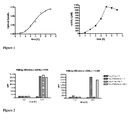
- the two bar diagrams in Fig. 2 show the killing efficiency of colicinE1-receive in dependence on AHL concentrations and prey-killer ratios.
- the killer cells kill all prey cells at an AHL concentration of 0 M and 1 nM.
- the leakiness of the P LuxR promoter could be responsible for that.
- colicin production is to low to harm the prey population efficiently, but in the ON-state enough colicin E1 is produced and released to kill all the prey cells.
- a negative controls was performed by using the killer cells without the harmful colicin producing gene (reference cells). In these tests the prey cells grew, which confirm the killing effect of the colicin producing cells.
Landscapes
- Health & Medical Sciences (AREA)
- Life Sciences & Earth Sciences (AREA)
- Genetics & Genomics (AREA)
- Engineering & Computer Science (AREA)
- Chemical & Material Sciences (AREA)
- Biomedical Technology (AREA)
- Zoology (AREA)
- Bioinformatics & Cheminformatics (AREA)
- Organic Chemistry (AREA)
- General Engineering & Computer Science (AREA)
- Biotechnology (AREA)
- Wood Science & Technology (AREA)
- General Health & Medical Sciences (AREA)
- Molecular Biology (AREA)
- Biochemistry (AREA)
- Microbiology (AREA)
- Plant Pathology (AREA)
- Biophysics (AREA)
- Physics & Mathematics (AREA)
- Veterinary Medicine (AREA)
- Public Health (AREA)
- Animal Behavior & Ethology (AREA)
- Medicinal Chemistry (AREA)
- Pharmacology & Pharmacy (AREA)
- Epidemiology (AREA)
- Proteomics, Peptides & Aminoacids (AREA)
- Immunology (AREA)
- Gastroenterology & Hepatology (AREA)
- Cell Biology (AREA)
- Oncology (AREA)
- Chemical Kinetics & Catalysis (AREA)
- General Chemical & Material Sciences (AREA)
- Nuclear Medicine, Radiotherapy & Molecular Imaging (AREA)
- Medicines That Contain Protein Lipid Enzymes And Other Medicines (AREA)
- Micro-Organisms Or Cultivation Processes Thereof (AREA)
Priority Applications (4)
| Application Number | Priority Date | Filing Date | Title |
|---|---|---|---|
| EP08167775A EP2182068A1 (de) | 2008-10-28 | 2008-10-28 | Verwendung von Bakterien zur Abtastung auf und zum Töten von Krebszellen |
| EP09740150A EP2364361A1 (de) | 2008-10-28 | 2009-10-26 | Verwendung von bakterien zum aufspüren und abtöten von krebszellen |
| US13/125,945 US20110293567A1 (en) | 2008-10-28 | 2009-10-26 | Use of bacteria for the sensing and killing of cancer cells |
| PCT/EP2009/064047 WO2010049375A1 (en) | 2008-10-28 | 2009-10-26 | Use of bacteria for the sensing and killing of cancer cells |
Applications Claiming Priority (1)
| Application Number | Priority Date | Filing Date | Title |
|---|---|---|---|
| EP08167775A EP2182068A1 (de) | 2008-10-28 | 2008-10-28 | Verwendung von Bakterien zur Abtastung auf und zum Töten von Krebszellen |
Publications (1)
| Publication Number | Publication Date |
|---|---|
| EP2182068A1 true EP2182068A1 (de) | 2010-05-05 |
Family
ID=40386120
Family Applications (2)
| Application Number | Title | Priority Date | Filing Date |
|---|---|---|---|
| EP08167775A Ceased EP2182068A1 (de) | 2008-10-28 | 2008-10-28 | Verwendung von Bakterien zur Abtastung auf und zum Töten von Krebszellen |
| EP09740150A Withdrawn EP2364361A1 (de) | 2008-10-28 | 2009-10-26 | Verwendung von bakterien zum aufspüren und abtöten von krebszellen |
Family Applications After (1)
| Application Number | Title | Priority Date | Filing Date |
|---|---|---|---|
| EP09740150A Withdrawn EP2364361A1 (de) | 2008-10-28 | 2009-10-26 | Verwendung von bakterien zum aufspüren und abtöten von krebszellen |
Country Status (3)
| Country | Link |
|---|---|
| US (1) | US20110293567A1 (de) |
| EP (2) | EP2182068A1 (de) |
| WO (1) | WO2010049375A1 (de) |
Cited By (3)
| Publication number | Priority date | Publication date | Assignee | Title |
|---|---|---|---|---|
| WO2016164636A1 (en) | 2015-04-09 | 2016-10-13 | The Regents Of The University Of California | Engineered bacteria for production and release of therapeutics |
| US11896626B2 (en) | 2018-06-08 | 2024-02-13 | The Regents Of The University Of California | Multistrain population control systems and methods |
| US12594307B2 (en) | 2019-12-13 | 2026-04-07 | The Regents Of The University Of California | Compositions and methods of using inducible signaling for tunable dynamics in microbial communities |
Families Citing this family (4)
| Publication number | Priority date | Publication date | Assignee | Title |
|---|---|---|---|---|
| US9200251B1 (en) | 2011-03-31 | 2015-12-01 | David Gordon Bermudes | Bacterial methionine analogue and methionine synthesis inhibitor anticancer, antiinfective and coronary heart disease protective microcins and methods of treatment therewith |
| CA2884816A1 (en) | 2012-09-13 | 2014-03-20 | Massachusetts Institute Of Technology | Programmable drug delivery profiles of tumor-targeted bacteria |
| US11717542B2 (en) | 2019-02-22 | 2023-08-08 | Arizona Board Of Regents On Behalf Of Arizona State University | Using tumor-navigating Salmonella to modulate tumor metabolism |
| CN112501091B (zh) * | 2019-09-16 | 2022-07-19 | 集美大学 | 哈维氏弧菌cheA基因沉默细胞株及其应用 |
-
2008
- 2008-10-28 EP EP08167775A patent/EP2182068A1/de not_active Ceased
-
2009
- 2009-10-26 WO PCT/EP2009/064047 patent/WO2010049375A1/en not_active Ceased
- 2009-10-26 US US13/125,945 patent/US20110293567A1/en not_active Abandoned
- 2009-10-26 EP EP09740150A patent/EP2364361A1/de not_active Withdrawn
Non-Patent Citations (14)
| Title |
|---|
| "Remington's Pharmaceutical Sciences", MACK PUBLISHING COMPANY |
| AUSUBEL: "Current Protocols in Molecular Biology", 1994, GREEN PUBLISHING ASSOCIATES AND WILEY INTERSCIENCE |
| BERETA ET AL: "Improving tumor targeting and therapeutic potential of Salmonella VNP20009 by displaying cell surface CEA-specific antibodies", VACCINE, BUTTERWORTH SCIENTIFIC. GUILDFORD, GB, vol. 25, no. 21, 27 April 2007 (2007-04-27), pages 4183 - 4192, XP022050485, ISSN: 0264-410X * |
| COMUT ET AL., AM. J. ONCOL., vol. 31, 2008, pages 399 - 404 |
| MOWBRAY; SANDGREN, JOURNAL OF STRUCTURAL BIOLOGY, vol. 124, 1998, pages 257 - 275 |
| MOWBRAY; SANDGREN, STRUCTURAL BIOLOGY, vol. 124, 1998, pages 257 - 275 |
| PALFFY R ET AL., GENE THER., vol. 13, 2006, pages 101 - 105 |
| SAMBROOK: "Molecular Cloning A Laboratory Manual", 1989, COLD SPRING HARBOR LABORATORY |
| SELEEM ET AL., GENE, vol. 421, 2008, pages 95 - 98 |
| SHKOPOROV ET AL., BIOTECHNOL. LETT., vol. 30, 2008, pages 1983 - 1988 |
| SMARDA J ET AL., FOLIA MICROBIOL., vol. 47, 2001, pages 11 - 13 |
| SOURJIK V: "Receptor clustering and signal processing in E. coli chemotaxis", TRENDS IN MICROBIOLOGY, ELSEVIER SCIENCE LTD., KIDLINGTON, GB, vol. 12, no. 12, 1 December 2004 (2004-12-01), pages 569 - 576, XP004633853, ISSN: 0966-842X * |
| ST JEAN AT, CURR. OPIN. BIOTECHNOL., vol. 19, 2008, pages 511 - 517 |
| WARD SCOTT M ET AL: "A NarX-Tar chimera mediates repellent chemotaxis to nitrate and nitrite", MOLECULAR MICROBIOLOGY, vol. 44, no. 3, May 2002 (2002-05-01), pages 709 - 719, XP002518149, ISSN: 0950-382X * |
Cited By (11)
| Publication number | Priority date | Publication date | Assignee | Title |
|---|---|---|---|---|
| WO2016164636A1 (en) | 2015-04-09 | 2016-10-13 | The Regents Of The University Of California | Engineered bacteria for production and release of therapeutics |
| CN107709558A (zh) * | 2015-04-09 | 2018-02-16 | 加利福尼亚大学董事会 | 用于治疗物的产生和释放的工程化细菌 |
| JP2018516538A (ja) * | 2015-04-09 | 2018-06-28 | ザ リージェンツ オブ ザ ユニバーシティ オブ カリフォルニア | 治療剤の製造および放出のための遺伝子操作された細菌 |
| EP3280802A4 (de) * | 2015-04-09 | 2018-11-14 | The Regents of the University of California | Veränderte bakterien zur produktion und freisetzung von therapeutika |
| JP2020096645A (ja) * | 2015-04-09 | 2020-06-25 | ザ リージェンツ オブ ザ ユニバーシティ オブ カリフォルニア | 治療剤の製造および放出のための遺伝子操作された細菌 |
| US11174486B2 (en) | 2015-04-09 | 2021-11-16 | The Regents Of The University Of California | Engineered bacteria for production and release of therapeutics |
| CN107709558B (zh) * | 2015-04-09 | 2022-05-13 | 加利福尼亚大学董事会 | 用于治疗物的产生和释放的工程化细菌 |
| EP4071235A1 (de) * | 2015-04-09 | 2022-10-12 | The Regents of the University of California | Veränderte bakterien zur produktion und freisetzung von therapeutika |
| US11613758B2 (en) | 2015-04-09 | 2023-03-28 | The Regents Of The University Of California | Engineered bacteria for production and release of therapeutics |
| US11896626B2 (en) | 2018-06-08 | 2024-02-13 | The Regents Of The University Of California | Multistrain population control systems and methods |
| US12594307B2 (en) | 2019-12-13 | 2026-04-07 | The Regents Of The University Of California | Compositions and methods of using inducible signaling for tunable dynamics in microbial communities |
Also Published As
| Publication number | Publication date |
|---|---|
| US20110293567A1 (en) | 2011-12-01 |
| WO2010049375A1 (en) | 2010-05-06 |
| EP2364361A1 (de) | 2011-09-14 |
Similar Documents
| Publication | Publication Date | Title |
|---|---|---|
| US11660341B2 (en) | mRNA combination therapy for the treatment of cancer | |
| US20240091258A1 (en) | Administration of kynurenine depleting enzymes for tumor therapy | |
| Kim et al. | Irradiation enhances the tumor tropism and therapeutic potential of tumor necrosis factor-related apoptosis-inducing ligand-secreting human umbilical cord blood-derived mesenchymal stem cells in glioma therapy | |
| US20110293567A1 (en) | Use of bacteria for the sensing and killing of cancer cells | |
| EP3049526B1 (de) | Interleukin-4 rezeptor-bindende fusionsproteine und verwendungen davon | |
| Kim | Neural stem cell-based gene therapy for brain tumors | |
| US9975959B2 (en) | Administration of kynurenine depleting enzymes for tumor therapy | |
| KR20150090919A (ko) | 결합제를 사용한 면역요법 | |
| KR20190134832A (ko) | 종양 형성 치료방법 | |
| AU2017222461A1 (en) | Neoantigen compositions and methods of using the same in immunooncotherapy | |
| CN116143944B (zh) | 含gpi锚定区的膜表面蛋白 | |
| EP3041860B1 (de) | Semaphorin-3c-varianten, zusammensetzungen mit diesen varianten und verfahren zur verwendung davon | |
| JP7774263B2 (ja) | 浸潤し、かつ自律的に溶解するように設計された治療用タンパク質の細胞内送達のための細菌細胞 | |
| US11912747B2 (en) | Chimeric proteins for targeting dsRNA | |
| Hu et al. | A novel immunotherapy for superficial bladder cancer by intravesical immobilization of GM‐CSF | |
| KR102877733B1 (ko) | mvIIA의 분비를 위한 재조합 발현 벡터 및 이로 형질전환된 약독화 살모넬라 균주 | |
| CN101144081B (zh) | 核苷酸分子trail及其在制备治疗肿瘤药物中的应用 | |
| CN119662607B (zh) | 一种靶向降解蛋白及其应用 | |
| CN115232216B (zh) | 嵌合抗原受体、重组载体、重组细胞及其制备方法和应用 | |
| CN113846065B (zh) | 改造的cik免疫细胞在治疗癌症中的用途 | |
| CN113925876B (zh) | Cik免疫细胞在治疗癌症中的用途 | |
| CN121673368A (zh) | 细胞死亡诱导肽、含有其的功能偶合多肽或融合蛋白及其应用 | |
| KR101521980B1 (ko) | 미니서클 벡터를 이용하여 tnfr2가 분비되도록 조절된 줄기세포의 확립 | |
| ES2325718B1 (es) | Agentes anti-tumorales basados en la proteina viral a238l. | |
| WO2021206183A1 (ja) | 機能性ポリぺプチド及びその使用 |
Legal Events
| Date | Code | Title | Description |
|---|---|---|---|
| PUAI | Public reference made under article 153(3) epc to a published international application that has entered the european phase |
Free format text: ORIGINAL CODE: 0009012 |
|
| AK | Designated contracting states |
Kind code of ref document: A1 Designated state(s): AT BE BG CH CY CZ DE DK EE ES FI FR GB GR HR HU IE IS IT LI LT LU LV MC MT NL NO PL PT RO SE SI SK TR |
|
| AX | Request for extension of the european patent |
Extension state: AL BA MK RS |
|
| STAA | Information on the status of an ep patent application or granted ep patent |
Free format text: STATUS: THE APPLICATION HAS BEEN REFUSED |
|
| 18R | Application refused |
Effective date: 20100820 |