EP2182667A2 - Appareil et procédé de communication sans fil - Google Patents
Appareil et procédé de communication sans fil Download PDFInfo
- Publication number
- EP2182667A2 EP2182667A2 EP09174289A EP09174289A EP2182667A2 EP 2182667 A2 EP2182667 A2 EP 2182667A2 EP 09174289 A EP09174289 A EP 09174289A EP 09174289 A EP09174289 A EP 09174289A EP 2182667 A2 EP2182667 A2 EP 2182667A2
- Authority
- EP
- European Patent Office
- Prior art keywords
- sequence number
- data
- transmitted
- command
- reset
- Prior art date
- Legal status (The legal status is an assumption and is not a legal conclusion. Google has not performed a legal analysis and makes no representation as to the accuracy of the status listed.)
- Withdrawn
Links
Images






Classifications
-
- H—ELECTRICITY
- H04—ELECTRIC COMMUNICATION TECHNIQUE
- H04L—TRANSMISSION OF DIGITAL INFORMATION, e.g. TELEGRAPHIC COMMUNICATION
- H04L1/00—Arrangements for detecting or preventing errors in the information received
- H04L1/12—Arrangements for detecting or preventing errors in the information received by using return channel
- H04L1/16—Arrangements for detecting or preventing errors in the information received by using return channel in which the return channel carries supervisory signals, e.g. repetition request signals
- H04L1/1607—Details of the supervisory signal
Definitions
- the present invention relates to a wireless communication apparatus and a wireless communication method applied to, for example, remote control of an electronic device based on wireless communication.
- wireless communication in an Industrial, Scientific, and Medical use (ISM) band in the 2.4-GHz band is advantageous because, compared with infrared communication, there is less influence by an obstacle, and wireless signals travel farther. Furthermore, because a receiving side returns an acknowledgement and retransmission is performed even if the communication fails, there is another advantage that an operation is transmitted without fail.
- ISM Industrial, Scientific, and Medical use
- RF radio frequency communication
- data is divided into packets and transmitted.
- a single frame that includes data of each packet is added with numeral data (referred to below as a sequence number) that increments at the time of each transmission. It is possible to determine which ones have been transmitted in the data stream by checking the sequence number. The sequence number increments up to a predetermined value and then returns to its initial value, due to a restriction on the number of bits.
- Figs. 1 and 2 respectively show a procedure of a process and a communication sequence in wireless communication when control by the sequence number is not performed.
- a command is transmitted from a transmitting side such as a transmitter module provided in a remote controller.
- the transmitter module then waits for an acknowledgement (ACK) (Step S2).
- a receiver module provided in a main device on a receiving side such as a television set is ready for receiving the command (Step S21).
- Step S22 it is determined whether the command has been received or not.
- a received command (A) is supplied to a control unit in the television set as a code output (output data).
- the ACK is transmitted.
- Step S3 the transmitter module receives the ACK from the receiver module. If the ACK is not received, the process returns to Step S1, and the command is retransmitted from the transmitter module.
- the command (A) is output from the receiver module as the output data.
- sequence number n (preceded by # in the drawings) is transmitted together with the command.
- sequence number of the command (A) received at Step S22 is examined at Step S26. At Step S26, it is determined whether the sequence number has changed from the previous value or not.
- Step S26 If it is determined that the sequence number has changed at Step S26, a code is output at Step S23, and an ACK is transmitted at Step S24.
- the receiver module determines, at Step S26, that the value of the sequence number n is equal to the value received previously, the receiver module skips the process of the code output at Step S23. In other words, the receiver module determines that the received command (A) is identical to the command received previously, discards the received command, and transmits an ACK.
- microcomputer that controls the transmitter module is reset.
- the microcomputer When power is turned off, for example, by removing a battery from a remote controller, the microcomputer is reset.
- the microcomputer may be reset by a specific key input.
- the sequence number returns to its initial value.
- Fig. 5 shows an example of a process in which a reset does not cause any problem.
- the sequence number returns to its initial value at Step S12. Accordingly, the value of the sequence number transmitted together with the command at Step S1 is n.
- the receiver module determines that the sequence number received this time is different from the sequence number received together with the previous command, and outputs the code to the main device at Step S23.
- the sequence number of the command transmitted immediately after the reset is set to n. If the sequence number immediately before the reset is not n, transmission and reception are regarded as having been normally performed and a command (A) is output from the receiver module.
- the receiver module stores the value n of the sequence number.
- Japanese Unexamined Patent Application Publication No. 2003-218876 proposes a technology of applying a specific sequence number that is not normally used, when the transmission is performed after a reset. According to the technology proposed in Japanese Unexamined Patent Application Publication No. 2003-218876 , because the sequence number after the reset is different from the initial value, the receiver module can correctly receive the command transmitted immediately after the reset.
- the receiver module determines that the sequence number has not changed at Step S26. As a result, the command (B) is discarded. Furthermore, when a command is transmitted next time, the sequence number is set to n+1. Because the sequence number is thus incremented, the receiver module determines that a different command is received, and outputs a command (C) as the output data.
- a wireless communication system having a transmitter for transmitting data, the transmitter being equipped with a microcomputer for control, and also having a receiver for receiving data.
- the wireless communication system transmits a sequence number together with data to prevent the receiving side from receiving identical data more than once, the sequence number being automatically incremented every time a frame of transmit data is transmitted, performs a next process if it is determined that the transmission is correctly performed, transmits the data again without incrementing the sequence number if it is determined that the transmission is not correctly performed, returns the sequence number to its initial value when a microcomputer for control is reset, transmits dummy data together with the initial value immediately after the reset, and transmits the data together with an incremented sequence number after transmission of the dummy data.
- Whether transmission has been correctly performed or not is determined depending on whether an acknowledgement is received from the receiving side or not.
- a command for remote control of an electronic device is transmitted.
- a wireless communication method includes the steps of transmitting a sequence number together with data to prevent the receiving side from receiving identical data more than once, the sequence number being automatically incremented every time a frame of transmit data is transmitted, performing the next process if it is determined that the transmission is correctly performed, transmitting the data again without incrementing the sequence number if it is determined that the transmission is not correctly performed, returning the sequence number to its initial value when a microcomputer in a control unit is reset, transmitting dummy data together with the initial value immediately after the reset, and transmitting the data together with an incremented sequence number after transmission of the dummy data.
- dummy data is transmitted together with the initial value of the sequence number. After that, real data is transmitted together with an incremented sequence number. Therefore, even if the reset is performed successively, the sequence number is different from the previous value, and new data is not discarded. Furthermore, all types of the available sequence numbers can be used.
- a transmitter module 100 in a transmitter 80 and a receiver module 110 in a receiver 90 perform radio frequency (RF) wireless communication with each other.
- Denoted by reference numeral 101 is a transmitting antenna, and 111 is a receiving antenna.
- RF radio frequency
- the transmitter 80 may be a commander for a remote controller
- the receiver 90 may be a television set.
- a command corresponding to key input to the remote controller is supplied to a control unit of the television set 90.
- the command is transmitted from the transmitter module 100 to the receiver module 110.
- the receiver module 110 transmits an acknowledgement (ACK) to the transmitter module 100.
- ACK acknowledgement
- Pairing means mutually exchanging identification information (ID) between a remote controller and a remotely controlled electronic device.
- the remote controller 100 includes the antenna 101 to transmit and receive radio wave.
- the remote controller 100 also includes a central processing unit (CPU) 102 as a control unit that runs programs corresponding to communication functions, read and write operations on a recording medium, and various key inputs.
- CPU central processing unit
- a communication unit 103 for wireless communication transmits remote control signals via the antenna 101.
- the ID of an electronic device paired with the remote controller 100 is stored in a recording medium 104.
- the ID of the remote controller 100 and a category code of the electronic device to be paired first are stored in a recording medium 105.
- the remote controller 100 also includes a key input unit 106 having keys.
- Each of the recording media 104 and 105 is configured with, for example, a writable nonvolatile memory.
- the CPU 102 is an embedded microcomputer, which includes a read only memory (ROM), a random access memory (RAM), or the like, and controls each part of the remote controller 100 in an integrated manner by executing programs stored in the ROM.
- ROM read only memory
- RAM random access memory
- the receiver module 110 provided in the electronic device includes the antenna 111 to transmit and receive radio wave.
- the receiver module 110 also includes a CPU 112 that runs programs corresponding to communication functions, read and write operations on a recording medium, and various key inputs, and a communication unit 113 for wireless communication.
- the ID and category code (for example, a code indicative of a category of the television set) of the electronic device are stored in a recording medium 116.
- the receiver module 110 includes an external interface 117 for communication with, for example, the television set.
- the CPU 112 controls each part of the receiver module 110 in an integrated manner.
- Each of a recording medium 115 and the recording medium 116 is configured with, for example, a writable nonvolatile memory.
- the communication unit 103 of the remote controller 100 and the communication unit 113 of the receiver module 110 bidirectionally communicate with each other based on a predetermined wireless communication system.
- the communication system can be, for example, a system complying with Institute of Electrical and Electronics Engineers (IEEE) 802.15.4.
- IEEE 802.15.4 is a name of a short-range wireless network standard called Personal Area Network (PAN) or Wireless Personal Area Network (WPAN).
- PAN Personal Area Network
- WPAN Wireless Personal Area Network
- the receiver module 110 is configured to output a received command to the electronic device connected to the external interface 117, such as the television set.
- the communication rate of this standard is tens to hundreds of kbps, and the communication distance is tens to hundreds of meters. Communication is performed in units of frames. A single frame size is 133 bytes at the maximum including a payload of 0 to 127 bytes and a header of 6 bytes.
- This communication system enables a plurality of modes for transmitting and receiving data.
- the remote controller 100 transmits a command to the receiver module 110, and the remote controller 100 receives a response from the receiver module 110.
- more complicated method of transmitting and receiving data can be used.
- a configuration of wireless communication data communicated between the transmitter module 100 and the receiver module 110 is schematically shown in Fig. 10 .
- a header is located at the top of the frame, and a sequence number is inserted as part of the following code, followed by data (payload) including a command.
- the RF system is identified by the header.
- Code information indicates the type of the following data, i.e., whether it is data for pairing or command data.
- the sequence number is numeral data that increments at the time of each transmission. It is possible to determine which ones have been transmitted in the data stream by checking the sequence number.
- the receiver module is prevented from receiving identical data more than once by controlling the sequence numbers.
- the sequence number increments up to a predetermined value and then returns to its initial value, due to a restriction on the number of bits. For example, in the case of using 8-bit sequence numbers, the sequence number returns to the initial value after counting up to the last of the 256 different sequence numbers.
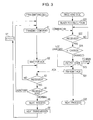
- the CPU 102 of the transmitter module 100 shown in Fig. 9A and the CPU 112 of the receiver module 110 shown in Fig. 9B perform a process shown in a flowchart in Fig. 11 .
- the sequence number is returned to the initial value n at Step S12.
- the initial value n is one of the available sequence numbers.
- the initial value may differ from a value to which the sequence number returns after it increments up to its maximum value, such as zero.
- Step S14 a command is transmitted at Step S14 and the transmitter module enters the state of waiting for an ACK (Step S15).
- Step S14 immediately after the reset, a dummy command is transmitted.
- the dummy command is specific known data that is not used for pairing or commanding.
- the sequence number n is transmitted together with the dummy command.
- the receiver module is ready for reception (Step S21), and the dummy command and the sequence number n are received at Step S22.
- the dummy command and the sequence number n received are stored in the memory in the receiving side.
- Step S26 it is determined whether the sequence number of the received command has changed from the previous value stored in the memory or not. If it is determined that the sequence number has changed at Step S26, the dummy command is output at Step S23, and an ACK is transmitted at Step S24.
- the ACK is transmitted at Step S24 without performing the process at Step S23.
- the dummy command there will be no difficulty if the dummy command is discarded without being output.
- the receiver determines that the output data is a dummy command because the dummy command is known data. The dummy command is thus ignored.
- the ACK transmitted at Step S24 is received by the receiver module (Step S16).
- the sequence number is incremented to n+1 at Step S7.
- Step S1 the command and the sequence number n+1 are transmitted at Step S1 and the transmitter module enters a state of waiting for an ACK (Step S2).
- Step S2 the command is transmitted.
- the receiver module is ready for reception (Step S21), and receives the command and the sequence number n+1 at Step S22.
- Step S26 it is determined whether the sequence number of the received command has changed from the previous value or not.
- the previous sequence number is n, and the sequence number received is n+1.
- the sequence number is determined that the sequence number has changed.
- the command is output to the receiver, such as the television set, at Step S23, and the ACK is transmitted at Step S24.
- the ACK transmitted at Step S24 is received by the transmitter module (Step S3). After that, subsequent processes (Steps S5 and S6) are performed. To transmit the next command then, the sequence number is incremented to n+2 at Step S7.
- Step S3 If the reset operation is performed again on the transmitting side after receiving the ACK at Step S3, the process returns to Step S11, and then the sequence number is set to the initial value at Step S12.
- the dummy command is transmitted.
- the ACK is received from the receiver module at Step S16.
- the sequence number stored in the receiver module is set to n+1 due to the transmission of the dummy command after the first reset.
- the sequence number is then set to n due to the transmission of the dummy command after the second reset. Accordingly, when a command is transmitted after the second reset and the second transmission of the dummy command, the sequence number n+1 is transmitted together with the command.
- Step S26 it is determined that the sequence number has changed from n to n+1. Because it is determined there has been a change, a command is transmitted to the receiver at Step S23.
- the command transmitted after the first reset may be identical to or different from the command transmitted after the second reset.
- the sequence number stored in the receiver module is returned to the initial value by the transmitter module transmitting the dummy command immediately after the reset.
- the command can be transmitted without difficulty.
- the process is terminated after transmitting and receiving a series of data. Accordingly, there is a risk that the pairing process is difficult to complete if the data transmission fails once. However, according to an embodiment of the present invention, such a risk can be avoided.
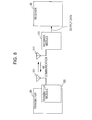
- Fig. 12 shows a communication sequence based on a specific example of a process according to an embodiment.
- the first reset RST1 is performed at Step S11, and then the dummy command and the sequence number n (initial value) are transmitted at Step S14.
- the dummy command is output as the output data. As described above, the dummy command may not be output to the main device.
- the ACK is transmitted at Step S24.
- the transmitter module receives the ACK at Step S16, and the sequence number is changed from n to n+1 at Step S7. At Step S1, a command and the sequence number n+1 are transmitted.
- the receiver module determines that the sequence number has changed at Step S26, and outputs the received command (A) to the main device.
- the receiver module then transmits the ACK at Step S24.
- the second reset RST2 is performed. As with the first reset RST1, the dummy command and the sequence number n are transmitted. The sequence number stored on the receiving side is returned to the initial value n. Accordingly, when a command and the sequence number n+1 are transmitted next, it is determined that the sequence number has changed, and the command (B) is output from the receiver module. Another ACK is also transmitted.
- the embodiment of the present invention may be applied to wireless communication devices other than a television set and a remote controller constituting a remote control system.
- the embodiment may be applied to other combinations of wireless communication devices that transmit and receive audio data and/or video data by wireless communication, such as a combination of an audio player and a wireless headphone, or a combination of an audio player and a portable digital music player.
Landscapes
- Engineering & Computer Science (AREA)
- Computer Networks & Wireless Communication (AREA)
- Signal Processing (AREA)
- Selective Calling Equipment (AREA)
- Communication Control (AREA)
- Transceivers (AREA)
- Detection And Prevention Of Errors In Transmission (AREA)
- Mobile Radio Communication Systems (AREA)
Applications Claiming Priority (1)
| Application Number | Priority Date | Filing Date | Title |
|---|---|---|---|
| JP2008277851A JP2010109530A (ja) | 2008-10-29 | 2008-10-29 | 無線通信装置および無線通信方法 |
Publications (2)
| Publication Number | Publication Date |
|---|---|
| EP2182667A2 true EP2182667A2 (fr) | 2010-05-05 |
| EP2182667A3 EP2182667A3 (fr) | 2014-09-03 |
Family
ID=41718954
Family Applications (1)
| Application Number | Title | Priority Date | Filing Date |
|---|---|---|---|
| EP09174289.0A Withdrawn EP2182667A3 (fr) | 2008-10-29 | 2009-10-28 | Appareil et procédé de communication sans fil |
Country Status (6)
| Country | Link |
|---|---|
| US (1) | US20100107029A1 (fr) |
| EP (1) | EP2182667A3 (fr) |
| JP (1) | JP2010109530A (fr) |
| CN (1) | CN101729219A (fr) |
| BR (1) | BRPI0904006A2 (fr) |
| RU (1) | RU2517725C2 (fr) |
Cited By (1)
| Publication number | Priority date | Publication date | Assignee | Title |
|---|---|---|---|---|
| WO2011002719A1 (fr) * | 2009-06-29 | 2011-01-06 | Echostar Technologies L.L.C. | Changement automatique d'une association d'un dispositif de commande à distance à un dispositif électronique |
Families Citing this family (7)
| Publication number | Priority date | Publication date | Assignee | Title |
|---|---|---|---|---|
| JP2011249941A (ja) | 2010-05-24 | 2011-12-08 | Smk Corp | 無線通信モジュール、リモートコントロール装置および無線システム |
| HK1199777A1 (en) | 2012-01-04 | 2015-07-17 | 三菱电机株式会社 | Train information management device |
| US10270705B1 (en) * | 2013-12-18 | 2019-04-23 | Violin Systems Llc | Transmission of stateful data over a stateless communications channel |
| CN105900347B (zh) * | 2015-10-27 | 2018-06-12 | 深圳还是威健康科技有限公司 | 一种基于蓝牙的数据传输方法以及装置 |
| WO2017098646A1 (fr) * | 2015-12-10 | 2017-06-15 | 株式会社日立製作所 | Appareil de stockage et programme de traitement d'informations |
| RU2710282C1 (ru) * | 2019-04-24 | 2019-12-25 | Федеральное государственное казенное военное образовательное учреждение высшего образования Академия Федеральной службы охраны Российской Федерации | Способ передачи данных |
| CN116946215A (zh) * | 2023-08-01 | 2023-10-27 | 通号城市轨道交通技术有限公司 | 一种基于光栅阵列传感网络的测区占用复位系统及方法 |
Family Cites Families (22)
| Publication number | Priority date | Publication date | Assignee | Title |
|---|---|---|---|---|
| US4422171A (en) * | 1980-12-29 | 1983-12-20 | Allied Corporation, Law Department | Method and system for data communication |
| JPH05344128A (ja) * | 1992-06-11 | 1993-12-24 | Canon Inc | 工業用通信装置 |
| US5390173A (en) * | 1992-10-22 | 1995-02-14 | Digital Equipment Corporation | Packet format in hub for packet data communications system |
| JPH06152646A (ja) * | 1992-11-04 | 1994-05-31 | Fujitsu Ltd | パケット交換制御方法 |
| JPH09149078A (ja) * | 1995-11-20 | 1997-06-06 | Sharp Corp | 通信端末装置および通信方法 |
| US6314101B1 (en) * | 1997-06-17 | 2001-11-06 | Qualcomm Incorporated | Method for detecting delayed data frames in a transport function |
| US7002964B1 (en) * | 1998-02-24 | 2006-02-21 | Canon Kabushiki Kaisha | Communication system, method for a communication system and controller for a communication system |
| JP4181688B2 (ja) * | 1998-04-09 | 2008-11-19 | キヤノン株式会社 | データ通信システム及びデータ通信装置 |
| KR100469706B1 (ko) * | 2001-03-06 | 2005-02-02 | 삼성전자주식회사 | 이동통신시스템의 패킷 서비스 장치 및 방법 |
| US6842433B2 (en) * | 2001-04-24 | 2005-01-11 | Wideray Corporation | System and method for communicating information from a computerized distributor to portable computing devices |
| US20020184208A1 (en) * | 2001-04-24 | 2002-12-05 | Saul Kato | System and method for dynamically generating content on a portable computing device |
| US7072975B2 (en) * | 2001-04-24 | 2006-07-04 | Wideray Corporation | Apparatus and method for communicating information to portable computing devices |
| JP3815253B2 (ja) * | 2001-05-18 | 2006-08-30 | 松下電器産業株式会社 | リモコン送受信機を用いたデータ通信システム |
| US7349691B2 (en) * | 2001-07-03 | 2008-03-25 | Microsoft Corporation | System and apparatus for performing broadcast and localcast communications |
| GB2379333A (en) * | 2001-09-01 | 2003-03-05 | Motorola Inc | Electronic device casing |
| JP3757857B2 (ja) * | 2001-12-12 | 2006-03-22 | ソニー株式会社 | データ通信システム、データ送信装置、データ受信装置、および方法、並びにコンピュータ・プログラム |
| JP3873751B2 (ja) * | 2002-01-22 | 2007-01-24 | 松下電工株式会社 | データ通信システム |
| US7496607B2 (en) * | 2003-08-29 | 2009-02-24 | Yahoo! Inc. | Method and system for maintaining synchronization between a local data cache and a data store |
| US7599442B2 (en) * | 2005-01-20 | 2009-10-06 | Harris Corporation | Transmitter synchronization in a distributed transmission system |
| MX2008001797A (es) * | 2005-08-12 | 2008-04-09 | Samsung Electronics Co Ltd | Metodo y aparato para transmitir y/o recibir datos via red inalambrica y un dispositivo inalambrico. |
| US20070292135A1 (en) * | 2006-06-09 | 2007-12-20 | Yong Guo | Integrated remote control signaling |
| US20070286600A1 (en) * | 2006-06-09 | 2007-12-13 | Owlink Technology, Inc. | Universal IR Repeating over Optical Fiber |
-
2008
- 2008-10-29 JP JP2008277851A patent/JP2010109530A/ja active Pending
-
2009
- 2009-10-06 BR BRPI0904006-4A patent/BRPI0904006A2/pt not_active IP Right Cessation
- 2009-10-19 US US12/589,138 patent/US20100107029A1/en not_active Abandoned
- 2009-10-28 EP EP09174289.0A patent/EP2182667A3/fr not_active Withdrawn
- 2009-10-28 RU RU2009139908/08A patent/RU2517725C2/ru not_active IP Right Cessation
- 2009-10-29 CN CN200910207676A patent/CN101729219A/zh active Pending
Cited By (2)
| Publication number | Priority date | Publication date | Assignee | Title |
|---|---|---|---|---|
| WO2011002719A1 (fr) * | 2009-06-29 | 2011-01-06 | Echostar Technologies L.L.C. | Changement automatique d'une association d'un dispositif de commande à distance à un dispositif électronique |
| US8344859B2 (en) | 2009-06-29 | 2013-01-01 | Echostar Technologies L.L.C. | Automatic change of association of a remote control device with an electronic device |
Also Published As
| Publication number | Publication date |
|---|---|
| BRPI0904006A2 (pt) | 2011-02-01 |
| US20100107029A1 (en) | 2010-04-29 |
| EP2182667A3 (fr) | 2014-09-03 |
| RU2009139908A (ru) | 2011-05-10 |
| JP2010109530A (ja) | 2010-05-13 |
| RU2517725C2 (ru) | 2014-05-27 |
| CN101729219A (zh) | 2010-06-09 |
Similar Documents
| Publication | Publication Date | Title |
|---|---|---|
| EP2182667A2 (fr) | Appareil et procédé de communication sans fil | |
| EP0574570B1 (fr) | Procede et appareil de communication par signaux | |
| KR100940839B1 (ko) | 무선통신시스템에서 패킷헤더를 설정하는 방법 및 장치 | |
| CN106792454A (zh) | 蓝牙通信方法、通信装置、通信系统及电子设备 | |
| US10135710B2 (en) | Information processing apparatus | |
| US9852670B2 (en) | System and method for wireless control of signs | |
| WO2007136037A1 (fr) | Dispositif de communication radio | |
| CN108111194A (zh) | 蓝牙通信方法、系统及蓝牙接收方法、设备 | |
| US12022553B2 (en) | Accelerating control procedures over BLE connection oriented services | |
| US20120220228A1 (en) | Wireless communication apparatus | |
| US20110200130A1 (en) | Method and apparatus for transmitting/receiving data in mu-mimo system | |
| US12072821B2 (en) | Communication device and communication system with encapsulation/de-encapsulation of data and commands | |
| EP1986340A2 (fr) | Système et procédé d'amélioration de la symétrie dans un transfert de données dans une couche LLC d'un dispositif NCF de poste à poste | |
| US20220022203A1 (en) | Devices, systems and methods for low latency data transmission in wireless network | |
| AU2019297026B2 (en) | Low latency wireless protocol for audio and gaming | |
| US8780934B2 (en) | Method for performing serial transport communication, and associated device | |
| US20170111937A1 (en) | Pairing connection method for devices | |
| KR101123334B1 (ko) | 입출력 장치 및 그 제어 방법 | |
| JP6103903B2 (ja) | 無線通信装置 | |
| US20140119273A1 (en) | Wireless communication apparatus, wireless communication system and method for wireless communication | |
| KR20090075491A (ko) | 적외선 신호 포맷 및 이를 이용하는 적외선 송수신 시스템 | |
| TWI699990B (zh) | 輕量的遙控通訊協定之訊號傳輸方法 | |
| US20260127133A1 (en) | Semiconductor device and communication system | |
| US20130265921A1 (en) | Method and system for signaling by bit manipulation in communication protocols | |
| JPH05114879A (ja) | 無線通信方法 |
Legal Events
| Date | Code | Title | Description |
|---|---|---|---|
| PUAI | Public reference made under article 153(3) epc to a published international application that has entered the european phase |
Free format text: ORIGINAL CODE: 0009012 |
|
| 17P | Request for examination filed |
Effective date: 20091028 |
|
| AK | Designated contracting states |
Kind code of ref document: A2 Designated state(s): AT BE BG CH CY CZ DE DK EE ES FI FR GB GR HR HU IE IS IT LI LT LU LV MC MK MT NL NO PL PT RO SE SI SK SM TR |
|
| AX | Request for extension of the european patent |
Extension state: AL BA RS |
|
| PUAL | Search report despatched |
Free format text: ORIGINAL CODE: 0009013 |
|
| AK | Designated contracting states |
Kind code of ref document: A3 Designated state(s): AT BE BG CH CY CZ DE DK EE ES FI FR GB GR HR HU IE IS IT LI LT LU LV MC MK MT NL NO PL PT RO SE SI SK SM TR |
|
| AX | Request for extension of the european patent |
Extension state: AL BA RS |
|
| RIC1 | Information provided on ipc code assigned before grant |
Ipc: H04L 1/16 20060101ALI20140728BHEP Ipc: H04L 1/18 20060101AFI20140728BHEP |
|
| STAA | Information on the status of an ep patent application or granted ep patent |
Free format text: STATUS: THE APPLICATION HAS BEEN WITHDRAWN |
|
| 18W | Application withdrawn |
Effective date: 20150115 |