EP2183929B1 - Resélection de cellules basée sur l'utilisation de seuils relatifs dans un système de télécommunication mobile - Google Patents
Resélection de cellules basée sur l'utilisation de seuils relatifs dans un système de télécommunication mobile Download PDFInfo
- Publication number
- EP2183929B1 EP2183929B1 EP08758630A EP08758630A EP2183929B1 EP 2183929 B1 EP2183929 B1 EP 2183929B1 EP 08758630 A EP08758630 A EP 08758630A EP 08758630 A EP08758630 A EP 08758630A EP 2183929 B1 EP2183929 B1 EP 2183929B1
- Authority
- EP
- European Patent Office
- Prior art keywords
- cell
- user equipment
- measurement
- target cell
- relative
- Prior art date
- Legal status (The legal status is an assumption and is not a legal conclusion. Google has not performed a legal analysis and makes no representation as to the accuracy of the status listed.)
- Active
Links
Images

Classifications
-
- H—ELECTRICITY
- H04—ELECTRIC COMMUNICATION TECHNIQUE
- H04W—WIRELESS COMMUNICATION NETWORKS
- H04W36/00—Hand-off or reselection arrangements
- H04W36/0005—Control or signalling for completing the hand-off
- H04W36/0083—Determination of parameters used for hand-off, e.g. generation or modification of neighbour cell lists
- H04W36/0085—Hand-off measurements
- H04W36/0094—Definition of hand-off measurement parameters
-
- H—ELECTRICITY
- H04—ELECTRIC COMMUNICATION TECHNIQUE
- H04W—WIRELESS COMMUNICATION NETWORKS
- H04W36/00—Hand-off or reselection arrangements
- H04W36/24—Reselection being triggered by specific parameters
-
- H—ELECTRICITY
- H04—ELECTRIC COMMUNICATION TECHNIQUE
- H04W—WIRELESS COMMUNICATION NETWORKS
- H04W36/00—Hand-off or reselection arrangements
- H04W36/24—Reselection being triggered by specific parameters
- H04W36/30—Reselection being triggered by specific parameters by measured or perceived connection quality data
-
- Y—GENERAL TAGGING OF NEW TECHNOLOGICAL DEVELOPMENTS; GENERAL TAGGING OF CROSS-SECTIONAL TECHNOLOGIES SPANNING OVER SEVERAL SECTIONS OF THE IPC; TECHNICAL SUBJECTS COVERED BY FORMER USPC CROSS-REFERENCE ART COLLECTIONS [XRACs] AND DIGESTS
- Y02—TECHNOLOGIES OR APPLICATIONS FOR MITIGATION OR ADAPTATION AGAINST CLIMATE CHANGE
- Y02D—CLIMATE CHANGE MITIGATION TECHNOLOGIES IN INFORMATION AND COMMUNICATION TECHNOLOGIES [ICT], I.E. INFORMATION AND COMMUNICATION TECHNOLOGIES AIMING AT THE REDUCTION OF THEIR OWN ENERGY USE
- Y02D30/00—Reducing energy consumption in communication networks
- Y02D30/70—Reducing energy consumption in communication networks in wireless communication networks
Definitions
- the present invention relates to methods and arrangements in a mobile communication system, in particular to relative threshold-based neighbour cell measurement activities.
- Mobility decisions including cell reselection and handover in Universal Terrestrial Radio Access Networks (UTRAN) and evolved UTRAN (E-UTRAN) rely on downlink measurements performed by the user equipments (UE). Therefore, in order to ensure a good UE mobility performance the UE need to be able to measure and keep track of a certain number of best cells in terms of downlink measured quality.
- UTRAN Universal Terrestrial Radio Access Networks
- E-UTRAN evolved UTRAN
- a UE in active mode is required to measure and to be able to report the downlink quality (i.e. CPICH measurements) of at least 8 cells (one serving and seven neighbour cells), while fulfilling the minimum performance requirements as specified in the document 3GPP TS 25.133, "Requirements for support of radio resource management (FDD)" issued by the 3rd Generation Partnership Project (3GPP).
- FDD radio resource management
- measurement performance requirements are expected to be similar to those used in UTRAN and will most likely be specified in the document 3GPP TS 36.801, "Evolved Universal Terrestrial Radio Access (E-UTRA); Measurement Requirements".
- two kinds of mobility can be distinguished, whereby both the mobility decisions are mainly based on the same kind of downlink measurements as will be discussed in more details below.
- UTRAN and E-UTRAN are frequency reuse-1 systems meaning that the geographically closest neighbour cells operate on the same carrier frequency.
- An operator may also deploy multiple frequency layers within the same coverage area. Therefore, idle mode and connected mode mobility in both UTRAN and E-UTRAN can be broadly classified into the following three main categories:
- CPICH RSCP Physical layer measurements
- CPICH Ec/No Physical layer measurements
- UTRA carrier RSSI UTRA carrier RSSI
- E-UTRAN the following three downlink quality measurements are specified primarily for mobility reasons (cf. 3GPP TS 36.214 "Evolved Universal Terrestrial Radio Access (E-UTRA); Physical layer measurements”): Reference symbol received power (RSRP), reference symbol received quality (RSRQ), and E-UTRA carrier RSSI.
- RSRP Reference symbol received power
- RSRQ reference symbol received quality
- E-UTRA carrier RSSI The first two of the above measurements are performed by the UE on cell level basis on reference symbols.
- the E-UTRA carrier RSSI is measured over the entire carrier.
- the two RS based measurements are indeed also the main quantities, which are likely to be used for the mobility decisions.
- the UE needs to identify and measure the neighbour cells on regular basis.
- the scheduling of such measurement process is not standardized but is rather UE implementation specific.
- the UE can typically collect measurement samples for different type of measurements at some periodic intervals.
- idle mode the UE performs measurements mainly at the paging occasions (i.e. at the wake instances at the end of DRX cycle). Therefore, the measurement sampling rate in idle mode is considerably low compared to the connected mode scenario. Thus, measurement performance in idle mode becomes much coarser than in connected mode, but the UE is enabled to save power in idle mode. Furthermore, in idle mode the mobility performance, which is affected by the measurement performance, is required to be less demanding than in connected mode.
- DRX discontinuous reception
- CELL_DCH state a new feature called discontinuous reception (DRX) in connected mode (more specifically in CELL_DCH state) has been specified.
- This feature allows a UE to save its battery while stay connected since it wakes up only at periodic instances according to the DRX cycle.
- the DRX feature also implies that the UE will mainly collect the measurement samples at the wake up instances. Accordingly, the measurement requirements have been relaxed in DRX mode. Therefore, DRX in active mode may have some adverse effect on the mobility performance. In order that the UE can save power, some level of performance degradation is inevitable, but it should be limited to a level which can ensure some minimum quality of service.
- the present invention addresses problems in conjunction with existing measurements as described above.
- the UE performs in the basic intra-frequency mobility scenario in the connected mode without any DRX the downlink measurement on all the desired cells (i.e. 8 cells in UTRAN) with the same intensity.
- This leads to intense processing at the UE whereas in some scenarios it might be sufficient to attain the better performance for a sub-set of the cells. In such cases the processing at the UE could be minimized.
- the performance degradation depends upon the actual DRX cycle used. For instance, due to the DRX operation the measurement period can be extended resulting in longer measurement reporting delay and, as a consequence, delay handover decisions at the base station, which relies on UE measurement reports for executing handover. Therefore, in active mode the performance degradation of these measurements should be minimized to prevent unnecessary call dropping.
- Reduction in the number of cells One solution is simply to reduce the number of cells that the UE is supposed to measure in DRX mode, e.g. 4 cells in DRX instead of 8 in non DRX. This would reduce the measurement delay since UE has to sample fewer cells.
- the main drawback is that UE keeps track of only fewer cells than are needed. The radio conditions could change quickly thereby worse cells could become better and vice versa. For this reason it's advisable that UE measures all the desired number of cells e.g. 8 cells in UTRAN.
- SCH and CPICH received levels The currently agreed solution is that UE in DRX performs measurement on the same number of cells as in case of non DRX provided the minimum received level on synchronization channel (SCH) and common pilot channel (CPICH) on that cell is significantly higher (e.g. 3 dB higher than in case of DRX). Since cells are relatively stronger therefore on the average the measurement delay would be slightly reduced.
- SCH synchronization channel
- CPICH common pilot channel
- Absolute thresholds based measurements The network provides the UE with absolute thresholds in terms of CPICH Ec/Io or CPICH RSCP levels. As long as the received CPICH Ec/No and/or CPICH RSCP from the serving cell are above these signalled thresholds, the UE is not required to measure other intra-frequency cells. When this condition is no longer met, the UE will start measuring other neighbour cells. A similar mechanism is used in idle mode to save UE battery.
- One difference between idle and active modes in UTRAN is that in idle mode there is only one cell used by the UE for decoding, whereas in active mode the UE may be receiving channels from multiple cells in soft handover. Thus it is important that the UE keeps track of more than one cell in active mode. Furthermore, in active mode due to the risk of call dropping it is not feasible that the UE performs measurement only on the serving cell until the corresponding measurement quantity falls below the threshold.
- Absolute thresholds and measurement activity based measurements This describes a refinement of scheme described above. The idea is that the network signals CPICH Ec/No and/or CPICH RSCP absolute thresholds and some measurement activity factor. The latter parameter is used to scale the measurement activity (e.g. cell identification time, measurement period) depending on the CPICH Ec/lo and/or CPICH RSCP reception level of the strongest monitored cell in the active set. The UE measures on the target cells with varying activity level that depends on the reception level of the serving cell.
- One drawback is that the UE will have to measure more often and potentially will have to wake up during the inactive time of the DRX length. This will drain UE battery thereby defying the benefits of DRX operation.
- Switch to continuous mode (non DRX) in cell border region The UTRAN specifications allow network in active mode to promptly direct the UE to switch between DRX and non DRX modes through low level signalling.
- one possible solution to speed up the measurement process is to revert to non DRX mode (or very short DRX cycle) when UE enters in cell border region.
- the network can determine whether UE lies in cell border region or not by comparing the UE reported downlink channel quality (e.g. CPICH level) with a certain threshold. Typically between 25-35% users operate in the cell border region. Thus with approach on the average between 65-75% of the time the UE could barely stay in DRX. Since UE cannot fully utilize DRX, therefore this approach is not desirable from UE battery saving perspective.
- WO 01/19100 discloses a method for performing neighbour site measurements where the signal quality of the serving site of a communication unit is used to determine the neighbour site measurement characteristics for the communication unit.
- Senarath G et al (“Adaptive Handoff Algorithms Using Absolute and Relative Thresholds for Cellular Mobile Communications Systems", IEEE 1998, VTC '98, pages 1603-1607 ) discloses an adaptive relative-threshold algorithm to identify and prevent unnecessary handoffs, and an absolute-threshold algorithm to be used in conjunction with the adaptive relative-threshold algorithm.
- the present invention provides a method in a radio network node for signalling measurement thresholds to a user equipment in order to allow said user equipment to determine whether to perform downlink measurements on a target cell.
- the method is characterised by signalling to said user equipment one or more relative thresholds such as to allow the user equipment to use said relative thresholds to compare a measurement quantity of said target cell with that of a reference cell to determine a downlink measurement activity level of said target cell.
- the present invention provides a method in a user equipment for determining whether to perform downlink measurements on a target cell.
- the method is characterised by receiving from a radio network one or more relative thresholds corresponding to a relative performance difference between the target cell and a reference cell, and using said relative thresholds to compare a measurement quantity of the target cell with that of the reference cell to determine a downlink measurement activity level of said target cell.
- the present invention provides a method of performing downlink measurements in a user equipment of a cellular telecommunication system.
- the method is characterized by, for each of a plurality of target cells of the cellular system, determining a relative performance difference between the target cell and a reference cell; and setting a downlink measurement activity level for the target cell based on the relative performance difference between the target cell and the reference cell.
- a user equipment may be able to save its battery as much as possible whilst still making full use of DRX.
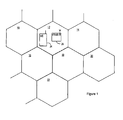
- FIG. 1 illustrates schematically a cellular Communications network operating in accordance with the invention.
- the network coverage area is divided into cells 10, 12, 14, 16, 18, 20, 22, etc.
- a user equipment (UE) 24 is located in the cell 12, and is in communication with a base station (eNote B) 26 in that cell, which is therefore the serving cell for that UE.
- UE user equipment
- eNote B base station
- the UE must make measurements on the signals received from other cells, in order to identify potential neighbour cells.
- LTE Long term evolution
- Figure 2 is a flow chart, illustrating a first method in accordance with the present invention, performed in a radio network node.
- the radio network node determines whether a UE is in idle mode or active mode.
- the radio network node signals one or more relative thresholds to the UE.
- Figure 3 is a flow chart, illustrating a second method in accordance with the present invention, performed in a user equipment.
- step 60 the UE determines a relative threshold for use in the method.
- one or more relative threshold has been signalled to the UE by the radio network node.
- the one or more relative threshold may be a fixed, pre-coded, value that is based on some standard, and therefore does not need to be signalled to the UE.
- step 60 may simply involve retrieving the threshold value from a memory.
- the UE receives a parameter representing the maximum number of neighbour cells on which the UE can perform measurements with normal or high intensity.
- step 64 the UE compares a first, target, cell and a second, reference, cell.
- step 66 the UE determines the downlink measurement activity to be used on the first cell.
- the UE performs downlink measurement on the neighbour cells but that their measurement performance (in terms of measurement period/ sampling/ accuracy etc) is dependent on the relative performance difference between the serving and the target cells.
- a further embodiment of the present invention considers the fact that the serving cell not necessarily is the strongest cell and therefore the measurement performance of the target cell depends on the relative performance difference between the strongest cell and the target cells.
- the present invention implies the advantage that the network is able to keep track of the required number of target cells without degrading the measurement performance of important cells.
- the UE on the other hand is still able to save its battery as much as possible while making full use of DRX. It is thus an advantage of the present invention to maintain a reasonably good cell change or handover performance.
- the measurement activity level is determined by the relative thresholds signalled by the network.
- Relative thresholds can be expressed in terms of, e.g., measurement quantity (e.g. CPICH Ec/No in UTRAN or RSRQ in E-UTRAN), SCH received level, cell identification delay, etc.
- the measurement activity for measurements on a particular cell is determined by the UE after comparing it with the serving cell. Therefore, the network signals at least one relative threshold that can be used by the UE to compare the cells.
- the UE performs measurements on all or a sub-set of cells (serving and neighbour cells). But the measurement activity is dependent on whether the difference of the measured quantity between the serving and target cell is larger or smaller than the relative threshold.
- the relative threshold determines the measurement quantity that should be used by the UE to compare cells. In other words the relative threshold determines the comparison criterion.
- Such thresholds could be expressed, e.g., by help of one or more of the following parameters:
- the threshold can be based on the neighbour level measurements.
- the absolute threshold is also signalled in terms of CPICH Ec/No or CPICH RSCP levels. Therefore, in a conceivable embodiment of the invention it is the UE that judges the cells by measuring their CPICH levels (or RSRP/RSRQ in E-UTRAN) and compares the measurement difference with the relative threshold. According to other embodiments of the present invention this comparison can be done according to one or more of the criteria cited above.
- the above relative thresholds can be single level or multi-level (M).
- the network signals only one threshold per criterion leading to two levels of measurement activity (normal or high and low) whereas in the latter approach the network signals several relative thresholds per criterion, which requires the UE to achieve several measurement activity levels (i.e. M +1 for M threshold).
- the network specifies how often (i.e. periodicity of comparison) the UE has to compare the cells based on the relative thresholds. This can be either a signalled parameter or specified for instance in terms of a number of frames, a number of DRX cycles, or some fixed durations.
- thresholds and other related parameters can be signalled by state-of-the-art methods using radio resource control (RRC) or any appropriate higher layer signalling.
- Thresholds could be signalled via broadcast channel to all UEs or to specific UE via UE specific control channel.
- different threshold values for the same criterion can be used in idle mode and active mode.
- the radio network controller controls the signalling of these thresholds since radio resource control (RRC) functionality resides in the radio network controller whereas in E-UTRAN the thresholds are signalled by the base station (i.e. the eNodeB).
- RRC radio resource control
- the measurement accuracies considerably depend on the number of measurement samples obtained by the UE during the measurement period. Therefore it would still be possible to maintain the same measurement accuracies (as achievable with normal activity) simply by extending the measurement period, provided the UE is able to collect the adequate number of measurement samples. Furthermore the UE could still carry out downlink measurements from the same number of cells that are used in normal operation (e.g. 8). In this way the UE is able to keep track of all the required number of cells except that some weaker cells would be sampled less frequently.
- the UE measurement activity of a particular target cell will be based on the relative performance difference between this target cell and a reference cell. Broadly there are the two possibilities: comparison with serving cell or comparison with the best cell. If the reference cell is the serving cell the UE always compares the target cell with the serving cell using one or more of the criteria outlined above. Based on this comparison the UE will decide whether to measure the target cell with the same intensity or with a lower intensity. This method will ensure that the UE always samples the serving cell with full or high intensity, irrespective whether the serving cell is the strongest one or not. As an example, assume both signal quality (RSRQ in E-UTRAN or CPICH Ec/No in UTRAN) and signal strength (e.g.
- RSRP in E-UTRAN or RSCP in UTRAN are used to determine the measurement activity. Furthermore, consider only single level relative thresholds, i.e. ⁇ and ⁇ for RSRQ (or CPICH Ec/No) and RSRP (or RSCP) respectively. Then the UE will measure the target cell K less frequently (resulting in coarse downlink measurement performance) if one or both of these measured quantity difference between the target and serving cell S falls below the corresponding threshold.
- Q denotes RSRQ in E-UTRAN and CPICH Ec/No in UTRAN
- P denotes RSRP in E-UTRAN and RSCP in UTRAN.
- OPERATOR can in one arrangement for both E-UTRAN and UTRAN be defined as AND and in an alternative arrangement for both E-UTRAN and UTRAN as OR.
- only one of the measurement quantities (Q or P) is used in the above algorithm by the UE to decide the measurement activity level on the target cell.
- the UE always compares the target cell with the best cell, which may not always be the serving cell. As before the UE uses one or more of the criteria outlined above. Based on this comparison the UE will decide whether to measure the target cell with the same intensity or with a lower intensity. As an example, assume both signal quality (RSRQ in E-UTRAN or CPICH Ec/No in UTRAN) and signal strength (e.g. RSRP in E-UTRAN or RSCP in UTRAN) are used to determine the measurement activity. Furthermore, consider only single level relative thresholds, i.e. ⁇ and ⁇ for RSRQ (or CPICH Ec/No) and RSRP (or RSCP) respectively. Then the UE will measure the target cell K less frequently (resulting in coarse downlink measurement performance) if one or any of these measured quantity difference between the target and best cell B falls below the corresponding threshold.
- the downlink measurement activity in a cell can be determined based on the comparison between that cell and a serving cell, or another cell that is better than the serving cell.
Landscapes
- Engineering & Computer Science (AREA)
- Computer Networks & Wireless Communication (AREA)
- Signal Processing (AREA)
- Mobile Radio Communication Systems (AREA)
Claims (25)
- Procédé, dans un noeud de réseau radio, destiné à signaler des seuils de mesure à un équipement utilisateur (24), afin de permettre audit équipement utilisateur de déterminer s'il convient d'effectuer des mesures en liaison descendante sur une cellule cible, caractérisé par l'étape ci-dessous consistant à
signaler (52) audit équipement utilisateur (24) un ou plusieurs seuils relatifs, en vue de permettre à l'équipement utilisateur d'utiliser lesdits seuils relatifs pour comparer une quantité de mesure de ladite cellule cible à celle d'une cellule de référence, afin de déterminer un niveau d'activité de mesures en liaison descendante de ladite cellule cible. - Procédé selon la revendication 1, dans lequel la cellule de référence est une cellule de desserte (12) sur laquelle l'équipement utilisateur (24) est à ce moment positionné ou connecté.
- Procédé selon la revendication 1, dans lequel la cellule de référence est une cellule la plus optimale en termes de qualité de liaison descendante ou de puissance de signalisation d'un signal de référence connu.
- Procédé selon l'une quelconque des revendications 1 à 3, dans lequel les seuils relatifs sont envoyés à l'équipement utilisateur (24) en mode veille.
- Procédé selon l'une quelconque des revendications 1 à 3, dans lequel les seuils relatifs sont envoyés à l'équipement utilisateur (24) en mode actif.
- Procédé selon l'une quelconque des revendications 1 à 5, dans lequel ledit un ou lesdits plusieurs seuils relatifs représentent un seuil multi-niveau.
- Procédé selon la revendication 1, comprenant en outre l'étape consistant à signaler audit équipement utilisateur un paramètre représentant un nombre maximal de cellules voisines, jusqu'auquel l'équipement utilisateur peut mettre en oeuvre des mesures en liaison descendante avec une intensité normale ou élevée.
- Procédé, dans un équipement utilisateur (24), destiné à déterminer s'il convient de mettre en oeuvre des mesures en liaison descendante sur une cellule cible, caractérisé par les étapes ci-dessous consistant à :recevoir (60), à partir d'un réseau radio, un ou plusieurs seuils relatifs correspondant à une différence de performances relative entre la cellule cible et une cellule de référence, etutiliser lesdits seuils relatifs pour comparer (64) une quantité de mesure de la cellule cible à celle de la cellule de référence, en vue de déterminer un niveau d'activité de mesures en liaison descendante de ladite cellule cible.
- Procédé selon la revendication 8, dans lequel la cellule de référence est une cellule de desserte (12) sur laquelle l'équipement utilisateur (24) est à ce moment positionné ou connecté.
- Procédé selon la revendication 8, dans lequel la cellule de référence est une cellule la plus optimale en termes de qualité de liaison descendante ou de puissance de signalisation d'un signal de référence connu.
- Procédé selon l'une quelconque des revendications 8 à 10, dans lequel les seuils relatifs sont reçus par l'équipement utilisateur (24) en mode veille.
- Procédé selon l'une quelconque des revendications 8 à 10, dans lequel les seuils relatifs sont reçus par l'équipement utilisateur (24) en mode actif.
- Procédé selon l'une quelconque des revendications 8 à 12, dans lequel l'équipement utilisateur (24) reçoit ledit un ou lesdits plusieurs seuils relatifs sous la forme d'un seuil multi-niveau.
- Procédé selon l'une quelconque des revendications 8 à 13, dans lequel l'équipement utilisateur (24) réduit le niveau d'activité de mesures en liaison descendante de la cellule cible lorsque la quantité de mesure comparée de la cellule cible est inférieure à celle de la cellule de référence par le seuil relatif.
- Procédé selon l'une quelconque des revendications 8 à 13, dans lequel l'équipement utilisateur (24) revient à un niveau normal d'activité de mesures en liaison descendante de la cellule cible lorsque la quantité de mesure comparée de la cellule cible devient supérieure ou égale à celle de la cellule de référence par le seuil relatif.
- Noeud de réseau radio apte à signaler des seuils de mesure à un équipement utilisateur afin de permettre audit équipement utilisateur de déterminer s'il convient d'effectuer des mesures en liaison descendante sur une cellule cible, comprenant un moyen pour mettre en oeuvre le procédé selon l'une quelconque des revendications 1 à 7.
- Équipement utilisateur (24) apte à recevoir des seuils de mesure en provenance d'un réseau radio, et à les utiliser en vue de déterminer s'il convient de mettre en oeuvre des mesures en liaison descendante sur une cellule cible, comprenant un moyen pour mettre en oeuvre le procédé selon l'une quelconque des revendications 8 à 15.
- Procédé destiné à mettre en oeuvre des mesures en liaison descendante dans un équipement utilisateur d'un système de télécommunication cellulaire, le procédé étant caractérisé par :pour chacune d'une pluralité de cellule cibles du système cellulaire :déterminer une différence de performances relative entre la cellule cible et une cellule de référence ; etdéfinir un niveau d'activité de mesures en liaison descendante pour la cellule cible sur la base de la différence de performances relative entre la cellule cible et la cellule de référence.
- Procédé selon la revendication 18, dans lequel la cellule de référence est une cellule de desserte.
- Procédé selon la revendication 18, dans lequel la cellule de référence est une cellule la plus robuste.
- Procédé selon la revendication 18, dans lequel l'étape consistant à déterminer une différence de performances relative entre la cellule cible et la cellule de référence comporte l'étape consistant à déterminer si la différence de performances est supérieure à une valeur seuil.
- Procédé selon la revendication 21, comprenant en outre l'étape consistant à recevoir ladite valeur seuil au cours d'une signalisation en provenance d'un noeud de réseau du système de communication cellulaire.
- Procédé selon la revendication 21, dans lequel ladite valeur seuil est stockée dans l'équipement utilisateur
- Procédé selon la revendication 18, dans lequel le niveau d'activité de mesures en liaison descendante pour la cellule cible comprend une période de mesure destinée à réaliser des mesures.
- Équipement utilisateur, apte à mettre en oeuvre des mesures en liaison descendante selon le procédé selon l'une quelconque des revendications 18 à 24.
Applications Claiming Priority (2)
| Application Number | Priority Date | Filing Date | Title |
|---|---|---|---|
| SE0701988 | 2007-09-05 | ||
| PCT/EP2008/004019 WO2009030289A1 (fr) | 2007-09-05 | 2008-05-19 | Resélection de cellules basée sur l'utilisation de seuils relatifs dans un système de télécommunication mobile |
Publications (2)
| Publication Number | Publication Date |
|---|---|
| EP2183929A1 EP2183929A1 (fr) | 2010-05-12 |
| EP2183929B1 true EP2183929B1 (fr) | 2011-07-06 |
Family
ID=39820941
Family Applications (1)
| Application Number | Title | Priority Date | Filing Date |
|---|---|---|---|
| EP08758630A Active EP2183929B1 (fr) | 2007-09-05 | 2008-05-19 | Resélection de cellules basée sur l'utilisation de seuils relatifs dans un système de télécommunication mobile |
Country Status (6)
| Country | Link |
|---|---|
| US (2) | US8953554B2 (fr) |
| EP (1) | EP2183929B1 (fr) |
| JP (1) | JP5135438B2 (fr) |
| AT (1) | ATE515908T1 (fr) |
| RU (1) | RU2010112869A (fr) |
| WO (1) | WO2009030289A1 (fr) |
Families Citing this family (34)
| Publication number | Priority date | Publication date | Assignee | Title |
|---|---|---|---|---|
| JP5135438B2 (ja) * | 2007-09-05 | 2013-02-06 | テレフオンアクチーボラゲット エル エム エリクソン(パブル) | 移動電気通信システムにおける相対閾値の使用に基づくセル再選択 |
| US8731548B2 (en) | 2007-10-08 | 2014-05-20 | Telefonaktiebolaget L M Ericsson (Publ) | Method and arrangement for event triggered adaptive cell detection activity level in discontinuous reception |
| CN101841767A (zh) * | 2009-03-16 | 2010-09-22 | 中兴通讯股份有限公司 | 一种发送多媒体广播和组播业务的权衡决策方法及系统 |
| US8385833B2 (en) | 2009-04-30 | 2013-02-26 | Telefonaktiebolaget L M Ericsson (Publ) | Adaptive idle mode measurement methods and apparatus |
| US20110105119A1 (en) * | 2009-11-02 | 2011-05-05 | Infineon Technologies Ag | Radio base stations, radio communication devices, methods for controlling a radio base station, and methods for controlling a radio communication device |
| US9301180B2 (en) | 2010-02-12 | 2016-03-29 | Blackberry Limited | Methods and apparatus to perform measurements |
| BR112012020272B1 (pt) * | 2010-02-12 | 2021-09-08 | Nokia Technologies Oy | Método e aparelho para relatório de dados de medição |
| US9220028B2 (en) | 2010-02-12 | 2015-12-22 | Blackberry Limited | Methods and apparatus to perform measurements |
| US8873440B2 (en) * | 2010-03-29 | 2014-10-28 | Qualcomm Incorporated | Maintaining different virtual active sets for different cell types |
| US8688119B2 (en) | 2010-04-30 | 2014-04-01 | Telefonaktiebolaget Lm Ericsson (Publ) | Method, apparatus and system for mobility enhancement in DRX |
| US8553563B2 (en) * | 2010-08-13 | 2013-10-08 | Blackberry Limited | Methods and apparatus to limit reporting of neighbor cell measurements |
| CN102036295B (zh) * | 2010-12-02 | 2014-04-16 | 大唐移动通信设备有限公司 | 一种确定上下行配置的方法、系统和设备 |
| GB2489413B (en) * | 2011-03-25 | 2016-08-03 | Broadcom Corp | Discontinuous reception with user equipment based mobility |
| US9036521B2 (en) * | 2011-03-31 | 2015-05-19 | Broadcom Corporation | Reducing battery power consumption during discontinuous reception and transmission |
| ES2425638B1 (es) | 2011-05-26 | 2014-06-30 | Telefónica, S.A. | Método para la reselección de células y el traspaso entre células en un sistema de comunicación inalámbrica |
| CN103220704B (zh) | 2012-01-21 | 2019-02-26 | 华为技术有限公司 | 无线通信系统中测量增强的方法和装置 |
| EP2810481B1 (fr) * | 2012-01-30 | 2017-06-28 | Nokia Solutions and Networks Oy | Amélioration de la mobilité au moyen d'un nombre plus élevé de mesures de la mobilité durant une période de temps |
| WO2013144433A1 (fr) | 2012-03-26 | 2013-10-03 | Nokia Corporation | Adaptation de paramètres de mobilité sur la base d'une mesure de la disponibilité de l'équipement d'utilisateur |
| CN103391571B (zh) * | 2012-05-09 | 2018-12-04 | 北京三星通信技术研究有限公司 | 一种异频邻小区的测量方法及用户设备 |
| WO2014115734A1 (fr) * | 2013-01-28 | 2014-07-31 | シャープ株式会社 | Système de radiocommunication, dispositif terminal, dispositif de station de base et procédé de communication radio, et circuit intégré |
| US9986473B2 (en) * | 2013-05-07 | 2018-05-29 | Qualcomm Incorporated | User equipment panic state(s) under connected mode discontinuous reception state in long term evolution |
| WO2015065284A1 (fr) * | 2013-11-04 | 2015-05-07 | Telefonaktiebolaget L M Ericsson (Publ) | Surveillance de cellule pour resélection de cellule |
| WO2015102635A1 (fr) * | 2014-01-02 | 2015-07-09 | Intel Corporation | Estimation de couverture de réseaux cellulaires sans fil améliorée par des mesures d'équipements utilisateur (ue) en mode veille |
| US10015677B2 (en) | 2014-01-02 | 2018-07-03 | Intel Corporation | Coverage estimation of wireless cellular networks by user equipment (UE) idle mode measurements |
| US9967791B2 (en) * | 2014-01-31 | 2018-05-08 | Telefonaktiebolaget L M Ericsson (Publ) | Methods and devices for conditional attachment to a network |
| EP3105967B1 (fr) * | 2014-02-11 | 2019-11-27 | Telefonaktiebolaget LM Ericsson (publ) | Changement de cellule basé sur une configuration de liaison montante |
| KR102278510B1 (ko) * | 2014-03-26 | 2021-07-16 | 삼성전자주식회사 | 무선 네트워크에서의 음성 서비스 장치 및 방법 |
| WO2017104553A1 (fr) * | 2015-12-14 | 2017-06-22 | 日本電気株式会社 | Terminal et procédé de transition |
| WO2020253962A1 (fr) * | 2019-06-20 | 2020-12-24 | Nokia Technologies Oy | Réalisation de mesures de canal radio |
| CN114557040B (zh) * | 2019-10-16 | 2024-09-13 | 株式会社Ntt都科摩 | 终端 |
| CN114173385B (zh) * | 2020-09-10 | 2023-06-02 | 华为技术有限公司 | 一种小区测量方法、装置及系统 |
| WO2022155951A1 (fr) * | 2021-01-25 | 2022-07-28 | Qualcomm Incorporated | Réglage de programme de mesure |
| US12149996B2 (en) | 2022-01-14 | 2024-11-19 | Qualcomm Incorporated | Dynamic idle mode search and measurement scheduling based on reference signal measurement |
| US12323839B2 (en) * | 2022-08-31 | 2025-06-03 | Dish Wireless L.L.C. | Dynamic switching between uplink waveforms in a 5th generation (5G) radio access network |
Family Cites Families (19)
| Publication number | Priority date | Publication date | Assignee | Title |
|---|---|---|---|---|
| FI102649B1 (fi) * | 1995-10-13 | 1999-01-15 | Nokia Telecommunications Oy | Solukkoradioverkon kapasiteetin kasvattaminen |
| FI106285B (fi) * | 1998-02-17 | 2000-12-29 | Nokia Networks Oy | Mittausraportointi tietoliikennejärjestelmässä |
| US6895245B2 (en) * | 1998-03-06 | 2005-05-17 | Telefonaktiebolaget Lm Ericssion(Publ) | Telecommunications interexchange measurement transfer |
| GB2337414A (en) * | 1998-05-14 | 1999-11-17 | Fujitsu Ltd | Soft handoff in cellular communications networks |
| US6445917B1 (en) * | 1999-05-19 | 2002-09-03 | Telefonaktiebolaget Lm Ericsson (Publ) | Mobile station measurements with event-based reporting |
| US6249678B1 (en) * | 1999-09-03 | 2001-06-19 | Motorola, Inc. | Communication unit and method for performing neighbor site measurements in a communication system |
| JP3276619B2 (ja) * | 1999-10-27 | 2002-04-22 | 松下電器産業株式会社 | 移動体通信端末装置およびハンドオーバ制御方法 |
| US6745034B2 (en) * | 2000-12-22 | 2004-06-01 | Nokia Corporation | Apparatus, and associated method, for adaptively selecting a handoff threshold in a radio communication system |
| US7257421B2 (en) * | 2003-11-13 | 2007-08-14 | Motorola, Inc. | Method and apparatus for controlling a cell reselection mode |
| US7142861B2 (en) * | 2003-12-12 | 2006-11-28 | Telefonaktiebolaget Lm Ericsson (Publ) | Mobile communications in a hierarchical cell structure |
| US7693521B1 (en) * | 2004-08-04 | 2010-04-06 | Sprint Spectrum L.P. | Method and system for mobile station handoff |
| US8086241B2 (en) * | 2004-11-18 | 2011-12-27 | Mediatek Incorporation | Handoff methods, and devices utilizing same |
| US7430420B2 (en) * | 2004-12-23 | 2008-09-30 | Lucent Technologies Inc. | Cell selection and inter-frequency handover |
| US20060183471A1 (en) * | 2005-02-17 | 2006-08-17 | Isaac Samuel | Method for predicting air interface capacity based on performance measurements |
| EP1734779A2 (fr) * | 2005-06-14 | 2006-12-20 | Samsung Electronics Co.,Ltd. | Procédé d'exécution de transfert dans un système de communication mobile |
| US20090252113A1 (en) * | 2005-11-21 | 2009-10-08 | Mitsubishi Electric Corporation | Radio Communication System, Base Station, Mobile Device, and Handover Control Server |
| KR101482255B1 (ko) | 2007-06-18 | 2015-01-13 | 삼성전자주식회사 | 이동통신 시스템에서 인접 셀들에 대한 메저먼트 방법 및장치 |
| JP5135438B2 (ja) * | 2007-09-05 | 2013-02-06 | テレフオンアクチーボラゲット エル エム エリクソン(パブル) | 移動電気通信システムにおける相対閾値の使用に基づくセル再選択 |
| US20120201149A1 (en) * | 2011-02-07 | 2012-08-09 | Telefonaktiebolaget L M Ericsson (Publ) | Mitigation of Interfering Sounding Reference Signals in Radiocommunication Systems |
-
2008
- 2008-05-19 JP JP2010523287A patent/JP5135438B2/ja active Active
- 2008-05-19 EP EP08758630A patent/EP2183929B1/fr active Active
- 2008-05-19 RU RU2010112869/07A patent/RU2010112869A/ru not_active Application Discontinuation
- 2008-05-19 US US12/676,499 patent/US8953554B2/en active Active
- 2008-05-19 AT AT08758630T patent/ATE515908T1/de not_active IP Right Cessation
- 2008-05-19 WO PCT/EP2008/004019 patent/WO2009030289A1/fr not_active Ceased
-
2015
- 2015-02-09 US US14/616,970 patent/US9301226B2/en active Active
Also Published As
| Publication number | Publication date |
|---|---|
| JP2010538555A (ja) | 2010-12-09 |
| US9301226B2 (en) | 2016-03-29 |
| RU2010112869A (ru) | 2011-10-10 |
| US8953554B2 (en) | 2015-02-10 |
| JP5135438B2 (ja) | 2013-02-06 |
| WO2009030289A1 (fr) | 2009-03-12 |
| EP2183929A1 (fr) | 2010-05-12 |
| US20150156689A1 (en) | 2015-06-04 |
| ATE515908T1 (de) | 2011-07-15 |
| US20100208604A1 (en) | 2010-08-19 |
Similar Documents
| Publication | Publication Date | Title |
|---|---|---|
| EP2183929B1 (fr) | Resélection de cellules basée sur l'utilisation de seuils relatifs dans un système de télécommunication mobile | |
| EP2198635B1 (fr) | Procédé et agencement pour un niveau d'activité de détection de cellule adaptative déclenché par événement dans une réception discontinue | |
| US9326168B2 (en) | Performing inter-frequency measurements in a mobile network | |
| US8942205B2 (en) | Performing idle mode mobility measurements in a mobile communication network | |
| US20140036874A1 (en) | Inter-frequency/inter-rat cell reselection method and apparatus of ue in lte mobile communication system | |
| US9357451B2 (en) | Measurements in a communication network | |
| EP2621222B1 (fr) | Réalisation de mesures de mobilité en mode repos dans un réseau de communication mobile | |
| EP2695446B1 (fr) | Resélection rapide entre des réseaux utilisant des technologies d'accès radio différentes | |
| US10716040B2 (en) | Wireless device and method for triggering cell reselection | |
| EP2741543B1 (fr) | Mesures dans un réseau de communication | |
| EP3657856B1 (fr) | Terminal de communication mobile et procédé pour effectuer des mesures de cellules radio | |
| CN119031428A (zh) | 小区切换方法、装置、终端设备和计算机可读存储介质 |
Legal Events
| Date | Code | Title | Description |
|---|---|---|---|
| PUAI | Public reference made under article 153(3) epc to a published international application that has entered the european phase |
Free format text: ORIGINAL CODE: 0009012 |
|
| 17P | Request for examination filed |
Effective date: 20100218 |
|
| AK | Designated contracting states |
Kind code of ref document: A1 Designated state(s): AT BE BG CH CY CZ DE DK EE ES FI FR GB GR HR HU IE IS IT LI LT LU LV MC MT NL NO PL PT RO SE SI SK TR |
|
| AX | Request for extension of the european patent |
Extension state: AL BA MK RS |
|
| DAX | Request for extension of the european patent (deleted) | ||
| GRAP | Despatch of communication of intention to grant a patent |
Free format text: ORIGINAL CODE: EPIDOSNIGR1 |
|
| RIC1 | Information provided on ipc code assigned before grant |
Ipc: H04W 36/24 20090101AFI20101130BHEP |
|
| GRAS | Grant fee paid |
Free format text: ORIGINAL CODE: EPIDOSNIGR3 |
|
| GRAA | (expected) grant |
Free format text: ORIGINAL CODE: 0009210 |
|
| AK | Designated contracting states |
Kind code of ref document: B1 Designated state(s): AT BE BG CH CY CZ DE DK EE ES FI FR GB GR HR HU IE IS IT LI LT LU LV MC MT NL NO PL PT RO SE SI SK TR |
|
| REG | Reference to a national code |
Ref country code: GB Ref legal event code: FG4D |
|
| REG | Reference to a national code |
Ref country code: CH Ref legal event code: EP |
|
| REG | Reference to a national code |
Ref country code: IE Ref legal event code: FG4D |
|
| REG | Reference to a national code |
Ref country code: DE Ref legal event code: R096 Ref document number: 602008008109 Country of ref document: DE Effective date: 20110825 |
|
| REG | Reference to a national code |
Ref country code: NL Ref legal event code: VDEP Effective date: 20110706 |
|
| PG25 | Lapsed in a contracting state [announced via postgrant information from national office to epo] |
Ref country code: SI Free format text: LAPSE BECAUSE OF FAILURE TO SUBMIT A TRANSLATION OF THE DESCRIPTION OR TO PAY THE FEE WITHIN THE PRESCRIBED TIME-LIMIT Effective date: 20110706 |
|
| REG | Reference to a national code |
Ref country code: AT Ref legal event code: MK05 Ref document number: 515908 Country of ref document: AT Kind code of ref document: T Effective date: 20110706 |
|
| PG25 | Lapsed in a contracting state [announced via postgrant information from national office to epo] |
Ref country code: FI Free format text: LAPSE BECAUSE OF FAILURE TO SUBMIT A TRANSLATION OF THE DESCRIPTION OR TO PAY THE FEE WITHIN THE PRESCRIBED TIME-LIMIT Effective date: 20110706 Ref country code: HR Free format text: LAPSE BECAUSE OF FAILURE TO SUBMIT A TRANSLATION OF THE DESCRIPTION OR TO PAY THE FEE WITHIN THE PRESCRIBED TIME-LIMIT Effective date: 20110706 Ref country code: PT Free format text: LAPSE BECAUSE OF FAILURE TO SUBMIT A TRANSLATION OF THE DESCRIPTION OR TO PAY THE FEE WITHIN THE PRESCRIBED TIME-LIMIT Effective date: 20111107 Ref country code: NL Free format text: LAPSE BECAUSE OF FAILURE TO SUBMIT A TRANSLATION OF THE DESCRIPTION OR TO PAY THE FEE WITHIN THE PRESCRIBED TIME-LIMIT Effective date: 20110706 Ref country code: NO Free format text: LAPSE BECAUSE OF FAILURE TO SUBMIT A TRANSLATION OF THE DESCRIPTION OR TO PAY THE FEE WITHIN THE PRESCRIBED TIME-LIMIT Effective date: 20111006 Ref country code: BE Free format text: LAPSE BECAUSE OF FAILURE TO SUBMIT A TRANSLATION OF THE DESCRIPTION OR TO PAY THE FEE WITHIN THE PRESCRIBED TIME-LIMIT Effective date: 20110706 Ref country code: IS Free format text: LAPSE BECAUSE OF FAILURE TO SUBMIT A TRANSLATION OF THE DESCRIPTION OR TO PAY THE FEE WITHIN THE PRESCRIBED TIME-LIMIT Effective date: 20111106 Ref country code: SE Free format text: LAPSE BECAUSE OF FAILURE TO SUBMIT A TRANSLATION OF THE DESCRIPTION OR TO PAY THE FEE WITHIN THE PRESCRIBED TIME-LIMIT Effective date: 20110706 Ref country code: LT Free format text: LAPSE BECAUSE OF FAILURE TO SUBMIT A TRANSLATION OF THE DESCRIPTION OR TO PAY THE FEE WITHIN THE PRESCRIBED TIME-LIMIT Effective date: 20110706 |
|
| PG25 | Lapsed in a contracting state [announced via postgrant information from national office to epo] |
Ref country code: AT Free format text: LAPSE BECAUSE OF FAILURE TO SUBMIT A TRANSLATION OF THE DESCRIPTION OR TO PAY THE FEE WITHIN THE PRESCRIBED TIME-LIMIT Effective date: 20110706 Ref country code: GR Free format text: LAPSE BECAUSE OF FAILURE TO SUBMIT A TRANSLATION OF THE DESCRIPTION OR TO PAY THE FEE WITHIN THE PRESCRIBED TIME-LIMIT Effective date: 20111007 Ref country code: PL Free format text: LAPSE BECAUSE OF FAILURE TO SUBMIT A TRANSLATION OF THE DESCRIPTION OR TO PAY THE FEE WITHIN THE PRESCRIBED TIME-LIMIT Effective date: 20110706 Ref country code: CY Free format text: LAPSE BECAUSE OF FAILURE TO SUBMIT A TRANSLATION OF THE DESCRIPTION OR TO PAY THE FEE WITHIN THE PRESCRIBED TIME-LIMIT Effective date: 20110706 Ref country code: LV Free format text: LAPSE BECAUSE OF FAILURE TO SUBMIT A TRANSLATION OF THE DESCRIPTION OR TO PAY THE FEE WITHIN THE PRESCRIBED TIME-LIMIT Effective date: 20110706 |
|
| PG25 | Lapsed in a contracting state [announced via postgrant information from national office to epo] |
Ref country code: CZ Free format text: LAPSE BECAUSE OF FAILURE TO SUBMIT A TRANSLATION OF THE DESCRIPTION OR TO PAY THE FEE WITHIN THE PRESCRIBED TIME-LIMIT Effective date: 20110706 Ref country code: SK Free format text: LAPSE BECAUSE OF FAILURE TO SUBMIT A TRANSLATION OF THE DESCRIPTION OR TO PAY THE FEE WITHIN THE PRESCRIBED TIME-LIMIT Effective date: 20110706 |
|
| PLBE | No opposition filed within time limit |
Free format text: ORIGINAL CODE: 0009261 |
|
| STAA | Information on the status of an ep patent application or granted ep patent |
Free format text: STATUS: NO OPPOSITION FILED WITHIN TIME LIMIT |
|
| PG25 | Lapsed in a contracting state [announced via postgrant information from national office to epo] |
Ref country code: EE Free format text: LAPSE BECAUSE OF FAILURE TO SUBMIT A TRANSLATION OF THE DESCRIPTION OR TO PAY THE FEE WITHIN THE PRESCRIBED TIME-LIMIT Effective date: 20110706 Ref country code: RO Free format text: LAPSE BECAUSE OF FAILURE TO SUBMIT A TRANSLATION OF THE DESCRIPTION OR TO PAY THE FEE WITHIN THE PRESCRIBED TIME-LIMIT Effective date: 20110706 |
|
| 26N | No opposition filed |
Effective date: 20120411 |
|
| PG25 | Lapsed in a contracting state [announced via postgrant information from national office to epo] |
Ref country code: DK Free format text: LAPSE BECAUSE OF FAILURE TO SUBMIT A TRANSLATION OF THE DESCRIPTION OR TO PAY THE FEE WITHIN THE PRESCRIBED TIME-LIMIT Effective date: 20110706 |
|
| REG | Reference to a national code |
Ref country code: DE Ref legal event code: R097 Ref document number: 602008008109 Country of ref document: DE Effective date: 20120411 |
|
| PG25 | Lapsed in a contracting state [announced via postgrant information from national office to epo] |
Ref country code: MC Free format text: LAPSE BECAUSE OF NON-PAYMENT OF DUE FEES Effective date: 20120531 |
|
| REG | Reference to a national code |
Ref country code: CH Ref legal event code: PL |
|
| PG25 | Lapsed in a contracting state [announced via postgrant information from national office to epo] |
Ref country code: CH Free format text: LAPSE BECAUSE OF NON-PAYMENT OF DUE FEES Effective date: 20120531 Ref country code: LI Free format text: LAPSE BECAUSE OF NON-PAYMENT OF DUE FEES Effective date: 20120531 |
|
| REG | Reference to a national code |
Ref country code: IE Ref legal event code: MM4A |
|
| REG | Reference to a national code |
Ref country code: FR Ref legal event code: ST Effective date: 20130131 |
|
| PG25 | Lapsed in a contracting state [announced via postgrant information from national office to epo] |
Ref country code: FR Free format text: LAPSE BECAUSE OF NON-PAYMENT OF DUE FEES Effective date: 20120531 Ref country code: IE Free format text: LAPSE BECAUSE OF NON-PAYMENT OF DUE FEES Effective date: 20120519 Ref country code: ES Free format text: LAPSE BECAUSE OF FAILURE TO SUBMIT A TRANSLATION OF THE DESCRIPTION OR TO PAY THE FEE WITHIN THE PRESCRIBED TIME-LIMIT Effective date: 20111017 |
|
| PG25 | Lapsed in a contracting state [announced via postgrant information from national office to epo] |
Ref country code: BG Free format text: LAPSE BECAUSE OF FAILURE TO SUBMIT A TRANSLATION OF THE DESCRIPTION OR TO PAY THE FEE WITHIN THE PRESCRIBED TIME-LIMIT Effective date: 20111006 |
|
| PG25 | Lapsed in a contracting state [announced via postgrant information from national office to epo] |
Ref country code: MT Free format text: LAPSE BECAUSE OF FAILURE TO SUBMIT A TRANSLATION OF THE DESCRIPTION OR TO PAY THE FEE WITHIN THE PRESCRIBED TIME-LIMIT Effective date: 20110706 |
|
| PG25 | Lapsed in a contracting state [announced via postgrant information from national office to epo] |
Ref country code: TR Free format text: LAPSE BECAUSE OF FAILURE TO SUBMIT A TRANSLATION OF THE DESCRIPTION OR TO PAY THE FEE WITHIN THE PRESCRIBED TIME-LIMIT Effective date: 20110706 |
|
| PG25 | Lapsed in a contracting state [announced via postgrant information from national office to epo] |
Ref country code: LU Free format text: LAPSE BECAUSE OF NON-PAYMENT OF DUE FEES Effective date: 20120519 |
|
| PG25 | Lapsed in a contracting state [announced via postgrant information from national office to epo] |
Ref country code: HU Free format text: LAPSE BECAUSE OF FAILURE TO SUBMIT A TRANSLATION OF THE DESCRIPTION OR TO PAY THE FEE WITHIN THE PRESCRIBED TIME-LIMIT Effective date: 20080519 |
|
| REG | Reference to a national code |
Ref country code: DE Ref legal event code: R082 Ref document number: 602008008109 Country of ref document: DE Representative=s name: HOFFMANN - EITLE, DE Effective date: 20140430 Ref country code: DE Ref legal event code: R081 Ref document number: 602008008109 Country of ref document: DE Owner name: OPTIS WIRELESS TECHNOLOGY, LLC, PLANO, US Free format text: FORMER OWNER: TELEFONAKTIEBOLAGET LM ERICSSON (PUBL), STOCKHOLM, SE Effective date: 20140618 Ref country code: DE Ref legal event code: R082 Ref document number: 602008008109 Country of ref document: DE Representative=s name: HOFFMANN - EITLE, DE Effective date: 20140618 Ref country code: DE Ref legal event code: R082 Ref document number: 602008008109 Country of ref document: DE Representative=s name: GRUENECKER, KINKELDEY, STOCKMAIR & SCHWANHAEUS, DE Effective date: 20140618 Ref country code: DE Ref legal event code: R082 Ref document number: 602008008109 Country of ref document: DE Representative=s name: GRUENECKER, KINKELDEY, STOCKMAIR & SCHWANHAEUS, DE Effective date: 20140430 Ref country code: DE Ref legal event code: R082 Ref document number: 602008008109 Country of ref document: DE Representative=s name: GRUENECKER PATENT- UND RECHTSANWAELTE PARTG MB, DE Effective date: 20140618 Ref country code: DE Ref legal event code: R082 Ref document number: 602008008109 Country of ref document: DE Representative=s name: GRUENECKER PATENT- UND RECHTSANWAELTE PARTG MB, DE Effective date: 20140430 |
|
| REG | Reference to a national code |
Ref country code: DE Ref legal event code: R082 Ref document number: 602008008109 Country of ref document: DE Representative=s name: GRUENECKER, KINKELDEY, STOCKMAIR & SCHWANHAEUS, DE Ref country code: DE Ref legal event code: R082 Ref document number: 602008008109 Country of ref document: DE Representative=s name: GRUENECKER PATENT- UND RECHTSANWAELTE PARTG MB, DE |
|
| REG | Reference to a national code |
Ref country code: DE Ref legal event code: R082 Ref document number: 602008008109 Country of ref document: DE Representative=s name: GRUENECKER, KINKELDEY, STOCKMAIR & SCHWANHAEUS, DE Ref country code: DE Ref legal event code: R082 Ref document number: 602008008109 Country of ref document: DE Representative=s name: GRUENECKER PATENT- UND RECHTSANWAELTE PARTG MB, DE |
|
| REG | Reference to a national code |
Ref country code: GB Ref legal event code: 732E Free format text: REGISTERED BETWEEN 20150528 AND 20150603 |
|
| P01 | Opt-out of the competence of the unified patent court (upc) registered |
Effective date: 20230523 |
|
| PGFP | Annual fee paid to national office [announced via postgrant information from national office to epo] |
Ref country code: DE Payment date: 20250528 Year of fee payment: 18 |
|
| PGFP | Annual fee paid to national office [announced via postgrant information from national office to epo] |
Ref country code: GB Payment date: 20250520 Year of fee payment: 18 |
|
| PGFP | Annual fee paid to national office [announced via postgrant information from national office to epo] |
Ref country code: IT Payment date: 20250522 Year of fee payment: 18 |