EP2184739A2 - Procédé de contrôle de copie - Google Patents
Procédé de contrôle de copie Download PDFInfo
- Publication number
- EP2184739A2 EP2184739A2 EP09251103A EP09251103A EP2184739A2 EP 2184739 A2 EP2184739 A2 EP 2184739A2 EP 09251103 A EP09251103 A EP 09251103A EP 09251103 A EP09251103 A EP 09251103A EP 2184739 A2 EP2184739 A2 EP 2184739A2
- Authority
- EP
- European Patent Office
- Prior art keywords
- recording medium
- copy
- information
- digital content
- copy control
- Prior art date
- Legal status (The legal status is an assumption and is not a legal conclusion. Google has not performed a legal analysis and makes no representation as to the accuracy of the status listed.)
- Withdrawn
Links
Images







Classifications
-
- H—ELECTRICITY
- H04—ELECTRIC COMMUNICATION TECHNIQUE
- H04N—PICTORIAL COMMUNICATION, e.g. TELEVISION
- H04N5/00—Details of television systems
- H04N5/76—Television signal recording
- H04N5/91—Television signal processing therefor
- H04N5/913—Television signal processing therefor for scrambling ; for copy protection
-
- G—PHYSICS
- G11—INFORMATION STORAGE
- G11B—INFORMATION STORAGE BASED ON RELATIVE MOVEMENT BETWEEN RECORD CARRIER AND TRANSDUCER
- G11B20/00—Signal processing not specific to the method of recording or reproducing; Circuits therefor
- G11B20/00086—Circuits for prevention of unauthorised reproduction or copying, e.g. piracy
-
- G—PHYSICS
- G11—INFORMATION STORAGE
- G11B—INFORMATION STORAGE BASED ON RELATIVE MOVEMENT BETWEEN RECORD CARRIER AND TRANSDUCER
- G11B20/00—Signal processing not specific to the method of recording or reproducing; Circuits therefor
- G11B20/00086—Circuits for prevention of unauthorised reproduction or copying, e.g. piracy
- G11B20/00681—Circuits for prevention of unauthorised reproduction or copying, e.g. piracy involving measures which prevent a specific kind of data access
- G11B20/00688—Circuits for prevention of unauthorised reproduction or copying, e.g. piracy involving measures which prevent a specific kind of data access said measures preventing that a usable copy of recorded data can be made on another medium
-
- G—PHYSICS
- G11—INFORMATION STORAGE
- G11B—INFORMATION STORAGE BASED ON RELATIVE MOVEMENT BETWEEN RECORD CARRIER AND TRANSDUCER
- G11B20/00—Signal processing not specific to the method of recording or reproducing; Circuits therefor
- G11B20/00086—Circuits for prevention of unauthorised reproduction or copying, e.g. piracy
- G11B20/00731—Circuits for prevention of unauthorised reproduction or copying, e.g. piracy involving a digital rights management system for enforcing a usage restriction
- G11B20/00746—Circuits for prevention of unauthorised reproduction or copying, e.g. piracy involving a digital rights management system for enforcing a usage restriction wherein the usage restriction can be expressed as a specific number
-
- G—PHYSICS
- G11—INFORMATION STORAGE
- G11B—INFORMATION STORAGE BASED ON RELATIVE MOVEMENT BETWEEN RECORD CARRIER AND TRANSDUCER
- G11B20/00—Signal processing not specific to the method of recording or reproducing; Circuits therefor
- G11B20/00086—Circuits for prevention of unauthorised reproduction or copying, e.g. piracy
- G11B20/00731—Circuits for prevention of unauthorised reproduction or copying, e.g. piracy involving a digital rights management system for enforcing a usage restriction
- G11B20/00746—Circuits for prevention of unauthorised reproduction or copying, e.g. piracy involving a digital rights management system for enforcing a usage restriction wherein the usage restriction can be expressed as a specific number
- G11B20/00753—Circuits for prevention of unauthorised reproduction or copying, e.g. piracy involving a digital rights management system for enforcing a usage restriction wherein the usage restriction can be expressed as a specific number wherein the usage restriction limits the number of copies that can be made, e.g. CGMS, SCMS, or CCI flags
-
- G—PHYSICS
- G11—INFORMATION STORAGE
- G11B—INFORMATION STORAGE BASED ON RELATIVE MOVEMENT BETWEEN RECORD CARRIER AND TRANSDUCER
- G11B20/00—Signal processing not specific to the method of recording or reproducing; Circuits therefor
- G11B20/00086—Circuits for prevention of unauthorised reproduction or copying, e.g. piracy
- G11B20/00731—Circuits for prevention of unauthorised reproduction or copying, e.g. piracy involving a digital rights management system for enforcing a usage restriction
- G11B20/00746—Circuits for prevention of unauthorised reproduction or copying, e.g. piracy involving a digital rights management system for enforcing a usage restriction wherein the usage restriction can be expressed as a specific number
- G11B20/00753—Circuits for prevention of unauthorised reproduction or copying, e.g. piracy involving a digital rights management system for enforcing a usage restriction wherein the usage restriction can be expressed as a specific number wherein the usage restriction limits the number of copies that can be made, e.g. CGMS, SCMS, or CCI flags
- G11B20/00768—Circuits for prevention of unauthorised reproduction or copying, e.g. piracy involving a digital rights management system for enforcing a usage restriction wherein the usage restriction can be expressed as a specific number wherein the usage restriction limits the number of copies that can be made, e.g. CGMS, SCMS, or CCI flags wherein copy control information is used, e.g. for indicating whether a content may be copied freely, no more, once, or never, by setting CGMS, SCMS, or CCI flags
-
- G—PHYSICS
- G11—INFORMATION STORAGE
- G11B—INFORMATION STORAGE BASED ON RELATIVE MOVEMENT BETWEEN RECORD CARRIER AND TRANSDUCER
- G11B20/00—Signal processing not specific to the method of recording or reproducing; Circuits therefor
- G11B20/10—Digital recording or reproducing
-
- H—ELECTRICITY
- H04—ELECTRIC COMMUNICATION TECHNIQUE
- H04N—PICTORIAL COMMUNICATION, e.g. TELEVISION
- H04N21/00—Selective content distribution, e.g. interactive television or video on demand [VOD]
- H04N21/20—Servers specifically adapted for the distribution of content, e.g. VOD servers; Operations thereof
- H04N21/25—Management operations performed by the server for facilitating the content distribution or administrating data related to end-users or client devices, e.g. end-user or client device authentication, learning user preferences for recommending movies
- H04N21/254—Management at additional data server, e.g. shopping server, rights management server
- H04N21/2541—Rights Management
-
- H—ELECTRICITY
- H04—ELECTRIC COMMUNICATION TECHNIQUE
- H04N—PICTORIAL COMMUNICATION, e.g. TELEVISION
- H04N21/00—Selective content distribution, e.g. interactive television or video on demand [VOD]
- H04N21/40—Client devices specifically adapted for the reception of or interaction with content, e.g. set-top-box [STB]; Operations thereof
- H04N21/43—Processing of content or additional data, e.g. demultiplexing additional data from a digital video stream; Elementary client operations, e.g. monitoring of home network or synchronising decoder's clock; Client middleware
- H04N21/433—Content storage operation, e.g. storage operation in response to a pause request, caching operations
- H04N21/4334—Recording operations
-
- H—ELECTRICITY
- H04—ELECTRIC COMMUNICATION TECHNIQUE
- H04N—PICTORIAL COMMUNICATION, e.g. TELEVISION
- H04N21/00—Selective content distribution, e.g. interactive television or video on demand [VOD]
- H04N21/40—Client devices specifically adapted for the reception of or interaction with content, e.g. set-top-box [STB]; Operations thereof
- H04N21/45—Management operations performed by the client for facilitating the reception of or the interaction with the content or administrating data related to the end-user or to the client device itself, e.g. learning user preferences for recommending movies, resolving scheduling conflicts
- H04N21/462—Content or additional data management e.g. creating a master electronic programme guide from data received from the Internet and a Head-end or controlling the complexity of a video stream by scaling the resolution or bit-rate based on the client capabilities
- H04N21/4627—Rights management associated to the content
-
- H—ELECTRICITY
- H04—ELECTRIC COMMUNICATION TECHNIQUE
- H04N—PICTORIAL COMMUNICATION, e.g. TELEVISION
- H04N21/00—Selective content distribution, e.g. interactive television or video on demand [VOD]
- H04N21/80—Generation or processing of content or additional data by content creator independently of the distribution process; Content per se
- H04N21/83—Generation or processing of protective or descriptive data associated with content; Content structuring
- H04N21/835—Generation of protective data, e.g. certificates
-
- H—ELECTRICITY
- H04—ELECTRIC COMMUNICATION TECHNIQUE
- H04N—PICTORIAL COMMUNICATION, e.g. TELEVISION
- H04N21/00—Selective content distribution, e.g. interactive television or video on demand [VOD]
- H04N21/80—Generation or processing of content or additional data by content creator independently of the distribution process; Content per se
- H04N21/83—Generation or processing of protective or descriptive data associated with content; Content structuring
- H04N21/835—Generation of protective data, e.g. certificates
- H04N21/8355—Generation of protective data, e.g. certificates involving usage data, e.g. number of copies or viewings allowed
-
- H—ELECTRICITY
- H04—ELECTRIC COMMUNICATION TECHNIQUE
- H04N—PICTORIAL COMMUNICATION, e.g. TELEVISION
- H04N5/00—Details of television systems
- H04N5/76—Television signal recording
- H04N5/91—Television signal processing therefor
- H04N5/913—Television signal processing therefor for scrambling ; for copy protection
- H04N2005/91307—Television signal processing therefor for scrambling ; for copy protection by adding a copy protection signal to the video signal
- H04N2005/91328—Television signal processing therefor for scrambling ; for copy protection by adding a copy protection signal to the video signal the copy protection signal being a copy management signal, e.g. a copy generation management signal [CGMS]
-
- H—ELECTRICITY
- H04—ELECTRIC COMMUNICATION TECHNIQUE
- H04N—PICTORIAL COMMUNICATION, e.g. TELEVISION
- H04N5/00—Details of television systems
- H04N5/76—Television signal recording
- H04N5/91—Television signal processing therefor
- H04N5/913—Television signal processing therefor for scrambling ; for copy protection
- H04N2005/91357—Television signal processing therefor for scrambling ; for copy protection by modifying the video signal
- H04N2005/91364—Television signal processing therefor for scrambling ; for copy protection by modifying the video signal the video signal being scrambled
Definitions
- the present invention relates to copy control for content.
- JP-A-2002-319227 raises an issue of "improving usability when rewriting information for which copying is permitted only for one generation (Copy One Generation) to information for which any further copying is prohibited (Copy No More) and recording the information" and, as a solution to the issue, recites that "one-generation copying is permitted (Copy One Generation) within a predetermined time period after recording in order to make up for any part whose recording is suspended due to a failure and the like during recording, and also two same streams are recorded on a medium so that one stream is used for normal viewing and the other stream is moved to and saved on another medium according to need".
- a received digital broadcast is recorded on an HDD (hard disk drive) internal to a recording apparatus, and the digital broadcast program is copied from the HDD to another recording medium (e.g. an optical disc, a semiconductor memory, another HDD) if the digital broadcast program is copyable (Copy Free), and moved from the HDD to the other recording medium if only one-generation recording of the digital broadcast program is permitted (Copy One Generation, meaning that copying of a copy (copying for two or more generations) is not permitted).
- HDD hard disk drive
- another recording medium e.g. an optical disc, a semiconductor memory, another HDD
- a recording apparatus of JP-A-2002-319227 can perform copying within the specified time period, even when the above-mentioned digital broadcast program is Copy One Generation. This makes it possible to make up for the case where the recording is suspended.
- the present invention provides an apparatus or method for improving usability while performing copy control, when recording a digital broadcast program.
- a copy control method in a reception apparatus for receiving digital content and a plurality of types of copy control information for controlling copying of the digital content, and recording the digital content on a first recording medium and a second recording medium according to the plurality of types of copy control information
- first information in the received plurality of types of copy control information shows copy generation information permitting one-generation copying
- second information in the received plurality of types of copy control information shows limited-number copy permission indicating that a first number of copies are permitted
- the digital content is allowed to be recorded and managed on the first recording medium in a state of being copyable up to a second number of copies
- the digital content is allowed to be recorded and managed on the second recording medium in a state of being copyable up to a third number of copies
- control is performed so that a sum of the second number of copies and the third number of copies does not exceed the first number of copies, and in a case where an output path when copying the digital content to the first recording medium and an output path when copying the digital content to the second
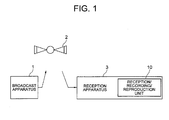
- FIG. 1 is a block diagram showing an example of a structure of a system.
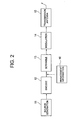
- FIG. 2 is a block diagram showing an example of a structure of a transmission apparatus 1.
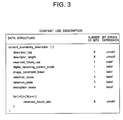
- FIG. 3 shows an example of a structure of a content use descriptor which is one type of copy control information.
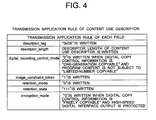
- FIG. 4 shows a description example of each field of the content use descriptor.
- FIG. 5 shows an example of a structure of a digital copy control descriptor which is one type of copy control information.
- FIG. 6 shows an example of information for controlling copy generations.
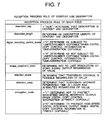
- FIG. 7 shows an example of a reception process in a reception apparatus 3 for each field of the content use descriptor transmitted from the transmission apparatus 1.
- FIG. 8 shows an application example of protection of program content by using copy control information by the transmission apparatus 1.
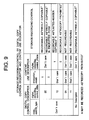
- FIG. 9 shows an example of control when the reception apparatus 3 stores (records) program content using copy control information.
- FIG. 10 is a block diagram showing an example of a structure of the reception apparatus 3.
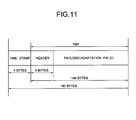
- FIG. 11 shows an example of a transport packet to which a time stamp is added.
- FIG. 12 shows an example of recording program content on a recording medium.
- FIG. 13 is a flowchart showing an example of a procedure of creating copy information and copy number of management information when recording program content for which one-generation copying is permitted.
- FIG. 14 is a flowchart showing an example of a procedure of copying program content.
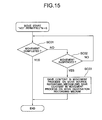
- FIG. 15 is a flowchart showing an example of a procedure of moving program content.
- FIG. 16 shows an example of a recording medium capable of management of a plurality of copies.
- FIG. 17 is a flowchart showing an example of a procedure of creating copy information and copy number of management information when recording program content for which one-generation copying is permitted.
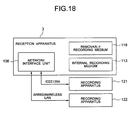
- FIG. 18 is a view for understanding of a limitation on the number of copies.
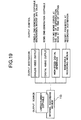
- FIG. 19 is a view for understanding of a substitute output destination of content stored as "limited-number copyable" and copy control for the content.
- This embodiment mainly relates to handling of information for which one-generation copying is permitted.
- FIG. 1 is a block diagram showing an example of a structure of a system in this embodiment. An example of transmitting/receiving information by broadcasting and recording/reproducing the information is shown here.
- Reference numeral 1 is a transmission apparatus installed in an information provision station such as a broadcast station.
- Reference numeral 2 is a relay apparatus installed in a relay station, a broadcast satellite, or the like.
- Reference numeral 3 is a reception apparatus installed in a user's home or the like.
- Reference numeral 10 is a reception/recording/reproduction unit included in the reception apparatus 3. The reception/recording/reproduction unit 10 can record and reproduce broadcast information.
- the transmission apparatus 1 transmits a modulated signal wave via the relay apparatus 2.
- a modulated signal wave via the relay apparatus 2.
- transmission by a cable, transmission by a telephone line, transmission by terrestrial broadcasting, transmission using an IP (Internet Protocol) via a network such as the Internet, and the like can also be used, for example.
- the signal wave received by the reception apparatus 3 is demodulated to an information signal, and recorded having been converted to a signal suitable for recording according to need, as described later.
- the reception apparatus 3 includes a display
- the user can view video/audio shown by the information signal on the display.
- the reception apparatus 3 does not include a display
- the user can view video/audio shown by the information signal by connecting the reception apparatus 3 to a display not illustrated.
- FIG. 2 is a block diagram showing an example of a structure of the transmission apparatus 1 in the system shown in FIG. 1 .
- Reference numeral 11 is a source generation unit
- reference numeral 12 is an encoding unit that performs compression according to MPEG, H.264, or the like
- reference numeral 13 is a scrambling unit
- reference numeral 14 is a modulation unit
- reference numeral 15 is a transmission antenna
- reference numeral 16 is a management information addition unit.
- Information such as video/audio generated in the source generation unit 11 which is composed of a camera, a recording/reproduction device, and the like is compressed in data amount in the encoding unit 12 so as to be able to be transmitted with smaller band occupancy.
- the compressed information is encrypted for transmission in the scrambling unit 13 so as to be available to specific viewers, according to need.
- the signal After being modulated to a signal suitable for transmission in the modulation unit 14 according to OFDM, TC8PSK, QPSK, or the like, the signal is transmitted from the transmission antenna 15 to the relay apparatus 2 as a radio wave.
- the management information addition unit 16 adds copy control information which is information for controlling copying, and information such as a current time.
- a plurality of pieces of information are often multiplexed into one radio wave by a method such as time division or spectrum spread.
- a method such as time division or spectrum spread.
- the copy control information is information for controlling limitations such as copyability and the number of copies, and is added by the management information addition unit 16, for example.
- the copy control information includes a content use descriptor, a digital copy control descriptor, and the like.
- FIG. 8 shows an application example relating to protection of program content by using the copy control information.
- Applicable means that, for content of each service form, the corresponding generation limitation using digital copy control information can be selected by the transmitter. For instance, in the case of "pay-per-view”, any digital copy control information can be used. In the case of "paid broadcasting by month, etc.”, "copy prohibited” cannot be selected by the transmitter.
- “Flat/tier” is such that, in paid broadcasting and the like, subscribing a plurality of channels collectively is referred to as flat subscription, and subscribing per channel is referred to as tier subscription.
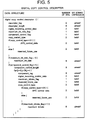
- FIG. 3 shows an example of a structure of the content use descriptor which is one type of content control information.
- the content use descriptor is information that is generated/added by the management information addition unit 16, and transmitted in a form of being contained in PSI (Program Specific Information) (e.g. PMT (Program Map Table) and the like) or SI (Service Information) (e.g. EIT (Event Information Table), SDT (Service Description Table), and the like) of MPEG-TS.
- PSI Program Specific Information
- PMT Program Map Table
- SI Service Information
- EIT Event Information Table
- SDT Service Description Table
- the content use descriptor is provided (transmitted) to describe control information about storage (recording) or output of the program.
- the content use descriptor has the following meanings.
- a 1-bit field of digital_recording_control_mode (digital copy mode bit) is "1”
- digital_recording_control_data of the digital copy control descriptor shown in FIG. 5 is "one-generation copyable”.
- the 1-bit field of digital_recording_control_mode is "0" it indicates that the program cannot be recorded as "limited-number copyable”.
- the output protection means that high-speed digital interface output of content that is "freely copyable” is protected with reference to an output protection bit (encryption_mode) of the content use descriptor.
- Encryption_mode an output protection bit of the content use descriptor.
- the content use descriptor is always provided (transmitted) in the case where the digital copy control information of the program is "one-generation copyable" and also the program is not subject to "limited-number copyable".
- FIG. 4 shows a description example of each field of the content use descriptor.
- retention_mode denotes a temporary storage control bit. "0” is written in “retention_mode”, indicating that temporary storage is possible even when “digital_recording_control_data” (digital copy control information) of the digital copy control descriptor is "copy prohibited”. "retention_state” denotes a temporary storage permissible time. “111” is written in “retention_state”, indicating that storage for 1 hour and 30 minutes is possible. Note that “image_constraint_token”, “retention_state”, and “encryption_mode” are “1" by default.
- the number of copies of content which is "limited-number copyable" is limited to no more than 10 in total, including both the copy source and the copy destination. In the case where there is a function of recording on a removable recording medium or a function of moving via high-speed digital interface output, the number of copies is limited including these functions.
- the content in the copy source and the copy destination is limited in the number of copies or prohibited from copying (recopy prohibited) except for analog video/audio output and digital audio output.
- the content in the copy source or the copy destination can be moved within the above-mentioned limitation.
- FIG. 5 shows an example of a structure of the digital copy control descriptor which is one type of copy control information.
- the digital copy control descriptor is information that is generated/added by the management information addition unit 16, and transmitted in a form of being contained in PSI (e.g. PMT and the like) or SI (e.g. EIT, SDT, and the like) of MPEG-TS.
- PSI e.g. PMT and the like
- SI e.g. EIT, SDT, and the like
- the digital copy control descriptor represents information for controlling copy generations, by a 2-bit field of "digital_recording_control_data" (digital copy control information).
- FIG. 6 shows an example of the digital copy control information.
- the digital copy control information is "00", it indicates freely copyable.
- the digital copy control information is "01”, it indicates definition by a broadcaster.
- the digital copy control information is "10”, it indicates one-generation copyable.
- the digital copy control information is "11”, it indicates copy prohibited. Note that one-generation copyable means that a received broadcast signal can be recorded (first-generation copy) but, after recorded, cannot be duplicated (copied).
- the content use descriptor shown in FIGS. 3 and 4 is also referred to as copy number limitation information, and the digital copy control information shown in FIGS. 5 and 6 is also referred to as copy generation limitation information.
- FIG. 10 is a block diagram showing an example of a structure of the reception apparatus 3 in the system shown in FIG. 1 .
- FIG. 10 there is no contact in a part where lines showing flows of information, PCR, and the like intersect each other, but there is contact and a branch occurs in a part marked with a black circle.
- the reception apparatus 3 is a reception apparatus that receives digital broadcasts or IP (Internet Protocol) broadcasts transmitted via a network, and performs recording and reproduction.
- IP Internet Protocol
- the following describes the case of handling a signal which is encoded by MPEG (Moving Picture Experts Group) as an image compression technique and multiplexed according to MPEG2-TS.
- MPEG Motion Picture Experts Group
- the reception apparatus 3 includes a reception/recording/reproduction unit 10, a control unit 114 (e.g. a CPU (Central Processing Unit)), and a user interface unit 115 (e.g. an input device such as a keyboard, a mouse, and a remote control).
- a control unit 114 e.g. a CPU (Central Processing Unit)
- a user interface unit 115 e.g. an input device such as a keyboard, a mouse, and a remote control.
- each unit may instead be realized by software. Moreover, this may be applied to transmission/reception of video content, audio content, and the like to specific users by VOD (Video On Demand), download, and so on via a network. These are collectively referred to as distribution.
- VOD Video On Demand
- the control unit 114 is connected to each unit (including the reception/recording/reproduction unit 10) of the reception apparatus by a bus unit, and controls an operation of the entire reception apparatus.
- the control unit 114 also receives various instruction signals from the user via the remote control or the like of the user interface unit 115 and controls each unit connected via the bus unit on the basis of the instruction signals, thereby executing various processes.
- the reception/recording/reproduction unit 10 includes a tuner decoding unit 101, a selector 102, a separation/extraction unit 103 (e.g. a demultiplexer), an input buffer 104, a decoding unit 105 (e.g. an MPEG decoder), a network interface unit 106, a buffer management unit 107, a clock reproduction unit 108, a time stamp comparison/output unit 109, a time stamp addition unit 110, a reading unit 111, a writing unit 112, an internal recording medium 113, an output unit 116, a fixed clock generation unit 117 (e.g. a crystal oscillator), a content management information creation unit 119, and a content management information analysis unit 120.
- a tuner decoding unit 101 e.g. a selector 102
- a separation/extraction unit 103 e.g. a demultiplexer
- an input buffer 104 e.g. an input buffer 104
- a decoding unit 105
- the internal recording medium 113 also referred to as a first recording medium
- a removable recording medium 118 also referred to as a second recording medium
- the internal recording medium 113 also referred to as a first recording medium
- a removable recording medium 118 also referred to as a second recording medium
- are randomly accessible media such as a hard disk drive (HDD), a semiconductor memory, a magnetic disk, an optical disc, a magnetooptical disc, and the like.
- the output unit 116 is a display unit using a CRT (Cathode Ray Tube), an LCD (Liquid Crystal Display), a PDP (Plasma Display Panel), or the like, an audio output unit using a speaker or the like, or a composite video output terminal, an S video output terminal (S terminal), a D video output terminal (D terminal) (these are analog video output terminals), an HDMI (High Definition Multimedia Interface) output terminal (digital video output terminal), an optical audio output terminal (digital audio output terminal), and so on for outputting analog or digital video/audio data to another display device or the like.
- the output unit 116 reproduces decoded video/audio in the display unit/audio output unit which is an output device.
- the output unit 116 outputs video/audio content data and the like to another display device/audio reproduction device via an output terminal (e.g. HDMI). Since the video/audio content data is outputted from the output terminal in a form based on a content protection scheme of the corresponding output standard, the content can be protected.
- an output terminal e.g. HDMI
- the tuner decoding unit 101 receives a digital broadcast signal transmitted from the transmission apparatus 1 via a broadcast transmission network such as a wireless network (satellite, terrestrial) or a cable.
- the tuner decoding unit 101 performs station selection and detection to a frequency of a physical or virtual channel designated via a user operation unit such as the remote control of the user interface unit 115 and the control unit 114.
- the tuner decoding unit 101 also outputs MPEG2-TS (transport stream) on which digital demodulation and error correction have been conducted, to the selector 102.
- MPEG2-TS transport stream
- the selector 102 performs a 3-input 1-output selection process under control by the control unit 114, and outputs an output of the selection process to the separation/extraction unit 103.
- the separation/extraction unit 103 separates/extracts, from the input MPEG2-TS, a transport packet of the channel (program) designated via the user operation unit such as the remote control of the user interface unit 115 and the control unit 114, and outputs the separated/extracted transport packet to the time stamp addition unit 110 and the network interface unit 106.
- the separation/extraction unit 103 also separates/extracts, from the transport packet of the channel (program) designated via the user operation unit such as the remote control of the user interface unit 115 and the control unit 114, a PES (Packetized Elementary Stream) or ES (Elementary Stream) of video and audio, and outputs the PES or the ES to the input buffer 104.
- a PES Packetized Elementary Stream
- ES Simple Stream
- the ES is each of compressed/encoded image and audio data.
- the PES is an outcome of dividing and packetizing an image ES or an audio ES into an appropriate size.
- the separation/extraction unit 103 further extracts a PCR (Program Clock Reference) from the transport packet of the channel (program) designated via the user operation unit such as the remote control of the user interface unit 115 and the control unit 114, and outputs the PCR to the clock reproduction unit 108.
- PCR Program Clock Reference
- the separation/extraction unit 103 detects, from the transport packet of the channel (program) designated via the user operation unit such as the remote control of the user interface unit 115 and the control unit 114, start/end date and time of a title or program of the channel (program) recorded on the internal recording medium 113 or the removable recording medium 118, copy generation control information, and information showing permission status of a plurality of copies.
- the separation/extraction unit 103 further creates a data encryption key, and outputs the detected information and the created encryption key to the content management information creation unit 119. For example, the start/end date and time of the title or program, the copy generation control information, and the information showing permission status of a plurality of copies are transmitted from the transmission apparatus 1 in a form of being contained in PSI or SI of MPEG-TS.
- the input buffer 104 temporarily stores the PES or ES of video/audio from the separation/extraction unit 103.
- the decoding unit 105 compares a DTS (Decoding Time Stamp)/PTS (Presentation Time Stamp) corresponding to the PES or ES stored in the input buffer 104 with an STC (System Time Clock) count from the clock reproduction unit 108 in order to specify decoding/presentation timings, extracts and decodes the PES or ES of video/audio stored in the input buffer 104 according to the decoding/presentation timings, and outputs the decoded video/audio to the output unit 116.
- DTS Decoding Time Stamp
- PTS Presentation Time Stamp
- STC System Time Clock
- the buffer management unit 107 monitors the amount of transport packets in the input buffer 104 which have not been processed by the decoding unit 105, and controls the reading unit 111 to start and stop reading in accordance with the amount.
- the clock reproduction unit 108 uses the PCR to reproduce the receiver's system clock in agreement with a frequency of a system clock of an encoding/multiplexing unit of the transmission apparatus 1 not illustrated, as an example.
- the clock reproduction unit 108 outputs the reproduced system clock to an STC counter in the clock reproduction unit 108, the time stamp addition unit 110, and the like.
- the clock reproduction unit 108 also outputs the STC count of the STC counter which operates according to the reproduced system clock, to the decoding unit 105.
- the time stamp addition unit 110 generates a time stamp by a counter which operates according to, for example, the system clock reproduced by the clock reproduction unit 108 or a crystal oscillator not illustrated, adds the time stamp to each transport packet separated/extracted by the separation/extraction unit 103, and outputs the resulting transport packet to the writing unit 112.
- FIG. 11 shows an example of a structure of a transport packet to which a time stamp is added.
- a transport packet (TSP) of 188 bytes in length in MPEG has a 4-byte time stamp (for example, a time at which the receiver receives the transport packet) added to the beginning, resulting in a packet of 192 bytes in length.
- the time stamp holds time stamp information of the time of arrival of the transport packet.
- the TS in MPEG is made up of a 4-byte header at the beginning and a 184-byte payload (or an adaptation field) which follows.
- the content management information creation unit (content information creation unit) 119 creates management information on the basis of the start/end date and time of the title or program, the copy generation control information, the copy number control information (showing whether or not a plurality of copies are permitted), and the key information received from the separation/extraction unit 103, and outputs the management information to the writing unit 112.
- the content use descriptor and the digital copy control descriptor shown in FIGS. 3 to 6 which are received from the transmitter 1 may be directly used as the management information, or new information may be created on the basis of the content use descriptor and the digital copy control descriptor.
- the writing unit 112 performs a process of recording the management information created by the content management information creation unit 119 and encrypted data obtained by encrypting the transport packet to which the time stamp is added by the time stamp addition unit 110 on the basis of the key information in the management information, on the internal recording medium 113 or the removable recording medium 118.
- one stream including encrypted data obtained by encrypting transport packets which contain video/audio data of one channel (in other words, program content or downloaded content) and to which time stamps are added is stored on the internal recording medium 113 or the removable recording medium 118 as one data file or two or more fragmented data files generated by dividing the data file.
- a time stamp can be regarded as time information relating to a temporal position of a transport packet to which the stamp is added.
- the time stamp may be a time at which the transport packet from the separation/extraction unit 103 is input to the time stamp addition unit 110, or a time difference from a reference transport packet (for example, an immediately preceding transport packet or a top transport packet).
- this time stamp is different from a time stamp (such as a PCR, a DTS, or a PTS) included in the transport packet beforehand.
- FIG. 12 shows an example of recording program content on the internal recording medium 113 or the removable recording medium 118.
- management information indicating the contents of the program content and data (such as video/audio) which is substance of the program content are recorded in a management information area 501 and a data area 502, respectively.
- a file number 503 showing a title of the program content, a date and time 504 showing start/end date and time of the program, a data area start address and recording size 505, copy information 507, copy number 508, key information 506, and the like are recorded as the management information.
- the program content is written in the data area 502 from an address corresponding to the start address 505 recorded in the management information area 501.
- management information and program content are recorded sequentially, such as a file number 1, a file number 2, ... , a file number n.
- the copy information 507 is the copy generation control information included in the management information created by the content management information creation unit 119.
- a 2-bit signal can be used to designate:
- the manner of designation may be the same as the digital copy control information shown in FIG. 6 , or may be unique to the reception apparatus 3.
- the copy number 508 is the copy number control information included in the management information created by the content management information creation unit 119.
- the copy number 508 is information created on the basis of the copy generation control information and the information showing permission status of a plurality of copies, which the content management information creation unit 119 receives from the separation/extraction unit 103.
- the copy generation control information is one-generation recording permitted (Copy One Generation) and the information showing permission status of a plurality of copies is "permitted”
- the program content is recorded as "No More Copies”
- information showing the number of permitted copies is stored for making the content copyable on a same or different recording media in a same or different formats, and for example "9" indicating that 9 copies are permitted is input. This number may be in conformity with standards or the like.
- the copy generation control information is one-generation recording permitted (Copy One Generation) and the information showing permission status of a plurality of copies is "not permitted"
- the program content is recorded as "No More Copies", and "0" (indicating that copying is not permitted) is input as information showing the number of permitted copies to make the content not copyable.
- encryption is performed on the copy information 507, the copy number 508, and the key information 506 to prevent unauthorized tampering.
- the content management information analysis unit 120 reads the management information stored on the internal recording medium 113 or the removable recording medium 118 via the reading unit 111, and analyzes the contents of the management information.
- the content management information analysis unit 120 passes the start/end date and time of the title or program of the program content, the copy information, the copy number, and the like to the control unit 114 so that the program content can be selected via the user operation unit such as the remote control of the user interface unit 115 and the control unit 114 when reproducing, copying, or moving the program content stored on the internal recording medium 113 or the removable recording medium 118.
- the content management information analysis unit 120 also passes the key information for decrypting the encrypted data, to the reading unit 111.
- the reading unit 111 under control by the buffer management unit 107 or the control unit 114, reads the management information from the internal recording medium 113 or the removable recording medium 118, outputs the management information to the content management information analysis unit 120, sequentially reads the encrypted data from the internal recording medium 113 or the removable recording medium 118, and outputs a transport packet additionally having a time stamp obtained by decrypting the encrypted data on the basis of the key information passed from the content management information analysis unit 120, to the time stamp comparison/output unit 109.
- the time stamp comparison/output unit 109 compares the time stamp added to the transport packet read by the reading unit 111, with a count of a counter that operates on the basis of the fixed clock generation unit 117 such as a crystal oscillator. When they match, the time stamp comparison/output unit 109 deletes (removes) the time stamp from the transport packet, and outputs the transport packet to the selector 102 and the network interface unit 106.
- the time stamp comparison/output unit 109 may delete the time stamp from the transport packet and output the transport packet to the selector 102 and the network interface unit 106, without comparing the time stamp with the count. Particularly in reproduction other than normal reproduction (single-speed reproduction), this output method is preferable.
- the network interface unit 106 is connected to another apparatus (such as a recorder, a display, or a personal computer at home, or a server outside home) which is the output destination/input source, via a line (such as an IEEE 1394 cable, a LAN cable, or wireless).
- a line such as an IEEE 1394 cable, a LAN cable, or wireless.
- the network interface unit 106 receives the transport packet of video/audio or the like from which the time stamp is deleted by the time stamp comparison/output unit 109 or the transport packet separated/extracted by the separation/extraction unit 103, converts the transport packet to a form in conformity with corresponding transmission standards, and outputs the video/audio data stored on the internal recording medium 113 or the removable recording medium 118 or the video/audio data of the digital broadcast signal received by the tuner decoding unit 101, to another apparatus which is the output destination via the line.
- the network interface unit 106 also receives an input of data such as video/audio from another apparatus which is the input source via the line in a form in conformity with corresponding transmission standards, converts it to a transport packet, and outputs the transport packet to the selector 102. Note that there may be a plurality of network interface units 106.
- FIG. 7 shows an example of a process for each field of the content use descriptor in the reception apparatus 3.
- the reception apparatus 3 determines that the descriptor is the content use descriptor. From “descriptor_length”, the reception apparatus 3 determines the descriptor length of the content use descriptor. When “digital_recording_control_mode” is “1”, the reception apparatus 3 determines that the program content is subject to "limited-number copyable” in the case where the digital copy control information is “one-generation copyable”. When “digital_recording_control_mode” is "0", the reception apparatus 3 determines that the program content is not subject to "limited-number copyable” in the case where the digital copy control information is "one-generation copyable".
- the reception apparatus 3 determines that a resolution of video signal output is not limited. For any value of “retention_mode”, the reception apparatus 3 determines that temporary storage is possible. For any value of “retention_state”, the reception apparatus 3 determines that a temporary storage permissible time is 1 hour and 30 minutes. When “encryption_mode” is “1”, the reception apparatus 3 determines that high-speed digital interface output is not protected in the case where the digital copy control information is “freely copyable”. When “encryption_mode” is "0”, the reception apparatus 3 determines that high-speed digital interface output is protected in the case where the digital copy control information is "freely copyable”.
- FIG. 9 shows an example of control whereby the reception apparatus 3 stores (records) the program content using the copy control information.
- N copies can be created from program content stored as "limited-number copyable".
- the value of N may be in conformity with standards.
- copying may be performed in the case where the number of created copies can be determined for example by using a move function.
- the interface is IEEE 1394 and the output destination can be recognized to be an apparatus in conformity with DTCP standards.
- the created copy is set in a "recopy prohibited" state or its equivalent state.
- the output is performed after a process of "No More Copies" specified in DTCP (Digital Transmission Content Protection).
- DTCP Digital Transmission Content Protection
- the program content can be output as "one-generation copyable”.
- the number of copies of content which is "limited-number copyable" is limited to no more than 10 in total, including both the copy source and the copy destination. In the case where there is a function of recording on a removable recording medium or a function of moving via high-speed digital interface output, the number of copies is limited including these functions.
- the content in the copy source and the copy destination is limited in the number of copies or prohibited from copying (recopy prohibited) except for analog video/audio output and digital audio output.
- the content in the copy source or the copy destination can be moved within the above-mentioned limitation.
- the management of the number of copies when copying content which is "limited-number copyable" to the internal recording medium and copying the content via the high-speed digital interface is equivalent to the case where there are 10 sets of content that are movable.
- the output can be performed as "one-generation copyable", and is not included in the limitation of the number of copies.
- the content can be recorded in the state of "limited-number copyable".
- shared management is conducted so that the total number of copies permitted for the removable recording medium and the storage medium or for the plurality of removable recording media is not exceeded for each broadcast reception unit.
- To move while maintaining the number of copies of content which is "limited-number copyable” is to move all or part of the copies managed in the move source. In such a case, it is ensured that the total number of copies is unchanged before and after movement.
- the number of permitted copies of the content before movement is m and n copies out of the permitted copies are moved
- the number of permitted copies of the content in the move source is (m - n)
- the number of permitted copies of the content in the move destination is (n - 1).
- information used solely for the purpose of content management such as a thumbnail
- examples of information used for the purpose of content management include information using audio information and information using subtitle information, in addition to a thumbnail created from video information.
- FIG. 18 is a view for understanding of the above-mentioned limitation on the number of copies, and shows the reception apparatus 3, the network interface unit 106, the internal recording medium 113, the removable recording medium 118, a recording apparatus 121, and a recording apparatus 122.
- the recording apparatus 121 is connected to the network interface unit 106 via IEEE 1394, where DTCP is used as a copyright protection scheme.
- the recording apparatus 122 is connected to the network interface unit 106 via a wired LAN or a wireless LAN, where DTCP-IP (Digital Transmission Content Protection over Internet Protocol) is used as a copyright protection scheme.
- DTCP-IP Digital Transmission Content Protection over Internet Protocol
- the content may be simultaneously recorded on the internal recording medium 113, the removable recording medium 118, the recording apparatus 121, and the recording apparatus 122 to the above-mentioned numbers, or the content may be initially recorded only on the internal recording medium 113 and later copied to the removable recording medium 118, the recording apparatus 121, and the recording apparatus 122.
- FIG. 19 is a view for understanding of a substitute output destination of the above-mentioned content stored as "limited-number copyable" and copy control for the content.
- the output source is the internal recording medium 113 in the reception/recording/reproduction unit 10
- the analog video output (such as the composite video output terminal, the S terminal, and the D terminal) in the output unit 116 uses CGMS-A (Copy Generation Management System - Analog) and Macrovision as copy control, where the control of CGMS-A is "one-generation copyable" and the control of Macrovision inherits the value of APS (Analog Protection System).
- CGMS-A Copy Generation Management System - Analog
- Macrovision Macrovision as copy control, where the control of CGMS-A is "one-generation copyable" and the control of Macrovision inherits the value of APS (Analog Protection System).
- the digital audio output uses SCMS (Serial Copy Management System) as copy control, where the control of SCMS is "one-generation copyable”.
- SCMS Serial Copy Management System
- the high-speed digital interface (such as the IEEE 1394 terminal) in the network interface unit 106 uses DTCP (Digital Transmission Content Protection) as copy control, where the control of DTCP is "No more copies" at the time of reproduction and "Move” at the time of copying.
- DTCP Digital Transmission Content Protection
- connection is not necessarily limited to IEEE 1394 or LAN, and other connection methods may instead be used.
- the recording medium is the removable recording medium
- This value (3 or more is used as an example) may be in conformity with standards.
- creation of a plurality of one-generation copies of the same recording format is not permitted.
- the recording limitation on the digital recording medium is imposed for each broadcast reception unit and, when there are a plurality of broadcast reception units, the limitation is imposed for each of the plurality of broadcast reception units.
- FIG. 13 is a flowchart showing an example of a procedure of creating copy information and copy number of management information when the reception apparatus 3 records program content for which one-generation copying is permitted (Copy One Generation).
- the content management information creation unit 119 recognizes that the program content is "one-generation copying permitted (Copy One Generation)" and is accompanied by the information showing permission status of a plurality of copies, and inputs "01" to the copy information of the management information as no further copying is permitted, that is, "recopy prohibited (No More Copies)” (SA01).
- control unit 114 notifies the content management information creation unit 119 whether the recording medium on which the program content is recorded is internal or removable (SA02).
- FIG. 13 relates to copy control after the recording on the recording medium (after the first-generation copy is created).
- the content management information creation unit 119 determines whether the information showing permission status of a plurality of copies is "permitted” or “not permitted” (SA03).
- N is input to the copy number of the management information, to set the program content in a state where N copies are permitted (SA05).
- FIG. 14 is a flowchart showing an example of a procedure of copying program content by the reception apparatus 3.
- N - 1 (N ⁇ 0) is input to the copy number of the management information on the copy source recording medium, to set the program content in a state where "N - 1" copies are permitted.
- "01" (No More Copies) is input to the copy information of the management information on the copy destination recording medium to set the program content in a recopy prohibited state, and "0" is input to the copy number of the management information on the copy destination recording medium to set the program content in a state of being not copyable but movable (SB04).
- deletion may be performed by physically deleting the data on the recording medium or by deleting the management information so that the data exists on the recording medium but cannot be reproduced (indirect deletion).
- FIG. 15 is a flowchart showing a procedure of moving program content by the reception apparatus according to the embodiment.
- the above-mentioned deletion may be performed by physically deleting the data on the recording medium, or by deleting the management information so that the data exists on the recording medium but cannot be reproduced (indirect deletion).
- the copy destination recording medium or the move destination recording medium is a recording medium capable of management as recopy prohibited (No More Copies). In the case where such management is impossible, the copy or move process is prohibited.
- program content is transmitted from the broadcast station
- present invention is also applicable to program content transmitted from other than the broadcast station, such as from a program content provider.
- the removable recording medium means a recording medium that has an independent form removable from the reception apparatus and is also reproducible by another apparatus having a reproduction function.
- the movement means to move program content which is "recopy prohibited (No More Copies)" recorded on a recording medium, by copying the program content to another recording medium and then making the program content irreproducible.
- Making irreproducible means to disable the reproduction of the program content by, for example, deleting the program content itself or deleting its encryption key or management information. It is preferable to avoid a situation where program content exceeding 1 minute in length simultaneously exists in both the move source and the move destination in a reproducible state during movement.
- the determination as to whether or not a plurality of copies are permitted for program content which is "one-generation copyable (Copy One Generation)" and for which information showing permission status of a plurality of copies is "permitted” is made according to whether the recording medium is internal or removable.
- the determination to permit a plurality of copies may be made according to whether or not the recording medium is capable of managing a plurality of copies.
- a recording medium capable of managing a plurality of copies is a recording medium that can perform management of preventing unauthorized tampering with the information including the copy information 507, the copy number 508, and the key information 506 (other information such as the file number 503, the date and time 504, the data area start address and recording size 505, and the like may also be included) in the management information indicating the contents of the program content as shown in FIG. 12 mentioned above.
- FIG. 16 shows an example of a structure of a recording medium (security removable medium) capable of such management of a plurality of copies (also referred to as copy number control or number control copy).
- This is a structure where a normal area accessible by the user and a tamperproof area not accessible by the user are included in one recording medium.
- Secret information stored in the tamperproof area can be accessed upon successful authentication as a result of an authentication process with an apparatus capable of handling the recording medium, to allow the secret information to be managed. Unauthorized tampering is prevented by storing and managing the above-mentioned information such as the copy information 507, the copy number 508, and the key information 506 in this tamperproof area.
- a recording medium not capable of managing a plurality of copies is a recording medium that cannot perform management of preventing unauthorized tampering with the information including the copy information 507, the copy number 508, and the key information 506 (other information such as the file number 503, the date and time 504, the data area start address and recording size 505, and the like may also be included) in the management information indicating the contents of the program content.
- FIG. 17 is a flowchart showing an example of a procedure of creating copy information and copy number of management information when recording program content for which one-generation copying is permitted (Copy One Generation) in the reception apparatus, on the basis of whether or not the recording medium is capable of management of a plurality of copies.
- the difference from FIG. 13 lies in SD02. Note that this may be combined with FIG. 13 , such as by executing SD02 when SA02 is "removable".
- the recording medium on which the program content is recorded is a recording medium capable of management of a plurality of copies or a recording medium not capable of management of a plurality of copies is determined by the control unit 114 and notified to the content management information creation unit 119 (SD02).
- the content management information creation unit 119 determines whether the information showing permission status of a plurality of copies is "permitted” or “not permitted” (SD03). When “not permitted”, for example "0" is input to the copy number of the management information, to set the program content in a state of being not copyable but movable (SD04). When “permitted”, “N” is input to the copy number of the management information to set the program content in a state where N copies are permitted (SD05).
- the program content may be determined to be subject to "limited-number copyable” in the case where digital_recording_control_mode is "0", and not subject to "limited-number copyable” in the case where digital_recording_control_mode is "1".
- the meanings of the values shown by the other descriptors may be changed to different settings according to circumstances.
- the names (such as digital_recording_control_mode and digital_recording_control_data) of the content use descriptor and the digital copy control descriptor need not necessarily be those used in the embodiment, and other names may instead be employed.
Landscapes
- Engineering & Computer Science (AREA)
- Signal Processing (AREA)
- Computer Security & Cryptography (AREA)
- Multimedia (AREA)
- Databases & Information Systems (AREA)
- Television Signal Processing For Recording (AREA)
- Signal Processing For Digital Recording And Reproducing (AREA)
- Storage Device Security (AREA)
Applications Claiming Priority (4)
| Application Number | Priority Date | Filing Date | Title |
|---|---|---|---|
| JP2008194291A JP2010033653A (ja) | 2008-07-29 | 2008-07-29 | コピー制御方法 |
| JP2008194290A JP5325489B2 (ja) | 2008-07-29 | 2008-07-29 | デジタルコンテンツ受信装置、および、デジタルコンテンツ受信方法 |
| JP2008243582A JP5325512B2 (ja) | 2008-09-24 | 2008-09-24 | デジタルコンテンツ受信装置、および、デジタルコンテンツ受信方法 |
| JP2008243581A JP2010079937A (ja) | 2008-09-24 | 2008-09-24 | コピー制御方法 |
Publications (2)
| Publication Number | Publication Date |
|---|---|
| EP2184739A2 true EP2184739A2 (fr) | 2010-05-12 |
| EP2184739A3 EP2184739A3 (fr) | 2011-03-16 |
Family
ID=41559396
Family Applications (1)
| Application Number | Title | Priority Date | Filing Date |
|---|---|---|---|
| EP09251103A Withdrawn EP2184739A3 (fr) | 2008-07-29 | 2009-04-16 | Procédé de contrôle de copie |
Country Status (3)
| Country | Link |
|---|---|
| US (1) | US20100027789A1 (fr) |
| EP (1) | EP2184739A3 (fr) |
| BR (1) | BRPI0900704A2 (fr) |
Families Citing this family (3)
| Publication number | Priority date | Publication date | Assignee | Title |
|---|---|---|---|---|
| US9641692B2 (en) | 2013-06-25 | 2017-05-02 | Siemens Schweiz Ag | Incident-centric mass notification system |
| US10136276B2 (en) | 2013-06-25 | 2018-11-20 | Siemens Schweiz Ag | Modality-centric mass notification system |
| KR20200014284A (ko) * | 2017-06-01 | 2020-02-10 | 소니 주식회사 | 정보 처리 장치, 정보 기록 매체 및 정보 처리 방법, 그리고 프로그램 |
Citations (4)
| Publication number | Priority date | Publication date | Assignee | Title |
|---|---|---|---|---|
| US20020114462A1 (en) * | 2001-02-16 | 2002-08-22 | Hitachi, Ltd. | Recording and playback apparatus for stream data and transmission method for stream data |
| JP2002319227A (ja) | 2001-04-20 | 2002-10-31 | Hitachi Ltd | ディジタル情報記録装置および再生装置 |
| US20050123277A1 (en) * | 2003-12-03 | 2005-06-09 | Hitachi, Ltd. | Broadcast receiving device and stream output device |
| EP1890290A2 (fr) * | 2006-08-17 | 2008-02-20 | Sony Corporation | Appareil de stockage de contenu, méthode de stockage de contenu, support de stockage et programme |
Family Cites Families (19)
| Publication number | Priority date | Publication date | Assignee | Title |
|---|---|---|---|---|
| US5907443A (en) * | 1990-05-30 | 1999-05-25 | Canon Kabushiki Kaisha | Recording and reproducing apparatus adapted to selectively control the number of copies made |
| JP3217137B2 (ja) * | 1992-07-28 | 2001-10-09 | 株式会社日立製作所 | 映像信号記録装置、再生装置及び伝送装置 |
| MY125739A (en) * | 1994-12-22 | 2006-08-30 | Sony Corp | Recording medium and apparatus for protecting copyrighted digital data |
| US7065211B1 (en) * | 1995-07-21 | 2006-06-20 | Sony Corporation | Signal reproducing/recording/transmitting method and apparatus and signal recording medium |
| JP2000163871A (ja) * | 1998-11-26 | 2000-06-16 | Sony Corp | 情報信号の著作権保護方法、情報信号記録方法および装置、並びに情報信号出力方法および装置 |
| JP3728621B2 (ja) * | 2000-02-10 | 2005-12-21 | 松下電器産業株式会社 | デジタルデータのコピー制御方法及び再生装置 |
| KR100683593B1 (ko) * | 2000-03-31 | 2007-02-16 | 톰슨 라이센싱 | 디지털 데이터를 위한 복사-방지 시스템에서 상기 디지털데이터를 판독, 레코딩 및 복구하기 위한 디바이스 |
| US7188087B1 (en) * | 2000-05-15 | 2007-03-06 | Hewlett-Packard Development Company, L.P. | Devices, systems and methods for restricting use of digital content |
| JP2002271756A (ja) * | 2001-03-08 | 2002-09-20 | Sony Corp | データ処理装置、およびデータ処理方法、並びにプログラム |
| TW563363B (en) * | 2001-11-08 | 2003-11-21 | Hitachi Ltd | Image information output device, image information receiving device, image information output method, and image information transmission method |
| JP3736473B2 (ja) * | 2002-02-22 | 2006-01-18 | ソニー株式会社 | 放送受信機及び記録方法 |
| JP3878542B2 (ja) * | 2002-11-29 | 2007-02-07 | 株式会社東芝 | 記録装置 |
| JP4047232B2 (ja) * | 2003-06-18 | 2008-02-13 | 株式会社フジクラ | 高次モードファイバ用モード変換器 |
| US20080072072A1 (en) * | 2004-06-09 | 2008-03-20 | Kenji Muraki | Recording Device and Recording Method |
| US8126318B2 (en) * | 2004-08-30 | 2012-02-28 | Panasonic Corporation | Recording device, system, integrated circuit, program, and recording method |
| US7757300B2 (en) * | 2004-10-13 | 2010-07-13 | Hitachi, Ltd. | Digital information recording and reproducing method and apparatus therefor |
| CN100473135C (zh) * | 2005-01-19 | 2009-03-25 | 松下电器产业株式会社 | 信息记录装置 |
| KR101263022B1 (ko) * | 2006-08-09 | 2013-05-09 | 엘지전자 주식회사 | 디지털 컨텐츠의 녹화 제어방법 |
| EP2190181A3 (fr) * | 2008-10-27 | 2010-08-04 | Hitachi Consumer Electronics Co. Ltd. | Procédé de contrôle de résultat |
-
2009
- 2009-04-16 EP EP09251103A patent/EP2184739A3/fr not_active Withdrawn
- 2009-04-27 BR BRPI0900704-0A patent/BRPI0900704A2/pt not_active IP Right Cessation
- 2009-04-27 US US12/430,198 patent/US20100027789A1/en not_active Abandoned
Patent Citations (4)
| Publication number | Priority date | Publication date | Assignee | Title |
|---|---|---|---|---|
| US20020114462A1 (en) * | 2001-02-16 | 2002-08-22 | Hitachi, Ltd. | Recording and playback apparatus for stream data and transmission method for stream data |
| JP2002319227A (ja) | 2001-04-20 | 2002-10-31 | Hitachi Ltd | ディジタル情報記録装置および再生装置 |
| US20050123277A1 (en) * | 2003-12-03 | 2005-06-09 | Hitachi, Ltd. | Broadcast receiving device and stream output device |
| EP1890290A2 (fr) * | 2006-08-17 | 2008-02-20 | Sony Corporation | Appareil de stockage de contenu, méthode de stockage de contenu, support de stockage et programme |
Non-Patent Citations (1)
| Title |
|---|
| WIKIPEDIA: "Digital Transmission Content Protection", INTERNET CITATION, 15 July 2011 (2011-07-15), pages 1 - 2, XP007919918, Retrieved from the Internet <URL:http://en.wikipedia.org/wiki/digital_Transmission_Content_Protection> [retrieved on 20110914] * |
Also Published As
| Publication number | Publication date |
|---|---|
| US20100027789A1 (en) | 2010-02-04 |
| BRPI0900704A2 (pt) | 2010-01-19 |
| EP2184739A3 (fr) | 2011-03-16 |
Similar Documents
| Publication | Publication Date | Title |
|---|---|---|
| JP5002371B2 (ja) | デジタルコンテンツ受信装置、デジタルコンテンツ受信方法、および、デジタルコンテンツ送受信方法 | |
| JP4629791B2 (ja) | デジタルコンテンツ受信装置、デジタルコンテンツ受信方法、およびデジタルコンテンツ送受信方法 | |
| JP4431599B2 (ja) | デジタルコンテンツの受信装置、受信方法、及び送受信方法 | |
| EP2284836A1 (fr) | Procédé de contrôle de sortie, récepteur et procédé de réception utilisant une limite de temps pour acquérir une licence | |
| EP2184739A2 (fr) | Procédé de contrôle de copie | |
| JP5530628B2 (ja) | 出力装置、及び、出力制御方法 | |
| JP4431598B2 (ja) | デジタルコンテンツの受信装置、受信方法、及び送受信方法 | |
| JP5522644B2 (ja) | デジタルコンテンツ送受信システム、および、デジタルコンテンツ送受信方法 | |
| JP5325489B2 (ja) | デジタルコンテンツ受信装置、および、デジタルコンテンツ受信方法 | |
| JP4629789B2 (ja) | デジタルコンテンツ受信装置、デジタルコンテンツ受信方法、およびデジタルコンテンツ送受信方法 | |
| JP2011018410A (ja) | 出力制御方法 | |
| JP5114601B2 (ja) | デジタルコンテンツ受信装置、および、デジタルコンテンツ受信方法 | |
| JP5097677B2 (ja) | コピー制御方法、および、受信装置 | |
| JP4629790B2 (ja) | デジタルコンテンツ受信装置、デジタルコンテンツ受信方法、およびデジタルコンテンツ送受信方法 | |
| JP4565049B2 (ja) | デジタルコンテンツ受信装置、デジタルコンテンツ受信方法、およびデジタルコンテンツ送受信方法 | |
| JP5325512B2 (ja) | デジタルコンテンツ受信装置、および、デジタルコンテンツ受信方法 | |
| JP5002370B2 (ja) | デジタルコンテンツ受信装置、デジタルコンテンツ受信方法、および、デジタルコンテンツ送受信方法 | |
| JP5097676B2 (ja) | コピー制御方法、および、受信装置 | |
| JP5114600B2 (ja) | デジタルコンテンツ受信装置、および、デジタルコンテンツ受信方法 | |
| JP5486800B2 (ja) | 出力制御方法、および、出力装置 | |
| JP5063827B2 (ja) | デジタルコンテンツ受信装置、および、デジタルコンテンツ受信方法 | |
| JP5236113B2 (ja) | デジタルコンテンツ送受信システム、および、デジタルコンテンツ送受信方法 | |
| JP5236112B2 (ja) | デジタルコンテンツ送受信システム、および、デジタルコンテンツ送受信方法 | |
| JP5548246B2 (ja) | デジタルコンテンツ送受信方法、および、デジタルコンテンツ送受信システム | |
| JP2010033653A (ja) | コピー制御方法 |
Legal Events
| Date | Code | Title | Description |
|---|---|---|---|
| PUAI | Public reference made under article 153(3) epc to a published international application that has entered the european phase |
Free format text: ORIGINAL CODE: 0009012 |
|
| 17P | Request for examination filed |
Effective date: 20090505 |
|
| AK | Designated contracting states |
Kind code of ref document: A2 Designated state(s): AT BE BG CH CY CZ DE DK EE ES FI FR GB GR HR HU IE IS IT LI LT LU LV MC MK MT NL NO PL PT RO SE SI SK TR |
|
| AX | Request for extension of the european patent |
Extension state: AL BA RS |
|
| PUAL | Search report despatched |
Free format text: ORIGINAL CODE: 0009013 |
|
| AK | Designated contracting states |
Kind code of ref document: A3 Designated state(s): AT BE BG CH CY CZ DE DK EE ES FI FR GB GR HR HU IE IS IT LI LT LU LV MC MK MT NL NO PL PT RO SE SI SK TR |
|
| AX | Request for extension of the european patent |
Extension state: AL BA RS |
|
| RIC1 | Information provided on ipc code assigned before grant |
Ipc: G11B 20/10 20060101AFI20110209BHEP |
|
| 17Q | First examination report despatched |
Effective date: 20111223 |
|
| STAA | Information on the status of an ep patent application or granted ep patent |
Free format text: STATUS: THE APPLICATION IS DEEMED TO BE WITHDRAWN |
|
| 18D | Application deemed to be withdrawn |
Effective date: 20120703 |