EP2184871A2 - Dispositif de génération de trames, système de transmission optique, procédé de génération de trames et procédé de transmission optique - Google Patents
Dispositif de génération de trames, système de transmission optique, procédé de génération de trames et procédé de transmission optique Download PDFInfo
- Publication number
- EP2184871A2 EP2184871A2 EP09175115A EP09175115A EP2184871A2 EP 2184871 A2 EP2184871 A2 EP 2184871A2 EP 09175115 A EP09175115 A EP 09175115A EP 09175115 A EP09175115 A EP 09175115A EP 2184871 A2 EP2184871 A2 EP 2184871A2
- Authority
- EP
- European Patent Office
- Prior art keywords
- frame
- row
- columns
- optical
- virtual lane
- Prior art date
- Legal status (The legal status is an assumption and is not a legal conclusion. Google has not performed a legal analysis and makes no representation as to the accuracy of the status listed.)
- Withdrawn
Links
Images











Classifications
-
- H—ELECTRICITY
- H04—ELECTRIC COMMUNICATION TECHNIQUE
- H04J—MULTIPLEX COMMUNICATION
- H04J3/00—Time-division multiplex systems
- H04J3/16—Time-division multiplex systems in which the time allocation to individual channels within a transmission cycle is variable, e.g. to accommodate varying complexity of signals, to vary number of channels transmitted
- H04J3/1605—Fixed allocated frame structures
- H04J3/1652—Optical Transport Network [OTN]
-
- H—ELECTRICITY
- H04—ELECTRIC COMMUNICATION TECHNIQUE
- H04J—MULTIPLEX COMMUNICATION
- H04J3/00—Time-division multiplex systems
- H04J3/02—Details
- H04J3/06—Synchronising arrangements
- H04J3/0602—Systems characterised by the synchronising information used
- H04J3/0605—Special codes used as synchronising signal
Definitions
- the embodiment(s) relate to a frame generating apparatus, an optical transmission system, a frame generating method, and an optical transmission method.
- optical transport network (OTN) frames are standardized by International Telecommunication Union-Telecommunication Standardization Sector (ITU-T).
- ITU-T International Telecommunication Union-Telecommunication Standardization Sector
- the OTN frames accommodate various client signals conforming to, for example, Synchronous Digital Hierarchy (SDH)/Synchronous Optical NETwork (SONET) and Ethernet (registered trademark) and are generated by adding overhead signals for monitoring control and redundant signals for error correction to client signals.
- SDH Synchronous Digital Hierarchy
- SONET Synchronous Optical NETwork
- Ethernet registered trademark
- Japanese Laid-open Patent Publication No. 2008-113395 discusses an optical transmission system in which client signals accommodated in Optical Transport Unit (OTU) frames in the OTN are transmitted.
- Ethernet standard for a bit rate of around 100 gigabits per second (Gbps) has been discussed as a next-generation standard.
- OTN frames transported at a bit rate of around 100 Gbps and a technology for transporting the OTN frames in a system are required to achieve accommodation and transport conforming to such a next-generation Ethernet.
- VLs virtual lanes
- One of objects of the present invention is to contribute to technology advancement in at least one of the above-described aspects in consideration of the conventional technology.
- the object of the present invention is not limited to the object described above, and it may also be considered as another object of the present invention to achieve an effect which is obtained by respective structures or operations described in Best Mode for Carrying Out the Invention that will be described later and may not be obtained by the conventional technology.
- a frame generating apparatus and method are provided.
- the apparatus includes an optical-transport-network frame generator configured to generate an optical transport network frame from a client signal; and a frame decomposer configured to perform serial-parallel conversion on the optical transport network frame to generate a plurality of virtual lanes, wherein the optical-transport-network frame generator arranges frame synchronization bytes and virtual lane identifiers in an overhead area and/or a fixed stuff part so that a frame synchronization byte and a virtual lane identifier are arranged in each virtual lane.
- Decomposition of the OTN frame into multiple lanes has at least the following problems.
- each VL signal decomposed from a serial signal is a low-speed serial signal, it is necessary to establish frame synchronization for each VL signal.
- the relationship of the multiple VLs between input-output physical ports is not uniquely determined in accordance with the time when electrical signals or optical signals are input into multiplexing elements in a system. Accordingly, it is necessary to set a VL identifier for each VL at the reception side.
- Fig. 1 and Figs. 2A and 2B illustrate an optical transmission system 100 according to an embodiment of the present invention.
- Fig. 1 is a block diagram illustrating an example of an entire configuration of the optical transmission system 100.
- the optical transmission system 100 includes an optical transmitter apparatus 10 and an optical receiver apparatus 60.
- the optical transmitter apparatus 10 transmits and receives signals to and from the optical receiver apparatus 60 via an optical transmission line 50.
- the optical transmitter apparatus 10 includes a frame generating apparatus 20, an optical transmitter 30, and a transmission-reception-state processing part 40.
- the optical receiver apparatus 60 includes an optical receiver 70, a frame receiving apparatus 80, and a transmission-reception-state processing part 90.
- the optical transmission system 100 also includes an apparatus monitoring part 51 and an apparatus monitoring part 52.
- Fig. 2A is a block diagram illustrating the frame generating apparatus 20 and the frame receiving apparatus 80 in detail.
- the frame generating apparatus 20 includes an OTN frame generator 21, a frame decomposer 22, and multiple lane transmitting parts 23.
- the frame receiving apparatus 80 includes multiple lane processing parts 81, a frame reproducing part 82, an OTN frame receiving part 83, and a synchronization adjusting part 84.
- Fig. 2B is a block diagram illustrating the OTN frame generator 21 and the OTN frame receiving part 83 in detail.
- the OTN frame generator 21 includes a client signal terminator 31, an optical channel payload unit (OPU) generator 32, an optical channel data unit (ODU) generator 33, and an optical channel transport unit (OTU) generator 34.
- the OTN frame receiving part 83 includes an OTU terminator 41, an ODU generator 42, an OPU generator 43, and a client signal generator 44.
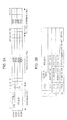
- Fig. 3A illustrates an example of a format of the OTN frame.
- the OTN frame includes an overhead area, an optical channel payload unit (OPUk) payload area, and an optical channel transport unit-forward error correction (OTUkFEC) overhead area.
- OTUk optical channel payload unit
- OFEC optical channel transport unit-forward error correction
- the overhead area has, for example, a frame size of 16 bytes from the 1st column to the 16th column ⁇ four rows and is used for connection and quality control.
- the OPUk payload area has a frame size of 3,808 bytes from the 17th column to the 3,824th column ⁇ four rows and accommodates client signals supplying one or more services.
- the OTUkFEC overhead area has a frame size of 256 bytes from the 3,825th column to 4,080th column ⁇ four rows and is used for correction of any error that has occurred during transmission.
- An area resulting from addition of overhead bytes used for connection and quality control to the OPUk payload area is called an optical channel data unit (ODUk) area.
- An area resulting from addition of overhead bytes used for frame synchronization, connection, quality control, etc. and the OTUkFEC overhead area to the ODUk area is called an optical channel transport unit (OTUk) area.
- Fig. 3B is a table indicating bit rates when each OTN frame is used.
- the OTN frame generator 21 in the frame generating apparatus 20 receives a client signal.
- the OTN frame generator 21 generates an OTN frame on the basis of the received client signal.
- the frame decomposer 22 decomposes the OTN frame generated by the OTN frame generator 21 into virtual lanes (VLs) by serial-parallel conversion and transmits the VLs to the respective lane transmitting parts 23.
- Each lane transmitting part 23 transmits the VL received from the frame decomposer 22.
- the VLs transmitted from the lane transmitting parts 23 are received by the respective lane processing parts 81 in the frame receiving apparatus 80 through the optical transmission line 50.
- Each lane processing part 81 transmits the received VL to the frame reproducing part 82.
- the frame reproducing part 82 generates an OTN frame on the basis of the received VLs and transmits the OTN frame to the OTN frame receiving part 83.
- the OTN frame receiving part 83 receives the OTN frame to generate a client signal.
- the synchronization adjusting part 84 transmits the status of synchronization between the VLs to the transmission-reception-state processing part 90 on the basis of the VL received by each lane processing part 81.
- the transmission-reception-state processing part 90 transmits the status of synchronization between the VLs to the transmission-reception-state processing part 40.
- the transmission-reception-state processing part 40 transmits the status of synchronization between the VLs to the OTN frame generator 21.
- the OTN frame generator 21 generates an OTN frame on the basis of the status of synchronization between the VLs.
- Fig. 4A illustrates an example of a general OTN frame.
- a Frame Alignment Signal (FAS) part is arranged at the 1 st to the 6th columns on the 1 st row
- a Multi-Frame Alignment Signal (MFAS) part is arranged at the 7th column on the 1st row
- reserved (RESERVED) parts are arranged at the 13th to the 14th columns on the 1st row, at the 1st to the 3rd columns on the 2nd row, and at the 9th to the 14th columns on the 4th row.
- Fixed stuff bytes may be arranged in the payload area.
- Fig. 4B illustrates how the OTN frame in Fig. 4A is decomposed into multiple lanes, that is, into four lanes.
- the OTN frame signal is interleaved into bytes that are allocated to the respective VLs. Specifically, the (4n+1)-th column (n is equal to an arbitrary integer) on each row of the OTN frame is allocated to a VL1. The (4n+2)-th column on each row of the OTN frame is allocated to a VL2. The (4n+3)-th column on each row of the OTN frame is allocated to a VL3. The (4n+4)-th column on each row of the OTN frame is allocated to a VL4.
- the bytes on the 2nd row are sequentially allocated to the respective VLs beginning from the 1st column.
- the bytes on the 3rd and 4th rows are allocated to the respective VLs.
- the OTN frame generator 21 first generates the overhead part. In the generation of the overhead part, the OTN frame generator 21 arranges frame synchronization bytes and VL identifiers VL1 to VL4 in the overhead area and/or the fixed stuff part including the fixed stuff bytes.
- the OTN frame generator 21 arranges the frame synchronization bytes in the OTN frame so that one frame synchronization byte is allocated to each of the VL1 to VL4.
- the OTN frame generator 21 arranges the VL identifiers in the OTN frame so that the VL identifiers VL1 to VL4 are allocated to the VL1 to VL4, respectively.
- a hexadecimal value F6 may be used as a frame synchronization byte.
- the OTN frame generator 21 generates the FEC overhead area.
- the OTN frame generator 21 performs scrambling on the parts other than the parts having the frame synchronization bytes and the VL identifiers arranged therein.
- the frame synchronization bytes and the VL identifiers are preferably arranged in the FAS part, the reserved part, Tandem Connection Monitoring (TCM) parts, or a Tandem Connection Monitoring activation/deactivation (TCM-ACT) part.
- TCM Tandem Connection Monitoring
- TCM-ACT Tandem Connection Monitoring activation/deactivation
- the frame synchronization bytes and the VL identifiers are more preferably arranged in the FAS part or the reserved part. This is because the above arrangement suppresses a reduction in the connection function and the quality control function of the overhead area.
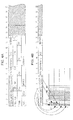
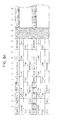
- Fig. 5A illustrates an example of the OTN frame generated by the OTN frame generator 21.
- the OTN frame generator 21 arranges the frame synchronization bytes at the 1 st to the 4th columns on the 1 st row and arranges the VL identifiers VL1 to VL4 in the reserved part at the 9th to the 12th columns on the 4th row.
- Fig. 5B illustrates how the OTN frame in Fig. 5A is decomposed into multiple lanes to be allocated to four lanes.
- the frame synchronization bytes are allocated to the 1st columns of the VL1 to VL4.
- the VL identifiers VL1 to VI4 are allocated to the VL1 to VL4, respectively. Accordingly, it is possible to achieve synchronization between the VLs and identification of each VL.
- the OTN frame signals using the signal sequence decomposed into multiple lanes. This reduces a level of request for an electrical circuit (for example, a skew between parallel signals).
- this allows use of an optical module that conforms to, for example, the Ethernet and that has been developed for multiple lanes. As a result, it is possible to reduce the cost of the optical module because the optical module is commonly used.
- Figs. 6A, 6B and 6C illustrate another example of the OTN frame generated by the OTN frame generator 21.
- the OTN frame generator 21 replaces the MFAS part at the 7th column on the 1st row and the 8th column on the 1st row allocated for section monitoring (SM) with the reserved part at the 13th to the 14th columns on the 1st row.
- the OTN frame generator 21 arranges the frame synchronization bytes at the 1st to the 4th columns on the 1st row and arranges the VL identifiers VL1 to VL4 in the reserved part at the 5th to the 8th columns on the 1st row.
- Fig. 6C illustrates how the OTN frame in Fig. 6B is decomposed into multiple lanes to be allocated to four lanes.
- the frame synchronization bytes are allocated to the 1st columns of the VL1 to VL4.
- the VL identifiers VL1 to VL4 are allocated to the 2nd columns of the VL1 to VL4. Accordingly, it is possible to easily achieve synchronization between the VLs and identification of each VL.
- the OTN frame receiving part 83 Upon reception of each VL signal, the OTN frame receiving part 83 performs descrambling on the parts other than the parts having the frame synchronization bytes and the VL identifiers arranged therein. The OTN frame receiving part 83 replaces the 7th and the 8th columns on the 1st row with the 13th and the 14th columns on the 1st row in the OTN frame. The OTN frame receiving part 83 terminates the FEC overhead area and terminates the overhead area, the frame synchronization bytes, and the VL identifiers.
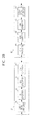
- FIG. 7 illustrates an example of the OTU4 frame.
- the fixed stuff bytes are arranged in the payload areas at the 17th to the 20th columns and the 3,821th to the 3,824th columns.
- the fixed stuff parts are used in the decomposition into ten lanes.
- the OTN frame generator 21 generates an OTN frame including two sub-frames. Specifically, the OTN frame generator 21 arranges the frame synchronization bytes and the VL identifiers VL1 to VL10 in the overhead area and/or the fixed stuff part. In this case, the OTN frame generator 21 arranges the frame synchronization bytes so that one frame synchronization byte is allocated to each of the VL1 to VL10. In addition, the OTN frame generator 21 arranges the VL identifiers so that the VL identifiers VL1 to VI10 are allocated to the VL1 to VI10, respectively.
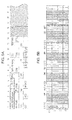
- Fig. 8A illustrates an example of the OTN frame generated by the OTN frame generator 21.
- the OTN frame generator 21 arranges the frame synchronization bytes at the 1 st to the 6th columns and the 17th to the 20th columns on the 1 st row in the first sub-frame and arranges the VL identifiers VL1 to VL10 at the 1 st to the 6th columns and the 17th to the 20th columns on the 1st row in the second sub-frame.
- Fig. 8B illustrates how the OTN frame in Fig. 8A is decomposed into multiple lanes to be allocated to ten lanes.
- the frame synchronization bytes are allocated to the 1 st columns of the VL1 to VL6 and to the 2nd columns of the VL7 to VL10.
- the VL identifiers VL1 to VI10 are allocated to the VL1 to VL10, respectively. In other words, at least one VL identifier is arranged in each VL. Accordingly, it is possible to identify each VL.
- Figs. 9A, 9B and 9C illustrate another example of decomposition into ten lanes.
- the OTN frame generator 21 replaces the MFAS part at the 7th column on the 1st row and the 8th to the 10th columns on the 1st row allocated for the section monitoring with the fixed stuff part at the 17th to the 20th columns on the 1st row.
- the OTN frame generator 21 replaces the MFAS part at the 7th column on the 1 st row and the 8th to the 10th columns on the 1 st row allocated for the section monitoring with the fixed stuff part at the 17th to the 20th columns on the 1 st row.
- the OTN frame generator 21 arranges the frame synchronization bytes at the 1st to the 10th columns on the 1st row in the first sub-frame and arranges the VL identifiers VL1 to VI10 at the 1st to the 10th columns on the 1 st row in the second sub-frame.
- Fig. 9C illustrates how the OTN frame in Fig. 9B is decomposed into multiple lanes to be allocated to ten lanes.
- the frame synchronization bytes are allocated to the 1st columns of the VL1 to VI10.
- the VL identifiers VL1 to VI10 are allocated to the VI1 to VL10, respectively. Accordingly, it is possible to identify each VL.
- the frame synchronization bytes are arranged at the same column in each VL.
- the amount of window expansion in window processing is reduced, thus reducing the time necessary to establish the synchronization.
- the window processing means detection of bytes for framing within a certain time range in the frame synchronization between the lanes.
- the range of the window is called a window width or an amount of window.
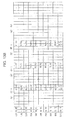
- Framing words (each having a hexadecimal value F6) are allocated to different columns in the example in Figs. 8A and 8B while the framing words are allocated to the same column of each lane in the example in Figs. 9A to 9C . Accordingly, it is possible to reduce the window width by an amount corresponding to one byte in the example in Figs. 9A to 9C .
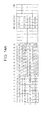
- the frame synchronization bytes may also be arranged in the reserved part at the 13th to the 14th columns on the 1 st row in the first sub-frame, as in an example in Fig. 10A , In this case, as illustrated in Fig. 10B , the frame synchronization bytes are allocated to the 2nd columns of the VL3 and VL4. With such an arrangement, since the two framing bytes are allocated to the VL3 and VL4, the time necessary for acquisition of synchronization is stochastically reduced in the VL3 and VL4, compared with the other VLs. As a result, the VL3 and VL4 may be used as mother lanes in acquisition of the other lanes.
- the OTN frame generator 21 generates an OTN frame including two sub-frames.
- the OTN frame generator 21 arranges the frame synchronization bytes and the VL identifiers VL1 to VL20 in the overhead area and/or the fixed stuff part.
- the OTN frame generator 21 arranges the frame synchronization bytes so that one frame synchronization byte is allocated to each of the VL1 to VL20. In addition, the OTN frame generator 21 arranges the VL identifiers so that the VL identifiers VL1 to VI20 are allocated to the VL1 to VI20, respectively.
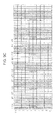
- Fig. 11A illustrates an example of the OTN frame generated by the OTN frame generator 21.
- the OTN frame generator 21 replaces the 7th to 10th columns on the 1 st row with the 17th to 20th columns on the 1 st row in the first and second sub-frames.
- the OTN frame generator 21 arranges the frame synchronization bytes at the 1 st to 10th columns on the 1 st row in the first and second sub-frames and arranges the VL identifier bytes at the 1 st to 10th columns on the 2nd row in the first and second sub-frames (the reserved part, the TCM parts, and the TCM-ACT part).
- the OTN frame generator 21 replaces the 1st to 10th columns on the 1 st and the 2nd rows with the 11th to 20th columns on the 1st and the 2nd rows in the second sub-frame.
- the OTU generator 34 in the OTN frame generator 21 arranges the frame synchronization bytes at the 1 st to the 10th columns on the 1 st row in the first sub-frame and at the 11th to the 20th columns on the 1 st row in the second sub-frame.
- the OTU generator 34 arranges the VL identifiers VL1 to VL20 at the 1 st to the 10th columns on the 2nd row in the first sub-frame and at the 11th to the 20th columns on the 2nd row in the second sub-frame.
- Fig. 11C illustrates how the OTN frame in Fig. 11B is decomposed into multiple lanes to be allocated to 20 lanes.
- the frame synchronization bytes are allocated to the VL1 to V120.
- the VL identifiers VL1 to VI20 are allocated to the VI1 to VL20, respectively. Accordingly, it is possible to identify each VL.
- the frame generating apparatus 20 can be generally used for highspeed signals in the future. For example, if a transport speed of 400 Gbps is required, adoption of a transport method using a transport speed of 20 Gbps and 20 VLs makes the frame generating apparatus 20 according to the present embodiment available.
- the scrambling is not performed in the FAS part at the 1 st to the 6th columns on the 1st row. Also in the present embodiment, it is preferred that the scrambling be not performed in the parts to which the frame synchronization bytes and the VL identifiers are allocated.
- the frame synchronization bytes can be added to the overhead area before start of the data transfer or if the frame synchronization is lost to reduce the time necessary for acquisition of synchronization. Furthermore, replacement of all the overhead areas with the frame synchronization bytes and the VL identifiers further reduces the time necessary for acquisition of synchronization. This process will now be described.
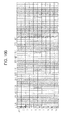
- Figs. 12A and 12B illustrate an OTN frame for establishment of synchronization in the decomposition into four lanes.
- the frame synchronization bytes and the VL identifiers are arranged in all the overhead areas in the OTN frame. For example, allocation of multiple frame synchronization bytes and multiple VL identifiers to each VL, as in an example in Fig. 12B , reduces the time necessary for acquisition of synchronization. In this case, arranging the frame synchronization bytes and the VL identifiers in multiple continuous columns in each VL further reduces the time necessary for acquisition of synchronization.
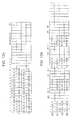
- the frame synchronization bytes and the VL identifiers may be arranged in all the overhead areas in the OTN frame, as in examples illustrated in Fig. 13A and Fig. 14A . Also in theses cases, allocation of multiple frame synchronization bytes and multiple VL identifiers to each VL, as in examples in Fig. 13B and Fig. 14B , reduces the time necessary for acquisition of synchronization.
- the synchronization adjusting part 84 in the frame receiving apparatus 80 establishes the frame synchronization between the VLs and identifies each VL.
- the synchronization adjusting part 84 performs the window processing on the frame synchronization bytes in each VL on the basis of the VL for which the acquisition of synchronization is completed.
- the synchronization adjusting part 84 performs the processing for the frame synchronization by setting the window also in other VLs near the frame synchronization byte of the VL four which the synchronization is established to complete the synchronization processing between the VLs.
- the transmission-reception-state processing part 40 and the transmission-reception-state processing part 90 make settings for changing the state of the OTN frame in the generation of the OTN frame for establishment of synchronization. If the synchronization is not established when the OTN frame for establishment of synchronization is generated, the transmission-reception-state processing part 40 notifies the transmission-reception-state processing part 90 of a synchronization error. Furthermore, the transmission-reception-state processing parts 40 and 90 notify the apparatus monitoring parts 51 and 52 of an occurrence of a failure.
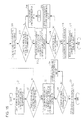
- Fig. 15 is a flowchart illustrating an example of a frame synchronization establishing process.
- the synchronization adjusting part 84 starts the frame synchronization establishing process during a transmission and reception period.
- the synchronization adjusting part 84 determines whether the frame synchronization is confirmed in any VL during a predetermined period. If the synchronization adjusting part 84 determines in Operation S2 that the frame synchronization is confirmed in any VL during the predetermined period, then in Operation S3, the synchronization adjusting part 84 sets a synchronization window for other lanes near the synchronization pattern of the VL for which the frame synchronization is established.
- the synchronization adjusting part 84 determines whether the synchronization is established for the remaining lanes. If the synchronization adjusting part 84 determines in Operation S4 that the synchronization is not established for the remaining lanes, then in Operation S5, the synchronization adjusting part 84 expands the synchronization window by a predetermined amount. Then, the process goes back to Operation S4. If the synchronization adjusting part 84 determines in Operation S4 that the synchronization is estabiished for the remaining lanes, then in Operation S6, the synchronization adjusting part 84 determines that the establishment of the synchronization is completed. Then, the process in the flowchart in Fig. 15 is terminated.
- the transmission-reception-state processing part 90 indicates to the transmission-reception-state processing part 40 to arrange the frame synchronization bytes and the VL identifiers in all the overhead areas.
- the OTN frame generator 21 arranges the frame synchronization bytes and the VL identifiers in all the overhead areas.
- the synchronization adjusting part 84 determines whether the frame synchronization is confirmed in any VL during a predetermined period. If the synchronization adjusting part 84 determines in Operation S12 that the frame synchronization is confirmed in any VL during the predetermined period, then in Operation S13, the synchronization adjusting part 84 sets the synchronization window for other lanes near the synchronization pattern of the VL for which frame synchronization is established.
- the synchronization adjusting part 84 determines whether the synchronization is established for the remaining lanes. If the synchronization adjusting part 84 determines in Operation S14 that the synchronization is not established for the remaining lanes, then in Operation S15, the synchronization adjusting part 84 expands the synchronization window by a predetermined amount. Then, the process goes back to Operation S14. If the synchronization adjusting part 84 determines in Operation S14 that the synchronization is established for the remaining lanes, then in Operation S16, the synchronization adjusting part 84 determines that the establishment of the synchronization is completed. In Operation S17, the transmission-reception-state processing part 90 indicates to the transmission-reception-state processing part 40 to change the setting to the normal overhead areas. Then, the process in the flowchart in Fig. 15 is terminated.
- the synchronization adjusting part 84 determines in Operation S12 that the frame synchronization is not confirmed in any VL during the predetermined period, then in Operation S18, the transmission-reception-state processing parts 40 and 90 generate a frame synchronization error signal. Then, the process in the flowchart in Fig. 15 is terminated.
- the present invention adjusts to the multi-lane transmission based on unique determination corresponding to the multiplexing.
- the embodiments can be implemented in computing hardware (computing apparatus) and/or software, such as (in a non-limiting example) any computer that can store, retrieve, process and/or output data and/or communicate with other computers.
- the results produced can be displayed on a display of the computing hardware.
- a program/software implementing the embodiments may be recorded on computer-readable media comprising computer-readable recording media.
- the program/software implementing the embodiments may also be transmitted over transmission communication media.
- Examples of the computer-readable recording media include a magnetic recording apparatus, an optical disk, a magneto-optical disk, and/or a semiconductor memory (for example, RAM, ROM, etc.).
- Examples of the magnetic recording apparatus include a hard disk device (HDD), a flexible disk (FD), and a magnetic tape (MT).
- optical disk examples include a DVD (Digital Versatile Disc), a DVD-RAM, a CD-ROM (Compact Disc - Read Only Memory), and a CD-R (Recordable)/RW.
- communication media includes a carrier-wave signal.
- a frame generating apparatus has the below elements:
- a frame generating apparatus comprising an optical-transport-network frame generator configured to generate an optical transport network frame from a client signal; and a frame decomposer configured to perform serial-parallel conversion on the optical transport network frame to generate a plurality of virtual lanes, and wherein the optical-transport-network frame generator arranges frame synchronization bytes and virtual lane identifiers in an overhead area and/or a fixed stuff part so that a frame synchronization byte and a virtual lane identifier are arranged in each virtual lane.
- the frame generating apparatus 1), wherein the optical-transport-network frame generator replaces a byte at a seventh column on a first row for a multi-frame alignment signal and a byte at an eighth column on the first row for section monitoring with 13th and 14th columns on the first row, arranges the frame synchronization bytes at first to fourth columns on the first row, and arranges the virtual lane identifiers at fifth to eighth columns on the first row, and wherein the frame decomposer generates four virtual lanes.
- the frame generating apparatus arranges the frame synchronization bytes at first to sixth columns on a first row and at 17th to 20th columns on the first row for the fixed stuff in a first sub-frame in the multi-frame structure and arranges the virtual lane identifiers at the first to the sixth columns on the first row and at 17th to 20th columns on the first row for the fixed stuff in a second sub-frame in the multi-frame structure, and wherein the frame decomposer generates ten virtual lanes.
- an optical transmission system hast the below elements:
- An optical transmission system comprising a frame generating apparatus according to any of claims 1 to 10; and a frame receiving apparatus configured to receive an optical transport network frame generated by the frame generating apparatus, and wherein the frame receiving apparatus indicates to the frame generating apparatus to add a frame synchronization byte in an overhead area when determining frame synchronization is not established in each virtual lane transmitted from the frame generating apparatus.
- a frame generating method hast the below steps:
- a frame generating method comprising: generating an optical transport network frame from a client signal; and performing a serial-parallel conversion of the optical transport network frame to generate a plurality of virtual lanes, and wherein frame synchronization bytes and virtual lane identifiers are arranged in an overhead area and/or a fixed stuff part so that a frame synchronization byte and a virtual lane identifier are arranged in each virtual lane.
- an optical transmission method hast the below steps:
- An optical transmission method comprising: generating an optical transport network frame from a client signal; performing a serial-parallel conversion of the optical transport network frame to generate a plurality of virtual lanes; and receiving the generated optical transport network frame, and wherein the generating arranges frame synchronization bytes and virtual lane identifiers in an overhead area and/or a fixed stuff part so that a frame synchronization byte and a virtual lane identifier are arranged in each virtual lane, and wherein the receiving adds the frame synchronization byte in the overhead area when determining frame synchronization is not established in each virtual lane that is transmitted.
Landscapes
- Engineering & Computer Science (AREA)
- Computer Networks & Wireless Communication (AREA)
- Signal Processing (AREA)
- Time-Division Multiplex Systems (AREA)
- Synchronisation In Digital Transmission Systems (AREA)
- Optical Communication System (AREA)
Applications Claiming Priority (1)
| Application Number | Priority Date | Filing Date | Title |
|---|---|---|---|
| JP2008285877A JP5359202B2 (ja) | 2008-11-06 | 2008-11-06 | フレーム生成装置、光伝送システム、フレーム生成方法および光伝送方法 |
Publications (2)
| Publication Number | Publication Date |
|---|---|
| EP2184871A2 true EP2184871A2 (fr) | 2010-05-12 |
| EP2184871A3 EP2184871A3 (fr) | 2016-05-25 |
Family
ID=41381740
Family Applications (1)
| Application Number | Title | Priority Date | Filing Date |
|---|---|---|---|
| EP09175115.6A Withdrawn EP2184871A3 (fr) | 2008-11-06 | 2009-11-05 | Dispositif de génération de trames, système de transmission optique, procédé de génération de trames et procédé de transmission optique |
Country Status (4)
| Country | Link |
|---|---|
| US (1) | US8681818B2 (fr) |
| EP (1) | EP2184871A3 (fr) |
| JP (1) | JP5359202B2 (fr) |
| CN (1) | CN101741466B (fr) |
Families Citing this family (24)
| Publication number | Priority date | Publication date | Assignee | Title |
|---|---|---|---|---|
| WO2011006304A1 (fr) * | 2009-07-17 | 2011-01-20 | 华为技术有限公司 | Procédé et appareil de récupération de trame d'unité de transport de canal optique k, et système de transmission de trame d'unité de transport de canal optique k |
| JP5153815B2 (ja) * | 2010-04-13 | 2013-02-27 | 日本電信電話株式会社 | マルチレーン伝送方法及びシステム |
| WO2011151892A1 (fr) | 2010-06-01 | 2011-12-08 | 富士通株式会社 | Système de communication, appareil de détection de synchronisation de trame et procédé de détection de synchronisation de trame |
| WO2011151914A1 (fr) * | 2010-06-03 | 2011-12-08 | 富士通株式会社 | Procédé d'établissement de synchronisation, appareil de réception et appareil de transmission |
| JP5248573B2 (ja) * | 2010-10-27 | 2013-07-31 | アンリツ株式会社 | Oor試験用パターン挿入回路及びoor試験用パターン挿入方法 |
| WO2012081083A1 (fr) | 2010-12-14 | 2012-06-21 | 富士通株式会社 | Système de communication et procédé de communication |
| JP5640719B2 (ja) * | 2010-12-15 | 2014-12-17 | 日本電気株式会社 | 光伝送システム、送信器、受信器及び制御方法 |
| US9143227B2 (en) * | 2011-11-07 | 2015-09-22 | Ciena Corporation | Optical transport network port protection systems and methods using flexible switch criteria |
| WO2013125621A1 (fr) | 2012-02-22 | 2013-08-29 | 日本電信電話株式会社 | Dispositif de transmission à voies multiples et procédé de transmission multi-voie |
| US9231721B1 (en) * | 2012-06-28 | 2016-01-05 | Applied Micro Circuits Corporation | System and method for scaling total client capacity with a standard-compliant optical transport network (OTN) |
| US9300429B2 (en) * | 2012-07-26 | 2016-03-29 | Telefonaktiebolaget L M Ericsson (Publ) | Method and apparatus for transporting a client signal over an optical network |
| CN102820951B (zh) | 2012-07-30 | 2016-12-21 | 华为技术有限公司 | 光传送网中传送、接收客户信号的方法和装置 |
| JP6020235B2 (ja) * | 2013-02-14 | 2016-11-02 | 富士通株式会社 | 伝送方法、伝送装置、および伝送システム |
| WO2014155515A1 (fr) * | 2013-03-26 | 2014-10-02 | 三菱電機株式会社 | Dispositif émetteur-récepteur optique à modulation multiniveaux et procédé d'émetteur-récepteur optique à modulation multiniveaux |
| US9985727B2 (en) * | 2014-04-28 | 2018-05-29 | Neptune Subsea Ip Limited | Feedback controlled Raman amplification in optical system |
| EP3142308A4 (fr) * | 2014-05-08 | 2018-01-03 | Nec Corporation | Dispositif de communication, système de communication, procédé de communication et support d'informations stockant un programme pour une communication |
| US10637604B2 (en) | 2014-10-24 | 2020-04-28 | Ciena Corporation | Flexible ethernet and multi link gearbox mapping procedure to optical transport network |
| US10225037B2 (en) | 2014-10-24 | 2019-03-05 | Ciena Corporation | Channelized ODUflex systems and methods |
| EP3208956B1 (fr) | 2014-11-28 | 2019-08-28 | Nippon Telegraph and Telephone Corporation | Trameur et méthode de tramage |
| JP6468292B2 (ja) * | 2015-01-14 | 2019-02-13 | 日本電気株式会社 | 送信回路、受信回路、光伝送システムおよびマルチフレームの送信方法 |
| JP6323375B2 (ja) * | 2015-03-26 | 2018-05-16 | ソニー株式会社 | 通信装置、通信システム、および通信方法 |
| JP6101306B2 (ja) * | 2015-06-05 | 2017-03-22 | 日本電信電話株式会社 | 光伝送装置及び光伝送方法 |
| CA3025571C (fr) | 2016-05-27 | 2020-04-14 | Huawei Technologies Co., Ltd. | Procede de transmission de service et premier dispositif de transmission |
| US10873391B2 (en) * | 2018-03-27 | 2020-12-22 | Viavi Solutions Inc. | MFAS-aligned pseudorandom binary sequence (PRBS) patterns for optical transport network (OTN) testing |
Citations (1)
| Publication number | Priority date | Publication date | Assignee | Title |
|---|---|---|---|---|
| JP2008113395A (ja) | 2006-10-04 | 2008-05-15 | Nippon Telegr & Teleph Corp <Ntt> | 光送信器のフレーム生成回路および光伝送方法 |
Family Cites Families (15)
| Publication number | Priority date | Publication date | Assignee | Title |
|---|---|---|---|---|
| JPH07123247B2 (ja) * | 1986-07-22 | 1995-12-25 | 日本電気株式会社 | デイジタルデ−タ伝送方法 |
| CN1254028C (zh) * | 1999-05-28 | 2006-04-26 | 富士通株式会社 | Sdh传输装置和sdh传输装置的帧定时再同步方法 |
| JP2001053705A (ja) * | 1999-08-09 | 2001-02-23 | Nippon Telegr & Teleph Corp <Ntt> | 伝送装置 |
| DE10056220B4 (de) * | 2000-11-13 | 2005-04-28 | Siemens Ag | Verfahren zur Übertragung eines Datensignals |
| JP2003348014A (ja) * | 2002-05-22 | 2003-12-05 | Nec Corp | 光伝送方法並びに光伝送システム |
| US7500131B2 (en) * | 2004-09-07 | 2009-03-03 | Intel Corporation | Training pattern based de-skew mechanism and frame alignment |
| CN100590997C (zh) * | 2004-11-02 | 2010-02-17 | 华为技术有限公司 | 一种otn网络中业务复用的开销处理方法 |
| DE602004025476D1 (de) * | 2004-11-12 | 2010-03-25 | Alcatel Lucent | Verfahren und Vorrichtung zum Transport eines Client-Signals über ein optisches Transportnetz (OTN) |
| US7664139B2 (en) * | 2005-09-16 | 2010-02-16 | Cisco Technology, Inc. | Method and apparatus for using stuffing bytes over a G.709 signal to carry multiple streams |
| JP4402650B2 (ja) * | 2005-12-22 | 2010-01-20 | 日本電信電話株式会社 | 光伝送システム、光送信器および光受信器 |
| US9014563B2 (en) * | 2006-12-11 | 2015-04-21 | Cisco Technology, Inc. | System and method for providing an Ethernet interface |
| CN101237318B (zh) * | 2007-01-29 | 2011-12-28 | 中兴通讯股份有限公司 | 一种多通道数据传输的同步装置 |
| CN101267386B (zh) * | 2007-03-15 | 2011-12-07 | 华为技术有限公司 | 传输多路独立以太网数据的方法、装置和系统 |
| US8249463B2 (en) * | 2007-12-07 | 2012-08-21 | Infinera Corporation | Skew compensation across polarized optical channels |
| JP5230367B2 (ja) * | 2008-06-03 | 2013-07-10 | 日本電信電話株式会社 | パラレル光伝送装置及び方法 |
-
2008
- 2008-11-06 JP JP2008285877A patent/JP5359202B2/ja not_active Expired - Fee Related
-
2009
- 2009-10-20 US US12/582,131 patent/US8681818B2/en not_active Expired - Fee Related
- 2009-11-05 EP EP09175115.6A patent/EP2184871A3/fr not_active Withdrawn
- 2009-11-06 CN CN200910220849.9A patent/CN101741466B/zh not_active Expired - Fee Related
Patent Citations (1)
| Publication number | Priority date | Publication date | Assignee | Title |
|---|---|---|---|---|
| JP2008113395A (ja) | 2006-10-04 | 2008-05-15 | Nippon Telegr & Teleph Corp <Ntt> | 光送信器のフレーム生成回路および光伝送方法 |
Also Published As
| Publication number | Publication date |
|---|---|
| JP2010114691A (ja) | 2010-05-20 |
| CN101741466A (zh) | 2010-06-16 |
| CN101741466B (zh) | 2014-04-23 |
| US20100040370A1 (en) | 2010-02-18 |
| US8681818B2 (en) | 2014-03-25 |
| EP2184871A3 (fr) | 2016-05-25 |
| JP5359202B2 (ja) | 2013-12-04 |
Similar Documents
| Publication | Publication Date | Title |
|---|---|---|
| US8681818B2 (en) | Frame generating apparatus, optical transmission system, frame generating method, and optical transmission method | |
| US11234055B2 (en) | Service data processing method and apparatus | |
| USRE48932E1 (en) | Frame generating apparatus and frame generating method | |
| EP3462647B1 (fr) | Procédé de transport d'un signal de client dans un réseau de transport optique, et dispositif de transport | |
| EP4027650A1 (fr) | Procédé et dispositif de traitement de données de service dans un réseau de transport optique, et système associé | |
| JP5375221B2 (ja) | フレーム転送装置およびフレーム転送方法 | |
| US9882672B2 (en) | Method and apparatus for mapping and de-mapping in an optical transport network | |
| US8305925B2 (en) | Method, apparatus and system for transporting multi-lane ethernet signal | |
| US9838109B2 (en) | Method and device for realizing optical channel data unit shared protection ring | |
| JP5540675B2 (ja) | 伝送装置および信号収容方法 | |
| JP5187081B2 (ja) | フレーム生成装置およびフレーム生成方法 | |
| EP3923493B1 (fr) | Procédé et appareil de traitement de données de service | |
| EP1965528B1 (fr) | Système de transmission optique et procédé | |
| US7664139B2 (en) | Method and apparatus for using stuffing bytes over a G.709 signal to carry multiple streams | |
| JP5068376B2 (ja) | 光ディジタル伝送システム | |
| JP5361616B2 (ja) | 光伝送システム、光伝送方法、およびプログラム | |
| JP3902522B2 (ja) | 中間ネットワークを介してネットワークの部分間で情報のフレームを移送する方法 | |
| JP2009159062A (ja) | データ伝送装置、方法、およびプログラム | |
| JP6355693B2 (ja) | フレーム処理回路およびマルチチャネル伝送システム |
Legal Events
| Date | Code | Title | Description |
|---|---|---|---|
| PUAI | Public reference made under article 153(3) epc to a published international application that has entered the european phase |
Free format text: ORIGINAL CODE: 0009012 |
|
| AK | Designated contracting states |
Kind code of ref document: A2 Designated state(s): AT BE BG CH CY CZ DE DK EE ES FI FR GB GR HR HU IE IS IT LI LT LU LV MC MK MT NL NO PL PT RO SE SI SK SM TR |
|
| AX | Request for extension of the european patent |
Extension state: AL BA RS |
|
| PUAL | Search report despatched |
Free format text: ORIGINAL CODE: 0009013 |
|
| AK | Designated contracting states |
Kind code of ref document: A3 Designated state(s): AT BE BG CH CY CZ DE DK EE ES FI FR GB GR HR HU IE IS IT LI LT LU LV MC MK MT NL NO PL PT RO SE SI SK SM TR |
|
| AX | Request for extension of the european patent |
Extension state: AL BA RS |
|
| RIC1 | Information provided on ipc code assigned before grant |
Ipc: H04J 3/06 20060101ALI20160415BHEP Ipc: H04J 3/16 20060101AFI20160415BHEP |
|
| 17P | Request for examination filed |
Effective date: 20160920 |
|
| RBV | Designated contracting states (corrected) |
Designated state(s): AT BE BG CH CY CZ DE DK EE ES FI FR GB GR HR HU IE IS IT LI LT LU LV MC MK MT NL NO PL PT RO SE SI SK SM TR |
|
| GRAP | Despatch of communication of intention to grant a patent |
Free format text: ORIGINAL CODE: EPIDOSNIGR1 |
|
| INTG | Intention to grant announced |
Effective date: 20171004 |
|
| GRAJ | Information related to disapproval of communication of intention to grant by the applicant or resumption of examination proceedings by the epo deleted |
Free format text: ORIGINAL CODE: EPIDOSDIGR1 |
|
| GRAP | Despatch of communication of intention to grant a patent |
Free format text: ORIGINAL CODE: EPIDOSNIGR1 |
|
| INTC | Intention to grant announced (deleted) | ||
| INTG | Intention to grant announced |
Effective date: 20180105 |
|
| STAA | Information on the status of an ep patent application or granted ep patent |
Free format text: STATUS: THE APPLICATION IS DEEMED TO BE WITHDRAWN |
|
| 18D | Application deemed to be withdrawn |
Effective date: 20180516 |