EP2184902A2 - Implication d'un point terminal composite dans un appel multimedia - Google Patents
Implication d'un point terminal composite dans un appel multimedia Download PDFInfo
- Publication number
- EP2184902A2 EP2184902A2 EP09174283A EP09174283A EP2184902A2 EP 2184902 A2 EP2184902 A2 EP 2184902A2 EP 09174283 A EP09174283 A EP 09174283A EP 09174283 A EP09174283 A EP 09174283A EP 2184902 A2 EP2184902 A2 EP 2184902A2
- Authority
- EP
- European Patent Office
- Prior art keywords
- multimedia
- application server
- service
- endpoint
- session
- Prior art date
- Legal status (The legal status is an assumption and is not a legal conclusion. Google has not performed a legal analysis and makes no representation as to the accuracy of the status listed.)
- Granted
Links
Images



Classifications
-
- H—ELECTRICITY
- H04—ELECTRIC COMMUNICATION TECHNIQUE
- H04L—TRANSMISSION OF DIGITAL INFORMATION, e.g. TELEGRAPHIC COMMUNICATION
- H04L65/00—Network arrangements, protocols or services for supporting real-time applications in data packet communication
- H04L65/10—Architectures or entities
- H04L65/102—Gateways
- H04L65/1043—Gateway controllers, e.g. media gateway control protocol [MGCP] controllers
-
- H—ELECTRICITY
- H04—ELECTRIC COMMUNICATION TECHNIQUE
- H04L—TRANSMISSION OF DIGITAL INFORMATION, e.g. TELEGRAPHIC COMMUNICATION
- H04L65/00—Network arrangements, protocols or services for supporting real-time applications in data packet communication
- H04L65/1066—Session management
- H04L65/1083—In-session procedures
- H04L65/1089—In-session procedures by adding media; by removing media
-
- H—ELECTRICITY
- H04—ELECTRIC COMMUNICATION TECHNIQUE
- H04L—TRANSMISSION OF DIGITAL INFORMATION, e.g. TELEGRAPHIC COMMUNICATION
- H04L65/00—Network arrangements, protocols or services for supporting real-time applications in data packet communication
- H04L65/1066—Session management
- H04L65/1083—In-session procedures
- H04L65/1094—Inter-user-equipment sessions transfer or sharing
-
- H—ELECTRICITY
- H04—ELECTRIC COMMUNICATION TECHNIQUE
- H04L—TRANSMISSION OF DIGITAL INFORMATION, e.g. TELEGRAPHIC COMMUNICATION
- H04L65/00—Network arrangements, protocols or services for supporting real-time applications in data packet communication
- H04L65/1066—Session management
- H04L65/1101—Session protocols
- H04L65/1104—Session initiation protocol [SIP]
Definitions
- the invention relates to communication systems for providing multimedia services, such as, for example, audio and video services.
- One exemplary embodiment may be a method for providing a multimedia call from an originating device. At least one session may be created at an application server in response to receiving the multimedia call. An endpoint may be created within the session at the application server for communication between the originating device and the application server. The endpoint may be a composite endpoint for communication between the originating device and two or more terminating devices. The composite endpoint may include two or more logical endpoints for communicating with and respectively associated with the two terminating devices. A portion or more of the multimedia call may be delivered from the application server to each of the terminating devices using the logical endpoint associated with each terminating device.
- the terminating devices may be one or more audio and video terminating device and the multimedia call may be split at the application server into at audio only and video only streams using the composite endpoint and delivered to the devices using the logical endpoints.
- Service logic is provided for the session using a service profile associated with a user of the originating device.
- Another exemplary embodiment may be a system for providing at least one multimedia service, including a storage device, a processor, and a communication interface.
- the storage device may hold a software instructions for a composite endpoint.
- the composite endpoint may include service logic for splitting one multimedia stream into at least two multimedia streams and two or more logical endpoints for communicating with at least two devices that receiving the least two multimedia streams.
- the processor may execute the instructions and is coupled to the storage device and the communication interface.
- the service logic may fork one or more multimedia stream to two or more devices or combine two or more multimedia streams.
- the composite endpoint may include a policy manager for providing one or more policies for the operation of the multimedia service.
- the devices may include a first device for receiving only the audio portion of the multimedia service and a second device for receiving only a video portion of the multimedia service.
- the system may include an application server, which includes one or more sessions for the multimedia service, which in turn includes service logic and the composite endpoint.
- Yet another exemplary embodiment may be a computer-readable medium including instructions, which when executed by an application server may cause the application server to perform operations for a composite endpoint.
- the computer-readable medium may include instructions executable by the application server for receiving at least one multimedia data stream.
- the multimedia data stream may include audio data, video data or other data.
- the computer-readable medium may include instructions executable by the application server for generating at least two endpoints, which may specify a communications device.
- the computer-readable medium may include instructions executable by the application server for separately transmitting at least two of the audio, video or other data portions of the multimedia data stream, to communications devices associated with the at least two endpoints.
- the computer-readable medium may include instructions executable by the application server for determining based on a user profile whether two, or all of the audio data, the video, and the other data, and both the audio and video data, is transmitted to one of the endpoints.
- the computer-readable medium may include instructions executable by the application server for determining if the multimedia stream needs to be demultiplexed and if the multimedia stream needs to be demultiplexed, demultiplexing the multimedia stream.
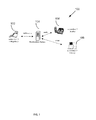
- FIG. 1 depicts a multimedia video call, which is provided by an exemplary embodiment of a system for providing a multimedia service using a composite endpoint;
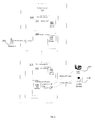
- FIG. 2 depicts the system for providing a multimedia service using a composite endpoint of FIG. 1 in more detail for a multimedia call from one device that is split over three devices;
- FIG. 3 depicts an exemplary embodiment of a system for providing a video add-on service using the composite endpoint
- FIG. 4 depicts an exemplary embodiment of a method for providing a multimedia service using the composite endpoint
- FIG. 5 depicts an originating session of a multimedia service
- FIG. 6 depicts an exemplary embodiment of a method for providing a terminating session of a video add-on service using an exemplary embodiment of a composite endpoint.
- Exemplary embodiments may include systems and methods for providing multimedia services, such as video-add-on.
- video add-on may be a call service that allows a user to receive a video call where the audio portion of the call may be provided on the user's primary line or extended line (e.g., desk phone, home phone, cell phone, etc.) and the video portion of the call may be provided on a software client running on a computing device, such as a personal computer (PC).
- the video add-on call service may allow the user to receive video calls even when the user does not have a physical (non-PC-based) device to handle the video portion of the call.
- the user may use a regular phone for the audio portion of the call and a PC for the video portion of the call.
- FIG. 1 depicts a multimedia call 100, such as a video add-on call, which is provided by an exemplary embodiment of a system for providing a multimedia service using a composite endpoint.
- the multimedia call 100 may be originated by a first subscriber on an integrated video phone 102 and received by an application server 104.
- the first and second subscribers may subscribe to a multimedia video call service or some other multimedia service(s) or otherwise be users of a communications system.
- the application server 104 may include a video add-on service that provides the audio portion of the call on a regular phone 106 and the video portion of the call on a video phone 108 or a monitor or screen of a computer.
- the application server 104 may be any combination of hardware, firmware and/or hardware running software for serving software applications providing multiple stream multimedia services.
- the application server 104 may include a memory or storage device, a processor coupled to the storage device, and a communication interface coupled to the processor.
- the memory or storage device may hold instructions that provide multiple stream multimedia services and the processor may execute the instructions.
- the instructions may include a multimedia splitting component for splitting one multimedia stream into at least two multimedia streams, a multimedia aggregating component for combining at least two multimedia streams into one multimedia stream, and/or a policy management component for providing one or more policies for the operation of the multimedia services.
- the application server 104 may make a program interface for a multimedia service accessible to clients, such as other programs or devices.
- the application server 104 may be a server that hosts an application programming interface (API) to expose logic, processes and other objects for use by, for example, another application, a Java application server, or a client residing on a device, such as integrated video phone 102.
- API application programming interface
- FIG. 2 depicts the exemplary system for providing a multimedia call using a composite endpoint of FIG. 1 in more detail for a multimedia video call from device X 202 and split over three devices, namely device A 204, device B 206, and device C 208.
- the application server 104 may detect the multimedia call for the called party's (i.e., the second subscriber's) originating session 210.
- An originating session 210 may be a session established after the application server 104 receives an invitation or a call.
- a calling party may be associated with the originating session 210 in the application server.
- the originating session 210 may include service logic 212 and a regular endpoint 214.
- the regular endpoint 214 may be associated with the originating session 210 within the application server 104 and may be instantiated with, for example, a video add-on policy, which may be stored in a policy manager 216.
- the originating session 210 may be linked to a terminating session 218.
- the terminating session 218 may be a session established after the application server 104 sends an invitation to one or more terminating device 204, 206, 208.
- a called party may be associated with the terminating session 218 in the application server 104.
- the application server 104 may deliver an invitation to service logic 212 in the terminating session 218.
- the service logic 212 may be derived from subscription information in the user profile.
- the user may be subscribed to a video add-on service 222, which may become part of the service logic 212 in the terminating session 218.
- a composite endpoint 222 may be created and the service logic 212 may be programmed into the composite endpoint 222.
- the invitation event may be processed through the service logic 212 in the terminating session 218 and delivered to the composite endpoint 222.
- the composite endpoint 222 may run instructions in the policy manager 216 and create an endpoint 224 for a communication session to an audio device 204 and another endpoint 226 for a communication session to a video device 206 and optionally another endpoint 228 for a communication session to a third device 208.
- the composite endpoint 222 may take the incoming invitation and split the media according to policies in the policy manager 216.
- the composite endpoint 222 may manage the independent calls for each media type on one or more various kinds of devices 204, 206, 208, and may provide a single interface for service execution within the terminating session 218.
- the logical endpoints 224, 226, 228 may process the independent calls for each media type on the devices 204, 206, 208.
- the service logic 212 may include a video add-on service 220.
- the devices interacting with the application server 104 may be any kind of communications device, such as, for example, a voice over Internet Protocol (VOIP) device, which may support Session Initiation Protocol (SIP), Media Gateway Control Protocol (MGCP) or other protocol for placing and/or receiving multimedia calls.
- VOIP voice over Internet Protocol
- SIP Session Initiation Protocol
- MGCP Media Gateway Control Protocol
- the devices 202, 204, 206, 208 may communicate with the application server 104 (e.g., via an SIP INVITE method) to place or receive calls.
- the devices 202, 204, 206, 208 may support audio only streams, video only streams, both audio and video streams, and/or any other kind of session-based media (e.g., instant messaging, text, file transfer, etc.).
- the originating session 210, terminating session 218, service logic 212, video add-on service 220, regular endpoint 214, composite endpoint 222, logical endpoints 224, 226, 228, and policy manager 216 may be software entities having instructions that reside in a storage device and execute on a processor in the application server 104 that generally transform input into output between or among various communication devices by providing various multimedia services.
- the originating session 210 and/or terminating session 218 may encapsulate all of the service logic 212 and communication protocol state machines needed to process a call for a given user.
- the originating session 210 and terminating session 218 may include the service logic 212 and state machine to process the call and one or more logical endpoints 224, 226, 228 to encapsulate the protocol state machine to deliver the call to a device, such as device A 204, device B 206, or device C 208.
- the service logic 212 in the originating session 210 and/or terminating session 218 may include the state machine, service profile, and service policies needed to process the call from a device, such as device X 202, for a specific called user.
- the service logic 212 in the originating session 210 may differ from the service logic 212 in the terminating session or it may be the same, depending on the profile of the subscriber.
- the service logic 212 may be the container of the service subscription data and may manage the interactions for all of the services involved for the call for the specific user.
- the service logic 212 may include logic for one or more specific services, such as, for example, video add-on service 220.
- the logical endpoints 224, 226, 228 and the composite endpoint 222 are specific examples of endpoints. These endpoints 224, 226, 228 may be logical components within the terminating session 218 that may encapsulate the protocol state machine for a communication stream with a device using a protocol such as, for example, SIP and MGCP for VOIP. Each endpoint 224, 226, 228 may provide an API for the service logic 212 to handle a received call or to initiate a call with a device (e.g., device X 202). Each endpoint 222, 224, 226, 228 may abstract the protocol from the service logic 212 via the API, allowing a protocol-independent service set, which may be used across multiple protocols and interwork calls between protocols.
- a protocol-independent service set which may be used across multiple protocols and interwork calls between protocols.
- the composite endpoint 222 may aggregate multiple communication sessions into a single logical endpoint container. This aggregation may avoid needing to change the service logic when new policies are deployed. The composite endpoint 222 may ensure that service interactions are transparent to the video add-on service 220 and that voice services continue to operate without change on the audio portions of the call.
- the composite endpoint 222 may provide splitting, forking or distributing services for multimedia streams. For the video add-on service 220, the composite endpoint 222 may provide one or more policies for splitting an incoming multimedia video call into an audio stream and a video stream and directing the audio stream to a regular phone, (e.g., the user's primary or extended line) and directing the video portion to the user's video client (e.g., the user's PC).
- the composite endpoint 222 may aggregate multiple media streams into a single terminating session 218 and may provides policies stored in the policy manager 216 that define, for example, on how the streams are processed and interact with each other.
- the composite endpoint 222 may aggregate multiple multimedia streams with programmable policies to provide a variety of service offerings.
- the composite endpoint 222 may abstract the multiple multimedia streams from the service or application software layer of a communications system, allowing integration of multiple multimedia stream applications into existing services.
- the composite endpoint 222 may be a special type of endpoint.
- the composite endpoint 222 may implement the same API as a regular endpoint; however, the composite endpoint 222 includes zero or more regular endpoints.
- the composite endpoint 222 may include its own policy logic, which may be populated via the user's service profile and stored in the policy manager 216.
- the composite endpoint 222 may instantiate an endpoint (e.g., composite endpoint 222 or logical endpoint 224, 226, 228) per communication stream as specified by the user's service profile.
- the service logic 212 may delegate calls among the logical endpoints 224, 226, 228 to the composite endpoint 222 for management.
- the programmable policies of the composite endpoint 222 may be defined and implemented when the service is developed.
- the logic for the composite endpoint 222 may be created as part of the service development and loaded into the composite endpoint 222 at execution time when the composite endpoint is instantiated.
- the composite endpoint 222 may be instantiated during the call setup based on a service profile of a subscriber. The behavior of the composite endpoint 222 depends on the service profile assigned for the subscriber and the corresponding programmable policies used to provide the applicable services.
- the composite endpoint 222 may provide a variety of multiple stream multimedia services for a given user session. Examples of such services may include a video add-on service 220, a shared call appearance service, a multiple call arrangement service, a backup devices for remote survivability service, a dual-mode device support service for wireless networks (e.g., Wi-Fi) or global system for mobile communications (GSM) networks, and other services.
- wireless networks e.g., Wi-Fi
- GSM global system for mobile communications
- the video add-on service 220 may be a service that separates the audio and video stream for a given terminating session 218 so that the audio is only provided to the user's primary line phone and the video is only provided to the PC video client.
- the video add-on service 220 may be a call service that allows a user to receive a video call where the audio portion of the call is provided on the user's primary line or extended line (e.g., desk phone, home phone, call phone, etc.) and the video portion of the call is provided on a software client running on a computing device, such as a personal computer (PC).
- PC personal computer
- the video add-on service 220 may allow the user to receive video calls even when the user does not have a physical (non-PC-based) device to handle the video portion of the call.
- a physical (non-PC-based) device to handle the video portion of the call.
- the user may use a regular phone for the audio portion of the call and a PC for the video portion of the call. This may provide a more natural user experience, while adding video to the user's call experience.
- a shared call appearance service may be used in various scenarios, such as, for example, key system emulation, executive/administrative assistant scenarios, and personal use.
- the shared call appearance service allows an incoming call to appear at multiple locations simultaneously. Any of a number of devices 202, 204, 206, 208 in a group where call appearance is shared may be used to answer an incoming call or to originate a call on behalf of the main location, such as in the executive/administrative assistant scenario. Only one device 202, 204, 206, 208 in the group where call appearance is shared may be involved in a call at any given time.
- the composite endpoint 222 may provide the forking policies and service abstraction to provide this service without any interface changes to other service applications by providing the appearance of a single endpoint to the other service applications.
- the multiple call arrangement service may be an extension to the shared call appearance service. This service may allow multiple calls to be handled concurrently on different shared call appearance locations for a user. Because no single shared call appearance location may be considered the active location, all locations may be allowed to originate and receive calls when they have an available call appearance, regardless of the activity at the other locations.
- the composite endpoint 222 may provide an additional policy for the multiple call arrangement service, allowing multiple devices 202, 204, 206, 208 to be involved in calls simultaneously.
- the backup devices for remote survivability service may be a service that allows a secondary (or backup) device to be contacted when the primary device is non-responsive or otherwise unreachable.
- the composite endpoint 222 may provide this capability by encapsulating the secondary device within the composite endpoint 222 and providing the policy to contact the secondary device when the primary device is deemed unreachable.
- the dual-mode device support service for Wi-Fi/GSM networks may allow a user to be reached on the user's dual-mode phone on a Wi-Fi network when the user is connected to the Wi-Fi or GSM network.
- the composite endpoint 222 may provide the abstraction of the location of the user from the service logic 212 and connect to the appropriate device 202, 204, 206, 208 based on a policy in the policy manager 216 that includes the user's network registration (e.g., Wi-Fi or GSM network).
- the composite endpoint 222 may include several attributes, such as an encapsulation attribute, a service abstraction attribute, and a policy management attribute.
- the encapsulation attribute may allow the composite endpoint 222 to encapsulate multiple multimedia streams in a single terminating session 218, providing the appearance of a single multimedia stream.
- the composite endpoint 222 may minimize or eliminate service interactions by abstracting media streams into a single instance of the composite endpoint 222 via the programmable policies stored in the policy manager 216.
- the terminating session 218 may be a software entity that embodies the encapsulation attribute of the composite endpoint 222.
- the service abstraction attribute may allow the composite endpoint 222 to integrate multiple multimedia streams into the service logic 212 so that the service logic 212 is only aware of a single media session and may provide an API to a service layer that is identical to a single multimedia session API.
- the composite endpoint 222 may provide service abstraction by emulating a single endpoint (i.e., a composite endpoint 222), regardless of how many physical endpoints 224, 226, 228 are used in the multimedia service processing.
- the service logic 212 may be a software entity that embodies the service abstraction attribute of the composite endpoint 222.
- the policy management attribute may allow the composite endpoint 222 to have programmable policies for various services. Some examples of programmable policies may include multiplexing or demultiplexing multiple multimedia streams into a single session 212.
- the policy management attribute may provide a programmable policy framework to control interactions among multiple multimedia sessions, which are encapsulated within the composite endpoint 222. Policies may define interactions among multiple multimedia streams.
- An extensible policy framework may allow dynamic instantiation of new policies as new services are instantiated.
- the policy manager 216 may be a software entity that embodies the policy management attribute of the composite endpoint 222.
- the application server 104 may receive a request to establish the call from a device, such as device X 202.
- the request may be a multiple SIP INVITE method, as defined in the Internet Engineering Task Force (IETF) draft standard, Request for Comments (RFC) 3261, or some other request using some other protocol.
- the application server 104 may identify the user associated with device X 202 via an INVITE method, which may be used to setup the call, and determine whether the call is an origination or termination in order to invoke an appropriate service set.
- the application server 104 then may create an originating session 210 or a terminating session 218 to process the call.
- the application server 104 may populate the originating session 210 or terminating session 218 with the appropriate service logic 212 as specified by a service configuration in a service profile for the user.
- the service profile may include a number of services, some of which may include a composite endpoint 222.
- the service profile of the terminating session 218 may include a forking service to deliver the media stream from the device X 202 to multiple devices 204, 206, 208.
- the service providing the forking capability may instantiate a composite endpoint 222.
- the programmable policy for the forking service may be populated in the composite endpoint 222 based on the service profile for the user when the composite endpoint 222 is instantiated and may be stored in the policy manager 216.
- the composite endpoint 222 may receive a call termination attempt, create a logical endpoint 224, 226, 228 for each device 204, 206, 208 as specified in the service profile, and/or deliver the call to each device 204, 206, 208.
- the composite endpoint 222 may implement the service API of a single endpoint, allowing the forking service to be integrated into the application server 104 without introducing any service interactions for the forking service.
- the logical endpoints 224, 226, 228 manage the communication of the media streams to each associated device 204, 206, 208.
- a composite endpoint 222 may be instantiated in place of a standard logical endpoint 224, 226, 228 based on any services in the user profile that need the capabilities of a composite endpoint 222.
- the call may then be processed within the terminating session 218 via the populated service logic 212 and delivered to the logical endpoint 224, 226, 228.
- the composite endpoint 222 may act as the logical endpoint and provide the appropriate policies, which may be programmed into the composite endpoint 222 upon instantiation, based on the user's service profile.
- the composite endpoint 222 may create logical endpoints 224, 226, 228 for each communication stream needed for the service and manage the logical endpoints 224, 226, 228 based on the service policy.
- service interactions may be reduced, and a new multimedia service may be delivered by adding a new programmable policy, without any other modification to the existing application.
- FIG. 3 depicts an exemplary embodiment of a system for providing a video add-on service 220 for a call using a composite endpoint 222.
- the system processes the call from the device X 202 as follows.
- the application server 104 may receive the call from the device X 202 and may identify the user associated with the device X 202 via the INVITE method used to setup the call. Then, the application server 104 may create the originating session 210 to process the call and populate the originating session 210 with the service profile for the user associated with device X 202.
- the service profile may include a number of services, some of which may involve the composite endpoint 222.
- the application server may create a terminating session 218 to process the call and populate the terminating session 218 with the service profile for the user associated with the audio device 106 and the video device 108.
- the service profile may include a number of services, some of which may involve the composite endpoint 222.
- the service profile may include a video add-on service 220, which runs on the terminating session 218 to split the media stream received from device X 202 into an audio media stream and a video media stream.
- the service providing the video add-on service 220 may instantiate the composite endpoint 222.
- the composite endpoint 222 may include logical endpoints 224, 226 to manage the communication of the media streams to the audio device 106 and the video device 108.
- the audio device 106 may be any device capable of receiving an audio media stream, such as a cell phone and the video device 108 may be any device capable of receiving a video media stream, such as a video phone or PC.
- the composite endpoint 222 may implement the service API of a single endpoint, allowing the video add-on service to be integrated into the application server 104 without introducing any service interactions for the video add-on service.
- FIG. 4 depicts an exemplary embodiment of a method 400 for providing a multimedia service using the composite endpoint 222.
- FIG. 4 shows the composite endpoint's 222 role within the terminating session 218 and the composite endpoint's 222 interactions with other components in the flow of processing session events.
- the device X 202 may initiate a multimedia session by sending a session establishment event to the application server 104 (step 1).
- the device X 202 may perform the establishment event by creating a session description for this media stream and sending the session description in a SIP INVITE method to the application server 104.
- the application server 104 may determine whether the session establishment is for an originating session 210 (not shown) or a terminating session 218. The application server 104 may also identify the user associated with the session establishment. The application server 104 may then instantiate a new terminating session 218 (step 2) on behalf of the user, indicating whether originating or terminating service policies should be used within the terminating session 218.
- the terminating session 218 may process the multimedia stream(s) that are sent by the device X 202 and represented in the session description.
- the terminating session 218 may populate the service logic 212 for the terminating session 218 (step 3).
- the service logic 212 may include the state machine, service profile, and service policies for processing the multimedia session for the user.
- the terminating session 218 may obtain the service profile for the user from the application server 104.
- the application server 104 may obtain the service profile from a local cache, a database, a remote database, or some other accessible storage device or function.
- the terminating session 218 may populate the appropriate service logic 212 into the terminating session 218 as specified by the service configuration in the service profile for the user.
- the terminating session 218 may instantiate a logical endpoint 224, 226, 228 (step 4) or composite endpoint 222 to process the session description included in the session establishment event.
- the logical endpoint 224, 226, 228 or composite endpoint 222 may include the protocol state machine used to process the session description.
- the logical endpoint 224, 226, 228 or composite endpoint 222 may provide the interface for the multimedia stream handling and processing the service logic.
- the composite endpoint 222 may be instantiated in place of a logical endpoint 224, 226, 228 within the terminating session 218, as specified in the user profile when, for example, the user profile indicates that services within the profile need certain capabilities to process or manipulate multiple multimedia streams.
- the terminating session 218 may load programmable policies into the policy manager 216 (step 5) and then the composite endpoint 222 may instantiate a logical endpoint 224, 226, 228 for each communication stream (step 6) as specified by the policies derived from the user's profile.
- Each logical endpoint 224, 226, 228 may manage one or more of the multimedia streams that are defined in the session description. Multiple logical endpoints 224, 226, 228 may manage the same media stream.
- the composite endpoint 222 may act as a single logical endpoint 224, 226, 228 from the perspective of the service logic 212 and process the media related requests that are driven by the service logic 212 among the multiple logical endpoints 224, 226, 228 as specified via the policies loaded into the policy manager 216.
- the service logic 212 may complete the processing of the session establishment event (step 7). Once the service logic 212 executes, the service logic 212 may signal to a logical endpoint 224, 226, 228 to process the call and deliver the multimedia streams to the remote device(s) 204, 206, 208. Based on the loaded policies, the composite endpoint 222 may deliver the multimedia streams to zero or more endpoints 224, 226, 228 within the composite endpoint 222. The composite endpoint 222 may individually modify the multimedia streams on a per-endpoint basis based on the programmable policy loaded into the policy manager 216. Each endpoint 224, 226, 228 within the composite endpoint 222 may continue the session establishment to the corresponding remote devices 204, 206, 208 as determined by the policies stored in the policy manager 216.
- FIGS. 5 and 6 depict an exemplary embodiment of a method for providing a video add-on service 220 using an exemplary embodiment of a composite endpoint 222.
- the video add-on service 220 may receive audio and video streams within a single session establishment and distribute the audio media stream to one device (e.g., audio device 106 in FIG. 3 ) and the video media stream to a separate device (e.g., video device 108 in FIG. 2 ).
- the steps 1-4 in FIG. 5 correspond to steps 1-4 and step 7 in FIG. 4
- the steps 2-7 in FIG. 6 correspond to the steps 2-7 of FIG. 4 .
- user P may place a multimedia audio and video call from an originating device X 202 by, for example, dialing an extension number associated with user Q.
- the application server 104 upon receiving the call from device X 202, may create the originating session 210 for user P.
- step 3 of FIG. 5 the application server 104 may populate the service logic 212 for the originating session 210 with the service profile for user P.
- the application server 104 may create a regular endpoint 214 to encapsulate the protocol state machine for the communication between the application server 104 and device X 202.
- the application server 104 may invoke the originating session 210 created for the call from user P.
- the service logic 212 in the originating session 210 may process the call and determine that the call is destined for user Q by identifying the dialed extension by user P as belonging to user Q. Because the originating session 210 for the originating user P does not need a composite endpoint 222 as determined from the user profile, steps 5 and 6 are not exercised in FIG. 5 . Consequently, the regular endpoint 214 may be instantiated within the originating session 210.
- the service logic 212 may invoke one or more of the application server 104 APIs to instantiate the terminating session 218 for the call to user Q.
- the application server 104 may create the terminating session 218 for user Q to process the multimedia audio and video call from user P, which may be initiated in step 1 of FIG. 5 .
- user Q may be subscribed to the video add-on service 220.
- the application server 104 may populate the service logic 212 for the terminating session 218 with the service profile for user Q.
- the application server 104 may create a composite endpoint 222 to encapsulate the multiple media streams to satisfy the video add-on service 220 processing subscribed to by user Q, as specified in user Q's service profile.
- the composite endpoint 222 acts as the logical endpoint 224, 226, 228 for user Q's terminating session 218 and may be programmed with the appropriate policies to provide the video add-on service 220 on instantiation of the composite endpoint 222.
- the policy may be to fork only the audio portion of the call to user Q's audio device 106 and only the video portion of the call to user Q's video device 108, as specified in the service configuration of the service profile for user Q.
- the composite endpoint 222 may create two logical endpoints 224, 226 one for each communication stream to provide the video add-on service within the composite endpoint 222.
- each endpoint 224, 226 may deliver its communication stream to the remote device 106, 108 associated with that endpoint 224, 226.
- the endpoint 224 associated with the audio device 106 may send a session establishment event with the audio media stream to the audio device 106 and the endpoint 226 associated with the video device 108 may send a session establishment event with the video media stream to the video device 108.
- Exemplary embodiments may be embodied in many different ways as a software component.
- originating session 210, terminating session 218, service logic 212, video add-on service 220, composite endpoint 222, policy manager 216, and logical endpoints 224, 226, 228 may be embodied as one or more software components.
- the software component may be a stand-alone software package, a combination of software packages, or it may be a software package incorporated as a "tool" in a larger software product.
- the software component may be downloadable from a network, for example, a website, as a stand-alone product or as an add-in package for installation in an existing software application.
- the software component may also be available as a client-server software application, or as a web-enabled software application.
- the software component may also be embodied as a software package installed on a hardware device.
- the software component may be embodied on a computer-readable medium.
- the computer-readable medium may be separate or part of a computer.
Landscapes
- Engineering & Computer Science (AREA)
- Multimedia (AREA)
- Computer Networks & Wireless Communication (AREA)
- Signal Processing (AREA)
- Business, Economics & Management (AREA)
- General Business, Economics & Management (AREA)
- Telephonic Communication Services (AREA)
Priority Applications (1)
| Application Number | Priority Date | Filing Date | Title |
|---|---|---|---|
| PL09174283T PL2184902T3 (pl) | 2008-11-11 | 2009-10-28 | Implikacja złożonego punktu końcowego w rozmowie multimedialnej |
Applications Claiming Priority (1)
| Application Number | Priority Date | Filing Date | Title |
|---|---|---|---|
| US12/268,708 US9374391B2 (en) | 2008-11-11 | 2008-11-11 | Composite endpoint mechanism |
Publications (3)
| Publication Number | Publication Date |
|---|---|
| EP2184902A2 true EP2184902A2 (fr) | 2010-05-12 |
| EP2184902A3 EP2184902A3 (fr) | 2010-08-04 |
| EP2184902B1 EP2184902B1 (fr) | 2014-05-14 |
Family
ID=41718553
Family Applications (1)
| Application Number | Title | Priority Date | Filing Date |
|---|---|---|---|
| EP09174283.3A Active EP2184902B1 (fr) | 2008-11-11 | 2009-10-28 | Implication d'un point terminal composite dans un appel multimedia |
Country Status (6)
| Country | Link |
|---|---|
| US (1) | US9374391B2 (fr) |
| EP (1) | EP2184902B1 (fr) |
| DK (1) | DK2184902T3 (fr) |
| ES (1) | ES2485386T3 (fr) |
| PL (1) | PL2184902T3 (fr) |
| PT (1) | PT2184902E (fr) |
Families Citing this family (4)
| Publication number | Priority date | Publication date | Assignee | Title |
|---|---|---|---|---|
| EP2209280A1 (fr) * | 2009-01-19 | 2010-07-21 | Koninklijke KPN N.V. | Sessions associées à la gestion dans un réseau |
| WO2013091733A1 (fr) * | 2011-12-23 | 2013-06-27 | Telefonaktiebolaget L M Ericsson (Publ) | Établissement de session dans un réseau de sous-système multimédia ip |
| FR3045999A1 (fr) * | 2015-12-18 | 2017-06-23 | Orange | Procede de communication entre un appelant et une pluralite de terminaux appeles |
| WO2020147924A1 (fr) * | 2019-01-15 | 2020-07-23 | Telefonaktiebolaget Lm Ericsson (Publ) | Fourniture de services de communication à l'aide d'ensembles de dispositifs d'e/s |
Family Cites Families (16)
| Publication number | Priority date | Publication date | Assignee | Title |
|---|---|---|---|---|
| US6574331B1 (en) * | 2000-01-10 | 2003-06-03 | Cisco Technology, Inc | Method and apparatus for providing a call center in a network-base telephone system |
| US6721412B1 (en) * | 2000-05-08 | 2004-04-13 | Qwest Communications International Inc. | Method of coordinating a call among multiple devices |
| EP1451679A2 (fr) * | 2001-03-30 | 2004-09-01 | BRITISH TELECOMMUNICATIONS public limited company | Interface multimodale |
| US20020147814A1 (en) * | 2001-04-05 | 2002-10-10 | Gur Kimchi | Multimedia devices over IP |
| US20030023730A1 (en) * | 2001-07-27 | 2003-01-30 | Michael Wengrovitz | Multiple host arrangement for multimedia sessions using session initiation protocol (SIP) communication |
| US7299286B2 (en) * | 2001-12-27 | 2007-11-20 | Nortel Networks Limited | Personal user agent |
| US6807529B2 (en) * | 2002-02-27 | 2004-10-19 | Motorola, Inc. | System and method for concurrent multimodal communication |
| US7532628B2 (en) * | 2002-12-30 | 2009-05-12 | Cisco Technology, Inc. | Composite controller for multimedia sessions |
| US20060036770A1 (en) * | 2004-07-30 | 2006-02-16 | International Business Machines Corporation | System for factoring synchronization strategies from multimodal programming model runtimes |
| WO2007110679A2 (fr) * | 2004-12-13 | 2007-10-04 | Radvision Ltd. | Systèmes et procédés d'incorporation de vidéo dans des centres d'appel à mode vocal uniquement |
| US7920548B2 (en) | 2005-08-18 | 2011-04-05 | Hong Kong Applied Science And Technology Research Institute Co. Ltd. | Intelligent switching for secure and reliable voice-over-IP PBX service |
| US8274970B2 (en) | 2005-11-14 | 2012-09-25 | Broadcom Corporation | Voice communication device with PSTN and internet pathway analysis, selection and handoff |
| US20070115931A1 (en) * | 2005-11-18 | 2007-05-24 | Anderson David J | Inter-server multimodal user communications |
| US20070133773A1 (en) * | 2005-12-08 | 2007-06-14 | International Business Machines Corporation | Composite services delivery |
| JP2008027153A (ja) * | 2006-07-20 | 2008-02-07 | Ricoh Co Ltd | 情報処理プログラム、情報処理装置および情報処理方法 |
| US7680816B2 (en) * | 2006-12-22 | 2010-03-16 | Verizon Patent And Licensing Inc. | Method, system, and computer program product providing for multimodal content management |
-
2008
- 2008-11-11 US US12/268,708 patent/US9374391B2/en active Active
-
2009
- 2009-10-28 EP EP09174283.3A patent/EP2184902B1/fr active Active
- 2009-10-28 PT PT91742833T patent/PT2184902E/pt unknown
- 2009-10-28 DK DK09174283.3T patent/DK2184902T3/da active
- 2009-10-28 PL PL09174283T patent/PL2184902T3/pl unknown
- 2009-10-28 ES ES09174283.3T patent/ES2485386T3/es active Active
Non-Patent Citations (1)
| Title |
|---|
| None |
Also Published As
| Publication number | Publication date |
|---|---|
| US20100121956A1 (en) | 2010-05-13 |
| US9374391B2 (en) | 2016-06-21 |
| ES2485386T3 (es) | 2014-08-13 |
| PL2184902T3 (pl) | 2014-10-31 |
| EP2184902B1 (fr) | 2014-05-14 |
| DK2184902T3 (da) | 2014-07-28 |
| EP2184902A3 (fr) | 2010-08-04 |
| PT2184902E (pt) | 2014-07-25 |
Similar Documents
| Publication | Publication Date | Title |
|---|---|---|
| CN101297537B (zh) | 电话和网络服务的协调方法 | |
| US9648052B2 (en) | Real-time communications gateway | |
| US7809846B2 (en) | Resilient application layer overlay framework for converged communication over Internet protocol networks | |
| US8180933B2 (en) | Dynamic call handling from multiple attached devices wherein devices advertize its capabililes before facilitating call through appropriate device | |
| EP2039121B1 (fr) | Procédé de fourniture de services dans un réseau, élément de réseau | |
| US8484704B2 (en) | Next generation integration between different domains, such as, enterprise and service provider using sequencing applications and IMS peering | |
| US20140112333A1 (en) | Calling an Unready Terminal | |
| EP2335402A1 (fr) | Système et procédé d'événement web téléphonique | |
| CN101379757A (zh) | 在通信网络中提供电话服务以及实施策略的方法和系统 | |
| US9350594B2 (en) | Shared back-to-back user agent | |
| CN103379096B (zh) | 因特网与运营商网络业务共享方法、服务方及网页网关 | |
| EP1790149A1 (fr) | Procede et serveur de protocole de lancement de session (sip) pour echanger des fonctions de point terminal | |
| CN106464697A (zh) | 用于建立适于媒体流的传送的从第一rtc客户端到第二rtc客户端的通信连接的方法 | |
| KR101481285B1 (ko) | 핫-데스킹을 인에이블링하기 위한 시스템 및 방법 | |
| US9509724B2 (en) | Handling session initiation protocol messages in a wireless telecommunications device | |
| US8069209B1 (en) | Method for activating and deactivating client-side services from a distant server | |
| EP2299647B1 (fr) | Intégration de nouvelle génération entre différents domaines, à savoir, entreprise et fournisseur de services utilisant des applications de séquençage et d'appairage d'IMS | |
| EP2184902B1 (fr) | Implication d'un point terminal composite dans un appel multimedia | |
| CN106970843A (zh) | 远程调用方法和装置 | |
| US9008287B2 (en) | Data communication | |
| CN101309302A (zh) | 一种基于应用服务器的信令分发方法及装置 | |
| US9430279B2 (en) | System and method for dynamic influencing of sequence vector by sequenced applications | |
| US20150381802A1 (en) | Application sequencing for advanced communication features | |
| US9112870B1 (en) | Processing device having session component with integrated support for message queuing protocol | |
| JP4593152B2 (ja) | サーバ装置およびその制御方法 |
Legal Events
| Date | Code | Title | Description |
|---|---|---|---|
| PUAI | Public reference made under article 153(3) epc to a published international application that has entered the european phase |
Free format text: ORIGINAL CODE: 0009012 |
|
| 17P | Request for examination filed |
Effective date: 20091028 |
|
| AK | Designated contracting states |
Kind code of ref document: A2 Designated state(s): AT BE BG CH CY CZ DE DK EE ES FI FR GB GR HR HU IE IS IT LI LT LU LV MC MK MT NL NO PL PT RO SE SI SK SM TR |
|
| PUAL | Search report despatched |
Free format text: ORIGINAL CODE: 0009013 |
|
| AK | Designated contracting states |
Kind code of ref document: A3 Designated state(s): AT BE BG CH CY CZ DE DK EE ES FI FR GB GR HR HU IE IS IT LI LT LU LV MC MK MT NL NO PL PT RO SE SI SK SM TR |
|
| 17Q | First examination report despatched |
Effective date: 20100716 |
|
| GRAP | Despatch of communication of intention to grant a patent |
Free format text: ORIGINAL CODE: EPIDOSNIGR1 |
|
| INTG | Intention to grant announced |
Effective date: 20140103 |
|
| GRAS | Grant fee paid |
Free format text: ORIGINAL CODE: EPIDOSNIGR3 |
|
| GRAA | (expected) grant |
Free format text: ORIGINAL CODE: 0009210 |
|
| AK | Designated contracting states |
Kind code of ref document: B1 Designated state(s): AT BE BG CH CY CZ DE DK EE ES FI FR GB GR HR HU IE IS IT LI LT LU LV MC MK MT NL NO PL PT RO SE SI SK SM TR |
|
| RAP1 | Party data changed (applicant data changed or rights of an application transferred) |
Owner name: BROADSOFT, INC. |
|
| REG | Reference to a national code |
Ref country code: GB Ref legal event code: FG4D |
|
| REG | Reference to a national code |
Ref country code: AT Ref legal event code: REF Ref document number: 669002 Country of ref document: AT Kind code of ref document: T Effective date: 20140615 |
|
| REG | Reference to a national code |
Ref country code: IE Ref legal event code: FG4D |
|
| REG | Reference to a national code |
Ref country code: DE Ref legal event code: R096 Ref document number: 602009024070 Country of ref document: DE Effective date: 20140626 |
|
| REG | Reference to a national code |
Ref country code: PT Ref legal event code: SC4A Free format text: AVAILABILITY OF NATIONAL TRANSLATION Effective date: 20140717 |
|
| REG | Reference to a national code |
Ref country code: DK Ref legal event code: T3 Effective date: 20140725 |
|
| REG | Reference to a national code |
Ref country code: SE Ref legal event code: TRGR |
|
| REG | Reference to a national code |
Ref country code: ES Ref legal event code: FG2A Ref document number: 2485386 Country of ref document: ES Kind code of ref document: T3 Effective date: 20140813 |
|
| REG | Reference to a national code |
Ref country code: NL Ref legal event code: T3 |
|
| REG | Reference to a national code |
Ref country code: NO Ref legal event code: T2 Effective date: 20140514 |
|
| REG | Reference to a national code |
Ref country code: GR Ref legal event code: EP Ref document number: 20140401615 Country of ref document: GR Effective date: 20140930 |
|
| REG | Reference to a national code |
Ref country code: LT Ref legal event code: MG4D |
|
| PG25 | Lapsed in a contracting state [announced via postgrant information from national office to epo] |
Ref country code: LT Free format text: LAPSE BECAUSE OF FAILURE TO SUBMIT A TRANSLATION OF THE DESCRIPTION OR TO PAY THE FEE WITHIN THE PRESCRIBED TIME-LIMIT Effective date: 20140514 Ref country code: CY Free format text: LAPSE BECAUSE OF FAILURE TO SUBMIT A TRANSLATION OF THE DESCRIPTION OR TO PAY THE FEE WITHIN THE PRESCRIBED TIME-LIMIT Effective date: 20140514 Ref country code: IS Free format text: LAPSE BECAUSE OF FAILURE TO SUBMIT A TRANSLATION OF THE DESCRIPTION OR TO PAY THE FEE WITHIN THE PRESCRIBED TIME-LIMIT Effective date: 20140914 |
|
| REG | Reference to a national code |
Ref country code: PL Ref legal event code: T3 |
|
| PG25 | Lapsed in a contracting state [announced via postgrant information from national office to epo] |
Ref country code: LV Free format text: LAPSE BECAUSE OF FAILURE TO SUBMIT A TRANSLATION OF THE DESCRIPTION OR TO PAY THE FEE WITHIN THE PRESCRIBED TIME-LIMIT Effective date: 20140514 Ref country code: HR Free format text: LAPSE BECAUSE OF FAILURE TO SUBMIT A TRANSLATION OF THE DESCRIPTION OR TO PAY THE FEE WITHIN THE PRESCRIBED TIME-LIMIT Effective date: 20140514 |
|
| PG25 | Lapsed in a contracting state [announced via postgrant information from national office to epo] |
Ref country code: RO Free format text: LAPSE BECAUSE OF FAILURE TO SUBMIT A TRANSLATION OF THE DESCRIPTION OR TO PAY THE FEE WITHIN THE PRESCRIBED TIME-LIMIT Effective date: 20140514 Ref country code: CZ Free format text: LAPSE BECAUSE OF FAILURE TO SUBMIT A TRANSLATION OF THE DESCRIPTION OR TO PAY THE FEE WITHIN THE PRESCRIBED TIME-LIMIT Effective date: 20140514 Ref country code: BE Free format text: LAPSE BECAUSE OF FAILURE TO SUBMIT A TRANSLATION OF THE DESCRIPTION OR TO PAY THE FEE WITHIN THE PRESCRIBED TIME-LIMIT Effective date: 20140514 Ref country code: SK Free format text: LAPSE BECAUSE OF FAILURE TO SUBMIT A TRANSLATION OF THE DESCRIPTION OR TO PAY THE FEE WITHIN THE PRESCRIBED TIME-LIMIT Effective date: 20140514 Ref country code: EE Free format text: LAPSE BECAUSE OF FAILURE TO SUBMIT A TRANSLATION OF THE DESCRIPTION OR TO PAY THE FEE WITHIN THE PRESCRIBED TIME-LIMIT Effective date: 20140514 |
|
| REG | Reference to a national code |
Ref country code: DE Ref legal event code: R097 Ref document number: 602009024070 Country of ref document: DE |
|
| PLBE | No opposition filed within time limit |
Free format text: ORIGINAL CODE: 0009261 |
|
| STAA | Information on the status of an ep patent application or granted ep patent |
Free format text: STATUS: NO OPPOSITION FILED WITHIN TIME LIMIT |
|
| 26N | No opposition filed |
Effective date: 20150217 |
|
| REG | Reference to a national code |
Ref country code: DE Ref legal event code: R097 Ref document number: 602009024070 Country of ref document: DE Effective date: 20150217 |
|
| PG25 | Lapsed in a contracting state [announced via postgrant information from national office to epo] |
Ref country code: LU Free format text: LAPSE BECAUSE OF FAILURE TO SUBMIT A TRANSLATION OF THE DESCRIPTION OR TO PAY THE FEE WITHIN THE PRESCRIBED TIME-LIMIT Effective date: 20141028 Ref country code: MC Free format text: LAPSE BECAUSE OF FAILURE TO SUBMIT A TRANSLATION OF THE DESCRIPTION OR TO PAY THE FEE WITHIN THE PRESCRIBED TIME-LIMIT Effective date: 20140514 |
|
| PGRI | Patent reinstated in contracting state [announced from national office to epo] |
Ref country code: BE Effective date: 20150206 |
|
| PG25 | Lapsed in a contracting state [announced via postgrant information from national office to epo] |
Ref country code: SI Free format text: LAPSE BECAUSE OF FAILURE TO SUBMIT A TRANSLATION OF THE DESCRIPTION OR TO PAY THE FEE WITHIN THE PRESCRIBED TIME-LIMIT Effective date: 20140514 |
|
| REG | Reference to a national code |
Ref country code: FR Ref legal event code: PLFP Year of fee payment: 7 |
|
| PG25 | Lapsed in a contracting state [announced via postgrant information from national office to epo] |
Ref country code: SM Free format text: LAPSE BECAUSE OF FAILURE TO SUBMIT A TRANSLATION OF THE DESCRIPTION OR TO PAY THE FEE WITHIN THE PRESCRIBED TIME-LIMIT Effective date: 20140514 |
|
| PG25 | Lapsed in a contracting state [announced via postgrant information from national office to epo] |
Ref country code: TR Free format text: LAPSE BECAUSE OF FAILURE TO SUBMIT A TRANSLATION OF THE DESCRIPTION OR TO PAY THE FEE WITHIN THE PRESCRIBED TIME-LIMIT Effective date: 20140514 Ref country code: MT Free format text: LAPSE BECAUSE OF FAILURE TO SUBMIT A TRANSLATION OF THE DESCRIPTION OR TO PAY THE FEE WITHIN THE PRESCRIBED TIME-LIMIT Effective date: 20140514 Ref country code: HU Free format text: LAPSE BECAUSE OF FAILURE TO SUBMIT A TRANSLATION OF THE DESCRIPTION OR TO PAY THE FEE WITHIN THE PRESCRIBED TIME-LIMIT; INVALID AB INITIO Effective date: 20091028 |
|
| REG | Reference to a national code |
Ref country code: FR Ref legal event code: PLFP Year of fee payment: 8 |
|
| REG | Reference to a national code |
Ref country code: FR Ref legal event code: PLFP Year of fee payment: 9 |
|
| PGFP | Annual fee paid to national office [announced via postgrant information from national office to epo] |
Ref country code: FI Payment date: 20170920 Year of fee payment: 17 |
|
| PGFP | Annual fee paid to national office [announced via postgrant information from national office to epo] |
Ref country code: PL Payment date: 20170919 Year of fee payment: 9 Ref country code: BG Payment date: 20170919 Year of fee payment: 9 Ref country code: BE Payment date: 20170913 Year of fee payment: 9 |
|
| PGFP | Annual fee paid to national office [announced via postgrant information from national office to epo] |
Ref country code: DK Payment date: 20171011 Year of fee payment: 9 Ref country code: NO Payment date: 20171010 Year of fee payment: 9 |
|
| PGFP | Annual fee paid to national office [announced via postgrant information from national office to epo] |
Ref country code: IE Payment date: 20171010 Year of fee payment: 9 Ref country code: SE Payment date: 20171011 Year of fee payment: 9 Ref country code: IT Payment date: 20171024 Year of fee payment: 9 Ref country code: AT Payment date: 20170926 Year of fee payment: 9 Ref country code: PT Payment date: 20171027 Year of fee payment: 9 Ref country code: CH Payment date: 20171013 Year of fee payment: 9 Ref country code: NL Payment date: 20171016 Year of fee payment: 9 Ref country code: ES Payment date: 20171102 Year of fee payment: 9 |
|
| PG25 | Lapsed in a contracting state [announced via postgrant information from national office to epo] |
Ref country code: MK Free format text: LAPSE BECAUSE OF FAILURE TO SUBMIT A TRANSLATION OF THE DESCRIPTION OR TO PAY THE FEE WITHIN THE PRESCRIBED TIME-LIMIT Effective date: 20140514 |
|
| REG | Reference to a national code |
Ref country code: FR Ref legal event code: PLFP Year of fee payment: 10 |
|
| REG | Reference to a national code |
Ref country code: DK Ref legal event code: EBP Effective date: 20181031 |
|
| REG | Reference to a national code |
Ref country code: NO Ref legal event code: MMEP |
|
| REG | Reference to a national code |
Ref country code: SE Ref legal event code: EUG |
|
| REG | Reference to a national code |
Ref country code: CH Ref legal event code: PL |
|
| REG | Reference to a national code |
Ref country code: NL Ref legal event code: MM Effective date: 20181101 |
|
| REG | Reference to a national code |
Ref country code: AT Ref legal event code: MM01 Ref document number: 669002 Country of ref document: AT Kind code of ref document: T Effective date: 20181028 |
|
| REG | Reference to a national code |
Ref country code: BE Ref legal event code: FP Effective date: 20140807 Ref country code: BE Ref legal event code: MM Effective date: 20181031 |
|
| REG | Reference to a national code |
Ref country code: IE Ref legal event code: MM4A |
|
| PG25 | Lapsed in a contracting state [announced via postgrant information from national office to epo] |
Ref country code: PT Free format text: LAPSE BECAUSE OF NON-PAYMENT OF DUE FEES Effective date: 20190429 Ref country code: SE Free format text: LAPSE BECAUSE OF NON-PAYMENT OF DUE FEES Effective date: 20181029 Ref country code: NL Free format text: LAPSE BECAUSE OF NON-PAYMENT OF DUE FEES Effective date: 20181101 Ref country code: NO Free format text: LAPSE BECAUSE OF NON-PAYMENT OF DUE FEES Effective date: 20181031 Ref country code: FI Free format text: LAPSE BECAUSE OF NON-PAYMENT OF DUE FEES Effective date: 20181028 |
|
| PG25 | Lapsed in a contracting state [announced via postgrant information from national office to epo] |
Ref country code: BE Free format text: LAPSE BECAUSE OF FAILURE TO SUBMIT A TRANSLATION OF THE DESCRIPTION OR TO PAY THE FEE WITHIN THE PRESCRIBED TIME-LIMIT Effective date: 20181031 Ref country code: LI Free format text: LAPSE BECAUSE OF NON-PAYMENT OF DUE FEES Effective date: 20181031 Ref country code: CH Free format text: LAPSE BECAUSE OF NON-PAYMENT OF DUE FEES Effective date: 20181031 Ref country code: GR Free format text: LAPSE BECAUSE OF NON-PAYMENT OF DUE FEES Effective date: 20190506 Ref country code: BG Free format text: LAPSE BECAUSE OF NON-PAYMENT OF DUE FEES Effective date: 20190430 |
|
| PG25 | Lapsed in a contracting state [announced via postgrant information from national office to epo] |
Ref country code: IE Free format text: LAPSE BECAUSE OF NON-PAYMENT OF DUE FEES Effective date: 20181028 Ref country code: IT Free format text: LAPSE BECAUSE OF NON-PAYMENT OF DUE FEES Effective date: 20181028 Ref country code: DK Free format text: LAPSE BECAUSE OF NON-PAYMENT OF DUE FEES Effective date: 20181031 Ref country code: AT Free format text: LAPSE BECAUSE OF NON-PAYMENT OF DUE FEES Effective date: 20181028 |
|
| REG | Reference to a national code |
Ref country code: ES Ref legal event code: FD2A Effective date: 20191203 |
|
| PG25 | Lapsed in a contracting state [announced via postgrant information from national office to epo] |
Ref country code: ES Free format text: LAPSE BECAUSE OF NON-PAYMENT OF DUE FEES Effective date: 20181029 |
|
| PG25 | Lapsed in a contracting state [announced via postgrant information from national office to epo] |
Ref country code: PL Free format text: LAPSE BECAUSE OF NON-PAYMENT OF DUE FEES Effective date: 20181028 |
|
| REG | Reference to a national code |
Ref country code: DE Ref legal event code: R079 Ref document number: 602009024070 Country of ref document: DE Free format text: PREVIOUS MAIN CLASS: H04L0029060000 Ipc: H04L0065000000 |
|
| P01 | Opt-out of the competence of the unified patent court (upc) registered |
Effective date: 20230525 |
|
| PGFP | Annual fee paid to national office [announced via postgrant information from national office to epo] |
Ref country code: DE Payment date: 20241002 Year of fee payment: 16 |
|
| PGFP | Annual fee paid to national office [announced via postgrant information from national office to epo] |
Ref country code: GB Payment date: 20241021 Year of fee payment: 16 |
|
| PGFP | Annual fee paid to national office [announced via postgrant information from national office to epo] |
Ref country code: FR Payment date: 20241025 Year of fee payment: 16 |