EP2184936B1 - Synchronisierungsverfahren zwischen Basisstationen, Funkkommunikationssystem und Basisstation davon - Google Patents
Synchronisierungsverfahren zwischen Basisstationen, Funkkommunikationssystem und Basisstation davon Download PDFInfo
- Publication number
- EP2184936B1 EP2184936B1 EP20080305773 EP08305773A EP2184936B1 EP 2184936 B1 EP2184936 B1 EP 2184936B1 EP 20080305773 EP20080305773 EP 20080305773 EP 08305773 A EP08305773 A EP 08305773A EP 2184936 B1 EP2184936 B1 EP 2184936B1
- Authority
- EP
- European Patent Office
- Prior art keywords
- base station
- mbs1
- mbs2
- sbs1
- master base
- Prior art date
- Legal status (The legal status is an assumption and is not a legal conclusion. Google has not performed a legal analysis and makes no representation as to the accuracy of the status listed.)
- Active
Links
Images





Classifications
-
- H—ELECTRICITY
- H04—ELECTRIC COMMUNICATION TECHNIQUE
- H04L—TRANSMISSION OF DIGITAL INFORMATION, e.g. TELEGRAPHIC COMMUNICATION
- H04L5/00—Arrangements affording multiple use of the transmission path
- H04L5/0001—Arrangements for dividing the transmission path
- H04L5/0014—Three-dimensional division
- H04L5/0023—Time-frequency-space
-
- H—ELECTRICITY
- H04—ELECTRIC COMMUNICATION TECHNIQUE
- H04W—WIRELESS COMMUNICATION NETWORKS
- H04W16/00—Network planning, e.g. coverage or traffic planning tools; Network deployment, e.g. resource partitioning or cells structures
- H04W16/02—Resource partitioning among network components, e.g. reuse partitioning
- H04W16/10—Dynamic resource partitioning
-
- H—ELECTRICITY
- H04—ELECTRIC COMMUNICATION TECHNIQUE
- H04B—TRANSMISSION
- H04B7/00—Radio transmission systems, i.e. using radiation field
- H04B7/02—Diversity systems; Multi-antenna system, i.e. transmission or reception using multiple antennas
- H04B7/022—Site diversity; Macro-diversity
- H04B7/024—Co-operative use of antennas of several sites, e.g. in co-ordinated multipoint or co-operative multiple-input multiple-output [MIMO] systems
-
- H—ELECTRICITY
- H04—ELECTRIC COMMUNICATION TECHNIQUE
- H04B—TRANSMISSION
- H04B7/00—Radio transmission systems, i.e. using radiation field
- H04B7/02—Diversity systems; Multi-antenna system, i.e. transmission or reception using multiple antennas
- H04B7/04—Diversity systems; Multi-antenna system, i.e. transmission or reception using multiple antennas using two or more spaced independent antennas
- H04B7/0413—MIMO systems
-
- H—ELECTRICITY
- H04—ELECTRIC COMMUNICATION TECHNIQUE
- H04L—TRANSMISSION OF DIGITAL INFORMATION, e.g. TELEGRAPHIC COMMUNICATION
- H04L5/00—Arrangements affording multiple use of the transmission path
- H04L5/0001—Arrangements for dividing the transmission path
- H04L5/0003—Two-dimensional division
- H04L5/0005—Time-frequency
- H04L5/0007—Time-frequency the frequencies being orthogonal, e.g. OFDM(A) or DMT
-
- H—ELECTRICITY
- H04—ELECTRIC COMMUNICATION TECHNIQUE
- H04L—TRANSMISSION OF DIGITAL INFORMATION, e.g. TELEGRAPHIC COMMUNICATION
- H04L5/00—Arrangements affording multiple use of the transmission path
- H04L5/003—Arrangements for allocating sub-channels of the transmission path
- H04L5/0032—Distributed allocation, i.e. involving a plurality of allocating devices, each making partial allocation
- H04L5/0035—Resource allocation in a cooperative multipoint environment
-
- H—ELECTRICITY
- H04—ELECTRIC COMMUNICATION TECHNIQUE
- H04W—WIRELESS COMMUNICATION NETWORKS
- H04W36/00—Hand-off or reselection arrangements
- H04W36/14—Reselecting a network or an air interface
-
- H—ELECTRICITY
- H04—ELECTRIC COMMUNICATION TECHNIQUE
- H04W—WIRELESS COMMUNICATION NETWORKS
- H04W56/00—Synchronisation arrangements
- H04W56/001—Synchronization between nodes
- H04W56/0015—Synchronization between nodes one node acting as a reference for the others
-
- H—ELECTRICITY
- H04—ELECTRIC COMMUNICATION TECHNIQUE
- H04L—TRANSMISSION OF DIGITAL INFORMATION, e.g. TELEGRAPHIC COMMUNICATION
- H04L5/00—Arrangements affording multiple use of the transmission path
- H04L5/003—Arrangements for allocating sub-channels of the transmission path
- H04L5/0037—Inter-user or inter-terminal allocation
-
- H—ELECTRICITY
- H04—ELECTRIC COMMUNICATION TECHNIQUE
- H04L—TRANSMISSION OF DIGITAL INFORMATION, e.g. TELEGRAPHIC COMMUNICATION
- H04L5/00—Arrangements affording multiple use of the transmission path
- H04L5/0091—Signalling for the administration of the divided path, e.g. signalling of configuration information
- H04L5/0092—Indication of how the channel is divided
-
- H—ELECTRICITY
- H04—ELECTRIC COMMUNICATION TECHNIQUE
- H04W—WIRELESS COMMUNICATION NETWORKS
- H04W24/00—Supervisory, monitoring or testing arrangements
- H04W24/02—Arrangements for optimising operational condition
-
- H—ELECTRICITY
- H04—ELECTRIC COMMUNICATION TECHNIQUE
- H04W—WIRELESS COMMUNICATION NETWORKS
- H04W72/00—Local resource management
- H04W72/04—Wireless resource allocation
Definitions
- the invention rotates to a method for use in a radio communication system according to the preamble of claim 1, to a radio communication system according to the preamble of claim 12, and to a base station according to the preamble of claim 15.
- two or more base stations are synchronized to a same time basis.
- the base stations transmit synchronized downlink frames to mobile stations located in the coverage area of the base stations.
- the synchronized downlink frames of neighbour base stations can comprise resource blocks, which comprise the same data for a. specific mobile station.
- MIMO multiple input multiple output
- two or more base stations collaborate in the downlink direction to send simultaneously radio signals in a some frequency band to a mobile station. In that way, the data throughput of the individual transmitters can be incremented, even if each base station has only a single antenna.
- the first base station is a master base station and the second base station is a slave base station of the master base station.
- the master base station and the slave base station are coupled to at least one wireless terminal.
- IP Internet Prototol
- the way of scheduling data to a downlink frame by a base station affects the overall data rate of the base station. Therefore, it is the object of the invention to improve the data throughput of base stations using such portions hereinafter called parts in the downlink frame.
- a method for use in a radio communication system comprising at least three base stations, a first one of the at least three base stations hereinafter called first slave base station, a second one of the at least three base stations hereinafter called first master base station, and a third one of the at least three base stations hereinafter called second master base station, the method comprising the step of controlling a first part of a radio resource allocation domain at the first slave base station by the first master base station, wherein the method further comprises the step of controlling at least a second part of the radio resource allocation domain at the first stave base station by the second master base station, and wherein the first part and the at least second part of the radio resource allocation domain are disjoined.
- the object is further achieved by an independent claim 12 for the radio communication system and by an independent claim 15 for the base station.
- a slave base station can be located in a neighbourhood of more than one master base station.
- a master base station can be responsible for a larger group of base stations hereinafter called domain. Slave base stations at the border of such a domain can be assigned also to an adjacent domain. Those slave base stations will be controlled by more than one master base station.
- the method according to the present invention offers the benefit to avoid a situation in the slave base station, that two master base stations want to control the same part or an overlapping part of the radio resource allocation domain at the slave base station.
- Another advantage is the avoidance of signaling messages from the slave base station back to the master base stations in case of a double allocation of resources at the slave base station.
- a further advantage is that a mobile station can receive data units of separate data flows belonging to different collaborative MIMO domains in one downlink frame.
- OMC operation and maintenance centre
- the invention can be also used to trigger a precise point in time, when a hard handover from a master base station to a slave base station or in backward direction should be performed without a delay in the packet transfer.
- a radio communication system RCS contains a radio access network RAN, a network element NE, and an operation and maintenance centre OMC.
- the radio access network RAN contains a first master base station MBS1, a second master base station MBS2, a first slave base station SBS1, a second slave base station SBS2, and a first mobile station MS1. Further master base stations, slave base stations and mobile stations of the radio access network RAN are not shown for simplification.
- the first slave base station SBS1 provides radio access for a first radio cell C1.
- the first master base station MBS1 provides radio access for a second radio cell C2.
- the second master base station MBS2 provides radio access for a third radio cell C3.
- the second slave base station SBS2 provides radio access for a fourth radio cell C4.
- the first radio cell C1 adjoins or overlaps the second radio cell C2 and the third radio cell C3.
- the fourth radio cell C4 adjoins or overlaps the second radio cell C2 and the first radio cell C1.
- the first master base station MBS1 is connected to the first slave base station SBS1 via a first connection CON1.
- the second master base station MBS2 is connected to the first slave base station SBS1 via a second connection CON2.
- the first master base station MBS1 is connected to the second slave base station SBS2 via a third connection CON3.
- connections CON1, CON2, and CON3 between the base stations MBS1, MBS2, SBS1, and SBS2 can be based on any common transmission technique by using for example wire based, fibre based, or radio based links.
- wire based or fibre based links no wireless resources are wasted for signaling between the base stations Mobs1, MBS2, SBS1, and SBS2.
- the first mobile station MS1 is located in the overlap area of the first radio cell C1, the second radio cell C2, and the fourth radio cell C4 and is therefore able to receive data from the first master base station MBS1, the first slave base station SBS1, and the second slave base station SBS2.
- each base station MOBS1, MBS2, SBS1, and SBS2 can be connected to the operation and maintenance centre OMC to be able to adjust parameters or functions of the base stations via remote control.
- the base stations MBS1, MBS2, SBS1, and SBS2 of the radio access network RAN can be connected as in a common radio communication system to the network element NE.
- the network element NE can be for example a data gateway through which all user data packets coming from the radio access network RAN or going to the radio access network RAN will be transferred.
- the first master base station MBS1 and the second master base station MBS2 are master base stations of the first slave base station SBS1. Both master base stations MBS1 and MBS2 control resources of a radio resource avocation domain at the first slave base station SBS1.
- the first master base station MBS1 is a master base station of the second slave base station SBS2 and controls resources of its radio resource allocation domain.
- Figure 2 shows schematically radio resource allocation domains of a first downlink frame DF1, a second downlink frame DF2, and a third downlink frame DF3 according to the present invention.
- Exemplarily a frame structure of an OFDMA radio communication system has been chosen, wherein the abscissa (x-coordinate) represents the sequence of symbols in time and the ordinate (y-coordinate) represents the sequence of symbols in subchannels (in frequency) within each downlink frame DF1, DF2, and DF3.
- the first downlink frame DF1 belonging to the first slave base station SBS1, the second downlink frame DF2 belonging to the first master base station MBS1, and the third downlink frame DF3 belonging to the second master base station MBS2 have a same position according the ordinate.
- the same position according the ordinate means that the downlink frames DF1, DF2, and DF3 are transmitted with the same subchannels in the same frequency band.
- the downlink frames DF1, DF2, and DF3 have also a same position to according the ordinate. This means that the downlink frames DF1, DF2, and DF3 are synchronised to each other.
- the synchronisation can be for example realised by transmitting the downlink frames DF1, DF2, and DF3 at the same point in time to the first mobile station MS1. Slightly different transmit times from the base stations MBS1, SBS1, and MBS2 to the first mobile station MS1 can be compensated in the first mobile station MS1 by short-time buffering of faster downlink frames within the first mobile station MS1 to get synchronised downlink frames for the further data processing within the first mobile station MS1.
- the first downlink frame DF1 comprises a radio resource allocation domain with a first part P1 having a first position POS1 according to the abszissa and the ordinate and with a second part P2 having a second position POS2 according to the abszissa and the ordinate.
- the first part P1 and the second part P2 of the first downlink frame DF1 are disjoined.
- the first and second part P1 and P2 can be described by parameters such as position, size and form inside the first downlink frame DF1. Other parameters are possible.
- the size specifies the total numbed of resources allocated to the parts P1 and P2 and the form specifies, which symbols and subchannels of the first downlink frame DF1 are allocated to the parts P1 and P2.
- the second downlink frame DF2 comprises the first part P1 with the first Position POS1 according to the abszissa and the ordinate.
- the third downlink frame DF3 comprises the second part P2 with the second position POS2 according to the abszissa and the ordinate.
- the first master base station MBS1 controls the first part P1 and the second master base station MBS2 controls the second part P2 of the radio resource allocation domain at the first slave base station SBS1.
- the controlling is performed in such a way, that the first part P1 and the second part P2 of the radio resource allocation domain are disjoined.
- the advantage of disjoined parts P1 and P2 is the avoidance of conflicts at the first slave base station SBS1 in cases, where both master base stations MBS1 and MBS2 allocate some resources of the radio resource allocation domain. Such conflicts would decrease the total data rate at the first slave base station SBS1. Furthermore, the avoidance of conflict situations also avoids signalling messages to overcome the conflicts.
- the first part P1 of the first downlink frame DF1 can comprise first downlink data DD1 according to a first frame layout FL1 and the second part P2 of the first downlink frame DF1 can comprise second downlink data DD2 according to a second frame layout FL2.
- the information of every MAC PDU can include-but is not limited to - the number of bytes, length, connection identifier, position and reference number of the corresponding access network packet.
- both parts P1 and P2 are filled with first and second downlink data DD1 and DD2 in every downlink frame DF1, DF2, and DF3.
- the first or second frame layout FL1 and FL2 can cover all resources of the first or second part P1 and P2 or only a portion of the resources.
- the first frame layout FL1 comprises not all resources of the first part P1
- the second frame layout FL2 comprises all) resources of the second part P2.
- the allocation of symbols and subchannels to the frame layouts FL1 and FL2 can be chosen arbitrarily by the master base stations.
- the first downlink frame DF1 can further comprise third downlink data DD3 inside the first part P1 but outside the first frame layout FL1 or inside the second part P2 but outside the second frame layout FL2. Radio resources inside the parts P1, P2 but outside the frame layouts FL1, FL2 are controlled by the first slave base station SBS1.
- the first downlink frame DF1 can further comprise fourth downlink data DD4 outside the first part P1 and outside the second part P2. Radio resources outside the parts P1 and P2 are controlled by the first slave base station SBS1.
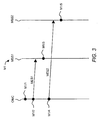
- FIG. 3 a flow diagram of a method M1 in accordance to a first embodiment of the invention is shown.
- the operation and maintenance centre OMC changes the partitioning of the radio resource allocation domain according to the parts P1 and P2 controlled by the master base stations MBS1 and MBS2.
- the operation and maintenance centre OMC also other network elements in the radio communication system RCS with control functions like for example an SGSN (Serving GPRS Support Node) or an MSC (Mobile Switching Center) in UMTS can be used for the partitioning change of the parts P1 and P2.
- SGSN Serving GPRS Support Node
- MSC Mobile Switching Center
- the change can be performed by determining new parameters like for example new positions, new sizes and/or new forms of the parts P1 and P2.
- the allocation of symbols and subchannels to the ports P1 and P2 can be chosen arbitrarily by the operation and maintenance centre OMC with the requirement that the parts P1 and P2 must be disjoined within the radio resource allocation domain of the downlink frames DF1, DF2, and DF3.
- the operation and maintenance centre OMC transmits the new parameters of the first port P1 in a first message MES1 to the first master base station MBS1.
- the first master base station MBS1 adjusts the first part P1 according to the new parameters received within the first message MES1 and controls in that way the first part P1 of the radio resource allocation domain for all slave base stations assigned to the first master base station MBS1.
- the operation and maintenance centre OMC transmits the new parameters of the second part P2 in a second message MES2 to the second master base station MBS2.
- the second master base station MBS2 adjusts the second part P2 according to the new parameters received within the second message MES2 and controls in that way the second part P2 of the radio resource allocation domain for all slave base stations assigned to the second master base station MBS2.
- the advantage of the determination of the parameters of the first part P1 and the second part P2 by the operation and maintenance centre OMC at predefined time intervals is the possibility to adapt the first part P1 and the second part P2 to the amount of the data traffic transmitted via the first master base station MBS1 and the second master base station MBS2 for a longer time scale, e.g. for a large number of downlink frames.
- the determination of the parameters of the first part P1 and the second part P2 can be also done by other network procedures not using additional supervising network elements like the operation and maintenance centre OMC. Another possibility is for example the change of the parameters by the master base stations MBS1 and MBS2 itself.
- FIG. 4 a flow diagram of a method M2 in accordance to a second embodiment of the invention is shown.
- the first master base station MBS1 wants to change the first part P1 of the radio resource allocation domain and determines new parameters of the first part P1.
- the reason for the change can be a change in the data traffic via the first master base station MBS1 within a short time fra me.
- the first master base station MBS1 transmits a request within a third message MES3 to the second master base station MBS2 to coordinate the change of the first part P1.
- the second master base station MBS2 verifies, if the first part P1, described by the new parameters do not overlap and is disjoined with the second part P2 currently controlled by the second master base station MBS2.
- the second master base station MBS2 can accept the new first part P1, it can change the new parameters of the first part P1, or it can change the parameters of the second part P2 according to the new first part P1 with the requirement that the first part P1 and the second part P2 must be disjoined.
- the second master base station MBS2 transmits an answer within a fourth message MES4 to the first master base station MBS1.
- the answer can contain for example an acknowledgement for the new first part P1 or new parameters of the first part P1 determined by the second master base station MBS2.
- the first master base station MBS1 verifies the answer of the second master base station MBS2.
- the first master base station MBS1 controls the first part P1 as requested, it controls the first part P1 as changed by the second master base stations MBS2 or it can send a new request to the second master base station MBS2.
- the method M2 can also start and end at the second master base station MBS2. Furthermore, the sequence and the number of the steps for performing the method M2 is not critical, and as can be understood by those skilled in the art, that the sequence and the number of the steps may vary without departing from the scope of the invention.
- the advantage of the determination of parameters of the first part P1 and the second part P2 by the master base stations MBS1, MBS2 itself at predefined time intervals is the possibility to adapt the first part P1 and the second part P2 to the amount of the current data traffic transmitted via the first master base station MBS1 and the second master base station MBS2 for a shorter time scale, e.g. for only a small number of downlink frames.
- the parameters of the first part P1 and the second part P2 can be determined by self-configuration and self-optimisation mechanisms performed at the master base stations MBS1 and MBS2. In that way the parts P1 and P2 can be changed without the use of any signaling messages.
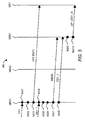
- FIG. 5 a flow diagram of a method M3 in accordance to a first application of the invention is shown.
- a first step M3/1 the first master base station MBS1 receives first downlink data DD1 via a backbone of the radio communication system RCS,
- the first master base station MBS1 schedules the first downlink data DD7 to the first part P1 of the second downlink frame DF2.
- the first master base station MBS1 transmits the second downlink frame DF2 with the first downlink data DD1 to the first mobile station MS1.
- the first master base station MBS1 receives additional first downlink data DD1_1 via the backbone of the radio communication system RCS.
- the first master base station MBS1 starts a handover for the first mobile station MS1.
- a handover is usually executed if a mobile station is at the border of a radio cell and a neighbour base station is more suitable to exchange user data with the mobile station.
- the first master base station MOBS1 determines the first frame layout FL1 for the additional first downlink data DD1_1 mapping into the first part P1 of the radio resource allocation domain.
- the first master base station MBS1 transmits the first frame layout FL1 in a fifth message MES5 to the first slave base station SBS1.
- the first master base station MBS1 forwards the additional first downlink data DD1_1 to the first slave base station SBS1.
- the first slave base station SBS1 schedules the additional first downlink data DD1_1 to the first part P1 of the first downlink frame DF1 according to the first frame layout FL1.
- the first slave base station SBS1 transmits the first downlink frame CF1 with the additional first downlink data DD1_1 to the first mobile station MS1.
- the method M3 can be used for a hard handover from the first master base station MBS1 to the first slave base station SBS1, if the first mobile station MS1 moves within the radio access network RAN.
- a hard handover is a process, wherein the first mobile station MS1 uses at a first time before the hard handover only a radio link to the first master base station MBS1 to receive or transmit user data. At a second time during the hard handover the first mobile station MS1 release the radio link to the first master base station MBS1 and then builds up a new radio link to the first slave base station SBS1 to further on receive or transmit user data.
- the main advantage of the method M3 is the possibility to control the point in time by the first master base station MBS1, when the first slave base station SBS1 starts transmission of the additional first downlink data DD1_1 to the first mobile station MS1. In that way, the transmission break for the user data can be minimised and especially real-time services will not suffer a large interruption of the packet sequence.
- the method M3 can be extended by transmitting the first frame layout FL1 and the additional first downlink data DD1_1 via multicast from the first master base station MBS1 to the first slave base station SBS1 and the second slave base station SBS2 if it cannot be foreseen to which slave base station the first mobile station MS1 will move. In that way, a longer transmission break for the user data can be avoided.
- step M4 in accordance to a further application of the invention is shown.
- step M4/2 is performed after the step M3/6 and step M4/3 is performed at the same time as the step M3/9.
- the first slave base station SBS1 does not receive the first downlink data DD1 via the first master base station MBS1 but it receives in a further step M4/1 a copy of the first downlink data DD1 from the network element NE.
- the first master base station MBS1 schedules the first downlink data DD1 to the first part P1 of the second downlink frame DF2 according to the first frame layout FL1. In that way, the first part P1 is located in identical regions of the first downlink frame DF1 and the second downlink frame DF2.
- the first master base station MBS1 transmits the second downlink frame DF2 to the first mobile station MS1 synchronized with the first downlink frame DF1, which is transmitted by the first slave base station SBS1 at a first predefined time.
- the first mobile station MS1 will receive the first downlink data DD1 with fewer transmission errors in comparison to the use of a single radio link from one base station to the mobile station.
- the overall data rate of the transmission to the first mobile station MS1 is less sensitive to single fading or shadowing effects in comparison to the case of a single radio link with a higher probability for transmission errors caused by fading or shadowing effects. Therefore the multicast transmission can increase the overall data rate from the radio access network RAN to the first mobile station MS1.
- OFDMA orthogonal frequency division multiple access
- MISO multiple input single output
- both the first downlink frame DF1 and the second downlink frame DF2 are transmitted in a collaborative MIMO mode or in a collaborative MISO mode to the first mobile station MS1.
- a specific collaborative MIMO domain which is controlled by a specific master base station
- user data or signaling data can be distributed to all mobile stations located in the specific collaborative MIMO domain.
- the specific master base station can transmit in a further alternative application of the invention the frame layout in a multicast way to all slave base stations belonging to the specific collaborative MIMO domain.
- the advantage of such a multicast transmission is the saving of resources e.g. on the connections CON1 and CON3 from the first master base station MBS1 to the first and second slave base station SBS1 and SBS2. Otherwise, two signaling messages with identical payload must be sent from the first master base station MBS1 to the first and second slave base station SBS1 and SBS2.
- a mobile station can be located within the overlap area of a slave base station and two master base stations.
- the invention can be used to send the first downlink frame DF1 with the first downlink data DD1 and the second downlink data DD2 from the first slave base station SBS1, the second downlink frame DF2 with the first downlink data DD1 from the first master base station MBS1, and the third downlink frame DF3 with the second downlink data DD2 from the second master base station MOBS2 synchronized at a second predefined time to the first mobile station MS1.
- This procedure provides the advantage, that the first mobile station MS1 is able to receive the first downlink data DD1 and the second downlink data DD2 for two adjacent collaborative MIMO domains by a single downlink frame DF1 simultaneously without a data conflict and can also receive the first downlink data DD1 in the second downlink frame DF2 and the second downlink data DD2 in the third downlink frame DF3 at the same time to improve the data constancy.
- FIG. 7 an example for the arrangement of radio cells of the radio access network RAN and the allocation of master and slave functions is shown for the special case of a hexagonal radio cell grid.
- the basic structure of the arrangement and allocation of master and slave functions is that the radio cells of the first and second master base station MBS1 and MBS2 and a radio cell of a third master base station MBS3 is surrounded by up to six radio cells belonging to different slave base stations.
- a master base station can be surrounded by less than six neighbor slave base stations.
- a first group of base stations of a first collaborative MIMO domain CMD1 comprises following base stations: the first master base station MBS1, the first slave base station SBS1, the second slave base station SBS2, an eighth slave base station SBS8, a sixth slave base station SBS6, a seventh slave base station SBS7, and a third slave base station SBS3.
- a second group of base stations of a second collaborative MIMO domain CMD2 comprises following base stations: the second master base station MBS2, the first slave base station SBS1, a fourth slave base station SBS4, an eleventh slave base station SBS11, a fifteenth slave base station SBS15, a fourteenth slave base station SBS14, and a fifth slave base station SBS5.
- a third group of base stations of a third collaborative MIMO domain CMD3 comprises following base stations: the third master base station MBS3, the second slave base station SBS2, the fifth slave base station SBS5, a thirteenth slave base station SBS13, a twelfth slave base station SBS12, a tenth slave base station SBS10, and a ninth slave base station SBS9.
- Each radio cell of each slave base station is surrounded by up to four radio cells belonging other slave base stations and up to two radio cells belonging to master base stations.
- a slave base station can be surrounded by less than four neighbor slave base stations and less than two master base stations.
- the two radio cells belonging to the first and the second master base station MBS1 and MBS2 are located at opposite sites of the radio cell of the first slave base station SBS1.
- All downlink frames used in the radio access network RAN with three different collaborative MIMO domains CMD1, CMD2, and CMD3 are split in the first part P1 for the first collaborative MIMO domains CAD1, the second part P2 for the second collaborative MIMO domain CMD2, and a third part P3 for the third collaborative MIMO domain CMD3.
- the first downlink frame DF1 of the first slave base station SBS1 comprises the two parts P1 and P2 according to the first and the second master base station MBS1 and MBS2.
- a fourth downlink frame of the fifth slave base station SBS5 comprises the two parts P2 and P3 according to the second and the third master base station MBS2 and MBS3.
- a fifth downlink frame of the second slave base station SBS2 comprises the two parts P1 and P3 according to the first and the third master base station MBS1 and MBS3.
- a sixth downlink frame of the fourth slave base station SBS4 comprises the two parts P2 and P3 according to the second master base station MBS2 and a fourth master base station MBS4. This is equal to the fourth downlink frame for the second location LOC2.
- the third master base station MBS3 and the fourth master base station MBS4 both controlling the third part P3 in different groups of base stations according to the third collaborative MIMO domain CMD3 can control the third part P3 in a uniform manner.
- the third part P3 controlled by the third master base station MBS3 and the fourth master base station MBS4 control the third part P3 in a different manner but both with the requirement that the third part P3 must be disjoined to the second part P2 being controlled by the second master base station MBS2.
- Residual resources of the resource allocation domain, not used by the parts P1, P2, and P3 can be used for mobile stations, which do not use a collaborative MIMO transmission, e.g. for mobile stations located near a base station.
- the invention can be used for any radio cell grid arrangement and is not restricted to the use of three collaborative MIMO domains CMD1; CMD2, and CMD3 and their repeated allocation to groups of base stations.
- a slave base station can have more than two neighbor radio cells belonging to different master base stations or the radio access network RAN is split into four or more repeatedly allocated collaborative MIMO domains.
- a downlink frame can be split into more than three parts.
Landscapes
- Engineering & Computer Science (AREA)
- Signal Processing (AREA)
- Computer Networks & Wireless Communication (AREA)
- Mobile Radio Communication Systems (AREA)
Claims (15)
- Ein Verfahren zur Verwendung in einem Funkkommunikationssystem (RCS), wobei das besagte Funkkommunikationssystem (RCS) mindestens drei Basisstationen (SBS1, MBS1, MBS2) umfasst, wobei eine erste (SBS1) der besagten mindestens drei Basisstationen (SBS1, MBS1, MBS2) im Nachfolgenden erste Neben-Basisstation genannt wird, eine zweite (MBS1) der besagten mindestens drei Basisstationen (MBS1, MBS2, SBS1) im Nachfolgenden erste Haupt-Basisstation genannt wird, und eine dritte (MBS2) der besagten mindestens drei Basisstationen (SBS1, MBS1, MBS2) im Nachfolgenden zweite Haupt-Basisstation genannt wird, wobei das besagte Verfahren den Schritt des Steuerns eines ersten Teils (P1) eines Funkressourcenzuweisungsbereiches an der besagten ersten Neben-Basisstation (SBS1) durch die besagte erste Haupt-Basisstation (MBS1) umfasst,
dadurch gekennzeichnet, dass das besagte Verfahren weiterhin den Schritt des Steuerns mindestens eines zweiten Teils (P2) des besagten Funkressourcenzuweisungsbereiches an der besagten ersten Neben-Basisstation (SBS1) durch die besagte zweite Haupt-Basisstation (MBS2) umfasst,
und wobei der besagte erste Teil (P1) und der besagte mindestens zweite Teil (P2) des besagten Funkressourcenzuweisungsbereiches getrennt sind. - Das Verfahren nach Anspruch 1, wobei das besagte Funkkommunikationssystem (RCS) ein OFDMA-Funkkommunikationssystem ist.
- Das Verfahren nach Anspruch 1, wobei das besagte Verfahren weiterhin den folgenden Schritt umfasst:- Ändern einer ersten Größe und eine ersten Position eines der besagten Teile (P1, P2) in vorbestimmten Zeitabständen.
- Das Verfahren nach Anspruch 3, wobei das besagte Funkkommunikationssystem (RCS) weiterhin eine Betriebs- und Wartungszentrale (OMC) umfasst, und wobei das besagte Verfahren weiterhin die folgenden Schritte umfasst:- Bestimmen der besagten ersten Größe und der besagten ersten Position des besagten Teils (P1, P2) durch die besagte Betriebs- und Wartungszentrale (OMC),- und Übertragen der besagten ersten Größe und der besagten ersten Position des besagten Teils (P1, P2) von der besagten Betriebs- und Wartungszentrale (OMC) an die entsprechende Haupt-Basisstation (MBS1, MBS2).
- Das Verfahren nach Anspruch 3, wobei das besagte Verfahren weiterhin den Schritt des Koordinierens der besagten ersten Größe und der besagten ersten Position des besagten ersten Teils (P1) und einer zweiten Größe und einer zweiten Position des besagten mindestens zweiten Teils (P2) zwischen der besagten ersten Haupt-Basisstation (MBS1) und der besagten zweiten Haupt-Basisstation (MBS2) umfasst.
- Das Verfahren nach Anspruch 1, wobei das besagte Funkkommunikationssystem (RCS) weiterhin mindestens eine Mobilstation (MS1) umfasst, wobei ein erster Abwärtsstrecken-Rahmen (DF1) den besagten Funkressourcenzuweisungsbereich mit dem besagten ersten Teil (P1) und dem besagten mindestens zweiten Teil (P2) umfasst, und wobei das besagte Verfahren weiterhin die folgenden Schritte umfasst:- Empfangen von Abwärtsstrecken-Daten(DD1, DD1_1, DD2) an einer der besagten Haupt-Basisstationen (MBS1, MBS2),- Bestimmen eines Rahmen-Layouts (FL1, FL2) zum Abbilden der besagten Abwärtsstrecken-Daten (DD1, DD1_1, DD2) in einen der besagten Teile (P1, P2) an der besagten einen der besagten Haupt-Basisstationen (MBS1, MBS2),- Übertragen des besagten Rahmen-Layouts (FL1, FL2) von der besagten einen der besagten Haupt-Basisstationen (MBS1, MBS2) an die besagte erste Neben-Basisstation (SBS1),- Empfangen der besagten Abwärtsstrecken-Daten (DD1, DD1_1, DD2) an der besagten Neben-Basisstation (SBS1),- Planen einer Übertragung der besagten Abwärtsstrecken-Daten (DD1, DD1_1, DD2) an einen der besagten Teile (P1, P2) eines ersten Abwärtsstrecken-Rahmens (DF1) gemäß dem besagten Rahmen-Layout (FL1, FL2) an der besagten ersten Neben-Basisstation (SBS1),- und Übertragen des besagten ersten Abwärtsstrecken-Rahmens (DF1) von der besagten ersten Neben-Basisstation (SBS1) an die besagte mindestens eine Mobilstation (MS1).
- Das Verfahren nach Anspruch 6, wobei das besagte Verfahren für einen Hard Handover von der besagten einen der besagten Haupt-Basisstationen (MBS1, MBS2) an die besagte erste Neben-Basisstation (SBS1) verwendet wird.
- Das Verfahren nach Anspruch 6, wobei das besagte Rahmen-Layout (FL1, FL2) ein Unterteil des besagten Teils (P1, P2) ist, und wobei das besagte Verfahren weiterhin den Schritt des Steuerns der Funkressourcen des besagten Teils (P1, P2) außerhalb des besagten Rahmen-Layouts (FL1, FL2) durch die besagte erste Neben-Basisstation (SBS1) umfasst.
- Das Verfahren nach Anspruch 6, wobei das besagte Funkkommunikationssystem (RCS) weiterhin mindestens eine zweite Neben-Basisstation (SBS2) umfasst, wobei das besagte Rahmen-Layout (FL1, FL2) von der besagten einen der besagten Haupt-Basisstationen (MBS1, MBS2) mittels einer Multicast-Übertragung an die besagte erste Neben-Basisstation (SBS1) und an die besagte mindestens zweite Neben-Basisstation (SBS2) übertragen wird.
- Das Verfahren nach Anspruch 6, wobei das besagte Verfahren für eine Multicast-Übertragung von mindestens zwei Basisstationen (SBS1, MBS1, MBS2) an die besagte mindestens eine Mobilstation (MS1) verwendet wird, wobei das besagte Verfahren weiterhin die folgenden Schritte umfasst:- Planen einer Übertragung der besagten Abwärtsstrecken-Daten (DD1, DD1_1, DD2) mit einem der besagten Teile (P1, P2) eines zweiten Abwärtsstrecken-Rahmens (DF2, DF3) gemäß dem besagten Rahmen-Layout (FL1, FL2) an der besagten einen der besagten Haupt-Basisstationen (MBS1, MBS2),- und Übertragen des besagten zweiten Abwärtsstrecken-Rahmens (DF2, DF3) von der besagten einen der besagten Haupt-Basisstationen (MBS1, MBS2) an die besagte mindestens eine Mobilstation (MS1),wobei der besagte Teil (P1, P2) in identischen Bereichen des besagten ersten Abwärtsstrecken-Rahmens (DF1) und des besagten zweiten Abwärtsstrecken-Rahmens (DF2, DF3) angeordnet ist, und wobei der besagte erste Abwärtsstrecken-Rahmen (DF1) und der besagte zweite Abwärtsstrecken-Rahmen (DF2, DF3) zu einer vorbestimmten Zeit synchron übertragen werden.
- Das Verfahren nach Anspruch 10, wobei mindestens eine der besagten Haupt-Basisstationen (MBS1, MBS2) und die besagte erste Neben-Basisstation (SB1) in einem gemeinschaftlichen MIMO-Modus oder in einem gemeinschaftlichen MISO-Modus an die besagte mindestens eine Mobilstation (MS1) übertragen.
- Ein Funkkommunikationssystem (RCS) mit mindestens drei Basisstationen (SBS1, MBS1, MBS2) umfasst, wobei eine erste (SBS1) der besagten mindestens drei Basisstationen (SBS1, MBS1, MBS2) im Nachfolgenden erste Neben-Basisstation genannt wird, eine zweite (MBS1) der besagten mindestens drei Basisstationen (SBS1, MBS1, MBS2) im Nachfolgenden erste Haupt-Basisstation genannt wird, und eine dritte (MBS2) der besagten mindestens drei Basisstationen (SBS1, MBS1, MBS2) im Nachfolgenden zweite Haupt-Basisstation genannt wird, wobei das besagte Funkkommunikationssystem (RCS) Mittel zum Steuern eines ersten Teils (P1) eines Funkressourcenzuweisungsbereiches an der besagten ersten Neben-Basisstation (SBS1) durch die besagte erste Haupt-Basisstation (MBS1) umfasst,
dadurch gekennzeichnet, dass das besagte Funkkommunikationssystem (RCS) weiterhin Mittel zum Steuern mindestens eines zweiten Teils (P2) des besagten Funkressourcenzuweisungsbereiches an der besagten ersten Neben-Basisstation (SBS1) durch die besagte zweite Haupt-Basisstation (MBS2) umfasst,
und wobei der besagte erste Teil (P1) und der besagte mindestens zweite Teil (P2) des besagten Funkressourcenzuweisungsbereiches getrennt sind. - Das Funkkommunikationssystem (RCS) nach Anspruch 13, wobei eine erste Funkzelle (C1) der besagten ersten Neben-Basisstation (SBS1) an eine zweite Funkzelle (C2) der besagten ersten Haupt-Basisstation (MBS1) und an eine dritte Funkzelle (C3) der besagten zweiten Haupt-Basisstation (MBS2) angrenzt.
- Das Funkkommunikationssystem (RCS) nach Anspruch 13, wobei das besagte Funkkommunikationssystem (RCS) umfasst:- Mittel zum Empfangen von Abwärtsstrecken-Daten (DD1, DD1_1, DD2) an einer der besagten Haupt-Basisstationen (MBS1, MBS2),- Mittel zum Bestimmen eines Rahmen-Layouts (FL1, FL2) zum Abbilden der besagten Abwärtsstrecken-Daten (DD1, DD1_1, DD2) in einen der besagten Teile (P1, P2) an der besagten einen der besagten Haupt-Basisstationen (MBS1, MBS2),- und Mittel zum Übertragen des besagten Rahmen-Layouts (FL1, FL2) über eine faseroptische oder eine drahtgebundene Verbindung (CON1, CON2) von der besagten einen der besagten Haupt-Basisstationen (MBS1, MBS2) an die besagte erste Neben-Basisstation (SBS1).
- Eine Basisstation (MBS1, MBS2), wobei die besagte Basisstation (MBS1, MBS2) Mittel zum Steuern eines ersten Teils (P1) eines Funkressourcenzuweisungsbereiches umfasst,
dadurch gekennzeichnet, dass die besagte Basisstation (MBS1, MBS2) weiterhin umfasst:- Mittel zum Empfangen einer Anforderung für das Koordinieren des besagten ersten Teils (P1) und mindestens eines zweiten Teils (P2) des besagten Funkressourcenzuweisungsbereiches,- Mittel zum Verarbeiten der besagten Anforderung gemäß einer Bedingung, dass der besagte erste Teil (P1) und der besagte zweite Teil (P2) des besagten Funkressourcenzuweisungsbereiches getrennt sind,- und Mittel zum Übertragen eines Ergebnisses der besagten Verarbeitung.
Priority Applications (7)
| Application Number | Priority Date | Filing Date | Title |
|---|---|---|---|
| EP20080305773 EP2184936B1 (de) | 2008-11-05 | 2008-11-05 | Synchronisierungsverfahren zwischen Basisstationen, Funkkommunikationssystem und Basisstation davon |
| DE200860003035 DE602008003035D1 (de) | 2008-11-05 | 2008-11-05 | Synchronisierungsverfahren zwischen Basisstationen, Funkkommunikationssystem und Basisstation davon |
| KR1020117012658A KR101223429B1 (ko) | 2008-11-05 | 2009-09-22 | 기지국들 사이의 동기화 방법, 무선 통신 시스템 및 그의 기지국 |
| JP2011533650A JP5319779B2 (ja) | 2008-11-05 | 2009-09-22 | 基地局の間の同期化方法、無線通信システム、およびその基地局 |
| CN200980144139.0A CN102204331B (zh) | 2008-11-05 | 2009-09-22 | 在基站之间的同步方法、无线电通信系统及其基站 |
| US13/127,885 US9137671B2 (en) | 2008-11-05 | 2009-09-22 | Synchronisation method between base stations, radio communication system and base station thereof |
| PCT/EP2009/062247 WO2010052062A1 (en) | 2008-11-05 | 2009-09-22 | Synchronisation method between base stations, radio communication system and base station thereof |
Applications Claiming Priority (1)
| Application Number | Priority Date | Filing Date | Title |
|---|---|---|---|
| EP20080305773 EP2184936B1 (de) | 2008-11-05 | 2008-11-05 | Synchronisierungsverfahren zwischen Basisstationen, Funkkommunikationssystem und Basisstation davon |
Publications (2)
| Publication Number | Publication Date |
|---|---|
| EP2184936A1 EP2184936A1 (de) | 2010-05-12 |
| EP2184936B1 true EP2184936B1 (de) | 2010-10-13 |
Family
ID=40427526
Family Applications (1)
| Application Number | Title | Priority Date | Filing Date |
|---|---|---|---|
| EP20080305773 Active EP2184936B1 (de) | 2008-11-05 | 2008-11-05 | Synchronisierungsverfahren zwischen Basisstationen, Funkkommunikationssystem und Basisstation davon |
Country Status (7)
| Country | Link |
|---|---|
| US (1) | US9137671B2 (de) |
| EP (1) | EP2184936B1 (de) |
| JP (1) | JP5319779B2 (de) |
| KR (1) | KR101223429B1 (de) |
| CN (1) | CN102204331B (de) |
| DE (1) | DE602008003035D1 (de) |
| WO (1) | WO2010052062A1 (de) |
Families Citing this family (17)
| Publication number | Priority date | Publication date | Assignee | Title |
|---|---|---|---|---|
| US9274851B2 (en) | 2009-11-25 | 2016-03-01 | Brocade Communications Systems, Inc. | Core-trunking across cores on physically separated processors allocated to a virtual machine based on configuration information including context information for virtual machines |
| US8295335B2 (en) * | 2009-12-31 | 2012-10-23 | Intel Corporation | Techniques to control uplink power |
| US20110228772A1 (en) * | 2010-03-19 | 2011-09-22 | Brocade Communications Systems, Inc. | Providing multicast services without interruption upon a switchover |
| EP2764744B1 (de) * | 2011-10-04 | 2018-12-19 | Samsung Electronics Co., Ltd. | Verfahren und vorrichtungen zur signalisierung und verarbeitung von steuerinformationen in einer mobilen breitband-netzwerkumgebung |
| US10581763B2 (en) | 2012-09-21 | 2020-03-03 | Avago Technologies International Sales Pte. Limited | High availability application messaging layer |
| US9967106B2 (en) | 2012-09-24 | 2018-05-08 | Brocade Communications Systems LLC | Role based multicast messaging infrastructure |
| KR20140077603A (ko) * | 2012-12-14 | 2014-06-24 | 삼성전자주식회사 | 무선 통신 시스템에서 이동성을 관리하기 위한 장치 및 방법 |
| US9241275B2 (en) * | 2013-02-28 | 2016-01-19 | Cisco Technologies, Inc. | Distributed processing distributed-input distributed-output (DIDO) wireless communication |
| KR101980132B1 (ko) * | 2013-04-26 | 2019-08-28 | 삼성전자주식회사 | 기지국간 통신을 위한 자원 할당 방법 및 장치 |
| CN104144033B (zh) * | 2013-05-10 | 2018-07-17 | 上海诺基亚贝尔股份有限公司 | 用于向从基站分发数据的方法 |
| JP6141786B2 (ja) * | 2014-03-31 | 2017-06-07 | 株式会社日立製作所 | 無線通信システム |
| US9619349B2 (en) | 2014-10-14 | 2017-04-11 | Brocade Communications Systems, Inc. | Biasing active-standby determination |
| US9668149B1 (en) | 2016-05-25 | 2017-05-30 | Cisco Technology, Inc. | Receiver stomp-and-restart in a distributed MU-MIMO system using RSSI separation |
| US10312979B2 (en) | 2016-07-27 | 2019-06-04 | Cisco Technology, Inc. | Enabling distributed access points on high bandwidth cables for band and antenna splitting |
| US10306675B2 (en) | 2017-05-03 | 2019-05-28 | Cisco Technology, Inc. | Collision detection and avoidance mechanism using distributed radio heads in a wireless network |
| CN109587632B (zh) * | 2019-01-04 | 2023-07-21 | 广州中石科技有限公司 | 定位方法及装置 |
| CN114071737A (zh) * | 2020-08-06 | 2022-02-18 | 维沃移动通信有限公司 | 发送信号的协商方法及网络侧节点 |
Family Cites Families (20)
| Publication number | Priority date | Publication date | Assignee | Title |
|---|---|---|---|---|
| GB2337415A (en) * | 1998-05-14 | 1999-11-17 | Fujitsu Ltd | Reducing interference in cellular mobile communications networks |
| GB2348776B (en) * | 1999-04-06 | 2003-07-09 | Motorola Ltd | A communications network and method of allocating resource thefor |
| CN1258948C (zh) * | 1999-08-30 | 2006-06-07 | 罗伯特·博施有限公司 | 传输信号化信息的方法,发射站,移动站和消息单元 |
| JP3927027B2 (ja) | 2001-12-21 | 2007-06-06 | 株式会社エヌ・ティ・ティ・ドコモ | リソース制御システム、リソース制御方法、及びこれらに用いて好適な基地局 |
| CN1671224A (zh) * | 2004-03-17 | 2005-09-21 | 北京天地宽科技有限公司 | 一种phs软组控方法 |
| US7428268B2 (en) * | 2004-12-07 | 2008-09-23 | Adaptix, Inc. | Cooperative MIMO in multicell wireless networks |
| EP1742427A3 (de) * | 2005-07-04 | 2008-05-21 | Motorola, Inc. | Gemeinsame Benutzung von Betriebsmitteln zwischen mehreren Kommunikationsnetzen |
| CN1964521B (zh) | 2005-11-11 | 2010-05-12 | 上海贝尔阿尔卡特股份有限公司 | 一种在无线通信网络中的无线自回传方法及装置 |
| US7623589B2 (en) * | 2006-07-14 | 2009-11-24 | Intel Corporation | Cooperative multiple-access using user-clustering and space-time-frequency coding techniques for higher reliability reception |
| US8885520B2 (en) * | 2006-07-28 | 2014-11-11 | Blackberry Limited | Multi-hop network topology system and method |
| WO2008110092A1 (fr) * | 2007-03-09 | 2008-09-18 | Huawei Technologies Co., Ltd. | Procédé, système et appareil d'établissement de communications entre des systèmes |
| CN101262696B (zh) * | 2007-03-09 | 2012-07-04 | 华为技术有限公司 | 一种实现系统间通信的方法和系统以及终端设备 |
| CN101282155B (zh) * | 2007-04-05 | 2012-09-26 | 中兴通讯股份有限公司 | 一种实现主、从基站共享中继的传输方法 |
| WO2008155764A2 (en) * | 2007-06-18 | 2008-12-24 | Duolink Ltd. | Wireless network architecture and method for base station utilization |
| GB2458258A (en) * | 2008-02-04 | 2009-09-16 | Nec Corp | Method of controlling base station loading in a mobile communication system |
| EP2091298B1 (de) * | 2008-02-18 | 2012-05-16 | Alcatel Lucent | FDD-Inband-Rückverbindung und Verfahren |
| EP2106036A1 (de) | 2008-03-25 | 2009-09-30 | Alcatel Lucent | Datensynchronisation in kollaborativem MIMO und Verfahren dafür |
| JP5512656B2 (ja) * | 2008-04-21 | 2014-06-04 | アップル インコーポレイテッド | 無線通信システムにおける中継局 |
| US20100105395A1 (en) * | 2008-10-28 | 2010-04-29 | Samsung Electronics Co., Ltd. | Method for the cell ID selection for femtocell basestation |
| US20100189038A1 (en) * | 2009-01-23 | 2010-07-29 | Runhua Chen | Circuit and method for mapping data symbols and reference signals for coordinated multi-point systems |
-
2008
- 2008-11-05 EP EP20080305773 patent/EP2184936B1/de active Active
- 2008-11-05 DE DE200860003035 patent/DE602008003035D1/de active Active
-
2009
- 2009-09-22 JP JP2011533650A patent/JP5319779B2/ja active Active
- 2009-09-22 WO PCT/EP2009/062247 patent/WO2010052062A1/en not_active Ceased
- 2009-09-22 CN CN200980144139.0A patent/CN102204331B/zh active Active
- 2009-09-22 US US13/127,885 patent/US9137671B2/en active Active
- 2009-09-22 KR KR1020117012658A patent/KR101223429B1/ko active Active
Also Published As
| Publication number | Publication date |
|---|---|
| JP5319779B2 (ja) | 2013-10-16 |
| WO2010052062A1 (en) | 2010-05-14 |
| CN102204331A (zh) | 2011-09-28 |
| JP2012507228A (ja) | 2012-03-22 |
| KR20110081899A (ko) | 2011-07-14 |
| CN102204331B (zh) | 2014-01-15 |
| DE602008003035D1 (de) | 2010-11-25 |
| US9137671B2 (en) | 2015-09-15 |
| EP2184936A1 (de) | 2010-05-12 |
| KR101223429B1 (ko) | 2013-01-17 |
| US20110222460A1 (en) | 2011-09-15 |
Similar Documents
| Publication | Publication Date | Title |
|---|---|---|
| EP2184936B1 (de) | Synchronisierungsverfahren zwischen Basisstationen, Funkkommunikationssystem und Basisstation davon | |
| US11792827B2 (en) | Single cell multicast traffic channel scheduling between two base stations | |
| US11343812B2 (en) | Radio resource allocation for access link | |
| KR102521308B1 (ko) | 패킷 복제 활성화 시그널링 | |
| JP6901107B2 (ja) | 無線リソース構成同期 | |
| EP3529945B1 (de) | Semipersistente planung in einem drahtlosen netzwerk | |
| US9088337B2 (en) | Methods and apparatuses for interference coordination in a telecommunications system | |
| EP3011765B1 (de) | Virtuelle gemeinsame mobile vorrichtung und verfahren für maschinenkommunikation | |
| US20220201544A1 (en) | Method and device for processing buffer state report in wireless communication system using inter-enb carrier aggregation technology | |
| CN103222204B (zh) | 用于降低通信系统中频分双工信号和时分双工信号之间的干扰的装置和方法 | |
| CN115699878A (zh) | 层2中继用户设备移动性 | |
| JP5056848B2 (ja) | 無線リソース割り当て方法及び無線局 | |
| JP7055150B2 (ja) | 無線通信システムにおける端末の物理サイドリンク制御チャネル(Physical Sidelink Control Channel;PSCCH)のブラインドデコーディング(blind decoding)実行方法及び前記方法を利用する端末 | |
| KR20110081086A (ko) | 무선 통신 시스템에서 시간 동기를 수신하는 방법 및 장치 | |
| EP2966898B1 (de) | Funkressourcenverwaltungsverfahren, makrobasisstation und niedrigenergieknoten | |
| EP4369825A1 (de) | Kommunikationsverfahren und kommunikationsvorrichtung | |
| WO2014103537A1 (ja) | バッファ状態報告の送信制御方法、ユーザ装置、および無線通信システム | |
| CN101123789B (zh) | 无线资源控制和分配的方法及系统 | |
| KR101571055B1 (ko) | 분산형 무선 기지국 | |
| US20250056599A1 (en) | Systems and methods for layer 3 scheduling in cell-free networks | |
| ur Rehman et al. | A Review of Medium Access Control Protocols in Next Generation Wireless Networks (IEEE 802.16) | |
| Auer et al. | IST-4-027756 WINNER II D6. 13.14 version 1.1 WINNER II System Concept Description |
Legal Events
| Date | Code | Title | Description |
|---|---|---|---|
| PUAI | Public reference made under article 153(3) epc to a published international application that has entered the european phase |
Free format text: ORIGINAL CODE: 0009012 |
|
| 17P | Request for examination filed |
Effective date: 20090401 |
|
| AK | Designated contracting states |
Kind code of ref document: A1 Designated state(s): AT BE BG CH CY CZ DE DK EE ES FI FR GB GR HR HU IE IS IT LI LT LU LV MC MT NL NO PL PT RO SE SI SK TR |
|
| AX | Request for extension of the european patent |
Extension state: AL BA MK RS |
|
| GRAP | Despatch of communication of intention to grant a patent |
Free format text: ORIGINAL CODE: EPIDOSNIGR1 |
|
| GRAS | Grant fee paid |
Free format text: ORIGINAL CODE: EPIDOSNIGR3 |
|
| GRAA | (expected) grant |
Free format text: ORIGINAL CODE: 0009210 |
|
| AK | Designated contracting states |
Kind code of ref document: B1 Designated state(s): DE FR GB |
|
| REG | Reference to a national code |
Ref country code: GB Ref legal event code: FG4D |
|
| REF | Corresponds to: |
Ref document number: 602008003035 Country of ref document: DE Date of ref document: 20101125 Kind code of ref document: P |
|
| AKX | Designation fees paid |
Designated state(s): DE FR GB |
|
| PLBE | No opposition filed within time limit |
Free format text: ORIGINAL CODE: 0009261 |
|
| STAA | Information on the status of an ep patent application or granted ep patent |
Free format text: STATUS: NO OPPOSITION FILED WITHIN TIME LIMIT |
|
| 26N | No opposition filed |
Effective date: 20110714 |
|
| REG | Reference to a national code |
Ref country code: DE Ref legal event code: R097 Ref document number: 602008003035 Country of ref document: DE Effective date: 20110714 |
|
| REG | Reference to a national code |
Ref country code: GB Ref legal event code: 732E Free format text: REGISTERED BETWEEN 20130926 AND 20131002 |
|
| REG | Reference to a national code |
Ref country code: FR Ref legal event code: GC Effective date: 20131018 |
|
| REG | Reference to a national code |
Ref country code: FR Ref legal event code: RG Effective date: 20141016 |
|
| REG | Reference to a national code |
Ref country code: FR Ref legal event code: CA Effective date: 20150521 |
|
| REG | Reference to a national code |
Ref country code: FR Ref legal event code: CA Effective date: 20150521 |
|
| REG | Reference to a national code |
Ref country code: FR Ref legal event code: PLFP Year of fee payment: 8 |
|
| REG | Reference to a national code |
Ref country code: FR Ref legal event code: PLFP Year of fee payment: 9 |
|
| REG | Reference to a national code |
Ref country code: FR Ref legal event code: PLFP Year of fee payment: 10 |
|
| REG | Reference to a national code |
Ref country code: FR Ref legal event code: PLFP Year of fee payment: 11 |
|
| PGFP | Annual fee paid to national office [announced via postgrant information from national office to epo] |
Ref country code: FR Payment date: 20250930 Year of fee payment: 18 |
|
| PGFP | Annual fee paid to national office [announced via postgrant information from national office to epo] |
Ref country code: DE Payment date: 20250930 Year of fee payment: 18 |
|
| PGFP | Annual fee paid to national office [announced via postgrant information from national office to epo] |
Ref country code: GB Payment date: 20251001 Year of fee payment: 18 |