EP2185164B1 - Composition and therapeutic anti-tumour vaccine - Google Patents
Composition and therapeutic anti-tumour vaccine Download PDFInfo
- Publication number
- EP2185164B1 EP2185164B1 EP08787072.1A EP08787072A EP2185164B1 EP 2185164 B1 EP2185164 B1 EP 2185164B1 EP 08787072 A EP08787072 A EP 08787072A EP 2185164 B1 EP2185164 B1 EP 2185164B1
- Authority
- EP
- European Patent Office
- Prior art keywords
- red blood
- blood cells
- cells
- composition
- ovalbumin
- Prior art date
- Legal status (The legal status is an assumption and is not a legal conclusion. Google has not performed a legal analysis and makes no representation as to the accuracy of the status listed.)
- Active
Links
Images
Classifications
-
- A—HUMAN NECESSITIES
- A61—MEDICAL OR VETERINARY SCIENCE; HYGIENE
- A61K—PREPARATIONS FOR MEDICAL, DENTAL OR TOILETRY PURPOSES
- A61K35/00—Medicinal preparations containing materials or reaction products thereof with undetermined constitution
- A61K35/12—Materials from mammals; Compositions comprising non-specified tissues or cells; Compositions comprising non-embryonic stem cells; Genetically modified cells
- A61K35/14—Blood; Artificial blood
- A61K35/18—Erythrocytes
-
- A—HUMAN NECESSITIES
- A61—MEDICAL OR VETERINARY SCIENCE; HYGIENE
- A61K—PREPARATIONS FOR MEDICAL, DENTAL OR TOILETRY PURPOSES
- A61K39/00—Medicinal preparations containing antigens or antibodies
- A61K39/0005—Vertebrate antigens
- A61K39/0011—Cancer antigens
-
- A—HUMAN NECESSITIES
- A61—MEDICAL OR VETERINARY SCIENCE; HYGIENE
- A61K—PREPARATIONS FOR MEDICAL, DENTAL OR TOILETRY PURPOSES
- A61K39/00—Medicinal preparations containing antigens or antibodies
- A61K39/0005—Vertebrate antigens
- A61K39/0011—Cancer antigens
- A61K39/001102—Receptors, cell surface antigens or cell surface determinants
- A61K39/001103—Receptors for growth factors
- A61K39/001106—Her-2/neu/ErbB2, Her-3/ErbB3 or Her 4/ErbB4
-
- A—HUMAN NECESSITIES
- A61—MEDICAL OR VETERINARY SCIENCE; HYGIENE
- A61K—PREPARATIONS FOR MEDICAL, DENTAL OR TOILETRY PURPOSES
- A61K39/00—Medicinal preparations containing antigens or antibodies
- A61K39/0005—Vertebrate antigens
- A61K39/0011—Cancer antigens
- A61K39/001102—Receptors, cell surface antigens or cell surface determinants
- A61K39/001122—Ephrin Receptors [Eph]
-
- A—HUMAN NECESSITIES
- A61—MEDICAL OR VETERINARY SCIENCE; HYGIENE
- A61K—PREPARATIONS FOR MEDICAL, DENTAL OR TOILETRY PURPOSES
- A61K39/00—Medicinal preparations containing antigens or antibodies
- A61K39/0005—Vertebrate antigens
- A61K39/0011—Cancer antigens
- A61K39/001136—Cytokines
- A61K39/001139—Colony stimulating factors [CSF]
-
- A—HUMAN NECESSITIES
- A61—MEDICAL OR VETERINARY SCIENCE; HYGIENE
- A61K—PREPARATIONS FOR MEDICAL, DENTAL OR TOILETRY PURPOSES
- A61K39/00—Medicinal preparations containing antigens or antibodies
- A61K39/0005—Vertebrate antigens
- A61K39/0011—Cancer antigens
- A61K39/001148—Regulators of development
- A61K39/001149—Cell cycle regulated proteins, e.g. cyclin, CDC, CDK or INK-CCR
-
- A—HUMAN NECESSITIES
- A61—MEDICAL OR VETERINARY SCIENCE; HYGIENE
- A61K—PREPARATIONS FOR MEDICAL, DENTAL OR TOILETRY PURPOSES
- A61K39/00—Medicinal preparations containing antigens or antibodies
- A61K39/0005—Vertebrate antigens
- A61K39/0011—Cancer antigens
- A61K39/001148—Regulators of development
- A61K39/00115—Apoptosis related proteins, e.g. survivin or livin
-
- A—HUMAN NECESSITIES
- A61—MEDICAL OR VETERINARY SCIENCE; HYGIENE
- A61K—PREPARATIONS FOR MEDICAL, DENTAL OR TOILETRY PURPOSES
- A61K39/00—Medicinal preparations containing antigens or antibodies
- A61K39/0005—Vertebrate antigens
- A61K39/0011—Cancer antigens
- A61K39/001148—Regulators of development
- A61K39/00115—Apoptosis related proteins, e.g. survivin or livin
- A61K39/001151—Apoptosis related proteins, e.g. survivin or livin p53
-
- A—HUMAN NECESSITIES
- A61—MEDICAL OR VETERINARY SCIENCE; HYGIENE
- A61K—PREPARATIONS FOR MEDICAL, DENTAL OR TOILETRY PURPOSES
- A61K39/00—Medicinal preparations containing antigens or antibodies
- A61K39/0005—Vertebrate antigens
- A61K39/0011—Cancer antigens
- A61K39/001152—Transcription factors, e.g. SOX or c-MYC
- A61K39/001153—Wilms tumor 1 [WT1]
-
- A—HUMAN NECESSITIES
- A61—MEDICAL OR VETERINARY SCIENCE; HYGIENE
- A61K—PREPARATIONS FOR MEDICAL, DENTAL OR TOILETRY PURPOSES
- A61K39/00—Medicinal preparations containing antigens or antibodies
- A61K39/0005—Vertebrate antigens
- A61K39/0011—Cancer antigens
- A61K39/001154—Enzymes
- A61K39/001156—Tyrosinase and tyrosinase related proteinases [TRP-1 or TRP-2]
-
- A—HUMAN NECESSITIES
- A61—MEDICAL OR VETERINARY SCIENCE; HYGIENE
- A61K—PREPARATIONS FOR MEDICAL, DENTAL OR TOILETRY PURPOSES
- A61K39/00—Medicinal preparations containing antigens or antibodies
- A61K39/0005—Vertebrate antigens
- A61K39/0011—Cancer antigens
- A61K39/001154—Enzymes
- A61K39/001157—Telomerase or TERT [telomerase reverse transcriptase]
-
- A—HUMAN NECESSITIES
- A61—MEDICAL OR VETERINARY SCIENCE; HYGIENE
- A61K—PREPARATIONS FOR MEDICAL, DENTAL OR TOILETRY PURPOSES
- A61K39/00—Medicinal preparations containing antigens or antibodies
- A61K39/0005—Vertebrate antigens
- A61K39/0011—Cancer antigens
- A61K39/001154—Enzymes
- A61K39/001158—Proteinases
- A61K39/001159—Matrix metalloproteinases [MMP]
-
- A—HUMAN NECESSITIES
- A61—MEDICAL OR VETERINARY SCIENCE; HYGIENE
- A61K—PREPARATIONS FOR MEDICAL, DENTAL OR TOILETRY PURPOSES
- A61K39/00—Medicinal preparations containing antigens or antibodies
- A61K39/0005—Vertebrate antigens
- A61K39/0011—Cancer antigens
- A61K39/001154—Enzymes
- A61K39/001162—Kinases, e.g. Raf or Src
-
- A—HUMAN NECESSITIES
- A61—MEDICAL OR VETERINARY SCIENCE; HYGIENE
- A61K—PREPARATIONS FOR MEDICAL, DENTAL OR TOILETRY PURPOSES
- A61K39/00—Medicinal preparations containing antigens or antibodies
- A61K39/0005—Vertebrate antigens
- A61K39/0011—Cancer antigens
- A61K39/001154—Enzymes
- A61K39/001164—GTPases, e.g. Ras or Rho
-
- A—HUMAN NECESSITIES
- A61—MEDICAL OR VETERINARY SCIENCE; HYGIENE
- A61K—PREPARATIONS FOR MEDICAL, DENTAL OR TOILETRY PURPOSES
- A61K39/00—Medicinal preparations containing antigens or antibodies
- A61K39/0005—Vertebrate antigens
- A61K39/0011—Cancer antigens
- A61K39/001166—Adhesion molecules, e.g. NRCAM, EpCAM or cadherins
-
- A—HUMAN NECESSITIES
- A61—MEDICAL OR VETERINARY SCIENCE; HYGIENE
- A61K—PREPARATIONS FOR MEDICAL, DENTAL OR TOILETRY PURPOSES
- A61K39/00—Medicinal preparations containing antigens or antibodies
- A61K39/0005—Vertebrate antigens
- A61K39/0011—Cancer antigens
- A61K39/001169—Tumor associated carbohydrates
- A61K39/00117—Mucins, e.g. MUC-1
-
- A—HUMAN NECESSITIES
- A61—MEDICAL OR VETERINARY SCIENCE; HYGIENE
- A61K—PREPARATIONS FOR MEDICAL, DENTAL OR TOILETRY PURPOSES
- A61K39/00—Medicinal preparations containing antigens or antibodies
- A61K39/0005—Vertebrate antigens
- A61K39/0011—Cancer antigens
- A61K39/001184—Cancer testis antigens, e.g. SSX, BAGE, GAGE or SAGE
-
- A—HUMAN NECESSITIES
- A61—MEDICAL OR VETERINARY SCIENCE; HYGIENE
- A61K—PREPARATIONS FOR MEDICAL, DENTAL OR TOILETRY PURPOSES
- A61K39/00—Medicinal preparations containing antigens or antibodies
- A61K39/0005—Vertebrate antigens
- A61K39/0011—Cancer antigens
- A61K39/001184—Cancer testis antigens, e.g. SSX, BAGE, GAGE or SAGE
- A61K39/001186—MAGE
-
- A—HUMAN NECESSITIES
- A61—MEDICAL OR VETERINARY SCIENCE; HYGIENE
- A61K—PREPARATIONS FOR MEDICAL, DENTAL OR TOILETRY PURPOSES
- A61K39/00—Medicinal preparations containing antigens or antibodies
- A61K39/0005—Vertebrate antigens
- A61K39/0011—Cancer antigens
- A61K39/001184—Cancer testis antigens, e.g. SSX, BAGE, GAGE or SAGE
- A61K39/001188—NY-ESO
-
- A—HUMAN NECESSITIES
- A61—MEDICAL OR VETERINARY SCIENCE; HYGIENE
- A61K—PREPARATIONS FOR MEDICAL, DENTAL OR TOILETRY PURPOSES
- A61K39/00—Medicinal preparations containing antigens or antibodies
- A61K39/0005—Vertebrate antigens
- A61K39/0011—Cancer antigens
- A61K39/001184—Cancer testis antigens, e.g. SSX, BAGE, GAGE or SAGE
- A61K39/001189—PRAME
-
- A—HUMAN NECESSITIES
- A61—MEDICAL OR VETERINARY SCIENCE; HYGIENE
- A61K—PREPARATIONS FOR MEDICAL, DENTAL OR TOILETRY PURPOSES
- A61K39/00—Medicinal preparations containing antigens or antibodies
- A61K39/0005—Vertebrate antigens
- A61K39/0011—Cancer antigens
- A61K39/00119—Melanoma antigens
- A61K39/001191—Melan-A/MART
-
- A—HUMAN NECESSITIES
- A61—MEDICAL OR VETERINARY SCIENCE; HYGIENE
- A61K—PREPARATIONS FOR MEDICAL, DENTAL OR TOILETRY PURPOSES
- A61K39/00—Medicinal preparations containing antigens or antibodies
- A61K39/0005—Vertebrate antigens
- A61K39/0011—Cancer antigens
- A61K39/00119—Melanoma antigens
- A61K39/001192—Glycoprotein 100 [Gp100]
-
- A—HUMAN NECESSITIES
- A61—MEDICAL OR VETERINARY SCIENCE; HYGIENE
- A61K—PREPARATIONS FOR MEDICAL, DENTAL OR TOILETRY PURPOSES
- A61K39/00—Medicinal preparations containing antigens or antibodies
- A61K39/0005—Vertebrate antigens
- A61K39/0011—Cancer antigens
- A61K39/001193—Prostate associated antigens e.g. Prostate stem cell antigen [PSCA]; Prostate carcinoma tumor antigen [PCTA]; PAP or PSGR
-
- A—HUMAN NECESSITIES
- A61—MEDICAL OR VETERINARY SCIENCE; HYGIENE
- A61K—PREPARATIONS FOR MEDICAL, DENTAL OR TOILETRY PURPOSES
- A61K39/00—Medicinal preparations containing antigens or antibodies
- A61K39/0005—Vertebrate antigens
- A61K39/0011—Cancer antigens
- A61K39/001196—Fusion proteins originating from gene translocation in cancer cells
- A61K39/001197—Breakpoint cluster region-abelson tyrosine kinase [BCR-ABL]
-
- A—HUMAN NECESSITIES
- A61—MEDICAL OR VETERINARY SCIENCE; HYGIENE
- A61K—PREPARATIONS FOR MEDICAL, DENTAL OR TOILETRY PURPOSES
- A61K39/00—Medicinal preparations containing antigens or antibodies
- A61K39/39—Medicinal preparations containing antigens or antibodies characterised by the immunostimulating additives, e.g. chemical adjuvants
-
- A—HUMAN NECESSITIES
- A61—MEDICAL OR VETERINARY SCIENCE; HYGIENE
- A61K—PREPARATIONS FOR MEDICAL, DENTAL OR TOILETRY PURPOSES
- A61K47/00—Medicinal preparations characterised by the non-active ingredients used, e.g. carriers or inert additives; Targeting or modifying agents chemically bound to the active ingredient
- A61K47/02—Inorganic compounds
-
- A—HUMAN NECESSITIES
- A61—MEDICAL OR VETERINARY SCIENCE; HYGIENE
- A61K—PREPARATIONS FOR MEDICAL, DENTAL OR TOILETRY PURPOSES
- A61K47/00—Medicinal preparations characterised by the non-active ingredients used, e.g. carriers or inert additives; Targeting or modifying agents chemically bound to the active ingredient
- A61K47/06—Organic compounds, e.g. natural or synthetic hydrocarbons, polyolefins, mineral oil, petrolatum or ozokerite
- A61K47/22—Heterocyclic compounds, e.g. ascorbic acid, tocopherol or pyrrolidones
-
- A—HUMAN NECESSITIES
- A61—MEDICAL OR VETERINARY SCIENCE; HYGIENE
- A61K—PREPARATIONS FOR MEDICAL, DENTAL OR TOILETRY PURPOSES
- A61K47/00—Medicinal preparations characterised by the non-active ingredients used, e.g. carriers or inert additives; Targeting or modifying agents chemically bound to the active ingredient
- A61K47/06—Organic compounds, e.g. natural or synthetic hydrocarbons, polyolefins, mineral oil, petrolatum or ozokerite
- A61K47/26—Carbohydrates, e.g. sugar alcohols, amino sugars, nucleic acids, mono-, di- or oligo-saccharides; Derivatives thereof, e.g. polysorbates, sorbitan fatty acid esters or glycyrrhizin
-
- A—HUMAN NECESSITIES
- A61—MEDICAL OR VETERINARY SCIENCE; HYGIENE
- A61P—SPECIFIC THERAPEUTIC ACTIVITY OF CHEMICAL COMPOUNDS OR MEDICINAL PREPARATIONS
- A61P35/00—Antineoplastic agents
-
- A—HUMAN NECESSITIES
- A61—MEDICAL OR VETERINARY SCIENCE; HYGIENE
- A61P—SPECIFIC THERAPEUTIC ACTIVITY OF CHEMICAL COMPOUNDS OR MEDICINAL PREPARATIONS
- A61P37/00—Drugs for immunological or allergic disorders
- A61P37/02—Immunomodulators
- A61P37/04—Immunostimulants
-
- C—CHEMISTRY; METALLURGY
- C07—ORGANIC CHEMISTRY
- C07K—PEPTIDES
- C07K16/00—Immunoglobulins [IG], e.g. monoclonal or polyclonal antibodies
- C07K16/18—Immunoglobulins [IG], e.g. monoclonal or polyclonal antibodies against material from animals or humans
- C07K16/28—Immunoglobulins [IG], e.g. monoclonal or polyclonal antibodies against material from animals or humans against receptors, cell surface antigens or cell surface determinants
- C07K16/2803—Immunoglobulins [IG], e.g. monoclonal or polyclonal antibodies against material from animals or humans against receptors, cell surface antigens or cell surface determinants against the immunoglobulin superfamily
- C07K16/2806—Immunoglobulins [IG], e.g. monoclonal or polyclonal antibodies against material from animals or humans against receptors, cell surface antigens or cell surface determinants against the immunoglobulin superfamily against CD2
-
- A—HUMAN NECESSITIES
- A61—MEDICAL OR VETERINARY SCIENCE; HYGIENE
- A61K—PREPARATIONS FOR MEDICAL, DENTAL OR TOILETRY PURPOSES
- A61K39/00—Medicinal preparations containing antigens or antibodies
- A61K2039/51—Medicinal preparations containing antigens or antibodies comprising whole cells, viruses or DNA/RNA
- A61K2039/515—Animal cells
- A61K2039/5154—Antigen presenting cells [APCs], e.g. dendritic cells or macrophages
-
- A—HUMAN NECESSITIES
- A61—MEDICAL OR VETERINARY SCIENCE; HYGIENE
- A61K—PREPARATIONS FOR MEDICAL, DENTAL OR TOILETRY PURPOSES
- A61K39/00—Medicinal preparations containing antigens or antibodies
- A61K2039/51—Medicinal preparations containing antigens or antibodies comprising whole cells, viruses or DNA/RNA
- A61K2039/515—Animal cells
- A61K2039/5156—Animal cells expressing foreign proteins
-
- A—HUMAN NECESSITIES
- A61—MEDICAL OR VETERINARY SCIENCE; HYGIENE
- A61K—PREPARATIONS FOR MEDICAL, DENTAL OR TOILETRY PURPOSES
- A61K39/00—Medicinal preparations containing antigens or antibodies
- A61K2039/555—Medicinal preparations containing antigens or antibodies characterised by a specific combination antigen/adjuvant
- A61K2039/55511—Organic adjuvants
- A61K2039/55522—Cytokines; Lymphokines; Interferons
-
- A—HUMAN NECESSITIES
- A61—MEDICAL OR VETERINARY SCIENCE; HYGIENE
- A61K—PREPARATIONS FOR MEDICAL, DENTAL OR TOILETRY PURPOSES
- A61K39/00—Medicinal preparations containing antigens or antibodies
- A61K2039/555—Medicinal preparations containing antigens or antibodies characterised by a specific combination antigen/adjuvant
- A61K2039/55511—Organic adjuvants
- A61K2039/55561—CpG containing adjuvants; Oligonucleotide containing adjuvants
-
- A—HUMAN NECESSITIES
- A61—MEDICAL OR VETERINARY SCIENCE; HYGIENE
- A61K—PREPARATIONS FOR MEDICAL, DENTAL OR TOILETRY PURPOSES
- A61K39/00—Medicinal preparations containing antigens or antibodies
- A61K2039/57—Medicinal preparations containing antigens or antibodies characterised by the type of response, e.g. Th1, Th2
- A61K2039/572—Medicinal preparations containing antigens or antibodies characterised by the type of response, e.g. Th1, Th2 cytotoxic response
-
- A—HUMAN NECESSITIES
- A61—MEDICAL OR VETERINARY SCIENCE; HYGIENE
- A61K—PREPARATIONS FOR MEDICAL, DENTAL OR TOILETRY PURPOSES
- A61K39/00—Medicinal preparations containing antigens or antibodies
- A61K2039/60—Medicinal preparations containing antigens or antibodies characteristics by the carrier linked to the antigen
- A61K2039/6031—Proteins
- A61K2039/6056—Antibodies
Definitions
- the present invention relates to a composition which induces, in a host, a cytotoxic response for anti-tumour purposes, and also to a therapeutic anti-tumour vaccine containing this composition.
- tumour antigens The natural immune response against tumour antigens is relatively ineffective and various mechanisms allowing tumours to escape the anti-tumour immune response have been identified.
- Conventional vaccine approaches generate humoral responses which prove to be insufficient.
- Dendritic cells are antigen-presenting cells (APCs) that are very effective in generating cytotoxic effectors specific for tumour cells. They are capable of phagocytizing apoptotic cells or apoptotic bodies originating from tumour cells, and then of presenting the tumour antigens, in association with MHC class I and II molecules, to T lymphocytes. Thus, the dendritic cell is capable of initiating the proliferation and the generation of a clone of specific cytolytic T lymphocytes. At the end of this reaction, the killer lymphocytes thus differentiated leave the lymphoid compartment so as to circulate in the organism and bind in the tumour. Recognition of the antigens expressed by a tumour then induces a lytic signal and brings about the destruction of the tumour cells.
- APCs antigen-presenting cells
- the dendritic cells are differentiated from blood cells taken from the patient: they are cultured and matured, "pulsed", i.e. stimulated, ex vivo with tumour peptides, tumour lysates, apoptotic tumour cells, or heat shock proteins extracted from autologous tumours, and finally reinjected into the patient.
- the stimulation of the dendritic cells is carried out after injection, into the patient, of peptides, proteins, irradiated tumour cells or else viruses containing the antigenic peptide targeting the dendritic cells.
- the cytotoxic response obtained is rarely accompanied by clinical efficacy.
- the activation of the dendritic cell "conditions" its ability to effectively activate the cytolytic T lymphocyte.
- the level of activation of dendritic cells appears to be a delicate point in this vaccine strategy.
- dendritic cells ex vivo raises a certain number of issues on: the state of maturation of the dendritic cells, the number of cells to be injected, the route, the site and the frequency of injection for producing dendritic cells capable of migrating to the secondary lymphoid organs and of inducing an effective cytotoxic T response ( Banchereau J, Schuler-Thurner B, Palucka AK, Schuler G. [Dendritic cells as vectors for therapy] Cell. 2001, 10, 106(3): 271-4 .).
- dendritic cells in vivo is, for its part, limited by the weak immunogenic capacity of tumour antigens and the difficulty in activating dendritic cells at a sufficient level.
- red blood cells as carriers for transporting antigens, encapsulated in the red blood cells or bound to their surface, and delivered to the APCs has been envisaged in several publications.
- the triggered immune responses have been investigated in vitro and in vivo.
- Hamidi et al. have recently described the encapsulation of BSA (bovine serum albumin) as a model of an antigen in human red blood cells ( Hamidi M et al., Drug Deliv., 2007; 14(5):295-300 and Int J Pharm., 2007, 29, 338(1-2): 70-8 ). The authors suggested the use of red blood cells as a vector for the presentation of antigens to APCs of the reticuloendothelial system (RES). In another review published by Hamidi et al. (J. Control.
- a humoral immune response can be obtained in vivo after immunization with antigen-loaded red blood cells.
- the study carried out by Murray et al. made it possible to detect, in mice, IgG immunoglobulins after intravenous injection of murine red blood cells loaded with one of the following four antigens: KLH (Keyhole Limpet Haemocyanin), BSA (Bovine Serum Albumin), CTB (Cholera Toxin b Subunit) and ADA (Bovine Adenosine Deaminase).
- IgG1 and IgG3 which are predominant immunoglobulin isotypes during a Th2 response, and of IgG2, immunoglobulin isotype which is a marker for a Th1 response, would suggest the involvement of both types of immune responses, the humoral response and the cellular response ( Murray AM et al., Vaccine., 2006 28, 24(35-36): 6129-39 ).
- Boberg et al. injected mice intraperitoneally with a vaccine constituted of peptides derived from the HIV-1 protease anchored at the surface of mouse red blood cells by means of the avidin/biotin system. They chemically modified red blood cells with the aim of promoting their recognition by APCs, but a weak immune reaction was obtained. They concluded that the small amount of antigens delivered, due to the limited loading of red blood cells with antigenic peptides and blood volume injected was not compensated for by the chemical modification of the carriers supposed to promote antigen recognition by APCs ( Boberg A. et al., Infect. Agents Cancer. , 2007, 182: 9 ).
- the present invention aims to provide compositions and vaccines that can be used in the treatment of cancers, according to an immunotherapy approach.
- An object of the invention is therefore a composition as defined in claim 1.
- the term "host” refers preferably to humans, but also to animals, in particular pets (especially dogs or cats) and animals for sport (especially horses).
- the red blood cells contain, i.e. encapsulate, the antigen, which means that the antigen is or is essentially inside the red blood cell.
- Said red blood cells are preferably designed, selected or modified so as to promote phagocytosis thereof by APCs, and most particularly by dendritic cells.
- said red blood cells are designed, selected or modified so as to promote phagocytosis thereof in the spleen and the liver, the essential objective being to target APCs of the spleen.
- the compositions according to the invention comprise red blood cells which contain the antigen and target the spleen.
- the composition promotes phagocytosis of these red blood cells by the APCs, in particular the dendritic cells, in the spleen.
- the red blood cells contain a tumour antigen and are in the form of an immune complex with an immunoglobulin which recognizes an epitope at the surface of said red blood cells, so as to promote the phagocytosis of said red blood cells, in particular by dendritic cells.
- the composition also makes it possible to promote phagocytosis by macrophages.
- the immunoglobulin is an immunoglobulin G.
- the formation of the immune complex involves red blood cells and at least one antibody, preferably of IgG subtype.
- Dendritic cells have, at their surface, receptors for the constant Fc region of immunoglobulins G (IgGs). These receptors are capable of triggering phagocytosis or internalization of the antigen-IgG immune complexes thus formed and of promoting antigen presentation by MHC class I and II molecules, resulting in the generation of CD4 + helper lymphocytes and especially CD8 + cytotoxic lymphocytes ( A. Regnault et al., J. Exp. Med., Janvier 1999, 189(2): 371-80 ).
- Anti-glycophorin A antibodies are a preferred modality.
- the red blood cells of human origin that are used to form an immune complex are heterologous red blood cells originating from a donor.
- the red blood cells contain a tumour antigen and are heat or chemically modified, so as to promote phagocytosis of said red blood cells, in particular by dendritic cells.
- the composition also makes it possible to promote phagocytosis by macrophages.
- the heat treatment is in particular carried out under the following conditions: heating of red blood cells for about 15 minutes to about 90 minutes, preferably from about 25 to about 50 minutes, at a temperature of between about 42 and about 55°C, preferably between about 47 and about 51 °C.
- red blood cells are heated for about 30 minutes at between about 48 and about 50°C, for example at about 48°C.
- the chemical treatment is carried out using agents which modify the surface of red blood cells, and in particular bridging or crosslinking agents such as bis(sulphosuccinimidyl) suberate (BS3 or BS 3 ), glutaraldehyde or neuraminidase.
- agents which modify the surface of red blood cells and in particular bridging or crosslinking agents such as bis(sulphosuccinimidyl) suberate (BS3 or BS 3 ), glutaraldehyde or neuraminidase.
- the composition then comprises antigen-containing red blood cells which are in the form of an immune complex and are heat or chemically treated so as to promote their uptake in the spleen and/or the liver, preferably the spleen, and phagocytosis by APCs, in particular by dendritic cells.
- the antigen-contaning red blood cells are xenogenic. Injection of xenogenic red blood cells into humans results in the binding of the patient's natural antibodies to the injected red blood cells.
- the immune complex thus formed promotes phagocytosis by APCs, in particular by dendritic cells.
- said red blood cells are of porcine origin.
- the xenogenic red blood cells are heat or chemically modified so as to promote phagocytosis thereof.
- composition according to the invention may comprise one or more tumour antigens.
- said tumour antigens are preferably selected so as to induce an immune response against one type of tumour or of tumour cells.
- the composition preferably comprises at least two tumour antigens representative of the tumour to be treated.
- the objective is to generate several clones of cytotoxic T lymphocytes which each recognizes a specific antigenic peptide so as to develop a more effective immune response.
- the composition comprises at least two populations of red blood cells, each encapsulating a different antigen.
- Tumour-specific antigens Genes BAGE-1 GAGE-1,2,8 GAGE-3,4,5,6,7 GnTVf HERV-K-MEL KK-LC-1 KM-HN-1 LAGE-1 MAGE-A1 MAGE-A2 MAGE-A3 MAGE-A4 MAGE-A6 MAGE-A9 MAGE-A10 MAGE-A12 MAGE-C2 mucin k NA-88 NY-ESO-1 / LAGE-2 SAGE Sp17 SSX-2 SSX-4 TRAG-3 TRP2-INT2g b) Differentiation antigens Gene / protein Tumour CEA Intestinal carcinoma gp100 / Pmel17 Melanoma Kallikrein 4 Prostate mammaglobin-A Breast cancer Melan-A / MART-1 Melanoma NY-BR-1 Breast cancer OA1 Melanoma PSA Prostate carcinoma RAB38 / NY-MEL-1 Melanoma TRP-1 / gp75
- Van der Bruggen et al. have produced a database referencing all human tumour antigens recognized by T lymphocytes and usable in cancer immunotherapy approaches according to the invention: http://www.cancerimmunity.org/peptidedatabase/Tcellepitopes.htm.
- antigens may be used in the invention such as: Gastrin 17, Human Chorionic Gonadotropin, EGFRvIII, HER2, HER2/neu, P501, Guanylyl Cyclase C, PAP.
- antigen encompasses antigens of natural or synthetic or artificial origin, antigens originating from the patient to be treated, antigenic fragments, derivatives or variants, so long as the antigen is able to inititiate the appropriate immune response.
- the antigens may be for example extracted, chemically synthesized or produced via genetic engeneering.
- dendritic cells In order to generate an effective immune response, dendritic cells have to be active and mature, they have to produce cytokines and chemokines and to express costimulation molecules that are necessary for the recruitment and activation of T lymphocytes.
- adjuvants can be used to stimulate APCs, and in particular dendritic cells.
- Bacterial or viral RNA or DNA, heat shock proteins (HSPs), sugars, immune complexes and cytokines are various factors which induce APC maturation, and in particular dendritic cell maturation mediated by the stimulation of specific receptors (Toll-like receptor TLR, mannose receptor).
- Toll-like receptor TLR, mannose receptor specific receptors
- Macrophages and dendritic cells do not all express the same receptors at their surface.
- the choice of the adjuvant therefore relates to a molecule capable of generating a cytotoxic immune response in humans and for which the receptor is found at the surface of the cells taking up the red blood cells of the invention, and therefore in particular at the surface of dendritic cells.
- the adjuvant is a molecule encapsulated inside red blood cells or attached to the surface of red blood cells. These are preferably the red blood cells containing the antigen.
- the adjuvant is encapsulated in, or attached to the surface of, other red blood cells treated separately.
- red blood cells may also be modified or selected so as to promote phagocytosis thereof by APCs, in particular by dendritic cells. They may thus be, as previously described, in the form of an immune complex, or thermally or chemically modified, or else be xenogenic.
- the adjuvant is a separate adjuvant composition, that can be administered simultaneously with or separately from the red blood cells containing the antigen.
- the adjuvant can be in a separate composition (red blood cell composition or adjuvant composition), the adjuvant can be administered concomitantly with the red blood cells containing the antigen, as a separate administration or in the form of a mixture, or administered separately, for example after the administration of the red blood cells comprising the antigen, in particular a few hours or days apart.
- the primary compartment of a dialysis element (for example, dialysis tubing or a dialysis cartridge) is continuously fed with a suspension of red blood cells, while the secondary compartment contains an aqueous solution which is hypotonic with respect to the suspension of red blood cells, in order to lyse the red blood cells; next, in a resealing unit, the resealing of the red blood cells is induced in the presence of the tumour antigen by increasing the osmotic and/or oncotic pressure, and then a suspension of red blood cells containing the tumour antigen is collected.
- a dialysis element for example, dialysis tubing or a dialysis cartridge
- the “internalization” is intended to mean penetration of the tumour antigen inside the red blood cells.
- the red blood cell pellet is suspended in an isotonic solution at a high haematocrit level, greater than or equal to 65%, and preferably greater than or equal to 70%, and this suspension is cooled to between + 1 and + 8°C, preferably between + 2 and 6°C, typically in the region of + 4°C.
- the haematocrit level is between 65% and 80%, preferably between 70% and 80%.
- the osmotic fragility is advantageously measured on the red blood cells just before the lysis step.
- the red blood cells or the suspension containing them are (is) advantageously at a temperature close to or identical to the temperature selected for the lysis.
- the osmotic fragility measurement is exploited rapidly, i.e. the lysis process is carried out shortly after the sample has been taken.
- this period of time between taking the sample and beginning the lysis is less than or equal to 30 minutes, more preferably still less than or equal to 25, and even less than or equal to 20 minutes.
- the composition according to the invention comprises, at the end, a suspension of red blood cells at a haematocrit level of between about 40% and about 70%, preferably between about 45% and about 55%, better still about 50%. It is preferably packaged in a volume of about 10 to about 250 ml.
- the packaging is preferably in a blood bag of the type suitable for blood transfusion.
- the amount of encapsulated tumour antigen corresponding to the medical prescription is preferably entirely contained in the blood bag.
- An object of the present invention is also a therapeutic anti-tumour vaccine comprising an effective amount of one or more compositions according to the invention.
- the vaccine may comprise a composition according to the invention, itself containing a population of red blood cells encapsulating one or more tumour antigens, in the presence or absence of encapsulated or nonencapsulated adjuvant, or at least two compositions according to the invention with different populations of red blood cells encapsulating one or more tumour antigens, in the presence of encapsulated or nonencapsulated adjuvant.
- compositions and vaccines of the invention may be used in a method for inducing, in a patient, a cytotoxic cellular response against tumour cells or a tumour.
- This method comprises the administration to this patient of an effective amount of a composition according to the invention, in particular intravenously, by injection or infusion, preferably by infusion.
- This method is aimed in particular at inducing activation of the patient's dendritic cells and a CD8 + cytotoxic cellular response.
- a specific CD4 + helper and CD8 + cytotoxic response is obtained.
- compositions and vaccines of the invention may be used in an anticancer treatment method for inducing, in a patient, a cytotoxic cellular response as described above, against tumour cells or a tumour.
- This method comprises the administration to this patient of an effective amount of an anti-tumour vaccine according to the invention, in particular intravenously, by injection or infusion, preferably by infusion.
- About 10 to about 250 ml of a suspension of red blood cells at a haematocrit level of between about 40% and about 70%, preferably between about 45% and about 55%, better still about 50%, may be administered.
- An object of the invention is also the use of a composition according to the invention, for the manufacture of a therapeutic anti-tumour vaccine.
- compositions and vaccines of the invention may be used for inducing, in a host, a cytotoxic cellular response mediated by dendritic cells and directed against tumour cells or a tumour.
- Another object of the invention is a composition according to the inbvention, for use as a therapeutic anti-tumour vaccine.
- Example 1 Method for encapsulating ovalbumin in murine and human red blood cells and in porcine red blood cells
- Ovalbumin protein of 45 kDa, hen egg ovalbumin
- OF1 mice or C57BI/6 mice murine red blood cells
- the red blood cell suspension is washed several times before being brought to a haematocrit of 70% for the dialysis.
- the dialysis is carried out in dialysis tubing in a lysis buffer of low osmolarity for about 1 hour or 30 min when the dialysis occurs after a heat treatment.
- the red blood cells are then resealed by means of a solution of high osmolarity for 30 minutes. After a few washes, the final product is taken up in a buffer, Sag-mannitol, and haematocrit is brought to 50%.
- Ovalbumin is herein encapsulated in the murine red blood cells by the method of hypotonic dialysis in a dialysis column.
- the red blood cell suspension is washed several times before being brought to a haematocrit of 70% for the dialysis.
- the dialysis is carried out in a dialysis column in a lysis buffer of low osmolarity for about 10 min.
- the red blood cells are resealed by means of a solution of high osmolarity for 30 minutes at 37°C.
- the final product is taken up in a NaCl glucose buffer containing glucose SAG mannitol, or decomplemented plasma, and haematocrit is brought back to 50%.
- the red blood cells are washed several times before being brought to a haematocrit of 10%. They are then heated for 30 minutes at 48°C.
- the suspension of red blood cells encapsulating ovalbumin is washed several times before being brought to 10 9 cells/ml for the in vivo test and 10 8 cell/ml for the in vitro test. It is incubated with the anti-TER119 antibody (10 ⁇ g/ml for the in vitro test and 23 ⁇ g/ml or 5 ⁇ g/ml for the in vivo test) for 30 minutes at 4°C. After a few washes, the final product is taken up in a buffer with injectable qualities, and haematocrit is brought to 50%.
- the suspension of red blood cells encapsulating ovalbumin is washed several times before being brought to 1.7 ⁇ 10 6 cell/ ⁇ l with PBS and mixed with one volume of a buffer solution of 2 mM BS3 (the BS3 solution contains glucose and phosphate buffer, pH 7.4), so as to obtain a final BS3 concentration of 1 mM.
- the cells are incubated for 30 minutes at room temperature.
- the reaction is quenched by adding one volume of 20 mM Tris-HCl. After incubation at room temperature for 5 minutes, the mixture is centrifuged at 800 g for 5 min, 4°C.
- the cells are then washed twice with PBS containing glucose (centrifugation at 800 g) and once with SAG-mannitol (centrifugation at 1000 g) for 10 min, before constituting the final products.
- Example 5 Measurement of the phagocytosis of ovalbumin-containing red blood cells by dendritic cells in vitro
- the effect of the various treatments (heat and antibody) on the phagocytosis efficiency of the red blood cells obtained according to variant 1 of example 1, by dendritic cells, is measured in vitro.
- the red blood cells are labelled with a fluorescent label, CFSE (carboxyfluorescein succinimidyl ester), for 20 min at 4°C.
- CFSE is a non-fluorescent dye which diffuses through the cell membrane. Once inside the cell, the molecule becomes fluorescent subsequent to its cleavage by intracellular esterases.
- Dendritic cells are isolated from the spleen of C57BI/6 mice using magnetic beads. These beads carry antibodies which recognize the CD11c marker, thereby making it possible to isolate the CD11c + dendritic cell fraction.
- the CFSE-labelled or unlabelled red blood cells are then incubated with the dendritic cells (10 ⁇ 10 6 cell/ml) at a ratio of 20:1 in a final volume of 200 ⁇ l/well of round-bottomed 96-well culture plates for 4 hours at 37°C and 5% CO 2 . After culturing for 4 hours, the red blood cells not ingested by the dendritic cells are lysed with NH 4 Cl, and several washes are carried out. The capture of the CFSE fluorochrome by the dendritic cells is then measured by flow cytometry ( R. Segura et al., J. Immunol, January 2006, 176(1): 441-50 ).
- Table 1 Percentage of dendritic cells having phagocytosed fluorescent red blood cells: Red blood cell population % of dendritic cells (A) 4% (B) 27% (C) 36%
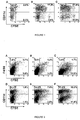
- the murine red blood cells loaded with ovalbumin and treated with the anti-TER 119 antibody were more efficiently phagocytosed by the dendritic cells isolated from the spleen than the untreated red blood cells in vitro, after 4 hours of coculture ( Figure 1 , respectively C and B). 36% of the dendritic cells phagocytosed the red blood cells carrying the antibody, against only 27% in the absence of antibody. Phagocytosis of the antibody-treated red blood cells by a population not expressing the CD11c dendritic cell marker was also observed (10.9%; Figure 1, C ).
- Example 6 Measurement of the phagocytosis of red blood cells containing ovalbumin, by macrophages and dendritic cells of the spleen and liver in vivo on mice
- Each batch is labelled with CFSE and injected intravenously into C57BI/6 mice.
- the blood, the spleen and the liver of the mice are taken.
- the percentage of fluorescent red blood cells circulating in the blood of the mice is measured by flow cytometry.
- the fluorescence incorporated into the spleen macrophages expressing the F4/80 marker ( Figure 2 , A, B, C), into the liver macrophages expressing the F4/80 marker and into the spleen dendritic cells expressing the CD11 c marker ( Figure 2 , D, E, F) is measured by flow cytometry.
- Table 2 Percentage of macrophages or dendritic cells from the spleen, having phagocytosed fluorescent red blood cells 3 hours after injection into the mouse: Batches Macrophages Dendritic cells 1 28% 5% 2 68% 19% 3 81% 22%
- the murine red blood cells loaded with ovalbumin and heat-treated or treated with the anti-TER 119 antibody are almost no longer present in the blood of the mouse (1.6% and 1 %), whereas there are still untreated, ovalbumin-loaded red blood cells in the blood of the mouse (4.6%).
- red blood cells that have been heat-treated or treated with the anti-TER 119 antibody are phagocytosed by the F4/80 macrophages and CD11 c dendritic cells of the spleen ( Figure 2 ).
- the red blood cells treated with the anti-TER 119 antibody were more efficiently phagocytosed by the F4/80 macrophages of the spleen than the heat-treated red blood cells or the untreated red blood cells ( Figure 2 , A, B, C). 81% of the spleen macrophages phagocytosed the antibody-treated red blood cells, against 68% of macrophages having phagocytosed the heat-treated red blood cells and only 28% in the untreated batch (Table 2).
- the heat-treated or antibody-treated red blood cells were also more efficiently phagocytosed by the CD11c dendritic cells from the spleen than the untreated red blood cells ( Figure 2 ). Respectively 22% and 19% of dendritic cells phagocytosed the antibody-treated red blood cells and the heat-treated red blood cells, against only 5% in the case of the untreated red blood cells (Table 2).
- Phagocytosis of the antibody-treated red blood cells by a population from the spleen not expressing the CD11 c dendritic cell marker or the F4/80 macrophage marker was also observed (11.9% and 12.8%, Figure 2 ).
- Table 3 Percentage of liver macrophages having phagocytosed fluorescent red blood cells 3 hours after injection into the mouse. Batches Macrophages 1 24% 2 40% 3 50%
- the heat-treated red blood cells or the red blood cells treated with the anti-TER 119 antibody are phagocytosed by the F4/80 macrophages of the liver.
- the red blood cells treated with the anti-TER 119 antibody were more efficiently phagocytosed by the F4/80 macrophages of the liver than the heat-treated red blood cells or than the untreated red blood cells. 50% of the liver macrophages phagocytosed the antibody-treated red blood cells, against 40% of macrophages having phagocytosed the heat-treated red blood cells and only 24% in the untreated batch (table 3).
- the binding of the antibody to the red blood cells and the heat treatment allowed efficient targeting of the red blood cells in the spleen and the liver, and a significant increase in the percentage of dendritic cells and of macrophages capable of phagocytizing these red blood cells.
- Example 7 Measurement of the phagocytosis of mouse red blood cells containing fluorescent ovalbumin by bone marrow macrophages and dendritic cells in vivo
- This study is an autologous study, since OF1 mouse red blood cells are injected into OF1 mice.
- the fluorescence incorporated into the macrophages expressing the F4/80 marker or the CD11 b marker, the granulocytes expressing the Gr1 marker, the myeloid dendritic cells expressing the CD11c and CD11 b markers and into the plasmacytoid dendritic cells expressing the CD11 c and CD8 markers is measured by flow cytometry.
- Table 4 Percentage of bone marrow macrophages, granulocytes or dendritic cells having phagocytosed fluorescent ovalbumin 1 hour 30 min after the injection: Batches F4/80 macrophages C11b macrophages Granulocytes Myeloid dendritic cells Plasmacytoid dendritic cells 1 2.5 0.05 12.5 2.7 2.4 2 3.3 0 15.5 2.2 3.4 3 17.7 1.75 21 15.3 6 4 2.4 0 13 1.6 2.4 5 0.5 0.1 1.3 0.8 1.5
- the ovalbumin-loaded red blood cells treated with the anti-TER 119 antibody were efficiently phagocytosed by the F4/80 macrophages, the granulocytes and the dendritic cells of the bone marrow.
- the myeloid dendritic cells of the bone marrow are the cells most involved in the phagocytosis of the ovalbumin-loaded red blood cells treated with the anti-TER 119 antibody.
- red blood cells treated with the anti-TER 119 antibody allows the best targeting and phagocytosis of the red blood cells by immune cells in the bone marrow.
- Example 8 Measurement of the ovalbumin-specific CD4 T cell response after a single injection of ovalbumin-loaded red blood cells and of Poly(I:C) adjuvant
- OVA ovalbuproliferin
- the evaluation of the CD4 T cell response is realized using an adaptation of the methods described in Russo V. et al. The Journal of Clinical Investigation, 2007, 117 : 3087-3096 ; Stoitzner P. et al., The Journal of Immunology 2008, 180 : 1991-1998 .
- the CD4 T cells of OT-II transgenic mice (Charles River, ref C57BL/6-Tg(TcraTcrb425Cbn/Crl)) are used to measure the OVA-specific CD4 T cell response.
- the OT-II mice are mice expressing only CD4 T cells which recognize the ovalbumin peptide 323-339 associated with major histocompatibility complex class II molecules.
- the OT-II transgenic CD4 T cells are isolated from the spleen of OT-II mice and labelled with CFSE, before being injected intravenously into Ly5.1 mice.
- OT-II mice and Ly5.1 mice have the same genetic background, but the cells of both types of mice can be identified by means of the CD45 marker. This is because the cells of OT-II mice express the CD45.2 marker, whereas the Ly5.1 mice express the CD45.1 marker.
- the Ly5.1 mice receive an intravenous injection of the following batches. Three mice are injected with the batches containing red blood cells and two mice are injected with the batches containing free OVA or the control. Two batches of 183 ⁇ 10 7 red blood cells of C57BI/6 mice loaded with ovalbumin (Serlabo Technologies, ref WO-LS003054) prepared using variant 2 of example 1 and treated or not with the anti-TER 119 antibody (as described in example 3) are prepared. The adjuvant, Poly (I:C) (Invivogen, ref tlrl-pic), is added to these batches, as well as to the batch containing free ovalbumin. The amount of Poly (I:C) injected per mouse is 25 ⁇ g. The amount of OVA injected into the mice is indicated in Table 5.
- Poly (I:C) Invivogen, ref tlrl-pic
- mice Three days after the injection of the batches, the mice are sacrificed and the spleens of the mice are removed.
- the percentage of OVA-specific CD4 T cells in the spleen of the mice is measured by flow cytometry using the CD4 and CD45.2 markers (Table 5).
- the number of OVA-specific CD4 T cells is calculated from the percentage of OVA-specific CD4 T cells and the number of total lymphocytes counted with trypan blue (Invitrogen, ref 15250061) (Table 5).
- the proliferation and the activation of the OVA-specific CD4 T cells in the spleen of the mice is measured by flow cytometry using the CD4, CD44 and CD45.2 markers and using CFSE (Tables 6 and 7).
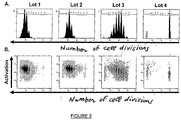
- the amount of CFSE contained in the OVA-specific CD4 T cells is divided by a factor of 2, which makes it possible to determine the number of cell divisions by flow cytometry ( Figure 3 ).
- mice splenocytes The production of IFNg by the mice splenocytes is measured in the culture supernatants after 3 days of in vitro stimulation in the presence of 10 ⁇ g/ml of ovalbumin peptide 323-339 (Neomps, ref) by means of an ELISA assay.
- Table 5 Percentage and number of OVA-specific CD4 T cells three days after injection of the batches (mean ⁇ standard deviation): Batches Amount of OVA injected into the mice ( ⁇ g) % of OVA-specific CD4 T cells Number of OVA-specific CD4 T cells (millions of cells) 1 160 6.6 ⁇ 1.4* 8 ⁇ 2* 2 129 3.6 ⁇ 0.9** 4.1 ⁇ 2* 3 150 0.8 ⁇ 0.3 1.3 ⁇ 0.7 4 0 0.1 ⁇ 0.1 0.2 ⁇ 0.1
- Table 6 Percentage of OVA-specific CD4 T cells which have divided 0, 1, 2, 3, 4, 5, 6 or 7 times three days after injection of the batches: % of OVA-specific CD4 T cells at each division cycle (mean ⁇ standard deviation) Batches 0 1 2 3 4 5 6 7 1 0 ⁇ 0 0 ⁇ 0 0.1 ⁇ 0 0.3 ⁇ 0 1.7 ⁇ 0 9.4 ⁇ 0.1 35.9 ⁇ 0.3 52.5 ⁇ 0.2 2 0.1 ⁇ 0 0.1 ⁇ 0 0.2 ⁇ 0 0.8 ⁇ 0.1 4.2 ⁇ 0.8 19.2 ⁇ 3.2 43.7 ⁇ 2.2 31.5 ⁇ 6.3 3 1.9 ⁇ 1.4 6.9 ⁇ 5.2 15.6 ⁇ 9.5 18.7 ⁇ 5.6 19.7 ⁇ 0.4 16.4 ⁇ 5.3 13.9 ⁇ 10.1 6.8 ⁇ 5.9 4 69.7 ⁇ 4.9 1.3 ⁇ 1 0.1 ⁇ 0.2 0.3 ⁇ 0.4 5.6 ⁇ 3.7 3.7 ⁇
- Table 7 Level of activation of OVA-specific CD4 T cells three days after injection of the batches: Batches Mean of OVA-specific CD4 T cells activation fluorescence (mean ⁇ standard deviation) 1 32.6 ⁇ 2.3 2 37.6 ⁇ 3.5 3 34.6 ⁇ 3.9 4 11.4 ⁇ 0.5
- the results of the cell activation level show that all the dividing OVA-specific CD4 T cells have a high cell activation level (Table 7 and Figure 3 ).
- the activation level of the OVA specific CD4 T cells can be correlated to the number of divisions of these cells: the more the cells have divided and have lost their CFSE marker content, the more they express a high level of activation marker ( Figure 3B ).
- Table 8 Production of IFNg by splenocytes stimulated in vitro with 10 ⁇ g/ml of ovalbumin peptide 323-339 for 3 days: Batches Production of IFNg by splenocytes in ng/ml (mean ⁇ standard deviation) 1 56.3 2 60 ⁇ 26.8 3 9.4 ⁇ 1.6 4 6.7 ⁇ 1
- mice injected with Poly (I:C) and ovalbumin-loaded red blood cells treated or not treated with the anti-TER119 antibody show a strong production of IFNg by the splenocytes of mice injected with Poly (I:C) and ovalbumin-loaded red blood cells treated or not treated with the anti-TER119 antibody.
- Example 9 Measurement of the ovalbumin-specific CD8 T cell response after a single injection of ovalbumin-loaded red blood cells and of Poly (I:C) adjuvant
- the evaluation of the OVA-specific CD8 T cell response consists in measuring the percentage of OVA-specific CD8 T cells, the production of IFNg and the cell lysis, in vivo, of the cells presenting the ovalbumin peptide 257-264 associated with major histocompatibility complex class I molecules. This study is an allogenic study, since ovalbumin-loaded red blood cells from OF1 mice are injected into not consanguineous C57BI/6 mice.
- the batches are injected intravenously into C57BI/6 mice. A minimum of 4 mice are injected with a given batch. In vivo cell lysis is measured using an adaptation of the method described by Hervas-Stubbs S. et al., Blood 2007, 109 : 5318-5326 . Cells presenting the ovalbumin peptide 257-264 associated with major hisotocompatibility complex class I molecules are injected into the immunized mice.
- mice receive an injection of 0.5 ⁇ 10 6 splenocytes presenting the ovalbumin 257-264 peptide (Neomps, ref SC1302) and labelled with a moderate concentration of CFSE, and of 0.5 ⁇ 10 6 splenocytes not presenting the peptide and labelled with high concentrations of CFSE (cell lysis control).
- Latex beads coupled to ovalbumine peptide 257-264 (BOVAp) and poly(I:C) are used as positive control to induce a CD8 T immune response against ovalbumine. It has been shown that the injection of BOVAp and of poly(I:C) induces an incease of the percentage of ovalbumine-specific CD8 T cells and the destruction of cells presenting the OVA257-264 peptide in vivo (Herva-Stubbs).
- mice 16 hours after injection of the splenocytes, the mice are sacrificed by euthanasia and the spleens of the mice are removed.
- the percentage of OVA-specific CD8 T cells in the spleen of the mice is measured by flow cytometry using tetramer and the CD8 marker (Table 9).
- IFNg production and expression of the marker associated with degranulation (CD107) by CD8 T cells was measured by flow cytometry after in vitro stimulation for 4 hours in the presence of 0.1 ⁇ g/ml of ovalbumin peptide 257-264 (Table 10).
- In vivo cell lysis was measured by flow cytometry using CFSE (Table 11).
- Table 9 Percentage of OVA-specific CD8 T cells seven days after injection of batches (mean ⁇ standard deviation): Batch Quantity of OVA injected into mice ( ⁇ g) % of OVA-specific CD8 T cells (mean ⁇ standard deviation) % of OVA-nonspecific T cells (mean ⁇ standard deviation) 1 95 14 ⁇ 3.2* 2.4 ⁇ 0.2 2 91 12.5 ⁇ 5.2** 1.2 ⁇ 0.5 3 0 1.2 ⁇ 0.1 1.2 ⁇ 0.1 4 0 2.5 ⁇ 0.4* 0.9 ⁇ 0.1 5 130 2.4 ⁇ 1.4 1 ⁇ 0.2 6 0 0.7 ⁇ 0.4 1 ⁇ 0.1
- Table 10 Production of IFNg by CD8 T cells stimulated in vitro with 0.1 ⁇ g/ml of ovalbumin peptide 257-264 for 4 hours: Batch % CD8 T cells producing IFNg % of CD8 T cells producing IFNg and expressing CD107 marker 1 8.7 ⁇ 1.8* 71 ⁇ 4* 2 6.6 ⁇ 1.7* 71 ⁇ 4* 3 1.4 ⁇ 0.1 33 ⁇ 4.5 4 2.8 ⁇ 0.5 57 ⁇ 5.5 5 1.8 ⁇ 0.5 46 ⁇ 7 6 0.7 ⁇ 0.1 18 ⁇ 2
- the CD8 T cells generated are effective and cytotoxic since they produce IFNg and express the CD107 marker in response to stimulation with the ovalbumin peptide (Table 10).
- the percentage of CD8 T cells producing IFNg and expressing CD107 is significantly higher for mice injected with Poly(I:C) and ovalbumin-charged red blood cells which had either been treated or had not been treated with anti-TER119 antibody than for mice injected with free OVA and Poly(I:C) or Poly(I:C) and BOVAp (Student's test, p ⁇ 0.008).
- Table 11 Percentage of in vivo anti-OVA-specific cell lysis (mean ⁇ standard deviation): Batch % cell lysis, in vivo (mean ⁇ standard deviation) 1 82 ⁇ 7 2 83 ⁇ 4 5 53 ⁇ 8 6 0
- Example 10 Measuring the maintenance of the ovalbumin-specific CD8 T cell response 30 days after a single injection of ovalbumin-charged red blood cells and adjuvant Poly(I:C)
- Evaluating the maintenance of the OVA-specific CD8 T cell response consisted of measuring the percentage of OVA-specific CD8 T cells and cell lysis in vivo 34 days after a single injection.
- mice were injected intravenously into C57BI/6 mice. Three mice were injected with a given batch.
- cells displaying ovalbumin peptide 257-264 associated with molecules of the major histocompatibility complex of class I were injected into immunized mice. 33 days after injection, the mice received an injection of 0.5 ⁇ 10 6 splenocytes displaying ovalbumin peptide 257-264 (NeoMPS, reference SC1302) and labelled with a moderate concentration of CFSE and of 0.5 ⁇ 10 6 splenocytes not displaying the peptide and labelled with a high concentration of CFSE (cell lysis assay).
- mice 16 hours after injecting the splenocytes, the mice were euthanized and their spleens were removed.
- the percentage of OVA-specific CD8 T cells in the spleens of the mice was measured by flow cytometry using tetramer and CD8 marker (Table 12).
- In vivo cell lysis was measured by flow cytometry using CFSE (Table 13).
- Table 12 Percentage of OVA-specific CD8 T cells 34 days after injection of batches (mean ⁇ standard deviation) Batch Quantity of OVA injected into mice ( ⁇ g) % of OVA-specific CD8 T cells (mean ⁇ standard deviation) 1 170 1.5 ⁇ 0.2 2 138 1.7 ⁇ 0.3 3 0 1.6 ⁇ 0.1 4 0 1.4 ⁇ 0.1 5 150 2.2 ⁇ 0.2 6 0 1.8 ⁇ 0.06
- OVA-specific CD8 T cells were still capable of lysing cells displaying ovalbumin peptide 257-264 (Table 13).
- Injection of Poly(I:C) and ovalbumin-charged red blood cells treated with anti-TER119 antibody induced cell lysis in a manner which was more effective than injection of Poly(I:C) and BOVAp (*Student's test, p ⁇ 0.04).
- ovalbumin-charged red blood cells are superior not only as regards activation and proliferation of cytotoxic CD8 T cells, but also as regards maintenance/survival of these T cells which are capable of lysing cells displaying ovalbumin peptide 257-264.
- Example 11 Measurement of the ovalbumin-specific CD8 T cell response after a single injection of chemically treated, ovalbumin-loaded red blood cells and of Poly (I:C) adjuvant
- This study is an allogenic study, since ovalbumin-loaded red blood cells from OF1 mice are injected into not consanguineous C57BI/6 mice.
- the adjuvant Poly (I:C) is added to this batch, and to the batch containing free ovalbumin.
- the amount of Poly (I:C) injected per mouse is 25 ⁇ g.
- the amount of OVA injected into the mice is indicated in Table 14.
- the batches are injected intravenously into C57BI/6 mice. A minimum of 3 mice are injected with a given batch. Seven days after the injection, the mice are sacrificed and the spleens of the mice are removed. The percentage of OVA-specific CD8 T cells in the spleen of the mice is measured by flow cytometry using tetramer and the CD8 marker (Table 14).
- Table 14 Percentage and number of OVA-specific CD8 T cells seven days after injection of the batches (mean ⁇ standard deviation): Batches Amount of OVA injected into the mice ( ⁇ g) % of OVA-specific CD8 T cells (mean ⁇ standard deviation) 1 38 1.8 ⁇ 0.6 2 150 1.2 ⁇ 0.3 3 0 1 ⁇ 0 4 0 0.8 ⁇ 0.1
- mice injected with Poly (I:C) and ovalbumin-loaded red blood cells treated with BS3 have a higher percentage of OVA-specific CD8 T cells than the mice injected with free OVA and Poly (I:C) or than the mice injected with Poly (I:C). These results are not statistically different, but it should be noted that the amount of free OVA injected is more than three times greater than the amount of OVA injected in the batch containing the OVA-loaded red blood cells.
- Example 12 Measurement of the ovalbumin-specific CD8 T cell response after a single injection of ovalbumin-loaded red blood cells and of CL-097 adjuvant
- This study is an allogenic study, since ovalbumin-loaded red blood cells from OF1 mice are injected into not consanguineous C57BI/6 mice.
- the batches are injected intravenously into C57BI/6 mice. Four days after the injection, the mice are sacrificed and the spleens of the mice are removed. The IFNg production by the splenocytes of mice injected with the various batches is measured in the culture supernatants after three days of in vitro stimulation in the presence of 0.1 ⁇ g/ml of ovalbumin peptide 257-264 by means of ELISA assay.
- Table 15 IFNg production by splenocytes stimulated in vitro with 0.1 ⁇ g/ml of ovalbumin peptide 257-264 for 3 days: Batches Amount of OVA injected into the mice ( ⁇ g) IFNg production by splenocytes in ng/ml 1 83 15.2 2 83 5.7 3 103 11.4 4 103 7.4 5 0 0.4
- the CL097 adjuvant also potentiates the IFNg response induced by the injection of the ovalbumin-loaded red blood cells.
- Example 13 Measure of tumoral growth after one injection of adjuvant Poly (I:C) and treated or untreated ovalbumin-loaded erythrocytes in mice
- EG.7 tumor cells are obtained from ATCC (ATCC-CRL-2113).
- ATCC-CRL-2113 ATCC-CRL-2113
- EG.7 cells originate from the EL.4 cell line, which synthesize and secrete OVA constitutively.
- Two batches of 165 ⁇ 10 7 antibody-treated or untreated ovalbumin-loaded erythrocytes from OF1 mice are prepared according to variant 2 of example 1.
- the adjuvant, Poly (I: C) is added to those batches.
- 25 ⁇ g of Poly (I: C) is injected per mice.
- the negative control is a suspension of unloaded erythrocytes.
- OVA amounts injected to mice are indicated in table 16.
- mice The batches are injected intravenously to C57BI/6 mice (10 mice per group). Seven days after batch injection, 2.2x10 6 EG.7 cells per mice are injected subcutaneously. Mice are followed for tumor growth. Tumor growth is assessed by measuring the diameter of the tumor in centimeters (recorded as the average of two perpendicular diameter measurements). Tumor size is measured 3 times per week at 2 days interval during 14 days. Mice with tumors of more than 2.0 cm of diameter are killed.
- Table 16 OVA amount injected per mice Batches OVA quantity injected to mice ( ⁇ g) 1 134 2 134 3 0
- Table 17 Tumor growth Batches Tumor growth (mm 3 ) the days following tumor cell injection 0 3 5 7 10 12 14 1 0 0 0 0 0 0 0 2 0 0 0 0 0 0 3 0 0 0 363 ⁇ 200 756 ⁇ 462 1009 ⁇ 445 1198 ⁇ 541
- the size of the tumors is measurable on the flank of the mice previously injected with unloaded erythrocytes and the tumors continue to growth until the end of the study. Whereas no tumors are observed on the flank of the mice injected with Poly (I:C) and ovalbumin-loaded red blood cells treated or not with the anti-TER 119 antibody. Observation of the mice is still ongoing.
- Example 14 Measurement of the phagocytosis of pig red blood cells by macrophages and dendritic cells in vivo
- This study is a xenogenic study, since pig red blood cells are injected into C57BI/6 mice.
- the pig red blood cells are washed three times in NaCl containing glucose, before being labelled with CFSE as described above.
- the red blood cells are washed again three times in NaCl containing glucose, and then brought back to a haematocrit of 50%.
- a batch of 142 ⁇ 10 7 pig red blood cells is injected intravenously into three C57BI/6 mice. One hour after the injection, the mice are sacrificed and the spleens, the livers and the femurs of the mice are removed.
- the fluorescence incorporated into the macrophages expressing the F4/80 marker or the CD11 b marker, into the myeloid dendritic cells expressing the CD11c and CD11 b markers and into the plasmacytoid dendritic cells expressing the CD11c and CD8 markers is measured by flow cytometry.
- Table 18 Percentage of spleen macrophages or dendritic cells having phagocytosed fluorescent red blood cells 1 hour after injection: Batches F4/80 macrophages CD11b macrophages Myeloid dendritic cells Plasmacytoid dendritic cells 1 27 ⁇ 6 4 ⁇ 2 21 ⁇ 5.5 45 ⁇ 6 2 0 1 4 3
- Table 19 Percentage of bone marrow macrophages or dendritic cells having phagocytosed fluorescent red blood cells 1 hour after injection: Batches F4/80 macrophages CD11b macrophages Myeloid dendritic cells Plasmacytoid dendritic cells 1 5.3 ⁇ 7.5 0.8 ⁇ 1 5 ⁇ 3 5 ⁇ 7 2 6.3 0 6 12.9
- Table 20 Percentage of liver macrophages or dendritic cells having phagocytosed fluorescent red blood cells 1 hour after injection: Batches CD11b macrophages Myeloid dendritic cells Plasmacytoid dendritic cells 1 1.1 ⁇ 1.1
- the pig red blood cells were efficiently phagocytosed by the F4/80 macrophages and the dendritic cells of the spleen (Table 18).
- the plasmacytoid dendritic cells of the spleen are the cells most involved in the phagocytosis of the pig red blood cells.
- the macrophages and the dendritic cells did not phagocytize fluorescent red blood cells (Tables 19 and 20).
- the mean globular volume, the mean corpuscular haemoglobin and the concentration of red blood cells was measured using an ABX cell counter.
- the osmotic fragility, which corresponds to the concentration of NaCl inducing 50% haemolysis of red blood cells, was measured using an Osmocells instrument (SD Medical).
- the extracellular haemoglobin was measured by spectrophotometry.
- the corpuscular concentration of ovalbumin, the extracellular concentration of ovalbumin and the mean globular quantity of ovalbumin were determined using an ELISA test.
- Table 21 Characteristics of pig red blood cells comprising ovalbumin: Day of production 18 hours after production Characteristics Starting material Batch 1 Batch 2 Starting material Batch 1 Batch 2 Mean globular volume ( ⁇ m 3 ) 65 55 57 65 56.0 58 Mean corpuscular haemoglobin (g/dl) 31.9 27.7 25.9 31.4 28.9 25.8 Osmotic fragility (salinity inducing 50% haemolysis in g/l of NaCl) 3.98 2.51 3.33 Haematocrit of suspension (%) 36.8 48.2 50 36.5 46.3 48 Concentration of red blood cells (10 6 /mm 3 ) 5.64 9.1 8.1 5.9 9 8.4 Extracellular haemoglobulin (g/dl) 0.04 0.27 0.196 0.05 0.79 0.56 Corpuscular ovalbumin concentration (mg/ml of red blood cells) 0.66 0 0.71 0 Extracellular ovalbumin concentration (mg/ml of end product) 0.02 0 0.02 0 Mean globular
- the quantity of extracellular ovalbumin was relatively low compared with the quantity of encapsulated ovalbumin and had not increased 18 hours after production, thereby demonstrating the stability of the red blood cells encapsulating the ovalbumin.
Landscapes
- Health & Medical Sciences (AREA)
- Life Sciences & Earth Sciences (AREA)
- Chemical & Material Sciences (AREA)
- General Health & Medical Sciences (AREA)
- Medicinal Chemistry (AREA)
- Immunology (AREA)
- Veterinary Medicine (AREA)
- Public Health (AREA)
- Animal Behavior & Ethology (AREA)
- Pharmacology & Pharmacy (AREA)
- Epidemiology (AREA)
- Mycology (AREA)
- Microbiology (AREA)
- Oncology (AREA)
- Cell Biology (AREA)
- Molecular Biology (AREA)
- Engineering & Computer Science (AREA)
- Developmental Biology & Embryology (AREA)
- General Chemical & Material Sciences (AREA)
- Chemical Kinetics & Catalysis (AREA)
- Organic Chemistry (AREA)
- Genetics & Genomics (AREA)
- Inorganic Chemistry (AREA)
- Zoology (AREA)
- Biotechnology (AREA)
- Virology (AREA)
- Biomedical Technology (AREA)
- Hematology (AREA)
- Biochemistry (AREA)
- Oil, Petroleum & Natural Gas (AREA)
- Nuclear Medicine, Radiotherapy & Molecular Imaging (AREA)
- Biophysics (AREA)
- Proteomics, Peptides & Aminoacids (AREA)
- Bioinformatics & Cheminformatics (AREA)
- Medicines Containing Antibodies Or Antigens For Use As Internal Diagnostic Agents (AREA)
- Medicines Containing Material From Animals Or Micro-Organisms (AREA)
- Peptides Or Proteins (AREA)
- Micro-Organisms Or Cultivation Processes Thereof (AREA)
- Medicines That Contain Protein Lipid Enzymes And Other Medicines (AREA)
Priority Applications (2)
| Application Number | Priority Date | Filing Date | Title |
|---|---|---|---|
| PL08787072T PL2185164T3 (pl) | 2007-08-08 | 2008-08-08 | Kompozycja i terapeutyczna szczepionka przeciwnowotworowa |
| HRP20171566TT HRP20171566T1 (hr) | 2007-08-08 | 2008-08-08 | Pripravak i terapeutsko anti-tumorsko cjepivo |
Applications Claiming Priority (3)
| Application Number | Priority Date | Filing Date | Title |
|---|---|---|---|
| FR0705767A FR2919804B1 (fr) | 2007-08-08 | 2007-08-08 | Composition et vaccin therapeutique anti-tumoral |
| US95491707P | 2007-08-09 | 2007-08-09 | |
| PCT/EP2008/060492 WO2009019317A1 (en) | 2007-08-08 | 2008-08-08 | Composition and therapeutic anti-tumour vaccine |
Publications (2)
| Publication Number | Publication Date |
|---|---|
| EP2185164A1 EP2185164A1 (en) | 2010-05-19 |
| EP2185164B1 true EP2185164B1 (en) | 2017-08-30 |
Family
ID=38982501
Family Applications (1)
| Application Number | Title | Priority Date | Filing Date |
|---|---|---|---|
| EP08787072.1A Active EP2185164B1 (en) | 2007-08-08 | 2008-08-08 | Composition and therapeutic anti-tumour vaccine |
Country Status (17)
| Country | Link |
|---|---|
| US (4) | US9364504B2 (da) |
| EP (1) | EP2185164B1 (da) |
| JP (2) | JP6077195B2 (da) |
| KR (1) | KR101666041B1 (da) |
| CN (1) | CN101873862B (da) |
| AU (1) | AU2008285595B2 (da) |
| CA (1) | CA2695478C (da) |
| DK (1) | DK2185164T3 (da) |
| ES (1) | ES2649761T3 (da) |
| FR (1) | FR2919804B1 (da) |
| HR (1) | HRP20171566T1 (da) |
| HU (1) | HUE035983T2 (da) |
| IL (1) | IL203714A (da) |
| NO (1) | NO2185164T3 (da) |
| PL (1) | PL2185164T3 (da) |
| PT (1) | PT2185164T (da) |
| WO (1) | WO2009019317A1 (da) |
Families Citing this family (79)
| Publication number | Priority date | Publication date | Assignee | Title |
|---|---|---|---|---|
| FR2919804B1 (fr) | 2007-08-08 | 2010-08-27 | Erytech Pharma | Composition et vaccin therapeutique anti-tumoral |
| WO2010087335A1 (ja) * | 2009-01-27 | 2010-08-05 | 学校法人産業医科大学 | T細胞抗原受容体遺伝子、受容体α鎖及びβ鎖発現用ベクター並びに細胞障害性T細胞 |
| JP5731488B2 (ja) * | 2009-05-29 | 2015-06-10 | エフ.ホフマン−ラ ロシュ アーゲーF. Hoffmann−La Roche Aktiengesellschaft | 癌のマーカーとしてのセセルニン‐1 |
| AU2010311515B2 (en) * | 2009-10-27 | 2014-02-20 | Erytech Pharma | Composition to induce specific immune tolerance |
| CN102154223A (zh) * | 2010-02-11 | 2011-08-17 | 中国人民解放军第二军医大学 | 携带融合蛋白基因的重组腺病毒及其制备方法和应用 |
| US9850296B2 (en) | 2010-08-10 | 2017-12-26 | Ecole Polytechnique Federale De Lausanne (Epfl) | Erythrocyte-binding therapeutics |
| US9517257B2 (en) | 2010-08-10 | 2016-12-13 | Ecole Polytechnique Federale De Lausanne (Epfl) | Erythrocyte-binding therapeutics |
| EP2603520A4 (en) | 2010-08-10 | 2014-02-19 | Ecole Polytech | ERYTHROCYTE BINDING THERAPEUTICS |
| WO2012059112A1 (en) * | 2010-11-01 | 2012-05-10 | Mahmoud Abdel Wahed Rafea | Development of medical products based on a new discovered function of red blood cells |
| DK2715352T3 (da) * | 2011-05-31 | 2019-05-20 | Biogen Ma Inc | Fremgangsmåde til vurdering af risiko for pml |
| US10323236B2 (en) | 2011-07-22 | 2019-06-18 | President And Fellows Of Harvard College | Evaluation and improvement of nuclease cleavage specificity |
| CN102973950B (zh) * | 2011-09-06 | 2015-05-27 | 四川百利药业有限责任公司 | Prame、wt1双价肿瘤dna疫苗 |
| WO2013035208A1 (ja) * | 2011-09-09 | 2013-03-14 | 株式会社トランスジェニック | 変異型α-アクチニン-4に対する抗体 |
| PT2768942T (pt) | 2011-10-17 | 2020-01-21 | Massachusetts Inst Technology | Entrega intracelular |
| US9163284B2 (en) | 2013-08-09 | 2015-10-20 | President And Fellows Of Harvard College | Methods for identifying a target site of a Cas9 nuclease |
| KR102243597B1 (ko) | 2013-08-16 | 2021-04-26 | 메사추세츠 인스티튜트 오브 테크놀로지 | 세포로의 선택적 물질 전달 |
| CN104415335A (zh) | 2013-09-02 | 2015-03-18 | 北京中康万达医药科技有限公司 | 体内个体化系统免疫治疗方法和装置 |
| US9322037B2 (en) | 2013-09-06 | 2016-04-26 | President And Fellows Of Harvard College | Cas9-FokI fusion proteins and uses thereof |
| US9228207B2 (en) | 2013-09-06 | 2016-01-05 | President And Fellows Of Harvard College | Switchable gRNAs comprising aptamers |
| CA2930665A1 (en) | 2013-11-18 | 2015-05-21 | Rubius Therapeutics, Inc. | Synthetic membrane-receiver complexes |
| US20150165054A1 (en) | 2013-12-12 | 2015-06-18 | President And Fellows Of Harvard College | Methods for correcting caspase-9 point mutations |
| FR3017299B1 (fr) | 2014-02-12 | 2018-05-18 | Erytech Pharma | Composition pharmaceutique comprenant des erythrocytes encapsulant une enzyme a plp et son cofacteur |
| SG11201606761RA (en) | 2014-02-21 | 2016-09-29 | Ecole Polytecnique Federale De Lausanne Epfl Epfl Tto | Glycotargeting therapeutics |
| US10953101B2 (en) | 2014-02-21 | 2021-03-23 | École Polytechnique Fédérale De Lausanne (Epfl) | Glycotargeting therapeutics |
| US10046056B2 (en) | 2014-02-21 | 2018-08-14 | École Polytechnique Fédérale De Lausanne (Epfl) | Glycotargeting therapeutics |
| US10946079B2 (en) | 2014-02-21 | 2021-03-16 | Ecole Polytechnique Federale De Lausanne | Glycotargeting therapeutics |
| MA39819A (fr) | 2014-04-01 | 2017-02-08 | Rubius Therapeutics Inc | Méthodes et compositions d'immunomodulation |
| US10077453B2 (en) | 2014-07-30 | 2018-09-18 | President And Fellows Of Harvard College | CAS9 proteins including ligand-dependent inteins |
| KR20170074235A (ko) | 2014-10-31 | 2017-06-29 | 메사추세츠 인스티튜트 오브 테크놀로지 | 면역 세포로의 생체분자의 전달 |
| CN107002089B (zh) | 2014-11-14 | 2021-09-07 | 麻省理工学院 | 化合物和组合物向细胞中的破坏和场实现的递送 |
| CN107250373A (zh) | 2015-01-12 | 2017-10-13 | 麻省理工学院 | 通过微流体递送实现的基因编辑 |
| AU2016289530B2 (en) | 2015-07-09 | 2021-05-06 | Massachusetts Institute Of Technology | Delivery of materials to anucleate cells |
| EP3344575B1 (en) | 2015-09-04 | 2020-04-15 | SQZ Biotechnologies Company | Intracellular delivery of biomolecules to cells comprising a cell wall |
| EP3349786A4 (en) * | 2015-09-18 | 2019-04-10 | The General Hospital Corporation d/b/a Massachusetts General Hospital | COMPOSITIONS WITH ANTIFUGETACTIC PROPERTIES FOR THE TREATMENT OF CANCER |
| WO2017059477A1 (en) | 2015-10-07 | 2017-04-13 | Sangui Bio Pty. Ltd | Blood preparation and profiling |
| IL310721B2 (en) | 2015-10-23 | 2025-11-01 | Harvard College | Nucleobase editors and uses thereof |
| CA3009369A1 (en) * | 2015-12-22 | 2017-06-29 | Sangui Bio Pty. Ltd | Therapeutic methods using erythrocytes |
| SI3402491T1 (sl) | 2016-01-11 | 2022-05-31 | Rubius Therapeutics, Inc. | Sestavki in postopki v zvezi z multimodalnimi terapevtskimi celičnimi sistemi za indikacije raka |
| CN105646676A (zh) * | 2016-03-17 | 2016-06-08 | 南通大学 | 小分子多肽Prdx5截短体及其载体和应用 |
| CA3023092A1 (en) | 2016-05-03 | 2017-11-09 | Sqz Biotechnologies Company | Intracellular delivery of biomolecules to induce tolerance |
| CN110214183A (zh) | 2016-08-03 | 2019-09-06 | 哈佛大学的校长及成员们 | 腺苷核碱基编辑器及其用途 |
| WO2018031683A1 (en) | 2016-08-09 | 2018-02-15 | President And Fellows Of Harvard College | Programmable cas9-recombinase fusion proteins and uses thereof |
| US11542509B2 (en) | 2016-08-24 | 2023-01-03 | President And Fellows Of Harvard College | Incorporation of unnatural amino acids into proteins using base editing |
| JP6314201B1 (ja) * | 2016-11-21 | 2018-04-18 | テラファーマ株式会社 | 樹状細胞洗浄液及びこれを用いた樹状細胞の洗浄方法、並びに樹状細胞含有組成物の調製方法 |
| CN110366597B (zh) | 2016-12-20 | 2024-03-29 | 善威生物私人有限公司 | 用蛋白酶抑制剂进行血液图谱分析 |
| WO2018119359A1 (en) | 2016-12-23 | 2018-06-28 | President And Fellows Of Harvard College | Editing of ccr5 receptor gene to protect against hiv infection |
| EP3592853A1 (en) | 2017-03-09 | 2020-01-15 | President and Fellows of Harvard College | Suppression of pain by gene editing |
| US12390514B2 (en) | 2017-03-09 | 2025-08-19 | President And Fellows Of Harvard College | Cancer vaccine |
| US11542496B2 (en) | 2017-03-10 | 2023-01-03 | President And Fellows Of Harvard College | Cytosine to guanine base editor |
| WO2018232176A1 (en) | 2017-06-16 | 2018-12-20 | The University Of Chicago | Compositions and methods for inducing immune tolerance |
| CN111801345A (zh) | 2017-07-28 | 2020-10-20 | 哈佛大学的校长及成员们 | 使用噬菌体辅助连续进化(pace)的进化碱基编辑器的方法和组合物 |
| WO2019032628A1 (en) | 2017-08-07 | 2019-02-14 | The Regents Of The University Of California | GENERATING PLATFORM FOR SAFE CELLULAR THERAPEUTIC AGENTS |
| US10960071B2 (en) | 2017-08-07 | 2021-03-30 | The Regents Of The University Of California | Platform for generating safe cell therapeutics |
| EP3676376B1 (en) | 2017-08-30 | 2025-01-15 | President and Fellows of Harvard College | High efficiency base editors comprising gam |
| KR20250107288A (ko) | 2017-10-16 | 2025-07-11 | 더 브로드 인스티튜트, 인코퍼레이티드 | 아데노신 염기 편집제의 용도 |
| US12406749B2 (en) | 2017-12-15 | 2025-09-02 | The Broad Institute, Inc. | Systems and methods for predicting repair outcomes in genetic engineering |
| CN110078811B (zh) * | 2018-01-25 | 2022-02-11 | 中国医学科学院医药生物技术研究所 | 一种具有抗肿瘤活性的多肽imb-p1及其应用 |
| JP6385607B2 (ja) * | 2018-02-13 | 2018-09-05 | テラファーマ株式会社 | 樹状細胞ワクチン |
| CN112105723A (zh) * | 2018-03-08 | 2020-12-18 | 鲁比厄斯治疗法股份有限公司 | 用于治疗癌症和传染病的治疗性细胞系统和方法 |
| AU2019234549B2 (en) | 2018-03-12 | 2026-02-12 | Sqz Biotechnologies Company | Methods for treating HPV-associated diseases |
| EP3790577A4 (en) | 2018-05-09 | 2022-04-27 | The University of Chicago | COMPOSITIONS AND METHODS RELATED TO IMMUNTOLERANCE |
| US12157760B2 (en) | 2018-05-23 | 2024-12-03 | The Broad Institute, Inc. | Base editors and uses thereof |
| US12522807B2 (en) | 2018-07-09 | 2026-01-13 | The Broad Institute, Inc. | RNA programmable epigenetic RNA modifiers and uses thereof |
| WO2020092453A1 (en) | 2018-10-29 | 2020-05-07 | The Broad Institute, Inc. | Nucleobase editors comprising geocas9 and uses thereof |
| US12351837B2 (en) | 2019-01-23 | 2025-07-08 | The Broad Institute, Inc. | Supernegatively charged proteins and uses thereof |
| CA3131701A1 (en) | 2019-02-28 | 2020-09-03 | Sqz Biotechnologies Company | Delivery of biomolecules to pbmcs to modify an immune response |
| WO2020191233A1 (en) | 2019-03-19 | 2020-09-24 | The Broad Institute, Inc. | Methods and compositions for editing nucleotide sequences |
| KR20210149791A (ko) | 2019-04-08 | 2021-12-09 | 에스큐지 바이오테크놀로지스 컴퍼니 | 페이로드를 세포 내로 전달하기 위한 시스템에서 이용하기 위한 카트리지 |
| US12473543B2 (en) | 2019-04-17 | 2025-11-18 | The Broad Institute, Inc. | Adenine base editors with reduced off-target effects |
| US12435330B2 (en) | 2019-10-10 | 2025-10-07 | The Broad Institute, Inc. | Methods and compositions for prime editing RNA |
| TWI776276B (zh) * | 2019-11-13 | 2022-09-01 | 中國醫藥大學 | 異種組織細胞組合物治療癌症之用途 |
| EP4082577A4 (en) * | 2019-12-27 | 2024-01-03 | Zeria Pharmaceutical Co., Ltd. | CANCER TREATMENT METHOD AND DRUG |
| IL297761A (en) | 2020-05-08 | 2022-12-01 | Broad Inst Inc | Methods and compositions for simultaneously editing two helices of a designated double-helix nucleotide sequence |
| AU2021270347A1 (en) | 2020-05-11 | 2022-12-15 | Erytech Pharma | Red cell extracellular vesicles (RCEVs) containing cargoes and methods of use and production thereof |
| KR20230058388A (ko) * | 2020-07-29 | 2023-05-03 | 에스큐지 바이오테크놀로지스 컴퍼니 | 무핵 세포를 사용해 돌연변이체 ras에 대한 면역 반응을 자극하는 방법 |
| CN113350499B (zh) * | 2021-06-29 | 2022-06-14 | 贵州医科大学 | 鸡卵清蛋白OVA mRNA在制备非特异性免疫刺激剂中的应用 |
| CN114432261B (zh) * | 2022-02-24 | 2023-11-28 | 初源汇企业管理(深圳)合伙企业(有限合伙) | 一种靶向递送疫苗的制备方法及红细胞疫苗 |
| CN117965442A (zh) * | 2022-10-26 | 2024-05-03 | 北京睿脉医药科技有限公司 | 一种将治疗性分子偶联至成熟红细胞表面的方法及应用 |
| KR102779044B1 (ko) * | 2023-02-17 | 2025-03-12 | 피디씨 라인 파마 | 암 치료용 형질세포양 수지상 세포 |
Family Cites Families (28)
| Publication number | Priority date | Publication date | Assignee | Title |
|---|---|---|---|---|
| GB1051382A (da) | 1900-01-01 | |||
| DE2740053A1 (de) | 1977-09-06 | 1979-05-03 | Klaus Prof Dr Med Gersonde | Verwendung von allosterischen effektoren mit hilfe von lipidvesikeln ueber eine irreversible inkorporierung zwecks verbesserter o tief 2 -entladung des haemoglobins in erythrozyten |
| US4327710A (en) | 1980-06-18 | 1982-05-04 | The United States Of America As Represented By The Secretary Of Agriculture | Process for encapsulating additives in resealed erythrocytes for disseminating chemicals via the circulatory system |
| FR2529463B1 (fr) | 1982-07-05 | 1986-01-10 | Centre Nat Rech Scient | Procede et dispositif pour l'encapsulation dans les erythrocytes d'au moins une substance a activite biologique, notamment des effecteurs allosteriques de l'hemoglobine et erythrocytes ainsi obtenus |
| US4478824A (en) | 1983-08-08 | 1984-10-23 | Franco Robert S | Method for altering red blood cell function and survival |
| JPH0235081A (ja) | 1988-07-26 | 1990-02-05 | Agency Of Ind Science & Technol | アルギニン・デイミナーゼおよびその用途 |
| JPH0253490A (ja) | 1988-08-16 | 1990-02-22 | Agency Of Ind Science & Technol | アルギニン・デイミナーゼ遺伝子 |
| DE58908768D1 (de) | 1988-09-30 | 1995-01-26 | Siemens Ag | Verfahren zum synchronisierten Umtasten eines Polarisationszustandes eines optischen Sendesignals eines optischen Übertragungssystems mit Überlagerungsempfang und Vorrichtung zur Durchführung des Verfahrens. |
| JP2900279B2 (ja) | 1989-08-02 | 1999-06-02 | 株式会社ジャパンエナジー | 新規なアルギニンデイミナーゼ、その製造法及び該酵素を有効成分とする制癌剤 |
| FR2678512B1 (fr) | 1991-07-03 | 1995-06-30 | Novacell | Machine a internaliser. |
| JP3004788B2 (ja) | 1991-10-28 | 2000-01-31 | 株式会社ジャパンエナジー | アルギニンデイミナーゼ発現ベクター、形質転換微生物およびアルギニンデイミナーゼの製造法 |
| US5372942A (en) | 1992-02-10 | 1994-12-13 | Coriell Institute For Medical Research | Protease K resistant arginine deiminase, its method of preparation and its use as an anti-neoplastic agent |
| JPH08511680A (ja) | 1993-03-23 | 1996-12-10 | シービーアール・ラボラトリーズ・インコーポレーテツド | 細胞内への生物学的活性物質の封入のための方法および装置 |
| US6218166B1 (en) * | 1994-12-09 | 2001-04-17 | John Wayne Cancer Institute | Adjuvant incorporation into antigen carrying cells: compositions and methods |
| US5804183A (en) | 1997-01-31 | 1998-09-08 | Enzon, Inc. | Arginine deminase derived from mycoplasma arthritidis and polymer conjugates containing the same |
| WO1998039027A2 (en) * | 1997-03-05 | 1998-09-11 | John Wayne Cancer Institute | Sialyl lewis antigens as targets for immunotherapy |
| EP0882448B1 (en) * | 1997-05-05 | 2005-01-12 | DIDECO S.r.l. | Method of encapsulating biologically active agents within erythrocytes and apparatus therefor |
| US6183738B1 (en) | 1997-05-12 | 2001-02-06 | Phoenix Pharamacologics, Inc. | Modified arginine deiminase |
| DE60026313D1 (de) * | 1999-07-23 | 2006-04-27 | Uutech Ltd | Sensibilisierung von roten blutkörperchen gegenüber ultraschall durch einwirkung eines elektrischen feldes |
| WO2002009741A1 (en) | 2000-07-27 | 2002-02-07 | Angiolab, Inc. | The pharmaceutical composition comprising arginine deiminase for inhibiting angiogenesis |
| US6610702B2 (en) | 2000-08-01 | 2003-08-26 | Gmp Oxycell, Inc. | Ammonium salts of inositol hexaphosphate, and uses thereof |
| US7037500B1 (en) * | 2000-09-08 | 2006-05-02 | The Trustees Of Columbia University In The City Of New York | Method for using phagocytic particles and ATP receptors to deliver antigens to MHC class I receptors to induce immunity against microbial pathogens or tumors or to suppress immunity |
| DE10335833A1 (de) * | 2003-08-05 | 2005-03-03 | Curevac Gmbh | Transfektion von Blutzellen mit mRNA zur Immunstimulation und Gentherapie |
| FR2873925B1 (fr) | 2004-08-05 | 2006-10-13 | Erytech Pharma Soc Par Actions | Procede et dispositif de lyse-rescellement pour l'incorporation de principe actif notamment asparaginase ou inositol hexaphosphate, dans des erythrocytes |
| FR2884717B1 (fr) | 2005-04-25 | 2009-07-03 | Erytech Pharma Soc Par Actions | Erythrocytes renfermant de l'arginine deiminase |
| FR2919804B1 (fr) | 2007-08-08 | 2010-08-27 | Erytech Pharma | Composition et vaccin therapeutique anti-tumoral |
| AU2010311515B2 (en) | 2009-10-27 | 2014-02-20 | Erytech Pharma | Composition to induce specific immune tolerance |
| US8530011B2 (en) | 2010-12-13 | 2013-09-10 | Southwall Technologies Inc. | Insulating glass unit with crack-resistant low-emissivity suspended film |
-
2007
- 2007-08-08 FR FR0705767A patent/FR2919804B1/fr not_active Expired - Fee Related
-
2008
- 2008-08-08 EP EP08787072.1A patent/EP2185164B1/en active Active
- 2008-08-08 CA CA2695478A patent/CA2695478C/en active Active
- 2008-08-08 AU AU2008285595A patent/AU2008285595B2/en not_active Ceased
- 2008-08-08 KR KR1020107004794A patent/KR101666041B1/ko not_active Expired - Fee Related
- 2008-08-08 HR HRP20171566TT patent/HRP20171566T1/hr unknown
- 2008-08-08 HU HUE08787072A patent/HUE035983T2/hu unknown
- 2008-08-08 DK DK08787072.1T patent/DK2185164T3/da active
- 2008-08-08 US US12/672,094 patent/US9364504B2/en active Active
- 2008-08-08 NO NO08787072A patent/NO2185164T3/no unknown
- 2008-08-08 WO PCT/EP2008/060492 patent/WO2009019317A1/en not_active Ceased
- 2008-08-08 ES ES08787072.1T patent/ES2649761T3/es active Active
- 2008-08-08 PT PT87870721T patent/PT2185164T/pt unknown
- 2008-08-08 PL PL08787072T patent/PL2185164T3/pl unknown
- 2008-08-08 JP JP2010519476A patent/JP6077195B2/ja not_active Expired - Fee Related
- 2008-08-08 CN CN200880110270.0A patent/CN101873862B/zh not_active Expired - Fee Related
-
2010
- 2010-02-04 IL IL203714A patent/IL203714A/en active IP Right Grant
-
2016
- 2016-05-13 US US15/154,273 patent/US9950049B2/en active Active
- 2016-09-01 JP JP2016170936A patent/JP6352996B2/ja not_active Expired - Fee Related
-
2018
- 2018-04-24 US US15/961,226 patent/US10780151B2/en active Active
-
2020
- 2020-08-21 US US17/000,007 patent/US20210077602A1/en not_active Abandoned
Non-Patent Citations (1)
| Title |
|---|
| None * |
Also Published As
| Publication number | Publication date |
|---|---|
| WO2009019317A1 (en) | 2009-02-12 |
| CA2695478C (en) | 2018-05-08 |
| US20160324946A1 (en) | 2016-11-10 |
| HK1148688A1 (en) | 2011-09-16 |
| PL2185164T3 (pl) | 2018-01-31 |
| AU2008285595A1 (en) | 2009-02-12 |
| CA2695478A1 (en) | 2009-02-12 |
| US10780151B2 (en) | 2020-09-22 |
| KR20100075832A (ko) | 2010-07-05 |
| AU2008285595B2 (en) | 2012-08-09 |
| EP2185164A1 (en) | 2010-05-19 |
| US9364504B2 (en) | 2016-06-14 |
| CN101873862A (zh) | 2010-10-27 |
| US20180344822A1 (en) | 2018-12-06 |
| HUE035983T2 (hu) | 2018-06-28 |
| JP6077195B2 (ja) | 2017-02-08 |
| IL203714A (en) | 2014-05-28 |
| ES2649761T3 (es) | 2018-01-15 |
| HRP20171566T1 (hr) | 2017-11-17 |
| US9950049B2 (en) | 2018-04-24 |
| JP2010535744A (ja) | 2010-11-25 |
| JP6352996B2 (ja) | 2018-07-04 |
| KR101666041B1 (ko) | 2016-10-13 |
| JP2016196517A (ja) | 2016-11-24 |
| FR2919804B1 (fr) | 2010-08-27 |
| US20120009140A1 (en) | 2012-01-12 |
| US20210077602A1 (en) | 2021-03-18 |
| CN101873862B (zh) | 2014-10-01 |
| PT2185164T (pt) | 2017-11-28 |
| NO2185164T3 (da) | 2018-01-27 |
| DK2185164T3 (da) | 2017-11-13 |
| FR2919804A1 (fr) | 2009-02-13 |
Similar Documents
| Publication | Publication Date | Title |
|---|---|---|
| US10780151B2 (en) | Composition and therapeutic anti-tumour vaccine | |
| US12331097B2 (en) | T cell receptor constructs and uses thereof | |
| US20210024649A1 (en) | Methods and Compositions for Antibody and Antibody-loaded Dendritic Cell Mediated Therapy | |
| Singh et al. | An injectable synthetic immune-priming center mediates efficient T-cell class switching and T-helper 1 response against B cell lymphoma | |
| US20200129603A1 (en) | Medical treatment method with administration of dendritic cells | |
| CN105457020A (zh) | 肿瘤液化的方法和组合物 | |
| ES2369077T3 (es) | Nuevo procedimiento y composición para producir una vacuna alogénica celular. | |
| CN101072582B (zh) | 作为癌症疫苗佐剂的α胸腺肽 | |
| Stegantseva et al. | Conjugation of new DNA vaccine with polyethylenimine induces cellular immune response and tumor regression in neuroblastoma mouse model | |
| HK1148688B (en) | Composition and therapeutic anti-tumour vaccine | |
| Baogang et al. | Fixed-tumor vaccine: a practical formulation with cytokine-microspheres for protective and therapeutic antitumor immunity | |
| Maraveyas et al. | Division of Oncology, St George's Hospital Medical School |
Legal Events
| Date | Code | Title | Description |
|---|---|---|---|
| PUAI | Public reference made under article 153(3) epc to a published international application that has entered the european phase |
Free format text: ORIGINAL CODE: 0009012 |
|
| 17P | Request for examination filed |
Effective date: 20100203 |
|
| AK | Designated contracting states |
Kind code of ref document: A1 Designated state(s): AT BE BG CH CY CZ DE DK EE ES FI FR GB GR HR HU IE IS IT LI LT LU LV MC MT NL NO PL PT RO SE SI SK TR |
|
| AX | Request for extension of the european patent |
Extension state: AL BA MK RS |
|
| RIN1 | Information on inventor provided before grant (corrected) |
Inventor name: BANZ, ALICE Inventor name: GODFRIN, YANN |
|
| DAX | Request for extension of the european patent (deleted) | ||
| RIN1 | Information on inventor provided before grant (corrected) |
Inventor name: BANZ, ALICE Inventor name: GODFRIN, YANN |
|
| 17Q | First examination report despatched |
Effective date: 20130218 |
|
| REG | Reference to a national code |
Ref country code: DE Ref legal event code: R079 Ref document number: 602008051920 Country of ref document: DE Free format text: PREVIOUS MAIN CLASS: A61K0035180000 Ipc: A61K0047020000 |
|
| GRAP | Despatch of communication of intention to grant a patent |
Free format text: ORIGINAL CODE: EPIDOSNIGR1 |
|
| RIC1 | Information provided on ipc code assigned before grant |
Ipc: A61K 47/22 20060101ALI20170110BHEP Ipc: A61K 47/02 20060101AFI20170110BHEP |
|
| INTG | Intention to grant announced |
Effective date: 20170208 |
|
| RIN1 | Information on inventor provided before grant (corrected) |
Inventor name: BANZ, ALICE Inventor name: GODFRIN, YANN |
|
| GRAJ | Information related to disapproval of communication of intention to grant by the applicant or resumption of examination proceedings by the epo deleted |
Free format text: ORIGINAL CODE: EPIDOSDIGR1 |
|
| GRAL | Information related to payment of fee for publishing/printing deleted |
Free format text: ORIGINAL CODE: EPIDOSDIGR3 |
|
| GRAS | Grant fee paid |
Free format text: ORIGINAL CODE: EPIDOSNIGR3 |
|
| GRAR | Information related to intention to grant a patent recorded |
Free format text: ORIGINAL CODE: EPIDOSNIGR71 |
|
| INTC | Intention to grant announced (deleted) | ||
| GRAA | (expected) grant |
Free format text: ORIGINAL CODE: 0009210 |
|
| INTG | Intention to grant announced |
Effective date: 20170714 |
|
| AK | Designated contracting states |
Kind code of ref document: B1 Designated state(s): AT BE BG CH CY CZ DE DK EE ES FI FR GB GR HR HU IE IS IT LI LT LU LV MC MT NL NO PL PT RO SE SI SK TR |
|
| REG | Reference to a national code |
Ref country code: GB Ref legal event code: FG4D |
|
| REG | Reference to a national code |
Ref country code: CH Ref legal event code: EP |
|
| REG | Reference to a national code |
Ref country code: AT Ref legal event code: REF Ref document number: 922919 Country of ref document: AT Kind code of ref document: T Effective date: 20170915 |
|
| REG | Reference to a national code |
Ref country code: IE Ref legal event code: FG4D |
|
| REG | Reference to a national code |
Ref country code: DE Ref legal event code: R096 Ref document number: 602008051920 Country of ref document: DE |
|
| REG | Reference to a national code |
Ref country code: HR Ref legal event code: TUEP Ref document number: P20171566 Country of ref document: HR |
|
| REG | Reference to a national code |
Ref country code: DK Ref legal event code: T3 Effective date: 20171108 |
|
| REG | Reference to a national code |
Ref country code: CH Ref legal event code: NV Representative=s name: ARNOLD AND SIEDSMA AG, CH Ref country code: NL Ref legal event code: FP |
|
| REG | Reference to a national code |
Ref country code: HR Ref legal event code: T1PR Ref document number: P20171566 Country of ref document: HR |
|
| REG | Reference to a national code |
Ref country code: SE Ref legal event code: TRGR |
|
| REG | Reference to a national code |
Ref country code: RO Ref legal event code: EPE |
|
| REG | Reference to a national code |
Ref country code: PT Ref legal event code: SC4A Ref document number: 2185164 Country of ref document: PT Date of ref document: 20171128 Kind code of ref document: T Free format text: AVAILABILITY OF NATIONAL TRANSLATION Effective date: 20171121 |
|
| REG | Reference to a national code |
Ref country code: LT Ref legal event code: MG4D |
|
| REG | Reference to a national code |
Ref country code: ES Ref legal event code: FG2A Ref document number: 2649761 Country of ref document: ES Kind code of ref document: T3 Effective date: 20180115 |
|
| PG25 | Lapsed in a contracting state [announced via postgrant information from national office to epo] |
Ref country code: LT Free format text: LAPSE BECAUSE OF FAILURE TO SUBMIT A TRANSLATION OF THE DESCRIPTION OR TO PAY THE FEE WITHIN THE PRESCRIBED TIME-LIMIT Effective date: 20170830 |
|
| REG | Reference to a national code |
Ref country code: NO Ref legal event code: T2 Effective date: 20170830 |
|
| PG25 | Lapsed in a contracting state [announced via postgrant information from national office to epo] |
Ref country code: IS Free format text: LAPSE BECAUSE OF FAILURE TO SUBMIT A TRANSLATION OF THE DESCRIPTION OR TO PAY THE FEE WITHIN THE PRESCRIBED TIME-LIMIT Effective date: 20171230 Ref country code: LV Free format text: LAPSE BECAUSE OF FAILURE TO SUBMIT A TRANSLATION OF THE DESCRIPTION OR TO PAY THE FEE WITHIN THE PRESCRIBED TIME-LIMIT Effective date: 20170830 Ref country code: BG Free format text: LAPSE BECAUSE OF FAILURE TO SUBMIT A TRANSLATION OF THE DESCRIPTION OR TO PAY THE FEE WITHIN THE PRESCRIBED TIME-LIMIT Effective date: 20171130 Ref country code: GR Free format text: LAPSE BECAUSE OF FAILURE TO SUBMIT A TRANSLATION OF THE DESCRIPTION OR TO PAY THE FEE WITHIN THE PRESCRIBED TIME-LIMIT Effective date: 20171201 |
|
| PG25 | Lapsed in a contracting state [announced via postgrant information from national office to epo] |
Ref country code: SK Free format text: LAPSE BECAUSE OF FAILURE TO SUBMIT A TRANSLATION OF THE DESCRIPTION OR TO PAY THE FEE WITHIN THE PRESCRIBED TIME-LIMIT Effective date: 20170830 Ref country code: EE Free format text: LAPSE BECAUSE OF FAILURE TO SUBMIT A TRANSLATION OF THE DESCRIPTION OR TO PAY THE FEE WITHIN THE PRESCRIBED TIME-LIMIT Effective date: 20170830 |
|
| REG | Reference to a national code |
Ref country code: DE Ref legal event code: R097 Ref document number: 602008051920 Country of ref document: DE |
|
| REG | Reference to a national code |
Ref country code: HU Ref legal event code: AG4A Ref document number: E035983 Country of ref document: HU |
|
| PLBE | No opposition filed within time limit |
Free format text: ORIGINAL CODE: 0009261 |
|
| STAA | Information on the status of an ep patent application or granted ep patent |
Free format text: STATUS: NO OPPOSITION FILED WITHIN TIME LIMIT |
|
| REG | Reference to a national code |
Ref country code: FR Ref legal event code: PLFP Year of fee payment: 11 |
|
| 26N | No opposition filed |
Effective date: 20180531 |
|
| PG25 | Lapsed in a contracting state [announced via postgrant information from national office to epo] |
Ref country code: SI Free format text: LAPSE BECAUSE OF FAILURE TO SUBMIT A TRANSLATION OF THE DESCRIPTION OR TO PAY THE FEE WITHIN THE PRESCRIBED TIME-LIMIT Effective date: 20170830 |
|
| REG | Reference to a national code |
Ref country code: HR Ref legal event code: ODRP Ref document number: P20171566 Country of ref document: HR Payment date: 20190716 Year of fee payment: 12 |
|
| PG25 | Lapsed in a contracting state [announced via postgrant information from national office to epo] |
Ref country code: MT Free format text: LAPSE BECAUSE OF NON-PAYMENT OF DUE FEES Effective date: 20180808 |
|
| PG25 | Lapsed in a contracting state [announced via postgrant information from national office to epo] |
Ref country code: CY Free format text: LAPSE BECAUSE OF FAILURE TO SUBMIT A TRANSLATION OF THE DESCRIPTION OR TO PAY THE FEE WITHIN THE PRESCRIBED TIME-LIMIT Effective date: 20170830 |
|
| REG | Reference to a national code |
Ref country code: HR Ref legal event code: ODRP Ref document number: P20171566 Country of ref document: HR Payment date: 20200731 Year of fee payment: 13 |
|
| PGFP | Annual fee paid to national office [announced via postgrant information from national office to epo] |
Ref country code: LU Payment date: 20200724 Year of fee payment: 13 Ref country code: CZ Payment date: 20200804 Year of fee payment: 13 Ref country code: MC Payment date: 20200729 Year of fee payment: 13 Ref country code: RO Payment date: 20200709 Year of fee payment: 13 Ref country code: PT Payment date: 20200811 Year of fee payment: 13 |
|
| PGFP | Annual fee paid to national office [announced via postgrant information from national office to epo] |
Ref country code: HR Payment date: 20200731 Year of fee payment: 13 |
|
| REG | Reference to a national code |
Ref country code: AT Ref legal event code: UEP Ref document number: 922919 Country of ref document: AT Kind code of ref document: T Effective date: 20170830 |
|
| PGFP | Annual fee paid to national office [announced via postgrant information from national office to epo] |
Ref country code: HU Payment date: 20200629 Year of fee payment: 14 |
|
| REG | Reference to a national code |
Ref country code: HR Ref legal event code: PBON Ref document number: P20171566 Country of ref document: HR Effective date: 20210808 |
|
| PG25 | Lapsed in a contracting state [announced via postgrant information from national office to epo] |
Ref country code: MC Free format text: LAPSE BECAUSE OF NON-PAYMENT OF DUE FEES Effective date: 20210831 |
|
| PG25 | Lapsed in a contracting state [announced via postgrant information from national office to epo] |
Ref country code: RO Free format text: LAPSE BECAUSE OF NON-PAYMENT OF DUE FEES Effective date: 20210808 Ref country code: PT Free format text: LAPSE BECAUSE OF NON-PAYMENT OF DUE FEES Effective date: 20220208 Ref country code: LU Free format text: LAPSE BECAUSE OF NON-PAYMENT OF DUE FEES Effective date: 20210808 Ref country code: HR Free format text: LAPSE BECAUSE OF NON-PAYMENT OF DUE FEES Effective date: 20210808 Ref country code: CZ Free format text: LAPSE BECAUSE OF NON-PAYMENT OF DUE FEES Effective date: 20210808 |
|
| PG25 | Lapsed in a contracting state [announced via postgrant information from national office to epo] |
Ref country code: HU Free format text: LAPSE BECAUSE OF NON-PAYMENT OF DUE FEES Effective date: 20220809 |
|
| PGFP | Annual fee paid to national office [announced via postgrant information from national office to epo] |
Ref country code: NL Payment date: 20230614 Year of fee payment: 16 Ref country code: IE Payment date: 20230606 Year of fee payment: 16 Ref country code: FR Payment date: 20230620 Year of fee payment: 16 Ref country code: DK Payment date: 20230627 Year of fee payment: 16 |
|
| PGFP | Annual fee paid to national office [announced via postgrant information from national office to epo] |
Ref country code: SE Payment date: 20230613 Year of fee payment: 16 Ref country code: PL Payment date: 20230616 Year of fee payment: 16 |
|
| PGFP | Annual fee paid to national office [announced via postgrant information from national office to epo] |
Ref country code: TR Payment date: 20230804 Year of fee payment: 16 Ref country code: NO Payment date: 20230809 Year of fee payment: 16 Ref country code: IT Payment date: 20230711 Year of fee payment: 16 Ref country code: GB Payment date: 20230615 Year of fee payment: 16 Ref country code: FI Payment date: 20230816 Year of fee payment: 16 Ref country code: ES Payment date: 20230907 Year of fee payment: 16 Ref country code: CH Payment date: 20230901 Year of fee payment: 16 Ref country code: AT Payment date: 20230725 Year of fee payment: 16 |
|
| PGFP | Annual fee paid to national office [announced via postgrant information from national office to epo] |
Ref country code: DE Payment date: 20230613 Year of fee payment: 16 Ref country code: BE Payment date: 20230719 Year of fee payment: 16 |
|
| REG | Reference to a national code |
Ref country code: DE Ref legal event code: R119 Ref document number: 602008051920 Country of ref document: DE |
|
| REG | Reference to a national code |
Ref country code: DK Ref legal event code: EBP Effective date: 20240831 |
|
| REG | Reference to a national code |
Ref country code: CH Ref legal event code: PL |
|
| REG | Reference to a national code |
Ref country code: SE Ref legal event code: EUG |
|
| REG | Reference to a national code |
Ref country code: NL Ref legal event code: MM Effective date: 20240901 |
|
| PG25 | Lapsed in a contracting state [announced via postgrant information from national office to epo] |
Ref country code: FI Free format text: LAPSE BECAUSE OF NON-PAYMENT OF DUE FEES Effective date: 20240808 |
|
| REG | Reference to a national code |
Ref country code: AT Ref legal event code: MM01 Ref document number: 922919 Country of ref document: AT Kind code of ref document: T Effective date: 20240808 |
|
| GBPC | Gb: european patent ceased through non-payment of renewal fee |
Effective date: 20240808 |
|
| PG25 | Lapsed in a contracting state [announced via postgrant information from national office to epo] |
Ref country code: NO Free format text: LAPSE BECAUSE OF NON-PAYMENT OF DUE FEES Effective date: 20240831 |
|
| PG25 | Lapsed in a contracting state [announced via postgrant information from national office to epo] |
Ref country code: CH Free format text: LAPSE BECAUSE OF NON-PAYMENT OF DUE FEES Effective date: 20240831 Ref country code: AT Free format text: LAPSE BECAUSE OF NON-PAYMENT OF DUE FEES Effective date: 20240808 |
|
| PG25 | Lapsed in a contracting state [announced via postgrant information from national office to epo] |
Ref country code: NL Free format text: LAPSE BECAUSE OF NON-PAYMENT OF DUE FEES Effective date: 20240901 |
|
| REG | Reference to a national code |
Ref country code: BE Ref legal event code: MM Effective date: 20240831 |
|
| PG25 | Lapsed in a contracting state [announced via postgrant information from national office to epo] |
Ref country code: DE Free format text: LAPSE BECAUSE OF NON-PAYMENT OF DUE FEES Effective date: 20250301 |
|
| PG25 | Lapsed in a contracting state [announced via postgrant information from national office to epo] |
Ref country code: GB Free format text: LAPSE BECAUSE OF NON-PAYMENT OF DUE FEES Effective date: 20240808 Ref country code: DK Free format text: LAPSE BECAUSE OF NON-PAYMENT OF DUE FEES Effective date: 20240831 |
|
| PG25 | Lapsed in a contracting state [announced via postgrant information from national office to epo] |
Ref country code: IT Free format text: LAPSE BECAUSE OF NON-PAYMENT OF DUE FEES Effective date: 20240808 Ref country code: BE Free format text: LAPSE BECAUSE OF NON-PAYMENT OF DUE FEES Effective date: 20240831 |
|
| PG25 | Lapsed in a contracting state [announced via postgrant information from national office to epo] |
Ref country code: FR Free format text: LAPSE BECAUSE OF NON-PAYMENT OF DUE FEES Effective date: 20240831 |
|
| PG25 | Lapsed in a contracting state [announced via postgrant information from national office to epo] |
Ref country code: IE Free format text: LAPSE BECAUSE OF NON-PAYMENT OF DUE FEES Effective date: 20240808 |
|
| REG | Reference to a national code |
Ref country code: ES Ref legal event code: FD2A Effective date: 20250926 |
|
| PG25 | Lapsed in a contracting state [announced via postgrant information from national office to epo] |
Ref country code: ES Free format text: LAPSE BECAUSE OF NON-PAYMENT OF DUE FEES Effective date: 20240809 |
|
| PG25 | Lapsed in a contracting state [announced via postgrant information from national office to epo] |
Ref country code: SE Free format text: LAPSE BECAUSE OF NON-PAYMENT OF DUE FEES Effective date: 20240809 |
|
| PG25 | Lapsed in a contracting state [announced via postgrant information from national office to epo] |
Ref country code: PL Free format text: LAPSE BECAUSE OF NON-PAYMENT OF DUE FEES Effective date: 20240808 |