EP2185207B1 - Combinaison de collage de tissus biologiques - Google Patents
Combinaison de collage de tissus biologiques Download PDFInfo
- Publication number
- EP2185207B1 EP2185207B1 EP08785289A EP08785289A EP2185207B1 EP 2185207 B1 EP2185207 B1 EP 2185207B1 EP 08785289 A EP08785289 A EP 08785289A EP 08785289 A EP08785289 A EP 08785289A EP 2185207 B1 EP2185207 B1 EP 2185207B1
- Authority
- EP
- European Patent Office
- Prior art keywords
- combination
- polysaccharide
- oligolactone
- previous
- adhesive
- Prior art date
- Legal status (The legal status is an assumption and is not a legal conclusion. Google has not performed a legal analysis and makes no representation as to the accuracy of the status listed.)
- Not-in-force
Links
Images



Classifications
-
- A—HUMAN NECESSITIES
- A61—MEDICAL OR VETERINARY SCIENCE; HYGIENE
- A61L—METHODS OR APPARATUS FOR STERILISING MATERIALS OR OBJECTS IN GENERAL; DISINFECTION, STERILISATION OR DEODORISATION OF AIR; CHEMICAL ASPECTS OF BANDAGES, DRESSINGS, ABSORBENT PADS OR SURGICAL ARTICLES; MATERIALS FOR BANDAGES, DRESSINGS, ABSORBENT PADS OR SURGICAL ARTICLES
- A61L24/00—Surgical adhesives or cements; Adhesives for colostomy devices
- A61L24/04—Surgical adhesives or cements; Adhesives for colostomy devices containing macromolecular materials
- A61L24/043—Mixtures of macromolecular materials
Definitions
- the invention relates to a combination, in particular in the form of a medical adhesive composition, which is suitable for bonding and / or fixing of biological and / or synthetic tissues.
- fibrin glue is composed mainly of plasma proteins, in particular fibrinogen and thrombin. These adhesives actively intervene in the coagulation cascade and generally have good hemostatic properties.
- fibrin sealants are usually made from human or animal sources, making their delivery usually time-consuming and expensive. Another disadvantage is a risk of infection for the patient which can not be completely ruled out.
- partially synthetic adhesives such as gelatin-resorcinol-formaldehyde
- partially synthetic adhesives often have a higher adhesive force than the fibrin glue described above.
- they generally have worse hemostatic properties than natural tissue adhesives. Due to the natural component of a partially synthetic adhesive, infections can still be transmitted.
- partially synthetic adhesives are often used a toxic compound, for example, formic or glutaraldehyde cross-linked.
- tissue adhesives are mainly compositions based on cyanoacrylates.
- various cyanoacrylates are used as surgical adhesives.
- the adhesive Dermabond ® from n-octyl-2-cyanoacrylate is composed.
- Histoacryl ® which contains n-butyl-2-cyanoacrylate.
- Tissue adhesives based on cyanoacrylates are usually rapidly curable.
- the use of cyanoacrylate adhesives provides satisfactory results for superficial wound care.
- cyanoacrylate adhesive to treat internal wounds from a toxicological point of view.
- cyanoacrylate compounds react with biological tissues under a highly exothermic reaction, which can sustainably damage healthy cells in the wound area.
- the WO 96/03159 A1 discloses an adhesive composition for adhering tissues based on a protein and a crosslinking agent containing oligolactone units.
- Subject of the WO 03/035122 A1 is a composition for bonding biological tissue based on an amino group-bearing polymer and an aldehyde having at least three aldehyde groups, wherein the composition is free of protein.
- EP 1498128 A1 discloses a medical composition based on a photocrosslinkable chitosan derivative and promoter for wound healing.
- the WO 98/19718 A1 refers to a medical product comprising a biopolymer crosslinked with genipin and containing amino groups.
- the post-published WO 2007/090373 A2 relates to a combination comprising a peptide and a terminally functionalized oligolactone.
- a surgical adhesive is based on a urethane prepolymer and an unsaturated cyano compound.
- the cyano compound may be cyanoacrylates or cyanoacrylonitriles.
- the use of cyanoacrylate compounds in particular has certain disadvantages.
- Another biological glue is from the WO 2005/118011 A1 known.
- the adhesive composition described therein comprises a mixture of crosslinkable prepolymers modified with isocyanate groups.
- a disadvantage of this type of adhesive composition is its comparatively low viscosity, which in principle in the case of severely bleeding wounds in particular there is the danger that the composition will be washed away from the wound area.
- This adhesive composition also has a comparatively long gelation or curing time. This can lead to additional complications, especially with heavy bleeding.
- the invention thus has the object of providing a combination which is suitable, in particular, as an adhesive composition for bonding biological tissues, which is easy to handle and in particular suitable both for internal and for superficial wound care.
- the bonding process of the combination of the invention which is preferably a surgical adhesive composition, relies on a reaction of its components.
- This is particularly advantageously an in situ crosslinking of the nitrogen-functionalized polysaccharides with the terminally functionalized oligolactones. Due to the terminal functionalization, the oligolactones of the combination provide suitable and, in particular, reactive crosslinking partners for the polysaccharides.
- the crosslinking is based in particular on covalent bonds.
- physical crosslinking processes can also play a role.
- the reaction between the components of the combination can produce wound closures whose strengths are significantly higher than, for example, when using conventional, clinically proven fibrin glue.
- the adhesion to the biological tissue is also achieved by the reaction of the terminal functional groups of the oligolactones with tissue proteins.
- the polysaccharide is a naturally occurring polysaccharide.
- the polysaccharide may be glycosaminoglycans (mucopolysaccharides).
- An example of a preferred naturally occurring polysaccharide is hyaluronic acid.
- the hyaluronic acid may, for example, have a molecular weight of at least 20 kDa (kilo daltons).
- the polysaccharide used according to the invention may be derived from a naturally occurring polysaccharide. Typically this is a chemically modified polysaccharide. In this variant, the nitrogen functionalization of the polysaccharide is based on the chemical modification. For this purpose, in principle, all polysaccharides are considered, which are accessible to such a functionalization.
- the polysaccharide of the combination is a completely synthetic polysaccharide.
- the polysaccharide is an amino group, in particular primary amino groups, carrying polysaccharide.
- the proportion of monosaccharide units in the polysaccharide carrying an amino group is at least 30%, preferably 80%.
- the polysaccharide preferably has a molecular weight of 10 to 350 kDa, in particular about 200 kDa.
- the polysaccharide is an at least partially deacylated glycosaminoglycan.
- the use of a corresponding Glykosaminoglykanderivats is also possible.
- the polysaccharide has a degree of deacylation of between 50 and 98%, in particular between 60 and 95%, preferably between 80 and 90%.
- the polysaccharide is a chitosan.
- the use of chitosan is particularly advantageous because of its hemostatic (hemostatic) and in particular antimicrobial properties.
- the polysaccharide is a chitosan derivative.
- the chitosan preferably has a molecular weight between 15 and 270 kDa.
- the chitosan preferably has a degree of deacetylation of about 86%.
- the combination comprises several different nitrogen-functionalized polysaccharides. These may be contained in particular in the form of a mixture in the combination. With regard to suitable polysaccharides, reference is made to the previous description.
- oligolactones are "internal esters" of hydroxycarboxylic acids and thus also in a broader sense Oligoglycolides, oligolactides and mixed composite oligolactones, in particular based on glycolide and lactide, referred to. These may be prepared, for example, by ring-opening polymerization or oligomerization.
- catalysts are preferably used.
- the catalysts may in principle be tin compounds.
- Zinc and / or iron compounds are particularly preferred because of their good biocompatibility.
- the oligolactone has terminal isocyanate groups. This is particularly advantageous since an appropriate combination with nitrogen-functionalized polysaccharides and oligolactones modified with isocyanate groups reacts to form an adhesive bond with increased adhesion to substrates to be bonded, in particular biological tissues.
- oligolactones For terminal functionalization of the oligolactones they are preferably reacted with diisocyanates.
- the oligolactones of the combination according to the invention are preferably modified at their ends or at their ends with an aliphatic isocyanate group.
- aliphatic diisocyanates in particular hexamethylene diisocyanate (HMDI)
- HMDI hexamethylene diisocyanate
- a purification is not required.
- a purification can be carried out. For this purpose, depending on the structure and the temperature resistance of the oligolactone produced, for example, a distillation.
- the oligolactone has a polyhydric, in particular at least dihydric, alcohol.
- Suitable alcohols include, in particular, ethylene glycol (1,2-ethanediol) and / or glycerol (1,2,3-propanetriol).
- the oligolactone is preferably formed from a polyhydric alcohol and hydroxycarboxylic acids, in particular glycolic and / or lactic acid.
- at least one hydroxyl group of the polyhydric alcohol is esterified with hydroxycarboxylic acid units, in particular with lactic and / or glycolic acid units.
- a dihydric alcohol it is particularly preferred if both hydroxyl groups are present in esterified form.
- the hydroxyl groups of the polyhydric alcohol are preferably, at least partially, esterified with a chain of 1 to 10, in particular 2 to 5, hydroxycarboxylic acid units.
- oligolactones of polyhydric alcohol and hydroxycarboxylic acid units described in the context of this embodiment carry functional groups on the terminal hydroxycarboxylic acid units or units which form the terminal functionalization of the oligolactone.
- the oligolactone is an ethylene glycol oligolactide (EOL).
- EOL ethylene glycol oligolactide
- EOG 1 ⁇ 2 ethylene glycol oligoglycolide
- POL 1 ⁇ 4 pentaerythritololigolactide
- POL 1 ⁇ 4 712.6 g / mol
- the combination has a plurality of different oligolactones, in particular in the form of a mixture.
- oligolactones in question, reference is made to the statements made above.
- a catalyst for the reaction between the nitrogen-functionalized polysaccharides and the terminally functionalized oligolactones can be used as a further component in the combination according to the invention.
- a catalyst for the reaction between the nitrogen-functionalized polysaccharides and the terminally functionalized oligolactones can be used as a further component in the combination according to the invention.
- a catalytic acceleration of the reaction between the components may be useful, especially in medical applications. For example, in particularly severely bleeding wounds, the use of a catalyst may be desirable, whereas, for example, when bonding bones, slower curing of the combination may make sense to allow for fitting with the possibility of later correction.
- catalysts are amines, amidines, advantageously 2,3-dimethyl-3,4,5,6-tetrahydropyrimidine, a tertiary amine, advantageously triethylamine, tributylamine, dimethylbenzylamine, N-methyl-, N-ethyl-, N-cyclohexylmorpholine , N, N, N ', N'-tetramethylethylenediamine, N, N, N', N'-diaminoethyl ether, bis (dimethylamino-propyl) urea, dimethylpiperazine, 1,2-dimethylimidazole, 1-azabicyclo- (3 , 3,0) -octane and preferably 1,4-diaza-bicyclo- (2,2,2) -octane and / or an alkanolamine, such as triethanolamine, triisopropanolamine, N-methyl- and N-ethyl-diethanol
- the proportion of the polysaccharide in the combination is in a preferred embodiment 1 to 80 wt .-%, in particular 5 to 70 wt .-%.
- the Oligolactonanteil in the combination is preferably 20 to 99 wt .-%, in particular 30 to 95 wt .-%.
- the percentages by weight refer to the total mass of the combination without solvent.
- the adhesive or adhesive force of the resulting from the combination after reaction of their components adhesive bond By varying the polysaccharide and / or Oligolactonanteils in the combination can be adapted to the particular application in a particularly advantageous manner, the adhesive or adhesive force of the resulting from the combination after reaction of their components adhesive bond.
- a higher degree of crosslinking after mixing with the polysaccharide can be achieved in particular by a larger Oligolactonanteil.
- oligolactone in the combination it is also increasingly possible to include reactive hydroxyl and / or amino groups of substrates to be bonded, in particular biological tissues, in the crosslinking, as a result of which the bond strength (adhesive or holding force) increases overall.
- the polysaccharide and / or the oligolactone are dispersed in one or more solvents, preferably dissolved.
- the solvent is water.
- organic solvents can be used which are usefully biocompatible.
- a suitable solvent is dimethyl sulfoxide (DMSO).
- DMSO dimethyl sulfoxide
- the solvent is a solvent mixture of DMSO and water.
- the oligolactone is in the form of an organic solution, preferably a DMSO solution, in particular with an oligolactone content of between 50 and 99% by weight, in particular 70 and 90% by weight, preferably of about 80% by weight. based on the total weight of the solution.
- polysaccharide and the oligolactone are separate from each other.
- polysaccharide and oligolactone are mixed only when a
- the combination according to the invention is already contained in an application device.
- the components may be present separately from one another in individual cartridges, which are preferably placed in a mixing unit.
- the polysaccharide and the oligolactone are preferably present separately from one another in the chambers of a multicomponent syringe, in particular a two-component or dual-chamber syringe, for example of the Mixpack type (Mixpack Systems AG, Rotnch, Switzerland).
- the multicomponent syringe expediently has a mixing extruder for mixing the initially separated components of the combination.
- the combination is contained in a spray device.
- the spray device may also have at least two chambers.
- a reaction, preferably crosslinking, of the components after their mixing on a substrate to be bonded is initiated or started within a period of ⁇ 100 seconds, in particular ⁇ 80 seconds, preferably ⁇ 60 seconds.
- the polysaccharide is in the form of an aqueous dispersion, in particular aqueous solution.
- the polysaccharide is preferably in the form of an aqueous solution having a polysaccharide content of from 2 to 5% by weight, preferably from 3 to 4% by weight, based on the total weight of the solution.
- the combination comprises additives, auxiliaries and / or fillers.
- the fillers may be, for example, gelatin, collagen and / or albumin.
- the use of gelatin and / or collagen has the further advantage that these compounds also have hemostatic properties.
- Preferred fillers, in particular for bonding hard tissue are selected from the group consisting of dicalcium phosphate, tricalcium phosphate and hydroxylapatite. In the case of tricalcium phosphate, it can be in particular ⁇ -tricalcium phosphate.
- Carbonates, for example calcium carbonate, and oxide materials, for example silicon dioxide, are further examples of possible fillers.
- the additional or auxiliary substances may also be growth factors, anti-inflammatory, disinfecting and / or antimicrobial compounds.
- the combination consists of the nitrogen-functionalized polysaccharide and the terminally functionalized oligolactone, optionally also of at least one additional or auxiliary substance.
- the nitrogen-functionalized polysaccharide and the terminally functionalized oligolactone, optionally also of at least one additional or auxiliary substance.
- the polysaccharide and / or the oligolactone are present in sterilized form.
- the components of the combination according to the invention can for example be present separately from one another in individual cartridges.
- the cartridges may advantageously be placed in a mixing unit.
- the components are sterile packed, especially in a multi-component syringe, preferably with an attached mixing extruder. Sterilization of the combination according to the invention or of its individual components can advantageously be achieved without structural change. This can be done for example via a sterile filtration of appropriate solutions.
- the combination comprises a solution of the nitrogen-functionalized polysaccharide wherein the solution of the polysaccharide is sterilized by steam sterilization is.
- the terminally functionalized oligolactones are preferably converted by a ⁇ -sterilization in a sterilized form.
- aseptic filling of the components of the combination according to the invention is also possible.
- both the steam sterilization and the sterilization via ⁇ -radiation can be carried out with particular advantage on the already packaged present combination.
- the combination according to the invention can also be present in ready-made form.
- the combination according to a particularly preferred embodiment is present as an adhesive composition.
- the combination is particularly suitable for bonding and / or fixing biological tissues, wherein the tissues to be bonded are preferably hard and / or soft tissues.
- the hard tissue to be bonded may in particular be bone tissue, for example in the form of bone cavities, and / or tooth extractions.
- the soft tissues to be adhered may be organs, blood vessels and / or parenchymal tissue. Possible organs are, in particular, liver, kidney, spleen and / or lung.
- the combination according to the invention can furthermore be used for fixing and / or sealing implants, in particular hernia meshes, vascular prostheses, catheters, stents and / or replacement materials for the dura mater.
- implants in particular hernia meshes, vascular prostheses, catheters, stents and / or replacement materials for the dura mater.
- the Dura Mater replacement material to be fixed can be, in particular, a bovine pericardium.
- sewing of the replacement material is not required, whereby time and treatment costs can be saved.
- a further advantageous application of the combination is the sealing of anastomoses and / or wound dressings (patch) on hollow organs, for example blood vessels.
- the combination according to the invention can furthermore be used for the fixation of so-called drug delivery devices and in particular of porous carrier structures and / or membranes for the potential use in regenerative medicine (tissue engineering).
- Another field of application of the combination according to the invention is the wound repair of especially infected wounds.
- a use of the combination in plastic, reconstructive and / or cosmetic surgery is conceivable, in particular for the prevention of scarring, which are primarily caused when suturing wounds.
- the combination is used for sealing or sealing or sealing liquid and / or air leaks in the human and / or animal body.
- the combination can be used to seal lung leaks, intestinal leakage, bladder leakage, ureteral leaks, cardiac bags, bowel and / or vascular anastomoses.
- the combination is also suitable for sealing puncture channel bleeding in vascular surgery and for sealing in arterial bypass operations.
- the adhesive compound resulting from the crosslinking of the combination preferably has elastic properties, which is advantageous in particular in strongly expanding tissues, for example the lung tissue, but also in pulsating tissues, for example blood vessels.
- the combination can be used to seal minimally invasive bleeding.
- the application is conveniently carried out via a trocar.
- a use of the combination for filling tooth extraction cavities and / or bone defects may also be provided according to the invention.
- the combination can be used to fix muscles, ligaments and / or tendons to bones.
- the combination can also be used to bond wound edges. The supply of surgical wounds, for example after tumor removal, is possible with the combination according to the invention.
- the combination according to the invention also makes it possible to use it in particularly difficult cases, in particular in the treatment of chronic wounds. With such wounds, after the necessary surgical treatment, a strong tension is created, which usually complicates wound healing.
- the high strength of the wound closure according to the invention also enables a firm seal in these cases and in particular prevents wound infections. For example, after completion of the crosslinking reaction, compressive bandages may be applied to the wounds thus closed to prevent edema formation.
- the present invention also encompasses a compound in which the components of the combination according to the invention are mixed together and the nitrogen-functionalized polysaccharides are at least partially crosslinked via the terminally functionalized oligolactones.
- the crosslinking can be based in particular on covalent bonds, although physical crosslinking may also be considered.
- Reactive functional groups, in particular hydroxyl and / or amino groups, of substrates to be bonded are also preferably included in the crosslinking of the compound according to the invention.
- the compound advantageously has good biocompatibility.
- the adhesive resulting from the reaction of the combination of the invention is its biodegradability.
- the crosslinking of the nitrogen-functionalized polysaccharides via the terminally functionalized oligolactones produces a very firm bond, which can ideally be absorbed in the course of the healing process.
- the initial hardening phase combined with high adhesive properties, and the time-dependent slow absorption in the body in advanced healing processes are of particular advantage.
- the adhesive is resorbed (biodegraded) for a period of about 1 year, preferably for a period of 2 to 6 months.
- the mechanism of absorption may be based, for example, on hydrolytic and / or enzymatic processes.
- the nitrogen-functionalized polysaccharides can be cleaved and individual fragments removed therefrom and excreted. Alternatively, the fragments, in particular monosaccharides, can also be introduced into cells.
- the present invention comprises a medical device product, in particular for bonding and / or fixing of biological and / or synthetic tissues, the inventive Combination has.
- the medical product is preferably an implant, for example a hernia mesh.
- the medical product may be replacement materials, in particular for sealing and / or sealing the dura mater.
- the medical-technical product can also be a dental implant, in particular for filling tooth extraction cavities.
- the medical product is a bone implant, in particular for the treatment and / or filling of bone defects.
- the medical-technical product is preferably a hemostyptic (haemostatic agent or haemostatic agent).
- the medical product is preferably suitable for sealing internal bleeding and external bleeding wounds.
- the combination according to the invention particularly advantageously forms a pasty and, in particular, sticky mass which, for example after application to a wound area to be treated, represents a physical barrier for body fluids, in particular blood and / or exudate.
- body fluids in particular blood and / or exudate.
- the soft tissue mainly comprises organs, blood vessels and / or parenchymal tissue.
- the medical device product for bonding ruptures of various organs, such as the liver, kidney and / or spleen.
- the medical device product can be used to seal leaks, especially lung leaks.
- the medical product is suitable for bonding hard tissue, in particular bone.
- hard tissue in particular bone.
- the acceptance of the implanted material by the bone cells is of particular importance.
- the adhesive used The rapid colonization with osteoblasts and their subsequent maturation can promote new bone formation and the healing process can be shortened considerably.
- the medical-technical product is therefore expediently an implant with a microstructured surface, wherein the combination according to the invention advantageously maintains this surface structure and in particular supports the formation of new bone.
- an application for complicated fractures is possible.
- bone fragments can be reinserted with the aid of the medical product according to the invention.
- the medical-technical product is furthermore preferably suitable for fixing debris fractures, for example in the face-skull region or the extremities, in particular in the case of a radial head fracture.
- the present invention further relates to a kit, in particular for bonding, comprising at least two, preferably two, containers.
- One container contains a nitrogen-functionalized polysaccharide and the other container contains a terminally functionalized oligolactone.
- the containers of the kit according to the invention are preferably the chambers of a multicomponent syringe, in particular a two-component or twin syringe.
- the syringe conveniently has a mixing extruder for mixing the polysaccharide and the oligolactone.
- the containers can also be part of a spray applicator or a spray device.
- the invention relates to an in vitro method for bonding, in which the components of the combination according to the invention with each other and with at least one, preferably at least two, substrate to be bonded; which has reactive functional groups brought into contact.
- the functional groups of the substrates to be bonded are preferably hydroxyl and / or amino groups.
- the bonding of the substrates is preferably carried out by crosslinking of hydroxyl and / or optionally amino groups of the nitrogen-functionalized polysaccharides and the substrates by the oligolactones.
- At least one of the substrates is preferably an organ, tissue, tooth compartment and / or bone.
- enamel and / or dentin may be considered as tooth compartments.
- the substrates are wound edges which are to be bonded.
- it may also be, for example, inorganic or organic substrates which are not to be interlocked with one another and which are not fabrics, for example plastic or ceramic surfaces.
- the bonding process can be carried out in particular in an aqueous medium.
- substrates not only macroscopic substrates, but also other reagents, which preferably contain hydroxyl and / or amino groups. These can be connected to each other, but also with solid carriers.
- Conceivable substrates are, for example, low molecular weight compounds, in particular peptides, and / or cells. With respect to further eligible substrates, reference is made to the previous description.
- the present invention relates to the use of the combination according to the invention for the production of a medical product.
- the medical device product For further details and features relating to the medical device product, reference is made to the previous description.
- a combination preparation is provided with particular advantage, which is widely used in particular in the medical field.
- the combination according to the invention is suitable, as already mentioned, in particular for the bonding of external and internal wounds.
- the combination is also suitable for the treatment of severely bleeding and / or chronic wounds.
- the viscosity and flowability of the combination according to the invention depending for example on the length of the wound to be bonded and in particular the wound gap depth or the substrates to be bonded to be adjusted. This can be influenced, for example, by the nature of the polysaccharides and / or the oligolactones, in particular by their length (number of esterified hydroxycarboxylic acid units).
- additives for example thixotropic agents, in particular nanodisperse calcium phosphates (for example ⁇ -tricalcium phosphate) or nanodisperse silicas, can also be used to adjust the viscosity and flowability.
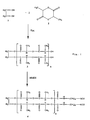
- FIG. 1 there is shown the preparation of ethylene glycol oligolactide (EOL) 4 which is modified at its terminal lactic acid moieties with isocyanate groups (EOL-NCO).
- EOL-NCO isocyanate groups
- the synthesis is carried out starting from ethylene glycol 1 and cyclic lactides 2, wherein the hydroxyl groups of 1 with the lactides 2 are esterified by a ring-opening oligomerization, optionally also ring-opening polymerization.
- EOL ethylene glycol oligolactide
- HMDI hexamethylene diisocyanate
- the oligolactide 4 can now be used as a crosslinking agent for nitrogen-functionalized polysaccharides, for example, for a chitosan 5, the structure in FIG. 2 is indicated schematically, and be used to adhesive substrates.
- n can be 1, 2, 3, 4 or 5.
- Example 2 Rheological investigations to determine the viscosity and the gel point
- the gel point with the rheometer ® Rheostress 1 of Thermo Haake was determined.
- the gel point is defined as a sol / gel transition point, where the storage modulus (elastic fraction) G 'is equal to the loss modulus G "(viscous fraction) and marks the transition from the liquid behavior (G">G') to the gelatinous or Solid state behavior (G '> G ")
- EOL-NCO EOUHMDI 1/2 n / n
- DMSO 85/15 w / w, ⁇ -sterilized> 25 kGy
- fibrin glue Teissucol duo S Immuno, Baxter Germany GmbH, Unterschl
- the delayed pot or gel time of the combination according to the invention over fibrin glue has the advantage for the user that sufficient application time is available after application of the combination, for example for fixation of the tissue parts to be bonded, bone fragments and / or positioning or repositioning defective roofing materials.
- the high viscosity of the individual components of the combination prevents the components from flowing away from the site of the wound or from the site of application or, in the case of heavily bleeding or severely exuding wounds, being washed away from the wound area.
- HMDI hexamethylene diisocyanate
- the mechanical testing of the adhesive joint was carried out under uniaxial tensile stress on the universal testing machine Zwick BZ2.5 / TN1S (Zwick GmbH & Co. KG, Germany, load cell 50 N).
- the soft tissue parts in particular parts of bovine muscle tissue, were fixed in form-fitting sample suspensions made of polymethyl methacrylate (PMMA).
- PMMA polymethyl methacrylate
- the clamped soft tissue samples were cut to an average size of 230 mm 2 . Subsequently, after manual mixing in a vial, 200 ⁇ l of the adhesive system to be examined was applied to the tissue.
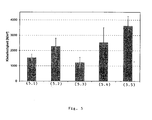
- the prepared soft tissue pieces were held in the universal testing machine at a defined pressure of 2 N for 10 minutes at room temperature (23 ° C) and 37 ° C and then pulled apart at a test speed of 10 mm / min while measuring the force-displacement ratio and below Considering the reference surface determines the bond strength.
- Example 5.3 Performing the soft tissue adhesion reaction at 37 ° C using bicameral syringes with sterilized adhesive components
- the sterilized adhesive components were administered in two-chamber syringes with static mixers (Mixpac Systems AG, Rotnch, Switzerland, chamber ratio 1: 1).
- the system EOL-NCO EOUHMDI 1/2 n / n
- DMSO 85/15 w / w, ⁇ -sterilized> 25 kGy
- component 2 7.
- Example 5.4 Performing the adhesive reaction for the hard tissue exposure at 37 ° C using two-chamber syringes with sterilized adhesive components
- the test arrangement was modified.
- the hard tissue model material used was an open-cell polyurethane rigid foam with pore sizes of 500-1,200 ⁇ m, which was further processed with a diamond wire saw (Histo-Saw DDM-P216, Medim) into square test specimen plates with a geometry of 15 mm ⁇ 15 mm ⁇ 3 mm , The disposable test specimens thus obtained were then cleaned with 99% ethanol in an ultrasonic bath and fixed by means of cyanoacrylate on the square PMMA holders for inclusion in the universal testing machine.
- the sterilized adhesive components were also applied by means of two-chamber syringes with static mixer (Mixpac Systems AG, Rotnch, Switzerland, chamber ratio 1: 1) to the fixed polyurethane platelets.
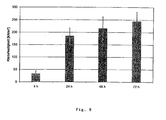
- the pair of samples was then lightly compressed and packaged in a humid environment for 4 h, 24 h, 48 h and 72 h at 37 ° C.
- the test of the strength of the adhesive joint was carried out under uniaxial tensile stress on the universal testing machine Zwick BZ2.5 / TN1S (Zwick GmbH & Co. KG, Germany, load cell 500 N) without the application of a defined pre-load at a test speed of 5 mm / min.
- Zwick BZ2.5 / TN1S Zwick GmbH & Co. KG, Germany, load cell 500 N
- Example 5.5 Carrying out the adhesive reaction for hard tissue adhesion after water retention at 37 ° C.
- the rigid polyurethane foam samples were prepared analogously to Example 5.4 described above and after each 10 min, 2 h and 24 h preliminary storage in a moist medium at 37 ° C for a further 24 h in a water bath at 37 ° C conditioned.
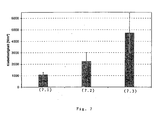
- the adhesive strengths measured after expiry of the respective storage times prove that the adhesive strength of the combination according to the invention is essentially not affected by moisture (compare, for this purpose, the values shown in Table 2 with the values given in FIG FIG. 7 shown adhesive strength).
- Example 5.6 Modification of the Hard Tissue Glue Adhesive System
- the adhesive system As a hard tissue adhesive, it is desirable to achieve an osteoinductive effect with the aid of fillers.
- fillers In addition to calcium phosphates, such as hydroxylapatite and ⁇ -tricalcium phosphate, for example, carbonates, for example calcium carbonate, or oxide materials, for example silicon dioxide, are also suitable. Due to the structure of cancellous bone parts, a particle size distribution of the fillers between 20 nm and 1 ⁇ m, preferably 20 nm and 100 nm, is advantageous.
- EOL-NCO EOL HMDI 1/2 n / n
- DMSO 85/15 w / w, ⁇ -sterilized
- Protasan UPCI 213 steam-sterilized
- Bovine muscle meat was cut into rectangular pieces with a footprint of about 2 cm 2 .
- the cut pieces were tempered to about 37 ° C and clamped in the two jaws of a tensile testing machine from Zwick (Ulm, Germany).
- the sterile protasan solution (see Example 1) and the sterile solution of the EOL isocyanate in DMSO (see Example 2) were introduced into a sterile two-chamber syringe and combined via a static mixing syringe. Subsequently, about 200 ⁇ l of the resulting pasty composition was applied to the piece of meat in the lower jaw. With a pretension of approx. 2 Newtons, the two pieces of meat were pressed together for approx.
- Example 9 Invitro examinations on a biological tissue
- the pressure resistance of a combination according to the invention was determined using a cylindrical biosimulator.
- the used Biosimulator with a pressure-resistant housing is 400 mm high and has a diameter of 150 mm.
- the lid with clamp for clamping biological tissue has a circular hole with a diameter of 30 mm. Recycled, moist cattle pericardium was cut into 60 x 60 mm pieces and blotted. With a punch punch centrally a circular defect was set with a diameter of 10 mm and the pericardium introduced into the holder of the cylinder cover.
- the previously punched-out piece was glued to the set defect with the aid of the combination according to the invention.
- an overpressure was generated in the biosimulator by means of compressed air, whereby the maximum overpressure was detected until the bond broke.
- n 5 measurements an average overpressure of 74.3 mbar could be determined.
- a maximum overpressure of 50 mbar was set, the pressure held for 1 min and then drained. This procedure was repeated 30 times without the glue joint cracking.
- the experiment shows the pressure resistance and elasticity of the adhesive joint on biological tissue.
- the combination according to the invention is therefore suitable, for example, for occluding air leaks, such as may occur in particular in the lungs after resections.
- a sterile EOL isocyanate solution in DMSO 80/20 (w / w) was mixed with a 4% protasan solution via a Mixpac mixer tip and subjected to a cytotoxicity test according to ISO 10993 (Biological Evaluation of Medical Devices Part 5: Test for Cytotoxicity).
- the combination according to the invention was used to quench liver bleeding in rabbits. Following anesthetization of the animals, a laparatomy was performed, the liver was exposed and a partial resection was performed on each liver lobe.
- the bleeding liver was treated with the combination according to the invention with its components (in this case a 4% by weight protasan solution and a mixture of EOL isocyanate and DMSO (80/20 w / w) mixed on the liver wound could be breastfed in less than 60 seconds in all rabbits.
- a sterile 80/20 (w / w) EOL isocyanate compound / DMSO mixture and a sterile 3% (w / v) protasan solution were placed in a two chamber applicator sprayed applicator.
- a 4 x 4 cm abrasion was made with a sandpaper, to which was applied the above combination with three successive strokes of the flask.
- a homogeneous film was formed, which completely covered the wound.
- the puncture sites supplied with the combination according to the invention proved to be tight or sealed, whereas the puncture sites treated with a pure EOL isocyanate solution or pure 4% chitosan solution were leaky, which could be determined on the basis of escaping air bubbles.
- the animal experiments described above show the functionality of the combination according to the invention for sealing fluid and air leaks.
- the milky-white turbidity occurring when mixing components a) and b) of the combination facilitates the distinctiveness between combination and care to the surgeon Tissue, whereby the combination can be applied with particular advantage accurately.
Landscapes
- Health & Medical Sciences (AREA)
- Surgery (AREA)
- Epidemiology (AREA)
- Life Sciences & Earth Sciences (AREA)
- Animal Behavior & Ethology (AREA)
- General Health & Medical Sciences (AREA)
- Public Health (AREA)
- Veterinary Medicine (AREA)
- Materials For Medical Uses (AREA)
- Adhesives Or Adhesive Processes (AREA)
Claims (24)
- Combinaison, en particulier pour le collage et/ou la fixation de tissus biologiques et/ou synthétiques, comprenant les composantsa) un polysaccharide fonctionnalisé à l'azote,b) une oligolactone fonctionnalisée en position terminale, caractérisée en ce que le polysaccharide et l'oligolactone sont présents séparés l'un de l'autre, et l'oligolactone comprend des groupes isocyanate terminaux.
- Combinaison selon la revendication 1, caractérisée en ce que le polysaccharide est un polysaccharide naturel ou dérive d'un tel polysaccharide.
- Combinaison selon la revendication 1 ou 2, caractérisée en ce que le polysaccharide est un polysaccharide portant des groupes amino, en particulier des groupes amino primaires.
- Combinaison selon l'une des revendications précédentes, caractérisée en ce que la proportion, dans le polysaccharide, de motifs monosaccharidiques portant un groupe amino, est d'au moins 30 %, de préférence de 80 %.
- Combinaison selon l'une des revendications précédentes, caractérisée en ce que le polysaccharide est un glycosaminoglycane au moins partiellement désacétylé (mucopolysaccharide).
- Combinaison selon l'une des revendications précédentes, caractérisée en ce que le polysaccharide présente un degré de désacétylation compris entre 50 et 98 %, en particulier entre 60 et 95 %, de préférence entre 80 et 90 %.
- Combinaison selon l'une des revendications précédentes, caractérisée en ce que le polysaccharide est le chitosane ou un dérivé de ce dernier.
- Combinaison selon l'une des revendications précédentes, caractérisée en ce que l'oligolactone est formée à partir d'un polyalcool et d'acides hydroxycarboxyliques, en particulier l'acide glycolique et/ou l'acide lactique.
- Combinaison selon l'une des revendications précédentes, caractérisée en ce que la proportion du polysaccharide dans la combinaison est de 1 à 80 % en poids, en particulier de 5 à 70 % en poids.
- Combinaison selon l'une des revendications précédentes, caractérisée en ce que la proportion de l'oligolactone dans la combinaison est de 20 à 99 % en poids, en particulier de 30 à 95 % en poids.
- Combinaison selon l'une des revendications précédentes, caractérisée en ce que le polysaccharide et/ou l'oligolactone se présentent sous forme dispersée, de préférence dissoute, dans un ou plusieurs solvants.
- Combinaison selon l'une des revendications précédentes, caractérisée en ce que le polysaccharide se présente sous forme d'une solution aqueuse, la proportion du polysaccharide, rapportée au poids total de la solution, étant en particulier de 2 à 5 % en poids, de préférence de 3 à 4 % en poids.
- Combinaison selon l'une des revendications précédentes, caractérisée en ce que l'oligolactone se présente sous forme d'une solution dans le DMSO, la proportion de l'oligolactone, rapportée au poids total de la solution, étant en particulier de 50 à 99 % en poids.
- Combinaison selon l'une des revendications précédentes, caractérisée en ce que le polysaccharide et l'oligolactone sont présents séparés l'un de l'autre dans les compartiments d'une seringue multicompartiments.
- Combinaison selon l'une des revendications précédentes, caractérisée en ce qu'on amorce une réaction, de préférence une réticulation, des composants après leur mélange sur un substrat à coller, sur un laps de temps < 100 secondes, en particulier < 80 secondes, de préférence < 60 secondes.
- Combinaison selon l'une des revendications précédentes, caractérisée en ce que la composition comprend des additifs, en particulier du collagène, de la gélatine et/ou de l'albumine.
- Combinaison selon l'une des revendications précédentes, caractérisée en ce que le polysaccharide et/ou l'oligolactone se présentent sous forme stérilisée.
- Combinaison selon l'une des revendications précédentes, caractérisée en ce que, pour ce qui concerne la combinaison, il s'agit d'une composition adhésive.
- Composé, caractérisé en ce que les composants de la combinaison sont mélangés selon l'une des revendications précédentes, et le polysaccharide est au moins partiellement réticulé avec l'oligolactone.
- Produit de technique médicale, en particulier pour le collage et/ou la fixation de tissus biologiques et/ou synthétiques, comprenant une combinaison selon l'une des revendications précédentes 1 à 18.
- Trousse comprenant au moins deux récipients distincts, l'un des récipients contenant un polysaccharide fonctionnalisé à l'azote et l'autre récipient contenant une oligolactone fonctionnalisée en position terminale, caractérisée en ce que l'oligolactone comprend des groupes isocyanate terminaux.
- Trousse selon la revendication 21, caractérisée en outre par un polysaccharide fonctionnalisé à l'azote et/ou une oligolactone fonctionnalisée en position terminale selon l'une des revendications 2 à 19.
- Procédé in vitro de collage, caractérisé en ce que les composants de la combinaison selon l'une des revendications 1 à 18 sont mis en contact les uns avec les autres et avec au moins un substrat à coller, qui comprend des groupes fonctionnels réactifs.
- Utilisation d'une combinaison selon l'une des revendications 1 à 18 pour fabriquer un produit de technique médicale.
Applications Claiming Priority (2)
| Application Number | Priority Date | Filing Date | Title |
|---|---|---|---|
| DE102007038125A DE102007038125A1 (de) | 2007-08-03 | 2007-08-03 | Kombination zum Verkleben von biologischen Geweben |
| PCT/EP2008/006348 WO2009018967A2 (fr) | 2007-08-03 | 2008-08-01 | Combinaison de collage de tissus biologiques |
Publications (2)
| Publication Number | Publication Date |
|---|---|
| EP2185207A2 EP2185207A2 (fr) | 2010-05-19 |
| EP2185207B1 true EP2185207B1 (fr) | 2011-07-27 |
Family
ID=40175999
Family Applications (1)
| Application Number | Title | Priority Date | Filing Date |
|---|---|---|---|
| EP08785289A Not-in-force EP2185207B1 (fr) | 2007-08-03 | 2008-08-01 | Combinaison de collage de tissus biologiques |
Country Status (6)
| Country | Link |
|---|---|
| US (1) | US8460703B2 (fr) |
| EP (1) | EP2185207B1 (fr) |
| AT (1) | ATE517642T1 (fr) |
| DE (1) | DE102007038125A1 (fr) |
| ES (1) | ES2370458T3 (fr) |
| WO (1) | WO2009018967A2 (fr) |
Cited By (2)
| Publication number | Priority date | Publication date | Assignee | Title |
|---|---|---|---|---|
| DE102012111808A1 (de) | 2012-12-05 | 2014-06-05 | Universität Rostock | Bioabbaubare Kombination zur Behandlung von Erkrankungen mit erhöhtem Augeninnendruck |
| DE102016222603A1 (de) | 2016-11-16 | 2018-05-17 | Aesculap Ag | Implantat und ein Kit zum Behandeln eines Knochendefekts |
Families Citing this family (4)
| Publication number | Priority date | Publication date | Assignee | Title |
|---|---|---|---|---|
| US10207022B2 (en) | 2009-09-01 | 2019-02-19 | Medoderm Gmbh | Chitosan tissue dressing |
| CN112807480B (zh) * | 2018-08-20 | 2022-08-09 | 稳得希林(杭州)生物科技有限公司 | 多糖基组织粘合医用胶及其应用 |
| DE102018126394B4 (de) | 2018-10-23 | 2020-12-24 | Universität Rostock | Probiotika enthaltendes Depotsystem für dentale Anwendungen |
| CN116445094B (zh) * | 2023-04-17 | 2025-08-05 | 山东理工大学 | 基于低聚乳酸的抑菌胶带及其制备方法 |
Family Cites Families (16)
| Publication number | Priority date | Publication date | Assignee | Title |
|---|---|---|---|---|
| US4740534A (en) | 1985-08-30 | 1988-04-26 | Sanyo Chemical Industries, Ltd. | Surgical adhesive |
| US4804691A (en) * | 1987-08-28 | 1989-02-14 | Richards Medical Company | Method for making a biodegradable adhesive for soft living tissue |
| US5583114A (en) * | 1994-07-27 | 1996-12-10 | Minnesota Mining And Manufacturing Company | Adhesive sealant composition |
| US5569725A (en) * | 1994-10-14 | 1996-10-29 | Air Products And Chemicals, Inc. | N-vinyl-n-acyl urea resins |
| US6063061A (en) * | 1996-08-27 | 2000-05-16 | Fusion Medical Technologies, Inc. | Fragmented polymeric compositions and methods for their use |
| US7435425B2 (en) | 2001-07-17 | 2008-10-14 | Baxter International, Inc. | Dry hemostatic compositions and methods for their preparation |
| WO1998019718A1 (fr) | 1996-11-05 | 1998-05-14 | Challenge Bioproducts Co., Ltd. | Modification chimique de materiaux biomedicaux par la genipine |
| US6558790B1 (en) * | 1999-11-30 | 2003-05-06 | Avery Dennison Corporation | Water vapor-permeable, pressure-sensitive adhesives |
| FR2809112B1 (fr) * | 2000-05-16 | 2004-05-07 | Centre Nat Rech Scient | Materiaux a base de polymeres biodegradables et son procede de preparation |
| DE10152407A1 (de) * | 2001-10-24 | 2003-05-08 | Aesculap Ag & Co Kg | Zusammensetzung aus mindestens zwei biokompatiblen chemisch vernetzbaren Komponenten |
| CA2484453A1 (fr) * | 2002-04-23 | 2003-11-06 | Netech Inc. | Compositions medicinales contenant un derive de chitosan photo-reticulable |
| RU2240830C1 (ru) * | 2003-12-26 | 2004-11-27 | ФГУП Государственный научно-исследовательский институт особо чистых биопрепаратов | Раневое покрытие и способ его получения |
| NZ550970A (en) | 2004-05-27 | 2010-01-29 | Univ Pittsburgh | Medical adhesive and methods of tissue adhesion |
| WO2006069578A1 (fr) * | 2004-12-30 | 2006-07-06 | Novozymes Biopolymer A/S | Acide hyaluronique lie a un polymere d'un alphahydroxyacide |
| US8044234B2 (en) | 2005-05-05 | 2011-10-25 | Tyco Healthcare Group Lp | Bioabsorbable surgical composition |
| DE102006006904A1 (de) | 2006-02-09 | 2007-08-23 | Universität Rostock | Neue Mittel zur Blutstillung und Klebstoffe für medizinische Anwendungen |
-
2007
- 2007-08-03 DE DE102007038125A patent/DE102007038125A1/de not_active Withdrawn
-
2008
- 2008-08-01 AT AT08785289T patent/ATE517642T1/de active
- 2008-08-01 US US12/671,947 patent/US8460703B2/en not_active Expired - Fee Related
- 2008-08-01 EP EP08785289A patent/EP2185207B1/fr not_active Not-in-force
- 2008-08-01 ES ES08785289T patent/ES2370458T3/es active Active
- 2008-08-01 WO PCT/EP2008/006348 patent/WO2009018967A2/fr not_active Ceased
Cited By (4)
| Publication number | Priority date | Publication date | Assignee | Title |
|---|---|---|---|---|
| DE102012111808A1 (de) | 2012-12-05 | 2014-06-05 | Universität Rostock | Bioabbaubare Kombination zur Behandlung von Erkrankungen mit erhöhtem Augeninnendruck |
| DE102012111808B4 (de) | 2012-12-05 | 2022-11-17 | Universität Rostock | Bioabbaubare Kombination zur Behandlung eines Glaukoms |
| DE102016222603A1 (de) | 2016-11-16 | 2018-05-17 | Aesculap Ag | Implantat und ein Kit zum Behandeln eines Knochendefekts |
| WO2018091524A1 (fr) | 2016-11-16 | 2018-05-24 | Aesculap Ag | Implant et kit de traitement d'un défaut osseux |
Also Published As
| Publication number | Publication date |
|---|---|
| US20110040323A1 (en) | 2011-02-17 |
| DE102007038125A1 (de) | 2009-02-05 |
| WO2009018967A3 (fr) | 2009-12-23 |
| EP2185207A2 (fr) | 2010-05-19 |
| US8460703B2 (en) | 2013-06-11 |
| ES2370458T3 (es) | 2011-12-16 |
| WO2009018967A2 (fr) | 2009-02-12 |
| ATE517642T1 (de) | 2011-08-15 |
Similar Documents
| Publication | Publication Date | Title |
|---|---|---|
| EP3050579B1 (fr) | Nouvelles colles aux fins d'applications médicales | |
| EP2037972B1 (fr) | Utilisation de gélatine et de transglutaminase pour produire un adhésif médical à réticulation | |
| EP2143771B1 (fr) | Composition de colle, notamment pour l'utilisation en médecine chirurgicale | |
| DE69529075T2 (de) | Klebende dichtungsmittel-zusammensetzung | |
| EP1438079B1 (fr) | Composition contenant un polymere portant des groupes amino et un aldehyde comportant au moins trois groupes aldehyde | |
| DE69737909T2 (de) | Polymerisierbare biologisch abbaubare polymere mit carbonat-oder dioxanonbindungen | |
| Li et al. | Injectable click chemistry-based bioadhesives for accelerated wound closure | |
| US20100297218A1 (en) | Tissue adhesive compositions and methods thereof | |
| EP2185207B1 (fr) | Combinaison de collage de tissus biologiques | |
| EP2468307A1 (fr) | Matrices de collagène stables en dégradation et biocompatibles | |
| EP4450095A1 (fr) | Adhésif médical pour tissu, son procédé de préparation et son utilisation | |
| DE102008033378A1 (de) | Klebstoffzusammensetzung, insbesondere zur Verwendung in der chirurgischen Medizin | |
| KR102615766B1 (ko) | 키토산 및 젤라틴을 포함하는 조직 보강용 점착 조성물 및 이의 제조방법 | |
| Yuan et al. | Evaluation of hydrogels for soft tissue adhesives in vitro and in vivo analyses | |
| DE102005007920A1 (de) | Flexible Klebstoffzusammensetzung | |
| CN112386740A (zh) | 一种成纤维细胞生长因子自粘性人工硬膜修补片及其制备方法 | |
| WO2019231763A1 (fr) | Adhésifs tissulaires et produits de scellement utilisant des aldéhydes d'origine naturelle | |
| CN211068233U (zh) | 一种成纤维细胞生长因子自粘性人工硬膜修补片 | |
| Lee et al. | Injectable Click Fibroin Bioadhesive Derived from Spider Silk for Accelerating Wound Closure and Healing Bone Fracture. Materials 2022, 15, 5269 | |
| WO2014026672A1 (fr) | Adhésifs biorésorbables et utilisation desdits adhésifs dans le domaine médical | |
| ZHU et al. | Evaluation of hydrogels for soft tissue adhesives in vitro and | |
| HK1166026A (en) | Degradation-stabilised, biocompatible collagen matrices |
Legal Events
| Date | Code | Title | Description |
|---|---|---|---|
| PUAI | Public reference made under article 153(3) epc to a published international application that has entered the european phase |
Free format text: ORIGINAL CODE: 0009012 |
|
| 17P | Request for examination filed |
Effective date: 20100302 |
|
| AK | Designated contracting states |
Kind code of ref document: A2 Designated state(s): AT BE BG CH CY CZ DE DK EE ES FI FR GB GR HR HU IE IS IT LI LT LU LV MC MT NL NO PL PT RO SE SI SK TR |
|
| AX | Request for extension of the european patent |
Extension state: AL BA MK RS |
|
| 17Q | First examination report despatched |
Effective date: 20100817 |
|
| DAX | Request for extension of the european patent (deleted) | ||
| GRAP | Despatch of communication of intention to grant a patent |
Free format text: ORIGINAL CODE: EPIDOSNIGR1 |
|
| GRAS | Grant fee paid |
Free format text: ORIGINAL CODE: EPIDOSNIGR3 |
|
| GRAA | (expected) grant |
Free format text: ORIGINAL CODE: 0009210 |
|
| AK | Designated contracting states |
Kind code of ref document: B1 Designated state(s): AT BE BG CH CY CZ DE DK EE ES FI FR GB GR HR HU IE IS IT LI LT LU LV MC MT NL NO PL PT RO SE SI SK TR |
|
| REG | Reference to a national code |
Ref country code: GB Ref legal event code: FG4D Free format text: NOT ENGLISH |
|
| REG | Reference to a national code |
Ref country code: CH Ref legal event code: EP |
|
| REG | Reference to a national code |
Ref country code: DE Ref legal event code: R096 Ref document number: 502008004340 Country of ref document: DE Effective date: 20110922 |
|
| REG | Reference to a national code |
Ref country code: NL Ref legal event code: VDEP Effective date: 20110727 |
|
| REG | Reference to a national code |
Ref country code: ES Ref legal event code: FG2A Ref document number: 2370458 Country of ref document: ES Kind code of ref document: T3 Effective date: 20111216 |
|
| PG25 | Lapsed in a contracting state [announced via postgrant information from national office to epo] |
Ref country code: MT Free format text: LAPSE BECAUSE OF FAILURE TO SUBMIT A TRANSLATION OF THE DESCRIPTION OR TO PAY THE FEE WITHIN THE PRESCRIBED TIME-LIMIT Effective date: 20110727 |
|
| PG25 | Lapsed in a contracting state [announced via postgrant information from national office to epo] |
Ref country code: SE Free format text: LAPSE BECAUSE OF FAILURE TO SUBMIT A TRANSLATION OF THE DESCRIPTION OR TO PAY THE FEE WITHIN THE PRESCRIBED TIME-LIMIT Effective date: 20110727 Ref country code: LT Free format text: LAPSE BECAUSE OF FAILURE TO SUBMIT A TRANSLATION OF THE DESCRIPTION OR TO PAY THE FEE WITHIN THE PRESCRIBED TIME-LIMIT Effective date: 20110727 Ref country code: NL Free format text: LAPSE BECAUSE OF FAILURE TO SUBMIT A TRANSLATION OF THE DESCRIPTION OR TO PAY THE FEE WITHIN THE PRESCRIBED TIME-LIMIT Effective date: 20110727 Ref country code: HR Free format text: LAPSE BECAUSE OF FAILURE TO SUBMIT A TRANSLATION OF THE DESCRIPTION OR TO PAY THE FEE WITHIN THE PRESCRIBED TIME-LIMIT Effective date: 20110727 Ref country code: FI Free format text: LAPSE BECAUSE OF FAILURE TO SUBMIT A TRANSLATION OF THE DESCRIPTION OR TO PAY THE FEE WITHIN THE PRESCRIBED TIME-LIMIT Effective date: 20110727 Ref country code: PT Free format text: LAPSE BECAUSE OF FAILURE TO SUBMIT A TRANSLATION OF THE DESCRIPTION OR TO PAY THE FEE WITHIN THE PRESCRIBED TIME-LIMIT Effective date: 20111128 Ref country code: NO Free format text: LAPSE BECAUSE OF FAILURE TO SUBMIT A TRANSLATION OF THE DESCRIPTION OR TO PAY THE FEE WITHIN THE PRESCRIBED TIME-LIMIT Effective date: 20111027 Ref country code: IS Free format text: LAPSE BECAUSE OF FAILURE TO SUBMIT A TRANSLATION OF THE DESCRIPTION OR TO PAY THE FEE WITHIN THE PRESCRIBED TIME-LIMIT Effective date: 20111127 |
|
| BERE | Be: lapsed |
Owner name: AESCULAP A.G. Effective date: 20110831 Owner name: UNIVERSITAT ROSTOCK Effective date: 20110831 |
|
| PG25 | Lapsed in a contracting state [announced via postgrant information from national office to epo] |
Ref country code: SI Free format text: LAPSE BECAUSE OF FAILURE TO SUBMIT A TRANSLATION OF THE DESCRIPTION OR TO PAY THE FEE WITHIN THE PRESCRIBED TIME-LIMIT Effective date: 20110727 Ref country code: PL Free format text: LAPSE BECAUSE OF FAILURE TO SUBMIT A TRANSLATION OF THE DESCRIPTION OR TO PAY THE FEE WITHIN THE PRESCRIBED TIME-LIMIT Effective date: 20110727 Ref country code: GR Free format text: LAPSE BECAUSE OF FAILURE TO SUBMIT A TRANSLATION OF THE DESCRIPTION OR TO PAY THE FEE WITHIN THE PRESCRIBED TIME-LIMIT Effective date: 20111028 Ref country code: LV Free format text: LAPSE BECAUSE OF FAILURE TO SUBMIT A TRANSLATION OF THE DESCRIPTION OR TO PAY THE FEE WITHIN THE PRESCRIBED TIME-LIMIT Effective date: 20110727 Ref country code: CY Free format text: LAPSE BECAUSE OF FAILURE TO SUBMIT A TRANSLATION OF THE DESCRIPTION OR TO PAY THE FEE WITHIN THE PRESCRIBED TIME-LIMIT Effective date: 20110727 |
|
| REG | Reference to a national code |
Ref country code: IE Ref legal event code: FD4D |
|
| PG25 | Lapsed in a contracting state [announced via postgrant information from national office to epo] |
Ref country code: MC Free format text: LAPSE BECAUSE OF NON-PAYMENT OF DUE FEES Effective date: 20110831 |
|
| PG25 | Lapsed in a contracting state [announced via postgrant information from national office to epo] |
Ref country code: SK Free format text: LAPSE BECAUSE OF FAILURE TO SUBMIT A TRANSLATION OF THE DESCRIPTION OR TO PAY THE FEE WITHIN THE PRESCRIBED TIME-LIMIT Effective date: 20110727 Ref country code: CZ Free format text: LAPSE BECAUSE OF FAILURE TO SUBMIT A TRANSLATION OF THE DESCRIPTION OR TO PAY THE FEE WITHIN THE PRESCRIBED TIME-LIMIT Effective date: 20110727 Ref country code: IE Free format text: LAPSE BECAUSE OF FAILURE TO SUBMIT A TRANSLATION OF THE DESCRIPTION OR TO PAY THE FEE WITHIN THE PRESCRIBED TIME-LIMIT Effective date: 20110727 |
|
| PG25 | Lapsed in a contracting state [announced via postgrant information from national office to epo] |
Ref country code: EE Free format text: LAPSE BECAUSE OF FAILURE TO SUBMIT A TRANSLATION OF THE DESCRIPTION OR TO PAY THE FEE WITHIN THE PRESCRIBED TIME-LIMIT Effective date: 20110727 Ref country code: RO Free format text: LAPSE BECAUSE OF FAILURE TO SUBMIT A TRANSLATION OF THE DESCRIPTION OR TO PAY THE FEE WITHIN THE PRESCRIBED TIME-LIMIT Effective date: 20110727 Ref country code: BE Free format text: LAPSE BECAUSE OF NON-PAYMENT OF DUE FEES Effective date: 20110831 |
|
| PLBE | No opposition filed within time limit |
Free format text: ORIGINAL CODE: 0009261 |
|
| STAA | Information on the status of an ep patent application or granted ep patent |
Free format text: STATUS: NO OPPOSITION FILED WITHIN TIME LIMIT |
|
| PG25 | Lapsed in a contracting state [announced via postgrant information from national office to epo] |
Ref country code: DK Free format text: LAPSE BECAUSE OF FAILURE TO SUBMIT A TRANSLATION OF THE DESCRIPTION OR TO PAY THE FEE WITHIN THE PRESCRIBED TIME-LIMIT Effective date: 20110727 |
|
| 26N | No opposition filed |
Effective date: 20120502 |
|
| REG | Reference to a national code |
Ref country code: DE Ref legal event code: R097 Ref document number: 502008004340 Country of ref document: DE Effective date: 20120502 |
|
| REG | Reference to a national code |
Ref country code: CH Ref legal event code: PL |
|
| PG25 | Lapsed in a contracting state [announced via postgrant information from national office to epo] |
Ref country code: CH Free format text: LAPSE BECAUSE OF NON-PAYMENT OF DUE FEES Effective date: 20120831 Ref country code: LI Free format text: LAPSE BECAUSE OF NON-PAYMENT OF DUE FEES Effective date: 20120831 |
|
| PG25 | Lapsed in a contracting state [announced via postgrant information from national office to epo] |
Ref country code: LU Free format text: LAPSE BECAUSE OF NON-PAYMENT OF DUE FEES Effective date: 20110801 |
|
| PG25 | Lapsed in a contracting state [announced via postgrant information from national office to epo] |
Ref country code: BG Free format text: LAPSE BECAUSE OF FAILURE TO SUBMIT A TRANSLATION OF THE DESCRIPTION OR TO PAY THE FEE WITHIN THE PRESCRIBED TIME-LIMIT Effective date: 20111027 |
|
| PG25 | Lapsed in a contracting state [announced via postgrant information from national office to epo] |
Ref country code: TR Free format text: LAPSE BECAUSE OF FAILURE TO SUBMIT A TRANSLATION OF THE DESCRIPTION OR TO PAY THE FEE WITHIN THE PRESCRIBED TIME-LIMIT Effective date: 20110727 |
|
| PG25 | Lapsed in a contracting state [announced via postgrant information from national office to epo] |
Ref country code: HU Free format text: LAPSE BECAUSE OF FAILURE TO SUBMIT A TRANSLATION OF THE DESCRIPTION OR TO PAY THE FEE WITHIN THE PRESCRIBED TIME-LIMIT Effective date: 20110727 |
|
| REG | Reference to a national code |
Ref country code: AT Ref legal event code: MM01 Ref document number: 517642 Country of ref document: AT Kind code of ref document: T Effective date: 20130801 |
|
| PG25 | Lapsed in a contracting state [announced via postgrant information from national office to epo] |
Ref country code: AT Free format text: LAPSE BECAUSE OF NON-PAYMENT OF DUE FEES Effective date: 20130801 |
|
| REG | Reference to a national code |
Ref country code: FR Ref legal event code: PLFP Year of fee payment: 9 |
|
| REG | Reference to a national code |
Ref country code: FR Ref legal event code: PLFP Year of fee payment: 10 |
|
| REG | Reference to a national code |
Ref country code: FR Ref legal event code: PLFP Year of fee payment: 11 |
|
| PGFP | Annual fee paid to national office [announced via postgrant information from national office to epo] |
Ref country code: FR Payment date: 20210823 Year of fee payment: 14 Ref country code: IT Payment date: 20210831 Year of fee payment: 14 |
|
| PGFP | Annual fee paid to national office [announced via postgrant information from national office to epo] |
Ref country code: ES Payment date: 20210917 Year of fee payment: 14 Ref country code: GB Payment date: 20210824 Year of fee payment: 14 Ref country code: DE Payment date: 20210819 Year of fee payment: 14 |
|
| REG | Reference to a national code |
Ref country code: DE Ref legal event code: R119 Ref document number: 502008004340 Country of ref document: DE |
|
| GBPC | Gb: european patent ceased through non-payment of renewal fee |
Effective date: 20220801 |
|
| PG25 | Lapsed in a contracting state [announced via postgrant information from national office to epo] |
Ref country code: IT Free format text: LAPSE BECAUSE OF NON-PAYMENT OF DUE FEES Effective date: 20220801 Ref country code: FR Free format text: LAPSE BECAUSE OF NON-PAYMENT OF DUE FEES Effective date: 20220831 Ref country code: DE Free format text: LAPSE BECAUSE OF NON-PAYMENT OF DUE FEES Effective date: 20230301 |
|
| REG | Reference to a national code |
Ref country code: ES Ref legal event code: FD2A Effective date: 20230926 |
|
| PG25 | Lapsed in a contracting state [announced via postgrant information from national office to epo] |
Ref country code: GB Free format text: LAPSE BECAUSE OF NON-PAYMENT OF DUE FEES Effective date: 20220801 Ref country code: ES Free format text: LAPSE BECAUSE OF NON-PAYMENT OF DUE FEES Effective date: 20220802 |