EP2186560B1 - Poudre photocatalytique réagissant à la lumière visible et son procédé de production - Google Patents
Poudre photocatalytique réagissant à la lumière visible et son procédé de production Download PDFInfo
- Publication number
- EP2186560B1 EP2186560B1 EP08829185.1A EP08829185A EP2186560B1 EP 2186560 B1 EP2186560 B1 EP 2186560B1 EP 08829185 A EP08829185 A EP 08829185A EP 2186560 B1 EP2186560 B1 EP 2186560B1
- Authority
- EP
- European Patent Office
- Prior art keywords
- peak
- range
- powder
- tungsten oxide
- light
- Prior art date
- Legal status (The legal status is an assumption and is not a legal conclusion. Google has not performed a legal analysis and makes no representation as to the accuracy of the status listed.)
- Active
Links
Images

Classifications
-
- C—CHEMISTRY; METALLURGY
- C09—DYES; PAINTS; POLISHES; NATURAL RESINS; ADHESIVES; COMPOSITIONS NOT OTHERWISE PROVIDED FOR; APPLICATIONS OF MATERIALS NOT OTHERWISE PROVIDED FOR
- C09D—COATING COMPOSITIONS, e.g. PAINTS, VARNISHES OR LACQUERS; FILLING PASTES; CHEMICAL PAINT OR INK REMOVERS; INKS; CORRECTING FLUIDS; WOODSTAINS; PASTES OR SOLIDS FOR COLOURING OR PRINTING; USE OF MATERIALS THEREFOR
- C09D5/00—Coating compositions, e.g. paints, varnishes or lacquers, characterised by their physical nature or the effects produced; Filling pastes
- C09D5/16—Antifouling paints; Underwater paints
- C09D5/1606—Antifouling paints; Underwater paints characterised by the anti-fouling agent
- C09D5/1612—Non-macromolecular compounds
- C09D5/1618—Non-macromolecular compounds inorganic
-
- B—PERFORMING OPERATIONS; TRANSPORTING
- B01—PHYSICAL OR CHEMICAL PROCESSES OR APPARATUS IN GENERAL
- B01J—CHEMICAL OR PHYSICAL PROCESSES, e.g. CATALYSIS OR COLLOID CHEMISTRY; THEIR RELEVANT APPARATUS
- B01J23/00—Catalysts comprising metals or metal oxides or hydroxides, not provided for in group B01J21/00
- B01J23/16—Catalysts comprising metals or metal oxides or hydroxides, not provided for in group B01J21/00 of arsenic, antimony, bismuth, vanadium, niobium, tantalum, polonium, chromium, molybdenum, tungsten, manganese, technetium or rhenium
- B01J23/24—Chromium, molybdenum or tungsten
- B01J23/30—Tungsten
-
- B—PERFORMING OPERATIONS; TRANSPORTING
- B01—PHYSICAL OR CHEMICAL PROCESSES OR APPARATUS IN GENERAL
- B01J—CHEMICAL OR PHYSICAL PROCESSES, e.g. CATALYSIS OR COLLOID CHEMISTRY; THEIR RELEVANT APPARATUS
- B01J35/00—Catalysts, in general, characterised by their form or physical properties
- B01J35/30—Catalysts, in general, characterised by their form or physical properties characterised by their physical properties
- B01J35/39—Photocatalytic properties
-
- B—PERFORMING OPERATIONS; TRANSPORTING
- B01—PHYSICAL OR CHEMICAL PROCESSES OR APPARATUS IN GENERAL
- B01J—CHEMICAL OR PHYSICAL PROCESSES, e.g. CATALYSIS OR COLLOID CHEMISTRY; THEIR RELEVANT APPARATUS
- B01J35/00—Catalysts, in general, characterised by their form or physical properties
- B01J35/30—Catalysts, in general, characterised by their form or physical properties characterised by their physical properties
- B01J35/391—Physical properties of the active metal ingredient
- B01J35/395—Thickness of the active catalytic layer
-
- B—PERFORMING OPERATIONS; TRANSPORTING
- B01—PHYSICAL OR CHEMICAL PROCESSES OR APPARATUS IN GENERAL
- B01J—CHEMICAL OR PHYSICAL PROCESSES, e.g. CATALYSIS OR COLLOID CHEMISTRY; THEIR RELEVANT APPARATUS
- B01J35/00—Catalysts, in general, characterised by their form or physical properties
- B01J35/60—Catalysts, in general, characterised by their form or physical properties characterised by their surface properties or porosity
- B01J35/61—Surface area
- B01J35/612—Surface area less than 10 m2/g
-
- B—PERFORMING OPERATIONS; TRANSPORTING
- B01—PHYSICAL OR CHEMICAL PROCESSES OR APPARATUS IN GENERAL
- B01J—CHEMICAL OR PHYSICAL PROCESSES, e.g. CATALYSIS OR COLLOID CHEMISTRY; THEIR RELEVANT APPARATUS
- B01J35/00—Catalysts, in general, characterised by their form or physical properties
- B01J35/60—Catalysts, in general, characterised by their form or physical properties characterised by their surface properties or porosity
- B01J35/61—Surface area
- B01J35/613—10-100 m2/g
-
- B—PERFORMING OPERATIONS; TRANSPORTING
- B01—PHYSICAL OR CHEMICAL PROCESSES OR APPARATUS IN GENERAL
- B01J—CHEMICAL OR PHYSICAL PROCESSES, e.g. CATALYSIS OR COLLOID CHEMISTRY; THEIR RELEVANT APPARATUS
- B01J35/00—Catalysts, in general, characterised by their form or physical properties
- B01J35/60—Catalysts, in general, characterised by their form or physical properties characterised by their surface properties or porosity
- B01J35/61—Surface area
- B01J35/615—100-500 m2/g
-
- B—PERFORMING OPERATIONS; TRANSPORTING
- B01—PHYSICAL OR CHEMICAL PROCESSES OR APPARATUS IN GENERAL
- B01J—CHEMICAL OR PHYSICAL PROCESSES, e.g. CATALYSIS OR COLLOID CHEMISTRY; THEIR RELEVANT APPARATUS
- B01J35/00—Catalysts, in general, characterised by their form or physical properties
- B01J35/70—Catalysts, in general, characterised by their form or physical properties characterised by their crystalline properties, e.g. semi-crystalline
-
- B—PERFORMING OPERATIONS; TRANSPORTING
- B01—PHYSICAL OR CHEMICAL PROCESSES OR APPARATUS IN GENERAL
- B01J—CHEMICAL OR PHYSICAL PROCESSES, e.g. CATALYSIS OR COLLOID CHEMISTRY; THEIR RELEVANT APPARATUS
- B01J37/00—Processes, in general, for preparing catalysts; Processes, in general, for activation of catalysts
- B01J37/12—Oxidising
- B01J37/14—Oxidising with gases containing free oxygen
-
- B—PERFORMING OPERATIONS; TRANSPORTING
- B01—PHYSICAL OR CHEMICAL PROCESSES OR APPARATUS IN GENERAL
- B01J—CHEMICAL OR PHYSICAL PROCESSES, e.g. CATALYSIS OR COLLOID CHEMISTRY; THEIR RELEVANT APPARATUS
- B01J37/00—Processes, in general, for preparing catalysts; Processes, in general, for activation of catalysts
- B01J37/34—Irradiation by, or application of, electric, magnetic or wave energy, e.g. ultrasonic waves ; Ionic sputtering; Flame or plasma spraying; Particle radiation
- B01J37/349—Irradiation by, or application of, electric, magnetic or wave energy, e.g. ultrasonic waves ; Ionic sputtering; Flame or plasma spraying; Particle radiation making use of flames, plasmas or lasers
-
- B—PERFORMING OPERATIONS; TRANSPORTING
- B82—NANOTECHNOLOGY
- B82Y—SPECIFIC USES OR APPLICATIONS OF NANOSTRUCTURES; MEASUREMENT OR ANALYSIS OF NANOSTRUCTURES; MANUFACTURE OR TREATMENT OF NANOSTRUCTURES
- B82Y30/00—Nanotechnology for materials or surface science, e.g. nanocomposites
-
- C—CHEMISTRY; METALLURGY
- C01—INORGANIC CHEMISTRY
- C01G—COMPOUNDS CONTAINING METALS NOT COVERED BY SUBCLASSES C01D OR C01F
- C01G41/00—Compounds of tungsten
- C01G41/02—Oxides; Hydroxides
-
- C—CHEMISTRY; METALLURGY
- C09—DYES; PAINTS; POLISHES; NATURAL RESINS; ADHESIVES; COMPOSITIONS NOT OTHERWISE PROVIDED FOR; APPLICATIONS OF MATERIALS NOT OTHERWISE PROVIDED FOR
- C09D—COATING COMPOSITIONS, e.g. PAINTS, VARNISHES OR LACQUERS; FILLING PASTES; CHEMICAL PAINT OR INK REMOVERS; INKS; CORRECTING FLUIDS; WOODSTAINS; PASTES OR SOLIDS FOR COLOURING OR PRINTING; USE OF MATERIALS THEREFOR
- C09D1/00—Coating compositions, e.g. paints, varnishes or lacquers, based on inorganic substances
-
- C—CHEMISTRY; METALLURGY
- C09—DYES; PAINTS; POLISHES; NATURAL RESINS; ADHESIVES; COMPOSITIONS NOT OTHERWISE PROVIDED FOR; APPLICATIONS OF MATERIALS NOT OTHERWISE PROVIDED FOR
- C09D—COATING COMPOSITIONS, e.g. PAINTS, VARNISHES OR LACQUERS; FILLING PASTES; CHEMICAL PAINT OR INK REMOVERS; INKS; CORRECTING FLUIDS; WOODSTAINS; PASTES OR SOLIDS FOR COLOURING OR PRINTING; USE OF MATERIALS THEREFOR
- C09D5/00—Coating compositions, e.g. paints, varnishes or lacquers, characterised by their physical nature or the effects produced; Filling pastes
- C09D5/14—Paints containing biocides, e.g. fungicides, insecticides or pesticides
-
- C—CHEMISTRY; METALLURGY
- C09—DYES; PAINTS; POLISHES; NATURAL RESINS; ADHESIVES; COMPOSITIONS NOT OTHERWISE PROVIDED FOR; APPLICATIONS OF MATERIALS NOT OTHERWISE PROVIDED FOR
- C09D—COATING COMPOSITIONS, e.g. PAINTS, VARNISHES OR LACQUERS; FILLING PASTES; CHEMICAL PAINT OR INK REMOVERS; INKS; CORRECTING FLUIDS; WOODSTAINS; PASTES OR SOLIDS FOR COLOURING OR PRINTING; USE OF MATERIALS THEREFOR
- C09D7/00—Features of coating compositions, not provided for in group C09D5/00; Processes for incorporating ingredients in coating compositions
- C09D7/40—Additives
- C09D7/60—Additives non-macromolecular
- C09D7/61—Additives non-macromolecular inorganic
-
- C—CHEMISTRY; METALLURGY
- C09—DYES; PAINTS; POLISHES; NATURAL RESINS; ADHESIVES; COMPOSITIONS NOT OTHERWISE PROVIDED FOR; APPLICATIONS OF MATERIALS NOT OTHERWISE PROVIDED FOR
- C09D—COATING COMPOSITIONS, e.g. PAINTS, VARNISHES OR LACQUERS; FILLING PASTES; CHEMICAL PAINT OR INK REMOVERS; INKS; CORRECTING FLUIDS; WOODSTAINS; PASTES OR SOLIDS FOR COLOURING OR PRINTING; USE OF MATERIALS THEREFOR
- C09D7/00—Features of coating compositions, not provided for in group C09D5/00; Processes for incorporating ingredients in coating compositions
- C09D7/40—Additives
- C09D7/66—Additives characterised by particle size
- C09D7/67—Particle size smaller than 100 nm
-
- C—CHEMISTRY; METALLURGY
- C09—DYES; PAINTS; POLISHES; NATURAL RESINS; ADHESIVES; COMPOSITIONS NOT OTHERWISE PROVIDED FOR; APPLICATIONS OF MATERIALS NOT OTHERWISE PROVIDED FOR
- C09D—COATING COMPOSITIONS, e.g. PAINTS, VARNISHES OR LACQUERS; FILLING PASTES; CHEMICAL PAINT OR INK REMOVERS; INKS; CORRECTING FLUIDS; WOODSTAINS; PASTES OR SOLIDS FOR COLOURING OR PRINTING; USE OF MATERIALS THEREFOR
- C09D7/00—Features of coating compositions, not provided for in group C09D5/00; Processes for incorporating ingredients in coating compositions
- C09D7/40—Additives
- C09D7/66—Additives characterised by particle size
- C09D7/68—Particle size between 100-1000 nm
-
- D—TEXTILES; PAPER
- D01—NATURAL OR MAN-MADE THREADS OR FIBRES; SPINNING
- D01F—CHEMICAL FEATURES IN THE MANUFACTURE OF ARTIFICIAL FILAMENTS, THREADS, FIBRES, BRISTLES OR RIBBONS; APPARATUS SPECIALLY ADAPTED FOR THE MANUFACTURE OF CARBON FILAMENTS
- D01F1/00—General methods for the manufacture of artificial filaments or the like
- D01F1/02—Addition of substances to the spinning solution or to the melt
- D01F1/10—Other agents for modifying properties
-
- D—TEXTILES; PAPER
- D06—TREATMENT OF TEXTILES OR THE LIKE; LAUNDERING; FLEXIBLE MATERIALS NOT OTHERWISE PROVIDED FOR
- D06M—TREATMENT, NOT PROVIDED FOR ELSEWHERE IN CLASS D06, OF FIBRES, THREADS, YARNS, FABRICS, FEATHERS OR FIBROUS GOODS MADE FROM SUCH MATERIALS
- D06M11/00—Treating fibres, threads, yarns, fabrics or fibrous goods made from such materials, with inorganic substances or complexes thereof; Such treatment combined with mechanical treatment, e.g. mercerising
- D06M11/32—Treating fibres, threads, yarns, fabrics or fibrous goods made from such materials, with inorganic substances or complexes thereof; Such treatment combined with mechanical treatment, e.g. mercerising with oxygen, ozone, ozonides, oxides, hydroxides or percompounds; Salts derived from anions with an amphoteric element-oxygen bond
- D06M11/36—Treating fibres, threads, yarns, fabrics or fibrous goods made from such materials, with inorganic substances or complexes thereof; Such treatment combined with mechanical treatment, e.g. mercerising with oxygen, ozone, ozonides, oxides, hydroxides or percompounds; Salts derived from anions with an amphoteric element-oxygen bond with oxides, hydroxides or mixed oxides; with salts derived from anions with an amphoteric element-oxygen bond
- D06M11/48—Oxides or hydroxides of chromium, molybdenum or tungsten; Chromates; Dichromates; Molybdates; Tungstates
-
- B—PERFORMING OPERATIONS; TRANSPORTING
- B01—PHYSICAL OR CHEMICAL PROCESSES OR APPARATUS IN GENERAL
- B01J—CHEMICAL OR PHYSICAL PROCESSES, e.g. CATALYSIS OR COLLOID CHEMISTRY; THEIR RELEVANT APPARATUS
- B01J2235/00—Indexing scheme associated with group B01J35/00, related to the analysis techniques used to determine the catalysts form or properties
- B01J2235/15—X-ray diffraction
-
- C—CHEMISTRY; METALLURGY
- C01—INORGANIC CHEMISTRY
- C01P—INDEXING SCHEME RELATING TO STRUCTURAL AND PHYSICAL ASPECTS OF SOLID INORGANIC COMPOUNDS
- C01P2002/00—Crystal-structural characteristics
- C01P2002/70—Crystal-structural characteristics defined by measured X-ray, neutron or electron diffraction data
- C01P2002/72—Crystal-structural characteristics defined by measured X-ray, neutron or electron diffraction data by d-values or two theta-values, e.g. as X-ray diagram
-
- C—CHEMISTRY; METALLURGY
- C01—INORGANIC CHEMISTRY
- C01P—INDEXING SCHEME RELATING TO STRUCTURAL AND PHYSICAL ASPECTS OF SOLID INORGANIC COMPOUNDS
- C01P2002/00—Crystal-structural characteristics
- C01P2002/70—Crystal-structural characteristics defined by measured X-ray, neutron or electron diffraction data
- C01P2002/74—Crystal-structural characteristics defined by measured X-ray, neutron or electron diffraction data by peak-intensities or a ratio thereof only
-
- C—CHEMISTRY; METALLURGY
- C01—INORGANIC CHEMISTRY
- C01P—INDEXING SCHEME RELATING TO STRUCTURAL AND PHYSICAL ASPECTS OF SOLID INORGANIC COMPOUNDS
- C01P2004/00—Particle morphology
- C01P2004/60—Particles characterised by their size
- C01P2004/62—Submicrometer sized, i.e. from 0.1-1 micrometer
-
- C—CHEMISTRY; METALLURGY
- C01—INORGANIC CHEMISTRY
- C01P—INDEXING SCHEME RELATING TO STRUCTURAL AND PHYSICAL ASPECTS OF SOLID INORGANIC COMPOUNDS
- C01P2004/00—Particle morphology
- C01P2004/60—Particles characterised by their size
- C01P2004/64—Nanometer sized, i.e. from 1-100 nanometer
-
- C—CHEMISTRY; METALLURGY
- C01—INORGANIC CHEMISTRY
- C01P—INDEXING SCHEME RELATING TO STRUCTURAL AND PHYSICAL ASPECTS OF SOLID INORGANIC COMPOUNDS
- C01P2006/00—Physical properties of inorganic compounds
- C01P2006/12—Surface area
-
- C—CHEMISTRY; METALLURGY
- C01—INORGANIC CHEMISTRY
- C01P—INDEXING SCHEME RELATING TO STRUCTURAL AND PHYSICAL ASPECTS OF SOLID INORGANIC COMPOUNDS
- C01P2006/00—Physical properties of inorganic compounds
- C01P2006/60—Optical properties, e.g. expressed in CIELAB-values
- C01P2006/62—L* (lightness axis)
-
- C—CHEMISTRY; METALLURGY
- C01—INORGANIC CHEMISTRY
- C01P—INDEXING SCHEME RELATING TO STRUCTURAL AND PHYSICAL ASPECTS OF SOLID INORGANIC COMPOUNDS
- C01P2006/00—Physical properties of inorganic compounds
- C01P2006/60—Optical properties, e.g. expressed in CIELAB-values
- C01P2006/63—Optical properties, e.g. expressed in CIELAB-values a* (red-green axis)
-
- C—CHEMISTRY; METALLURGY
- C01—INORGANIC CHEMISTRY
- C01P—INDEXING SCHEME RELATING TO STRUCTURAL AND PHYSICAL ASPECTS OF SOLID INORGANIC COMPOUNDS
- C01P2006/00—Physical properties of inorganic compounds
- C01P2006/60—Optical properties, e.g. expressed in CIELAB-values
- C01P2006/64—Optical properties, e.g. expressed in CIELAB-values b* (yellow-blue axis)
-
- C—CHEMISTRY; METALLURGY
- C01—INORGANIC CHEMISTRY
- C01P—INDEXING SCHEME RELATING TO STRUCTURAL AND PHYSICAL ASPECTS OF SOLID INORGANIC COMPOUNDS
- C01P2006/00—Physical properties of inorganic compounds
- C01P2006/80—Compositional purity
-
- C—CHEMISTRY; METALLURGY
- C08—ORGANIC MACROMOLECULAR COMPOUNDS; THEIR PREPARATION OR CHEMICAL WORKING-UP; COMPOSITIONS BASED THEREON
- C08K—Use of inorganic or non-macromolecular organic substances as compounding ingredients
- C08K3/00—Use of inorganic substances as compounding ingredients
- C08K3/18—Oxygen-containing compounds, e.g. metal carbonyls
- C08K3/20—Oxides; Hydroxides
- C08K3/22—Oxides; Hydroxides of metals
-
- Y—GENERAL TAGGING OF NEW TECHNOLOGICAL DEVELOPMENTS; GENERAL TAGGING OF CROSS-SECTIONAL TECHNOLOGIES SPANNING OVER SEVERAL SECTIONS OF THE IPC; TECHNICAL SUBJECTS COVERED BY FORMER USPC CROSS-REFERENCE ART COLLECTIONS [XRACs] AND DIGESTS
- Y10—TECHNICAL SUBJECTS COVERED BY FORMER USPC
- Y10T—TECHNICAL SUBJECTS COVERED BY FORMER US CLASSIFICATION
- Y10T428/00—Stock material or miscellaneous articles
- Y10T428/29—Coated or structually defined flake, particle, cell, strand, strand portion, rod, filament, macroscopic fiber or mass thereof
- Y10T428/2982—Particulate matter [e.g., sphere, flake, etc.]
Definitions
- the present invention relates to a visible-light-responsive photocatalyst powder, and to a method of manufacturing the same.
- titanium oxide As a photocatalytic material used in the application for stain-proofing and deodorization, titanium oxide is known.
- the photocatalytic material is used in various fields of interior and exterior building materials, home appliances such as lighting devices, refrigerators, air-conditioners, and toilets.
- titanium oxide cannot exhibit sufficient photocatalytic performance in indoor environments having only a small amount of ultraviolet rays because titanium oxide is excited by an ultraviolet region. Therefore, research and development have been in progress for a visible-light-responsive photocatalyst exhibiting photocatalytic performance even by visible light.
- Patent Document 1 describes a photocatalytic material made of tungsten oxide sputter-deposited on a base material, and tungsten oxide having a triclinic crystal structure is mainly used. Since the sputter deposition exposes the base material to high temperature, heat resistance temperature of some base material does not allow the application of the sputter deposition. Since the sputter deposition is often performed in a highly vacuum chamber, its process control is complicated, and it not only costs high depending on the shape and size of the base material but also has a difficulty in the deposition on a wide range such as on building materials. Moreover, though excellent in hydrophilic property, a visible-light-responsive photocatalytic layer made of sputter-deposited tungsten oxide has a problem that its performance of decomposing toxic gas such as acetaldehyde is not high enough.
- tungsten oxide powder as a photocatalyst has been also studied.
- the tungsten oxide powder can be mixed with an organic binder to be applied on a base material, which eliminates the need to expose the base material to high temperature and makes it possible to form a coating film even on a wide range such as on building materials.
- a method of manufacturing the tungsten oxide powder there has been known a method of obtaining a tungsten trioxide (WO 3 ) powder by heating ammonium paratungstate (APT) in the air (see Patent Document 2).
- APT ammonium paratungstate
- the tungsten trioxide (WO 3 ) powder generated by the heating of APT in the air needs to have fine particles in order to have improved photocatalytic performance. Applying a disintegration process can make the particle size small to some degree but has a difficulty in realizing the particle size of 100 nm or less, for instance. Moreover, turning it to fine powder by the use of the disintegration process causes a change in the crystal structure of the tungsten trioxide (WO 3 ) fine powder due to a stress by the disintegration process.
- Patent Document 2 Since the stress of the disintegration process causes a defect of the occurrence of the re-combination of electrons and holes, it is thought that photocatalytic performance is deteriorated
- the manufacturing method described in Patent Document 2 has a problem of low manufacturing efficiency of the tungsten trioxide powder since it requires 20 hour or more kneading in order to stabilize the BET specific surface area.
- Patent Document 3 describes a thermal plasma process.
- a fine powder whose particle size is 1 to 200 nm is obtained by the application of the thermal plasma process.
- the thermal plasma process can efficiently provide a fine powder, but even if the tungsten oxide fine powder produced by the use of the method described in Patent Document 3 is used as a photocatalyst as it is, it is not always possible to obtain a sufficient photocatalytic property. It is thought that this is because the tungsten oxide fine powder produced by the thermal plasma method does not sometimes have an optimum optical property or crystal structure.
- Tungsten oxide comes in various kinds such as WO 3 (tungsten trioxide), WO 2 (tungsten dioxide), WO, W 2 O 3 , W 4 O 5 , and W 4 O 11 .
- tungsten trioxide WO 3
- WO 2 tungsten dioxide
- W 2 O 3 tungsten oxide
- W 4 O 5 tungsten oxide
- W 4 O 11 tungsten trioxide
- tungsten trioxide (WO 3 ) is mainly used as a photocatalytic material because of its excellent photocatalytic performance and its stability in a room-temperature atmosphere.
- tungsten trioxide (WO 3 ) has a disadvantage that its photocatalytic performance is not stable because of its complicated crystal structure and its changeability by a small stress.
- tungsten trioxide (WO 3 ) cannot exhibit sufficient photocatalytic performance if its surface area is small.
- Patent Document 4 discloses a visible light-responsive photocatalyst composition that exerts a photocatalytic effect by the visible light irradiation included in the light of a fluorescent lamp and sunlight.
- the visible light-responsive photocatalyst composition contains a tungsten oxide, wherein the primary particle diameter of the crystal is 10 to 100 nm and the crystal structure measured by X-ray diffraction is WO x (2.5 ⁇ x ⁇ 3.0).
- the tungsten oxide exists as orthorhombic tungsten trioxide.
- Patent Document 5 discloses a photocatalytic material having a high catalytic effect and responsive to visible light by keeping a prescribed crystal structure.
- the photocatalytic material contains tungsten trioxide fine particles having an average particle diameter of 0.5 ⁇ m or smaller and a crystal structure of a monoclinic crystal system as a main component.
- the tungsten trioxide fine particles have an average particle diameter of 0.1 ⁇ m or smaller.
- Patent Document 6 discloses a method for improving the yield of ultrafine particles in the production of ultrafine particles of tungsten or tungsten oxide from a powdery tungsten or tungsten oxide raw material.
- the method comprises the steps of (a) generating high-temperature plasma under slightly reduced pressure, and (b) continuously introducing a powdery raw material consisting of tungsten or tungsten oxide carried by a carrier gas containing nitrogen gas into the plasma flame.
- Non-Patent Document 1 is concerned with the preparation, characterization and photoreactivity of tungsten trioxide powders.prepared by air annealing ammonium metatungstate, ammonium tungstate parapentahydrate or tungstic acid as tungsten precursors at different temperatures of 400 to 1000°C for 1 to 4 hours.
- the tungsten trioxide powders have mainly a monoclinic crystal structure, and have a BET specific surface area in the range of 2.3 to 21 m 2 /g.
- the invention is defined by the claims.
- the invention thus relates to a visible-light-responsive photocatalyst powder as defined in claim 1.
- the invention relates to a method of manufacturing the visible-light-responsive photocatalyst powder of the first aspect as defined in claim 9.
- the visible-liglit-responsive photocatalyst powder according to the invention consists essentially of a tungsten oxide powder.
- the tungsten oxide powder constituting the visible-light-responsive photocatalyst powder satisfies the following conditions (1) to (3), has a BET specific surface area falling within a 1.5 to 820 m 2 /g range, and has an average particle size (D50) by image analysis thereof falling within a range of 1 to 548 nm.
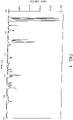
- FIG. 1 shows a chart of X-ray diffraction of a tungsten oxide powder of a later-described Comparative Example 1, as an example of the result of X-ray diffraction of a tungsten oxide powder.
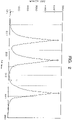
- FIG. 2 is a chart showing 22.5 to 25° of 2 ⁇ range in an enlarged manner and shows an example of the peaks A to D.
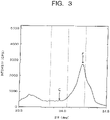
- FIG. 3 shows an example of the peaks E to F.
- FIG. 4 shows an example of the peaks G to H.
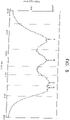
- FIG. 5 is a chart showing 22.5 to 25° of 2 ⁇ range in an enlarged manner similarly to FIG. 2 and shows how to read the peak C in a different pattern from that in FIG. 2 .
- the tungsten oxide powder satisfying the conditions (1) to (3) is a mixed crystal in which at least one kind selected from a monoclinic crystal and a triclinic crystal is mixed with a rhombic crystal. It is inferred that mainly the monoclinic crystal, the triclinic crystal, or a mixed crystal of the monoclinic crystal and the triclinic crystal exists and the rhombic crystal is contained therein.
- the tungsten oxide powder having such a crystal structure can stably exhibit excellent photocatalytic performance. Though it is difficult to determine abundance ratios of the respective crystal phases, the tungsten oxide powder, when satisfying the conditions (1) to (3), can have improved photocatalytic performance and can exhibit such performance stably.
- the tungsten oxide powder constituting the photocatalyst powder is mainly made of WO 3 (tungsten trioxide).
- the tungsten oxide powder is substantially made of WO 3 , but may contain another kind of oxide (WO 2 , WO, W 2 O 3 , W 4 O 5 , W 4 O 11 , or the like).
- the tungsten oxide powder may be substantially made of WO 3 , or may be a mixture of WO 3 as the main component and another oxide (WO x ). If the conditions (1) to (3) are satisfied, good photocatalytic performance can be obtained.
- the 2 ⁇ range (22.5 to 25°) of the first, second and third peaks and the intensity ratios of the peaks (the peak A, the peak B, the peak C, and the peak D) existing in the respective 2 ⁇ ranges (22.8 to 23.4°, 23.4 to 23.8°, 24.0 to 24.25°, and 24.25 to 24.5° ranges) in the condition (1) are premises for the existence of the aforesaid mixed crystal.
- the first, second, and third peaks fall out of the 22.5 to 25° of 2 ⁇ range, it indicates that a hetero-phase is appearing, and it is not possible to obtain the aforesaid mixed crystal state.
- the A/D ratio and the B/D ratio are less than 0.5 or are over 2.0, the balance of at least one kind selected from the monoclinic crystal and the triclinic crystal with the rhombic crystal deteriorates and sufficient photocatalytic performance cannot be obtained.
- the A/D ratio and the B/D ratio each fall within a range of 0.7 to 1.5.
- the A/D ratio and the B/D ratio each desirably fall within a range of 0.7 to 1.3.
- the peak C, the peak D, and the C/D ratio in the condition (1), the peak E, the peak F, and the E/F ratio in the condition (2), and the peak G, the peak H, and the G/H ratio in the condition (3) indicate that the crystal structure of the tungsten oxide powder is a mixed crystal in which at least one selected from the monoclinic crystal and the triclinic crystal is mixed with the rhombic crystal and also indicate a mixture amount of the rhombic crystal.
- the C/D ratio is less than 0.04
- the E/F ratio is less than 0.1
- the G/H ratio is less than 0.04
- the crystal structure is a single phase or the rhombic crystal has an excessive amount. In any of the cases, sufficient photocatalytic performance cannot be obtained.
- the C/D ratio in the condition (1) falls within a range of 0.5 to 2.5, and preferably within a range of 0.5 to 1.5.
- the C/D ratio desirably falls within a range of 0.7 to 1.1.
- the E/F ratio in the condition (2) falls within a range of 0.5 to 2.0, and preferably within a range of 0.5 to 1.5.
- the E/F ratio desirably falls within a range of 0.7 to 1.1.
- the G/H ratio in the condition (3) falls within a range of 0.2 to 2.0, and preferably within a range of 0.2 to 1.5.
- the G/H ratio desirably falls within a range of 0.4 to 1.1.
- the photocatalytic performance of the tungsten oxide powder can be improved not only by the aforesaid crystal structure. Specifically, since a tungsten oxide powder satisfying the conditions (1) to (3) and having a BET specific surface area in a range of 1.5 to 820 m 2 /g is used as a visible-light-responsive photocatalyst powder, it is possible to stably obtain excellent photocatalytic performance. Assuming that a specific gravity of tungsten oxide is 7.3, an average particle size converted from the BET specific surface area falls within a range of 1 to 548 nm.
- tungsten oxide powder satisfying the conditions (1) to (3) and having an average particle size in a range of 1 to 548 nm is used as a visible-light-responsive photocatalyst powder, it is possible to stably obtain excellent photocatalytic performance.
- the average particle size (D50) may be equal to the average particle size converted from the specific surface area.
- the BET specific surface area of the tungsten oxide powder preferably falls within in a range of 11 to 300 m 2 /g, and more preferably, within a range of 16 to 150 m 2 /g.
- the BET specific surface area desirably falls within a range of 2 ⁇ to 100 m 2 /g.
- the average particle size by image analysis of the tungsten oxide powder preferably falls within a range of 2.5 to 75 nm, and more preferably, within a range of 5.5 to 51 nm.
- the average particle size by image analysis desirably falls within a range of 8.2 to 41 nm.
- tungsten oxide powder When the tungsten oxide powder is applied to a visible-light-responsive photocatalytic coating material, too small a particle size results in poor dispersibility of particles and results in a difficulty in turning it into the coating material.
- a tungsten oxide powder whose particle size is 8.2 nm or more is preferably used.
- the visible-light-responsive photocatalyst powder of the invention includes the tungsten oxide powder which has the crystal structure shown in the conditions (1) to (3) based on the result of the X-ray diffraction, a BET specific surface area falling within a range of 1.5 to 820 m 2 /g, and an average particle size (D50) falling within a range of 1 to 548 nm.
- tungsten oxide powder satisfying these conditions makes it possible to provide a visible-light-responsive photocatalyst powder whose photocatalytic performance by visible light excitation is improved.
- the tungsten oxide powder constituting the visible-light-responsive photocatalyst powder preferably has color whose a ⁇ is 0 or less, b ⁇ is -5 or more, and L ⁇ is 50 or more when the color of the powder is expressed by the L ⁇ a ⁇ b ⁇ color system (L-star/a-star/b-star color system).
- the L ⁇ a ⁇ b ⁇ color system is a method used to express color of an object and is standardized by Commission Internationale de l'Eclairage (CIE) in 1976, and its definition is in JIS Z-87Z9 in Japan.
- L ⁇ expresses lightness and a ⁇ and b ⁇ express hue and saturation.
- the tungsten oxide powder preferably has color whose a ⁇ is 0 or less, ⁇ b is -5 or more, and L ⁇ is 50 or more, and more preferably has color whose a ⁇ is -5 or less, b ⁇ is 5 or more, and L ⁇ is 70 or more.
- a ⁇ , b ⁇ , and L ⁇ which express color tone of the tungsten oxide powder fall within a range of -25 to -8, a range of 10 to 45, and is 85 or more respectively.
- the aforesaid numerical values of the L ⁇ a ⁇ b ⁇ color system indicate that the tungsten oxide powder has a hue from yellow to the vicinity of green and has high saturation and lightness. When it has such an optical property, its photocatalytic performance by visible light excitation can be improved.
- the color tone of the tungsten oxide powder is thought to change based on composition fluctuation due to oxygen deficiency, light irradiation, and so on, and when it has the above-described hue, saturation, and lightness, good photocatalytic performance can be obtained.
- it has a hue close to blue it is thought that there is a high degree of oxygen deficiency or the like, and with such a hue, the deterioration in the photocatalytic performance is observed.
- the tungsten oxide powder constituting the visible-light-responsive photocatalyst powder may contain a trace amount of a metal element as impurities.
- the content of the impurity metal element is 2 mass% or less.
- the impurity metal element are an element normally contained in a tungsten mineral and a contaminant element which is mixed when a tungsten compound or the like used as a raw material is produced.
- Concrete examples of the impurity metal element are Fe, Mo, Mn, Cu, Ti, Al, Ca, Ni, Cr, Mg, and the like.
- the nitrogen content of the tungsten oxide powder constituting the visible-light-responsive photocatalyst powder is 150 ppm or less (mass ratio).
- nitrogen is a factor causing the deterioration in crystallinity of the tungsten oxide powder, its content is 150 ppm or less. It is thought that, when the nitrogen content is 300 ppm or less, crystallinity improves, which makes it difficult for the re-combination of electrons and holes to occur.
- the control of the crystal structure and the use of the tungsten oxide powder having a large specific surface area (having a small average particle size) make it possible to improve and stabilize the photocatalytic performance by visible light excitation. Further, controlling the color of the tungsten oxide powder and the content of the impurity element such as nitrogen enables further improvement in photocatalytic performance.
- the tungsten oxide powder is excellent in dispersibility since its zeta potential in an aqueous solution with pH 1 to 7 is minus, and thus can be applied thinly and evenly on a base material.
- Examples of the photocatalytic performance are performance of decomposing organic gas such as acetaldehyde and formaldehyde, a hydrophilic property, antibacterial performance, and disinfection performance.
- visible light is light in a 390 to 830 nm wavelength range.
- the tungsten oxide powder has excellent photocatalytic performance when irradiated with 430 to 500 nm light
- Examples of an excitation source emitting light with a 430 to 500 nm wavelength are sunlight, a fluorescent lamp, a blue-emitting diode, a blue laser, and the like.
- the blue-emitting diode and the blue laser are preferable since they can emit only light with a 430 to 500 nm wavelength.
- the tungsten oxide powder constituting the visible-light-responsive photocatalyst powder of the invention is manufactured as follows, for instance.
- the tungsten oxide powder is manufactured by the use of a sublimation process combined with a heat treatment process.
- the tungsten trioxide powder manufactured by the use of the combination of the sublimation process and the heat treatment process it is possible to stably realize the aforesaid crystal structure and BET specific surface area.
- the average particle size of primary particles approximates a value converted from the BET specific surface area, and it is possible to stably provide a powder small in particle size variation.
- the sublimation process is a process to obtain a tungsten trioxide powder by sublimating a tungsten trioxide powder in an oxygen atmosphere.
- Sublimation is a phenomenon in which a state change from a solid phase to a vapor phase or from a vapor phase to a solid phase occurs not through a liquid phase.
- tungsten raw material tungsten trioxide (WO 3 ) powder is used.
- the tungsten trioxide powder is instantaneously changed from a solid phase to a vapor phase, and oxidizing metal tungsten vapor changed to the vapor phase results in a tungsten oxide powder.
- an oxidation reaction in the vapor phase it is possible to obtain a tungsten oxide fine powder.
- the crystal structure of the tungsten oxide fine powder can be controlled.
- a tungsten trioxide powder is used since the tungsten oxide powder obtained by the sublimation in the oxygen atmosphere is less likely to contain impurities, and the tungsten trioxide powder does not contain a toxic substance as a byproduct (substance other than tungsten oxide) produced in the sublimation.
- the tungsten compound containing tungsten (W) and oxygen (O) as its constituent elements i.e. tungsten trioxide, is easily sublimated instantaneously when a later-described inductively-coupled plasma process is applied in the sublimation process.
- the tungsten trioxide powder as the tungsten raw material preferably has an average particle size falling within a 0.1 to 100 ⁇ m range.
- the average particle size of the tungsten raw material more preferably falls within a 0.3 ⁇ m to 10 ⁇ m range, still more preferably, within a 0.3 ⁇ m to 3 ⁇ m range, and desirably within a 0.3 ⁇ m to 1.5 ⁇ m range.
- the tungsten trioxide powder having the average particle size in the above range is used, the sublimation easily occurs.
- the average particle size of the tungsten raw material is less than 0.1 ⁇ m, the powder of the raw material is too fine, and thus advance adjustment of the raw material powder is required and handleability is lowered, and in addition, high cost is required, which is not industrially preferable.
- the average particle size of the tungsten raw material is over 100 ⁇ m a uniform sublimation reaction is difficult to occur. Even if the average particle size is large, processing with a large energy amount can cause a uniform sublimation reaction, but this is not industrially preferable.
- an inductively-coupled plasma process is used.
- the inductively-coupled plasma process can cause an oxidation reaction of a large amount of the raw material powder at a time in an oxygen atmosphere though requiring the adjustment of a generation area of plasma. Moreover, an amount of the raw material processable at a time can be controlled.
- a generally used method is a method in which plasma is generated by using argon gas or oxygen gas, and a tungsten trioxide powder is supplied to the plasma.
- the method of supplying the tungsten trioxide powder into the plasma is a method of injecting the tungsten trioxide powder together with carrier gas.
- the carrier gas used when the the tungsten trioxide powder is injected into the plasma is air, oxygen, or an inert gas containing oxygen. Among them, air is preferably used because of its low cost.
- the inert gas argon or helium may be used.
- the reaction gas the use of oxygen or inert gas containing oxygen is preferable.
- an oxygen amount is preferably set so that a sufficient amount of oxygen necessary for the oxidation reaction can be supplied.
- the method of injecting the tungsten trioxide powder with the carrier gas and adjusting a gas flow rate and the pressure in a reaction vessel facilitate the control of the crystal structure of the tungsten trioxide powder.
- the tungsten trioxide powder having the crystal structure in which at least one kind selected from the monoclinic crystal and the triclinic crystal (the monoclinic crystal the triclinic crystal, or the mixed crystal of the monoclinic crystal and the triclinic crystal) is mixed with the rhombic crystal.
- the tungsten oxide powder constituting the visible-light-responsive photocatalyst powder of the invention is obtained by the sublimation process, and subjecting the tungsten oxide powder produced by the sublimation process to a heat treatment process.
- the heat treatment process the tungsten trioxide powder obtained by the sublimation process is heat-treated in an oxide atmosphere at a predetermined temperature and for a predetermined time. Even when a sufficient amount of the tungsten trioxide fine powder cannot be formed by controlling the conditions of the sublimation process, performing the heat treatment makes it possible to make a ratio of the tungsten trioxide fine powder in the tungsten oxide powder 99% or more, or practically 100%. Further, the heat treatment process can adjust the crystal structure of the tungsten trioxide fine powder to a predetermined structure.
- the oxide atmosphere used in the heat treatment includes air or oxygen-containing gas.
- the oxygen-containing gas means inert gas containing oxygen.
- the heat treatment temperature falls within a range of 500 to 700°C.
- the heat treatment time is 30 minutes to 1.5 hours. Making the temperature and the time of the heat treatment process fall within the aforesaid ranges facilitates forming tungsten trioxide from tungsten oxide except tungsten trioxide.
- the heat treatment temperature is lower than 300°, there is a possibility that it is not possible to obtain a sufficient oxidation effect for turning the powder, which has not been turned into tungsten trioxide in the sublimation process, into tungsten trioxide.
- the heat treatment temperature is higher than 1000°C, the tungsten oxide fine particles rapidly grow and accordingly the specific surface area of the resultant tungsten oxide fine powder is likely to decrease. Further, by performing the heat treatment process at the aforesaid temperature and for the aforesaid time, it is possible to adjust the crystal structure of the tungsten trioxide fine powder.
- the tungsten oxide powder may contain a transition metal element.
- the content of the transition metal element is over 50 mass%, the property as the visible-light -responsive photocatalyst powder may possibly deteriorate.
- the content of the transition metal element is 2 mass% or less.
- the transition metal element is any of elements whose atomic numbers are 21 to 29, 39 to 47, 57 to 79, and 89 to 109 respectively. Among them, the use of at least one kind selected from Ti, Fe, Cu, Zr, Ag and Pt is preferable. Examples of a form of the contained transition metal element are metal, an oxide, a complex oxide, a compound, and the like.
- the transition metal element may be mixed with the tungsten oxide powder, or the transition metal element may carry the tungsten oxide powder.
- the transition metal element with tungsten may form a compound.
- the visible-light-responsive photocatalyst powder of the invention is usable as a visible-light-responsive photocatalyst as it is.
- a powder (or substance in a form other than powder) obtained by mixing the visible-light-responsive photocatalyst powder with another material or by having the other material carry it, or by impregnating the other material with it can be used as the visible-light-responsive photocatalyst.
- a visible-light-responsive photocatalytic material disclosed herein contains the visible-light-responsive photocatalyst powder whose content falls within a 1 to 100 mass% range.
- the content of the photocatalyst powder in the visible-light-responsive photocatalytic material is appropriately selected according to a desired property, but if it is less than 1 mass%, sufficient photocatalytic performance cannot be obtained.
- the visible-light-responsive photocatalyst powder (tungsten oxide powder) may be mixed with particles of SiO 2 , ZrO 2 , Al 2 O 3 , TiO 2 , or the like, for instance, or may be carried by these particles. Further, zeolite or the like may be impregnated with tungsten oxide.
- the visible-light-responsive photocatalyst powder of the invention mixed with a solvent, an additive, or the like is used as a visible-light responsive photocatalytic coating material.
- the above-described visible-light-responsive photocatalytic material may be used instead of the visible-light-responsive photocatalyst powder.
- the content of the photocatalyst powder or the photocatalytic material in the visible-light responsive photocatalytic coating material is set so as to fall within a range of 0.1 to 90 mass%. When the content of the photocatalyst powder or the photocatalytic material is less than 0.1 mass%, sufficient photocatalytic performance cannot be obtained, and when it is over 90 mass%, the property as the coating material lowers.
- the solvent or the additive blended in the visible-light-responsive photocatalytic coating material is water, alcohol, a dispersing agent, a binder, or the like.
- the binder may be any of an inorganic binder, an organic binder, and an organic-inorganic complex binder.
- the inorganic binder is, for example, colloidal silica, alumina sol, zirconia sol, or the like.
- the organic-inorganic complex binder means an organic matter containing a metal element such as Si as its component.
- silicone resin or the like is used as an organic component of the organic binder or the organic-inorganic complex binder.
- the visible-light-responsive photocatalytic coating material is used in various kinds of products.
- the visible-light-responsive photocatalytic coating material include various kinds of glass coating agents such as a coating agent for automobile glass and a coating agent for bathroom glass, a bathroom coating agent, coating agents for toilet and wash room, an interior coating material, an electric appliance coating material, and the like.
- the photocatalytic coating material is also effective for various kinds of products requiring gas decomposition performance, antibacterial performance, and the like.
- a visible-light-responsive photocatalytic product disclosed herein includes the visible-light-responsive photocatalyst powder or photocatalytic material described above.
- the photocatalytic product includes a coating layer of the photocatalytic coating material.
- the photocatalytic product is, for example, a product in which the photocatalyst powder or the photocatalytic material is made to adhere to a base material or the base material is impregnated therewith or a product in which the photocatalytic coating material is applied on the base material.
- the photocatalytic products include products containing zeolite, activated carbon, porous ceramics, or the like impregnated with the photocatalyst powder.
- the visible-light-responsive photocatalytic product examples include an air-conditioner, an air cleaner, an electric fan, a refrigerator, a microwave oven, a dish washer/drier, a rice cooker, a pot, an IH heater, a washing machine, a vacuum cleaner, a lighting fixture (lamp, fixture main body, shade, or the like) sanitary goods, a lavatory bowl, a wash basin, a mirror, a bathroom (wall, ceiling, floor, and so on), building materials (indoor wall, ceiling material, floor, exterior wall), interior goods (curtain, carpet, table, chair, sofa, shelf, bed, bedding, and the like), glass, metal sash window, handrail, door, knob, clothes, filter used in home electric appliances, and the like.
- an air-conditioner an air cleaner, an electric fan, a refrigerator, a microwave oven, a dish washer/drier, a rice cooker, a pot, an IH heater, a washing machine, a vacuum cleaner, a lighting fixture (lamp, fixture main body
- Examples of the base material of the visible-light-responsive photocatalytic product are glass, plastic, resin such as acryl, paper, fiber, metal, and wood.
- the photocatalytic coating material when applied on glass, highly transparent glass whose light transmittance for light with a 550 nm wavelength is 50% or more is obtained.
- the reason for selecting the light with a 550 nm wavelength is that it is not absorbed by the tungsten oxide powder much and thus light transmittance of the photocatalytic coating layer itself can be measured.
- the visible-light-responsive photocatalytic product can be used as parts used in living space and in indoor space of automobiles.
- automobiles use glass transmitting almost no ultraviolet
- the visible-light -responsive photocatalytic product it exhibits an effect for organic gas decomposition, hydrophilic property, stain-proofing, and so on in a space almost free from ultraviolet.
- the photocatalyst powder and the photocatalytic material are effectively used for a deodorizing antibacterial sheet, a shading cover, and the like for automobiles.
- a coating layer of the photocatalyst powder or the photocatalytic material is also effective for bathroom glass, water tanks, vases, and so on.
- a cooking device (microwave oven or the like) includes a housing part provided inside a cabinet and a door provided on a front surface of the housing part.
- the housing part and the door form a heating chamber.
- an inner barrier made of transparent glass is provided on an inner surface side of the door.
- the coating layer of the visible-light-responsive photocatalyst powder or photocatalytic material is provided on at least part of the heating chamber including an inner surface of the inner barrier (inner side of the heating chamber).
- the coating layer of the photocatalyst powder or the photocatalytic material exhibits the effect of deodorization, bacteria decomposition, and so on when irradiated with light of an inner lamp.
- the visible-light-responsive photocatalyst powder or photocatalytic material is provided on at least part of members used in a storage chamber, such as a storage chamber inner wall, shelves, a water feed tank, an ice storage box.
- a water feed tank is made of transparent or translucent synthetic resin.
- the coating layer of the photocatalyst powder or the photocatalytic material is provided on an inner surface of the water feed tank
- the coating layer of the photocatalyst powder or the photocatalytic material exhibits the effect of disinfecting a surface of the water feed tank, decomposing an organic compound in ice making water in the tank to purify water quality, and the like when irradiated with light of an inner lamp. Consequently, tasty ice free from smell can be made.
- the visible-light-responsive photocatalyst powder or photocatalytic material is used on at least part of a fin, a filter (especially, a filter for air-conditioner including a light source), an exterior material, and so on.
- the coating layer of the photocatalyst powder or the photocatalytic material is provided on a surface of the fin, the filter, the exterior material, or the like.
- the coating layer of the photocatalyst powder or the photocatalytic material is excited by sunlight or visible light emitted from a light source to exhibit the effect of decomposing and removing a contaminant substance such as oil and smell adhering to the air-conditioner.
- the visible-light-responsive photocatalyst powder or photocatalytic material is used on at least part of a filter (especially, a filter including a light source), an exterior material, and so on.
- a filter especially, a filter including a light source
- the coating layer of the photocatalyst powder or the photocatalytic material is provided on a surface of the filter or the exterior material.
- the coating layer of the photocatalyst powder or the photocatalytic material is excited by sunlight or visible light emitted from a light source to exhibit the effect of decomposing and removing a contaminant substance such as oil and smell adhering to the air cleaner or the dehumidifier.
- the coating layer of the visible-light-responsive photocatalyst powder or the photocatalytic material is provided on a blade.
- the coating layer of the photocatalyst powder or the photocatalytic material exhibits the effect of decomposing and removing a contaminant substance such as oil and smell adhering to the electric fan.
- the visible-light-responsive photocatalyst powder or photocatalytic material is used on at least part of a shade.
- the coating layer of the photocatalyst powder or the photocatalytic material is provided on an inner surface or an outer surface of the shade.
- the coating layer of the photocatalyst powder or the photocatalytic material is excited by visible light emitted from the fluorescent lamp or the desk lamp to exhibit the effect of decomposing and removing a contaminant substance such as oil and smell adhering to the fluorescent lamp or the desk lamp.
- the shade coated with the photocatalyst is difficult to get dirty and can be kept clean for a long time.
- Building materials such as an interior wall material, a ceiling material, a partition, a blind, a paper sliding door, a paper panel door as the visible-light-responsive photocatalytic products each have the coating layer of the photocatalyst powder or the photocatalytic material.
- the coating layer of the photocatalyst powder or the photocatalytic material is excited by sunlight or visible light emitted from various kinds of light sources to exhibit the effect of decomposing and removing a contaminant substance such as oil and smell adhering to the interior wall material, the ceiling material, the partition, the blind, the paper sliding door, the paper panel door, and so on.
- the visible-light-responsive photocatalyst is also effective for slippers and a cabinet for them, a Christmas tree, and the like.
- Fiber products using the visible-light-responsive photocatalyst include a curtain, a partition curtain, a uniform, and so on.
- the coating layer of the photocatalyst powder or the photocatalytic material is provided on surfaces of these fiber products.
- fiber in which the photocatalyst powder is mixed is used to make fiber products such as a curtain, a partition curtain, and a uniform.
- the photocatalyst powder or the photocatalytic material is excited by sun light or visible light emitted from various kinds of light sources to exhibit the effect of decomposing and removing a contaminant substance such as oil and smell adhering to the fiber products such as the curtain, the partition curtain, and the uniform.
- the visible-light-responsive photocatalyst is also effective for fiber products other than these.
- a tungsten trioxide powder whose average particle size was 0.5 ⁇ was prepared as a raw material powder.
- This raw material powder was sprayed to RF plasma together witch carrier gas (Ar), and as reaction gas, argon and oxygen were supplied at flow rates of 40 L/min and 100 L/min respectively.
- a tungsten oxide powder was produced through a sublimation process in which an oxidation reaction of the raw material powder was caused while the raw material powder was being sublimated. Further, the tungsten oxide powder was heat treated in the atmosphere under the condition of 700°C ⁇ 1 h. The production condition of the powder is shown in Table 1.
- the obtained tungsten oxide powder was subjected to X-ray diffraction.
- X-ray diffraction an X-ray diffraction instrument RINT-2000 manufactured by Rigaku Corporation was used, and a Cu target, a Ni filter, and a graphite (002) monochromator were used. Measuring conditions were as follows: tube/bulb voltage: 40 kV, tube/bulb current: 40 mA, divergent slit: 1/2°, scattering slit: auto, light-receiving slit 0.15 mm, 2 ⁇ range measured: 20 to 70°, scanning speed: 0.5°/min, and sampling width: 0.004°.
- tungsten oxide powder a BET specific surface area, an average particle size by image analysis of a TEM photo, L ⁇ a ⁇ b ⁇ , the nitrogen content, and the content of a metal element were measured.
- a specific surface area measuring instrument Macsorb1201 manufactured by MOUNTECH Co., Ltd. was used for measuring the BET specific surface area. A pre-process was performed in nitrogen under the condition of 200° ⁇ 20 minutes.
- H-7100FA manufactured by HITACHI was used, and an enlarged photo was subjected to image analysis and 50 particles or more were extracted, and D50 was calculated by finding a volume-based integrated diameter.
- a spectrophotometric colorimeter CM-2500d manufactured by KONICA MINOLTA was used for the L ⁇ a ⁇ b ⁇ measurement.
- the measurement results of the BET specific surface area and the average particle size are shown in Table 2.
- the measurement results of the L ⁇ a ⁇ b ⁇ , the nitrogen content, and the metal element content are shown in Table 3.
- acetaldehyde decomposition performance was measured and evaluated.
- the acetaldehyde gas decomposition performance was evaluated by using a circulation type instrument as is used in the evaluation of nitrogen oxide removal performance (decomposition performance) of JIS-R-1701-1 (2004), under the following conditions.
- a gas analyzing apparatus a multi-gas monitor 1412 manufactured by NOVA was used.
- the evaluation result of photocatalytic performance is shown in Table 3. It was confirmed that the tungsten oxide powder according to the Example 1 had a 52% gas residual ratio, which indicates high gas decomposition performance.
- an initial concentration of acetaldehyde was 10 ppm, a gas flow rate was 140 mL/min, and an amount of a sample was 0.2 g.
- a sample was 0.2 g.
- it was applied on a 5 ⁇ 10 cm glass plate and was dried. In a case of a powder sample, it was spread by water to be dried.
- 12-hour irradiation of black light was performed.
- a fluorescent lamp FL20SS • W/18 manufactured by Toshiba Lighting & Technology Corporation
- wavelengths of 400 nm or lower were cut by an acrylic plate. Illuminance was 6000 1x.
- Example 2 The same measurement and evaluation as those of the Example 1 were performed by using a tungsten oxide powder (manufactured by Rare Metallic Co., Ltd.) available on the market as a reagent.
- the measurement and evaluation results are shown in Table 2 and Table 3.
- An X-ray diffraction result of the tungsten oxide powder of the Ccomparative Example 1 is shown in FIG. 1 .
- peak intensity ratios were found from the X-ray diffraction result, an A/D ratio was 0.96, a B/D ratio was 0.96, a C/D ratio was 0.03, an E/F ratio was 0.15, and a G/H ratio was 0.03.
- a BET specific surface area was 0.7 m 2 /g and an average particle size was 1210 nm.
- the tungsten oxide powder of the Comparative Example 1 had poor gas decomposition performance (gas residual ratio) of 97% because its peak intensity ratios and BET specific surface area based on the X-ray diffraction result did not reach the values defined in the present invention.
- a tungsten oxide powder was produced through the same sublimation process as that of the Example 1 except in that oxygen was supplied as reaction gas at a flow rate of 80 L/min. However, heat treatment was not performed.
- the tungsten oxide powder thus obtained was subjected to the same measurement and evaluation as those of the Example 1.
- the production condition of the tungsten oxide powder is shown in Table 1 and the measurement and evaluation results are shown in Table 2 and Table 3. It was confirmed that the tungsten oxide powder according to the Example 2 exhibited excellent gas decomposition performance.
- Example 3 the same sublimation process as that of the Example 1 was performed.
- argon was supplied at a now rate of 40 L/min and air was supplied at a flow ate of 40 L/min in the sublimation process, and a heat treatment process was performed under the condition of 600° ⁇ 1 h after the sublimation process.
- Example 4 as reaction gas, argon was supplied at a flow rate of 40 L/min and oxygen was supplied at a flow rate of 40 L/min in the sublimation process, and a heat treatment process was performed under the condition of 500° ⁇ 0.5 h after the sublimation process.
- Example 5 the sublimation process and the heat treatment process were performed under the same conditions as those of the Example 3 except in that, as a raw material injected into plasma, a tungsten oxide powder containing a large amount of impurity elements such as Fe and Mo was used.
- the obtained tungsten oxide powder was subjected to the same measurement and evaluation as those of the Example 1.
- the production conditions of the tungsten oxide powders are shown in Table 1 and the measurement and evaluation results are shown in Table 2 and Table 3.
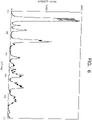
- the result of X ray diffraction is shown in FIG. 6 . It was confirmed that the tungsten oxide powders according to the Examples 3 to 5 all exhibited good gas decomposition performance.
- a tungsten oxide powder was produced in the same manner as that of the Example 1 except in that, as reaction gas, argon was supplied at a flow rate of 80 L/min and air was supplied at a flow rate of 5 L/min, and the pressure in a reaction vessel was adjusted to a pressure-reduced side of 35 kPa. Heat treatment was not performed.
- the tungsten oxide powder obtained was subjected to the same measurement and evaluation as those of the Example 1.
- the production condition of the tungsten oxide powder is shown in Table 1 and the measurement and evaluation results are shown in Tables 2 and 3.
- a tungsten oxide powder was produced through the same sublimation process as that of the Example 1 except in that, as reaction gas, argon was supplied at a flow rate of 80 L/min, oxygen was supplied at a flow rate of 5 L/min, and nitrogen was supplied at a flow rate of 40 L/min.
- the obtained powder was subjected to heat treatment in the atmosphere under the condition of 700° ⁇ 0.25 h.
- the tungsten oxide powder thus obtained was subjected to the same measurement and evaluation as those of the Example 1.
- the production condition of the tungsten oxide powder is shown in Table 1 and the measurement and evaluation results are shown in Table 2 and Table 3.
- gas decomposition performance was 65% which is slightly lower than that of the Example 1, due to a high nitrogen content of 450 ppm. It is thought that this is because the high nitrogen content causes the distortion in crystal lattice.
- a tungsten oxide powder produced through the same sublimation process as that of the Example 4 was subjected to heat treatment in the atmosphere under the condition of 1100° ⁇ 0.5 h.
- the tungsten oxide powder thus obtained was subjected to the same measurement and evaluation as those of the Example 1.
- the production condition of the tungsten oxide powder is shown in Table 1 and the measurement and evaluation results are shown in Table 2 and Table 3.
- the tungsten oxide powder had a small BET specific surface area of 1.4 m 2 /g and a large average particle size of 605 nm. It was confirmed that gas decomposition performance thereof was low as a result. It is thought that this is because particle growth occurred by the high-temperature heat treatment.
- a pellet of a tungsten oxide powder whose density was 4.5 g/cm 3 was prepared as a raw material.
- This raw material (pellet) was put in a reaction vessel and an arc discharge process was performed at a 5 kPa pressure.
- the tungsten oxide powder produced by the arc discharge process was subjected to heat treatment in the atmosphere under the condition of 650° ⁇ 1 h.
- the tungsten oxide powder thus obtained was subjected to the same measurement and evaluation as those of the Example 1.
- the production condition of the tungsten oxide powder is shown in Table 1 and the measurement and evaluation results are shown in Table 2 and Table 3. It was confirmed that the tungsten oxide powder of the Example 8 exhibited the same level of gas decomposition performance as that of the Example 1.
- a pellet of a tungsten oxide powder whose density was 4.5 g/cm 3 was prepared as a raw material.
- This raw material (pellet) was put in a reaction vessel and was irradiated with a CO 2 laser while oxygen was supplied at a flow rate of 10 L/min and the pressure was kept at 3 kPa.
- the tungsten oxide powder produced by the laser process was subjected to heat treatment in the atmosphere under the condition of 650° ⁇ 1 h.
- the tungsten oxide powder thus obtained was subjected to the same measurement and evaluation as those of the Example 1.
- the production condition of the tungsten oxide powder is shown in Table 1 and the measurement and evaluation results are shown in Table 2 and Table 3. It was confirmed that the tungsten oxide powder of the Example 9 exhibited the same level of gas decomposition performance as that of the Example 1. The same result was obtained when an electron beam irradiation process was applied.
- an ammonium tungstate solution whose WO 3 purity was 30% was prepared as a raw material.
- This raw material (solution) together with 100 L/min oxygen was sprayed to flame of an acetylene gas burner in a reaction vessel, whereby a tungsten oxide powder was produced. Further, the tungsten oxide powder was subjected to heat treatment in the atmosphere under the condition of 650° ⁇ 0.5 h.
- the tungsten oxide powder thus obtained was subjected to the same measurement and evaluation as those of the Example 1.
- the production condition of the tungsten oxide powder is shown in Table I and the measurement and evaluation results are shown in Tables 2 and 3. It was confirmed that the tungsten oxide powder of the Example 10 exhibited the same level of gas decomposition performance as that of the Example 1.
- a copper oxide (CuO) powder at a ratio of 2 mass% was mixed in the tungsten oxide powder obtained in the Example 3.
- the tungsten oxide powder thus obtained was subjected to the same evaluation of gas decomposition performance as that of the Example 1.
- the gas decomposition performance (gas residual ratio) was 14% and it was confirmed that high performance on the same level as that of the Example 3 was exhibited.
- a water-type coating material containing 5 mass% of the tungsten oxide powder produced in the Example 4 and 0.05 mass% of colloidal silica was prepared. This was applied on glass to be dried, whereby glass having a photocatalytic coating layer was fabricated. When gas decomposition performance of this glass was evaluated according to the aforesaid method, it was confirmed that it had an excellent gas residual ratio of 20%. Next, transmittance of the glass having the photocatalytic coating layer when it was irradiated with light with a 550 nm wavelength was measured. For the measurement of the light transmittance, a UV-Vis spectrophotometer UV-2550 manufactured by Shimazu Corporation was used. As a result, the light transmittance was 90% when the film thickness was 0.25 ⁇ m.
- the aforesaid coating material when the aforesaid coating material was applied on glass in an indoor space of an automobile, smell of cigarette was reduced and the glass was not easily stained.
- a hydrophilic property of the glass coated with the coating material when evaluated, a contact angle was 1° or less and an ultrahigh hydrophilic property was exhibited.
- antibacterial performance was evaluated by using Staphylococcus aureus, colon bacillus, and mold, it was confirmed that excellent antibacterial performance was exhibited against any of them.
- the visible-light-responsive photocatalyst powder of the example is excellent in acetaldehyde decomposition performance, or the photocatalytic coating layer has high transmittance and is unlikely to have a visual problem such as uneven color. Therefore, they are suitably used for members used in an indoor space of an automobile, building materials, and so on.
- the visible-light-responsive photocatalyst powder according to the first aspect of the invention is excellent in photocatalytic performance and its stability owing to its crystal structure and specific surface area. Therefore, applying such a visible-light-responsive photocatalyst powder makes it possible to provide a visible-light-responsive photocatalytic material, photocatalytic coating material and photocatalytic product each excellent in photocatalytic performance by visible light and its reproducibility.
Landscapes
- Chemical & Material Sciences (AREA)
- Engineering & Computer Science (AREA)
- Organic Chemistry (AREA)
- Materials Engineering (AREA)
- Chemical Kinetics & Catalysis (AREA)
- Life Sciences & Earth Sciences (AREA)
- Wood Science & Technology (AREA)
- Inorganic Chemistry (AREA)
- Nanotechnology (AREA)
- Physics & Mathematics (AREA)
- Textile Engineering (AREA)
- Health & Medical Sciences (AREA)
- Crystallography & Structural Chemistry (AREA)
- Plasma & Fusion (AREA)
- Toxicology (AREA)
- Composite Materials (AREA)
- Condensed Matter Physics & Semiconductors (AREA)
- General Physics & Mathematics (AREA)
- Optics & Photonics (AREA)
- Manufacturing & Machinery (AREA)
- General Chemical & Material Sciences (AREA)
- Plant Pathology (AREA)
- Catalysts (AREA)
- Inorganic Compounds Of Heavy Metals (AREA)
- Paints Or Removers (AREA)
Claims (9)
- Poudre photocatalytique réagissant à la lumière visible constituée essentiellement d'une poudre d'oxyde de tungstène, dans laquelle :lorsque la poudre d'oxyde de tungstène est mesurée par diffractométrie à rayons X au moyen d'un instrument de diffraction des rayons X RINT-2000 fabriqué par Rigaku Corporation, et d'une cible en cuivre, d'un filtre en nickel, et d'un monochromateur en graphite (002), dans laquelle les conditions de mesure sont les suivantes : tension tube/ampoule : 40 kV, courant tube/ampoule : 40 mA, fente de dispersion : 1/2°, fente de diffraction : auto, fente réceptrice : 0,15 mm, plage 2θ mesurée : 20° à 70°, vitesse de balayage : 0,5°/minute, et largeur d'échantillonnage : 0,004°, et lors de la mesure des intensités de pic, Kα2 n'est pas éliminé, et seuls les méthodes de lissage et de soustraction du bruit de fond sont réalisées, dans laquelle, pour le lissage, Savitzky-Golay (méthode des moindres carrés) a été utilisée et un filtre à 11 points a été fixé, et dans laquelle, pour la soustraction du bruit de fond, une ligne droite a été ajustée dans la plage de mesure et un seuil σ a été fixé à 3,0,(1) la poudre d'oxyde de tungstène présente un premier pic qui est un pic de diffraction avec l'intensité la plus élevée parmi tous les pics, un deuxième pic qui est un pic de diffraction avec la deuxième intensité la plus élevée parmi tous les pics, et un troisième pic qui est un pic de diffraction avec la troisième intensité la plus élevée parmi tous les pics dans la plage 2θ allant de 22,5° à 25°, et un rapport d'intensité entre un pic A et un pic D (A/D) et un rapport d'intensité entre un pic B et le pic D (B/D) se situant chacun dans une plage allant de 0,7 à 2,0, et un rapport d'intensité entre un pic C et le pic D (C/D) se situant dans une plage allant de 0,5 à 2,5, où le pic A est un pic existant dans la plage 2θ allant de 22,8° à 23,4° , le pic B est un pic existant dans la plage 2θ comprise entre 23,4° ou plus et 23,8° ou moins, le pic C est un pic existant dans la plage 2θ allant de 24,0° à 24,25° , et le pic D est un pic existant dans la plage 2θ allant de 24,25° à 24,5°,(2) un rapport d'intensité entre un pic E et un pic F (E/F) se situe dans une plage allant de 0,5 à 2,0, où le pic E est un pic existant dans la plage 2θ allant de 33,85° à 34,05° et le pic F est un pic existant dans la plage 2θ allant de 34,05° à 34,25°, et(3) un rapport d'intensité entre un pic G et un pic H (G/H) se situe dans une plage allant de 0,2 à 2,0, où le pic G est un pic existant dans la plage 2θ allant de 49,1° à 49,7° et le pic H est un pic existant dans la plage 2θ allant de 49,7° à 50,3°,la poudre d'oxyde de tungstène présente une surface spécifique BET dans une plage allant de 1,5 à 820 m2/g, mesuré au moyen d'un instrument de mesure de surface spécifique Macsorb1201 fabriqué par Mountech,la poudre d'oxyde de tungstène présente une granulométrie moyenne (D50) dans une plage allant de 1 à 548 nm, déterminé par analyse d'image d'une photographie obtenue en MET,la poudre d'oxyde de tungstène présente une structure cristalline dans laquelle un cristal orthorhombique est mélangé à au moins un cristal sélectionné parmi un cristal monoclinique et un cristal triclinique,la poudre d'oxyde de tungstène contient 2 % en masse ou moins d'un élément métallique comme élément d'impureté, etla poudre d'oxyde de tungstène contient 150 ppm en masse ou moins d'azote.
- Poudre photocatalytique réagissant à la lumière visible selon la revendication 1, dans laquelle le rapport d'intensité (A/D) entre le pic A et le pic D et le rapport d'intensité (B/D) entre le pic B et le pic D se situent chacun dans une plage allant de 0,7 à 1,5, le rapport d'intensité (C/D) entre le pic C et le pic D se situe dans une plage allant de 0,5 à 1,5, le rapport d'intensité (E/F) entre le pic E et le pic F se situe dans une plage allant de 0,5 à 1,5, et le rapport d'intensité (G/H) entre le pic G et le pic H se situe dans une plage allant de 0,2 à 1,5.
- Poudre photocatalytique réagissant à la lumière visible selon la revendication 1, dans laquelle la poudre d'oxyde de tungstène présente une surface spécifique BET dans une plage allant de 11 à 300 m2/g.
- Poudre photocatalytique réagissant à la lumière visible selon la revendication 1, dans laquelle la poudre d'oxyde de tungstène présente une surface spécifique BET dans une plage allant de 16 à 150 m2/g.
- Poudre photocatalytique réagissant à la lumière visible selon la revendication 1, dans laquelle la poudre d'oxyde de tungstène présente une granulométrie moyenne (D50) dans une plage allant de 2,7 à 75 nm.
- Poudre photocatalytique réagissant à la lumière visible selon la revendication 1, dans laquelle la poudre d'oxyde de tungstène présente une granulométrie moyenne (D50) dans une plage allant de 5,5 à 51 nm.
- Poudre photocatalytique réagissant à la lumière visible selon la revendication 1, dans laquelle la poudre d'oxyde de tungstène présente une couleur dont a∗ est 0 ou moins, b∗ est -5 ou plus et L∗ est 50 ou plus lorsque la couleur de la poudre est exprimée par un système de couleur L∗a∗b∗ normalisé par la Commission Internationale de l'Eclairage (CIE), mesurée au moyen d'un colorimètre spectrophotométrique CM-2500d fabriqué par Konica Minolta.
- Poudre photocatalytique réagissant à la lumière visible selon la revendication 1, dans laquelle la poudre d'oxyde de tungstène présente une couleur dont a∗ est -5 ou moins, b∗ est 5 ou plus et L∗ est 70 ou plus lorsque la couleur de la poudre est exprimée par un système de couleur L∗a∗b∗ normalisé par la Commission Internationale de l'Eclairage (CIE), mesurée au moyen d'un colorimètre spectrophotométrique CM-2500d fabriqué par Konica Minolta.
- Procédé de fabrication d'une poudre photocatalytique réagissant à la lumière visible selon la revendication 1, le procédé comprenant les étapes de :sublimation d'une poudre de trioxyde de tungstène dans une atmosphère d'oxygène par application d'un procédé à plasma à couplage inductif pour fabriquer une poudre de trioxyde de tungstène sublimée ; ettraitement thermique de la poudre de trioxyde de tungstène sublimée dans une atmosphère d'oxyde comportant de l'air ou un gaz inerte contenant de l'oxygène à une température dans une plage allant de 500 à 700 °C pendant 30 minutes à 1,5 heures,dans lequel le procédé à plasma à couplage inductif comprend l'injection de la poudre de trioxyde de tungstène conjointement avec de l'air, de l'oxygène ou un gaz inerte contenant de l'oxygène dans le plasma, le gaz inerte étant de l'argon ou de l'hélium.
Applications Claiming Priority (2)
| Application Number | Priority Date | Filing Date | Title |
|---|---|---|---|
| JP2007229697 | 2007-09-05 | ||
| PCT/JP2008/002453 WO2009031317A1 (fr) | 2007-09-05 | 2008-09-05 | Poudre photocatalytique réagissant à la lumière visible, son procédé de production, et matériau photocatalytique réagissant à la lumière visible, matériau de revêtement photocatalytique, et produit photocatalytique chacun les contenant |
Publications (3)
| Publication Number | Publication Date |
|---|---|
| EP2186560A1 EP2186560A1 (fr) | 2010-05-19 |
| EP2186560A4 EP2186560A4 (fr) | 2013-12-25 |
| EP2186560B1 true EP2186560B1 (fr) | 2023-01-04 |
Family
ID=40428642
Family Applications (1)
| Application Number | Title | Priority Date | Filing Date |
|---|---|---|---|
| EP08829185.1A Active EP2186560B1 (fr) | 2007-09-05 | 2008-09-05 | Poudre photocatalytique réagissant à la lumière visible et son procédé de production |
Country Status (5)
| Country | Link |
|---|---|
| US (1) | US9598584B2 (fr) |
| EP (1) | EP2186560B1 (fr) |
| JP (2) | JP5683812B2 (fr) |
| CN (1) | CN101821005B (fr) |
| WO (1) | WO2009031317A1 (fr) |
Families Citing this family (11)
| Publication number | Priority date | Publication date | Assignee | Title |
|---|---|---|---|---|
| FR2864844B1 (fr) * | 2004-01-07 | 2015-01-16 | Saint Gobain | Dispositif d'eclairage autonettoyant |
| JP5306181B2 (ja) * | 2007-03-23 | 2013-10-02 | 株式会社東芝 | 光触媒用三酸化タングステン粉末の製造方法、光触媒用三酸化タングステン粉末および光触媒製品 |
| WO2009096177A1 (fr) * | 2008-01-28 | 2009-08-06 | Kabushiki Kaisha Toshiba | Poudre de photocatalyseur de type sensible à la lumière visible, matière photocatalytique de type sensible à la lumière visible utilisant la poudre de photocatalyseur de type sensible à la lumière visible, matière de revêtement de photocatalyseur et produit de photocatalyseur |
| WO2011018899A1 (fr) * | 2009-08-12 | 2011-02-17 | 株式会社 東芝 | Matériel antiviral et film, fibre, et produit l'utilisant |
| CN103747868B (zh) * | 2011-08-23 | 2018-06-15 | 株式会社东芝 | 阳离子吸附剂及使用其的溶液的处理方法 |
| US20160175809A1 (en) * | 2012-06-19 | 2016-06-23 | Empire Technology Development Llc | Recyclable and reusable oxygen scavenger |
| CN108187662B (zh) * | 2013-03-12 | 2020-12-11 | 株式会社东芝 | 光催化剂及使用其的光催化剂分散液、光催化剂涂料、光催化剂膜和制品 |
| EP3617151A4 (fr) | 2017-04-27 | 2021-02-17 | Kabushiki Kaisha Toshiba | Nanoparticules de composé métallique, revêtement et film l'utilisant, méthode de fabrication de film, et méthode de fabrication de nanoparticules de composé métallique |
| KR102124251B1 (ko) * | 2018-08-16 | 2020-06-17 | 공주대학교 산학협력단 | 폴리카보네이트 재질의 신호등에 텅스텐 옥사이드를 코팅하는 방법 및 텅스텐 옥사이드가 코팅된 폴리카보네이트 재질의 신호등 |
| KR102171014B1 (ko) * | 2019-04-11 | 2020-10-30 | 주식회사 에스앤비 | 광촉매가 코팅된 직물지의 제조방법 및 그로부터 수득된 광촉매코팅직물지 |
| CN119571320B (zh) * | 2024-12-02 | 2025-09-16 | 哈尔滨工业大学 | 一种钛表面原位构建具有光响应三元异质结构的方法 |
Citations (2)
| Publication number | Priority date | Publication date | Assignee | Title |
|---|---|---|---|---|
| JP2662986B2 (ja) * | 1988-06-24 | 1997-10-15 | 高周波熱錬株式会社 | タングステンもしくは酸化タングステン超微粒子の製造方法 |
| US8003563B2 (en) * | 2007-03-23 | 2011-08-23 | Kabushiki Kaisha Toshiba | Method for producing tungsten trioxide powder for photocatalyst, tungsten trioxide powder for photocatalyst, and photocatalyst product |
Family Cites Families (25)
| Publication number | Priority date | Publication date | Assignee | Title |
|---|---|---|---|---|
| JPS61242902A (ja) * | 1985-04-19 | 1986-10-29 | Natl Res Inst For Metals | 高融点金属酸化物の超微粒子の製造法 |
| US5788738A (en) * | 1996-09-03 | 1998-08-04 | Nanomaterials Research Corporation | Method of producing nanoscale powders by quenching of vapors |
| JP2001152130A (ja) | 1999-11-25 | 2001-06-05 | Toto Ltd | 光触媒性親水性部材、および、その製造方法 |
| JP3899237B2 (ja) | 2001-03-30 | 2007-03-28 | 株式会社アライドマテリアル | 微粒タングステン酸化物とその製造方法 |
| US20050126428A1 (en) * | 2001-04-25 | 2005-06-16 | Tai-Kyu Lee | Photocatalytic coating material having photocatalytic activity and adsorption property and method for preparing the same |
| JP2002370026A (ja) * | 2001-06-14 | 2002-12-24 | Sumitomo Chem Co Ltd | 光触媒体およびそれを用いる光触媒機能製品 |
| JP2003215328A (ja) | 2002-01-18 | 2003-07-30 | Sumitomo Metal Mining Co Ltd | 日射遮蔽用微粒子とこの微粒子を含む日射遮蔽膜形成用塗布液および日射遮蔽膜 |
| JP4182825B2 (ja) * | 2002-07-01 | 2008-11-19 | 住友金属鉱山株式会社 | 日射遮蔽用アンチモン錫酸化物微粒子とこれを用いた日射遮蔽体形成用分散液および日射遮蔽体並びに日射遮蔽用透明基材 |
| JP2004106303A (ja) | 2002-09-17 | 2004-04-08 | Asahi Kasei Chemicals Corp | 防汚性能を有する化粧シート |
| BRPI0406534B1 (pt) * | 2004-03-16 | 2016-04-05 | Sumitomo Metal Mining Co | estrutura laminada para proteção contra radiação solar |
| JP4794869B2 (ja) | 2004-09-07 | 2011-10-19 | 株式会社日清製粉グループ本社 | 微粒子の製造方法 |
| KR101207602B1 (ko) | 2004-09-07 | 2012-12-03 | 닛신 엔지니어링 가부시키가이샤 | 미립자의 제조방법 및 장치 |
| JP2006175685A (ja) | 2004-12-22 | 2006-07-06 | Takiron Co Ltd | 光触媒機能を有する成形品 |
| WO2006077839A1 (fr) | 2005-01-18 | 2006-07-27 | Nippon Shokubai Co., Ltd. | Composition de photocatalyseur sensible a la lumiere visible et procede pour la produire |
| JP4883912B2 (ja) * | 2005-01-18 | 2012-02-22 | 株式会社日本触媒 | 可視光応答型光触媒およびその製造方法 |
| JP4716776B2 (ja) | 2005-04-18 | 2011-07-06 | 旭化成ケミカルズ株式会社 | 光触媒体 |
| JP2006297350A (ja) | 2005-04-25 | 2006-11-02 | Showa Denko Kk | 光触媒膜及びその製造方法 |
| JP2006312150A (ja) | 2005-05-09 | 2006-11-16 | Matsushita Electric Ind Co Ltd | 酸化触媒、一酸化炭素の除去方法、燃料電池用燃料精製装置および燃料電池発電装置 |
| JP4714873B2 (ja) | 2006-01-13 | 2011-06-29 | 国立大学法人 東京大学 | 光触媒用助触媒および光触媒材料 |
| JP2008006429A (ja) * | 2006-02-01 | 2008-01-17 | Toshiba Lighting & Technology Corp | 光触媒材料、光触媒体、光触媒製品、照明器具及び光触媒材料の製造方法 |
| JP5374747B2 (ja) | 2006-02-01 | 2013-12-25 | 東芝マテリアル株式会社 | 光触媒材料およびそれを用いた光触媒組成物並びに光触媒製品 |
| TW200732036A (en) * | 2006-02-01 | 2007-09-01 | Toshiba Lighting & Technology | Photocatalysis material, photocatalysis body, photocatalysis product, luminaire and manufacturing method thereof |
| JP2008168277A (ja) * | 2006-12-14 | 2008-07-24 | Toshiba Lighting & Technology Corp | 可視光応答型光触媒合成法 |
| JP2008264758A (ja) * | 2007-03-23 | 2008-11-06 | Toshiba Lighting & Technology Corp | 可視光応答型光触媒合成法、光触媒材料、光触媒塗料及び光触媒体 |
| JP2009056398A (ja) * | 2007-08-31 | 2009-03-19 | Toshiba Lighting & Technology Corp | 酸化タングステン可視光応答型光触媒体及び可視光応答型光触媒塗料 |
-
2008
- 2008-09-05 US US12/676,097 patent/US9598584B2/en active Active
- 2008-09-05 WO PCT/JP2008/002453 patent/WO2009031317A1/fr not_active Ceased
- 2008-09-05 CN CN2008801061880A patent/CN101821005B/zh active Active
- 2008-09-05 EP EP08829185.1A patent/EP2186560B1/fr active Active
- 2008-09-05 JP JP2009531136A patent/JP5683812B2/ja active Active
-
2014
- 2014-09-24 JP JP2014193969A patent/JP5931987B2/ja active Active
Patent Citations (2)
| Publication number | Priority date | Publication date | Assignee | Title |
|---|---|---|---|---|
| JP2662986B2 (ja) * | 1988-06-24 | 1997-10-15 | 高周波熱錬株式会社 | タングステンもしくは酸化タングステン超微粒子の製造方法 |
| US8003563B2 (en) * | 2007-03-23 | 2011-08-23 | Kabushiki Kaisha Toshiba | Method for producing tungsten trioxide powder for photocatalyst, tungsten trioxide powder for photocatalyst, and photocatalyst product |
Also Published As
| Publication number | Publication date |
|---|---|
| EP2186560A1 (fr) | 2010-05-19 |
| CN101821005A (zh) | 2010-09-01 |
| JPWO2009031317A1 (ja) | 2010-12-09 |
| JP2014237138A (ja) | 2014-12-18 |
| US20100204040A1 (en) | 2010-08-12 |
| WO2009031317A1 (fr) | 2009-03-12 |
| JP5931987B2 (ja) | 2016-06-08 |
| US9598584B2 (en) | 2017-03-21 |
| CN101821005B (zh) | 2012-09-26 |
| EP2186560A4 (fr) | 2013-12-25 |
| JP5683812B2 (ja) | 2015-03-11 |
Similar Documents
| Publication | Publication Date | Title |
|---|---|---|
| EP2186561B1 (fr) | Poudre photocatalytique réagissant à la lumière visible, matériau photocatalytique réagissant à la lumière visible, matériau de revêtement photocatalytique, et produit photocatalytique chacun les contenant | |
| EP2186560B1 (fr) | Poudre photocatalytique réagissant à la lumière visible et son procédé de production | |
| EP2248586B1 (fr) | Poudre de photocatalyseur de type sensible à la lumière visible, matière photocatalytique de type sensible à la lumière visible utilisant la poudre de photocatalyseur de type sensible à la lumière visible, matière de revêtement de photocatalyseur et produit de photocatalyseur | |
| JP6721742B2 (ja) | 内装材の製造方法 | |
| EP2255878B1 (fr) | Matériau antibactérien et film antibactérien et article antibactérien utilisant ceux-ci | |
| JP5818943B2 (ja) | 室内用建材 | |
| JP5546768B2 (ja) | 可視光応答型光触媒粉末とそれを用いた可視光応答型の光触媒材料、光触媒塗料、光触媒製品 | |
| WO2013179681A1 (fr) | Dispersion aqueuse et revêtement l'utilisant, film photocatalytique et produit | |
| JP5546767B2 (ja) | 可視光応答型光触媒粉末とそれを用いた可視光応答型の光触媒材料、光触媒塗料、光触媒製品 |
Legal Events
| Date | Code | Title | Description |
|---|---|---|---|
| PUAI | Public reference made under article 153(3) epc to a published international application that has entered the european phase |
Free format text: ORIGINAL CODE: 0009012 |
|
| 17P | Request for examination filed |
Effective date: 20100309 |
|
| AK | Designated contracting states |
Kind code of ref document: A1 Designated state(s): AT BE BG CH CY CZ DE DK EE ES FI FR GB GR HR HU IE IS IT LI LT LU LV MC MT NL NO PL PT RO SE SI SK TR |
|
| AX | Request for extension of the european patent |
Extension state: AL BA MK RS |
|
| DAX | Request for extension of the european patent (deleted) | ||
| RIC1 | Information provided on ipc code assigned before grant |
Ipc: B01J 23/85 20060101ALI20131105BHEP Ipc: C09D 5/00 20060101ALI20131105BHEP Ipc: B01J 23/30 20060101ALI20131105BHEP Ipc: C09D 1/00 20060101ALI20131105BHEP Ipc: B01J 37/34 20060101ALI20131105BHEP Ipc: C09D 7/12 20060101ALI20131105BHEP Ipc: B01J 37/08 20060101ALI20131105BHEP Ipc: C01G 41/02 20060101ALI20131105BHEP Ipc: B01J 35/02 20060101AFI20131105BHEP Ipc: D01F 1/10 20060101ALI20131105BHEP |
|
| A4 | Supplementary search report drawn up and despatched |
Effective date: 20131126 |
|
| RIC1 | Information provided on ipc code assigned before grant |
Ipc: C09D 1/00 20060101ALI20131120BHEP Ipc: B01J 37/34 20060101ALI20131120BHEP Ipc: C09D 7/12 20060101ALI20131120BHEP Ipc: B01J 37/08 20060101ALI20131120BHEP Ipc: B01J 23/30 20060101ALI20131120BHEP Ipc: D01F 1/10 20060101ALI20131120BHEP Ipc: C09D 5/00 20060101ALI20131120BHEP Ipc: C01G 41/02 20060101ALI20131120BHEP Ipc: B01J 23/85 20060101ALI20131120BHEP Ipc: B01J 35/02 20060101AFI20131120BHEP |
|
| 17Q | First examination report despatched |
Effective date: 20160602 |
|
| STAA | Information on the status of an ep patent application or granted ep patent |
Free format text: STATUS: EXAMINATION IS IN PROGRESS |
|
| GRAP | Despatch of communication of intention to grant a patent |
Free format text: ORIGINAL CODE: EPIDOSNIGR1 |
|
| STAA | Information on the status of an ep patent application or granted ep patent |
Free format text: STATUS: GRANT OF PATENT IS INTENDED |
|
| RIC1 | Information provided on ipc code assigned before grant |
Ipc: D01F 1/10 20060101ALI20220331BHEP Ipc: C09D 5/00 20060101ALI20220331BHEP Ipc: C09D 1/00 20060101ALI20220331BHEP Ipc: C01G 41/02 20060101ALI20220331BHEP Ipc: B01J 37/34 20060101ALI20220331BHEP Ipc: B01J 37/08 20060101ALI20220331BHEP Ipc: B01J 23/85 20060101ALI20220331BHEP Ipc: B01J 23/30 20060101ALI20220331BHEP Ipc: B01J 35/02 20060101AFI20220331BHEP |
|
| INTG | Intention to grant announced |
Effective date: 20220425 |
|
| GRAJ | Information related to disapproval of communication of intention to grant by the applicant or resumption of examination proceedings by the epo deleted |
Free format text: ORIGINAL CODE: EPIDOSDIGR1 |
|
| STAA | Information on the status of an ep patent application or granted ep patent |
Free format text: STATUS: EXAMINATION IS IN PROGRESS |
|
| GRAP | Despatch of communication of intention to grant a patent |
Free format text: ORIGINAL CODE: EPIDOSNIGR1 |
|
| STAA | Information on the status of an ep patent application or granted ep patent |
Free format text: STATUS: GRANT OF PATENT IS INTENDED |
|
| INTC | Intention to grant announced (deleted) | ||
| INTG | Intention to grant announced |
Effective date: 20220707 |
|
| GRAJ | Information related to disapproval of communication of intention to grant by the applicant or resumption of examination proceedings by the epo deleted |
Free format text: ORIGINAL CODE: EPIDOSDIGR1 |
|
| STAA | Information on the status of an ep patent application or granted ep patent |
Free format text: STATUS: EXAMINATION IS IN PROGRESS |
|
| INTC | Intention to grant announced (deleted) | ||
| GRAP | Despatch of communication of intention to grant a patent |
Free format text: ORIGINAL CODE: EPIDOSNIGR1 |
|
| STAA | Information on the status of an ep patent application or granted ep patent |
Free format text: STATUS: GRANT OF PATENT IS INTENDED |
|
| INTG | Intention to grant announced |
Effective date: 20221012 |
|
| GRAS | Grant fee paid |
Free format text: ORIGINAL CODE: EPIDOSNIGR3 |
|
| GRAA | (expected) grant |
Free format text: ORIGINAL CODE: 0009210 |
|
| STAA | Information on the status of an ep patent application or granted ep patent |
Free format text: STATUS: THE PATENT HAS BEEN GRANTED |
|
| AK | Designated contracting states |
Kind code of ref document: B1 Designated state(s): AT BE BG CH CY CZ DE DK EE ES FI FR GB GR HR HU IE IS IT LI LT LU LV MC MT NL NO PL PT RO SE SI SK TR |
|
| REG | Reference to a national code |
Ref country code: GB Ref legal event code: FG4D |
|
| REG | Reference to a national code |
Ref country code: DE Ref legal event code: R096 Ref document number: 602008064689 Country of ref document: DE |
|
| REG | Reference to a national code |
Ref country code: CH Ref legal event code: EP |
|
| REG | Reference to a national code |
Ref country code: AT Ref legal event code: REF Ref document number: 1541537 Country of ref document: AT Kind code of ref document: T Effective date: 20230115 |
|
| REG | Reference to a national code |
Ref country code: IE Ref legal event code: FG4D |
|
| REG | Reference to a national code |
Ref country code: LT Ref legal event code: MG9D |
|
| REG | Reference to a national code |
Ref country code: NL Ref legal event code: MP Effective date: 20230104 |
|
| REG | Reference to a national code |
Ref country code: AT Ref legal event code: MK05 Ref document number: 1541537 Country of ref document: AT Kind code of ref document: T Effective date: 20230104 |
|
| PG25 | Lapsed in a contracting state [announced via postgrant information from national office to epo] |
Ref country code: NL Free format text: LAPSE BECAUSE OF FAILURE TO SUBMIT A TRANSLATION OF THE DESCRIPTION OR TO PAY THE FEE WITHIN THE PRESCRIBED TIME-LIMIT Effective date: 20230104 |
|
| PG25 | Lapsed in a contracting state [announced via postgrant information from national office to epo] |
Ref country code: PT Free format text: LAPSE BECAUSE OF FAILURE TO SUBMIT A TRANSLATION OF THE DESCRIPTION OR TO PAY THE FEE WITHIN THE PRESCRIBED TIME-LIMIT Effective date: 20230504 Ref country code: NO Free format text: LAPSE BECAUSE OF FAILURE TO SUBMIT A TRANSLATION OF THE DESCRIPTION OR TO PAY THE FEE WITHIN THE PRESCRIBED TIME-LIMIT Effective date: 20230404 Ref country code: LV Free format text: LAPSE BECAUSE OF FAILURE TO SUBMIT A TRANSLATION OF THE DESCRIPTION OR TO PAY THE FEE WITHIN THE PRESCRIBED TIME-LIMIT Effective date: 20230104 Ref country code: LT Free format text: LAPSE BECAUSE OF FAILURE TO SUBMIT A TRANSLATION OF THE DESCRIPTION OR TO PAY THE FEE WITHIN THE PRESCRIBED TIME-LIMIT Effective date: 20230104 Ref country code: HR Free format text: LAPSE BECAUSE OF FAILURE TO SUBMIT A TRANSLATION OF THE DESCRIPTION OR TO PAY THE FEE WITHIN THE PRESCRIBED TIME-LIMIT Effective date: 20230104 Ref country code: ES Free format text: LAPSE BECAUSE OF FAILURE TO SUBMIT A TRANSLATION OF THE DESCRIPTION OR TO PAY THE FEE WITHIN THE PRESCRIBED TIME-LIMIT Effective date: 20230104 Ref country code: AT Free format text: LAPSE BECAUSE OF FAILURE TO SUBMIT A TRANSLATION OF THE DESCRIPTION OR TO PAY THE FEE WITHIN THE PRESCRIBED TIME-LIMIT Effective date: 20230104 |
|
| PG25 | Lapsed in a contracting state [announced via postgrant information from national office to epo] |
Ref country code: SE Free format text: LAPSE BECAUSE OF FAILURE TO SUBMIT A TRANSLATION OF THE DESCRIPTION OR TO PAY THE FEE WITHIN THE PRESCRIBED TIME-LIMIT Effective date: 20230104 Ref country code: PL Free format text: LAPSE BECAUSE OF FAILURE TO SUBMIT A TRANSLATION OF THE DESCRIPTION OR TO PAY THE FEE WITHIN THE PRESCRIBED TIME-LIMIT Effective date: 20230104 Ref country code: IS Free format text: LAPSE BECAUSE OF FAILURE TO SUBMIT A TRANSLATION OF THE DESCRIPTION OR TO PAY THE FEE WITHIN THE PRESCRIBED TIME-LIMIT Effective date: 20230504 Ref country code: GR Free format text: LAPSE BECAUSE OF FAILURE TO SUBMIT A TRANSLATION OF THE DESCRIPTION OR TO PAY THE FEE WITHIN THE PRESCRIBED TIME-LIMIT Effective date: 20230405 Ref country code: FI Free format text: LAPSE BECAUSE OF FAILURE TO SUBMIT A TRANSLATION OF THE DESCRIPTION OR TO PAY THE FEE WITHIN THE PRESCRIBED TIME-LIMIT Effective date: 20230104 |
|
| REG | Reference to a national code |
Ref country code: DE Ref legal event code: R097 Ref document number: 602008064689 Country of ref document: DE |
|
| PG25 | Lapsed in a contracting state [announced via postgrant information from national office to epo] |
Ref country code: RO Free format text: LAPSE BECAUSE OF FAILURE TO SUBMIT A TRANSLATION OF THE DESCRIPTION OR TO PAY THE FEE WITHIN THE PRESCRIBED TIME-LIMIT Effective date: 20230104 Ref country code: EE Free format text: LAPSE BECAUSE OF FAILURE TO SUBMIT A TRANSLATION OF THE DESCRIPTION OR TO PAY THE FEE WITHIN THE PRESCRIBED TIME-LIMIT Effective date: 20230104 Ref country code: DK Free format text: LAPSE BECAUSE OF FAILURE TO SUBMIT A TRANSLATION OF THE DESCRIPTION OR TO PAY THE FEE WITHIN THE PRESCRIBED TIME-LIMIT Effective date: 20230104 Ref country code: CZ Free format text: LAPSE BECAUSE OF FAILURE TO SUBMIT A TRANSLATION OF THE DESCRIPTION OR TO PAY THE FEE WITHIN THE PRESCRIBED TIME-LIMIT Effective date: 20230104 |
|
| PLBE | No opposition filed within time limit |
Free format text: ORIGINAL CODE: 0009261 |
|
| STAA | Information on the status of an ep patent application or granted ep patent |
Free format text: STATUS: NO OPPOSITION FILED WITHIN TIME LIMIT |
|
| REG | Reference to a national code |
Ref country code: DE Ref legal event code: R079 Ref document number: 602008064689 Country of ref document: DE Free format text: PREVIOUS MAIN CLASS: B01J0035020000 Ipc: B01J0035000000 |
|
| PG25 | Lapsed in a contracting state [announced via postgrant information from national office to epo] |
Ref country code: SK Free format text: LAPSE BECAUSE OF FAILURE TO SUBMIT A TRANSLATION OF THE DESCRIPTION OR TO PAY THE FEE WITHIN THE PRESCRIBED TIME-LIMIT Effective date: 20230104 |
|
| 26N | No opposition filed |
Effective date: 20231005 |
|
| PG25 | Lapsed in a contracting state [announced via postgrant information from national office to epo] |
Ref country code: SI Free format text: LAPSE BECAUSE OF FAILURE TO SUBMIT A TRANSLATION OF THE DESCRIPTION OR TO PAY THE FEE WITHIN THE PRESCRIBED TIME-LIMIT Effective date: 20230104 |
|
| REG | Reference to a national code |
Ref country code: CH Ref legal event code: PL |
|
| PG25 | Lapsed in a contracting state [announced via postgrant information from national office to epo] |
Ref country code: LU Free format text: LAPSE BECAUSE OF NON-PAYMENT OF DUE FEES Effective date: 20230905 |
|
| REG | Reference to a national code |
Ref country code: BE Ref legal event code: MM Effective date: 20230930 |
|
| PG25 | Lapsed in a contracting state [announced via postgrant information from national office to epo] |
Ref country code: LU Free format text: LAPSE BECAUSE OF NON-PAYMENT OF DUE FEES Effective date: 20230905 Ref country code: IT Free format text: LAPSE BECAUSE OF FAILURE TO SUBMIT A TRANSLATION OF THE DESCRIPTION OR TO PAY THE FEE WITHIN THE PRESCRIBED TIME-LIMIT Effective date: 20230104 Ref country code: MC Free format text: LAPSE BECAUSE OF FAILURE TO SUBMIT A TRANSLATION OF THE DESCRIPTION OR TO PAY THE FEE WITHIN THE PRESCRIBED TIME-LIMIT Effective date: 20230104 |
|
| REG | Reference to a national code |
Ref country code: IE Ref legal event code: MM4A |
|
| PG25 | Lapsed in a contracting state [announced via postgrant information from national office to epo] |
Ref country code: IE Free format text: LAPSE BECAUSE OF NON-PAYMENT OF DUE FEES Effective date: 20230905 |
|
| PG25 | Lapsed in a contracting state [announced via postgrant information from national office to epo] |
Ref country code: CH Free format text: LAPSE BECAUSE OF NON-PAYMENT OF DUE FEES Effective date: 20230930 |
|
| PG25 | Lapsed in a contracting state [announced via postgrant information from national office to epo] |
Ref country code: IE Free format text: LAPSE BECAUSE OF NON-PAYMENT OF DUE FEES Effective date: 20230905 Ref country code: CH Free format text: LAPSE BECAUSE OF NON-PAYMENT OF DUE FEES Effective date: 20230930 |
|
| PG25 | Lapsed in a contracting state [announced via postgrant information from national office to epo] |
Ref country code: BE Free format text: LAPSE BECAUSE OF NON-PAYMENT OF DUE FEES Effective date: 20230930 |
|
| PG25 | Lapsed in a contracting state [announced via postgrant information from national office to epo] |
Ref country code: BG Free format text: LAPSE BECAUSE OF FAILURE TO SUBMIT A TRANSLATION OF THE DESCRIPTION OR TO PAY THE FEE WITHIN THE PRESCRIBED TIME-LIMIT Effective date: 20230104 |
|
| PG25 | Lapsed in a contracting state [announced via postgrant information from national office to epo] |
Ref country code: BG Free format text: LAPSE BECAUSE OF FAILURE TO SUBMIT A TRANSLATION OF THE DESCRIPTION OR TO PAY THE FEE WITHIN THE PRESCRIBED TIME-LIMIT Effective date: 20230104 |
|
| PG25 | Lapsed in a contracting state [announced via postgrant information from national office to epo] |
Ref country code: HU Free format text: LAPSE BECAUSE OF FAILURE TO SUBMIT A TRANSLATION OF THE DESCRIPTION OR TO PAY THE FEE WITHIN THE PRESCRIBED TIME-LIMIT; INVALID AB INITIO Effective date: 20080905 |
|
| PG25 | Lapsed in a contracting state [announced via postgrant information from national office to epo] |
Ref country code: CY Free format text: LAPSE BECAUSE OF FAILURE TO SUBMIT A TRANSLATION OF THE DESCRIPTION OR TO PAY THE FEE WITHIN THE PRESCRIBED TIME-LIMIT; INVALID AB INITIO Effective date: 20080905 |
|
| PGFP | Annual fee paid to national office [announced via postgrant information from national office to epo] |
Ref country code: DE Payment date: 20250702 Year of fee payment: 18 |
|
| PGFP | Annual fee paid to national office [announced via postgrant information from national office to epo] |
Ref country code: GB Payment date: 20250703 Year of fee payment: 18 |
|
| PGFP | Annual fee paid to national office [announced via postgrant information from national office to epo] |
Ref country code: FR Payment date: 20250703 Year of fee payment: 18 |
|
| PG25 | Lapsed in a contracting state [announced via postgrant information from national office to epo] |
Ref country code: TR Free format text: LAPSE BECAUSE OF FAILURE TO SUBMIT A TRANSLATION OF THE DESCRIPTION OR TO PAY THE FEE WITHIN THE PRESCRIBED TIME-LIMIT Effective date: 20230104 |