EP2186824A2 - Posologie de traitement chronique à l'aide de peptides insulinotropiques de type glucagon - Google Patents
Posologie de traitement chronique à l'aide de peptides insulinotropiques de type glucagon Download PDFInfo
- Publication number
- EP2186824A2 EP2186824A2 EP08151437A EP08151437A EP2186824A2 EP 2186824 A2 EP2186824 A2 EP 2186824A2 EP 08151437 A EP08151437 A EP 08151437A EP 08151437 A EP08151437 A EP 08151437A EP 2186824 A2 EP2186824 A2 EP 2186824A2
- Authority
- EP
- European Patent Office
- Prior art keywords
- glp
- val
- derivative
- analog
- picomolar
- Prior art date
- Legal status (The legal status is an assumption and is not a legal conclusion. Google has not performed a legal analysis and makes no representation as to the accuracy of the status listed.)
- Withdrawn
Links
- 230000001684 chronic effect Effects 0.000 title claims abstract description 43
- 108090000765 processed proteins & peptides Proteins 0.000 title description 76
- 238000011269 treatment regimen Methods 0.000 title description 20
- 230000002473 insulinotropic effect Effects 0.000 title description 7
- 102000004196 processed proteins & peptides Human genes 0.000 title description 6
- DTHNMHAUYICORS-KTKZVXAJSA-N Glucagon-like peptide 1 Chemical class C([C@@H](C(=O)N[C@@H]([C@@H](C)CC)C(=O)N[C@@H](C)C(=O)N[C@@H](CC=1C2=CC=CC=C2NC=1)C(=O)N[C@@H](CC(C)C)C(=O)N[C@@H](C(C)C)C(=O)N[C@@H](CCCCN)C(=O)NCC(=O)N[C@@H](CCCNC(N)=N)C(N)=O)NC(=O)[C@H](CCC(O)=O)NC(=O)[C@H](CCCCN)NC(=O)[C@H](C)NC(=O)[C@H](C)NC(=O)[C@H](CCC(N)=O)NC(=O)CNC(=O)[C@H](CCC(O)=O)NC(=O)[C@H](CC(C)C)NC(=O)[C@H](CC=1C=CC(O)=CC=1)NC(=O)[C@H](CO)NC(=O)[C@H](CO)NC(=O)[C@@H](NC(=O)[C@H](CC(O)=O)NC(=O)[C@H](CO)NC(=O)[C@@H](NC(=O)[C@H](CC=1C=CC=CC=1)NC(=O)[C@@H](NC(=O)CNC(=O)[C@H](CCC(O)=O)NC(=O)[C@H](C)NC(=O)[C@@H](N)CC=1N=CNC=1)[C@@H](C)O)[C@@H](C)O)C(C)C)C1=CC=CC=C1 DTHNMHAUYICORS-KTKZVXAJSA-N 0.000 claims abstract description 178
- -1 GLP-1 compound Chemical class 0.000 claims abstract description 71
- 102100025101 GATA-type zinc finger protein 1 Human genes 0.000 claims abstract 6
- 101710198884 GATA-type zinc finger protein 1 Proteins 0.000 claims abstract 6
- 230000036470 plasma concentration Effects 0.000 claims description 87
- KDXKERNSBIXSRK-UHFFFAOYSA-N Lysine Natural products NCCCCC(N)C(O)=O KDXKERNSBIXSRK-UHFFFAOYSA-N 0.000 claims description 74
- KDXKERNSBIXSRK-YFKPBYRVSA-N L-lysine Chemical compound NCCCC[C@H](N)C(O)=O KDXKERNSBIXSRK-YFKPBYRVSA-N 0.000 claims description 72
- 238000000034 method Methods 0.000 claims description 49
- WQZGKKKJIJFFOK-GASJEMHNSA-N Glucose Natural products OC[C@H]1OC(O)[C@H](O)[C@@H](O)[C@@H]1O WQZGKKKJIJFFOK-GASJEMHNSA-N 0.000 claims description 42
- 239000008103 glucose Substances 0.000 claims description 42
- 239000000203 mixture Substances 0.000 claims description 39
- 210000000227 basophil cell of anterior lobe of hypophysis Anatomy 0.000 claims description 38
- 238000000338 in vitro Methods 0.000 claims description 35
- 210000004369 blood Anatomy 0.000 claims description 30
- 239000008280 blood Substances 0.000 claims description 30
- 239000013078 crystal Substances 0.000 claims description 25
- JUFFVKRROAPVBI-PVOYSMBESA-N chembl1210015 Chemical compound C([C@@H](C(=O)N[C@@H]([C@@H](C)CC)C(=O)N[C@@H](CCC(O)=O)C(=O)N[C@@H](CC=1C2=CC=CC=C2NC=1)C(=O)N[C@@H](CC(C)C)C(=O)N[C@@H](CCCCN)C(=O)N[C@@H](CC(=O)N[C@H]1[C@@H]([C@@H](O)[C@H](O[C@H]2[C@@H]([C@@H](O)[C@@H](O)[C@@H](CO[C@]3(O[C@@H](C[C@H](O)[C@H](O)CO)[C@H](NC(C)=O)[C@@H](O)C3)C(O)=O)O2)O)[C@@H](CO)O1)NC(C)=O)C(=O)NCC(=O)NCC(=O)N1[C@@H](CCC1)C(=O)N[C@@H](CO)C(=O)N[C@@H](CO)C(=O)NCC(=O)N[C@@H](C)C(=O)N1[C@@H](CCC1)C(=O)N1[C@@H](CCC1)C(=O)N1[C@@H](CCC1)C(=O)N[C@@H](CO)C(N)=O)NC(=O)[C@H](CC(C)C)NC(=O)[C@H](CCCNC(N)=N)NC(=O)[C@@H](NC(=O)[C@H](C)NC(=O)[C@H](CCC(O)=O)NC(=O)[C@H](CCC(O)=O)NC(=O)[C@H](CCC(O)=O)NC(=O)[C@H](CCSC)NC(=O)[C@H](CCC(N)=O)NC(=O)[C@H](CCCCN)NC(=O)[C@H](CO)NC(=O)[C@H](CC(C)C)NC(=O)[C@H](CC(O)=O)NC(=O)[C@H](CO)NC(=O)[C@@H](NC(=O)[C@H](CC=1C=CC=CC=1)NC(=O)[C@@H](NC(=O)CNC(=O)[C@H](CCC(O)=O)NC(=O)CNC(=O)[C@@H](N)CC=1NC=NC=1)[C@@H](C)O)[C@@H](C)O)C(C)C)C1=CC=CC=C1 JUFFVKRROAPVBI-PVOYSMBESA-N 0.000 claims description 24
- 108010011459 Exenatide Proteins 0.000 claims description 23
- 229960001519 exenatide Drugs 0.000 claims description 23
- 239000003814 drug Substances 0.000 claims description 22
- 208000001072 type 2 diabetes mellitus Diseases 0.000 claims description 22
- 230000004580 weight loss Effects 0.000 claims description 21
- 238000010254 subcutaneous injection Methods 0.000 claims description 20
- 239000007929 subcutaneous injection Substances 0.000 claims description 20
- 201000001421 hyperglycemia Diseases 0.000 claims description 16
- 238000004519 manufacturing process Methods 0.000 claims description 16
- 208000008589 Obesity Diseases 0.000 claims description 15
- 235000020824 obesity Nutrition 0.000 claims description 15
- 239000004472 Lysine Substances 0.000 claims description 14
- 230000001925 catabolic effect Effects 0.000 claims description 14
- 208000002551 irritable bowel syndrome Diseases 0.000 claims description 14
- 208000010125 myocardial infarction Diseases 0.000 claims description 14
- 238000001356 surgical procedure Methods 0.000 claims description 14
- 208000006011 Stroke Diseases 0.000 claims description 13
- 238000009472 formulation Methods 0.000 claims description 13
- 230000001939 inductive effect Effects 0.000 claims description 12
- 239000000725 suspension Substances 0.000 claims description 11
- 230000006866 deterioration Effects 0.000 claims description 8
- 239000002552 dosage form Substances 0.000 claims description 6
- YSDQQAXHVYUZIW-QCIJIYAXSA-N Liraglutide Chemical group C([C@@H](C(=O)N[C@@H](CC(C)C)C(=O)N[C@@H](CCC(O)=O)C(=O)NCC(=O)N[C@@H](CCC(N)=O)C(=O)N[C@@H](C)C(=O)N[C@@H](C)C(=O)N[C@@H](CCCCNC(=O)CC[C@H](NC(=O)CCCCCCCCCCCCCCC)C(O)=O)C(=O)N[C@@H](CCC(O)=O)C(=O)N[C@@H](CC=1C=CC=CC=1)C(=O)N[C@@H]([C@@H](C)CC)C(=O)N[C@@H](C)C(=O)N[C@@H](CC=1C2=CC=CC=C2NC=1)C(=O)N[C@@H](CC(C)C)C(=O)N[C@@H](C(C)C)C(=O)N[C@@H](CCCNC(N)=N)C(=O)NCC(=O)N[C@@H](CCCNC(N)=N)C(=O)NCC(O)=O)NC(=O)[C@H](CO)NC(=O)[C@H](CO)NC(=O)[C@@H](NC(=O)[C@H](CC(O)=O)NC(=O)[C@H](CO)NC(=O)[C@@H](NC(=O)[C@H](CC=1C=CC=CC=1)NC(=O)[C@@H](NC(=O)CNC(=O)[C@H](CCC(O)=O)NC(=O)[C@H](C)NC(=O)[C@@H](N)CC=1NC=NC=1)[C@@H](C)O)[C@@H](C)O)C(C)C)C1=CC=C(O)C=C1 YSDQQAXHVYUZIW-QCIJIYAXSA-N 0.000 claims description 4
- 238000011282 treatment Methods 0.000 abstract description 25
- 201000010099 disease Diseases 0.000 abstract description 6
- 208000037265 diseases, disorders, signs and symptoms Diseases 0.000 abstract description 6
- 210000002966 serum Anatomy 0.000 abstract description 3
- DHMQDGOQFOQNFH-UHFFFAOYSA-N Glycine Chemical compound NCC(O)=O DHMQDGOQFOQNFH-UHFFFAOYSA-N 0.000 description 156
- KZSNJWFQEVHDMF-UHFFFAOYSA-N Valine Chemical compound CC(C)C(N)C(O)=O KZSNJWFQEVHDMF-UHFFFAOYSA-N 0.000 description 138
- 101800000224 Glucagon-like peptide 1 Proteins 0.000 description 97
- 102100040918 Pro-glucagon Human genes 0.000 description 94
- 239000000243 solution Substances 0.000 description 81
- WHUUTDBJXJRKMK-UHFFFAOYSA-N Glutamic acid Natural products OC(=O)C(N)CCC(O)=O WHUUTDBJXJRKMK-UHFFFAOYSA-N 0.000 description 77
- WHUUTDBJXJRKMK-VKHMYHEASA-N L-glutamic acid Chemical compound OC(=O)[C@@H](N)CCC(O)=O WHUUTDBJXJRKMK-VKHMYHEASA-N 0.000 description 77
- CKLJMWTZIZZHCS-REOHCLBHSA-N L-aspartic acid Chemical compound OC(=O)[C@@H](N)CC(O)=O CKLJMWTZIZZHCS-REOHCLBHSA-N 0.000 description 56
- LFQSCWFLJHTTHZ-UHFFFAOYSA-N Ethanol Chemical compound CCO LFQSCWFLJHTTHZ-UHFFFAOYSA-N 0.000 description 48
- HEMHJVSKTPXQMS-UHFFFAOYSA-M Sodium hydroxide Chemical compound [OH-].[Na+] HEMHJVSKTPXQMS-UHFFFAOYSA-M 0.000 description 48
- MTCFGRXMJLQNBG-REOHCLBHSA-N (2S)-2-Amino-3-hydroxypropansäure Chemical compound OC[C@H](N)C(O)=O MTCFGRXMJLQNBG-REOHCLBHSA-N 0.000 description 46
- 229940024606 amino acid Drugs 0.000 description 45
- 235000001014 amino acid Nutrition 0.000 description 45
- 239000004471 Glycine Substances 0.000 description 43
- 238000002425 crystallisation Methods 0.000 description 41
- 230000008025 crystallization Effects 0.000 description 41
- 230000036515 potency Effects 0.000 description 40
- AYFVYJQAPQTCCC-GBXIJSLDSA-N L-threonine Chemical compound C[C@@H](O)[C@H](N)C(O)=O AYFVYJQAPQTCCC-GBXIJSLDSA-N 0.000 description 39
- 150000001413 amino acids Chemical group 0.000 description 36
- 102400000324 Glucagon-like peptide 1(7-37) Human genes 0.000 description 33
- 101800004266 Glucagon-like peptide 1(7-37) Proteins 0.000 description 33
- HCHKCACWOHOZIP-UHFFFAOYSA-N Zinc Chemical compound [Zn] HCHKCACWOHOZIP-UHFFFAOYSA-N 0.000 description 29
- 125000003295 alanine group Chemical group N[C@@H](C)C(=O)* 0.000 description 29
- 239000011701 zinc Substances 0.000 description 29
- 229910052725 zinc Inorganic materials 0.000 description 29
- ROHFNLRQFUQHCH-YFKPBYRVSA-N L-leucine Chemical compound CC(C)C[C@H](N)C(O)=O ROHFNLRQFUQHCH-YFKPBYRVSA-N 0.000 description 28
- 230000000694 effects Effects 0.000 description 27
- COLNVLDHVKWLRT-QMMMGPOBSA-N L-phenylalanine Chemical compound OC(=O)[C@@H](N)CC1=CC=CC=C1 COLNVLDHVKWLRT-QMMMGPOBSA-N 0.000 description 24
- ODKSFYDXXFIFQN-BYPYZUCNSA-N L-arginine Chemical compound OC(=O)[C@@H](N)CCCN=C(N)N ODKSFYDXXFIFQN-BYPYZUCNSA-N 0.000 description 23
- OUYCCCASQSFEME-QMMMGPOBSA-N L-tyrosine Chemical compound OC(=O)[C@@H](N)CC1=CC=C(O)C=C1 OUYCCCASQSFEME-QMMMGPOBSA-N 0.000 description 23
- 125000000510 L-tryptophano group Chemical group [H]C1=C([H])C([H])=C2N([H])C([H])=C(C([H])([H])[C@@]([H])(C(O[H])=O)N([H])[*])C2=C1[H] 0.000 description 22
- 210000002381 plasma Anatomy 0.000 description 17
- 206010047700 Vomiting Diseases 0.000 description 16
- FAPWRFPIFSIZLT-UHFFFAOYSA-M Sodium chloride Chemical compound [Na+].[Cl-] FAPWRFPIFSIZLT-UHFFFAOYSA-M 0.000 description 15
- 239000004474 valine Substances 0.000 description 15
- KZSNJWFQEVHDMF-BYPYZUCNSA-N L-valine Chemical compound CC(C)[C@H](N)C(O)=O KZSNJWFQEVHDMF-BYPYZUCNSA-N 0.000 description 14
- XLOMVQKBTHCTTD-UHFFFAOYSA-N Zinc monoxide Chemical compound [Zn]=O XLOMVQKBTHCTTD-UHFFFAOYSA-N 0.000 description 14
- 230000008901 benefit Effects 0.000 description 14
- AGPKZVBTJJNPAG-WHFBIAKZSA-N L-isoleucine Chemical compound CC[C@H](C)[C@H](N)C(O)=O AGPKZVBTJJNPAG-WHFBIAKZSA-N 0.000 description 13
- 229940079593 drug Drugs 0.000 description 13
- 235000018977 lysine Nutrition 0.000 description 13
- 238000002560 therapeutic procedure Methods 0.000 description 13
- QTBSBXVTEAMEQO-UHFFFAOYSA-N Acetic acid Chemical compound CC(O)=O QTBSBXVTEAMEQO-UHFFFAOYSA-N 0.000 description 12
- ZDXPYRJPNDTMRX-VKHMYHEASA-N L-glutamine Chemical compound OC(=O)[C@@H](N)CCC(N)=O ZDXPYRJPNDTMRX-VKHMYHEASA-N 0.000 description 12
- 125000003275 alpha amino acid group Chemical group 0.000 description 12
- 235000013922 glutamic acid Nutrition 0.000 description 12
- 239000004220 glutamic acid Substances 0.000 description 12
- 239000003755 preservative agent Substances 0.000 description 12
- 239000000872 buffer Substances 0.000 description 11
- HNDVDQJCIGZPNO-YFKPBYRVSA-N L-histidine Chemical compound OC(=O)[C@@H](N)CC1=CN=CN1 HNDVDQJCIGZPNO-YFKPBYRVSA-N 0.000 description 10
- MTCFGRXMJLQNBG-UHFFFAOYSA-N Serine Natural products OCC(N)C(O)=O MTCFGRXMJLQNBG-UHFFFAOYSA-N 0.000 description 10
- 239000007983 Tris buffer Substances 0.000 description 10
- 210000004027 cell Anatomy 0.000 description 10
- 150000001875 compounds Chemical class 0.000 description 10
- 230000004048 modification Effects 0.000 description 10
- 238000012986 modification Methods 0.000 description 10
- 230000002335 preservative effect Effects 0.000 description 10
- 230000008569 process Effects 0.000 description 10
- 235000004400 serine Nutrition 0.000 description 10
- AYFVYJQAPQTCCC-UHFFFAOYSA-N Threonine Natural products CC(O)C(N)C(O)=O AYFVYJQAPQTCCC-UHFFFAOYSA-N 0.000 description 9
- 239000004473 Threonine Substances 0.000 description 9
- 238000003556 assay Methods 0.000 description 9
- 229960002885 histidine Drugs 0.000 description 9
- VZCYOOQTPOCHFL-UPHRSURJSA-N maleic acid Chemical compound OC(=O)\C=C/C(O)=O VZCYOOQTPOCHFL-UPHRSURJSA-N 0.000 description 9
- 235000002639 sodium chloride Nutrition 0.000 description 9
- 235000008521 threonine Nutrition 0.000 description 9
- VZCYOOQTPOCHFL-UHFFFAOYSA-N trans-butenedioic acid Natural products OC(=O)C=CC(O)=O VZCYOOQTPOCHFL-UHFFFAOYSA-N 0.000 description 9
- 239000004475 Arginine Substances 0.000 description 8
- ODKSFYDXXFIFQN-BYPYZUCNSA-P L-argininium(2+) Chemical compound NC(=[NH2+])NCCC[C@H]([NH3+])C(O)=O ODKSFYDXXFIFQN-BYPYZUCNSA-P 0.000 description 8
- DCXYFEDJOCDNAF-REOHCLBHSA-N L-asparagine Chemical compound OC(=O)[C@@H](N)CC(N)=O DCXYFEDJOCDNAF-REOHCLBHSA-N 0.000 description 8
- ROHFNLRQFUQHCH-UHFFFAOYSA-N Leucine Natural products CC(C)CC(N)C(O)=O ROHFNLRQFUQHCH-UHFFFAOYSA-N 0.000 description 8
- ODKSFYDXXFIFQN-UHFFFAOYSA-N arginine Natural products OC(=O)C(N)CCCNC(N)=N ODKSFYDXXFIFQN-UHFFFAOYSA-N 0.000 description 8
- 235000009697 arginine Nutrition 0.000 description 8
- XVOYSCVBGLVSOL-UHFFFAOYSA-N cysteic acid Chemical compound OC(=O)C(N)CS(O)(=O)=O XVOYSCVBGLVSOL-UHFFFAOYSA-N 0.000 description 8
- NOESYZHRGYRDHS-UHFFFAOYSA-N insulin Chemical compound N1C(=O)C(NC(=O)C(CCC(N)=O)NC(=O)C(CCC(O)=O)NC(=O)C(C(C)C)NC(=O)C(NC(=O)CN)C(C)CC)CSSCC(C(NC(CO)C(=O)NC(CC(C)C)C(=O)NC(CC=2C=CC(O)=CC=2)C(=O)NC(CCC(N)=O)C(=O)NC(CC(C)C)C(=O)NC(CCC(O)=O)C(=O)NC(CC(N)=O)C(=O)NC(CC=2C=CC(O)=CC=2)C(=O)NC(CSSCC(NC(=O)C(C(C)C)NC(=O)C(CC(C)C)NC(=O)C(CC=2C=CC(O)=CC=2)NC(=O)C(CC(C)C)NC(=O)C(C)NC(=O)C(CCC(O)=O)NC(=O)C(C(C)C)NC(=O)C(CC(C)C)NC(=O)C(CC=2NC=NC=2)NC(=O)C(CO)NC(=O)CNC2=O)C(=O)NCC(=O)NC(CCC(O)=O)C(=O)NC(CCCNC(N)=N)C(=O)NCC(=O)NC(CC=3C=CC=CC=3)C(=O)NC(CC=3C=CC=CC=3)C(=O)NC(CC=3C=CC(O)=CC=3)C(=O)NC(C(C)O)C(=O)N3C(CCC3)C(=O)NC(CCCCN)C(=O)NC(C)C(O)=O)C(=O)NC(CC(N)=O)C(O)=O)=O)NC(=O)C(C(C)CC)NC(=O)C(CO)NC(=O)C(C(C)O)NC(=O)C1CSSCC2NC(=O)C(CC(C)C)NC(=O)C(NC(=O)C(CCC(N)=O)NC(=O)C(CC(N)=O)NC(=O)C(NC(=O)C(N)CC=1C=CC=CC=1)C(C)C)CC1=CN=CN1 NOESYZHRGYRDHS-UHFFFAOYSA-N 0.000 description 8
- 229960000310 isoleucine Drugs 0.000 description 8
- AGPKZVBTJJNPAG-UHFFFAOYSA-N isoleucine Natural products CCC(C)C(N)C(O)=O AGPKZVBTJJNPAG-UHFFFAOYSA-N 0.000 description 8
- 235000012054 meals Nutrition 0.000 description 8
- 239000011780 sodium chloride Substances 0.000 description 8
- 230000001225 therapeutic effect Effects 0.000 description 8
- 108010086246 Glucagon-Like Peptide-1 Receptor Proteins 0.000 description 7
- 102000007446 Glucagon-Like Peptide-1 Receptor Human genes 0.000 description 7
- 208000013016 Hypoglycemia Diseases 0.000 description 7
- XUJNEKJLAYXESH-REOHCLBHSA-N L-Cysteine Chemical compound SC[C@H](N)C(O)=O XUJNEKJLAYXESH-REOHCLBHSA-N 0.000 description 7
- 235000003704 aspartic acid Nutrition 0.000 description 7
- OQFSQFPPLPISGP-UHFFFAOYSA-N beta-carboxyaspartic acid Natural products OC(=O)C(N)C(C(O)=O)C(O)=O OQFSQFPPLPISGP-UHFFFAOYSA-N 0.000 description 7
- 230000030136 gastric emptying Effects 0.000 description 7
- HNDVDQJCIGZPNO-UHFFFAOYSA-N histidine Natural products OC(=O)C(N)CC1=CN=CN1 HNDVDQJCIGZPNO-UHFFFAOYSA-N 0.000 description 7
- 235000014304 histidine Nutrition 0.000 description 7
- 230000002218 hypoglycaemic effect Effects 0.000 description 7
- 239000008194 pharmaceutical composition Substances 0.000 description 7
- 239000000902 placebo Substances 0.000 description 7
- 229940068196 placebo Drugs 0.000 description 7
- 238000001556 precipitation Methods 0.000 description 7
- 239000011787 zinc oxide Substances 0.000 description 7
- HGSXDBRNFBJIMX-UHFFFAOYSA-N 2-aminoacetic acid;zinc Chemical compound [Zn].NCC(O)=O HGSXDBRNFBJIMX-UHFFFAOYSA-N 0.000 description 6
- 108090001061 Insulin Proteins 0.000 description 6
- FFEARJCKVFRZRR-BYPYZUCNSA-N L-methionine Chemical compound CSCC[C@H](N)C(O)=O FFEARJCKVFRZRR-BYPYZUCNSA-N 0.000 description 6
- 125000000174 L-prolyl group Chemical group [H]N1C([H])([H])C([H])([H])C([H])([H])[C@@]1([H])C(*)=O 0.000 description 6
- 230000027455 binding Effects 0.000 description 6
- 230000037058 blood plasma level Effects 0.000 description 6
- 206010012601 diabetes mellitus Diseases 0.000 description 6
- 108010015174 exendin 3 Proteins 0.000 description 6
- LMHMJYMCGJNXRS-IOPUOMRJSA-N exendin-3 Chemical compound C([C@@H](C(=O)N[C@@H]([C@@H](C)CC)C(=O)N[C@@H](CCC(O)=O)C(=O)N[C@@H](CC=1C2=CC=CC=C2NC=1)C(=O)N[C@@H](CC(C)C)C(=O)N[C@@H](CCCCN)C(=O)N[C@@H](CC(N)=O)C(=O)NCC(=O)NCC(=O)N1[C@@H](CCC1)C(=O)N[C@@H](CO)C(=O)N[C@@H](CO)C(=O)NCC(=O)N[C@@H](C)C(=O)N1[C@@H](CCC1)C(=O)N1[C@@H](CCC1)C(=O)N1[C@@H](CCC1)C(=O)N[C@@H](CO)C(N)=O)NC(=O)[C@H](CC(C)C)NC(=O)[C@H](CCCNC(N)=N)NC(=O)[C@@H](NC(=O)[C@H](C)NC(=O)[C@H](CCC(O)=O)NC(=O)[C@H](CCC(O)=O)NC(=O)[C@H](CCC(O)=O)NC(=O)[C@H](CCSC)NC(=O)[C@H](CCC(N)=O)NC(=O)[C@H](CCCCN)NC(=O)[C@H](CO)NC(=O)[C@H](CC(C)C)NC(=O)[C@H](CC(O)=O)NC(=O)[C@H](CO)NC(=O)[C@@H](NC(=O)[C@H](CC=1C=CC=CC=1)NC(=O)[C@@H](NC(=O)CNC(=O)[C@H](CC(O)=O)NC(=O)[C@H](CO)NC(=O)[C@@H](N)CC=1N=CNC=1)[C@H](C)O)[C@H](C)O)C(C)C)C1=CC=CC=C1 LMHMJYMCGJNXRS-IOPUOMRJSA-N 0.000 description 6
- 239000011521 glass Substances 0.000 description 6
- RLSSMJSEOOYNOY-UHFFFAOYSA-N m-methyl-PhOH Natural products CC1=CC=CC(O)=C1 RLSSMJSEOOYNOY-UHFFFAOYSA-N 0.000 description 6
- 229930182817 methionine Natural products 0.000 description 6
- 238000010606 normalization Methods 0.000 description 6
- ISWSIDIOOBJBQZ-UHFFFAOYSA-N phenol group Chemical group C1(=CC=CC=C1)O ISWSIDIOOBJBQZ-UHFFFAOYSA-N 0.000 description 6
- 239000000047 product Substances 0.000 description 6
- 230000004584 weight gain Effects 0.000 description 6
- 235000019786 weight gain Nutrition 0.000 description 6
- 108090000204 Dipeptidase 1 Proteins 0.000 description 5
- 230000009471 action Effects 0.000 description 5
- 230000004913 activation Effects 0.000 description 5
- 235000004279 alanine Nutrition 0.000 description 5
- 102000006635 beta-lactamase Human genes 0.000 description 5
- 231100000673 dose–response relationship Toxicity 0.000 description 5
- 230000007774 longterm Effects 0.000 description 5
- 239000002609 medium Substances 0.000 description 5
- 238000012544 monitoring process Methods 0.000 description 5
- 238000011287 therapeutic dose Methods 0.000 description 5
- XLYOFNOQVPJJNP-UHFFFAOYSA-N water Substances O XLYOFNOQVPJJNP-UHFFFAOYSA-N 0.000 description 5
- 102000004877 Insulin Human genes 0.000 description 4
- QNAYBMKLOCPYGJ-REOHCLBHSA-N L-alanine Chemical compound C[C@H](N)C(O)=O QNAYBMKLOCPYGJ-REOHCLBHSA-N 0.000 description 4
- KZNQNBZMBZJQJO-UHFFFAOYSA-N N-glycyl-L-proline Natural products NCC(=O)N1CCCC1C(O)=O KZNQNBZMBZJQJO-UHFFFAOYSA-N 0.000 description 4
- 206010028813 Nausea Diseases 0.000 description 4
- 102100041030 Pancreas/duodenum homeobox protein 1 Human genes 0.000 description 4
- 101710144033 Pancreas/duodenum homeobox protein 1 Proteins 0.000 description 4
- 230000003915 cell function Effects 0.000 description 4
- 239000011549 crystallization solution Substances 0.000 description 4
- 239000012895 dilution Substances 0.000 description 4
- 238000010790 dilution Methods 0.000 description 4
- 230000008030 elimination Effects 0.000 description 4
- 238000003379 elimination reaction Methods 0.000 description 4
- 238000001914 filtration Methods 0.000 description 4
- 239000003877 glucagon like peptide 1 receptor agonist Substances 0.000 description 4
- KZNQNBZMBZJQJO-YFKPBYRVSA-N glyclproline Chemical compound NCC(=O)N1CCC[C@H]1C(O)=O KZNQNBZMBZJQJO-YFKPBYRVSA-N 0.000 description 4
- 108010077515 glycylproline Proteins 0.000 description 4
- 238000002347 injection Methods 0.000 description 4
- 239000007924 injection Substances 0.000 description 4
- 229940125396 insulin Drugs 0.000 description 4
- LXCFILQKKLGQFO-UHFFFAOYSA-N methylparaben Chemical compound COC(=O)C1=CC=C(O)C=C1 LXCFILQKKLGQFO-UHFFFAOYSA-N 0.000 description 4
- 239000004005 microsphere Substances 0.000 description 4
- 238000002156 mixing Methods 0.000 description 4
- 230000008693 nausea Effects 0.000 description 4
- 239000003538 oral antidiabetic agent Substances 0.000 description 4
- 238000004806 packaging method and process Methods 0.000 description 4
- 239000000825 pharmaceutical preparation Substances 0.000 description 4
- 229940127557 pharmaceutical product Drugs 0.000 description 4
- 238000004321 preservation Methods 0.000 description 4
- 239000012460 protein solution Substances 0.000 description 4
- 238000009097 single-agent therapy Methods 0.000 description 4
- 102000009027 Albumins Human genes 0.000 description 3
- 108010088751 Albumins Proteins 0.000 description 3
- WVDDGKGOMKODPV-UHFFFAOYSA-N Benzyl alcohol Chemical compound OCC1=CC=CC=C1 WVDDGKGOMKODPV-UHFFFAOYSA-N 0.000 description 3
- 102000051325 Glucagon Human genes 0.000 description 3
- 108060003199 Glucagon Proteins 0.000 description 3
- 241000282412 Homo Species 0.000 description 3
- 101001015516 Homo sapiens Glucagon-like peptide 1 receptor Proteins 0.000 description 3
- 102000007562 Serum Albumin Human genes 0.000 description 3
- 108010071390 Serum Albumin Proteins 0.000 description 3
- 239000012670 alkaline solution Substances 0.000 description 3
- 150000001408 amides Chemical class 0.000 description 3
- 230000024245 cell differentiation Effects 0.000 description 3
- 230000004663 cell proliferation Effects 0.000 description 3
- 239000003153 chemical reaction reagent Substances 0.000 description 3
- 206010061428 decreased appetite Diseases 0.000 description 3
- 238000011161 development Methods 0.000 description 3
- 230000018109 developmental process Effects 0.000 description 3
- 239000003085 diluting agent Substances 0.000 description 3
- 238000002474 experimental method Methods 0.000 description 3
- 150000004665 fatty acids Chemical class 0.000 description 3
- 239000012634 fragment Substances 0.000 description 3
- MASNOZXLGMXCHN-ZLPAWPGGSA-N glucagon Chemical compound C([C@@H](C(=O)N[C@H](C(=O)N[C@@H](CCC(N)=O)C(=O)N[C@@H](CC=1C2=CC=CC=C2NC=1)C(=O)N[C@@H](CC(C)C)C(=O)N[C@@H](CCSC)C(=O)N[C@@H](CC(N)=O)C(=O)N[C@@H]([C@@H](C)O)C(O)=O)C(C)C)NC(=O)[C@H](CC(O)=O)NC(=O)[C@H](CCC(N)=O)NC(=O)[C@H](C)NC(=O)[C@H](CCCNC(N)=N)NC(=O)[C@H](CCCNC(N)=N)NC(=O)[C@H](CO)NC(=O)[C@H](CC(O)=O)NC(=O)[C@H](CC(C)C)NC(=O)[C@H](CC=1C=CC(O)=CC=1)NC(=O)[C@H](CCCCN)NC(=O)[C@H](CO)NC(=O)[C@H](CC=1C=CC(O)=CC=1)NC(=O)[C@H](CC(O)=O)NC(=O)[C@H](CO)NC(=O)[C@@H](NC(=O)[C@H](CC=1C=CC=CC=1)NC(=O)[C@@H](NC(=O)CNC(=O)[C@H](CCC(N)=O)NC(=O)[C@H](CO)NC(=O)[C@@H](N)CC=1NC=NC=1)[C@@H](C)O)[C@@H](C)O)C1=CC=CC=C1 MASNOZXLGMXCHN-ZLPAWPGGSA-N 0.000 description 3
- 229960004666 glucagon Drugs 0.000 description 3
- 230000010030 glucose lowering effect Effects 0.000 description 3
- 230000006872 improvement Effects 0.000 description 3
- 230000003914 insulin secretion Effects 0.000 description 3
- 239000012452 mother liquor Substances 0.000 description 3
- 230000003880 negative regulation of appetite Effects 0.000 description 3
- 230000001766 physiological effect Effects 0.000 description 3
- 229920000642 polymer Polymers 0.000 description 3
- 239000000843 powder Substances 0.000 description 3
- 238000003127 radioimmunoassay Methods 0.000 description 3
- 102000005962 receptors Human genes 0.000 description 3
- 108020003175 receptors Proteins 0.000 description 3
- 230000009467 reduction Effects 0.000 description 3
- 230000010076 replication Effects 0.000 description 3
- 230000004044 response Effects 0.000 description 3
- 239000007787 solid Substances 0.000 description 3
- 230000000638 stimulation Effects 0.000 description 3
- 238000006467 substitution reaction Methods 0.000 description 3
- 239000000758 substrate Substances 0.000 description 3
- 238000013268 sustained release Methods 0.000 description 3
- 239000012730 sustained-release form Substances 0.000 description 3
- 238000004448 titration Methods 0.000 description 3
- KQMBIBBJWXGSEI-ROLXFIACSA-N (2s)-2-amino-3-hydroxy-3-(1h-imidazol-5-yl)propanoic acid Chemical compound OC(=O)[C@@H](N)C(O)C1=CNC=N1 KQMBIBBJWXGSEI-ROLXFIACSA-N 0.000 description 2
- AJFGLTPLWPTALJ-SSDOTTSWSA-N (2s)-2-azaniumyl-2-(fluoromethyl)-3-(1h-imidazol-5-yl)propanoate Chemical compound FC[C@@](N)(C(O)=O)CC1=CN=CN1 AJFGLTPLWPTALJ-SSDOTTSWSA-N 0.000 description 2
- MSECZMWQBBVGEN-LURJTMIESA-N (2s)-2-azaniumyl-4-(1h-imidazol-5-yl)butanoate Chemical compound OC(=O)[C@@H](N)CCC1=CN=CN1 MSECZMWQBBVGEN-LURJTMIESA-N 0.000 description 2
- UYEGXSNFZXWSDV-BYPYZUCNSA-N (2s)-3-(2-amino-1h-imidazol-5-yl)-2-azaniumylpropanoate Chemical compound OC(=O)[C@@H](N)CC1=CNC(N)=N1 UYEGXSNFZXWSDV-BYPYZUCNSA-N 0.000 description 2
- CFKMVGJGLGKFKI-UHFFFAOYSA-N 4-chloro-m-cresol Chemical compound CC1=CC(O)=CC=C1Cl CFKMVGJGLGKFKI-UHFFFAOYSA-N 0.000 description 2
- 102000002260 Alkaline Phosphatase Human genes 0.000 description 2
- 108020004774 Alkaline Phosphatase Proteins 0.000 description 2
- DCXYFEDJOCDNAF-UHFFFAOYSA-N Asparagine Natural products OC(=O)C(N)CC(N)=O DCXYFEDJOCDNAF-UHFFFAOYSA-N 0.000 description 2
- 241000283690 Bos taurus Species 0.000 description 2
- QFOHBWFCKVYLES-UHFFFAOYSA-N Butylparaben Chemical compound CCCCOC(=O)C1=CC=C(O)C=C1 QFOHBWFCKVYLES-UHFFFAOYSA-N 0.000 description 2
- HNDVDQJCIGZPNO-RXMQYKEDSA-N D-histidine Chemical compound OC(=O)[C@H](N)CC1=CN=CN1 HNDVDQJCIGZPNO-RXMQYKEDSA-N 0.000 description 2
- 229930195721 D-histidine Natural products 0.000 description 2
- 108010067722 Dipeptidyl Peptidase 4 Proteins 0.000 description 2
- 102100025012 Dipeptidyl peptidase 4 Human genes 0.000 description 2
- 102400000325 Glucagon-like peptide 1(7-36) Human genes 0.000 description 2
- 101800004295 Glucagon-like peptide 1(7-36) Proteins 0.000 description 2
- PEDCQBHIVMGVHV-UHFFFAOYSA-N Glycerine Chemical compound OCC(O)CO PEDCQBHIVMGVHV-UHFFFAOYSA-N 0.000 description 2
- 206010054266 Injection site discomfort Diseases 0.000 description 2
- KFZMGEQAYNKOFK-UHFFFAOYSA-N Isopropanol Chemical compound CC(C)O KFZMGEQAYNKOFK-UHFFFAOYSA-N 0.000 description 2
- QIVBCDIJIAJPQS-VIFPVBQESA-N L-tryptophane Chemical compound C1=CC=C2C(C[C@H](N)C(O)=O)=CNC2=C1 QIVBCDIJIAJPQS-VIFPVBQESA-N 0.000 description 2
- KWYUFKZDYYNOTN-UHFFFAOYSA-M Potassium hydroxide Chemical compound [OH-].[K+] KWYUFKZDYYNOTN-UHFFFAOYSA-M 0.000 description 2
- 108091027981 Response element Proteins 0.000 description 2
- 229940100389 Sulfonylurea Drugs 0.000 description 2
- QIVBCDIJIAJPQS-UHFFFAOYSA-N Tryptophan Natural products C1=CC=C2C(CC(N)C(O)=O)=CNC2=C1 QIVBCDIJIAJPQS-UHFFFAOYSA-N 0.000 description 2
- PTFCDOFLOPIGGS-UHFFFAOYSA-N Zinc dication Chemical compound [Zn+2] PTFCDOFLOPIGGS-UHFFFAOYSA-N 0.000 description 2
- 239000003929 acidic solution Substances 0.000 description 2
- 230000010933 acylation Effects 0.000 description 2
- 238000005917 acylation reaction Methods 0.000 description 2
- 125000000217 alkyl group Chemical group 0.000 description 2
- HRRYYCWYCMJNGA-ZETCQYMHSA-N alpha-methyl-L-histidine Chemical compound OC(=O)[C@](N)(C)CC1=CN=CN1 HRRYYCWYCMJNGA-ZETCQYMHSA-N 0.000 description 2
- 125000003277 amino group Chemical group 0.000 description 2
- 235000009582 asparagine Nutrition 0.000 description 2
- 229960001230 asparagine Drugs 0.000 description 2
- 239000005441 aurora Substances 0.000 description 2
- 239000002585 base Substances 0.000 description 2
- WQZGKKKJIJFFOK-VFUOTHLCSA-N beta-D-glucose Chemical compound OC[C@H]1O[C@@H](O)[C@H](O)[C@@H](O)[C@@H]1O WQZGKKKJIJFFOK-VFUOTHLCSA-N 0.000 description 2
- 229920002988 biodegradable polymer Polymers 0.000 description 2
- 239000004621 biodegradable polymer Substances 0.000 description 2
- 230000037396 body weight Effects 0.000 description 2
- 229910052799 carbon Inorganic materials 0.000 description 2
- 125000003178 carboxy group Chemical group [H]OC(*)=O 0.000 description 2
- 125000002843 carboxylic acid group Chemical group 0.000 description 2
- 238000000423 cell based assay Methods 0.000 description 2
- 238000007385 chemical modification Methods 0.000 description 2
- 239000003795 chemical substances by application Substances 0.000 description 2
- 235000014113 dietary fatty acids Nutrition 0.000 description 2
- ZCKYOWGFRHAZIQ-UHFFFAOYSA-N dihydrourocanic acid Chemical compound OC(=O)CCC1=CNC=N1 ZCKYOWGFRHAZIQ-UHFFFAOYSA-N 0.000 description 2
- 238000009826 distribution Methods 0.000 description 2
- 230000009977 dual effect Effects 0.000 description 2
- 238000005516 engineering process Methods 0.000 description 2
- 238000011156 evaluation Methods 0.000 description 2
- 229930195729 fatty acid Natural products 0.000 description 2
- 239000000194 fatty acid Substances 0.000 description 2
- 230000001605 fetal effect Effects 0.000 description 2
- 230000006870 function Effects 0.000 description 2
- ZDXPYRJPNDTMRX-UHFFFAOYSA-N glutamine Natural products OC(=O)C(N)CCC(N)=O ZDXPYRJPNDTMRX-UHFFFAOYSA-N 0.000 description 2
- 235000004554 glutamine Nutrition 0.000 description 2
- YMAWOPBAYDPSLA-UHFFFAOYSA-N glycylglycine Chemical compound [NH3+]CC(=O)NCC([O-])=O YMAWOPBAYDPSLA-UHFFFAOYSA-N 0.000 description 2
- 239000003102 growth factor Substances 0.000 description 2
- 238000004128 high performance liquid chromatography Methods 0.000 description 2
- 125000000487 histidyl group Chemical group [H]N([H])C(C(=O)O*)C([H])([H])C1=C([H])N([H])C([H])=N1 0.000 description 2
- 230000001976 improved effect Effects 0.000 description 2
- 238000011534 incubation Methods 0.000 description 2
- 230000006698 induction Effects 0.000 description 2
- 238000001802 infusion Methods 0.000 description 2
- 230000005764 inhibitory process Effects 0.000 description 2
- JJTUDXZGHPGLLC-UHFFFAOYSA-N lactide Chemical class CC1OC(=O)C(C)OC1=O JJTUDXZGHPGLLC-UHFFFAOYSA-N 0.000 description 2
- 239000007788 liquid Substances 0.000 description 2
- 125000003717 m-cresyl group Chemical group [H]C1=C([H])C(O*)=C([H])C(=C1[H])C([H])([H])[H] 0.000 description 2
- 239000004292 methyl p-hydroxybenzoate Substances 0.000 description 2
- 235000010270 methyl p-hydroxybenzoate Nutrition 0.000 description 2
- 229960002216 methylparaben Drugs 0.000 description 2
- 238000010899 nucleation Methods 0.000 description 2
- QWVGKYWNOKOFNN-UHFFFAOYSA-N o-cresol Chemical compound CC1=CC=CC=C1O QWVGKYWNOKOFNN-UHFFFAOYSA-N 0.000 description 2
- IWDCLRJOBJJRNH-UHFFFAOYSA-N p-cresol Chemical compound CC1=CC=C(O)C=C1 IWDCLRJOBJJRNH-UHFFFAOYSA-N 0.000 description 2
- 230000020477 pH reduction Effects 0.000 description 2
- 239000002245 particle Substances 0.000 description 2
- 239000000546 pharmaceutical excipient Substances 0.000 description 2
- 125000001997 phenyl group Chemical group [H]C1=C([H])C([H])=C(*)C([H])=C1[H] 0.000 description 2
- COLNVLDHVKWLRT-UHFFFAOYSA-N phenylalanine Natural products OC(=O)C(N)CC1=CC=CC=C1 COLNVLDHVKWLRT-UHFFFAOYSA-N 0.000 description 2
- 239000011148 porous material Substances 0.000 description 2
- 230000008092 positive effect Effects 0.000 description 2
- QELSKZZBTMNZEB-UHFFFAOYSA-N propylparaben Chemical compound CCCOC(=O)C1=CC=C(O)C=C1 QELSKZZBTMNZEB-UHFFFAOYSA-N 0.000 description 2
- 108090000623 proteins and genes Proteins 0.000 description 2
- 230000001698 pyrogenic effect Effects 0.000 description 2
- 230000002829 reductive effect Effects 0.000 description 2
- 150000003839 salts Chemical group 0.000 description 2
- 239000011550 stock solution Substances 0.000 description 2
- 238000007920 subcutaneous administration Methods 0.000 description 2
- 239000000126 substance Substances 0.000 description 2
- 208000024891 symptom Diseases 0.000 description 2
- 238000012360 testing method Methods 0.000 description 2
- MGSRCZKZVOBKFT-UHFFFAOYSA-N thymol Chemical compound CC(C)C1=CC=C(C)C=C1O MGSRCZKZVOBKFT-UHFFFAOYSA-N 0.000 description 2
- 210000001519 tissue Anatomy 0.000 description 2
- 238000013518 transcription Methods 0.000 description 2
- 230000035897 transcription Effects 0.000 description 2
- OUYCCCASQSFEME-UHFFFAOYSA-N tyrosine Natural products OC(=O)C(N)CC1=CC=C(O)C=C1 OUYCCCASQSFEME-UHFFFAOYSA-N 0.000 description 2
- 230000003827 upregulation Effects 0.000 description 2
- 125000002987 valine group Chemical group [H]N([H])C([H])(C(*)=O)C([H])(C([H])([H])[H])C([H])([H])[H] 0.000 description 2
- JIAARYAFYJHUJI-UHFFFAOYSA-L zinc dichloride Chemical compound [Cl-].[Cl-].[Zn+2] JIAARYAFYJHUJI-UHFFFAOYSA-L 0.000 description 2
- 230000004572 zinc-binding Effects 0.000 description 2
- RKDVKSZUMVYZHH-UHFFFAOYSA-N 1,4-dioxane-2,5-dione Chemical compound O=C1COC(=O)CO1 RKDVKSZUMVYZHH-UHFFFAOYSA-N 0.000 description 1
- VOUAQYXWVJDEQY-QENPJCQMSA-N 33017-11-7 Chemical compound OC(=O)CC[C@H](N)C(=O)N[C@@H](C)C(=O)N[C@@H](CCC(O)=O)C(=O)N[C@@H](CC(O)=O)C(=O)N[C@@H](CC(C)C)C(=O)N[C@@H](CCC(N)=O)C(=O)N[C@@H](C(C)C)C(=O)NCC(=O)N[C@@H](CCC(N)=O)C(=O)N[C@@H](C(C)C)C(=O)N[C@@H](CCC(O)=O)C(=O)N[C@@H](CC(C)C)C(=O)NCC(=O)NCC(=O)NCC(=O)N1CCC[C@H]1C(=O)NCC(=O)N[C@@H](C)C(=O)NCC(=O)N[C@@H](CO)C(=O)N[C@@H](CC(C)C)C(=O)N[C@@H](CCC(N)=O)C(=O)N1[C@H](C(=O)N[C@@H](CC(C)C)C(=O)N[C@@H](C)C(=O)N[C@@H](CC(C)C)C(=O)N[C@@H](CCC(O)=O)C(=O)NCC(=O)N[C@@H](CO)C(=O)N[C@@H](CC(C)C)C(=O)N[C@@H](CCC(N)=O)C(O)=O)CCC1 VOUAQYXWVJDEQY-QENPJCQMSA-N 0.000 description 1
- XZKIHKMTEMTJQX-UHFFFAOYSA-N 4-Nitrophenyl Phosphate Chemical compound OP(O)(=O)OC1=CC=C([N+]([O-])=O)C=C1 XZKIHKMTEMTJQX-UHFFFAOYSA-N 0.000 description 1
- FWMNVWWHGCHHJJ-SKKKGAJSSA-N 4-amino-1-[(2r)-6-amino-2-[[(2r)-2-[[(2r)-2-[[(2r)-2-amino-3-phenylpropanoyl]amino]-3-phenylpropanoyl]amino]-4-methylpentanoyl]amino]hexanoyl]piperidine-4-carboxylic acid Chemical compound C([C@H](C(=O)N[C@H](CC(C)C)C(=O)N[C@H](CCCCN)C(=O)N1CCC(N)(CC1)C(O)=O)NC(=O)[C@H](N)CC=1C=CC=CC=1)C1=CC=CC=C1 FWMNVWWHGCHHJJ-SKKKGAJSSA-N 0.000 description 1
- ITZMJCSORYKOSI-AJNGGQMLSA-N APGPR Enterostatin Chemical compound C[C@H](N)C(=O)N1CCC[C@H]1C(=O)NCC(=O)N1[C@H](C(=O)N[C@@H](CCCN=C(N)N)C(O)=O)CCC1 ITZMJCSORYKOSI-AJNGGQMLSA-N 0.000 description 1
- VHUUQVKOLVNVRT-UHFFFAOYSA-N Ammonium hydroxide Chemical compound [NH4+].[OH-] VHUUQVKOLVNVRT-UHFFFAOYSA-N 0.000 description 1
- 108010075254 C-Peptide Proteins 0.000 description 1
- 125000001433 C-terminal amino-acid group Chemical group 0.000 description 1
- OKTJSMMVPCPJKN-UHFFFAOYSA-N Carbon Chemical compound [C] OKTJSMMVPCPJKN-UHFFFAOYSA-N 0.000 description 1
- 102000029816 Collagenase Human genes 0.000 description 1
- 108060005980 Collagenase Proteins 0.000 description 1
- FBPFZTCFMRRESA-KVTDHHQDSA-N D-Mannitol Chemical compound OC[C@@H](O)[C@@H](O)[C@H](O)[C@H](O)CO FBPFZTCFMRRESA-KVTDHHQDSA-N 0.000 description 1
- ZDXPYRJPNDTMRX-GSVOUGTGSA-N D-glutamine Chemical compound OC(=O)[C@H](N)CCC(N)=O ZDXPYRJPNDTMRX-GSVOUGTGSA-N 0.000 description 1
- 108020004414 DNA Proteins 0.000 description 1
- 238000012286 ELISA Assay Methods 0.000 description 1
- 102000004190 Enzymes Human genes 0.000 description 1
- 108090000790 Enzymes Proteins 0.000 description 1
- 229920001917 Ficoll Polymers 0.000 description 1
- 208000002705 Glucose Intolerance Diseases 0.000 description 1
- 108010008488 Glycylglycine Proteins 0.000 description 1
- 239000012981 Hank's balanced salt solution Substances 0.000 description 1
- 125000000393 L-methionino group Chemical group [H]OC(=O)[C@@]([H])(N([H])[*])C([H])([H])C(SC([H])([H])[H])([H])[H] 0.000 description 1
- 229930195725 Mannitol Natural products 0.000 description 1
- 238000007126 N-alkylation reaction Methods 0.000 description 1
- 125000001429 N-terminal alpha-amino-acid group Chemical group 0.000 description 1
- 125000000729 N-terminal amino-acid group Chemical group 0.000 description 1
- 101100516956 Oryza sativa subsp. japonica NPR2 gene Proteins 0.000 description 1
- 229910019142 PO4 Inorganic materials 0.000 description 1
- 108091005804 Peptidases Proteins 0.000 description 1
- 102000007327 Protamines Human genes 0.000 description 1
- 108010007568 Protamines Proteins 0.000 description 1
- 239000004365 Protease Substances 0.000 description 1
- 239000012979 RPMI medium Substances 0.000 description 1
- 239000012980 RPMI-1640 medium Substances 0.000 description 1
- 108020004511 Recombinant DNA Proteins 0.000 description 1
- 102100037486 Reverse transcriptase/ribonuclease H Human genes 0.000 description 1
- 102000005157 Somatostatin Human genes 0.000 description 1
- 108010056088 Somatostatin Proteins 0.000 description 1
- 229940123464 Thiazolidinedione Drugs 0.000 description 1
- 239000005844 Thymol Substances 0.000 description 1
- 238000002835 absorbance Methods 0.000 description 1
- 238000009825 accumulation Methods 0.000 description 1
- ZOIORXHNWRGPMV-UHFFFAOYSA-N acetic acid;zinc Chemical compound [Zn].CC(O)=O.CC(O)=O ZOIORXHNWRGPMV-UHFFFAOYSA-N 0.000 description 1
- 239000002253 acid Substances 0.000 description 1
- 230000003213 activating effect Effects 0.000 description 1
- 230000001154 acute effect Effects 0.000 description 1
- WNLRTRBMVRJNCN-UHFFFAOYSA-L adipate(2-) Chemical compound [O-]C(=O)CCCCC([O-])=O WNLRTRBMVRJNCN-UHFFFAOYSA-L 0.000 description 1
- 125000001931 aliphatic group Chemical group 0.000 description 1
- 125000005907 alkyl ester group Chemical group 0.000 description 1
- 230000029936 alkylation Effects 0.000 description 1
- 238000005804 alkylation reaction Methods 0.000 description 1
- 239000000908 ammonium hydroxide Substances 0.000 description 1
- 238000004458 analytical method Methods 0.000 description 1
- 238000010171 animal model Methods 0.000 description 1
- 238000013459 approach Methods 0.000 description 1
- 239000011324 bead Substances 0.000 description 1
- 235000019445 benzyl alcohol Nutrition 0.000 description 1
- 230000004071 biological effect Effects 0.000 description 1
- 230000008512 biological response Effects 0.000 description 1
- 230000015572 biosynthetic process Effects 0.000 description 1
- 230000036765 blood level Effects 0.000 description 1
- 229940067596 butylparaben Drugs 0.000 description 1
- 239000002775 capsule Substances 0.000 description 1
- 239000000969 carrier Substances 0.000 description 1
- 230000015556 catabolic process Effects 0.000 description 1
- 238000005119 centrifugation Methods 0.000 description 1
- 238000002144 chemical decomposition reaction Methods 0.000 description 1
- 229960002242 chlorocresol Drugs 0.000 description 1
- 238000003776 cleavage reaction Methods 0.000 description 1
- 229960002424 collagenase Drugs 0.000 description 1
- 238000002648 combination therapy Methods 0.000 description 1
- 238000003271 compound fluorescence assay Methods 0.000 description 1
- 238000004590 computer program Methods 0.000 description 1
- XUJNEKJLAYXESH-UHFFFAOYSA-N cysteine Natural products SCC(N)C(O)=O XUJNEKJLAYXESH-UHFFFAOYSA-N 0.000 description 1
- 235000018417 cysteine Nutrition 0.000 description 1
- 230000006240 deamidation Effects 0.000 description 1
- 230000007423 decrease Effects 0.000 description 1
- 230000003247 decreasing effect Effects 0.000 description 1
- 239000007857 degradation product Substances 0.000 description 1
- 238000006731 degradation reaction Methods 0.000 description 1
- 238000001212 derivatisation Methods 0.000 description 1
- 238000013461 design Methods 0.000 description 1
- 238000001514 detection method Methods 0.000 description 1
- 239000000428 dust Substances 0.000 description 1
- 229940088598 enzyme Drugs 0.000 description 1
- 229960001617 ethyl hydroxybenzoate Drugs 0.000 description 1
- 239000004403 ethyl p-hydroxybenzoate Substances 0.000 description 1
- 235000010228 ethyl p-hydroxybenzoate Nutrition 0.000 description 1
- NUVBSKCKDOMJSU-UHFFFAOYSA-N ethylparaben Chemical compound CCOC(=O)C1=CC=C(O)C=C1 NUVBSKCKDOMJSU-UHFFFAOYSA-N 0.000 description 1
- 239000000945 filler Substances 0.000 description 1
- 230000037406 food intake Effects 0.000 description 1
- 239000012458 free base Substances 0.000 description 1
- 239000003629 gastrointestinal hormone Substances 0.000 description 1
- 230000009229 glucose formation Effects 0.000 description 1
- 230000004190 glucose uptake Effects 0.000 description 1
- 229940127208 glucose-lowering drug Drugs 0.000 description 1
- 230000002641 glycemic effect Effects 0.000 description 1
- 235000011187 glycerol Nutrition 0.000 description 1
- 229940043257 glycylglycine Drugs 0.000 description 1
- 230000036541 health Effects 0.000 description 1
- 230000008821 health effect Effects 0.000 description 1
- 230000002440 hepatic effect Effects 0.000 description 1
- 125000005842 heteroatom Chemical group 0.000 description 1
- 238000000099 in vitro assay Methods 0.000 description 1
- 238000001727 in vivo Methods 0.000 description 1
- 238000010348 incorporation Methods 0.000 description 1
- 230000000977 initiatory effect Effects 0.000 description 1
- 238000007689 inspection Methods 0.000 description 1
- 206010022498 insulinoma Diseases 0.000 description 1
- 230000003993 interaction Effects 0.000 description 1
- 210000004153 islets of langerhan Anatomy 0.000 description 1
- 230000000670 limiting effect Effects 0.000 description 1
- 230000008376 long-term health Effects 0.000 description 1
- 238000012153 long-term therapy Methods 0.000 description 1
- 238000012423 maintenance Methods 0.000 description 1
- 239000000594 mannitol Substances 0.000 description 1
- 235000010355 mannitol Nutrition 0.000 description 1
- 239000000463 material Substances 0.000 description 1
- XZWYZXLIPXDOLR-UHFFFAOYSA-N metformin Chemical compound CN(C)C(=N)NC(N)=N XZWYZXLIPXDOLR-UHFFFAOYSA-N 0.000 description 1
- 229960003105 metformin Drugs 0.000 description 1
- 239000013081 microcrystal Substances 0.000 description 1
- 238000000386 microscopy Methods 0.000 description 1
- 230000003278 mimic effect Effects 0.000 description 1
- 230000006654 negative regulation of apoptotic process Effects 0.000 description 1
- 230000023187 negative regulation of glucagon secretion Effects 0.000 description 1
- 239000004006 olive oil Substances 0.000 description 1
- 235000008390 olive oil Nutrition 0.000 description 1
- 229940126701 oral medication Drugs 0.000 description 1
- 210000000056 organ Anatomy 0.000 description 1
- 238000010979 pH adjustment Methods 0.000 description 1
- 208000021255 pancreatic insulinoma Diseases 0.000 description 1
- 210000004923 pancreatic tissue Anatomy 0.000 description 1
- 230000002093 peripheral effect Effects 0.000 description 1
- 230000000144 pharmacologic effect Effects 0.000 description 1
- 238000005191 phase separation Methods 0.000 description 1
- WVDDGKGOMKODPV-ZQBYOMGUSA-N phenyl(114C)methanol Chemical compound O[14CH2]C1=CC=CC=C1 WVDDGKGOMKODPV-ZQBYOMGUSA-N 0.000 description 1
- NBIIXXVUZAFLBC-UHFFFAOYSA-K phosphate Chemical compound [O-]P([O-])([O-])=O NBIIXXVUZAFLBC-UHFFFAOYSA-K 0.000 description 1
- 239000010452 phosphate Substances 0.000 description 1
- 230000035790 physiological processes and functions Effects 0.000 description 1
- 229920001184 polypeptide Polymers 0.000 description 1
- 230000029537 positive regulation of insulin secretion Effects 0.000 description 1
- 201000009104 prediabetes syndrome Diseases 0.000 description 1
- 238000002360 preparation method Methods 0.000 description 1
- GCYXWQUSHADNBF-AAEALURTSA-N preproglucagon 78-108 Chemical compound C([C@@H](C(=O)N[C@@H]([C@@H](C)CC)C(=O)N[C@@H](C)C(=O)N[C@@H](CC=1C2=CC=CC=C2NC=1)C(=O)N[C@@H](CC(C)C)C(=O)N[C@@H](C(C)C)C(=O)N[C@@H](CCCCN)C(=O)NCC(=O)N[C@@H](CCCNC(N)=N)C(=O)NCC(O)=O)NC(=O)[C@H](CCC(O)=O)NC(=O)[C@H](CCCCN)NC(=O)[C@H](C)NC(=O)[C@H](C)NC(=O)[C@H](CCC(N)=O)NC(=O)CNC(=O)[C@H](CCC(O)=O)NC(=O)[C@H](CC(C)C)NC(=O)[C@H](CC=1C=CC(O)=CC=1)NC(=O)[C@H](CO)NC(=O)[C@H](CO)NC(=O)[C@@H](NC(=O)[C@H](CC(O)=O)NC(=O)[C@H](CO)NC(=O)[C@@H](NC(=O)[C@H](CC=1C=CC=CC=1)NC(=O)[C@@H](NC(=O)CNC(=O)[C@H](CCC(O)=O)NC(=O)[C@H](C)NC(=O)[C@@H](N)CC=1N=CNC=1)[C@@H](C)O)[C@@H](C)O)C(C)C)C1=CC=CC=C1 GCYXWQUSHADNBF-AAEALURTSA-N 0.000 description 1
- 230000035755 proliferation Effects 0.000 description 1
- 230000000069 prophylactic effect Effects 0.000 description 1
- 239000004405 propyl p-hydroxybenzoate Substances 0.000 description 1
- 235000010232 propyl p-hydroxybenzoate Nutrition 0.000 description 1
- 229960003415 propylparaben Drugs 0.000 description 1
- 229940048914 protamine Drugs 0.000 description 1
- 125000006239 protecting group Chemical group 0.000 description 1
- 235000018102 proteins Nutrition 0.000 description 1
- 102000004169 proteins and genes Human genes 0.000 description 1
- 230000009323 psychological health Effects 0.000 description 1
- 238000000746 purification Methods 0.000 description 1
- 238000011160 research Methods 0.000 description 1
- 230000007017 scission Effects 0.000 description 1
- 230000028327 secretion Effects 0.000 description 1
- 230000019491 signal transduction Effects 0.000 description 1
- 239000007790 solid phase Substances 0.000 description 1
- NHXLMOGPVYXJNR-ATOGVRKGSA-N somatostatin Chemical compound C([C@H]1C(=O)N[C@H](C(N[C@@H](CO)C(=O)N[C@@H](CSSC[C@@H](C(=O)N[C@@H](CCCCN)C(=O)N[C@@H](CC(N)=O)C(=O)N[C@@H](CC=2C=CC=CC=2)C(=O)N[C@@H](CC=2C=CC=CC=2)C(=O)N[C@@H](CC=2C3=CC=CC=C3NC=2)C(=O)N[C@@H](CCCCN)C(=O)N[C@H](C(=O)N1)[C@@H](C)O)NC(=O)CNC(=O)[C@H](C)N)C(O)=O)=O)[C@H](O)C)C1=CC=CC=C1 NHXLMOGPVYXJNR-ATOGVRKGSA-N 0.000 description 1
- 229960000553 somatostatin Drugs 0.000 description 1
- 230000004936 stimulating effect Effects 0.000 description 1
- 238000003756 stirring Methods 0.000 description 1
- 238000003860 storage Methods 0.000 description 1
- KDYFGRWQOYBRFD-UHFFFAOYSA-L succinate(2-) Chemical compound [O-]C(=O)CCC([O-])=O KDYFGRWQOYBRFD-UHFFFAOYSA-L 0.000 description 1
- YROXIXLRRCOBKF-UHFFFAOYSA-N sulfonylurea Chemical class OC(=N)N=S(=O)=O YROXIXLRRCOBKF-UHFFFAOYSA-N 0.000 description 1
- 239000006228 supernatant Substances 0.000 description 1
- 230000001629 suppression Effects 0.000 description 1
- 208000011580 syndromic disease Diseases 0.000 description 1
- 150000001467 thiazolidinediones Chemical class 0.000 description 1
- 229960000790 thymol Drugs 0.000 description 1
- 239000012929 tonicity agent Substances 0.000 description 1
- 230000008673 vomiting Effects 0.000 description 1
- 150000003751 zinc Chemical class 0.000 description 1
- 239000004246 zinc acetate Substances 0.000 description 1
- 239000011592 zinc chloride Substances 0.000 description 1
- 235000005074 zinc chloride Nutrition 0.000 description 1
Images



Classifications
-
- A—HUMAN NECESSITIES
- A61—MEDICAL OR VETERINARY SCIENCE; HYGIENE
- A61K—PREPARATIONS FOR MEDICAL, DENTAL OR TOILETRY PURPOSES
- A61K38/00—Medicinal preparations containing peptides
- A61K38/16—Peptides having more than 20 amino acids; Gastrins; Somatostatins; Melanotropins; Derivatives thereof
- A61K38/17—Peptides having more than 20 amino acids; Gastrins; Somatostatins; Melanotropins; Derivatives thereof from animals; from humans
- A61K38/22—Hormones
- A61K38/2278—Vasoactive intestinal peptide [VIP]; Related peptides (e.g. Exendin)
-
- A—HUMAN NECESSITIES
- A61—MEDICAL OR VETERINARY SCIENCE; HYGIENE
- A61P—SPECIFIC THERAPEUTIC ACTIVITY OF CHEMICAL COMPOUNDS OR MEDICINAL PREPARATIONS
- A61P1/00—Drugs for disorders of the alimentary tract or the digestive system
-
- A—HUMAN NECESSITIES
- A61—MEDICAL OR VETERINARY SCIENCE; HYGIENE
- A61P—SPECIFIC THERAPEUTIC ACTIVITY OF CHEMICAL COMPOUNDS OR MEDICINAL PREPARATIONS
- A61P3/00—Drugs for disorders of the metabolism
- A61P3/04—Anorexiants; Antiobesity agents
-
- A—HUMAN NECESSITIES
- A61—MEDICAL OR VETERINARY SCIENCE; HYGIENE
- A61P—SPECIFIC THERAPEUTIC ACTIVITY OF CHEMICAL COMPOUNDS OR MEDICINAL PREPARATIONS
- A61P3/00—Drugs for disorders of the metabolism
- A61P3/08—Drugs for disorders of the metabolism for glucose homeostasis
- A61P3/10—Drugs for disorders of the metabolism for glucose homeostasis for hyperglycaemia, e.g. antidiabetics
-
- A—HUMAN NECESSITIES
- A61—MEDICAL OR VETERINARY SCIENCE; HYGIENE
- A61P—SPECIFIC THERAPEUTIC ACTIVITY OF CHEMICAL COMPOUNDS OR MEDICINAL PREPARATIONS
- A61P9/00—Drugs for disorders of the cardiovascular system
-
- A—HUMAN NECESSITIES
- A61—MEDICAL OR VETERINARY SCIENCE; HYGIENE
- A61P—SPECIFIC THERAPEUTIC ACTIVITY OF CHEMICAL COMPOUNDS OR MEDICINAL PREPARATIONS
- A61P9/00—Drugs for disorders of the cardiovascular system
- A61P9/10—Drugs for disorders of the cardiovascular system for treating ischaemic or atherosclerotic diseases, e.g. antianginal drugs, coronary vasodilators, drugs for myocardial infarction, retinopathy, cerebrovascula insufficiency, renal arteriosclerosis
-
- C—CHEMISTRY; METALLURGY
- C07—ORGANIC CHEMISTRY
- C07K—PEPTIDES
- C07K14/00—Peptides having more than 20 amino acids; Gastrins; Somatostatins; Melanotropins; Derivatives thereof
- C07K14/435—Peptides having more than 20 amino acids; Gastrins; Somatostatins; Melanotropins; Derivatives thereof from animals; from humans
- C07K14/575—Hormones
- C07K14/605—Glucagons
-
- A—HUMAN NECESSITIES
- A61—MEDICAL OR VETERINARY SCIENCE; HYGIENE
- A61K—PREPARATIONS FOR MEDICAL, DENTAL OR TOILETRY PURPOSES
- A61K38/00—Medicinal preparations containing peptides
Definitions
- the present invention relates to a chronic treatment regimen using glucagon-like insulinotropic peptides in pharmaceutical articles of manufacture and methods.
- GLP-1 The intestinal hormone glucagon-like peptide-1 (GLP-1) shows great promise as a treatment for type 2 diabetes due to its ability to stimulate insulin secretion, lower glucagon secretion, inhibit gastric emptying, enhance glucose utilization, and induce appetite suppression and weight loss. Further, pre-clinical studies suggest that GLP-1 may also act to prevent the ⁇ -cell deterioration that occurs as the disease progresses. Perhaps the most salient characteristic of GLP-1 is its ability to stimulate insulin secretion without the associated risk of hypoglycemia that is often seen when using insulin therapy and some types of oral therapies. When blood glucose levels drop to a certain threshold level, GLP-1 is not active.
- the present invention provides a chronic treatment regimen which comprises maintaining continuous plasma levels of a GLP-1 compound within a certain range that avoids or minimizes side effects such as nausea and vomiting.
- the plasma levels encompassed by the present invention provide optimal blood glucose control.
- this treatment regimen provides long-term positive health effects including the inducement of weight loss, improvement of ⁇ cell function, activation of dormant ⁇ cells, differentiation of cells into ⁇ cells, ⁇ cell proliferation, and the maintenance of organ function.
- the present invention encompasses a method of normalizing blood glucose levels, preventing ⁇ cell deterioration, inducing weight loss, or treating a condition selected from the group consisting of: hyperglycemia, type 2 diabetes, obesity, stroke, myocardial infarction, catabolic changes that occur after surgery, and irritable bowel syndrome, which comprises maintaining chronic steady state plasma levels between about 60 picomoles/liter and about 200 picomoles/liter of a GLP-1 analog or derivative in a biologically active form having an in vitro potency within two-fold the in vitro potency of Val 8 -GLP-1(7-37)OH wherein the GLP-1 analog or derivative is administered by subcutaneous injection no more than once or twice every 24 hours.
- the present invention also encompasses a method of normalizing blood glucose levels, preventing ⁇ cell deterioration, inducing weight loss, or treating a condition selected from the group consisting of: hyperglycemia, type 2 diabetes, obesity, stroke, myocardial infarction, catabolic changes that occur after surgery, and irritable bowel syndrome, which comprises maintaining chronic steady state plasma levels between about 60/X picomolar and about 200/X picomolar of a GLP-1 analog or derivative in a biologically active form wherein X is the in vitro potency of the GLP-1 analog or derivative relative to Val 8 -GLP-1(7-37)OH which is a given a value of 1 and wherein the GLP-1 analog or derivative is administered by subcutaneous injection no more than once or twice every 24 hours.
- a condition selected from the group consisting of: hyperglycemia, type 2 diabetes, obesity, stroke, myocardial infarction, catabolic changes that occur after surgery, and irritable bowel syndrome which comprises maintaining chronic steady state plasma levels
- the present invention also encompasses use of a GLP-1 analog or derivative having an in vitro potency within 2-fold that of Val 8 -GLP-1(7-37)OH for the manufacture of a medicament for normalizing blood glucose, reserving ⁇ cells, inducing weight loss, or treating a condition selected from the group consisting of: hyperglycemia, type 2 diabetes, stroke, myocardial infarction, catabolic changes that occur after surgery, obesity, and irritable bowel syndrome which comprises maintaining chronic steady state plasma levels of the GLP-1 analog or derivative between about 60 picomolar and about 200 picomolar and wherein the GLP-1 analog or derivative is administered by subcutaneous injection not more the once or twice every 24 hours.
- the present invention also encompasses use of a GLP-1 analog or derivative for the manufacture of a medicament for normalizing blood glucose, preserving ⁇ cells, inducing weight loss, or treating a condition selected from the group consisting of: hyperglycemia, type 2 diabetes, stroke, myocardial infarction, catabolic changes that occur after surgery, obesity, and irritable bowel syndrome which comprises maintaining chronic steady state plasma levels of the GLP-1 analog or derivative between about 60/X picomolar and about 200/X picomolar wherein X is the in vitro potency of the GLP-1 analog or derivative relative to Val 8 -GLP-1(7-37)OH which is given a reference value of 1 and wherein the GLP-1 analog or derivative is administered by subcutaneous injection no more than once or twice every 24 hours.
- a condition selected from the group consisting of: hyperglycemia, type 2 diabetes, stroke, myocardial infarction, catabolic changes that occur after surgery, obesity, and irritable bowel syndrome which comprises maintaining chronic steady state plasma levels of
- the invention also encompasses an article of manufacture for human pharmaceutical use comprising a container; a dosage form comprising an amount of a GLP-1 analog or derivative having an in vitro potency within two-fold that of Val 8 -GLP-1(7-37)OH, and a package insert that provides for administration of the dosage form that results in maintaining GLP-1 analog or derivative plasma levels between about 60 picomolar and about 200 picomolar.
- a “treatment regimen” is the administration of a GLP-1 compound such that optimum plasma levels are chronically maintained.
- the GLP-1 compounds used for the regimen of the present invention exert their biological effects by acting at a receptor referred to as the GLP-1 receptor.
- Subjects with diseases and/or conditions that respond favorably to GLP-1 receptor stimulation or to the administration of GLP-1 compounds can therefore be treated with the regimen of the present invention.
- this regimen provides a variety of positive effects including but not limited to treating hyperglycemia, maintaining blood glucose control, treating type 2 diabetes, treating obesity, inducing weight loss, treating stroke, treating myocardial infarction, treating catabolic changes that occur after surgery or for other reasons, treating irritable bowel syndrome, preventing ⁇ -cell deterioration, inducing ⁇ -cell proliferation, stimulating insulin gene transcription, up-regulating IDX-1/PDX-1 or other growth factors, improving ⁇ -cell function, activating dormant ⁇ -cells, differentiating cells into ⁇ -cells, and/or ⁇ cell replication.
- Positive effects that result from maintaining blood plasma levels within a specific range over extended time periods include an amelioration of the symptom(s) associated with the disease or condition being treated, a delay in the onset of symptoms associated with the disease or condition being treated, increased longevity compared with the absence of the treatment, and/or a greater quality of life compared with the absence of the treatment.
- Further benefits provided by the treatment regimen of the present invention which relate to the treatment of type 2 diabetes and associated hyperglycemia include enhanced convenience due to the elimination or reduction of blood glucose self-monitoring and administration of drug that need not be timed with meals.
- Chronic therapy refers to maintaining blood plasma levels of active GLP-1 compounds within a specific range for a course of therapy.
- the specified range corresponds to plasma levels of active GLP-1 compounds that provide optimal efficacy and yet do not cause or at least minimize side effects such as nausea and vomiting.
- a planned course of therapy will differ depending on the condition or disease being treated. For example, a planned course of therapy for a type 2 diabetic wherein oral medications are no longer able to control blood glucose levels would encompass that time period wherein the patient has adequate ⁇ cell function to respond to GLP-1 receptor stimulation.
- a planned course of therapy for an obese patient or a patient desiring to lose weight would encompass that time period until the patient has reached a normal weight based on the patient's height and build.
- a planned course of therapy may also have a prophylactic goal such as to prevent the progression of type 2 diabetes, the development of diabetes, impaired glucose tolerance, syndrome x, or to prevent weight gain. This type of therapy could potentially last a patient's lifetime.
- Chronic generally refers to regular administration for an extended period preferably not more frequently than twice daily, most preferably not more than once daily.
- chronic administration as used herein may encompass other regimens in addition to once or twice daily dosing.
- chronic administration encompasses administration of a sustained release formulation that provides sufficient therapeutic blood plasma levels on a regular basis. Such administration may include administration once a week, once a month, or even less frequently. Contrary to acute or on-demand administration, chronic administration does not link administration of drug to events such as meals, results of home glucose monitoring, or need for appetite suppression.
- Insulinotropic activity refers to the ability to stimulate insulin secretion in response to elevated glucose levels, thereby causing glucose uptake by cells and decreased plasma glucose levels. Insulinotropic activity can be assessed by methods known in the art, including using in vivo experiments and in vitro assays that measure GLP-1 receptor binding activity or receptor activation, e.g., assays employing pancreatic islet cells or insulinoma cells, as described in EP 619,322 to Gelfand, et al ., and U.S. Patent No. 5,120,712 , respectively. The entire teachings of these references are incorporated herein by reference. Insulinotropic activity is routinely measured in humans by measuring insulin levels or C-peptide levels.
- Container means any receptacle and closure suitable for storing, shipping, dispensing, and/or handling a pharmaceutical product.
- Packaging means a customer-friendly device allowing convenient administration and/or ancillary devices that aid in delivery, education, and/or administration.
- the packaging may improve GLP-1 compound administration to the patient, reduce or improve educational instruction time for the patient, provide a platform for improved health economic studies, and/or limit distribution channel workload.
- the packaging may include but not be limited to a paper-based package, shrink wrapped package, see-through top packaging, trial-use coupons, educational materials, ancillary supplies, and/or delivery device.
- Package insert means information accompanying the product that provides a description of how to administer the product, along with the safety and efficacy data required to allow the physician, pharmacist, and patient to make an informed decision regarding use of the product, and/or patient education information.
- the package insert generally is regarded as the "label" for a pharmaceutical product.
- a “subject” or “patient” is a human.
- In vitro potency is the measure of the potency or ability of a compound to activate the GLP-1 receptor in a cell-based assay. In vitro potency is expressed as the "EC 50 " which is the effective concentration of compound that results in 50% activity in a single dose-response experiment. For the purposes of the present invention, in vitro potency is determined using a fluorescence assay that employs HEK-293 Aurora CRE-BLAM cells that stably express the human GLP-1 receptor. The assay is discussed in more detail on page 17 and in example 3.
- in vitro potency values as disclosed herein are expressed as the EC 50 which was established by generating a dose response curve using dilutions resulting in GLP-1 compound concentrations from 3 nanomolar to 30 nanomolar.
- Relative in vitro potency values are established by running Va 18 -GLP-1(7-37)OH as a control and assigning the control a reference value of 1.
- the GLP-1 compounds of the present invention have sufficient homology to GLP-1(7-37)OH or a fragment of GLP-1(7-37)OH such that the compound has the ability to bind to the GLP-1 receptor and initiate a signal transduction pathway resulting in insulinotropic action or other physiological effects as described herein such as inhibition of glucagon and delay in gastric emptying.
- GLP-1 compounds can be tested for insulinotropic activity using a cell-based assay such as that described in EP 619 322 which is a modification of the method described by Lacy, et al. (1967) Diabetes 16:35-39 .
- a collagenase digest of pancreatic tissue is separated on a Ficoll gradient (27%, 23 %, 20.5 %, and 11% in Hank's balanced salt solution, pH 7.4).
- the islets are collected from the 20.5%/11% interface, washed and handpicked free of exocrine and other tissue under a stereomicroscope.
- the islets are incubated overnight in RPMI 1640 medium supplemented with 10% fetal bovine plasma and containing 11 mM glucose at 37°C and 95% air/5% CO 2 .
- the GLP-1 compound to be studied is prepared at a range of concentrations, preferably 3 nanomolar to 30 nanomolar in RPMI medium containing 10% fetal bovine plasma and 16.7 mM glucose.
- islets are then transferred by pipette to a total volume of 250 ⁇ l of the GLP-1 compound containing medium in 96 well microtiter dishes.
- the islets are incubated in the presence of the GLP-1 compound at 37°C, 95% air, 5% CO 2 for 90 minutes.
- aliquots of islet-free medium are collected and 100 ⁇ l thereof are assayed for the amount of insulin present by radioimmunoassay using an Equate Insulin RIA Kit (Binax, Inc., Portland, ME).
- the GLP-1 compounds of the present invention have an in vitro potency no more than 10-fold lower than the in vitro potency of Val 8 -GLP-1(7-37)OH.
- the GLP-1 compounds have an in vitro potency not lower than the in vitro potency of Val 8 -GLP-1(7-37)OH.
- Representative GLP-1 compounds are discussed in detail below.
- the GLP-1 compounds used in the chronic treatment regimen described herein may require modification or formulation such that blood plasma levels are maintained in the claimed efficacious range for extended time periods. Modification and formulation of GLP-1 compounds is also discussed in detail below.
- GLP-1 has been proposed as a possible therapy for type 2 diabetes, its short half-life and susceptibility to protease degradation has made it a difficult molecule to study. Furthermore, side effects such as nausea and vomiting have been observed after a single subcutaneous or i.v. bolus administration of active GLP-1. Applicants believe this is due to the initial peak levels of the compound that are obtained immediately after administration. In order for a short acting formulation to provide a therapeutic benefit, it must be injected at a high enough dose to provide blood levels that are in the therapeutic range at least long enough to achieve a glucose lowering effect after a meal. These undesired effects occurring after administration of a relatively high dose of a short-acting GLP-1 formulation limit the amount that can be administered to patients and correspondingly limits the efficacy.
- GLP-1 GLP-1-like protein kinase
- glucagon secretion decrease in hepatic glucose production
- inhibition of gastric emptying inhibition of weight loss
- GLP-1 compounds cannot be effectively used in a treatment regimen unless pharmacological levels of active GLP-1 are present continuously throughout the course of treatment. This is particularly true in order to fully exploit blood glucose lowering potential as well as other long-term physiological effects described herein.
- the present invention describes the steady state plasma levels of an active GLP-1 compound having a specific potency necessary to achieve efficacy yet avoid or minimize side effects such as nausea and vomiting.
- the steady state concentration of a drug is achieved when drug elimination which is a product of clearance and concentration equals the rate of drug availability.
- drug elimination which is a product of clearance and concentration equals the rate of drug availability.
- concentration of drug rises and falls.
- the entire cycle is repeated identically in each interval.
- marked fluctuations in active GLP-1 plasma concentrations between doses is responsible for side effects such as nausea and vomiting and do not result in an optimal biological response.
- the treatment regimen of the present invention involves administering a GLP-1 compound such that continuous steady state plasma levels of the compound are maintained throughout a particular course of treatment for a particular condition.
- “maintaining" plasma levels means that the plasma concentration of drug during the course of treatment does not fluctuate significantly once steady state levels are achieved and thus, side effects such as nausea and vomiting are avoided or minimized and at the same time an optimal therapeutic effect is obtained. Drug levels do not fluctuate significantly if they remain within the claimed efficacious range once steady state plasma levels are achieved.
- the therapeutic plasma levels for exogenously administered GLP-1 compounds having a similar potency to native GLP-1 is significantly higher than levels of endogenously secreted GLP-1 in the circulation.
- the present invention is based on data generated from a clinical trial wherein a long-acting GLP-1 formulation was administered via subcutaneous injection once a day at three different dose levels. After six days of dosing, drug levels reached a steady state plateau that was maintained continuously during the course of treatment.
- the chronic treatment regimen of the present invention may involve a GLP-1 compound administered continuously in order to obtain plasma levels within the range described herein or more preferably involves the administration of a long-acting GLP-1 compound.
- Long acting in the context of the present invention means that the plasma levels of an active GLP-1 compound stay within the therapeutic range described herein for at least 12 hours after delivery of a single dose. Preferably plasma levels remain within this range for at least 24 hours after delivery of a single dose. This preferred time action would result in once a day dosing.
- weight loss occurred in the treatment groups.
- the average amount of weight loss per patient during the 21-day dosing period was approximately 2.1 kg.
- the observed plasma levels for Val 8 -GLP-1(7-37)OH are converted from pg/mL to picomolar (pmoles/L).
- the preferred range of plasma levels that provide maximum efficacy and yet avoid or minimize side effects such as nausea and vomiting is between about 60 and about 200 pmoles/liter for GLP-1 compounds having a potency that is similar or within two-fold the potency of Val 8 -GLP-1(7-37)OH. More preferably, plasma levels are between about 80 picomolar and about 200 picomolar. Even more preferably, plasma levels are between about 100 picomolar and about 200 picomolar.
- the invention also relates to the use of a GLP-1 compound having a potency that is similar or within two-fold the potency of Val 8 -GLP-l(7-37)OH for the manufacture of a medicament for the normalization of blood glucose, preservation of ⁇ -cells, induction of weight loss or the treatment of a condition selected from the group consisting of: hyperglycemia, type 2 diabetes, stroke, myocardial infarction, catabolic changes that occur after surgery, obesity, and irritable bowel syndrome, wherein the medicament is adapted for chronic administration such that chronic steady state plasma levels of the GLP-1 compound are maintained between about 60 picomolar and about 200 picomolar, preferably between about 80 picomolar and about 200 picomolar, more preferably between about 100 picomolar and about 200 picomolar
- Plasma levels as discussed herein refer to the concentration of an active GLP-1 compound as measured in blood plasma.
- Plasma contains an enzyme known as DPP-IV which readily cleaves amino acids at the N-terminus of GLP-1 compounds. It is known that GLP-1 must have an intact Histidine at the N-terminus to be active. For example GLP-1(7-37)OH is rapidly degraded to GLP-1(9-37)OH once it is released into the plasma. GLP-1(9-37)OH is not active. Furthermore, GLP-1 can also be inactivated by cleavage at the C-terminus. An inactive GLP-1(7-33) metabolite has also been reported in the literature.
- the plasma levels described herein for Val 8 -GLP-1(7-37)OH were measured using a sandwich radioimmunoassay.
- the assay makes use of an antibody that specifically recognizes the intact amino-terminus of Val 8 -GLP-1(7-37)OH in combination with another antibody which recognizes the intact C-terminus of Val 8 -GLP-1(7-37)OH. Thus, only plasma levels of active Val 8 -GLP-1(7-37)OH are measured. (See Example 2).
- Plasma levels of active GLP-1 compounds other than Val 8 -GLP-1(7-37)OH can similarly be measured by generating antibodies by methods well-known in the art that specifically identify the intact N-terminus of the compound being tested and do not cross-react with native GLP-1.
- GLP-1 derivatives such as Arg 34 LyS 26 -(N- ⁇ -( ⁇ -Glu(N- ⁇ -hexadecanoyl)))-GLP-1(7-37) are long-acting because they bind to plasma albumin and slowly dissociate from albumin and are released into the plasma as unbound derivatives that can bind the GLP-1 receptor and initiate a signal.
- plasma levels refer to the concentration of active GLP-1 derivatives such as Arg 34 Lys 26 -(N- ⁇ -( ⁇ -Glu(N-a-hexadecanoyl)))-GLP-1(7-37) that are present in the plasma not bound to albumin.
- the plasma levels of a GLP-1 compound should not fluctuate significantly once steady state levels are obtained during the course of treatment. Levels do not fluctuate significantly if they are maintained within the ranges described herein once steady state levels are achieved throughout a course of treatment. Most preferably, plasma levels of a GLP-1 compound with a potency similar to or within two-fold that of Val 8 -GLP-1(7-37)OH are maintained between about 100 picomolar and about 200 picomolar throughout a course of treatment once steady state levels are obtained.
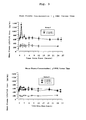
- Figure 3 depicts plasma levels of Val 8 -GLP-1(7-37)OH which remain flat and do not fluctuate significantly over the course of 15 days based on once a day dosing. Levels are maintained between about 400 and about 600 pg/mL which corresponds to between about 120 picomolar and 180 picomolar.
- GLP-1 compounds of similar potency include compounds that have within two-fold the activity of Val 8 -GLP-1(7-37)OH as measured by an in vitro potency assay.
- the preferred assay for the purposes of the present invention measures EC 50 potency using HEK-293 Aurora CRE-BLAM cells that stably express the human GLP-1 receptor. These HEK-293 cells have stably integrated a DNA vector having a cAMP response element (CRE) driving expression of the ⁇ -lactamase (BLAM) gene. The interaction of a GLP-1 agonist with the receptor initiates a signal that results in activation of the cAMP response element and subsequent expression of ⁇ -lactamase.
- CRE cAMP response element
- the ⁇ -lactamase CCF2/AM substrate that emits flourescence when it is cleaved by ⁇ -lactamase can then.be added to cells that have been exposed to a specific amount of GLP-1 agonist to provide a measure of GLP-1 agonist potency.
- the assay is further described in Zlokarnik, et al. (1998) Science 279:84-88 (See also Example 3).
- the EC 50 values listed in Table 2 were determined using the BLAM assay described above by generating a dose response curve using dilutions from 3 nanomolar to 30 nanomolar.
- Exendin-4 has a potency that is approximately 5-fold higher than Val 8 -GLP-1(7-37)OH; thus, optimum plasma levels of Exendin-4 will be approximately 5-fold lower than the levels appropriate for Val 8 -GLP-1(7-37)OH and compounds of similar potency. This would correspond to plasma levels in the range between about 6 picomolar and about 40 picomolar, preferably between about 12 picomolar and about 30 picomolar.
- Another example of a GLP-1 compound with increased potency is Val 8 -Glu 22 -GLP-1(7-37)OH which has a potency approximately 3-fold higher than Val 8 -GLP-1(7-37)OH.
- a range of plasma levels appropriate for a GLP-1 compound with a potency that differs from that of Val 8 -GLP-1(7-37)OH can be determined.
- a range of plasma levels for a particular GLP-1 compound is between about 60/X and 200/X, preferably between about 60/X and 150/X, most preferably between about 100/X and about 150/X wherein X is the in vitro potency of the GLP-1 compound relative to Val 8 -GLP-1(7-37)OH wherein Val 8 -GLP-1(7-37)OH has a reference value of 1.
- the invention relates to the use of a GLP-1 compound for the manufacture of a medicament for the normalization of blood glucose, preservation of ⁇ -cells, induction of weight loss, or the treatment of a condition selected from the group consisting of: hyperglycemia, type 2 diabetes, stroke, myocardial infarction, catabolic changes that occur after surgery, obesity, and irritable bowel syndrome, wherein the medicament is adapted for chronic administration such that chronic plasma levels of the GLP-1 compound are maintained between about 60/X picomolar and about 200/X picomolar wherein X is the in vitro potency of the GLP-1 compound relative to Val 8 -GLP-1(7-37)OH which has a reference value of 1.
- Maintaining plasma levels within the range discovered by the inventors of the present invention provides numerous clinical benefits as well as benefits from a patient convenience standpoint. There is little or no risk of hypoglycemia to the subject when using this treatment regimen. Additionally, this regimen minimizes invasive, planning, and/or time-consuming events. Furthermore, the regimen provides convenience to the patient by reducing blood glucose self-monitoring in conjunction with use. Most preferably, blood glucose self-monitoring is reduced significantly or eliminated for subjects using this treatment regimen. For example, this use does not require patient planning before, during, or following a meal. Most preferably, subjects do not need to link use of this regimen with any glucose, calorie, or sustenance consumption event of any quantity. Furthermore, use of this invention preferably limits any dose titration needed for a subject to determine the effective amount required. Most preferably, no dose titration is required thereby making one or two doses appropriate for all patients.
- Maintaining plasma levels of intact GLP-1 compounds as described herein induce long-term benefits derived from the suppression of glucagon, upregulation of somatostatin, stimulation of insulin gene transcription, up-regulation of IDX-1/PDX-1 or other growth factors, improvement of ⁇ cell function, activation of dormant ⁇ cells, differentiation of cells into ⁇ cells, ⁇ cell replication, and ⁇ cell proliferation.
- a method of preserving ⁇ cells may be due to all or some or one of the following effects: improvement of ⁇ cell function, activation of dormant ⁇ cells, differentiation of cells into ⁇ cells, ⁇ cell replication, preventing ⁇ -cell deterioration such as by inhibition of apoptosis, and ⁇ cell proliferation.
- Maintaining plasma levels of intact GLP-1 compounds as described herein induce long-term benefits such as appetite suppression resulting in weight loss or lack of weight gain. For example, obesity and related conditions are treated or prevented by this chronic treatment regimen. Any and all reduction in weight via less weight gain, no weight gain, and/or weight loss provides the subject with overall positive physical and psychological health effects, contributes to lessening risk factors linked to excessive body weight, and enforces compliant use of the compounds thereby reducing potential blood glucose excursions and its concomitant effects.
- Another benefit of chronic exposure to GLP-1 compounds within the range of claimed serum levels includes the elimination of the delay on gastric emptying that occurs when GLP-1 compounds are first administered.
- the delay in gastric emptying caused by the presence of a GLP-1 compound is approximately 2 to 3 hours.
- the analysis of glucose peaks indicated that this delay in gastric emptying was eliminated.
- chronic exposure to GLP-1 compounds within the claimed serum level range leads to an elimination of GI effects such as a delay in gastric emptying and, therefore, increases patient tolerability to the drug and potentially minimizes side effects.
- This chronic treatment regimen may include treatment using GLP-1 compounds along with other blood glucose lowering drugs such as metformin, sulfonyl ureas, thiazolidinediones, and/or bisguanidines.
- blood glucose lowering drugs such as metformin, sulfonyl ureas, thiazolidinediones, and/or bisguanidines.
- metformin sulfonyl ureas
- thiazolidinediones thiazolidinediones
- bisguanidines bisguanidines
- GLP-1 compounds refers to GLP-1(7-37)OH and GLP-1(7-36)NH 2 and analogs and derivatives thereof. GLP-1 compounds also include Exendin-3 and Exendin-4 and analogs and derivatives thereof. Any of these GLP-1 compounds may need further modification or be formulated such that blood plasma levels are maintained for extended time periods following a single dose.
- GLP-1 peptides can be made by a variety of methods known in the art such as solid-phase synthetic chemistry, purification of GLP-1 molecules from natural sources, recombinant DNA technology, or a combination of these methods. For example, methods for preparing GLP-1 peptides are described in United States Patent Nos. 5,118,666 , 5,120,712 , 5,512,549 , 5,977,071 , and 6,191,102 . As is the custom in the art, the N-terminal residue of a GLP-1 compound is represented as position 7.
- a GLP-1 compound has the amino acid sequence of SEQ ID NO. 1 or is modified so that from one, two, three, four or five amino acids differ from SEQ ID NO: 1.
- GLP-1 compounds known in the art include, for example, GLP-1(7-34) and GLP-1(7-35), GLP-1(7-36), Gln 9 -GLP-1(7-37), D-Gln 9 -GLP-1(7-37), Thr 16 -Lys 18 -GLP-1(7-37), and Lys 18 -GLP-1(7-37).
- GLP-1 compounds such as GLP-1(7-34) and GLP-1(7-35) are disclosed in U.S. Patent No. 5,118,666 , herein incorporated by reference.
- Other known biologically active GLP-1 analogs are disclosed in U.S. Patent No 5,977,071 ; U.S. Patent No. 5,545,618 ; U.S.
- Patent No. 5,705,483 U.S. Patent No. 5,977,071 ; U.S. Patent No. 6,133,235 : and Adelhorst, et al., J. Biol. Chem. 269:6275 (1994 ).
- GLP-1 compounds also include polypeptides in which one or more amino acids have been added to the N-terminus and/or C-terminus of GLP-1(7-37)OH, or fragments or analogs thereof. Preferably from one to six amino acids are added to the N-terminus and/or from one to eight amino acids are added to the C-terminus of GLP-1(7-37)OH. It is preferred that GLP-1 compounds of this type have up to about thirty-nine amino acids. The amino acids in the "extended" GLP-1 compounds are denoted by the same number as the corresponding amino acid in GLP-1(7-37)OH.
- N -terminal amino acid of a GLP-1 compound obtained by adding two amino acids to the N-terminus of GLP-1(7-37)OH is at position 5; and the C-terminal amino acid of a GLP-1 compound obtained by adding one amino acid to the C-terminus of GLP-1(7-37)OH is at position 39.
- Amino acids 1-6 of an extended GLP-1 compound are preferably the same as or a conservative substitution of the amino acid at the corresponding position of GLP-1(1-37)OH.
- Amino acids 38-45 of an extended GLP-1 compound are preferably the same as or a conservative substitution of the amino acid at the corresponding position of Exendin-3 or Exendin-4.
- the amino acid sequence of Exendin-3 and Exendin-4 are represented in formula II, SEQ ID NO: 2. wherein:
- a conservative substitution is the replacement of an amino acid with another amino acid that has the same net electronic charge and approximately the same size and shape.
- Amino acids with aliphatic or substituted aliphatic amino acid side chains have approximately the same size when the total number carbon and heteroatoms in their side chains differs by no more than about four. They have approximately the same shape when the number of branches in the their side chains differs by no more than one. Amino acids with phenyl or substituted phenyl groups in their side chains are considered to have about the same size and shape.
- GLP-1 compounds are comprised of GLP-1 analogs of formula III (SEQ ID NO: 3): wherein:
- GLP-1 compounds are comprised of GLP-1 analogs of formula IV (SEQ ID NO: 4): wherein:
- analogs encompassed by formula IV have not more than six amino acids that differ from the corresponding amino acids in GLP-1(7-37)OH, or GLP-1(7-36)NH 2 . It is more preferred that the analogs encompassed by formula IV have between one and five amino acids that differ from the corresponding amino acids in GLP-1(7-37)OH, or GLP-1(7-36)NH 2 .
- GLP-1 compounds are comprised of GLP-1 analogs of formula V (SEQ ID NO: 5): wherein:
- analogs encompassed by formula V have not more than six amino acids that differ from the corresponding amino acids in GLP-1(7-37)OH, or GLP-1(7-36)NH 2 . It is more preferred that the analogs encompassed by formula V have between one and five amino acids that differ from the corresponding amino acids in GLP-1(7-37)OH or GLP-1(7-36)NH 2 .
- GLP-1 compounds are comprised of GLP-1 analogs of formula VI (SEQ ID NO: 6): wherein:
- GLP-1 compounds are comprised of GLP-1 analogs of formula VII (SEQ ID NO: 7): wherein:
- GLP-1 compounds of formula I, II, III, IV, V, and VI comprise GLP-1 analogs wherein the backbone for such analogs or fragments contains an amino acid other than alanine at position 8 (position 8 analogs).
- Preferred amino acids at position 8 are glycine, valine, leucine, isoleucine, serine, threonine, or methionine and more preferably are valine or glycine.
- GLP-1 compounds are GLP-1 analogs that have the sequence of GLP-1(7-37)OH except that the amino acid at position 8 is preferably glycine, valine, leucine, isoleucine, serine, threonine, or methionine and more preferably valine or glycine and position 22 is glutamic acid, lysine, aspartic acid, or arginine and more preferably glutamic acid or lysine.
- GLP-1 compounds are GLP-1 analogs that have the sequence of GLP-1(7-37)OH except that the amino acid at position 8 is preferably glycine, valine, leucine, isoleucine, serine, threonine, or methionine and more preferably valine or glycine and position 30 is glutamic acid, aspartic acid, serine, or histidine and more preferably glutamic acid.
- OLher preferred GLP-1 compounds are GLP-1 analogs that have the sequence of GLP-1(7-37)OH except that the amino acid at position 8 is preferably glycine, valine, leucine, isoleucine, serine, threonine, or methionine and more preferably valine or glycine and position 37 is histidine, lysine, arginine, threonine, serine, glutamic acid, aspartic acid, tryptophan, tyrosine, phenylalanine and more preferably histidine.
- GLP-1 compounds are GLP-1 analogs that have the sequence of GLP-1(7-37)OH except that the amino acid at position 8 is preferably glycine, valine, leucine, isoleucine, serine, threonine, or methionine and more preferably valine or glycine and position 22 is glutamic acid, lysine, aspartic acid, or arginine and more preferably glutamic acid or lysine and position 23 is lysine, arginine, glutamic acid, aspartic acid, and histidine and more preferably lysine or glutamic acid.
- GLP-1 compounds are GLP-1 analogs that have the sequence of GLP-1(7-37)OH except that the amino acid at position 8 is preferably glycine, valine, leucine, isoleucine, serine, threonine, or methionine and more preferably valine or glycine and position 22 is glutamic acid, lysine, aspartic acid, or arginine and more preferably glutamic acid or lysine and position 27 is alanine, lysine, arginine, tryptophan, tyrosine, phenylalanine, or histidine and more preferably alanine.
- Val 8 -GLP-1(7-37)OH designates a GLP-1 compound in which the alanine normally found at position 8 in GLP-1(7-37)OH (formula I, SEQ ID NO:1) is replaced with valine.
- GLP-1 compounds include: Val 8 -GLP-1(7-37)OH, Gly 8 -GLP-1(7-37)OH, Glu 22 -GLP-1(7-37)OH, Asp 22 -GLP-1(7-37)OH, Arg 22 -GLP-1(7-37)OH, Lys 22 -GLP-1(7-37)OH, Cys 22 -GLP-1(7-37)OH, Val 8 -Glu 22 -GLP-1(7-37)OH, Val 8 -Asp 22 -GLP-1(7-37)OH, Val 8 -Arg 22 -GLP-1(7-37)OH, Val 8 -Lys 22 -GLP-1(7-37)OH, Val 8 -Cys 22 -GLP-1(7-37)OH, Gly 8 -Glu 22 -GLP-1(7-37)OH, Gly 8 -Asp 22 -GLP-1(7-37)OH, Gly 8 -Arg 22
- More preferred GLP-1 compounds are Val 8 -GLP-1(7-37)OH, Gly 8 -GLP-1(7-37)OH, Glu 22 -GLP-1(7-37)OH, Lys 22 -GLP-1(7-37)OH, Val 8 -Glu 22 -GLP-1(7-37)OH, Val 8 -Lys 22 -GLP-1(7-37)OH, Gly 8 -Glu 22 -GLP-1(7-37)OH, Gly 8 -Lys 22 -GLP-1(7-37)OH, Glu 22 -GLP-1(7-36)NH 2 , Lys 22 -GLP-1(7-36)NH 2 , Val 8 -Glu 22 -GLP-1(7-36)NH 2 , Val 8 -Lys 22 -GLP-1(7-36)NH 2 , Gly 8 -Glu 22 -GLP-1(7-36)NH 2 , Gly 8 -Lys 22 -GLP
- a GLP-1 compound also includes a "GLP-1 derivative" which is defined as a molecule having the amino acid sequence of GLP-1 or of a GLP-1 analog, but additionally having chemical modification of one or more of its amino acid side groups, ⁇ -carbon atoms, terminal amino group, or terminal carboxylic acid group.
- a chemical modification includes, but is not limited to, adding chemical moieties, creating new bonds, and removing chemical moieties.
- the GLP-1 compound used for the chronic treatment regimen may require modification or formulation so that blood plasma levels are maintained in the claimed efficacious range for extended time periods.
- Various means can be employed to achieve a protracted time action including, for example, the incorporation of GLP-1 compounds into suspended amorphous or crystalline particles wherein the GLP-1 compound is complexed with zinc or protamine and slowly solubilizes upon administration.
- Another means includes derivatizing a GLP-1 compound such that it binds plasma albumin and slowly dissociates over time.
- depot formulations wherein an bioadsorbable polymer is used to provide sustained release over time are also suitable for use in the present invention.
- GLP-1 compound can be incorporated into zinc crystals which have a protracted time action by dissolving the selected GLP-1 peptide in a glycine-free solution at a pH of about 9.5 to about 11.5.
- This "alkaline normalization” step appears to reduce the content of ⁇ -sheet conformation in the peptide and enhance the ⁇ -helix conformation that is important for solubility and bioavailability of some GLP-1 compounds.
- This step also serves to maintain the peptide in a preferred ⁇ -helix conformation prior to the subsequent process step. This key step thus "normalizes" variation in bulk lots of the peptide into a more reproducible, homogenous solution.
- the peptide concentration in the alkaline normalization solution is greater than 5 mg/mL. More preferably, the concentration is about 10 mg/mL to about 30 mg/mL. Other ranges of preferred concentration of dissolved peptide are about 5 mg/mL to about 25 mg/mL, about 8 mg/mL to about 25 mg/mL and about 10 mg/mL to about 20 mg/mL. The most preferred concentration is about 15 mg/mL.
- an aqueous alkaline solution comprising only water and a base such as NaOH, KOH or ammonium hydroxide is employed to dissolve the peptide.
- a base such as NaOH, KOH or ammonium hydroxide is employed to dissolve the peptide.
- a more preferred base is NaOH.
- the pH of the alkaline normalization step is about 10.0 to about 11.0. More preferably, the pH is about 10.5.
- the alkaline solution comprising the dissolved peptide may be allowed to sit quiescently for a period of about 5 minutes to about 3 hours at ambient temperature, which, although it is not to be construed as a limitation, is generally between about 20°C and about 25°C.
- the alkaline solution may also be gently stirred. More preferably, the dissolved alkaline peptide solution will sit quiescently for about 1 hour at ambient temperature.
- pH, time, temperature and stirring conditions for this step can be readily established for each peptide that ensures "normalization" of the peptide conformation is complete yet avoids or minimizes chemical degradation that may occur to the peptide.
- the next step in the process for preparing crystals of a selected peptide is the addition of glycine.
- Amino acids such as glycine bind zinc ions which also bind very tightly to the histidine residue(s) in a peptide. Thus, competition for zinc binding may play a role in the formation of peptide crystals, as well as in the stability of subsequent crystalline compositions.
- the glycine added to the alkaline peptide solution may be in a solid form or in a stock solution.
- glycine is added as a solid.
- the added glycine is in free-base form.
- the resulting concentration of glycine in the alkaline peptide solution is about 5 mM to about 250 mM. Ranges of more preferred glycine concentration are about 10 mM to about 150 mM, about 20 mM to about 100 mM, about 40 mM to about 80 mM and about 55 mM to about 65 mM. Most preferably, the glycine concentration is about 60 mM.
- the pH of the alkaline peptide solution may be readjusted after the addition of the glycine. If the pH is adjusted, it is preferably adjusted to a pH between about 9.0 and about 11.0. More preferably, it is adjusted to a pH between about 9.2 and about 9.8. Most preferably, it is adjusted to about pH 9.5.
- the alkaline peptide solution with added glycine may be filtered. Filtration is recommended if any evidence of undissolved particles, dust or lint is apparent in the solution. If desired, this is also a good place in the process at which the solution can be sterilized by performing an aseptic filtration step.
- the filtration will be conducted using a sterile non-pyrogenic filter having low-protein binding and a pore size of 0.45 ⁇ m or less.
- the filter is a sterile non-pyrogenic, low-protein binding filter of pore size 0.22 ⁇ m or less. More preferably, the filter is a sterile 0.22 ⁇ m Millex ® filter (Millipore Corporation, Waltham, MA, USA).
- the next step in the process of forming crystals is addition to the alkaline peptide solution of about 2% to about 20% of the total final volume of an alcohol selected from the group consisting of ethanol and isopropanol, and about 0.5 moles to about 2.5 moles of zinc per mole of the peptide.
- the zinc and ethanol may be added in a single aqueous stock solution or may be added separately in one or more steps in any order.
- the alcohol is added before the zinc is added.
- the added alcohol represents, by volume, about 2% to about 20% of the total final volume of the alkaline peptide-zinc-alcohol solution. More preferably, the alcohol represents about 5% to about 15% of the total final volume. More preferably, the alcohol represents about 6% to about 12% of the total final volume. Most preferably, the alcohol represents about 9% of the total final volume.
- the alcohol is ethanol.
- the zinc added at this stage refers to the zinc ion.
- the zinc may be added in a variety of forms, but a zinc oxide solution acidified with dilute HC1 and salt forms such as zinc acetate or zinc chloride are preferred. More preferred is a zinc oxide solution acidified with dilute HC1.
- 1.0 moles to about 2.25 moles of zinc per mole of the peptide is added in this process step.
- Other preferred ranges of zinc addition include 1.1 to 2.0 moles of zinc per mole of the peptide, 1.3 to 1.7 moles per mole of peptide, and 1.4 to 1.6 moles per mole of peptide. Most preferably, about 1.5 moles of zinc per mole of peptide is added.
- the solution comprising zinc that is added to the peptide solution is added slowly and/or in small increments, which minimizes the localized precipitation of peptide and/or zinc complexes that may form at the site of addition.
- glycine is also a component of the solution comprising zinc that is being added at this step.
- a zinc-glycine solution may be prepared by dissolving zinc oxide in dilute HCl to a pH of about 1.6 and then adding solid glycine. A sufficient quantity of glycine is added to raise the pH of the solution to between about pH 2 and about pH 3. The pH of the zinc-glycine solution may be raised further using, for example, dilute NaOH.
- a preferred pH range of the zinc-glycine solution is about pH 4.0 to about pH 6.0.
- a more preferred pH range of the zinc-glycine solution is about pH 5.0 to about pH 5.5.
- glycine has a binding affinity for zinc that may compete with zinc binding to the peptide.
- having a zinc-glycine solution above pH 2.0, and preferably about pH 4.0 to about pH 6.0 allows the solution to be sterile filtered using filters that are rated by their manufacturers to handle, for example, pH 2-10 solutions, prior to its introduction into a sterile peptide composition.
- the zinc-glycine solution comprises about 50 mM to about 70 mM glycine and about 20 mM to about 200 mM zinc.
- the last steps in the initial crystallization of a selected peptide are adjusting the pH of the solution to between about pH 7.5 and about pH 10.5 and allowing crystals of the peptide to form.
- Preferred reagent solutions useful for adjusting the pH of the solution include dilute HCl, dilute acetic acid and dilute NaOH.
- Preferred pH ranges for crystallization of selected peptides include about pH 8.0 to about pH 10.0, about pH 7.5 to about pH 9.5, about pH 8.5 to about pH 9.2, about pH 9.0 to about pH 9.5, about pH 7.5 to about pH 8.5, about pH 8.7 to about pH 9.5, and about pH 9.2 to about pH 10.0.
- the preferred pH of crystallization will depend on many factors, including the nature of the peptide and its concentration, the alcohol concentration, the zinc concentration, the ionic strength of the solution and the temperature of crystallization.
- the peptide Val 8 -Glu 30 -GLP-1(7-37)OH produced crystals at only select ethanol and zinc concentrations at a pH range of about 7.7 to about 8.1
- the peptide Val 8 -His 37 -GLP-1(7-37)OH produced crystals over a broad range of zinc and ethanol concentrations at a pH range of about 9.8 to about 10.4.
- a preferred manner of determining the optimal pH of crystallization is to determine it empirically, that is, to slowly add the acidification solution, preferably dilute HC1 or dilute acetic acid, in small increments, and observe what happens after each increment is added. Generally, small quantities of localized zones of precipitation will occur at the spot of addition of the acidic solution. When gentle swirling takes increasingly longer periods of time to completely redissolve the precipitation, that is the best time to stop adding the acid and allow crystallization from the clear or slightly cloudy solution to proceed.
- the pH of crystallization for the selected peptides is about pH 8.0 to about pH 10. More preferably, the pH is about 8.7 to about 9.5. Other ranges of preferred pH of crystallization are about 8.8 to about 9.3, about 9.0 to about 9.5, and about 8.5 to about 9.3. Most preferably, the crystallization is conducted at about pH 9.1.
- the temperature of crystallization is about 10°C to about 30°C. More preferably, the temperature of crystallization is about 15°C to about 28°C. Most preferably, the temperature of crystallization is ambient temperature, or about 20°C to about 25°C.
- the crystallization step described above is complete, that is, 90% or more of the peptide is precipitated in predominantly crystalline form, in about 3 hours to about 72 hours. More preferably, the crystallization is complete in about 10 hours to about 48 hours. Most preferably, the crystallization is complete in about 16 hours to about 26 hours. Completion of crystallization may be determined by a variety of means, including HPLC analysis of the peptide present in an aliquot of the composition. Method 5 herein describes one such protocol that may be employed.
- the crystals produced according to the steps of the process described above are thin plate crystals.
- the crystals produced by the process may be examined by microscopy.
- compositions comprising crystals of a GLP-1 peptide prepared as described above may be prepared by adding suitable, pharmaceutically acceptable excipients to the crystal suspension in the original mother liquor.
- the crystals may be isolated by filtration, gentle centrifugation or other means of phase separation, and used in a variety of ways to prepare pharmaceutically acceptable compositions.
- suitable procedures and excipients useful for preparing such pharmaceutical compositions may be recognized.
- the following process starts with the crystals and original mother liquor from the initial crystallization stage and continues with the preparation of a stable pharmaceutical composition.
- the pH of the suspension of crystals in their complete original mother liquor, or portion thereof is lowered to a pH value at which 97% or more of the peptide becomes insoluble.
- this part of the process begins within a few hours after the initial crystallization is determined to be complete.
- the pH is lowered using a dilute solution of HC1 or acetic acid wherein the acidic solution is added slowly and in incremental portions.
- the preferred pH at which this second stage of crystallization should occur will depend on many factors, including the nature of the peptide and its concentration, the alcohol concentration, the zinc concentration, the ionic strength of the suspension and the temperature of crystallization.
- the pH is about 0.2 to 2.0 pH units lower than the pH at which the initial crystallization proceeded. More preferably, the pH is about 0.5 to about 1.5 pH units lower, and most preferably, the pH is about 0.8 to 1.3 pH units lower than the pH at which the initial crystallization proceeded.
- the temperature of this second stage of crystallization is preferably ambient temperature, or about 20°C to about 25°C.
- a preferred pH is about 7.5 to about 8.5. A more preferred pH is about 7.8 to about 8.2.
- the pH of a suspension of peptide crystals is lowered to a pH at which 98% or more, and more preferably at which 99% or more of the peptide becomes insoluble in the composition.
- the additional precipitation formed in this second stage of crystallization comprises crystals.
- the additional precipitation formed in this second stage of crystallization will be predominantly crystals of comparable morphology and size distribution as those formed in the first stage of crystallization.
- the second stage of crystallization is complete enough, that is, 97% or more of the peptide is insoluble, to allow the following step to begin within 30 hours, more preferably within 18 hours, more preferably within 6 hours and most preferably within 2 hours of when the second stage of crystallization started.
- Quantitation of precipitation yield may be determined by a variety of means, including HPLC analysis of the peptide present in an aliquot of the composition.
- the next step in the process to prepare a stable pharmaceutical composition of crystals of a selected peptide is to add a pharmaceutically acceptable preservative and a buffer selected from the group consisting of TRIS, maleate, phosphate, succinate, glycylglycine and adipate.
- a pharmaceutically acceptable preservative such as sodium chloride, other salts, glycerin or mannitol may also be added.
- these components may be added as a single solution, as combination solutions or individually in any order. It is preferred that the preservative is added last.
- a preferred buffer is selected from the group consisting of TRIS and maleate
- a preferred preservative is m-cresol
- a preferred tonicity agent is sodium chloride.
- a more preferred buffer is TRIS.
- a preferred quantity of TRIS to add to the crystalline peptide suspension is such that the TRIS concentration in the final composition is about 5 mM to about 40 mM.
- a more preferred range of TRIS concentration in the final composition is about 10 mM to about 20 mM.
- a most preferred concentration of TRIS in the final composition is about 15 mM.
- a preferred quantity of maleate to add to the crystalline peptide suspension, if maleate is the selected buffer, is such that the maleate concentration in the final composition is about 2 mM to about 20 mM.
- a more preferred range of maleate concentration in the final composition is about 5 mM to about 15 mM.
- a most preferred concentration of maleate in the final composition is about 9 mM.
- a preferred quantity to add to the crystalline peptide suspension is such that the added sodium chloride in the final composition is about 30 mM to about 200 mM.
- a more preferred concentration of added sodium chloride in the final composition is 50 mM to about 150 mM.
- Other ranges of preferred sodium chloride concentration are about 80 mM to about 120 mM, about 70 mM to about 130 mM, and about 90 mM to about 130 mM.
- a most preferred quantity of added sodium chloride in a pharmaceutical composition is about 110 mM.
- a phenolic preservative or benzyl alcohol is preferred.
- phenolic preservatives include phenol, chlorocresol, m-cresol, o-cresol, p-cresol, ethylparaben, methylparaben, propylparaben, butylparaben, thymol or mixtures thereof.
- More preferred preservatives are benzyl alcohol, m-cresol, phenol, methylparaben and mixtures thereof.
- a most preferred pharmaceutically acceptable preservative is m-cresol.
- a preferred quantity of a pharmaceutically acceptable preservative to add to a crystalline peptide composition at this point in the process is an amount such that the preservative concentration in the final composition is about 1.0 mg/mL to about 20.0 mg/mL. More preferred ranges of concentration of preservative in the final composition are about 2.0 mg/mL to about 8.0 mg/mL, about 2.5 mg/mL to about 4.5 mg/mL and about 2.0 mg/mL to about 4.0 mg/mL. A most preferred concentration of preservative in the final composition is about 3.0 mg/mL.
- the final step in the process of preparing a stable pharmaceutical composition of crystals of a selected peptide is an adjustment to a final pH between about 6.0 and about 8.5 and preferably between about pH 6.5 and about pH 8.0.
- a final pH between about 6.0 and about 8.5 and preferably between about pH 6.5 and about pH 8.0.
- acidification and/or alkalization reagent solutions may be employed for this pH adjustment, dilute HCl, dilute NaOH and dilute acetic acid are preferred. More preferred reagent solutions are dilute HCl and dilute NaOH.
- the preferred pH to which the composition is adjusted will depend to some extent upon the selected peptide, the peptide concentration, the proposed route of administration and the selected buffer.
- the pH will be adjusted to a pH between about 6.5 and about 8.5. More preferably, the pH will be adjusted to a pH between about 7.0 and about 7.8, between about 7.2 and about 7.8, between about 7.5 and about 8.5, or between about 7.0 and about 8.0. A most preferred pH to which the composition is adjusted when TRIS is the selected buffer is about 7.5.
- maleate as the selected buffer, the pH will be adjusted to a pH between about 6.0 and about 7.5. More preferably, the pH will be adjusted to a pH between about 6.4 and about 7.5, between about 6.4 and about 7.0, or between about 6.0 and about 7.0. A most preferred pH to which the composition is adjusted when maleate is the selected buffer is about 6.5.
- long acting GLP-1 compounds suitable for the treatment regimen of the present invention can be derivitized. Derivatization is accomplished by various means. Modifications at amino acid side groups include, without limitation, acylation of lysine ⁇ -amino groups, N-alkylation of arginine, histidine, or lysine, alkylation of glutamic or aspartic carboxylic acid groups, and deamidation of glutamine or asparagine. Modifications of the terminal amino group include, without limitation, the des-amino, N-lower alkyl, N-di-lower alkyl, and N-acyl modifications.
- Terminal carboxy group examples include, without limitation, the amide, lower alkyl amide, dialkyl amide, and lower alkyl ester modifications. Furthermore, one or more side groups, or terminal groups, may be protected by protective groups known to the ordinarily-skilled protein chemist.
- the ⁇ -carbon of an amino acid may be mono- or dimethylated.
- GLP-1 derivatives are achieved through acylation. Using the principle of fatty acid derivitization, GLP-1 action is protracted by facilitating binding to plasma albumin via association of the fatty acid residue to fatty acid binding sites on albumin in the blood and peripheral tissues.
- a preferred GLP-1 derivative is Arg 34 Lys 26 -(N- ⁇ -( ⁇ -Glu(N- ⁇ -hexadecanoyl)))-GLP-1 (7-37).
- GLP-1 derivatives and methods of making such derivatives are disclosed in Knudsen, et al. (2000) J. Med. Chem. 43:1664-1669 .
- numerous published applications describe derivatives of GLP-1, GLP-1 analogs, Exendin-4, and Exendin-4 analogs.
- GLP-1 peptides can also be encapsulated using microspheres and then delivered orally.
- GLP-1 compounds can be encapsulated into microspheres composed of a commercially available, biocompatible, biodegradable polymer, poly(lactide-co-glycolide)-COOH and olive oil as a filler. See Joseph, et al. (2000) Diabetologia 43:1319-1328 .
- Other types of microsphere technology is also available commercially such as Medisorb® and Prolease® biodegradable polymers from Alkermes.
- Medisorb® polymers can be produced with any of the lactide isomers. Lactide:glycolide ratios can be varied between 0:100 and 100:0 allowing for a broad range of polymer properties. This allows for the design of delivery systems and implantable devices with resorption times ranging from weeks to months.
- Another embodiment of the present invention encompasses articles of manufacture for human pharmaceutical use comprising a package insert, a container, and said insert describing a treatment regimen which involves maintaining plasma levels of a GLP-1 compound with a particular potency within a certain range that avoids or minimizes side effects such as nausea and vomiting.
- the container used in the present article of manufacture is conventional in the pharmaceutical arts.
- the container is a vial or cartridge, usually made of glass, and accompanying cap, closure, bead, plunger, septum, and/or seal or other such article suitable for use by the patient or pharmacist.
- the container is part of a kit consisting of a cartridge containing dried powder and a syringe pre-filled with an appropriate diluent.
- kits consisting of a dual chamber cartridge with a bypass that keeps the diluent liquid and the dried powder separate from each other until reconstitution is desired. At the time of reconstitution, the dual chamber cartridge permits the diluent liquid to flow into the dried powder.
- the container is sized to accommodate 0.1 to 100 mL, preferably 0.5 to 25 mL, and more preferably, 5 to 10 mL, even more preferably 1.5 to 3 mL volumes.
- the container is a blister, capsule, or blister disc.
- Other options for the container include a transdermal patch, implantable device, microsphere carriers and other depot delivery systems.
- the insert may provide the physician with a choice of several doses which result in plasma levels of the GLP-1 compound within the ranges described herein, or preferably the insert will provide the physician with a single dose which results in plasma levels of the GLP-1 compound within the ranges described herein.
- the package insert provides a description of how to administer a pharmaceutical product, along with the safety and efficacy data required to allow the physician, pharmacist, and patient to make an informed decision regarding the use of the product.
- the package insert generally is regarded as the label of the pharmaceutical product.
- the package insert may provide instructions regarding the treatment regimen encompassed by the present invention involving maintaining continuous plasma levels of GLP-1 within a therapeutic range regardless of the patient's body weight or body mass index, sex, or age.
- the package insert describes how the present invention provides a means to maintain steady state GLP-1 levels with a protocol that does not require the patient to self-monitor glucose levels, and that does not need to be timed with meals thereby allowing patient convenience while safely maintaining optimal blood glucose control.
- the preferred article of manufacture provides a package insert having reported incidences of nausea in less than 30% of patients with plasma levels within the ranges described herein. More preferably, nausea and vomiting occurs in less than 20% of patients with plasma levels within the ranges described herein. Even more preferably, less than 10% of patients with plasma levels within the ranges described herein experience such side effects. Most preferably, nausea and vomiting occur in less than 5% of patients with plasma levels within the ranges described herein.
- the package insert having reported incidences of hypoglycemia characterized by a blood glucose level less than 63 mg/dL is less than 10%, preferably less than 5 %, and most preferably there are no reports of hypoglycemia.
- Val 8 -GLP-1(7-37)OH plasma levels are represented in Figures 1 and 3 and corresponding glucose levels are represented in Figures 2 and 4 .
- Patients in the 21 day dosing group lost an average of 2.125 kg (standard deviation: 1.36 kg). Five subjects lost a total of 3 kg, one lost 2 kg, and 2 lost no weight.
- Val 8 -GLP-1(7-37)OH Due to the presence of endogenous concentrations of native GLP-1 peptides and degradation products such as GLP-1 (9-37)OH by DPP-IV, concentrations of intact Val 8 -GLP-1(7-37)OH were measured using an ELISA assay in which full-length non-degraded Val 8 -GLP-1(7-37)OH is specifically recognized.
- Immunoreactive Val 8 -GLP-1(7-37)OH is captured from the plasma by an N-terminal anti-Val 8 -GLP-1(7-37)OH specific antisera immobilized onto a microtiter plate. This antisera is highly specific to the N-terminus of Val 8 -GLP-1(7-37)OH.
- HEK-293 Aurora CRE-BLAM cells expressing the human GLP-1 receptor are seeded at 20,000 to 40,000 cells/well/100 ⁇ l into a 96 well black clear bottom plate. The day after seeding, the medium is replaced with plasma free medium. On the third day after seeding, 20 ⁇ l of plasma free medium containing different concentrations of GLP-1 agonist is added to each well to generate a dose response curve. Generally, fourteen dilutions containing from 3 nanomolar to 30 nanomolar GLP-1 compound were used to generate a dose response curve from which EC50 values could be determined.
- GLP-1(7-37)OH was dissolved in about 0.5 mL of 0.015 N NaOH at a concentration of about 17 mg/mL, based on the mass of the peptide.
- the protein solution was adjusted to about pH 10.5 with dilute NaOH. The solution was held at ambient temperature for about 1 hour.
- the solution was then filtered into a glass vial through a sterile 0.22 ⁇ m Millex ® -GV (Millipore Corporation, Waltham, MA, USA) 4 mm filter unit that had been pre-rinsed with 60 mM glycine buffer at pH 10.
- the final solution was adjusted to about pH 9.0 and crystallization proceeded at ambient temperature.
- the crystallization solution comprised about 12.6 mg/mL GLP-1(7-37)OH, 47 mM glycine, 8.7% ethanol by volume, and about 1.5 moles of zinc per mole of GLP-1(7-37)OH at pH 9.0.
- the yield of crystallization was determined by using a spectrophotometer to compare the absorbance of an aliquot of the entire suspension redissolved in a 10-fold dilution of 0.01N HCl, with a similarly diluted supernatant obtained by centrifuging the suspension for about 4 minutes at 14,000 X g. For this experiment, the crystallization yield was 92%.
- Val 8 -GLP-1(7-37)OH was dissolved in about 0.57 mL of 0.015 N NaOH at a concentration of about 17 mg/mL, based on the mass of the peptide.
- the protein solution was adjusted to about pH 10.5 with dilute NaOH.
- the solution was held at ambient temperature for about 1 hour.
- the solution was then filtered into a 0.5 mL Eppendorf tube through a sterile 0.22 ⁇ m Millex ® -GV (Millipore Corporation, Waltham, MA, USA) 4 mm filter unit.
- the final solution was adjusted to about pH 8.9 and crystallization proceeded at ambient temperature.
- the crystallization solution comprised about 12.6 mg/mL Val 8 -GLP-1(7-37)OH, 47 mM glycine, 8.7% ethanol by volume, and about 1.5 moles of zinc per mole of Val 8 -GLP-1(7-37)OH at pH 8.9.
- Val 8 -GLP-1(7-36)NH 2 was dissolved in about 0.44 mL of 0.015 N NaOH at a concentration of about 17 mg/mL, based on the mass of the peptide.
- the protein solution was adjusted to about pH 10.5 with dilute NaOH. The solution was held at ambient temperature for about 1 hour.
- the solution was then filtered into a glass vial through a sterile 0.22 ⁇ m Millex ® -GV (Millipore Corporation, Waltham, MA, USA) 4 mm filter unit.
- the final solution was adjusted to about pH 9.85 and crystallization proceeded at ambient temperature.
- the crystallization solution comprised about 12.6 mg/mL Val 8 -GLP-1(7-36)NH 2 , 47 mM glycine, 8.7% ethanol by volume, and about 1.5 moles of zinc per mole of Val 8 -GLP-1(7-36)NH 2 at pH 9.85.
- Val 8 -GLP-1(7-37)NH 2 was dissolved in about 0.48 mL of 0.015 N NaOH at a concentration of about 17 mg/mL, based on the mass of the peptide.
- the protein solution was adjusted to about pH 11.1 with dilute NaOH, then to pH 10.36 with dilute HCl. The solution was held at ambient temperature for about 1 hour.
- the solution was then filtered into a glass vial through a sterile 0.22 ⁇ m Millex ® -GV (Millipore Corporation, Waltham, MA, USA) 4 mm filter unit.
- the final solution was adjusted to about pH 9.8 and crystallization proceeded at ambient temperature.
- the crystallization solution comprised about 12.6 mg/mL Val 8 -GLP-1(7-37)NH 2 , 47 mM glycine, 8.7% ethanol by volume, and about 0.75 moles of zinc per mole of Val 8 -GLP-1(7-37)NH 2 at pH 9.8.
Landscapes
- Health & Medical Sciences (AREA)
- Life Sciences & Earth Sciences (AREA)
- Chemical & Material Sciences (AREA)
- Organic Chemistry (AREA)
- Medicinal Chemistry (AREA)
- General Health & Medical Sciences (AREA)
- Bioinformatics & Cheminformatics (AREA)
- Engineering & Computer Science (AREA)
- Veterinary Medicine (AREA)
- Pharmacology & Pharmacy (AREA)
- Animal Behavior & Ethology (AREA)
- Public Health (AREA)
- Nuclear Medicine, Radiotherapy & Molecular Imaging (AREA)
- Endocrinology (AREA)
- General Chemical & Material Sciences (AREA)
- Chemical Kinetics & Catalysis (AREA)
- Gastroenterology & Hepatology (AREA)
- Proteomics, Peptides & Aminoacids (AREA)
- Zoology (AREA)
- Diabetes (AREA)
- Vascular Medicine (AREA)
- Genetics & Genomics (AREA)
- Toxicology (AREA)
- Obesity (AREA)
- Molecular Biology (AREA)
- Biophysics (AREA)
- Heart & Thoracic Surgery (AREA)
- Immunology (AREA)
- Cardiology (AREA)
- Hematology (AREA)
- Biochemistry (AREA)
- Epidemiology (AREA)
- Urology & Nephrology (AREA)
- Emergency Medicine (AREA)
- Child & Adolescent Psychology (AREA)
- Medicines That Contain Protein Lipid Enzymes And Other Medicines (AREA)
- Peptides Or Proteins (AREA)
- Pharmaceuticals Containing Other Organic And Inorganic Compounds (AREA)
Applications Claiming Priority (4)
| Application Number | Priority Date | Filing Date | Title |
|---|---|---|---|
| US25525100P | 2000-12-13 | 2000-12-13 | |
| US29565501P | 2001-06-04 | 2001-06-04 | |
| US29865201P | 2001-06-15 | 2001-06-15 | |
| EP01987138A EP1390061A2 (fr) | 2000-12-13 | 2001-12-07 | Regime de traitement chronique utilisant des peptides insulinotropiques du type glucagon |
Related Parent Applications (2)
| Application Number | Title | Priority Date | Filing Date |
|---|---|---|---|
| WOPCT/US01/44698 Previously-Filed-Application | 2001-12-07 | ||
| EP01987138.3 Division | 2001-12-07 |
Publications (2)
| Publication Number | Publication Date |
|---|---|
| EP2186824A2 true EP2186824A2 (fr) | 2010-05-19 |
| EP2186824A3 EP2186824A3 (fr) | 2010-09-22 |
Family
ID=27400848
Family Applications (2)
| Application Number | Title | Priority Date | Filing Date |
|---|---|---|---|
| EP01987138A Ceased EP1390061A2 (fr) | 2000-12-13 | 2001-12-07 | Regime de traitement chronique utilisant des peptides insulinotropiques du type glucagon |
| EP08151437A Withdrawn EP2186824A3 (fr) | 2000-12-13 | 2001-12-07 | Posologie de traitement chronique à l'aide de peptides insulinotropiques de type glucagon |
Family Applications Before (1)
| Application Number | Title | Priority Date | Filing Date |
|---|---|---|---|
| EP01987138A Ceased EP1390061A2 (fr) | 2000-12-13 | 2001-12-07 | Regime de traitement chronique utilisant des peptides insulinotropiques du type glucagon |
Country Status (8)
| Country | Link |
|---|---|
| US (2) | US7259233B2 (fr) |
| EP (2) | EP1390061A2 (fr) |
| JP (1) | JP2004521093A (fr) |
| CN (1) | CN1501809B (fr) |
| AU (2) | AU3938402A (fr) |
| CA (1) | CA2431173A1 (fr) |
| MX (1) | MXPA03005135A (fr) |
| WO (1) | WO2002047716A2 (fr) |
Families Citing this family (136)
| Publication number | Priority date | Publication date | Assignee | Title |
|---|---|---|---|---|
| FR2686899B1 (fr) | 1992-01-31 | 1995-09-01 | Rhone Poulenc Rorer Sa | Nouveaux polypeptides biologiquement actifs, leur preparation et compositions pharmaceutiques les contenant. |
| US6514500B1 (en) | 1999-10-15 | 2003-02-04 | Conjuchem, Inc. | Long lasting synthetic glucagon like peptide {GLP-!} |
| US20090175821A1 (en) * | 1999-05-17 | 2009-07-09 | Bridon Dominique P | Modified therapeutic peptides with extended half-lives in vivo |
| DK1808438T3 (da) | 1999-06-29 | 2014-10-27 | Mannkind Corp | Rensning og stabilisering af peptid og proteiner i lægemidler |
| US9006175B2 (en) | 1999-06-29 | 2015-04-14 | Mannkind Corporation | Potentiation of glucose elimination |
| EP2213743A1 (fr) | 2000-04-12 | 2010-08-04 | Human Genome Sciences, Inc. | Protéines de fusion d'albumine |
| WO2003002136A2 (fr) | 2001-06-28 | 2003-01-09 | Novo Nordisk A/S | Formulation stable de glp-1 modifie |
| KR20040054729A (ko) * | 2001-10-18 | 2004-06-25 | 브리스톨-마이어스 스큅 컴퍼니 | 인간 글루카곤-유사-펩티드-1 모방체, 및 당뇨병 및 이와관련된 증상의 치료에 있어서 이의 용도 |
| AU2002364586A1 (en) | 2001-12-21 | 2003-07-30 | Delta Biotechnology Limited | Albumin fusion proteins |
| WO2005003296A2 (fr) | 2003-01-22 | 2005-01-13 | Human Genome Sciences, Inc. | Proteines hybrides d'albumine |
| DE60335608D1 (de) * | 2002-02-27 | 2011-02-17 | Pharmain Corp | Zusammensetzungen zur abgabe von therapeutika und anderen materialien und verfahren zu ihrer herstellung und verwendung |
| US7635463B2 (en) | 2002-02-27 | 2009-12-22 | Pharmain Corporation | Compositions for delivery of therapeutics and other materials |
| WO2003080149A2 (fr) | 2002-03-20 | 2003-10-02 | Mannkind Corporation | Appareil d'inhalation |
| US20080260838A1 (en) * | 2003-08-01 | 2008-10-23 | Mannkind Corporation | Glucagon-like peptide 1 (glp-1) pharmaceutical formulations |
| US20040038865A1 (en) * | 2002-08-01 | 2004-02-26 | Mannkind Corporation | Cell transport compositions and uses thereof |
| WO2004035762A2 (fr) * | 2002-10-17 | 2004-04-29 | Alkermes Controlled Therapeutics, Inc. Ii | Polypeptides actifs du point de vue biologique a microencapsulation et liberation prolongee |
| WO2004050115A2 (fr) * | 2002-12-03 | 2004-06-17 | Novo Nordisk A/S | Polytherapie mettant en oeuvre des exendines et des thiazolidinediones |
| EP1688148A1 (fr) * | 2002-12-03 | 2006-08-09 | Novo Nordisk A/S | Traitement à base d'une composition combinée d'exendine-4 et des thiazolidinédones |
| US7731947B2 (en) | 2003-11-17 | 2010-06-08 | Intarcia Therapeutics, Inc. | Composition and dosage form comprising an interferon particle formulation and suspending vehicle |
| JP2006523609A (ja) * | 2002-12-31 | 2006-10-19 | アルタス ファーマシューティカルズ インコーポレイテッド | タンパク質結晶およびイオン性ポリマーの複合体 |
| RU2357750C2 (ru) | 2002-12-31 | 2009-06-10 | Элтус Фармасьютикалз Инк. | Кристаллы человеческого гормона роста и способы их получения |
| CA2811272C (fr) | 2003-04-08 | 2016-12-20 | Progenics Pharmaceuticals, Inc. | Formulations pharmaceutiques contenant de la methylnaltrexone |
| ATE549028T1 (de) | 2003-05-15 | 2012-03-15 | Tufts College | Stabile analoga von glp-1 |
| EP1631308B1 (fr) | 2003-05-30 | 2013-07-31 | Amylin Pharmaceuticals, LLC | Nouveaux procedes et nouvelles compositions pour une administration amelioree par voie muqueuse de peptides et de proteines |
| PL1633391T3 (pl) | 2003-06-03 | 2012-03-30 | Novo Nordisk As | Stabilizowane farmaceutycznie kompozycje peptydowe |
| US9078866B2 (en) | 2003-08-01 | 2015-07-14 | Mannkind Corporation | Method for treating hyperglycemia with GLP-1 |
| US8921311B2 (en) | 2003-08-01 | 2014-12-30 | Mannkind Corporation | Method for treating hyperglycemia |
| WO2005021022A2 (fr) * | 2003-09-01 | 2005-03-10 | Novo Nordisk A/S | Formulations de peptides stables |
| DK3300721T4 (da) | 2003-11-20 | 2025-03-03 | Novo Nordisk As | Propylenglycol-holdige peptidformuleringer hvilke er optimale til fremstilling og til anvendelse i injektionsindretninger |
| AU2005203925A1 (en) | 2004-01-08 | 2005-07-21 | Theratechnologies Inc. | Glucagon-Like Peptide-1 analogs with long duration of action |
| WO2005112977A2 (fr) * | 2004-04-23 | 2005-12-01 | Pharmain, Ltd. | Compositions de traitement avec un peptide de type glucagon, et procede de fabrication et d'utilisation de ces compositions |
| HRP20060362A2 (en) | 2004-04-23 | 2007-03-31 | Conjuchem Biotechnologies Inc. | Method for the purification of albumin conjugates |
| US20090069226A1 (en) * | 2004-05-28 | 2009-03-12 | Amylin Pharmaceuticals, Inc. | Transmucosal delivery of peptides and proteins |
| PL1786784T3 (pl) | 2004-08-20 | 2011-04-29 | Mannkind Corp | Kataliza syntezy diketopiperazyn |
| KR101644250B1 (ko) | 2004-08-23 | 2016-07-29 | 맨카인드 코포레이션 | 약물 전달용 디케토피페라진염, 디케토모르포린염 또는 디케토디옥산염 |
| MX2007005521A (es) | 2004-11-12 | 2007-05-18 | Novo Nordisk As | Formulaciones estables de peptidos insulinotropicos. |
| US11246913B2 (en) | 2005-02-03 | 2022-02-15 | Intarcia Therapeutics, Inc. | Suspension formulation comprising an insulinotropic peptide |
| WO2006083761A2 (fr) | 2005-02-03 | 2006-08-10 | Alza Corporation | Solutions de solvant/polymere utilisees comme vehicules de suspension |
| US9662325B2 (en) | 2005-03-07 | 2017-05-30 | The University Of Chicago | Use of opioid antagonists to attenuate endothelial cell proliferation and migration |
| US8524731B2 (en) | 2005-03-07 | 2013-09-03 | The University Of Chicago | Use of opioid antagonists to attenuate endothelial cell proliferation and migration |
| US8518962B2 (en) | 2005-03-07 | 2013-08-27 | The University Of Chicago | Use of opioid antagonists |
| ES2714198T3 (es) | 2005-03-07 | 2019-05-27 | Univ Chicago | Uso de antagonistas opioideos para atenuar la proliferación y la migración de células endoteliales |
| DK1888103T3 (da) * | 2005-04-11 | 2012-04-23 | Amylin Pharmaceuticals Inc | Anvendelse af glp-1, exendin og agonister deraf til forsinkelse eller forhindring af kardial remodellering |
| US20090305964A1 (en) * | 2005-04-21 | 2009-12-10 | Gastrotech Pharma A/S | Pharmaceutical preparations of a glp-1 molecule and an anti-emetic drug |
| AR057325A1 (es) | 2005-05-25 | 2007-11-28 | Progenics Pharm Inc | Sintesis de (s)-n-metilnaltrexona, composiciones farmaceuticas y usos |
| AR057035A1 (es) | 2005-05-25 | 2007-11-14 | Progenics Pharm Inc | SíNTESIS DE (R)-N-METILNALTREXONA, COMPOSICIONES FARMACÉUTICAS Y USOS |
| CN100429227C (zh) | 2005-06-29 | 2008-10-29 | 常州制药厂有限公司 | Exendin4多肽片段 |
| CN101258163B (zh) | 2005-06-30 | 2013-08-21 | 益普生制药股份有限公司 | Glp-1药物组合物 |
| PL1971362T3 (pl) | 2005-08-19 | 2015-05-29 | Amylin Pharmaceuticals Llc | Eksendyna do leczenia cukrzycy i zmniejszania masy ciała |
| CN104324362B (zh) | 2005-09-14 | 2018-04-24 | 曼金德公司 | 以提高活性试剂对结晶微粒表面的亲和力为基础的药物配制方法 |
| US8202837B2 (en) * | 2005-11-04 | 2012-06-19 | Glaxosmithkline Llc | Methods for administering hypoglycemic agents |
| US8039432B2 (en) * | 2005-11-09 | 2011-10-18 | Conjuchem, Llc | Method of treatment of diabetes and/or obesity with reduced nausea side effect |
| KR101529318B1 (ko) | 2005-12-19 | 2015-06-16 | 파마인 코포레이션 | 치료제를 전달하기 위한 소수성 코어 담체 조성물, 이조성물의 제조 방법 및 그 조성물의 이용 방법 |
| US20130172274A1 (en) | 2005-12-20 | 2013-07-04 | Duke University | Methods and compositions for delivering active agents with enhanced pharmacological properties |
| US8841255B2 (en) * | 2005-12-20 | 2014-09-23 | Duke University | Therapeutic agents comprising fusions of vasoactive intestinal peptide and elastic peptides |
| WO2007073486A2 (fr) | 2005-12-20 | 2007-06-28 | Duke University | Procedes et compositions pour l'administration d'agents actifs a proprietes pharmacologiques ameliorees |
| CN101384623B (zh) * | 2005-12-22 | 2013-07-24 | 常山凯捷健生物药物研发(河北)有限公司 | 白蛋白与治疗剂的预成型偶联物的制备方法 |
| IN2015DN00888A (fr) | 2006-02-22 | 2015-07-10 | Mannkind Corp | |
| KR101106510B1 (ko) | 2006-05-30 | 2012-01-20 | 인타르시아 세라퓨틱스 인코포레이티드 | 투피스, 내부채널 삼투압 전달 시스템 유동 조절기 |
| TWI489984B (zh) | 2006-08-04 | 2015-07-01 | Wyeth Corp | 用於非經腸道傳輸化合物之配方及其用途 |
| EP2359808B1 (fr) | 2006-08-09 | 2013-05-22 | Intarcia Therapeutics, Inc | Système de libération osmotique avec ensemble de piston |
| TWI430806B (zh) * | 2006-09-13 | 2014-03-21 | Smithkline Beecham Corp | 用於投與長效降血糖藥劑之方法 |
| PL2137191T3 (pl) | 2007-03-29 | 2016-12-30 | Antagoniści obwodowego receptora opioidowego i ich zastosowania | |
| EP2565195B1 (fr) | 2007-03-29 | 2015-05-06 | Wyeth LLC | Récepteur opioïde périphérique et son antagoniste ainsi que leurs utilisations |
| JP2010522756A (ja) | 2007-03-29 | 2010-07-08 | プロジェニックス ファーマシューティカルズ,インコーポレーテッド | 結晶形およびその使用 |
| WO2008133908A2 (fr) | 2007-04-23 | 2008-11-06 | Intarcia Therapeutics, Inc. | Formulations en suspension de peptides insulinotropes et leurs utilisations |
| US7960336B2 (en) * | 2007-08-03 | 2011-06-14 | Pharmain Corporation | Composition for long-acting peptide analogs |
| US8563527B2 (en) * | 2007-08-20 | 2013-10-22 | Pharmain Corporation | Oligonucleotide core carrier compositions for delivery of nucleic acid-containing therapeutic agents, methods of making and using the same |
| US8785396B2 (en) | 2007-10-24 | 2014-07-22 | Mannkind Corporation | Method and composition for treating migraines |
| JP2011500850A (ja) * | 2007-10-24 | 2011-01-06 | マンカインド コーポレイション | Glp−1による副作用を防止する方法 |
| WO2009055742A2 (fr) * | 2007-10-24 | 2009-04-30 | Mannkind Corporation | Administration d'agents actifs |
| US20090176892A1 (en) | 2008-01-09 | 2009-07-09 | Pharmain Corporation | Soluble Hydrophobic Core Carrier Compositions for Delivery of Therapeutic Agents, Methods of Making and Using the Same |
| AU2008349873B2 (en) | 2008-02-06 | 2014-02-13 | Progenics Pharmaceuticals, Inc. | Preparation and use of (R),(R)-2,2'-bis-methylnaltrexone |
| CA2726861C (fr) | 2008-02-13 | 2014-05-27 | Intarcia Therapeutics, Inc. | Dispositifs, formulations et methodes d'administration de plusieurs agents benefiques |
| CA2719134C (fr) | 2008-03-21 | 2015-06-30 | The University Of Chicago | Traitement avec des antagonistes des opioides et des inhibiteurs mtor |
| WO2009143285A2 (fr) | 2008-05-21 | 2009-11-26 | Amylin Pharmaceuticals, Inc. | Exendines pour diminuer le cholestérol et les triglycérides |
| ES2929343T3 (es) | 2008-06-13 | 2022-11-28 | Mannkind Corp | Inhalador de polvo seco accionado por aspiración para la administración de fármacos |
| US8485180B2 (en) | 2008-06-13 | 2013-07-16 | Mannkind Corporation | Dry powder drug delivery system |
| KR101628410B1 (ko) | 2008-06-20 | 2016-06-08 | 맨카인드 코포레이션 | 흡입 활동에 관한 실시간 프로파일링을 위한 대화형 장치 및 방법 |
| CN102131516B (zh) * | 2008-06-27 | 2016-03-16 | 杜克大学 | 包含弹性蛋白样肽的治疗剂 |
| TWI614024B (zh) | 2008-08-11 | 2018-02-11 | 曼凱公司 | 超快起作用胰島素之用途 |
| ES2561208T3 (es) | 2008-09-12 | 2016-02-25 | Novo Nordisk A/S | Método de acilación de un péptido o una proteína |
| CA2676881C (fr) | 2008-09-30 | 2017-04-25 | Wyeth | Antagonistes de recepteurs opioides peripheriques, et leurs utilisations |
| US8889618B2 (en) | 2008-11-07 | 2014-11-18 | The General Hospital Corporation | C-terminal fragments of glucagon-like peptide-1 (GLP-1) |
| PT2373681T (pt) | 2008-12-10 | 2017-04-11 | Glaxosmithkline Llc | Composições farmacêuticas de albiglutida |
| US8314106B2 (en) | 2008-12-29 | 2012-11-20 | Mannkind Corporation | Substituted diketopiperazine analogs for use as drug delivery agents |
| EP2216042A1 (fr) | 2009-02-09 | 2010-08-11 | Ipsen Pharma S.A.S. | Compositions pharmaceutiques analogues au GLP-1 |
| DK2405963T3 (da) | 2009-03-11 | 2013-12-16 | Mannkind Corp | Apparat, system og fremgangsmåde til at måle modstand i en inhalator |
| CN104721825B (zh) | 2009-06-12 | 2019-04-12 | 曼金德公司 | 具有确定比表面积的二酮哌嗪颗粒 |
| US9029505B2 (en) * | 2009-08-14 | 2015-05-12 | Phasebio Pharmaceuticals, Inc. | Modified vasoactive intestinal peptides |
| RU2547990C2 (ru) | 2009-09-28 | 2015-04-10 | Интарсия Терапьютикс, Инк. | Быстрое достижение и/или прекращение существенной стабильной доставки лекарственного средства |
| WO2011056889A1 (fr) | 2009-11-03 | 2011-05-12 | Mannkind Corporation | Appareil et méthode de simulation d'efforts d'inhalation |
| US8691763B2 (en) | 2010-05-04 | 2014-04-08 | Glaxosmithkline Llc | Methods for treating or preventing cardiovascular disorders and providing cardiovascular protection |
| IL223742A (en) | 2010-06-21 | 2016-06-30 | Mannkind Corp | A dry powder inhaler and preparation for it |
| JP2013530993A (ja) | 2010-07-02 | 2013-08-01 | アンジオケム インコーポレーテッド | 治療用コンジュゲートのための短く且つd−アミノ酸を含有するポリペプチドおよびその使用 |
| WO2012061466A2 (fr) | 2010-11-02 | 2012-05-10 | The General Hospital Corporation | Méthodes de traitement d'une maladie de stéatose |
| US20120208755A1 (en) | 2011-02-16 | 2012-08-16 | Intarcia Therapeutics, Inc. | Compositions, Devices and Methods of Use Thereof for the Treatment of Cancers |
| AU2012236150B2 (en) | 2011-04-01 | 2016-03-31 | Mannkind Corporation | Blister package for pharmaceutical cartridges |
| CA2873553C (fr) | 2011-06-06 | 2020-01-28 | Phasebio Pharmaceuticals, Inc. | Utilisation de peptides intestinaux vasoactifs (piv) modifies pour traiter l'hypertension |
| WO2012174472A1 (fr) | 2011-06-17 | 2012-12-20 | Mannkind Corporation | Microparticules de dicétopipérazine de capacité élevée |
| US20130090285A1 (en) * | 2011-06-27 | 2013-04-11 | Phasebio Pharmaceuticals, Inc. | Methods of treatment with glp-1 receptor agonists |
| WO2013006692A2 (fr) | 2011-07-06 | 2013-01-10 | The General Hospital Corporation | Méthodes de traitement utilisant un pentapeptide dérivé de l'extrémité c-terminale du glp-1 (glucagon-like peptide 1) |
| BR112014009686A2 (pt) | 2011-10-24 | 2018-08-07 | Mannkind Corp | composição analgésica inalável, pó seco e método para tratar dor |
| HRP20181447T1 (hr) | 2012-03-22 | 2018-11-02 | Novo Nordisk A/S | Pripravci glp-1 peptida i njihova priprava |
| CN104619369B (zh) | 2012-07-12 | 2018-01-30 | 曼金德公司 | 干粉药物输送系统和方法 |
| UA116217C2 (uk) | 2012-10-09 | 2018-02-26 | Санофі | Пептидна сполука як подвійний агоніст рецепторів glp1-1 та глюкагону |
| US10159644B2 (en) | 2012-10-26 | 2018-12-25 | Mannkind Corporation | Inhalable vaccine compositions and methods |
| AU2013366692B2 (en) | 2012-12-21 | 2017-11-23 | Sanofi | Dual GLP1/GIP or trigonal GLP1/GIP/Glucagon agonists |
| AU2014228415B2 (en) | 2013-03-15 | 2018-08-09 | Mannkind Corporation | Microcrystalline diketopiperazine compositions and methods |
| KR102272671B1 (ko) | 2013-05-02 | 2021-07-06 | 노보 노르디스크 에이/에스 | Glp-1 화합물의 경구 투여 |
| MX375448B (es) | 2013-07-18 | 2025-03-06 | Mannkind Corp | Composiciones farmacéuticas en polvo seco estables al calor y métodos. |
| US11446127B2 (en) | 2013-08-05 | 2022-09-20 | Mannkind Corporation | Insufflation apparatus and methods |
| EP3080152A1 (fr) | 2013-12-13 | 2016-10-19 | Sanofi | Analogues peptidiques de l'exendine 4 non acylés |
| EP3080154B1 (fr) | 2013-12-13 | 2018-02-07 | Sanofi | Agonistes doubles du récepteur glp-1/gip |
| WO2015086728A1 (fr) | 2013-12-13 | 2015-06-18 | Sanofi | Analogues peptidiques de l'exendine 4 en tant qu'agonistes mixtes des récepteurs glp-1/gip |
| WO2015086733A1 (fr) | 2013-12-13 | 2015-06-18 | Sanofi | Agonistes mixtes des récepteurs du glp-1/glucagon |
| US10307464B2 (en) | 2014-03-28 | 2019-06-04 | Mannkind Corporation | Use of ultrarapid acting insulin |
| TW201625670A (zh) | 2014-04-07 | 2016-07-16 | 賽諾菲公司 | 衍生自exendin-4之雙重glp-1/升糖素受體促效劑 |
| TW201625669A (zh) | 2014-04-07 | 2016-07-16 | 賽諾菲公司 | 衍生自艾塞那肽-4(Exendin-4)之肽類雙重GLP-1/升糖素受體促效劑 |
| TW201625668A (zh) | 2014-04-07 | 2016-07-16 | 賽諾菲公司 | 作為胜肽性雙重glp-1/昇糖素受體激動劑之艾塞那肽-4衍生物 |
| US11052132B2 (en) | 2014-05-08 | 2021-07-06 | Phasebio Pharmaceuticals, Inc. | Methods and compositions for treating cystic fibrosis |
| US9932381B2 (en) | 2014-06-18 | 2018-04-03 | Sanofi | Exendin-4 derivatives as selective glucagon receptor agonists |
| US20160078352A1 (en) * | 2014-09-11 | 2016-03-17 | Paul Pallath | Automated generation of insights for events of interest |
| US9889085B1 (en) | 2014-09-30 | 2018-02-13 | Intarcia Therapeutics, Inc. | Therapeutic methods for the treatment of diabetes and related conditions for patients with high baseline HbA1c |
| US10561806B2 (en) | 2014-10-02 | 2020-02-18 | Mannkind Corporation | Mouthpiece cover for an inhaler |
| CN114652817B (zh) | 2015-02-09 | 2026-04-17 | 费斯生物制药公司 | 用于治疗肌肉疾病和病症的方法和组合物 |
| RU2730996C2 (ru) | 2015-06-03 | 2020-08-26 | Интарсия Терапьютикс, Инк. | Системы установки и извлечения имплантата |
| AR105319A1 (es) | 2015-06-05 | 2017-09-27 | Sanofi Sa | Profármacos que comprenden un conjugado agonista dual de glp-1 / glucagón conector ácido hialurónico |
| TW201706291A (zh) | 2015-07-10 | 2017-02-16 | 賽諾菲公司 | 作為選擇性肽雙重glp-1/升糖素受體促效劑之新毒蜥外泌肽(exendin-4)衍生物 |
| KR102574993B1 (ko) | 2016-05-16 | 2023-09-06 | 인타르시아 세라퓨틱스 인코포레이티드 | 글루카곤-수용체 선택적 폴리펩티드 및 이들의 이용 방법 |
| USD860451S1 (en) | 2016-06-02 | 2019-09-17 | Intarcia Therapeutics, Inc. | Implant removal tool |
| USD840030S1 (en) | 2016-06-02 | 2019-02-05 | Intarcia Therapeutics, Inc. | Implant placement guide |
| JP7286542B2 (ja) | 2017-01-03 | 2023-06-05 | インターシア セラピューティクス,インコーポレイティド | Glp-1受容体アゴニストの持続的投与及び薬物の同時投与を含む方法 |
| KR102665710B1 (ko) | 2017-08-24 | 2024-05-14 | 노보 노르디스크 에이/에스 | Glp-1 조성물 및 그 용도 |
| JP6898518B2 (ja) | 2018-02-02 | 2021-07-07 | ノヴォ ノルディスク アー/エス | Glp−1アゴニスト、n−(8−(2−ヒドロキシベンゾイル)アミノ)カプリル酸の塩及び滑沢剤を含む固形組成物 |
| JP7761567B2 (ja) | 2020-02-18 | 2025-10-28 | ノヴォ ノルディスク アー/エス | 医薬製剤 |
Family Cites Families (14)
| Publication number | Priority date | Publication date | Assignee | Title |
|---|---|---|---|---|
| US6849708B1 (en) * | 1986-05-05 | 2005-02-01 | The General Hospital Corporation | Insulinotropic hormone and uses thereof |
| US5705483A (en) * | 1993-12-09 | 1998-01-06 | Eli Lilly And Company | Glucagon-like insulinotropic peptides, compositions and methods |
| US5512549A (en) * | 1994-10-18 | 1996-04-30 | Eli Lilly And Company | Glucagon-like insulinotropic peptide analogs, compositions, and methods of use |
| WO1997046584A1 (fr) * | 1996-06-05 | 1997-12-11 | Boehringer Mannheim Gmbh | Analogues exendine, procedes permettant de les preparer et medicaments les contenant |
| IL119029A0 (en) * | 1996-08-07 | 1996-11-14 | Yeda Res & Dev | Long-acting drugs and pharamaceutical compositions comprising them |
| US6458924B2 (en) * | 1996-08-30 | 2002-10-01 | Novo Nordisk A/S | Derivatives of GLP-1 analogs |
| US6277819B1 (en) * | 1996-08-30 | 2001-08-21 | Eli Lilly And Company | Use of GLP-1 or analogs in treatment of myocardial infarction |
| UA65549C2 (uk) * | 1996-11-05 | 2004-04-15 | Елі Ліллі Енд Компані | Спосіб регулювання ожиріння шляхом периферійного введення аналогів та похідних glp-1 (варіанти) та фармацевтична композиція |
| US6380357B2 (en) | 1997-12-16 | 2002-04-30 | Eli Lilly And Company | Glucagon-like peptide-1 crystals |
| JP2003522099A (ja) * | 1998-02-27 | 2003-07-22 | ノボ ノルディスク アクティーゼルスカブ | 遅延作用プロファイルを有するglp−1のglp−1誘導体及びエキセンジン |
| US6344180B1 (en) * | 1999-06-15 | 2002-02-05 | Bionebraska, Inc. | GLP-1 as a diagnostic test to determine β-cell function and the presence of the condition of IGT and type II diabetes |
| EP1076066A1 (fr) * | 1999-07-12 | 2001-02-14 | Zealand Pharmaceuticals A/S | Peptides abaissant le taux de glucose sanguin |
| AU2002228608A1 (en) * | 2000-12-13 | 2002-06-24 | Eli Lilly And Company | Amidated glucagon-like peptide-1 |
| US7374930B2 (en) * | 2002-05-21 | 2008-05-20 | Expression Genetics, Inc. | GLP-1 gene delivery for the treatment of type 2 diabetes |
-
2001
- 2001-12-07 AU AU3938402A patent/AU3938402A/xx active Pending
- 2001-12-07 US US10/450,124 patent/US7259233B2/en not_active Expired - Lifetime
- 2001-12-07 EP EP01987138A patent/EP1390061A2/fr not_active Ceased
- 2001-12-07 JP JP2002549286A patent/JP2004521093A/ja active Pending
- 2001-12-07 WO PCT/US2001/044698 patent/WO2002047716A2/fr not_active Ceased
- 2001-12-07 CN CN018206247A patent/CN1501809B/zh not_active Expired - Lifetime
- 2001-12-07 MX MXPA03005135A patent/MXPA03005135A/es active IP Right Grant
- 2001-12-07 EP EP08151437A patent/EP2186824A3/fr not_active Withdrawn
- 2001-12-07 CA CA002431173A patent/CA2431173A1/fr not_active Abandoned
- 2001-12-07 AU AU2002239384A patent/AU2002239384B2/en not_active Expired
-
2007
- 2007-08-10 US US11/836,814 patent/US7989585B2/en not_active Expired - Fee Related
Non-Patent Citations (5)
| Title |
|---|
| C F DEACON ET AL.: "Dipeptidyl peptidase IV resistant analogues of glucagon-like peptide -1 which have extended metabolic stability and improved biological activity" DIABETOLOGIA, vol. 41, no. 1, January 1998 (1998-01), pages 271-278, XP917648 SPRINGER ISSN: 0012-186X * |
| KOLTERMAN O ET AL: "DOSE-RESPONSE FOR INHIBITION OF GLUCAGON SECRETION AND GASTRIC EMPTYING BY SYNTHETIC EXENDIN-4 (AC2993) IN SUBJECTS WITH TYPE 2 DIABETES" DIABETES, AMERICAN DIABETES ASSOCIATION, US, vol. 49, no. SUPPL. 01, 1 May 2000 (2000-05-01), page 460, XP000938453 ISSN: 0012-1797 * |
| KOLTERMAN O ET AL: "FIVE-DAY DOSING OF SYNTHETIC EXENDIN-4 (AC2993) IN PEOPLE WITH TYPE2 DIABETES REDUCES POST-PRANDIAL GLUCOSE, GLUCAGON AND TRIGLYCERIDE CONCENTRATIONS" DIABETOLOGIA, SPRINGER, BERLIN, DE, vol. 43, no. SUPPL. 01, 1 January 2000 (2000-01-01), page A189, XP000993160 ISSN: 0012-186X * |
| L B KNUDSEN ET AL.: "Potent derivatives of glucagon-like peptide 1 with pharmacokinetic properties suitable for once daily administration" JOURNAL OF MEDICINAL CHEMISTRY., vol. 43, no. 9, 4 May 2000 (2000-05-04), pages 1664-1669, XP2201014 AMERICAN CHEMICAL SOCIETY. ISSN: 0022-2623 * |
| N H GREIG ET AL.: "Once daily infection of exendin-4 to diabetic mice achieves long-term beneficial effects on blood glucose concentration" DIABETOLOGIA, vol. 42, no. 1, January 1999 (1999-01), pages 45-50, XP971927 SPRINGER ISSN: 0012-186X * |
Also Published As
| Publication number | Publication date |
|---|---|
| CN1501809A (zh) | 2004-06-02 |
| US20090186813A1 (en) | 2009-07-23 |
| AU2002239384B2 (en) | 2007-01-11 |
| MXPA03005135A (es) | 2003-12-04 |
| US20040053819A1 (en) | 2004-03-18 |
| US7989585B2 (en) | 2011-08-02 |
| WO2002047716A3 (fr) | 2003-12-18 |
| CN1501809B (zh) | 2012-10-10 |
| WO2002047716A2 (fr) | 2002-06-20 |
| CA2431173A1 (fr) | 2002-06-20 |
| US7259233B2 (en) | 2007-08-21 |
| JP2004521093A (ja) | 2004-07-15 |
| AU3938402A (en) | 2002-06-24 |
| EP2186824A3 (fr) | 2010-09-22 |
| EP1390061A2 (fr) | 2004-02-25 |
Similar Documents
| Publication | Publication Date | Title |
|---|---|---|
| US7259233B2 (en) | Chronic treatment regimen using glucagon-like insulinotropic peptides | |
| AU2002239384A1 (en) | Chronic treatment regimen using glucagon-like insulinotropic peptides | |
| US7238663B2 (en) | Pre-mixes of GLP-1 and basal insulin | |
| US7179788B2 (en) | Biphasic mixtures of GLP-1 and insulin | |
| RU2440097C2 (ru) | Способ лечения диабета ii типа и ожирения, осмотическое устройство для доставки и способ его изготовления | |
| EP1478233B1 (fr) | Methode d'administration de molecules peptidiques du type glucagon (glp-1) | |
| AU765584B2 (en) | Protein formulations | |
| KR101775000B1 (ko) | 인슐린, 니코틴아미드 및 아미노산을 포함하는 제제 | |
| JP7164247B2 (ja) | アシル化glp-1誘導体 | |
| US20050164925A1 (en) | Treatment of gastroparesis | |
| TW201113032A (en) | Slow-acting insulin preparations | |
| TW201808989A (zh) | 升糖素受體選擇性多肽和彼之使用方法 | |
| JP2013545782A (ja) | 長時間作用型インスリンと組み合わせた速効型インスリン | |
| CN103328006A (zh) | 包含胰岛素、烟酰胺和氨基酸的制剂 | |
| AU2007200732A1 (en) | Chronic Treatment Regimen Using Glucagon-Like Insulinotropic Peptides | |
| AU2002313662A1 (en) | Pre-mixes of GLP-1 and basal insulin | |
| AU2002330064A1 (en) | Biphasic mixtures of GLP-1 and insulin | |
| MXPA99001871A (en) | Use of glucagon-like peptide-1 (glp-1) or analogs to abolish catabolic changes after surgery |
Legal Events
| Date | Code | Title | Description |
|---|---|---|---|
| PUAI | Public reference made under article 153(3) epc to a published international application that has entered the european phase |
Free format text: ORIGINAL CODE: 0009012 |
|
| AC | Divisional application: reference to earlier application |
Ref document number: 1390061 Country of ref document: EP Kind code of ref document: P |
|
| AK | Designated contracting states |
Kind code of ref document: A2 Designated state(s): AT BE CH CY DE DK ES FI FR GB GR IE IT LI LU MC NL PT SE TR |
|
| PUAL | Search report despatched |
Free format text: ORIGINAL CODE: 0009013 |
|
| AK | Designated contracting states |
Kind code of ref document: A3 Designated state(s): AT BE CH CY DE DK ES FI FR GB GR IE IT LI LU MC NL PT SE TR |
|
| 17P | Request for examination filed |
Effective date: 20110322 |
|
| AKX | Designation fees paid |
Designated state(s): AT BE CH CY DE DK ES FI FR GB GR IE IT LI LU MC NL PT SE TR |
|
| STAA | Information on the status of an ep patent application or granted ep patent |
Free format text: STATUS: THE APPLICATION IS DEEMED TO BE WITHDRAWN |
|
| 18D | Application deemed to be withdrawn |
Effective date: 20110408 |