EP2186846A1 - Composition de résine d'acide polylactique renforcée par des fibres naturelles et produit moulé fabriqué en l'utilisant - Google Patents
Composition de résine d'acide polylactique renforcée par des fibres naturelles et produit moulé fabriqué en l'utilisant Download PDFInfo
- Publication number
- EP2186846A1 EP2186846A1 EP09176224A EP09176224A EP2186846A1 EP 2186846 A1 EP2186846 A1 EP 2186846A1 EP 09176224 A EP09176224 A EP 09176224A EP 09176224 A EP09176224 A EP 09176224A EP 2186846 A1 EP2186846 A1 EP 2186846A1
- Authority
- EP
- European Patent Office
- Prior art keywords
- polylactic acid
- acid resin
- natural fiber
- resin composition
- reinforced
- Prior art date
- Legal status (The legal status is an assumption and is not a legal conclusion. Google has not performed a legal analysis and makes no representation as to the accuracy of the status listed.)
- Granted
Links
Images

Classifications
-
- C—CHEMISTRY; METALLURGY
- C08—ORGANIC MACROMOLECULAR COMPOUNDS; THEIR PREPARATION OR CHEMICAL WORKING-UP; COMPOSITIONS BASED THEREON
- C08J—WORKING-UP; GENERAL PROCESSES OF COMPOUNDING; AFTER-TREATMENT NOT COVERED BY SUBCLASSES C08B, C08C, C08F, C08G or C08H
- C08J5/00—Manufacture of articles or shaped materials containing macromolecular substances
- C08J5/04—Reinforcing macromolecular compounds with loose or coherent fibrous material
- C08J5/06—Reinforcing macromolecular compounds with loose or coherent fibrous material using pretreated fibrous materials
-
- C—CHEMISTRY; METALLURGY
- C08—ORGANIC MACROMOLECULAR COMPOUNDS; THEIR PREPARATION OR CHEMICAL WORKING-UP; COMPOSITIONS BASED THEREON
- C08J—WORKING-UP; GENERAL PROCESSES OF COMPOUNDING; AFTER-TREATMENT NOT COVERED BY SUBCLASSES C08B, C08C, C08F, C08G or C08H
- C08J5/00—Manufacture of articles or shaped materials containing macromolecular substances
- C08J5/04—Reinforcing macromolecular compounds with loose or coherent fibrous material
- C08J5/045—Reinforcing macromolecular compounds with loose or coherent fibrous material with vegetable or animal fibrous material
-
- C—CHEMISTRY; METALLURGY
- C08—ORGANIC MACROMOLECULAR COMPOUNDS; THEIR PREPARATION OR CHEMICAL WORKING-UP; COMPOSITIONS BASED THEREON
- C08J—WORKING-UP; GENERAL PROCESSES OF COMPOUNDING; AFTER-TREATMENT NOT COVERED BY SUBCLASSES C08B, C08C, C08F, C08G or C08H
- C08J2367/00—Characterised by the use of polyesters obtained by reactions forming a carboxylic ester link in the main chain; Derivatives of such polymers
- C08J2367/04—Polyesters derived from hydroxy carboxylic acids, e.g. lactones
Definitions
- the present invention relates to a natural fiber-reinforced polylactic acid resin composition and a molded product made using the same.
- Environmentally friendly polymers may be primarily classified into photodegradable and biodegradable polymers.
- Biodegradable polymers typically include a functional group that can be decomposed by microorganisms.
- polylactic acid has a world-wide market share of about 70,000 tons and expansively covers the field where conventional plastic is commonly used, for example in food packing materials and containers, cases for electronics, and the like.
- polylactic acid resin is mainly used for disposable products such as food containers, wraps, films, and the like due to its biodegradable characteristics.
- An example of polylactic acid resin is manufactured by American NatureWorks LLC.
- a conventional polylactic acid resin lacks formability, mechanical strength, and heat resistance, a thin film made therefrom can be easily destroyed. Since it has low resistance against high temperatures, a molded product made therefrom can be distorted at 60°C or higher. Polylactic acid may be decomposed in 48 hours at high temperature under a high humidity due to its low hydrolysis resistance.
- Such a melted mixture of L-polylactic acid and D-polylactic acid is called a stereocomplex.
- the property improvement using stereocomplexes is disclosed in non-patent documents such as Macromolecules 20, 904 1987 , Macromolecules 28, 5230 1995 , and Macromolecules 26, 6918 1993 , and patent documents such as Japanese Patent Laid-Open Publication No. 2005-187630 , Japanese Patent Laid-Open Publication No. 2003-096285 , Japanese Patent Laid-Open Publication No. 2000-017163 , Japanese Patent Laid-Open Publication No. 2007-045915 , Japanese Patent Laid-Open Publication No. 2006-265486 , and Japanese Patent Laid-Open Publication No. 2006-045428 .
- Japanese Patent Laid-Open Publication No. 2006-265486 discloses a stereocomplex and a glass fiber
- Japanese Patent Laid-Open Publication No. 2006-045428 discloses a stereocomplex and a natural fiber.
- the stereocomplex compositions do not have sufficient performance, and although the glass fiber-reinforced stereocomplex disclosed in Japanese Patent Laid-Open Publication No. 2006-265486 can exhibit improved strength, it can also exhibit decreased biomass.
- the natural fiber-reinforced stereocomplex disclosed in Japanese Patent Laid-Open Publication No. 2006-045428 does not provide sufficient performance due to insufficient adherence between the natural fiber and polylactic acid.
- the polylactic acid and natural fiber are simply kneaded (mixed), and mechanical strength is not substantially improved due to defects of the natural fiber and poor adhesion at the interface between the natural fiber and polylactic acid resin.
- the present invention provides a molded product made using the natural fiber-reinforced polylactic acid resin composition.
- a natural fiber-reinforced polylactic acid resin composition includes (A) about 50 to about 95 wt% of a first polylactic acid resin; and (B) about 5 to about 50 wt% of a natural fiber that is surface-treated with a second polylactic acid resin.
- the second polylactic acid resin includes a different isomer from the first polylactic acid resin.
- a natural fiber-reinforced polylactic acid resin composition includes (A) about 50 to about 95 wt% of a first polylactic acid resin; and (B) about 5 to about 50 wt% of a natural fiber that is surface-treated with a second polylactic acid resin.
- A about 50 to about 95 wt% of a first polylactic acid resin
- B about 5 to about 50 wt% of a natural fiber that is surface-treated with a second polylactic acid resin.
- the crystallization temperature can range from about 100 to about 180°C.
- the spherulite crystal may be a stereocomplex spherulite crystal, and the crystallization temperature can range from about 140 to about 180°C.
- the first polylactic acid resin and the second polylactic acid resin independently comprise an L-polylactic acid (PLLA) resin, a D-polylactic acid (PDLA) resin, an L,D-polylactic acid resin, or a combination thereof.
- PLLA L-polylactic acid
- PDLA D-polylactic acid
- L,D-polylactic acid resin L,D-polylactic acid resin
- the natural fiber that is surface-treated with the second polylactic acid resin can be obtained by in-situ synthesis of the second polylactic acid resin on the surface of the natural fiber, melt-mixing of the second polylactic acid resin and the natural fiber using a batch-type mixer, or dipping the natural fiber in the second polylactic acid resin using a continuous dipping apparatus.
- the natural fiber surface-treated with the second polylactic acid resin (B) may include the second polylactic acid resin and the natural fiber at a weight ratio of about 1:0.1 to about 1:10.
- the natural fiber can include a bast fiber, and can include about 70 wt% or more of cellulose.
- the natural fiber can have an average length of about 0.01 to about 100 mm and an average diameter of about 0.001 to about 50 ⁇ m
- the natural fiber-reinforced polylactic acid resin composition may further include about 0.01 to about 30 parts by weight of an impact-reinforcing agent based about 100 parts by weight of the natural fiber-reinforced polylactic acid resin composition.
- the impact-reinforcing agent may include a reactive olefin-based copolymer that is obtained by grafting a reactive group comprising maleic anhydride, glycidyl methacrylate, oxazoline, or a combination thereof onto an olefin-based rubber; a core-shell copolymer that is obtained by grafting an unsaturated compound onto a rubber polymer; or a combination thereof.
- the natural fiber-reinforced polylactic acid resin composition may further include a thermoplastic resin such as a polycarbonate resin, a polyolefin-based resin, a polyester-based resin, a nylon-based resin, a rubber modified vinyl-based graft copolymer resin, polyacetal, polymethylmethacrylate, or a combination thereof.
- a thermoplastic resin such as a polycarbonate resin, a polyolefin-based resin, a polyester-based resin, a nylon-based resin, a rubber modified vinyl-based graft copolymer resin, polyacetal, polymethylmethacrylate, or a combination thereof.
- a molded product made using the natural fiber-reinforced polylactic acid resin composition is provided.
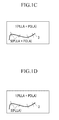
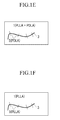
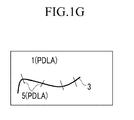
- FIGS. 1A to 1G are schematic views showing natural fiber-reinforced polylactic acid resin compositions according to various embodiments of the invention.
- (meth)acrylate refers to “acrylate” or “methacrylate”
- (meth)acrylic acid refers to "acrylic acid” or “methacrylic acid”.
- (meth)acrylic acid alkyl ester refers to "acrylic acid alkyl ester” and “methacrylic acid alkyl ester”
- (meth)acrylic acid ester refers to "acrylic acid ester” and "methacrylic acid ester”.
- the term "including a different isomer” means that one of a first polylactic acid resin and a second polylactic acid resin includes a repeating unit derived from L-lactic acid, and the other includes a repeating unit derived from D-lactic acid.
- the natural fiber-reinforced polylactic acid resin composition includes (A) a first polylactic acid resin and (B) a natural fiber surface-treated with a second polylactic acid resin.
- polylactic acid resin is a commercially-available polyester-based resin made using lactic acid obtained by decomposing corn starch of biomass energy as a monomer.
- the first polylactic acid resin and the second polylactic acid resin may each independently include an L-polylactic acid (PLLA) resin, a D-polylactic acid (PDLA) resin, an L,D-polylactic acid resin, or a combination thereof.
- PLLA L-polylactic acid
- PDLA D-polylactic acid
- L,D-polylactic acid resin L,D-polylactic acid resin
- the L-polylactic acid (PLLA) resin may include about 95 wt% or more of a repeating unit derived from L-lactic acid and about 5 wt% or less of a repeating unit derived from D-lactic acid.
- the L-polylactic acid may include about 98 to about 99.99 wt% of the repeating unit derived from L-lactic acid and about 0.01 to about 2 wt% of the repeating unit derived from D-lactic acid.
- the D-polylactic acid (PDLA) resin may include about 95 wt% or more of a repeating unit derived from D-lactic acid and about 5 wt% or less of a repeating unit derived from L-lactic acid.
- the D-polylactic acid may include about 98 to about 99.99 wt% of the repeating unit derived from D-lactic acid and about 0.01 to about 2 wt% of the repeating unit derived from L-lactic acid.
- the L-polylactic acid resin and the D-polylactic acid resin include about 95 wt% or more of the repeating unit derived from L-lactic acid and about 95 wt% or more of the repeating unit derived from D-lactic acid, respectively, it may have an excellent balance of properties such as heat resistance, formability, and hydrolysis resistance.
- the first polylactic acid resin and the second polylactic acid resin may include the same isomers or different isomers from each other.
- a natural fiber-reinforced polylactic acid resin composition including a first polylactic acid resin and a natural fiber that is surface-treated with a second polylactic acid resin may have diverse combinations of compositions, and some combinations are shown in FIGS. 1A to 1G .
- FIGS. 1A to 1G are schematic views showing natural fiber-reinforced polylactic acid resin composition according to various embodiments of the invention.
- a matrix corresponds to the first polylactic acid resin 1 according to one embodiment, and some lines marked on the surface of a natural fiber 3 correspond to the second polylactic acid resin 5.
- the first polylactic acid resin 1 and the second polylactic acid resin 5 are PLLA and PDLA, and PDLA and PLLA, respectively, and they are different isomers from each other.
- the first polylactic acid resin and the second polylactic acid resin may form a stereocomplex by melt-mixing.
- the stereocomplex can improve properties such as heat resistance, mechanical strength and the like, due to improved crystallinity compared to a single PLA resin used alone.
- L-polylactic acid resin may be used as the first polylactic acid resin and D-polylactic acid resin may be used as the second polylactic acid resin for surface-treatment of a natural fiber, respectively.
- D-polylactic acid resin thin film on the surface of the natural fiber may induce formation of a stereocomplex, which can significantly improve properties.
- the first polylactic acid resin 1 is PLLA and PDLA
- the second polylactic acid resin 5 is PLLA and PDLA
- the first polylactic acid resin 1 is PLLA and PDLA
- the second polylactic acid resin 5 is PLLA
- the first polylactic acid resin 1 is PLLA and PDLA
- the second polylactic acid resin 5 is PDLA.
- the second polylactic acid resin and the first polylactic acid resin can include different isomers, and therefore, the first polylactic acid resin and the second polylactic acid resin may form a stereocomplex by melt-mixing.
- the first polylactic acid resin 1 and the second polylactic acid resin 5 are PLLA and PLLA, and PDLA and PDLA, respectively that are the same isomers.
- a natural fiber surface-treated with an L-polylactic acid resin and L-polylactic acid resin may be mixed, and a natural fiber surface-treated with D-polylactic acid resin and a D-polylactic acid resin may be mixed.
- PLLA and PDLA may include about 5 wt% or less of the repeating unit derived from D-lactic acid and about 5 wt% or less of the repeating unit derived from L-lactic acid, respectively. Even though they are the same isomers like PLLA and PLLA, and PDLA and PDLA, the resin may still form a stereocomplex.
- a natural fiber that is surface-treated with an L-polylactic acid resin or a D-polylactic acid resin may have improved adherence between the natural fiber and a polylactic acid resin compared to a simple mixture of L-polylactic acid resin or D-polylactic acid resin and a natural fiber. Therefore, properties such as heat resistance, mechanical strength, and the like can be improved.
- the polylactic acid resin can have a weight average molecular weight of more than about 50,000 g/mol, for example, about 90,000 to about 500,000 g/mol.
- a natural fiber-reinforced polylactic acid resin composition with balanced mechanical strength and heat resistance may be provided.
- the natural fiber-reinforced polylactic acid resin composition can include the first polylactic acid resin (A) in an amount of about 50 to about 95 wt%, based on the total amount of the natural fiber-reinforced polylactic acid resin composition. In another embodiment, the natural fiber-reinforced polylactic acid resin composition can include the first polylactic acid resin (A) in an amount of about 60 to about 90 wt%, based on the total amount of the natural fiber-reinforced polylactic acid resin composition.
- the first polylactic acid resin (A) is included within the above range, excellent heat resistance and mechanical strength may be obtained and environmentally-friendly effects can be improved.
- the natural fiber according to one embodiment is included in the polylactic acid resin composition as a reinforcing agent and can include a bast fiber obtained from bast having flexibility among bast and xylem of a stem.
- the bast fiber can be useful as a polymer composite material and can include flax, hemp, jute, kenaf, ramie, curaua, and the like, and combinations thereof.
- the natural fiber may include cellulose in an amount of about 70 wt% or more, and in one embodiment, about 95 wt% or more.
- the cell membrane of a fiber cell is mainly composed of cellulose, lignin, and semicellulose.
- the natural fiber includes cellulose in an amount of about 95 wt% or more by sufficiently removing lignin and semicellulose, the heat resistance and the mechanical strength can be improved, and discoloration of a molded product caused by heat-decomposing lignin during a molding process can also be reduced.
- the natural fiber may have an average length of about 0.01 to about 100 mm, for example, an average length of about 0.1 to about 10 mm.
- the mechanical strength such as tensile strength, flexural strength, flexural modulus, and the like can be improved, and the natural fiber may have excellent workability and appearance characteristics.
- the natural fiber can have an average diameter of about 0.001 to about 50 ⁇ m, for example, about 0.01 to about 20 ⁇ m. When the natural fiber has an average diameter within these ranges, workability and surface gloss can be improved.
- a master batch may be prepared by mixing a natural fiber with a polymer in a batch-type mixer or compression molding.
- it can be difficult to improve adhesion between the natural fiber and the resin because the natural fiber has defects of porosity.
- the natural fiber may be subjected to surface treatment with the second polylactic acid resin in order to overcome the defects of the natural fiber itself.
- Surface strength of the natural fiber can be maximized by forming a stereocomplex between the second polylactic acid resin that exists on the surface of the natural fiber and the first polylactic acid resin having a different isomer, or mixing the second polylactic acid resin that exists on the surface of the natural fiber with a first polylactic acid resin having the same isomer.
- the surface-treatment may be performed using one of the following three methods.
- in-situ synthesis of a D,D-lactide monomer can be performed using a -OH group on the surface of the natural fiber as an initiator to improve wetting between the polylactic acid resin and the natural fiber.
- n denotes the degree of polymerization
- melt-mixing of the second polylactic acid resin and the natural fiber can be performed using a batch-type mixer.
- the natural fiber can be dipped in the second polylactic acid resin using a continuous dipping apparatus. This can be performed by dipping a natural fiber roving having a continuous phase and that is preheated using the continuous dipping apparatus into a dipping bath including the melted second polylactic acid resinto to thereby soak the second polylactic acid resin into each of the natural fibers inside the roving, and then cooling the resin dipped natural fiber roving.
- the first method is a method using a chemical dipping process.
- adhensive strength between the polylactic acid resin and the natural fiber can be improved because a stereocomplex is formed on the surface of the natural fiber, and therefore it may have excellent properties such as heat resistance, mechanical strength, impact strength, and the like, compared to the second and third methods using a physical dipping process.
- the second and third methods are methods using a physical dipping process.
- Equivalent crystallinity (X c ) and stereocomplex ratio (R sc/L ) to those of the first method may be obtained, but the second polylactic acid resin may be separated easily from the natural fiber during the compounding process. Therefore, various properties (such as heat resistance, mechanical strength, impact strength, and the like) of the treated natural fiber may not be improved as much as with the first method, due to relatively weaker adhesive strength between the polylactic acid resin and the natural fiber.
- the third method of a continuous dipping process may improve properties of the treated natural fiber more than the second method of a batch-type dipping process because the natural fibers may be dispersed more effectively in a resin.
- the natural fiber surface-treated with the second polylactic acid resin (B) may include the second polylactic acid resin and the natural fiber in a weight ratio of about 1:0.1 to about 1:10, and in one embodiment, about 1:1.
- the first and second polylactic acid resins can effectively crystallize, and the second polylactic acid can be effectively dispersed into the first polylactic acid resin.
- the natural fiber-reinforced polylactic acid resin composition can include the natural fiber surface-treated with the second polylactic acid resin (B) in an amount of about 5 to about 50 wt%, for example about 10 to about 40 wt%, based on the total amount of the natural fiber-reinforced polylactic acid resin composition.
- the natural fiber-reinforced polylactic acid resin composition includes the natural fiber surface-treated with the second polylactic acid resin in an amount within the above ranges, it may have excellent mechanical strength and workability.
- the natural fiber-reinforced polylactic acid resin composition may further include an impact-reinforcing agent to reinforce impact strength and viscosity improvement.
- the impact-reinforcing agent can have excellent affinity for polylactic acid resin, and may be a reactive olefin-based copolymer, a core-shell copolymer, or a combination thereof.
- the reactive olefin-based copolymer may be a copolymer including about 0.1 to about 5 wt% of a reactive group comprising maleic anhydride, glycidyl methacrylate, oxaxoline, or a combination thereof grafted into an olefin-based rubber such as an ethylene/propylene rubber, an isoprene rubber, an ethylene/octene rubber, or a terpolymer of ethylene-propylene-diene (EDPM).
- a reactive group comprising maleic anhydride, glycidyl methacrylate, oxaxoline, or a combination thereof grafted into an olefin-based rubber such as an ethylene/propylene rubber, an isoprene rubber, an ethylene/octene rubber, or a terpolymer of ethylene-propylene-diene (EDPM).
- the core-shell copolymer has a core-shall structure obtained from graft-polymerization of at least an unsaturated compound comprising an acryl-based monomer, an aromatic vinyl monomer, an unsaturated nitrile monomer, a polymer form of at least one of the monomers, or a combination thereof into a rubber polymer that is obtained from polymerization of a monomer comprising a diene-based monomer, an acryl-based monomer, a silicon-based monomer, or a combination thereof.
- Examples of the diene-based monomer include without limitation C4 to C6 butadiene, isoprene, and the like, and combinations thereof. In one embodiment, it may include butadiene.
- Examples of the rubber polymer that can be obtained from polymerization of the diene-based monomer include without limitation a butadiene rubber, an acryl rubber, a styrene/butadiene rubber, an acrylonitrile/butadiene rubber, an isoprene rubber, a terpolymer (EPDM) of ethylene-propylene-diene, and the like, and combinations thereof.
- Examples of the acryl-based monomer includes without limitation methyl(meth)acrylate, ethyl(meth)acrylate, n-propyl(meth)acrylate, n-butyl(meth)acrylate, 2-ethylhexyl(meth)acrylate, hexyl(meth)acrylate, and the like, and combinations thereof.
- Curing agents such as ethylene glycol 1 di(meth)acrylate, propylene glycol di(meth)acrylate, 1,3-butylene glycol di(meth)acrylate, 1,4-butylene glycol di(meth)acrylate, allyl(meth)acrylate, triallylcyanurate, and the like, and combinations thereof may be used along with the acryl-based monomer.
- silicon-based monomer examples include without limitation a cyclosiloxane compound comprising hexamethylcyclotrisiloxane, octamethylcyclotetrasiloxane, decamethylcyclopentasiloxane, dodecamethylcyclohexasiloxane, trimethyltriphenylcyclotrisiloxane, tetramethyltetraphenylcyclotetrasiloxane, octaphenylcyclotetrasiloxane, and the like, and combinations thereof.
- a cyclosiloxane compound comprising hexamethylcyclotrisiloxane, octamethylcyclotetrasiloxane, decamethylcyclopentasiloxane, dodecamethylcyclohexasiloxane, trimethyltriphenylcyclotrisiloxane, tetramethyltetraphenylcyclotetrasiloxane, oc
- Curing agents such as trimethoxymethylsilane, triethoxyphenylsilane, tetramethoxysilane, tetraethoxysilane, and the like, and combinations thereof may be used along with the silicon-based monomer.
- the rubber polymer can have an average particle diameter ranging from about 0.4 to about 1 ⁇ m, which can provide a good balance of impact resistance and coloring properties.
- the rubber polymer may be included in an amount of about 30 to about 90 wt% based on the total weight of the impact-reinforcing agent.
- the impact-reinforcing agent including the rubber polymer in this amount can have excellent compatibility with the polylactic resin and can therefore provide excellent impact-reinforcing effects.
- Examples of the acryl-based monomer of the unsaturated compound may include without limitation (meth)acrylic acid alkyl esters, (meth)acrylic acid esters, and the like, and combinations thereof.
- the alkyl of the (meth)acrylic acid alkyl esters may be a C1 to C10 alkyl.
- Examples of the (meth)acrylic acid alkyl ester can include without limitation methyl(meth)acrylate, ethyl(meth)acrylate, propyl(meth)acrylate, butyl(meth)acrylate, and the like, and combinations thereof.
- the (meth)acrylic acid alkyl ester can include methyl(meth)acrylate.
- Examples of the aromatic vinyl monomer of the unsaturated compound may include without limitation styrene, C1-C10 alkyl-substituted styrene, halogen-substituted styrene, and the like, and combinations thereof.
- Examples of the alkyl substituted styrene include without limitation o-ethyl styrene, m-ethyl styrene, p-ethyl styrene, alpha-methyl styrene, and the like, and combinations thereof.
- Examples of the unsaturated nitrile monomer of the unsaturated compound may include without limitation acrylonitrile, methacrylonitrile, ethacrylonitrile, and the like, and combinations thereof.
- the natural fiber-reinforced polylactic acid resin composition may include the impact-reinforcing agent in an amount of about 0.01 to about 30 parts by weight, for example about 1 to about 10 parts by weight, based on about 100 parts by weight of the natural fiber-reinforced polylactic acid resin composition.
- the natural fiber-reinforced polylactic acid resin composition includes the impact-reinforcing agent in an amount within the above ranges, the composition may exhibit an impact reinforcing effect, and mechanical strength such as tensile strength, flexural strength, flexural modulus, and the like may also be improved.
- the natural fiber reinforced polylactic acid resin composition according to one embodiment may further include one or more additive(s).
- additives include without limitation anti-hydrolysis agents, flame retardants, flame-retardant aids, organic or inorganic reinforcing agents, antibacterial agents, heat stabilizers, antioxidants, release agents, light stabilizers, compatibilizers, inorganic material additives, surfactants, coupling agents, plasticizers, admixtures, stabilizers, lubricants, antistatic agents, flame proofing agents, weather-resistance agents, colorants, ultraviolet (UV) blocking agents, filler, nucleating agents, adhesion aids, adhesives, and the like, and combinations thereof.
- additives include without limitation anti-hydrolysis agents, flame retardants, flame-retardant aids, organic or inorganic reinforcing agents, antibacterial agents, heat stabilizers, antioxidants, release agents, light stabilizers, compatibilizers, inorganic material additives, surfactants, coupling agents, plasticizers, admixtures, stabilizers, lubricants, antistatic agents, flame proofing agents, weather-resi
- antioxidants may include without limitation phenol-type antioxidants, phosphite-type antioxidants, thioether-type antioxidants, amine-type antioxidants, and the like, and combinations thereof.
- releasing agents may include without limitation fluorine-containing polymers, silicone oils, metal salts of stearic acid, metal salts of montanic acid, montanic acid ester waxes, polyethylene waxes, and the like, and combinations thereof.
- examples of the weather-resistance agents may include without limitation benzophenone-type weather-resistance agents, amine-type weather-resistance agents, and the like, and combinations thereof.
- colorants may include without limitation dyes, pigments, and the like, and combinations thereof.
- UV blocking agents may include without limitation titanium oxide (TiO 2 ), carbon black, and the like, and combinations thereof.
- the filler may include without limitation glass fiber, carbon fiber, silica, mica, alumina, clay, calcium carbonate, calcium sulfate, glass beads, and the like, and combinations thereof. When the fillers are added, properties such as mechanical strength, heat resistance, and the like may be improved.
- the nucleating agents may include without limitation talc, clay, and the like, and combinations thereof.
- the additive may be included in a predetermined amount as long as it does not deteriorate the properities of a natural fiber-reinforced polylactic acid resin composition. In one embodiment, the additive may be included in an amount of about 40 parts by weight or less based on about 100 parts by weight of the natural fiber-reinforced polylactic acid resin composition. In another embodiment, the additive may be included in an amount of about 0.1 to about 20 parts by weight based on about 100 parts by weight of the natural fiber-reinforced polylactic acid resin composition.
- the natural fiber-reinforced polylactic acid resin composition may further include a thermoplastic resin.
- thermoplastic resin may include without limitation polycarbonate resin, polyolefin-based resin, polyester-based resin, nylon-based resin, rubber-modified vinyl-based graft copolymer resin, polyacetal, polymethylmethacrylate, and the like, and combinations thereof.
- the polycarbonate resin may include one produced by reacting dihydric phenol with phosgene in the presence of molecular weight regulator and a catalyst; or one produced by performing an ester-interchange reaction between dihydric phenol and a carbonate precursor.
- a multi-functional aromatic compound, a difunctional carboxylic acid, and the like may be further added.
- the dihydric phenol can be, for example, 2,2-bis(4-hydroxyphenyl)propane (bisphenol A).
- the rubber-modified vinyl-based graft copolymer resin may include one produced by graft copolymerizing styrene, acrylonitrile, and optionally a (meth)acrylic acid alkyl ester monomer to a butadiene rubber, an acryl rubber, a styrene/butadiene rubber, or a combination thereof.
- the rubber-modified vinyl-based graft copolymer resin may include one produced by graft copolymerizing a monomer of (meth)acrylic acid alkyl ester to a butadiene rubber, an acryl rubber, a styrene/butadiene rubber, or a combination thereof, and in one embodiment, it may include an ABS (acrylonitrile-butadiene-styrene) graft copolymer.
- the natural fiber-reinforced polylactic acid resin composition may be included in an amount of about 10 to about 90 wt% and in one embodiment, in an amount of about 30 to about 70 wt% based on the total amount of a mixture of the natural fiber-reinforced polylactic acid resin composition and the thermoplastic resin.
- the thermoplastic resin can have good characteristics and be environmentally-friendly.
- the first polylactic acid resin and the second polylactic acid resin can be different isomers. Therefore, when a stereocomplex is formed, crystallinity (X c ) of the natural fiber-reinforced polylactic acid resin composition may increase to about 30 J/g or more.
- the crystallinity is calculated from a total amount of ⁇ H L (crystal peak of a L-polylactic acid resin) that is the calories corresponding to a melting point at about 140 to about 170°C and ⁇ H sc (crystal peak of a stereocomplex) that is the calories corresponding to a melting point at about 195 to about 250°C while increasing the temperature to about 250°C at a rate of about 10°C/min by using differential scanning calorimetry (DSC).
- DSC differential scanning calorimetry
- the natural fiber-reinforced polylactic acid resin composition may have a stereocomplex ratio (R sc/L ) of more than about 0%, and in one embodiment about 30% or more.
- the stereocomplex ratio (R sc/L ) of more than about 0% refers to a formation of a stereocomplex.
- the stereocomplex ratio is a stereocomplex crystal ratio of the total crystalinity, and may be calculated from the following equation: ⁇ ⁇ H s ⁇ c / ⁇ ⁇ H s ⁇ c + ⁇ ⁇ H L ⁇ 100.
- the spherulite crystal when the natural fiber-reinforced polylactic acid resin composition is quenched using liquid nitrogen from the temperature of about 240°C to the crystallization temperature, and then, observed under isothermal conditions, the spherulite crystal is formed earlier and grows faster on the surface of the natural fiber than in any other place in the composition (like the matrix).
- the spherulite crystal is a spherical polycrystal including several crystals arranged radially from one spot.
- the crystallization temperature may be predetermined using differential scanning calorimetry (DSC), and it may be about 100 to about 180°C. In one embodiment, when the stereocomplex is formed by different isomers of the first and second polylactic acid resins, the crystallization temperature may be about 140 to about 180°C. The spherulite crystal observed is a stereocomplex spherulite crystal. When the first polylactic acid resin and the second polylactic acid resin include the same isomers, the crystallization temperature may be about 100 to about 110°C.
- DSC differential scanning calorimetry
- the growth rate of the spherulite crystal is the time measured for the spherulite crystal particle size to grow to 5 ⁇ m. It takes about 9 seconds on the surface of the natural fiber, and about 1 minute 12 seconds on the matrix.
- the spherulite crystal on the surface of natural fiber may be a main factor for determing surface-treatment of the natural fiber.
- the natural fiber-reinforced polylactic acid resin composition may be prepared by a known method for preparing a resin composition.
- the components (A) and (B) described herein and optionally one or more additives can be simultaneously mixed and melt-extruded through an extruder to provide a pellet.
- a molded product made using the above natural fiber reinforced polylactic acid resin composition is provided.
- the natural fiber reinforced polylactic acid resin composition may be used to produce a molded product requiring good mechanical strength and heat resistance, for example for automobile parts, machine parts, electronic parts, office machines such as computers, and miscellaneous parts.
- it can be used for housings for electronics such as television, computers, printers, washing machines, cassette players, audio equipment, game devices, and the like.
- a natural fiber-reinforced polylactic acid resin composition included the following components.
- D,D-lactide manufactured by Purac Co. is polymerized to provide a D-polylactic acid resin having a weight average molecular weight of 50,000 g/mol.
- the natural fiber is made from hemp, and includes a cellulose component in an amount of 98 wt%, an average length of 5 mm, and an average diameter of 10 ⁇ m.
- the natural fiber is surface-treated according to the following Preparation Examples 1 to 5.
- a master batch is prepared by adding dried hemp to a reactor and then ring-opening polymerizing the D,D-lactide monomer manufactured by Purac Co.. During the ring-opening polymerization, the hemp and D,D-lactide monomer are mixed in a batch-type mixer at 180°C for 5 minutes, and extruded by a twin-screw extruder connected with the mixer to provide pellets. The D,D-lactide monomer and the hemp are used in an amount to provide a 1:1 weight ratio in the final dipping product.
- the catalyst for polymerization included Sn(Oct) 2 ) and triphenylphosphine in the same mole ratio.
- the D-polylactic acid resin obtained from adding the D,D-lactide monomer in an amount of 500 mol based on 1 mol of the catalyst and the natural fiber are included in a weight ratio of 1:1 in a dipping product. Vacuum drying is performed at 100°C to remove non-reacted monomers from the mixture of the polymer, the monomer, and the natural fiber.
- a master batch is prepared by adding a D-polylactic acid resin and natural fiber at a weight ratio of 1:1 into a batch-type mixer and then melt-mixing.
- the natural fiber is dipped in the D-polylactic acid resin so that the surface of the natural fiber is soaked with the D-polylactic acid resin in a 1:1 weight ratio using a continuous dipping apparatus.
- a natural fiber roving having a filament fiber type is dipped into the D-polylactic acid fusion resin and transmitted linearly to obtain a natural fiber that is surface-treated with the D-polylactic acid resin.
- the natural fiber is prepared into about 3 to 50 mm pellets.
- 60 wt% of the first polylactic acid resin (L-polylactic acid resin) and 40 wt% of the natural fiber surface-treated with the second polylactic acid resin (D-polylactic acid resin) according to Preparation Example 1 are dried at 80°C under a vacuum condition for 4 hours and extruded by a twin-screw extruder at a temperature of about 180°C to provide pellets.
- a polylactic acid resin composition is prepared according to the same method as in Example 1, except for using 80 wt% of the first polylactic acid resin (L- polylactic acid resin) and 20 wt% of a natural fiber surface-treated with the second polylactic acid resin (D-polylactic acid resin) according to Preparation Example 1, instead of using 60 wt% of the first polylactic acid resin (L-polylactic acid resin) and 40 wt% of the natural fiber surface-treated with second polylactic acid resin (D-polylactic acid resin) according to Preparation Example 1.
- a polylactic acid resin composition is prepared according to the same method as in Example 1, except for using a natural fiber surface-treated with the second polylactic acid resin (D-polylactic acid resin) according to Preparation Example 2, instead of using the natural fiber surface-treated with second polylactic acid resin (D-polylactic acid resin) according to Preparation Example 1.
- a polylactic acid resin composition is prepared according to the same method as in Example 1, except for using a natural fiber surface-treated with the second polylactic acid resin (D-polylactic acid resin) according to Preparation Example 3, instead of using the natural fiber surface-treated with second polylactic acid resin (D-polylactic acid resin) according to Preparation Example 1.
- a polylactic acid resin composition is prepared according to the same method as in Example 1, adding an impact-reinforcing agent in Example 1. 5 parts by weight of the impact-reinforcing agent is added based on 100 parts by weight of the natural fiber that is surface-treated with the second polylactic acid resin and the first polylactic acid.
- a polylactic acid resin composition is prepared according to the same method as in Example 1, except for adding 60 wt% of the first polylactic acid resin (L-polylactic acid resin), 20 wt% of the second polylactic acid resin (D-polylactic acid resin), and 20 wt% of the natural fiber without surface-treatment.
- a polylactic acid resin composition is prepared according to the same method as in Example 1, except for adding 80 wt% of the first polylactic acid resin (L-polylactic acid resin) and 20 wt% of the natural fiber without surface-treatment.
- the pellets prepared according to Examples 1 to 5 and Comparative Examples 1 and 2 are dried at 80°C for 4 hours or more and then prepared as an ASTM dumbbell specimen by using an 6 oz injection molding machine set at a cylinder temperature of 230°C, a molding temperature of 80°C, and a molding cycle of 60.
- the properties of prepared specimens are evaluated according to the following methods. The results are provided in the following Table 1.
- C Impact-reinforcing agent parts by weight* - - - - 5 - - Second polylactic acid resin (D-polylactic acid resin) wt% - - - - - 20
- Examples 1 to 5 including a natural fiber surface-treated with a polylactic acid resin exhibit an excellent balance of physical properties such as heat resistance, Impact strength, and mechanical properties compared to Comparative Examples 1 and 2 including a natural fiber that is not surface-treated and in which a polylactic acid resin is added separately.
- Examples 1 to 5 using the L-polylactic acid resin as the first polylactic acid resin and the D-polylactic acid resin as the second polylactic acid resin show excellent properties because the L-polylactic acid resin that exists in the matrix and D-polylactic acid resin that exists on the natural fiber form a stereocomplex, and thereby, crystallization near the stereocomplex is promoted.
- Comparative Example 1 using the L-polylactic acid resin as the first polylactic acid resin and the D-polylactic acid resin as the second polylactic acid resin and mixing them with a natural fiber that is not surface-treated exhibits deteriorated heat resistance, impact strength and mechanical strength indicating that crystallinity decreases.
- Examples 1 and 2 prepared according to Preparation Example 1 adding the D-polylactic acid resin by in-situ synthesis on the natural fiber surface exhibits excellent heat resistance, impact strength, and mechanical properties compared with Example 3 prepared according to Preparation Example 2 by melt-mixing using a batch-type mixer and Example 4 prepared according to Preparation Example 3 by dipping using a continuous dipping apparatus.
- Example 4 shows more improved properties than Example 3 because the natural fiber may be dispersed more effectively in a resin by dipping using a continuous dipping apparatus than melt-mixing using a batch-type mixer.
- Examples 1 to 4 including the surface-treated natural fiber showed similar crystallinity and stereocomplex ratios, but Examples 1 and 2 using the chemical dipping method by polymerization had much better heat resistance, impact strength, and mechanical properties than Examples 3 and 4 using the simple physical dipping method.
- D-polylactic acid may be separated easily from the natural fiber during a compounding process, but in the chemical dipping method, a stereocomplex is formed on the surface of the natural fiber, and therefore adhesive strength between a resin and a natural fiber may be improved.
- Example 1 including more natural fiber than Example 2 has higher impact strength than Example 2. The results indicate that the crystal structure of the natural fiber supports the natural fiber and improves properties.
Landscapes
- Chemical & Material Sciences (AREA)
- Engineering & Computer Science (AREA)
- Materials Engineering (AREA)
- Manufacturing & Machinery (AREA)
- Health & Medical Sciences (AREA)
- Chemical Kinetics & Catalysis (AREA)
- Medicinal Chemistry (AREA)
- Polymers & Plastics (AREA)
- Organic Chemistry (AREA)
- Compositions Of Macromolecular Compounds (AREA)
- Biological Depolymerization Polymers (AREA)
Applications Claiming Priority (2)
| Application Number | Priority Date | Filing Date | Title |
|---|---|---|---|
| KR20080114242 | 2008-11-17 | ||
| KR1020090109968A KR101277726B1 (ko) | 2008-11-17 | 2009-11-13 | 천연섬유 강화 폴리유산 수지 조성물 및 이를 이용한 성형품 |
Publications (2)
| Publication Number | Publication Date |
|---|---|
| EP2186846A1 true EP2186846A1 (fr) | 2010-05-19 |
| EP2186846B1 EP2186846B1 (fr) | 2012-01-04 |
Family
ID=41426336
Family Applications (1)
| Application Number | Title | Priority Date | Filing Date |
|---|---|---|---|
| EP09176224A Not-in-force EP2186846B1 (fr) | 2008-11-17 | 2009-11-17 | Composition de résine d'acide polylactique renforcée par des fibres naturelles et produit moulé fabriqué en l'utilisant |
Country Status (2)
| Country | Link |
|---|---|
| US (1) | US20100125112A1 (fr) |
| EP (1) | EP2186846B1 (fr) |
Cited By (6)
| Publication number | Priority date | Publication date | Assignee | Title |
|---|---|---|---|---|
| FR2987301A1 (fr) * | 2012-02-23 | 2013-08-30 | D & D Intelligence | Procede de preparation d'un materiau biocomposite. |
| WO2014160362A1 (fr) * | 2013-03-14 | 2014-10-02 | Tundra Composites, LLC | Composite polymère comprenant une fibre à interface modifiée et une particule |
| WO2016026920A1 (fr) * | 2014-08-21 | 2016-02-25 | Styrolution Group Gmbh | Composites d'acide polylactique avec des fibres naturelles |
| WO2016100764A1 (fr) * | 2014-12-19 | 2016-06-23 | Earth Renewable Technologies | Composition d'acide polylactique extrudable et procédé de production d'articles moulés l'utilisant |
| IT202000003808A1 (it) | 2020-02-24 | 2021-08-24 | Fintema S R L | Composizione di biomateriale, termoplastico,iniettabile direttamente in stampo |
| US11292909B2 (en) | 2014-12-19 | 2022-04-05 | Earth Renewable Technologies | Extrudable polymer composition and method of making molded articles utilizing the same |
Families Citing this family (13)
| Publication number | Priority date | Publication date | Assignee | Title |
|---|---|---|---|---|
| JP4612098B2 (ja) * | 2008-07-22 | 2011-01-12 | 花王株式会社 | 生分解性樹脂組成物 |
| JP4612730B2 (ja) * | 2008-08-08 | 2011-01-12 | 花王株式会社 | 生分解性樹脂組成物 |
| KR101225950B1 (ko) * | 2008-12-09 | 2013-01-24 | 제일모직주식회사 | 천연섬유 강화 폴리유산 수지 조성물 |
| EP2534180A4 (fr) * | 2010-02-11 | 2013-09-18 | Fpinnovations | Biomatériaux nanocomposites composés de cellulose nanocristalline (ncc) et d'acide polylactique (pla) |
| EP2463083B1 (fr) * | 2010-12-13 | 2016-06-29 | The Boeing Company | Panneaux intérieurs d'avion vert et méthode de fabrication |
| US20120189860A1 (en) * | 2011-01-24 | 2012-07-26 | Fina Technology, Inc. | Polymeric compositions comprising polylactic acid oligomers and methods of making the same |
| US8691893B2 (en) | 2011-10-07 | 2014-04-08 | Masdar Institute Of Science And Technology | Biodegradable composite materials |
| EP2617896A1 (fr) * | 2012-01-20 | 2013-07-24 | ABB Technology Ltd | Matériau isolant électrique à base de cellulose |
| WO2015048589A1 (fr) * | 2013-09-29 | 2015-04-02 | Michigan Molecular Institute | Composites renouvelables, biodégradables à base d'acide poly(lactique) ayant des propriétés thermiques améliorées |
| EP2894136B1 (fr) | 2014-01-08 | 2019-12-04 | The Boeing Company | Procédé amélioré de fabrication de panneaux intérieurs durables et ignifuges pour avions |
| JP7064826B2 (ja) * | 2017-02-14 | 2022-05-11 | ホッティーポリマー株式会社 | 3次元印刷装置用フィラメント |
| US12330848B2 (en) * | 2019-05-21 | 2025-06-17 | Asahi Kasei Kabushiki Kaisha | Container for containing cellulose resin composition and package comprising same and cellulose resin composition |
| CN112679760B (zh) * | 2020-11-19 | 2021-12-21 | 宁波宝亭生物科技有限公司 | 一种玻璃纤维增强生物降解高分子复合材料的制备方法 |
Citations (9)
| Publication number | Priority date | Publication date | Assignee | Title |
|---|---|---|---|---|
| JP2000017163A (ja) | 1998-06-30 | 2000-01-18 | Shimadzu Corp | ポリ乳酸ステレオコンプレックスポリマー組成物 |
| JP2003096285A (ja) | 2001-09-27 | 2003-04-03 | Toray Ind Inc | ポリ乳酸樹脂組成物、その製造方法および成形品 |
| JP2005187630A (ja) | 2003-12-25 | 2005-07-14 | Toyota Central Res & Dev Lab Inc | ポリ乳酸樹脂組成物及びその成形体 |
| JP2006045428A (ja) | 2004-08-06 | 2006-02-16 | Teijin Ltd | 生分解性複合体 |
| JP2006265486A (ja) | 2005-03-25 | 2006-10-05 | Teijin Ltd | ステレオコンプレックスポリ乳酸を含有する樹脂組成物および成形品 |
| JP2007045915A (ja) | 2005-08-09 | 2007-02-22 | Kri Inc | ポリ乳酸樹脂組成物 |
| EP1780234A1 (fr) * | 2004-07-22 | 2007-05-02 | Teijin Limited | Acide polylactique et son processus de production |
| CN101003667A (zh) * | 2006-01-20 | 2007-07-25 | 东丽纤维研究所(中国)有限公司 | 聚乳酸/天然纤维复合材料及其生产方法 |
| CN101260228A (zh) * | 2008-04-24 | 2008-09-10 | 同济大学 | 一种具有阻燃功能的天然纤维/聚乳酸复合材料的制备方法 |
Family Cites Families (4)
| Publication number | Priority date | Publication date | Assignee | Title |
|---|---|---|---|---|
| JP2005105245A (ja) * | 2003-01-10 | 2005-04-21 | Nec Corp | ケナフ繊維強化樹脂組成物 |
| US7354973B2 (en) * | 2003-12-12 | 2008-04-08 | E.I. Du Pont De Nemours And Company | Toughened poly(lactic acid) compositions |
| US7902304B2 (en) * | 2005-10-03 | 2011-03-08 | Dai-Ichi Kogyo Seiyaku Co., Ltd. | Functional filler and resin composition containing same |
| KR100816679B1 (ko) * | 2006-12-13 | 2008-03-27 | 제일모직주식회사 | 천연섬유 강화 폴리유산 수지 조성물 |
-
2009
- 2009-11-16 US US12/618,990 patent/US20100125112A1/en not_active Abandoned
- 2009-11-17 EP EP09176224A patent/EP2186846B1/fr not_active Not-in-force
Patent Citations (9)
| Publication number | Priority date | Publication date | Assignee | Title |
|---|---|---|---|---|
| JP2000017163A (ja) | 1998-06-30 | 2000-01-18 | Shimadzu Corp | ポリ乳酸ステレオコンプレックスポリマー組成物 |
| JP2003096285A (ja) | 2001-09-27 | 2003-04-03 | Toray Ind Inc | ポリ乳酸樹脂組成物、その製造方法および成形品 |
| JP2005187630A (ja) | 2003-12-25 | 2005-07-14 | Toyota Central Res & Dev Lab Inc | ポリ乳酸樹脂組成物及びその成形体 |
| EP1780234A1 (fr) * | 2004-07-22 | 2007-05-02 | Teijin Limited | Acide polylactique et son processus de production |
| JP2006045428A (ja) | 2004-08-06 | 2006-02-16 | Teijin Ltd | 生分解性複合体 |
| JP2006265486A (ja) | 2005-03-25 | 2006-10-05 | Teijin Ltd | ステレオコンプレックスポリ乳酸を含有する樹脂組成物および成形品 |
| JP2007045915A (ja) | 2005-08-09 | 2007-02-22 | Kri Inc | ポリ乳酸樹脂組成物 |
| CN101003667A (zh) * | 2006-01-20 | 2007-07-25 | 东丽纤维研究所(中国)有限公司 | 聚乳酸/天然纤维复合材料及其生产方法 |
| CN101260228A (zh) * | 2008-04-24 | 2008-09-10 | 同济大学 | 一种具有阻燃功能的天然纤维/聚乳酸复合材料的制备方法 |
Cited By (8)
| Publication number | Priority date | Publication date | Assignee | Title |
|---|---|---|---|---|
| FR2987301A1 (fr) * | 2012-02-23 | 2013-08-30 | D & D Intelligence | Procede de preparation d'un materiau biocomposite. |
| WO2014160362A1 (fr) * | 2013-03-14 | 2014-10-02 | Tundra Composites, LLC | Composite polymère comprenant une fibre à interface modifiée et une particule |
| GB2528599A (en) * | 2013-03-14 | 2016-01-27 | Tundra Composites Llc | A polymer composite comprising an interfacially modified fiber and particle |
| GB2528599B (en) * | 2013-03-14 | 2017-12-06 | Tundra Composites Llc | A polymer composite comprising an interfacially modified fiber and particle |
| WO2016026920A1 (fr) * | 2014-08-21 | 2016-02-25 | Styrolution Group Gmbh | Composites d'acide polylactique avec des fibres naturelles |
| WO2016100764A1 (fr) * | 2014-12-19 | 2016-06-23 | Earth Renewable Technologies | Composition d'acide polylactique extrudable et procédé de production d'articles moulés l'utilisant |
| US11292909B2 (en) | 2014-12-19 | 2022-04-05 | Earth Renewable Technologies | Extrudable polymer composition and method of making molded articles utilizing the same |
| IT202000003808A1 (it) | 2020-02-24 | 2021-08-24 | Fintema S R L | Composizione di biomateriale, termoplastico,iniettabile direttamente in stampo |
Also Published As
| Publication number | Publication date |
|---|---|
| EP2186846B1 (fr) | 2012-01-04 |
| US20100125112A1 (en) | 2010-05-20 |
Similar Documents
| Publication | Publication Date | Title |
|---|---|---|
| EP2186846B1 (fr) | Composition de résine d'acide polylactique renforcée par des fibres naturelles et produit moulé fabriqué en l'utilisant | |
| KR101277726B1 (ko) | 천연섬유 강화 폴리유산 수지 조성물 및 이를 이용한 성형품 | |
| US8232343B2 (en) | Environmentally-friendly polylactic acid resin composition | |
| EP2291454B1 (fr) | Compositions polymères, procédé de fabrication et articles formés à partir de ces compositions | |
| US8044134B2 (en) | Polylactic acid resin composition | |
| JP4726887B2 (ja) | 天然繊維強化ポリ乳酸樹脂組成物 | |
| KR101277718B1 (ko) | 폴리유산/폴리카보네이트 수지 조성물 | |
| EP2700678B1 (fr) | Matériau composite de polymère biodégradable | |
| US20100144932A1 (en) | Natural Fiber Reinforced Polylactic Acid Resin Composition and Molded Product Using the Same | |
| US20100168332A1 (en) | Polylactic Acid Resin Composition and Molded Product Using the Same | |
| JP2011231280A (ja) | ポリカーボネート系樹脂組成物、及びその射出成型体 | |
| JP5857263B2 (ja) | ポリ乳酸樹脂組成物、射出成形品の製造方法、射出成形品、及び電子機器用ホルダー | |
| KR101233370B1 (ko) | 클레이 강화 폴리유산 스테레오컴플렉스 수지 조성물 | |
| KR100949377B1 (ko) | 폴리유산 수지 조성물 | |
| KR20100000782A (ko) | 생분해성 폴리유산 수지 조성물 | |
| JP5625720B2 (ja) | 複合ポリ乳酸系熱可塑性樹脂組成物およびその成形品 | |
| Liu et al. | Investigation of the Impact of Graft Compatibilizer Main‐Chain Structure on the Properties of PBAT/PLA Composites | |
| US20260001008A1 (en) | Method of improving functional durability of toy building elements | |
| NL2002910C2 (en) | Environmentally-friendly polylactic acid resin composition. | |
| JP2007211113A (ja) | 熱可塑性樹脂組成物および樹脂成形品 | |
| KR100895493B1 (ko) | 천연섬유 강화 폴리유산 수지 조성물 | |
| KR20110054400A (ko) | 클레이 강화 폴리유산 수지 조성물, 이의 제조 방법 및 이를 이용한 성형품 | |
| Vadori | Designing and engineering a sustainable polymer material by blending poly (lactic acid) and acrylonitrile butadiene styrene | |
| KR20090073930A (ko) | 천연섬유 강화 폴리유산 수지 조성물 |
Legal Events
| Date | Code | Title | Description |
|---|---|---|---|
| PUAI | Public reference made under article 153(3) epc to a published international application that has entered the european phase |
Free format text: ORIGINAL CODE: 0009012 |
|
| 17P | Request for examination filed |
Effective date: 20091117 |
|
| AK | Designated contracting states |
Kind code of ref document: A1 Designated state(s): AT BE BG CH CY CZ DE DK EE ES FI FR GB GR HR HU IE IS IT LI LT LU LV MC MK MT NL NO PL PT RO SE SI SK SM TR |
|
| RIC1 | Information provided on ipc code assigned before grant |
Ipc: C08J 5/04 20060101ALI20110211BHEP Ipc: C08J 5/06 20060101AFI20110211BHEP |
|
| GRAP | Despatch of communication of intention to grant a patent |
Free format text: ORIGINAL CODE: EPIDOSNIGR1 |
|
| GRAS | Grant fee paid |
Free format text: ORIGINAL CODE: EPIDOSNIGR3 |
|
| GRAA | (expected) grant |
Free format text: ORIGINAL CODE: 0009210 |
|
| AK | Designated contracting states |
Kind code of ref document: B1 Designated state(s): AT BE BG CH CY CZ DE DK EE ES FI FR GB GR HR HU IE IS IT LI LT LU LV MC MK MT NL NO PL PT RO SE SI SK SM TR |
|
| REG | Reference to a national code |
Ref country code: GB Ref legal event code: FG4D |
|
| REG | Reference to a national code |
Ref country code: CH Ref legal event code: EP |
|
| REG | Reference to a national code |
Ref country code: AT Ref legal event code: REF Ref document number: 540075 Country of ref document: AT Kind code of ref document: T Effective date: 20120115 |
|
| REG | Reference to a national code |
Ref country code: IE Ref legal event code: FG4D |
|
| REG | Reference to a national code |
Ref country code: NL Ref legal event code: T3 |
|
| REG | Reference to a national code |
Ref country code: DE Ref legal event code: R096 Ref document number: 602009004489 Country of ref document: DE Effective date: 20120308 |
|
| PG25 | Lapsed in a contracting state [announced via postgrant information from national office to epo] |
Ref country code: SI Free format text: LAPSE BECAUSE OF FAILURE TO SUBMIT A TRANSLATION OF THE DESCRIPTION OR TO PAY THE FEE WITHIN THE PRESCRIBED TIME-LIMIT Effective date: 20120104 |
|
| LTIE | Lt: invalidation of european patent or patent extension |
Effective date: 20120104 |
|
| PG25 | Lapsed in a contracting state [announced via postgrant information from national office to epo] |
Ref country code: BG Free format text: LAPSE BECAUSE OF FAILURE TO SUBMIT A TRANSLATION OF THE DESCRIPTION OR TO PAY THE FEE WITHIN THE PRESCRIBED TIME-LIMIT Effective date: 20120404 Ref country code: HR Free format text: LAPSE BECAUSE OF FAILURE TO SUBMIT A TRANSLATION OF THE DESCRIPTION OR TO PAY THE FEE WITHIN THE PRESCRIBED TIME-LIMIT Effective date: 20120104 Ref country code: LT Free format text: LAPSE BECAUSE OF FAILURE TO SUBMIT A TRANSLATION OF THE DESCRIPTION OR TO PAY THE FEE WITHIN THE PRESCRIBED TIME-LIMIT Effective date: 20120104 Ref country code: BE Free format text: LAPSE BECAUSE OF FAILURE TO SUBMIT A TRANSLATION OF THE DESCRIPTION OR TO PAY THE FEE WITHIN THE PRESCRIBED TIME-LIMIT Effective date: 20120104 Ref country code: NO Free format text: LAPSE BECAUSE OF FAILURE TO SUBMIT A TRANSLATION OF THE DESCRIPTION OR TO PAY THE FEE WITHIN THE PRESCRIBED TIME-LIMIT Effective date: 20120404 Ref country code: IS Free format text: LAPSE BECAUSE OF FAILURE TO SUBMIT A TRANSLATION OF THE DESCRIPTION OR TO PAY THE FEE WITHIN THE PRESCRIBED TIME-LIMIT Effective date: 20120504 |
|
| PG25 | Lapsed in a contracting state [announced via postgrant information from national office to epo] |
Ref country code: PT Free format text: LAPSE BECAUSE OF FAILURE TO SUBMIT A TRANSLATION OF THE DESCRIPTION OR TO PAY THE FEE WITHIN THE PRESCRIBED TIME-LIMIT Effective date: 20120504 Ref country code: PL Free format text: LAPSE BECAUSE OF FAILURE TO SUBMIT A TRANSLATION OF THE DESCRIPTION OR TO PAY THE FEE WITHIN THE PRESCRIBED TIME-LIMIT Effective date: 20120104 Ref country code: FI Free format text: LAPSE BECAUSE OF FAILURE TO SUBMIT A TRANSLATION OF THE DESCRIPTION OR TO PAY THE FEE WITHIN THE PRESCRIBED TIME-LIMIT Effective date: 20120104 Ref country code: LV Free format text: LAPSE BECAUSE OF FAILURE TO SUBMIT A TRANSLATION OF THE DESCRIPTION OR TO PAY THE FEE WITHIN THE PRESCRIBED TIME-LIMIT Effective date: 20120104 Ref country code: GR Free format text: LAPSE BECAUSE OF FAILURE TO SUBMIT A TRANSLATION OF THE DESCRIPTION OR TO PAY THE FEE WITHIN THE PRESCRIBED TIME-LIMIT Effective date: 20120405 |
|
| REG | Reference to a national code |
Ref country code: AT Ref legal event code: MK05 Ref document number: 540075 Country of ref document: AT Kind code of ref document: T Effective date: 20120104 |
|
| PG25 | Lapsed in a contracting state [announced via postgrant information from national office to epo] |
Ref country code: CY Free format text: LAPSE BECAUSE OF FAILURE TO SUBMIT A TRANSLATION OF THE DESCRIPTION OR TO PAY THE FEE WITHIN THE PRESCRIBED TIME-LIMIT Effective date: 20120104 |
|
| PG25 | Lapsed in a contracting state [announced via postgrant information from national office to epo] |
Ref country code: RO Free format text: LAPSE BECAUSE OF FAILURE TO SUBMIT A TRANSLATION OF THE DESCRIPTION OR TO PAY THE FEE WITHIN THE PRESCRIBED TIME-LIMIT Effective date: 20120104 Ref country code: SE Free format text: LAPSE BECAUSE OF FAILURE TO SUBMIT A TRANSLATION OF THE DESCRIPTION OR TO PAY THE FEE WITHIN THE PRESCRIBED TIME-LIMIT Effective date: 20120104 Ref country code: CZ Free format text: LAPSE BECAUSE OF FAILURE TO SUBMIT A TRANSLATION OF THE DESCRIPTION OR TO PAY THE FEE WITHIN THE PRESCRIBED TIME-LIMIT Effective date: 20120104 Ref country code: EE Free format text: LAPSE BECAUSE OF FAILURE TO SUBMIT A TRANSLATION OF THE DESCRIPTION OR TO PAY THE FEE WITHIN THE PRESCRIBED TIME-LIMIT Effective date: 20120104 Ref country code: DK Free format text: LAPSE BECAUSE OF FAILURE TO SUBMIT A TRANSLATION OF THE DESCRIPTION OR TO PAY THE FEE WITHIN THE PRESCRIBED TIME-LIMIT Effective date: 20120104 |
|
| PLBE | No opposition filed within time limit |
Free format text: ORIGINAL CODE: 0009261 |
|
| STAA | Information on the status of an ep patent application or granted ep patent |
Free format text: STATUS: NO OPPOSITION FILED WITHIN TIME LIMIT |
|
| PG25 | Lapsed in a contracting state [announced via postgrant information from national office to epo] |
Ref country code: IT Free format text: LAPSE BECAUSE OF FAILURE TO SUBMIT A TRANSLATION OF THE DESCRIPTION OR TO PAY THE FEE WITHIN THE PRESCRIBED TIME-LIMIT Effective date: 20120104 Ref country code: SK Free format text: LAPSE BECAUSE OF FAILURE TO SUBMIT A TRANSLATION OF THE DESCRIPTION OR TO PAY THE FEE WITHIN THE PRESCRIBED TIME-LIMIT Effective date: 20120104 |
|
| 26N | No opposition filed |
Effective date: 20121005 |
|
| PG25 | Lapsed in a contracting state [announced via postgrant information from national office to epo] |
Ref country code: AT Free format text: LAPSE BECAUSE OF FAILURE TO SUBMIT A TRANSLATION OF THE DESCRIPTION OR TO PAY THE FEE WITHIN THE PRESCRIBED TIME-LIMIT Effective date: 20120104 |
|
| REG | Reference to a national code |
Ref country code: DE Ref legal event code: R097 Ref document number: 602009004489 Country of ref document: DE Effective date: 20121005 |
|
| PG25 | Lapsed in a contracting state [announced via postgrant information from national office to epo] |
Ref country code: ES Free format text: LAPSE BECAUSE OF FAILURE TO SUBMIT A TRANSLATION OF THE DESCRIPTION OR TO PAY THE FEE WITHIN THE PRESCRIBED TIME-LIMIT Effective date: 20120415 |
|
| REG | Reference to a national code |
Ref country code: IE Ref legal event code: MM4A |
|
| REG | Reference to a national code |
Ref country code: FR Ref legal event code: ST Effective date: 20130731 |
|
| PG25 | Lapsed in a contracting state [announced via postgrant information from national office to epo] |
Ref country code: IE Free format text: LAPSE BECAUSE OF NON-PAYMENT OF DUE FEES Effective date: 20121117 |
|
| PG25 | Lapsed in a contracting state [announced via postgrant information from national office to epo] |
Ref country code: FR Free format text: LAPSE BECAUSE OF NON-PAYMENT OF DUE FEES Effective date: 20121130 Ref country code: MT Free format text: LAPSE BECAUSE OF FAILURE TO SUBMIT A TRANSLATION OF THE DESCRIPTION OR TO PAY THE FEE WITHIN THE PRESCRIBED TIME-LIMIT Effective date: 20120104 |
|
| PG25 | Lapsed in a contracting state [announced via postgrant information from national office to epo] |
Ref country code: MC Free format text: LAPSE BECAUSE OF NON-PAYMENT OF DUE FEES Effective date: 20121130 Ref country code: TR Free format text: LAPSE BECAUSE OF FAILURE TO SUBMIT A TRANSLATION OF THE DESCRIPTION OR TO PAY THE FEE WITHIN THE PRESCRIBED TIME-LIMIT Effective date: 20120104 |
|
| PG25 | Lapsed in a contracting state [announced via postgrant information from national office to epo] |
Ref country code: SM Free format text: LAPSE BECAUSE OF FAILURE TO SUBMIT A TRANSLATION OF THE DESCRIPTION OR TO PAY THE FEE WITHIN THE PRESCRIBED TIME-LIMIT Effective date: 20120104 Ref country code: LU Free format text: LAPSE BECAUSE OF NON-PAYMENT OF DUE FEES Effective date: 20121117 |
|
| REG | Reference to a national code |
Ref country code: CH Ref legal event code: PL |
|
| GBPC | Gb: european patent ceased through non-payment of renewal fee |
Effective date: 20131117 |
|
| PG25 | Lapsed in a contracting state [announced via postgrant information from national office to epo] |
Ref country code: HU Free format text: LAPSE BECAUSE OF FAILURE TO SUBMIT A TRANSLATION OF THE DESCRIPTION OR TO PAY THE FEE WITHIN THE PRESCRIBED TIME-LIMIT Effective date: 20091117 Ref country code: CH Free format text: LAPSE BECAUSE OF NON-PAYMENT OF DUE FEES Effective date: 20131130 Ref country code: LI Free format text: LAPSE BECAUSE OF NON-PAYMENT OF DUE FEES Effective date: 20131130 |
|
| PG25 | Lapsed in a contracting state [announced via postgrant information from national office to epo] |
Ref country code: GB Free format text: LAPSE BECAUSE OF NON-PAYMENT OF DUE FEES Effective date: 20131117 |
|
| PG25 | Lapsed in a contracting state [announced via postgrant information from national office to epo] |
Ref country code: MK Free format text: LAPSE BECAUSE OF FAILURE TO SUBMIT A TRANSLATION OF THE DESCRIPTION OR TO PAY THE FEE WITHIN THE PRESCRIBED TIME-LIMIT Effective date: 20120104 |
|
| REG | Reference to a national code |
Ref country code: NL Ref legal event code: PD Owner name: LOTTE ADVANCED MATERIALS CO., LTD.; KR Free format text: DETAILS ASSIGNMENT: CHANGE OF OWNER(S), MERGE; FORMER OWNER NAME: SAMSUNG SDI CO., LTD. Effective date: 20170221 |
|
| REG | Reference to a national code |
Ref country code: DE Ref legal event code: R081 Ref document number: 602009004489 Country of ref document: DE Owner name: LOTTE ADVANCED MATERIALS CO., LTD., YEOSU-SI, KR Free format text: FORMER OWNER: CHEIL INDUSTRIES INC., KUMI, KYONGSANG, KR Ref country code: DE Ref legal event code: R082 Ref document number: 602009004489 Country of ref document: DE Representative=s name: BARDEHLE PAGENBERG PARTNERSCHAFT MBB PATENTANW, DE |
|
| REG | Reference to a national code |
Ref country code: DE Ref legal event code: R081 Ref document number: 602009004489 Country of ref document: DE Owner name: LOTTE ADVANCED MATERIALS CO., LTD., YEOSU-SI, KR Free format text: FORMER OWNER: SAMSUNG SDI CO., LTD., YONGIN-SI, KYONGGI-DO, KR Ref country code: DE Ref legal event code: R082 Ref document number: 602009004489 Country of ref document: DE Representative=s name: BARDEHLE PAGENBERG PARTNERSCHAFT MBB PATENTANW, DE |
|
| P01 | Opt-out of the competence of the unified patent court (upc) registered |
Effective date: 20230528 |
|
| PGFP | Annual fee paid to national office [announced via postgrant information from national office to epo] |
Ref country code: NL Payment date: 20231013 Year of fee payment: 15 |
|
| PGFP | Annual fee paid to national office [announced via postgrant information from national office to epo] |
Ref country code: DE Payment date: 20230929 Year of fee payment: 15 |
|
| REG | Reference to a national code |
Ref country code: DE Ref legal event code: R119 Ref document number: 602009004489 Country of ref document: DE |
|
| REG | Reference to a national code |
Ref country code: NL Ref legal event code: MM Effective date: 20241201 |
|
| PG25 | Lapsed in a contracting state [announced via postgrant information from national office to epo] |
Ref country code: NL Free format text: LAPSE BECAUSE OF NON-PAYMENT OF DUE FEES Effective date: 20241201 |
|
| PG25 | Lapsed in a contracting state [announced via postgrant information from national office to epo] |
Ref country code: DE Free format text: LAPSE BECAUSE OF NON-PAYMENT OF DUE FEES Effective date: 20250603 |