EP2187458A2 - Dispositif électroluminescent semi-conducteur avec protection contre les chocs - Google Patents
Dispositif électroluminescent semi-conducteur avec protection contre les chocs Download PDFInfo
- Publication number
- EP2187458A2 EP2187458A2 EP09014208A EP09014208A EP2187458A2 EP 2187458 A2 EP2187458 A2 EP 2187458A2 EP 09014208 A EP09014208 A EP 09014208A EP 09014208 A EP09014208 A EP 09014208A EP 2187458 A2 EP2187458 A2 EP 2187458A2
- Authority
- EP
- European Patent Office
- Prior art keywords
- layer
- light emitting
- emitting device
- conductive
- semiconductor light
- Prior art date
- Legal status (The legal status is an assumption and is not a legal conclusion. Google has not performed a legal analysis and makes no representation as to the accuracy of the status listed.)
- Granted
Links
Images



Classifications
-
- H—ELECTRICITY
- H10—SEMICONDUCTOR DEVICES; ELECTRIC SOLID-STATE DEVICES NOT OTHERWISE PROVIDED FOR
- H10H—INORGANIC LIGHT-EMITTING SEMICONDUCTOR DEVICES HAVING POTENTIAL BARRIERS
- H10H20/00—Individual inorganic light-emitting semiconductor devices having potential barriers, e.g. light-emitting diodes [LED]
- H10H20/80—Constructional details
- H10H20/83—Electrodes
- H10H20/832—Electrodes characterised by their material
- H10H20/835—Reflective materials
-
- H—ELECTRICITY
- H10—SEMICONDUCTOR DEVICES; ELECTRIC SOLID-STATE DEVICES NOT OTHERWISE PROVIDED FOR
- H10H—INORGANIC LIGHT-EMITTING SEMICONDUCTOR DEVICES HAVING POTENTIAL BARRIERS
- H10H20/00—Individual inorganic light-emitting semiconductor devices having potential barriers, e.g. light-emitting diodes [LED]
- H10H20/80—Constructional details
- H10H20/83—Electrodes
- H10H20/831—Electrodes characterised by their shape
-
- H—ELECTRICITY
- H10—SEMICONDUCTOR DEVICES; ELECTRIC SOLID-STATE DEVICES NOT OTHERWISE PROVIDED FOR
- H10H—INORGANIC LIGHT-EMITTING SEMICONDUCTOR DEVICES HAVING POTENTIAL BARRIERS
- H10H20/00—Individual inorganic light-emitting semiconductor devices having potential barriers, e.g. light-emitting diodes [LED]
- H10H20/80—Constructional details
- H10H20/85—Packages
- H10H20/857—Interconnections, e.g. lead-frames, bond wires or solder balls
-
- H—ELECTRICITY
- H10—SEMICONDUCTOR DEVICES; ELECTRIC SOLID-STATE DEVICES NOT OTHERWISE PROVIDED FOR
- H10H—INORGANIC LIGHT-EMITTING SEMICONDUCTOR DEVICES HAVING POTENTIAL BARRIERS
- H10H20/00—Individual inorganic light-emitting semiconductor devices having potential barriers, e.g. light-emitting diodes [LED]
- H10H20/01—Manufacture or treatment
- H10H20/011—Manufacture or treatment of bodies, e.g. forming semiconductor layers
- H10H20/018—Bonding of wafers
Definitions
- the embodiment relates a semiconductor light emitting device.
- Group III-V nitride semiconductors are spotlighted as core materials of light emitting diodes (LEDs) or laser diodes (LDs) due to physical and chemical characteristics.
- the group III-V nitride semiconductors mainly include semiconductor materials having a composition formula of In x AlyGa 1-x-y N (0 ⁇ x ⁇ 1, 0 ⁇ y ⁇ 1, 0 ⁇ x+y ⁇ 1).
- the LED is a kind of a semiconductor device, which transmits/receives signals by converting electricity into infrared rays or light using the characteristic of the compound semiconductor and is used as a light source.
- the LED and LD employing such nitride semiconductors have been mainly used in light emitting devices to obtain light, and have been applied to various appliances (e.g., a light emitting part of a key pad of a portable phone, an electric bulletin board, an illumination device) as a light source.
- various appliances e.g., a light emitting part of a key pad of a portable phone, an electric bulletin board, an illumination device
- the embodiment provides a semiconductor light emitting device, which includes a shock protecting member provided at a position corresponding to that of a pad.
- the embodiment provides a semiconductor light emitting device, which includes a shock supporting member provided on a plurality of compound semiconductor layers corresponding to a pad.
- the embodiment provides a semiconductor light emitting device, which includes a shock supporting member provided on a plurality of compound semiconductor layers and a channel layer under a circumference portion of the compound semiconductor layers.
- An embodiment provides a semiconductor light emitting device comprising: a plurality of compound semiconductor layers including a first conductive semiconductor layer, an active layer and a second conductive semiconductor layer; a pad under the plurality of compound semiconductor layers; an electrode layer on the plurality of compound semiconductor layers; and a shock supporting member disposed on the plurality of compound semiconductor layers and corresponding to the pad.
- An embodiment provides a semiconductor light emitting device comprising: a plurality of compound semiconductors layers including a first conductive semiconductor layer, an active layer and a second conductive semiconductor layer; a transparent channel layer to a circumference portion of the first conductive semiconductor; a pad under the plurality of compound semiconductor layers; an electrode layer on the compound semiconductor layers; a conductive support member on the electrode layer; and a shock protecting member corresponding to the pad and formed between the electrode layer and the conductive support member.
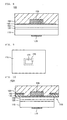
- FIG. 1 is a sectional side view showing a semiconductor light emitting device 100 according to a first embodiment
- FIG. 2 is a bottom view of FIG. 1 .
- the semiconductor light emitting device 100 includes a first conductive semiconductor layer 110, an active layer 120, a second conductive semiconductor layer 130, an electrode layer 150, a shock supporting member 155, a conductive support member 160, and a pad 170.
- the semiconductor light emitting device 100 includes a light emitting diode (LED) based on a plurality of compound semiconductors, for example, compound semiconductors of group III-V elements.
- the LED may be a color LED emitting blue, green or red light or an UV LED.
- the light emitted from the LED can be variously realized within the scope of the embodiment.
- the compound semiconductor layers include the first conductive semiconductor layer 110, the active layer 120, and the second conductive semiconductor layer 130.
- the first conductive semiconductor layer 110 may include GaN, AlN, AlGaN, InGaN, InN, InAlGaN, AlInN, AlGaAs, GaP, GaAs, GaAsP, or AlGaInP, which is a compound semiconductor of group III-V elements doped with a first conductive dopant.
- the first conductive semiconductor is an N-type semiconductor
- the first conductive dopant includes an N-type dopant such as Si, Ge, Sn, Se, or Te.
- the first conductive semiconductor layer 110 may include a single layer or a multi-layer, but the embodiment is not limited thereto.
- the pad 170 is formed under the first conductive semiconductor layer 110.
- the pad 170 may have a predetermined shape and a predetermined pattern, but the embodiment is not limited thereto.
- the pad 170 may be disposed at the center of a lower portion of the first conductive semiconductor layer 110 to supply a current.
- the pad 170 may have a circular or polygonal shape.
- the pad 170 is connected to a first electrode (not shown) formed under the first conductive semiconductor layer 110, or the first electrode may be additionally provided for the first conductive semiconductor layer 110, but the embodiment is not limited thereto.
- the pad 170 may be formed by using Ti, Al, In, Ta, Pd, Co, Ni, Si, Ge, Ag or Au, but the embodiment is not limited thereto.
- the active layer 120 is formed on the first conductive semiconductor layer 110, and may have a single quantum well structure or a multi-quantum well structure.
- the active layer 120 may have the arrangement of a well layer and a barrier layer by using compound semiconductor materials of group III-V elements.
- the active layer 120 may have the arrangement of an InGaN well layer/a GaN barrier layer.
- a conductive clad layer may be formed on and/or under the active layer 120, and may include an AlGaN-based semiconductor.
- the second conductive semiconductor layer 130 is formed on the active layer 120.
- the second conductive semiconductor layer 130 may include GaN, AlN, AlGaN, InGaN, InN, InAlGaN, AlInN, AlGaAs, GaP, GaAs, GaAsP, or AlGaInP which is a compound semiconductor of III-V elements doped with a second conductive dopant.
- the second conductive semiconductor is a P-type semiconductor
- the second conductive dopant includes a P-type dopant such as Mg or Zn.
- the second conductive semiconductor layer 130 may have a single layer or a multi-layer, but the embodiment is not limited thereto.
- the first conductive semiconductor layer 110, the active layer 120, and the second conductive semiconductor layer 130 may be defined as a light emitting structure.
- the second conductive semiconductor layer 130 may be provided thereon with an N-type semiconductor layer or a P-type semiconductor layer.
- the first conductive semiconductor layer 110 may be realized as a P-type semiconductor layer
- the second conductive semiconductor layer 130 may be realized as an N-type semiconductor layer.
- the light emitting structure may include at least one of an N-P junction structure, a P-N junction structure, an N-P-N junction structure, and a P-N-P junction structure.
- a layer or a plurality of patterns is formed between the second conductive semiconductor layer 130 and the electrode layer 150, so current distribution caused by resistance difference can be dispersed.
- the layer or the plurality of patterns includes at least one of SiO 2 , SiO x , SiO x N y , Si 3 N 4 , Al 2 O 3 , TiO 2 , ITO, IZO, IZTO, IAZO, IGZO, IGTO, AZO, ATO, GZO, IrOx, and RuOx.
- the electrode layer 150 is formed on the second conductive semiconductor layer 130.
- the electrode layer 150 may comprise at least one of a reflective electrode layer, an ohmic-contact layer, and an adhesion layer.
- the electrode layer 150 may include at least one of metallic material and oxide material.
- the reflective electrode layer may includes at least one of Ag, Ni, Al, Rh, Pd, Ir, Ru, Mg, Zn, Pt, Au, Hf, or the selective combination of the above.
- the ohmic-contact layer may include at least one at least one selected from the group consisting of ITO(indium tin oxide), IZO(indium zinc oxide), IZTO(indium zinc tin oxide), IAZO(indium aluminum zinc oxide), IGZO(indium gallium zinc oxide), IGTO(indium gallium tin oxide), AZO(aluminum zinc oxide), ATO(antimony tin oxide), GZO(gallium zinc oxide), IrOx, RuOx, RuOx/ITO, Ni/IrOx/Au, and Ni/IrOx/Au/ITO, Pt, Ni, Au, Rh and Pd.
- the adhesion layer may include at least one of Ti, Au, Sn, Ni, Cr, Ga, In, Bi, Cu, Ag, and Ta.
- the electrode layer 150 may be formed of a seed metal.
- An ohmic-contact layer (not shown) may be further formed between the electrode layer 150 and the second conductive semiconductor layer 130.
- the ohmic-contact layer may include a layer or a plurality of patterns.
- the ohmic-contact layer includes at least one selected from the group consisting of indium tin oxide (ITO), indium zinc oxide (IZO), indium zinc tin oxide (IZTO), indium aluminum zinc oxide (IAZO), indium gallium zinc oxide (IGZO), indium gallium tin oxide (IGTO), aluminum zinc oxide (AZO), antimony tin oxide (ATO), gallium zinc oxide (GZO), IrOx, RuOx, RuOx/ITO, Ni/Irox/Au and Ni/IrOx/Au/ITO, but the embodiment is not limited thereto.
- the shock supporting member 155 having a predetermined size is formed on the electrode layer 150 corresponding to the pad 170.
- the shock supporting member 155 may include a metallic material (e.g., W, Mo) having a high melting point, or a conductive metallic material having high strength.
- the shock supporting member 155 may have the minimum of thickness of about 1um or more to enhance the strength thereof.
- the shock supporting member 155 may have a thickness of about 1 um to about 10um.
- the shock supporting member 155 may have the size greater than that of the pad 170.
- the shock supporting member 155 may have a size sufficient to absorb a shock transmitted from the pad 170.
- shock supporting members 155 may be employed.
- the shock supporting member 155 minimizes the shock causing the semiconductor layers 110, 120, and 130 to be bent when the pad 170 is bonded. Accordingly, the breakage or the delamination of an LED chip causing the degradation of the chip characteristic can be prevented.
- the conductive support member 160 may be formed on both the electrode layer 150 and the buffer member 155.
- the conductive support member 160 may serve as a base substrate.
- the conductive support member 160 may be realized by using Cu, Au, Ni, Mo, Cu-W, or a carrier wafer such as Si, Ge, GaAs, ZnO, SiC, SiGe and GaN.
- the conductive support member 160 may be formed through an electrolytic plating scheme or in the form of a sheet, but the embodiment is not limited thereto.
- the conductive support member 160 may have a thickness of about 30um to about 150um, but the embodiment is not limited thereto.
- the conductive support member 160 makes contact with a peripheral portion of the second conductive semiconductor layer 130, or the electrode layer 150 may make contact with the second conductive semiconductor layer 130, but the embodiment is not limited thereto.
- FIGS. 3 to 9 are views showing the manufacturing process of the semiconductor light emitting device of FIG. 1 .
- the substrate 101 is loaded onto growth equipment, and a compound semiconductor layer of II to VI elements is formed on the substrate 101.
- the grown equipment may include an e-beam evaporator, a physical vapor deposition (PVD) apparatus, a chemical vapor deposition (CVD) apparatus, a plasma laser deposition (PLD) apparatus, a dual-type thermal evaporator, a sputtering apparatus, or a metal organic chemical vapor deposition (MOCVD) apparatus, but the embodiment is not limited thereto.
- PVD physical vapor deposition
- CVD chemical vapor deposition
- PLD plasma laser deposition
- MOCVD metal organic chemical vapor deposition
- the substrate 101 may include one selected from the group consisting of Al 2 O 3 , GaN, SiC, ZnO, Si, GaP, InP, Ga 2 O 3 , a conductive substrate, and GaAs.
- the substrate 101 may be provided on a top surface thereof with a concave-convex pattern.
- the substrate 101 may be formed thereon with a layer or a pattern formed using a compound semiconductor of group II-VI elements.
- the substrate 101 may be formed thereon with at least one of a ZnO layer (not shown), a buffer layer (not shown), and an undoped semiconductor layer (not shown).
- the buffer layer and the undoped semiconductor layer may be formed using compound semiconductors of III-V group elements.
- the buffer layer reduces a lattice constant difference from the substrate 101.
- the undoped semiconductor layer may be formed using an undoped GaN-based semiconductor.
- the substrate 101 is formed thereon with the light emitting structure including the compound semiconductor layers.
- the light emitting structure includes the first conductive semiconductor layer 110, the active layer 120, and the second conductive semiconductor layer 130.
- the first conductive semiconductor layer 110 is formed on the substrate 101, and the active layer 120 is formed on the first conductive semiconductor layer 110.
- the second conductive semiconductor layer 130 is formed on the active layer 120.
- the first conductive semiconductor layer 110 may include GaN, AlN, AlGaN, InGaN, InN, InAlGaN, AlInN, AlGaAs, GaP, GaAs, GaAsP, or AlGaInP which is a compound semiconductor of group III-V elements doped with the first conductive dopant.
- the first conductive semiconductor is an N-type semiconductor
- the first conductive dopant includes an N-type dopant such as Si, Ge, Sn, Se, or Te.
- the first conductive semiconductor layer 110 may include a single layer or a multi-layer, but the embodiment is not limited thereto.
- the active layer 120 is formed on the first conductive semiconductor layer 110, and may have a single quantum well structure or a multi-quantum well structure.
- the active layer 120 may have the arrangement of a well layer and a barrier layer using compound semiconductor materials of group III-V elements.
- the active layer 120 may have the arrangement of an InGaN well layer/a GaN barrier layer.
- a conductive clad layer may be formed on and/or under the active layer 120 and may include an AlGaN-based semiconductor.
- the second conductive semiconductor layer 130 is formed on the active layer 120.
- the second conductive semiconductor layer 130 may include GaN, AlN, AlGaN, InGaN, InN, InAlGaN, AlInN, AlGaAs, GaP, GaAs, GaAsP, or AlGaInP which is a compound semiconductor of III-V group elements doped with a second conductive dopant.
- the second conductive semiconductor is a P-type semiconductor
- the second conductive dopant includes a P-type dopant such as Mg or Zn.
- the second conductive semiconductor layer 130 may have a single layer or a multi-layer, but the embodiment is not limited thereto.
- the first conductive semiconductor layer 110, the active layer 120, and the second conductive semiconductor layer 130 may be defined as the light emitting structure 135.
- a third conductive semiconductor layer e.g., an N-type semiconductor layer or a P-type semiconductor layer
- the light emitting structure 135 may have at least one of an N-P junction structure, a P-N junction structure, an N-P-N junction structure, and a P-N-P junction structure.
- the electrode layer 150 is formed on the second conductive semiconductor layer 130 or the third conductive semiconductor layer.
- the electrode layer 150 may be formed on a portion or the entire portion of the second conductive semiconductor layer 130 by using a sputtering apparatus.
- the electrode layer 150 may be formed by using at least one material including seed material, ohmic material, reflective material and adhesion material.
- the electrode layer 150 may comprise at least one of a reflective electrode layer, an ohmic-contact layer, and an adhesion layer.
- the electrode layer 150 may include at least one of metallic material and oxide material.
- the reflective electrode layer may includes at least one of Ag, Ni, Al, Rh, Pd, Ir, Ru, Mg, Zn, Pt, Au, Hf, or the selective combination of the above.
- the ohmic-contact layer may include at least one at least one selected from the group consisting of ITO (indium tin oxide), IZO (indium zinc oxide), IZTO(indium zinc tin oxide), IAZO(indium aluminum zinc oxide), IGZO(indium gallium zinc oxide), IGTO(indium gallium tin oxide), AZO(aluminum zinc oxide), ATO(antimony tin oxide), GZO(gallium zinc oxide), IrOx, RuOx, RuOx/ITO, Ni/IrOx/Au, and Ni/IrOx/Au/iTO, Pt, Ni, Au, Rh and Pd.
- the adhesion layer may include at least one of Ti, Au, Sn, Ni, Cr, Ga, In, Bi, Cu, Ag, and Ta.
- the electrode layer 150 may be formed of a seed metal.
- a layer or a plurality of patterns is formed between the second conductive semiconductor layer 130 and the electrode layer 150, wherein the layer or the plurality of patterns includes at least one of SiO 2 , SiO x , SiO x N y , Si 3 N 4 , Al 2 O 3 , TiO 2 , ITO, IZO, IZTO, IAZO, IGZO, IGTO, AZO, ATO, GZO, IrOx, and RuOx.
- An ohmic-contact layer (not shown) may be formed between the electrode layer 150 and the second conductive semiconductor layer 130.
- the ohmic-contact layer may include a layer or a plurality of patterns.
- the ohmic-contact layer includes at least one selected from the group consisting of indium tin oxide (ITO), indium zinc oxide (IZO), indium zinc tin oxide (IZTO), indium aluminum zinc oxide (IAZO), indium gallium zinc oxide (IGZO), indium gallium tin oxide (IGTO), aluminum zinc oxide (AZO), antimony tin oxide (ATO), gallium zinc oxide (GZO), IrOx, RuOx, RuOx/ITO, Ni/IrOx/Au and Ni/IrOx/Au/ITO, but the embodiment is not limited thereto.
- the shock supporting member 155 is formed on the electrode layer 150.
- the shock supporting member 155 is formed in a first area (not shown) opened by a mask pattern on the electrode layer 150.
- the first area has a size sufficient to cover an area for the pad 170.
- the shock supporting member 155 may include a metallic material (e.g., W, Mo) having a high melting point, or a conductive metallic material having high strength.
- the shock supporting member 155 may have the minimum of thickness of about 1um or more to enhance the strength thereof.
- the shock supporting member 155 may have a thickness of about 1 um to about 10um.
- a single shock supporting member 155 or a plurality of shock supporting members 155 may be employed.
- the shock supporting member 155 may have a cylindrical shape or a polygonal column shape.
- the number or the shape of the sock absorbing members 155 depends on the number or the shape of the pads 170, but the embodiment is not limited thereto.
- FIG. 6 is a plan view of FIG. 5 .
- the shock supporting member 155 is formed in a polygonal shape at the central area of the electrode layer 150 as shown in FIG. 6 , but the embodiment is not limited thereto.
- the conductive support member 160 may be formed on the electrode layer 150 and the shock supporting member 155.
- the conductive support member 160 may serve as a base substrate.
- the conductive support member 160 may be realized by using Cu, Au, Ni, Mo, Cu-W, or a carrier wafer such as Si, Ge, GaAs, ZnO, SiC, SiGe and GaN.
- the conductive support member 160 may be formed through an electrolytic plating scheme or in the form of a sheet, but the embodiment is not limited thereto.
- the conductive support member 160 may have a thickness of about 30 um to about 150um, but the embodiment is not limited thereto.
- the conductive support member 160 After the conductive support member 160 has been formed, the conductive support member 160 is placed on a base. Thereafter, the substrate 101 is removed through a physical removing scheme and/or a chemical removing scheme.
- the physical removing scheme is a laser lift off (LLO) scheme to separate the substrate 101 by irradiating a laser beam having a predetermined wavelength band to the substrate 101.
- the chemical scheme is to separate the substrate 101 by removing an additional semiconductor layer (e.g., buffer layer) using a wet etch solution when the additional semiconductor layer is formed between the substrate 101 and the first conductive semiconductor layer 110.
- the surface of the first conductive semiconductor layer 110 having no substrate 101 may be etched through an inductively coupled plasma/reactive ion etching (ICP/RIE) scheme.
- ICP/RIE inductively coupled plasma/reactive ion etching
- a mesa etching process is performed with respect to a boundary area (e.g., channel area) between chips to remove the boundary area such that the chips are separated from each other.
- the pad 170 is formed under the first conductive semiconductor layer 110.
- the pad 170 may be formed in an open area of a mask pattern using a sputtering apparatus.
- the pad 170 may include Ti, Al, In, Ta, Pd, Co, Ni, Si, Ge, Ag or Au, but the embodiment is not limited thereto.
- the pad 170 may be formed before the mesa etching process is performed, after the mesa etching process is performed, or after the chips are separated from each other, but the embodiment is not limited thereto.
- FIG. 9 is a bottom view of FIG. 8 .
- the pad 170 is formed in a position corresponding to the position of the first shock supporting member 155.
- the pad 170 may have a circular shape or a polygonal shape.
- the pad 170 may have the shape corresponding to that of the shock supporting member 155.
- the pad 170 may have a polygonal shape, but the embodiment is not limited thereto.
- the shock supporting member 155 absorbs a shock when the pad 170 is bonded, thereby preventing the semiconductor layers 110, 120, and 130 of the light emitting structure from being bent. Accordingly, the breakage or the delamination of an LED chip, which has been finished, causing the degradation of the chip characteristic can be prevented.
- FIG. 10 is a view showing a semiconductor light emitting device 100A according to a second embodiment.
- the same reference numerals will be assigned to elements identical to those of the first embodiment, and details thereof will be omitted in order to avoid redundancy.
- the semiconductor light emitting device 100A includes the first conductive semiconductor layer 110, the active layer 120, the second conductive semiconductor layer 130, a channel layer 145, the electrode layer 150, the shock supporting member 155, the conductive support member 160, and the pad 170.
- the channel layer 145 is formed at a peripheral portion of a top surface of the second conductive semiconductor layer 130.
- the channel layer 145 may have a continuous pattern shape such as a band shape, a ring shape, or a frame shape at the peripheral portion of the second conductive semiconductor layer 130 by using a mask pattern.
- the electrode layer 150 is formed on both the channel layer 145 and the second conductive semiconductor layer 130, and the shock supporting member 155 is formed on the electrode layer 150.
- the channel layer 145 may include a transparent insulating layer or a transparent conductive layer.
- the channel layer 145 may include a metallic oxide or a metallic nitride.
- the channel layer 145 may include one selected from the group consisting of SiO 2 , SiO x , SiO x N y , Si 3 N 4 , Al 2 O 3 , TiO 2 , ITO, IZO, IZTO, IAZO, IGZO, IGTO, AZO, ATO, GZO, IrOx, RuOx, RuOx/ITO, Ni/IrOx/Au, and Ni/IrOx/Au/ITO.
- the channel layer 145 may include not only the above transparent materials, but also a material transmitting a laser beam, or a material that hardly generate fragments by a laser beam.
- the channel layer 145 can improve the bonding strength with a material of the second conductive semiconductor layer 130.
- the channel layer 145 may have a width or a thickness of about 2um or less, but the embodiment is not limited thereto.
- the channel layer 145 and the electrode layer 150 may be used as one layer, that is, a conductive layer.
- a recess 103 may surround a peripheral portion of the first conductive semiconductor layer 110, the active layer 120, and the second conductive semiconductor layer 130.
- the recess 103 may space the conductive support member 160 apart from the second conductive semiconductor layer 130.
- An outer portion of the channel layer 145 is exposed to the recess 103 of the second conductive semiconductor layer 130.
- the outer portion of the channel layer 145 extends outerward from a sidewall of the light emitting structure such that the channel layer 145 is exposed to the recess 103.
- the channel layer 145 can prevent the lateral delamination of the light emitting structure caused by a laser beam irradiated during the manufacturing process.
- the channel layer 145 can prevent metallic fragments of the electrode layer 150 or the conductive support member 160 from being introduced into the outer portion of the light emitting structure.
- the channel layer 145 can prevent the moisture infiltration into the outer portion of the light emitting structure.
- FIG. 11 is a view showing a semiconductor light emitting device 100B according to a third embodiment.
- the same reference numerals will be assigned to elements identical to those of the first embodiment, and details thereof will be omitted in order to avoid redundancy.
- the semiconductor light emitting device 100B includes the first conductive semiconductor layer 110, the active layer 120, the second conductive semiconductor layer 130, a channel layer 145 having a protrusion 147, the electrode layer 150, the shock supporting member 155, the conductive support member 160, and the pad 170.
- the channel layer 145 surrounds a peripheral portion of the top surface of the second conductive semiconductor layer 130.
- the channel layer 145 may have a continuous pattern shape such as a band shape, a ring shape, or a frame shape at the peripheral portion of the second conductive semiconductor layer 130 using a mask pattern.
- the electrode layer 150 is formed on both the channel layer 145 and the second conductive semiconductor layer 130.
- the shock supporting member 155 is formed on the electrode layer 150.
- the channel layer 145 may include a transparent insulating layer.
- the channel layer 145 may include at least one selected from the group consisting of SiO 2 , SiO x , SiO x N y , Si 3 N 4 , Al 2 O 3 , and TiO 2 .
- the protrusion 147 extends downward from an inside of the channel layer 145.
- the protrusion 147 may formed with a depth connecting to a portion of the first conductive semiconductor layer 110.
- the protrusion 147 of the channel layer 145 may have a continuous pattern shape such as a ring shape or a band shape.
- the protrusion 147 may be formed within the range of about 1 to about 5um from the sidewall of the semiconductor layers 110, 120, and 130.
- the protrusion 147 of the channel layer 145 may be divided into an active area A1 and a non-active area A2.
- the semiconductor layers 110, 120, and 130 provided in the active area A1 are normally operated, and semiconductor layers 111, 121, and 131 provided in the non-active area A2 are abnormally operated.
- the first conductive semiconductor layer 111 provided in the non-active area A2 may be partially used as a current path.
- the protrusion 147 of the channel layer 145 deactivates the left side of a chip. Accordingly, even if the semiconductor layers 111, 121, and 131 provided at the left side of the chip are shorted, the active area A1 is normally operated.
- the protrusion 147 of the channel layer 145 can prevent moisture from being infiltrated into the outer portion the chip.
- the protrusion 147 of the channel layer 145 can enhance the bonding strength with the semiconductor layers 110, 120, and 130.
- FIG. 12 is a view showing a semiconductor light emitting device 100C according to a fourth embodiment.
- the same reference numerals will be assigned to elements identical to those of the first and second embodiments, and details thereof will be omitted in order to avoid redundancy.
- the semiconductor light emitting device 100C has a structure in which the first conductive semiconductor layer 110 is formed on a bottom surface thereof with a roughness 115.
- a method for manufacturing a semiconductor light emitting device comprising: forming a light emitting structure including a first conductive semiconductor layer, an active layer, and a second conductive semiconductor layer; forming an electrode layer on the second conductive semiconductor layer; forming a shock supporting member in a first area of the electrode layer; and forming a pad under the first conductive semiconductor layer corresponding to the first area.
- the semiconductor layers can be protected from a shock caused by bonding.
- the characteristic of an LED chip can be prevented from being degraded due to the shock caused by bonding.
- the bonding strength between the semiconductor layers and another layer can be improved.
- inter-layer short can be prevented between the compound semiconductor layers.
- the compound semiconductor layers are prevented from being shorted due to the moisture infiltrated into the compound semiconductor layers.
- the semiconductor light emitting device can be reliably operated.
- the embodiments can provide a semiconductor light emitting device such as an LED.
- the light efficiency of a vertical-type semiconductor light emitting device can be improved.
- a light source to which the semiconductor light emitting device is packaged, can be applied to various fields such as illumination, indictors, and displays.
Landscapes
- Led Devices (AREA)
Applications Claiming Priority (1)
| Application Number | Priority Date | Filing Date | Title |
|---|---|---|---|
| KR1020080113227A KR100962898B1 (ko) | 2008-11-14 | 2008-11-14 | 반도체 발광소자 및 그 제조방법 |
Publications (4)
| Publication Number | Publication Date |
|---|---|
| EP2187458A2 true EP2187458A2 (fr) | 2010-05-19 |
| EP2187458A3 EP2187458A3 (fr) | 2014-12-31 |
| EP2187458B1 EP2187458B1 (fr) | 2021-07-28 |
| EP2187458B8 EP2187458B8 (fr) | 2021-09-08 |
Family
ID=41518204
Family Applications (1)
| Application Number | Title | Priority Date | Filing Date |
|---|---|---|---|
| EP09014208.4A Active EP2187458B8 (fr) | 2008-11-14 | 2009-11-13 | Dispositif électroluminescent semi-conducteur avec protection contre les chocs |
Country Status (4)
| Country | Link |
|---|---|
| US (3) | US20100109032A1 (fr) |
| EP (1) | EP2187458B8 (fr) |
| KR (1) | KR100962898B1 (fr) |
| CN (2) | CN103489971B (fr) |
Cited By (1)
| Publication number | Priority date | Publication date | Assignee | Title |
|---|---|---|---|---|
| EP2190037A3 (fr) * | 2008-11-25 | 2015-01-28 | LG Innotek Co., Ltd. | Dispositif électroluminescent semi-conducteur |
Families Citing this family (6)
| Publication number | Priority date | Publication date | Assignee | Title |
|---|---|---|---|---|
| JP4702442B2 (ja) * | 2008-12-12 | 2011-06-15 | ソニー株式会社 | 半導体発光素子及びその製造方法 |
| KR101020945B1 (ko) | 2009-12-21 | 2011-03-09 | 엘지이노텍 주식회사 | 발광 소자, 발광 소자 패키지 및 발광 소자 제조방법 |
| KR101039946B1 (ko) * | 2009-12-21 | 2011-06-09 | 엘지이노텍 주식회사 | 발광 소자, 발광 소자 패키지 및 발광 소자 제조방법 |
| US8969154B2 (en) * | 2011-08-23 | 2015-03-03 | Micron Technology, Inc. | Methods for fabricating semiconductor device structures and arrays of vertical transistor devices |
| KR101886156B1 (ko) * | 2012-08-21 | 2018-09-11 | 엘지이노텍 주식회사 | 발광소자 |
| US10317018B2 (en) * | 2015-09-01 | 2019-06-11 | Lg Innotek Co., Ltd. | Lighting device |
Citations (1)
| Publication number | Priority date | Publication date | Assignee | Title |
|---|---|---|---|---|
| KR20080113227A (ko) | 2006-03-10 | 2008-12-29 | 노키아 지멘스 네트웍스 게엠베하 운트 코. 카게 | 저작권 보호된 콘텐츠의 컴퓨터보조 검출과 신원확인을 위한 방법 및 통신 시스템 |
Family Cites Families (31)
| Publication number | Priority date | Publication date | Assignee | Title |
|---|---|---|---|---|
| JPS61121373A (ja) * | 1984-11-17 | 1986-06-09 | Oki Electric Ind Co Ltd | 面発光素子及びその製造方法 |
| US5479197A (en) * | 1991-07-11 | 1995-12-26 | Canon Kabushiki Kaisha | Head for recording apparatus |
| BE1007251A3 (nl) * | 1993-06-28 | 1995-05-02 | Philips Electronics Nv | Straling-emitterende halfgeleiderdiode en werkwijze ter vervaardiging daarvan. |
| JP2927158B2 (ja) * | 1993-09-29 | 1999-07-28 | サンケン電気株式会社 | 半導体発光素子 |
| JPH1168158A (ja) | 1997-08-20 | 1999-03-09 | Sanyo Electric Co Ltd | 窒化ガリウム系化合物半導体装置 |
| US7547921B2 (en) | 2000-08-08 | 2009-06-16 | Osram Opto Semiconductors Gmbh | Semiconductor chip for optoelectronics |
| US6740906B2 (en) * | 2001-07-23 | 2004-05-25 | Cree, Inc. | Light emitting diodes including modifications for submount bonding |
| JP4010394B2 (ja) * | 2001-12-14 | 2007-11-21 | 大日本印刷株式会社 | エレクトロルミネッセント素子 |
| US20030189215A1 (en) | 2002-04-09 | 2003-10-09 | Jong-Lam Lee | Method of fabricating vertical structure leds |
| JP2004356522A (ja) * | 2003-05-30 | 2004-12-16 | Sumitomo Chem Co Ltd | 3−5族化合物半導体、その製造方法及びその用途 |
| US7373034B2 (en) | 2004-09-02 | 2008-05-13 | Nec Corporation | Optoelectronic hybrid integrated module |
| JP3802911B2 (ja) | 2004-09-13 | 2006-08-02 | ローム株式会社 | 半導体発光装置 |
| US7514707B2 (en) | 2004-11-16 | 2009-04-07 | Showa Denko K.K. | Group III nitride semiconductor light-emitting device |
| KR20060077801A (ko) | 2004-12-31 | 2006-07-05 | 엘지전자 주식회사 | 고출력 발광 다이오드 및 그의 제조 방법 |
| US7432119B2 (en) | 2005-01-11 | 2008-10-07 | Semileds Corporation | Light emitting diode with conducting metal substrate |
| KR100597166B1 (ko) | 2005-05-03 | 2006-07-04 | 삼성전기주식회사 | 플립 칩 발광다이오드 및 그 제조방법 |
| KR100640496B1 (ko) * | 2005-11-23 | 2006-11-01 | 삼성전기주식회사 | 수직구조 질화갈륨계 발광다이오드 소자 |
| US7696523B2 (en) * | 2006-03-14 | 2010-04-13 | Lg Electronics Inc. | Light emitting device having vertical structure and method for manufacturing the same |
| KR100774198B1 (ko) | 2006-03-16 | 2007-11-08 | 엘지전자 주식회사 | 수직형 발광 소자 |
| JP4736890B2 (ja) * | 2006-03-28 | 2011-07-27 | 大日本印刷株式会社 | 有機エレクトロルミネッセンス素子 |
| WO2007148866A1 (fr) * | 2006-06-23 | 2007-12-27 | Lg Electronics Inc. | Diode électroluminescente ayant une topologie verticale et son procédé de fabrication |
| US20080121907A1 (en) | 2006-08-08 | 2008-05-29 | Way-Jze Wen | Light emitting diode and fabricating method thereof |
| JP5126875B2 (ja) * | 2006-08-11 | 2013-01-23 | シャープ株式会社 | 窒化物半導体発光素子の製造方法 |
| KR100865754B1 (ko) | 2006-08-21 | 2008-10-28 | 삼성전기주식회사 | 수직구조 질화물계 반도체 발광소자 및 그 제조방법 |
| JP2008060132A (ja) | 2006-08-29 | 2008-03-13 | Rohm Co Ltd | 半導体発光素子およびその製造方法 |
| JP4882611B2 (ja) | 2006-08-30 | 2012-02-22 | 三菱化学株式会社 | 窒化物半導体発光ダイオード素子の製造方法 |
| JP2008060331A (ja) | 2006-08-31 | 2008-03-13 | Rohm Co Ltd | 半導体発光素子 |
| US7795054B2 (en) * | 2006-12-08 | 2010-09-14 | Samsung Led Co., Ltd. | Vertical structure LED device and method of manufacturing the same |
| KR100849826B1 (ko) | 2007-03-29 | 2008-07-31 | 삼성전기주식회사 | 발광소자 및 이를 포함하는 패키지 |
| KR101371511B1 (ko) * | 2007-10-04 | 2014-03-11 | 엘지이노텍 주식회사 | 수직형 발광 소자 |
| US8188506B2 (en) | 2008-09-30 | 2012-05-29 | Lg Innotek Co., Ltd. | Semiconductor light emitting device |
-
2008
- 2008-11-14 KR KR1020080113227A patent/KR100962898B1/ko not_active Expired - Fee Related
-
2009
- 2009-11-13 US US12/618,422 patent/US20100109032A1/en not_active Abandoned
- 2009-11-13 EP EP09014208.4A patent/EP2187458B8/fr active Active
- 2009-11-16 CN CN201310373406.XA patent/CN103489971B/zh not_active Expired - Fee Related
- 2009-11-16 CN CN200910212291XA patent/CN101740686B/zh not_active Expired - Fee Related
-
2012
- 2012-07-13 US US13/548,822 patent/US9412908B2/en active Active
-
2014
- 2014-07-03 US US14/323,912 patent/US9899571B2/en not_active Ceased
Patent Citations (1)
| Publication number | Priority date | Publication date | Assignee | Title |
|---|---|---|---|---|
| KR20080113227A (ko) | 2006-03-10 | 2008-12-29 | 노키아 지멘스 네트웍스 게엠베하 운트 코. 카게 | 저작권 보호된 콘텐츠의 컴퓨터보조 검출과 신원확인을 위한 방법 및 통신 시스템 |
Cited By (1)
| Publication number | Priority date | Publication date | Assignee | Title |
|---|---|---|---|---|
| EP2190037A3 (fr) * | 2008-11-25 | 2015-01-28 | LG Innotek Co., Ltd. | Dispositif électroluminescent semi-conducteur |
Also Published As
| Publication number | Publication date |
|---|---|
| US20100109032A1 (en) | 2010-05-06 |
| US9899571B2 (en) | 2018-02-20 |
| EP2187458A3 (fr) | 2014-12-31 |
| CN101740686B (zh) | 2013-09-18 |
| KR20100054339A (ko) | 2010-05-25 |
| US20170244007A9 (en) | 2017-08-24 |
| EP2187458B8 (fr) | 2021-09-08 |
| CN103489971B (zh) | 2016-08-10 |
| US20120280268A1 (en) | 2012-11-08 |
| KR100962898B1 (ko) | 2010-06-10 |
| EP2187458B1 (fr) | 2021-07-28 |
| US9412908B2 (en) | 2016-08-09 |
| US20140332836A1 (en) | 2014-11-13 |
| CN101740686A (zh) | 2010-06-16 |
| CN103489971A (zh) | 2014-01-01 |
Similar Documents
| Publication | Publication Date | Title |
|---|---|---|
| US7947997B2 (en) | Semiconductor light emitting device | |
| KR101081193B1 (ko) | 반도체 발광소자 및 그 제조방법 | |
| US8022435B2 (en) | Semiconductor light emitting device | |
| US7999282B2 (en) | Semiconductor light emitting device | |
| KR101014013B1 (ko) | 반도체 발광소자 및 그 제조방법 | |
| US8680555B2 (en) | Semiconductor light emitting device | |
| US9899571B2 (en) | Semiconductor light emitting device | |
| US20110260207A1 (en) | Semiconductor light emitting device | |
| EP2290709B1 (fr) | Dispositif électroluminescent semi-conducteur | |
| US8101958B2 (en) | Semiconductor light-emitting device | |
| EP2224502B1 (fr) | Dispositif électroluminescent à semi-conducteurs | |
| USRE48774E1 (en) | Semiconductor light emitting device | |
| KR101500027B1 (ko) | 반도체 발광소자 | |
| US8785963B2 (en) | Method of manufacturing semiconductor light emitting device |
Legal Events
| Date | Code | Title | Description |
|---|---|---|---|
| PUAI | Public reference made under article 153(3) epc to a published international application that has entered the european phase |
Free format text: ORIGINAL CODE: 0009012 |
|
| AK | Designated contracting states |
Kind code of ref document: A2 Designated state(s): AT BE BG CH CY CZ DE DK EE ES FI FR GB GR HR HU IE IS IT LI LT LU LV MC MK MT NL NO PL PT RO SE SI SK SM TR |
|
| AX | Request for extension of the european patent |
Extension state: AL BA RS |
|
| RAP1 | Party data changed (applicant data changed or rights of an application transferred) |
Owner name: LG INNOTEK CO., LTD. |
|
| 17P | Request for examination filed |
Effective date: 20140328 |
|
| RBV | Designated contracting states (corrected) |
Designated state(s): AT BE BG CH CY CZ DE DK EE ES FI FR GB GR HR HU IE IS IT LI LT LU LV MC MK MT NL NO PL PT RO SE SI SK SM TR |
|
| RAP1 | Party data changed (applicant data changed or rights of an application transferred) |
Owner name: LG INNOTEK CO., LTD. |
|
| PUAL | Search report despatched |
Free format text: ORIGINAL CODE: 0009013 |
|
| AK | Designated contracting states |
Kind code of ref document: A3 Designated state(s): AT BE BG CH CY CZ DE DK EE ES FI FR GB GR HR HU IE IS IT LI LT LU LV MC MK MT NL NO PL PT RO SE SI SK SM TR |
|
| AX | Request for extension of the european patent |
Extension state: AL BA RS |
|
| RIC1 | Information provided on ipc code assigned before grant |
Ipc: H01L 33/00 20100101ALN20141126BHEP Ipc: H01L 33/62 20100101AFI20141126BHEP Ipc: H01L 33/40 20100101ALN20141126BHEP Ipc: H01L 33/38 20100101ALI20141126BHEP |
|
| RAP1 | Party data changed (applicant data changed or rights of an application transferred) |
Owner name: LG INNOTEK CO., LTD. |
|
| STAA | Information on the status of an ep patent application or granted ep patent |
Free format text: STATUS: EXAMINATION IS IN PROGRESS |
|
| 17Q | First examination report despatched |
Effective date: 20190509 |
|
| GRAP | Despatch of communication of intention to grant a patent |
Free format text: ORIGINAL CODE: EPIDOSNIGR1 |
|
| STAA | Information on the status of an ep patent application or granted ep patent |
Free format text: STATUS: GRANT OF PATENT IS INTENDED |
|
| RIC1 | Information provided on ipc code assigned before grant |
Ipc: H01L 33/62 20100101AFI20210128BHEP Ipc: H01L 33/00 20100101ALN20210128BHEP Ipc: H01L 33/38 20100101ALI20210128BHEP |
|
| INTG | Intention to grant announced |
Effective date: 20210211 |
|
| GRAS | Grant fee paid |
Free format text: ORIGINAL CODE: EPIDOSNIGR3 |
|
| GRAA | (expected) grant |
Free format text: ORIGINAL CODE: 0009210 |
|
| STAA | Information on the status of an ep patent application or granted ep patent |
Free format text: STATUS: THE PATENT HAS BEEN GRANTED |
|
| AK | Designated contracting states |
Kind code of ref document: B1 Designated state(s): AT BE BG CH CY CZ DE DK EE ES FI FR GB GR HR HU IE IS IT LI LT LU LV MC MK MT NL NO PL PT RO SE SI SK SM TR |
|
| REG | Reference to a national code |
Ref country code: DE Ref legal event code: R081 Ref document number: 602009063911 Country of ref document: DE Owner name: SUZHOU LEKIN SEMICONDUCTOR CO., LTD., TAICANG , CN Free format text: FORMER OWNER: LG INNOTEK CO., LTD., SEOUL, KR Ref country code: GB Ref legal event code: FG4D |
|
| REG | Reference to a national code |
Ref country code: CH Ref legal event code: EP |
|
| REG | Reference to a national code |
Ref country code: AT Ref legal event code: REF Ref document number: 1415498 Country of ref document: AT Kind code of ref document: T Effective date: 20210815 |
|
| REG | Reference to a national code |
Ref country code: CH Ref legal event code: PK Free format text: BERICHTIGUNG B8 |
|
| RAP2 | Party data changed (patent owner data changed or rights of a patent transferred) |
Owner name: SUZHOU LEKIN SEMICONDUCTOR CO., LTD. |
|
| REG | Reference to a national code |
Ref country code: IE Ref legal event code: FG4D |
|
| REG | Reference to a national code |
Ref country code: DE Ref legal event code: R096 Ref document number: 602009063911 Country of ref document: DE |
|
| REG | Reference to a national code |
Ref country code: LT Ref legal event code: MG9D |
|
| REG | Reference to a national code |
Ref country code: NL Ref legal event code: MP Effective date: 20210728 |
|
| REG | Reference to a national code |
Ref country code: AT Ref legal event code: MK05 Ref document number: 1415498 Country of ref document: AT Kind code of ref document: T Effective date: 20210728 |
|
| PG25 | Lapsed in a contracting state [announced via postgrant information from national office to epo] |
Ref country code: HR Free format text: LAPSE BECAUSE OF FAILURE TO SUBMIT A TRANSLATION OF THE DESCRIPTION OR TO PAY THE FEE WITHIN THE PRESCRIBED TIME-LIMIT Effective date: 20210728 Ref country code: SE Free format text: LAPSE BECAUSE OF FAILURE TO SUBMIT A TRANSLATION OF THE DESCRIPTION OR TO PAY THE FEE WITHIN THE PRESCRIBED TIME-LIMIT Effective date: 20210728 Ref country code: BG Free format text: LAPSE BECAUSE OF FAILURE TO SUBMIT A TRANSLATION OF THE DESCRIPTION OR TO PAY THE FEE WITHIN THE PRESCRIBED TIME-LIMIT Effective date: 20211028 Ref country code: AT Free format text: LAPSE BECAUSE OF FAILURE TO SUBMIT A TRANSLATION OF THE DESCRIPTION OR TO PAY THE FEE WITHIN THE PRESCRIBED TIME-LIMIT Effective date: 20210728 Ref country code: LT Free format text: LAPSE BECAUSE OF FAILURE TO SUBMIT A TRANSLATION OF THE DESCRIPTION OR TO PAY THE FEE WITHIN THE PRESCRIBED TIME-LIMIT Effective date: 20210728 Ref country code: ES Free format text: LAPSE BECAUSE OF FAILURE TO SUBMIT A TRANSLATION OF THE DESCRIPTION OR TO PAY THE FEE WITHIN THE PRESCRIBED TIME-LIMIT Effective date: 20210728 Ref country code: FI Free format text: LAPSE BECAUSE OF FAILURE TO SUBMIT A TRANSLATION OF THE DESCRIPTION OR TO PAY THE FEE WITHIN THE PRESCRIBED TIME-LIMIT Effective date: 20210728 Ref country code: NO Free format text: LAPSE BECAUSE OF FAILURE TO SUBMIT A TRANSLATION OF THE DESCRIPTION OR TO PAY THE FEE WITHIN THE PRESCRIBED TIME-LIMIT Effective date: 20211028 Ref country code: NL Free format text: LAPSE BECAUSE OF FAILURE TO SUBMIT A TRANSLATION OF THE DESCRIPTION OR TO PAY THE FEE WITHIN THE PRESCRIBED TIME-LIMIT Effective date: 20210728 Ref country code: PT Free format text: LAPSE BECAUSE OF FAILURE TO SUBMIT A TRANSLATION OF THE DESCRIPTION OR TO PAY THE FEE WITHIN THE PRESCRIBED TIME-LIMIT Effective date: 20211129 |
|
| PG25 | Lapsed in a contracting state [announced via postgrant information from national office to epo] |
Ref country code: PL Free format text: LAPSE BECAUSE OF FAILURE TO SUBMIT A TRANSLATION OF THE DESCRIPTION OR TO PAY THE FEE WITHIN THE PRESCRIBED TIME-LIMIT Effective date: 20210728 Ref country code: LV Free format text: LAPSE BECAUSE OF FAILURE TO SUBMIT A TRANSLATION OF THE DESCRIPTION OR TO PAY THE FEE WITHIN THE PRESCRIBED TIME-LIMIT Effective date: 20210728 Ref country code: GR Free format text: LAPSE BECAUSE OF FAILURE TO SUBMIT A TRANSLATION OF THE DESCRIPTION OR TO PAY THE FEE WITHIN THE PRESCRIBED TIME-LIMIT Effective date: 20211029 |
|
| PG25 | Lapsed in a contracting state [announced via postgrant information from national office to epo] |
Ref country code: DK Free format text: LAPSE BECAUSE OF FAILURE TO SUBMIT A TRANSLATION OF THE DESCRIPTION OR TO PAY THE FEE WITHIN THE PRESCRIBED TIME-LIMIT Effective date: 20210728 |
|
| REG | Reference to a national code |
Ref country code: DE Ref legal event code: R097 Ref document number: 602009063911 Country of ref document: DE |
|
| PG25 | Lapsed in a contracting state [announced via postgrant information from national office to epo] |
Ref country code: SM Free format text: LAPSE BECAUSE OF FAILURE TO SUBMIT A TRANSLATION OF THE DESCRIPTION OR TO PAY THE FEE WITHIN THE PRESCRIBED TIME-LIMIT Effective date: 20210728 Ref country code: SK Free format text: LAPSE BECAUSE OF FAILURE TO SUBMIT A TRANSLATION OF THE DESCRIPTION OR TO PAY THE FEE WITHIN THE PRESCRIBED TIME-LIMIT Effective date: 20210728 Ref country code: RO Free format text: LAPSE BECAUSE OF FAILURE TO SUBMIT A TRANSLATION OF THE DESCRIPTION OR TO PAY THE FEE WITHIN THE PRESCRIBED TIME-LIMIT Effective date: 20210728 Ref country code: EE Free format text: LAPSE BECAUSE OF FAILURE TO SUBMIT A TRANSLATION OF THE DESCRIPTION OR TO PAY THE FEE WITHIN THE PRESCRIBED TIME-LIMIT Effective date: 20210728 Ref country code: CZ Free format text: LAPSE BECAUSE OF FAILURE TO SUBMIT A TRANSLATION OF THE DESCRIPTION OR TO PAY THE FEE WITHIN THE PRESCRIBED TIME-LIMIT Effective date: 20210728 |
|
| PLBE | No opposition filed within time limit |
Free format text: ORIGINAL CODE: 0009261 |
|
| STAA | Information on the status of an ep patent application or granted ep patent |
Free format text: STATUS: NO OPPOSITION FILED WITHIN TIME LIMIT |
|
| PG25 | Lapsed in a contracting state [announced via postgrant information from national office to epo] |
Ref country code: MC Free format text: LAPSE BECAUSE OF FAILURE TO SUBMIT A TRANSLATION OF THE DESCRIPTION OR TO PAY THE FEE WITHIN THE PRESCRIBED TIME-LIMIT Effective date: 20210728 |
|
| REG | Reference to a national code |
Ref country code: CH Ref legal event code: PL |
|
| 26N | No opposition filed |
Effective date: 20220429 |
|
| PG25 | Lapsed in a contracting state [announced via postgrant information from national office to epo] |
Ref country code: LU Free format text: LAPSE BECAUSE OF NON-PAYMENT OF DUE FEES Effective date: 20211113 Ref country code: IT Free format text: LAPSE BECAUSE OF FAILURE TO SUBMIT A TRANSLATION OF THE DESCRIPTION OR TO PAY THE FEE WITHIN THE PRESCRIBED TIME-LIMIT Effective date: 20210728 Ref country code: BE Free format text: LAPSE BECAUSE OF NON-PAYMENT OF DUE FEES Effective date: 20211130 |
|
| REG | Reference to a national code |
Ref country code: BE Ref legal event code: MM Effective date: 20211130 |
|
| PG25 | Lapsed in a contracting state [announced via postgrant information from national office to epo] |
Ref country code: LI Free format text: LAPSE BECAUSE OF NON-PAYMENT OF DUE FEES Effective date: 20211130 Ref country code: CH Free format text: LAPSE BECAUSE OF NON-PAYMENT OF DUE FEES Effective date: 20211130 |
|
| PG25 | Lapsed in a contracting state [announced via postgrant information from national office to epo] |
Ref country code: IE Free format text: LAPSE BECAUSE OF NON-PAYMENT OF DUE FEES Effective date: 20211113 |
|
| PG25 | Lapsed in a contracting state [announced via postgrant information from national office to epo] |
Ref country code: HU Free format text: LAPSE BECAUSE OF FAILURE TO SUBMIT A TRANSLATION OF THE DESCRIPTION OR TO PAY THE FEE WITHIN THE PRESCRIBED TIME-LIMIT; INVALID AB INITIO Effective date: 20091113 Ref country code: CY Free format text: LAPSE BECAUSE OF FAILURE TO SUBMIT A TRANSLATION OF THE DESCRIPTION OR TO PAY THE FEE WITHIN THE PRESCRIBED TIME-LIMIT Effective date: 20210728 |
|
| PGFP | Annual fee paid to national office [announced via postgrant information from national office to epo] |
Ref country code: GB Payment date: 20231006 Year of fee payment: 15 |
|
| PGFP | Annual fee paid to national office [announced via postgrant information from national office to epo] |
Ref country code: FR Payment date: 20231009 Year of fee payment: 15 Ref country code: DE Payment date: 20231003 Year of fee payment: 15 |
|
| PG25 | Lapsed in a contracting state [announced via postgrant information from national office to epo] |
Ref country code: MK Free format text: LAPSE BECAUSE OF FAILURE TO SUBMIT A TRANSLATION OF THE DESCRIPTION OR TO PAY THE FEE WITHIN THE PRESCRIBED TIME-LIMIT Effective date: 20210728 |
|
| PG25 | Lapsed in a contracting state [announced via postgrant information from national office to epo] |
Ref country code: TR Free format text: LAPSE BECAUSE OF FAILURE TO SUBMIT A TRANSLATION OF THE DESCRIPTION OR TO PAY THE FEE WITHIN THE PRESCRIBED TIME-LIMIT Effective date: 20210728 |
|
| PG25 | Lapsed in a contracting state [announced via postgrant information from national office to epo] |
Ref country code: MT Free format text: LAPSE BECAUSE OF FAILURE TO SUBMIT A TRANSLATION OF THE DESCRIPTION OR TO PAY THE FEE WITHIN THE PRESCRIBED TIME-LIMIT Effective date: 20210728 |
|
| REG | Reference to a national code |
Ref country code: DE Ref legal event code: R079 Ref document number: 602009063911 Country of ref document: DE Free format text: PREVIOUS MAIN CLASS: H01L0033620000 Ipc: H10H0020857000 |
|
| REG | Reference to a national code |
Ref country code: DE Ref legal event code: R119 Ref document number: 602009063911 Country of ref document: DE |
|
| GBPC | Gb: european patent ceased through non-payment of renewal fee |
Effective date: 20241113 |
|
| PG25 | Lapsed in a contracting state [announced via postgrant information from national office to epo] |
Ref country code: DE Free format text: LAPSE BECAUSE OF NON-PAYMENT OF DUE FEES Effective date: 20250603 |
|
| PG25 | Lapsed in a contracting state [announced via postgrant information from national office to epo] |
Ref country code: GB Free format text: LAPSE BECAUSE OF NON-PAYMENT OF DUE FEES Effective date: 20241113 |
|
| PG25 | Lapsed in a contracting state [announced via postgrant information from national office to epo] |
Ref country code: FR Free format text: LAPSE BECAUSE OF NON-PAYMENT OF DUE FEES Effective date: 20241130 |