EP2187621A2 - Vorrichtung und Verfahren zur Bildverarbeitung - Google Patents
Vorrichtung und Verfahren zur Bildverarbeitung Download PDFInfo
- Publication number
- EP2187621A2 EP2187621A2 EP09175500A EP09175500A EP2187621A2 EP 2187621 A2 EP2187621 A2 EP 2187621A2 EP 09175500 A EP09175500 A EP 09175500A EP 09175500 A EP09175500 A EP 09175500A EP 2187621 A2 EP2187621 A2 EP 2187621A2
- Authority
- EP
- European Patent Office
- Prior art keywords
- image signal
- signal
- noise
- subsidiary
- main image
- Prior art date
- Legal status (The legal status is an assumption and is not a legal conclusion. Google has not performed a legal analysis and makes no representation as to the accuracy of the status listed.)
- Granted
Links
Images




Classifications
-
- H—ELECTRICITY
- H04—ELECTRIC COMMUNICATION TECHNIQUE
- H04N—PICTORIAL COMMUNICATION, e.g. TELEVISION
- H04N23/00—Cameras or camera modules comprising electronic image sensors; Control thereof
- H04N23/80—Camera processing pipelines; Components thereof
- H04N23/81—Camera processing pipelines; Components thereof for suppressing or minimising disturbance in the image signal generation
-
- H—ELECTRICITY
- H04—ELECTRIC COMMUNICATION TECHNIQUE
- H04N—PICTORIAL COMMUNICATION, e.g. TELEVISION
- H04N23/00—Cameras or camera modules comprising electronic image sensors; Control thereof
- H04N23/10—Cameras or camera modules comprising electronic image sensors; Control thereof for generating image signals from different wavelengths
- H04N23/11—Cameras or camera modules comprising electronic image sensors; Control thereof for generating image signals from different wavelengths for generating image signals from visible and infrared light wavelengths
-
- H—ELECTRICITY
- H04—ELECTRIC COMMUNICATION TECHNIQUE
- H04N—PICTORIAL COMMUNICATION, e.g. TELEVISION
- H04N23/00—Cameras or camera modules comprising electronic image sensors; Control thereof
- H04N23/80—Camera processing pipelines; Components thereof
- H04N23/84—Camera processing pipelines; Components thereof for processing colour signals
Definitions
- the following description relates to a technology to process an image, and more particularly, to reduce noise and restore details of an image.
- an image acquiring apparatus acquires and processes light reflected from an object to display an image of the object to a user.
- Recent developments in information communication technology have led to the distribution of various image acquiring apparatuses such as digital cameras.
- a digital camera includes an image sensor to absorb light reflected from an object and to convert the light into an electrical signal.
- the digital camera processes the image signal acquired from the image sensor to display an image.
- the digital camera selectively absorbs a specific wavelength of visible light through a filter disposed in front of the image sensor.
- image distortion may occur due to noise.
- high-frequency/detail components may be distorted due to low sensitivity and noise, resulting in noticeable picture-quality deterioration.
- an image acquiring apparatus absorbing a wavelength of infrared light
- An example of such apparatus is an infrared camera, and typically, an image acquired from the infrared camera has no color information but has relatively high sensitivity.
- an image processing apparatus including one of one or more modules and one or more devices, or including a combination thereof, configured to receive a main image signal and a subsidiary image signal, remove or reduce noise of the main image signal using information about the subsidiary image signal, and restore details of the main image signal using high-frequency components of the subsidiary image signal.
- the main image signal may be a color signal or an RGB signal
- the subsidiary image signal may be a signal composed of all wavelengths of visible light, a signal composed of all wavelengths of visible light and wavelengths of infrared light, or a signal composed of all wavelengths of visible light and wavelengths of ultra-violet light.
- the information about the subsidiary image signal may be information about a noise characteristic of the subsidiary image signal.
- the image processing apparatus may be one of a software system and an image processing chip, or a combination thereof, the one or modules may be one or more software modules of the software system, and the one or more devices may be one or more hardware devices of the image processing chip.
- an image processing apparatus including a first noise reduction unit configured to remove or reduce noise of a subsidiary image signal, a second noise reduction unit configured to remove or reduce noise of a main image signal using information about the subsidiary image signal, a high-frequency extractor configured to extract high-frequency components of the subsidiary image signal from which the noise has been removed or reduced, and a detail restoring unit configured to restore details of the main image signal using the high-frequency components.
- the main image signal may be a color signal or an RGB signal
- the subsidiary image signal may be a signal composed of all wavelengths of visible light, a signal composed of all wavelengths of visible light and wavelengths of infrared light, and a signal composed of all wavelengths of visible light and wavelengths of ultra-violet light.
- the first noise reduction unit may include a profile which reflects a noise characteristic of the subsidiary image signal.
- the information about the subsidiary image signal may be information about a noise characteristic of the subsidiary image signal.
- the restoring unit may restore the details of the main image signal by composing the main image signal from which the noise has been removed or reduced, with the high-frequency components.
- the image processing apparatus may further include a detail extractor configured to receive an output signal of the high-frequency extractor and an output signal of the second noise reduction unit, extract details from the high-frequency components, and apply the details to the detail restoring unit.
- a detail extractor configured to receive an output signal of the high-frequency extractor and an output signal of the second noise reduction unit, extract details from the high-frequency components, and apply the details to the detail restoring unit.
- the detail extractor may distinguish the details from noise in the high-frequency components based on brightness.
- the image processing apparatus may further include a ring distortion reducing unit configured to remove or reduce ring distortion from an output signal of the detail restoring unit.
- an image processing apparatus including a first noise reduction unit configured to remove or reduce noise of a subsidiary image signal, a second noise reduction unit configured to remove or reduce noise of a main image signal, using information about the subsidiary image signal or information about the main image signal, a high-frequency extractor configured to extract high-frequency components of the subsidiary image signal from which the noise has been removed or reduced, and a detail restoring unit configured to restore details of the main image signal using the high-frequency components.
- the main image signal may be a color signal or an RGB signal
- the subsidiary image signal may be a signal composed of all wavelengths of visible light, a signal composed of all wavelengths of visible light and wavelengths of infrared light, or a signal composed of all wavelengths of visible light and wavelengths of ultra-violet light.
- the image processing apparatus may further include a switch unit configured to compare an image characteristic of the main image signal with an image characteristic of the subsidiary image signal, and apply the information about the subsidiary image signal to the second noise reduction unit or blocking the information about the subsidiary image signal from being applied to the second noise reduction unit based on the comparison.
- a switch unit configured to compare an image characteristic of the main image signal with an image characteristic of the subsidiary image signal, and apply the information about the subsidiary image signal to the second noise reduction unit or blocking the information about the subsidiary image signal from being applied to the second noise reduction unit based on the comparison.
- the first noise reduction unit may include a profile which reflects a noise characteristic of the subsidiary image signal.
- the information about the subsidiary image signal may be information about a noise characteristic of the subsidiary image signal.
- the image processing apparatus may further include a detail extractor configured to receive an output signal of the high-frequency extractor and an output signal of the second noise reduction unit, extract details from the high-frequency components, and apply the details to the detail restoring unit.
- a detail extractor configured to receive an output signal of the high-frequency extractor and an output signal of the second noise reduction unit, extract details from the high-frequency components, and apply the details to the detail restoring unit.
- the detail extractor may distinguish the details from noise in the high-frequency components based on brightness.
- the image processing apparatus may further include a ring distortion reducing unit configured to remove or reduce ring distortion from an output signal of the detail restoring unit.
- an image processing method for use in an image processing apparatus including acquiring a main image signal and a subsidiary image signal with sensitivity relatively higher than that of the main image signal, removing or reducing noise of the subsidiary image signal, removing or reducing noise of the main image signal, using information about the subsidiary image signal or information about the main image signal, extracting high-frequency components from the subsidiary image signal from which the noise is removed or reduced, and restoring details of the main image signal from which the noise has been removed or reduced, using the high-frequency components.
- the main image signal may be a color signal or an RGB signal
- the subsidiary image signal may be a signal composed of all wavelengths of visible light, a signal composed of all wavelengths of visible light and wavelengths of infrared light, or a signal composed of all wavelengths of visible light and wavelengths of ultra-violet light.
- the removing or reducing the noise of the main image signal may include removing or reducing the noise of the main image signal, using the information about the subsidiary image signal or the information about the main image signal based on a comparison of an image characteristic of the main image signal with an image characteristic of the subsidiary image signal.
- the image processing method may further include extracting details from the high-frequency components by distinguishing the details from noise in the high-frequency components.
- the image processing method may further include removing or reducing ring distortion from a signal resulting from the restoring of the details of the main image signal from which the noise has been removed or reduced.
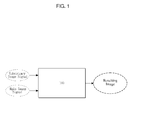
- FIG. 1 shows a configuration of an exemplary image processing apparatus 100.
- the image processing apparatus 100 may be a software system or an image processing chip that may be installed in an image acquiring apparatus, such as a digital camera, a set-top box, and the like.
- the image processing apparatus 100 receives a main image signal and a subsidiary image signal, processes the signals, and outputs the resulting image. At this time, the processing may include a process of removing or reducing noise of the signals and restoring details so as to obtain a high-sensitivity image.
- the main image signal may include color information.
- the main image signal may be an RGB signal or a color signal corresponding to specific wavelengths in a light spectrum.
- the subsidiary image signal may have no color information and have sensitivity that is relatively higher than that of the main image signal.
- the subsidiary image signal may be a white signal (W) composed of all wavelengths of visible light, a white and near infrared signal (W+NIR) composed of all wavelengths of visible light and wavelengths of near infrared light, or a white and ultraviolet signal composed of all wavelengths of visible light and wavelengths of ultra-violet light in the light spectrum.
- FIGS. 2A and 2B show spectrums of a main image signal and a subsidiary image signal.
- FIG. 2A shows the spectrum corresponding to an RGB signal, that is, the main image signal
- FIG. 2B shows the spectrum corresponding to visible light and near infrared light, that is, the subsidiary image signal.
- the subsidiary image signal has a wavelength range that is wider than that of the main image signal.
- a color image obtained in a low illumination environment may have significant noise due to an insufficient exposure time, signal amplification, and so on.
- an image signal having infrared light can form a relatively high-sensitivity image as the image signal is generated from light having a wavelength range wider than visible light. That is, referring to FIGS. 2A and 2B , if advantages of the main image signal and the subsidiary image signal having different characteristics are combined, a high-sensitivity image can be obtained.
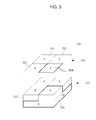
- FIG. 3 shows a structure of an exemplary image sensor 300 to acquire a main image signal and a subsidiary image signal.
- the image sensor 300 includes a filter unit 301 and a sensor unit 302.
- the filter unit 301 includes a color part 303 and a transparent part 304.
- the sensor unit 302 includes a first light-receiving part 305 formed below the color part 303 and a second light-receiving part 306 formed below the transparent part 304. A part of the second light-receiving part 306 may be formed below the first light-receiving part 305.
- the color part 303 may transmit only light belonging to a specific wavelength range having color information among visible light, so as to generate the main image signal, for example, an RGB signal using the red (R) - green (G) - blue (B) color part 303.
- the transparent part 304 may transmit all wavelengths of light, so that an upper portion of the second light-receiving part 306 can sense light, for example, a white signal composed of all wavelengths of visible light, and a lower portion of the second light-receiving part 306 can sense infrared light, for example, an NIR signal having a wavelength longer than that of visible light.
- the main image signal can be acquired by the first light-receiving part 305 and the subsidiary image signal can be acquired by the second light-receiving part 306.
- FIG. 4 shows an exemplary image processing apparatus 400.
- the image processing apparatus 400 includes a first noise reduction unit 401, a second noise reduction unit 402, a high-frequency extractor 403, and a detail restoring unit 404.
- the first noise reduction unit 401 receives a subsidiary image signal, and removes or reduces noise of the subsidiary image signal.
- the subsidiary image signal may be a signal (W) with relatively high sensitivity composed of all bandwidths of visible light, a signal (W+NIR) composed of all wavelengths of visible light and wavelengths of near infrared light, or a signal (W+UV) composed of all wavelengths of visible light and wavelengths of ultra-violet light.
- W signal
- W+NIR signal
- W+UV signal
- a low-pass filter may be used to remove or reduce the noise of the subsidiary image signal.
- the first noise reduction unit 401 may include a profile which reflects noise characteristics of the subsidiary image signal.
- a noise profile can be obtained through an experiment by noise modeling. By using the first noise reduction unit 401 having such a noise profile, errors in estimating noise of the subsidiary image signal may be reduced, thereby enhancing performance, and time taken to estimate the noise of the subsidiary image signal may be reduced.
- the second noise reduction unit 402 receives a main image signal, and removes or reduces noise of the main image signal using information about the subsidiary image signal.
- the main image signal may be a color signal or an RGB signal with relatively low sensitivity.
- the information about the subsidiary image signal may be information about noise characteristics of the subsidiary image signal.
- Equation 1 y represents a main image signal, n represents noise information, and x 1 represents information about an image from which noise has been removed or reduced. That is, removing or reducing noise from the main image signal y is to obtain x 1 in Equation 1.
- Equation 2 A Minimum Mean Square Error (MMSE) estimation scheme may be applied on Equation 2 to obtain X 1 , and X 1 may be expressed by Equation 3 below.
- MMSE Minimum Mean Square Error
- Equation 3 ⁇ 2 s represents variance of the signal and ⁇ 2 n represents variance of the noise.
- the ⁇ 2 s value is estimated using noise characteristics of a subsidiary image signal received by the first noise reduction unit 401. In this exemplary way, the noise of the main image signal can be removed or reduced using the information about the subsidiary image signal.
- Equations 1, 2 and 3 are used as an illustration to explain the exemplary method of removing or reducing noise of the main image signal using the information about the subsidiary image signal.
- a bilateral filter scheme using noise characteristics of the subsidiary image signal calculated by the first noise reduction unit 401 may be used to remove or reduce the noise of the main image signal.
- the high-frequency extractor 403 extracts high-frequency components of the subsidiary image signal from the output of the first noise reduction unit 401.
- the high-frequency extractor 403 extracts the high-frequency components of the subsidiary image signal by performing high-pass filtering on the subsidiary image signal from which noise has been removed or reduced.
- the detail restoring unit 404 receives the output of the second noise reduction unit 402, and restores details of the main image signal using the high-frequency components of the subsidiary image signal. For example, by composing the main image signal from which noise has been removed or reduced, which is the output of the second noise reduction unit 402, with the high-frequency components of the subsidiary image signal extracted by the high-frequency extractor 403, details of the main image signal may be restored.
- the detail restoring unit 404 may have a function of suppressing amplification of noise.
- FIG. 5 shows another exemplary image processing apparatus 500.
- the image processing apparatus 500 includes a detail extractor 501, a ring distortion reducing unit 502, and a detail restoring unit 504.
- the first noise reduction unit 401, the second noise reduction unit 402, and the high-frequency extractor 403 illustrated in FIG. 5 are substantially the same as the corresponding components illustrated in FIG. 4 , and accordingly, further descriptions thereof will be omitted for conciseness.
- the detail extractor 501 receives the outputs of the high-frequency extractor 403 and the second noise reduction unit 402, distinguishes details from noise in high-frequency components of a subsidiary image signal to extract the details, and outputs the details to the detail restoring unit 504.
- the detail extractor 501 is used to distinguish details from noise in the high-frequency components of the subsidiary image signal and apply only the details components to the detail restoring unit 504. For example, the distinction of details and noise may be based on brightness.
- the detail restoring unit 504 receives the outputs of the second noise reduction unit 402 and the detail extractor 501, and restores the details of the main image signal.
- the ring distorting reducing unit 502 receives the output signal of the detail restoring unit 504 and removes or reduces ring distortion of the output signal.
- the ring distortion reducing unit 502 removes or reduces the ring distortion using Maximum Likelihood Estimation (MLE) through dual clustering on the main image signal and subsidiary image signal from which noise has been removed or reduced.
- MLE Maximum Likelihood Estimation
- FIG. 6 shows yet another exemplary image processing apparatus 600.
- the image processing apparatus 600 includes a first noise reduction unit 601, a second noise reduction unit 602, a high-frequency extractor 603, a detail restoring unit 604, and a switch unit 605.
- the first noise reduction unit 601 removes or reduces noise of a subsidiary image signal.
- the subsidiary image signal may be a signal (W) with relatively high sensitivity composed of all bandwidths of visible light, a white and near infrared signal (W+NIR) composed of all wavelengths of visible light and wavelengths of near infrared light, or a white and ultraviolet signal (W+UV) composed of all wavelengths of visible light and wavelengths of ultra-violet light.
- W+NIR white and near infrared signal
- W+UV white and ultraviolet signal
- Various methods can be used to remove or reduce the noise of the subsidiary image signal.
- a low-pass filter may be used to remove or reduce the noise of the subsidiary image signal.
- the first noise reduction unit 601 may include a profile which reflects noise characteristics of the subsidiary image signal.
- the second noise reduction unit 602 receives a main image signal, and removes or reduces noise of the main image signal using information about the subsidiary image signal or information about the main image signal.
- the second noise reduction unit 602 may remove or reduce the noise of the main image signal using Equations 1, 2 and 3 described above.
- the second noise reducing unit 602 may estimate a value of ⁇ 2 s (see Equation 3), which is variance of the signal, using noise characteristics of the subsidiary image signal received by the first noise reduction unit 601 or using only the main image signal's own information. For example, if the image characteristics of the main image signal and the subsidiary image signal are the same or similar to each other, the value of ⁇ 2 s may be estimated using information about the subsidiary image signal, and if the image characteristics of the main image signal and the subsidiary image signal are different from each other, the value of ⁇ 2 s may be estimated using only the main image signal's own information.
- the switch unit 605 is used to compare the image characteristics of the main image signal with the image characteristics of the subsidiary image signal.
- the switch unit 605 receives the main image signal and the subsidiary image signal, compares the image characteristics of the main image signal with the image characteristics of the subsidiary image signal, and applies information about the subsidiary image signal output from the first noise reduction unit 601 to the second noise reduction unit 602 or blocks the information about the subsidiary image signal from being applied to the second noise reduction unit 602, according to the result of the comparison.
- the high-frequency extractor 603 performs high-pass filtering on the subsidiary image signal from which noise has been removed or reduced, and extracts high-frequency components from the subsidiary image signal.
- the detail restoring unit 604 receives the output of the second noise reduction unit 602, and restores details of the main image signal using the high-frequency components of the subsidiary image signal.
- the detail restoring unit 404 may also have a function of suppressing amplification of noise.
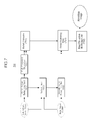
- FIG. 7 shows still another exemplary image processing apparatus 700.
- the image processing apparatus 700 includes a detail extractor 701, a ring distortion reducing unit 702, and a detail restoring unit 704.
- the first noise reduction unit 601, the second noise reduction unit 602, the high-frequency extractor 603, and the switch unit 605 are substantially the same as the corresponding components described above in FIG. 6
- the detail extractor 701, the ring distortion reducing unit 702, and the detail restoring unit 704 are substantially the same as the corresponding components illustrated in FIG. 5 , and accordingly, further descriptions thereof will be omitted for conciseness.
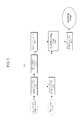
- FIG. 8 shows a flowchart illustrating an exemplary image processing method. The method may be carried out by an image processing apparatus described above.
- the image processing method includes an operation 801 of receiving a main image signal and a subsidiary image signal.
- the main image signal may be a color image signal
- the subsidiary image signal may be a signal with relatively high sensitivity composed of all bandwidths of visible light, a signal composed of all wavelengths of visible light and wavelengths of near infrared light, or a signal composed of all wavelengths of visible light and wavelengths of ultra-violet light.
- the respective signals can be acquired by, for example, the image sensor 300 illustrated in FIG. 3 .
- noise of the subsidiary image signal is removed or reduced.
- various algorithms can be used to remove or reduce the noise of the subsidiary image signal.
- a low-pass filter may be used to remove or reduce the noise of the subsidiary image signal.
- noise of the main image signal is removed or reduced using information about the subsidiary image signal. Equations 1, 2 and 3 described above may be used to remove or reduce the noise of the main image signal.
- the noise of the main image signal may be removed or reduced by using information about the subsidiary image signal or using information about the main image signal, according to image characteristics of the main image signal and the subsidiary image signal.
- high-frequency components are extracted from the subsidiary image signal from which noise has been removed or reduced.
- the high-frequency components are used to restore details of the main image signal.
- an operation of distinguishing details from noise to extract only the details may be further performed to avoid amplification of noise.
- an apparatus and a method of processing a color image where the color image is processed using a subsidiary image with sensitivity that is relatively higher than that of the color image so as to remove or reduce noise of the color image and restore details of the color image.
- the methods described above may be recorded, stored, or fixed in one or more computer-readable media that includes program instructions to be implemented by a computer to cause a processor to execute or perform the program instructions.
- the media may also include, alone or in combination with the program instructions, data files, data structures, and the like.
- Examples of computer-readable media include magnetic media, such as hard disks, floppy disks, and magnetic tape; optical media such as CD ROM disks and DVDs; magneto-optical media, such as optical disks; and hardware devices that are specially configured to store and perform program instructions, such as read-only memory (ROM), random access memory (RAM), flash memory, and the like.
- Examples of program instructions include machine code, such as produced by a compiler, and files containing higher level code that may be executed by the computer using an interpreter.
- the described hardware devices may be configured to act as one or more software modules in order to perform the operations and methods described above, or vice versa.
- a computer-readable medium may be distributed among computer systems connected through a network and computer-readable codes or program instructions may be stored and executed in a decentralized manner.
- a computing system or a computer may include a microprocessor that is electrically connected with a bus, a user interface, and a memory controller. It may further include a flash memory device. The flash memory device may store N-bit data via the memory controller. The N-bit data is processed or will be processed by the microprocessor and N may be 1 or an integer greater than 1. Where the computing system or computer is a mobile apparatus, a battery may be additionally provided to supply operation voltage of the computing system or computer.
Landscapes
- Engineering & Computer Science (AREA)
- Multimedia (AREA)
- Signal Processing (AREA)
- Image Processing (AREA)
- Color Television Image Signal Generators (AREA)
- Picture Signal Circuits (AREA)
Applications Claiming Priority (1)
| Application Number | Priority Date | Filing Date | Title |
|---|---|---|---|
| KR1020080113984A KR101574730B1 (ko) | 2008-11-17 | 2008-11-17 | 영상 처리 장치 및 방법 |
Publications (3)
| Publication Number | Publication Date |
|---|---|
| EP2187621A2 true EP2187621A2 (de) | 2010-05-19 |
| EP2187621A3 EP2187621A3 (de) | 2012-04-04 |
| EP2187621B1 EP2187621B1 (de) | 2016-07-20 |
Family
ID=41722770
Family Applications (1)
| Application Number | Title | Priority Date | Filing Date |
|---|---|---|---|
| EP09175500.9A Active EP2187621B1 (de) | 2008-11-17 | 2009-11-10 | Vorrichtung und Verfahren zur Bildverarbeitung |
Country Status (4)
| Country | Link |
|---|---|
| US (1) | US8463069B2 (de) |
| EP (1) | EP2187621B1 (de) |
| KR (1) | KR101574730B1 (de) |
| CN (1) | CN101742089B (de) |
Families Citing this family (4)
| Publication number | Priority date | Publication date | Assignee | Title |
|---|---|---|---|---|
| KR101625209B1 (ko) | 2009-12-11 | 2016-05-30 | 삼성전자주식회사 | 다이크로익 필터를 이용한 컬러 필터 어레이 |
| KR101926489B1 (ko) | 2013-02-04 | 2018-12-07 | 한화테크윈 주식회사 | 다중대역 필터배열 센서를 이용한 영상융합장치 및 방법 |
| US10523856B2 (en) * | 2016-09-08 | 2019-12-31 | Samsung Electronics Co., Ltd. | Method and electronic device for producing composite image |
| CN110493494B (zh) * | 2019-05-31 | 2021-02-26 | 杭州海康威视数字技术股份有限公司 | 图像融合装置及图像融合方法 |
Citations (1)
| Publication number | Priority date | Publication date | Assignee | Title |
|---|---|---|---|---|
| EP1675384A2 (de) | 2004-12-22 | 2006-06-28 | Sony Corporation | Bildverarbeitungsvorrichtung, -verfahren und Bildaufnahmevorrichtung |
Family Cites Families (9)
| Publication number | Priority date | Publication date | Assignee | Title |
|---|---|---|---|---|
| CA1309161C (en) * | 1987-09-14 | 1992-10-20 | Michael A. Isnardi | Apparatus for pre-conditioning auxiliary television signal information |
| GB8800420D0 (en) * | 1988-01-08 | 1988-02-10 | Rca Corp | Dual single sideband modulator for actv |
| JP4224996B2 (ja) | 2002-07-25 | 2009-02-18 | パナソニック株式会社 | 撮像装置 |
| BRPI0415404B1 (pt) * | 2003-10-14 | 2018-07-17 | Thomson Licensing | técnica para a adição de um ruído de conforto de bits exatos |
| JP4487640B2 (ja) | 2004-06-01 | 2010-06-23 | ソニー株式会社 | 撮像装置 |
| JP4295709B2 (ja) | 2004-10-14 | 2009-07-15 | 富士フイルム株式会社 | 撮像装置、画像処理装置、及び画像処理方法 |
| JP4984634B2 (ja) * | 2005-07-21 | 2012-07-25 | ソニー株式会社 | 物理情報取得方法および物理情報取得装置 |
| JP2007060457A (ja) * | 2005-08-26 | 2007-03-08 | Hitachi Ltd | 画像信号処理装置および画像信号処理方法 |
| JP4757221B2 (ja) * | 2007-03-30 | 2011-08-24 | 富士フイルム株式会社 | 撮像装置及び方法 |
-
2008
- 2008-11-17 KR KR1020080113984A patent/KR101574730B1/ko not_active Expired - Fee Related
-
2009
- 2009-06-25 CN CN200910150383XA patent/CN101742089B/zh active Active
- 2009-10-06 US US12/573,976 patent/US8463069B2/en not_active Expired - Fee Related
- 2009-11-10 EP EP09175500.9A patent/EP2187621B1/de active Active
Patent Citations (1)
| Publication number | Priority date | Publication date | Assignee | Title |
|---|---|---|---|---|
| EP1675384A2 (de) | 2004-12-22 | 2006-06-28 | Sony Corporation | Bildverarbeitungsvorrichtung, -verfahren und Bildaufnahmevorrichtung |
Also Published As
| Publication number | Publication date |
|---|---|
| US8463069B2 (en) | 2013-06-11 |
| EP2187621B1 (de) | 2016-07-20 |
| KR20100055067A (ko) | 2010-05-26 |
| CN101742089A (zh) | 2010-06-16 |
| US20100124373A1 (en) | 2010-05-20 |
| CN101742089B (zh) | 2013-04-24 |
| EP2187621A3 (de) | 2012-04-04 |
| KR101574730B1 (ko) | 2015-12-07 |
Similar Documents
| Publication | Publication Date | Title |
|---|---|---|
| US10949952B2 (en) | Performing detail enhancement on a target in a denoised image | |
| TWI808406B (zh) | 圖像去霧方法和使用圖像去霧方法的圖像去霧設備 | |
| CN111784605B (zh) | 一种基于区域指导的图像降噪方法、计算机装置及计算机可读存储介质 | |
| Li et al. | Color-decoupled photo response non-uniformity for digital image forensics | |
| CN103873837B (zh) | 用于颜色恢复的设备和方法 | |
| US8159552B2 (en) | Apparatus and method for restoring image based on distance-specific point spread function | |
| US9117136B2 (en) | Image processing method and image processing apparatus | |
| KR20090027060A (ko) | 영상 복원 장치 및 복원 방법 | |
| EP2187621B1 (de) | Vorrichtung und Verfahren zur Bildverarbeitung | |
| CN109934781B (zh) | 图像处理方法、装置、终端设备及计算机可读存储介质 | |
| US20250124557A1 (en) | Image quality assessment method, and electronic device and computer-readable storage medium | |
| CN116582759B (zh) | 图像处理装置、方法、电子设备及介质 | |
| CN107403412A (zh) | 图像处理方法及用于执行该方法的装置 | |
| US20230274398A1 (en) | Image processing apparatus for reducing influence of fine particle in an image, control method of same, and non-transitory computer-readable storage medium | |
| KR102205708B1 (ko) | 인공지능 기반의 폭우제거 영상 제공장치 및 그 동작 방법 | |
| JP3100037B2 (ja) | 映像認識装置 | |
| JP4333150B2 (ja) | 信号処理装置および方法、記録媒体、並びにプログラム | |
| CN107424134B (zh) | 图像处理方法、装置、计算机可读存储介质和计算机设备 | |
| RU2405200C2 (ru) | Способ и устройство быстрого фильтрования шума цифровых изображений | |
| JP6661268B2 (ja) | 画像処理装置、画像処理方法及びプログラム | |
| KR102199470B1 (ko) | 영상-데이터 압축 회로, 영상-데이터 압축 방법, 및 촬영 장치 | |
| KR102212358B1 (ko) | 실시간 영상에서의 마스킹 방법 및 장치 | |
| US8655061B2 (en) | Image processing apparatus and image processing method for performing a convolution operation | |
| TWI676965B (zh) | 物件影像辨識系統及物件影像辨識方法 | |
| CN107481199B (zh) | 图像去雾处理方法、装置、存储介质和移动终端 |
Legal Events
| Date | Code | Title | Description |
|---|---|---|---|
| PUAI | Public reference made under article 153(3) epc to a published international application that has entered the european phase |
Free format text: ORIGINAL CODE: 0009012 |
|
| AK | Designated contracting states |
Kind code of ref document: A2 Designated state(s): AT BE BG CH CY CZ DE DK EE ES FI FR GB GR HR HU IE IS IT LI LT LU LV MC MK MT NL NO PL PT RO SE SI SK SM TR |
|
| AX | Request for extension of the european patent |
Extension state: AL BA RS |
|
| PUAL | Search report despatched |
Free format text: ORIGINAL CODE: 0009013 |
|
| AK | Designated contracting states |
Kind code of ref document: A3 Designated state(s): AT BE BG CH CY CZ DE DK EE ES FI FR GB GR HR HU IE IS IT LI LT LU LV MC MK MT NL NO PL PT RO SE SI SK SM TR |
|
| AX | Request for extension of the european patent |
Extension state: AL BA RS |
|
| RIC1 | Information provided on ipc code assigned before grant |
Ipc: H04N 5/217 20110101AFI20120228BHEP |
|
| RAP1 | Party data changed (applicant data changed or rights of an application transferred) |
Owner name: SAMSUNG ELECTRONICS CO., LTD. |
|
| 17P | Request for examination filed |
Effective date: 20121001 |
|
| GRAP | Despatch of communication of intention to grant a patent |
Free format text: ORIGINAL CODE: EPIDOSNIGR1 |
|
| INTG | Intention to grant announced |
Effective date: 20160209 |
|
| GRAS | Grant fee paid |
Free format text: ORIGINAL CODE: EPIDOSNIGR3 |
|
| GRAA | (expected) grant |
Free format text: ORIGINAL CODE: 0009210 |
|
| AK | Designated contracting states |
Kind code of ref document: B1 Designated state(s): AT BE BG CH CY CZ DE DK EE ES FI FR GB GR HR HU IE IS IT LI LT LU LV MC MK MT NL NO PL PT RO SE SI SK SM TR |
|
| REG | Reference to a national code |
Ref country code: GB Ref legal event code: FG4D |
|
| REG | Reference to a national code |
Ref country code: CH Ref legal event code: EP |
|
| REG | Reference to a national code |
Ref country code: IE Ref legal event code: FG4D |
|
| REG | Reference to a national code |
Ref country code: AT Ref legal event code: REF Ref document number: 814894 Country of ref document: AT Kind code of ref document: T Effective date: 20160815 |
|
| REG | Reference to a national code |
Ref country code: DE Ref legal event code: R096 Ref document number: 602009039797 Country of ref document: DE |
|
| REG | Reference to a national code |
Ref country code: LT Ref legal event code: MG4D |
|
| REG | Reference to a national code |
Ref country code: NL Ref legal event code: MP Effective date: 20160720 |
|
| REG | Reference to a national code |
Ref country code: AT Ref legal event code: MK05 Ref document number: 814894 Country of ref document: AT Kind code of ref document: T Effective date: 20160720 |
|
| PG25 | Lapsed in a contracting state [announced via postgrant information from national office to epo] |
Ref country code: LT Free format text: LAPSE BECAUSE OF FAILURE TO SUBMIT A TRANSLATION OF THE DESCRIPTION OR TO PAY THE FEE WITHIN THE PRESCRIBED TIME-LIMIT Effective date: 20160720 Ref country code: HR Free format text: LAPSE BECAUSE OF FAILURE TO SUBMIT A TRANSLATION OF THE DESCRIPTION OR TO PAY THE FEE WITHIN THE PRESCRIBED TIME-LIMIT Effective date: 20160720 Ref country code: NO Free format text: LAPSE BECAUSE OF FAILURE TO SUBMIT A TRANSLATION OF THE DESCRIPTION OR TO PAY THE FEE WITHIN THE PRESCRIBED TIME-LIMIT Effective date: 20161020 Ref country code: IT Free format text: LAPSE BECAUSE OF FAILURE TO SUBMIT A TRANSLATION OF THE DESCRIPTION OR TO PAY THE FEE WITHIN THE PRESCRIBED TIME-LIMIT Effective date: 20160720 Ref country code: IS Free format text: LAPSE BECAUSE OF FAILURE TO SUBMIT A TRANSLATION OF THE DESCRIPTION OR TO PAY THE FEE WITHIN THE PRESCRIBED TIME-LIMIT Effective date: 20161120 Ref country code: FI Free format text: LAPSE BECAUSE OF FAILURE TO SUBMIT A TRANSLATION OF THE DESCRIPTION OR TO PAY THE FEE WITHIN THE PRESCRIBED TIME-LIMIT Effective date: 20160720 Ref country code: NL Free format text: LAPSE BECAUSE OF FAILURE TO SUBMIT A TRANSLATION OF THE DESCRIPTION OR TO PAY THE FEE WITHIN THE PRESCRIBED TIME-LIMIT Effective date: 20160720 |
|
| PG25 | Lapsed in a contracting state [announced via postgrant information from national office to epo] |
Ref country code: SE Free format text: LAPSE BECAUSE OF FAILURE TO SUBMIT A TRANSLATION OF THE DESCRIPTION OR TO PAY THE FEE WITHIN THE PRESCRIBED TIME-LIMIT Effective date: 20160720 Ref country code: PL Free format text: LAPSE BECAUSE OF FAILURE TO SUBMIT A TRANSLATION OF THE DESCRIPTION OR TO PAY THE FEE WITHIN THE PRESCRIBED TIME-LIMIT Effective date: 20160720 Ref country code: PT Free format text: LAPSE BECAUSE OF FAILURE TO SUBMIT A TRANSLATION OF THE DESCRIPTION OR TO PAY THE FEE WITHIN THE PRESCRIBED TIME-LIMIT Effective date: 20161121 Ref country code: LV Free format text: LAPSE BECAUSE OF FAILURE TO SUBMIT A TRANSLATION OF THE DESCRIPTION OR TO PAY THE FEE WITHIN THE PRESCRIBED TIME-LIMIT Effective date: 20160720 Ref country code: BE Free format text: LAPSE BECAUSE OF NON-PAYMENT OF DUE FEES Effective date: 20160720 Ref country code: GR Free format text: LAPSE BECAUSE OF FAILURE TO SUBMIT A TRANSLATION OF THE DESCRIPTION OR TO PAY THE FEE WITHIN THE PRESCRIBED TIME-LIMIT Effective date: 20161021 Ref country code: ES Free format text: LAPSE BECAUSE OF FAILURE TO SUBMIT A TRANSLATION OF THE DESCRIPTION OR TO PAY THE FEE WITHIN THE PRESCRIBED TIME-LIMIT Effective date: 20160720 Ref country code: AT Free format text: LAPSE BECAUSE OF FAILURE TO SUBMIT A TRANSLATION OF THE DESCRIPTION OR TO PAY THE FEE WITHIN THE PRESCRIBED TIME-LIMIT Effective date: 20160720 |
|
| REG | Reference to a national code |
Ref country code: DE Ref legal event code: R097 Ref document number: 602009039797 Country of ref document: DE |
|
| PG25 | Lapsed in a contracting state [announced via postgrant information from national office to epo] |
Ref country code: RO Free format text: LAPSE BECAUSE OF FAILURE TO SUBMIT A TRANSLATION OF THE DESCRIPTION OR TO PAY THE FEE WITHIN THE PRESCRIBED TIME-LIMIT Effective date: 20160720 Ref country code: EE Free format text: LAPSE BECAUSE OF FAILURE TO SUBMIT A TRANSLATION OF THE DESCRIPTION OR TO PAY THE FEE WITHIN THE PRESCRIBED TIME-LIMIT Effective date: 20160720 |
|
| PLBE | No opposition filed within time limit |
Free format text: ORIGINAL CODE: 0009261 |
|
| STAA | Information on the status of an ep patent application or granted ep patent |
Free format text: STATUS: NO OPPOSITION FILED WITHIN TIME LIMIT |
|
| PG25 | Lapsed in a contracting state [announced via postgrant information from national office to epo] |
Ref country code: CZ Free format text: LAPSE BECAUSE OF FAILURE TO SUBMIT A TRANSLATION OF THE DESCRIPTION OR TO PAY THE FEE WITHIN THE PRESCRIBED TIME-LIMIT Effective date: 20160720 Ref country code: SM Free format text: LAPSE BECAUSE OF FAILURE TO SUBMIT A TRANSLATION OF THE DESCRIPTION OR TO PAY THE FEE WITHIN THE PRESCRIBED TIME-LIMIT Effective date: 20160720 Ref country code: SK Free format text: LAPSE BECAUSE OF FAILURE TO SUBMIT A TRANSLATION OF THE DESCRIPTION OR TO PAY THE FEE WITHIN THE PRESCRIBED TIME-LIMIT Effective date: 20160720 Ref country code: BG Free format text: LAPSE BECAUSE OF FAILURE TO SUBMIT A TRANSLATION OF THE DESCRIPTION OR TO PAY THE FEE WITHIN THE PRESCRIBED TIME-LIMIT Effective date: 20161020 Ref country code: DK Free format text: LAPSE BECAUSE OF FAILURE TO SUBMIT A TRANSLATION OF THE DESCRIPTION OR TO PAY THE FEE WITHIN THE PRESCRIBED TIME-LIMIT Effective date: 20160720 |
|
| 26N | No opposition filed |
Effective date: 20170421 |
|
| REG | Reference to a national code |
Ref country code: CH Ref legal event code: PL |
|
| GBPC | Gb: european patent ceased through non-payment of renewal fee |
Effective date: 20161110 |
|
| PG25 | Lapsed in a contracting state [announced via postgrant information from national office to epo] |
Ref country code: CH Free format text: LAPSE BECAUSE OF NON-PAYMENT OF DUE FEES Effective date: 20161130 Ref country code: LI Free format text: LAPSE BECAUSE OF NON-PAYMENT OF DUE FEES Effective date: 20161130 |
|
| REG | Reference to a national code |
Ref country code: IE Ref legal event code: MM4A |
|
| REG | Reference to a national code |
Ref country code: FR Ref legal event code: ST Effective date: 20170731 |
|
| PG25 | Lapsed in a contracting state [announced via postgrant information from national office to epo] |
Ref country code: SI Free format text: LAPSE BECAUSE OF FAILURE TO SUBMIT A TRANSLATION OF THE DESCRIPTION OR TO PAY THE FEE WITHIN THE PRESCRIBED TIME-LIMIT Effective date: 20160720 |
|
| PG25 | Lapsed in a contracting state [announced via postgrant information from national office to epo] |
Ref country code: LU Free format text: LAPSE BECAUSE OF NON-PAYMENT OF DUE FEES Effective date: 20161130 |
|
| PG25 | Lapsed in a contracting state [announced via postgrant information from national office to epo] |
Ref country code: FR Free format text: LAPSE BECAUSE OF NON-PAYMENT OF DUE FEES Effective date: 20161130 |
|
| PG25 | Lapsed in a contracting state [announced via postgrant information from national office to epo] |
Ref country code: IE Free format text: LAPSE BECAUSE OF NON-PAYMENT OF DUE FEES Effective date: 20161110 Ref country code: GB Free format text: LAPSE BECAUSE OF NON-PAYMENT OF DUE FEES Effective date: 20161110 |
|
| PG25 | Lapsed in a contracting state [announced via postgrant information from national office to epo] |
Ref country code: CY Free format text: LAPSE BECAUSE OF FAILURE TO SUBMIT A TRANSLATION OF THE DESCRIPTION OR TO PAY THE FEE WITHIN THE PRESCRIBED TIME-LIMIT Effective date: 20160720 Ref country code: HU Free format text: LAPSE BECAUSE OF FAILURE TO SUBMIT A TRANSLATION OF THE DESCRIPTION OR TO PAY THE FEE WITHIN THE PRESCRIBED TIME-LIMIT; INVALID AB INITIO Effective date: 20091110 |
|
| PG25 | Lapsed in a contracting state [announced via postgrant information from national office to epo] |
Ref country code: MK Free format text: LAPSE BECAUSE OF FAILURE TO SUBMIT A TRANSLATION OF THE DESCRIPTION OR TO PAY THE FEE WITHIN THE PRESCRIBED TIME-LIMIT Effective date: 20160720 Ref country code: MC Free format text: LAPSE BECAUSE OF FAILURE TO SUBMIT A TRANSLATION OF THE DESCRIPTION OR TO PAY THE FEE WITHIN THE PRESCRIBED TIME-LIMIT Effective date: 20160720 Ref country code: TR Free format text: LAPSE BECAUSE OF FAILURE TO SUBMIT A TRANSLATION OF THE DESCRIPTION OR TO PAY THE FEE WITHIN THE PRESCRIBED TIME-LIMIT Effective date: 20160720 |
|
| PG25 | Lapsed in a contracting state [announced via postgrant information from national office to epo] |
Ref country code: MT Free format text: LAPSE BECAUSE OF NON-PAYMENT OF DUE FEES Effective date: 20161110 |
|
| REG | Reference to a national code |
Ref country code: DE Ref legal event code: R079 Ref document number: 602009039797 Country of ref document: DE Free format text: PREVIOUS MAIN CLASS: H04N0005217000 Ipc: H04N0023800000 |
|
| PGFP | Annual fee paid to national office [announced via postgrant information from national office to epo] |
Ref country code: DE Payment date: 20251002 Year of fee payment: 17 |