EP2187633B1 - Contrôleur d'enregistrement de programme et procédé de contrôle d'enregistrement de programme - Google Patents
Contrôleur d'enregistrement de programme et procédé de contrôle d'enregistrement de programme Download PDFInfo
- Publication number
- EP2187633B1 EP2187633B1 EP09006281A EP09006281A EP2187633B1 EP 2187633 B1 EP2187633 B1 EP 2187633B1 EP 09006281 A EP09006281 A EP 09006281A EP 09006281 A EP09006281 A EP 09006281A EP 2187633 B1 EP2187633 B1 EP 2187633B1
- Authority
- EP
- European Patent Office
- Prior art keywords
- program
- broadcast
- recording medium
- recording
- digital broadcasting
- Prior art date
- Legal status (The legal status is an assumption and is not a legal conclusion. Google has not performed a legal analysis and makes no representation as to the accuracy of the status listed.)
- Not-in-force
Links
Images





Classifications
-
- H—ELECTRICITY
- H04—ELECTRIC COMMUNICATION TECHNIQUE
- H04N—PICTORIAL COMMUNICATION, e.g. TELEVISION
- H04N5/00—Details of television systems
- H04N5/76—Television signal recording
- H04N5/765—Interface circuits between an apparatus for recording and another apparatus
-
- H—ELECTRICITY
- H04—ELECTRIC COMMUNICATION TECHNIQUE
- H04N—PICTORIAL COMMUNICATION, e.g. TELEVISION
- H04N21/00—Selective content distribution, e.g. interactive television or video on demand [VOD]
- H04N21/40—Client devices specifically adapted for the reception of or interaction with content, e.g. set-top-box [STB]; Operations thereof
- H04N21/41—Structure of client; Structure of client peripherals
- H04N21/414—Specialised client platforms, e.g. receiver in car or embedded in a mobile appliance
- H04N21/4147—PVR [Personal Video Recorder]
-
- H—ELECTRICITY
- H04—ELECTRIC COMMUNICATION TECHNIQUE
- H04N—PICTORIAL COMMUNICATION, e.g. TELEVISION
- H04N21/00—Selective content distribution, e.g. interactive television or video on demand [VOD]
- H04N21/40—Client devices specifically adapted for the reception of or interaction with content, e.g. set-top-box [STB]; Operations thereof
- H04N21/41—Structure of client; Structure of client peripherals
- H04N21/426—Internal components of the client ; Characteristics thereof
-
- H—ELECTRICITY
- H04—ELECTRIC COMMUNICATION TECHNIQUE
- H04N—PICTORIAL COMMUNICATION, e.g. TELEVISION
- H04N21/00—Selective content distribution, e.g. interactive television or video on demand [VOD]
- H04N21/40—Client devices specifically adapted for the reception of or interaction with content, e.g. set-top-box [STB]; Operations thereof
- H04N21/41—Structure of client; Structure of client peripherals
- H04N21/426—Internal components of the client ; Characteristics thereof
- H04N21/42607—Internal components of the client ; Characteristics thereof for processing the incoming bitstream
- H04N21/4263—Internal components of the client ; Characteristics thereof for processing the incoming bitstream involving specific tuning arrangements, e.g. two tuners
-
- H—ELECTRICITY
- H04—ELECTRIC COMMUNICATION TECHNIQUE
- H04N—PICTORIAL COMMUNICATION, e.g. TELEVISION
- H04N21/00—Selective content distribution, e.g. interactive television or video on demand [VOD]
- H04N21/40—Client devices specifically adapted for the reception of or interaction with content, e.g. set-top-box [STB]; Operations thereof
- H04N21/43—Processing of content or additional data, e.g. demultiplexing additional data from a digital video stream; Elementary client operations, e.g. monitoring of home network or synchronising decoder's clock; Client middleware
- H04N21/431—Generation of visual interfaces for content selection or interaction; Content or additional data rendering
- H04N21/4312—Generation of visual interfaces for content selection or interaction; Content or additional data rendering involving specific graphical features, e.g. screen layout, special fonts or colors, blinking icons, highlights or animations
-
- H—ELECTRICITY
- H04—ELECTRIC COMMUNICATION TECHNIQUE
- H04N—PICTORIAL COMMUNICATION, e.g. TELEVISION
- H04N21/00—Selective content distribution, e.g. interactive television or video on demand [VOD]
- H04N21/40—Client devices specifically adapted for the reception of or interaction with content, e.g. set-top-box [STB]; Operations thereof
- H04N21/43—Processing of content or additional data, e.g. demultiplexing additional data from a digital video stream; Elementary client operations, e.g. monitoring of home network or synchronising decoder's clock; Client middleware
- H04N21/432—Content retrieval operation from a local storage medium, e.g. hard-disk
- H04N21/4325—Content retrieval operation from a local storage medium, e.g. hard-disk by playing back content from the storage medium
-
- H—ELECTRICITY
- H04—ELECTRIC COMMUNICATION TECHNIQUE
- H04N—PICTORIAL COMMUNICATION, e.g. TELEVISION
- H04N21/00—Selective content distribution, e.g. interactive television or video on demand [VOD]
- H04N21/40—Client devices specifically adapted for the reception of or interaction with content, e.g. set-top-box [STB]; Operations thereof
- H04N21/43—Processing of content or additional data, e.g. demultiplexing additional data from a digital video stream; Elementary client operations, e.g. monitoring of home network or synchronising decoder's clock; Client middleware
- H04N21/433—Content storage operation, e.g. storage operation in response to a pause request, caching operations
- H04N21/4334—Recording operations
-
- H—ELECTRICITY
- H04—ELECTRIC COMMUNICATION TECHNIQUE
- H04N—PICTORIAL COMMUNICATION, e.g. TELEVISION
- H04N21/00—Selective content distribution, e.g. interactive television or video on demand [VOD]
- H04N21/40—Client devices specifically adapted for the reception of or interaction with content, e.g. set-top-box [STB]; Operations thereof
- H04N21/43—Processing of content or additional data, e.g. demultiplexing additional data from a digital video stream; Elementary client operations, e.g. monitoring of home network or synchronising decoder's clock; Client middleware
- H04N21/434—Disassembling of a multiplex stream, e.g. demultiplexing audio and video streams, extraction of additional data from a video stream; Remultiplexing of multiplex streams; Extraction or processing of SI; Disassembling of packetised elementary stream
- H04N21/4344—Remultiplexing of multiplex streams, e.g. by modifying time stamps or remapping the packet identifiers
-
- H—ELECTRICITY
- H04—ELECTRIC COMMUNICATION TECHNIQUE
- H04N—PICTORIAL COMMUNICATION, e.g. TELEVISION
- H04N21/00—Selective content distribution, e.g. interactive television or video on demand [VOD]
- H04N21/40—Client devices specifically adapted for the reception of or interaction with content, e.g. set-top-box [STB]; Operations thereof
- H04N21/43—Processing of content or additional data, e.g. demultiplexing additional data from a digital video stream; Elementary client operations, e.g. monitoring of home network or synchronising decoder's clock; Client middleware
- H04N21/434—Disassembling of a multiplex stream, e.g. demultiplexing audio and video streams, extraction of additional data from a video stream; Remultiplexing of multiplex streams; Extraction or processing of SI; Disassembling of packetised elementary stream
- H04N21/4345—Extraction or processing of SI, e.g. extracting service information from an MPEG stream
-
- H—ELECTRICITY
- H04—ELECTRIC COMMUNICATION TECHNIQUE
- H04N—PICTORIAL COMMUNICATION, e.g. TELEVISION
- H04N21/00—Selective content distribution, e.g. interactive television or video on demand [VOD]
- H04N21/40—Client devices specifically adapted for the reception of or interaction with content, e.g. set-top-box [STB]; Operations thereof
- H04N21/47—End-user applications
- H04N21/472—End-user interface for requesting content, additional data or services; End-user interface for interacting with content, e.g. for content reservation or setting reminders, for requesting event notification, for manipulating displayed content
- H04N21/47214—End-user interface for requesting content, additional data or services; End-user interface for interacting with content, e.g. for content reservation or setting reminders, for requesting event notification, for manipulating displayed content for content reservation or setting reminders; for requesting event notification, e.g. of sport results or stock market
-
- H—ELECTRICITY
- H04—ELECTRIC COMMUNICATION TECHNIQUE
- H04N—PICTORIAL COMMUNICATION, e.g. TELEVISION
- H04N21/00—Selective content distribution, e.g. interactive television or video on demand [VOD]
- H04N21/40—Client devices specifically adapted for the reception of or interaction with content, e.g. set-top-box [STB]; Operations thereof
- H04N21/47—End-user applications
- H04N21/472—End-user interface for requesting content, additional data or services; End-user interface for interacting with content, e.g. for content reservation or setting reminders, for requesting event notification, for manipulating displayed content
- H04N21/47217—End-user interface for requesting content, additional data or services; End-user interface for interacting with content, e.g. for content reservation or setting reminders, for requesting event notification, for manipulating displayed content for controlling playback functions for recorded or on-demand content, e.g. using progress bars, mode or play-point indicators or bookmarks
-
- H—ELECTRICITY
- H04—ELECTRIC COMMUNICATION TECHNIQUE
- H04N—PICTORIAL COMMUNICATION, e.g. TELEVISION
- H04N21/00—Selective content distribution, e.g. interactive television or video on demand [VOD]
- H04N21/40—Client devices specifically adapted for the reception of or interaction with content, e.g. set-top-box [STB]; Operations thereof
- H04N21/47—End-user applications
- H04N21/482—End-user interface for programme selection
- H04N21/4821—End-user interface for programme selection using a grid, e.g. sorted out by channel and broadcast time
-
- H—ELECTRICITY
- H04—ELECTRIC COMMUNICATION TECHNIQUE
- H04N—PICTORIAL COMMUNICATION, e.g. TELEVISION
- H04N21/00—Selective content distribution, e.g. interactive television or video on demand [VOD]
- H04N21/80—Generation or processing of content or additional data by content creator independently of the distribution process; Content per se
- H04N21/83—Generation or processing of protective or descriptive data associated with content; Content structuring
- H04N21/84—Generation or processing of descriptive data, e.g. content descriptors
-
- H—ELECTRICITY
- H04—ELECTRIC COMMUNICATION TECHNIQUE
- H04N—PICTORIAL COMMUNICATION, e.g. TELEVISION
- H04N5/00—Details of television systems
- H04N5/76—Television signal recording
- H04N5/765—Interface circuits between an apparatus for recording and another apparatus
- H04N5/775—Interface circuits between an apparatus for recording and another apparatus between a recording apparatus and a television receiver
-
- H—ELECTRICITY
- H04—ELECTRIC COMMUNICATION TECHNIQUE
- H04N—PICTORIAL COMMUNICATION, e.g. TELEVISION
- H04N9/00—Details of colour television systems
- H04N9/79—Processing of colour television signals in connection with recording
- H04N9/80—Transformation of the television signal for recording, e.g. modulation, frequency changing; Inverse transformation for playback
- H04N9/82—Transformation of the television signal for recording, e.g. modulation, frequency changing; Inverse transformation for playback the individual colour picture signal components being recorded simultaneously only
- H04N9/8205—Transformation of the television signal for recording, e.g. modulation, frequency changing; Inverse transformation for playback the individual colour picture signal components being recorded simultaneously only involving the multiplexing of an additional signal and the colour video signal
-
- H—ELECTRICITY
- H04—ELECTRIC COMMUNICATION TECHNIQUE
- H04N—PICTORIAL COMMUNICATION, e.g. TELEVISION
- H04N9/00—Details of colour television systems
- H04N9/79—Processing of colour television signals in connection with recording
- H04N9/80—Transformation of the television signal for recording, e.g. modulation, frequency changing; Inverse transformation for playback
- H04N9/82—Transformation of the television signal for recording, e.g. modulation, frequency changing; Inverse transformation for playback the individual colour picture signal components being recorded simultaneously only
- H04N9/8205—Transformation of the television signal for recording, e.g. modulation, frequency changing; Inverse transformation for playback the individual colour picture signal components being recorded simultaneously only involving the multiplexing of an additional signal and the colour video signal
- H04N9/8233—Transformation of the television signal for recording, e.g. modulation, frequency changing; Inverse transformation for playback the individual colour picture signal components being recorded simultaneously only involving the multiplexing of an additional signal and the colour video signal the additional signal being a character code signal
- H04N9/8244—Transformation of the television signal for recording, e.g. modulation, frequency changing; Inverse transformation for playback the individual colour picture signal components being recorded simultaneously only involving the multiplexing of an additional signal and the colour video signal the additional signal being a character code signal involving the use of subcodes
Definitions
- One embodiment of the invention relates to a program recording controller that controls recording of digital broadcast including digital terrestrial broadcast and digital satellite broadcast, and a program recording control method.
- US 2002/0184637 A1 further shows to associate time information with address pointers in the multimedia stream.
- EP 1 292 135 A2 shows a program record/playback system relating to a vehicle audio system with two tuners, a broadcast program record and playback unit, and a system control unit that assigns delimiter signals to breakpoints, and wherein the broadcast contents is determined to be news, talks, music and CM based on the respective frequency bands.
- D3, US 2007/0077028 A1 shows a receiver for television signals, which comprises first and second tuners and a hard disk, which is controlled by a processor.
- the hard disk comprises two storage areas, one for the storage of television program data and the other for storing metadata, which are in the form of an indicator pointing at the beginning of a recorded television program, whereby the indicator data is based on the standard time codes transmitted with television program signals.
- the automatic recording indicates a function of a recorder to automatically record predetermined channels according to predetermined conditions.
- the automatic recording function saves the user the need to manually set schedules to record desired programs one by one. For example, with the automatic recording function, all programs broadcast during one week can be recorded on HDD with respect to all channels that the recorder can receive.
- a program recording controller is defined by the appended claim 1.
- FIG. 1 is an exemplary block diagram of a digital recorder according to an embodiment of the invention
- FIGS. 1 to 11 An embodiment of the invention will be described with reference to FIGS. 1 to 11 .
- a program recording controller of the embodiment is described by way of example as a digital recorder.
- FIG. 1 is a block diagram of a digital recorder 101 according to the embodiment. It is assumed herein that the digital recorder 101 is provided with four tuner modules as receivers each for receiving a scrambled digital broadcast signal (of which two are tuners 102 and 112 for receiving digital terrestrial broadcasting and the other two are tuners 122 and 132 for receiving BS/CS digital broadcasting).
- the digital recorder 101 is provided with four tuner modules as receivers each for receiving a scrambled digital broadcast signal (of which two are tuners 102 and 112 for receiving digital terrestrial broadcasting and the other two are tuners 122 and 132 for receiving BS/CS digital broadcasting).
- the tuners 102, 112, 122, and 132 receive broadcast program signals.
- the broadcast program signals are input to a transport stream (TS) remultiplexer 141.
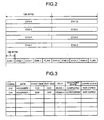
- the TS remultiplexer 141 remultiplexes transport streams of multiple channels (CH) into one transport stream. For example, in the case of input of four channels as illustrated in FIG. 2 , the TS remultiplexer 141 may perform remultiplexing at five times higher speed. Further, the TS remultiplexer 141 may add timestamp information as a flag to each packet.
- the signals remultiplexed by the TS remultiplexer 141 is sent to a TS separator 103.
- the TS separator 103 separates from the broadcast program signals an entitlement control message (ECM) as encryption data.
- ECM entitlement control message
- the TS separator 103 also separates from the broadcast program signals an event information table (EIT) that describes event information. Examples of the event information include program title, cast, and program start time.
- the ECM obtained by the TS separator 103 is sent to a CAS controller 107.
- the CAS controller 107 decodes the encrypted ECM using a work key (Kw) set with respect to each of broadcast providers.
- the work key is stored in a CAS module, i.e., a CAS card in the form of an IC card (hereinafter "CAS card") 108 configured to be inserted in a card slot or card interface (I/F) 107a.
- the CAS controller 107 then compares attribute information related to the program in the ECM with contract information stored in the CAS card 108 to determine whether the program can be viewed.
- the CAS controller 107 decodes a scramble key (Ks), and outputs it to a descrambler 104.
- Ks scramble key
- Kw encryption keys
- FIG. 3 is a schematic diagram of the data structure of the program database 113.
- the program database 113 stores information in a tabular format with respect to each program. Examples of the information include cannel, date, start time, end time, title, recording state, and copied state.
- the descrambler 104 sets the scramble key Ks received from the CAS controller 107, and descrambles the transport stream.
- the descrambler 104 then input the descrambled transport stream to a recording/reproducing controller 110.
- the recording/reproducing controller 110 demultiplexes the remultiplexed transport stream into transport streams of the respective channels, and stores them in a storage medium 111 such as an HDD.
- the recording/reproducing controller 110 also controls the reproduction of broadcast program signals stored as a transport stream in the storage medium 111, and outputs the broadcast program signals to an AV decoder 105. That is, the recording/reproducing controller 110 functions as a recording controller as well as a reproducing controller.
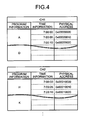
- the recording/reproducing controller 110 Upon storing the broadcast program signals (demultiplexed transport streams of the respective channels) in the storage medium 111, the recording/reproducing controller 110 creates metadata with respect to each of the channels. As illustrated in FIG. 4 , the metadata contains a storage position or a record position in the physical area of the storage medium 111 where the broadcast program signals are stored (physical address), time information, and program information associated with one another. Thus, the recording/reproducing controller 110 stores the metadata in the storage medium 111. In the example of FIG. 4 , the storage position (physical address) is stored every five seconds. Incidentally, the program information can be obtained from the EIT.
- the storage medium 111 may be, for example, HDD, disk drive, SD (registered trademark) card reader/writer.
- the storage medium 111 stores the broadcast program signals, i.e., the transport streams, received from the recording/reproducing controller 110.
- the storage medium 111 need not necessarily be built in the digital recorder 101, and may be the one such as an external HDD connected to the digital recorder 101 through USB, LAN, or the like.
- the AV decoder 105 decodes the broadcast program signals from the respective channels (demultiplexed transport streams of the respective channels) received by the tuners 102, 112, 122, and 132 into AV data (video data and audio data). Alternatively, the AV decoder 105 decodes the broadcast program signals (demultiplexed transport streams of the respective channels), the reproduction of which has been controlled by the recording/reproducing controller 110, into AV data.
- the AV data output from the AV decoder 105 (AV output) is input via a display processor 106 to a display module 200.
- the display module 200 is an external monitor.
- the display processor 106 has graphical user interface (GUI) function to provide information to the user through on-screen display (OSD), or the like. With this GUI function, a program guide, which will be described later, is displayed on the display module 200.
- GUI graphical user interface
- the program database 113 sends EIT of a program stored in the storage medium 111 and EIT of a program to be broadcast to a program guide processor 115.
- the program guide processor 115 Upon receipt of the EIT, the program guide processor 115 creates a program guide.
- An input processor 114 receives various types of input from the user. Examples of the input that the input processor 114 receives from the user include a setting for automatic recording and an instruction specifying a program in a program guide to reproduce.
- the input processor 114 may receive user input through an operation panel (not illustrated) or the like fixed to the digital recorder 101, or through a remote controller 300 separately provided to the digital recorder 101.
- FIG. 5 is a front view of the remote controller 300.
- channel selection keys 301 on the remote controller 300 are arranged channel selection keys 301, a cursor key 302, an enter key 303, a channel up/down key 304, special reproduction keys 305, and the like.
- the channel selection keys 301 is used to select a channel.
- the cursor key 302 is used to move a cursor up, down, left, and right.
- the enter key 303 is used to confirm some operations and instructions.
- the channel up/down key 304 is used to select a channel.
- the special reproduction keys 305 are used to instruct special reproduction.
- the special reproduction keys 305 include a fast forward key, a rewind key, a skip backward key, a skip forward key, and the like.
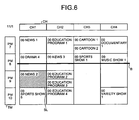
- FIG. 6 illustrates an example of a program guide.
- a time axis is set in the vertical direction of the screen.
- broadcast time fields TM are arranged along the time axis.
- channel fields CN are arranged in the direction perpendicular to the time axis.
- the program guide provides program information indicating a recorded program at a position corresponding to a relevant broadcast time field and a relevant channel field.
- a bar B is displayed to indicate the current time.
- programs that have already been broadcast can be distinguished from those yet to be broadcast.
- These programs may be displayed in different colors so that programs that have already been broadcast can be distinguished from those yet to be broadcast.
- Such a program guide in which programs are displayed with respect to time including a predetermined time, is effective in, for example, displaying programs recorded or to be recorded during a period in which all broadcast programs are set to be recorded.
- the user can move the cursor by, for example, pressing the cursor key 302 on the remote controller 300 to select a field.
- the cursor by moving the cursor from one field to another, i.e., by changing a selected field SL, the user can scroll the display screen. This allows the user to search for a recorded program.
- the display screen may be scrolled such that the selected field SL is displayed in the center of the program guide, or the selected field SL may be moved on the display screen.
- the user when the user places the cursor on the field of a desired program and then presses the enter key 303 on the remote controller 300, detailed information may be displayed as to the program.
- the user can obtain the detailed information on a recorded program or a program that he/she wishes to record.
- the user can selectively delete programs stored in the storage medium 111 through the program information displayed in the program guide.
- a program currently broadcast is selected.
- a program currently broadcast is selected by using the enter key 303 on the remote controller 300 (Yes at S1)
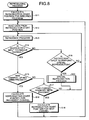
- if "the program is viewed from the beginning" is not selected in the operation settings specified in advance (No at S2), the program is viewed in an ordinary manner (S3) .
- the digital recorder 101 inputs demultiplexed transport streams of the respective channels in the AV decoder 105, thereby displaying the video of the program on the display module 200 at the time.
- a program broadcast in the past is selected.
- the digital recorder 101 enters a mode in which a program stored in the storage medium 111 is reproduced, and thus a reproducing process is performed (S4).
- the recording/reproducing controller 110 retrieves from the storage medium 111 metadata corresponding to the channel of the program selected from the program guide and the start time thereof.
- the recording/reproducing controller 110 then calculates a reproduction start position for the program based on the metadata (S11).
- the recording/reproducing controller 110 reads data (TS) of the reproduction start position thus calculated from the storage medium 111 (S12) .
- the recording/reproducing controller 110 inputs the data (TS) to the AV decoder 105 to display or reproduce the program on the display module 200 (S13).
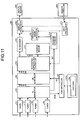
- an instruction is issued to change or switch the channel from one to another by using the channel up/down key 304 (a key used to select a channel when a program is viewed in an ordinary manner) on the remote controller 300 (Yes at S14)
- a reproduction start position is calculated for the precedent channel based on the time information contained in the metadata as illustrated in FIG. 4 corresponding to the signals of the broadcast program being reproduced (S16). Then, the process returns to S12 to switch streams to reproduce.
- the recording/reproducing controller 110 reads from the storage medium 111 data (TS) based on a reproduction start position of a channel, to which an instruction has been received to change the channel, at the same time as the calculated reproduction start position (S12).
- the recording/reproducing controller 110 inputs the data (TS) to the AV decoder 105 to display or reproduce a program selected from the program guide on the display module 200 (S13).
- the recording/reproducing controller 110 reads from the storage medium 111 data (TS) based on a reproduction start position of a channel, to which an instruction has been received to change the channel, at the same time as the calculated reproduction start position (S12).
- the recording/reproducing controller 110 inputs the data (TS) to the AV decoder 105 to display or reproduce a program selected from the program guide on the display module 200 (S13).
- a program that has already been recorded can be searched for by a sort of channel surfing or zapping as in the case of selecting a program to view in an ordinary manner.
- the position to start reproduction when channels are switched need not necessarily be the same time as that before the channel change.
- the program may be reproduced from the beginning based on the time information contained in the metadata. This may be selected by user settings.
- the reproduction start position may be calculated as a position corresponding to the same time as when a grogram of a cannel currently being reproduced is recorded, the start position of a program of a channel to which the channel is to be changed, or an arbitrary offset position where a predetermined time has elapsed since the start position.
- the program is reproduced in fast forward mode (S35). If rewind is instructed by pressing the rewind key among the special reproduction keys 305 on the remote controller 300 (Yes at S31), the program is reproduced in rewind mode (S36).
- the record position of the next program is calculated as the reproduction start position based on the program information contained in the metadata corresponding to the signals of the broadcast program being reproduced (S37). Then, the recording/reproducing controller 110 reads data (TS) of the reproduction start position thus calculated from the storage medium 111 (S38). Thereafter, the recording/reproducing controller 110 inputs the data (TS) to the AV decoder 105 to display or reproduce the program selected from the program guide on the display module 200 (S39).
- the record position of the previous program is calculated as the reproduction start position based on the program information contained in the metadata corresponding to the signals of the broadcast program being reproduced (S40). Then, the recording/reproducing controller 110 reads data (TS) of the reproduction start position thus calculated from the storage medium 111 (S38). Thereafter, the recording/reproducing controller 110 inputs the data (TS) to the AV decoder 105 to display or reproduce the program selected from the program guide on the display module 200 (S39).
- This program skip function further facilitates the selection of a desired program from all programs that has been recorded for a predetermined period of time.
- the record position of the previous program is calculated as the reproduction start position based on the metadata.
- the user can switch to the reproduction of a recorded program from the position.
- FIG. 10 is a schematic diagram for explaining screen transition caused by the channel surfing or zapping function, or the program skip function.
- an instruction is issued to switch channels (CH1 ⁇ CH2 ⁇ CH3 ⁇ CH4) by using the channel up/down key 304 on the remote controller 300 while a program 1-2 recorded before the current time is being reproduced.
- recorded programs 2-2, 3-2, and 4-2 are sequentially reproduced.
- an instruction is issued to skip to the next program by pressing the skip backward key among the special reproduction keys 305 on the remote controller 300 while the programs 4-2 is being reproduced
- a program 4-3 is reproduced.
- the storage medium 111 is rewound to its beginning to reproduce a program 4-1.
- a program to reproduce can be searched for by a sort of channel surfing or zapping as in the case of selecting a program to view in an ordinary manner. Further, with the addition of the program skip function, retrieval of a program can be further facilitated.
- a program broadcast in the future is selected.
- the digital recorder 101 is provided with detailed information on the program or is additionally provided with personal video recorder (PVR) function, it displays a menu to set schedules to record the program on the PVR.
- PVR personal video recorder
- the recording/reproducing controller 110 upon receipt of an instruction to change the channel through the input processor 114 while a broadcast program stored in the storage medium 111 is being reproduced, calculates the reproduction start position.
- the reproduction start position may be calculated as a position corresponding to the same time as when the grogram of a cannel currently being reproduced is recorded, the start position of a program of a channel to which the channel is to be changed, or an arbitrary offset position where a predetermined time has elapsed since the start position. Then, the recording/reproducing controller 110 reads from the storage medium 111 the signals of the broadcast program with respect to the channel to which the channel is to be changed.
- a program that has already been recorded can be searched for by a sort of channel surfing or zapping as in the case of selecting a channel to view a program in an ordinary manner. Therefore, it is possible to facilitate the selection of a desired program from all programs that has been recorded for a predetermined period of time.
- the recording/reproducing controller 110 upon storing broadcast program signals received by the tuners 102, 112, 122, and 132 in the storage medium 111, the recording/reproducing controller 110 creates metadata with respect to each of the channels.
- the metadata contains a storage position in the physical area of the storage medium 111 (physical address), time information, and program information associated with one another.
- the recording/reproducing controller 110 also stores the metadata in the storage medium 111.
- the recording/reproducing controller 110 calculates the record position of a program of a channel to which the channel is to be changed as the reproduction start position based on the time information contained in the metadata corresponding to the signals of the broadcast program being reproduced.
- the recording/reproducing controller 110 reads the broadcast program signals of the reproduction start position from the storage medium 111.
- a program that has already been recorded can be searched for by a sort of channel surfing or zapping as in the case of selecting a channel to view a program in an ordinary manner. Therefore, it is possible to facilitate the selection of a desired program from all programs that has been recorded for a predetermined period of time.
- the storage medium 111 stores the metadata that further contains, in addition to a storage position (physical address) and time information, program information associated thereto. Therefore, upon receipt of an instruction to switch broadcast programs of the same channel while the broadcast program signals stored in the storage medium 111 are being reproduced, the recording/reproducing controller 110 calculates the record position of the program, to which the broadcast program is to be switched, based on the program information contained in the metadata corresponding to the signals of the broadcast program being reproduced. Then, the recording/reproducing controller 110 reads the broadcast program signals of the reproduction start position from the storage medium 111. With this addition of the program skip function, it is possible to further facilitate the selection of a desired program from all programs that has been recorded for a predetermined period of time.
- the program recording controller of the embodiment is described above by way of example as the digital recorder 101, it is not limited to such a digital recorder.
- the program recording controller of the embodiment may be a digital television.
- broadcast program signals received by the tuners 102, 112, 122, and 132 are input to the TS remultiplexer 141.
- the TS remultiplexer 141 remultiplexes transport streams of multiple channels (CH) into one transport stream. After that, the TS remultiplexer 141 sends the transport stream to the TS separator 103.
- CH multiple channels
- broadcast program signals received by the tuners 102, 112, 122, and 132 may be directly sent to the TS separator 103.
- the constituent elements of the digital recorder 101 such as the tuners 102, 112, 122, and 132, the TS remultiplexer 141, the TS separator 103, the CAS controller 107, the descrambler 104, the recording/reproducing controller 110, the AV decoder 105, the program database 113, the program guide processor 115, and the display processor 106, may be implemented as hardware.
- the constituent elements may also be implemented as software. In other words, a software program stored in a storage module (not illustrated) may be executed by a controller such as CPU (not illustrated) on a computer to realize the same function as the digital recorder 101.
- the various modules of the system described herein can be implemented as software applications, hardware and/or software modules, or components on one or more computers, such as servers. While the various modules are illustrated separately, they may share some or all of the same underlying logic or code.
Landscapes
- Engineering & Computer Science (AREA)
- Multimedia (AREA)
- Signal Processing (AREA)
- Human Computer Interaction (AREA)
- Databases & Information Systems (AREA)
- Business, Economics & Management (AREA)
- Finance (AREA)
- Strategic Management (AREA)
- Television Signal Processing For Recording (AREA)
- Two-Way Televisions, Distribution Of Moving Picture Or The Like (AREA)
Claims (4)
- Dispositif de commande d'enregistrement de programme (101), comprenant :une pluralité de récepteurs (102, 112, 122, 132) configurés pour recevoir des flux de transport (TS) de signaux de diffusion numérique de programmes diffusés à partir de canaux multiples, respectivement ;un dispositif de commande d'enregistrement (110) configuré pour commander l'enregistrement des signaux de diffusion numérique reçus par les récepteurs (102, 112, 122, 132) sur un support d'enregistrement (111) et pour créer des métadonnées par rapport à chacun des canaux pour enregistrer dans le support d'enregistrement (111), les métadonnées contenant une position d'enregistrement dans le support d'enregistrement (111), des informations de temps, et des informations de programme obtenues à partir d'une table d'informations d'événement (EIT) des flux de transport associés l'un à l'autre ;un processeur d'entrée (114) configuré pour recevoir une entrée d'instructions, le processeur d'entrée (114) étant raccordé à une touche haut/bas de canal (304) pour recevoir l'entrée d'instructions pour monter ou descendre le canal et une touche de saut pour recevoir l'entrée d'instructions pour sauter au programme suivant ou au programme précédent du même canal ;un dispositif de commande de reproduction (110) configuré pour commander la reproduction des signaux de diffusion numérique des programmes diffusés enregistrés sur le support d'enregistrement (111) ou des signaux de diffusion numérique des programmes diffusés que les récepteurs (102, 112, 122, 132) ont reçu des canaux, respectivement ; etun processeur d'affichage (106) configuré pour fournir les signaux de diffusion numérique des programmes diffusés, dont la reproduction a été commandée par le dispositif de commande de reproduction (110), à un module d'affichage (200), dans lequellors de la réception d'une instruction pour commuter des canaux grâce à la touche haut/bas de canal (304) alors qu'un programme diffusé enregistré sur le support d'enregistrement (111) est reproduit, le dispositif de commande de reproduction (110) calcule une position de démarrage de reproduction dans le support d'enregistrement (111) de signaux de diffusion numérique d'un programme diffusé à partir d'un canal, auquel un canal du programme diffusé étant reproduit doit être commuté, comme la position d'enregistrement correspondant aux informations de temps des métadonnées des signaux de diffusion numérique du programme diffusé étant reproduit, pour lire le support d'enregistrement (111), etlors de la réception d'une instruction pour sauter des programmes à travers la touche de saut alors qu'un programme diffusé enregistré sur le support d'enregistrement (111) est reproduit, le dispositif de commande de reproduction (110) calcule une position de début de reproduction dans le support d'enregistrement (111) de signaux de diffusion numérique d'un programme diffusé à partir d'un programme, auquel un programme du programme diffusé étant reproduit doit être sauté, comme la position d'enregistrement correspondant à une position de début d'un programme obtenue à partir des informations de programme des métadonnées des signaux de diffusion numérique d'un programme diffusé, auquel un programme est sauté sur la base des informations de programme des métadonnées des signaux de diffusion numérique du programme diffusé étant reproduit, pour lire le support d'enregistrement (111).
- Dispositif de commande d'enregistrement de programme (101) selon la revendication 1, comprenant en outre un remultiplexeur (141) configuré pour remultiplexer les signaux des programmes de diffusion à partir des canaux reçus par les récepteurs (102, 112, 122, 132), respectivement, en un signal, dans lequel
le dispositif de commande de reproduction (110) est configuré pour commander la reproduction des signaux après que le signal soit démultipléxé en signaux des programmes de diffusion à partir des canaux. - Dispositif de commande d'enregistrement de programme (101) selon la revendication 1, comprenant en outre un module d'affichage (200) configuré pour afficher les signaux des programmes de diffusion reçus du processeur d'affichage (106).
- Procédé de commande d'enregistrement de programme appliqué à un dispositif de commande d'enregistrement de programme comprenant un dispositif de commande et un support d'enregistrement, le procédé de commande d'enregistrement de programme comprenant les étapes de :commande, sur un dispositif de commande d'enregistrement (110), d'un enregistrement des signaux de diffusion numérique reçus par une pluralité de récepteurs qui reçoivent les flux de transport (TS) de signaux de diffusion numérique de programmes de diffusion à partir de multiples canaux, respectivement sur un support d'enregistrement ;création de métadonnées par rapport à chacun des canaux pour enregistrer dans le support d'enregistrement, les métadonnées contenant une position d'enregistrement dans le support d'enregistrement, des informations de temps, et des informations de programme obtenues à partir d'une table d'informations d'événement (EIT) des flux de transport associés l'un à l'autre ;commande, sur un dispositif de commande de reproduction (110), d'une reproduction des signaux de diffusion numérique des programmes diffusés enregistrés sur le support d'enregistrement ou les signaux de diffusion numérique des programmes diffusés que les récepteurs ont reçu à partir des canaux, respectivement, selon une instruction reçue par une touche haut/bas de canal pour recevoir une entrée d'instructions pour monter ou descendre le canal et une touche de saut pour recevoir une entrée d'instructions pour sauter au programme suivant ou au programme précédent du même canal ; etfourniture, sur un processeur d'affichage (106), des signaux de diffusion numérique des programmes diffusés, dont la reproduction a été commandée par le dispositif de commande de reproduction, au module d'affichage, dans lequellors de la réception d'une instruction pour commuter des canaux via la touche haut/bas de canal alors qu'un programme diffusé enregistré sur le support d'enregistrement est reproduit, le dispositif de commande de reproduction calcule une position de début de reproduction dans le support d'enregistrement de signaux de diffusion numérique d'un programme diffusé à partir d'un canal, auquel un canal du programme diffusé étant reproduit doit être commuté, comme la position d'enregistrement correspondant aux informations de temps des métadonnées des signaux de diffusion numérique du programme diffusé reproduit, pour lire le support d'enregistrement, etlors de la réception d'une instruction pour sauter des programmes via la touche de saut alors qu'un programme diffusé enregistré sur le support d'enregistrement est reproduit, le dispositif de commande de reproduction calcule une position de début de reproduction dans le support d'enregistrement de signaux de diffusion numérique d'un programme diffusé d'un programme, auquel un programme du programme diffusé étant reproduit doit être sauté, comme la position d'enregistrement correspondant à une position de début d'un programme obtenue à partir des informations de programme des métadonnées des signaux de diffusion numérique d'un programme diffusé, auquel un programme est sauté sur la base des informations de programme des métadonnées des signaux de diffusion numérique du programme diffusé reproduit, pour lire le support d'enregistrement.
Applications Claiming Priority (1)
| Application Number | Priority Date | Filing Date | Title |
|---|---|---|---|
| JP2008290294 | 2008-11-12 |
Publications (2)
| Publication Number | Publication Date |
|---|---|
| EP2187633A1 EP2187633A1 (fr) | 2010-05-19 |
| EP2187633B1 true EP2187633B1 (fr) | 2011-07-20 |
Family
ID=41559468
Family Applications (1)
| Application Number | Title | Priority Date | Filing Date |
|---|---|---|---|
| EP09006281A Not-in-force EP2187633B1 (fr) | 2008-11-12 | 2009-05-08 | Contrôleur d'enregistrement de programme et procédé de contrôle d'enregistrement de programme |
Country Status (2)
| Country | Link |
|---|---|
| EP (1) | EP2187633B1 (fr) |
| AT (1) | ATE517509T1 (fr) |
Families Citing this family (2)
| Publication number | Priority date | Publication date | Assignee | Title |
|---|---|---|---|---|
| CN102595083A (zh) * | 2012-02-15 | 2012-07-18 | 厦门华侨电子股份有限公司 | 一种实现智能设置电视常看频道的方法 |
| US20140068009A1 (en) * | 2012-09-06 | 2014-03-06 | Opentv, Inc. | Playing of multiple media streams in a single-player software environment |
Family Cites Families (6)
| Publication number | Priority date | Publication date | Assignee | Title |
|---|---|---|---|---|
| CN1144455C (zh) * | 1996-02-08 | 2004-03-31 | 松下电器产业株式会社 | 电视接收机 |
| JP3225956B2 (ja) | 1998-11-19 | 2001-11-05 | 日本電気株式会社 | 番組情報提供システム、番組情報提供装置及び記録再生制御装置 |
| DK1208696T3 (da) | 1999-08-09 | 2006-06-06 | British Sky Broadcasting Ltd | Apparat til registrering af rundspredningsprogram under anvendelse af elektronisk programguide |
| JP3784246B2 (ja) | 2000-07-18 | 2006-06-07 | 東芝テック株式会社 | エアー式乾燥機 |
| US7093277B2 (en) | 2001-05-30 | 2006-08-15 | Digeo, Inc. | System and method for improved multi-stream multimedia transmission and processing |
| JP4491175B2 (ja) | 2001-09-10 | 2010-06-30 | パイオニア株式会社 | 番組記録再生システムおよび番組記録再生方法 |
-
2009
- 2009-05-08 EP EP09006281A patent/EP2187633B1/fr not_active Not-in-force
- 2009-05-08 AT AT09006281T patent/ATE517509T1/de not_active IP Right Cessation
Also Published As
| Publication number | Publication date |
|---|---|
| ATE517509T1 (de) | 2011-08-15 |
| EP2187633A1 (fr) | 2010-05-19 |
Similar Documents
| Publication | Publication Date | Title |
|---|---|---|
| KR100446876B1 (ko) | 프로그램 일람표 표시 장치 및 녹화재생 장치 | |
| KR100926809B1 (ko) | 디지털 저장 장치를 구비하는 전자 프로그램 가이드 | |
| JP2011061250A (ja) | 記録制御装置および記録制御方法 | |
| US20090103894A1 (en) | Digital broadcasting recording apparatus and digital broadcasting recording method | |
| EP2187633B1 (fr) | Contrôleur d'enregistrement de programme et procédé de contrôle d'enregistrement de programme | |
| JP2010119140A (ja) | 番組録画制御装置および番組録画制御方法 | |
| EP2192766A2 (fr) | Appareil de réception de diffusion et procédé de reproduction de programmes enregistrés | |
| KR101361257B1 (ko) | 영상표시기기의 녹화목록 표시 장치 및 방법 | |
| EP2306703B1 (fr) | Appareil numérique de réception de diffusion et procédé de traitement de signaux | |
| US20060245722A1 (en) | Recording/reproducing apparatus | |
| JP5567160B2 (ja) | 番組表制御装置及び番組表制御方法 | |
| JP5197835B1 (ja) | 番組表制御装置及び番組表制御方法 | |
| EP1816864B1 (fr) | Un appareil et un procédé de stockage permanent d'un programme de diffusion pendant le fonctionnement à décalage de temps. | |
| US20080310828A1 (en) | Television signal recording | |
| KR100752877B1 (ko) | 영상 표시 기기에서 녹화 목록 출력 방법 | |
| JP2010239652A (ja) | 放送受信装置および番組再生方法 | |
| US7580763B2 (en) | Recording apparatus for recording signal including a plurality of sound information | |
| KR101242758B1 (ko) | 디지털 방송 수신기의 녹화상태 확인방법 | |
| KR100585027B1 (ko) | 멀티 복조기를 탑재한 개인용 비디오 녹화기를 이용한개인방송편성방법 | |
| JP2007274608A (ja) | 映像表示装置 | |
| JP2007288509A (ja) | サーバ型放送受信記録装置及びサーバ型放送システム | |
| US20100008646A1 (en) | User interface for recording program, apparatus and method for displaying image | |
| JP2004153432A (ja) | テレビジョン信号受信装置及びテレビジョン信号受信方法 | |
| JP2004048613A (ja) | テレビ放送受信装置 | |
| JP2007288510A (ja) | サーバ型放送受信記録装置 |
Legal Events
| Date | Code | Title | Description |
|---|---|---|---|
| PUAI | Public reference made under article 153(3) epc to a published international application that has entered the european phase |
Free format text: ORIGINAL CODE: 0009012 |
|
| 17P | Request for examination filed |
Effective date: 20090508 |
|
| AK | Designated contracting states |
Kind code of ref document: A1 Designated state(s): AT BE BG CH CY CZ DE DK EE ES FI FR GB GR HR HU IE IS IT LI LT LU LV MC MK MT NL NO PL PT RO SE SI SK TR |
|
| AX | Request for extension of the european patent |
Extension state: AL BA RS |
|
| 17Q | First examination report despatched |
Effective date: 20100608 |
|
| GRAP | Despatch of communication of intention to grant a patent |
Free format text: ORIGINAL CODE: EPIDOSNIGR1 |
|
| RIC1 | Information provided on ipc code assigned before grant |
Ipc: H04N 5/775 20060101ALI20101230BHEP Ipc: H04N 5/44 20110101ALI20101230BHEP Ipc: H04N 5/765 20060101AFI20101230BHEP Ipc: H04N 9/82 20060101ALI20101230BHEP |
|
| RIN1 | Information on inventor provided before grant (corrected) |
Inventor name: YOSHIDA, OSAMU |
|
| GRAS | Grant fee paid |
Free format text: ORIGINAL CODE: EPIDOSNIGR3 |
|
| GRAA | (expected) grant |
Free format text: ORIGINAL CODE: 0009210 |
|
| AK | Designated contracting states |
Kind code of ref document: B1 Designated state(s): AT BE BG CH CY CZ DE DK EE ES FI FR GB GR HR HU IE IS IT LI LT LU LV MC MK MT NL NO PL PT RO SE SI SK TR |
|
| REG | Reference to a national code |
Ref country code: GB Ref legal event code: FG4D |
|
| REG | Reference to a national code |
Ref country code: CH Ref legal event code: EP |
|
| REG | Reference to a national code |
Ref country code: DE Ref legal event code: R096 Ref document number: 602009001827 Country of ref document: DE Effective date: 20110922 |
|
| REG | Reference to a national code |
Ref country code: NL Ref legal event code: VDEP Effective date: 20110720 |
|
| REG | Reference to a national code |
Ref country code: AT Ref legal event code: MK05 Ref document number: 517509 Country of ref document: AT Kind code of ref document: T Effective date: 20110720 |
|
| PG25 | Lapsed in a contracting state [announced via postgrant information from national office to epo] |
Ref country code: SE Free format text: LAPSE BECAUSE OF FAILURE TO SUBMIT A TRANSLATION OF THE DESCRIPTION OR TO PAY THE FEE WITHIN THE PRESCRIBED TIME-LIMIT Effective date: 20110720 Ref country code: NO Free format text: LAPSE BECAUSE OF FAILURE TO SUBMIT A TRANSLATION OF THE DESCRIPTION OR TO PAY THE FEE WITHIN THE PRESCRIBED TIME-LIMIT Effective date: 20111020 Ref country code: PT Free format text: LAPSE BECAUSE OF FAILURE TO SUBMIT A TRANSLATION OF THE DESCRIPTION OR TO PAY THE FEE WITHIN THE PRESCRIBED TIME-LIMIT Effective date: 20111121 Ref country code: IS Free format text: LAPSE BECAUSE OF FAILURE TO SUBMIT A TRANSLATION OF THE DESCRIPTION OR TO PAY THE FEE WITHIN THE PRESCRIBED TIME-LIMIT Effective date: 20111120 Ref country code: HR Free format text: LAPSE BECAUSE OF FAILURE TO SUBMIT A TRANSLATION OF THE DESCRIPTION OR TO PAY THE FEE WITHIN THE PRESCRIBED TIME-LIMIT Effective date: 20110720 Ref country code: NL Free format text: LAPSE BECAUSE OF FAILURE TO SUBMIT A TRANSLATION OF THE DESCRIPTION OR TO PAY THE FEE WITHIN THE PRESCRIBED TIME-LIMIT Effective date: 20110720 Ref country code: FI Free format text: LAPSE BECAUSE OF FAILURE TO SUBMIT A TRANSLATION OF THE DESCRIPTION OR TO PAY THE FEE WITHIN THE PRESCRIBED TIME-LIMIT Effective date: 20110720 Ref country code: BE Free format text: LAPSE BECAUSE OF FAILURE TO SUBMIT A TRANSLATION OF THE DESCRIPTION OR TO PAY THE FEE WITHIN THE PRESCRIBED TIME-LIMIT Effective date: 20110720 Ref country code: LT Free format text: LAPSE BECAUSE OF FAILURE TO SUBMIT A TRANSLATION OF THE DESCRIPTION OR TO PAY THE FEE WITHIN THE PRESCRIBED TIME-LIMIT Effective date: 20110720 |
|
| PG25 | Lapsed in a contracting state [announced via postgrant information from national office to epo] |
Ref country code: PL Free format text: LAPSE BECAUSE OF FAILURE TO SUBMIT A TRANSLATION OF THE DESCRIPTION OR TO PAY THE FEE WITHIN THE PRESCRIBED TIME-LIMIT Effective date: 20110720 Ref country code: SI Free format text: LAPSE BECAUSE OF FAILURE TO SUBMIT A TRANSLATION OF THE DESCRIPTION OR TO PAY THE FEE WITHIN THE PRESCRIBED TIME-LIMIT Effective date: 20110720 Ref country code: GR Free format text: LAPSE BECAUSE OF FAILURE TO SUBMIT A TRANSLATION OF THE DESCRIPTION OR TO PAY THE FEE WITHIN THE PRESCRIBED TIME-LIMIT Effective date: 20111021 Ref country code: AT Free format text: LAPSE BECAUSE OF FAILURE TO SUBMIT A TRANSLATION OF THE DESCRIPTION OR TO PAY THE FEE WITHIN THE PRESCRIBED TIME-LIMIT Effective date: 20110720 Ref country code: LV Free format text: LAPSE BECAUSE OF FAILURE TO SUBMIT A TRANSLATION OF THE DESCRIPTION OR TO PAY THE FEE WITHIN THE PRESCRIBED TIME-LIMIT Effective date: 20110720 Ref country code: CY Free format text: LAPSE BECAUSE OF FAILURE TO SUBMIT A TRANSLATION OF THE DESCRIPTION OR TO PAY THE FEE WITHIN THE PRESCRIBED TIME-LIMIT Effective date: 20110720 |
|
| PG25 | Lapsed in a contracting state [announced via postgrant information from national office to epo] |
Ref country code: CZ Free format text: LAPSE BECAUSE OF FAILURE TO SUBMIT A TRANSLATION OF THE DESCRIPTION OR TO PAY THE FEE WITHIN THE PRESCRIBED TIME-LIMIT Effective date: 20110720 Ref country code: SK Free format text: LAPSE BECAUSE OF FAILURE TO SUBMIT A TRANSLATION OF THE DESCRIPTION OR TO PAY THE FEE WITHIN THE PRESCRIBED TIME-LIMIT Effective date: 20110720 |
|
| PLBE | No opposition filed within time limit |
Free format text: ORIGINAL CODE: 0009261 |
|
| STAA | Information on the status of an ep patent application or granted ep patent |
Free format text: STATUS: NO OPPOSITION FILED WITHIN TIME LIMIT |
|
| PG25 | Lapsed in a contracting state [announced via postgrant information from national office to epo] |
Ref country code: EE Free format text: LAPSE BECAUSE OF FAILURE TO SUBMIT A TRANSLATION OF THE DESCRIPTION OR TO PAY THE FEE WITHIN THE PRESCRIBED TIME-LIMIT Effective date: 20110720 Ref country code: IT Free format text: LAPSE BECAUSE OF FAILURE TO SUBMIT A TRANSLATION OF THE DESCRIPTION OR TO PAY THE FEE WITHIN THE PRESCRIBED TIME-LIMIT Effective date: 20110720 Ref country code: RO Free format text: LAPSE BECAUSE OF FAILURE TO SUBMIT A TRANSLATION OF THE DESCRIPTION OR TO PAY THE FEE WITHIN THE PRESCRIBED TIME-LIMIT Effective date: 20110720 |
|
| 26N | No opposition filed |
Effective date: 20120423 |
|
| PG25 | Lapsed in a contracting state [announced via postgrant information from national office to epo] |
Ref country code: DK Free format text: LAPSE BECAUSE OF FAILURE TO SUBMIT A TRANSLATION OF THE DESCRIPTION OR TO PAY THE FEE WITHIN THE PRESCRIBED TIME-LIMIT Effective date: 20110720 |
|
| REG | Reference to a national code |
Ref country code: DE Ref legal event code: R097 Ref document number: 602009001827 Country of ref document: DE Effective date: 20120423 |
|
| PG25 | Lapsed in a contracting state [announced via postgrant information from national office to epo] |
Ref country code: MC Free format text: LAPSE BECAUSE OF NON-PAYMENT OF DUE FEES Effective date: 20120531 |
|
| REG | Reference to a national code |
Ref country code: IE Ref legal event code: MM4A |
|
| PG25 | Lapsed in a contracting state [announced via postgrant information from national office to epo] |
Ref country code: MK Free format text: LAPSE BECAUSE OF FAILURE TO SUBMIT A TRANSLATION OF THE DESCRIPTION OR TO PAY THE FEE WITHIN THE PRESCRIBED TIME-LIMIT Effective date: 20110720 |
|
| PG25 | Lapsed in a contracting state [announced via postgrant information from national office to epo] |
Ref country code: ES Free format text: LAPSE BECAUSE OF FAILURE TO SUBMIT A TRANSLATION OF THE DESCRIPTION OR TO PAY THE FEE WITHIN THE PRESCRIBED TIME-LIMIT Effective date: 20111031 Ref country code: IE Free format text: LAPSE BECAUSE OF NON-PAYMENT OF DUE FEES Effective date: 20120508 |
|
| PG25 | Lapsed in a contracting state [announced via postgrant information from national office to epo] |
Ref country code: BG Free format text: LAPSE BECAUSE OF FAILURE TO SUBMIT A TRANSLATION OF THE DESCRIPTION OR TO PAY THE FEE WITHIN THE PRESCRIBED TIME-LIMIT Effective date: 20111020 |
|
| PG25 | Lapsed in a contracting state [announced via postgrant information from national office to epo] |
Ref country code: MT Free format text: LAPSE BECAUSE OF FAILURE TO SUBMIT A TRANSLATION OF THE DESCRIPTION OR TO PAY THE FEE WITHIN THE PRESCRIBED TIME-LIMIT Effective date: 20110720 |
|
| REG | Reference to a national code |
Ref country code: CH Ref legal event code: PL |
|
| PG25 | Lapsed in a contracting state [announced via postgrant information from national office to epo] |
Ref country code: LI Free format text: LAPSE BECAUSE OF NON-PAYMENT OF DUE FEES Effective date: 20130531 Ref country code: CH Free format text: LAPSE BECAUSE OF NON-PAYMENT OF DUE FEES Effective date: 20130531 |
|
| PG25 | Lapsed in a contracting state [announced via postgrant information from national office to epo] |
Ref country code: TR Free format text: LAPSE BECAUSE OF FAILURE TO SUBMIT A TRANSLATION OF THE DESCRIPTION OR TO PAY THE FEE WITHIN THE PRESCRIBED TIME-LIMIT Effective date: 20110720 |
|
| PG25 | Lapsed in a contracting state [announced via postgrant information from national office to epo] |
Ref country code: LU Free format text: LAPSE BECAUSE OF NON-PAYMENT OF DUE FEES Effective date: 20120508 |
|
| PG25 | Lapsed in a contracting state [announced via postgrant information from national office to epo] |
Ref country code: HU Free format text: LAPSE BECAUSE OF FAILURE TO SUBMIT A TRANSLATION OF THE DESCRIPTION OR TO PAY THE FEE WITHIN THE PRESCRIBED TIME-LIMIT Effective date: 20090508 |
|
| PGFP | Annual fee paid to national office [announced via postgrant information from national office to epo] |
Ref country code: GB Payment date: 20140507 Year of fee payment: 6 |
|
| PGFP | Annual fee paid to national office [announced via postgrant information from national office to epo] |
Ref country code: DE Payment date: 20140430 Year of fee payment: 6 Ref country code: FR Payment date: 20140509 Year of fee payment: 6 |
|
| REG | Reference to a national code |
Ref country code: DE Ref legal event code: R119 Ref document number: 602009001827 Country of ref document: DE |
|
| GBPC | Gb: european patent ceased through non-payment of renewal fee |
Effective date: 20150508 |
|
| REG | Reference to a national code |
Ref country code: FR Ref legal event code: ST Effective date: 20160129 |
|
| PG25 | Lapsed in a contracting state [announced via postgrant information from national office to epo] |
Ref country code: GB Free format text: LAPSE BECAUSE OF NON-PAYMENT OF DUE FEES Effective date: 20150508 Ref country code: DE Free format text: LAPSE BECAUSE OF NON-PAYMENT OF DUE FEES Effective date: 20151201 |
|
| PG25 | Lapsed in a contracting state [announced via postgrant information from national office to epo] |
Ref country code: FR Free format text: LAPSE BECAUSE OF NON-PAYMENT OF DUE FEES Effective date: 20150601 |