EP2187664A1 - DATENWEITERLEITUNGSVERFAHREN, eNODEB UND LANGZEITENTWICKLUNGSNEZTZWERK - Google Patents
DATENWEITERLEITUNGSVERFAHREN, eNODEB UND LANGZEITENTWICKLUNGSNEZTZWERK Download PDFInfo
- Publication number
- EP2187664A1 EP2187664A1 EP08783921A EP08783921A EP2187664A1 EP 2187664 A1 EP2187664 A1 EP 2187664A1 EP 08783921 A EP08783921 A EP 08783921A EP 08783921 A EP08783921 A EP 08783921A EP 2187664 A1 EP2187664 A1 EP 2187664A1
- Authority
- EP
- European Patent Office
- Prior art keywords
- data packet
- user data
- sgw
- enb
- sequence number
- Prior art date
- Legal status (The legal status is an assumption and is not a legal conclusion. Google has not performed a legal analysis and makes no representation as to the accuracy of the status listed.)
- Granted
Links
Images




Classifications
-
- H—ELECTRICITY
- H04—ELECTRIC COMMUNICATION TECHNIQUE
- H04W—WIRELESS COMMUNICATION NETWORKS
- H04W36/00—Hand-off or reselection arrangements
- H04W36/02—Buffering or recovering information during reselection ; Modification of the traffic flow during hand-off
-
- H—ELECTRICITY
- H04—ELECTRIC COMMUNICATION TECHNIQUE
- H04W—WIRELESS COMMUNICATION NETWORKS
- H04W36/00—Hand-off or reselection arrangements
- H04W36/08—Reselecting an access point
-
- H—ELECTRICITY
- H04—ELECTRIC COMMUNICATION TECHNIQUE
- H04W—WIRELESS COMMUNICATION NETWORKS
- H04W88/00—Devices specially adapted for wireless communication networks, e.g. terminals, base stations or access point devices
- H04W88/08—Access point devices
Definitions
- the present invention relates to the field of mobile communications, and more particularly to a data forwarding method, an evolved NodeB, and a long term evolution network during handover procedure.
- a long term evolution (LTE) network includes a core network equipment and evolved NodeBs (eNBs).
- the core network equipment includes mobility management entities (MMEs) and serving gateways (SGWs).
- MMEs mobility management entities
- SGWs serving gateways
- the MME belonging to a control plane is responsible for the mobility management of the control plane, including user context and moving state management and user temporary identity assignment.
- the SGW belonging to a user plane is responsible for initiating a paging for downlink data and managing and saving IP bearer parameters and network routing information in an idle state.
- the MMEs and the SGWs are connected in a mesh configuration, and one MME can control several SGWs.
- the core network equipment communicates with the eNBs via S1 interfaces, and the eNBs communicate with each other via X2 interfaces.
- the handover between the eNBs without involving a core network is a process in which a user equipment (UE) disconnects with a source eNB and connects with a target eNB. Before the handover, a measurement is performed, the source eNB interacts with the UE, and the source eNB receives a measurement report.
- UE user equipment
- the handover process includes three stages: a handover preparation stage, in which the source eNB interacts with the target eNB, and the source eNB sends a handover command to the UE upon receiving a handover request acknowledgement (Ack); a handover execution stage, in which the UE interacts with the target eNB, and the target eNB receives a handover confirm message (e.g. Handover Confirm) from the UE; and a handover completion stage, in which the target eNB interacts with the core network equipment, the target eNB sends a release resource message (e.g. Release Resource) to the source eNB upon receiving a response for handover completion (e.g. handover complete Ack), and the source eNB releases resources.
- a handover preparation stage in which the source eNB interacts with the target eNB, and the source eNB sends a handover command to the UE upon receiving a handover request acknowledgement (Ack)
- a handover execution stage in which the
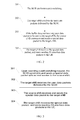
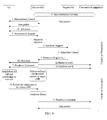
- FIG. 1 is a flow chart of X2 handover in the prior art.
- the X2 handover includes the following stages.
- the first stage is a measurement stage before handover.
- the source eNB sends a measurement control message to the UE.
- the UE sends a measurement reports message to the source eNB.
- the second stage is a handover preparation stage.
- Block 3 the source eNB performs a handover decision.
- the source eNB sends a handover request to the target eNB.
- Block 5 the target eNB performs an admission control.
- the target eNB sends a response for the handover request (e.g. Handover Request Ack) to the source eNB.
- a response for the handover request e.g. Handover Request Ack
- the source eNB sends a handover command to the UE.
- the third stage is a handover execution stage.
- the UE sends a synchronization message to the target eNB.
- the target eNB sends a message for allocating an uplink to the UE (e.g. UL allocation and Tracking Area for UE).
- a message for allocating an uplink to the UE e.g. UL allocation and Tracking Area for UE.
- the UE sends a handover confirm message to the target eNB.
- the fourth stage is a handover completion stage.
- the target eNB sends a handover complete message to the SGW.
- the SGW performs a path switching, and sends a response for the handover complete (e.g.Handover Complete Ack) to the target eNB.
- a handover complete e.g.Handover Complete Ack
- the target eNB sends a release resource message to the source eNB.
- the SGW Before the handover completion stage, the SGW sends user data packets to the source eNB; and in the handover completion stage, the SGW sends user data packets to the target eNB after performing the path switching.
- the source eNB Before the handover execution stage, the source eNB directly sends user data packets delivered by the SGW to the UE.
- the source eNB disconnects with the UE, the source eNB cannot directly send the user data packets delivered by the SGW to the UE, the source eNB forwards the user data packets delivered by the SGW to the target eNB via an X2 interface, and the target eNB sends X2-interface data packets forwarded by the source eNB (the user data packets forwarded between X2 interfaces of the eNBs are referred to as "X2-interface data packets" for short) to the UE upon receiving the handover confirm message from the UE.
- the target eNB receives S1-interface data packets (the user data packets delivered by the SGW to the eNBs are referred to as "S1-interface data packets" for short), and to ensure the sequence of the user data packets received by the UE, the target eNB sends the S1-interface data packets after sending the X2-interface data packets.
- the target eNB starts a timer after receiving the handover confirm message from the UE, then sends the X2-interface data packets before the timer expires, and sends the S1-interface data packets after the timer expires.
- the SGW adds an end marker to the last user data packet to be sent to the source eNB before performing the path switching, and then sends the user data packet with the end marker to the source eNB.
- the source eNB forwards the user data packet with the end marker to the target eNB.
- the target eNB On receiving the user data packet with the end marker, the target eNB realizes that all the user data packets at the source eNB have already been sent out, and starts sending the S1-interface data packets after forwarding the user data packet with the end marker to the UE.
- the source eNB will not receive the user data packet with the end marker, and the target eNB will not receive the user data packet with the end marker forwarded by the source eNB. Thereby, the target eNB is unable to figure out when the user data packets at the source eNB will be sent out, and has to wait for the timer to expire so as to send the S1-interface data packets. Therefore, the target eNB has a low user data packet forwarding efficiency in the X2 handover.
- the embodiments of present invention provide a data forwarding method, an eNB, and a LTE network during handover, so as to improve the user data packet forwarding efficiency of a target eNB in an X2 handover.
- a data forwarding method in a handover completion stage between eNBs without involving a core network includes the following Blocks.
- a target eNB receives user data packets delivered by a SGW after the SGW performs a path switching, and forwards the user data packets delivered by the SGW to a UE upon receiving a special data packet with an end marker from a source eNBwhere .
- an LTE network including a UE, a source eNB, a target eNB, and an SGW.
- the target eNB is configured to receive user data packets delivered by the SGW after the SGW performs a path switching, and forward the user data packets delivered by the SGW to the UE upon receiving a special data packet with an end marker sent by the source eNB.
- an eNB including a user data packet receiving unit, a special data packet determining unit, and a user data packet sending unit.
- the user data packet receiving unit is configured to receive user data packets delivered by a SGW.
- the special data packet determining unit is configured to determine whether a special data packet with an end marker is received.
- the user data packet sending unit is configured to send the user data packets delivered by the SGW received by the user data packet receiving unit to a UE when the special data packet determining unit determines that the special data packet with the end marker is received.
- a data forwarding method in the handover completion stage between eNBs without involving a core network includes the following Blocks.
- a SGW performs a path switching.
- a target eNB receives user data packets delivered by the SGW. If a source eNB determines that some user data packets in a data sending buffer need to be sent to the target eNB, the source eNB adds an end marker to the last user data packet to be sent to the target eNB, and sends the packet to the target eNB.
- the target eNB forwards the user data packets delivered by the SGW to the UE after sending the user data packet with the end marker to the UE upon receiving the user data packet with the end marker.
- the source eNB determines that no user data packets in the data sending buffer need to be sent to the target eNB, the source eNB generates and sends the special data packet with an end marker to the target eNB.
- the target eNB forwards the user data packets delivered by the SGW to the UE upon receiving the special data packet with the end marker.
- a data forwarding method in the handover completion stage between eNBs without involving a core network includes the following Blocks.
- a target eNB acquires a GPRS Tunneling Protocol User (GTP_U) sequence number of a next user data packet to be sent by a source eNB and a GTP_U sequence number of a first user data packet sent by a SGW.
- GTP_U GPRS Tunneling Protocol User
- the target eNB determines an end of sending user data packets by the source eNB to the target eNB according to the GTP_U sequence number of the next user data packet to be sent by the source eNB and the GTP_U sequence number of the first user data packet sent by the SGW, and sends the user data packets delivered by the SGW to a UE.
- an LTE network including a UE, an SGW, a target eNB, and a source eNB.
- the target eNB is configured to acquire a GTP_U sequence number of a next user data packet to be sent by the source eNB and a GTP_U sequence number of a first user data packet sent by an SGW, and determine an end of sending user data packets by the source eNB to the target eNB according to the GTP_U sequence number of the next user data packet to be sent by the source eNB and the GTP_U sequence number of the first user data packet sent by the SGW, and sends the user data packets delivered by the SGW to the UE.
- an eNB including a next sequence number acquiring unit, a first sequence number acquiring unit, a sending end determining unit, and a user data packet sending unit.
- the next sequence number acquiring unit is configured to acquire a GTP_U sequence number of a next user data packet to be sent by a source eNB.
- the first sequence number acquiring unit is configured to acquire a GTP_U sequence number of a first user data packet sent by an SGW.
- the sending end determining unit is configured to determine whether the source eNB finishes sending user data packets according to the GTP_U sequence number of the next user data packet to be sent by the source eNB and the GTP_U sequence number of the first user data packet sent by the SGW.
- the user data packet sending unit is configured to send user data packets delivered by the SGW to a UE when the sending end determining unit determines an end of sending user data packets by the source eNB.
- a method for acquiring a sequence number includes the following Blocks.
- an MME acquires from a source SGW a GTP_U sequence number of a next user data packet to be sent by the source SGW.
- the MME sends the GTP_U sequence number to a target SGW, and the GTP_U sequence number is regarded as a GTP_U sequence number of a first user data packet of the target SGW.
- the MME sends the GTP_U sequence number of the next user data packet to be sent by the source SGW to an eNB, so that GTP_U sequence numbers between the source SGW and the target SGW form a certain corresponding relation.
- an MME including a request sending unit, a sequence number receiving unit, and a sequence number sending unit is also provided.
- the request sending unit is configured to send a request for acquiring a GTP_U sequence number of a next user data packet to be sent to a source SGW in an SGW relocation stage.
- the sequence number receiving unit is configured to receive the GTP_U sequence number of the next user data packet to be sent from the source SGW.
- the sequence number sending unit is configured to send the GTP_U sequence number of the next user data packet to be sent by the source SGW received by the sequence number receiving unit to a target SGW, or is configured to send the GTP_U sequence number of the next user data packet to be sent by the source SGW received by the sequence number receiving unit to an NodeB, so that GTP_U sequence numbers between the source SGW and the target SGW form a certain corresponding relation.
- an LTE network includes an MME, a target SGW, and a source SGW is further provided.
- the MME is configured to acquire a GTP_U sequence number of a next user data packet to be sent by the source SGW from the source SGW, and send the GTP_U sequence number to the target SGW.
- the target SGW is configured to receive the GTP_U sequence number of a next user data packet to be sent by the source SGW, and regard the GTP_U sequence number as a GTP_U sequence number of a first user data packet of the target SGW.
- a data forwarding method is further provided.
- the method includes the following Blocks.
- a SGW receives a request sent by a source eNB upon receiving a response for handover request to stop sending user data packets to the source eNB.
- the SGW terminates sending user data packets to the source eNB.
- the SGW sends user data packets to a target eNB after the SGW performs a path switching.
- the target eNB receives a response for handover completion from the SGW, and sends the user data packets delivered by the SGW to a UE.
- a data forwarding method is further provided.
- the method includes the following Blocks.
- a source eNB sends a handover command to a UE, and then sends a control plane message and user data packets to a target eNB.
- the control plane message carries a first Packet Data Convergence Protocol (PDCP) sequence number to be set by the target eNB and a GTP_U sequence number.
- PDCP Packet Data Convergence Protocol
- the user data packets sent by the source eNB to the target eNB include: user data packets processed by a PDCP layer and/or user data packets without being processed by the PDCP layer.
- the target eNB forwards the user data packets sent by the source eNB to the target eNB to the UE. If the first GTP_U sequence number to be set by the target eNB is equal to the GTP_U sequence number of the first user data packet sent by the SGW to the target eNB, the target eNB forwards the user data packets sent by the SGW to the target eNB to the UE.
- the target eNB does not need to wait for a timer to expire to forward the S1-interface data packets, thus improving the user data packet forwarding efficiency in the handover without involving a core network.
- a method for acquiring a sequence number, an MME, and an LTE network are further provided.
- the method includes the following Blocks.
- the MME acquires from a source SGW a GTP_U sequence number of a next user data packet to be sent by the source SGW, and sends the acquired GTP_U sequence number to a target SGW.
- the target SGW regards the GTP_U sequence number of the next user data packet to be sent as a GTP_U sequence number of a first user data packet sent by the target SGW itself.
- the GTP_U sequence number of the first user data packet sent by the target SGW to an eNB is consecutive to the GTP_U sequence number of the last user data packet sent by the source SGW to the eNB.
- a target eNB receives a special data packet generated by a source eNB, and accordingly determines when to forward user data packets delivered by an SGW to a UE (i.e., to forward S1-interface data packets).
- this embodiment mainly has the following Blocks.
- the SGW performs a path switching.
- the target eNB receives the user data packets delivered by the SGW.
- Block 203 after receiving a release resource message from the target eNB, if a data sending buffer of the source eNB does not have any user data packet to be sent to the target eNB, the source eNB generates and sends a special data packet with an end marker to the target eNB.
- the special data packet with the end marker carries a Packet Data Convergence Protocol (PDCP) sequence number of a next data packet to be sent by the source eNB.
- the source eNB acquires a PDCP sequence number of a latest user data packet that has been sent according to the data sending buffer, and the acquired sequence number added by 1 is the PDCP sequence number of a next data packet to be sent by the source eNB.
- PDCP Packet Data Convergence Protocol
- the special data packet with the end marker acquires a PDCP sequence number of a latest user data packet that has been sent according to the data sending buffer, and the acquired sequence number added by 1 is the PDCP sequence number of a next data packet to be sent by the source eNB.
- a certain byte of a header of the data packet is set to make the special data packet capable of indicating the end of the sending, i.e., indicating that the special data packet is the last data packet in the currently sent data packets.
- the target eNB on receiving the special data packet with the end marker sent by the source eNB, the target eNB realizes that all the X2-interface data packets have already been sent out, and starts sending the user data packets delivered by the SGW to the UE.
- the target eNB receives the special data packet with the end marker, and acquires a PDCP sequence number carried in the data packet. Before sending a first S1-interface user data packet, the target eNB calculates a PDCP sequence number of the user data packet to be sent to the UE according to the acquired PDCP sequence number of the special data packet, thus ensuring that the PDCP numbers received by the UE are consecutive.
- the source eNB when the data sending buffer does not have any user data packet, the source eNB generates and sends the special data packet with the end marker to the target eNB, so as to inform the target eNB that all the X2-interface data packets have been sent out.
- the target eNB receives the special data packet with the end marker, and sends the user data packets delivered by the SGW to the UE, that is, forwards the S1-interface data packets to the UE.
- the target eNB when the data sending buffer of the source eNB does not have any user data packet to be sent to the target eNB, the target eNB does not need to wait for a timer to expire to forward the S1-interface data packets, thus improving the user data packet forwarding efficiency in the X2 handover.
- a target eNB receives a special data packet generated by a source eNB, and accordingly determines when to forward user data packets delivered by an SGW to a UE (i.e., to forward S1-interface data packets).
- this embodiment mainly has the following Blocks.
- the SGW on receiving a path switching request, the SGW generates and sends a special data packet with an end marker to the source eNB.
- the SGW sends the special data packet with the end marker to inform the source eNB that the sending of S1-interface data packets from the SGW to the source eNB in this X2 handover process is completed.
- the structure of the special data packet is the same as that in Embodiment 1, and the details will not be repeated herein.
- the special data packet with the end marker does not contain user data, and the target eNB will not send the special data packet with the end marker to the UE after receiving the same.
- the target eNB receives the user data packets delivered by the SGW.
- the source eNB receives and sends the special data packet with the end marker to the target eNB, so as to inform the target eNB that the forwarding of X2-interface data packets from the source eNB to the target eNB in this X2 handover process is completed.
- Block 304 after receiving a response for handover completion (e.g. handover complete Ack) from the SGW, if the target eNB receives the special data packet with the end marker sent by the source eNB, the target eNB realizes that all the X2-interface data packets have already been forwarded, and starts sending the user data packets delivered by the SGW to the UE.
- a response for handover completion e.g. handover complete Ack
- Block 303 of this embodiment may be replaced by Block 3031 as follows.
- the source eNB regenerates a special data packet with an end marker according to the special data packet with the end marker sent by the SGW, and sends the regenerated special data packet with the end marker to the target eNB.
- the special data packet with the end marker regenerated by the source eNB carries a PDCP sequence number of a next data packet to be sent by the source eNB.
- the source eNB acquires a PDCP sequence number of a latest user data packet that has been sent according to a data sending buffer, and the acquired sequence number added by 1 is the PDCP sequence number of a next data packet to be sent by the source eNB.
- the target eNB receives the special data packet with the end marker, and acquires the PDCP sequence number carried in the data packet.
- the target eNB Before sending a first S1-interface user data packet, the target eNB calculates a PDCP sequence number of the user data packet to be sent to the UE according to the acquired PDCP sequence number of the special data packet, thus ensuring that the PDCP numbers received by the UE are consecutive.
- the SGW in the X2 handover completion stage, the SGW generates and sends the special data packet with the end marker to inform the source eNB that all the data packets delivered by the SGW in this X2 handover process have been sent out.
- the source eNB sends the special data packet with the end marker to the target eNB, so as to inform the target eNB that all the user data packets forwarded via the X2 interfaces in this X2 handover process have been sent out.
- the target eNB receives the special data packet with the end marker, and sends the user data packets delivered by the SGW to the UE, that is, forwards the S1-interface data packets to the UE. Therefore, through the technical solutions of this embodiment, the target eNB does not need to wait for a timer to expire to forward the S1-interface data packets, thus improving the user data packet forwarding efficiency in the X2 handover.
- a target eNB receives a user data packet with an end marker or a special data packet generated by a source eNB, and accordingly determines when to forward user data packets delivered by an SGW to a UE (i.e., to forward S1-interface data packets).
- this embodiment mainly has the following Blocks.
- the SGW performs a path switching.
- the target eNB receives the user data packets delivered by the SGW.
- the source eNB determines whether a data sending buffer thereof has any user data packet to be sent to the target eNB, and if the data sending buffer has any user data packet to be sent to the target eNB, Block 404 is performed; if the data sending buffer dose not have any user data packet to be sent to the target eNB, Block 405 is performed.
- Block 404 the source eNB adds an end marker to a last user data packet in the user data packets, and sends the user data packet with the end marker to the target eNB. Afterward, Block 406 is performed.
- Block 405 the source eNB generates and sends a special data packet with an end marker to the target eNB. Afterward, Block 407 is performed.
- the special data packet with the end marker carries a PDCP sequence number of a next data packet to be sent by the source eNB.
- the source eNB acquires a PDCP sequence number of a latest user data packet that has been sent according to the data sending buffer, and the acquired sequence number added by 1 is the PDCP sequence number of a next data packet to be sent by the source eNB.
- a certain byte of a header of the data packet is set to make the special data packet capable of indicating the end of the sending, i.e., indicating that the special data packet is the last data packet in the currently sent data packets.
- the structure of the special data packet is the same as that in Embodiment 1, and the details will not be repeated herein.
- the special data packet with the end marker does not contain user data, and the target eNB will not send the special data packet to the UE after receiving the same.
- Block 406 the target eNB receives and sends the user data packet with the end marker to the UE. Afterward, Block 408 is performed.
- the target eNB receives the special data packet with the end marker, and Block 408 is performed.
- the target eNB receives the special data packet with the end marker, and acquires a PDCP sequence number carried in the data packet. Before sending a first S1-interface user data packet, the target eNB calculates a PDCP sequence number of the user data packet to be sent to the UE according to the acquired PDCP sequence number of the special data packet, thus ensuring that the PDCP numbers received by the UE are consecutive.
- the target eNB sends S1-interface data packets to the UE.
- the source eNB determines whether the data sending buffer thereof has any user data packet to be sent to the target eNB, and then generates and sends the user data packet with the end marker or the special data packet with the end marker to the target eNB, so as to inform the target eNB that all the X2-interface data packets have been sent out.
- the target eNB then forwards the S1-interface user data packets to the UE.
- the target eNB does not need to wait for a timer to expire to forward the S1-interface data packets, thus improving the user data packet forwarding efficiency in the X2 handover.
- an LTE network including a source eNB, a target eNB, a UE, and an SGW is provided.
- the target eNB After receiving a response for handover completion (e.g. handover complete Ack) from the SGW, if the target eNB receives a special data packet with an end marker sent by the source eNB, the target eNB starts sending S1-interface user data packets to the UE.
- handover complete Ack a response for handover completion
- the target eNB further includes a user data packet receiving unit 1210, a special data packet determining unit 1220, and a user data packet sending unit 1230.
- the user data packet receiving unit 1210 receives user data packets delivered by the SGW.
- the special data packet determining unit 1220 determines whether the special data packet with the end marker is received, and if the special data packet with the end marker is received, a result that the special data packet is received is generated.
- the user data packet sending unit 1230 sends the S 1 interface user data packets received by the user data packet receiving unit to the UE when the special data packet determining unit generates the result that the special data packet is received.
- the special data packet with the end marker received by the target eNB may be generated by the SGW or by the source eNB.
- a certain byte of a header of the data packet is set to make the special data packet capable of indicating the end of the sending, i.e., indicating that the special data packet is the last data packet in the currently sent data packets.
- the structure of the special data packet is the same as that in Embodiment 1, and the details will not be repeated herein.
- the special data packet with the end marker does not contain user data, and the target eNB will not send the special data packet to the UE after receiving the same.
- the generation of the special data packet by the SGW and the source eNB is respectively described as follows.
- the SGW In the X2 handover completion stage, after performing a path switching, the SGW generates and sends a special data packet with an end marker to the source eNB.
- the source eNB receives and forwards the special data packet with the end marker from the SGW to the target eNB.
- the target eNB receives the special data packet with the end marker, and starts sending S1-interface data packets to the UE.
- the source eNB receives a release resource message sent by the target eNB, then generates a special data packet with an end marker if it is determined that a data sending buffer of the source eNB does not have any user data packet to be sent to the target eNB, and sends the special data packet with the end marker to the target eNB.
- the target eNB receives the special data packet with the end marker, and starts sending S1-interface data packets to the UE.
- the source eNB adds an end marker to the last user data packet to be sent to the target eNB, and then sends the user data packet with the end marker to the target eNB.
- the target eNB starts sending the S 1 -interface data packets after forwarding the user data packet with the end marker to the UE.
- the generation of the special data packet with the end marker by the eNB further includes another implementation aspect.
- the SGW generates a special data packet with an end marker to inform the source eNB that all the S1-interface data packets delivered by the SGW to the source eNB have been sent out.
- the source eNB receives the special data packet, and regenerates a special data packet with an end marker.
- the regenerated special data packet with the end marker carries a PDCP sequence number of a next user data packet to be sent by the source eNB.
- the target eNB On receiving the regenerated special data packet with the end marker, the target eNB starts sending the S1-interface data packets after forwarding the special data packet to the UE.
- the source eNB acquires a PDCP sequence number of a latest user data packet that has been sent according to the data sending buffer, and the acquired sequence number added by 1 is the PDCP sequence number of a next data packet to be sent by the source eNB.
- the target eNB receives the special data packet with the end marker, and acquires a PDCP sequence number carried in the data packet. Before sending a first S1-interface user data packet, the target eNB calculates a PDCP sequence number of the user data packet to be sent to the UE according to the acquired PDCP sequence number of the special data packet, thus ensuring that the PDCP numbers received by the UE are consecutive.
- a target eNB determines when X2-interface data packets at a source eNB are all sent out according to a GPRS Tunneling Protocol User (GTP_U) sequence number of a next user data packet to be sent by the source eNB and a GTP_U sequence number of a first user data packet sent by an SGW, and then starts sending S1-interface data packets to a UE.
- GTP_U GPRS Tunneling Protocol User
- the source eNB receives a response for handover request (e.g handover request Ack) sent by the target eNB, acquires a GTP_U sequence number of a next user data packet to be sent by the source eNB, and sends the acquired GTP_U sequence number to the target eNB.
- a response for handover request e.g handover request Ack
- the source eNB receives the handover request Ack from the target eNB, and terminates sending the user data packets to the UE.
- the SGW delivers the user data packets to the source eNB via a GPRS Tunneling Protocol (GTP).
- GTP GPRS Tunneling Protocol
- Each user data packet carries a GTP_U sequence number, and the GTP_U sequence numbers carried in the user data packets sent by the SGW are consecutive, which are generally in an ascending order.
- the source eNB acquires a PDCP sequence number of a latest user data packet that has been sent according to the data sending buffer, and the acquired sequence number added by 1 is the PDCP sequence number of a next data packet to be sent by the source eNB.
- the source eNB may forward the GTP_U sequence number of the next user data packet to be sent by the source eNB to the target eNB in the following two manners.
- a message carrying the GTP_U sequence number and the PDCP sequence number of the next user data packet to be sent by the source eNB on a control plane is generated, and then the message is sent to the target eNB, for example, an HO commit message carrying the GTP_U sequence number and the PDCP sequence number of the next user data packet to be sent by the source eNB is sent.
- the other manner is combining the method of generating a special data packet by the source eNB in Embodiment 1.
- the source eNB After receiving a handover request Ack from the target eNB, the source eNB terminates sending the user data packets to the UE, generates a special data packet carrying the GTP_U sequence number and the PDCP sequence number of the next user data packet to be sent by the source eNB on a user plane, and forwards the special data packet to the source eNB as a first data packet sent by the target eNB to the source eNB.
- the special data packet does not contain user data, and the target eNB will not send the special data packet to the UE after receiving the same.
- the target eNB acquires the GTP_U sequence number of the next user data packet to be sent by the source eNB and the GTP_U sequence number of the first user data packet sent by the SGW.
- the SGW sends the user data packets to the target eNB.
- the target eNB acquires the GTP_U sequence number of the first user data packet sent by the SGW.
- the SGW maintains the continuity of the GTP_U sequence numbers during the path switching. Specifically, the SGW performs a path switching after receiving a handover complete message from the target eNB, and then sets a GTP_U sequence number of the path after the handover according to a GTP_U sequence number of the path before the handover, thus ensuring that the GTP_U sequence numbers are consecutive.
- the target eNB determines that the sending of user data packets from the source eNB to the target eNB (i.e., X2-interface data packets) is completed according to the GTP_U sequence number of the next user data packet to be sent by the source eNB and the GTP_U sequence number of the first user data packet sent by the SGW, and then sends user data packets delivered by the SGW (i.e., S 1-interface data packets) to the UE.
- a response for handover completion e.g.handover complete Ack
- the completion of the sending of the user data packets from the source eNB to the target eNB can be determined according to the GTP_U sequence number of the next user data packet to be sent by the source eNB and the GTP_U sequence number of the first user data packet sent by the SGW in various manners, and three of them are described as follows.
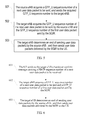
- the GTP_U sequence number of the next user data packet to be sent by the source eNB is 1000
- the GTP_U sequence number of the first user data packet sent by the SGW is 1000
- the interface conversion no data is forwarded via the X2 interface, and the target eNB directly sends the S1-interface data packets to the UE.
- the GTP_U sequence numbers of the next user data packet to be sent by the source eNB is 1000, and the GTP_U sequence number of the first user data packet sent by the SGW is 1051, in this X2 handover process, the GTP_U sequence numbers of the user data packets sent by the source eNB to the target eNB fall in a range of 1000 to 1050.
- the target eNB has various methods to determine whether the user data packets forwarded by the source eNB are all sent out or not. In an example, the target eNB saves the calculated GTP_U sequence numbers in the range of 1000 to 1050 in a database.
- the target eNB On receiving a user data packet via the X2 interface, the target eNB acquires a GTP_U sequence number of the user data packet, and deletes the sequence number from the database that records all the GTP_U sequence numbers when sending the user data packet to the UE.
- the sequence number in the database is 0, the user data packets required to be forwarded by the source eNB via the X2 interfaces have been sent out, and the target eNB forwards to the UE all the user data packets sent from the source eNB.
- the target eNB on receiving the user data packets via the X2 interfaces, acquires the GTP_U sequence numbers of the user data packets, and saves the acquired GTP_U sequence numbers of the user data packets in another database when forwarding the user data packets to the UE.
- the records in the database that saves all the acquired GTP_U sequence numbers of the user data packets are identical to those in the previous database that saves all the GTP_U sequence numbers, it indicates the user data packets required to be forwarded by the source eNB via the X2 interfaces have been sent out, and the target eNB forwards all the user data packets from the source eNB to the UE.
- the GTP_U sequence number of the next user data packet to be sent by the source eNB is 1000, and the GTP_U sequence number of the first user data packet sent by the SGW is 1051, in this X2 handover process, the maximum GTP_U sequence number among the user data packets forwarded by the source eNB to the target eNB via the X2 interfaces is 1050. If the user data packet with the GTP_U sequence number of 1050 is received via the X2 interface, it is determined an end of sending user data packets by the source eNB.
- the source eNB may not send the GTP_U sequence number of the next user data packet to be sent to the target eNB, but instead sends a GTP_U sequence number of a last user data packet delivered by the source eNB to the UE in the X2 handover preparation stage to the target eNB.
- the target eNB determines whether the source eNB finishes sending user data packets according to the GTP_U sequence number of the last user data packet delivered by the source eNB to the UE and the GTP_U sequence number of the first user data packet sent by the SGW.
- the source eNB sends the GTP_U sequence number of the next user data packet to be sent to the target eNB.
- the target eNB determines an end of sending user data packets by the source eNB according to the GTP_U sequence number of the next user data packet to be sent by the source eNB and the GTP_U sequence number of the first user data packet sent by the SGW, and then forwards the user data packets delivered by the SGW to the UE.
- the target eNB does not need to wait for a timer to expire to forward the S1-interface data packets, thus improving the user data packet forwarding efficiency in the X2 handover.
- a target eNB determines when X2-interface data packets at a source eNB are all sent out according to a GTP_U sequence number of a next user data packet to be sent by the source eNB and a GTP_U sequence number of a first user data packet sent by an SGW, and then starts sending S1-interface data packets to a UE.
- the target eNB acquires the GTP_U sequence number of the next user data packet to be sent by the source eNB according to a PDCP sequence number of a next user data packet to be received by the UE.
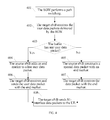
- FIG. 6 is a flow chart of the data forwarding method of this embodiment.
- Block 601 in an X2 handover execution stage, the UE sends the PDCP sequence number of the next user data packet to be received by the UE to the target eNB.
- the UE when sending a handover confirm message to the target eNB, the UE adds the PDCP sequence number of the next user data packet to be received by the UE to the handover confirm message, and sends to the target eNB the handover confirm message carrying the PDCP sequence number of the next user data packet to be received.
- the PDCP sequence number of the next user data packet to be received is calculated according to a PDCP sequence number of a last user data packet received by the UE from the source eNB in an X2 handover preparation stage.
- the target eNB acquires a GTP_U sequence number of a next user data packet to be sent by the source eNB and a GTP_U sequence number of a first user data packet sent by the SGW.
- the target eNB acquires the PDCP sequence number of the next user data packet to be received by the UE.
- the target eNB On receiving a user data packet carrying the PDCP sequence number sent by the source eNB, the target eNB acquires the GTP_U sequence number carried in the user data packet, and regards the acquired GTP_U sequence number as the GTP_U sequence number of the next user data packet to be sent by the target eNB after the source eNB receives a response for handover request (e.g. Handover Request Ack).
- a response for handover request e.g. Handover Request Ack
- the GTP_U sequence number is acquired through control plane signaling, a message carrying the GTP_U sequence number of the next user data packet to be sent by the source eNB and the PDCP sequence number is generated on a control plane, and the message is then sent to the target eNB.
- the SGW maintains the continuity of the GTP_U sequence numbers during the path switching. Specifically, the SGW performs a path switching after receiving a handover complete message from the target eNB, and then sets a GTP_U sequence number of the path after the handover according to a GTP_U sequence number of the path before the handover, thus ensuring that the GTP_U sequence numbers are consecutive.
- the target eNB determines that the sending of user data packets from the source eNB to the target eNB (i.e., X2-interface data packets) is completed according to the GTP_U sequence number of the next user data packet to be sent by the source eNB and the GTP_U sequence number of the first user data packet sent by the SGW, and then sends user data packets delivered by the SGW (i.e., S1-interface data packets) to the UE.
- handover complete Ack a response for handover completion (e.g. handover complete Ack) sent by the SGW
- the completion of the sending of the user data packets from the source eNB to the target eNB can be determined according to the GTP_U sequence number of the next user data packet to be sent by the source eNB and the GTP_U sequence number of the first user data packet sent by the SGW in the same manner as the method in Embodiment 5, which will not be repeated herein.
- the UE acquires the PDCP sequence number of the next user data packet to be received according to the PDCP sequence number of the last user data packet received from the source eNB in the X2 handover preparation stage, and then sends the acquired PDCP sequence number to the target eNB.
- the target eNB On receiving a user data packet carrying the PDCP sequence number of the user data packet to be received from the source eNB, the target eNB acquires the GTP_U sequence number carried in the user data packet.
- the source eNB informs the target eNB of the GTP_U sequence number of the next user data packet to be sent through X2 control signaling, and the target eNB regards the acquired GTP_U sequence number as the GTP_U sequence number of the next user data packet to be sent after the source eNB receives a handover request Ack.
- the target eNB determines that the source eNB receives and forwards the user data packets according to the GTP_U sequence number of the first user data packet sent by the target eNB itself and the GTP_U sequence number of the first user data packet sent by the SGW, and then sends the user data packets delivered by the SGW to the UE. Thereby, the target eNB does not need to wait for a timer to expire to forward the S1-interface data packets, thus improving the user data packet forwarding efficiency in the X2 handover.
- an LTE network including a source eNB, a target eNB, and an SGW is provided.
- the source eNB acquires a GTP_U sequence number of a next user data packet to be sent on receiving a response for handover request (e.g. handover request Ack), and sends to the target eNB a message carrying the GTP_U sequence number of the next user data packet to be sent by the source eNB after receiving the handover request Ack.
- the target eNB acquires the GTP_U sequence number of the next user data packet to be sent by the source eNB and a GTP_U sequence number of a first user data packet sent by the SGW.
- the target eNB receives a response for handover completion (e.g.
- handover complete Ack from a core network equipment, determines an end of sending user data packets by the source eNB according to the GTP_U sequence number of the next user data packet to be sent by the source eNB and the GTP_U sequence number of the first user data packet sent by the SGW, and then sends user data packets delivered by the SGW to the UE.
- the target eNB includes a next sequence number acquiring unit 1310, a first sequence number acquiring unit 1320, a sending end determining unit 1330, and a data packet sending unit 1340.
- the next sequence number acquiring unit 1310 is configured to acquire the GTP_U sequence number of the next user data packet to be sent by the source eNB on receiving the handover request Ack.
- the first sequence number acquiring unit 1320 is configured to acquire the GTP_U sequence number of the first user data packet sent by the SGW.
- the sending end determining unit 1330 is configured to determine whether the source eNB finishes sending the user data packets according to the GTP_U sequence number of the next user data packet to be sent acquired by the next sequence number acquiring unit and the GTP_U sequence number of the first user data packet acquired by the first sequence number acquiring unit after the target eNB receives a response for handover completion (e.g.handover complete Ack) from a core network equipment in a handover completion stage between the eNBs without involving a core network. If the sending end determining unit 1330 determines an end of sending user data packets by the source eNB the data packet sending unit 1340 is configured to send the user data packets delivered by the SGW to the UE.
- a response for handover completion e.g.handover complete Ack
- the target eNB may acquire the GTP_U sequence number of the next user data packet to be sent by the source eNB in the following manner: the source eNB carries the GTP_U sequence number of the next user data packet to be sent in a message, and then sends the message to the target eNB.
- a method described below may also be adopted.
- the UE sends to the target eNB a PDCP sequence number of a next user data packet to be received.
- the target eNB acquires the PDCP sequence number of the next user data packet to be received from the UE.
- the target eNB On receiving the user data packet carrying the PDCP sequence number sent by the source eNB, acquires the GTP_U sequence number of the user data packet, and regards the acquired GTP_U sequence number as the GTP_U sequence number of the next user data packet to be sent by the source eNB.
- An SGW delivers user data packets to an eNB via a GTP.
- Each user data packet carries a GTP_U sequence number, and the GTP_U sequence numbers carried in the user data packets sent by the SGW are consecutive, which are generally in an ascending order.
- the eNB checks the user data packets sent by the SGW according to the continuity of the GTP_U sequence numbers.
- a target SGW (after relocation) is unable to know the GTP_U sequence number of the next user data packet to be sent by a source SGW (before relocation), thus resulting in that when the SGW relocation is completed, a GTP_U sequence number of a first user data packet sent by the target SGW to the eNB is inconsecutive to a GTP_U sequence number of a last user data packet sent by the source SGW to the eNB.
- the GTP_U sequence number of the next user data packet to be sent by the source SGW refers to the GTP_U sequence number of the user data packet to be sent by the source SGW after sending the last user data packet to the eNB in the SGW relocation stage.
- An MME acquires from the source SGW the GTP_U sequence number of the next user data packet to be sent by the source SGW, and sends the acquired GTP_U sequence number to the target SGW.
- the target SGW regards the GTP_U sequence number of the next user data packet to be sent as the GTP_U sequence number of the first user data packet sent to the eNB.
- the target SGW sends the first user data packet carrying the GTP_U sequence number to the eNB. Thereby, the continuity of the GTP_U sequence numbers of the data packets sent by the eNB is maintained.
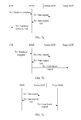
- the eNB sends a handover complete message (Ho complete) to the MME after the handover process is completed.
- Ho complete a handover complete message
- the MME receives the Ho complete message, and sends a data request message (Data req) to the source SGW for requiring the GTP_U sequence number of the next data packet to be sent by the source SGW.
- Data req data request message
- the source SGW sends the GTP_U sequence number of the next data packet to be sent by the source SGW to the MME through a data request Ack message (Data req ack).
- the MME sends to the eNB the GTP_U sequence number of the next data packet to be sent by the source SGW via a response for handover completion (e.g. handover complete Ack) on a control plane, such that the GTP_U sequence numbers between the SGWs form a certain corresponding relation, and thus become consecutive.
- handover completion e.g. handover complete Ack
- the target eNB adds the GTP_U sequence number as an offset to the GTP_U sequence number of the first data packet delivered by the target SGW, and then compares the acquired GTP_U sequence number with the GTP_U sequence number of the data packet forwarded by the source eNB, so as to determine whether the data forwarding via the X2 interface is completed or not.
- the target eNB directly sends the data delivered by the SGW to the UE; and if the former is smaller than the latter, some data is forwarded via the X2 interface, and the target eNB sends the data delivered by the SWG to the UE after forwarding the X2-interface data to the UE.
- the MME sends the GTP_U sequence number of the data packet to be sent by the source SGW to the target SGW via a create bearer request message (Create bearer req).
- the MME sends a data request message (Data req) to the source SGW for requiring the GTP_U sequence number of the next data packet to be sent by the source SGW.
- Data req data request message
- the SGW sends the GTP_U sequence number of the next data packet to be sent by the source SGW to the MME through a data request Ack message (Data req ack).
- the MME informs the target SGW of the GTP_U sequence number of the next data packet to be sent by the source SGW via the Create bearer req message.
- Blocks 7d1 to 7d3 are the same as Blocks 7c1 to 7c3, and this manner further includes the following Block before Block 7d1.
- the source SGW sends an SGW relocation request to the MME.
- the MME receives the relocation request, and performs Block 7d1.
- the MME acquires the GTP_U sequence number of the next user data packet to be sent by the source SGW, and sends the acquired GTP_U sequence number to the target SGW.
- the target SGW regards the GTP_U sequence number of the next user data packet to be sent as the GTP_U sequence number of the first user data packet sent by the target SGW itself.
- the MME acquires the GTP_U sequence number of the next user data packet to be sent by the source SGW, and sends the acquired GTP_U sequence number to the eNB, such that the GTP_U sequence numbers between the SGWs form a certain corresponding relation.
- the GTP_U sequence number of the first user data packet sent by the target SGW to an eNB is consecutive to the GTP_U sequence number of the last user data packet sent by the source SGW to the eNB.
- an LTE network including an MME, a source SGW, and a target SGW.
- the MME is configured to send to the source SGW a request for acquiring a GTP_U sequence number of a next user data packet to be sent in an SGW relocation stage, and send the acquired GTP_U sequence number from the source SGW to the target SGW; or, send the acquired GTP_U sequence number from the source SGW to an eNB, such that the GTP_U sequence numbers between the source SGW and the target SGW form a certain corresponding relation.
- the source SGW is configured to receive the request from the MME for acquiring the GTP_U sequence number of the next user data packet to be sent, and send the acquired GTP_U sequence number to the MME.
- the target SGW is configured to receive the GTP_U sequence number of the next user data packet to be sent from the MME, and regard the GTP_U sequence number of the next user data packet to be sent as the GTP_U sequence number of the first user data packet sent by the target SGW itself.
- the MME includes a request sending unit 1410, a sequence number receiving unit 1420, and a sequence number sending unit 1430.
- the request sending unit 1410 is configured to send to the source SGW the request for acquiring the GTP_U sequence number of the next user data packet to be sent by the source SGW in the SGW relocation stage.
- the sequence number receiving unit 1420 is configured to receive the GTP_U sequence number of the next user data packet to be sent by the source SGW.
- the sequence number sending unit 1430 is configured to send to the target SGW the GTP_U sequence number of the next user data packet to be sent by the source SGW received by the sequence number receiving unit, or is configured to send to the eNB the GTP_U sequence number of the next user data packet to be sent by the source SGW, such that the GTP_U sequence numbers between the source SGW and the target SGW form a certain corresponding relation.
- a data forwarding method is provided in this embodiment, which includes the following Blocks.
- a source eNB receives a response for handover request (e.g. handover request Ack) from a target eNB, and sends to an SGW a request for terminating sending user data packets to the source eNB.
- a response for handover request e.g. handover request Ack
- the SGW sends the user data packets to the source eNB, and the source eNB forwards user data packets delivered by the SGW to the UE.
- the source eNB may also send to the SGW the request for terminating sending user data packets to the source eNB after sending a handover command to the UE.
- Block 802 the SGW terminates sending the user data packets to the source eNB on receiving the request for terminating sending user data packets to the source eNB.
- This Block may refer to Block 6a or 7a in FIG. 9 .
- the SGW performs a path switching, and sends the user data packets to the target eNB.
- the target eNB receives a response for handover completion (e.g. handover complete Ack) from the SGW, and starts sending the user data packets delivered by the SGW to the UE.
- a response for handover completion e.g. handover complete Ack
- the X2 handover may fail as the UE is unable to keep synchronous to the target eNB or due to other reasons.
- the source eNB restores its connection after determining that the X2 handover fails, and sends to the SGW a request for restoring the sending of the user data packets to the source eNB.
- the SGW receives the request for restoring the sending of the user data packets to the source eNB, and starts sending the user data packets to the source eNB.
- the above process may refer to Block 9 in FIG. 9 .
- FIG. 9 is a flow chart of restoring the sending of S1-interface data packets to the source eNB when the X2 handover fails according to this embodiment, which includes the following Blocks.
- Blocks 1 to Block 5 are similar to Blocks 1 to 5 in the background of the invention, and the details will not be repeated herein.
- the target eNB sends a handover request Ack to the source eNB, and the source eNB sends to a core network equipment a handover notification message (Ho notify) carrying a request for terminating sending user data packets to the source eNB.
- Ho notify handover notification message
- the source eNB sends a handover command to the UE.
- the UE sends to the source eNB a message for restoring the connection to the source eNB.
- the UE restores the connection to the source eNB, and the source eNB sends to the SGW a request for restoring the sending of the user data packets to the source eNB.
- the SGW receives the request for restoring the sending of the user data packets to the source eNB, and starts sending the user data packets to the source eNB.
- the source eNB sends to the SGW the request for terminating sending user data packets to the source eNB after receiving the handover request Ack from the target eNB, and the SGW terminates sending the user data packets to the source eNB on receiving the request.
- the source eNB will not forward the user data packets to the target eNB via the X2 interfaces.
- the target eNB receives the handover complete Ack from the SGW, and starts sending the user data packets delivered by the SGW to the UE. Thereby, the target eNB does not need to wait for a timer to expire to forward the S1-interface data packets, thus improving the user data packet forwarding efficiency in the X2 handover.
- the eNB sends to the SGW the request for restoring the sending of the user data packets to the source eNB after determining that the X2 handover fails, and SGW starts sending the user data packets to the source eNB on receiving the request.
- the network restores to a state before the X2 handover, so as to ensure a normal operation of the network.
- a data forwarding method is provided in this embodiment, which includes the following Blocks.
- a source eNB sends a handover command to a UE, the source eNB disconnects the UE, and the source eNB forwards data via X2 interfaces.
- the source eNB sends a control plane message to a target eNB, and the control plane message carries a PDCP sequence number and a GTP_U sequence number of a first user data packet required to be set by the target eNB.
- the target eNB determines when X2-interface data packets at the source eNB are all sent out according to the above GTP_U sequence number and the GTP_U sequence number of the first user data packet sent by the SGW, and then starts sending S1-interface data packets to the UE.
- this embodiment mainly has the following Blocks.
- the source eNB disconnects the UE, and sends a control plane message to the target eNB, for example, a handover confirm message (Ho commit), referring to the message at Block 7a in FIG. 10 .
- a handover confirm message Ho commit
- the control plane message carries a PDCP sequence number and a GTP_U sequence number of a first user data packet required to be set by the target eNB.
- the PDCP sequence number of the first user data packet required to be set by the target eNB is acquired by adding 1 to a PDCP sequence number of a last user data packet sent by the source eNB from a PDCP layer to a lower layer, and a GTP_U sequence number of a next user data packet to be sent by the source eNB is acquired by adding 1 to a GTP_U sequence number of the last user data packet sent by the source eNB from the PDCP layer to a lower layer.
- the source eNB forwards the user data packets to the target eNB.
- the source eNB forwards two types of user data packets to the target eNB.
- the data forwarded by the source eNB to the target eNB via the X2 interfaces includes three cases formed by the above two types of user data packets, i.e., two cases respectively including one type of data packets, and one case including the two types of data packets.
- the source eNB sends user data packets with PDCP sequence numbers of 1, 3 to the target eNB, i.e., the two data packets are processed by the PDCP layer and respectively acquire a PDCP sequence number.
- the source eNB sends a control plane message (for example, Ho commit) to the target eNB, and the control plane message carries a PDCP sequence number of 4 and a GTP_U sequence number of 5.
- the target eNB receives the control plane message, and sets a PDCP sequence number of a next data packet to be sent to the UE as 4.
- the target eNB determines whether X2-interface data packets (i.e., data forwarded by the source eNB to the target eNB via the X2 interfaces) are all sent out according to the GTP_U sequence number of the next user data packet to be sent by the source eNB carried in the control plane message (for example, Ho commit), and if X2-interface data packets are not all sent out, continues sending the X2-interface data packets to the UE; otherwise, starts sending S1-interface data packets to the UE.
- X2-interface data packets i.e., data forwarded by the source eNB to the target eNB via the X2 interfaces
- the target eNB acquires a GTP_U sequence number of a first S1-interface data packet sent by the SGW to the target eNB, and compares the acquired GTP_U sequence number with the GTP_U sequence number in the control plane message.
- the source eNB still has X2-interface data packets required to be sent to the target eNB, and the number of the left X2-interface data packets can be figured out according to a difference between the above two GTP_U sequence numbers, so that the target eNB continues sending the X2-interface data packets to the UE.
- Data packets without PDCP sequence numbers are numbered according to the PDCP SN in the control plane message; while those with PDCP sequence numbers maintain their original numbers and are forwarded to the UE.
- the source eNB When the GTP_U sequence number in the control plane message (Ho commit) is equal to the GTP_U sequence number of the first S1-interface data packet sent by the SGW to the target eNB, the source eNB does not have any X2-interface data packet required to be sent to the target eNB, and the target eNB starts sending the S1-interface user data packets to the UE.
- the data packets When no X2-interface data packet is left, the data packets are numbered according to the PDCP SN in the control plane message, and when the X2-interface data packets are all forwarded, the data packets are numbered following the PDCP sequence numbers.
- the determination method in this Block may adopt the method in Embodiment 5 of the present invention, and the details will not be repeated herein.
- the GTP_U sequence numbers delivered by the SGW before or after the path switching remain consecutive, which can be realized by various methods, for example, a packet data network gateway (PDN_GW) is configured to unitedly assign the GTP_U sequence numbers, or the method in Embodiment 8 is employed to maintain the continuity of the GTP_U sequence numbers.
- PDN_GW packet data network gateway
- the aforementioned solutions can all be guaranteed by adding a timer to the target eNB, and if the timer expires, the S1-interface data is directly delivered.
- the target eNB is enabled to figure out in time when the X2-interface data packets at the source eNB are all sent out, and starts sending the S1-interface data packets to the UE. Thereby, the target eNB does not need to wait for a timer to expire to forward the S1-interface data packets, thus improving the user data packet forwarding efficiency in the X2 handover.
Landscapes
- Engineering & Computer Science (AREA)
- Computer Networks & Wireless Communication (AREA)
- Signal Processing (AREA)
- Mobile Radio Communication Systems (AREA)
- Train Traffic Observation, Control, And Security (AREA)
- Radio Relay Systems (AREA)
- Vehicle Body Suspensions (AREA)
Priority Applications (2)
| Application Number | Priority Date | Filing Date | Title |
|---|---|---|---|
| EP14168825.9A EP2770776A1 (de) | 2007-08-09 | 2008-08-07 | Datenweiterleitungsverfahren, Evolved Node B und Langzeit-Evolution-Netzwerk |
| PL08783921T PL2187664T3 (pl) | 2007-08-09 | 2008-08-07 | Sposób przekazywania danych, rozwinięty NodeB i sieć ewolucji długoterminowej |
Applications Claiming Priority (3)
| Application Number | Priority Date | Filing Date | Title |
|---|---|---|---|
| CN200710044812 | 2007-08-09 | ||
| CN2007101451075A CN101365239B (zh) | 2007-08-09 | 2007-08-22 | 数据转发的方法、演进基站和长期演进网络 |
| PCT/CN2008/071928 WO2009018784A1 (en) | 2007-08-09 | 2008-08-07 | Data forwarding method, evolved nodeb and long term evolution network |
Related Child Applications (2)
| Application Number | Title | Priority Date | Filing Date |
|---|---|---|---|
| EP14168825.9A Division-Into EP2770776A1 (de) | 2007-08-09 | 2008-08-07 | Datenweiterleitungsverfahren, Evolved Node B und Langzeit-Evolution-Netzwerk |
| EP14168825.9A Division EP2770776A1 (de) | 2007-08-09 | 2008-08-07 | Datenweiterleitungsverfahren, Evolved Node B und Langzeit-Evolution-Netzwerk |
Publications (3)
| Publication Number | Publication Date |
|---|---|
| EP2187664A1 true EP2187664A1 (de) | 2010-05-19 |
| EP2187664A4 EP2187664A4 (de) | 2011-02-16 |
| EP2187664B1 EP2187664B1 (de) | 2014-06-25 |
Family
ID=40340974
Family Applications (2)
| Application Number | Title | Priority Date | Filing Date |
|---|---|---|---|
| EP08783921.3A Active EP2187664B1 (de) | 2007-08-09 | 2008-08-07 | Datenweiterleitungsverfahren, enodeb und langzeitentwicklungsneztzwerk |
| EP14168825.9A Withdrawn EP2770776A1 (de) | 2007-08-09 | 2008-08-07 | Datenweiterleitungsverfahren, Evolved Node B und Langzeit-Evolution-Netzwerk |
Family Applications After (1)
| Application Number | Title | Priority Date | Filing Date |
|---|---|---|---|
| EP14168825.9A Withdrawn EP2770776A1 (de) | 2007-08-09 | 2008-08-07 | Datenweiterleitungsverfahren, Evolved Node B und Langzeit-Evolution-Netzwerk |
Country Status (6)
| Country | Link |
|---|---|
| EP (2) | EP2187664B1 (de) |
| CN (2) | CN101365239B (de) |
| ES (1) | ES2496616T3 (de) |
| HR (1) | HRP20140817T1 (de) |
| PL (1) | PL2187664T3 (de) |
| WO (1) | WO2009018784A1 (de) |
Cited By (9)
| Publication number | Priority date | Publication date | Assignee | Title |
|---|---|---|---|---|
| WO2013114087A1 (en) * | 2012-01-31 | 2013-08-08 | Sca Ipla Holdings Inc | Mobile communications network, infrastructure equipment and method |
| CN104509042A (zh) * | 2012-08-03 | 2015-04-08 | 华为技术有限公司 | 一种数据处理方法、基站和用户设备 |
| WO2015057343A1 (en) * | 2013-10-18 | 2015-04-23 | Qualcomm Incorporated | Base station to access point interface for data bearer routing |
| CN109983803A (zh) * | 2016-11-04 | 2019-07-05 | 华为技术有限公司 | 发送结束标记的方法、设备和系统 |
| EP3579617A4 (de) * | 2017-02-27 | 2020-04-01 | Huawei Technologies Co., Ltd. | Kommunikationsverfahren und -vorrichtung |
| US10708833B2 (en) | 2010-11-04 | 2020-07-07 | Nec Corporation | Communication system |
| EP3800839A4 (de) * | 2018-06-22 | 2021-08-11 | Huawei Technologies Co., Ltd. | Datenübertragungsverfahren sowie vorrichtung und computerspeichermedium |
| US11330493B2 (en) | 2018-02-13 | 2022-05-10 | Huawei Technologies Co., Ltd. | Transmission control method, apparatus, and system |
| US11917450B2 (en) | 2017-08-11 | 2024-02-27 | Huawei Technologies Co., Ltd. | Data transmission method and data transmission apparatus |
Families Citing this family (15)
| Publication number | Priority date | Publication date | Assignee | Title |
|---|---|---|---|---|
| CN101365239B (zh) * | 2007-08-09 | 2012-12-12 | 华为技术有限公司 | 数据转发的方法、演进基站和长期演进网络 |
| CN101877860B (zh) * | 2009-04-28 | 2016-01-20 | 中兴通讯股份有限公司 | 中继节点、服务网关、中继数据的传输方法及系统 |
| CN101931937B (zh) * | 2009-06-19 | 2013-06-12 | 中兴通讯股份有限公司 | 下行报文转发方法及服务网关 |
| CN101965028B (zh) * | 2009-07-23 | 2015-08-12 | 中兴通讯股份有限公司 | 一种实现x2切换的方法、装置及系统 |
| CN102036322A (zh) * | 2009-09-28 | 2011-04-27 | 中兴通讯股份有限公司 | X2用户面连接状态确定方法和装置 |
| ES2897486T3 (es) * | 2010-04-29 | 2022-03-01 | Electronics & Telecommunications Res Inst | Método de traspaso basado en agregación de portadoras |
| US8861475B2 (en) * | 2011-05-19 | 2014-10-14 | Telefonaktiebolaget L M Ericsson (Publ) | Inter-RAT handover control using sequence numbers |
| CN102711170A (zh) * | 2012-05-21 | 2012-10-03 | 中兴通讯股份有限公司 | 一种激活态优化切换失败的处理方法及基站 |
| CN107438273B (zh) * | 2016-05-26 | 2021-07-30 | 中兴通讯股份有限公司 | 承载转移中数据处理状态的确定方法及装置 |
| EP3481101B1 (de) * | 2016-08-04 | 2025-10-08 | Huawei Technologies Co., Ltd. | Kommunikationsverfahren, benutzergerät, basisstation, steuerungsebenennetzwerkelement und kommunikationssystem |
| US10904806B2 (en) * | 2016-08-12 | 2021-01-26 | Ntt Docomo, Inc. | Core network and base station |
| CN108632921B (zh) | 2017-03-23 | 2022-07-01 | 中兴通讯股份有限公司 | 一种核心网切换方法及装置 |
| KR102510823B1 (ko) | 2018-08-13 | 2023-03-16 | 삼성전자주식회사 | 이동통신 시스템에서 핸드오버 방법 및 장치 |
| CN111786859A (zh) * | 2020-07-17 | 2020-10-16 | 中国联合网络通信集团有限公司 | 丢包检测方法、装置及存储介质 |
| CN111935745B (zh) * | 2020-08-12 | 2024-04-12 | 太仓市同维电子有限公司 | 实现终端跨基站移动性能优化的方法 |
Family Cites Families (7)
| Publication number | Priority date | Publication date | Assignee | Title |
|---|---|---|---|---|
| EP1898569A1 (de) * | 2005-06-30 | 2008-03-12 | Matsusita Electric Industrial Co., Ltd. | Mobilkommunikationssteuerverfahren, datenkommunikationsvorrichtung, mobile basisstation und mobiles endgerät |
| CN1901733B (zh) * | 2005-07-20 | 2012-02-29 | 华为技术有限公司 | 无线接入技术中进行无损切换的方法 |
| CN1937547A (zh) * | 2005-09-23 | 2007-03-28 | 华为技术有限公司 | 一种演进网络中的无损迁移方法 |
| CN101361386B (zh) * | 2005-12-22 | 2011-07-06 | 中兴通讯股份有限公司 | 移动终端跨无线接入网移动时分组数据流不中断的方法 |
| US20070153742A1 (en) * | 2006-01-03 | 2007-07-05 | Benoist Sebire | Method, apparatus, software, and system for handover |
| CN101094497B (zh) * | 2006-01-06 | 2011-02-16 | 华为技术有限公司 | 移动用户在不同接入系统间切换的方法 |
| CN101365239B (zh) * | 2007-08-09 | 2012-12-12 | 华为技术有限公司 | 数据转发的方法、演进基站和长期演进网络 |
-
2007
- 2007-08-22 CN CN2007101451075A patent/CN101365239B/zh active Active
- 2007-08-22 CN CN201210523832.2A patent/CN103024840B/zh active Active
-
2008
- 2008-08-07 WO PCT/CN2008/071928 patent/WO2009018784A1/zh not_active Ceased
- 2008-08-07 EP EP08783921.3A patent/EP2187664B1/de active Active
- 2008-08-07 HR HRP20140817AT patent/HRP20140817T1/hr unknown
- 2008-08-07 PL PL08783921T patent/PL2187664T3/pl unknown
- 2008-08-07 ES ES08783921.3T patent/ES2496616T3/es active Active
- 2008-08-07 EP EP14168825.9A patent/EP2770776A1/de not_active Withdrawn
Non-Patent Citations (3)
| Title |
|---|
| "Evolved Universal Terrestrial Radio Access (E-UTRA) and Evolved Universal Terrestrial Radio Access Network (E-UTRAN), 3GPP Technical Specification Group Radio Access Network", 3GPP TS 36.300 V8.1.0,, 1 June 2007 (2007-06-01), pages 1-106, XP008126757, * |
| MITTS H ET AL: "Lossless handover for wireless ATM", MOBILE NETWORKS AND APPLICATIONS, ACM, NEW YORK, NY, US, vol. 1, no. 3, 1 December 1996 (1996-12-01), pages 299-312,ABSTRA, XP002120628, ISSN: 1383-469X, DOI: DOI:10.1007/BF01193263 * |
| See also references of WO2009018784A1 * |
Cited By (24)
| Publication number | Priority date | Publication date | Assignee | Title |
|---|---|---|---|---|
| US10708833B2 (en) | 2010-11-04 | 2020-07-07 | Nec Corporation | Communication system |
| US12309687B2 (en) | 2010-11-04 | 2025-05-20 | Nec Corporation | Communication system |
| US11197214B2 (en) | 2010-11-04 | 2021-12-07 | Nec Corporation | Communication system |
| WO2013114086A1 (en) * | 2012-01-31 | 2013-08-08 | Sca Ipla Holdings Inc | Communications terminal and method |
| US9559818B2 (en) | 2012-01-31 | 2017-01-31 | Sca Ipla Holdings Inc | Communications terminal and method |
| US9923681B2 (en) | 2012-01-31 | 2018-03-20 | Sca Ipla Holdings Inc | Mobile communications network, infrastructure equipment and method |
| WO2013114087A1 (en) * | 2012-01-31 | 2013-08-08 | Sca Ipla Holdings Inc | Mobile communications network, infrastructure equipment and method |
| CN104509042A (zh) * | 2012-08-03 | 2015-04-08 | 华为技术有限公司 | 一种数据处理方法、基站和用户设备 |
| CN104509042B (zh) * | 2012-08-03 | 2017-11-17 | 华为技术有限公司 | 一种数据处理方法、基站和用户设备 |
| WO2015057343A1 (en) * | 2013-10-18 | 2015-04-23 | Qualcomm Incorporated | Base station to access point interface for data bearer routing |
| EP3174337A1 (de) * | 2013-10-18 | 2017-05-31 | Qualcomm Inc. | Schnittstelle zwischen basisstation und zugangspunkt für datenträgerrouting |
| CN109983803B (zh) * | 2016-11-04 | 2020-09-18 | 华为技术有限公司 | 发送结束标记的方法、设备和系统 |
| US10986557B2 (en) | 2016-11-04 | 2021-04-20 | Huawei Technologies Co., Ltd. | Method for sending end marker, device, and system |
| EP3826362A1 (de) * | 2016-11-04 | 2021-05-26 | Huawei Technologies Co., Ltd. | Verfahren zum senden einer endmarkierung, vorrichtung und system |
| EP3534646A4 (de) * | 2016-11-04 | 2019-09-04 | Huawei Technologies Co., Ltd. | Verfahren, vorrichtung und system zum senden einer endmarkierung |
| US11818645B2 (en) | 2016-11-04 | 2023-11-14 | Huawei Technologies Co., Ltd. | Method for sending end marker, device and system |
| CN109983803A (zh) * | 2016-11-04 | 2019-07-05 | 华为技术有限公司 | 发送结束标记的方法、设备和系统 |
| EP3579617A4 (de) * | 2017-02-27 | 2020-04-01 | Huawei Technologies Co., Ltd. | Kommunikationsverfahren und -vorrichtung |
| US11917450B2 (en) | 2017-08-11 | 2024-02-27 | Huawei Technologies Co., Ltd. | Data transmission method and data transmission apparatus |
| US12477384B2 (en) | 2017-08-11 | 2025-11-18 | Huawei Technologies Co., Ltd. | Data transmission method and data transmission apparatus |
| US11330493B2 (en) | 2018-02-13 | 2022-05-10 | Huawei Technologies Co., Ltd. | Transmission control method, apparatus, and system |
| US11729686B2 (en) | 2018-02-13 | 2023-08-15 | Huawei Technologies Co., Ltd. | Transmission control method, apparatus, and system |
| EP3800839A4 (de) * | 2018-06-22 | 2021-08-11 | Huawei Technologies Co., Ltd. | Datenübertragungsverfahren sowie vorrichtung und computerspeichermedium |
| US11510115B2 (en) | 2018-06-22 | 2022-11-22 | Huawei Technologies Co.. Ltd. | Data transmission with a user plane network element method, related device, and computer storage medium |
Also Published As
| Publication number | Publication date |
|---|---|
| CN101365239B (zh) | 2012-12-12 |
| EP2187664B1 (de) | 2014-06-25 |
| PL2187664T3 (pl) | 2014-11-28 |
| ES2496616T3 (es) | 2014-09-19 |
| CN103024840B (zh) | 2015-08-05 |
| HRP20140817T1 (hr) | 2014-11-21 |
| CN103024840A (zh) | 2013-04-03 |
| WO2009018784A1 (en) | 2009-02-12 |
| EP2770776A1 (de) | 2014-08-27 |
| CN101365239A (zh) | 2009-02-11 |
| EP2187664A4 (de) | 2011-02-16 |
Similar Documents
| Publication | Publication Date | Title |
|---|---|---|
| EP2187664B1 (de) | Datenweiterleitungsverfahren, enodeb und langzeitentwicklungsneztzwerk | |
| US11399323B2 (en) | Method and apparatus for non-access stratum message processing during handover in evolved network | |
| JP6946321B2 (ja) | シームレスのハンドオーバーをサポートする方法及びenb装置 | |
| US20160227453A1 (en) | Method and enodeb for forwarding downlink and uplink packets based on s1 handover | |
| US20100150049A1 (en) | bearer control and management method in the ip-based evolved mobile communication network | |
| EP3448074A1 (de) | Verfahren, vorrichtung und system zur einrichtung einer s1-signalisierungsverbindung in einem evolved-netzwerk | |
| US11647432B2 (en) | Anchor relocation | |
| CN102348245B (zh) | 一种lte系统中s1切换失败的处理方法与装置 | |
| CN102098711A (zh) | 一种优化切换的方法与基站设备 | |
| CN100502588C (zh) | 长期演进移动通信网络中的跨演进节点b的小区切换方法 | |
| US20090046662A1 (en) | Handover Method and apparatus in a wireless telecommunications network | |
| CN101047998B (zh) | 一种基站间切换过程中的数据传输方法 | |
| CN102883380B (zh) | Lte系统中支持用户设备移动性的方法 | |
| CN101272607A (zh) | 指示数据发送结束的方法 | |
| CN101237698A (zh) | 小区间切换方法和装置 | |
| CN100502579C (zh) | 在无线通信系统中实现资源一致性处理的方法及系统 | |
| CN101212807B (zh) | 一种漂移无线网络控制器内的硬切换方法 | |
| CN101043712B (zh) | 在无线通信系统中实现切换的方法及系统 | |
| CN102111835B (zh) | 演进网络中切换过程中非接入层消息的处理方法及装置 | |
| CN1992717B (zh) | 无线接入网络架构及其实时业务无损迁移的实现方法 | |
| CN102651917B (zh) | 一种演进网络中建立s1信令连接的方法、装置及系统 | |
| CN1937547A (zh) | 一种演进网络中的无损迁移方法 |
Legal Events
| Date | Code | Title | Description |
|---|---|---|---|
| PUAI | Public reference made under article 153(3) epc to a published international application that has entered the european phase |
Free format text: ORIGINAL CODE: 0009012 |
|
| 17P | Request for examination filed |
Effective date: 20100105 |
|
| AK | Designated contracting states |
Kind code of ref document: A1 Designated state(s): AT BE BG CH CY CZ DE DK EE ES FI FR GB GR HR HU IE IS IT LI LT LU LV MC MT NL NO PL PT RO SE SI SK TR |
|
| AX | Request for extension of the european patent |
Extension state: AL BA MK RS |
|
| DAX | Request for extension of the european patent (deleted) | ||
| REG | Reference to a national code |
Ref country code: DE Ref legal event code: R079 Ref document number: 602008033006 Country of ref document: DE Free format text: PREVIOUS MAIN CLASS: H04W0004000000 Ipc: H04W0036020000 |
|
| A4 | Supplementary search report drawn up and despatched |
Effective date: 20110118 |
|
| RIC1 | Information provided on ipc code assigned before grant |
Ipc: H04W 36/02 20090101AFI20110112BHEP |
|
| 17Q | First examination report despatched |
Effective date: 20121102 |
|
| GRAP | Despatch of communication of intention to grant a patent |
Free format text: ORIGINAL CODE: EPIDOSNIGR1 |
|
| INTG | Intention to grant announced |
Effective date: 20131106 |
|
| GRAS | Grant fee paid |
Free format text: ORIGINAL CODE: EPIDOSNIGR3 |
|
| GRAP | Despatch of communication of intention to grant a patent |
Free format text: ORIGINAL CODE: EPIDOSNIGR1 |
|
| INTG | Intention to grant announced |
Effective date: 20140331 |
|
| GRAA | (expected) grant |
Free format text: ORIGINAL CODE: 0009210 |
|
| AK | Designated contracting states |
Kind code of ref document: B1 Designated state(s): AT BE BG CH CY CZ DE DK EE ES FI FR GB GR HR HU IE IS IT LI LT LU LV MC MT NL NO PL PT RO SE SI SK TR |
|
| REG | Reference to a national code |
Ref country code: GB Ref legal event code: FG4D |
|
| REG | Reference to a national code |
Ref country code: CH Ref legal event code: EP |
|
| REG | Reference to a national code |
Ref country code: AT Ref legal event code: REF Ref document number: 675331 Country of ref document: AT Kind code of ref document: T Effective date: 20140715 |
|
| REG | Reference to a national code |
Ref country code: IE Ref legal event code: FG4D |
|
| REG | Reference to a national code |
Ref country code: DE Ref legal event code: R096 Ref document number: 602008033006 Country of ref document: DE Effective date: 20140807 |
|
| REG | Reference to a national code |
Ref country code: HR Ref legal event code: TUEP Ref document number: P20140817 Country of ref document: HR |
|
| REG | Reference to a national code |
Ref country code: ES Ref legal event code: FG2A Ref document number: 2496616 Country of ref document: ES Kind code of ref document: T3 Effective date: 20140919 |
|
| PG25 | Lapsed in a contracting state [announced via postgrant information from national office to epo] |
Ref country code: NO Free format text: LAPSE BECAUSE OF FAILURE TO SUBMIT A TRANSLATION OF THE DESCRIPTION OR TO PAY THE FEE WITHIN THE PRESCRIBED TIME-LIMIT Effective date: 20140925 Ref country code: LT Free format text: LAPSE BECAUSE OF FAILURE TO SUBMIT A TRANSLATION OF THE DESCRIPTION OR TO PAY THE FEE WITHIN THE PRESCRIBED TIME-LIMIT Effective date: 20140625 Ref country code: FI Free format text: LAPSE BECAUSE OF FAILURE TO SUBMIT A TRANSLATION OF THE DESCRIPTION OR TO PAY THE FEE WITHIN THE PRESCRIBED TIME-LIMIT Effective date: 20140625 Ref country code: GR Free format text: LAPSE BECAUSE OF FAILURE TO SUBMIT A TRANSLATION OF THE DESCRIPTION OR TO PAY THE FEE WITHIN THE PRESCRIBED TIME-LIMIT Effective date: 20140926 Ref country code: CY Free format text: LAPSE BECAUSE OF FAILURE TO SUBMIT A TRANSLATION OF THE DESCRIPTION OR TO PAY THE FEE WITHIN THE PRESCRIBED TIME-LIMIT Effective date: 20140625 |
|
| REG | Reference to a national code |
Ref country code: AT Ref legal event code: MK05 Ref document number: 675331 Country of ref document: AT Kind code of ref document: T Effective date: 20140625 |
|
| REG | Reference to a national code |
Ref country code: NL Ref legal event code: VDEP Effective date: 20140625 |
|
| REG | Reference to a national code |
Ref country code: HR Ref legal event code: T1PR Ref document number: P20140817 Country of ref document: HR |
|
| REG | Reference to a national code |
Ref country code: LT Ref legal event code: MG4D |
|
| PG25 | Lapsed in a contracting state [announced via postgrant information from national office to epo] |
Ref country code: SE Free format text: LAPSE BECAUSE OF FAILURE TO SUBMIT A TRANSLATION OF THE DESCRIPTION OR TO PAY THE FEE WITHIN THE PRESCRIBED TIME-LIMIT Effective date: 20140625 Ref country code: LV Free format text: LAPSE BECAUSE OF FAILURE TO SUBMIT A TRANSLATION OF THE DESCRIPTION OR TO PAY THE FEE WITHIN THE PRESCRIBED TIME-LIMIT Effective date: 20140625 |
|
| REG | Reference to a national code |
Ref country code: PL Ref legal event code: T3 |
|
| REG | Reference to a national code |
Ref country code: HU Ref legal event code: AG4A Ref document number: E021407 Country of ref document: HU |
|
| PG25 | Lapsed in a contracting state [announced via postgrant information from national office to epo] |
Ref country code: SK Free format text: LAPSE BECAUSE OF FAILURE TO SUBMIT A TRANSLATION OF THE DESCRIPTION OR TO PAY THE FEE WITHIN THE PRESCRIBED TIME-LIMIT Effective date: 20140625 Ref country code: CZ Free format text: LAPSE BECAUSE OF FAILURE TO SUBMIT A TRANSLATION OF THE DESCRIPTION OR TO PAY THE FEE WITHIN THE PRESCRIBED TIME-LIMIT Effective date: 20140625 Ref country code: RO Free format text: LAPSE BECAUSE OF FAILURE TO SUBMIT A TRANSLATION OF THE DESCRIPTION OR TO PAY THE FEE WITHIN THE PRESCRIBED TIME-LIMIT Effective date: 20140625 Ref country code: PT Free format text: LAPSE BECAUSE OF FAILURE TO SUBMIT A TRANSLATION OF THE DESCRIPTION OR TO PAY THE FEE WITHIN THE PRESCRIBED TIME-LIMIT Effective date: 20141027 Ref country code: EE Free format text: LAPSE BECAUSE OF FAILURE TO SUBMIT A TRANSLATION OF THE DESCRIPTION OR TO PAY THE FEE WITHIN THE PRESCRIBED TIME-LIMIT Effective date: 20140625 |
|
| PG25 | Lapsed in a contracting state [announced via postgrant information from national office to epo] |
Ref country code: AT Free format text: LAPSE BECAUSE OF FAILURE TO SUBMIT A TRANSLATION OF THE DESCRIPTION OR TO PAY THE FEE WITHIN THE PRESCRIBED TIME-LIMIT Effective date: 20140625 Ref country code: IS Free format text: LAPSE BECAUSE OF FAILURE TO SUBMIT A TRANSLATION OF THE DESCRIPTION OR TO PAY THE FEE WITHIN THE PRESCRIBED TIME-LIMIT Effective date: 20141025 Ref country code: NL Free format text: LAPSE BECAUSE OF FAILURE TO SUBMIT A TRANSLATION OF THE DESCRIPTION OR TO PAY THE FEE WITHIN THE PRESCRIBED TIME-LIMIT Effective date: 20140625 |
|
| REG | Reference to a national code |
Ref country code: DE Ref legal event code: R097 Ref document number: 602008033006 Country of ref document: DE |
|
| PG25 | Lapsed in a contracting state [announced via postgrant information from national office to epo] |
Ref country code: MC Free format text: LAPSE BECAUSE OF FAILURE TO SUBMIT A TRANSLATION OF THE DESCRIPTION OR TO PAY THE FEE WITHIN THE PRESCRIBED TIME-LIMIT Effective date: 20140625 Ref country code: LU Free format text: LAPSE BECAUSE OF FAILURE TO SUBMIT A TRANSLATION OF THE DESCRIPTION OR TO PAY THE FEE WITHIN THE PRESCRIBED TIME-LIMIT Effective date: 20140807 |
|
| REG | Reference to a national code |
Ref country code: CH Ref legal event code: PL |
|
| PG25 | Lapsed in a contracting state [announced via postgrant information from national office to epo] |
Ref country code: BE Free format text: LAPSE BECAUSE OF NON-PAYMENT OF DUE FEES Effective date: 20140831 Ref country code: DK Free format text: LAPSE BECAUSE OF FAILURE TO SUBMIT A TRANSLATION OF THE DESCRIPTION OR TO PAY THE FEE WITHIN THE PRESCRIBED TIME-LIMIT Effective date: 20140625 Ref country code: LI Free format text: LAPSE BECAUSE OF NON-PAYMENT OF DUE FEES Effective date: 20140831 Ref country code: CH Free format text: LAPSE BECAUSE OF NON-PAYMENT OF DUE FEES Effective date: 20140831 Ref country code: IT Free format text: LAPSE BECAUSE OF FAILURE TO SUBMIT A TRANSLATION OF THE DESCRIPTION OR TO PAY THE FEE WITHIN THE PRESCRIBED TIME-LIMIT Effective date: 20140625 |
|
| PLBE | No opposition filed within time limit |
Free format text: ORIGINAL CODE: 0009261 |
|
| STAA | Information on the status of an ep patent application or granted ep patent |
Free format text: STATUS: NO OPPOSITION FILED WITHIN TIME LIMIT |
|
| REG | Reference to a national code |
Ref country code: IE Ref legal event code: MM4A |
|
| 26N | No opposition filed |
Effective date: 20150326 |
|
| PG25 | Lapsed in a contracting state [announced via postgrant information from national office to epo] |
Ref country code: BE Free format text: LAPSE BECAUSE OF FAILURE TO SUBMIT A TRANSLATION OF THE DESCRIPTION OR TO PAY THE FEE WITHIN THE PRESCRIBED TIME-LIMIT Effective date: 20140625 |
|
| PG25 | Lapsed in a contracting state [announced via postgrant information from national office to epo] |
Ref country code: IE Free format text: LAPSE BECAUSE OF NON-PAYMENT OF DUE FEES Effective date: 20140807 |
|
| PG25 | Lapsed in a contracting state [announced via postgrant information from national office to epo] |
Ref country code: SI Free format text: LAPSE BECAUSE OF FAILURE TO SUBMIT A TRANSLATION OF THE DESCRIPTION OR TO PAY THE FEE WITHIN THE PRESCRIBED TIME-LIMIT Effective date: 20140625 |
|
| PG25 | Lapsed in a contracting state [announced via postgrant information from national office to epo] |
Ref country code: MT Free format text: LAPSE BECAUSE OF FAILURE TO SUBMIT A TRANSLATION OF THE DESCRIPTION OR TO PAY THE FEE WITHIN THE PRESCRIBED TIME-LIMIT Effective date: 20140625 |
|
| REG | Reference to a national code |
Ref country code: FR Ref legal event code: PLFP Year of fee payment: 9 |
|
| REG | Reference to a national code |
Ref country code: FR Ref legal event code: PLFP Year of fee payment: 10 |
|
| REG | Reference to a national code |
Ref country code: FR Ref legal event code: PLFP Year of fee payment: 11 |
|
| REG | Reference to a national code |
Ref country code: HR Ref legal event code: ODRP Ref document number: P20140817 Country of ref document: HR Payment date: 20190715 Year of fee payment: 12 |
|
| REG | Reference to a national code |
Ref country code: HR Ref legal event code: ODRP Ref document number: P20140817 Country of ref document: HR Payment date: 20200727 Year of fee payment: 13 |
|
| REG | Reference to a national code |
Ref country code: HR Ref legal event code: ODRP Ref document number: P20140817 Country of ref document: HR Payment date: 20210806 Year of fee payment: 14 |
|
| REG | Reference to a national code |
Ref country code: HR Ref legal event code: ODRP Ref document number: P20140817 Country of ref document: HR Payment date: 20220803 Year of fee payment: 15 |
|
| P01 | Opt-out of the competence of the unified patent court (upc) registered |
Effective date: 20230524 |
|
| REG | Reference to a national code |
Ref country code: HR Ref legal event code: ODRP Ref document number: P20140817 Country of ref document: HR Payment date: 20230726 Year of fee payment: 16 |
|
| REG | Reference to a national code |
Ref country code: HR Ref legal event code: ODRP Ref document number: P20140817 Country of ref document: HR Payment date: 20240709 Year of fee payment: 17 |
|
| REG | Reference to a national code |
Ref country code: HR Ref legal event code: ODRP Ref document number: P20140817 Country of ref document: HR Payment date: 20250711 Year of fee payment: 18 |
|
| PGFP | Annual fee paid to national office [announced via postgrant information from national office to epo] |
Ref country code: HU Payment date: 20250728 Year of fee payment: 18 |
|
| PGFP | Annual fee paid to national office [announced via postgrant information from national office to epo] |
Ref country code: ES Payment date: 20250902 Year of fee payment: 18 |
|
| PGFP | Annual fee paid to national office [announced via postgrant information from national office to epo] |
Ref country code: DE Payment date: 20250702 Year of fee payment: 18 |
|
| PGFP | Annual fee paid to national office [announced via postgrant information from national office to epo] |
Ref country code: PL Payment date: 20250714 Year of fee payment: 18 Ref country code: TR Payment date: 20250725 Year of fee payment: 18 |
|
| PGFP | Annual fee paid to national office [announced via postgrant information from national office to epo] |
Ref country code: BG Payment date: 20250715 Year of fee payment: 18 Ref country code: GB Payment date: 20250703 Year of fee payment: 18 |
|
| PGFP | Annual fee paid to national office [announced via postgrant information from national office to epo] |
Ref country code: HR Payment date: 20250711 Year of fee payment: 18 |
|
| PGFP | Annual fee paid to national office [announced via postgrant information from national office to epo] |
Ref country code: FR Payment date: 20250703 Year of fee payment: 18 |