EP2189169A1 - Beschichtete biologisch abbaubares metallisches Implantat - Google Patents
Beschichtete biologisch abbaubares metallisches Implantat Download PDFInfo
- Publication number
- EP2189169A1 EP2189169A1 EP09176613A EP09176613A EP2189169A1 EP 2189169 A1 EP2189169 A1 EP 2189169A1 EP 09176613 A EP09176613 A EP 09176613A EP 09176613 A EP09176613 A EP 09176613A EP 2189169 A1 EP2189169 A1 EP 2189169A1
- Authority
- EP
- European Patent Office
- Prior art keywords
- polymer
- molecular weight
- polylactide
- stent
- medical device
- Prior art date
- Legal status (The legal status is an assumption and is not a legal conclusion. Google has not performed a legal analysis and makes no representation as to the accuracy of the status listed.)
- Granted
Links
Images

Classifications
-
- A—HUMAN NECESSITIES
- A61—MEDICAL OR VETERINARY SCIENCE; HYGIENE
- A61F—FILTERS IMPLANTABLE INTO BLOOD VESSELS; PROSTHESES; DEVICES PROVIDING PATENCY TO, OR PREVENTING COLLAPSING OF, TUBULAR STRUCTURES OF THE BODY, e.g. STENTS; ORTHOPAEDIC, NURSING OR CONTRACEPTIVE DEVICES; FOMENTATION; TREATMENT OR PROTECTION OF EYES OR EARS; BANDAGES, DRESSINGS OR ABSORBENT PADS; FIRST-AID KITS
- A61F2/00—Filters implantable into blood vessels; Prostheses, i.e. artificial substitutes or replacements for parts of the body; Appliances for connecting them with the body; Devices providing patency to, or preventing collapsing of, tubular structures of the body, e.g. stents
- A61F2/82—Devices providing patency to, or preventing collapsing of, tubular structures of the body, e.g. stents
- A61F2/86—Stents in a form characterised by the wire-like elements; Stents in the form characterised by a net-like or mesh-like structure
- A61F2/89—Stents in a form characterised by the wire-like elements; Stents in the form characterised by a net-like or mesh-like structure the wire-like elements comprising two or more adjacent rings flexibly connected by separate members
-
- A—HUMAN NECESSITIES
- A61—MEDICAL OR VETERINARY SCIENCE; HYGIENE
- A61L—METHODS OR APPARATUS FOR STERILISING MATERIALS OR OBJECTS IN GENERAL; DISINFECTION, STERILISATION OR DEODORISATION OF AIR; CHEMICAL ASPECTS OF BANDAGES, DRESSINGS, ABSORBENT PADS OR SURGICAL ARTICLES; MATERIALS FOR BANDAGES, DRESSINGS, ABSORBENT PADS OR SURGICAL ARTICLES
- A61L31/00—Materials for other surgical articles, e.g. stents, stent-grafts, shunts, surgical drapes, guide wires, materials for adhesion prevention, occluding devices, surgical gloves, tissue fixation devices
- A61L31/08—Materials for coatings
- A61L31/10—Macromolecular materials
-
- A—HUMAN NECESSITIES
- A61—MEDICAL OR VETERINARY SCIENCE; HYGIENE
- A61L—METHODS OR APPARATUS FOR STERILISING MATERIALS OR OBJECTS IN GENERAL; DISINFECTION, STERILISATION OR DEODORISATION OF AIR; CHEMICAL ASPECTS OF BANDAGES, DRESSINGS, ABSORBENT PADS OR SURGICAL ARTICLES; MATERIALS FOR BANDAGES, DRESSINGS, ABSORBENT PADS OR SURGICAL ARTICLES
- A61L31/00—Materials for other surgical articles, e.g. stents, stent-grafts, shunts, surgical drapes, guide wires, materials for adhesion prevention, occluding devices, surgical gloves, tissue fixation devices
- A61L31/02—Inorganic materials
- A61L31/022—Metals or alloys
-
- A—HUMAN NECESSITIES
- A61—MEDICAL OR VETERINARY SCIENCE; HYGIENE
- A61L—METHODS OR APPARATUS FOR STERILISING MATERIALS OR OBJECTS IN GENERAL; DISINFECTION, STERILISATION OR DEODORISATION OF AIR; CHEMICAL ASPECTS OF BANDAGES, DRESSINGS, ABSORBENT PADS OR SURGICAL ARTICLES; MATERIALS FOR BANDAGES, DRESSINGS, ABSORBENT PADS OR SURGICAL ARTICLES
- A61L31/00—Materials for other surgical articles, e.g. stents, stent-grafts, shunts, surgical drapes, guide wires, materials for adhesion prevention, occluding devices, surgical gloves, tissue fixation devices
- A61L31/14—Materials characterised by their function or physical properties, e.g. injectable or lubricating compositions, shape-memory materials, surface modified materials
- A61L31/148—Materials at least partially resorbable by the body
-
- A—HUMAN NECESSITIES
- A61—MEDICAL OR VETERINARY SCIENCE; HYGIENE
- A61L—METHODS OR APPARATUS FOR STERILISING MATERIALS OR OBJECTS IN GENERAL; DISINFECTION, STERILISATION OR DEODORISATION OF AIR; CHEMICAL ASPECTS OF BANDAGES, DRESSINGS, ABSORBENT PADS OR SURGICAL ARTICLES; MATERIALS FOR BANDAGES, DRESSINGS, ABSORBENT PADS OR SURGICAL ARTICLES
- A61L31/00—Materials for other surgical articles, e.g. stents, stent-grafts, shunts, surgical drapes, guide wires, materials for adhesion prevention, occluding devices, surgical gloves, tissue fixation devices
- A61L31/14—Materials characterised by their function or physical properties, e.g. injectable or lubricating compositions, shape-memory materials, surface modified materials
- A61L31/16—Biologically active materials, e.g. therapeutic substances
-
- A—HUMAN NECESSITIES
- A61—MEDICAL OR VETERINARY SCIENCE; HYGIENE
- A61F—FILTERS IMPLANTABLE INTO BLOOD VESSELS; PROSTHESES; DEVICES PROVIDING PATENCY TO, OR PREVENTING COLLAPSING OF, TUBULAR STRUCTURES OF THE BODY, e.g. STENTS; ORTHOPAEDIC, NURSING OR CONTRACEPTIVE DEVICES; FOMENTATION; TREATMENT OR PROTECTION OF EYES OR EARS; BANDAGES, DRESSINGS OR ABSORBENT PADS; FIRST-AID KITS
- A61F2250/00—Special features of prostheses classified in groups A61F2/00 - A61F2/26 or A61F2/82 or A61F9/00 or A61F11/00 or subgroups thereof
- A61F2250/0058—Additional features; Implant or prostheses properties not otherwise provided for
- A61F2250/0067—Means for introducing or releasing pharmaceutical products into the body
-
- A—HUMAN NECESSITIES
- A61—MEDICAL OR VETERINARY SCIENCE; HYGIENE
- A61L—METHODS OR APPARATUS FOR STERILISING MATERIALS OR OBJECTS IN GENERAL; DISINFECTION, STERILISATION OR DEODORISATION OF AIR; CHEMICAL ASPECTS OF BANDAGES, DRESSINGS, ABSORBENT PADS OR SURGICAL ARTICLES; MATERIALS FOR BANDAGES, DRESSINGS, ABSORBENT PADS OR SURGICAL ARTICLES
- A61L2420/00—Materials or methods for coatings medical devices
Definitions
- the present invention relates to implantable medical devices, and more particularly to absorbable metallic stents comprising a coating for sustained release of agents to control the degradation rate and to maintain pH neutrality during stent degradation.
- endoprostheses are designed to be implantable and have a carrier scaffold which ensures the support function.
- Implants of metallic materials are known. The choice of metals as the material for the carrier or scaffold structure of an implant of that nature is based in particular on the mechanical properties of metals.
- stents there are numerous metallic stents that are known in the art.
- One of the main areas of use of such stents is permanently dilating and holding open vessel constrictions, in particular, constrictions (stenoses) of the coronary vessels.
- aneurysm stents are also known, which afford a support function for a damaged vessel wall.
- Stents of that kind generally have a peripheral wall of sufficient carrying strength to hold the constricted vessel open to the desired amount. In order to permit an unimpeded flow of blood through the stent it is open at both ends.
- the supporting peripheral wall is generally formed by a lattice like carrier or scaffold structure which makes it possible for the stent to be introduced in a compressed condition when it is of small outside diameter to the constriction to be treated in the respective vessel and there expanded for example by means of a balloon catheter to such a degree that the vessel in the presence of the stent, after removal of the balloon catheter, is of the desired enlarged inside diameter.
- the stent is subject to the requirement that its carrier or scaffold structure in the expanded condition affords a sufficient carrying strength to hold the vessel open.
- the stent In order to avoid unnecessary vessel damage it is also desirable that, after expansion and after removal of the balloon, the stent only slightly elastically springs back (recoil) in order to have to expand the stent upon expansion thereof only as little as possible beyond the desired final diameter.
- Further criteria which are desirable in relation to a stent are, for example, uniform surface coverage, a structure which allows a certain degree of flexibility in relation to the longitudinal axis of the stent, and the like.
- a stent should interact with the body tissue at the implantation location in such a way that renewed vessel constrictions do not occur, in particular vessel constrictions caused by the stent itself. Restenosis (re-constriction of the vessel) should be avoided as much as possible. It is also desirable if the stent is as far as possible responsible for no or only a very slight inflammatory effect. In regard to a biodegradable metal stent it is moreover desirable that the decomposition products of the metal stent as far as possible have little negative physiological effects and if possible even positive physiological effects.
- magnesium and magnesium alloy stents A potential drawback with magnesium and magnesium alloy stents is that the magnesium and/or magnesium alloy tends to degrade rapidly in vivo and it is somewhat difficult to adjust its composition to significantly alter the degradation time. In addition, the rise in the local pH level tends to further accelerate the corrosion rate and create a burden on the surrounding tissue.
- the present invention overcomes the limitations associated with magnesium alloy stents as briefly described above.
- the present invention provides an intraluminal medical device comprising:
- the invention provides an intraluminal medical device.
- the intraluminal medical device comprising a scaffold structure formed from a biodegradable metallic material; and at least one coating affixed to the scaffold structure, the at least one coating comprising of a blend of a polylactide having a molecular weight of at least 100 kDa and a polylactide having a molecular weight of less than 10 kDa, the weight ratio of high molecular weight polylactide to low molecular weight polylactide is in the range from about 5:1 to about 1:5.
- the invention provides an intraluminal medical device.
- the intraluminal medical device comprising a scaffold structure formed from a biodegradable metallic material; and at least one coating affixed to the scaffold structure, the at least one coating comprising of a blend of a polylactide-co-glycolide having a molecular weight of at least 100 kDa and a polylactide-co-glycolide having a molecular weight of less than 10 kDa, the weight ratio of the high molecular weight polylactide-co-glycolide to the low molecular weight polylactide-co-glycolide is in the range from about 5:1 to about 1:5.
- the invention provides an intraluminal medical device.
- the intraluminal medical device comprising a scaffold structure formed from a biodegradable metallic material; and at least one coating affixed to the scaffold structure, the at least one coating comprising of a blend of a polycaprolactone having a molecular weight of at least 100 kDa and a polylactide-co-glycolide having a molecular weight of less than 10 kDa, the weight ratio of polycaprolactone to polylactide-co-glycolide is in the range from about 5:1 to about 1:5.
- the invention provides an intraluminal medical device.
- the intraluminal medical device comprising a scaffold structure formed from a biodegradable metallic material; and a polylactide having a molecular weight of at least 100 kDa and a polylactide having a molecular weight of less than 10 kDa and carbonyl end groups, the weight ratio of high molecular weight polylactide to low molecular weight polylactide having carboxyl end groups is in the range from about 5:1 to about 1:5.
- the invention provides an intraluminal medical device.
- the intraluminal medical device comprising a scaffold structure formed from a biodegradable metallic material; and a polylactide-co-glycolide having a molecular weight of at least 100 kDa and a polylactide-co-glycolide having a molecular weight of less than 10 kDa and carboxyl end groups, the weight ratio of high molecular weight polylactide-co-glycolide to low molecular weight polylactide-co-glycolide with carboxyl end groups is in the range from about 5:1 to about 1:5.
- the invention provides an intraluminal medical device.
- the intraluminal medical device comprising a scaffold structure formed from a biodegradable metallic material; and a polycaprolactone having a molecular weight of at least 100 kDa and a polylactide-co-glycolide having a molecular weight of less than 10 kDa and carboxyl end groups, the weight ratio of polycaprolactine to polylactide-co-glycolide with carboxy end groups is in the range from about 5:1 to about 1:5.
- the implantable medical device is fabricated from a magnesium alloy.
- Magnesium alloy stents are bioabsorbable and degrade when implanted.
- a stent is preferably coated with a material that ensures that the stent will degrade over a given controlled time period, and one that neutralizes any potential negative effects caused by the degradation of the magnesium alloy, for example a substantially neutral pH in proximity to the stent.
- Magnesium alloys tend to degrade in vivo and create an alkaline environment; therefore, an acid generating coating configured to provide free acid or acid end-group over a given period of time would tend to neutralize the alkaline degradation products of the magnesium alloy.
- the coating as stated above would also physically tend to control the degradation of the stent. Accordingly, the synergistic combination of an acid generating polymer and the base generating stent constitute a self regulating mechanism to ensure that the stent retains its mechanical strength for a desired time; namely, a time sufficient to ensure vascular remodelling.
- the coating may create a more favorable environment for both the prolonged active life of the agent and for control over its elution rate.
- Biocompatible, solid-solution strengthened alloys such as iron-based alloys, cobalt-based alloys and titanium-based alloys as well as refractory metals and refractory-based alloys may be utilized in the manufacture of any number of implantable medical devices.
- the biocompatible alloy for implantable medical devices in accordance with the present invention offers a number of advantages over currently utilized medical grade alloys. The advantages include the ability to engineer the underlying microstructure in order to sufficiently perform as intended by the designer without the limitations of currently utilized materials and manufacturing methodologies.
- a traditional stainless steel alloy such as 316L (i.e. UNS S31603) which is broadly utilized as an implantable, biocompatible device material may comprise chromium (Cr) in the range from about 16 to about 18 wt-%, nickel (Ni) in the range from about 10 to about 14 wt-%, molybdenum (Mo) in the range from about 2 to about 3 wt-%, manganese (Mn) in the range up to about 2 wt-%, silicon (Si) in the range up to about 1 wt-%, with iron (Fe) comprising the balance (about 65 wt-%) of the composition.
- Cr chromium
- Ni nickel
- Mo molybdenum
- Mo manganese
- Si silicon
- Fe iron
- a traditional cobalt-based alloy such as L605 (i.e. UNS R30605) which is also broadly utilized as an implantable, biocompatible device material may comprise chromium (Cr) in the range from about 19 to 21 wt-%, tungsten (W) in the range from about 14 to 16 wt-%, nickel (Ni) in the range from about 9 to 11 wt-%, iron (Fe) in the range up to about 3 wt-%, manganese (Mn) in the range up to about 2 wt-%, silicon (Si) in the range up to about 1 wt-%, with cobalt (cobalt) comprising the balance (about 49 wt-%) of the composition.
- Cr chromium
- W tungsten
- Ni nickel
- Fe iron
- Mn manganese
- Si silicon
- cobalt cobalt
- another traditional cobalt-based alloy such as Haynes 188 (i.e. UNS R30188) which is also broadly utilized as an implantable, biocompatible device material may comprise nickel (Ni) in the range from about 20 to 24 wt-%, chromium (Cr) in the range from about 21 to 23 wt-%, tungsten (W) in the range from about 13 to 15 wt-%, iron (Fe) in the range up to about 3 wt-%, manganese (Mn) in the range up to about 1.25 wt-%, silicon (Si) in the range from about 0.2 to 0.5 wt-%, lanthanum (La) in the range from about 0.02 to 0.12 wt-%, boron (B) in the range up to about 0.015 wt-% with cobalt (Co) comprising the balance (about 38 wt-%) of the composition.
- Ni nickel
- Cr chromium
- W tungsten
- W iron
- Fe iron
- elemental additions such as chromium (Cr), nickel (Ni), tungsten (W), manganese (Mn), silicon (Si) and molybdenum (Mo) were added to iron- and/or cobalt-based alloys, where appropriate, to increase or enable desirable performance attributes, including strength, machinability and corrosion resistance within clinically relevant usage conditions.
- Figure 1 is a partial planar view of a stent 100 which comprises a plurality of hoop components 102 interconnected by a plurality of flexible connectors 104.
- the hoop components 102 are formed as a continuous series of substantially circumferentially oriented radial strut members 106 and alternating radial arc members 108.
- the hoop components 102 are essentially ring members that are linked together by the flexible connectors 104 to form a substantially tubular stent structure.
- the combination of radial strut members 106 and alternating radial arc members 108 form a substantially sinusoidal pattern.
- the hoop components 102 may be designed with any number of design features and assume any number of configurations, in this embodiment, the radial strut members 106 are wider in their central regions 110. This design feature may be utilized for a number of purposes, including, increased surface area for drug delivery.
- the flexible connectors 104 are formed from a continuous series of substantially longitudinally oriented flexible strut members 112 and alternating flexible arc members 114.
- the flexible connectors 104 as described above, connect adjacent hoop components 102 together.
- the flexible connectors 104 have a substantially N-shape with one end being connected to a radial arc member on one hoop component and the other end being connected to a radial arc member on an adjacent hoop component.
- the flexible connectors 104 may comprise any number of design features and any number of configurations.
- the ends of the flexible connectors 104 are connected to different portions of the radial arc members of adjacent hoop components for ease of nesting during crimping of the stent.
- the radial arcs on adjacent hoop components are slightly out of phase, while the radial arcs on every other hoop component are substantially in phase. Not every radial arc on each hoop component needs be connected to every radial arc on the adjacent hoop component.
- the connector comprises two elements, substantially longitudinally oriented strut members and flexible arc members.
- the connectors may comprise only a substantially longitudinally oriented strut member and no flexible arc member or a flexible arc connector and no substantially longitudinally oriented strut member.
- the substantially tubular structure of the stent 100 provides the scaffolding for maintaining the patentcy of substantially tubular organs, such as arteries.
- the stent 100 comprises a luminal surface and an abluminal surface. The distance between the two surfaces defines the wall thickness as is described in detail above.
- the stent 100 has an unexpanded diameter for delivery and an expanded diameter, which roughly corresponds to the normal diameter of the organ into which it is delivered.
- tubular organs such as arteries may vary in diameter, different size stents having different sets of unexpanded and expanded diameters may be designed without departing from the spirit of the present invention.
- the stent 100 may be formed form any number of metallic materials, including cobalt-based alloys, iron-based alloys, titanium-based alloys, refractory-based alloys and refractory metals.
- the stent 100 may be formed from a magnesium based alloy as briefly described below.
- the scaffold structure of the stent 100 illustrated in Figure 1 comprises a magnesium alloy whose magnesium proportion is greater than ninety percent.
- the magnesium alloy contains yttrium in a proportion of between four percent and five percent and neodymium as a rare earth element in a proportion of between one and one half percent and four percent.
- the remaining constituents of the alloy are less than one percent and are formed for the major part by lithium or zirconium.
- This composition is based on the realization that an endoprosthesis which entirely or partially consists of the specified magnesium alloy satisfies many of the requirements involved in a quite particular positive fashion, in regard to the many different desirable properties briefly described above. Besides the mechanical requirements, a material often entirely or partially consisting of the specified magnesium alloy also satisfies the further physiological properties, that is to say a slight inflammatory effect and sustained prevention of tissue growth such as for example restenosis. In actual fact tests have shown that the decomposition products of the specified magnesium alloy have only few or indeed no substantial negative physiological effects. Therefore the specified magnesium alloy, among the large number of conceivable materials, represents an opportunity for degradable implantable medical devices.
- the yttrium proportion of the magnesium alloy is from about 4 to about 5 wt-%.
- the proportion of rare earths in the magnesium alloy is preferably from about 1.5 to about 4 wt-%, a preferred rare earth element being neodymium.
- the balance proportion in the magnesium alloy of below 1% is preferably formed for the major part by zirconium and in addition possibly lithium.
- the scaffold structure consists entirely of the magnesium alloy.
- the material of the scaffold structure is preferably extruded. It has been found that processing of the material influences the physiological effect thereof. In that sense a preferred scaffold structure is one which has the following physiological properties in appropriately known cell tests: in the vitality test MTS over 70% absorption at 490 nm in relation to smooth muscle cells (coronary endothelium cells) with 100 percent, that is to say a cell survival rate of over 70% upon cultivation of the cells with an eluate of the material of the scaffold structure in comparison with untreated cells.
- magnesium alloy stents comprise small amounts of aluminum, manganese, zinc, lithium and rare earth metals as briefly described above. Magnesium normally corrodes very slowly in water in accordance with the equation: Mg(s) + 2H 2 O(g) ⁇ Mg(OH) 2 (aq) + H 2 (g).
- the other elements, particularly aluminum may degrade at a much higher rate and leach out soluble electrolytes that lead to an alkaline environment in the vicinity of the stent which may in turn hasten the degradation of the main metal ions and may lead to the premature loss of mechanical strength of the stent.
- a coating or coating matrix on the surface of a magnesium alloy stent can reduce the tendency of the magnesium alloy to degrade when implanted, especially in high pH environments.
- the coating should be capable of generating acidic degradation products.
- the degradation products associated with magnesium alloys when implanted may include hydrogen gas, aluminum hydroxide, magnesium hydroxide and other combination products.
- a number of these degradation products are of an alkaline nature and cause the localized pH to increase into the alkaline range. Such a buildup of the local pH subsequently hastens the degradation rate of the scaffold structure or stent body.
- the current generation of absorbable magnesium alloy stents lose approximately one half of their structure in about one to two months time post implantation and shows almost complete in vivo resorption within about two to six months. With the onset of the resorption process substantially coinciding with implantation of the device, the stent may quickly lose its mechanical strength.
- the composition of the magnesium alloys cannot be easily changed to produce uniform magnesium alloys that have a resorption time significantly longer than two months that is preferable in stents as a platform for treating restenosis or vulnerable plaque.
- a high molecular weight acid generating polymer may be utilized as a coating on the stent or other implantable medical device as a barrier to both prevent the diffusion of water/moisture from making contact with the absorbable magnesium alloy stent thereby delaying the onset of stent degradation after implantation while providing additional stability for any drugs affixed thereto.
- the onset of device degradation may be significantly delayed to offer a longer residence time to optimally treat restenosis after interventional procedures such as percutaneous transluminal coronary angioplasty.
- the delayed onset of stent degradation may additionally allow a significant amount of the drug affixed to the device, for example, greater than thirty percent, to be released in active forms in the critical initial period of stent implantation.
- the degradation of the acid generating polymer coating will eventually occur and generate acid end groups in the polymer chain.
- Such acid generation as a result of the polymer degradation may neutralize the effects of the increase in the local pH from the degradation of the stent itself.
- This additional self neutralization process provides a further mechanism to simultaneously slow down the degradation of the stent and maintain a superior pH environment for the unreleased drug affixed to the stent.
- a polymer blend is part of a class of new materials in which two or more polymers or copolymers are blended together to create a new material with different physical properties. Essentially, the blending of polymers or copolymers provides a means of producing new materials which combine the useful properties of the constituents comprising the blend.
- a blend of acid generating polymers or copolymers with different molecular weights may be used as a coating to provide optimized ability for the coating to generate acid end-groups during the initial period after the implantation of the device.
- the degradation rate of a bioabsorbable polymer is inversely proportional to its molecular weight. That is, a polymer of higher molecular weight takes longer time to degrade. Conversely, a polymer of lower molecular weight takes a shorter time to degrade. Accordingly, a polymer or copolymer will degrade more rapidly after implantation to provide acid end-groups.
- a polymer or copolymer of lower molecular weight has more polymer chains and consequently more acid end groups to be generated after polymer degradation.
- the acid generating polymers or copolymers with different molecular weights By blending the acid generating polymers or copolymers with different molecular weights, one can exploit the advantages of both rapid and slow degradation. In addition, this arrangement will provide more acid end groups from the beginning. This blend approach will provide a steady and larger supply of acid end-groups in the local environment to help neutralize any rise of pH as a result of the degradation of the underlying degradable metal alloy.
- a good blend of high and low molecular weight polymer system is PLA or PDLA homopolymer system.
- a blend of PLGA with high and low molecular weights is also suitable for this purpose.
- PLA and PLGA copolymers with acid end groups may be used for this purpose as well.
- the acid end group containing PLA and PLGA may be synthesized by using water or carboxylic acid as initiators for the ring opening polymerization of lactide and mixture of lactide and glycolide.
- polymers or copolymers with acid side chains may be used as coating to provide acidic environment to help lower local pH as the degradable metallic alloys degrade after implantation.
- Star or dendritic shaped degradable polymers and copolymers may also be used as the coating and provide acid end groups during the degradation.
- PLA and PLGA initiated with pentaerythritol have four arms of PLA and PLGA in the final polymers. Consequently these polymers will have four times the ability to generate acid end-groups during their degradation processes.
- the blend of polymers and/or copolymers comprises a high molecular weight polylactide, for example, at least 100 kDa, and a lower molecular weight polylactide, for example, less than 10 kDa.
- the weight ratio of high molecular weight polylactide to low molecular weight polylactide may be in the range from about 5:1 to about 1:5.
- the blend of polymers and/or copolymers comprises a high molecular weight polylactide-co-glycolide, for example, at least 100 kDa, and a lower molecular weight polylactide-co-glycolide, for example, less than 10 kDa.
- the weight ratio of high molecular weight polylactide-co-glycolide to low molecular weight polylactide-co-glycolide may be in the range from about 5:1 to about 1:5.
- the blend of polymers and/or copolymers comprises a high molecular weight polycaprolactone, for example, at least 100 kDa, and a lower molecular weight polylactide-co-glycolide, for example, less than 10 kDa.
- the weight ratio of high molecular weight polycaprolactone to low molecular weight polylactide-co-glycolide may be in the range from about 5:1 to about 1:5.
- the blend of polymers and/or copolymers comprises a high molecular weight polylactide, for example, at least 100 kDa, and a lower molecular weight polylactide, for example, less than 10 kDa and having carboxyl end groups.
- the weight ratio of high molecular weight polylactide to the low molecular weight polylactide having carboxyl end groups may be in the range from about 5:1 to about 1:5.
- the blend of polymers and/or copolymers comprises a high molecular weight polylactide-co-glycolide, for example, at least 100 kDa, and a lower molecular weight polylactide-co-glycolide, for example, less than 10 kDa and having carboxyl end groups.
- the weight ratio of high molecular weight polylactide-co-glycolide to the low molecular weight polylactide-co-glycolide having carboxyl end groups may be in the range from about 5:1 to about 1:5.
- the blend of polymers and/or copolymers comprise a high molecular weight polycaprolactone, for example, at least 100 kDa and a lower molecular weight polylactide-co-glycolide, for example, less than 10 kDa and having carboxyl end groups.
- the weight ratio of high molecular weight polycaprolactone to the lower molecular weight polylactide-co-glycolide having carboxyl end groups may be in the range from about 5:1 to about 1:5.
- the weight ratio of each constituent of the blend may be manipulated to achieve the desired mechanical and chemical properties for the blend.
- the lower molecular weight constituents as will as those having carboxyl end groups control the amount of acid available during degradation, while the higher molecular weight constituents control the mechanical properties of the blend.
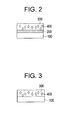
- Such additional high molecular weight acid generating polymer may be used as a separating barrier between the stent and the drug containing polymer matrix as illustrated in Figure 2 or it may serve as the drug containing coating matrix itself, as illustrated in Figure 3 .
- Common acid generating polymers include poly(omega-, alpha- or beta-hydroxyl aliphatic acid) such as polylactide (PLA), polyglycolide (PGA), polycaprolactone (PCL), poly(trimethyl carbonate), and their myriad copolymers. Each of these polymers may be tailored for specific applications and specific drugs to provide an optimal coating scheme.
- Figure 2 illustrates the three layer configuration.
- the stent 100 is first coated with any of the high molecular weight acid generating polymers 200 described herein or any other suitable acid generating polymer and then coated with a polymer/drug combination layer. These polymers include PLA, PLGA, PCL, poly(ester amide).
- Figure 3 illustrates a two layer configuration, wherein the stent 100 is coated with a single layer 300.
- This single layer 300 comprises the drug or drugs in combination with the high molecular weight acid generating polymers described above. Alternatively, a combination of polymers may be utilized to form the single layer.
- the local delivery of therapeutic agent/therapeutic agent combinations may be utilized to treat a wide variety of conditions utilizing any number of medical devices, or to enhance the function and/or life of the device.
- intraocular lenses placed to restore vision after cataract surgery is often compromised by the formation of a secondary cataract. The latter is often a result of cellular overgrowth on the lens surface and can be potentially minimized by combining a drug or drugs with the device.
- Other medical devices which often fail due to tissue in-growth or accumulation of proteinaceous material in, on and around the device, such as shunts for hydrocephalus, dialysis grafts, colostomy bag attachment devices, ear drainage tubes, leads for pace makers and implantable defibrillators can also benefit from the device-drug combination approach.
- Devices which serve to improve the structure and function of tissue or organ may also show benefits when combined with the appropriate agent or agents. For example, improved osteointegration of orthopaedic devices to enhance stabilization of the implanted device could potentially be achieved by combining it with agents such as bone-morphogenic protein.
- agents such as bone-morphogenic protein.
- other surgical devices sutures, staples, anastomosis devices, vertebral disks, bone pins, suture anchors, hemostatic barriers, clamps, screws, plates, clips, vascular implants, tissue adhesives and sealants, tissue scaffolds, various types of dressings, bone substitutes, intraluminal devices, and vascular supports could also provide enhanced patient benefit using this drug-device combination approach.
- Perivascular wraps may be particularly advantageous, alone or in combination with other medical devices. The perivascular wraps may supply additional drugs to a treatment site. Essentially, any other type of medical device may be coated in some fashion with a drug or drug combination, which enhances treatment over use of the singular use of the device or pharmaceutical agent.
- the coatings on these devices may be used to deliver therapeutic and pharmaceutic agents including: anti-proliferative/antimitotic agents including natural products such as vinca alkaloids (i.e. vinblastine, vincristine, and vinorelbine), paclitaxel, epidipodophyllotoxins (i.e.
- antibiotics dactinomycin (actinomycin D) daunorubicin, doxorubicin and idarubicin
- anthracyclines mitoxantrone, bleomycins, plicamycin (mithramycin) and mitomycin
- enzymes L-asparaginase which systemically metabolizes L-asparagine and deprives cells which do not have the capacity to synthesize their own asparagines
- antiplatelet agents such as G(GP) 11b/111a inhibitors and vitronectin receptor antagonists
- anti-proliferative/antimitotic alkylating agents such as nitrogen mustards (mechlorethamine, cyclophosphamide and analogs, melphalan, chlorambucil), ethylenimines and methylmelamines (hexamethylmelamine and thiotepa), alkyl sulfonates-busulfan, ni
- anti-coagulants heparin, synthetic heparin salts and other inhibitors of thrombin
- fibrinolytic agents such as tissue plasminogen activator, streptokinase and urokinase), aspirin, dipyridamole, ticlopidine, clopidogrel, abciximab
- anti-migratory antisecretory (breveldin)
- anti-inflammatory such as adrenocortical steroids (cortisol, cortisone, fludrocortisone, prednisone, prednisolone, 6 -methylprednisolone, triamcinolone, betamethasone, and dexamethasone), non-steroidal agents (salicylic acid derivatives i.e.
- the stents described herein may be utilized as therapeutic agents or drug delivery devices.
- the metallic stents may be coated with a biostable or bioabsorbable polymer or combinations thereof with the therapeutic agents incorporated therein.
- Typical material properties for coatings include flexibility, ductility, tackiness, durability, adhesion and cohesion.
- Biostable and bioabsorbable polymers that exhibit these desired properties include methacrylates, polyurethanes, silicones, polyvinylacetates, polyvinyalcohol, ethylenevinylalcohol, polyvinylidene fluoride, poly-lactic acid, poly-glycolic acid, polycaprolactone, polytrimethylene carbonate, polydioxanone, polyorthoester, polyanhydrides, polyphosphoester, polyaminoacids as well as their copolymers and blends thereof.
- the coatings may also include other additives such as radiopaque constituents, chemical stabilizers for both the coating and/or the therapeutic agent, radioactive agents, tracing agents such as radioisotopes such as tritium (i.e. heavy water) and ferromagnetic particles, and mechanical modifiers such as ceramic micro spheres as will be described in greater detail subsequently.
- radiopaque constituents such as radiopaque constituents, chemical stabilizers for both the coating and/or the therapeutic agent, radioactive agents, tracing agents such as radioisotopes such as tritium (i.e. heavy water) and ferromagnetic particles, and mechanical modifiers such as ceramic micro spheres as will be described in greater detail subsequently.
- entrapped gaps may be created between the surface of the device and the coating and/or within the coating itself. Examples of these gaps include air as well as other gases and the absence of matter (i.e. vacuum environment). These entrapped gaps may be created utilizing any number of known techniques such as the injection of micro
- drugs may be utilized as therapeutic agents, including sirolimus, heparin, everolimus, pimecrolimus, tacrolimus, paclitaxel, cladribine as well as classes of drugs such as statins.
- These drugs and/or agents may be hydrophilic, hydrophobic, lipophilic and/or lipophobic.
- the type of agent will play a role in determining the type of polymer.
- the amount of the drug in the coating may be varied depending on a number of factors including, the storage capacity of the coating, the drug, the concentration of the drug, the elution rate of the drug as well as a number of additional factors.
- the amount of drug may vary from about zero about 100%. Typical ranges may be from about less than 1% to about 40% or higher.
- Drug distribution in the coating may be varied.
- the one or more drugs may be distributed in a single layer, multiple layers, single layer with a diffusion barrier or any combination thereof.
- Different solvents may be used to dissolve the drug/polymer blend to prepare the coating formulations. Some of the solvents may be good or poor solvents based on the desired drug elution profile, drug morphology and drug stability.
- Stent surfaces may be modified to increase the surface area in order to increase drug content and tissue-device interactions.
- Nanotechnology may be applied to create self-assembled nanomaterials that can contain tissue specific drug containing nanoparticles.
- Microstructures may be formed on surfaces by microetching in which these nanoparticles may be incorporated. The microstructures may be formed by methods such as laser micromachining, lithography, chemical vapour deposition and chemical etching. Microstructures have also been fabricated on polymers and metals by leveraging the evolution of micro electro-mechanical systems (MEMS) and microfluidics.
- MEMS micro electro-mechanical systems
- nanomaterials include carbon nanotubes and nanoparticles formed by sol-gel technology.
- Therapeutic agents may be chemically or physically attached or deposited directly on these surfaces. Combination of these surface modifications may allow drug release at a desired rate.
- a top-coat of a polymer may be applied to control the initial burst due to immediate exposure of drug in the absence of polymer coating.
- polymer stents may contain therapeutic agents as a coating, e.g. a surface modification.
- the therapeutic agents may be incorporated into the stent structure, e.g. a bulk modification that may not require a coating.
- the coating if used, could be either biostable or bioabsorbable.
- no coating may be necessary because the device itself is fabricated from a delivery depot.
- This embodiment offers a number of advantages. For example, higher concentrations of the therapeutic agent or agents may be achievable. In addition, with higher concentrations of therapeutic agent or agents, regional delivery is achievable for greater durations of time.
- the intentional incorporation of ceramics and/or glasses into the base material may be utilized in order to modify its physical properties.
- the intentional incorporation of ceramics and/or glasses would be into polymeric materials for use in medical applications.
- examples of biostable and/or bioabsorbable ceramics or/or glasses include hydroxyapatite, tricalcium phosphate, magnesia, alumina, zirconia, yittrium tetragonal polycrystalline zirconia, amorphous silicon, amorphous calcium and amorphous phosphorous oxides.
- biostable glasses may be formed using industrially relevant sol-gel methods.
- Sol-gel technology is a solution process for fabricating ceramic and glass hybrids. Typically, the sol-gel process involves the transition of a system from a mostly colloidal liquid (sol) into a gel.
Landscapes
- Health & Medical Sciences (AREA)
- Life Sciences & Earth Sciences (AREA)
- Heart & Thoracic Surgery (AREA)
- Vascular Medicine (AREA)
- Animal Behavior & Ethology (AREA)
- General Health & Medical Sciences (AREA)
- Public Health (AREA)
- Veterinary Medicine (AREA)
- Surgery (AREA)
- Epidemiology (AREA)
- Chemical & Material Sciences (AREA)
- Engineering & Computer Science (AREA)
- Biomedical Technology (AREA)
- Inorganic Chemistry (AREA)
- Medicinal Chemistry (AREA)
- Transplantation (AREA)
- Cardiology (AREA)
- Oral & Maxillofacial Surgery (AREA)
- Molecular Biology (AREA)
- Materials For Medical Uses (AREA)
- Media Introduction/Drainage Providing Device (AREA)
- Surgical Instruments (AREA)
- Chemical Kinetics & Catalysis (AREA)
- Polymers & Plastics (AREA)
- Organic Chemistry (AREA)
Applications Claiming Priority (1)
| Application Number | Priority Date | Filing Date | Title |
|---|---|---|---|
| US12/277,556 US9283304B2 (en) | 2008-11-25 | 2008-11-25 | Absorbable stent having a coating for controlling degradation of the stent and maintaining pH neutrality |
Publications (2)
| Publication Number | Publication Date |
|---|---|
| EP2189169A1 true EP2189169A1 (de) | 2010-05-26 |
| EP2189169B1 EP2189169B1 (de) | 2011-09-28 |
Family
ID=41532187
Family Applications (1)
| Application Number | Title | Priority Date | Filing Date |
|---|---|---|---|
| EP09176613A Active EP2189169B1 (de) | 2008-11-25 | 2009-11-20 | Beschichtetes biologisch abbaubares metallisches Implantat |
Country Status (6)
| Country | Link |
|---|---|
| US (2) | US9283304B2 (de) |
| EP (1) | EP2189169B1 (de) |
| JP (2) | JP5701497B2 (de) |
| AT (1) | ATE526048T1 (de) |
| CA (1) | CA2684815C (de) |
| MX (1) | MX2009012766A (de) |
Cited By (5)
| Publication number | Priority date | Publication date | Assignee | Title |
|---|---|---|---|---|
| US7985252B2 (en) | 2008-07-30 | 2011-07-26 | Boston Scientific Scimed, Inc. | Bioerodible endoprosthesis |
| US7998192B2 (en) | 2008-05-09 | 2011-08-16 | Boston Scientific Scimed, Inc. | Endoprostheses |
| US8002821B2 (en) | 2006-09-18 | 2011-08-23 | Boston Scientific Scimed, Inc. | Bioerodible metallic ENDOPROSTHESES |
| DE102011107109A1 (de) * | 2011-07-12 | 2013-01-17 | Translumina Gmbh | Implantierbare Gefäßstütze |
| US8888841B2 (en) | 2010-06-21 | 2014-11-18 | Zorion Medical, Inc. | Bioabsorbable implants |
Families Citing this family (66)
| Publication number | Priority date | Publication date | Assignee | Title |
|---|---|---|---|---|
| US7713297B2 (en) | 1998-04-11 | 2010-05-11 | Boston Scientific Scimed, Inc. | Drug-releasing stent with ceramic-containing layer |
| US7727221B2 (en) | 2001-06-27 | 2010-06-01 | Cardiac Pacemakers Inc. | Method and device for electrochemical formation of therapeutic species in vivo |
| US8840660B2 (en) | 2006-01-05 | 2014-09-23 | Boston Scientific Scimed, Inc. | Bioerodible endoprostheses and methods of making the same |
| US8089029B2 (en) | 2006-02-01 | 2012-01-03 | Boston Scientific Scimed, Inc. | Bioabsorbable metal medical device and method of manufacture |
| US20070224235A1 (en) | 2006-03-24 | 2007-09-27 | Barron Tenney | Medical devices having nanoporous coatings for controlled therapeutic agent delivery |
| US8187620B2 (en) | 2006-03-27 | 2012-05-29 | Boston Scientific Scimed, Inc. | Medical devices comprising a porous metal oxide or metal material and a polymer coating for delivering therapeutic agents |
| US8048150B2 (en) | 2006-04-12 | 2011-11-01 | Boston Scientific Scimed, Inc. | Endoprosthesis having a fiber meshwork disposed thereon |
| US8815275B2 (en) | 2006-06-28 | 2014-08-26 | Boston Scientific Scimed, Inc. | Coatings for medical devices comprising a therapeutic agent and a metallic material |
| EP2032091A2 (de) | 2006-06-29 | 2009-03-11 | Boston Scientific Limited | Medizinprodukte mit selektiver beschichtung |
| US8052743B2 (en) | 2006-08-02 | 2011-11-08 | Boston Scientific Scimed, Inc. | Endoprosthesis with three-dimensional disintegration control |
| JP2010503469A (ja) | 2006-09-14 | 2010-02-04 | ボストン サイエンティフィック リミテッド | 薬物溶出性皮膜を有する医療デバイス |
| WO2008034048A2 (en) | 2006-09-15 | 2008-03-20 | Boston Scientific Limited | Bioerodible endoprosthesis with biostable inorganic layers |
| WO2008034066A1 (en) | 2006-09-15 | 2008-03-20 | Boston Scientific Limited | Bioerodible endoprostheses and methods of making the same |
| CA2663220A1 (en) | 2006-09-15 | 2008-03-20 | Boston Scientific Limited | Medical devices and methods of making the same |
| US8808726B2 (en) | 2006-09-15 | 2014-08-19 | Boston Scientific Scimed. Inc. | Bioerodible endoprostheses and methods of making the same |
| US20080294236A1 (en) * | 2007-05-23 | 2008-11-27 | Boston Scientific Scimed, Inc. | Endoprosthesis with Select Ceramic and Polymer Coatings |
| US7981150B2 (en) * | 2006-11-09 | 2011-07-19 | Boston Scientific Scimed, Inc. | Endoprosthesis with coatings |
| WO2008083190A2 (en) | 2006-12-28 | 2008-07-10 | Boston Scientific Limited | Bioerodible endoprostheses and methods of making same |
| US8070797B2 (en) | 2007-03-01 | 2011-12-06 | Boston Scientific Scimed, Inc. | Medical device with a porous surface for delivery of a therapeutic agent |
| US8431149B2 (en) * | 2007-03-01 | 2013-04-30 | Boston Scientific Scimed, Inc. | Coated medical devices for abluminal drug delivery |
| US8067054B2 (en) * | 2007-04-05 | 2011-11-29 | Boston Scientific Scimed, Inc. | Stents with ceramic drug reservoir layer and methods of making and using the same |
| US7976915B2 (en) | 2007-05-23 | 2011-07-12 | Boston Scientific Scimed, Inc. | Endoprosthesis with select ceramic morphology |
| US8002823B2 (en) | 2007-07-11 | 2011-08-23 | Boston Scientific Scimed, Inc. | Endoprosthesis coating |
| EP2187988B1 (de) * | 2007-07-19 | 2013-08-21 | Boston Scientific Limited | Endoprothese mit nicht verschmutzender oberfläche |
| US7931683B2 (en) * | 2007-07-27 | 2011-04-26 | Boston Scientific Scimed, Inc. | Articles having ceramic coated surfaces |
| US8815273B2 (en) | 2007-07-27 | 2014-08-26 | Boston Scientific Scimed, Inc. | Drug eluting medical devices having porous layers |
| WO2009018340A2 (en) | 2007-07-31 | 2009-02-05 | Boston Scientific Scimed, Inc. | Medical device coating by laser cladding |
| WO2009020520A1 (en) | 2007-08-03 | 2009-02-12 | Boston Scientific Scimed, Inc. | Coating for medical device having increased surface area |
| US8052745B2 (en) | 2007-09-13 | 2011-11-08 | Boston Scientific Scimed, Inc. | Endoprosthesis |
| US8029554B2 (en) | 2007-11-02 | 2011-10-04 | Boston Scientific Scimed, Inc. | Stent with embedded material |
| US20090118821A1 (en) * | 2007-11-02 | 2009-05-07 | Boston Scientific Scimed, Inc. | Endoprosthesis with porous reservoir and non-polymer diffusion layer |
| US8216632B2 (en) | 2007-11-02 | 2012-07-10 | Boston Scientific Scimed, Inc. | Endoprosthesis coating |
| JP2011509157A (ja) * | 2008-01-09 | 2011-03-24 | イノベイテイブ ヘルス テクノロジーズ エルエルシー | 骨造成および保存のためのインプラントペレットおよび方法 |
| EP2249892B1 (de) * | 2008-02-21 | 2017-11-15 | Hexacath | Implantierbare medizinische vorrichtung mit einer schutz-/rückhalteschicht für (insbesondere lösliche) wirkstoffe oder arzneimittel |
| ES2423504T3 (es) | 2008-04-22 | 2013-09-20 | Boston Scientific Scimed, Inc. | Dispositivos médicos que tienen un recubrimiento de material inorgánico |
| US8932346B2 (en) | 2008-04-24 | 2015-01-13 | Boston Scientific Scimed, Inc. | Medical devices having inorganic particle layers |
| US8236046B2 (en) | 2008-06-10 | 2012-08-07 | Boston Scientific Scimed, Inc. | Bioerodible endoprosthesis |
| US8449603B2 (en) * | 2008-06-18 | 2013-05-28 | Boston Scientific Scimed, Inc. | Endoprosthesis coating |
| US9119906B2 (en) * | 2008-09-24 | 2015-09-01 | Integran Technologies, Inc. | In-vivo biodegradable medical implant |
| US8382824B2 (en) | 2008-10-03 | 2013-02-26 | Boston Scientific Scimed, Inc. | Medical implant having NANO-crystal grains with barrier layers of metal nitrides or fluorides |
| US8231980B2 (en) | 2008-12-03 | 2012-07-31 | Boston Scientific Scimed, Inc. | Medical implants including iridium oxide |
| WO2010101901A2 (en) | 2009-03-02 | 2010-09-10 | Boston Scientific Scimed, Inc. | Self-buffering medical implants |
| US8071156B2 (en) | 2009-03-04 | 2011-12-06 | Boston Scientific Scimed, Inc. | Endoprostheses |
| US8435281B2 (en) | 2009-04-10 | 2013-05-07 | Boston Scientific Scimed, Inc. | Bioerodible, implantable medical devices incorporating supersaturated magnesium alloys |
| US8287937B2 (en) | 2009-04-24 | 2012-10-16 | Boston Scientific Scimed, Inc. | Endoprosthese |
| EP2338534A2 (de) * | 2009-12-21 | 2011-06-29 | Biotronik VI Patent AG | Medizinisches Implantat, Beschichtungsverfahren sowie Implantationsverfahren |
| US8668732B2 (en) | 2010-03-23 | 2014-03-11 | Boston Scientific Scimed, Inc. | Surface treated bioerodible metal endoprostheses |
| DE102010018541A1 (de) * | 2010-04-28 | 2011-11-03 | Acandis Gmbh & Co. Kg | Verfahren zur Herstellung einer medizinischen Vorrichtung |
| WO2012075311A2 (en) | 2010-12-01 | 2012-06-07 | Zorion Medical, Inc. | Magnesium-based absorbable implants |
| USD829327S1 (en) * | 2013-04-30 | 2018-09-25 | Ostomycure As | Implant having porous surface structure |
| USD827824S1 (en) * | 2013-04-30 | 2018-09-04 | Ostomycure As | Implant with internal porous surface structure |
| USD752750S1 (en) | 2013-04-30 | 2016-03-29 | Ostomycure As | Implants |
| WO2016077410A1 (en) * | 2014-11-11 | 2016-05-19 | University Of Pittsburgh-Of The Commonwealth System Of Higher Education | Super elastic, bioabsorbable endovascular devices |
| US10086116B2 (en) * | 2015-08-31 | 2018-10-02 | Ethicon Llc | Adjunct material to provide controlled drug release |
| US10569071B2 (en) | 2015-08-31 | 2020-02-25 | Ethicon Llc | Medicant eluting adjuncts and methods of using medicant eluting adjuncts |
| WO2017048989A1 (en) | 2015-09-15 | 2017-03-23 | Fong Kenton D | Devices and methods for anchoring a sheath in a tissue cavity |
| AU2016361380B2 (en) | 2015-11-26 | 2021-04-08 | Japan Medical Device Technology Co., Ltd. | Bioabsorbable stent |
| CN106039422A (zh) * | 2016-04-25 | 2016-10-26 | 天津市赛宁生物工程技术有限公司 | 一种颅颌面骨修复固定装置的制备 |
| CN109688982B (zh) * | 2016-05-25 | 2021-08-27 | 埃里克·K·曼贾拉迪 | 生物可降解的支撑装置 |
| ES2945875T3 (es) | 2017-01-10 | 2023-07-10 | Fuji Light Metal Co Ltd | Aleación de magnesio |
| EP4306082A3 (de) | 2017-01-30 | 2024-03-20 | JAPAN Medical Device Technology Co., Ltd. | Hochleistungsfähiger bioresorbierbarer stent |
| WO2020012529A1 (ja) | 2018-07-09 | 2020-01-16 | 不二ライトメタル株式会社 | マグネシウム合金 |
| CN113056295A (zh) | 2018-11-02 | 2021-06-29 | 波士顿科学国际有限公司 | 可生物降解的支架 |
| US11925570B2 (en) | 2018-12-19 | 2024-03-12 | Boston Scientific Scimed, Inc. | Stent including anti-migration capabilities |
| CO2020001235A1 (es) * | 2020-02-03 | 2021-08-09 | Univ Pontificia Bolivariana | Stent |
| CN113975470B (zh) * | 2021-11-22 | 2023-09-22 | 山东瑞安泰医疗技术有限公司 | 一种可降解金属钼基合金血管内支架制备方法 |
Citations (2)
| Publication number | Priority date | Publication date | Assignee | Title |
|---|---|---|---|---|
| EP1795215A2 (de) | 2005-12-08 | 2007-06-13 | Cordis Corporation | Resorbierbarer Stent mit Beschichtung zur Kontrolle des Abbaus und der Erhaltung der Neutralität des pH-Werts |
| EP1977722A1 (de) * | 2007-04-04 | 2008-10-08 | Cordis Corporation | Bioabsorbierendes Polymer, bioabsorbierende Komposit-Stents |
Family Cites Families (7)
| Publication number | Priority date | Publication date | Assignee | Title |
|---|---|---|---|---|
| US7208011B2 (en) * | 2001-08-20 | 2007-04-24 | Conor Medsystems, Inc. | Implantable medical device with drug filled holes |
| AU2002341959A1 (en) * | 2001-10-04 | 2003-04-14 | Case Western Reserve University | Drug delivery devices and methods |
| US20050112170A1 (en) * | 2003-11-20 | 2005-05-26 | Hossainy Syed F. | Coatings for implantable devices comprising polymers of lactic acid and methods for fabricating the same |
| CN101257860B (zh) * | 2005-04-05 | 2015-10-21 | 万能医药公司 | 可降解的植入式医疗装置 |
| US20070020312A1 (en) * | 2005-07-20 | 2007-01-25 | Desnoyer Jessica R | Method of fabricating a bioactive agent-releasing implantable medical device |
| US8394488B2 (en) * | 2006-10-06 | 2013-03-12 | Cordis Corporation | Bioabsorbable device having composite structure for accelerating degradation |
| RU2452517C2 (ru) * | 2007-01-30 | 2012-06-10 | Хемотек Аг | Биоразрушаемое средство для поддержания просвета сосудов |
-
2008
- 2008-11-25 US US12/277,556 patent/US9283304B2/en active Active
-
2009
- 2009-11-06 CA CA2684815A patent/CA2684815C/en active Active
- 2009-11-20 EP EP09176613A patent/EP2189169B1/de active Active
- 2009-11-20 AT AT09176613T patent/ATE526048T1/de not_active IP Right Cessation
- 2009-11-24 JP JP2009266016A patent/JP5701497B2/ja not_active Expired - Fee Related
- 2009-11-25 MX MX2009012766A patent/MX2009012766A/es active IP Right Grant
-
2015
- 2015-02-16 JP JP2015027304A patent/JP5932073B2/ja not_active Expired - Fee Related
-
2016
- 2016-03-14 US US15/069,828 patent/US9474637B2/en not_active Expired - Fee Related
Patent Citations (2)
| Publication number | Priority date | Publication date | Assignee | Title |
|---|---|---|---|---|
| EP1795215A2 (de) | 2005-12-08 | 2007-06-13 | Cordis Corporation | Resorbierbarer Stent mit Beschichtung zur Kontrolle des Abbaus und der Erhaltung der Neutralität des pH-Werts |
| EP1977722A1 (de) * | 2007-04-04 | 2008-10-08 | Cordis Corporation | Bioabsorbierendes Polymer, bioabsorbierende Komposit-Stents |
Non-Patent Citations (1)
| Title |
|---|
| SHARKAWI T ET AL: "Evaluation of the in vitro drug release from resorbable biocompatible coatings for vascular stents", JOURNAL OF BIOACTIVE AND COMPATIBLE POLYMERS, SAGE PUBLICATIONS, GB, vol. 20, no. 2, 1 January 2005 (2005-01-01), pages 153 - 168, XP008099662, ISSN: 0883-9115 * |
Cited By (7)
| Publication number | Priority date | Publication date | Assignee | Title |
|---|---|---|---|---|
| US8002821B2 (en) | 2006-09-18 | 2011-08-23 | Boston Scientific Scimed, Inc. | Bioerodible metallic ENDOPROSTHESES |
| US7998192B2 (en) | 2008-05-09 | 2011-08-16 | Boston Scientific Scimed, Inc. | Endoprostheses |
| US7985252B2 (en) | 2008-07-30 | 2011-07-26 | Boston Scientific Scimed, Inc. | Bioerodible endoprosthesis |
| US8888841B2 (en) | 2010-06-21 | 2014-11-18 | Zorion Medical, Inc. | Bioabsorbable implants |
| US9849008B2 (en) | 2010-06-21 | 2017-12-26 | Zorion Medical, Inc. | Bioabsorbable implants |
| DE102011107109A1 (de) * | 2011-07-12 | 2013-01-17 | Translumina Gmbh | Implantierbare Gefäßstütze |
| WO2013007589A1 (de) | 2011-07-12 | 2013-01-17 | Translumina Gmbh | IMPLANTIERBARE GEFÄßSTÜTZE |
Also Published As
| Publication number | Publication date |
|---|---|
| CA2684815A1 (en) | 2010-05-25 |
| EP2189169B1 (de) | 2011-09-28 |
| US9474637B2 (en) | 2016-10-25 |
| US9283304B2 (en) | 2016-03-15 |
| CA2684815C (en) | 2017-02-28 |
| JP2010125327A (ja) | 2010-06-10 |
| MX2009012766A (es) | 2010-05-28 |
| US20100131050A1 (en) | 2010-05-27 |
| JP2015131119A (ja) | 2015-07-23 |
| JP5932073B2 (ja) | 2016-06-08 |
| JP5701497B2 (ja) | 2015-04-15 |
| ATE526048T1 (de) | 2011-10-15 |
| US20160262916A1 (en) | 2016-09-15 |
Similar Documents
| Publication | Publication Date | Title |
|---|---|---|
| US9474637B2 (en) | Absorbable stent having a coating for controlling degradation of the stent and maintaining pH neutrality | |
| CA2570444C (en) | Absorbable stent comprising coating for controlling degradation and maintaining ph neutrality | |
| CA2627059C (en) | Bioabsorbable polymer, bioabsorbable composite stents | |
| Nazneen et al. | Surface chemical and physical modification in stent technology for the treatment of coronary artery disease | |
| JP5097536B2 (ja) | 血管内インプラント | |
| CA2626957C (en) | Bioabsorbable polymer, non-bioabsorbable metal composite stents | |
| US20090274737A1 (en) | Implant comprising a surface of reduced thrombogenicity | |
| US20100119581A1 (en) | Medical Products That Release Pharmaceutically Active Substances | |
| US20080051872A1 (en) | Biocorrodible metallic implant having a coating or cavity filling made of a peg/plga copolymer | |
| US20090148496A1 (en) | Implants with membrane diffusion-controlled release of active ingredient | |
| ES2576107T3 (es) | Revestimiento que comprende una capa de imprimación amorfa y una capa de reservorio semicristalina | |
| EP1487513A1 (de) | Bioabbaubares hydrophobes polymer für stents | |
| CA2814653C (en) | Bare metal stent with drug eluting reservoirs having improved drug retention | |
| Patel et al. | Current status and future prospects of drug eluting stents for restenosis/Sadašnjost i budućnost stentova za restenozu koji otpuštaju lijekove | |
| JP5102200B2 (ja) | 生体内留置物 | |
| US20120239140A1 (en) | Medical product comprising an active coating | |
| EP4637856A1 (de) | Gefässgerüst mit röntgendichtem seltenerdmetallmarker | |
| PATEL et al. | Sadašnjost i budućnost stentova za restenozu koji otpuštaju lijekove | |
| Patel | Current status and future prospects of drug eluting stents for restenosis/Sadašnjost i budućnost stentova za restenozu koji otpuštaju lijekove | |
| AU2015201194A1 (en) | Drugs with improved hydrophobicity for incorporation in medical devices |
Legal Events
| Date | Code | Title | Description |
|---|---|---|---|
| PUAI | Public reference made under article 153(3) epc to a published international application that has entered the european phase |
Free format text: ORIGINAL CODE: 0009012 |
|
| AK | Designated contracting states |
Kind code of ref document: A1 Designated state(s): AT BE BG CH CY CZ DE DK EE ES FI FR GB GR HR HU IE IS IT LI LT LU LV MC MK MT NL NO PL PT RO SE SI SK SM TR |
|
| AX | Request for extension of the european patent |
Extension state: AL BA RS |
|
| 17P | Request for examination filed |
Effective date: 20101116 |
|
| GRAP | Despatch of communication of intention to grant a patent |
Free format text: ORIGINAL CODE: EPIDOSNIGR1 |
|
| RIC1 | Information provided on ipc code assigned before grant |
Ipc: A61L 31/14 20060101ALI20110314BHEP Ipc: A61L 31/10 20060101ALI20110314BHEP Ipc: A61L 31/02 20060101AFI20110314BHEP |
|
| GRAS | Grant fee paid |
Free format text: ORIGINAL CODE: EPIDOSNIGR3 |
|
| GRAA | (expected) grant |
Free format text: ORIGINAL CODE: 0009210 |
|
| AK | Designated contracting states |
Kind code of ref document: B1 Designated state(s): AT BE BG CH CY CZ DE DK EE ES FI FR GB GR HR HU IE IS IT LI LT LU LV MC MK MT NL NO PL PT RO SE SI SK SM TR |
|
| REG | Reference to a national code |
Ref country code: GB Ref legal event code: FG4D |
|
| REG | Reference to a national code |
Ref country code: CH Ref legal event code: EP |
|
| REG | Reference to a national code |
Ref country code: IE Ref legal event code: FG4D |
|
| REG | Reference to a national code |
Ref country code: DE Ref legal event code: R096 Ref document number: 602009002804 Country of ref document: DE Effective date: 20111124 |
|
| REG | Reference to a national code |
Ref country code: NL Ref legal event code: T3 |
|
| PG25 | Lapsed in a contracting state [announced via postgrant information from national office to epo] |
Ref country code: SE Free format text: LAPSE BECAUSE OF FAILURE TO SUBMIT A TRANSLATION OF THE DESCRIPTION OR TO PAY THE FEE WITHIN THE PRESCRIBED TIME-LIMIT Effective date: 20110928 Ref country code: LT Free format text: LAPSE BECAUSE OF FAILURE TO SUBMIT A TRANSLATION OF THE DESCRIPTION OR TO PAY THE FEE WITHIN THE PRESCRIBED TIME-LIMIT Effective date: 20110928 Ref country code: FI Free format text: LAPSE BECAUSE OF FAILURE TO SUBMIT A TRANSLATION OF THE DESCRIPTION OR TO PAY THE FEE WITHIN THE PRESCRIBED TIME-LIMIT Effective date: 20110928 Ref country code: NO Free format text: LAPSE BECAUSE OF FAILURE TO SUBMIT A TRANSLATION OF THE DESCRIPTION OR TO PAY THE FEE WITHIN THE PRESCRIBED TIME-LIMIT Effective date: 20111228 Ref country code: HR Free format text: LAPSE BECAUSE OF FAILURE TO SUBMIT A TRANSLATION OF THE DESCRIPTION OR TO PAY THE FEE WITHIN THE PRESCRIBED TIME-LIMIT Effective date: 20110928 |
|
| LTIE | Lt: invalidation of european patent or patent extension |
Effective date: 20110928 |
|
| PG25 | Lapsed in a contracting state [announced via postgrant information from national office to epo] |
Ref country code: CY Free format text: LAPSE BECAUSE OF FAILURE TO SUBMIT A TRANSLATION OF THE DESCRIPTION OR TO PAY THE FEE WITHIN THE PRESCRIBED TIME-LIMIT Effective date: 20110928 Ref country code: AT Free format text: LAPSE BECAUSE OF FAILURE TO SUBMIT A TRANSLATION OF THE DESCRIPTION OR TO PAY THE FEE WITHIN THE PRESCRIBED TIME-LIMIT Effective date: 20110928 Ref country code: SI Free format text: LAPSE BECAUSE OF FAILURE TO SUBMIT A TRANSLATION OF THE DESCRIPTION OR TO PAY THE FEE WITHIN THE PRESCRIBED TIME-LIMIT Effective date: 20110928 Ref country code: GR Free format text: LAPSE BECAUSE OF FAILURE TO SUBMIT A TRANSLATION OF THE DESCRIPTION OR TO PAY THE FEE WITHIN THE PRESCRIBED TIME-LIMIT Effective date: 20111229 Ref country code: LV Free format text: LAPSE BECAUSE OF FAILURE TO SUBMIT A TRANSLATION OF THE DESCRIPTION OR TO PAY THE FEE WITHIN THE PRESCRIBED TIME-LIMIT Effective date: 20110928 |
|
| REG | Reference to a national code |
Ref country code: AT Ref legal event code: MK05 Ref document number: 526048 Country of ref document: AT Kind code of ref document: T Effective date: 20110928 |
|
| PG25 | Lapsed in a contracting state [announced via postgrant information from national office to epo] |
Ref country code: BE Free format text: LAPSE BECAUSE OF FAILURE TO SUBMIT A TRANSLATION OF THE DESCRIPTION OR TO PAY THE FEE WITHIN THE PRESCRIBED TIME-LIMIT Effective date: 20110928 |
|
| PG25 | Lapsed in a contracting state [announced via postgrant information from national office to epo] |
Ref country code: CZ Free format text: LAPSE BECAUSE OF FAILURE TO SUBMIT A TRANSLATION OF THE DESCRIPTION OR TO PAY THE FEE WITHIN THE PRESCRIBED TIME-LIMIT Effective date: 20110928 Ref country code: SK Free format text: LAPSE BECAUSE OF FAILURE TO SUBMIT A TRANSLATION OF THE DESCRIPTION OR TO PAY THE FEE WITHIN THE PRESCRIBED TIME-LIMIT Effective date: 20110928 Ref country code: IS Free format text: LAPSE BECAUSE OF FAILURE TO SUBMIT A TRANSLATION OF THE DESCRIPTION OR TO PAY THE FEE WITHIN THE PRESCRIBED TIME-LIMIT Effective date: 20120128 |
|
| PG25 | Lapsed in a contracting state [announced via postgrant information from national office to epo] |
Ref country code: EE Free format text: LAPSE BECAUSE OF FAILURE TO SUBMIT A TRANSLATION OF THE DESCRIPTION OR TO PAY THE FEE WITHIN THE PRESCRIBED TIME-LIMIT Effective date: 20110928 Ref country code: PT Free format text: LAPSE BECAUSE OF FAILURE TO SUBMIT A TRANSLATION OF THE DESCRIPTION OR TO PAY THE FEE WITHIN THE PRESCRIBED TIME-LIMIT Effective date: 20120130 Ref country code: RO Free format text: LAPSE BECAUSE OF FAILURE TO SUBMIT A TRANSLATION OF THE DESCRIPTION OR TO PAY THE FEE WITHIN THE PRESCRIBED TIME-LIMIT Effective date: 20110928 |
|
| PG25 | Lapsed in a contracting state [announced via postgrant information from national office to epo] |
Ref country code: MC Free format text: LAPSE BECAUSE OF NON-PAYMENT OF DUE FEES Effective date: 20111130 |
|
| PG25 | Lapsed in a contracting state [announced via postgrant information from national office to epo] |
Ref country code: DK Free format text: LAPSE BECAUSE OF FAILURE TO SUBMIT A TRANSLATION OF THE DESCRIPTION OR TO PAY THE FEE WITHIN THE PRESCRIBED TIME-LIMIT Effective date: 20110928 |
|
| PLBE | No opposition filed within time limit |
Free format text: ORIGINAL CODE: 0009261 |
|
| STAA | Information on the status of an ep patent application or granted ep patent |
Free format text: STATUS: NO OPPOSITION FILED WITHIN TIME LIMIT |
|
| PG25 | Lapsed in a contracting state [announced via postgrant information from national office to epo] |
Ref country code: PL Free format text: LAPSE BECAUSE OF FAILURE TO SUBMIT A TRANSLATION OF THE DESCRIPTION OR TO PAY THE FEE WITHIN THE PRESCRIBED TIME-LIMIT Effective date: 20110928 |
|
| 26N | No opposition filed |
Effective date: 20120629 |
|
| REG | Reference to a national code |
Ref country code: DE Ref legal event code: R097 Ref document number: 602009002804 Country of ref document: DE Effective date: 20120629 |
|
| PG25 | Lapsed in a contracting state [announced via postgrant information from national office to epo] |
Ref country code: MK Free format text: LAPSE BECAUSE OF FAILURE TO SUBMIT A TRANSLATION OF THE DESCRIPTION OR TO PAY THE FEE WITHIN THE PRESCRIBED TIME-LIMIT Effective date: 20110928 Ref country code: MT Free format text: LAPSE BECAUSE OF FAILURE TO SUBMIT A TRANSLATION OF THE DESCRIPTION OR TO PAY THE FEE WITHIN THE PRESCRIBED TIME-LIMIT Effective date: 20110928 |
|
| PG25 | Lapsed in a contracting state [announced via postgrant information from national office to epo] |
Ref country code: ES Free format text: LAPSE BECAUSE OF FAILURE TO SUBMIT A TRANSLATION OF THE DESCRIPTION OR TO PAY THE FEE WITHIN THE PRESCRIBED TIME-LIMIT Effective date: 20120108 Ref country code: SM Free format text: LAPSE BECAUSE OF FAILURE TO SUBMIT A TRANSLATION OF THE DESCRIPTION OR TO PAY THE FEE WITHIN THE PRESCRIBED TIME-LIMIT Effective date: 20110928 |
|
| PG25 | Lapsed in a contracting state [announced via postgrant information from national office to epo] |
Ref country code: LU Free format text: LAPSE BECAUSE OF NON-PAYMENT OF DUE FEES Effective date: 20111120 |
|
| PG25 | Lapsed in a contracting state [announced via postgrant information from national office to epo] |
Ref country code: BG Free format text: LAPSE BECAUSE OF FAILURE TO SUBMIT A TRANSLATION OF THE DESCRIPTION OR TO PAY THE FEE WITHIN THE PRESCRIBED TIME-LIMIT Effective date: 20111228 |
|
| PG25 | Lapsed in a contracting state [announced via postgrant information from national office to epo] |
Ref country code: TR Free format text: LAPSE BECAUSE OF FAILURE TO SUBMIT A TRANSLATION OF THE DESCRIPTION OR TO PAY THE FEE WITHIN THE PRESCRIBED TIME-LIMIT Effective date: 20110928 |
|
| PG25 | Lapsed in a contracting state [announced via postgrant information from national office to epo] |
Ref country code: HU Free format text: LAPSE BECAUSE OF FAILURE TO SUBMIT A TRANSLATION OF THE DESCRIPTION OR TO PAY THE FEE WITHIN THE PRESCRIBED TIME-LIMIT Effective date: 20110928 |
|
| REG | Reference to a national code |
Ref country code: CH Ref legal event code: PL |
|
| PG25 | Lapsed in a contracting state [announced via postgrant information from national office to epo] |
Ref country code: CH Free format text: LAPSE BECAUSE OF NON-PAYMENT OF DUE FEES Effective date: 20131130 Ref country code: LI Free format text: LAPSE BECAUSE OF NON-PAYMENT OF DUE FEES Effective date: 20131130 |
|
| REG | Reference to a national code |
Ref country code: FR Ref legal event code: PLFP Year of fee payment: 8 |
|
| REG | Reference to a national code |
Ref country code: FR Ref legal event code: PLFP Year of fee payment: 9 |
|
| REG | Reference to a national code |
Ref country code: GB Ref legal event code: 732E Free format text: REGISTERED BETWEEN 20180614 AND 20180620 |
|
| REG | Reference to a national code |
Ref country code: DE Ref legal event code: R082 Ref document number: 602009002804 Country of ref document: DE Representative=s name: PROCK, THOMAS, DR., GB |
|
| REG | Reference to a national code |
Ref country code: NL Ref legal event code: PD Owner name: CARDINAL HEALTH SWITZERLAND 515 GMBH; CH Free format text: DETAILS ASSIGNMENT: CHANGE OF OWNER(S), ASSIGNMENT; FORMER OWNER NAME: CORDIS CORPORATION Effective date: 20200708 |
|
| REG | Reference to a national code |
Ref country code: GB Ref legal event code: 732E Free format text: REGISTERED BETWEEN 20201126 AND 20201202 |
|
| REG | Reference to a national code |
Ref country code: DE Ref legal event code: R082 Ref document number: 602009002804 Country of ref document: DE Representative=s name: PROCK, THOMAS, DR., GB Ref country code: DE Ref legal event code: R081 Ref document number: 602009002804 Country of ref document: DE Owner name: CARDINAL HEALTH SWITZERLAND 515 GMBH, CH Free format text: FORMER OWNER: CORDIS CORPORATION, MIAMI LAKES, FLA., US |
|
| PGFP | Annual fee paid to national office [announced via postgrant information from national office to epo] |
Ref country code: NL Payment date: 20251126 Year of fee payment: 17 |
|
| PGFP | Annual fee paid to national office [announced via postgrant information from national office to epo] |
Ref country code: DE Payment date: 20251128 Year of fee payment: 17 |
|
| PGFP | Annual fee paid to national office [announced via postgrant information from national office to epo] |
Ref country code: GB Payment date: 20251127 Year of fee payment: 17 |
|
| PGFP | Annual fee paid to national office [announced via postgrant information from national office to epo] |
Ref country code: IT Payment date: 20251119 Year of fee payment: 17 |
|
| PGFP | Annual fee paid to national office [announced via postgrant information from national office to epo] |
Ref country code: FR Payment date: 20251125 Year of fee payment: 17 |
|
| PGFP | Annual fee paid to national office [announced via postgrant information from national office to epo] |
Ref country code: IE Payment date: 20251127 Year of fee payment: 17 |