EP2190201A1 - Anzeigevorrichtung, anzeigeverfahren und anzeigeprogramm - Google Patents
Anzeigevorrichtung, anzeigeverfahren und anzeigeprogramm Download PDFInfo
- Publication number
- EP2190201A1 EP2190201A1 EP08832755A EP08832755A EP2190201A1 EP 2190201 A1 EP2190201 A1 EP 2190201A1 EP 08832755 A EP08832755 A EP 08832755A EP 08832755 A EP08832755 A EP 08832755A EP 2190201 A1 EP2190201 A1 EP 2190201A1
- Authority
- EP
- European Patent Office
- Prior art keywords
- program
- display
- frame
- broadcast
- scheduled
- Prior art date
- Legal status (The legal status is an assumption and is not a legal conclusion. Google has not performed a legal analysis and makes no representation as to the accuracy of the status listed.)
- Withdrawn
Links
Images









Classifications
-
- H—ELECTRICITY
- H04—ELECTRIC COMMUNICATION TECHNIQUE
- H04N—PICTORIAL COMMUNICATION, e.g. TELEVISION
- H04N21/00—Selective content distribution, e.g. interactive television or video on demand [VOD]
- H04N21/40—Client devices specifically adapted for the reception of or interaction with content, e.g. set-top-box [STB]; Operations thereof
- H04N21/47—End-user applications
-
- H—ELECTRICITY
- H04—ELECTRIC COMMUNICATION TECHNIQUE
- H04N—PICTORIAL COMMUNICATION, e.g. TELEVISION
- H04N21/00—Selective content distribution, e.g. interactive television or video on demand [VOD]
- H04N21/20—Servers specifically adapted for the distribution of content, e.g. VOD servers; Operations thereof
- H04N21/23—Processing of content or additional data; Elementary server operations; Server middleware
- H04N21/235—Processing of additional data, e.g. scrambling of additional data or processing content descriptors
-
- H—ELECTRICITY
- H04—ELECTRIC COMMUNICATION TECHNIQUE
- H04N—PICTORIAL COMMUNICATION, e.g. TELEVISION
- H04N21/00—Selective content distribution, e.g. interactive television or video on demand [VOD]
- H04N21/40—Client devices specifically adapted for the reception of or interaction with content, e.g. set-top-box [STB]; Operations thereof
- H04N21/43—Processing of content or additional data, e.g. demultiplexing additional data from a digital video stream; Elementary client operations, e.g. monitoring of home network or synchronising decoder's clock; Client middleware
- H04N21/431—Generation of visual interfaces for content selection or interaction; Content or additional data rendering
- H04N21/4312—Generation of visual interfaces for content selection or interaction; Content or additional data rendering involving specific graphical features, e.g. screen layout, special fonts or colors, blinking icons, highlights or animations
- H04N21/4316—Generation of visual interfaces for content selection or interaction; Content or additional data rendering involving specific graphical features, e.g. screen layout, special fonts or colors, blinking icons, highlights or animations for displaying supplemental content in a region of the screen, e.g. an advertisement in a separate window
-
- H—ELECTRICITY
- H04—ELECTRIC COMMUNICATION TECHNIQUE
- H04N—PICTORIAL COMMUNICATION, e.g. TELEVISION
- H04N21/00—Selective content distribution, e.g. interactive television or video on demand [VOD]
- H04N21/40—Client devices specifically adapted for the reception of or interaction with content, e.g. set-top-box [STB]; Operations thereof
- H04N21/43—Processing of content or additional data, e.g. demultiplexing additional data from a digital video stream; Elementary client operations, e.g. monitoring of home network or synchronising decoder's clock; Client middleware
- H04N21/433—Content storage operation, e.g. storage operation in response to a pause request, caching operations
- H04N21/4334—Recording operations
-
- H—ELECTRICITY
- H04—ELECTRIC COMMUNICATION TECHNIQUE
- H04N—PICTORIAL COMMUNICATION, e.g. TELEVISION
- H04N21/00—Selective content distribution, e.g. interactive television or video on demand [VOD]
- H04N21/40—Client devices specifically adapted for the reception of or interaction with content, e.g. set-top-box [STB]; Operations thereof
- H04N21/43—Processing of content or additional data, e.g. demultiplexing additional data from a digital video stream; Elementary client operations, e.g. monitoring of home network or synchronising decoder's clock; Client middleware
- H04N21/434—Disassembling of a multiplex stream, e.g. demultiplexing audio and video streams, extraction of additional data from a video stream; Remultiplexing of multiplex streams; Extraction or processing of SI; Disassembling of packetised elementary stream
- H04N21/4345—Extraction or processing of SI, e.g. extracting service information from an MPEG stream
-
- H—ELECTRICITY
- H04—ELECTRIC COMMUNICATION TECHNIQUE
- H04N—PICTORIAL COMMUNICATION, e.g. TELEVISION
- H04N21/00—Selective content distribution, e.g. interactive television or video on demand [VOD]
- H04N21/40—Client devices specifically adapted for the reception of or interaction with content, e.g. set-top-box [STB]; Operations thereof
- H04N21/43—Processing of content or additional data, e.g. demultiplexing additional data from a digital video stream; Elementary client operations, e.g. monitoring of home network or synchronising decoder's clock; Client middleware
- H04N21/435—Processing of additional data, e.g. decrypting of additional data, reconstructing software from modules extracted from the transport stream
-
- H—ELECTRICITY
- H04—ELECTRIC COMMUNICATION TECHNIQUE
- H04N—PICTORIAL COMMUNICATION, e.g. TELEVISION
- H04N21/00—Selective content distribution, e.g. interactive television or video on demand [VOD]
- H04N21/40—Client devices specifically adapted for the reception of or interaction with content, e.g. set-top-box [STB]; Operations thereof
- H04N21/45—Management operations performed by the client for facilitating the reception of or the interaction with the content or administrating data related to the end-user or to the client device itself, e.g. learning user preferences for recommending movies, resolving scheduling conflicts
- H04N21/4508—Management of client data or end-user data
- H04N21/4524—Management of client data or end-user data involving the geographical location of the client
-
- H—ELECTRICITY
- H04—ELECTRIC COMMUNICATION TECHNIQUE
- H04N—PICTORIAL COMMUNICATION, e.g. TELEVISION
- H04N21/00—Selective content distribution, e.g. interactive television or video on demand [VOD]
- H04N21/40—Client devices specifically adapted for the reception of or interaction with content, e.g. set-top-box [STB]; Operations thereof
- H04N21/47—End-user applications
- H04N21/472—End-user interface for requesting content, additional data or services; End-user interface for interacting with content, e.g. for content reservation or setting reminders, for requesting event notification, for manipulating displayed content
- H04N21/4728—End-user interface for requesting content, additional data or services; End-user interface for interacting with content, e.g. for content reservation or setting reminders, for requesting event notification, for manipulating displayed content for selecting a Region Of Interest [ROI], e.g. for requesting a higher resolution version of a selected region
-
- H—ELECTRICITY
- H04—ELECTRIC COMMUNICATION TECHNIQUE
- H04N—PICTORIAL COMMUNICATION, e.g. TELEVISION
- H04N21/00—Selective content distribution, e.g. interactive television or video on demand [VOD]
- H04N21/40—Client devices specifically adapted for the reception of or interaction with content, e.g. set-top-box [STB]; Operations thereof
- H04N21/47—End-user applications
- H04N21/482—End-user interface for programme selection
- H04N21/4821—End-user interface for programme selection using a grid, e.g. sorted out by channel and broadcast time
Definitions
- the present invention relates to a display apparatus, a display method, and a display program for displaying program information.
- a broadcasting system includes a broadcasting station apparatus as a transmitting system for transmitting a broadcast signal for programs from a broadcasting station, and a receiving apparatus as a receiving system for receiving the broadcast signal transmitted from the broadcasting station apparatus (e.g. a television receiver).
- a broadcasting station apparatus as a transmitting system for transmitting a broadcast signal for programs from a broadcasting station
- a receiving apparatus as a receiving system for receiving the broadcast signal transmitted from the broadcasting station apparatus (e.g. a television receiver).
- a digital broadcasting system multiple pieces of information are multiplexed on the broadcast signal sent from the transmitting system to the receiving system, so as to provide an increasing variety of functions in the receiving system according to viewers' demands.
- a service that provides information about programs scheduled to be broadcasted (program scheduling information) to viewers is practiced.
- the transmitting system multiplexes program scheduling information as Electric Program Guide (EPG) data on the broadcast signal, and the signal is sent to the receiving system.
- EPG Electric Program Guide
- the receiving system extracts the EPG data from the sent broadcast signal, and presents the information about broadcast-scheduled programs to the viewers.
- program title "broadcast start time”, “broadcast end time”, “channel”, and “program identifier” are associated with each broadcast-scheduled program.
- Program title is the title of the associated broadcast-scheduled program
- “broadcast start time” is the time at which that broadcast-scheduled program is scheduled to start.
- “Broadcast end time” is the time at which that broadcast-scheduled program is scheduled to end, and
- channel is the channel on which the broadcast-scheduled program is going to be broadcasted.
- Program identifiers are for identifying individual programs scheduled to be broadcasted and programs being broadcasted.
- the EPG data may sometimes further include information for allowing viewers to search for desired programs, such as program genre, program description and cast, or information about links to information related to the programs, for example.
- Information about broadcast-scheduled programs can be displayed, e.g. on the television screen, by multiplexing EPG data on the broadcast signal. Then, on the basis of the displayed information about broadcast-scheduled programs, the viewer can specify a desired broadcast-scheduled program and check information about that program, for example.
- the contents of EPG data sent from the transmitting system to receiving system are limited to programs that are scheduled to be broadcasted during a given period from the time at which the EPG data was transmitted (e.g. in eight days from the time of transmission).
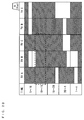
- FIG. 16 is a diagram showing an example of a program table for eight days from the time of transmission.
- broadcast time is shown in the vertical axis direction, and a plurality of TV stations (TV stations A to E) are shown in the horizontal axis direction.
- the broadcast-scheduled programs of the individual TV stations are thus displayed in the column direction in a time sequential manner. This state of display is called a radio/TV channel guide.
- broadcast-scheduled programs of the individual TV stations are associated with blank program frames. Also, broadcast halt periods of the individual TV stations are associated with hatched halt frames.
- the contents of EPG data include information about programs scheduled to be broadcasted in a certain period from the time of transmission. Accordingly, a program table as shown in FIG. 16 can be generated with EPG data.
- FIG. 17 is a diagram showing an example of a program table displayed on the television screen in a conventional receiving apparatus.
- a program table 900 is displayed on the television screen TJ as the user operates a remote controller, for example.
- a plurality of date tabs 901 are displayed in an upper part of the television screen TJ.
- a focused program display section 902 is displayed as part of the program table 900 under the date tabs 901.
- the focused program display section 902 displays detailed information about a focused program that will be described later.
- a time display section 903, a TV station display section 904, and program display sections 905 are displayed under the focused program display section 902.
- time display section 903 times in which programs are scheduled to be broadcasted are displayed in the vertical axis direction.
- TV station display section 904 the names of multiple TV stations are displayed in the horizontal axis direction.
- program display sections 905 program frames and halt frames are displayed along the time displayed in the time display section 903.
- a user can select one of the plurality of program frames and halt frames on the program table 900 by operating a remote controller. Then, the selected program frame or halt frame is highlighted.
- the program frame indicating a program "Is Truth Visible?" of TV station A is highlighted.
- the program table 900 of FIG. 17 indicates highlighting with light hatching.
- focus a state in which a user can thus select a particular program frame or halt frame.
- a broadcast-scheduled program associated with the program frame selected with the focus is referred to as "a focused program”.
- the user can move the focus from frame to frame by operating a remote controller. Also, the user can scroll the program table 900 along the time axis by sequentially moving the focus along the time axis direction (vertical axis direction).
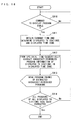
- FIG. 18 is a flowchart showing the operation by which a conventional receiving apparatus displays the program table 900.
- the receiving apparatus determines whether it has received a command to display the program table 900 from outside, from a user operating a remote controller (Step S910).
- the receiving apparatus When receiving a command, the receiving apparatus obtains the current time with built-in timer means, and determines TV stations to be displayed and a time zone to be displayed (Step S911). Then, for the TV stations to be displayed, the receiving apparatus time-sequentially extracts, from the EPG data, information about programs scheduled to be broadcasted in the time zone to be displayed (Step S912).
- the receiving apparatus draws the program frames of the extracted broadcast-scheduled programs on the television screen (Step S913).
- the receiving apparatus determines whether it has extracted all broadcast-scheduled programs in the displayed time zone about all displayed TV stations (Step S914).
- the receiving apparatus ends the operation of displaying the program table 900.
- the receiving apparatus performs the above-described operation of Step S912.
- a halt frame is drawn as a broadcast halt time in the program display sections 905.
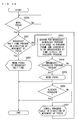
- FIG. 19 is a flowchart illustrating the operation by which a conventional receiving apparatus moves the focus. This example assumes that the focus is positioned in a program frame before it is moved.
- the receiving apparatus determines whether it has received a command to move the focus from outside, from a user operating a remote controller (Step S920).
- the receiving apparatus determines whether there is a broadcast halt time immediately before or after, in the direction of movement of the focus, the time of the program frame where the focus is currently positioned (Step S921).
- the receiving apparatus moves the focus to the halt frame present immediately before or after the program frame where the focus is currently positioned (Step S922). The movement of the focus thus ends.
- the receiving apparatus searches for a broadcast-scheduled program that is scheduled to be broadcasted at a time closest to the time of the current focused program in the direction of movement of the focus, and whose program frame is displayed in the program table 900 (Step S923).
- the receiving apparatus determines whether there is a corresponding broadcast-scheduled program (Step S924).
- the receiving apparatus moves the focus to the program frame of that broadcast-scheduled program (Step S925). The movement of the focus thus ends.
- the receiving apparatus determines whether the scrolling of the program table 900, described later, has been already carried out (Step S926).
- the receiving apparatus ends the operation without moving the focus.
- the receiving apparatus When scrolling has not been carried out, the receiving apparatus newly determines TV stations to be displayed and a time zone to be displayed, and extracts information about the broadcast-scheduled programs from the EPG data. Then, the receiving apparatus scrolls the program table 900 in the direction of movement of the focus on the basis of the extracted information (Step S927). After that, the receiving apparatus performs the above-described operation of Step S921.
- the contents of EPG data sent from the transmitting system to the receiving system are limited to programs that are scheduled to be broadcasted in eight days from the time of transmission, for example.
- TV stations sometimes determine the scheduling of programs that are scheduled to be broadcasted in a more distant future than eight days from the time when EPG data was transmitted from the transmitting system. Accordingly, viewers can check broadcast-scheduled programs for a longer period when EPG data including information about already broadcast-scheduled programs is sent also about programs scheduled to be broadcasted in the more distant future than eight days from the time of transmission of EPG data.
- Programs that are firmly scheduled to be broadcasted in a more distant future than eight days after the time of transmission of EPG data include serial programs broadcasted at fixed times, live programs like sports programs broadcasted on previously determined dates, special programs, and so on.
- FIG. 20 is a diagram illustrating a program table about nine days after the time of transmission of EPG data.
- time periods where broadcast programs have not yet been firmly scheduled in individual TV stations are associated with hatched undetermined frames.
- undetermined frames are displayed in larger areas than the program frames shown as blank regions.
- the television screen of the receiving apparatus displays the part of the program table shown by thick broken line in FIG. 20 , for example, the television screen displays undetermined frames only. Then, the user can check no broadcast-scheduled programs about any TV stations.
- the user can scroll the program table by moving the focus by operating a remote controller.
- the user can only move the focus at random when the television screen displays a lot of undetermined frames and halt frames. The user will then be unable to view a comprehensive program table.
- An object of the present invention is to provide a display apparatus, a display method, and a display program that allow users to easily and certainly view a program table even when the program table displayed on a screen include almost no program frames of broadcast-scheduled programs where the scheduling of programs has been firmly determined.
- a user can recognize broadcast-scheduled programs in a time zone out of the broadcast time zone displayed in the program table.
- the display apparatus is a television receiver that receives a broadcast signal for programs transmitted from a broadcasting station.
- information about programs scheduled to be broadcasted is multiplexed as Electric Program Guide (EPG) data on the broadcast signal and sent from the broadcasting station to the display apparatus.
- EPG Electric Program Guide
- the program scheduling information is information composed of multiple pieces of program information.
- the program information is information about each broadcast-scheduled program, at least including the broadcasting station and the broadcast scheduled date and time.
- the program information includes program genre, program description, program cast, etc. as information for allowing viewers to search for desired programs, or link information to information related to the programs, for example.
- EPG data sent from a transmitting system to a receiving system are limited to programs that are scheduled to be broadcasted in eight days after the EPG data was transmitted; but, in this embodiment, EPG data includes information about programs scheduled to be broadcasted in a more distant future than eight days after the time of transmission of EPG data.
- FIG. 1 is a block diagram illustrating the configuration of a display apparatus according to one embodiment of the present invention.
- the display apparatus 100 includes a receiving antenna 101, a broadcast receiver 102, a program reproducer 103, a program information accumulator 104, an input device 105, a controller 106, a drawer 107, a display synthesizer 108, and a display 109.
- FIG. 1 shows the main body of the display apparatus 100 with dotted line.
- the receiving antenna 101 receives broadcast waves and converts the waves into electric signal form.
- the broadcast waves received from the broadcasting station apparatus 20 are given to the broadcast receiver 102 in the form of an electric signal.
- the receiving antenna 101 is a television broadcast receiving antenna used for common television receivers.
- the television broadcasting includes terrestrial digital broadcasting and satellite digital broadcasting.
- the broadcast receiver 102 includes a high-frequency tuner and a transport stream (hereinafter referred to simply as TS) decoder not shown.
- TS transport stream
- the TS decoder of the broadcast receiver 102 decodes the broadcast signal given from the high-frequency tuner, and extracts packets of EPG data, video data and sound data.
- the packets of video data and sound data of the program broadcasted from a particular broadcasting station are given to the program reproducer 103.
- the packets of EPG data are given to the program information accumulator 104.
- the program reproducer 103 reproduces the video data and sound data given from the broadcast receiver 102.
- the program reproducer 103 is an MPEG (Motion Picture Experts Group) decoder, for example.
- the video data reproduced by the program reproducer 103 is given to the display synthesizer 108.
- sound data is given to a sound data converter not shown, and converted from digital form into analog form.
- the analog-converted sound data is outputted from a sound output unit not shown.
- EPG data is multiplexed on the broadcast signal sent from the broadcasting station apparatus 20 to the display apparatus 100.
- the program information accumulator 104 accumulates EPG data given from the broadcast receiver 102. Also, the program information accumulator 104 gives the accumulated EPG data to the drawer 107 according to a command signal given from the controller 106.
- the input device 105 is operated by a user.
- the input device 105 is a remote controller.
- the main body of the display apparatus 100 includes a receiver (not shown) for receiving signals sent from the remote controller.
- the remote controller will be described in detail later.
- the input device 105 can be a keyboard, a pointing device, a speech recognizer, an image recognizer, or a combination thereof.
- the controller 106 is composed of a CPU (Central Processing Unit) and a storage 106m, for example.
- the storage 106m stores a program table display program and a focus moving program described later.
- the controller 106 controls the operations of components of the display apparatus 100 on the basis of the programs stored in the storage 106m.
- the controller 106 also manages dialog with a user.
- the dialog with a user is realized with GUI (Guraphic User Interface) using OSD (On Screen Display).
- the drawer 107 generates graphic images for OSD on the basis of EPG data given from the program information accumulator 104. Generated images are given to the display synthesizer 108.
- the display synthesizer 108 synthesizes video data given from the program reproducer 103 and images given from the drawer 107, and outputs the synthesized video data to the display 109.
- the video and OSD of the program are thus displayed on the display 109.
- the display 109 is formed of a plasma display panel, a liquid-crystal display panel, or an organic electroluminescent panel, for example.
- FIG. 2 is a schematic diagram illustrating the input device 105 of FIG. 1 .
- the input device 105 has a power button PW, a program table button GP, a right button AR, a left button AL, an up button AU, a down button AD, a date tab select button DE, channel buttons CK, and so on.
- the power button PW is operated by a user to turn on/off the power supply to the display apparatus 100.
- the program table button GP is operated by a user to display a program table based on EPG data on the display 109 of FIG. 1 .
- the right button AR, left button AL, up button AU and down button AD are operated by a user to move a focus in the program table displayed on the display 109.
- the focus will be described in detail later.
- the date tab select button DE is operated by a user to select a particular date tab from a plurality of date tabs displayed together with a program table on the display 109.
- the date tabs will be described in detail later.
- the channel buttons CK include multiple buttons. Different channels are assigned to individual buttons. When a user presses a button, the program of the channel assigned to that button is displayed on the display 109.
- buttons AR, left button AL, up button AU and down button AD are also referred to together as cursor buttons.
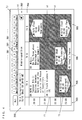
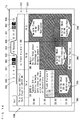
- FIG. 3 is a diagram showing an example of the display of a program table displayed on the display 109 of the display apparatus 100 of FIG. 1 .
- a program table 200 is displayed on the television screen TJ of the display 109.
- These date tabs 201 have a common size, and each shows the date and what day of the week it is.
- the user presses the date tab select button DE and cursor buttons shown in FIG. 2 to select a desired date of the program table 200.
- the user of the display apparatus 100 can check the program table 200 also about programs scheduled to be broadcasted in the future exceeding 8 days from the time of transmission of EPG data.
- the date tab 201 of October 9, exceeding 8 days from the time of transmission of EPG data is selected.
- a focused program display section 202 is displayed under the date tabs 201.
- the focused program display section 202 displays detailed information about a focused program described later.
- a time display section 203, a TV station display section 204, and program display sections 205 are displayed under the focused program display section 202.
- the time display section 203 shows the time of scheduling of broadcast programs in the vertical axis direction.
- the time display section 203 shows broadcast schedule time in hours from twenty to twenty three.
- the TV station display section 204 shows the names of multiple TV stations in the horizontal axis direction.
- TV station A, TV station B, and TV station C are arranged in this order in the horizontal axis direction.
- the program display sections 205 display program frames, balloon frames, halt frames, and undetermined frames, which will be described later, along the time shown in the time display section 203.
- Programs that are firmly scheduled to be broadcasted from individual TV stations in the time zone displayed in the time display section 203 are associated with program frames.
- the program frames are shown as rectangular frames.
- Programs that are firmly scheduled to the broadcasted from individual TV stations at times out of the time zone displayed in the time display section 203 are associated with balloon frames.
- the balloon frames are displayed in display regions of halt and undetermined frames. Accordingly, no balloon frames are displayed when the program table 200 includes no halt and undetermined frames, and also when the display areas of halt and undetermined frames are smaller than a given size. What broadcast-scheduled programs are associated with balloon frames will be described later.
- the balloon frames are shown as pentagon frames.
- the user can easily distinguish program frames, halt frames and undetermined frames, and balloon frames. Also, the user can easily recognize whether the program associated with a balloon frame will be broadcasted in the past or in the future from the time zone displayed in the time display section 203.
- each balloon frame shows the title and the date and time of an associated broadcast-scheduled program, for example.
- each balloon frame may show the date, only when the date of the broadcast-scheduled program associated with that balloon frame differs from the date of the displayed program table 200.
- balloon frames are displayed in display regions of halt and undetermined frames. Accordingly, as shown in the program display section 205 of TV station B in FIG. 3 , a balloon frame is not always positioned at the upper end or lower end of a program display section 205.
- FIG. 3 shows no halt frame.
- a time in which the scheduling of broadcast-scheduled programs has not yet been determined is associated with an undetermined frame.
- undetermined frames are hatched dark.
- the user can select one of the plurality of frames displayed in the program table 200 by operating the input device 105 of FIG. 2 . Then, the selected frame is highlighted.
- the program frame f1 for a program "Is Truth Visible?" of TV station A is highlighted.
- the program table 200 of FIG. 3 shows highlighting with light hatching.
- focus a state where a user can thus select a particular program frame, balloon frame, halt frame or undetermined frame. Also, the broadcast-scheduled program associated with a program frame or balloon frame selected by the focus is called "a focused program”.
- the program "Is Truth Visible?" of TV station A is the focused program. Accordingly, the above-described focused program display section 202 displays detailed information about the program "Is Truth Visible?".
- the detailed information includes the TV station of that program, broadcast start time, broadcast end time, program title, contents, cast, and so on.
- balloon frames are pentagon in the example above, but balloon frames may be approximately circular.
- the user can move the focus from frame to frame by operating the cursor buttons of the input device 105 of FIG. 2 .
- the user can scroll the program table 200 along the time axis by sequentially moving the focus along the time axis direction (vertical axis direction). By thus moving the focus along the time axis direction, the user can selectively adjust the displayed time zone of the one-station program table 200 on the television screen TJ, as a selected time zone.
- FIGS. 4 and 5 are diagrams for illustrating how the display of the program table 200 changes when the focus is moved.
- the program frame f1 of the program "Is Truth Visible?" of TV station A changes from a highlighted state to a normal display state. Then, the balloon frame f2 of the program "Middle-aged Dick" of TV station A, located under the program frame f1, is highlighted.
- the focused program display section 202 displays detailed information about the program "Middle-aged Dick".
- the focused program display section 202 displays: TV station A broadcasting "Middle-aged Dick"; broadcast start time “October 10, 00:30”; broadcast end time “October 10, 2:00”, and program title "Middle-aged Dick".
- the focus is positioned at the bottom end of the program display section 205. Accordingly, as shown in FIG. 5 , the program table 200 is scrolled a given time length to the future.
- the program table 200 is scrolled one hour to the future. Then, the time display section 203 indicates the broadcast schedule time in hours from twenty one to zero.
- the program "Middle-aged Dick" associated with the balloon frame f2 in the program table 200 of FIG. 4 becomes a broadcast-scheduled program within the time zone indicated in the time display section 203.
- the frame corresponding to the program "Middle-aged Dick" is changed from the pentagon balloon frame f2 to a rectangular program frame f3. Then, the focus is positioned in the changed program frame f3.
- the user can scroll the program table 200 and move the focus to a desired program frame or balloon frame by pressing the cursor buttons of the input device 105 of FIG. 2 .
- the state of display of the program table 200 considerably varies.
- the balloon frame of "Cyber Trekking Special” is displayed above the program frame of "Today's Topics", but it is displayed under the program frame "Today's Topics" as shown in FIG. 5 when the program table was scrolled.
- black star marks st are attached to some program frames and balloon frames.
- the black star marks st indicate broadcast-scheduled programs that are selected by TV stations as programs that they especially want to advertise, for example.
- the user can easily recognize that "Middle-aged Dick" is selected by TV station A as a program that they especially want to advertise. Also, the user can easily recognize that "Quiz: Do You Know about Backstage of Olympic Games?" and "Cyber Trekking Special” are programs selected by TV station B as programs they especially want to advertise. Furthermore, the user can easily recognize that "Happy Newlyweds” and “Thanks to Fans Special” are programs selected by TV station C as programs they especially want to advertise.
- the focused program display section 202 when the focus is positioned in a program frame or a balloon frame having black star mark st, the focused program display section 202 also shows black star mark st. This allows the user to sufficiently identify programs selected by individual TV stations as programs they especially want to advertise.
- preferential programs programs that individual TV stations especially want to advertise are referred to as preferential programs. That is, in the Example of FIGS. 3 to 5 , the broadcast-scheduled programs associated with program frames or balloon frames with black star marks st are preferential programs.
- Preferential programs are indicated by black star marks st in this embodiment, but marks other than black star marks st (characters, icons, etc.) may be used to indicate preferential programs. Also, a common background color may be set in program frames and balloon frames associated with preferential programs such that these frames can be distinguished from program frames and balloon frames associated with other broadcast-scheduled programs.
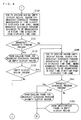
- FIGS. 6 to 8 show a flowchart illustrating the program table display program by which the display apparatus 100 of FIG. 1 displays the program table 200. As described above, this program is stored in the storage 106m of FIG. 1 .
- the controller 106 of FIG. 1 determines whether it has received a command to display the program table 900 from outside, from a user operating the input device 105 of FIG. 1 (Step S101).
- the controller 106 When receiving a command, the controller 106 obtains the current time by using built-in timer means, and determines TV stations to be displayed and a time zone to be displayed (Step S102). Then, from EPG data, the controller 106 time-sequentially extracts information about programs scheduled to be broadcasted in the time zone to be displayed from the TV stations to be displayed (Step S103).
- the controller 106 draws the program frames of the extracted broadcast-scheduled programs on the television screen TJ (Step S104).
- program frames including the extracted broadcast-scheduled program information are displayed in the program display sections 205.
- the controller 106 determines whether it has extracted all broadcast-scheduled programs in the time zone to be displayed about all TV stations to be displayed (Step S105).
- the controller 106 determines whether there are empty display regions, where no program frames are present, in the program display sections 205 (Step S106).
- the controller 106 determines whether the time zone to be displayed includes a time region where the scheduling of broadcast-scheduled programs has not been determined continuously for one hour or longer, or a broadcast halt time that continues one hour or longer.
- the controller 106 ends the operation of displaying the program table 200.
- the controller 106 draws an undetermined frame or a halt frame in the corresponding part of the program display sections 205.
- Step S105 When all broadcast-scheduled programs to be displayed have not been extracted in Step S105, the controller 106 performs the operation of Step S103.
- Step S106 When there is an empty display region in Step S106, the controller 106 searches for a preferential program that is going to be broadcasted at a time closest to the time zone to be displayed, among preferential programs scheduled to be broadcasted from the TV station having the empty display region at a time in the future direction from the time zone to be displayed (Step S110). Then, the controller 106 determines whether there is a preferential program (Step S111).
- the controller 106 extracts information about that preferential program from EPG data, and draws a balloon frame for that preferential program in the empty display region (Step S112).
- a balloon frame containing the extracted information about that preferential program is drawn in the program display section 205.
- Step S113 the controller 106 makes the determination in a way similar to Step S106.
- the controller 106 determines whether it has drawn balloon frames for all TV stations determined to have empty display regions (Step S114).
- the controller 106 ends the operation of displaying the program table 200.
- Step S106 determines whether other TV stations have further empty display regions.
- Step S111 the controller 106 searches for a preferential program that is going to be broadcasted at a time closest to the time zone to be displayed, among preferential programs scheduled to be broadcasted from the TV station having the empty display region at a time in the past direction from the time zone to be displayed (Step S120). Then, the controller 106 determines whether there is a preferential program (Step S121).
- Step S112 the controller 106 extracts information about that preferential program from EPG data, and draws a balloon frame for that preferential program in the empty display region (Step S122).
- Step S122 the controller 106 further determines whether there is an empty display region where no program frame, no halt frame and no balloon frame is present in the program display section 205 (Step S123). Specifically, the controller 106 makes the determination in a way similar to Step S106.
- the controller 106 When there is no empty display region, the controller 106 performs the operation of the Step S114.
- Step S121 When there isn't a preferential program in Step S121, and when there is an empty display region in Step S123, the controller 106 searches for a broadcast-scheduled program that is going to be broadcasted at a time closest to the time zone to be displayed, among broadcast-scheduled programs scheduled to be broadcasted from the TV station having the empty display region at a time in the future direction from the time zone to be displayed (Step S130). Then, the controller 106 determines whether there is such a broadcast-scheduled program (Step S131).
- the controller 106 extracts information about that broadcast-scheduled program from EPG data, and draws a balloon frame for that broadcast-scheduled program in the empty display region (Step S132).
- Step S133 the controller 106 further determines whether there is an empty display region where no program frame and no balloon frame is present in the program display section 205 (Step S133). Specifically, the controller 106 makes the determination in a way similar to Step S106.
- Step S114 When there is no empty display region, the controller 106 performs the above-described operation of Step S114.
- Step S131 the controller 106 searches for a broadcast-scheduled program that is going to be broadcasted at a time closest to the time zone to be displayed, among broadcast-scheduled programs scheduled to be broadcasted from the TV station having the empty display region at a time in the past direction from the time zone to be displayed (Step S140). Then, the controller 106 determines whether there is such a broadcast-scheduled program (Step S141).
- Step S112 the controller 106 extracts information about that broadcast-scheduled program from EPG data, and draws a balloon frame for that broadcast-scheduled program in the empty display region (Step S142). Then, the controller 106 returns to the operation of Step S106.
- Step S150 the controller 106 draws an undetermined frame in that empty display region. Then, the controller 106 returns to the operation of Step S106.
- a balloon frame for a preferential program that is scheduled to be broadcasted at a time in the future direction a balloon frame for a preferential program that is scheduled to be broadcasted at a time in the past direction
- a balloon frame for a broadcast-scheduled program, not a preferential program, scheduled to be broadcasted at a time in the past direction are displayed in this order, but the operation of display is not limited to this order.
- a balloon frame for a preferential program that is scheduled to be broadcasted at a time in the past direction a balloon frame for a preferential program that is scheduled to be broadcasted at a time in the future direction
- a balloon frame for a broadcast-scheduled program, not a preferential program, scheduled to be broadcasted at a time in the past direction a balloon frame for a broadcast-scheduled program, not a preferential program, scheduled to be broadcasted at a time in the future direction, may be displayed in this order.
- Steps S110 to S112, Steps S120 to S122, Steps S130 to S132, and Steps S140 to S142 is not limited to that shown in FIGS. 6 to 8 .
- preferential programs only may be associated with balloon frames, or any broadcast-scheduled program, irrespective of whether it is a preferential program or not, scheduled to be broadcasted at a time closest to the time zone to be displayed in the program table 200, may be associated with a balloon program.
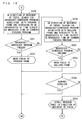
- FIGS. 9 and 10 show a flowchart illustrating a focus moving program by which the display apparatus 100 of FIG. 1 moves the focus. As mentioned earlier, this program is stored in the storage 106m of FIG. 1 as well as the program table display program.
- the controller 106 of FIG. 1 determines whether it has received a command to move the focus from outside, from a user operating the input device 105 of FIG. 1 (Step S201).
- the controller 106 determines whether the focus is currently positioned in a balloon frame in the direction of movement of the focus (Step S202).
- the controller 106 When the focus is positioned in a balloon frame, the controller 106 newly determines TV stations to be displayed and a time zone to be displayed, and extracts information about broadcast-scheduled programs from EPG data. Then, on the basis of the extracted information, the receiving apparatus scrolls the program table 200 for a certain time length in the direction of movement of the focus (Step S203).
- the controller 106 determines whether the broadcast-scheduled program associated with the balloon frame from which the focus is moved is a program scheduled to be broadcasted in the time zone to be newly displayed by the scrolling (Step S204).
- the controller 106 changes the balloon frame of that broadcast-scheduled program to a rectangular program frame, and re-displays it (Step S205). Then, the controller 106 moves the focus to the re-displayed program frame (Step S206). The movement of focus thus ends.
- the controller 106 ends the operation of moving the focus, keeping the focus in the balloon frame.
- the controller 106 determines whether there is a time in which broadcasting is halted, or a time in which program scheduling is undetermined, immediately before or after, in the direction of movement of the focus, the time of the program frame where the focus is currently positioned (Step S210).
- the controller 106 moves the focus to the halt frame or undetermined frame existing immediately before or after the program frame where the focus is currently positioned (Step S211). The movement of focus thus ends.
- the halt frame or undetermined frame where the focus is positioned may be highlighted, as when the focus is positioned in a normal program frame. Also, instead of highlighting the halt frame or undetermined frame, some pictorial sign may be displayed in part of the program table 200 to indicate that the focus is positioned in a halt frame or an undetermined frame.
- the controller 106 searches for a broadcast-scheduled program that is scheduled to be broadcasted at a time closest to the broadcast time of the current focused program in the direction of movement of the focus, and that is associated with a program frame displayed in the program table 200 (Step S220). Then, the controller 106 determines whether there is a corresponding broadcast-scheduled program (Step S221).
- the receiving apparatus moves the focus to the program frame associated with that broadcast-scheduled program (Step S222). The movement of focus thus ends.
- the receiving apparatus searches for a broadcast-scheduled program that is scheduled to be broadcasted at a time closest to the broadcast time of the current focused program in the direction of movement of the focus, and that is associated with a balloon frame displayed in the program table 200 (Step S230). Then, the controller 106 determines whether there is such a broadcast-scheduled program (Step S231).
- the controller 106 moves the focus to the balloon frame associated with that broadcast-scheduled program (Step S232). The movement of focus thus ends.
- the controller 106 determines whether the program table 200 has been already scrolled (Step S233).
- the controller 106 ends the operation without moving the focus.
- the controller 106 When scrolling has not been carried out, the controller 106 newly determines TV stations to be displayed and a time zone to be displayed, and extracts information about broadcast-scheduled programs from EPG data. Then, on the basis of the extracted information, the controller 106 scrolls the program table 200 for a certain time length (e.g. one hour) in the direction of movement of the focus (Step S234). After that, the controller 106 performs the above-described operation of Step S210. In the Steps S203 and S234, the certain time may be set to one hour, or e.g. to 0.5 hour or two hours, which can be arbitrarily determined.
- a certain time length e.g. one hour
- the focused program display section 202 of FIG. 3 displays detailed information about the broadcast-scheduled program associated with the program frame or balloon frame to which the focus was moved.
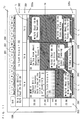
- FIG. 11 is a diagram showing another example of the display of the program table 200 displayed in the display 109 of the display apparatus 100 of FIG. 1 .
- quotation line display sections 205x are displayed above and below the program display sections 205.
- the quotation line display sections 205x display quotation lines L associated with broadcast-scheduled programs to be displayed in balloon frames, for example.
- the quotation lines L may be displayed with thicknesses corresponding to the lengths of broadcast times of the broadcast-scheduled programs so that the user can visually recognize the broadcast time lengths of the broadcast-scheduled programs.
- the quotation line display sections 205x can show a plurality of quotation lines L corresponding to a plurality of broadcast-scheduled programs in the order of broadcast times.
- the quotation lines L may be associated with broadcast-scheduled programs that are not displayed in balloon frames.
- the number of programs present in a certain period from the time zone displayed in the program table 200 can be indicated with the number of quotation lines L.
- the balloon frame f4 of "Hello, China", scheduled to be broadcasted from TV station A is displayed in the program display section 205 for TV station B.
- a balloon frame associated with a program scheduled to be broadcasted from one TV station may be displayed in a program display section 205 for another TV station. This enables effective use of undetermined frames on the program table 200.
- FIG. 11 shows two balloon frames indicating programs that are scheduled to be broadcasted from TV station A, and that are scheduled to be broadcasted in the future from the displayed time zone.
- a plurality of balloon frames indicating future broadcast-scheduled programs may be displayed for one TV station.
- the user can check more details of the scheduling of programs broadcasted from a particular TV station.
- a plurality of balloon frames When a plurality of balloon frames are displayed for one TV station in this way, some of the balloon frames may be displayed in an undetermined frame of another TV station, or, as shown in the program display section 205 for TV station C of FIG. 11 , a plurality of balloon programs may be displayed to overlap. Also, though not shown in the example of FIG. 11 , a plurality of balloon frames may be displayed in one balloon frame.
- the state of display of balloon frames may be varied depending on the direction of movement of the focus and the position of the focus, or the number of balloon frames may be increased/ decreased.
- a new balloon frame may be displayed as the focus is moved closer to one balloon frame.
- the information (a character string) displayed in the balloon frame may be varied. Also, predetermined multiple character strings may be sequentially switched in a balloon frame. In this case, multiple broadcast-scheduled programs can be associated with one balloon frame, and multiple pieces of information can be switched and displayed.
- FIG. 12 is a diagram showing still another example of the display of the program table 200 displayed in the display 109 of the display apparatus 100 of FIG. 1 .
- a particular background color that is distinguishable from the program frame f7 is set in the two program frames f5 and f6 indicating "News 8" of TV station A and "Today's Topics" of TV station B.
- the brightness of program frames may be adjusted depending on attributes of the broadcast-scheduled programs. For example, the brightness of program frames of continuous programs is set half the brightness of other program frames. In this case, the user can easily identify continuous programs among multiple broadcast-scheduled programs on the basis of the different brightness levels of program frames.
- Information indicating whether broadcast-scheduled programs are continuous programs or not may be sent as program information from the broadcasting station apparatus 20 to the display apparatus 100. Also, the information whether broadcast-scheduled programs are continuous programs or not may be sent to the display apparatus 100 from equipment other than the broadcasting station apparatus 20, e.g. through the Internet.
- controller 106 of the display apparatus 100 may automatically estimate and recognize whether broadcast-scheduled programs are continuous programs or not on the basis of EPG data sent from the broadcasting station apparatus 20.
- FIG. 13 is a diagram showing still another example of the display of the program table 200 displayed in the display 109 of the display apparatus 100 of FIG. 1 .
- the program display sections 205 for TV station B and TV station C display balloon frames f8 and f9 associated with broadcast-scheduled programs that are not preferential programs.
- preferential programs are broadcast-scheduled programs selected by individual TV stations, but preferential programs may be arbitrarily determined by broadcasting stations, by the display apparatus 100 or by a user as broadcast-scheduled programs that satisfy a given condition.
- broadcasting stations may extract popular broadcast-scheduled programs on the basis of audience rating and send the information to the display apparatus 100.
- the display apparatus 100 can set popular programs as preferential programs. Then, the user can easily recognize popular programs as preferential programs by visually checking the program table 200.
- the controller 106 of the display apparatus 100 may monitor what the user views, identify genres that the viewer likes, and set broadcast-scheduled programs of the identified genres as preferential programs; or, among programs that the viewer views, the controller 106 may set some programs that the viewer most frequently views (for example, top three programs) as preferential programs. In this case, by visually checking the program table 200, the user can easily recognize his/her favorite programs as preferential programs.
- the user may previously set his/her favorite broadcast-scheduled programs as preferential programs in the display apparatus 100. In this case, by checking the program table 200, the user can easily recognize his/her favorite programs as preferential programs.
- Date tabs as described below may be used in place of the plurality of date tabs 201 shown in FIGS. 3 to 5 and FIGS. 11 to 13 .
- FIG. 14 is a diagram illustrating another manner to display date tabs. As shown in FIG. 14 , this example shows four kinds of date tabs 500, 501, 502 and 503 displayed in different manners.
- date tab 503 selected by the user shows the date and what day of the week it is.
- date tabs 500 to 502 not selected by the user show the date only, without showing what day of the week it is.
- the total display area of the date tabs 500 to 503 can be made smaller. Also, a large area can be ensured for the display of the date tab 503, while making smaller the display areas of the date tabs 500 to 502, so that the user can clearly see the date that he/she is selecting.
- a blue background color indicating Saturday is set in the date tabs 501.
- a red background color indicating Sunday is set in the date tabs 502.
- the user can generally know what days of the week the dates of the date tabs 500 to 503 show.
- date tabs 500 to 502 not selected by the user show the date only, but the date tabs 500 to 502 not selected by the user may show what day of the week it is only.
- FIG. 15 is a diagram illustrating still other manners to display date tabs.
- two kinds of date tabs 510 and 511 are displayed.
- the date tab 511 selected by the user shows month and what day of the week it is, together with the date.
- the date tabs 510 not selected by the user show the date and what day of the week it is, but they do not show month. Also, the date tabs 510 show the date and the day of the week in a simplified manner. Specifically, “Wednesday, 3rd” is indicated as “3 (Wed)”. This makes smaller the total display area of the date tabs 510 and 511.
- the user can easily recognize the currently selected date tab 511 by visually checking the date tabs 510 and 511.
- two kinds of date tabs 520 and 521 are displayed.
- the date tab 521 selected by the user shows what day of the week it is, together with the date. Also, this date tab 521 has a trapezoidal frame.
- the date tabs 520 not selected by the user show the date and the day of the week in a simplified manner, and they do not have trapezoidal frames. Thus, by visually checking the date tabs 520 and 521, the user can easily recognize the currently selected date tab 521.
- a plurality of date tabs 530 are displayed.
- the date tab 530 selected by the user has a larger frame and shows the date inside with a larger font, than the frames of the other date tabs 530 and the font of the dates inside.
- the date tabs 530 other than the selected date tab 530 are displayed smaller as they are separated away from the selected date tab 530.
- the user can easily recognize the currently selected date tab 530 by visually checking the date tabs 530.
- two kinds of date tabs 540 and 541 are displayed.
- the date tab 541 selected by the user shows month and what day of the week it is, together with the date. Also, this date tab 541 has a trapezoidal frame.
- the date tabs 540 not selected by the user show the date and day in a simplified manner, and they do not show month.
- the date tabs 540 have trapezoidal frames with dotted line.
- the user can easily recognize the currently selected date tab 541 by visually checking the date tabs 540 and 541.
- the date tabs 540 and 541 from 1st to 15th are displayed in two rows. This reduces the width of the display area of the date tabs 540 and 541.
- date tab selected by the user shows detailed information about the date
- date tabs in the vicinities of the selected date tab may also be configured to show detailed information about the dates.
- the date tab selected by the user and the date tabs adjacent to that date tab may show the month, date, and day.
- date tabs for three days show detailed information about the dates.
- the amount of information about the dates shown in individual date tabs may be gradually reduced as the date tabs are separated away from the selected date tab.
- the selected date tab shows the year, month, date and what day of the week it is
- the adjacent date tabs show the month, date and day of the week
- the date tabs adjacent to these date tabs show the date and day of the week.
- the date tab selected by the user may be displayed in a large display area, and the display areas of the individual date tabs may be gradually reduced as they are separated from the selected date tab.
- date tabs close to the current date when the user views the program table may be configured to show the maximum amount of date information, and the amount of information about dates shown in individual date tabs may be gradually reduced as they are separated from that date tab.
- date tabs for 15 days are displayed, but a very large display area is required when date tabs for 30 days or 60 days are displayed, for example. Accordingly, in such a case, date tabs for a given number of days from the date tab selected by the user are displayed, and the date tabs may be scrolled when the user selects a date tab again, for example.
- the above-described manners to display date tabs can be used together with information when a program table is one-dimensionally displayed in list form, when reservation information is displayed in list form, when making a log display of communication information, and when displaying accounting information in list form, for example.
- the display apparatus 100 of this embodiment even when the program table 200 displayed on the television screen TJ contains almost no program frames for firmly broadcast-scheduled programs, a user can visually check balloon frames to easily and certainly recognize broadcast-scheduled programs in a time zone out of the time zone displayed in the time display section 203 of the program table 200.
- some TV receivers capable of displaying program tables have a function of restricting program frames in the program display sections 205 only to broadcast-scheduled programs of particular genres selected by a user.
- large areas, other than the program frames for the corresponding broadcast-scheduled programs exist in the program display sections 205. Accordingly, by displaying balloon frames in the areas other than the program frames, the user can easily recognize not only programs scheduled to be broadcasted in the displayed time zone in the program table but also programs scheduled to be broadcasted in time zones other than the displayed time zone.
- the display method of this embodiment is not limited to a program table 200 showing programs scheduled to be broadcasted eight or more days after the day of transmission of EPG data; also when a program table 200 indicates programs scheduled to be broadcasted within eight or less days after the day of transmission of EPG data, balloon frames are displayed in the program table 200 when it shows a late-night time zone where there are a large number of halt frames. This allows the user to easily and certainly check the program table 200.
- the display apparatus 100 displays a program table 200 for 15 days from the time of transmission of EPG data, but this is not intended to be restrictive; the display apparatus 100 may display a program table 200 for two months or three months or more from the time of transmission of EPG data.
- the controller 106 is realized with a CPU and a program table display program and a focus moving program, but this is not intended to be restrictive; the controller 106 may be realized with hardware such as electronic circuitry.
- the drawer 107 may be realized with a CPU and a program, or with hardware such as electronic circuitry.
- the display synthesizer 108 may be realized with a CPU and a program, or with hardware such as electronic circuitry.
- the broadcast receiver 102 is an example of a receiver
- the time zone displayed in the time display section 203 is an example of a selected time zone
- the program information accumulator 104, input device 105, drawer 107, and display synthesizer 108 of FIG. 1 are examples of a program table generator
- the time display section 203 is an example of a time axis
- the program frames are examples of a first program frame
- the balloon frames are examples of a second program frame.
- the date tab 503 of FIG. 14 and the date tabs 511, 521, 530 and 541 of FIG. 15 are examples of a date display frame displayed in a first display manner
- the date tabs 500 to 502 of FIG. 14 and the date tabs 510, 520, 530, 540, and 201 of FIG. 15 are examples of a date display frame displayed in a second display manner
- the controller 106 of FIG. 1 is an example of a processing device
- the program table display program is an example of a display program.
- the present invention is effectively applicable to broadcasting systems such as TV broadcasting, broadcasting station apparatuses, receivers, and broadcasting methods.
Landscapes
- Engineering & Computer Science (AREA)
- Multimedia (AREA)
- Signal Processing (AREA)
- Databases & Information Systems (AREA)
- Human Computer Interaction (AREA)
- Business, Economics & Management (AREA)
- Marketing (AREA)
- Two-Way Televisions, Distribution Of Moving Picture Or The Like (AREA)
Applications Claiming Priority (2)
| Application Number | Priority Date | Filing Date | Title |
|---|---|---|---|
| JP2007240568 | 2007-09-18 | ||
| PCT/JP2008/002553 WO2009037829A1 (ja) | 2007-09-18 | 2008-09-17 | 表示装置、表示方法および表示プログラム |
Publications (2)
| Publication Number | Publication Date |
|---|---|
| EP2190201A1 true EP2190201A1 (de) | 2010-05-26 |
| EP2190201A4 EP2190201A4 (de) | 2011-07-06 |
Family
ID=40467656
Family Applications (1)
| Application Number | Title | Priority Date | Filing Date |
|---|---|---|---|
| EP08832755A Withdrawn EP2190201A4 (de) | 2007-09-18 | 2008-09-17 | Anzeigevorrichtung, anzeigeverfahren und anzeigeprogramm |
Country Status (4)
| Country | Link |
|---|---|
| US (1) | US20100205633A1 (de) |
| EP (1) | EP2190201A4 (de) |
| JP (1) | JP5038431B2 (de) |
| WO (1) | WO2009037829A1 (de) |
Families Citing this family (7)
| Publication number | Priority date | Publication date | Assignee | Title |
|---|---|---|---|---|
| US20100192181A1 (en) * | 2009-01-29 | 2010-07-29 | At&T Intellectual Property I, L.P. | System and Method to Navigate an Electonic Program Guide (EPG) Display |
| US8584173B2 (en) * | 2009-07-10 | 2013-11-12 | EchoStar Technologies, L.L.C. | Automatic selection of video programming channel based on scheduling information |
| JP2012129979A (ja) * | 2010-11-24 | 2012-07-05 | Jvc Kenwood Corp | 区間作成装置、区間作成方法、及び区間作成プログラム |
| US9071799B2 (en) | 2012-02-17 | 2015-06-30 | Echostar Technologies L.L.C. | Channel tuning redirect |
| JP6273884B2 (ja) * | 2014-02-14 | 2018-02-07 | 船井電機株式会社 | 番組表表示装置 |
| US10123083B2 (en) * | 2016-12-20 | 2018-11-06 | Google Llc | Systems and methods to select programming information for inclusion in informational displays |
| CN113206928B (zh) * | 2021-03-18 | 2023-05-12 | 上海文化广播影视集团有限公司 | 一种演播室集中控制系统 |
Family Cites Families (65)
| Publication number | Priority date | Publication date | Assignee | Title |
|---|---|---|---|---|
| US4977455B1 (en) * | 1988-07-15 | 1993-04-13 | System and process for vcr scheduling | |
| US5353121A (en) * | 1989-10-30 | 1994-10-04 | Starsight Telecast, Inc. | Television schedule system |
| US7748018B2 (en) * | 1989-10-30 | 2010-06-29 | Starsight Telecast, Inc. | Arranging channel indicators in a television schedule system |
| US5727060A (en) * | 1989-10-30 | 1998-03-10 | Starsight Telecast, Inc. | Television schedule system |
| EP0500680B1 (de) * | 1989-10-30 | 2002-01-23 | Starsight Telecast, Inc. | Schnittstelle zwischen kabelfernsehdekoder und fernsehzubehör |
| US5619274A (en) * | 1990-09-10 | 1997-04-08 | Starsight Telecast, Inc. | Television schedule information transmission and utilization system and process |
| US7210159B2 (en) * | 1994-02-18 | 2007-04-24 | Starsight Telecast, Inc. | System and method for transmitting and utilizing electronic programs guide information |
| US6832385B2 (en) * | 1990-09-10 | 2004-12-14 | United Video Properties, Inc. | Television schedule system |
| US5808608A (en) * | 1990-09-10 | 1998-09-15 | Starsight Telecast, Inc. | Background television schedule system |
| EP1653732A3 (de) * | 1990-09-10 | 2007-11-14 | Starsight Telecast, Inc. | Anwenderendgerät für Fernseh-Programmtafel-system |
| US5790198A (en) * | 1990-09-10 | 1998-08-04 | Starsight Telecast, Inc. | Television schedule information transmission and utilization system and process |
| JP3237362B2 (ja) * | 1993-12-27 | 2001-12-10 | 松下電器産業株式会社 | 番組表表示装置 |
| US5812205A (en) * | 1994-05-04 | 1998-09-22 | Starsight Telecast Incorporated | Automatic time set in a television system |
| US8793738B2 (en) * | 1994-05-04 | 2014-07-29 | Starsight Telecast Incorporated | Television system with downloadable features |
| US5623613A (en) * | 1994-11-29 | 1997-04-22 | Microsoft Corporation | System for displaying programming information |
| US5814565A (en) * | 1995-02-23 | 1998-09-29 | University Of Utah Research Foundation | Integrated optic waveguide immunosensor |
| US5880768A (en) * | 1995-04-06 | 1999-03-09 | Prevue Networks, Inc. | Interactive program guide systems and processes |
| US5793438A (en) * | 1995-11-13 | 1998-08-11 | Hyundai Electronics America | Electronic program guide with enhanced presentation |
| US6025837A (en) * | 1996-03-29 | 2000-02-15 | Micrsoft Corporation | Electronic program guide with hyperlinks to target resources |
| US5801747A (en) * | 1996-11-15 | 1998-09-01 | Hyundai Electronics America | Method and apparatus for creating a television viewer profile |
| GB2325537B8 (en) * | 1997-03-31 | 2000-01-31 | Microsoft Corp | Query-based electronic program guide |
| JP3925996B2 (ja) * | 1997-09-05 | 2007-06-06 | 松下電器産業株式会社 | 情報表示装置 |
| US6209130B1 (en) * | 1997-10-10 | 2001-03-27 | United Video Properties, Inc. | System for collecting television program data |
| US6104334A (en) * | 1997-12-31 | 2000-08-15 | Eremote, Inc. | Portable internet-enabled controller and information browser for consumer devices |
| US6483548B1 (en) * | 1998-12-28 | 2002-11-19 | Research Investment Network, Inc. | Method of data display for electronic program guides (EPGs) |
| US6763522B1 (en) * | 1998-06-30 | 2004-07-13 | Sony Corporation | System and method for a digital television electronic program guide |
| US6505348B1 (en) * | 1998-07-29 | 2003-01-07 | Starsight Telecast, Inc. | Multiple interactive electronic program guide system and methods |
| US8589975B2 (en) * | 1998-08-21 | 2013-11-19 | United Video Properties, Inc. | Electronic program guide with advance notification |
| US6499138B1 (en) | 1998-09-10 | 2002-12-24 | Bellsouth Intellectual Property Corporation | Methods and systems for providing information about programs available for viewing |
| US6865746B1 (en) * | 1998-12-03 | 2005-03-08 | United Video Properties, Inc. | Electronic program guide with related-program search feature |
| KR100330171B1 (ko) * | 1998-12-17 | 2002-10-19 | 삼성전자 주식회사 | 제공되는프로그램가이드방식에대응하는디스플레이모드자동설정방법 |
| US20040194131A1 (en) * | 1999-03-11 | 2004-09-30 | Ellis Michael D. | Television system with scheduling of advertisements |
| JP2001218127A (ja) * | 2000-01-31 | 2001-08-10 | Pioneer Electronic Corp | 番組ガイド表示装置及び表示方法 |
| JP3996317B2 (ja) * | 2000-02-23 | 2007-10-24 | パイオニア株式会社 | 番組ガイド表示装置及び表示方法 |
| JP2001245233A (ja) * | 2000-02-28 | 2001-09-07 | Pioneer Electronic Corp | 番組ガイド表示装置及び表示方法 |
| JP2001313878A (ja) * | 2000-04-27 | 2001-11-09 | Matsushita Electric Ind Co Ltd | 番組一覧表表示装置および録画再生装置 |
| US7600245B2 (en) * | 2000-06-27 | 2009-10-06 | At&T Intellectual Property I, L.P. | System and methods for subscribers to view, select and otherwise customize delivery of programming over a communication system |
| US6925650B1 (en) | 2000-08-21 | 2005-08-02 | Hughes Electronics Corporation | Method and apparatus for automated creation of linking information |
| JP2002094893A (ja) * | 2000-09-19 | 2002-03-29 | Pioneer Electronic Corp | 番組案内表示装置及び番組案内表示方法 |
| JP2002125169A (ja) * | 2000-10-18 | 2002-04-26 | Pioneer Electronic Corp | 番組案内装置および番組案内方法 |
| US8046799B2 (en) * | 2000-11-27 | 2011-10-25 | The Directv Group, Inc. | Daypart based navigation paradigm |
| US7370343B1 (en) * | 2000-11-28 | 2008-05-06 | United Video Properties, Inc. | Electronic program guide with blackout features |
| JP4416311B2 (ja) * | 2000-11-30 | 2010-02-17 | キヤノン株式会社 | 表示制御装置、表示制御方法、及び記憶媒体 |
| JP2003018487A (ja) * | 2001-06-28 | 2003-01-17 | Pioneer Electronic Corp | 番組ガイド表示装置及び表示方法 |
| US7174126B2 (en) * | 2002-05-03 | 2007-02-06 | Time Warner Interactive Video Group Inc. | Technique for effectively accessing programming listing information in an entertainment delivery system |
| US20040055007A1 (en) * | 2002-09-13 | 2004-03-18 | David Allport | Point-based system and method for interacting with electronic program guide grid |
| KR101014147B1 (ko) * | 2003-02-24 | 2011-02-14 | 소니 주식회사 | 정보 처리 시스템, 정보 처리 장치 및 방법, 기록 매체 |
| US20050005290A1 (en) * | 2003-07-03 | 2005-01-06 | Yakov Kamen | Hyper-cell TV schedule listing representation |
| JP4381049B2 (ja) * | 2003-07-24 | 2009-12-09 | 船井電機株式会社 | データ記録再生装置 |
| JP4193629B2 (ja) * | 2003-07-25 | 2008-12-10 | ソニー株式会社 | 画面表示装置,プログラム,および画面表示方法 |
| JP4510486B2 (ja) * | 2004-02-27 | 2010-07-21 | ソニー株式会社 | 番組表表示方法,番組表表示装置,およびコンピュータプログラム |
| KR20050094232A (ko) * | 2004-03-22 | 2005-09-27 | 주식회사 휴맥스 | 디지털 전자프로그램 가이드 구현 방법 |
| JP4124159B2 (ja) * | 2004-05-07 | 2008-07-23 | ソニー株式会社 | 情報処理装置および方法、並びにプログラム |
| US8943537B2 (en) * | 2004-07-21 | 2015-01-27 | Cox Communications, Inc. | Method and system for presenting personalized television program recommendation to viewers |
| US20060168621A1 (en) * | 2004-10-05 | 2006-07-27 | Ravinder Chandhok | Methods and apparatus for rendering information on a device |
| JP2006115228A (ja) * | 2004-10-14 | 2006-04-27 | Funai Electric Co Ltd | 番組表搭載デジタル放送受信機 |
| JP3993627B2 (ja) * | 2004-11-02 | 2007-10-17 | 松下電器産業株式会社 | 表示装置およびその方法 |
| JP4925604B2 (ja) * | 2005-05-06 | 2012-05-09 | ソニー株式会社 | 表示制御装置および方法、並びにプログラム |
| JP4783604B2 (ja) * | 2005-08-31 | 2011-09-28 | シャープ株式会社 | 放送受信装置 |
| JP2007208602A (ja) * | 2006-02-01 | 2007-08-16 | Matsushita Electric Ind Co Ltd | デジタル受信機 |
| US20070250868A1 (en) * | 2006-04-20 | 2007-10-25 | Matsushita Electric Industrial Co., Ltd. | Display apparatus and display method |
| US7890972B2 (en) * | 2006-09-06 | 2011-02-15 | Canon Kabushiki Kaisha | Apparatus for generating electronic program guides and control method therefor |
| JP2008098931A (ja) * | 2006-10-11 | 2008-04-24 | Matsushita Electric Ind Co Ltd | 車車間通信方法及び車載用通信装置 |
| JP2008219162A (ja) * | 2007-02-28 | 2008-09-18 | Toshiba Corp | 番組表表示装置及び番組表表示方法 |
| US8555311B2 (en) * | 2007-12-19 | 2013-10-08 | United Video Properties, Inc. | Methods and devices for presenting guide listings and guidance data in three dimensions in an interactive media guidance application |
-
2008
- 2008-09-17 WO PCT/JP2008/002553 patent/WO2009037829A1/ja not_active Ceased
- 2008-09-17 US US12/676,370 patent/US20100205633A1/en not_active Abandoned
- 2008-09-17 EP EP08832755A patent/EP2190201A4/de not_active Withdrawn
- 2008-09-17 JP JP2009533042A patent/JP5038431B2/ja not_active Expired - Fee Related
Also Published As
| Publication number | Publication date |
|---|---|
| EP2190201A4 (de) | 2011-07-06 |
| JPWO2009037829A1 (ja) | 2011-01-06 |
| WO2009037829A1 (ja) | 2009-03-26 |
| JP5038431B2 (ja) | 2012-10-03 |
| US20100205633A1 (en) | 2010-08-12 |
Similar Documents
| Publication | Publication Date | Title |
|---|---|---|
| EP2190200B1 (de) | Anzeigevorrichtung, anzeigeverfahren und anzeigeprogramm | |
| US20020087982A1 (en) | Electronic program guide with rapid time advancement feature | |
| US6735777B1 (en) | Method for controlling program guide for displaying broadcast program title | |
| US20060143657A1 (en) | Method for displaying broadcasting program guide information and remote controller for the same | |
| US20080066105A1 (en) | Method for automatically searching for data applications for all channels and video apparatus adopting the method | |
| JP2009088977A (ja) | 番組情報表示システム、番組情報表示方法、及びテレビシステム | |
| US20100205633A1 (en) | Display apparatus, display method, and display program | |
| KR100710339B1 (ko) | 영상표시기기 및 그의 방송 정보 디스플레이 방법 | |
| JP4562606B2 (ja) | 受信装置及び受信方法 | |
| US8646003B2 (en) | Method and device for displaying electronic program guide | |
| EP1578132B1 (de) | Verfahren zur Darstellung des Handlungsstranges einer Sendung in einem Rundfunkempfänger | |
| EP1976284A2 (de) | Fernsehempfangsgerät und Verfahren zur Anzeige eines elektronischen Programmführers | |
| KR20050094232A (ko) | 디지털 전자프로그램 가이드 구현 방법 | |
| KR101443609B1 (ko) | 방송 수신기 및 이를 이용한 방송 프로그램 제공 방법 | |
| JP4522885B2 (ja) | 放送受信装置および電子番組ガイドの表示方法、プログラム、記録媒体 | |
| KR20100059639A (ko) | 위젯 디스플레이 방법 및 이를 적용한 방송수신장치 | |
| KR20050070353A (ko) | 영상표시기기 및 그 채널전환방법 | |
| EP1781028A2 (de) | Verfahren zum Wechseln und Verwalten von Kanälen und Rundfunkempfänger dafür | |
| JP5362510B2 (ja) | 電子番組表表示装置、電子番組表表示方法、プログラムおよび記録媒体 | |
| KR20070014333A (ko) | 방송 에이전트 서비스 제공 방법 및 장치 | |
| KR20090098580A (ko) | 방송 프로그램 정보 제공 방법 | |
| JP2008092339A (ja) | 電子番組表の表示方式、及び、テレビジョン受信装置 | |
| JP2008060718A (ja) | テレビ受信機 | |
| JP2005277536A (ja) | デジタル放送受信装置 | |
| JP2004221859A (ja) | テレビジョン受信機及び電子番組表表示装置 |
Legal Events
| Date | Code | Title | Description |
|---|---|---|---|
| PUAI | Public reference made under article 153(3) epc to a published international application that has entered the european phase |
Free format text: ORIGINAL CODE: 0009012 |
|
| 17P | Request for examination filed |
Effective date: 20100311 |
|
| AK | Designated contracting states |
Kind code of ref document: A1 Designated state(s): AT BE BG CH CY CZ DE DK EE ES FI FR GB GR HR HU IE IS IT LI LT LU LV MC MT NL NO PL PT RO SE SI SK TR |
|
| AX | Request for extension of the european patent |
Extension state: AL BA MK RS |
|
| DAX | Request for extension of the european patent (deleted) | ||
| A4 | Supplementary search report drawn up and despatched |
Effective date: 20110606 |
|
| 17Q | First examination report despatched |
Effective date: 20150526 |
|
| STAA | Information on the status of an ep patent application or granted ep patent |
Free format text: STATUS: THE APPLICATION IS DEEMED TO BE WITHDRAWN |
|
| 18D | Application deemed to be withdrawn |
Effective date: 20151006 |