EP2190231A1 - Procédé, système et appareil pour obtenir des informations de gestion d'utilisateur - Google Patents
Procédé, système et appareil pour obtenir des informations de gestion d'utilisateur Download PDFInfo
- Publication number
- EP2190231A1 EP2190231A1 EP08837169A EP08837169A EP2190231A1 EP 2190231 A1 EP2190231 A1 EP 2190231A1 EP 08837169 A EP08837169 A EP 08837169A EP 08837169 A EP08837169 A EP 08837169A EP 2190231 A1 EP2190231 A1 EP 2190231A1
- Authority
- EP
- European Patent Office
- Prior art keywords
- terminal
- program
- user
- server
- management information
- Prior art date
- Legal status (The legal status is an assumption and is not a legal conclusion. Google has not performed a legal analysis and makes no representation as to the accuracy of the status listed.)
- Withdrawn
Links
Images



Classifications
-
- H—ELECTRICITY
- H04—ELECTRIC COMMUNICATION TECHNIQUE
- H04W—WIRELESS COMMUNICATION NETWORKS
- H04W24/00—Supervisory, monitoring or testing arrangements
- H04W24/08—Testing, supervising or monitoring using real traffic
-
- H—ELECTRICITY
- H04—ELECTRIC COMMUNICATION TECHNIQUE
- H04L—TRANSMISSION OF DIGITAL INFORMATION, e.g. TELEGRAPHIC COMMUNICATION
- H04L63/00—Network architectures or network communication protocols for network security
- H04L63/08—Network architectures or network communication protocols for network security for authentication of entities
-
- H—ELECTRICITY
- H04—ELECTRIC COMMUNICATION TECHNIQUE
- H04L—TRANSMISSION OF DIGITAL INFORMATION, e.g. TELEGRAPHIC COMMUNICATION
- H04L63/00—Network architectures or network communication protocols for network security
- H04L63/16—Implementing security features at a particular protocol layer
- H04L63/168—Implementing security features at a particular protocol layer above the transport layer
-
- H—ELECTRICITY
- H04—ELECTRIC COMMUNICATION TECHNIQUE
- H04L—TRANSMISSION OF DIGITAL INFORMATION, e.g. TELEGRAPHIC COMMUNICATION
- H04L67/00—Network arrangements or protocols for supporting network services or applications
- H04L67/01—Protocols
- H04L67/02—Protocols based on web technology, e.g. hypertext transfer protocol [HTTP]
-
- H—ELECTRICITY
- H04—ELECTRIC COMMUNICATION TECHNIQUE
- H04L—TRANSMISSION OF DIGITAL INFORMATION, e.g. TELEGRAPHIC COMMUNICATION
- H04L67/00—Network arrangements or protocols for supporting network services or applications
- H04L67/50—Network services
- H04L67/535—Tracking the activity of the user
-
- H—ELECTRICITY
- H04—ELECTRIC COMMUNICATION TECHNIQUE
- H04N—PICTORIAL COMMUNICATION, e.g. TELEVISION
- H04N21/00—Selective content distribution, e.g. interactive television or video on demand [VOD]
- H04N21/20—Servers specifically adapted for the distribution of content, e.g. VOD servers; Operations thereof
- H04N21/25—Management operations performed by the server for facilitating the content distribution or administrating data related to end-users or client devices, e.g. end-user or client device authentication, learning user preferences for recommending movies
- H04N21/258—Client or end-user data management, e.g. managing client capabilities, user preferences or demographics, processing of multiple end-users preferences to derive collaborative data
- H04N21/25866—Management of end-user data
- H04N21/25891—Management of end-user data being end-user preferences
-
- H—ELECTRICITY
- H04—ELECTRIC COMMUNICATION TECHNIQUE
- H04N—PICTORIAL COMMUNICATION, e.g. TELEVISION
- H04N21/00—Selective content distribution, e.g. interactive television or video on demand [VOD]
- H04N21/40—Client devices specifically adapted for the reception of or interaction with content, e.g. set-top-box [STB]; Operations thereof
- H04N21/41—Structure of client; Structure of client peripherals
- H04N21/414—Specialised client platforms, e.g. receiver in car or embedded in a mobile appliance
- H04N21/41407—Specialised client platforms, e.g. receiver in car or embedded in a mobile appliance embedded in a portable device, e.g. video client on a mobile phone, PDA, laptop
-
- H—ELECTRICITY
- H04—ELECTRIC COMMUNICATION TECHNIQUE
- H04N—PICTORIAL COMMUNICATION, e.g. TELEVISION
- H04N21/00—Selective content distribution, e.g. interactive television or video on demand [VOD]
- H04N21/60—Network structure or processes for video distribution between server and client or between remote clients; Control signalling between clients, server and network components; Transmission of management data between server and client, e.g. sending from server to client commands for recording incoming content stream; Communication details between server and client
- H04N21/61—Network physical structure; Signal processing
- H04N21/6106—Network physical structure; Signal processing specially adapted to the downstream path of the transmission network
- H04N21/6131—Network physical structure; Signal processing specially adapted to the downstream path of the transmission network involving transmission via a mobile phone network
-
- H—ELECTRICITY
- H04—ELECTRIC COMMUNICATION TECHNIQUE
- H04N—PICTORIAL COMMUNICATION, e.g. TELEVISION
- H04N7/00—Television systems
- H04N7/16—Analogue secrecy systems; Analogue subscription systems
- H04N7/173—Analogue secrecy systems; Analogue subscription systems with two-way working, e.g. subscriber sending a programme selection signal
- H04N7/17309—Transmission or handling of upstream communications
- H04N7/17318—Direct or substantially direct transmission and handling of requests
-
- H—ELECTRICITY
- H04—ELECTRIC COMMUNICATION TECHNIQUE
- H04L—TRANSMISSION OF DIGITAL INFORMATION, e.g. TELEGRAPHIC COMMUNICATION
- H04L41/00—Arrangements for maintenance, administration or management of data switching networks, e.g. of packet switching networks
- H04L41/50—Network service management, e.g. ensuring proper service fulfilment according to agreements
- H04L41/508—Network service management, e.g. ensuring proper service fulfilment according to agreements based on type of value added network service under agreement
- H04L41/509—Network service management, e.g. ensuring proper service fulfilment according to agreements based on type of value added network service under agreement wherein the managed service relates to media content delivery, e.g. audio, video or TV
-
- H—ELECTRICITY
- H04—ELECTRIC COMMUNICATION TECHNIQUE
- H04W—WIRELESS COMMUNICATION NETWORKS
- H04W8/00—Network data management
- H04W8/18—Processing of user or subscriber data, e.g. subscribed services, user preferences or user profiles; Transfer of user or subscriber data
Definitions
- the present invention relates to the mobile communication field, and in particular, to a method, system and device for obtaining user management information.
- a mobile television (TV) service allows a user to watch TV through an intelligent mobile phone with an operating system and video functions.
- the mobile TV service has broader influences than ordinary TV services.
- the mobile TV service is implemented in the following three modes: The first is based on mobile networks, for example, the mobile TV service launched by China Mobile; the second is based on satellite broadcast, for example, the mobile TV service provided by operators in South Korea; the third is based on a digital TV receiving module installed in a mobile phone, which can receive digital TV signals directly.
- the mobile TV service based on mobile networks is launched by China Mobile, depending on a general packet radio service (GPRS) mobile network.
- this mobile TV service is launched as a data service by using a streaming technology.
- GPRS general packet radio service
- PDA personal digital assistant
- Related TV program contents are provided by China Mobile and a content provider (Service Provider ,SP) through cooperation.
- SP Service Provider
- DMB digital multimedia broadcasting
- the server cannot obtain the terminal status information or make content statistics.
- the prior art has the following weaknesses: Although the terminal can obtain program contents sent from the server in broadcast mode, it is hard to manage a large amount of terminal information in broadcast mode. For example, the viewing rate statistics and the process of updating interactive documents for a TV program being watched are hard to manage. In addition, after a service guide (SG) is updated, updated contents cannot be sent to proper users immediately, and the server cannot obtain the user status (for example, online and watching) immediately.
- SG service guide
- Embodiments of the present invention provide a method, system and device for obtaining user management information to make statistics of user management information of a terminal.
- a method for obtaining user management information in the first embodiment of the present invention includes the following steps:
- interactive update, viewing rate statistics and other information interworking are implemented through interactions between the terminal and the server.
- Interactive messages between the terminal and the server may be specified to comply with a certain format and carry little necessary information. Such messages are easy to process by the server, thus lessening the burden of the server.
- the server may record and make statistics of the terminal information according to a certain policy.
- the server may also process the interactive information reported by the terminal according to the policy.
- the method provided in this embodiment is as follows: When a user logs in to a channel, the terminal needs to store user management information such as service ID and user ID locally; after a program is received for a certain period of time, the terminal needs to send the user management information such as service ID, user ID and channel ID to the server; after the terminal logs out of the program, the terminal also needs to send the user management information such as service ID, channel ID and user ID to the server. Then, the logout ends.
- the purpose of login and logout is to provide the server with the user management information of the terminal, which can serve as the evidence for the server to make statistics of the viewing rate and define the watching behavior of the terminal.
- the terminal may send the user management information such as service ID and user ID to the server directly, without waiting for the channel program to be received for a certain period of time.
- the user management information does not include channel information, that is, channel ID.
- the terminal may send the user management information such as service ID, channel ID and user ID to the server. Then, the logout ends.
- the server may also process the obtained user management information, and the process includes at least one of the following operations: recording user login status information; recording status information of a program that the user watches; and recording service information that the user needs to update, where:
- the server may also obtain the channel program watching time according to the time when the message carried in the user management information is sent or the time when the server sends the first frame and last frame of a program to the terminal.
- the server may also obtain the viewing rate of a channel or program.
- the process of obtaining the viewing rate of a channel or program may include: setting an ID for a channel or program under statistics; receiving a message that the terminal sends when receiving or logging out of contents of the channel or program; and obtaining the viewing rate of the channel or program according to the message.
- the process of obtaining the viewing rate of a channel or program may also include:
- the second embodiment of the present invention provides a method for obtaining user management information by the server when a terminal logs in to a program channel and logs out of a played program.
- the user management information includes one or multiple of the following: message type ID, message sending time, terminal ID, service ID, program ID, online or offline status of the terminal, terminal identification code, user ID information and channel ID, where the message type ID includes a login message ID and a logout message ID.
- the terminal After subscribing to a channel, the terminal does not send any message to the server.
- the server knows nothing about the terminal status, user information and update details of the subscribed channel. Thus, a method must be provided to solve this problem.
- This solution provides a method for the server to further know how the terminal receives a program and performs interactions.
- the idea of this solution lies in that the terminal may log in to a channel that plays the program when a terminal user watches a program at a specific time.
- the terminal may send the user management information such as service ID and user ID to the server.
- the user management information may be sent to the server in multiple modes.
- the server may store the user management information and respond to the received message.
- the terminal interacts with the server as follows: The terminal sends the user management information in case of logout such as service ID, channel ID and user ID to the server.
- the server records the saved overall details of a program that the terminal logs in to according to the user management information.
- the process includes the following steps:
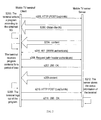
- the LogInInfo message is added behind a Hyper Text Transfer Protocol (HTTP) POST header as a message body in an extensible markup language (XML) format, and is sent to the server.
- HTTP Hyper Text Transfer Protocol
- the message header is separated from the message body by a enter ⁇ CR> symbol.
- the upper part is the message header and the lower part is the message body.
- the message header describes a host and port to be requested. When the connection mode is "close", continuous connections are unnecessary.
- HTTP1.1 supports discontinuous connections.
- the LogInInfo message includes a service ID, a user ID (for example, an international mobile subscriber identification number (IMSI) information), and other user management information.
- the LogInInfo message of the terminal may use a format, as shown in FIG. 2 .
- the LogInInfo message is sent through an interactive channel.
- the LogInInfo message may be stored in an interactive server or a special server for recording statistics data. In this embodiment, the LogInInfo message is sent to the server in the HTML format.
- the LogInInfo message may be sent through multiple methods, for example, the HTTP POST method. This is an example only. If other methods are available, the principle and idea are the same.
- the terminal When the terminal is started, the terminal reports the LogInInfo message to the server. Meanwhile, the server sets the user status to be online. The terminal obtains the SG and other related data from the server. When related data in the server is updated, the server may notify the online user of updating data, and the notification may be pushed to the online terminal. In this case, the terminal may perceive the data changes in the server and retrieve the data immediately.
- the terminal obtains the SG.
- the mobile TV terminal can receive a channel program only when the terminal is already registered in the server and is already activated to log in to a channel program.
- the terminal without subscribed channels subscribes to channels according to the obtained SG.
- the determined subscription relationship describes the channels that the user subscribes to in the SG. It may be stored in the server in the form of a table to synchronize with the terminal.
- the user may receive an SG.
- the SG has a channel content forecast.
- the terminal may obtain a channel list through the SG, and receive program contents according to the channels in the channel list.
- the terminal If the terminal receives program contents in broadcast mode, the terminal selects a desired channel according to the received SG. After the user terminal selects a channel ID in the SG, the terminal begins to receive programs.
- the server sends program contents to the terminal.
- the server may send contents in broadcast mode or in streaming mode.
- the terminal does not log out after receiving the program contents for a certain period of time (may be set to 1 minute), the information will be sent to the server.
- the server may record the login time of the terminal.
- the terminal After logging in to a channel, the terminal needs to record the current status information locally.
- the specified time may be preset by the network or CP. The time is used by the terminal to judge whether to send statistics information to the server. If the channel login time of the terminal exceeds the preset time, the user is watching a program; if the terminal logs out of the channel within the preset time, the user does not watch the channel program.
- the server authenticates the terminal.
- the server After receiving a POST message from the terminal, the server needs to authenticate the terminal by sending a challenge to the terminal. Sending a challenge is to give the client an HTTP response, the status code of which is 401 (Unauthorized) and which carries a message header WWW-Authenticate.
- the client knows that the uniform resource identifier (URI) needs to be authenticated when receiving the HTTP response.
- domain a Uniform Resource Identifier (URI) list, indicating domains to be protected. It may be a list, which tells the user that these URIs should be authenticated in the same way. If the domain field is null or ignored, all the URIs in the server need to be authenticated.
- nonce a random character string, which varies each time. The nonce field is related to the algorithm.
- time-stamp H (time-stamp ":”ETag ":” private-key), where time-stamp is a server clock and ETag is a requested Etag header.
- opaque generated by the server and returned along with a request sent by the client.
- the opaque field is a Base64 string or a hexadecimal character string.
- the realm value is a case-sensitive character string with quotation marks on both ends, indicating a realm to be authenticated.
- the realm is determined by the server. Different servers may set their own realms. A server may also have multiple realms. The purpose of including the realm information in the challenge is to make the client know which range of user names is legal.
- the message that is used by the server to authenticate the terminal may not carry a message body.
- the server needs to authenticate the terminal when the terminal user logs in to a channel or zaps a program or channel. Different from the authentication performed in case of user registration, this authentication can ensure that the user watching a program is a login user, thus ensuring the objectivity of viewing rate statistics.
- Various authentication modes are available, for example, HTTP digest authentication.
- the server After the server receives the LogInInfo message from a user, the user must be authenticated so that the identity of the user logging in to a program and the reasonability of the LogInInfo message are determined before the data in the LogInInfo message is written to the database. The user does not know whether he/she is to be authenticated when sending the LogInInfo message.
- the server may send an HTTP 401 message that carries a challenge when receiving the LogInInf message, where the challenge needs the related authentication information such as user name and password to be sent to the server in encryption mode.
- the terminal sends an authentication response to the server.
- the terminal may encrypt its own user name and password and the challenge message, and then send the encrypted information to the server. This may eliminate the necessity of sending a password in plain text.
- the server keeps messages received from the terminal. If the terminal fails to be authenticated, the user may continue watching a program, but the LogInInfo is invalid for the statistics of the server.
- S201 to S206 are standard HTTP digest authentication modes, each field of which is defined in RFC 2617.
- the digest authentication mode is only an example.
- the server sends a 200 OK message to the terminal.
- the server sends a 200 OK message to the terminal.
- This embodiment is based on HTTP mode.
- 200 OK indicates that the authentication succeeds.
- the server sends program contents to the terminal.
- the server may send program contents in broadcast mode or other modes. If the server sends program contents in broadcast mode, the terminal receives contents from the broadcast of the channel. If other modes (for example, streaming) are used, the server may send contents on a link with the terminal. In streaming mode, the server may send program contents through unicast or multicast.
- the user may log out of the current program at any time. That is, the user may log out of the current program at the end of the program or in the middle of the program.
- the terminal may be triggered to send a status message to the server.
- the terminal sends a LogOutInfo message to the server.
- an HTTP POST method is used to send the XML data information in the LogOutInfo message to the server.
- the meaning in the POST message is the same as that in step 4.
- the XML data in the LogOutInfo message is the message body.
- the LogOutInfo message carries a service ID and a user ID.
- the server records the logout time of the terminal, that is, end time.
- the LogOutInfo message of the terminal may use a format, as shown in FIG. 3 .
- the message is sent through an interactive channel.
- the LogOutInfo message may be stored in an interactive server or a special server for recording statistics data.
- the LogOutInfo message may be sent to the server in HTTP mode. Then, the server processes the LogOutInfo message and adds it to the database.
- the LogOutInfo message may also be sent in short message service (SMS) mode or other modes.
- SMS short message service
- the HTTP POST mode is only an example, and may also be replaced with other carrier modes. However, the principle and idea are the same.
- the server After receiving the LogOutInfo message properly, the server returns a 200 OK message to the terminal.
- the 200 OK message may be returned through an interactive channel or other modes.
- 200 OK indicates that the LogOutInfo message is sent to the server successfully.
- Other acknowledgement modes may also be used in different network environments, but the idea and principle are the same.
- the server After the terminal logs out of the program, the server stores the status information of the terminal.
- the server adds the LogInInfo and LogOutInfo status information that is reported by the terminal to a local database or other servers.
- the server obtains required data from the LogInInfo and LogOutInfo messages.
- the server may have a general understanding of the subscription of the terminal and the program watched by the terminal according to such data.
- the status information stored in the server database may be the same as or similar to that in Table 4.
- the terminal may select and watch a channel.
- the terminal may record the current user management information, including user ID, service ID and program ID.
- the terminal After the terminal logs in to a program of the channel for a certain period of time (for example, one minute), the user is watching the program. In this case, the terminal needs to send the user management information to the server.
- the terminal When the terminal logs out of the channel or the program, the terminal may record the user management information in case of logout, including user ID, service ID and program ID.
- the server may be an interactive server or a special server for recording the terminal information.
- LogInInfo and LogOutInfo messages may use a data structure shown in Table 1 below: Table 1 Type of messages between the terminal and the server Message Necessity Direction LogInInfo Mandatory Client ⁇ Server LogOutInfo Mandatory Client ⁇ Server
- the LogInInfo and LogOutInfo messages are mandatory.
- the directions are from the terminal to the server.
- Table 2 and table 3 show data structure components of the LogInInfo and LogOutInfo messages respectively.
- Table 2 LogInInfo message components Information Element Req Type Description Message-Type Mandatory String Message type ID LogInInfo User ID Mandatory String Terminal user ID Service ID Mandatory String Service ID (that is, channel ID) Program ID Mandatory String ID of a program being watched Online state Mandatory String Online status IMSI Mandatory String Client identification code (IMSI) Channel stat Mandatory String Channel ID, used to identify the statistics of the channel Table 3 LogOutInfo message components Information Element Req Type Description Message-Type Mandatory String Message type ID LogInInfo User ID Mandatory String Terminal user ID Service ID Mandatory String Service ID (that is, channel ID) Program ID Mandatory String ID of a program being watched Online state Mandatory String Online status IMSI Mandatory String Client identification code (IMSI) Channel stat Mandatory String Channel ID, used to identify the statistics of the channel
- a data structure may also be constructed in the server to store the status information to be recorded, as shown in Table 4.
- Table 4 Statistics table User ID Service ID Program ID StartTime EndTime 01234 01 011 10:50 11:30 02462 01 011 10:20 11:15 55208 02 021 12:05 12:25 04567 03 032 12:00 12:30 49653 02 021 12:15 12:25
- each user has a unique user ID, and different channels have different service IDs.
- a user with the user ID 01234 and a user with the user ID 02462 are watching a same channel with the service ID 01; they are also watching a same program with the program ID 011. They begin to watch the program at 10:50 a.m. and 10:20 a.m respectively.
- a user with the user ID 55208 and a user with the user ID 49653 are watching a channel with the service ID 02, which indicates that they are also watching a same program with the program ID 021.
- the former user begins to watch the program at 12:05, while the latter user begins to watch the program at 12:15.
- both users stop watching.
- the end time of both users is 12:25.
- the server may store records in various forms. In this solution, only an example is given.
- the statistics data may also be organized in other data structures, but the idea and method are the same.
- a channel is associated with a server.
- a channel has only one program at a point of time.
- the service ID and program ID are specified by the CP.
- a channel may also provide the user with only one program within a certain period of time. Attributes such as user ID, service ID, program ID, end time and start time are only examples of the status information of a program watched by the terminal, and may be changed and extended when necessary.
- the server may be an interactive server or a special server for storing the statistics information.
- the server there are few message contents, and statistics of data can be made easily, which lessens the burden of the server.
- the server can support a certain number of users, adding such statistics does not change the number of users supported by the server.
- LogInInfo and LogOutInfo messages involved in the transmission of user management information are examples only. Other similar methods where the status information is carried in messages may also be used to transmit the status information, but the principle and idea are the same.
- the third embodiment of the present invention provides a method for sending user management information to the server when a terminal logs in to a program and logs out of the program and making statistics of programs or user preferences by the server according to the user management information.
- the server may further know details about the program and channel watched by the terminal.
- the terminal may log in to a channel where the program is located.
- the terminal may send the user management information of the terminal, such as service ID, program ID, user ID and channel ID, to the server.
- the user management information may be sent to the server in the form of a message.
- the server may judge whether to store the received user management information of the terminal according to a local policy, and give a response.
- the terminal may interact with the server as follows: The terminal sends the user management information in case of logout, such as service ID, program ID, user ID and channel ID, to the server.
- the server makes statistics of the stored programs that the terminal logs in to according to the user management information.
- the server may calculate the total program login duration of the user according to the recorded login time and logout time of the terminal.
- the server may also find out by calculation a channel and program with the highest viewing rate according to the user ID, service ID, program ID and channel ID.
- the server may add more network resources to the channel and program with the highest viewing rate to ensure the watching quality of the program.
- the CP may also adjust channels and programs according to such statistics. For example, the CP may play the program with the highest viewing rate for a longer time or develop programs according to interests of users.
- the process includes the following steps:
- the terminal is started, and obtains the SG.
- the mobile TV terminal can receive a channel program only when the terminal is already registered in the server and is already activated to log in to a channel program.
- the terminal without subscribed channels re-subscribes to channels according to the obtained SG.
- the determined subscription relationship describes the channels that the user subscribes to in the SG. It may be stored in the server in the form of a table to synchronize with the terminal.
- the user may receive an SG.
- the SG has a channel content forecast.
- the terminal may obtain a channel list through the SG, and receive program contents according to the channels in the channel list.
- the terminal If the terminal receives program contents in broadcast mode, the terminal selects a desired channel according to the received SG. After the user terminal selects a channel ID in the SG, the terminal begins to receive programs.
- the server sends program contents to the terminal.
- the server may send contents in broadcast mode or in streaming mode.
- the terminal does not log out after receiving the program contents for a certain period of time (may be set to 1 minute), the information will be sent to the server.
- the server may record the login time of the terminal.
- the terminal After logging in to a channel, the terminal needs to record the current user management information locally.
- the specified time may be preset by the network or CP. The time is used by the terminal to judge whether to send statistics information to the server. If the channel login time of the terminal exceeds the preset time, the user is watching a program; if the terminal logs out of the channel within the preset time, the user does not watch the channel program.
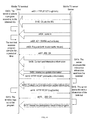
- the terminal sends a LogInInfo message to the server.
- the LogInInfo message is added behind an HTTP POST header as a message body in the XML format, and is sent to the server.
- the message header is separated from the message body by a ⁇ CR> symbol.
- the upper part is the message header and the lower part is the message body.
- the message header describes a host and port to be requested. When the connection mode is "close”, continuous connections are unnecessary.
- HTTP1.1 supports discontinuous connections.
- the LogInInfo message carries a service ID, a user ID (for example, IMSI information) and other login status information.
- the LogInInfo message of the terminal may use a format, as shown in FIG. 2 .
- the LogInInfo message is sent through an interactive channel.
- the LogInInfo message may be stored in an interactive server or a special server for recording statistics data. In this embodiment, the LogInInfo message is sent to the server in the HTML format.
- the LogInInfo may be sent through multiple methods, for example, the HTTP POST method. This is an example only. If other methods are available, the principle and idea are the same.
- the terminal may report the LogInInfo message to the server.
- the server sets the user status to be online.
- the terminal obtains the SG and other related data from the server.
- the server may notify the online user of updating data, and the notification may be pushed to the online terminal. In this case, the terminal may perceive the data changes in the server and retrieve the data immediately.
- the server authenticates the terminal.
- the server After receiving a POST message from the terminal, the server needs to authenticate the terminal by sending a challenge to the terminal. Sending a challenge is to give the client an HTTP response, the status code of which is 401 (Unauthorized) and which carries a message header WWW-Authenticate.
- the client knows that the URI needs to be authenticated when receiving the HTTP response.
- domain a URI list, indicating domains to be protected. It may be a list, which tells the user that these URIs should be authenticated in the same way. If the domain field is null or ignored, all the URIs in the server need to be authenticated.
- nonce a random character string, which varies each time. The nonce field is related to the algorithm.
- time-stamp H time-stamp ":"ETag ":” private-key
- time-stamp is a server clock
- ETag is a requested Etag header
- opaque generated by the server and returned along with a request sent by the client.
- the opaque field is a Base64 string or a hexadecimal character string.
- the realm value is a case-sensitive character string with quotation marks on both ends, indicating a realm to be authenticated.
- the realm is determined by the server. Different servers may set their own realms. A server may also have multiple realms. The purpose of including the realm information in the challenge is to make the client know which range of user names is legal.
- the message that is used by the server to authenticate the terminal may not carry a message body.
- the server needs to authenticate the terminal to obtain the identity of the terminal user logging in to a channel. Different from the authentication performed in case of user registration, this authentication can ensure that the user watching a program is a login user, thus ensuring the objectivity of viewing rate statistics.
- Various authentication modes may be available, for example, HTTP digest authentication.
- the server After the server receives the LogInInfo message from a user, the user must be authenticated so that the identity of the user logging in to a program and the reasonability of the LogInInfo message are determined before the data in the LogInInfo message is written to the database. The user does not know whether he/she is to be authenticated when sending the LogInInfo message.
- the server may send an HTTP 401 message that carries a challenge when receiving the LogInInf message, where the challenge needs the related authentication information such as user name and password to be sent to the server in encryption mode.
- the terminal sends an authentication response to the server.
- the terminal may encrypt its own user name and password and the challenge message, and then send the encrypted information to the server. This may eliminate the necessity of sending a password in plain text.
- the server keeps messages received from the terminal. If the terminal fails to be authenticated, the user may continue watching a program, but the LogInInfo is invalid to the server to statistic.
- S301 to S306 are standard HTTP digest authentication modes, each field of which is defined in RFC 2617.
- the digest authentication mode is only an example.
- the server sends a 200 OK message to the terminal.
- the server sends a 200 OK message to the terminal.
- This embodiment is based on HTTP mode.
- 200 OK indicates that the authentication succeeds.
- the server sends program contents to the terminal.
- the server may send program contents in broadcast mode or other modes. If the server sends program contents in broadcast mode, the terminal receives contents from the broadcast of the channel. If other modes (for example, streaming) are used, the server may send contents on a link with the terminal. In streaming mode, the server may send program contents through unicast or multicast.
- the user may log out of the current program at any time. That is, the user may log out of the current program at the end of the program or in the middle of the program.
- the terminal may be triggered to send a status message to the server.
- the terminal sends a LogOutInfo message to the server.
- an HTTP POST method is used to send the XML data information in the LogOutInfo message to the server.
- the meaning in the POST message is the same as that in step 4.
- the XML data in the LogOutInfo message is the message body.
- the LogOutInfo message carries a service ID, a user ID and current logout time end time.
- the LogOutInfo message of the terminal may use a format, as shown in FIG. 3 .
- the message is sent through an interactive channel.
- the LogOutInfo message may be stored in an interactive server or a special server for recording statistics data.
- the LogOutInfo message may be sent to the server in HTTP mode. Then, the server processes the LogOutInfo message and adds it to the database.
- the LogOutInfo message may also be sent in SMS mode or other modes.
- the HTTP POST mode is only an example, and may also be replaced with other carrier modes. However, the principle and idea are the same.
- the server After receiving the LogOutInfo message properly, the server returns a 200 OK message to the terminal.
- the 200 OK message may be returned through an interactive channel or other modes.
- 200 OK indicates that the LogOutInfo message is sent to the server successfully.
- Other acknowledgement modes may also be available in different network environments, but the idea and principle are the same.
- the server After the terminal logs out of a program, the server stores the status information of the terminal and makes statistics.
- the server makes statistics of the viewing rate of a channel or program according to the LogInInfo and LogOutInfo status information reported by the terminal.
- the server may make statistics of the program preferences of the users.
- the server calculates the total duration of watching the program by the user according to the recorded start time and end time when the terminal watches the program.
- the server may find out by calculation which program ID involves most users and which service ID involves most users according to different programs.
- the server may make statistics of the user preferences according to the previous data that the users store in the server, and find out which program ID and service ID involve most users.
- the CP may provide the users with a monthly fee service according to the data.
- the status information that the users store in the server may be similar to that in Table 8.
- the terminal may select and watch a channel.
- the terminal may record the current user management information, including user ID, service ID and program ID.
- the terminal After the terminal logs in to a program of the channel for a certain period of time (for example, one minute), the user is watching the program. In this case, the terminal needs to send the user management information to the server.
- the terminal When the terminal logs out of the channel or the program, the terminal may record the user management information in case of logout, including user ID, service ID and program ID.
- the server may be an interactive server or a special server for recording the terminal information.
- Table 5 shows the data structures of the LogInInfo and LogOutInfo messages. Table 5 T ype of messages between the terminal and the server Message Necessity Direction LogInInfo mandatorytory Client ⁇ Server LogOutInfo Mandatory Client ⁇ Server
- the LogInInfo and LogOutInfo messages are mandatory.
- the directions are from the terminal to the server.
- Table 6 and table 7 show data structure components of the LogInInfo and LogOutInfo messages.
- Table 6 LogInInfo message components Information Element Req Type Description Message-Type Mandatory String Message type ID LogInInfo User ID Mandatory String Terminal user ID Service ID Mandatory String Service ID (That is, channel ID) Program ID Mandatory String ID of a program being watched Online state Mandatory String Online status IMSI Mandatory String Client identification code (IMSI) Channel stat Mandatory String Channel ID, used to identify the statistics of the channel Table 7 LogOutInfo message components Information Element Req Type Description Message-Type Mandatory String Message type ID LogInInfo User ID Mandatory String Terminal user ID Service ID Mandatory String Service ID (That is, channel ID) Program ID Mandatory String ID of a program being watched Online state Mandatory String Online status IMSI Mandatory String Client identification code (IMSI) Channel stat Mandatory String Channel ID, used to identify the statistics of the channel
- a data structure may also be constructed in the server to store the status information (user management information) to be recorded:
- Table 8 S tatistics table
- each user has a unique user ID, and different channels have different service IDs.
- a user with the user ID 01234 and a user with the user ID 02462 are watching a channel with the service ID 01; they are also watching a same program with the program ID 011. They begin to watch the program at 10:50 and 10:20 respectively.
- a user with the user ID 55208 and a user with the user ID 49653 are watching a channel with the service ID 02; they are also watching a same program with the program ID 021.
- the Time attribute indicates the duration of watching a program by the user. Table 8 shows that the watching duration of a user with the user ID 55208 is equal to that of a user with the user ID 49653.
- the server may store records in various forms. In this solution, only an example is given.
- the statistics data may also be organized in other data structures, but the idea and method are the same.
- a channel is associated with a server.
- a channel has only one program at the same time.
- the service ID and program ID are specified by the program CP.
- a channel may provide the user with only one program within a certain period of time. Attributes such as user ID, service ID, program ID, end time and start time are only examples of the status information of a program watched by the terminal, and may be changed and extended when necessary.
- the start time and end time indicate the login time and logout time of the terminal recorded in the server.
- the start time and end time define a period in which the terminal records the program contents broadcasted currently.
- the Time value of the period is equal to the difference between the start time and the end time, indicating the duration of watching the program continuously by the user.
- Each program is sent by the server to the terminal in the form of packets frame by frame.
- Each frame of a packet has a time stamp that is added by the server.
- the login time may be extracted from the first frame of the packet
- the logout time may be extracted from the last frame of the packet.
- the difference between the login time and the logout time is the channel login duration of the terminal.
- the time of the packet is the network time that is independent of the local time of the terminal and is determined by the server.
- the local time of the terminal will not affect the channel login duration of the terminal. This is reasonable to the statistics of the watching time of the user, and can ensure that the recorded time is the watching time.
- the server can obtain an accurate statistics result.
- the server may be an interactive server or a special server for storing the statistics information.
- the server there are few message contents, and statistics of data can be made easily, which lessens the burden of the server.
- the server can support a certain number of users, adding such statistics does not change the number of users supported by the server.
- LogInInfo and LogOutInfo messages involved in the transmission of user management information are examples only. Other similar methods where the status information is carried in messages may also be used to transmit the status information, but the principle and idea are the same.
- the fourth embodiment of the present invention provides a method for sending user management information to the server and completing interactive update with the terminal by the server according to the user management information when a terminal logs in to a program and logs out of a program.
- the user may participate in program interactions during the watching process, for example, discussions of interactive topics and interactive games.
- the interactive update between the terminal and the server may enable the user to watch the program and participate in interactions in the local terminal.
- the server may send program interaction information to the terminal if the program involves interactive topics. If the interactive information is updated during the playing of the program, the server may send the updated interactive information to the terminal according to the status information of the terminal. Generally, the interactive information may be delivered or updated during the watching of an interactive program. The interactive information may be delivered to the terminal with the program contents, but the type of interactive information is always the same in a program. Thus, the user may participate in the interactive program continuously so long as the interactive information of the program is updated. In this case, the updated interactive information may be sent according to the status information that the terminal sends to the server.
- the process includes the following steps:
- the terminal is started, and sends a LogInInfo message to the server.
- the LogInInfo message is added behind an HTTP POST header as a message body in the XML format, and is sent to the server.
- the message header is separated from the message body by a ⁇ CR> symbol.
- the upper part is the message header and the lower part is the message body.
- the message header describes a host and port to be requested. When the connection mode is "close”, continuous connections are unnecessary.
- HTTP1.1 supports discontinuous connections.
- the LogInInfo message carries a service ID, a user ID (for example, IMSI information) and other login status information.
- the LogInInfo message of the terminal may use a format, as shown in FIG. 2 .
- the LogInInfo message is sent through an interactive channel.
- the LogInInfo message may be stored in an interactive server or a special server for recording statistics data. In this embodiment, the LogInInfo message is sent to the server in the HTML format.
- the LogInInfo message may be sent through multiple methods, for example, the HTTP POST method. This is an example only. If other methods are available, the principle and idea are the same.
- the terminal When the terminal is started, the terminal reports the LogInInfo message to the server. Meanwhile, the server sets the user status to be online. The terminal obtains the SG and other related data from the server. When related data in the server is updated, the server may notify the online user of updating data, and the notification may be pushed to the online terminal. In this case, the terminal may perceive the data changes in the server and retrieve the data immediately.
- the terminal obtains the SG.
- the mobile TV terminal can receive a channel program only when the terminal is already registered in the server and is already activated to log in to a channel program.
- the terminal without subscribed channels subscribes to channels according to the obtained SG.
- the determined subscription relationship describes the channels that the user subscribes to in the SG. It may be stored in the server in the form of a table to synchronize with the terminal.
- the user may receive an SG.
- the SG has a channel content forecast.
- the terminal may obtain a channel list through the SG, and receive program contents according to the channels in the channel list.
- the terminal If the terminal receives program contents in broadcast mode, the terminal selects a desired channel according to the received SG. After the user terminal selects a channel ID in the SG, the terminal begins to receive programs.
- the server sends program contents to the terminal.
- the server may send contents in broadcast mode or in streaming mode.
- the terminal does not log out after receiving the program contents for a certain period of time (may be set to 1 minute), the information will be sent to the server.
- the server may record the login time of the terminal.
- the terminal After logging in to a channel, the terminal needs to record the current status information locally.
- the certain period of time may be preset by the network or CP. The time is used by the terminal to judge whether to send statistics information to the server. If the channel login time of the terminal exceeds the preset time, the user is watching a program; if the terminal logs out of the channel within the preset time, the user does not watch the channel program.
- the server authenticates the terminal.
- the server After receiving a POST message from the terminal, the server needs to authenticate the terminal by sending a challenge to the terminal. Sending a challenge is to give the client an HTTP response, the status code of which is 401 (Unauthorized) and which carries a message header WWW-Authenticate.
- the client knows that the URI needs to be authenticated when receiving the HTTP response.
- domain a URI list, indicating domains to be protected. It may be a list, which tells the user that these URIs should be authenticated in the same way. If the domain field is null or ignored, all the URIs in the server need to be authenticated.
- nonce a random character string, which varies each time. The nonce field is related to the algorithm.
- time-stamp H time-stamp ":"ETag ":” private-key
- time-stamp is a server clock
- ETag is a requested Etag header
- opaque generated by the server and returned along with a request sent by the client.
- the opaque field is a Base64 string or a hexadecimal character string.
- the realm value is a case-sensitive character string with quotation marks on both ends, indicating a realm to be authenticated.
- the realm is determined by the server. Different servers may set their own realms. A server may also have multiple realms. The purpose of including the realm information in the challenge is to make the client know which range of user names is legal.
- the message that is used by the server to authenticate the terminal may not carry a message body.
- the server needs to authenticate the terminal to obtain the identity of the terminal user logging in to a channel. Different from the authentication performed in case of user registration, this authentication can ensure that the user watching a program is a login user, thus ensuring the objectivity of viewing rate statistics.
- Various authentication modes may be available, for example, HTTP digest authentication.
- the server After the server receives the LogInInfo message from a user, the user must be authenticated so that the identity of the user logging in to a program and the reasonability of the LogInInfo message are determined before the data in the LogInInfo message is written to the database. The user does not know whether he/she is to be authenticated when sending the LogInInfo message.
- the server may send an HTTP 401 message that carries a challenge when receiving the LogInInf message, where the challenge needs related authentication information such as user name and password to be sent to the server in encryption mode.
- the terminal sends an authentication response to the server.
- the terminal may encrypt its own user name and password and the challenge message, and then send the encrypted information to the server. This may eliminate the necessity of sending a password in plain text.
- the server keeps messages received from the terminal. If the terminal fails to be authenticated, the user may continue watching a program, but the LogInInfo message is invalid.
- S401 to S406 are standard HTTP digest authentication modes, each field of which is defined in RFC 2617.
- the digest authentication mode is only an example.
- the server sends a 200 OK message to the terminal.
- the server sends a 200 OK message to the terminal.
- This embodiment is based on HTTP mode.
- 200 OK indicates that the authentication succeeds.
- the server sends program contents and interactive information to the terminal.
- the server may send program contents in broadcast mode or other modes. If the server sends program contents in broadcast mode, the terminal receives contents from the broadcast of the channel. If other modes (for example, streaming) are used, the server may send contents on a link with the terminal. In streaming mode, the server may send program contents through unicast or multicast.
- Interactive media documents and interactive media objects thereof may be delivered with the program contents or before the user watches the program contents.
- the server sends an interactive update message to the terminal.
- the server may send the updated interactive information to the terminal.
- the server needs to judge the watching details (for example, the channel ID and user ID) of the terminal according to the LogInInfo information reported by the terminal. With such information, the server can send the updated interactive information more accurately to the user watching the program.
- the updated interactive information may be sent through many methods. For example, it may be carried in the message body or sent through short messages, but the principle and idea are the same.
- the terminal user sends interactive information to the server.
- the user may send his/her choices to the server in the form of a message body by using the HTTP POST method or send his/her discussion contents to the server in SMS mode to achieve the objective of program interaction.
- the user may edit messages to express opinions by making a simple choice or providing detailed descriptions, which does not affect the terminal in receiving subsequent program contents from the server.
- the user may perform the interactive operations without interrupting the program.
- the server receives interactive information from the user, and processes the received interactive information.
- the interactive server may process the interactive information immediately or after the program ends according to a policy of the interactive server.
- the interactive server may extract the interactive information of the user, and send an interactive content to the user according to the interactive information content. For example, when the user selects segment A in a selective interactive program, the interactive server may play segment A according to the user's selection.
- the server sends the interactive result that is processed completely to the terminal along with the program contents.
- the user may send the interactive statistics result processed by the server to the terminal user immediately after an interaction ends, so that the terminal user can immediately know the interactive result or overall user participation details of the interactive program.
- the current interactive result that is sent may be a personal interactive result or interactive results of all the participants.
- An interactive program may involve multiple interaction processes.
- dotted lines indicate returned participation results, and mean that the participation results may or may not be returned to the user. This is determined according to the interactive server and the policy of the interactive program.
- the user may log out of the current program at any time. That is, the user may log out of the current program at the end of the program or in the middle of the program.
- the terminal may be triggered to send a status message to the server.
- the terminal sends a LogOutInfo message to the server.
- an HTTP POST method is used to send the XML data information in the LogOutInfo message to the server.
- the meaning in the POST message is the same as that in S404.
- the message body includes XML data of the LogOutInfo message.
- the LogOutInfo message carries a service ID and a user ID.
- the server records the logout time of the terminal, that is, end time.
- the LogOutInfo message of the terminal may use a format, as shown in FIG. 7.
- the message is sent through an interactive channel.
- the LogOutInfo message may be stored in an interactive server or a special server for recording statistics data.
- the LogOutInfo message may be sent to the server in HTTP POST mode. Then, the server processes the LogOutInfo message and adds it to the database. The LogOutInfo message may also be sent in SMS mode.
- the HTTP POST mode is only an example, and may also be replaced with other carrier modes. However, the principle and idea are the same.
- the server After receiving the LogOutInfo message properly, the server returns a 200 OK message to the terminal.
- the 200 OK message may be returned through an interactive channel or other modes.
- the server may send the response to the terminal in peer-to-peer mode, or push the response to the terminal.
- 200 OK indicates that the LogOutInfo message is sent to the server successfully.
- Other acknowledgement modes may also be available in different network environments, but the idea and principle are the same.
- the server After the terminal logs out of the program, the server stores the interactive information of the user, and makes statistics of user participation information in the interactive program.
- the server stores the interactive information that the user sends during the playing of the interactive program, and makes statistics of the interactive information of the user after the program ends. Finally, the server may feed back the statistics result to the user.
- the statistics contents may be program participation details or an overall interactive result of the program. For example, after a selective interactive program ends, the interactive server may count the audience choosing A and the audience choosing B. This example is intended to describe the interactive update result and form more clearly.
- the server sends the final statistics result of the interactive program to the user.
- the terminal user may obtain a participation result after participating in a program, where the participation result may include the participation results of the terminal user and the overall program.
- the participation result may include the participation results of the terminal user and the overall program.
- dotted lines indicate transmission of the final result, which means that this step is optional.
- the terminal gives feedback to an interactive program during the reception of program contents, and the server responds to the choice that the user makes, thus achieving interactive update.
- the message carrier mode and transmission mode used in this embodiment may be replaced with other carrier modes and transmission modes, but the principle and idea are the same.
- the LogOutInfo and LogInInfo messages may be stored in the server so that statistics of the program watching information of the terminal may be made.
- the data structures may be stored in a table similar to or same as Table 8.
- the table may be stored in the server or a database special for recording the statistics result.
- the fifth embodiment of the present invention provides a system for obtaining user management information in the mobile TV service. As shown in FIG. 5 , the system includes:
- the server 10 further includes:
- the terminal 20 further includes:
- the embodiments of the present invention may be implemented through software and a necessary general hardware platform or through hardware only. However, in most cases, software and a general hardware platform are preferred. Based on this understanding, the technical solution of the present invention or contribution to the prior art may be embodied by a software product.
- the software product is stored in a storage medium and includes multiple instructions that instruct a network device to execute methods provided in embodiments of the present invention.
Landscapes
- Engineering & Computer Science (AREA)
- Signal Processing (AREA)
- Computer Networks & Wireless Communication (AREA)
- Multimedia (AREA)
- General Engineering & Computer Science (AREA)
- Databases & Information Systems (AREA)
- Computer Hardware Design (AREA)
- Computer Security & Cryptography (AREA)
- Computing Systems (AREA)
- Computer Graphics (AREA)
- Two-Way Televisions, Distribution Of Moving Picture Or The Like (AREA)
Applications Claiming Priority (2)
| Application Number | Priority Date | Filing Date | Title |
|---|---|---|---|
| CN200710162759.XA CN101399958B (zh) | 2007-09-30 | 2007-09-30 | 获取用户管理信息的方法、系统和设备 |
| PCT/CN2008/072554 WO2009046671A1 (fr) | 2007-09-30 | 2008-09-26 | Procédé, système et appareil pour obtenir des informations de gestion d'utilisateur |
Publications (2)
| Publication Number | Publication Date |
|---|---|
| EP2190231A1 true EP2190231A1 (fr) | 2010-05-26 |
| EP2190231A4 EP2190231A4 (fr) | 2011-03-09 |
Family
ID=40518172
Family Applications (1)
| Application Number | Title | Priority Date | Filing Date |
|---|---|---|---|
| EP08837169A Withdrawn EP2190231A4 (fr) | 2007-09-30 | 2008-09-26 | Procédé, système et appareil pour obtenir des informations de gestion d'utilisateur |
Country Status (6)
| Country | Link |
|---|---|
| US (1) | US20100186044A1 (fr) |
| EP (1) | EP2190231A4 (fr) |
| JP (1) | JP5242690B2 (fr) |
| KR (1) | KR101159556B1 (fr) |
| CN (1) | CN101399958B (fr) |
| WO (1) | WO2009046671A1 (fr) |
Families Citing this family (18)
| Publication number | Priority date | Publication date | Assignee | Title |
|---|---|---|---|---|
| RU2011118468A (ru) * | 2008-10-07 | 2012-11-20 | Шарп Кабусики Кайся (Jp) | Приемник цифрового широковещания и способ приема |
| CN101998153B (zh) * | 2009-08-17 | 2013-04-03 | 中国移动通信集团公司 | 基于广播式移动多媒体业务上报收看频道的方法及装置 |
| CN103546770A (zh) * | 2012-07-11 | 2014-01-29 | 上海曜铂信息科技有限公司 | 智能收视率采集方法 |
| CN104486645A (zh) * | 2014-11-20 | 2015-04-01 | 小米科技有限责任公司 | 确定节目收视率的方法、播放设备、服务器及装置 |
| US10776839B1 (en) * | 2015-05-29 | 2020-09-15 | Intuit Inc. | Photo transactions for financial applications |
| CN106470347A (zh) * | 2015-08-21 | 2017-03-01 | 北京国双科技有限公司 | 基于iptv的订购信息统计方法、服务器及视频播放器 |
| CN105100932A (zh) * | 2015-08-29 | 2015-11-25 | 天脉聚源(北京)科技有限公司 | 显示参与互动的用户信息的方法和装置 |
| CN105245963A (zh) * | 2015-09-24 | 2016-01-13 | 天脉聚源(北京)科技有限公司 | 一种处理电视互动系统互动信息的方法及装置 |
| CN105228012A (zh) * | 2015-09-28 | 2016-01-06 | 天脉聚源(北京)科技有限公司 | 一种管理互动电视系统用户信息的方法及装置 |
| CN105307039A (zh) * | 2015-10-28 | 2016-02-03 | 天脉聚源(北京)科技有限公司 | 一种用于电视互动系统电视节目管理的方法及装置 |
| JP6769106B2 (ja) * | 2016-05-18 | 2020-10-14 | 富士通株式会社 | ストレージ制御方法、ストレージ制御プログラムおよび情報処理装置 |
| CN105979300A (zh) * | 2016-06-27 | 2016-09-28 | 乐视控股(北京)有限公司 | 身份识别方法及装置 |
| WO2018018456A1 (fr) * | 2016-07-27 | 2018-02-01 | 黄新勇 | Procédé et système statistiques de source de film de télédiffusion |
| WO2018018455A1 (fr) * | 2016-07-27 | 2018-02-01 | 黄新勇 | Procédé et système statistiques pour le contenu visionné par un utilisateur |
| CN106131677A (zh) * | 2016-07-27 | 2016-11-16 | 黄新勇 | 用户观看内容的统计方法及系统 |
| WO2018018453A1 (fr) * | 2016-07-27 | 2018-02-01 | 黄新勇 | Système et procédé statistique de durée de visionnage pendant une émission télévisée |
| CN107801186B (zh) * | 2016-09-06 | 2020-10-30 | 普天信息技术有限公司 | 一种集群通信系统中非接入层摘要鉴权方法 |
| US12330590B1 (en) * | 2024-03-28 | 2025-06-17 | Light Wave Technology Inc. | Vehicle anti-theft system |
Family Cites Families (31)
| Publication number | Priority date | Publication date | Assignee | Title |
|---|---|---|---|---|
| JP3328951B2 (ja) * | 1992-02-07 | 2002-09-30 | ソニー株式会社 | Tv受像機及び選局方法 |
| US5758257A (en) * | 1994-11-29 | 1998-05-26 | Herz; Frederick | System and method for scheduling broadcast of and access to video programs and other data using customer profiles |
| US5796952A (en) * | 1997-03-21 | 1998-08-18 | Dot Com Development, Inc. | Method and apparatus for tracking client interaction with a network resource and creating client profiles and resource database |
| US6353929B1 (en) * | 1997-06-23 | 2002-03-05 | One River Worldtrek, Inc. | Cooperative system for measuring electronic media |
| US7260823B2 (en) * | 2001-01-11 | 2007-08-21 | Prime Research Alliance E., Inc. | Profiling and identification of television viewers |
| JP2001197478A (ja) * | 2000-01-17 | 2001-07-19 | Canon Inc | 放送管理システム、放送管理装置、受信装置及びそれらの制御方法、コンピュータ可読メモリ |
| JP2002057645A (ja) * | 2000-08-10 | 2002-02-22 | Ntt Docomo Inc | データ転送方法および移動体サーバー |
| US7370073B2 (en) * | 2000-11-28 | 2008-05-06 | Navic Systems, Inc. | Using viewership profiles for targeted promotion deployment |
| JP2002223427A (ja) * | 2001-01-26 | 2002-08-09 | Ntt Comware Corp | 番組視聴関連情報取得方法及び番組視聴関連情報取得装置及び番組視聴関連情報取得システムならびにそのプログラム及びこのプログラムを記録した記録媒体 |
| JP2002271283A (ja) * | 2001-03-09 | 2002-09-20 | Tomo-Digi Corp | デジタル放送番組を構成するデータ放送データおよびデジタル放送番組の放送方法 |
| JP2003061065A (ja) * | 2001-08-10 | 2003-02-28 | Nippon Telegraph & Telephone East Corp | 視聴者参加型ストリーミング配信方法ならびにアンケート管理サーバおよび視聴者端末装置 |
| US20030110500A1 (en) * | 2001-12-06 | 2003-06-12 | Rodriguez Arturo A. | Prediction-based adaptative control of television viewing functionality |
| JP3853663B2 (ja) * | 2002-02-04 | 2006-12-06 | 富士通株式会社 | 抽選方法及び抽選プログラム |
| CN100512417C (zh) * | 2003-02-24 | 2009-07-08 | 华为技术有限公司 | 交互数字广播电视网络系统及其前端和终端装置 |
| JP2005056246A (ja) * | 2003-08-06 | 2005-03-03 | Sony Corp | 情報端末装置、サーバ装置およびプログラム |
| JP2006005767A (ja) * | 2004-06-18 | 2006-01-05 | Omron Entertainment Kk | 端末装置、サーバ装置、通信ネットワークシステム、端末装置の制御方法、サーバ装置の制御方法、プログラム、および、プログラムを記録した記録媒体 |
| JP4334426B2 (ja) * | 2004-07-09 | 2009-09-30 | シャープ株式会社 | Uiコンテンツ生成方法、uiコンテンツ生成装置及びuiコンテンツ生成システム |
| CN100556128C (zh) * | 2004-07-14 | 2009-10-28 | 上海微小卫星工程中心 | 电视收视率自动采集和统计方法及系统 |
| US8402506B2 (en) * | 2005-01-05 | 2013-03-19 | Yahoo! Inc. | Informational alert messaging for digital home services |
| US20090185522A1 (en) * | 2005-01-07 | 2009-07-23 | Nortel Networks Limited | Systems and methods for distributing content in wireless networks |
| JP4727246B2 (ja) * | 2005-02-08 | 2011-07-20 | 三菱電機株式会社 | 視聴率集計システム |
| KR100898226B1 (ko) * | 2005-04-08 | 2009-05-18 | 티유미디어 주식회사 | 시청률 조사 시스템 및 그 방법 |
| US8141138B2 (en) * | 2005-10-17 | 2012-03-20 | Oracle International Corporation | Auditing correlated events using a secure web single sign-on login |
| US20070099560A1 (en) * | 2005-11-02 | 2007-05-03 | Sony Ericsson Mobile Communications Ab | Mobile device control of mobile television broadcast signals to alternate destinations |
| US7694322B2 (en) * | 2005-12-20 | 2010-04-06 | Sony Ericsson Mobile Communications Ab | Efficient streamed content delivery to portable communications device |
| KR20070074153A (ko) * | 2006-01-06 | 2007-07-12 | 에스케이 텔레콤주식회사 | 위성 dmb 시청율 조사 서비스 시스템 및 방법 |
| JP2007202031A (ja) * | 2006-01-30 | 2007-08-09 | Kyocera Corp | 移動型放送受信装置及び視聴情報送信方法 |
| JP2007272868A (ja) * | 2006-03-07 | 2007-10-18 | Sony Corp | 情報処理装置、情報通信システム、および情報処理方法、並びにコンピュータ・プログラム |
| CN2938648Y (zh) * | 2006-04-30 | 2007-08-22 | 朱大为 | 一种手机电视终端 |
| CN100433627C (zh) * | 2006-06-21 | 2008-11-12 | 华为技术有限公司 | 实现移动多媒体广播组播的系统及方法 |
| KR100758507B1 (ko) * | 2007-03-14 | 2007-09-13 | 주식회사 셀런 | 쌍방향 방송 시스템에서 광고 시청자의 반응을 유도하여광고시청을 활성화하고 광고 시청률을 조사하는 방법 |
-
2007
- 2007-09-30 CN CN200710162759.XA patent/CN101399958B/zh active Active
-
2008
- 2008-09-26 KR KR1020107008233A patent/KR101159556B1/ko not_active Expired - Fee Related
- 2008-09-26 WO PCT/CN2008/072554 patent/WO2009046671A1/fr not_active Ceased
- 2008-09-26 JP JP2010526139A patent/JP5242690B2/ja active Active
- 2008-09-26 EP EP08837169A patent/EP2190231A4/fr not_active Withdrawn
-
2010
- 2010-03-29 US US12/749,104 patent/US20100186044A1/en not_active Abandoned
Also Published As
| Publication number | Publication date |
|---|---|
| JP5242690B2 (ja) | 2013-07-24 |
| CN101399958A (zh) | 2009-04-01 |
| EP2190231A4 (fr) | 2011-03-09 |
| JP2010541345A (ja) | 2010-12-24 |
| WO2009046671A1 (fr) | 2009-04-16 |
| KR101159556B1 (ko) | 2012-06-25 |
| US20100186044A1 (en) | 2010-07-22 |
| CN101399958B (zh) | 2010-11-03 |
| KR20100056562A (ko) | 2010-05-27 |
Similar Documents
| Publication | Publication Date | Title |
|---|---|---|
| JP5242690B2 (ja) | ユーザ管理情報を得るための方法、システム、および装置 | |
| KR101729551B1 (ko) | 브로드캐스트 서비스 및 브로드캐스트 콘텐츠 중 하나 이상에 대한 시청률을 단말 내에서 조사하는 방법 | |
| US8245309B2 (en) | Content viewing system, content viewing apparatus, and viewing approval apparatus | |
| KR101494111B1 (ko) | 사용자 입력에 기초하여 콘텐츠를 브로드캐스팅하는 방법들 및 시스템들 | |
| US20100014661A1 (en) | Apparatus, system, method and computer program product for distributing service information and digital rights for broadcast data | |
| US20050090235A1 (en) | Apparatus, system, method and computer program product for service selection and sorting | |
| CN100353789C (zh) | 将内容配置给移动用户 | |
| KR20060104995A (ko) | 서비스 선택 및 분류를 위한 장치, 시스템, 방법 및 컴퓨터프로그램 생성물 | |
| WO2008040201A1 (fr) | Procédé d'obtention d'une clé à long terme (ltk) et serveur de gestion d'abonnement associé | |
| US8255943B2 (en) | Broadcast area authentication | |
| WO2008113827A2 (fr) | Procédé et système pour reconnaître des utilisateurs de télévision ip | |
| KR20060121158A (ko) | 방송 서비스 송신 및 수신을 위한 장치 및 방법 | |
| KR100981568B1 (ko) | 서비스 제공자와 다수의 단말기 간에 브로드캐스트 서비스를 지원하는 컨텐츠 보호 방법 및 장치 | |
| US20090276818A1 (en) | Method for providing iptv service and internet broadcasting system therefor | |
| MXPA05009032A (es) | Metodo y aparato para proporcionar datos de clave de canal. | |
| WO2013182069A1 (fr) | Procédé et dispositif et système d'émission d'informations | |
| WO2006129404A1 (fr) | Dispositif de reproduction des contenus, méthode pour fournir des informations en relation avec un service, dispositif fournissant des informations en relation avec un service et système fournissant un service | |
| KR101418992B1 (ko) | 모바일 iptv 시스템 및 그 방법 | |
| US8625755B2 (en) | Method and apparatus for managing contact books | |
| CN101442661B (zh) | 一种流媒体节目的播放方法及移动终端 | |
| EP2410773A1 (fr) | Procédé et appareil de réception et d'émission de message | |
| KR100889744B1 (ko) | Iptv 부가 서비스 제어 시스템 및 이를 이용한 부가서비스 방법 | |
| KR100978821B1 (ko) | 서비스 선택 및 분류를 위한 장치, 시스템, 방법 및 컴퓨터프로그램 생성물 | |
| KR100731666B1 (ko) | Cbs 메시지를 이용한 디지털 멀티미디어 방송 컨텐츠제공 시스템 및 그 제공방법 | |
| KR101618781B1 (ko) | 브로드캐스트 서비스 및 브로드캐스트 콘텐츠 중 하나 이상에 대한 시청률을 단말 내에서 조사하는 방법 |
Legal Events
| Date | Code | Title | Description |
|---|---|---|---|
| PUAI | Public reference made under article 153(3) epc to a published international application that has entered the european phase |
Free format text: ORIGINAL CODE: 0009012 |
|
| 17P | Request for examination filed |
Effective date: 20100406 |
|
| AK | Designated contracting states |
Kind code of ref document: A1 Designated state(s): AT BE BG CH CY CZ DE DK EE ES FI FR GB GR HR HU IE IS IT LI LT LU LV MC MT NL NO PL PT RO SE SI SK TR |
|
| AX | Request for extension of the european patent |
Extension state: AL BA MK RS |
|
| DAX | Request for extension of the european patent (deleted) | ||
| A4 | Supplementary search report drawn up and despatched |
Effective date: 20110204 |
|
| 17Q | First examination report despatched |
Effective date: 20121214 |
|
| STAA | Information on the status of an ep patent application or granted ep patent |
Free format text: STATUS: THE APPLICATION HAS BEEN WITHDRAWN |
|
| 18W | Application withdrawn |
Effective date: 20150929 |