EP2190253B1 - Mobilkommunikationssystem und mobilstation - Google Patents
Mobilkommunikationssystem und mobilstation Download PDFInfo
- Publication number
- EP2190253B1 EP2190253B1 EP08792502A EP08792502A EP2190253B1 EP 2190253 B1 EP2190253 B1 EP 2190253B1 EP 08792502 A EP08792502 A EP 08792502A EP 08792502 A EP08792502 A EP 08792502A EP 2190253 B1 EP2190253 B1 EP 2190253B1
- Authority
- EP
- European Patent Office
- Prior art keywords
- mobile station
- base station
- radio base
- radio resource
- enb
- Prior art date
- Legal status (The legal status is an assumption and is not a legal conclusion. Google has not performed a legal analysis and makes no representation as to the accuracy of the status listed.)
- Active
Links
Images





Classifications
-
- H—ELECTRICITY
- H04—ELECTRIC COMMUNICATION TECHNIQUE
- H04W—WIRELESS COMMUNICATION NETWORKS
- H04W72/00—Local resource management
- H04W72/20—Control channels or signalling for resource management
- H04W72/23—Control channels or signalling for resource management in the downlink direction of a wireless link, i.e. towards a terminal
-
- H—ELECTRICITY
- H04—ELECTRIC COMMUNICATION TECHNIQUE
- H04L—TRANSMISSION OF DIGITAL INFORMATION, e.g. TELEGRAPHIC COMMUNICATION
- H04L1/00—Arrangements for detecting or preventing errors in the information received
- H04L1/12—Arrangements for detecting or preventing errors in the information received by using return channel
- H04L1/16—Arrangements for detecting or preventing errors in the information received by using return channel in which the return channel carries supervisory signals, e.g. repetition request signals
- H04L1/18—Automatic repetition systems, e.g. Van Duuren systems
- H04L1/1812—Hybrid protocols; Hybrid automatic repeat request [HARQ]
-
- H—ELECTRICITY
- H04—ELECTRIC COMMUNICATION TECHNIQUE
- H04L—TRANSMISSION OF DIGITAL INFORMATION, e.g. TELEGRAPHIC COMMUNICATION
- H04L1/00—Arrangements for detecting or preventing errors in the information received
- H04L1/12—Arrangements for detecting or preventing errors in the information received by using return channel
- H04L1/16—Arrangements for detecting or preventing errors in the information received by using return channel in which the return channel carries supervisory signals, e.g. repetition request signals
- H04L1/18—Automatic repetition systems, e.g. Van Duuren systems
- H04L1/1829—Arrangements specially adapted for the receiver end
-
- H—ELECTRICITY
- H04—ELECTRIC COMMUNICATION TECHNIQUE
- H04W—WIRELESS COMMUNICATION NETWORKS
- H04W52/00—Power management, e.g. Transmission Power Control [TPC] or power classes
- H04W52/02—Power saving arrangements
- H04W52/0209—Power saving arrangements in terminal devices
- H04W52/0212—Power saving arrangements in terminal devices managed by the network, e.g. network or access point is leader and terminal is follower
- H04W52/0216—Power saving arrangements in terminal devices managed by the network, e.g. network or access point is leader and terminal is follower using a pre-established activity schedule, e.g. traffic indication frame
-
- H—ELECTRICITY
- H04—ELECTRIC COMMUNICATION TECHNIQUE
- H04W—WIRELESS COMMUNICATION NETWORKS
- H04W72/00—Local resource management
- H04W72/04—Wireless resource allocation
- H04W72/044—Wireless resource allocation based on the type of the allocated resource
- H04W72/0446—Resources in time domain, e.g. slots or frames
-
- H—ELECTRICITY
- H04—ELECTRIC COMMUNICATION TECHNIQUE
- H04W—WIRELESS COMMUNICATION NETWORKS
- H04W72/00—Local resource management
- H04W72/12—Wireless traffic scheduling
- H04W72/1263—Mapping of traffic onto schedule, e.g. scheduled allocation or multiplexing of flows
- H04W72/1273—Mapping of traffic onto schedule, e.g. scheduled allocation or multiplexing of flows of downlink data flows
-
- H—ELECTRICITY
- H04—ELECTRIC COMMUNICATION TECHNIQUE
- H04W—WIRELESS COMMUNICATION NETWORKS
- H04W76/00—Connection management
- H04W76/20—Manipulation of established connections
- H04W76/28—Discontinuous transmission [DTX]; Discontinuous reception [DRX]
-
- Y—GENERAL TAGGING OF NEW TECHNOLOGICAL DEVELOPMENTS; GENERAL TAGGING OF CROSS-SECTIONAL TECHNOLOGIES SPANNING OVER SEVERAL SECTIONS OF THE IPC; TECHNICAL SUBJECTS COVERED BY FORMER USPC CROSS-REFERENCE ART COLLECTIONS [XRACs] AND DIGESTS
- Y02—TECHNOLOGIES OR APPLICATIONS FOR MITIGATION OR ADAPTATION AGAINST CLIMATE CHANGE
- Y02D—CLIMATE CHANGE MITIGATION TECHNOLOGIES IN INFORMATION AND COMMUNICATION TECHNOLOGIES [ICT], I.E. INFORMATION AND COMMUNICATION TECHNOLOGIES AIMING AT THE REDUCTION OF THEIR OWN ENERGY USE
- Y02D30/00—Reducing energy consumption in communication networks
- Y02D30/70—Reducing energy consumption in communication networks in wireless communication networks
Definitions
- the present invention relates to a mobile communication system and a mobile station.
- RRC_CONNECTED state a state in which communications via a radio link can be performed between a radio base station eNB and a mobile station UE is referred to as an "RRC_CONNECTED state".
- RRC_IDLE state a state which is not the "RRC_CONNECTED state” is referred to as an "RRC_IDLE state”.
- RRC_IDLE state the radio base station eNB is not aware of the presence of the mobile station UE, and therefore communications via a radio link cannot be performed between the radio base station eNB and the mobile station UE.
- the mobile station UE in the "RRC_CONNECTED state” is capable of performing discontinuous reception (DRX) of signals transmitted from the radio base station eNB.
- DRX discontinuous reception
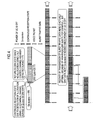
- Fig. 1 (a) to Fig. 1 (c) show DRX control performed in the "RRC_CONNECTED state", on which an agreement has been made in the LTE.
- the discontinuous reception is characterized by a "DRX cycle” and an “On duration length (discontinuous reception timing duration)".
- the mobile station UE is configured to receive a signal, transmitted from the radio base station eNB, only during the "On duration (discontinuous reception timing)" occurring once in a "DRX cycle".
- the mobile station UE Since no signal is transmitted from the radio base station eNB in a time period other than the "On duration", the mobile station UE turns off a processor, a DSP, a chip, and the like which are used for radio signal reception processing, thereby achieving reduction in power consumption.
- the radio base station eNB is configured to notify the mobile station UE of the "DRX cycle” and the "On duration length”.
- a timing at which the radio base station eNB notifies the mobile station UE of the "DRX cycle” and the "On duration length” include a timing at which the "RRC_IDLE state” transitions to the "RRC_CONNECTED state", a timing at which a new radio bearer is set up, a timing at which a radio bearer is released, a handover timing, and the like.
- the mobile station UE when detecting radio resource allocation through a radio resource allocation channel (L1/L2 control channel) from the radio base station eNB, in the "On duration" during the discontinuous reception as shown in Fig. 1 (b) , the mobile station UE is configured to start continuous reception of signals transmitted from the radio base station eNB.
- a radio resource allocation channel L1/L2 control channel
- the mobile station UE performing the discontinuous reception is configured to start the continuous reception of signals transmitted from the radio base station eNB (T1 in Fig. 1 (b) ).
- the mobile station UE when not detecting the radio resource allocation through the L1/L2 control channel from the radio base station eNB within a certain continuous period (that is, a period until an inactivity timer (inactive timer) 1 expires) during the continuous reception as shown in Fig. 1 (c) , the mobile station UE is configured to start discontinuous reception of signals transmitted from the radio base station eNB (T2 in Fig. 1 (c) ).
- At least two types of DRX cycles can be set as a DRX cycle in discontinuous reception.
- the mobile station UE is configured to change the DRX cycle from a DRX cycle on a first phase (DRX cycle (short)) to a longer DRX cycle on a second phase (DRX cycle (long) when not detecting the radio resource allocation through the L1/L2 control channel from the radio base station eNB within an additional certain continuous period (that is, a period until an inactivity timer 2 expires) (T3 in Fig. 1 (c) ).
- DRX cycle (short) or “DRX cycle (long)"
- DRX cycle (short) or "DRX cycle (long)
- the DRX cycle in the discontinuous reception can be set to have only one phase.
- periods managed by the inactivity timers 1 and 2 are also notified from the radio base station eNB to the mobile station UE.
- a timing at which the radio base station eNB notifies the mobile station UE of the periods managed by the inactivity timers 1 and 2 include a timing at which the "RRC_IDLE state" transitions to the "RRC_CONNECTED state", a timing at which a new radio bearer is set up, a timing at which a radio bearer is released, a handover timing, and the like.
- Optimum values of these parameters vary depending on the type of an application for processing data (for example, voice packets, burst traffic data, or the like) transmitted and received between the radio base station eNB and the mobile station UE.
- voice packets having small-volume data occur at predetermined intervals.
- the voice packets occur every 20 ms.
- the voice packets each have data volume which can be transmitted and received within one sub-frame (also referred to as TTI).
- the sub-frame is the minimum time unit at which a radio resource can be allocated, and is 1 ms in the LTE.
- the radio base station eNB transmits a voice packet to the mobile station UE immediately after an occurrence thereof.
- the applications for burst traffic data have such features that even though a large volume of traffic data occurs when the traffic data occurs, there is a long time period during which no traffic data occurs at all.
- the radio base station eNB does not have to transmit the burst traffic data to the mobile station UE immediately.
- the radio base station eNB is allowed to transmit the burst traffic data by selecting, for example, time when a radio link between the radio base station eNB and the mobile station UE has a good quality.
- the optimum values of the parameters related to the DRX control vary considerably depending on the type of an application for processing data transmitted and received between the radio base station eNB and the mobile station UE.
- the DRX control on which an agreement is made in the LTE has a problem that optimum DRX control cannot be performed in a case where, for example, both types of data of an application for voice packets and an application for burst traffic data are concurrently transmitted or received between the radio base station eNB and the mobile station UE.
- the mobile station UE since the period managed by the inactivity timer and optimized for the application for voice packets is too short, the mobile station UE starts discontinuous reception if the radio base station eNB stops, even for an instant, transmitting data to the mobile station UE performing continuous reception. This eliminates the flexibility in timing at which the burst traffic data can be transmitted to the mobile station UE, thus preventing optimum radio resource utilization.
- the mobile station UE transitions to a continuous reception state every time an L1/L2 control channel is used for voice packet transmission, and then returns to a discontinuous reception state (DRX state) at a much later timing.
- DRX state discontinuous reception state
- the LTE supports a radio resource allocation method referred to as “persistent scheduling (static allocation scheduling)” or “semi-persistent scheduling)" so as to transmit voice packets efficiently.
- dynamic scheduling dynamic allocation scheduling
- the radio base station eNB When allocating a downlink radio resource to the mobile station UE by using the dynamic scheduling, the radio base station eNB transmits a radio resource allocation channel (L1/L2 control channel) to the mobile station UE.
- the L1/L2 control channel is terminated at the physical layer and MAC layer of each of the radio base station eNB and the mobile station UE.
- the mobile station UE receives the L1/L2 control channel, thereby recognizes that the radio resource is allocated to the mobile station UE, and decodes data transmitted by using the radio resource allocated to the mobile station UE, in accordance with information included in the received L1/L2 control channel.
- the mobile station UE is configured to attempt to perform decoding processing on the L1/L2 control channel during the "On duration" when performing discontinuous reception, and configured to attempt to perform decoding processing on the L1/L2 control channel every sub-frame when performing continuous reception.
- the L1/L2 control channel for notifying downlink radio resource allocation using the dynamic scheduling includes information such as data block size (TB Size), a modulation method (modulation), an allocated physical resource (PRB) and HARQ-related information. Based on these kinds of information, a CRC bit sequence is calculated.
- TB Size data block size
- modulation modulation
- PRB allocated physical resource
- HARQ-related information HARQ-related information
- the calculated CRC bit sequence is further subjected to a predetermined operation (masking) using a mobile station identifier previously and uniquely allocated to the mobile station UE, and then added to an information bit sequence of the L1/L2 control channel.
- the information bit sequence of the L1/L2 control channel including the CRC bit sequence is subjected to error correction coding processing, and then transmitted as a radio signal to the mobile station UE.
- the mobile station UE is configured to receive a physical resource through which the L1/L2 control channel is transmitted, to perform error correction decoding processing thereon, and then to perform a predetermined operation (unmasking) on the CRC bit sequence by using the mobile station identifier allocated by the radio base station eNB beforehand.
- the mobile station UE is configured to determine whether or not the L1/L2 control channel has been properly decoded.
- the mobile station UE can determine that the L1/L2 control channel has not been decoded properly on the basis of the CRC determination result based on the unmasked CRC bit sequence.
- the mobile station UE when determining that the L1/L2 control channel notifying the mobile station UE of the downlink radio resource allocation has been decoded properly on the basis of the CRC determination result, the mobile station UE concurrently detects that the downlink radio resource is allocated to the mobile station UE.
- a downlink radio resource allocated by using the dynamic scheduling is valid only within one sub-frame.
- an L1/L2 control channel for downlink radio resource allocation needs to be transmitted to the mobile station UE every sub-frame, as shown in Fig. 5 .
- a downlink radio resource to be allocated can be changed sub-frame by sub-frame by using the dynamic scheduling, optimum radio resource allocation can be performed according to the ever-changing quality and data volume of a radio link.
- the radio base station eNB When allocating a downlink radio resource to the mobile station UE by using the persistent scheduling, the radio base station eNB notifies, to the mobile station UE, information such as data block size (TB size), a modulation method (modulation), an allocated physical resource (PRB) and HARQ-related information.
- the radio base station uses either a radio resource allocation channel (L1/L2 control channel) terminated at the physical layer and MAC layer of each of the radio base station eNB and the mobile station UE, or an RRC message terminated at the RRC layer of each of the radio base station eNB and the mobile station UE.
- L1/L2 control channel radio resource allocation channel terminated at the physical layer and MAC layer of each of the radio base station eNB and the mobile station UE
- RRC message terminated at the RRC layer of each of the radio base station eNB and the mobile station UE.
- a value of each of these kinds of notified information is not limited to a single value, but plural candidate values may be notified as appropriate.
- the mobile station UE is configured to perform decoding of the downlink radio resource in a certain sub-frame in accordance with these kinds of information even without receiving the radio resource allocation through the L1/L2 control channel.
- the radio resource allocation by the persistent scheduling is valid until a new persistent scheduling command or a command for stopping the persistent scheduling occurs.
- the radio base station eNB uses an L1/L2 control channel to notify, to the mobile station UE, a downlink radio resource allocated by the persistent scheduling
- the mobile station UE needs to discriminate between the L1/L2 control channel used for notifying the downlink radio resource allocated by the persistent scheduling and an L1/L2 control channel used for notifying a downlink radio resource allocated by the dynamic scheduling.
- the mobile station UE also needs to discriminate between the L1/L2 control channel for notifying the downlink radio resource to be used for the retransmission under HARQ control in the persistent scheduling and an L1/L2 control channel used for notifying a downlink radio resource allocated by the dynamic scheduling.
- the existing LTE has a problem that, when both types of data of an application for voice packets and an application for burst traffic data are transmitted or received between the radio base station eNB and the mobile station UE, it is difficult to optimize the parameters related to the DRX control in the "RRC_CONNECTED state".
- the present invention has been made in view of the aforementioned problems.
- An object thereof is to provide a mobile communication system and a mobile station which are capable of DRX control in "RRC_CONNECTED state" achieving optimization of parameters related to DRX control, maintaining scheduler's flexibility to burst traffic data while maximizing reduction in power consumption of a mobile station UE, and thus effectively utilizing radio resources, even though both types of data of an application for voice packets and an application for burst traffic data are transmitted and received between a radio base station eNB and the mobile station UE.
- a first aspect of the present invention is summarized as a mobile communication system configured to allow a mobile station to start continuous reception of a signal transmitted from a radio base station when the mobile station performing discontinuous reception of a signal transmitted from the radio base station detects that a mobile station identifier allocated to the mobile station is included in a radio resource allocation channel transmitted from the radio base station at a discontinuous reception timing, wherein when the radio resource allocation channel transmitted from the radio base station at the discontinuous reception timing satisfies a specific condition, the mobile station is configured not to start the continuous reception of a signal transmitted from the radio base station, but to continue the discontinuous reception of a signal transmitted from the radio base station, even though the mobile station is performing the discontinuous reception of a signal transmitted from the radio base station.
- a second aspect of the present invention is summarized as a mobile station used in a mobile communication system configured to allow the mobile station to start continuous reception of a signal transmitted from a radio base station when the mobile station performing discontinuous reception of a signal transmitted from the radio base station detects that a mobile station identifier allocated to the mobile station is included in a radio resource allocation channel transmitted from the radio base station at a discontinuous reception timing, wherein, when the radio resource allocation channel transmitted from the radio base station at the discontinuous reception timing satisfies a specific condition, the mobile station is configured not to start the continuous reception of a signal transmitted from the radio base station, but to continue the discontinuous reception of a signal transmitted from the radio base station, even though the mobile station is performing the discontinuous reception of a signal transmitted from the radio base station.
- the mobile communication system and the mobile station which are capable of, in the DRX control in the "RRC_CONNECTED state", achieving optimization of parameters related to the DRX control, maintaining scheduler's flexibility to burst traffic data while maximizing reduction in power consumption of the mobile station.
- UE and thus effectively utilizing radio resources, even though both types of data of the application for voice packets and the application for burst traffic data are transmitted or received between the radio base station eNB and the mobile station UE.
- a mobile communication system of an LTE scheme is described as an example of a mobile communication system in this embodiment, the present invention is applicable to a mobile communication system other than the mobile communication system of the LTE scheme.
- a radio base station eNB has already allocated a mobile station identifier "xxx" unique to a mobile station, to a mobile station UE existing in a service-provided area, and the radio base station eNB and the mobile station UE are in a state in which communications therebetween via a radio link can be performed at any time ("RRC_CONNECTED state").
- the radio base station eNB and the mobile station UE have a radio communication protocol stack for data transmission (U-plane) including a physical (PHY) layer, a MAC sub-layer, an RLC sub-layer and a PDCP sub-layer, and thereby communicate with each other.
- U-plane a radio communication protocol stack for data transmission
- PHY physical
- MAC sub-layer a MAC sub-layer
- RLC sub-layer an RLC sub-layer
- PDCP sub-layer a radio communication protocol stack for data transmission
- plural radio bearers and logical channels can be set for a mobile station. There have been set a radio bearer and a logical channel to which an application for voice packets are mapped, and a radio bearer and a logical channel to which an application for burst traffic data are mapped.
- the radio base station eNB is configured to transmit burst traffic data to the mobile station UE by using a radio resource allocated using the dynamic scheduling.
- the radio base station eNB is configured to transmit an L1/L2 control channel to be used for downlink radio resource allocation for the dynamic scheduling (referred to as an L1/L2 control channel - dynamic) to the mobile station UE every time the radio base station eNB transmits burst traffic data.
- an L1/L2 control channel - dynamic downlink radio resource allocation for the dynamic scheduling
- the radio base station eNB is configured to transmit voice packets (voice traffic) to the mobile station UE by using a radio resource allocated using the persistent scheduling.
- the radio base station eNB is configured to transmit an L1/L2 control channel to be used for downlink radio resource allocation for the persistent scheduling, to the mobile station UE as appropriate when transmitting voice packets.
- L1/L2 control channels are assumed as the L1/L2 control channel to be used for the downlink radio resource allocation for the persistent scheduling.
- the first L1/L2 control channel is an L1/L2 control channel (referred to as an L1/L2 control channel - persistent initial HARQ transmission) for allocating a radio resource as a downlink radio resource for initial transmission under HARQ control on a certain mobile station UE.
- the radio resource thus allocated is valid for a longer time than the minimum time unit in which a radio resource can be allocated (one TTI or one sub-frame).
- the second L1/L2 control channel is an L1/L2 control channel (referred to as an L1/L2 control channel - persistent HARQ retransmission) for allocating a downlink radio resource for retransmission under HARQ control of downlink data.
- the downlink data has been transmitted by using the radio resource which has been allocated to the certain mobile station UE and is valid for a longer time than the minimum time unit in which a radio resource can be allocated (one TTI or one sub-frame).
- the mobile station UE performing discontinuous reception (mobile station in a DRX state) of signals transmitted from the radio base station eNB is configured to start continuous reception of signals transmitted from the radio base station eNB, when detecting that a mobile station identifier "xxx" allocated to the mobile station UE is included in a radio resource allocation channel (L1/L2 control channel) transmitted from the radio base station eNB at a discontinuous reception timing (for example, On duration).
- L1/L2 control channel for example, On duration
- the mobile station UE performing the discontinuous reception of signals transmitted from the radio base station eNB is configured to continue the discontinuous reception of signals transmitted from the radio base station eNB without starting the continuous reception of signals transmitted from the radio base station eNB, in a case where the radio resource allocation channel (L1/L2 control channel) transmitted from the radio base station eNB at the discontinuous reception timing (for example, On duration) satisfies a specific condition.
- the radio resource allocation channel L1/L2 control channel
- the mobile station UE performing the continuous reception of signals transmitted from the radio base station eNB is configured as follows.
- the mobile station UE When detecting, before an inactivity timer expires, that the mobile station identifier "xxx" allocated to the mobile station UE is included in the radio resource allocation channel (L1/L2 control channel) transmitted from the radio base station eNB, the mobile station UE is configured to reactivate the inactivity timer.
- the mobile station UE is configured to start the discontinuous reception of signals transmitted from the radio base station eNB.
- the inactivity timer (predetermined timer) may be configured to be activated, when the mobile station UE cannot detect that the above-described mobile station identifier "xxx" allocated to the mobile station UE is included in the radio resource allocation channel (L1/L2 control channel) transmitted from the radio base station eNB.
- the mobile station UE is configured not to perform stopping and reactivation of the inactivity timer in the following case.
- the case is that the mobile station UE detects, before the inactivity timer expires, that the mobile station identifier "xxx" allocated to the mobile station UE is included in the radio resource allocation channel (L1/L2 control channel) transmitted from the radio base station eNB, but the radio resource allocation channel transmitted from the radio base station eNB satisfies the specific condition.
- the aforementioned specific condition is satisfied, in a case where a radio resource valid for a longer time than the minimum time unit in which a radio resource can be allocated (one TTI or one sub-frame) is allocated as a downlink radio resource for the mobile station UE, by using the radio resource allocation channel (L1/L2 control channel) transmitted from the radio base station eNB, that is, in a case where the radio resource allocation channel (L1/L2 control channel) is an L1/L2 control channel used for downlink radio resource allocation for the persistent scheduling.
- the radio resource allocation channel (L1/L2 control channel) is an L1/L2 control channel used for downlink radio resource allocation for the persistent scheduling.
- the HARQ control is performed between the radio base station eNB and the mobile station UE.
- the following two cases are assumed as concrete examples satisfying the specific condition.
- a radio resource allocation channel (L1/L2 control channel) transmitted from the radio base station eNB is a channel for allocating a radio resource valid for a longer time than the minimum time unit in which a radio resource can be allocated (one TTI or one sub-frame), as a downlink radio resource for initial transmission under HARQ control on the mobile station UE, that is, in a case where the channel is the "L1/L2 control channel - persistent initial HARQ transmission".
- the radio resource allocation channel (L1/L2 control channel) transmitted from the radio base station eNB is the "L1/L2 control channel - persistent HARQ retransmission".”
- the radio base station eNB performing the HARQ control with the mobile station UE is configured to allocate a radio resource to the mobile station UE as a downlink radio resource for the mobile station UE, by using a radio resource allocation channel ("L1/L2 control channel - persistent initial HARQ transmission"), the radio resource being valid for a longer time than the minimum time unit in which a radio resource can be allocated (one TTI or one sub-frame). Then, the radio base station eNB is configured to transmit downlink data by using the downlink radio resource.
- a radio resource allocation channel (“L1/L2 control channel - persistent initial HARQ transmission"
- the radio base station eNB is configured to allocate, to the mobile station UE, a downlink radio resource for retransmission under the HARQ control of the downlink data having been transmitted by using the radio resource which has been allocated to the mobile station UE and valid for a longer time than the minimum time unit in which a radio resource can be allocated (one TTI or one sub-frame). Then, the radio base station eNB is configured to retransmit the downlink data by using the downlink radio resource.
- voice packets are transmitted and received by using the radio resource allocated by using the persistent scheduling.
- voice packets or packets including a voice packet
- a discontinuous reception timing for example, the "On duration”
- the mobile station UE does not start continuous reception of signals (voice packets) transmitted from the radio base station eNB.
- a bit may be set in the L1/L2 control channels as an information element, the bit indicating, for example, whether the L1/L2 control channel is for the persistent scheduling or the dynamic scheduling.
- the mobile communication system may be configured as follows.
- a predetermined value is set as the information element (for example, TB size, HARQ-related information, or the like) of an L1/L2 control channel
- the mobile communication system may be configured to change the physical resource used for transmitting the L1/L2 control channel.
- the mobile communication system may be configured to change the information data volume included in the L1/L2 control channel.
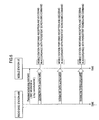
- the mobile communication system enables maximum reduction in power consumption of the mobile station UE, by optimizing the DRX cycle for transmission and reception of voice packets, as shown in Fig. 10 , in a state where only voice packets occur.
- radio resource allocation using the dynamic scheduling is performed by using an L1/L2 control channel. Accordingly, the mobile station UE starts continuous reception, and an enough time can be set for the inactivity timer in consideration of the burst traffic data. Thus, the maximum flexibility of the scheduler can be secured until occurrences of the burst traffic data settle down and the utilization efficiency of radio resources can be improved.
- a first aspect of the present embodiment is summarized as a mobile communication system configured to allow a mobile station UE to start continuous reception of a signal transmitted from a radio base station eNB when the mobile station UE performing discontinuous reception of a signal transmitted from the radio base station eNB detects that a mobile station identifier "xxx" allocated to the mobile station UE is included in a radio resource allocation channel (L1/L2 control channel) transmitted from the radio base station eNB at a discontinuous reception timing, wherein, when the radio resource allocation channel (L1/L2 control channel) transmitted from the radio base station eNB at the discontinuous reception timing (for example, the "On duration") satisfies a specific condition, the mobile station UE is configured not to start the continuous reception of a signal transmitted from the radio base station eNB, but to continue the discontinuous reception of a signal transmitted from the radio base station eNB, even though the mobile station UE is performing the discontinuous reception of a signal transmitted from the radio base station eNB.
- the radio resource allocation channel (L1/L2 control channel) transmitted from the radio base station eNB at the discontinuous reception timing can be determined to satisfy the specific condition, when the radio resource allocation channel (L1/L2 control channel) is allocating a radio resource valid for a longer time than a minimum time unit (one sub-frame) in which a radio resource can be allocated, as a downlink radio resource for the mobile station UE.
- HARQ control can be performed between the radio base station eNB and the mobile station UE; the radio base station eNB can be configured to allocate a downlink radio resource to the mobile station UE by using the radio resource allocation channel (L1/L2 control channel), and to transmit downlink data by using the downlink radio resource; and the radio resource allocation channel (L1/L2 control channel) transmitted from the radio base station eNB can be determined to satisfy the specific condition, when the radio resource allocation channel (L1/L2 control channel) is allocating a downlink radio resource for retransmitting the downlink data to the mobile station UE under the HARQ control.
- the radio resource allocation channel L1/L2 control channel
- the radio base station eNB can be configured to allocate a radio resource valid for a longer time than a minimum time unit (one sub-frame) in which a radio resource can be allocated, as a downlink radio resource for the mobile station UE by using the radio resource allocation channel (L1/L2 control channel), and to transmit downlink data by using the downlink radio resource; and the radio resource allocation channel (L1/L2 control channel) transmitted from the radio base station eNB at the discontinuous reception timing (for example, the "On duration") can be determined to satisfy the specific condition, when the radio resource allocation channel (L1/L2 control channel) is a channel (L1/L2 control channel - persistent HARQ retransmission) for allocating a downlink radio resource for retransmitting the downlink data to the mobile station UE under the HARQ control.
- the radio resource allocation channel (L1/L2 control channel) is a channel (L1/L2 control channel - persistent HARQ retransmission) for allocating a downlink radio resource for retransmitting the
- a second aspect of the present embodiment is summarized as a mobile station used in a mobile communication system configured to allow the mobile station UE to start continuous reception of a signal transmitted from a radio base station eNB when the mobile station UE performing discontinuous reception of a signal transmitted from the radio base station eNB detects that a mobile station identifier "xxx" allocated to the mobile station UE is included in a radio resource allocation channel (L1/L2 control channel) transmitted from the radio base station eNB at a discontinuous reception timing (for example, the "On duration"), wherein, when the radio resource allocation channel (L1/L2 control channel) transmitted from the radio base station eNB at the discontinuous reception timing (for example, the "On duration") satisfies a specific condition, the mobile station UE is configured not to start the continuous reception of a signal transmitted from the radio base station eNB, but to continue the discontinuous reception of a signal transmitted from the radio base station eNB, even though the mobile station UE is performing the discontinuous reception of a signal transmitted from the
- the mobile station UE can be configured to perform HARQ control with the radio base station eNB; and the radio resource allocation channel (L1/L2 control channel) transmitted from the radio base station eNB can be determined to satisfy the specific condition, when the radio resource allocation channel (L1/L2 control channel) is allocating a downlink radio resource for retransmitting downlink data under the HARQ control, the downlink data having been transmitted to the mobile station UE by the radio base station eNB.
- the radio resource allocation channel (L1/L2 control channel) transmitted from the radio base station eNB can be determined to satisfy the specific condition, when the radio resource allocation channel (L1/L2 control channel) is allocating a downlink radio resource for retransmitting downlink data under the HARQ control, the downlink data having been transmitted to the mobile station UE by the radio base station eNB.
- the above-described operations of the mobile station UE and radio base station eNB may be implemented by hardware, software modules executed by a processor, or a combination of the hardware and the software modules.
- Each software module may be provided in a storage medium of any form, such as a random access memory (RAM), a flash memory, a read only memory (ROM), an erasable programmable ROM (EPROM), an electronically erasable and programmable ROM (EEPROM), a register, a hard disk, a removable disk or a CD-ROM.
- RAM random access memory
- flash memory a flash memory
- ROM read only memory
- EPROM erasable programmable ROM
- EEPROM electronically erasable and programmable ROM
- register a hard disk, a removable disk or a CD-ROM.
- the storage medium is connected to a processor so that the processor can read or write information from or into the storage medium.
- the storage medium may be integrated in a processor.
- the storage medium and the processor may be provided in an ASIC, and the ASIC may be provided in the mobile station UE and the radio base station eNB.
- the storage medium and the processor may be provided as discrete components in the mobile station UE and the radio base station eNB.
Landscapes
- Engineering & Computer Science (AREA)
- Computer Networks & Wireless Communication (AREA)
- Signal Processing (AREA)
- Mobile Radio Communication Systems (AREA)
Claims (5)
- Mobilkommunikationssystem, das konfiguriert ist, es einer Mobilstation, UE, zu erlauben, einen kontinuierlichen Empfang eines Signals zu beginnen, das von einer Funkbasisstation, eNB, übertragen wird, wenn die Mobilstation, UE, die einen diskontinuierlichen Empfang eines Signals durchführt, das von der Funkbasisstation, eNB, übertragen wird, erfasst, dass ein Mobilstationidentifizierer, der der Mobilstation, UE, zugewiesen ist, ein einem Funkressourcenzuweisungskanal enthalten ist, übertragen von der Funkbasisstation, eNB, an einer diskontinuierlichen Empfangszeit,
dadurch gekennzeichnet, dass
wenn der Funkressourcenzuweisungskanal, der von der Funkbasisstation, eNB an der diskontinuierlichen Empfangszeit übertragen wird, eine spezifizierte Bedingung erfüllt, die Mobilstation, UE, konfiguriert ist, nicht den kontinuierlichen Empfang eines Signals zu beginnen, das von der Funkbasisstation, eNB, übertragen wird, sondern den diskontinuierlichen Empfang eines Signals fortzusetzen, das von der Funkbasisstation, eNB, übertragen wird, auch wenn die Mobilstation, UE, den diskontinuierlichen Empfang eines Signals durchführt, das von der Funkbasisstation, eNB, übertragen wird. - Mobilkommunikationssystem nach Anspruch 1, wobei
HARQ-Steuerung zwischen der Funkbasisstation, eNB, und der Mobilstation, UE, durchgeführt wird;
die Funkbasisstation, eNB, konfiguriert ist, eine Downlink-Funkressource der Mobilstation, UE, zuzuweisen, indem der Funkressourcenzuweisungskanal verwendet wird, und Downlink-Daten zu übertragen, indem die Downlink-Funkressource verwendet wird; und
bestimmt wird, dass der Funkressourcenzuweisungskanal, der von der Funkbasisstation, eNB, übertragen wird, die spezifische Bedingung erfüllt, wenn der Funkressourcenzuweisungskanal eine Downlink-Funkressource zum erneuten Übertragen der Downlink-Daten an die Mobilstation, UE, unter der HARQ-Steuerung zuweist. - Mobilkommunikationssystem nach Anspruch 2, wobei
die Funkbasisstation, eNB, konfiguriert ist, eine Funkressource zuzuweisen, die für eine längere Zeit gültig ist als eine minimale Zeiteinheit, in welcher eine Funkressource zugewiesen werden kann, als eine Downlink-Funkressource für die Mobilstation, UE, indem der Funkressourcenzuweisungskanal verwendet wird, und Downlink-Daten zu übertragen, indem die Downlink-Funkressource verwendet wird; und
bestimmt wird, dass der Funkressourcenzuweisungskanal, der von der Funkbasisstation, eNB, zu der diskontinuierlichen Empfangszeit übertragen wird, die spezifische Bedingung erfüllt, wenn der Funkressourcenzuweisungskanal eine Downlink-Funkressource zum erneuten Übertragen der Downlink-Daten an die Mobilstation, UE, unter der HARQ-Steuerung zuweist. - Mobilstation, UE, die in einem Mobilkommunikationssystem verwendet wird, das konfiguriert ist, es der Mobilstation, UE, zu erlauben, einen kontinuierlichen Empfang eines Signals zu beginnen, das von einer Funkbasisstation, eNB, übertragen wird, wenn die Mobilstation, UE, die einen diskontinuierlichen Empfang eines Signals durchführt, das von der Funkbasisstation, eNB, übertragen wird, erfasst, dass ein Mobilstationidentifizierer, der der Mobilstation, UE, zugewiesen ist, ein einem Funkressourcenzuweisungskanal enthalten ist, übertragen von der Funkbasisstation, eNB, an einer diskontinuierlichen Empfangszeit,
dadurch gekennzeichnet, dass
wenn der Funkressourcenzuweisungskanal, der von der Funkbasisstation, eNB an der diskontinuierlichen Empfangszeit übertragen wird, eine spezifizierte Bedingung erfüllt, die Mobilstation, UE, konfiguriert ist, nicht den kontinuierlichen Empfang eines Signals zu beginnen, das von der Funkbasisstation, eNB, übertragen wird, sondern den diskontinuierlichen Empfang eines Signals fortzusetzen, das von der Funkbasisstation, eNB, übertragen wird, auch wenn die Mobilstation, UE, den diskontinuierlichen Empfang eines Signals durchführt, das von der Funkbasisstation übertragen wird. - Mobilstation nach Anspruch 4, wobei
die Mobilstation, UE, konfiguriert ist, HARQ-Steuerung mit der Funkbasisstation, eNB, durchzuführen; und
bestimmt wird, dass der Funkressourcenzuweisungskanal, der von der Funkbasisstation, eNB, übertragen wird, die spezifische Bedingung erfüllt, wenn der Funkressourcenzuweisungskanal eine Downlink-Funkressource zum erneuten Übertragen von Downlink-Daten unter der HARQ-Steuerung zuweist, wobei die Downlink-Daten an die Mobilstation, UE, von der Funkbasisstation, eNB, übertragen wurden.
Priority Applications (1)
| Application Number | Priority Date | Filing Date | Title |
|---|---|---|---|
| EP11191296.0A EP2427013B1 (de) | 2007-08-15 | 2008-08-15 | Mobiles Kommunikationssystem und Mobilstation |
Applications Claiming Priority (2)
| Application Number | Priority Date | Filing Date | Title |
|---|---|---|---|
| JP2007211993 | 2007-08-15 | ||
| PCT/JP2008/064656 WO2009022744A1 (ja) | 2007-08-15 | 2008-08-15 | 移動通信システム及び移動局 |
Related Child Applications (2)
| Application Number | Title | Priority Date | Filing Date |
|---|---|---|---|
| EP11191296.0A Division EP2427013B1 (de) | 2007-08-15 | 2008-08-15 | Mobiles Kommunikationssystem und Mobilstation |
| EP11191296.0 Division-Into | 2011-11-30 |
Publications (3)
| Publication Number | Publication Date |
|---|---|
| EP2190253A1 EP2190253A1 (de) | 2010-05-26 |
| EP2190253A4 EP2190253A4 (de) | 2011-10-19 |
| EP2190253B1 true EP2190253B1 (de) | 2012-12-12 |
Family
ID=40350794
Family Applications (2)
| Application Number | Title | Priority Date | Filing Date |
|---|---|---|---|
| EP11191296.0A Active EP2427013B1 (de) | 2007-08-15 | 2008-08-15 | Mobiles Kommunikationssystem und Mobilstation |
| EP08792502A Active EP2190253B1 (de) | 2007-08-15 | 2008-08-15 | Mobilkommunikationssystem und mobilstation |
Family Applications Before (1)
| Application Number | Title | Priority Date | Filing Date |
|---|---|---|---|
| EP11191296.0A Active EP2427013B1 (de) | 2007-08-15 | 2008-08-15 | Mobiles Kommunikationssystem und Mobilstation |
Country Status (11)
| Country | Link |
|---|---|
| US (1) | US8144651B2 (de) |
| EP (2) | EP2427013B1 (de) |
| JP (2) | JP4571707B2 (de) |
| KR (1) | KR101150272B1 (de) |
| CN (1) | CN101785347B (de) |
| AU (1) | AU2008287763B2 (de) |
| BR (1) | BRPI0816243A2 (de) |
| CA (1) | CA2696470A1 (de) |
| MX (1) | MX2010001735A (de) |
| RU (1) | RU2473183C2 (de) |
| WO (1) | WO2009022744A1 (de) |
Families Citing this family (17)
| Publication number | Priority date | Publication date | Assignee | Title |
|---|---|---|---|---|
| CN102217404B (zh) * | 2008-09-19 | 2015-06-10 | 黑莓有限公司 | 半持久性调度激活/重配置信令的检测时间 |
| KR101289107B1 (ko) | 2008-12-15 | 2013-08-07 | 리서치 인 모션 리미티드 | 반영구적 스케쥴링과 불연속적 정렬 |
| US9100141B2 (en) | 2009-03-06 | 2015-08-04 | Sharp Kabushiki Kaisha | Communication system and intermittent reception method |
| EP2395797B8 (de) | 2010-06-11 | 2014-04-02 | Intel Mobile Communications GmbH | Verfahren zur Steuerung der Betriebsaktivitätsmodi eines drahtlosen Telekommunikationsendgeräts |
| US8611825B2 (en) * | 2010-11-15 | 2013-12-17 | At&T Intellectual Property I, L.P. | Method and apparatus for providing a dynamic inactivity timer in a wireless communications network |
| WO2013050648A1 (en) * | 2011-10-07 | 2013-04-11 | Nokia Corporation | Method and apparatus for managing terminals |
| EP2621234A1 (de) * | 2012-01-30 | 2013-07-31 | Alcatel Lucent | Bereitstellung von Informationen auf einem mobilen Endgerät für eine Funkressourcenverwaltungsentität eines drahtlosen Kommunikationsnetzwerks |
| CN103686955B (zh) * | 2012-09-24 | 2018-10-16 | 中兴通讯股份有限公司 | 电能优化方法及系统 |
| RU2612609C2 (ru) * | 2012-09-28 | 2017-03-09 | Нокиа Текнолоджиз Ой | Таймер индикации предпочтительного энергопотребления |
| US9565631B2 (en) * | 2013-01-18 | 2017-02-07 | Telefonaktiebolaget Lm Ericsson (Publ) | Method and arrangement for controlling discontinuous reception by a user equipment |
| EP2782409A1 (de) | 2013-03-20 | 2014-09-24 | Panasonic Intellectual Property Corporation of America | Deterministisches UE-Verhalten für die CSI/SRS-Berichterstattung während DRX |
| CA2909046C (en) * | 2013-04-15 | 2017-06-13 | Telefonaktiebolaget L M Ericsson (Publ) | Application of a discontinous reception (drx) cycle |
| KR102615658B1 (ko) * | 2015-06-22 | 2023-12-20 | 삼성전자주식회사 | 다중 사용자 중첩 전송 방법 및 장치 |
| US20190342939A1 (en) * | 2017-01-05 | 2019-11-07 | Guangdong Oppo Mobile Telecommunications Corp., Ltd. | Data Transmission Method and Device |
| JP6418288B2 (ja) * | 2017-07-05 | 2018-11-07 | 富士通株式会社 | 無線通信システム、基地局、通信端末及び無線通信方法 |
| US11012936B2 (en) * | 2019-10-16 | 2021-05-18 | Verizon Patent And Licensing Inc. | Systems and methods for dynamic adjustment of intermittent reception parameters in a radio access network |
| US12273813B2 (en) * | 2022-08-16 | 2025-04-08 | Qualcomm Incorporated | User equipment (UE) power saving |
Family Cites Families (12)
| Publication number | Priority date | Publication date | Assignee | Title |
|---|---|---|---|---|
| KR100827137B1 (ko) * | 2002-08-16 | 2008-05-02 | 삼성전자주식회사 | 이동통신시스템에서의 멀티캐스트 멀티미디어 방송 서비스 제공 방법 |
| KR101071816B1 (ko) * | 2004-04-02 | 2011-10-11 | 엘지전자 주식회사 | 무선 패킷 통신 시스템에서의 업링크 패킷 스케쥴링 방법 |
| CN1758547A (zh) * | 2004-10-04 | 2006-04-12 | 松下电器产业株式会社 | 收信装置、半导体集成电路、收发信装置、以及收信方法 |
| JP4177836B2 (ja) * | 2004-10-04 | 2008-11-05 | 松下電器産業株式会社 | 受信装置、半導体集積回路、送受信装置、輸送装置、可搬型送受信装置、通信装置および受信方法 |
| JP4671777B2 (ja) * | 2005-06-17 | 2011-04-20 | 株式会社エヌ・ティ・ティ・ドコモ | 共有データチャネル割り当て装置および共有データチャネル割り当て方法 |
| CN100556182C (zh) * | 2005-11-30 | 2009-10-28 | 展讯通信(上海)有限公司 | 移动用户终端采用不连续接收方式的周期更改方法 |
| DE602007001096D1 (de) * | 2006-03-28 | 2009-06-25 | Samsung Electronics Co Ltd | Verfahren und Vorrichtung zum diskontinuierlichen Empfang eines angeschlossenen Endgeräts in einem mobilen Kommunikationssystem |
| US7916675B2 (en) * | 2006-06-20 | 2011-03-29 | Nokia Corporation | Method and system for providing interim discontinuous reception/transmission |
| KR100881169B1 (ko) * | 2006-07-25 | 2009-02-02 | 한국전자통신연구원 | 순방향 링크 프레임 생성 방법 및 장치, 그리고 셀 탐색 방법 및 장치 |
| US7957360B2 (en) * | 2007-01-09 | 2011-06-07 | Motorola Mobility, Inc. | Method and system for the support of a long DRX in an LTE—active state in a wireless network |
| US8072963B2 (en) * | 2007-02-14 | 2011-12-06 | Research In Motion Limited | Method and system for recovering from DRX timing de-synchronization in LTE—ACTIVE |
| US20080232310A1 (en) * | 2007-03-19 | 2008-09-25 | Shugong Xu | Flexible user equipment-specified discontinuous reception |
-
2008
- 2008-08-15 KR KR1020107003752A patent/KR101150272B1/ko not_active Expired - Fee Related
- 2008-08-15 WO PCT/JP2008/064656 patent/WO2009022744A1/ja not_active Ceased
- 2008-08-15 CA CA2696470A patent/CA2696470A1/en not_active Abandoned
- 2008-08-15 MX MX2010001735A patent/MX2010001735A/es active IP Right Grant
- 2008-08-15 EP EP11191296.0A patent/EP2427013B1/de active Active
- 2008-08-15 CN CN2008801031974A patent/CN101785347B/zh active Active
- 2008-08-15 AU AU2008287763A patent/AU2008287763B2/en not_active Ceased
- 2008-08-15 RU RU2010107794/07A patent/RU2473183C2/ru not_active IP Right Cessation
- 2008-08-15 US US12/673,380 patent/US8144651B2/en active Active
- 2008-08-15 BR BRPI0816243-3A patent/BRPI0816243A2/pt not_active IP Right Cessation
- 2008-08-15 EP EP08792502A patent/EP2190253B1/de active Active
- 2008-08-15 JP JP2009528157A patent/JP4571707B2/ja active Active
-
2010
- 2010-08-11 JP JP2010180555A patent/JP2010252401A/ja active Pending
Also Published As
| Publication number | Publication date |
|---|---|
| RU2010107794A (ru) | 2011-09-20 |
| EP2427013B1 (de) | 2014-03-19 |
| JPWO2009022744A1 (ja) | 2010-11-18 |
| EP2427013A1 (de) | 2012-03-07 |
| AU2008287763A1 (en) | 2009-02-19 |
| CN101785347A (zh) | 2010-07-21 |
| EP2190253A4 (de) | 2011-10-19 |
| EP2190253A1 (de) | 2010-05-26 |
| KR101150272B1 (ko) | 2012-06-12 |
| WO2009022744A1 (ja) | 2009-02-19 |
| AU2008287763B2 (en) | 2013-08-22 |
| US8144651B2 (en) | 2012-03-27 |
| US20110199984A1 (en) | 2011-08-18 |
| MX2010001735A (es) | 2010-03-15 |
| JP2010252401A (ja) | 2010-11-04 |
| BRPI0816243A2 (pt) | 2015-04-07 |
| CN101785347B (zh) | 2013-12-25 |
| RU2473183C2 (ru) | 2013-01-20 |
| JP4571707B2 (ja) | 2010-10-27 |
| KR20100056476A (ko) | 2010-05-27 |
| CA2696470A1 (en) | 2009-02-19 |
Similar Documents
| Publication | Publication Date | Title |
|---|---|---|
| EP2427013B1 (de) | Mobiles Kommunikationssystem und Mobilstation | |
| EP3855862B1 (de) | Verfahren und vorrichtung zur behandlung einer logischen kanalpriorisierung bezüglich des diskontinuierlichen sidelink-empfangs in einem drahtlosen kommunikationssystem | |
| JP5731609B2 (ja) | 無線ユーザ端末の電力を節約する方法および装置 | |
| JP6667534B2 (ja) | 改良されたスケジューリング要求手順 | |
| KR101726705B1 (ko) | 무선 통신 시스템에서 스케줄링 요청(sr)에 대한 금지 타이머를 처리하기 위한 방법 및 장치 | |
| JP6364010B2 (ja) | 装置内共存干渉シナリオにおけるスケジューリング機会の最大化 | |
| KR101164117B1 (ko) | 무선 통신 시스템상에서 물리 하향 채널의 모니터링 동작을 효율적으로 제어하는 방법 | |
| JP6252870B2 (ja) | 追加のウェイクアップ機会を有する改良された不連続受信動作 | |
| JP5226771B2 (ja) | ワイヤレスユーザ端末における節電の方法およびデバイス | |
| CN101627587B (zh) | 在基于分组的蜂窝系统中在时间上调适传输和接收 | |
| JP2022017392A (ja) | しきい値に基づく電力効率の高いスケジューリング要求手順 | |
| US9220113B2 (en) | Mobile communication method, mobile station, and radio base station | |
| US20120257559A1 (en) | Battery consumption control method of user equipment in mobile communication system | |
| JP2020129832A (ja) | Drx時におけるcsi/srs報告に関するユーザ機器の決定論的な挙動 | |
| CN103391549A (zh) | 一种不连续接收的动态配置方法、终端和基站 | |
| TWI757820B (zh) | 通訊設備、方法及電腦程式 | |
| AU2013251287B2 (en) | Mobile communication method, mobile station, and radio base station |
Legal Events
| Date | Code | Title | Description |
|---|---|---|---|
| PUAI | Public reference made under article 153(3) epc to a published international application that has entered the european phase |
Free format text: ORIGINAL CODE: 0009012 |
|
| 17P | Request for examination filed |
Effective date: 20100311 |
|
| AK | Designated contracting states |
Kind code of ref document: A1 Designated state(s): AT BE BG CH CY CZ DE DK EE ES FI FR GB GR HR HU IE IS IT LI LT LU LV MC MT NL NO PL PT RO SE SI SK TR |
|
| AX | Request for extension of the european patent |
Extension state: AL BA MK RS |
|
| DAX | Request for extension of the european patent (deleted) | ||
| REG | Reference to a national code |
Ref country code: DE Ref legal event code: R079 Ref document number: 602008020819 Country of ref document: DE Free format text: PREVIOUS MAIN CLASS: H04W0088020000 Ipc: H04W0072040000 |
|
| A4 | Supplementary search report drawn up and despatched |
Effective date: 20110916 |
|
| RIC1 | Information provided on ipc code assigned before grant |
Ipc: H04W 72/04 20090101AFI20110912BHEP |
|
| GRAP | Despatch of communication of intention to grant a patent |
Free format text: ORIGINAL CODE: EPIDOSNIGR1 |
|
| GRAS | Grant fee paid |
Free format text: ORIGINAL CODE: EPIDOSNIGR3 |
|
| GRAA | (expected) grant |
Free format text: ORIGINAL CODE: 0009210 |
|
| AK | Designated contracting states |
Kind code of ref document: B1 Designated state(s): AT BE BG CH CY CZ DE DK EE ES FI FR GB GR HR HU IE IS IT LI LT LU LV MC MT NL NO PL PT RO SE SI SK TR |
|
| REG | Reference to a national code |
Ref country code: GB Ref legal event code: FG4D |
|
| REG | Reference to a national code |
Ref country code: CH Ref legal event code: NV Representative=s name: NOVAGRAAF INTERNATIONAL SA, CH Ref country code: CH Ref legal event code: EP |
|
| REG | Reference to a national code |
Ref country code: AT Ref legal event code: REF Ref document number: 588867 Country of ref document: AT Kind code of ref document: T Effective date: 20121215 |
|
| REG | Reference to a national code |
Ref country code: IE Ref legal event code: FG4D |
|
| REG | Reference to a national code |
Ref country code: DE Ref legal event code: R096 Ref document number: 602008020819 Country of ref document: DE Effective date: 20130207 |
|
| REG | Reference to a national code |
Ref country code: SE Ref legal event code: TRGR |
|
| PG25 | Lapsed in a contracting state [announced via postgrant information from national office to epo] |
Ref country code: LT Free format text: LAPSE BECAUSE OF FAILURE TO SUBMIT A TRANSLATION OF THE DESCRIPTION OR TO PAY THE FEE WITHIN THE PRESCRIBED TIME-LIMIT Effective date: 20121212 Ref country code: FI Free format text: LAPSE BECAUSE OF FAILURE TO SUBMIT A TRANSLATION OF THE DESCRIPTION OR TO PAY THE FEE WITHIN THE PRESCRIBED TIME-LIMIT Effective date: 20121212 Ref country code: NO Free format text: LAPSE BECAUSE OF FAILURE TO SUBMIT A TRANSLATION OF THE DESCRIPTION OR TO PAY THE FEE WITHIN THE PRESCRIBED TIME-LIMIT Effective date: 20130312 Ref country code: ES Free format text: LAPSE BECAUSE OF FAILURE TO SUBMIT A TRANSLATION OF THE DESCRIPTION OR TO PAY THE FEE WITHIN THE PRESCRIBED TIME-LIMIT Effective date: 20130323 |
|
| REG | Reference to a national code |
Ref country code: NL Ref legal event code: VDEP Effective date: 20121212 |
|
| REG | Reference to a national code |
Ref country code: AT Ref legal event code: MK05 Ref document number: 588867 Country of ref document: AT Kind code of ref document: T Effective date: 20121212 |
|
| REG | Reference to a national code |
Ref country code: LT Ref legal event code: MG4D |
|
| PG25 | Lapsed in a contracting state [announced via postgrant information from national office to epo] |
Ref country code: GR Free format text: LAPSE BECAUSE OF FAILURE TO SUBMIT A TRANSLATION OF THE DESCRIPTION OR TO PAY THE FEE WITHIN THE PRESCRIBED TIME-LIMIT Effective date: 20130313 Ref country code: LV Free format text: LAPSE BECAUSE OF FAILURE TO SUBMIT A TRANSLATION OF THE DESCRIPTION OR TO PAY THE FEE WITHIN THE PRESCRIBED TIME-LIMIT Effective date: 20121212 Ref country code: SI Free format text: LAPSE BECAUSE OF FAILURE TO SUBMIT A TRANSLATION OF THE DESCRIPTION OR TO PAY THE FEE WITHIN THE PRESCRIBED TIME-LIMIT Effective date: 20121212 |
|
| REG | Reference to a national code |
Ref country code: HU Ref legal event code: AG4A Ref document number: E015603 Country of ref document: HU |
|
| PG25 | Lapsed in a contracting state [announced via postgrant information from national office to epo] |
Ref country code: IS Free format text: LAPSE BECAUSE OF FAILURE TO SUBMIT A TRANSLATION OF THE DESCRIPTION OR TO PAY THE FEE WITHIN THE PRESCRIBED TIME-LIMIT Effective date: 20130412 Ref country code: EE Free format text: LAPSE BECAUSE OF FAILURE TO SUBMIT A TRANSLATION OF THE DESCRIPTION OR TO PAY THE FEE WITHIN THE PRESCRIBED TIME-LIMIT Effective date: 20121212 Ref country code: AT Free format text: LAPSE BECAUSE OF FAILURE TO SUBMIT A TRANSLATION OF THE DESCRIPTION OR TO PAY THE FEE WITHIN THE PRESCRIBED TIME-LIMIT Effective date: 20121212 Ref country code: BG Free format text: LAPSE BECAUSE OF FAILURE TO SUBMIT A TRANSLATION OF THE DESCRIPTION OR TO PAY THE FEE WITHIN THE PRESCRIBED TIME-LIMIT Effective date: 20130312 Ref country code: SK Free format text: LAPSE BECAUSE OF FAILURE TO SUBMIT A TRANSLATION OF THE DESCRIPTION OR TO PAY THE FEE WITHIN THE PRESCRIBED TIME-LIMIT Effective date: 20121212 Ref country code: CZ Free format text: LAPSE BECAUSE OF FAILURE TO SUBMIT A TRANSLATION OF THE DESCRIPTION OR TO PAY THE FEE WITHIN THE PRESCRIBED TIME-LIMIT Effective date: 20121212 Ref country code: BE Free format text: LAPSE BECAUSE OF FAILURE TO SUBMIT A TRANSLATION OF THE DESCRIPTION OR TO PAY THE FEE WITHIN THE PRESCRIBED TIME-LIMIT Effective date: 20121212 |
|
| PG25 | Lapsed in a contracting state [announced via postgrant information from national office to epo] |
Ref country code: NL Free format text: LAPSE BECAUSE OF FAILURE TO SUBMIT A TRANSLATION OF THE DESCRIPTION OR TO PAY THE FEE WITHIN THE PRESCRIBED TIME-LIMIT Effective date: 20121212 Ref country code: RO Free format text: LAPSE BECAUSE OF FAILURE TO SUBMIT A TRANSLATION OF THE DESCRIPTION OR TO PAY THE FEE WITHIN THE PRESCRIBED TIME-LIMIT Effective date: 20121212 Ref country code: PL Free format text: LAPSE BECAUSE OF FAILURE TO SUBMIT A TRANSLATION OF THE DESCRIPTION OR TO PAY THE FEE WITHIN THE PRESCRIBED TIME-LIMIT Effective date: 20121212 Ref country code: PT Free format text: LAPSE BECAUSE OF FAILURE TO SUBMIT A TRANSLATION OF THE DESCRIPTION OR TO PAY THE FEE WITHIN THE PRESCRIBED TIME-LIMIT Effective date: 20130412 |
|
| PLBE | No opposition filed within time limit |
Free format text: ORIGINAL CODE: 0009261 |
|
| STAA | Information on the status of an ep patent application or granted ep patent |
Free format text: STATUS: NO OPPOSITION FILED WITHIN TIME LIMIT |
|
| PG25 | Lapsed in a contracting state [announced via postgrant information from national office to epo] |
Ref country code: DK Free format text: LAPSE BECAUSE OF FAILURE TO SUBMIT A TRANSLATION OF THE DESCRIPTION OR TO PAY THE FEE WITHIN THE PRESCRIBED TIME-LIMIT Effective date: 20121212 |
|
| 26N | No opposition filed |
Effective date: 20130913 |
|
| PG25 | Lapsed in a contracting state [announced via postgrant information from national office to epo] |
Ref country code: CY Free format text: LAPSE BECAUSE OF FAILURE TO SUBMIT A TRANSLATION OF THE DESCRIPTION OR TO PAY THE FEE WITHIN THE PRESCRIBED TIME-LIMIT Effective date: 20121212 Ref country code: HR Free format text: LAPSE BECAUSE OF FAILURE TO SUBMIT A TRANSLATION OF THE DESCRIPTION OR TO PAY THE FEE WITHIN THE PRESCRIBED TIME-LIMIT Effective date: 20121212 |
|
| REG | Reference to a national code |
Ref country code: DE Ref legal event code: R097 Ref document number: 602008020819 Country of ref document: DE Effective date: 20130913 |
|
| PG25 | Lapsed in a contracting state [announced via postgrant information from national office to epo] |
Ref country code: MC Free format text: LAPSE BECAUSE OF FAILURE TO SUBMIT A TRANSLATION OF THE DESCRIPTION OR TO PAY THE FEE WITHIN THE PRESCRIBED TIME-LIMIT Effective date: 20121212 |
|
| REG | Reference to a national code |
Ref country code: IE Ref legal event code: MM4A |
|
| PG25 | Lapsed in a contracting state [announced via postgrant information from national office to epo] |
Ref country code: IE Free format text: LAPSE BECAUSE OF NON-PAYMENT OF DUE FEES Effective date: 20130815 |
|
| PG25 | Lapsed in a contracting state [announced via postgrant information from national office to epo] |
Ref country code: TR Free format text: LAPSE BECAUSE OF FAILURE TO SUBMIT A TRANSLATION OF THE DESCRIPTION OR TO PAY THE FEE WITHIN THE PRESCRIBED TIME-LIMIT Effective date: 20121212 Ref country code: MT Free format text: LAPSE BECAUSE OF FAILURE TO SUBMIT A TRANSLATION OF THE DESCRIPTION OR TO PAY THE FEE WITHIN THE PRESCRIBED TIME-LIMIT Effective date: 20121212 |
|
| PG25 | Lapsed in a contracting state [announced via postgrant information from national office to epo] |
Ref country code: LU Free format text: LAPSE BECAUSE OF NON-PAYMENT OF DUE FEES Effective date: 20130815 |
|
| REG | Reference to a national code |
Ref country code: FR Ref legal event code: PLFP Year of fee payment: 9 |
|
| REG | Reference to a national code |
Ref country code: FR Ref legal event code: PLFP Year of fee payment: 10 |
|
| REG | Reference to a national code |
Ref country code: FR Ref legal event code: PLFP Year of fee payment: 11 |
|
| P01 | Opt-out of the competence of the unified patent court (upc) registered |
Effective date: 20230517 |
|
| PGFP | Annual fee paid to national office [announced via postgrant information from national office to epo] |
Ref country code: HU Payment date: 20250825 Year of fee payment: 18 |
|
| PGFP | Annual fee paid to national office [announced via postgrant information from national office to epo] |
Ref country code: DE Payment date: 20250820 Year of fee payment: 18 |
|
| PGFP | Annual fee paid to national office [announced via postgrant information from national office to epo] |
Ref country code: IT Payment date: 20250825 Year of fee payment: 18 |
|
| PGFP | Annual fee paid to national office [announced via postgrant information from national office to epo] |
Ref country code: GB Payment date: 20250820 Year of fee payment: 18 |
|
| PGFP | Annual fee paid to national office [announced via postgrant information from national office to epo] |
Ref country code: FR Payment date: 20250829 Year of fee payment: 18 |
|
| PGFP | Annual fee paid to national office [announced via postgrant information from national office to epo] |
Ref country code: CH Payment date: 20250901 Year of fee payment: 18 Ref country code: SE Payment date: 20250820 Year of fee payment: 18 |