EP2192578A1 - Dispositif de terminal de communication, système de communication et procédé de communication - Google Patents
Dispositif de terminal de communication, système de communication et procédé de communication Download PDFInfo
- Publication number
- EP2192578A1 EP2192578A1 EP08832555A EP08832555A EP2192578A1 EP 2192578 A1 EP2192578 A1 EP 2192578A1 EP 08832555 A EP08832555 A EP 08832555A EP 08832555 A EP08832555 A EP 08832555A EP 2192578 A1 EP2192578 A1 EP 2192578A1
- Authority
- EP
- European Patent Office
- Prior art keywords
- section
- codec
- speech
- speech codec
- software
- Prior art date
- Legal status (The legal status is an assumption and is not a legal conclusion. Google has not performed a legal analysis and makes no representation as to the accuracy of the status listed.)
- Withdrawn
Links
- 238000004891 communication Methods 0.000 title claims abstract description 190
- 238000000034 method Methods 0.000 title claims description 26
- 230000035945 sensitivity Effects 0.000 claims description 143
- 238000012545 processing Methods 0.000 claims description 96
- 238000012360 testing method Methods 0.000 claims description 23
- 238000011156 evaluation Methods 0.000 claims 1
- 238000009826 distribution Methods 0.000 abstract description 64
- 238000003860 storage Methods 0.000 abstract description 25
- 238000012937 correction Methods 0.000 abstract description 12
- 238000001514 detection method Methods 0.000 abstract description 9
- 239000013598 vector Substances 0.000 description 38
- 230000005540 biological transmission Effects 0.000 description 32
- 238000013139 quantization Methods 0.000 description 26
- 238000010586 diagram Methods 0.000 description 18
- 230000006870 function Effects 0.000 description 18
- 230000003044 adaptive effect Effects 0.000 description 11
- 230000004044 response Effects 0.000 description 11
- 238000005259 measurement Methods 0.000 description 10
- 238000005516 engineering process Methods 0.000 description 9
- 230000008901 benefit Effects 0.000 description 8
- 230000005284 excitation Effects 0.000 description 8
- 238000004364 calculation method Methods 0.000 description 4
- 230000015556 catabolic process Effects 0.000 description 4
- 230000010354 integration Effects 0.000 description 3
- 238000004519 manufacturing process Methods 0.000 description 3
- 238000012546 transfer Methods 0.000 description 3
- 239000000969 carrier Substances 0.000 description 2
- 238000006243 chemical reaction Methods 0.000 description 2
- 230000006835 compression Effects 0.000 description 2
- 238000007906 compression Methods 0.000 description 2
- 238000013461 design Methods 0.000 description 2
- 239000000284 extract Substances 0.000 description 2
- 238000001914 filtration Methods 0.000 description 2
- 238000010295 mobile communication Methods 0.000 description 2
- 230000000737 periodic effect Effects 0.000 description 2
- 238000012827 research and development Methods 0.000 description 2
- 241000084490 Esenbeckia delta Species 0.000 description 1
- 238000004458 analytical method Methods 0.000 description 1
- 230000007423 decrease Effects 0.000 description 1
- 238000011161 development Methods 0.000 description 1
- 230000000694 effects Effects 0.000 description 1
- 230000007613 environmental effect Effects 0.000 description 1
- 230000006872 improvement Effects 0.000 description 1
- 230000007257 malfunction Effects 0.000 description 1
- 230000007246 mechanism Effects 0.000 description 1
- 230000001404 mediated effect Effects 0.000 description 1
- 239000000203 mixture Substances 0.000 description 1
- 238000012986 modification Methods 0.000 description 1
- 230000004048 modification Effects 0.000 description 1
- 238000011160 research Methods 0.000 description 1
- 239000004065 semiconductor Substances 0.000 description 1
- 230000003595 spectral effect Effects 0.000 description 1
- 238000001228 spectrum Methods 0.000 description 1
- 230000000007 visual effect Effects 0.000 description 1
Images






Classifications
-
- H—ELECTRICITY
- H04—ELECTRIC COMMUNICATION TECHNIQUE
- H04M—TELEPHONIC COMMUNICATION
- H04M1/00—Substation equipment, e.g. for use by subscribers
- H04M1/60—Substation equipment, e.g. for use by subscribers including speech amplifiers
-
- H—ELECTRICITY
- H04—ELECTRIC COMMUNICATION TECHNIQUE
- H04M—TELEPHONIC COMMUNICATION
- H04M1/00—Substation equipment, e.g. for use by subscribers
- H04M1/72—Mobile telephones; Cordless telephones, i.e. devices for establishing wireless links to base stations without route selection
- H04M1/724—User interfaces specially adapted for cordless or mobile telephones
- H04M1/72403—User interfaces specially adapted for cordless or mobile telephones with means for local support of applications that increase the functionality
- H04M1/72406—User interfaces specially adapted for cordless or mobile telephones with means for local support of applications that increase the functionality by software upgrading or downloading
-
- G—PHYSICS
- G10—MUSICAL INSTRUMENTS; ACOUSTICS
- G10L—SPEECH ANALYSIS TECHNIQUES OR SPEECH SYNTHESIS; SPEECH RECOGNITION; SPEECH OR VOICE PROCESSING TECHNIQUES; SPEECH OR AUDIO CODING OR DECODING
- G10L19/00—Speech or audio signals analysis-synthesis techniques for redundancy reduction, e.g. in vocoders; Coding or decoding of speech or audio signals, using source filter models or psychoacoustic analysis
- G10L19/04—Speech or audio signals analysis-synthesis techniques for redundancy reduction, e.g. in vocoders; Coding or decoding of speech or audio signals, using source filter models or psychoacoustic analysis using predictive techniques
- G10L19/16—Vocoder architecture
- G10L19/18—Vocoders using multiple modes
Definitions
- the present invention relates to a communication terminal apparatus, communication system and communication method for encoding and decoding speech.
- CELP Code Excited Linear Prediction
- speech communication needs to employ a coder and a decoder that support each other, and therefore mobile telephones such as the second generation and third generation mobile telephones and PHSs (Personal Handyphone Systems) use standardized speech codecs.
- mobile telephones such as the second generation and third generation mobile telephones and PHSs (Personal Handyphone Systems) use standardized speech codecs.
- Patent Document 1 discloses an example of performing communication by downloading a speech codec.
- the communication system, transmission channel coding and speech codec are standardized and the specifications thereof are determined, and therefore, to apply the above software radio technology, the existing wireless communication system/infrastructure, channel codec and speech codec all need to be replaced. Therefore, to apply a download-type speech codec to an existing system, communication terminal apparatuses in which speech codecs have already been installed, must use a speech codec implemented in a system that allows speech communication through widespread network connection.
- error correction/detection processing applied to encoded speech data, bits are allocated to each parameter of the same codec according to bit error sensitivity of each parameter.
- This error correction/detection processing relates to the speech codec, and is designed to provide maximum performance using the limited number of bits. Therefore, if the codec changes by applying the download-type speech codec to an existing system, there is a possibility that the existing error correction/detection processing cannot be applied.
- the communication terminal apparatus employs a configuration which includes: a deciding section that decides whether or not speech codec software stored in an external apparatus is suitable for downloading; and a codec controlling section that, when the deciding section decides that the speech codec software is suitable for downloading, encodes and decodes speech using the speech codec software downloaded from the external apparatus.
- the communication system that has a communication terminal apparatus and a base station apparatus, employs a configuration which includes: the base station apparatus has a storing section that stores speech codec software; and the communication terminal apparatus has: a deciding section that decides whether or not the speech codec software is suitable for downloading; and a codec controlling section that, when the deciding section decides that the speech codec software is suitable for downloading, encodes and decodes speech using the speech codec software downloaded from the storing section.
- the communication method includes: deciding whether or not speech codec software stored in an external apparatus is suitable for downloading; and when the speech codec software is decided to be suitable for downloading, encoding and decoding speech using the speech codec software downloaded from the external apparatus.
- the present invention can perform speech encoding using a downloaded speech codec while using an existing communication system/infrastructure, channel codec and error correcting/detecting function on a as-is basis.
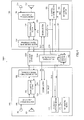
- FIG.1 is a block diagram showing a main configuration of wireless communication system 100 according to Embodiment 1 of the present invention.
- wireless communication system 100 has wireless terminal apparatus 140 of the calling side, wireless terminal apparatus 150 of the call-receiving side, and base station apparatus 160.
- Wireless terminal apparatus 140 has key operating section 101, AV (Audio Visual) controlling/outputting section 102, deciding section 103, codec controlling section 104, microphone 105, input/output processing section 106, speaker 107 and transmission channel coding/decoding section 108.
- AV Audio Visual
- Wireless terminal apparatus 150 has key operating section 151, AV controlling/outputting section 152, deciding section 153, codec controlling section 154, microphone 155, input/output processing section 156, speaker 157 and transmission channel coding/decoding section 158.
- Base station apparatus 160 has distribution codec storing section 161.
- the configurations and possible operations are the same between the components (e.g. deciding section 103) of wireless terminal apparatus 140 and the corresponding components (e.g. deciding section 153) of wireless terminal apparatus 150. Accordingly, the configurations and operations required on the calling side will be explained below using the components of wireless terminal apparatus 140, and the configurations and operations required on the call-receiving side will be explained using the components of wireless terminal apparatus 150.
- Key operating section 101 in wireless terminal apparatus 140 of the calling side converts the telephone number or the type of the speech codec software of wireless terminal apparatus 150 of the communicating party (i.e. call-receiving side) that is inputted by the key input from the user, into an electrical signal, and outputs the signal to AV controlling/outputting section 102.
- AV controlling/outputting section 102 displays, for example, the telephone number or the type of speech codec software received as input from key operating section 101, and transmits it to base station apparatus 160 where necessary. Further, AV controlling/outputting section 102 displays the decision result in deciding section 103, or the decision result and so on in deciding section 153 of wireless communication terminal apparatus 150 of the communicating party that has been transmitted through base station apparatus 160.
- Key operating section 151 of wireless terminal apparatus 150 of the call-receiving side converts the user's key operations into electrical signals when a call is received from wireless terminal apparatus 140 of the communicating party (i.e. calling side), and outputs the signals to AV controlling/outputting section 152.
- AV controlling/outputting section 152 In response to a call or information received from wireless terminal apparatus 140, AV controlling/outputting section 152 displays a telephone number or received information, and outputs a ring tone. Further, when keys in key operating section 151 are operated to check an incoming call, AV controlling/outputting section 152 displays required information in response to this key operation, and reports to base station apparatus 160 that communication is established and so on.
- Deciding section 103 and deciding section 153 decide whether or not speech codec software matching an identification number that is received as input in deciding section 103 and deciding section 153 can be stored in codec controlling section 104 and codec controlling section 154, based on bit allocation information received as input in deciding section 103 and deciding section 153. Then, deciding section 103 and deciding section 153 output decision results to AV controlling/outputting section 102 and AV controlling/outputting section 152, and also to base station apparatus 160. In case where the decision results indicate that storage is possible, speech codec software is downloaded from distribution codec storing section 161, and stored in codec storing section 104 and codec storing section 154. Further, the details of the decision processings in deciding section 103 and deciding section 153 will be described later.
- Codec controlling section 104 of wireless terminal apparatus 140 of the calling side stores the speech codec software downloaded from base station apparatus 160 through deciding section 103. Then, codec controlling section 104 performs encoding processing of a digital speech signal received as input from input/output processing section 106, using the stored speech codec software, and outputs the resulting encoded speech data to transmission channel coding/decoding section 108. Further, codec controlling section 104 performs decoding processing of the encoded speech data received as input from transmission channel coding/decoding section 108, using the stored speech codec software, and outputs resulting speech decoding information to input/output processing section 106. Codec controlling section 154 of wireless terminal apparatus 150 of the call-receiving side performs the same operation in wireless terminal apparatus 150.
- Microphone 105 and microphone 155 convert speech received as input from the users, into electrical signals, and input the electrical signals to input/output processing section 106 and input/output processing section 156.
- Input/output processing section 106 of wireless terminal apparatus 140 of the calling side performs filtering and A/D conversion of the speech signal received as input from microphone 105, and outputs the resulting digital speech signal to codec controlling section 104. Further, input/output processing section 106 performs D/A conversion and filtering processing of speech decoding information received as input from codec controlling section 104, and outputs the resulting decoded speech signal to speaker 107.
- Input/output processing section 156 of wireless terminal apparatus 150 of the call-receiving side performs the same operation in wireless terminal apparatus 150.
- Speaker 107 and speaker 157 each convert the decoded speech signal received as input from input/output processing section 106 and input/output processing section 156, into speech, and outputs the speech to the outside.
- Transmission channel coding/decoding section 108 of wireless terminal apparatus 140 of the calling side performs bit error processing that includes addition of error correction bits and interleaving, and channel coding processing of encoded speech data received as input from codec controlling section 104, and transmits the resulting transmission information to wireless terminal apparatus 150 of the communicating party through base station apparatus 160 that functions as a relaying apparatus. Further, transmission channel coding/decoding section 108 performs channel coding, and bit error processing such as deinterleaving, error detection and error correction of the transmission information transmitted through base station apparatus 160, and outputs the resulting encoded speech data to codec controlling section 104.
- transmission channel coding/decoding section 108 error detection processing and error correction processing in transmission channel coding/decoding section 108 are designed in advance according to bit sensitivity of each encoding information, importance of information and the total number of bits.
- Transmission channel coding/decoding section 158 of wireless terminal apparatus 150 of the call-receiving side also performs the same operation in wireless terminal apparatus 150.
- key operating section 101 in wireless terminal apparatus 140 converts the telephone number of wireless terminal apparatus 150 of the communicating party received as input from the user, into an electrical signal, and outputs the signal to AV controlling/outputting section 102 (S1).
- AV controlling/outputting section 102 displays the telephone number received as input from key operating section 101, and further transmits the telephone number to base station apparatus 160 (S2).
- base station apparatus 160 reports the telephone number of wireless terminal apparatus 140 to AV controlling/outputting section 152 of wireless terminal apparatus 150 (S3).
- AV controlling/outputting section 152 displays the telephone number reported from base station apparatus 160 and further outputs a ring tone to call for the attention of the user who is called.
- base station apparatus 160 receives a notice that communication is established, from key operation 151, and outputs bit allocation information matching one of a plurality of items of speech codec software stored in distribution codec storing section 161, to deciding section 103 of wireless terminal apparatus 140 (S5).
- distribution codec storing section 161 may also select one of a plurality of items of stored speech codec software based on the type of the codec specified by key operating section 101 of wireless terminal apparatus 140. Further, details of bit allocation information will be described later.
- deciding section 103 decides whether or not the speech codec software having the bit allocation received as input from distribution codec storing section 161 can be stored in codec controlling section 104, based on the bit allocation information received as input from distribution codec storing section 161.
- Deciding section 103 selects the type of other speech codec software when deciding that the speech codec software received as input from distribution codec storing section 161 cannot be stored in codec controlling section 104, and reports the identification number of this software to base station apparatus 160 (S6).
- Base station apparatus 160 outputs bit allocation information of the speech codec matching the identification number reported from deciding section 103, to deciding section 103 from distribution codec storing section 161 (S5).
- deciding section 103 outputs a message indicating that there are no more options, to AV controlling/outputting section 102, and outputs this message to AV controlling/outputting section 152 through base station apparatus 160 (S7). In this case, communication is not established and the task is finished.
- deciding section 103 selects and outputs the identification number of the speech codec software having this bit allocation, to distribution codec storing section 161 (S8a). Further, deciding section 103 downloads the speech codec software matching the identification number from distribution codec storing section 161, and stores the speech codec software in codec controlling section 104 (S9). At the same time, deciding section 103 reports the bit allocation information of the stored speech codec software and the identification number of this software, as the decision result indicating that "storage is possible," to deciding section 153 through base station apparatus 160 (S8b).
- Deciding section 153 decides whether or not the speech codec software matching the reported identification number can be stored in codec controlling section 154, based on the reported bit allocation information.
- deciding section 153 When deciding section 153 decides that "storage is not possible," deciding section 153 reports the decision result to deciding section 103 through base station apparatus 160 (S10). Deciding section 103 that received the decision result that "storage is not possible” from deciding section 153, selects another speech codec, and reports the identification number of this software to base station apparatus 160 (S6). The same operation described above will be performed subsequently.
- deciding section 153 of wireless terminal apparatus 150 outputs the identification number of this software to distribution codec storing section 161 (S11a) downloads the speech codec software matching the identification number from distribution codec storing section 161, and stores the speech codec software in codec controlling section 154 through deciding section 153 (S12).
- deciding section 153 outputs the decision result that "communication is established,” to AV controlling/outputting section 152 and to AV controlling/outputting section 102 through base station apparatus 160 (S11b).
- timing to download speech codec software to codec controlling section 104 of wireless terminal apparatus 140 may be the timing when AV controlling/outputting section 102 receives the decision result that "communication is established" after deciding section 153 of wireless terminal apparatus 150 decides that storage is possible.
- wireless terminal apparatus 140 and wireless terminal apparatus 150 make a telephone call through the operations of microphone 105, microphone 155, speaker 107, speaker 157, codec controlling section 104, codec controlling section 154, transmission channel coding/decoding section 108, transmission channel coding/decoding section 158 and base station apparatus 160.
- the bit allocation information of speech codec software supports a speech codec, and will be explained using a speech codec as an example that is standardized by the standards body such as ITU-T (International Telecommunication Union Telecommunication Standardization Sector), ARIB (Association of Radio Industries and Businesses) and ETSI (European Telecommunications Standards Institute).
- ITU-T International Telecommunication Union Telecommunication Standardization Sector
- ARIB Association of Radio Industries and Businesses
- ETSI European Telecommunications Standards Institute
- G.729 scheme of the ITU-T standard used in Japanese mobile telephones and IP (Internet Protocol) telephones will be used as an example for explanation.
- the G.729 scheme of the ITU-T standard is based on CELP coding.
- the speech codec of the CELP scheme divides a speech signal into frames of certain time intervals of about 10 to 20 milliseconds, performs a linear prediction analysis to find linear prediction coefficients ("LPCs") and linear prediction residuals, and individually encodes the linear prediction coefficients and linear prediction residual vectors.
- the speech codec of the CELP scheme encodes/decodes linear prediction residuals using an adaptive codebook that stores excitation signals generated in the past and a fixed codebook that stores a specific number of vectors of fixed shapes (i.e. fixed code vectors).
- the adaptive codebook is used to represent the periodic components included in a liner prediction residual vector
- the fixed codebook is used to represent the non-periodic components of a linear prediction residual vector that cannot be represented by the adaptive codebook.
- FIG.2 illustrates bit allocation of encoding information of the G.729 scheme based on CELP.
- encoding information corresponding to a frame length of 10 milliseconds (i.e. 80 samples) is formed with 80 bits (bit rate: 8 kbit/sec).
- LSP Line Spectrum Pair
- LSP Line Spectrum Pair
- Information about the adaptive codebook, fixed codebook and gain is encoded in a subframe obtained by dividing one frame into two. For example, a full search of the adaptive codebook is performed in the first subframe using 9 bits, and the difference (i.e.
- delta lag between the second subframe and the lag of the first subframe is encoded using 5 bits.
- the fixed codebook is formed with algebraic excitations, and a fixed codebook vector of one subframe is represented by four pulses.
- the gain is encoded using 7 bits each in the two subframes.
- the bit allocation information representing bit allocation of encoding information shown in FIG.2 is ⁇ 18, 9, 5, 17, 17, 7, 7 ⁇ .
- Distribution codec storing section 161 holds this bit allocation information in addition to speech codec software bodies.
- FIG.3 shows a memory that holds speech codec software (i.e. body) and bit allocation information in distribution codec storing section 161.
- deciding section 103 and deciding section 153 decide whether or not speech codec software can be stored in codec controlling section 104 and codec controlling section 154, based only on bit allocation information having a smaller amount of data. This saves the memory and reduces the amount of processing.
- deciding section 103 and deciding section 153 decide whether or not it is possible to store the speech codec software from distribution codec storing section 161, in codec controlling section 104 and codec controlling section 154, and let the speech codec software function.
- the first condition is that the total number of bits outputted from the encoder does not exceed the number of information bits that can be transmitted by wireless communication system 100.
- the second condition is that bit error processing including addition of error correction bits and interleaving in wireless communication system 100 can be used on a as-is basis.
- the second condition is that the number of bits of each parameter outputted from the encoder of distribution codec storing section 161 does not exceed the number of bits of each parameter outputted from the standard codec that supports bit error processing in wireless communication system 100.
- Deciding section 103 and deciding section 153 decide the above two conditions based on the bit allocation information received as input from distribution codec storing section 161.
- deciding section 103 and deciding section 153 compare parameters and compare addition values of the parameters for the bit allocation information of the speech codec software that can be stored in codec controlling section 104 and codec controlling section 154 and the bit allocation information received as input from distribution codec storing section 161 of base station apparatus 160.
- the addition value (78) of parameters forming B2 is equal to or less than the addition value (80) of parameters forming B1, and therefore deciding section 103 and deciding section 153 decide that the first condition is satisfied.
- the parameters forming B2 are equal to or less than the parameters forming B1, and therefore deciding section 103 and deciding section 153 decide that the second condition is satisfied.
- deciding section 103 and deciding section 153 decide that it is possible to store the speech codec software stored in distribution storing section 161, in codec controlling section 104 and codec controlling section 154, and let the speech codec software function.
- the wireless terminal apparatus uses speech codec software by downloading it from the base station apparatus without using a fixed speech codec. Therefore, by updating the speech codec software stored in the base station apparatus to speech codec software of good performance without additionally purchasing wireless terminal apparatuses in which a standardized speech codec of the next generation speech communication is mounted, the wireless terminal apparatuses can use a speech codec of better performance by downloading it and enjoy quality speech communication.
- wireless terminal apparatuses use speech codec software by downloading it from the base station apparatus without using a fixed speech codec. Therefore, by updating speech codec software stored in the base station apparatus to speech codec software of good performance without replacing a wireless communication system/infrastructure, channel codec and speech codec, the wireless terminal apparatuses can use a speech codec of better performance by downloading it and enjoy quality speech communication.
- wireless terminal apparatuses can use a speech codec that is not standardized and use speech codec software by downloading it from the base station, and, consequently, as long as varieties of speech codec software stored in the base station are abundant, even if encoding information is observed along the way, communication is not tapped easily, so that it is possible to improve security for speech communication.
- telecommunication carriers can manufacture and sell communication terminal apparatuses in which speech codecs are not mounted, so that users can purchase cheap communication terminal apparatuses and it is possible to improve flexibility of use in speech communication service.
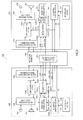
- FIG.4 is a block diagram showing a main configuration of wireless communication system 100A that can perform decision processing in wireless terminal apparatus 140 and perform decision processing in wireless terminal apparatus 150 in parallel in time.
- wireless communication system 100A has the same basic configuration as wireless communication system 100 shown in FIG.1 , and the same components will be assigned the same reference numerals and explanation thereof will be omitted.
- Wireless communication system 100A differs from wireless communication system 100 in further having deciding section 162 inside base station apparatus 160A. Therefore, different configurations and operations from base station apparatus 160 and distribution codec storing section 161 of wireless communication system 100 will be assigned different reference numerals to distinguish between these differences.
- base station apparatus 160A When receiving a notice that communication is established, base station apparatus 160A outputs bit allocation information matching one of a plurality of items of speech codec software stored in distribution codec storing section 161 A, to deciding section 103 and deciding section 153 (S5 and S13).
- deciding section 103 and deciding section 153 each perform decision processing.
- the details of decision processing are the same as in the explanation of above FIG.1 , and therefore will not be explained.
- the decision results (S6, S7, S8a, S14, S15 and S11a) in the deciding sections are received as input in deciding section 162 inside base station apparatus 160A.
- S14 and S15 in wireless terminal apparatus 150 correspond to S6 and S7, respectively, in wireless terminal apparatus 140. Further, S6 and S14 only need to be information that simply indicates decision results that "storage is not possible.”
- Deciding section 162 of base station apparatus 160A compares the decision result received as input from deciding section 103 and the decision result received as input from deciding section 153, and, if at least one of decision results indicates that "storage is not possible," deciding section 162 selects another speech codec software and reports the identification number of this software to distribution codec storing section 161A (S16). Distribution codec storing section 161A outputs bit allocation information of the speech codec software matching the identification number, to deciding section 103 and deciding section 153 (S5 and S13). Subsequently, the same operations described above are repeated until both of decision results indicate that "storage is possible.”
- deciding section 162 of base station apparatus 160A reports the identification number of this software to distribution codec storing section 161A (S51).
- Distribution codec storing section 161A outputs the speech codec software matching the identification number, to both of deciding section 103 and deciding section 153 (S9 and S12), and deciding section 103 and deciding section 153 output the software to codec controlling section 104 and codec controlling section 154 (S9 and S12).
- deciding section 162 further reports the decision result that "communication is established,” to both of AV controlling/outputting section 102 and AV controlling/outputting section 152 (S18 and S19).
- Embodiment 1 where speech codec software is used by downloading it from the base station apparatus every time speech communication takes place between wireless terminal apparatuses, the present invention is not limited to this, and the wireless terminal apparatus of the calling side can use for subsequent telephones calls the speech codec software downloaded from the base station apparatus by storing the speech codec software in unique codec storing sections (described later). A specific example will be explained below.
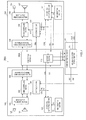
- FIG.5 is a block diagram showing a main configuration of wireless communication system 120 in which wireless terminal apparatuses have unique codec storing sections.
- different reference numerals will be assigned to show the differences between the configurations of wireless terminal apparatus 140, AV controlling/outputting section 102, deciding section 103, codec controlling section 104, wireless terminal apparatus 150, deciding section 153, and codec controlling section 154 in FIG.1 and the configurations of wireless terminal apparatus 240, AV controlling/outputting section 102A, deciding section 103A, codec controlling section 104A, wireless terminal apparatus 250, deciding section 153A, and codec controlling section 154A.
- wireless communication system 120 has the same basic configuration as wireless communication system 100 shown in FIG.1 , and the same components will be assigned the same reference numerals and explanation thereof will be omitted.
- Wireless terminal apparatus 240 of the calling side further has unique codec storing section 201, and this unique codec storing section 201 stores the speech codec software used in the previous telephone call (S20-1).
- wireless terminal apparatus 250 of the call-receiving side further has unique codec storing section 251 that stores the speech codec (S20-2) used in the previous telephone call.
- This wireless communication system 120 allows deciding section 103A of wireless terminal apparatus 240 of the calling side to report the speech codec software used in the previous telephone call preferentially over speech codec software of other types, to base station apparatus 160, and allows base station apparatus 160 to make wireless terminal apparatus 250 download the speech codec of the same type. This configuration and operation will be explained below.
- base station apparatus 160 When receiving a notice that communication is established, base station apparatus 160 outputs bit allocation information matching one of a plurality of items of speech codec software stored in distribution codec storing section 161, to deciding section 103A (S5).
- deciding section 103A When receiving the bit allocation information from distribution codec storing section 161, deciding section 103A outputs a command for acquiring a stored speech codec software, to unique codec storing section 201 (S21a), and, in response to this, unique codec storing section 201 stores the stored speech codec software in codec controlling section 104A through deciding section 103A (S22). Together with this, deciding section 103A reports the identification number of speech codec software stored in unique codec storing section 201 and bit allocation information of this software, to deciding section 153A through base station apparatus 160 as unique codec information (S21b).
- deciding section 153A decides whether or not speech codec software matching the identification number included in the reported unique codec information, can be stored in codec controlling section 154A, based on the bit allocation information included in the reported unique codec information. The method of making decisions is the same as in the method disclosed in Embodiment 1. If it is decided that the specified speech codec software can be stored in codec controlling section 154A, deciding section 153A transmits a signal for checking whether or not the specified speech codec software is stored in unique codec storing section 251, to unique codec storing section 251 (S23), and receives a response signal in response to that signal from unique codec storing section 251 (S24).
- deciding section 153A outputs a command for acquiring a stored speech codec software, to unique codec storing section 251 (S25a), and, in response to this, unique codec storing section 251 stores the speech codec software to codec controlling section 154A through deciding section 153A (S26). Together with this, deciding section 153A outputs the decision result that "communication is established," to AV controlling/outputting section 152, and to AV controlling/outputting section 102A, through base station apparatus 160 (S25b). That is, if the same type of a speech codec is stored in unique codec storing section 201 and unique codec storing section 251, the wireless terminal apparatuses both do not need to download a speech codec.
- deciding section 153A transmits the identification number of the specified software, to distribution codec storing section 161 (S27). If the speech codec software matching this identification number is present in distribution codec storing section 161, deciding section 153A downloads this speech codec software from distribution codec storing section 161, and stores this speech codec software in codec controlling section 154A through deciding section 153A.
- the subsequent processings are the same as described above.
- base station apparatus 160 transfers this identification number to deciding section 103A (S27), and, when receiving this identification number, deciding section 103A extracts speech codec software from unique codec storing section 201 (S22) and transmits the speech codec software to deciding section 153A through base station apparatus 160 (S22: broken line).
- Deciding section 153A stores the received software in codec controlling section 154A. The subsequent processings are the same as described above.
- the wireless terminal apparatus of the call-receiving side has a unique codec storing section
- the wireless terminal apparatus of the call-receiving side does not have a unique codec storing section
- the deciding section decides that speech codec software can be stored in the codec controlling section
- This wireless communication system allows wireless terminal apparatuses to use a speech codec of good performance by downloading it from the base station even when, for example, communication quality needs to be further improved. By this means, it is possible to reduce the amount of processing required in every telephone call.
- the wireless terminal apparatus allows users to edit details of speech codec software stored in unique codec storing section 201, through key operating section 101.
- the user commands AV controlling/outputting section 102A to start editing through key operating section 101 (S30), AV controlling/outputting section 102A extracts speech codec software stored in unique codec storing section 201 (S31 and S32), and the user edits the software by operating keys (S30) and stores the edited speech codec software in unique codec storing section 201 adequately (S33).
- speech codec software edited in one wireless terminal apparatus is not present in the other terminals and base station at the time of editing, and therefore, to use the edited software, it is necessary to first transmit the edited speech codec software to the wireless terminal apparatus of the communicating party.
- the wireless terminal apparatus of the communicating party decides whether or not the edited speech codec software that is transmitted can be stored, and, if a decision result that "storage is possible" is obtained, can use this edited speech codec software.
- This configuration enables speech codec software to be used by modifying it to improve quality where necessary.
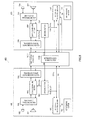
- FIG.6 is a block diagram showing a main configuration of wireless communication system 200 according to Embodiment 3 of the present invention.
- wireless communication system 200 has the same basic configuration as wireless communication system 100 (see FIG.1 ) described in Embodiment 1, and the same components will be assigned the same reference numerals and explanation thereof will be omitted.
- Wireless communication system 200 differs from wireless communication system 100 in further having codec distributing center 170. Further, base station apparatus 260 of wireless communication system 200 differs from base station apparatus 160 of wireless communication system 100 in removing distribution codec storing section 161, and will be assigned a different reference numeral to indicate this difference.
- Codec distributing center 170 has distribution codec storing section 171.
- Distribution codec storing section 171 stores a plurality of items of speech codec software to which bit allocation information is added.
- Codec distributing center 170 receives a notice related to establishment of communication, from key operating section 151 through base station apparatus 260 (S41), and outputs bit allocation information matching one of a plurality of items of speech codec software stored in distribution codec storing section 171, to deciding section 103 (S5').
- distribution codec storing section 171 may select one of a plurality of items of stored speech codec software, based on the type of the codec specified by key operating section 101 of wireless terminal apparatus 140.
- the subsequent processings are the same as in Embodiment 1.
- FIG.7 is a block diagram showing a main configuration of wireless communication system 200A that can perform decision processing in wireless terminal apparatus 140 and decision processing in wireless terminal apparatus 150 in parallel in time.
- wireless communication system 200A has the same basic configuration as wireless communication system 200 shown in FIG.6 , and the same components will be assigned the same reference numerals and explanation thereof will be omitted.
- Wireless communication system 200A differs from wireless communication system 200 in further having deciding section 172 inside base station apparatus 260A. Therefore, the different configuration and operation from base station apparatus 260 of wireless communication system 200 will be assigned different reference numerals to distinguish between these differences.
- base station apparatus 260A When receiving a notice that communication is established, base station apparatus 260A commands codec distributing center 170 to output bit allocation information matching one of a plurality of items of speech codec software stored in distribution codec storing section 171, to deciding section 103 and deciding section 153 (S41). Distribution codec storing section 171 that receives the command outputs bit allocation information of the specified software, to deciding section 103 and deciding section 153 (S5' and S13').
- deciding section 103 and deciding section 153 each perform decision processing.
- the details of decision processing are the same as in the explanation of FIG.1 , and therefore will not be explained.
- the decision results (S6, S7, S8a, S14, S15 and S11a) in the deciding sections are inputted to deciding section 172 inside base station apparatus 260A.
- S14 and S15 in wireless terminal apparatus 150 correspond to S6 and S7, respectively, in wireless terminal apparatus 140. Further, S6 and S14 only need to be information that simply indicates decision results that "storage is not possible.”
- Deciding section 172 of base station apparatus 260A compares the decision result received as input from deciding section 103 and the decision result received as input from deciding section 153, and, if at least one of decision results indicates that "storage is not possible," deciding section 162 selects another speech codec software and reports the identification number of this software to distribution codec storing section 171 (S42). Distribution codec storing section 171 outputs bit allocation information of the speech codec software matching the identification number, to deciding section 103 and deciding section 153 (S5' and S13'). Subsequently, the same operations described above are repeated until both of decision results indicate that "storage is possible.”
- deciding section 172 of base station apparatus 260A reports the identification number of this software to distribution codec storing section 171 (S43).
- Distribution codec storing section 171 outputs the speech codec software matching the identification number, to both of deciding section 103 and deciding section 153 (S9' and S12'), and deciding section 103 and deciding section 153 output the software to codec controlling section 104 and codec controlling section 154 (S9' and S12').
- deciding section 172 further reports the decision result that "communication is established," to both of AV controlling/outputting section 102 and AV controlling/outputting section 152 (S18 and S19).
- FIG.8 is a block diagram showing a main configuration of wireless communication system 400 according to Embodiment 4 of the present invention.
- wireless communication system 400 has the same basic configuration as wireless communication system 100 (see FIG.1 ) described in Embodiment 1.
- Different reference numerals will be assigned to show the differences between the configurations and operations of deciding section 403, deciding section 453, codec controlling section 404, codec controlling section 454, base station apparatus 160B and distribution codec storing section 161B in wireless communication system 400 and the configurations and operations of deciding section 103, deciding section 153, codec controlling section 104, codec controlling section 154, base station apparatus 160 and distribution codec storing section 161 in wireless communication system 100.
- Embodiment 1 A case has been explained with FIG.4 of above-described Embodiment 1 where distribution codec storing section 161 A stores bit allocation information matching speech codec software, and deciding 103 and deciding section 153 perform decision processings based on bit allocation information received as input from distribution codec storing section 161A.
- distribution codec storing section 161B does not store bit allocation information of speech codec software, and deciding section 403 and deciding section 453 perform decision processing without receiving bit allocation information as input.
- each deciding section operates an encoder to analyze the breakdown of bit allocation of encoded data to be outputted, and performs decision processing based on the analyzed breakdown of bit allocation and the total number of bits of the encoded data.
- An example will be explained with the present embodiment where a method of cross-checking bit sensitivity and estimating the breakdown of bit allocation of encoded data is employed as the method of analyzing the breakdown of bit allocation.
- Deciding section 403 and deciding section 453 encode sensitivity measurement data prepared in advance, and invert one arbitrary bit of the outputted encoded data. Then, deciding section 403 finds the statistics of bit error sensitivity by decoding a plurality of items of encoded data which each invert one arbitrary bit, and cross-checks the determined statistics of sensitivity and predetermined reference sensitivity data.
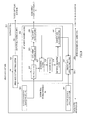
- FIG.9 is a block diagram showing components that relate to calculation and cross-checking of bit sensitivity in the internal configuration of deciding section 403. Further, the components that relate to calculation and cross-checking of bit sensitivity in the internal configuration of deciding section 453 are the same as in deciding section 403, and therefore explanation thereof will be omitted.
- deciding section 403 has speech codec software storing section 431, sensitivity measurement data storing section 432, bit sensitivity measuring section 433, reference sensitivity data storing section 441 and sensitivity data cross-checking section 4 42.
- bit sensitivity measuring section 433 has encoding section 434, total number measuring section 435, total number deciding section 436, bit inverting section 437, decoding section 438, distortion calculating section 439 and sensitivity data calculating section 440.
- Speech codec software storing section 431 stores speech codec software received as input from distribution codec storing section 161B (S9).
- Sensitivity measurement data storing section 432 stores in advance a plurality of data samples for sensitivity measurement.
- bit sensitivity measuring section 433 encoding section 434 encodes the data samples in sensitivity measurement data storing section 432 using the speech codec software stored in speech codec software storing section 431, and outputs the resulting encoded data to total number measuring section 435, bit inverting section 437 and decoding section 438.
- Total number measuring section 435 measures the total number of bits of the encoded data received as input from encoding section 434, and outputs the measurement result to total number deciding section 436 as total number information.
- Total number deciding section 436 decides whether or not the total number information received as input from total number measuring section 435 is equal to or less than the amount of information that can be transmitted by wireless communication system 400. If the total number information is greater than the amount of information that can be transmitted, total number deciding section 436 decides that the speech codec software cannot be stored and functioned in codec controlling section 404 and outputs the decision result (S6), and deciding section 403 finishes processing. By contrast with this, if the total number information is equal to or less than the amount of information that can be transmitted, total number deciding section 436 outputs the decision result to bit inverting section 437, and processing in deciding section 403 continues.
- bit inverting section 437 receives as input the decision result from total number deciding section 436, bit inverting section 437 inverts one arbitrary bit of the encoded data received as input from encoding section 434, and creates a number of items of encoded data including bit error corresponding to the number indicated by the total number information.
- the total number information acquired from measurement in total number measuring section 435 is 80, there are 80 patterns of encoded data that include bit error and that can be acquired in bit inverting section 437.
- Decoding section 438 decodes all encoded data (81 patterns with the above example) received as input from encoding section 434 and bit inverting section 437, and outputs all resulting decoded data to distortion calculating section 439.
- encoded data that is received as input from encoding section 434 and that is not subjected to bit inversion will be referred to as “reference encoded data”
- decoded data of reference encoded data will be referred to as “reference decoded data.”
- Distortion calculating section 439 calculates the distortion between reference decoded data received as input from decoding section 438 and each decoded dada other than the reference decoded dada, and outputs the result to sensitivity data calculating section 440.
- Distortion calculating section 439 adopts the SNR (Signal to Noise Ratio) that is determined according to following equation 1, as the distortion of each decoded data other than the reference decoded data.
- SNR Signal to Noise Ratio
- E m represents the distortion between reference decoded data and decoded data in case where the m-th bit of reference encoded data is inverted
- R i represents reference decoded data
- r m,i represents decoded data in case where the m-th bit of the reference encoded data is inverted
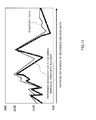
- FIG.10 shows an example of a distortion calculation result in distortion calculating section 439.
- the horizontal axis represents an inverted bit number of reference encoded data.
- the vertical axis represents the SNR that is determined according to equation 1, that is, the distortion between reference decoded data and decoded data in case where each bit of reference encoded data is inverted.
- bit sensitivity serves as a reference to determine the degree of protection per bit, that is, a reference to design error correction and error detection processing.
- encoding section 434, total number measuring section 435, total number deciding section 436, bit inverting section 437, decoding section 438, distortion calculating section 439 and sensitivity data calculating section 440 each repeat processing a number of times corresponding to the number of items of sensitivity measurement data stored in sensitivity measurement data storing section 432.
- Sensitivity data calculating section 440 calculates the sum of products of distortion on a per bit basis for all data samples stored in sensitivity measurement data storing section 432, using distortion received as input from distortion calculating section 439, and divides the sum of products by the number of all data samples. Sensitivity data calculating section 440 outputs the division result of each bit, to sensitivity data cross-checking section 442 as the average bit sensitivity of each bit. In this way, the average distortion (hereinafter, referred to as "sensitivity data”) of codecs stored in speech codec software storing section 431 is determined.
- Reference sensitivity data storing section 441 stores reference sensitivity data in advance.
- Reference sensitivity data stored in reference sensitivity data storing section 441 is sensitivity data determined in sensitivity data calculating section 440 by functioning bit sensitivity measuring section 433 in advance using a codec that is assumed when an algorithm for transmission channel coding/decoding is designed and that can be stored in codec controlling section 404, such as the standard codec of the G.729 scheme.
- Sensitivity data cross-checking section 442 retrieves reference sensitivity data from reference sensitivity data storing section 441, compares this reference sensitivity data with sensitivity data received as input from sensitivity data calculating section 440 and decides whether or not a speech codec stored in speech codec software storing section 431 can be stored in codec controlling section 404. First, if the SNR of sensitivity data received as input from sensitivity data calculating section 440 is greater than the SNR of reference sensitivity data, that is, if the bit sensitivity of sensitivity data is lower (i.e. better) than the bit sensitivity of reference sensitivity data, sensitivity data cross-checking section 442 decides that the speech codec stored in speech codec software storing section 431 can be stored in codec controlling section 404.
- sensitivity data cross-checking section 442 decides that the speech codec software stored in speech codec software storing section 431 can be stored in codec controlling section 404, and outputs the speech codec software to codec controlling section 404. 2 s i > s i ⁇ - ⁇ i for all i
- s i sensitivity data received as input from sensitivity data calculating section 440
- s i ⁇ reference sensitivity data
- i the inverted bit number of reference encoded data
- ⁇ i a margin
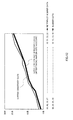
- FIG.11 shows an example of the state where reference sensitivity data and sensitivity data for which the margin is taken into account are cross-checked in sensitivity data cross-checking section 442.
- sensitivity data cross-checking section 442 uses the margin to check sensitivity data.
- the horizontal axis represents the inverted bit number of reference encoded data
- the vertical axis represents sensitivity data that is represented by the SNR.
- the thin graph represents sensitivity data received as input from sensitivity data calculating section 440
- the bold graph represents reference sensitivity data for which the margin is taken into account (that is, the graph determined by subtracting the SNR corresponding to the margin from the SNR of reference sensitivity data).
- Sensitivity data cross-checking section 442 may use the margin, which is a constant, and, as shown in equation 2, the margin that varies between bits of reference encoded data may be used. In the state shown in FIG.11 , sensitivity data is greater than reference sensitivity data for which the margin is taken into account, and therefore bit sensitivity is in a good state and sensitivity data cross-checking section 442 can decide that the speech codec stored in speech codec software storing section 431 can be stored in codec controlling section 404.
- sensitivity data cross-checking section 442 cross-checks sensitivity data and reference sensitivity data that are received as input from sensitivity data calculating section 440 using sorting.
- sensitivity data cross-checking section 442 sorts reference sensitivity data retrieved from reference sensitivity data storing section 441 in bit units according to the size. Further, sensitivity data cross-checking section 442 memorizes a bit number of reference sensitivity data (hereinafter "reference number data”) prior to sorting. Further, sensitivity data cross-checking section 442 sorts sensitivity data received as input from sensitivity data calculating section 440 in bit units according to the size, and memorizes the bit number of sensitivity data (hereinafter, "number data”) prior to sorting.
- sensitivity data cross-checking section 442 decides that the speech codec stored in speech codec software storing section 431 can be stored in codec controlling section 404. 3 S j > S j r - ⁇ j for all j
- S j represents sorted sensitivity data
- S j ⁇ represents sorted reference sensitivity data
- j represents the inverted bit number of reference encoded data
- ⁇ j represents the margin.
- FIG.12 illustrates cross-checking of sensitivity data using sorting in sensitivity data cross-checking section 442.
- the horizontal axis represents reference number data and number data
- the vertical axis represents sensitivity data represented by the SNR.
- the thin graph represents sorted sensitivity data
- a bold graph represents sorted reference sensitivity data (for which the margin is taken into account).
- sensitivity data cross-checking section 442 decides that the speech codec stored in speech codec software storing section 431 can be stored in codec controlling section 404, sensitivity data cross-checking section 442 outputs the decision result (S8a) to base station 160B and speech codec software storing section 431, and outputs the speech codec software (S9) stored in speech codec software storing section 431 to codec controlling section 404 together with reference data and number data (S9a).
- Codec controlling section 404 and codec controlling section 454 encode digital speech signals received as input from input/output processing section 106 and input/output processing section 156, and interleave bits of the resulting speech encoded data using number data and reference number data received as input from sensitivity data cross-checking section 442. Further, codec controlling section 404 and codec controlling section 454 perform decoding processing after interleaving bits of encoded speech data received as input from transmission channel coding/decoding section 108 and transmission channel coding/decoding section 158 using number data and reference number data received as input from sensitivity data cross-checking section 442.
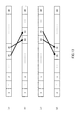
- FIG.13 illustrates bit interleaving processing in encoders and decoders that are stored to function in codec controlling section 404 and codec controlling section 454.
- FIG.13(a) and FIG.13(b) show examples where codec controlling section 404 and codec controlling section 454 interleave bits of encoded speech data resulting from encoding processing.
- FIG.13(c) and FIG.13(d) show examples where codec controlling section 404 and codec controlling section 454 interleave bits of encoded speech data received as input from transmission channel coding/decoding section 108 and transmission channel coding/decoding section 158. Further, FIG.13 shows an example of interleaving two bits.
- sensitivity data cross-checking section 442 retrieves reference sensitivity data from reference sensitivity data storing section 441, performs sorting and finds the sorted reference sensitivity data and reference number data
- present invention is not limited to this, and reference sensitivity data storing section 441 may store reference sensitivity data and reference number data sorted in advance in addition to reference sensitivity data.
- FIG.14 is a block diagram showing a main configuration of wireless communication system 400A that can perform decision processing in wireless terminal apparatus 140 and perform decision processing in wireless terminal apparatus 150 in parallel in time.
- wireless communication system 400A has the same basic configuration as wireless communication system 400 shown in FIG.8 , and the same components will be assigned the same reference numerals and explanation thereof will be omitted.
- Wireless communication system 400A differs from wireless communication system 400 in further having deciding section 162C inside base station apparatus 160C. Therefore, different configurations and operations from base station apparatus 160B and distribution codec storing section 161B of wireless communication system 400 will be assigned different reference numerals to distinguish between these differences.
- base station apparatus 160C When receiving a notice that communication is established, base station apparatus 160C outputs one of a plurality of items of speech codec software stored in distribution codec storing section 161C, to deciding section 403 and deciding section 453 (S9 and S12).
- deciding section 403 and deciding section 453 each perform decision processing.
- the details of decision processing are the same as in the explanation of above FIG.8 to FIG.13 , and therefore will not be explained.
- the decision results (S6, S7, S8a, S14, S15 and S11a) in the deciding sections are inputted to deciding section 162C inside base station apparatus 160C.
- S14 and S15 in wireless terminal apparatus 150 correspond to S6 and S7, respectively, in wireless terminal apparatus 140. Further, S6 and S14 only need to be information that simply indicates decision results that "storage is not possible.”
- Deciding section 162C of base station apparatus 160C compares the decision result received as input from deciding section 403 and the decision result received as input from deciding section 453, and, if at least one of decision results indicates that "storage is not possible," deciding section 162C selects another speech codec software and reports the identification number of this software to distribution codec storing section 161C (S16). Distribution codec storing section 161C outputs the speech codec software matching the identification number, to deciding section 403 and deciding section 453 (S9 and S12). Subsequently, the same operations described above are repeated until both of decision results indicate that "storage is possible.”
- deciding section 162C of base station apparatus 160C reports the decision results that "communication is established,” to AV controlling/outputting section 102 and AV controlling/outputting section 152 (S18 and S19).
- FIG.15 explains an LSP quantizing method in the speech codec of the G.729 scheme.
- the speech codec of the G.729 scheme provides two stages of LSP quantization (one bit indicates a stage number), and performs LSP quantization of order 10 in total.
- Vector quantization is performed using the seven bits in the first stage, and split vector quantization of error vectors of the first stage are performed using five bits ⁇ 2 in the second stage.
- FIG.16 illustrates the LSP quantizing method in speech codec software according to the present embodiment.
- the speech codec software according to the present embodiment provides three stages, and performs quantization of a quantization target vectors of order 10. All of quantization target vectors are subjected to vector quantization using 7 bits in the first stage, quantization error vectors of the first stage are subjected to vector quantization using 5 bits in the second stage, and the first half and the second half of quantization error vectors of the second stage are subjected to vector quantization using 5 bits each in the third stage.
- the LSP quantizing method of the speech codec software Compared to the LSP quantizing method of the speech codec of the G.729 scheme, although the LSP quantizing method of the speech codec software according to the present embodiment increases the amount of computation to some extent, this method improves the accuracy of LSP quantization. This is because split vector quantization divides a vector, and therefore mutual correlation between two divided vectors resulting from the division cannot be utilized. By contrast with this, LSP quantization of a multi-stage configuration can utilize overall statistical bias of vectors sufficiently, and consequently improve the accuracy of quantization.
- the configuration of LSP vector quantization of three stages according to the present embodiment can provide better performance using the same number of bits as in the G.729 scheme.
- the three-stage configuration having a greater number of stages than two stages of the LSP quantizing method of the G.729 scheme maintains the same bit sensitivity as the G.729 scheme, and consequently can use transmission channel coding that is supported by the speech codec of the G.729 scheme, on a as-is basis.
- the speech codec of the G.729 scheme quantizes the first subframe using 9 bits, and the delta lag of the second subframe (i.e. the difference from the lag of the first subframe) using 5 bits.
- the speech codec software according to the present embodiment performs encoding by a full search using 7 bits + 7 bits without using the delta lag.
- the speech codec software according to the present embodiment becomes robust against transmission error as a whole, and can improve sound quality of consonant sections and the like which make fluctuation severe.
- the fixed codebook uses an algebraic excitation formed with four pulses, represents the polarity of each pulse using 4 bits and represents the position of each pulse using 13 bits (3+3+3+4).
- FIG.17 shows a table (hereinafter, a pulse position table) that represents the positions of four pulses forming an algebraic excitation used as the fixed codebook of the speech codec of the G.729 scheme.
- the speech codec according to the present embodiment uses an algebraic excitation of another configuration with higher confidentiality than the algebraic excitation formed with four pulses.
- the pulse position table according to the present embodiment is acquired by reordering the elements of the pulse position table according to the G.729 scheme.
- FIG.18 shows an example of the pulse position table according to the present embodiment acquired by reordering the elements of the pulse position table according to the G.729 scheme.
- the pulse position table shown in FIG.17 and the pulse position table shown in FIG.18 are different tables that have the same encoding performance. Further, it is possible to replace channels of pulses 0 to 2 without changing encoding performance at all. That is, in comparison of encoding using the pulse position table shown in FIG.18 and the pulse position table shown in FIG.17 , encoding performance is completely the same and the resulting encoding information (i.e. position numbers of pulses) are completely different. Confidentiality improves significantly by making the above reordering method unique to speech communication.
- the pulse position table of the speech codecs stored in unique codec storing section 201 of FIG.5 is freely edited by means of the key operation of key operating section 101, it is possible to use different codecs every telephone call.
- only seeds of random numbers are inputted from key operating section 101, and the pulse position table is reordered according to the random numbers that are produced. It is equally possible to input the random number seeds and reorder the pulse position table in this way when speech codec software is downloaded from distribution codec storing section 161 or immediately before speech communication is started.
- Deciding section 103 reorders the pulse position table for the speech codec software distributed from base station apparatus 160 or codec distributing center 170 of FIG.6 based on the seeds from key operating section 101.
- the speech codec of the G.729 scheme performs vector quantization of gain divided in two stages using 7 bits (3 bits + 4 bits).
- 7-bit vector quantization of a one-stage configuration using 128 kinds of code vectors provides more flexibility of code vectors, and provides better encoding performance than 7-bit vector quantization of a two-stage configuration. Therefore, the speech codec software according to the present embodiment performs 7-bit vector quantization of the one-stage configuration with respect to gain.
- bit sensitivity of each of 7 bits is adjusted to the characteristics of the G.729 scheme (that bit sensitivity of 3 bits of the first half is higher and bit sensitivity of 4 four bits of the second half is lower). This is because, if bit sensitivities are not adjusted, code vectors of 128 kinds are assigned numbers at random and therefore bit sensitivities of 7 bits become the same, and, when error correction/detection algorithm (for protecting 3 bits of the first half and placing less protection for 4 bits of the second half) matching the characteristics of the G.729 scheme is used on a as-is basis, there is a possibility that malfunction occurs in performance.
- the bit sensitivities are adjusted to the characteristics of this G.729 scheme by, for example, dividing code vectors of 128 kinds of the speech codec software according to the present embodiment, into eight groups (where one group includes 16 code vectors) within the distance of this vector space, and representing each code vector by the group number (0 to 7) and intragroup number (0 to 15). That is, new eight groups and new centroids of these groups are determined using a clustering algorithm such as an LBG algorithm for 128 centroids, the distances between the new centroids and 128 centroids are cross-checked and 16 members that minimize the distances from the new centroids are determined.
- a clustering algorithm such as an LBG algorithm for 128 centroids
- This method makes it possible to improve encoding performance while adjusting bit sensitivities to the characteristics of the G.729 scheme, and use transmission channel coding (including the error correction/detection algorithm) that is supported by the speech codec of the G.729 scheme, on a as-is basis.
- different speech codecs are configured with the same bit allocation and bit sensitivity as in the speech codec of the G.729 scheme, so that it is possible to improve the encoding performance and confidentiality of speech codec software, and use transmission channel coding that is supported by the speech codec of the G.729 scheme, on a as-is basis.
- the speech codec software according to the present embodiment has been explained as one variation of speech codec software stored in distribution codec storing section 161, the present invention is not limited to this and it is equally possible to use the codec software according to the present embodiment like the standard codec.
- the encoders and decoders of communication terminals support each other, sound quality and confidentiality are improved compared to G.729, so that it is possible to perform speech communication of higher performance that can be updated.
- the wireless terminal apparatus employs a configuration adding the configuration shown in FIG.19 , to deciding sections 103 and 153 and codec controlling sections 104 and 154 in the configuration shown in FIG.1 . Further, both of the wireless terminal apparatuses of the calling side and call-receiving side have the same functions, and therefore, on behalf of these functions, the functions of the wireless terminal apparatus of the call-receiving side will be explained. Assume that codec controlling section 154A in FIG.19 is included in codec controlling section 154 in FIG.1 , and deciding section 153A in FIG.19 is included in deciding section 153 in FIG.1 .
- the present embodiment further provides the function of deciding whether or not communication is possible using a codec stored in codec controlling section 104 and 154 in case where two deciding sections 103 and 153 cannot download speech codec software to wireless terminal apparatuses.
- FIG.19 is used to explain this function.
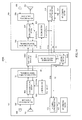
- FIG.19 is a block diagram mainly showing the configuration inside deciding section 153A according to the present embodiment.
- deciding section 153A has test data storing section 501, speech codec software storing section 502, decoding section 503, encoding section 504, decoding section 505, and difference evaluating/deciding section 506.
- a transmission channel coding/decoding section and a base station apparatus that are provided in a transmission channel betweeen codec controlling section 154A and wireless terminal apparatus 140 are not shown for ease of illustration.
- Deciding section 153A performs the above decision, and outputs the decision result to codec controlling section 154A, AV controlling/outputting section 152 and base station apparatus 160.
- the details are as follows.
- deciding section 153A decides that communication is possible using the speech codec software stored in codec controlling section 154A, and outputs the decision result to codec controlling section 154A, AV controlling/outputting section 152 and base station apparatus 160.
- AV controlling/outputting section 152 carries out AV output such as speech output or screen display to tell the user that communication is possible. Further, the decision result is also transmitted to AV controlling/outputting section 102 (S11b) and deciding section 103 of wireless terminal apparatus 140 of the communicating party through base station apparatus 160.
- deciding section 103 of wireless terminal apparatus 140 transmits this decision result to codec controlling section 104. If codec controlling section 104 receives this decision result, this means that communication is established between wireless terminal apparatuses 140 and 150, thereby providing a state where a telephone call is possible.
- AV controlling/outputting section 152 carries out AV output to tell the user that communication is not possible. Further, in this case, the decision result is not outputted to codec controlling section 154A, or, even if this decision result is transmitted to codec controlling section 154A, codec controlling section 154A only receives this decision result and does not perform any particular operation. Furthermore, the decision result is also transmitted to AV controlling/outputting section 102 and deciding section 103 (S10) of wireless terminal apparatus 140 of the communicating party through base station apparatus 160. When deciding section 103 of wireless terminal apparatus 140 receives this decision result, both of wireless terminal apparatuses 140 and 150 do not establish communication and finish the task.
- the processing performed by deciding section 153A is divided into two.
- the first one is the processing of transmitting a code to wireless terminal apparatus 140 of the communicating party to decide whether or not it is possible to use the speech codec stored in codec controlling seciton 104 of wireless termianl apparatus 140 of the communicating party, on a as-is basis.
- the second one is the processing of deciding whether or not it is possible to use the speech codec stored in codec controlling section 154A of wireless terminal apparatus 150 on a as-is basis, utilizing the code tranmsmitted from wireless termninal apparatus 140 of the communicating party.
- test speech data is stored in test data storing section 501 in deciding section 153A.
- test data storing section 501 outputs test speech data to codec controlling section 154A.
- codec controlling section 154A encodes the test speech data using the speech codec stored inside, and transmits the resulting code to wireless terminal apparatus 140.
- Wireless terminal apparatus 140 makes decision based on this code.
- test speech data is used to decide whether or not speech communication can be started promptly immediately after communication is started, and test data storing section 501 stores data that is easily identified (i.e. speech data that can readily be encoded such as vowel sequences and sine waves), for a short period of time.
- codec controlling section 154A receives a code that has been subjected to the same processing as the above processing and that has been transmitted, and outputs the code to decoding section 503 of deciding section 153A.
- decoding section 503 finds the first synthesized sound by using the speech codec stored in speech codec software storing section 502 and decoding encoded speech data (i.e. a code) outputtted from codec controlling section 154. Further, encoding section 504 finds synthesized sound encoded data by using the speech codec stored in speech codec software storing section 502 and encoding the first synthesized sound outputted from decoding section 503. Furthermore, decoding section 505 finds the second synthesized sound by using the speech codec stored in speech codec software storing section 502 and decoding the synthesized sound encoded data outputted from encoding seciton 504.
- difference evaluating/deciding section 506 evaluates the difference between the first synthesized sound and the second synthesized sound, decides whether or not speech communication can be started using the speech codec that has already been stored in codec controlling section 154A, on a as-is basis, and outputs the decision result.
- Difference evaluating/deciding section 506 decides whether or not encoded speech data that is encoded in the encoder of wireless terminal apparatus 140 of the communicating party can be decoded by the decoder of wireless terminal apparatus 150, based on the following tendency using only the transmitted encoded speech data.
- the first sysnthesized sound becomes similar to test data. Then, if test data has the characteristics of speech data that can readily be encoded, it naturally follows that the resulting first synthesized sound may readily be encoded. Accordingly, by encoding and decoding the first synthesized sound using the speech codec provided in wireless terminal apparatus 150, the resulting second synthesized sound becomes similar to the first synthesized sound.
- the decoder provided in wireless terminal apparatus 150 does not support the codec of wireless terminal apparatus 140 of the communicating party, the first synthesized sound becomes completely different from test data and therefore there is little possibility that the first synthesized sound becomes data that can readily be encoded. Accordingly, the second synthesized sound acquired by encoding and decoding the first synthesized sound using the codec provided in wireless terminal apparatus 150, becomes completely different from the first synthesized sound.
- difference evaluating/deciding section 506 can decide whether or not speech communication can be started using the speech codec that has already been stored in codec controlling section 154A, on a as-is basis.
- Difference evaluating/deciding section 506 makes decision shown in following equation 4 based on the above tendency.
- difference evaluating/deciding section 506 compares test speech data stored in test data storing section 501 and the first synthesized sound. Further, if wireless terminal apparatus 140 of the communicating party uses the same test data as in wireless terminal apparatus 150, difference evaluating/deciding section 506 can perform more accurate decision.
- difference evaluating/deciding section 506 performs decision by evaluating the value acquired by normalizing the correlation value using each power value. If the correlation value between test data and the first synthesized sound is greater than a predetermined first reference value, difference evaluating/deciding section 506 decides that the speech codec that has already been stored can be used.
- difference evaluating/deciding section 506 evaluates the correlation between the first synthesized sound and the second synthesized sound.
- difference evaluating/deciding section 506 decides that the speech codec that has already been stored may be used, and, if the correlation value is equal to or less than the second reference value, difference evaluating/deciding section 506 decides that the speech codec that has already been stored cannot be used.
- each decision result is indicated by the flag "0" (which means “unusably") or by the flag "1" (which means “usable”).
- the flag "0" which means “unusably”
- the flag "1" which means “usable”
- decision may be made as in following equation 5.
- the decision result is outputted to the codec controlling section and AV controlling/outputting section of wireless terminal apparatus 140 and the wireless terminal apparatus of the communicating party through base station apparatus 160. If the decision result indicates "usable” (flag: 1 or 2), communication is started using the speech codec software stored in the codec controlling section, and, if the decision result indicates "unusable” (flag: 0), communication is not established and the task is finished.
- the present invention is not limited to this, and, if software required by deciding section 153 is stored, it is possible to decide whether or not speech codec software that is arbitrarily downloaded can be used.
- codes may be exchanged unilaterally.
- communication quality is only guaranteed only in one of uplink and downlink, this is effective in case where communication quality only needs to be guaranteed in one of uplink and downlink communication.
- different speech codecs may be used in uplink and downlink communication of one communication terminal apparatus.
- a method is possible for using completely different encoders between two communication terminal apparatuses and starting communication by exchanging decoders only when communication is established.
- Uplink and downlink are completely independent and therefore there is no problem if encoding and decoding are performed using different codecs, and it is possible to provide an advantage of improving confidentiality.
- the calling party may select and use an optimal codec for the communication situation including environmental noise, radio sensitivity (whether or not bit error is great) and an allowable bit rate. Any one of a communication terminal apparatus, base station apparatus, and codec distributing center can select codecs in this way.
- a speech codec may be transferred and stored in the middle of communication.
- the calling side changes the encoder, the calling side only needs to transmit the decoder that supports the encoder, together with encoding information.
- Any one of a communication terminal apparatus, base station apparatus and codec distributing center can transfer codecs in this way.
- each embodiment As an example where the bit rate of each encoding element is made the same completely, it is clear that the bit rate of each encoding element only needs to be equal to or less than the number of bits of each encoding element. This is because, if the number of bits of each encoding element is equal to or less than the number of bits of the standard codec of the existing system, it is possible to use existing transmission channel coding on a as-is basis. If there are extra encoding information bits, it is naturally possible to provide devices for improving sound quality and error robustness by, for example, adding a number of correction bits corresponding to the number of extra encoding information bits and using multi-mode.
- each embodiment As an example where an algebraic codebook is used as a fixed codebook, the present invention is not limited to this and a multi-pulse codebook or a fixed codebook in which a fixed waveform is written in ROM (Read Only Memory) may be used.
- ROM Read Only Memory
- the position of a pulse is represented using each channel with the above each embodiment, if each channel number corresponds to a vector of a fixed waveform, it is possible to provide the same advantage as in the present invention.
- AMR Adaptive Multi-Rate
- AMR-WB WideBand
- EVRC Enhanced Variable Rate Codec
- SMV Selectable Mode Vocoder
- VMR-WB Variable-Rate Multi-Mode Wideband
- G.726 i.e. Adaptive Differential Pulse Code Modulation ("ADPCM") used in PHS (Personal Handyphone System) may be used as the standard codec.
- ADPCM Adaptive Differential Pulse Code Modulation
- PHS Personal Handyphone System
- transmission channel coding/decoding only needs to be transmitted as software together with speech codec software by making the specification of a speech codec completely free. It is equally possible to transmit only a speech codec by determining the ratio of information of predetermined bit sensitivity in encoding information of transmission channel coding/decoding and a speech codec. For example, bit sensitivity is divided into three levels, and the numbers of bits of information having three levels of bit sensitivity in encoding information of 80 bits in total, are determined as 5 bits, 15 bits and 60 bits, respectively.
- the present invention is applicable to an image codec.
- image codec brings the same problem as the speech codec, and the present invention will be effective to solve this problem.
- a microphone is replaced with a camera and a speaker is replaced with a display
- the present invention can be applied to image codecs as is.
- the decoder is defined with the image codec, and each vector develops a unique encoder and competes performance of an encoder with other venders.
- Appropriation of the present invention to an image codec makes it possible to supply encoders of better performance even after the system is launched and, consequently, its advantage is significant.
- the present invention is applicable to IP telephones and Internet communication. As long as the communication system has a relay function, the present invention is applicable if a base station is not present.
- the communication terminal apparatus, communication system and communication method according to the present invention are not limited to the above embodiments and can be realized by making various modifications. For example, each embodiment can be realized by combining them appropriately.
- a telephone number is used to specify the communication terminal apparatus of the communicating party, it is equally possible to use a unique number that can specify the communication party.
- the adaptive codebook may also be referred to as an "adaptive excitation codebook.”
- the fixed codebook may also be referred to as “fixed excitation codebook,” or also be referred to as a “noise codebook,” “stochastic codebook” or “random codebook.”
- LSP Line Spectral Frequency
- LSP Line Spectral Frequency
- Each function block employed in the description of each of the aforementioned embodiments may typically be implemented as an LSI constituted by an integrated circuit. These may be individual chips or partially or totally contained on a single chip.
- LSI is adopted here but this may also be referred to as “IC,” “system LSI,” “super LSI,” or “ultra LSI” depending on differing extents of integration.
- circuit integration is not limited to LSI's, and implementation using dedicated circuitry or general purpose processors is also possible.
- LSI manufacture utilization of a programmable FPGA (Field Programmable Gate Array) or a reconfigurable processor where connections and settings of circuit cells within an LSI can be reconfigured is also possible.
- FPGA Field Programmable Gate Array
- the communication terminal apparatus, communication system and communication method according to the present invention are applicable for use in, for example, a mobile communication system.
Landscapes
- Engineering & Computer Science (AREA)
- Signal Processing (AREA)
- Human Computer Interaction (AREA)
- Computer Networks & Wireless Communication (AREA)
- Mobile Radio Communication Systems (AREA)
- Telephone Function (AREA)
Applications Claiming Priority (3)
| Application Number | Priority Date | Filing Date | Title |
|---|---|---|---|
| JP2007246269 | 2007-09-21 | ||
| JP2008115665 | 2008-04-25 | ||
| PCT/JP2008/002593 WO2009037852A1 (fr) | 2007-09-21 | 2008-09-19 | Dispositif de terminal de communication, système de communication et procédé de communication |
Publications (1)
| Publication Number | Publication Date |
|---|---|
| EP2192578A1 true EP2192578A1 (fr) | 2010-06-02 |
Family
ID=40467678
Family Applications (1)
| Application Number | Title | Priority Date | Filing Date |
|---|---|---|---|
| EP08832555A Withdrawn EP2192578A1 (fr) | 2007-09-21 | 2008-09-19 | Dispositif de terminal de communication, système de communication et procédé de communication |
Country Status (5)
| Country | Link |
|---|---|
| US (1) | US20100228553A1 (fr) |
| EP (1) | EP2192578A1 (fr) |
| JP (1) | JPWO2009037852A1 (fr) |
| CN (1) | CN101802908A (fr) |
| WO (1) | WO2009037852A1 (fr) |
Families Citing this family (2)
| Publication number | Priority date | Publication date | Assignee | Title |
|---|---|---|---|---|
| US9014342B2 (en) * | 2013-09-09 | 2015-04-21 | Nvidia Corporation | Mobile communication device, an apparatus and a method for improving call setup failure rate and quality for hearing impaired calls |
| USRE49284E1 (en) * | 2013-10-17 | 2022-11-08 | Panasonic Intellectual Property Corporation Of America | Method for controlling cordless telephone device, handset of cordless telephone device, and cordless telephone device |
Family Cites Families (21)
| Publication number | Priority date | Publication date | Assignee | Title |
|---|---|---|---|---|
| US5483237A (en) * | 1994-01-31 | 1996-01-09 | At&T Corp. | Method and apparatus for testing a CODEC |
| US6349204B1 (en) * | 1996-02-12 | 2002-02-19 | British Telecommunications Public Limited Company | Provision of telecommunications control program data pursuant to preliminary data exchange between system elements |
| US6073092A (en) * | 1997-06-26 | 2000-06-06 | Telogy Networks, Inc. | Method for speech coding based on a code excited linear prediction (CELP) model |
| KR100338606B1 (ko) * | 1998-01-26 | 2002-05-27 | 마츠시타 덴끼 산교 가부시키가이샤 | 피치 강조 방법 및 그 장치 |
| CN1242379C (zh) * | 1999-08-23 | 2006-02-15 | 松下电器产业株式会社 | 音频编码装置 |
| JP3669619B2 (ja) * | 1999-09-06 | 2005-07-13 | 富士通株式会社 | 無線端末装置のソフトウェア更新方法及びその装置 |
| US7080009B2 (en) * | 2000-05-01 | 2006-07-18 | Motorola, Inc. | Method and apparatus for reducing rate determination errors and their artifacts |
| JP2001345731A (ja) * | 2000-06-06 | 2001-12-14 | Matsushita Electric Ind Co Ltd | マルチモード携帯電話端末 |
| JP3879006B2 (ja) | 2001-08-08 | 2007-02-07 | 富士通株式会社 | 携帯端末装置 |
| FI20021936L (fi) * | 2002-10-31 | 2004-05-01 | Nokia Corp | Vaihtuvanopeuksinen puhekoodekki |
| US20040141572A1 (en) * | 2003-01-21 | 2004-07-22 | Johnson Phillip Marc | Multi-pass inband bit and channel decoding for a multi-rate receiver |
| JP4100182B2 (ja) * | 2003-01-30 | 2008-06-11 | 松下電器産業株式会社 | 通信端末装置及びその制御方法 |
| US7478040B2 (en) * | 2003-10-24 | 2009-01-13 | Broadcom Corporation | Method for adaptive filtering |
| JP4079899B2 (ja) * | 2004-03-05 | 2008-04-23 | 埼玉日本電気株式会社 | 携帯無線通信端末のソフトウェア変更方法およびシステム |
| JP2006031261A (ja) * | 2004-07-14 | 2006-02-02 | Matsushita Electric Ind Co Ltd | マルチメディア処理システム |
| DE102004036991A1 (de) * | 2004-07-30 | 2006-02-16 | Siemens Ag | Verfahren zum Konfigurieren eines Mobilterminals, konfigurierbares Mobilterminal bzw. Mobilfunknetz dafür |
| CN101023471B (zh) * | 2004-09-17 | 2011-05-25 | 松下电器产业株式会社 | 可伸缩性编码装置、可伸缩性解码装置、可伸缩性编码方法、可伸缩性解码方法、通信终端装置以及基站装置 |
| JP5043350B2 (ja) | 2006-03-20 | 2012-10-10 | 株式会社タダノ | クレーン |
| JP4338724B2 (ja) * | 2006-09-28 | 2009-10-07 | 沖電気工業株式会社 | 電話端末、電話通信システム及び電話端末構成用プログラム |
| JP4901427B2 (ja) | 2006-11-08 | 2012-03-21 | 好和 安達 | 設備機器位置決めシート、該設備機器位置決めシートを用いた設備機器の施工方法及び、該設備機器位置決めシートを用いたシステム水廻り設備 |
| JP2008131601A (ja) * | 2006-11-24 | 2008-06-05 | Matsushita Electric Ind Co Ltd | 通信端末装置、通信システム、通信方法及びプログラム |
-
2008
- 2008-09-19 US US12/679,119 patent/US20100228553A1/en not_active Abandoned
- 2008-09-19 WO PCT/JP2008/002593 patent/WO2009037852A1/fr not_active Ceased
- 2008-09-19 JP JP2009533059A patent/JPWO2009037852A1/ja not_active Withdrawn
- 2008-09-19 CN CN200880107399A patent/CN101802908A/zh active Pending
- 2008-09-19 EP EP08832555A patent/EP2192578A1/fr not_active Withdrawn
Non-Patent Citations (1)
| Title |
|---|
| See references of WO2009037852A1 * |
Also Published As
| Publication number | Publication date |
|---|---|
| US20100228553A1 (en) | 2010-09-09 |
| JPWO2009037852A1 (ja) | 2011-01-06 |
| WO2009037852A1 (fr) | 2009-03-26 |
| CN101802908A (zh) | 2010-08-11 |
Similar Documents
| Publication | Publication Date | Title |
|---|---|---|
| EP1330818B1 (fr) | Procede et systeme de masquage d'erreurs sur les trames de parole dans le decodage de parole | |
| EP1279167B1 (fr) | Procede et appareil pour quantifier de maniere predictive la trame voisee de la parole | |
| KR100929003B1 (ko) | 저 비트 레이트 스피치 코딩 방법 및 장치 | |
| US7613606B2 (en) | Speech codecs | |
| EP2038883B1 (fr) | Vocodeur et procédé associé permettant d'effectuer un transcodage entre des vocodeurs à prédiction linéaire a excitation mixte (melp) avec des vitesses de trame vocale differentes | |
| EP1224663B1 (fr) | Codeur de parole predictif utilisant des modeles de selection de codes pour reduire la sensibilite aux erreurs de trames | |
| EP1276832A2 (fr) | Procede de compensation de l'effacement de trames dans un codeur de la parole a debit variable | |
| KR19980080249A (ko) | 스펙트럼 진폭의 듀얼 서브프레임 양자화 | |
| US7698132B2 (en) | Sub-sampled excitation waveform codebooks | |
| US10607624B2 (en) | Signal codec device and method in communication system | |
| US20090299738A1 (en) | Vector quantizing device, vector dequantizing device, vector quantizing method, and vector dequantizing method | |
| US20020062209A1 (en) | Voiced/unvoiced information estimation system and method therefor | |
| EP2127088B1 (fr) | Quantification audio | |
| US5987406A (en) | Instability eradication for analysis-by-synthesis speech codecs | |
| US20100228553A1 (en) | Communication terminal device, communication system, and communication method | |
| US20060080090A1 (en) | Reusing codebooks in parameter quantization | |
| EP1763017B1 (fr) | Codeur de son et méthode de codage de son | |
| US7233896B2 (en) | Regular-pulse excitation speech coder | |
| Drygajilo | Speech Coding Techniques and Standards | |
| Görtz | On the combination of redundant and zero-redundant channel error detection in CELP speech-coding | |
| Perkis et al. | Application of stochastic coding schemes in satellite communication |
Legal Events
| Date | Code | Title | Description |
|---|---|---|---|
| PUAI | Public reference made under article 153(3) epc to a published international application that has entered the european phase |
Free format text: ORIGINAL CODE: 0009012 |
|
| 17P | Request for examination filed |
Effective date: 20100322 |
|
| AK | Designated contracting states |
Kind code of ref document: A1 Designated state(s): AT BE BG CH CY CZ DE DK EE ES FI FR GB GR HR HU IE IS IT LI LT LU LV MC MT NL NO PL PT RO SE SI SK TR |
|
| AX | Request for extension of the european patent |
Extension state: AL BA MK RS |
|
| DAX | Request for extension of the european patent (deleted) | ||
| STAA | Information on the status of an ep patent application or granted ep patent |
Free format text: STATUS: THE APPLICATION HAS BEEN WITHDRAWN |
|
| 18W | Application withdrawn |
Effective date: 20120618 |