EP2192741B1 - Appareil de transmission, système de communication, procédé de transmission, et logiciel correspondant - Google Patents
Appareil de transmission, système de communication, procédé de transmission, et logiciel correspondant Download PDFInfo
- Publication number
- EP2192741B1 EP2192741B1 EP20090175824 EP09175824A EP2192741B1 EP 2192741 B1 EP2192741 B1 EP 2192741B1 EP 20090175824 EP20090175824 EP 20090175824 EP 09175824 A EP09175824 A EP 09175824A EP 2192741 B1 EP2192741 B1 EP 2192741B1
- Authority
- EP
- European Patent Office
- Prior art keywords
- mbms
- header
- data
- context
- information
- Prior art date
- Legal status (The legal status is an assumption and is not a legal conclusion. Google has not performed a legal analysis and makes no representation as to the accuracy of the status listed.)
- Not-in-force
Links
Images






Classifications
-
- H—ELECTRICITY
- H04—ELECTRIC COMMUNICATION TECHNIQUE
- H04L—TRANSMISSION OF DIGITAL INFORMATION, e.g. TELEGRAPHIC COMMUNICATION
- H04L69/00—Network arrangements, protocols or services independent of the application payload and not provided for in the other groups of this subclass
- H04L69/04—Protocols for data compression, e.g. ROHC
-
- H—ELECTRICITY
- H04—ELECTRIC COMMUNICATION TECHNIQUE
- H04L—TRANSMISSION OF DIGITAL INFORMATION, e.g. TELEGRAPHIC COMMUNICATION
- H04L12/00—Data switching networks
- H04L12/02—Details
- H04L12/16—Arrangements for providing special services to substations
- H04L12/18—Arrangements for providing special services to substations for broadcast or conference, e.g. multicast
- H04L12/185—Arrangements for providing special services to substations for broadcast or conference, e.g. multicast with management of multicast group membership
-
- H—ELECTRICITY
- H04—ELECTRIC COMMUNICATION TECHNIQUE
- H04L—TRANSMISSION OF DIGITAL INFORMATION, e.g. TELEGRAPHIC COMMUNICATION
- H04L69/00—Network arrangements, protocols or services independent of the application payload and not provided for in the other groups of this subclass
- H04L69/22—Parsing or analysis of headers
-
- H—ELECTRICITY
- H04—ELECTRIC COMMUNICATION TECHNIQUE
- H04L—TRANSMISSION OF DIGITAL INFORMATION, e.g. TELEGRAPHIC COMMUNICATION
- H04L69/00—Network arrangements, protocols or services independent of the application payload and not provided for in the other groups of this subclass
- H04L69/28—Timers or timing mechanisms used in protocols
-
- H—ELECTRICITY
- H04—ELECTRIC COMMUNICATION TECHNIQUE
- H04W—WIRELESS COMMUNICATION NETWORKS
- H04W28/00—Network traffic management; Network resource management
- H04W28/02—Traffic management, e.g. flow control or congestion control
- H04W28/06—Optimizing the usage of the radio link, e.g. header compression, information sizing, discarding information
-
- H—ELECTRICITY
- H04—ELECTRIC COMMUNICATION TECHNIQUE
- H04L—TRANSMISSION OF DIGITAL INFORMATION, e.g. TELEGRAPHIC COMMUNICATION
- H04L12/00—Data switching networks
- H04L12/02—Details
- H04L12/16—Arrangements for providing special services to substations
- H04L12/18—Arrangements for providing special services to substations for broadcast or conference, e.g. multicast
- H04L12/189—Arrangements for providing special services to substations for broadcast or conference, e.g. multicast in combination with wireless systems
-
- H—ELECTRICITY
- H04—ELECTRIC COMMUNICATION TECHNIQUE
- H04L—TRANSMISSION OF DIGITAL INFORMATION, e.g. TELEGRAPHIC COMMUNICATION
- H04L65/00—Network arrangements, protocols or services for supporting real-time applications in data packet communication
- H04L65/60—Network streaming of media packets
- H04L65/61—Network streaming of media packets for supporting one-way streaming services, e.g. Internet radio
- H04L65/611—Network streaming of media packets for supporting one-way streaming services, e.g. Internet radio for multicast or broadcast
-
- H—ELECTRICITY
- H04—ELECTRIC COMMUNICATION TECHNIQUE
- H04W—WIRELESS COMMUNICATION NETWORKS
- H04W72/00—Local resource management
- H04W72/30—Resource management for broadcast services
Definitions
- the present invention relates to a transmitting apparatus, a receiving apparatus, a transmitting method, and a receiving method.
- the present invention may be used in, for example, techniques for compressing and extracting a packet header.
- header compression techniques As techniques used when packet data is transferred from a transmitting end (transmitting apparatus) to a receiving end (receiving apparatus), there are, for example, header compression techniques.
- a static (unchanging) part of a header of packet data is not transferred but a dynamic (changing) part is transferred, whereby a reduction in the amount of packet data transferred is achieved.
- RoHC Robust Header Compression
- Such a header compression technique is effective when a radio link with many restrictions on transfer capacity is present between a transmitting end and a receiving end.
- LTE Long Term Evolution
- 3GPP 3rd Generation Partnership Project
- the above-described header compression technique is adopted as a Packet Data Convergence Protocol (PDCP) layer component.
- PDCP Packet Data Convergence Protocol
- Multimedia Broadband and Multicast Service is defined as a technique for multicasting content to a plurality of receivers (receiving ends) (e.g., Universal Mobile Telecommunications System (UMTS) terminals).
- UMTS Universal Mobile Telecommunications System
- the same data is multicast to a plurality of receivers.
- a multicast communication system provides, after a certain session ends, notification of information about data that has not been properly received by a terminal, to a UMTS Terrestrial Radio Access Network (UTRAN), and receives data that is retransmitted from the UTRAN (see, for example, Japanese National Publication of International Patent Application No. 2007-518307 ).
- UTRAN UMTS Terrestrial Radio Access Network
- a packet data transmitter transmitting end holds information (context) about a compression state, e.g., which part of a header is compressed or a compression rate thereof.
- a packet data receiver receiving end can appropriately expand (extract) a compressed packet header received from the transmitting end, based on the context received in advance from the transmitting end.
- An example of the compression state at the transmitting end is an IR (Initialization and Refresh) state in which all header information is transmitted without compression.
- a header-uncompressed packet to be transmitted at this time includes the above-described context.
- there is a First Order (FO) state in which a part of header information that dynamically changes (a sequence number, etc.) is transmitted
- a Second Order (SO) state in which a part of the header information that dynamically changes is encoded to transmit only a minimum field.
- RoHC three transfer modes, a Unidirectional (U) mode, an Optimistic (O) mode, and a Reliable (R) mode are defined and a transition from one mode to another can be performed during communication.
- N No Context
- SC Static Context
- FC Full Context
- the above-described context is updated periodically, e.g., when a specified period of time has elapsed or when a certain amount of packet data has passed through, and notification of the context is provided to a receiving end. Accordingly, the receiving end can extract header-compressed data, based on the context which is periodically updated and notification of which is provided from the transmitting end.
- a wireless communication system that uses both the above-described header-compressed technique and the foregoing MBMS is being considered.
- a receiving apparatus having no context may participate in the wireless communication system (may be connected to a multicast service).
- the new branch does not hold a context, thus even if the new branch receives header-compressed packet data from the transmitting apparatus, the new branch may not find out how the header has been compressed.
- the new branch may not be able to expand (extract) the header-compressed packet data until receiving a context which is periodically updated and notification of which is provided from the transmitting apparatus.
- US 2005/094670 discloses a method for acquiring a Header Compression (HC) context information in User Equipment (UE) to receive a packet data service from a mobile communication system.
- the UE receives packet data including a compressed header from a Radio Network Controller (RNC), and determines whether to request retransmission of all or part of the header compression context, based on the received packet data, and transmits the determined retransmission request to the RNC.
- the RNC retransmits all or part of the header compression context to the UE in response to the determined retransmission request.
- a transmitting apparatus that transmits data to a plurality of receiving apparatuses, the transmitting apparatus including a transmission part that transmits information for extracting the data whose header is compressed, and a control part that controls the transmission part to transmit the information in a specified cycle to the one or more first receiving apparatus and to transmit the information to a second receiving apparatus at a timing independent of the specified cycle when that second receiving apparatus did not receive the information during the specified cycle.
- FIG. 1 is a block diagram illustrating an exemplary configuration of a wireless communication system according to one embodiment.
- the wireless communication system illustrated in FIG. 1 includes, for example, a Multicast Broadcast and Multicast Service Gateway (MBMS-GW) 300 and a host node (e.g., Broadcast Multicast-Service Center (BM-SC)) 400 of the MBMS-GW 300.
- the BM-SC 400 can communicate with the MBMS-GW 300 through, for example, a specified wired interface.
- the wireless communication system illustrated in FIG. 1 includes, for example, a plurality of wireless base stations (e.g., e-Nodes B, eNBs) 200-1, 200-2, and 200-3. Each of the eNBs 200-1, 200-2, and 200-3 can communicate with the MBMS-GW 300 through, for example, a specified wired interface.
- the wireless communication system illustrated in FIG. 1 includes, for example, User Equipments (UEs, e.g., mobile stations) 100-1, 100-2, and 100-3 which can wirelessly communicate with any of the eNBs 200-1, 200-2, and 200-3.
- the eNBs 200-1, 200-2, and 200-3 are not distinguished from one another they are collectively referred to as the eNBs 200, and when the UEs 100-1, 100-2, and 100-3 are not distinguished from one another they are collectively referred to as the UEs 100.
- a communication direction from the BM-SC 400 to the MBMS-GW 300, a communication direction from the MBMS-GW 300 to the eNBs 200, and a communication direction from the eNBs 200 to the UEs 100 are referred to as the down link and an opposite direction thereto is referred to as the up link.
- the numbers of the eNBs 200 and the UEs 100 are not limited to those exemplified in FIG. 1 .
- the BM-SC 400 is connected to a core network such as the Internet (not illustrated) to provide, for example, a multicast service (MBMS) to the MBMS-GW 300. Accordingly, the BM-SC 400 can manage users who receive the MBMS and send out MBMS data.
- the MBMS-GW 300 performs various controls for the MBMS, for example.
- the MBMS-GW 300 has, for example, a control plane (C-Plane) that processes control information about the MBMS; and a user plane (U-Plane) that processes user data.
- C-Plane control plane
- U-Plane user plane
- the C-Plane is a block that processes control information, and, for example, performs transmission and reception of control messages such as the start and end of the MBMS, with the UEs 100 or the BM-SC 400.
- the U-Plane is a block that processes user data, and, for example, distributes (multicasts) user data (MBMS data) from the BM-SC 400 to the UEs 100.
- the U-Plane controls the compression state of a header of MBMS data using a compression parameter (context) which is based on a header compression state.
- the MBMS-GW 300 in the present example controls a header part of the above-described MBMS data to be compressed or uncompressed according to a specified rule (e.g., a method based on RoHC). That is, the MBMS-GW 300 is an example of a transmitting apparatus that controls the header compression state of data destined for the plurality of UEs 100 to be compressed or uncompressed and transmits the data.
- the eNBs 200 each provide at least one wireless zone (e.g., a cell or sector) and can wirelessly communicate with a UE(s) 100 located in the wireless zone. For example, an eNB 200 transmits multicast service data received from the MBMS-GW 300, to a UE 100. Also, the eNB 200 can transmit data (e.g., control data) received from the UE 100, to the MBMS-GW 300.
- data e.g., control data
- the UEs 100 receive down link data (MBMS data) transmitted from the MBMS-GW 300.
- MBMS data down link data
- the UEs 100 can extract a context included in the data and hold the context.
- the MBMS data received from the MBMS-GW 300 is header-compressed data
- the UEs 100 can extract a header of the header-compressed data based on the above-described context held by the UEs 100. Note, however, that when the UEs 100 do not have the above-described context, it is difficult for the UEs 100 to extract a header from the header-compressed data.
- each of the UE 100-1 and the UE 100-2 holds a context but the UE 100-3 does not have a context.
- header-uncompressed data is transmitted to the UEs 100 in a specified cycle and header-compressed data is transmitted at timings other than the specified cycle. Accordingly, the UEs 100 can extract and update a context included in the header-uncompressed data received in the specified cycle and extract a header of the header-compressed data using the context.
- the UE 100-3 may participate in (may be connected to) the MBMS network.
- the UE 100-3 may participate in (may be connected to) the MBMS network.
- the UE 100-3 may receive header-compressed data from a corresponding eNB 200, since the UE 100-3 does not have a context, it is difficult for the UE 100-3 to appropriately extract a header of the header-compressed data.
- the UE 100-3 has difficulty extracting compressed packet data until receiving a context at the first reception (update) timing of header-uncompressed data after participating in the MBMS network.
- the data communication efficiency of the system may decrease.
- the MBMS-GW 300 transmits a context to the UEs 100-1 and 100-2 holding contexts, in a specified transmission cycle of header-uncompressed data.
- the MBMS-GW 300 transmits a context to the UE 100-3 holding no context, at timing independent of the specified transmission cycle of header-uncompressed data.
- the UE 100-3 can reduce the time until receiving a context, enabling to efficiently perform a header expansion process.
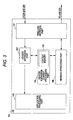
- FIG. 2 is a block diagram illustrating an example of the configuration of the MBMS-GW 300 according to an example embodiment.
- the MBMS-GW 300 illustrated in FIG. 2 includes, for example, a network interface part 301, a header compression part 302, a packet distribution part 303, and an access interface part 304.
- the MBMS-GW 300 also includes, for example, a header compression context processing part 305 having a context memory 306, and a message processing part 307.
- the network interface part 301 serves as an interface between the BM-SC 400 and the MBMS-GW 300.
- Data transmitted from the BM-SC 400 and received by the network interface part 301 (MBMS data, etc.) is, for example, subjected to a termination process in a physical layer or data link layer.
- MBMS data MBMS data, etc.
- a U-Plane packet user data destined for the UEs 100
- a C-Plane packet (control data indicating the start, end of the MBMS, etc.) is transmitted and received between the network interface part 301 and the message processing part 307.
- the header compression part 302 performs a compression process on a header part included in the user data transmitted from the network interface part 301 (replaces an original header with a compressed header) based on the content of a context, notification of which is provided from the header compression context processing part 305.
- the user data may have, for example, a header part and a payload part.
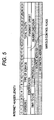
- the above-described compression processing method will be described using FIG. 5 .
- the above-described header part of the user data has, for example, as illustrated in FIG. 5 , version, Internet header length, type of service, total length, identification, various control flags, fragment offset, time to live, protocol, header checksum, source address, and destination address fields.
- FIG. 5 an option field is not illustrated.
- the version field stores the version of an Internet Protocol (IP). For example, in the case of IPv4, the value "4" is stored in the version field.
- IP Internet Protocol
- IHL Internet Header Length
- the Type Of Service (TOS) field stores information indicating a service on which importance is placed when the packet data is transferred.
- the Total Length (TL) field stores information indicating the total length of the packet data including the IP header part.
- the identification field stores a value uniquely indicating a source of the packet data. This value may be used, for example, to extract fragmented packet data.
- the various control flags field stores information about control of fragmentation of the packet data. For example, storing "1" in the second bit indicates inhibition of fragmentation and storing "0" in the third bit indicates that the packet data is the last data.
- the first bit may be reserved and not be used.
- the Fragment Offset (FO) field stores information about a position when a router or the like fragments the packet data, as an eight-octet value, for example.
- the Time To Live (TTL) field stores information indicating the lifetime of the packet data. For example, first, an upper limit number of routers through which the packet data can pass, which is set by the source of the packet data is stored. This value is decremented by one every time the packet data passes through a router. When the value reaches "0", the packet data is discarded. Accordingly, the packet data can be prevented from circulating endlessly in the network.
- TTL Time To Live
- the protocol field stores a value indicating an upper-layer protocol such as TCP.
- an apparatus which is the destination of the packet data receives a packet, the apparatus identifies an upper-layer protocol using this value and passes a payload part to an implementation part of the upper-layer protocol.
- the header checksum field stores information used for IP header error check.
- the source address field stores a source address of the packet data.
- the destination address field stores a destination address of the packet data.
- Shaded parts in the header part exemplified in FIG. 5 indicate fields that are fixed and thus are unchanging. For example, the fields of the shaded parts may not be repeatedly transmitted. Accordingly, by transmitting fields other than the fields of the shaded parts, the amount of header information transmitted can be compressed.
- the header compression context processing part 305 manages and controls a header compression state (header-uncompressed or header-compressed and a compression state thereof) for each connection used to transmit user data. For example, in compression control by a RoHC scheme, the compression state of a header can be transitioned and information (context) about the compression state can be stored in the context memory 306. When compression of a header of user data is controlled, information (context) for extracting a header compression state is held (stored) in the context memory 306.
- the context memory 306 stores a context.
- the context may be updated (or accumulated) every time the header compression state is transitioned.
- the packet distribution part 303 makes a number of copies of user data whose header is compressed by the header compression part 302. The number corresponds to the number of eNBs 200 being in communication. The copied header-compressed data are distributed to the respective UEs 100 through the eNBs 200.
- the header compression part 302, the header compression context processing part 305, and the packet distribution part 303 perform a process as a U-Plane in the MBMS-GW 300.
- the message processing part 307 performs analysis and generation of control data (control message).
- the message processing part 307 analyzes the content of a control message received from another node and performs various controls (e.g., sending out a response message or setting a parameter in the apparatus).
- the message processing part 307 can perform, using a generated control message, communication control of another node or control of each part in the MBMS-GW 300. That is, the message processing part 307 performs a process as a C-Plane in the MBMS-GW 300.
- the message processing part 307 in the present example receives from the UE 100-3 (new branch) a control message indicating participation in the MBMS network
- the message processing part 307 reads a context stored in the context memory 306.
- the message processing part 307 provides notification of the context (or information for creating a context) read from the context memory 306 to the UE 100-3 through the access interface part 304 and the eNB 200-3. That is, the message processing part 307 can provide notification of information for extracting header-compressed data to the UE 100-3 at a time determined according to a timing at which the message processing part 307 receives from the UE 100-3 a request to receive MBMS data.
- This notification timing can be set to be different from a context notification cycle (transmission cycle of header-uncompressed data) for other UEs 100-1 and 100-2 having contexts.
- the access interface part 304 serves as an interface between the eNBs 200 and the MBMS-GW 300 and transmits user data copied by the packet distribution part 303 and a control message generated by the message processing part 307, to the eNBs 200.
- the user data may be header-compressed data or may be header-uncompressed data including a context.
- the control message may include a context for a new branch. That is, the access interface part 304 in the present example is an example of a transmission part that transmits a context to the UEs 100.
- the message processing part 307 in the present example is an example of a control part that controls the access interface part 304 to transmit a context to the UEs 100-1 and 100-2 holding contexts, in a specified cycle, and to transmit a context to the UE 100-3 holding no context, at a timing independent of the above-described cycle.
- An eNB 200 can, for example, transmit (relay) data transmitted from the MBMS-GW 300 (MBMS user data, a context, etc.), to at least one UE 100 located in a wireless zone provided by the eNB 200. Also, the eNB 200 provides notification of a message requesting participation in a multicast service, which is received from the UE 100, to the MBMS-GW 300, and can thereby control participation of the UE 100 in the MBMS.
- MBMS-GW 300 MBMS user data, a context, etc.
- a UE 100 includes, as exemplified in FIG. 3 , a wireless interface part 101, a header expansion part 102, and an application processing part 103.
- the UE 100 further includes, for example, a header expansion context processing part 104 having a context memory 105, and a message processing part 106.
- the wireless interface part 101 serves as an interface between an eNB 200 and the UE 100.
- Data transmitted from the eNB 200 and received by the wireless interface part 101 (MBMS data, control data, etc.) is, for example, subjected to a termination process in a physical layer or data link layer.
- MBMS data, control data, etc. Data transmitted from the eNB 200 and received by the wireless interface part 101
- U-Plane packet user data destined for the UE 100
- a C-Plane packet (control data indicating the start, end, etc., of the MBMS) is transmitted and received between the wireless interface part 101 and the message processing part 106.
- the MBMS-GW 300 in the present example transmits header-uncompressed data having a context to the UEs 100-1 and 100-2 which hold a context in advance (which have already participated in the MBMS), in a specified cycle.
- the MBMS-GW 300 in the present example transmits a control message having a context to the UE 100-3 which does not hold a context (which has newly participated in the MBMS), at a timing different from the specified cycle.
- the wireless interface part 101 in the present example is an example of a reception part that receives a context at a timing independent of a specified cycle, in which a context is transmitted to other UEs 100-1 and 100-2 holding contexts.
- the header expansion part 102 performs an expansion (extraction) process on a header part included in user data transmitted from the wireless interface part 101, based on the content of a context, notification of which is provided from the header expansion context processing part 104.
- the header expansion context processing part 104 manages and controls a header expansion processing state of a header part of user data for each connection. For example, the header expansion context processing part 104 can extract a context from header-uncompressed data received from the MBMS-GW 300 and store the context in the context memory 105. Also, the header expansion context processing part 104 can extract a context from a control message including the context, which is received from the MBMS-GW 300, and store the context in the context memory 105.
- the context memory 105 stores a context.
- the context may be updated (or accumulated) every time a new context is received from the MBMS-GW 300. That is, the header expansion part 102 is an example of an extraction part that extracts header-compressed user data (MBMS data) based on a context received by the wireless interface part 101.
- MBMS data header-compressed user data
- the message processing part 106 performs analysis and generation of control data (control message).
- the message processing part 106 analyzes the content of a control message received from another node and performs various controls (e.g., sending out a response message or setting a parameter in the apparatus).
- the message processing part 106 can also perform communication control of another node or control of each part in the MBMS-GW 300 using a generated control message.
- the control message includes, for example, a message requesting participation in the MBMS.
- the application processing part 103 passes user data (MBMS data), whose header is extracted by the header expansion part 102, to an appropriate application and performs a specified process. For example, when the received user data is a moving image, the application processing part 103 passes the user data to a moving image (e.g. playback application, etc.), whereby the moving image can be played back.
- MBMS data user data
- the application processing part 103 passes the user data to a moving image (e.g. playback application, etc.), whereby the moving image can be played back.
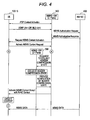
- FIG. 4 An example of the operation of the above-described wireless communication system will be described using FIG. 4 .
- the UE 100-3 which is going to participate in the MBMS (which does not hold a context) establishes a Packet Data Protocol (PDP) context with the MBMS-GW 300 (mainly, C-Plane), using a PDP context activation procedure.
- PDP Packet Data Protocol
- the UE 100-3 having established the PDP context, issues an IP multicast protocol to the MBMS-GW 300 and thereby requests the MBMS.
- the IP multicast protocol is an Internet Group Management Protocol (IGMP) join message in the case of IPv4, and is a Multicast Listener Discovery (MLD) join message in the case of IPv6.
- IGMP Internet Group Management Protocol
- MLD Multicast Listener Discovery
- the MBMS-GW 300 having received the IP multicast protocol from the UE 100-3, transmits an MBMS authorization request message (MBMS Authorization Request) to the BM-SC 400. Then, the BM-SC 400, having received the MBMS authorization request message from the MBMS-GW 300, provides notification of an MBMS authorization response message (MBMS Authorization Response) to the MBMS-GW 300 if the BM-SC 400 authorizes the MBMS. Accordingly, participation of the UE 100-3 in the MBMS network is allowed.
- the MBMS-GW 300 transmits an MBMS activation authorization message (Request MBMS Context Activation) to the UE 100-3.
- the UE 100-3 having received the MBMS activation authorization message, transmits an MBMS activation message (Activate MBMS Content Request) to the MBMS-GW 300.
- This enables the UE 100-3 to receive MBMS data (multicast data).
- the MBMS-GW 300 (see the circled A (point A) in FIG. 4 ) manages the header compression state of MBMS data.
- the MBMS-GW 300 at point A holds the values of fixed information fields that are not included in header-compressed data.
- FIG. 6 the MBMS activation authorization message
- the index is "1", the version is “4", the protocol is “17 (UDP)”, the source address is “10.11.12.13”, and the destination (UE 100) address is "13.12.11.10".
- the index is an index number indicating the type of data to be compressed.
- the UE 100-3 (see the circled B (point B) in FIG. 4 ) that has participated in the MBMS does not hold a context.
- the UE 100-3 at point B does not have any information other than the index being "1". Therefore, in this state, the UE 100-3 has difficulty with normally expanding header-compressed data until the UE 100-3 receives header-uncompressed data in a specified cycle and extracts a context therefrom.
- the MBMS-GW 300 requests the U-Plane of the MBMS-GW 300 itself to collect information about the current header compression state.
- the U-Plane of the MBMS-GW 300 having received the request, collects information (a header compression state, a context, etc.) regarding a header compression process and provides notification of the information to the C-Plane of the MBMS-GW 300.
- the C-Plane of the MBMS-GW 300 having received the notification, generates and edits a control message including a context for extracting header-compressed data, and transmits the control message to the UE 100-3.
- the C-Plane of the MBMS-GW 300 may provide to the UE 100-3 notification of a context, together with a response message indicating allowance of participation in the MBMS (Activate MBMS Context Accept).
- the UE 100-3 having received the message from the MBMS-GW 300, can create a context for extracting header-compressed data, based on information included in the message.
- the UE 100-3 can extract a context included in the message.
- the UE 100-3 (see the circled C (point C) in FIG. 4 ) can hold the values of fixed information fields that are not included in header-compressed data, based on the context.
- the index is "1”
- the version is "4"
- the protocol is "17 (UDP)”
- the source address is "10.11.12.13”
- the destination (UE 100) address is "13.12.11.10".
- the UE 100-3 can normally expand (extract) header-compressed data (MBMS data) received from the BM-SC 400 and the MBMS-GW 300. Namely, by extracting a part of header information that is not included in header-compressed data, MBMS data can be normally subjected to a reception process.
- notification of a context is individually provided to the UE 100-3 that has participated in the MBMS and that does not have a context. This enables the UE 100-3 to efficiently perform a header expansion process even before header-uncompressed data is transmitted in a specified cycle.
- the MBMS-GW 300 individually notifies the new branch 100-3, having no context, of a context to the new branch 100-3, having no context, at a timing different from a transmission cycle of header-uncompressed data.
- notification of a context is individually provided, as the number of UEs 100 that participate in the MBMS increases, the amount of notifications processed by the MBMS-GW 300 may increase and, in addition, the amount of data communicated in a network may increase.
- the header compression state of MBMS data may be set back (reset) to a header-uncompressed state and header-uncompressed data may be multicast to the UEs 100.
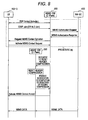
- An exemplary operation of the wireless communication system in the present example will be described using FIG. 8 . Note that a description of the portion that is the same as that in the operation already described (the procedure (a) portion encircled by a dashed line in FIG. 8 ) will not be repeated.
- the MBMS-GW 300 having detected participation of the new branch 100-3 in the MBMS, requests the U-Plane of the MBMS-GW 300 itself to set back (initialize or reset) the current header compression state to a header-uncompressed state.
- the U-Plane of the MBMS-GW 300 having received the request, sets a header compression state back to a header-uncompressed state. Then, the U-Plane of the MBMS-GW 300 provides notification of a reset (initialization) completion report to the C-Plane of the MBMS-GW 300, indicating that the initialization has been completed.
- a context (header-uncompressed data) is transmitted not only to the UE 100-3 having no context, but also to the UEs 100-1 and 100-2 holding contexts, at timings other than a specified cycle in which header-uncompressed data is transmitted. Accordingly, after the new branch 100-3 participates in the MBMS, the new branch 100-3 first receives header-uncompressed data and thus can immediately hold a context.
- the UE 100-3 can normally expand (extract) header-compressed data (MBMS data) received from the BM-SC 400 and the MBMS-GW 300.
- MBMS data header-compressed data
- the MBMS-GW 300 detects that the UE 100-3, having no context, is participating in the MBMS, the MBMS-GW 300 resets the header compression state and transmits header-uncompressed data to the UEs 100, which are a multicasting target. Accordingly, the same effects as those obtained in the above-described embodiment can be obtained and, in addition, control by the UEs 100 and the MBMS-GW 300 can be simplified.
- switching between individually providing notification of a context to participant UEs 100 and initializing a header compression state so as to multicast header-uncompressed data to the UEs 100 may be performed according to the participation condition (e.g., participation frequency) of the UEs 100 in the MBMS. For example, when the number of UEs 100 that participate in the MBMS during a specified period of time is less than a specified number, notification of a context is individually provided to the participant UEs 100. Accordingly, the participant UEs 100 can efficiently perform a header expansion process while the overall traffic of the wireless communication system is reduced.
- the participation condition e.g., participation frequency
- the header compression state is reset so that header-uncompressed data is multicast to the UEs 100. Accordingly, processes performed by the UEs 100 and the MBMS-GW 300 can be simplified. That is, in the present example, when a request to receive MBMS data is received from less than a specified number of UEs 100 during a specified time period, the MBMS-GW 300 transmits a context to the newly participating UEs 100 at a timing determined by a lapse of the specified period of time.
- the MBMS-GW 300 transmits a context (header-uncompressed data) to the UEs 100 that are already connected to the MBMS, at a timing determined by a lapse of the specified period of time.
- a context header-uncompressed data
- FIGS.9 and 10 An exemplary operation of the wireless communication system in the present example will be described using FIGS.9 and 10 . Note that a description of the portion that is the same as that in the operation described already (the procedure (a) portion encircled by a dashed line in FIGS. 9 and 10 ) will not be described.
- the counting process is performed until the specified period of time has elapsed.
- the specified period of time elapses and the timer stops.
- the MBMS-GW 300 requests the U-Plane of the MBMS-GW 300 itself to set back (initialize) the current header compression state to a header-uncompressed state.
- the U-Plane of the MBMS-GW 300 having received the request, sets a header compression state back to a header-uncompressed state.
- the U-Plane of the MBMS-GW 300 provides notification of a reset (initialization) completion report, indicating that the initialization has been completed, to the C-Plane of the MBMS-GW 300.
- the UEs 100-1 to 100-3 first receive header-uncompressed data and thus can immediately hold a context.
- the UEs 100-1 to 100-3 can normally expand (extract) header-compressed data (MBMS data) received from the BM-SC 400 and the MBMS-GW 300.
- the timer stops after a lapse of the specified period of time
- the timer may stop when the number of UEs 100 participating in the MBMS becomes equal to the specified threshold value. With such operation, transmission of header-uncompressed data to the UEs 100 can be performed earlier.
- the specified threshold value and the specified period of time can be appropriately changed.
- the counting process is performed until the specified period of time has elapsed. After receiving a participation request from the UE 100-2, the specified period of time expires.
- the MBMS-GW 300 then requests the U-Plane of the MBMS-GW 300 itself to collect information about the current header compression state.
- the U-Plane of the MBMS-GW 300 having received the request, collects information about a header compression process (a header compression state, a context, etc.) and provides notification of the information to the C-Plane of the MBMS-GW 300.
- the C-Plane of the MBMS-GW 300 having received the notification, generates and edits a control message including a context for extracting header-compressed data, and transmits the control message to the UEs 100-1 and 100-2 that have requested to participate in the MBMS during the specified period of time.
- the MBMS-GW 300 may provide to the UEs 100-1 and 100-2 notification of a context together with a response message indicating allowance of participation in the MBMS (Activate MBMS Context Accept).
- the UEs 100-1 and 100-2 having received the message from the MBMS-GW 300, can create a context for extracting header-compressed data, based on information included in the message. Alternatively, the UEs 100-1 and 100-2 can extract a context included in the message. As a result, the UEs 100-1 and 100-2 can normally expand (extract) header-compressed data (MBMS data) received from the BM-SC 400 and the MBMS-GW 300.
- MBMS data header-compressed data
- switching between individually providing notification of a context to participant UEs 100 and initializing the header compression state so as to multicast header-uncompressed data to the UEs 100 is performed according to the participation condition (e.g., participation frequency) of the UEs 100 in the MBMS.
- the participation condition e.g., participation frequency
- the processing load of the C-Plane of the MBMS-GW 300 is low, as exemplified in FIG. 10 , header compression efficiency can be increased.
- the processing load of the C-Plane is high, as exemplified in FIG. 9 , simple control that does not impose a processing load on the C-Plane can be performed.
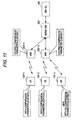
- FIG. 11 is a block diagram illustrating an exemplary configuration of a wireless communication system according to the present example.
- the wireless communication system illustrated in FIG. 11 includes, for example, an MBMS-GW 300' and a BM-SC 400, which is a host node of the MBMS-GW 300'.
- the wireless communication system includes, for example, a plurality of wireless base stations (e.g., eNBs) 200'-1 and 200'-2, and User Equipment (UEs) 100-1, 100-2, and 100-3.
- eNBs wireless base stations
- UEs User Equipment
- the MBMS-GW 300' has substantially the same functions as the already-described MBMS-GW 300 except control of a header compression state.
- the eNBs 200'-1 and 200'-2 control a header compression state, in addition to performing the same process as that of the already-described eNBs 200.
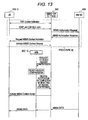
- FIGS. 12 and 13 An exemplary operation of the wireless communication system in the present example will be described using FIGS. 12 and 13 . Note that a description of the portion that is the same as that of the operation described already (the procedure (a) portion encircled by a dashed line in FIGS. 12 and 13 ) will not be repeated.
- the MBMS-GW 300' receives an MBMS data request from the UE 100-3, the MBMS-GW 300' requests the eNB 200'-2 to collect information about the current header compression state.
- the eNB 200'-2 having received the request, collects information about a header compression process (a header compression state, a context, etc.) and provides notification of the information to the MBMS-GW 300'.
- the MBMS-GW 300' having received the notification, generates and edits a control message including a context for extracting header-compressed data, and transmits the control message to the UE 100-3.
- the MBMS-GW 300' may provide to the UE 100-3 notification of a context together with a response message, indicating allowance of participation in the MBMS (Activate MBMS Context Accept).
- the eNB 200'-2 may provide notification of a context to the UE 100-3.
- the UE 100-3 having received the message from the MBMS-GW 300', can create a context for extracting header-compressed data, based on information included in the message. Alternatively, the UE 100-3 can extract a context included in the message. As a result, the UE 100-3 can normally expand (extract) header-compressed data (MBMS data) received from the BM-SC 400 and the MBMS-GW 300'. Namely, by the UE 100-3 extracting a part of header information that is not included in header-compressed data, the UE 100-3 can normally perform a reception process on MBMS data.
- MBMS data header-compressed data
- the MBMS-GW 300' having detected participation of the UE 100-3 in the MBMS, requests the eNB 200'-2 to set back (initialize) the current header compression state to a header-uncompressed state.
- the eNB 200'-2 having received the request, sets a header compression state back to a header-uncompressed state.
- the eNB 200'-2 provides notification of a reset (initialization) completion report to the MBMS-GW 300', indicating that the initialization has been completed.
- a context (header-uncompressed data) is transmitted not only to the UE 100-3 having no context, but also to the UEs 100-1 and 100-2 holding contexts, at timings other than a specified cycle in which header-uncompressed data is transmitted. Accordingly, after the new branch 100-3 participates in the MBMS, the new branch 100-3 first receives header-uncompressed data and thus can immediately hold a context.
- the UE 100-3 can normally expand (extract) header-compressed data (MBMS data) received from the BM-SC 400 and the MBMS-GW 300'. Also, by using the same method as that in the above-described second variant, switching between individually providing notification of a context to participant UEs 100, and initializing a header compression state so as to multicast header-uncompressed data to the UEs 100 may be performed according to the participation condition of the UEs 100 in the MBMS.
- the UE 100-3 that has participated in the MBMS and does not have a context can extract MBMS data even before header-uncompressed data is transmitted in a specified cycle. Accordingly, a header expansion process can be made efficient.
- the MBMS-GW 300 may determine whether to perform the above-described communication control method (individual provision of notification of a context to a new branch or reset control of a header compression state), according to a timing of participation of a UE 100 in the MBMS.
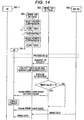
- FIG. 14 An exemplary operation of the wireless communication system according to the present example is illustrated in FIG. 14 .
- the UE 100-2 newly participates in the MBMS.
- the UE 100-1 has already participated in the MBMS.
- the U-Plane of the MBMS-GW 300 resets a header compression state to set a header to an uncompressed state periodically (in FIG. 14 , for example, every time T (T is a natural number)).
- T is a natural number
- the U-Plane of the MBMS-GW 300 starts a timer when resetting of the header compression state has been completed and measures time T. Then, after a lapse of the time T, the U-Plane of the MBMS-GW 300 resets the header compression state.
- the C-Plane of the MBMS-GW 300 when, during the timer measurement, there is a request to connect to the MBMS by procedure (a) (the same procedure as procedure (a) illustrated in FIG. 8 ) from a new branch (UE 100-2), the C-Plane of the MBMS-GW 300 in the present example requests the U-Plane of the MBMS-GW 300 itself to collect information about the current timer value (at a timing of participation of the UE 100-2). At this time, the C-Plane of the MBMS-GW 300 may request to collect information about the current header compression state.
- the U-Plane of the MBMS-GW 300 having received the request, collects information about the timer value and provides notification of the information to the C-Plane of the MBMS-GW 300.
- information about a header compression process (a header compression state, a context, etc.) may be collected and notification of the information may be provided to the C-Plane of the MBMS-GW 300.
- the C-Plane of the MBMS-GW 300 having received the notification, compares the timer value with a specified threshold value (e.g., T1 (T1 is a value satisfying T1 ⁇ T)).
- the C-Plane of the MBMS-GW 300 determines that the timer value is smaller than the specified threshold value T1
- the C-Plane of the MBMS-GW 300 generates and edits a control message, including a context for extracting header-compressed data, and transmits the control message to the UE 100-2.
- the C-Plane of the MBMS-GW 300 may provide to the UE 100-2 notification of a context together with a response message indicating allowance of participation in the MBMS (Activate MBMS Context Accept).
- the UE 100-2 having received the message from the C-Plane of the MBMS-GW 300, can create a context for extracting header-compressed data, based on information included in the message. Alternatively, the UE 100-2 can extract a context included in the message. As a result, the UE 100-2 can normally expand (extract) header-compressed data (MBMS data) received from the BM-SC 400 and the MBMS-GW 300. Namely, the UE 100-2 extracts a part of header information that is not included in header-compressed data so that the UE 100-2 can normally perform a reception process on MBMS data.
- MBMS data header-compressed data
- the C-Plane of the MBMS-GW 300 transmits a message indicating allowance of participation of the UE 100-2 in the MBMS (Activate MBMS Context Accept), but does not transmit a context for extracting header-compressed data.
- the UE 100-2 is provided with notification of a context from the MBMS-GW 300 at reset timing of the header compression state after expiration of the timer.
- a timing of participation of a UE 100 in the MBMS is close to the reset timing of a header compression state (e.g., timer value ⁇ T1)
- notification of a context is not provided to the UE 100 and the UE 100 can be made to wait until next reset timing.
- the timing of participation of the UE 100 in the MBMS is far from the reset timing of the header compression state (e.g., timer value ⁇ T1)
- notification of a context can be provided to the UE 100 using the above-described communication control method.
- the header compression state is reset triggered by the expiration of the timer in the example described above, the header compression state can also be reset based on the number of pass-through packets, for example.
- the timer is read as a counter for the number of pass-through packets, the timer value as a counter value of the number of pass-through packets, and T and T1 respectively as a counter value at which a header compression resetting is periodically performed and as a comparative value which is set in advance in the C-Plane of the MBMS-GW 300.
- the configurations and processes of the above-described UEs 100, eNBs 200 and 200', MBMS-GWs 300 and 300', and BM-SC 400 may be sorted out if necessary or may be appropriately combined.
- a transmission part and a control part described in the above-described examples may be included in entities other than the eNBs 200 and 200' and the MBMS-GWs 300 and 300' or may be disposed in different apparatuses, respectively.
- a reception part and an extraction part described in the above-described examples may be included in entities other than the UEs 100 or may be disposed in different apparatuses, respectively.
Landscapes
- Engineering & Computer Science (AREA)
- Computer Networks & Wireless Communication (AREA)
- Signal Processing (AREA)
- Computer Security & Cryptography (AREA)
- Mobile Radio Communication Systems (AREA)
- Data Exchanges In Wide-Area Networks (AREA)
Claims (4)
- Appareil émetteur agencé pour émettre des données vers une pluralité d'appareils récepteurs (100), l'appareil émetteur comprenant :une partie d'émission (200) agencée pour émettre des informations pour extraire les données dont l'en-tête est compressé ; etune partie de commande (300) agencée pour commander à la partie d'émission d'émettre les informations selon un cycle spécifié vers un ou plusieurs appareils récepteurs et pour émettre les informations vers un second appareil récepteur à un temps indépendant du cycle spécifié lorsque ce second appareil récepteur n'a pas reçu les informations pendant le cycle spécifié,caractérisé en ce que :la partie de commande (300) est agencée pour commander à la partie d'émission de ne pas émettre les informations vers le second appareil récepteur à un temps indépendant du cycle spécifié lorsqu'une demande de réception des données est reçue depuis le second appareil récepteur à un temps proche de la fin du cycle spécifié.
- Système de communication comprenant :un appareil émetteur selon la revendication 1 ; etun appareil récepteur (100) agencé pour recevoir des données transmises par l'appareil émetteur, l'appareil récepteur comprenant :une partie de réception (101) agencé, lorsque des informations pour extraire les données dont l'en-tête est compressé n'ont pas été reçues pendant le cycle spécifié durant lequel les informations sont transmises, pour recevoir les informations à un temps indépendant du cycle spécifié ; etune partie d'extraction (102) agencée pour extraire les données dont l'en-tête est compressé, en se basant sur les informations reçues par la partie de réception.
- Procédé d'émission pour émettre des données vers une pluralité d'appareils récepteurs, le procédé comprenant :l'émission d'informations pour extraire des données dont l'entête est compressé selon un cycle spécifié vers un ou plusieurs appareils récepteurs ; etl'émission des informations vers un second appareil récepteur à un temps indépendant du cycle spécifié lorsque ce second appareil récepteur n'a pas reçu les informations pendant le cycle spécifié,caractérisé en ce que :l'émission des informations vers le second appareil récepteur est interrompue lorsqu'une demande de réception des données est reçue depuis le second appareil récepteur à un temps proche de la fin du cycle spécifié.
- Logiciel qui, lorsqu'il est exécuté par un processeur d'un appareil émetteur-récepteur sans fil, fait exécuter par l'appareil le procédé d'émission selon la revendication 3.
Applications Claiming Priority (1)
| Application Number | Priority Date | Filing Date | Title |
|---|---|---|---|
| JP2008300976A JP5245761B2 (ja) | 2008-11-26 | 2008-11-26 | 送信装置、受信装置、送信方法及び受信方法 |
Publications (3)
| Publication Number | Publication Date |
|---|---|
| EP2192741A2 EP2192741A2 (fr) | 2010-06-02 |
| EP2192741A3 EP2192741A3 (fr) | 2011-03-02 |
| EP2192741B1 true EP2192741B1 (fr) | 2013-07-17 |
Family
ID=42029934
Family Applications (1)
| Application Number | Title | Priority Date | Filing Date |
|---|---|---|---|
| EP20090175824 Not-in-force EP2192741B1 (fr) | 2008-11-26 | 2009-11-12 | Appareil de transmission, système de communication, procédé de transmission, et logiciel correspondant |
Country Status (3)
| Country | Link |
|---|---|
| US (1) | US20100128727A1 (fr) |
| EP (1) | EP2192741B1 (fr) |
| JP (1) | JP5245761B2 (fr) |
Families Citing this family (10)
| Publication number | Priority date | Publication date | Assignee | Title |
|---|---|---|---|---|
| US9497662B2 (en) * | 2010-06-03 | 2016-11-15 | Intel Corporation | Methods and devices for reducing signaling overhead |
| US9247457B2 (en) | 2010-12-07 | 2016-01-26 | Nec Corporation | Gateway apparatus and voice communication method |
| US9686654B2 (en) * | 2012-06-29 | 2017-06-20 | Alcatel Lucent | Method and apparatus for providing broadcast or multicast service to obstructed user equipment |
| CN106255073B (zh) * | 2012-06-29 | 2019-08-20 | 华为技术有限公司 | 一种会话处理方法和装置 |
| US9544099B2 (en) * | 2012-07-02 | 2017-01-10 | Intel Corporation | User equipment, evolved node B, and method for multicast device-to-device communications |
| US20160212042A1 (en) * | 2013-08-19 | 2016-07-21 | Lg Electronics Inc. | Broadcast transmitting device, broadcast receiving device, operating method of the broadcast transmitting device, and operating method of the broadcast receiving device |
| WO2016026798A1 (fr) * | 2014-08-18 | 2016-02-25 | Nokia Solutions And Networks Oy | Sécurité d'activateur de service de communication de groupe |
| EP3211849A4 (fr) * | 2014-10-20 | 2018-04-18 | LG Electronics Inc. | Dispositif et procédé d'émission d'un signal de diffusion, dispositif et procédé de réception d'un signal de diffusion |
| DE112016007007T5 (de) | 2016-06-22 | 2019-03-07 | Intel Corporation | Kommunikationsvorrichtung und verfahren für vollduplex-disposition |
| WO2019058418A1 (fr) * | 2017-09-19 | 2019-03-28 | 株式会社日立国際電気 | Dispositif de communication |
Family Cites Families (19)
| Publication number | Priority date | Publication date | Assignee | Title |
|---|---|---|---|---|
| US5299198A (en) * | 1990-12-06 | 1994-03-29 | Hughes Aircraft Company | Method and apparatus for exploitation of voice inactivity to increase the capacity of a time division multiple access radio communications system |
| US6483826B1 (en) * | 1999-02-19 | 2002-11-19 | Telefonaktiebolaget Lm Ericsson (Publ) | Utilization of plural multiple access types for mobile telecommunications |
| US7065097B2 (en) * | 1999-12-27 | 2006-06-20 | Matsushita Electric Industrial Co., Ltd. | Program information transmission apparatus that transits program information at a constant rate through a cycle |
| JP3323484B2 (ja) * | 2000-09-12 | 2002-09-09 | 松下電器産業株式会社 | パケット送信装置、パケット受信装置およびパケット伝送方法 |
| US7031666B2 (en) * | 2001-03-28 | 2006-04-18 | Qualcomm Incorporated. | Method and apparatus for header compression in a wireless communication system |
| JP3512177B2 (ja) * | 2001-05-16 | 2004-03-29 | 松下電器産業株式会社 | パケット受信装置及びパケット伝送方法 |
| US7058035B2 (en) * | 2001-06-29 | 2006-06-06 | Qualcomm, Indorporated | Communication system employing multiple handoff criteria |
| US7352714B2 (en) * | 2002-09-24 | 2008-04-01 | Lucent Technologies Inc. | Methods and apparatuses for allocating time slots to half duplex wireless mobile stations |
| EP1432196A1 (fr) * | 2002-12-20 | 2004-06-23 | Matsushita Electric Industrial Co., Ltd. | Méthode de compression pour le trafic de commande dans la transmission de données média |
| US7822067B2 (en) * | 2003-08-08 | 2010-10-26 | Qualcomm Incorporated | Header compression enhancement for broadcast/multicast services |
| US20050094670A1 (en) * | 2003-08-20 | 2005-05-05 | Samsung Electronics Co., Ltd. | Method for acquiring header compression context in user equipment for receiving packet data service |
| KR100595646B1 (ko) * | 2004-01-09 | 2006-07-03 | 엘지전자 주식회사 | Mbms서비스를 제공하는 무선통신 시스템 |
| SE0400288D0 (sv) * | 2004-02-11 | 2004-02-11 | Ericsson Telefon Ab L M | Improvements in or relating to telecommunication services |
| JP2006114999A (ja) * | 2004-10-12 | 2006-04-27 | Mitsubishi Electric Corp | パケット通信システムおよび移動通信端末装置 |
| EP1808995A1 (fr) * | 2006-01-13 | 2007-07-18 | Thomson Licensing S.A. | Méthode pour l'échange de paquets de données dans un réseau distribué, dispositif pour la compression et dispositif pour la décompression de paquets de données |
| US7864724B2 (en) * | 2006-05-05 | 2011-01-04 | Nokia Corporation | Enhanced UE out-of-sync behavior with gated uplink DPCCH or gated downlink F-DPCH or DPCCH transmission |
| JP4879054B2 (ja) * | 2007-03-20 | 2012-02-15 | 株式会社エヌ・ティ・ティ・ドコモ | 移動通信システムで使用されるユーザ装置、基地局装置及び方法 |
| US8437280B2 (en) * | 2007-03-22 | 2013-05-07 | Tr Technologies Inc. | Distributed synchronous batch reconfiguration of a network |
| EP2667676B1 (fr) * | 2007-06-12 | 2018-03-07 | Sharp Kabushiki Kaisha | Dispositif de station de base, dispositif de station mobile, et procédé de requête de synchronisation en liaison montante. |
-
2008
- 2008-11-26 JP JP2008300976A patent/JP5245761B2/ja not_active Expired - Fee Related
-
2009
- 2009-11-12 EP EP20090175824 patent/EP2192741B1/fr not_active Not-in-force
- 2009-11-17 US US12/620,111 patent/US20100128727A1/en not_active Abandoned
Also Published As
| Publication number | Publication date |
|---|---|
| EP2192741A3 (fr) | 2011-03-02 |
| JP2010130175A (ja) | 2010-06-10 |
| EP2192741A2 (fr) | 2010-06-02 |
| JP5245761B2 (ja) | 2013-07-24 |
| US20100128727A1 (en) | 2010-05-27 |
Similar Documents
| Publication | Publication Date | Title |
|---|---|---|
| EP2192741B1 (fr) | Appareil de transmission, système de communication, procédé de transmission, et logiciel correspondant | |
| RU2372732C2 (ru) | Исправление ошибок в данных услуги мультимедийного широковещательного/многоадресного обслуживания | |
| US20050094670A1 (en) | Method for acquiring header compression context in user equipment for receiving packet data service | |
| US8068843B2 (en) | Method for increasing system capacity by transmitting control Signal for MBMS data by combining RLC and PDCP messages | |
| KR101271317B1 (ko) | 무선랜에서의 멀티캐스트 장치 및 방법 | |
| CN113853808B (zh) | 一种多播传输控制方法以及相关设备 | |
| CN109792587B (zh) | 一种多播业务的发送方法和设备 | |
| JP5351329B2 (ja) | 無線通信システムにおいて1対多サービスを受信する方法及び端末 | |
| RU2600535C2 (ru) | Идентификация результатов подсчета ue b embms | |
| KR20070076450A (ko) | 분배된 국의 네트워크에서 데이터 패킷을 교환하는 방법,데이터 패킷을 압축하는 디바이스 및 데이터 패킷을압축해제하는 디바이스 | |
| EP1631000A1 (fr) | Régulation par rétroaction pour des services multicast et broadcast | |
| JP2007533280A (ja) | 改善されたumrlcデータ管理装置及びその方法 | |
| KR20050014220A (ko) | 채널 변경에 따른 헤더 압축 컨텍스트 설정 장치 및 방법 | |
| WO2004023736A1 (fr) | Procede et dispositifs permettant de commander efficacement des liaisons de transmission de donnees dans des systemes de communication mobile a multidiffusion | |
| EP2245783A1 (fr) | Commande de transmissions point à multipoint de données de contenu sur une interface radio | |
| JP7761784B2 (ja) | 通信方法、ユーザ装置、プロセッサ、プログラム、及び移動通信システム | |
| KR101058607B1 (ko) | 멀티미디어 방송/멀티캐스트 서비스에서 제어 메시지의 수신 방법 | |
| KR100956817B1 (ko) | 패킷 데이터를 처리하는 방법 및 이를 위한 장치 | |
| KR20140111487A (ko) | 멀티캐스트 그룹에 속하는 멤버 노드들 간의 협력에 기반하여 데이터를 전송하는 기지국, 멤버 노드 및 그 방법들 | |
| KR101058687B1 (ko) | 멀티미디어 방송/멀티캐스트 서비스에서 일련번호를이용한 제어 메시지의 수신 방법 및 장치 | |
| JP7603825B2 (ja) | サービスの伝送方法、装置、機器及び端末、記憶媒体 | |
| KR20050020548A (ko) | 패킷 데이터 서비스를 지원 받는 사용자 단말에서헤더압축 컨텍스트 획득 방법 | |
| CN115988427A (zh) | 为多播设置初始pdcp状态变量的方法和用户设备 |
Legal Events
| Date | Code | Title | Description |
|---|---|---|---|
| PUAI | Public reference made under article 153(3) epc to a published international application that has entered the european phase |
Free format text: ORIGINAL CODE: 0009012 |
|
| AK | Designated contracting states |
Kind code of ref document: A2 Designated state(s): AT BE BG CH CY CZ DE DK EE ES FI FR GB GR HR HU IE IS IT LI LT LU LV MC MK MT NL NO PL PT RO SE SI SK SM TR |
|
| AX | Request for extension of the european patent |
Extension state: AL BA RS |
|
| PUAL | Search report despatched |
Free format text: ORIGINAL CODE: 0009013 |
|
| AK | Designated contracting states |
Kind code of ref document: A3 Designated state(s): AT BE BG CH CY CZ DE DK EE ES FI FR GB GR HR HU IE IS IT LI LT LU LV MC MK MT NL NO PL PT RO SE SI SK SM TR |
|
| AX | Request for extension of the european patent |
Extension state: AL BA RS |
|
| RIC1 | Information provided on ipc code assigned before grant |
Ipc: H04L 29/06 20060101AFI20100326BHEP Ipc: H04L 12/18 20060101ALI20110126BHEP |
|
| 17P | Request for examination filed |
Effective date: 20110830 |
|
| 17Q | First examination report despatched |
Effective date: 20111209 |
|
| GRAP | Despatch of communication of intention to grant a patent |
Free format text: ORIGINAL CODE: EPIDOSNIGR1 |
|
| GRAS | Grant fee paid |
Free format text: ORIGINAL CODE: EPIDOSNIGR3 |
|
| GRAA | (expected) grant |
Free format text: ORIGINAL CODE: 0009210 |
|
| AK | Designated contracting states |
Kind code of ref document: B1 Designated state(s): AT BE BG CH CY CZ DE DK EE ES FI FR GB GR HR HU IE IS IT LI LT LU LV MC MK MT NL NO PL PT RO SE SI SK SM TR |
|
| REG | Reference to a national code |
Ref country code: GB Ref legal event code: FG4D |
|
| REG | Reference to a national code |
Ref country code: CH Ref legal event code: EP |
|
| REG | Reference to a national code |
Ref country code: IE Ref legal event code: FG4D |
|
| REG | Reference to a national code |
Ref country code: AT Ref legal event code: REF Ref document number: 622780 Country of ref document: AT Kind code of ref document: T Effective date: 20130815 |
|
| REG | Reference to a national code |
Ref country code: DE Ref legal event code: R096 Ref document number: 602009017182 Country of ref document: DE Effective date: 20130919 |
|
| REG | Reference to a national code |
Ref country code: AT Ref legal event code: MK05 Ref document number: 622780 Country of ref document: AT Kind code of ref document: T Effective date: 20130717 |
|
| REG | Reference to a national code |
Ref country code: NL Ref legal event code: VDEP Effective date: 20130717 |
|
| REG | Reference to a national code |
Ref country code: LT Ref legal event code: MG4D |
|
| PG25 | Lapsed in a contracting state [announced via postgrant information from national office to epo] |
Ref country code: SE Free format text: LAPSE BECAUSE OF FAILURE TO SUBMIT A TRANSLATION OF THE DESCRIPTION OR TO PAY THE FEE WITHIN THE PRESCRIBED TIME-LIMIT Effective date: 20130717 Ref country code: HR Free format text: LAPSE BECAUSE OF FAILURE TO SUBMIT A TRANSLATION OF THE DESCRIPTION OR TO PAY THE FEE WITHIN THE PRESCRIBED TIME-LIMIT Effective date: 20130717 Ref country code: IS Free format text: LAPSE BECAUSE OF FAILURE TO SUBMIT A TRANSLATION OF THE DESCRIPTION OR TO PAY THE FEE WITHIN THE PRESCRIBED TIME-LIMIT Effective date: 20131117 Ref country code: NO Free format text: LAPSE BECAUSE OF FAILURE TO SUBMIT A TRANSLATION OF THE DESCRIPTION OR TO PAY THE FEE WITHIN THE PRESCRIBED TIME-LIMIT Effective date: 20131017 Ref country code: CY Free format text: LAPSE BECAUSE OF FAILURE TO SUBMIT A TRANSLATION OF THE DESCRIPTION OR TO PAY THE FEE WITHIN THE PRESCRIBED TIME-LIMIT Effective date: 20130828 Ref country code: AT Free format text: LAPSE BECAUSE OF FAILURE TO SUBMIT A TRANSLATION OF THE DESCRIPTION OR TO PAY THE FEE WITHIN THE PRESCRIBED TIME-LIMIT Effective date: 20130717 Ref country code: BE Free format text: LAPSE BECAUSE OF FAILURE TO SUBMIT A TRANSLATION OF THE DESCRIPTION OR TO PAY THE FEE WITHIN THE PRESCRIBED TIME-LIMIT Effective date: 20130717 Ref country code: LT Free format text: LAPSE BECAUSE OF FAILURE TO SUBMIT A TRANSLATION OF THE DESCRIPTION OR TO PAY THE FEE WITHIN THE PRESCRIBED TIME-LIMIT Effective date: 20130717 Ref country code: PT Free format text: LAPSE BECAUSE OF FAILURE TO SUBMIT A TRANSLATION OF THE DESCRIPTION OR TO PAY THE FEE WITHIN THE PRESCRIBED TIME-LIMIT Effective date: 20131118 |
|
| PG25 | Lapsed in a contracting state [announced via postgrant information from national office to epo] |
Ref country code: FI Free format text: LAPSE BECAUSE OF FAILURE TO SUBMIT A TRANSLATION OF THE DESCRIPTION OR TO PAY THE FEE WITHIN THE PRESCRIBED TIME-LIMIT Effective date: 20130717 Ref country code: ES Free format text: LAPSE BECAUSE OF FAILURE TO SUBMIT A TRANSLATION OF THE DESCRIPTION OR TO PAY THE FEE WITHIN THE PRESCRIBED TIME-LIMIT Effective date: 20131028 Ref country code: LV Free format text: LAPSE BECAUSE OF FAILURE TO SUBMIT A TRANSLATION OF THE DESCRIPTION OR TO PAY THE FEE WITHIN THE PRESCRIBED TIME-LIMIT Effective date: 20130717 Ref country code: PL Free format text: LAPSE BECAUSE OF FAILURE TO SUBMIT A TRANSLATION OF THE DESCRIPTION OR TO PAY THE FEE WITHIN THE PRESCRIBED TIME-LIMIT Effective date: 20130717 Ref country code: GR Free format text: LAPSE BECAUSE OF FAILURE TO SUBMIT A TRANSLATION OF THE DESCRIPTION OR TO PAY THE FEE WITHIN THE PRESCRIBED TIME-LIMIT Effective date: 20131018 Ref country code: NL Free format text: LAPSE BECAUSE OF FAILURE TO SUBMIT A TRANSLATION OF THE DESCRIPTION OR TO PAY THE FEE WITHIN THE PRESCRIBED TIME-LIMIT Effective date: 20130717 Ref country code: SI Free format text: LAPSE BECAUSE OF FAILURE TO SUBMIT A TRANSLATION OF THE DESCRIPTION OR TO PAY THE FEE WITHIN THE PRESCRIBED TIME-LIMIT Effective date: 20130717 |
|
| PG25 | Lapsed in a contracting state [announced via postgrant information from national office to epo] |
Ref country code: CY Free format text: LAPSE BECAUSE OF FAILURE TO SUBMIT A TRANSLATION OF THE DESCRIPTION OR TO PAY THE FEE WITHIN THE PRESCRIBED TIME-LIMIT Effective date: 20130717 |
|
| PG25 | Lapsed in a contracting state [announced via postgrant information from national office to epo] |
Ref country code: DK Free format text: LAPSE BECAUSE OF FAILURE TO SUBMIT A TRANSLATION OF THE DESCRIPTION OR TO PAY THE FEE WITHIN THE PRESCRIBED TIME-LIMIT Effective date: 20130717 Ref country code: RO Free format text: LAPSE BECAUSE OF FAILURE TO SUBMIT A TRANSLATION OF THE DESCRIPTION OR TO PAY THE FEE WITHIN THE PRESCRIBED TIME-LIMIT Effective date: 20130717 Ref country code: CZ Free format text: LAPSE BECAUSE OF FAILURE TO SUBMIT A TRANSLATION OF THE DESCRIPTION OR TO PAY THE FEE WITHIN THE PRESCRIBED TIME-LIMIT Effective date: 20130717 Ref country code: EE Free format text: LAPSE BECAUSE OF FAILURE TO SUBMIT A TRANSLATION OF THE DESCRIPTION OR TO PAY THE FEE WITHIN THE PRESCRIBED TIME-LIMIT Effective date: 20130717 Ref country code: SK Free format text: LAPSE BECAUSE OF FAILURE TO SUBMIT A TRANSLATION OF THE DESCRIPTION OR TO PAY THE FEE WITHIN THE PRESCRIBED TIME-LIMIT Effective date: 20130717 |
|
| PLBE | No opposition filed within time limit |
Free format text: ORIGINAL CODE: 0009261 |
|
| STAA | Information on the status of an ep patent application or granted ep patent |
Free format text: STATUS: NO OPPOSITION FILED WITHIN TIME LIMIT |
|
| PG25 | Lapsed in a contracting state [announced via postgrant information from national office to epo] |
Ref country code: IT Free format text: LAPSE BECAUSE OF FAILURE TO SUBMIT A TRANSLATION OF THE DESCRIPTION OR TO PAY THE FEE WITHIN THE PRESCRIBED TIME-LIMIT Effective date: 20130717 |
|
| 26N | No opposition filed |
Effective date: 20140422 |
|
| REG | Reference to a national code |
Ref country code: CH Ref legal event code: PL |
|
| PG25 | Lapsed in a contracting state [announced via postgrant information from national office to epo] |
Ref country code: CH Free format text: LAPSE BECAUSE OF NON-PAYMENT OF DUE FEES Effective date: 20131130 Ref country code: MC Free format text: LAPSE BECAUSE OF FAILURE TO SUBMIT A TRANSLATION OF THE DESCRIPTION OR TO PAY THE FEE WITHIN THE PRESCRIBED TIME-LIMIT Effective date: 20130717 Ref country code: LI Free format text: LAPSE BECAUSE OF NON-PAYMENT OF DUE FEES Effective date: 20131130 |
|
| REG | Reference to a national code |
Ref country code: DE Ref legal event code: R097 Ref document number: 602009017182 Country of ref document: DE Effective date: 20140422 |
|
| REG | Reference to a national code |
Ref country code: IE Ref legal event code: MM4A |
|
| PG25 | Lapsed in a contracting state [announced via postgrant information from national office to epo] |
Ref country code: IE Free format text: LAPSE BECAUSE OF NON-PAYMENT OF DUE FEES Effective date: 20131112 |
|
| PG25 | Lapsed in a contracting state [announced via postgrant information from national office to epo] |
Ref country code: SM Free format text: LAPSE BECAUSE OF FAILURE TO SUBMIT A TRANSLATION OF THE DESCRIPTION OR TO PAY THE FEE WITHIN THE PRESCRIBED TIME-LIMIT Effective date: 20130717 |
|
| PG25 | Lapsed in a contracting state [announced via postgrant information from national office to epo] |
Ref country code: TR Free format text: LAPSE BECAUSE OF FAILURE TO SUBMIT A TRANSLATION OF THE DESCRIPTION OR TO PAY THE FEE WITHIN THE PRESCRIBED TIME-LIMIT Effective date: 20130717 |
|
| PG25 | Lapsed in a contracting state [announced via postgrant information from national office to epo] |
Ref country code: HU Free format text: LAPSE BECAUSE OF FAILURE TO SUBMIT A TRANSLATION OF THE DESCRIPTION OR TO PAY THE FEE WITHIN THE PRESCRIBED TIME-LIMIT; INVALID AB INITIO Effective date: 20091112 Ref country code: LU Free format text: LAPSE BECAUSE OF NON-PAYMENT OF DUE FEES Effective date: 20131112 Ref country code: BG Free format text: LAPSE BECAUSE OF FAILURE TO SUBMIT A TRANSLATION OF THE DESCRIPTION OR TO PAY THE FEE WITHIN THE PRESCRIBED TIME-LIMIT Effective date: 20130717 Ref country code: MK Free format text: LAPSE BECAUSE OF FAILURE TO SUBMIT A TRANSLATION OF THE DESCRIPTION OR TO PAY THE FEE WITHIN THE PRESCRIBED TIME-LIMIT Effective date: 20130717 |
|
| PG25 | Lapsed in a contracting state [announced via postgrant information from national office to epo] |
Ref country code: MT Free format text: LAPSE BECAUSE OF FAILURE TO SUBMIT A TRANSLATION OF THE DESCRIPTION OR TO PAY THE FEE WITHIN THE PRESCRIBED TIME-LIMIT Effective date: 20130717 |
|
| REG | Reference to a national code |
Ref country code: FR Ref legal event code: PLFP Year of fee payment: 7 |
|
| PGFP | Annual fee paid to national office [announced via postgrant information from national office to epo] |
Ref country code: DE Payment date: 20151103 Year of fee payment: 7 Ref country code: GB Payment date: 20151111 Year of fee payment: 7 |
|
| PGFP | Annual fee paid to national office [announced via postgrant information from national office to epo] |
Ref country code: FR Payment date: 20151008 Year of fee payment: 7 |
|
| REG | Reference to a national code |
Ref country code: DE Ref legal event code: R119 Ref document number: 602009017182 Country of ref document: DE |
|
| GBPC | Gb: european patent ceased through non-payment of renewal fee |
Effective date: 20161112 |
|
| REG | Reference to a national code |
Ref country code: FR Ref legal event code: ST Effective date: 20170731 |
|
| PG25 | Lapsed in a contracting state [announced via postgrant information from national office to epo] |
Ref country code: FR Free format text: LAPSE BECAUSE OF NON-PAYMENT OF DUE FEES Effective date: 20161130 |
|
| PG25 | Lapsed in a contracting state [announced via postgrant information from national office to epo] |
Ref country code: DE Free format text: LAPSE BECAUSE OF NON-PAYMENT OF DUE FEES Effective date: 20170601 Ref country code: GB Free format text: LAPSE BECAUSE OF NON-PAYMENT OF DUE FEES Effective date: 20161112 |