EP2193216B1 - Parties de moteur avec revêtements céramiques fonctionnels et leurs procédés de fabrication - Google Patents
Parties de moteur avec revêtements céramiques fonctionnels et leurs procédés de fabrication Download PDFInfo
- Publication number
- EP2193216B1 EP2193216B1 EP08831952.0A EP08831952A EP2193216B1 EP 2193216 B1 EP2193216 B1 EP 2193216B1 EP 08831952 A EP08831952 A EP 08831952A EP 2193216 B1 EP2193216 B1 EP 2193216B1
- Authority
- EP
- European Patent Office
- Prior art keywords
- coating
- particle
- engine
- ceramic
- interfaces
- Prior art date
- Legal status (The legal status is an assumption and is not a legal conclusion. Google has not performed a legal analysis and makes no representation as to the accuracy of the status listed.)
- Not-in-force
Links
- 238000005524 ceramic coating Methods 0.000 title claims description 58
- 238000000034 method Methods 0.000 title description 41
- 239000002245 particle Substances 0.000 claims description 178
- 238000000576 coating method Methods 0.000 claims description 136
- 239000011248 coating agent Substances 0.000 claims description 128
- 239000000919 ceramic Substances 0.000 claims description 44
- 230000008859 change Effects 0.000 claims description 38
- 238000013016 damping Methods 0.000 claims description 23
- 239000011148 porous material Substances 0.000 claims description 20
- 239000000843 powder Substances 0.000 claims description 15
- 239000007787 solid Substances 0.000 claims description 11
- 238000005507 spraying Methods 0.000 description 31
- 239000010410 layer Substances 0.000 description 26
- 230000008569 process Effects 0.000 description 26
- 239000000463 material Substances 0.000 description 17
- 239000000758 substrate Substances 0.000 description 15
- 239000012720 thermal barrier coating Substances 0.000 description 12
- 238000007750 plasma spraying Methods 0.000 description 11
- PXHVJJICTQNCMI-UHFFFAOYSA-N Nickel Chemical compound [Ni] PXHVJJICTQNCMI-UHFFFAOYSA-N 0.000 description 10
- 238000000151 deposition Methods 0.000 description 7
- 230000035882 stress Effects 0.000 description 7
- PNEYBMLMFCGWSK-UHFFFAOYSA-N aluminium oxide Inorganic materials [O-2].[O-2].[O-2].[Al+3].[Al+3] PNEYBMLMFCGWSK-UHFFFAOYSA-N 0.000 description 6
- 239000007921 spray Substances 0.000 description 6
- 230000007246 mechanism Effects 0.000 description 5
- 239000000203 mixture Substances 0.000 description 5
- 229910052759 nickel Inorganic materials 0.000 description 5
- 230000007423 decrease Effects 0.000 description 4
- 238000005516 engineering process Methods 0.000 description 4
- 230000003628 erosive effect Effects 0.000 description 4
- 229910001233 yttria-stabilized zirconia Inorganic materials 0.000 description 4
- 230000004888 barrier function Effects 0.000 description 3
- 229910010293 ceramic material Inorganic materials 0.000 description 3
- 239000011247 coating layer Substances 0.000 description 3
- 230000003247 decreasing effect Effects 0.000 description 3
- 230000003116 impacting effect Effects 0.000 description 3
- 238000002844 melting Methods 0.000 description 3
- 230000008018 melting Effects 0.000 description 3
- 229910000601 superalloy Inorganic materials 0.000 description 3
- 238000007751 thermal spraying Methods 0.000 description 3
- GWEVSGVZZGPLCZ-UHFFFAOYSA-N Titan oxide Chemical compound O=[Ti]=O GWEVSGVZZGPLCZ-UHFFFAOYSA-N 0.000 description 2
- 239000000654 additive Substances 0.000 description 2
- 229910045601 alloy Inorganic materials 0.000 description 2
- 239000000956 alloy Substances 0.000 description 2
- 230000007797 corrosion Effects 0.000 description 2
- 238000005260 corrosion Methods 0.000 description 2
- 239000010419 fine particle Substances 0.000 description 2
- 239000000446 fuel Substances 0.000 description 2
- 230000004927 fusion Effects 0.000 description 2
- 239000007789 gas Substances 0.000 description 2
- 230000003647 oxidation Effects 0.000 description 2
- 238000007254 oxidation reaction Methods 0.000 description 2
- 230000007704 transition Effects 0.000 description 2
- 238000010284 wire arc spraying Methods 0.000 description 2
- 229910026161 MgAl2O4 Inorganic materials 0.000 description 1
- 230000001133 acceleration Effects 0.000 description 1
- 230000000996 additive effect Effects 0.000 description 1
- 238000003491 array Methods 0.000 description 1
- 230000009286 beneficial effect Effects 0.000 description 1
- 230000005540 biological transmission Effects 0.000 description 1
- 239000000567 combustion gas Substances 0.000 description 1
- 238000010924 continuous production Methods 0.000 description 1
- 229910052593 corundum Inorganic materials 0.000 description 1
- 230000006378 damage Effects 0.000 description 1
- 238000000280 densification Methods 0.000 description 1
- 230000008021 deposition Effects 0.000 description 1
- 238000005137 deposition process Methods 0.000 description 1
- QDOXWKRWXJOMAK-UHFFFAOYSA-N dichromium trioxide Chemical compound O=[Cr]O[Cr]=O QDOXWKRWXJOMAK-UHFFFAOYSA-N 0.000 description 1
- 238000009792 diffusion process Methods 0.000 description 1
- 230000003292 diminished effect Effects 0.000 description 1
- 230000006872 improvement Effects 0.000 description 1
- 238000011065 in-situ storage Methods 0.000 description 1
- 238000010791 quenching Methods 0.000 description 1
- 230000000171 quenching effect Effects 0.000 description 1
- 238000007712 rapid solidification Methods 0.000 description 1
- 230000009467 reduction Effects 0.000 description 1
- 230000035939 shock Effects 0.000 description 1
- 238000003980 solgel method Methods 0.000 description 1
- 229910052596 spinel Inorganic materials 0.000 description 1
- 230000008646 thermal stress Effects 0.000 description 1
- 229910001845 yogo sapphire Inorganic materials 0.000 description 1
Images


Classifications
-
- C—CHEMISTRY; METALLURGY
- C23—COATING METALLIC MATERIAL; COATING MATERIAL WITH METALLIC MATERIAL; CHEMICAL SURFACE TREATMENT; DIFFUSION TREATMENT OF METALLIC MATERIAL; COATING BY VACUUM EVAPORATION, BY SPUTTERING, BY ION IMPLANTATION OR BY CHEMICAL VAPOUR DEPOSITION, IN GENERAL; INHIBITING CORROSION OF METALLIC MATERIAL OR INCRUSTATION IN GENERAL
- C23C—COATING METALLIC MATERIAL; COATING MATERIAL WITH METALLIC MATERIAL; SURFACE TREATMENT OF METALLIC MATERIAL BY DIFFUSION INTO THE SURFACE, BY CHEMICAL CONVERSION OR SUBSTITUTION; COATING BY VACUUM EVAPORATION, BY SPUTTERING, BY ION IMPLANTATION OR BY CHEMICAL VAPOUR DEPOSITION, IN GENERAL
- C23C4/00—Coating by spraying the coating material in the molten state, e.g. by flame, plasma or electric discharge
- C23C4/02—Pretreatment of the material to be coated, e.g. for coating on selected surface areas
-
- C—CHEMISTRY; METALLURGY
- C23—COATING METALLIC MATERIAL; COATING MATERIAL WITH METALLIC MATERIAL; CHEMICAL SURFACE TREATMENT; DIFFUSION TREATMENT OF METALLIC MATERIAL; COATING BY VACUUM EVAPORATION, BY SPUTTERING, BY ION IMPLANTATION OR BY CHEMICAL VAPOUR DEPOSITION, IN GENERAL; INHIBITING CORROSION OF METALLIC MATERIAL OR INCRUSTATION IN GENERAL
- C23C—COATING METALLIC MATERIAL; COATING MATERIAL WITH METALLIC MATERIAL; SURFACE TREATMENT OF METALLIC MATERIAL BY DIFFUSION INTO THE SURFACE, BY CHEMICAL CONVERSION OR SUBSTITUTION; COATING BY VACUUM EVAPORATION, BY SPUTTERING, BY ION IMPLANTATION OR BY CHEMICAL VAPOUR DEPOSITION, IN GENERAL
- C23C4/00—Coating by spraying the coating material in the molten state, e.g. by flame, plasma or electric discharge
- C23C4/04—Coating by spraying the coating material in the molten state, e.g. by flame, plasma or electric discharge characterised by the coating material
- C23C4/10—Oxides, borides, carbides, nitrides or silicides; Mixtures thereof
-
- F—MECHANICAL ENGINEERING; LIGHTING; HEATING; WEAPONS; BLASTING
- F01—MACHINES OR ENGINES IN GENERAL; ENGINE PLANTS IN GENERAL; STEAM ENGINES
- F01D—NON-POSITIVE DISPLACEMENT MACHINES OR ENGINES, e.g. STEAM TURBINES
- F01D5/00—Blades; Blade-carrying members; Heating, heat-insulating, cooling or antivibration means on the blades or the members
- F01D5/12—Blades
- F01D5/28—Selecting particular materials; Particular measures relating thereto; Measures against erosion or corrosion
- F01D5/284—Selection of ceramic materials
-
- F—MECHANICAL ENGINEERING; LIGHTING; HEATING; WEAPONS; BLASTING
- F01—MACHINES OR ENGINES IN GENERAL; ENGINE PLANTS IN GENERAL; STEAM ENGINES
- F01D—NON-POSITIVE DISPLACEMENT MACHINES OR ENGINES, e.g. STEAM TURBINES
- F01D5/00—Blades; Blade-carrying members; Heating, heat-insulating, cooling or antivibration means on the blades or the members
- F01D5/12—Blades
- F01D5/28—Selecting particular materials; Particular measures relating thereto; Measures against erosion or corrosion
- F01D5/288—Protective coatings for blades
-
- F—MECHANICAL ENGINEERING; LIGHTING; HEATING; WEAPONS; BLASTING
- F05—INDEXING SCHEMES RELATING TO ENGINES OR PUMPS IN VARIOUS SUBCLASSES OF CLASSES F01-F04
- F05D—INDEXING SCHEME FOR ASPECTS RELATING TO NON-POSITIVE-DISPLACEMENT MACHINES OR ENGINES, GAS-TURBINES OR JET-PROPULSION PLANTS
- F05D2230/00—Manufacture
- F05D2230/90—Coating; Surface treatment
-
- F—MECHANICAL ENGINEERING; LIGHTING; HEATING; WEAPONS; BLASTING
- F05—INDEXING SCHEMES RELATING TO ENGINES OR PUMPS IN VARIOUS SUBCLASSES OF CLASSES F01-F04
- F05D—INDEXING SCHEME FOR ASPECTS RELATING TO NON-POSITIVE-DISPLACEMENT MACHINES OR ENGINES, GAS-TURBINES OR JET-PROPULSION PLANTS
- F05D2300/00—Materials; Properties thereof
- F05D2300/20—Oxide or non-oxide ceramics
- F05D2300/21—Oxide ceramics
-
- Y—GENERAL TAGGING OF NEW TECHNOLOGICAL DEVELOPMENTS; GENERAL TAGGING OF CROSS-SECTIONAL TECHNOLOGIES SPANNING OVER SEVERAL SECTIONS OF THE IPC; TECHNICAL SUBJECTS COVERED BY FORMER USPC CROSS-REFERENCE ART COLLECTIONS [XRACs] AND DIGESTS
- Y10—TECHNICAL SUBJECTS COVERED BY FORMER USPC
- Y10T—TECHNICAL SUBJECTS COVERED BY FORMER US CLASSIFICATION
- Y10T428/00—Stock material or miscellaneous articles
- Y10T428/249921—Web or sheet containing structurally defined element or component
- Y10T428/249953—Composite having voids in a component [e.g., porous, cellular, etc.]
- Y10T428/249961—With gradual property change within a component
-
- Y—GENERAL TAGGING OF NEW TECHNOLOGICAL DEVELOPMENTS; GENERAL TAGGING OF CROSS-SECTIONAL TECHNOLOGIES SPANNING OVER SEVERAL SECTIONS OF THE IPC; TECHNICAL SUBJECTS COVERED BY FORMER USPC CROSS-REFERENCE ART COLLECTIONS [XRACs] AND DIGESTS
- Y10—TECHNICAL SUBJECTS COVERED BY FORMER USPC
- Y10T—TECHNICAL SUBJECTS COVERED BY FORMER US CLASSIFICATION
- Y10T428/00—Stock material or miscellaneous articles
- Y10T428/25—Web or sheet containing structurally defined element or component and including a second component containing structurally defined particles
Definitions
- the present invention relates to the use of ceramic coatings to impart at least one functional characteristic (e.g., reduced vibration levels) to one or more components or other portions of an engine (e.g., ring segments, transition ducts, combustors, blades, vanes and shrouds of a turbine engine or portions thereof) in particular, to such coatings having a change in a functional characteristic (e.g., vibration damping ability) through the thickness and/or across the surface area of the coating and, more particularly, to such coatings where the change in functional characteristic is the result of a corresponding change in the number and/or type of interfaces between deposited ceramic particles forming the coating.
- the present invention also relates to such coated engine components or portions, as well as to methods of making same.
- Ceramic coatings have been used to protect (e.g., thermal, oxidation and hot corrosion protection) high temperature components in gas turbines and diesel engines. Such ceramic coatings have been used to delay the thermally-induced failure mechanisms that can impact the durability and life of such high temperature engine components.
- Plasma spraying e.g., DC-arc
- TBCs thermal barrier coatings
- the present invention is an improvement in such ceramic coatings and the uses thereof.
- Ceramic coatings according to the present invention are able to impart at least one functional characteristic to components or portions of an engine (e.g., a turbine or diesel engine) that are exposed to high temperatures.
- Such functional characteristics can include one or more or a combination of the following: (a) thermo-physical properties (e.g., thermal conductivity), (b) mechanical properties (e.g., hardness, elastic modulus, etc.), (c) abradability (e.g., a porous abradable structure at the top surface and dense structure providing adhesion near the substrate-coating interface), (d) vibration damping, (e) crack arresting, and (f) stress relaxation.
- thermo-physical properties e.g., thermal conductivity
- mechanical properties e.g., hardness, elastic modulus, etc.
- abradability e.g., a porous abradable structure at the top surface and dense structure providing adhesion near the substrate-coating interface
- vibration damping e.g., vibration damping, (e) crack arresting,
- the present ceramic coatings can be employed to protect, for example, high temperature components (e.g., turbine blades, turbine vanes or other parts of a turbine engine) from vibration induced fatigue or other damage and thereby increase the life expectancy of such components.
- the present ceramic coatings exhibit a gradient or other change in the functional characteristic(s) imparted (e.g., its ability to dampen vibration) through a portion or all of the thickness of the coating, across a portion or all of the surface area of the coating, or both.
- Such changes in the functional characteristic(s) (e.g., vibration damping ability) imparted to the coating can be obtained by forming the coating with a corresponding gradient or other change in the particle interfaces between the deposited ceramic particles forming the coating.
- a component or portion of an engine e.g., a turbine engine, diesel engine, etc.
- a ceramic coating having a thickness and a surface area.
- the coating comprises a plurality of ceramic particles and corresponding particle interfaces, with at least some, most or all of the ceramic particles being partially, or a combination of fully and partially, fused together, mechanically bonded together or both.
- the coating has a change in the particle interfaces through a portion or all of the thickness of the coating, across a portion or all of the surface area of the coating or both.
- the coating exhibits a corresponding change in the ability of the coating to impart at least one functional characteristic to the engine portion (e.g., vibration damping) through a portion or all of the thickness of the coating, across a portion or all of the surface area of the coating or both.
- This corresponding change in one or more functional characteristics is caused at least in part by, and may be entirely due to, such change(s) in the particle interfaces.
- the coating in order to obtain improved vibration damping ability in the ceramic coating, according to the present invention, it can be desirable for the coating to be a multilayered coating for multifunctionality, with a layer closer to the engine surface having relatively more porosity and particle interfaces (e.g., having a lower elastic modulus) and another layer located further from the engine surface having relatively less porosity and fewer particle interfaces (e.g., a higher elastic modulus).
- a multilayered coating can exhibit multiple functional characteristics (i.e., multi-functionality).
- a multilayered thermal barrier ceramic coating can include a layer that contacts the engine surface that is made to have a relatively high porosity and more particle interfaces to accommodate residual stresses resulting from mismatches in thermal coefficients of expansion between the ceramic coating and the engine surface.
- a thermal barrier coating system typically includes two coatings (i.e., a top coating and a bottom coating) bonded onto the engine surface such as, for example, one made of a Nickel based superalloy.
- the top coating is a thermal barrier coating
- the bottom coating is a bond coat that is used to help compensate for differences in coefficients of thermal expansion between the thermal barrier coating material and the substrate material.
- the bond coat is deposited before the thermal barrier coating.
- the bond coat can be desirable for the bond coat to be a nickel base alloy.
- the bond coat can also provide an increased oxidation and corrosion resistance.
- nickel based alloys can oxidize when exposed to hot temperatures in the gas turbine and can form a thermally grown oxide (e.g., alumina or chromia).
- a thermally grown oxide e.g., alumina or chromia
- a higher porosity in the portion (e.g., layer) of the thermal barrier coating in contact with the bond coat can be beneficial to accommodate the stresses developed due to this mismatch.
- a thermal barrier ceramic coating according to the present invention can still be useful, to accommodate such stresses.
- the present ceramic coating can be made to have a layer on its surface with relatively low porosity and fewer particle interfaces. Such a ceramic coating can exhibit improved erosion resistance on its surface.
- the present inventive coating can exhibit a corresponding change in functionality (e.g., the ability of the coating to dampen vibration, conduct heat, etc.) through a portion or all of the thickness of the coating, across a portion or all of the surface area of the coating or both.
- a method of imparting at least one functional characteristic to a component or portion of an engine e.g., a turbine engine, diesel engine, etc.
- the method comprises providing at least the component or portion of an engine (e.g., a turbine engine, diesel engine, etc.) and spraying ceramic particles so as to form a ceramic coating, and preferably a multilayered ceramic coating, onto at least part or all of a surface of the engine component or portion.
- the surface of the engine component or portion can have a previously applied bond coat thereon, before the spraying of the ceramic particle coating.
- the resulting ceramic coating has a thickness, a surface area and comprises (a) a plurality of the ceramic particles that are partially, or a combination of fully and partially, fused together, mechanically bonded together or both, and (b) corresponding particle interfaces.
- the spraying process is performed such that the ceramic coating has a change in the particle interfaces through a portion or all of the thickness of the ceramic coating, across a portion or all of the surface area of the ceramic coating or both.
- the ceramic coating exhibits a corresponding change in the ability of the ceramic coating to impart at least one functional characteristic (e.g., vibration damping) to the engine portion through a portion or all of the thickness of the ceramic coating, across the surface area of the ceramic coating or both.
- This corresponding change in one or more functional characteristics is caused at least in part by, and may be entirely due to, such change(s) in the particle interfaces.
- the ceramic coating can be a multilayered coating, with a layer closer to the engine surface being formed by one spraying process and having relatively more porosity and particle interfaces, and with another layer located further from the engine surface being formed by a different spraying process and having relatively less porosity and fewer particle interfaces.
- the ceramic coating can exhibit a corresponding change in the ability of the ceramic coating to dampen vibration through a portion or all of the thickness of the coating, across a portion or all of the surface area of the coating or both.
- the present method can be practiced using a plurality of ceramic particle feedstocks, with each feedstock serving as a source of ceramic particle material for the spraying process.
- the spraying process can comprise a plurality of separate steps of spraying ceramic particles, with each step of spraying using a different one of the plurality of ceramic particle feedstocks as a source of ceramic particle material.
- the spraying process of the present method can comprise a plurality of separate steps of spraying ceramic particles, with each step of spraying using a different one of a plurality of ceramic particle deposition techniques.
- the present method can be practiced using a plurality of ceramic particle feedstocks, with each feedstock serving as a source of ceramic particle material for said spraying, and using a plurality of separate steps of spraying ceramic particles.
- Each step of spraying can use (a) a different one of the plurality of ceramic particle feedstocks as a source of ceramic particle material, (b) a different one of a plurality of ceramic particle deposition techniques, or (c) a combination of (a) and (b).
- the present method can also comprise a continuous process of spraying particles from two or more different particle feedstocks, where the feedstock particulate being deposited is varied in-situ, during the continuous spraying process.
- the different feedstock particulate may be deposited individually in series or mixed together under various desirable ratios.
- Ceramic coatings according to the present invention are able to impart one or more of a variety of functional characteristics to components or portions of an engine (e.g., ring segments, transition ducts, combustors, blades, vanes and shrouds of a turbine engine, portions thereof, and portions of a diesel engine) that are exposed to high temperatures.
- an engine e.g., ring segments, transition ducts, combustors, blades, vanes and shrouds of a turbine engine, portions thereof, and portions of a diesel engine
- the following description focuses on such ceramic coatings that exhibit the functional characteristic of vibration damping.
- the general teachings of the present disclosure can be used to produce ceramic coatings that impart other functional characteristics to the engine component or portion.
- Vibration levels of one or more components of an engine can be reduced by coating a portion or all of the one or more engine components with different or even the same ceramic material, according to the principles of the present invention.
- the vibration damping ability of the present coating changes (e.g., can be in the form of a gradient) through a portion or all of the thickness of the coating, across a portion or all of the surface area of the coating, or both.
- This change in vibration damping can be produced by forming a microstructure in the coating that exhibits a corresponding change in the particle interface (e.g., porosity) between the particles forming the coating.
- This change in the particle interface can be indirectly indicated by measuring differences in elastic modulus through a portion or all of the thickness of the coating, across a portion or all of the surface area of the coating or both.
- Components or portions of an engine can be practiced according to the present invention by having a surface partially or completely coated with a multilayered ceramic coating.
- the multilayered ceramic coating typically defines a top layer of a thermal barrier coating system.
- a bottom layer may comprise a bond coat applied to a substrate, such as, for example, a Nickel based superalloy, which defines the surface of the component or engine portion surface.
- a surface partially or completely coated with a multilayered ceramic coating may have a bond coat between the coating and the substrate.
- the multilayered ceramic coating includes a plurality of ceramic particles, with neighboring particles defining particle interfaces.
- the ceramic particles are partially, or a combination of fully and partially, fused together, mechanically bonded together or both.
- the composition of the ceramic particles can be different or even the same. While it can be desirable for different (e.g., shaped, etc.) ceramic particles to be used, it can also be desirable for the ceramic particles to be made from the same ceramic material.
- the coating has a change in the particle interfaces (e.g., the number of particle interfaces, the type of particle interfaces or both can change according to an increasing gradient, a decreasing gradient, randomly or according to a pattern) through a portion or all of the thickness of the coating, across a portion or all of the surface area of the coating or both.
- the coating exhibits a corresponding change (e.g., the coating exhibits an increasing gradient, a decreasing gradient, random changes or a patterned change) in the ability of the coating to dampen vibration through a portion or all of the thickness of the coating, across a portion or all of the surface area of the coating or both.
- This corresponding change in vibration damping ability is caused at least in part by, and may be entirely due to, such change(s) in the particle interfaces.
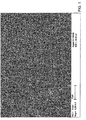
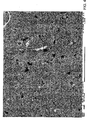
- Figs. 1 and 2 two coatings having distinct microstructures were made using conventional DC-arc plasma spraying technology and two different feedstock morphologies.
- the ceramic material used in each coating was 7-8 mol % yttria stabilized zirconia (8YSZ) powder.
- the feedstock used to make the coating of Fig. 1 was a solid particle feedstock made using a conventional fused and crushed process.
- the resulting coating shows a relatively dense microstructure with less inter-particle interfaces.
- Such a coating could be the result, in part or entirely because, of the solid feedstock particles only being softened or partially melted (i.e., not completely melted) by the plasma spraying process before impacting its target substrate.
- the other feedstock used to make the coating of Fig. 2 was a hollow particle feedstock.
- the hollow particles used to make this feedstock can be manufactured by using additives with a conventional powder feedstock (e.g., made using conventional powders prepared from a conventional fused and crushed process and/or from a conventional Sol-gel process). This powder feedstock and additive mixture is then fed through a plasma spray torch, in a conventional plasma densification process, to obtain hollow powders. These hollow powders are then used to make the hollow particle feedstock.
- the coating here shows a large number of inter-particle interfaces resulting mainly because the hollow feedstock particles (i) are more easily collapsed upon impact on the target substrate, which results in relatively thin splat layers, (ii) have melted more completely, because they are not solid (i.e., have less mass to be heated to melting), or (iii) a combination of both.
- Another type of feedstock made of both solid and hollow particles can also be used to produce a coating layer having a hybrid microstructure, where the coating results from fused and crushed powder and plasma densified powder.
- the thickness of the deposited hollow particles is less than (e.g., about half) the thickness of the deposited solid particles.
- the impacted hollow particles result in splat interfaces that lead to an increase in interfaces and a reduction in the thermal conductivity and elastic modulus of the resulting sprayed ceramic coating.
- the elastic modulus of the coating shown in Fig. 1 is 57 GPa
- the elastic modulus of the coating shown in Fig. 2 is 29 GPa.
- a "multilayered ceramic coating” is a coating that is formed using a discontinuous process, where the process is separately started and stopped for each layer being formed.
- the coating material feedstock, the particle deposition technique e.g., DC-arc plasma spray, high velocity oxygen-fuel (HVOF) thermal spraying, low pressure plasma spraying, solution plasma spraying and wire-arc spraying
- the particle deposition technique e.g., DC-arc plasma spray, high velocity oxygen-fuel (HVOF) thermal spraying, low pressure plasma spraying, solution plasma spraying and wire-arc spraying
- particle refers to a solid, porous or hollow particle that is any size, shape and/or otherwise configured so as to be suitable for forming the desired coating, including but limited to flattened (i.e., splat particles) or otherwise deformed particles.
- two particles are considered fused together when a surface of one particle is at least partially melt bonded or otherwise diffusion bonded to a surface of the other particle in whole or, typically, in part.
- a "splat particle” is a particle that has impacted a surface and flattened so as to be thinner than it is wide.
- a splat particle can be plate-like or flake-like.
- a splat particle can also have a uniform or non-uniform thickness.
- a particle interface refers to the boundary or interface between contacting, opposing or otherwise adjacent surfaces of neighbor particles.
- a particle interface can be any space or gap between neighboring particles, any area of contact between neighboring particles, and any region of fusion between neighboring particles.
- Neighboring particles are particles that do not have another particle therebetween.
- splat interface is a type of particle interface between neighboring splat particles such as the interfaces, e.g., made from neighboring hollow particles.
- a "particle pore interface” is a type of particle interface that is in the form of a space or gap between neighboring particles. Such particle pore interfaces can be in the form of globular pores, inter-lamellar pores and any other form of porosity. Particle pore interfaces can also be in the form of a crack.
- a particle pore interface can include an area between neighboring particles where the neighboring particles make partial or complete contact but are not fused together in the area(s) of contact. Particle pore interfaces defined by neighboring particles that contact each other, but are not fused together, can form mechanical bonds within the coating.
- Such fused or mechanically bonded particle interfaces can function to dissipate vibration energy transmitted through the engine component or portion by absorbing the vibration energy.
- Such particle interfaces can absorb vibration energy, when the energy is intense enough to deform or break such bonds between the neighboring particles.
- the frictional forces between the neighboring particles will need to be overcome, at least in part, in order to absorb vibration energy.
- the transmission of vibration through the coated engine component or portion can be likewise halted or diminished.
- the number of particle interfaces for a given volume of coating can increase as the number of particles increases (e.g., as the size of the particles decreases), as the thickness of the deposited particles decreases or both.
- the elastic modulus of a given volume of coating can be inversely affected by the number and/or size of particle pore interfaces, or other porosity, as well as by the number of other particle interfaces in the given volume of coating.
- the elastic modulus of a given volume of coating material typically decreases as the number of particle interfaces, especially particle pore interfaces, in the volume of coating increases. Therefore, since the number, type and/or size of particle interfaces can indicate the ability of the coating to dampen vibration, measured values of the elastic modulus of a given volume (e.g., one or more coating layers, one or more coating surface areas) of coating material can be used to characterize the vibration damping ability of the entire coating material. For example, as the elastic modulus of a given volume of coating material changes one way, the vibration damping ability of that volume of coating material may change the opposite way.
- vibration dampening can be controlled according to the present invention, for example, by using two or more different particle feedstocks to (1) control the dampening mechanism in the coating through the particle interface microstructure in the coating (e.g., mechanical verses fusion bonding between neighboring particles), and/or (2) have particle interfaces that are graded or exhibit otherwise changing microstructures through a portion or all of the thickness of the coating, over a surface area of the coating, or both.
- a coating could include a layer of the coating shown in Fig.1 and another layer of the coating shown in Fig. 2 , where each of the coating layers is deposited separately (i.e., discontinuously).
- the coating in order to obtain improved vibration damping ability in the coating, according to the present invention, it may be desirable for the coating to be a multilayered coating having multifunctionality, with the layer closest to the target substrate (e.g., the engine component or portion) having a lower elastic modulus and more compliance to provide improved vibration damping as well as to accommodate for residual stresses (e.g., between the ceramic coating and the target substrate or the ceramic coating and a bond coat on the target substrate) due to thermal expansion mismatch and the growth of thermally grown oxides, and the layer forming the surface of the coating having a higher elastic modulus for erosion resistance at the surface.
- the combination of the two layers can also result in a desirable effective thermal conductivity. Overall, a higher vibration damping ability can be obtained with internal friction across the interfaces (i.e., with a coating having a low elastic modulus).
- the damping mechanism in the coating can be controlled by separately (i.e., discontinuously) utilizating two or more spray technologies to deposit the desired particle feedstock.
- Such coatings can be deposited, for example, by using plasma spraying (e.g., DC-arc, low pressure plasma spraying), HVOF thermal spraying, solution plasma spraying and wire-arc spraying.
- such components or portions of an engine can be produced by providing at least the component or portion of the engine and depositing ceramic particles so as to form a ceramic coating onto at least part or all of a surface of the engine component or portion, for example, by using plasma spraying (e.g., DC-arc, etc.), high velocity oxygen-fuel (HVOF) thermal spraying or both.
- plasma spraying e.g., DC-arc, etc.
- HVOF high velocity oxygen-fuel
- the composition of the ceramic particles can be different or even the same, and it is preferable to form the particles into a multilayered ceramic coating.
- the resulting ceramic coating has a thickness, a surface area and comprises (a) a plurality (i.e., at least some, most or all) of the ceramic particles that are partially, or a combination of fully and partially, fused together, mechanically bonded together or both, and (b) corresponding particle interfaces between the neighboring particles.
- the spraying process is performed such that the ceramic coating has a change in the particle interfaces (e.g., the number of particle interfaces, the type of particle interfaces or both can increase, decrease, randomly change or change according to a pattern) through a portion or all of the thickness of the ceramic coating, across a portion or all of the surface area of the ceramic coating or both.
- the ceramic coating exhibits a corresponding change (e.g., the coating exhibits an increasing gradient, a decreasing gradient, random changes or a patterned change) in the ability of the ceramic coating to dampen vibration through a portion or all of the thickness of the ceramic coating, across a portion or all of the surface area of the ceramic coating or both.
- This corresponding change in vibration damping ability is caused at least in part by, and may be entirely due to, such change(s) in the particle interfaces.
- an HVOF sprayed alumina based coating and a plasma sprayed alumina based coating can exhibit distinctive features in their respective particle interface microstructures, even when using the same feedstock.
- Exemplary alumina based compositions can include, for example, Al 2 O 3 , MgAl 2 O 4 or Al 2 O 3 -(3-40 wt%) TiO 2 .
- the HVOF sprayed coating of Fig. 3 reveals well-adhered splats with finer porosity, which results in a large number of particle interfaces as well as a dense structure that exhibits a high elastic modulus, due to the fine particle size of the powder feedstock used.
- the elastic modulus of the coating shown in Fig. 3 is 99 GPa and the elastic modulus of the coating shown in Fig. 4 is 71 GPa.
- HVOF can be preferred over plasma spraying techniques, because the HVOF technique can help achieve a high elastic modulus (i.e., density) in the ceramic coating without compromising the mechanism for dampening vibrations.
- the plasma spray technology utilizes the high temperature (enthalpy) availability within the thermal plasma to tenable melting and deposition of the coating particles.
- the HVOF thermal spray technology is a variation, which uses combustion gases to generate a compressed flame. By axially injecting the feedstock powder, the particles are also subjected to a high acceleration to supersonic velocities. Upon impacting the substrate, such high velocity particles spread out thinly (i.e., splat) to form a well-bonded dense coating. Thus, very distinct microstructures can result from the two spray coating deposition processes.
- Figs. 3 and 4 show distinctive features in the coated microstructure, with the HVOF coating of Fig. 3 showing well-adhered splat particles with a fine porosity, and the plasma sprayed coating of Fig. 4 displaying large globular pores, interlamellar pores and cracks.
- the coating may be a multilayered coating, with the layer closest to the target substrate (e.g., the engine component or portion) being formed using a plasma spraying process so as to exhibit a lower elastic modulus to provide improved vibration damping as well as, e.g., to accommodate residual stresses (e.g., the Fig. 4 layer) and the layer defining the outer surface of the coating being formed using a HVOF process so as to exhibit a higher elastic modulus, e.g., for erosion resistance (e.g., the Fig. 3 layer).
- the combination of the two layers can also result in a desirable effective thermal conductivity.
- the present method can be practiced using a plurality of ceramic particle feedstocks, with each feedstock serving as a source of ceramic particle material for the spraying process.
- the spraying process can comprise a plurality of separate steps of spraying ceramic particles, with each step of spraying using a different one of the plurality of ceramic particle feedstocks as a source of ceramic particle material.
- the spraying process of the present method can comprise a plurality of separate steps of spraying ceramic particles, with each step of spraying using a different one of a plurality of ceramic particle deposition techniques.
- the present method can be practiced using a plurality of ceramic particle feedstocks, with each feedstock serving as a source of ceramic particle material for said spraying, and using a plurality of separate steps of spraying ceramic particles.
- Each step of spraying can use (a) a different one of the plurality of ceramic particle feedstocks as a source of ceramic particle material, (b) a different one of a plurality of ceramic particle deposition techniques, or (c) a combination of (a) and (b).
Landscapes
- Engineering & Computer Science (AREA)
- Chemical & Material Sciences (AREA)
- Materials Engineering (AREA)
- Mechanical Engineering (AREA)
- Plasma & Fusion (AREA)
- Physics & Mathematics (AREA)
- General Engineering & Computer Science (AREA)
- Chemical Kinetics & Catalysis (AREA)
- Metallurgy (AREA)
- Organic Chemistry (AREA)
- Ceramic Engineering (AREA)
- Turbine Rotor Nozzle Sealing (AREA)
- Coating By Spraying Or Casting (AREA)
Claims (7)
- Partie de moteur comprenant une surface revêtue d'un revêtement céramique ayant une épaisseur et une superficie, ledit revêtement comprenant une pluralité de particules céramiques et d'interfaces particulaires correspondantes, au moins certaines desdites particules céramiques étant en partie liées les unes aux autres, et ledit revêtement présentant une modification desdites interfaces particulaires sur l'épaisseur dudit revêtement, sur la superficie dudit revêtement ou sur les deux,
étant entendu que ledit revêtement présente une modification correspondante de la capacité dudit revêtement à conférer au moins une caractéristique fonctionnelle à ladite partie de moteur sur l'épaisseur dudit revêtement, sur la superficie dudit revêtement ou sur les deux ;
étant entendu que ledit revêtement céramique est un revêtement multicouches, une couche proche de ladite surface de moteur ayant relativement plus de porosité et d'interfaces particulaires, et une autre couche située plus loin de ladite surface de moteur ayant relativement moins de porosité et moins d'interfaces particulaires ;
étant entendu que la couche proche de la surface de moteur est faite d'une matière première à particules creuses constituée de particules creuses et que la couche située plus loin de la surface de moteur est faite d'une matière première à particules pleines constituée de poudre fondue et broyée ;
étant entendu que lesdites interfaces particulaires consistent en interfaces entre particules étalées (splats) issues desdites particules creuses. - Partie de moteur selon la revendication 1, dans laquelle ladite partie est un composant de moteur à turbine et ladite surface est partiellement revêtue dudit revêtement céramique.
- Partie de moteur selon la revendication 1, dans laquelle au moins le nombre desdites interfaces particulaires ou le type desdites interfaces particulaires change selon un gradient sur l'épaisseur dudit revêtement, sur la superficie dudit revêtement ou sur les deux.
- Partie de moteur selon la revendication 3, dans laquelle lesdites interfaces particulaires changent selon un gradient sur l'épaisseur dudit revêtement.
- Partie de moteur selon la revendication 1, dans laquelle lesdites interfaces particulaires comprennent des interfaces particulaires poreuses.
- Partie de moteur selon la revendication 1, dans laquelle ledit revêtement présente une modification correspondante d'une ou de plusieurs des caractéristiques fonctionnelles suivantes sur l'épaisseur du revêtement, sur la superficie du revêtement ou sur les deux : (a) propriétés thermomécaniques, (b) propriétés mécaniques, (c) aptitude à l'abrasion, (d) amortissement des vibrations, (e) arrêt de la propagation des criques et (f) relaxation des contraintes.
- Partie de moteur selon la revendication 1, dans laquelle ledit revêtement présente un changement correspondant de l'aptitude dudit revêtement à amortir les vibrations sur l'épaisseur dudit revêtement, sur la superficie dudit revêtement ou sur les deux.
Applications Claiming Priority (4)
| Application Number | Priority Date | Filing Date | Title |
|---|---|---|---|
| US97355407P | 2007-09-19 | 2007-09-19 | |
| US97356307P | 2007-09-19 | 2007-09-19 | |
| US12/019,931 US7846561B2 (en) | 2007-09-19 | 2008-01-25 | Engine portions with functional ceramic coatings and methods of making same |
| PCT/US2008/010932 WO2009038785A2 (fr) | 2007-09-19 | 2008-09-19 | Parties de moteur avec revêtements céramiques fonctionnels et leurs procédés de fabrication |
Publications (2)
| Publication Number | Publication Date |
|---|---|
| EP2193216A2 EP2193216A2 (fr) | 2010-06-09 |
| EP2193216B1 true EP2193216B1 (fr) | 2016-11-30 |
Family
ID=40454776
Family Applications (2)
| Application Number | Title | Priority Date | Filing Date |
|---|---|---|---|
| EP08831998.3A Not-in-force EP2193217B1 (fr) | 2007-09-19 | 2008-09-19 | Conférer des caractéristiques fonctionnelles à des parties de moteur |
| EP08831952.0A Not-in-force EP2193216B1 (fr) | 2007-09-19 | 2008-09-19 | Parties de moteur avec revêtements céramiques fonctionnels et leurs procédés de fabrication |
Family Applications Before (1)
| Application Number | Title | Priority Date | Filing Date |
|---|---|---|---|
| EP08831998.3A Not-in-force EP2193217B1 (fr) | 2007-09-19 | 2008-09-19 | Conférer des caractéristiques fonctionnelles à des parties de moteur |
Country Status (3)
| Country | Link |
|---|---|
| US (2) | US7846561B2 (fr) |
| EP (2) | EP2193217B1 (fr) |
| WO (2) | WO2009038749A1 (fr) |
Families Citing this family (29)
| Publication number | Priority date | Publication date | Assignee | Title |
|---|---|---|---|---|
| US7723249B2 (en) * | 2005-10-07 | 2010-05-25 | Sulzer Metco (Us), Inc. | Ceramic material for high temperature service |
| US8603930B2 (en) | 2005-10-07 | 2013-12-10 | Sulzer Metco (Us), Inc. | High-purity fused and crushed zirconia alloy powder and method of producing same |
| US7846561B2 (en) * | 2007-09-19 | 2010-12-07 | Siemens Energy, Inc. | Engine portions with functional ceramic coatings and methods of making same |
| DE102008002572A1 (de) * | 2008-06-20 | 2009-12-24 | Federal-Mogul Nürnberg GmbH | Verfahren zur Herstellung eines Kolbens für einen Verbrennungsmotor sowie Kolben für einen Verbrennungsmotor |
| US9011104B2 (en) | 2010-01-06 | 2015-04-21 | General Electric Company | Articles having damping coatings thereon |
| US9273400B2 (en) * | 2010-05-24 | 2016-03-01 | Sikorsky Aircraft Corporation | Multilayered coating for improved erosion resistance |
| US20120183790A1 (en) * | 2010-07-14 | 2012-07-19 | Christopher Petorak | Thermal spray composite coatings for semiconductor applications |
| US20120177908A1 (en) * | 2010-07-14 | 2012-07-12 | Christopher Petorak | Thermal spray coatings for semiconductor applications |
| CN104039483B (zh) | 2011-12-30 | 2017-03-01 | 思高博塔公司 | 涂层组合物 |
| US20130171367A1 (en) * | 2011-12-30 | 2013-07-04 | Grzegorz Jan Kusinski | Coating compositions, applications thereof, and methods of forming |
| DE102012200491B4 (de) * | 2012-01-13 | 2015-05-28 | Lufthansa Technik Ag | Gasturbinenschaufel für ein Flugzeugtriebwerk und Verfahren zur Beschichtung einer Gasturbinenschaufel |
| US20140220324A1 (en) * | 2012-08-15 | 2014-08-07 | Christopher W. Strock | Thermal barrier coating having outer layer |
| CN104870753B (zh) | 2012-12-20 | 2017-03-15 | 西门子公司 | 带有MCrAlY涂层和隔热涂层补片的燃气轮机导叶组件 |
| US9816392B2 (en) | 2013-04-10 | 2017-11-14 | General Electric Company | Architectures for high temperature TBCs with ultra low thermal conductivity and abradability and method of making |
| US10132185B2 (en) * | 2014-11-07 | 2018-11-20 | Rolls-Royce Corporation | Additive process for an abradable blade track used in a gas turbine engine |
| KR102447682B1 (ko) * | 2015-05-29 | 2022-09-27 | 삼성전자주식회사 | 코팅층 형성 방법, 플라즈마 처리 장치 및 패턴 형성 방법 |
| FI3344789T3 (fi) | 2015-09-04 | 2025-04-08 | Oerlikon Metco Us Inc | Kromivapaita ja vähäkromisia kulutusta kestäviä metalliseoksia |
| US10145252B2 (en) * | 2015-12-09 | 2018-12-04 | General Electric Company | Abradable compositions and methods for CMC shrouds |
| US10900371B2 (en) | 2017-07-27 | 2021-01-26 | Rolls-Royce North American Technologies, Inc. | Abradable coatings for high-performance systems |
| US10858950B2 (en) | 2017-07-27 | 2020-12-08 | Rolls-Royce North America Technologies, Inc. | Multilayer abradable coatings for high-performance systems |
| US20210164081A1 (en) | 2018-03-29 | 2021-06-03 | Oerlikon Metco (Us) Inc. | Reduced carbides ferrous alloys |
| US11021989B2 (en) * | 2018-07-18 | 2021-06-01 | Raytheon Technologies Corporation | Environmental barrier multi-phase abradable coating |
| WO2020086971A1 (fr) | 2018-10-26 | 2020-04-30 | Oerlikon Metco (Us) Inc. | Alliages à base de nickel résistants à la corrosion et à l'usure |
| US12227853B2 (en) | 2019-03-28 | 2025-02-18 | Oerlikon Metco (Us) Inc. | Thermal spray iron-based alloys for coating engine cylinder bores |
| EP3962693A1 (fr) | 2019-05-03 | 2022-03-09 | Oerlikon Metco (US) Inc. | Charge d'alimentation pulvérulente destinée au soudage en vrac résistant à l'usure, conçue pour optimiser la facilité de production |
| CN114341385A (zh) | 2019-07-09 | 2022-04-12 | 欧瑞康美科(美国)公司 | 针对耐磨性和耐腐蚀性设计的铁基合金 |
| CN111519125B (zh) * | 2020-05-28 | 2022-03-29 | 广东省科学院新材料研究所 | 一种航空发动机涡轮外环的表面处理方法及航空发动机涡轮外环 |
| CN111795984B (zh) * | 2020-06-22 | 2022-05-10 | 中国科学院上海硅酸盐研究所 | 一种用于扫描电镜观察陶瓷内部微观结构的制样方法 |
| US11866379B2 (en) | 2020-08-14 | 2024-01-09 | Rtx Corporation | Hafnon and zircon environmental barrier coatings for silicon-based components |
Citations (1)
| Publication number | Priority date | Publication date | Assignee | Title |
|---|---|---|---|---|
| US6620525B1 (en) * | 2000-11-09 | 2003-09-16 | General Electric Company | Thermal barrier coating with improved erosion and impact resistance and process therefor |
Family Cites Families (10)
| Publication number | Priority date | Publication date | Assignee | Title |
|---|---|---|---|---|
| US2786779A (en) * | 1953-02-09 | 1957-03-26 | Dewrance & Co | Method and apparatus for powdered metal deposition by oxy-fuel gas flame |
| US3758233A (en) * | 1972-01-17 | 1973-09-11 | Gen Motors Corp | Vibration damping coatings |
| US6102656A (en) * | 1995-09-26 | 2000-08-15 | United Technologies Corporation | Segmented abradable ceramic coating |
| US6447848B1 (en) | 1995-11-13 | 2002-09-10 | The United States Of America As Represented By The Secretary Of The Navy | Nanosize particle coatings made by thermally spraying solution precursor feedstocks |
| US20010055652A1 (en) * | 1999-12-17 | 2001-12-27 | William John Dalzell | Method of making abradable seal having improved properties |
| US6716539B2 (en) | 2001-09-24 | 2004-04-06 | Siemens Westinghouse Power Corporation | Dual microstructure thermal barrier coating |
| GB0406444D0 (en) | 2004-03-23 | 2004-04-28 | Rolls Royce Plc | An article having a vibration damping coating and a method of applying a vibration damping coating to an article |
| US7723249B2 (en) * | 2005-10-07 | 2010-05-25 | Sulzer Metco (Us), Inc. | Ceramic material for high temperature service |
| CA2571099C (fr) | 2005-12-21 | 2015-05-05 | Sulzer Metco (Us) Inc. | Methode et appareil hybrides de pulverisation a froid avec plasma |
| US7846561B2 (en) * | 2007-09-19 | 2010-12-07 | Siemens Energy, Inc. | Engine portions with functional ceramic coatings and methods of making same |
-
2008
- 2008-01-25 US US12/019,931 patent/US7846561B2/en not_active Expired - Fee Related
- 2008-01-25 US US12/019,948 patent/US8153204B2/en not_active Expired - Fee Related
- 2008-09-19 WO PCT/US2008/010873 patent/WO2009038749A1/fr not_active Ceased
- 2008-09-19 EP EP08831998.3A patent/EP2193217B1/fr not_active Not-in-force
- 2008-09-19 WO PCT/US2008/010932 patent/WO2009038785A2/fr not_active Ceased
- 2008-09-19 EP EP08831952.0A patent/EP2193216B1/fr not_active Not-in-force
Patent Citations (1)
| Publication number | Priority date | Publication date | Assignee | Title |
|---|---|---|---|---|
| US6620525B1 (en) * | 2000-11-09 | 2003-09-16 | General Electric Company | Thermal barrier coating with improved erosion and impact resistance and process therefor |
Also Published As
| Publication number | Publication date |
|---|---|
| US8153204B2 (en) | 2012-04-10 |
| EP2193217A1 (fr) | 2010-06-09 |
| EP2193216A2 (fr) | 2010-06-09 |
| WO2009038749A1 (fr) | 2009-03-26 |
| US7846561B2 (en) | 2010-12-07 |
| WO2009038785A3 (fr) | 2009-06-04 |
| EP2193217B1 (fr) | 2018-06-13 |
| US20090074961A1 (en) | 2009-03-19 |
| WO2009038785A2 (fr) | 2009-03-26 |
| US20090075057A1 (en) | 2009-03-19 |
Similar Documents
| Publication | Publication Date | Title |
|---|---|---|
| EP2193216B1 (fr) | Parties de moteur avec revêtements céramiques fonctionnels et leurs procédés de fabrication | |
| JP7348617B2 (ja) | Cmas耐性遮熱コーティング及びそのコーティングを作る方法 | |
| EP0663020B1 (fr) | Materiau de revetement en ceramique composite | |
| EP2053141B1 (fr) | Revêtement protecteur à base d'alumine pour revêtements de barrière thermique et procédé de son dépôt | |
| JP7097668B2 (ja) | 改質された遮熱複合コーティング | |
| US20130260132A1 (en) | Hybrid thermal barrier coating | |
| JP5300851B2 (ja) | セラミック製の層状複合材及び、該セラミック製の層状複合材を製造するための方法 | |
| MXPA04007072A (es) | Revestimiento de barrera termica de multiples capas. | |
| KR20180084064A (ko) | 열 절연형 엔진 구성요소들, 및 세라믹 코팅을 이용한 그 제조 방법 | |
| EP2322686B1 (fr) | Procédé de pulvérisation thermique pour produire des revêtements de barrière thermique à segmentation verticale | |
| US9850778B2 (en) | Thermal barrier coating with controlled defect architecture | |
| US9725797B2 (en) | Process for forming an improved durability thick ceramic coating | |
| EP3470544B1 (fr) | Procédé d'application d'une couche d'isolation thermique | |
| RU2260071C1 (ru) | Способ нанесения теплозащитного эрозионно стойкого покрытия | |
| US10550462B1 (en) | Coating with dense columns separated by gaps | |
| RU2359065C2 (ru) | Способ нанесения на детали теплозащитного покрытия плазменным методом | |
| Bagathi et al. | Insight into the Process-Microstructure-Property Relationship: Single Splat Analysis, Adhesion Testing, and Thermal Cycling of Inner Diameter (ID) Thermal Barrier Coatings | |
| Viswanathan | An Integrated Assessment of Processing, Microstructure, Properties and Performance in Plasma Sprayed Thermal Barrier Coatings |
Legal Events
| Date | Code | Title | Description |
|---|---|---|---|
| PUAI | Public reference made under article 153(3) epc to a published international application that has entered the european phase |
Free format text: ORIGINAL CODE: 0009012 |
|
| 17P | Request for examination filed |
Effective date: 20100308 |
|
| AK | Designated contracting states |
Kind code of ref document: A2 Designated state(s): AT BE BG CH CY CZ DE DK EE ES FI FR GB GR HR HU IE IS IT LI LT LU LV MC MT NL NO PL PT RO SE SI SK TR |
|
| AX | Request for extension of the european patent |
Extension state: AL BA MK RS |
|
| DAX | Request for extension of the european patent (deleted) | ||
| 17Q | First examination report despatched |
Effective date: 20150313 |
|
| REG | Reference to a national code |
Ref country code: DE Ref legal event code: R079 Ref document number: 602008047681 Country of ref document: DE Free format text: PREVIOUS MAIN CLASS: C23C0004000000 Ipc: C23C0004020000 |
|
| GRAP | Despatch of communication of intention to grant a patent |
Free format text: ORIGINAL CODE: EPIDOSNIGR1 |
|
| RIC1 | Information provided on ipc code assigned before grant |
Ipc: C23C 4/10 20060101ALI20160524BHEP Ipc: C23C 4/02 20060101AFI20160524BHEP Ipc: C23C 28/00 20060101ALI20160524BHEP Ipc: F01D 5/28 20060101ALI20160524BHEP Ipc: C23C 26/00 20060101ALI20160524BHEP |
|
| INTG | Intention to grant announced |
Effective date: 20160624 |
|
| GRAS | Grant fee paid |
Free format text: ORIGINAL CODE: EPIDOSNIGR3 |
|
| GRAA | (expected) grant |
Free format text: ORIGINAL CODE: 0009210 |
|
| AK | Designated contracting states |
Kind code of ref document: B1 Designated state(s): AT BE BG CH CY CZ DE DK EE ES FI FR GB GR HR HU IE IS IT LI LT LU LV MC MT NL NO PL PT RO SE SI SK TR |
|
| REG | Reference to a national code |
Ref country code: CH Ref legal event code: EP Ref country code: GB Ref legal event code: FG4D |
|
| REG | Reference to a national code |
Ref country code: AT Ref legal event code: REF Ref document number: 849873 Country of ref document: AT Kind code of ref document: T Effective date: 20161215 |
|
| REG | Reference to a national code |
Ref country code: IE Ref legal event code: FG4D |
|
| REG | Reference to a national code |
Ref country code: DE Ref legal event code: R096 Ref document number: 602008047681 Country of ref document: DE |
|
| PG25 | Lapsed in a contracting state [announced via postgrant information from national office to epo] |
Ref country code: LV Free format text: LAPSE BECAUSE OF FAILURE TO SUBMIT A TRANSLATION OF THE DESCRIPTION OR TO PAY THE FEE WITHIN THE PRESCRIBED TIME-LIMIT Effective date: 20161130 |
|
| REG | Reference to a national code |
Ref country code: LT Ref legal event code: MG4D |
|
| REG | Reference to a national code |
Ref country code: NL Ref legal event code: MP Effective date: 20161130 |
|
| REG | Reference to a national code |
Ref country code: AT Ref legal event code: MK05 Ref document number: 849873 Country of ref document: AT Kind code of ref document: T Effective date: 20161130 |
|
| PG25 | Lapsed in a contracting state [announced via postgrant information from national office to epo] |
Ref country code: GR Free format text: LAPSE BECAUSE OF FAILURE TO SUBMIT A TRANSLATION OF THE DESCRIPTION OR TO PAY THE FEE WITHIN THE PRESCRIBED TIME-LIMIT Effective date: 20170301 Ref country code: SE Free format text: LAPSE BECAUSE OF FAILURE TO SUBMIT A TRANSLATION OF THE DESCRIPTION OR TO PAY THE FEE WITHIN THE PRESCRIBED TIME-LIMIT Effective date: 20161130 Ref country code: LT Free format text: LAPSE BECAUSE OF FAILURE TO SUBMIT A TRANSLATION OF THE DESCRIPTION OR TO PAY THE FEE WITHIN THE PRESCRIBED TIME-LIMIT Effective date: 20161130 Ref country code: NO Free format text: LAPSE BECAUSE OF FAILURE TO SUBMIT A TRANSLATION OF THE DESCRIPTION OR TO PAY THE FEE WITHIN THE PRESCRIBED TIME-LIMIT Effective date: 20170228 |
|
| PG25 | Lapsed in a contracting state [announced via postgrant information from national office to epo] |
Ref country code: AT Free format text: LAPSE BECAUSE OF FAILURE TO SUBMIT A TRANSLATION OF THE DESCRIPTION OR TO PAY THE FEE WITHIN THE PRESCRIBED TIME-LIMIT Effective date: 20161130 Ref country code: HR Free format text: LAPSE BECAUSE OF FAILURE TO SUBMIT A TRANSLATION OF THE DESCRIPTION OR TO PAY THE FEE WITHIN THE PRESCRIBED TIME-LIMIT Effective date: 20161130 Ref country code: ES Free format text: LAPSE BECAUSE OF FAILURE TO SUBMIT A TRANSLATION OF THE DESCRIPTION OR TO PAY THE FEE WITHIN THE PRESCRIBED TIME-LIMIT Effective date: 20161130 Ref country code: FI Free format text: LAPSE BECAUSE OF FAILURE TO SUBMIT A TRANSLATION OF THE DESCRIPTION OR TO PAY THE FEE WITHIN THE PRESCRIBED TIME-LIMIT Effective date: 20161130 Ref country code: PL Free format text: LAPSE BECAUSE OF FAILURE TO SUBMIT A TRANSLATION OF THE DESCRIPTION OR TO PAY THE FEE WITHIN THE PRESCRIBED TIME-LIMIT Effective date: 20161130 Ref country code: PT Free format text: LAPSE BECAUSE OF FAILURE TO SUBMIT A TRANSLATION OF THE DESCRIPTION OR TO PAY THE FEE WITHIN THE PRESCRIBED TIME-LIMIT Effective date: 20170330 |
|
| PG25 | Lapsed in a contracting state [announced via postgrant information from national office to epo] |
Ref country code: NL Free format text: LAPSE BECAUSE OF FAILURE TO SUBMIT A TRANSLATION OF THE DESCRIPTION OR TO PAY THE FEE WITHIN THE PRESCRIBED TIME-LIMIT Effective date: 20161130 |
|
| PG25 | Lapsed in a contracting state [announced via postgrant information from national office to epo] |
Ref country code: SK Free format text: LAPSE BECAUSE OF FAILURE TO SUBMIT A TRANSLATION OF THE DESCRIPTION OR TO PAY THE FEE WITHIN THE PRESCRIBED TIME-LIMIT Effective date: 20161130 Ref country code: DK Free format text: LAPSE BECAUSE OF FAILURE TO SUBMIT A TRANSLATION OF THE DESCRIPTION OR TO PAY THE FEE WITHIN THE PRESCRIBED TIME-LIMIT Effective date: 20161130 Ref country code: CZ Free format text: LAPSE BECAUSE OF FAILURE TO SUBMIT A TRANSLATION OF THE DESCRIPTION OR TO PAY THE FEE WITHIN THE PRESCRIBED TIME-LIMIT Effective date: 20161130 Ref country code: EE Free format text: LAPSE BECAUSE OF FAILURE TO SUBMIT A TRANSLATION OF THE DESCRIPTION OR TO PAY THE FEE WITHIN THE PRESCRIBED TIME-LIMIT Effective date: 20161130 Ref country code: RO Free format text: LAPSE BECAUSE OF FAILURE TO SUBMIT A TRANSLATION OF THE DESCRIPTION OR TO PAY THE FEE WITHIN THE PRESCRIBED TIME-LIMIT Effective date: 20161130 |
|
| PG25 | Lapsed in a contracting state [announced via postgrant information from national office to epo] |
Ref country code: BG Free format text: LAPSE BECAUSE OF FAILURE TO SUBMIT A TRANSLATION OF THE DESCRIPTION OR TO PAY THE FEE WITHIN THE PRESCRIBED TIME-LIMIT Effective date: 20170228 Ref country code: BE Free format text: LAPSE BECAUSE OF FAILURE TO SUBMIT A TRANSLATION OF THE DESCRIPTION OR TO PAY THE FEE WITHIN THE PRESCRIBED TIME-LIMIT Effective date: 20161130 |
|
| REG | Reference to a national code |
Ref country code: DE Ref legal event code: R097 Ref document number: 602008047681 Country of ref document: DE |
|
| REG | Reference to a national code |
Ref country code: FR Ref legal event code: PLFP Year of fee payment: 10 |
|
| PLBE | No opposition filed within time limit |
Free format text: ORIGINAL CODE: 0009261 |
|
| STAA | Information on the status of an ep patent application or granted ep patent |
Free format text: STATUS: NO OPPOSITION FILED WITHIN TIME LIMIT |
|
| PGFP | Annual fee paid to national office [announced via postgrant information from national office to epo] |
Ref country code: IT Payment date: 20170927 Year of fee payment: 10 Ref country code: GB Payment date: 20170912 Year of fee payment: 10 Ref country code: FR Payment date: 20170918 Year of fee payment: 10 |
|
| 26N | No opposition filed |
Effective date: 20170831 |
|
| PG25 | Lapsed in a contracting state [announced via postgrant information from national office to epo] |
Ref country code: SI Free format text: LAPSE BECAUSE OF FAILURE TO SUBMIT A TRANSLATION OF THE DESCRIPTION OR TO PAY THE FEE WITHIN THE PRESCRIBED TIME-LIMIT Effective date: 20161130 |
|
| PGFP | Annual fee paid to national office [announced via postgrant information from national office to epo] |
Ref country code: DE Payment date: 20180110 Year of fee payment: 10 |
|
| REG | Reference to a national code |
Ref country code: CH Ref legal event code: PL |
|
| PG25 | Lapsed in a contracting state [announced via postgrant information from national office to epo] |
Ref country code: MC Free format text: LAPSE BECAUSE OF FAILURE TO SUBMIT A TRANSLATION OF THE DESCRIPTION OR TO PAY THE FEE WITHIN THE PRESCRIBED TIME-LIMIT Effective date: 20161130 |
|
| REG | Reference to a national code |
Ref country code: IE Ref legal event code: MM4A |
|
| PG25 | Lapsed in a contracting state [announced via postgrant information from national office to epo] |
Ref country code: LU Free format text: LAPSE BECAUSE OF NON-PAYMENT OF DUE FEES Effective date: 20170919 |
|
| PG25 | Lapsed in a contracting state [announced via postgrant information from national office to epo] |
Ref country code: LI Free format text: LAPSE BECAUSE OF NON-PAYMENT OF DUE FEES Effective date: 20170930 Ref country code: CH Free format text: LAPSE BECAUSE OF NON-PAYMENT OF DUE FEES Effective date: 20170930 Ref country code: IE Free format text: LAPSE BECAUSE OF NON-PAYMENT OF DUE FEES Effective date: 20170919 |
|
| PG25 | Lapsed in a contracting state [announced via postgrant information from national office to epo] |
Ref country code: MT Free format text: LAPSE BECAUSE OF NON-PAYMENT OF DUE FEES Effective date: 20170919 |
|
| REG | Reference to a national code |
Ref country code: DE Ref legal event code: R119 Ref document number: 602008047681 Country of ref document: DE |
|
| GBPC | Gb: european patent ceased through non-payment of renewal fee |
Effective date: 20180919 |
|
| PG25 | Lapsed in a contracting state [announced via postgrant information from national office to epo] |
Ref country code: HU Free format text: LAPSE BECAUSE OF FAILURE TO SUBMIT A TRANSLATION OF THE DESCRIPTION OR TO PAY THE FEE WITHIN THE PRESCRIBED TIME-LIMIT; INVALID AB INITIO Effective date: 20080919 |
|
| PG25 | Lapsed in a contracting state [announced via postgrant information from national office to epo] |
Ref country code: IT Free format text: LAPSE BECAUSE OF NON-PAYMENT OF DUE FEES Effective date: 20180919 Ref country code: DE Free format text: LAPSE BECAUSE OF NON-PAYMENT OF DUE FEES Effective date: 20190402 |
|
| PG25 | Lapsed in a contracting state [announced via postgrant information from national office to epo] |
Ref country code: FR Free format text: LAPSE BECAUSE OF NON-PAYMENT OF DUE FEES Effective date: 20180930 |
|
| PG25 | Lapsed in a contracting state [announced via postgrant information from national office to epo] |
Ref country code: CY Free format text: LAPSE BECAUSE OF NON-PAYMENT OF DUE FEES Effective date: 20161130 Ref country code: GB Free format text: LAPSE BECAUSE OF NON-PAYMENT OF DUE FEES Effective date: 20180919 |
|
| PG25 | Lapsed in a contracting state [announced via postgrant information from national office to epo] |
Ref country code: TR Free format text: LAPSE BECAUSE OF FAILURE TO SUBMIT A TRANSLATION OF THE DESCRIPTION OR TO PAY THE FEE WITHIN THE PRESCRIBED TIME-LIMIT Effective date: 20161130 |
|
| PG25 | Lapsed in a contracting state [announced via postgrant information from national office to epo] |
Ref country code: IS Free format text: LAPSE BECAUSE OF FAILURE TO SUBMIT A TRANSLATION OF THE DESCRIPTION OR TO PAY THE FEE WITHIN THE PRESCRIBED TIME-LIMIT Effective date: 20170330 |