EP2193261B1 - Verfahren und vorrichtung zur handhabung eines abgasbehandlungsmoduls - Google Patents
Verfahren und vorrichtung zur handhabung eines abgasbehandlungsmoduls Download PDFInfo
- Publication number
- EP2193261B1 EP2193261B1 EP08834427A EP08834427A EP2193261B1 EP 2193261 B1 EP2193261 B1 EP 2193261B1 EP 08834427 A EP08834427 A EP 08834427A EP 08834427 A EP08834427 A EP 08834427A EP 2193261 B1 EP2193261 B1 EP 2193261B1
- Authority
- EP
- European Patent Office
- Prior art keywords
- catalyst
- nox
- threshold
- stored
- value
- Prior art date
- Legal status (The legal status is an assumption and is not a legal conclusion. Google has not performed a legal analysis and makes no representation as to the accuracy of the status listed.)
- Not-in-force
Links
Images
Classifications
-
- F—MECHANICAL ENGINEERING; LIGHTING; HEATING; WEAPONS; BLASTING
- F01—MACHINES OR ENGINES IN GENERAL; ENGINE PLANTS IN GENERAL; STEAM ENGINES
- F01N—GAS-FLOW SILENCERS OR EXHAUST APPARATUS FOR MACHINES OR ENGINES IN GENERAL; GAS-FLOW SILENCERS OR EXHAUST APPARATUS FOR INTERNAL-COMBUSTION ENGINES
- F01N11/00—Monitoring or diagnostic devices for exhaust-gas treatment apparatus
-
- F—MECHANICAL ENGINEERING; LIGHTING; HEATING; WEAPONS; BLASTING
- F01—MACHINES OR ENGINES IN GENERAL; ENGINE PLANTS IN GENERAL; STEAM ENGINES
- F01N—GAS-FLOW SILENCERS OR EXHAUST APPARATUS FOR MACHINES OR ENGINES IN GENERAL; GAS-FLOW SILENCERS OR EXHAUST APPARATUS FOR INTERNAL-COMBUSTION ENGINES
- F01N3/00—Exhaust or silencing apparatus having means for purifying, rendering innocuous, or otherwise treating exhaust
- F01N3/08—Exhaust or silencing apparatus having means for purifying, rendering innocuous, or otherwise treating exhaust for rendering innocuous
- F01N3/0807—Exhaust or silencing apparatus having means for purifying, rendering innocuous, or otherwise treating exhaust for rendering innocuous by using absorbents or adsorbents
-
- F—MECHANICAL ENGINEERING; LIGHTING; HEATING; WEAPONS; BLASTING
- F01—MACHINES OR ENGINES IN GENERAL; ENGINE PLANTS IN GENERAL; STEAM ENGINES
- F01N—GAS-FLOW SILENCERS OR EXHAUST APPARATUS FOR MACHINES OR ENGINES IN GENERAL; GAS-FLOW SILENCERS OR EXHAUST APPARATUS FOR INTERNAL-COMBUSTION ENGINES
- F01N3/00—Exhaust or silencing apparatus having means for purifying, rendering innocuous, or otherwise treating exhaust
- F01N3/08—Exhaust or silencing apparatus having means for purifying, rendering innocuous, or otherwise treating exhaust for rendering innocuous
- F01N3/0807—Exhaust or silencing apparatus having means for purifying, rendering innocuous, or otherwise treating exhaust for rendering innocuous by using absorbents or adsorbents
- F01N3/0828—Exhaust or silencing apparatus having means for purifying, rendering innocuous, or otherwise treating exhaust for rendering innocuous by using absorbents or adsorbents characterised by the absorbed or adsorbed substances
- F01N3/0842—Nitrogen oxides
-
- F—MECHANICAL ENGINEERING; LIGHTING; HEATING; WEAPONS; BLASTING
- F02—COMBUSTION ENGINES; HOT-GAS OR COMBUSTION-PRODUCT ENGINE PLANTS
- F02D—CONTROLLING COMBUSTION ENGINES
- F02D41/00—Electrical control of supply of combustible mixture or its constituents
- F02D41/02—Circuit arrangements for generating control signals
- F02D41/021—Introducing corrections for particular conditions exterior to the engine
- F02D41/0235—Introducing corrections for particular conditions exterior to the engine in relation with the state of the exhaust gas treating apparatus
- F02D41/027—Introducing corrections for particular conditions exterior to the engine in relation with the state of the exhaust gas treating apparatus to purge or regenerate the exhaust gas treating apparatus
- F02D41/0275—Introducing corrections for particular conditions exterior to the engine in relation with the state of the exhaust gas treating apparatus to purge or regenerate the exhaust gas treating apparatus the exhaust gas treating apparatus being a NOx trap or adsorbent
-
- F—MECHANICAL ENGINEERING; LIGHTING; HEATING; WEAPONS; BLASTING
- F01—MACHINES OR ENGINES IN GENERAL; ENGINE PLANTS IN GENERAL; STEAM ENGINES
- F01N—GAS-FLOW SILENCERS OR EXHAUST APPARATUS FOR MACHINES OR ENGINES IN GENERAL; GAS-FLOW SILENCERS OR EXHAUST APPARATUS FOR INTERNAL-COMBUSTION ENGINES
- F01N2550/00—Monitoring or diagnosing the deterioration of exhaust systems
- F01N2550/03—Monitoring or diagnosing the deterioration of exhaust systems of sorbing activity of adsorbents or absorbents
-
- F—MECHANICAL ENGINEERING; LIGHTING; HEATING; WEAPONS; BLASTING
- F01—MACHINES OR ENGINES IN GENERAL; ENGINE PLANTS IN GENERAL; STEAM ENGINES
- F01N—GAS-FLOW SILENCERS OR EXHAUST APPARATUS FOR MACHINES OR ENGINES IN GENERAL; GAS-FLOW SILENCERS OR EXHAUST APPARATUS FOR INTERNAL-COMBUSTION ENGINES
- F01N2560/00—Exhaust systems with means for detecting or measuring exhaust gas components or characteristics
- F01N2560/02—Exhaust systems with means for detecting or measuring exhaust gas components or characteristics the means being an exhaust gas sensor
- F01N2560/026—Exhaust systems with means for detecting or measuring exhaust gas components or characteristics the means being an exhaust gas sensor for measuring or detecting NOx
-
- F—MECHANICAL ENGINEERING; LIGHTING; HEATING; WEAPONS; BLASTING
- F01—MACHINES OR ENGINES IN GENERAL; ENGINE PLANTS IN GENERAL; STEAM ENGINES
- F01N—GAS-FLOW SILENCERS OR EXHAUST APPARATUS FOR MACHINES OR ENGINES IN GENERAL; GAS-FLOW SILENCERS OR EXHAUST APPARATUS FOR INTERNAL-COMBUSTION ENGINES
- F01N2900/00—Details of electrical control or of the monitoring of the exhaust gas treating apparatus
- F01N2900/04—Methods of control or diagnosing
- F01N2900/0408—Methods of control or diagnosing using a feed-back loop
-
- F—MECHANICAL ENGINEERING; LIGHTING; HEATING; WEAPONS; BLASTING
- F01—MACHINES OR ENGINES IN GENERAL; ENGINE PLANTS IN GENERAL; STEAM ENGINES
- F01N—GAS-FLOW SILENCERS OR EXHAUST APPARATUS FOR MACHINES OR ENGINES IN GENERAL; GAS-FLOW SILENCERS OR EXHAUST APPARATUS FOR INTERNAL-COMBUSTION ENGINES
- F01N2900/00—Details of electrical control or of the monitoring of the exhaust gas treating apparatus
- F01N2900/06—Parameters used for exhaust control or diagnosing
- F01N2900/10—Parameters used for exhaust control or diagnosing said parameters being related to the vehicle or its components
- F01N2900/102—Travelling distance
-
- F—MECHANICAL ENGINEERING; LIGHTING; HEATING; WEAPONS; BLASTING
- F01—MACHINES OR ENGINES IN GENERAL; ENGINE PLANTS IN GENERAL; STEAM ENGINES
- F01N—GAS-FLOW SILENCERS OR EXHAUST APPARATUS FOR MACHINES OR ENGINES IN GENERAL; GAS-FLOW SILENCERS OR EXHAUST APPARATUS FOR INTERNAL-COMBUSTION ENGINES
- F01N2900/00—Details of electrical control or of the monitoring of the exhaust gas treating apparatus
- F01N2900/06—Parameters used for exhaust control or diagnosing
- F01N2900/16—Parameters used for exhaust control or diagnosing said parameters being related to the exhaust apparatus, e.g. particulate filter or catalyst
- F01N2900/1621—Catalyst conversion efficiency
-
- Y—GENERAL TAGGING OF NEW TECHNOLOGICAL DEVELOPMENTS; GENERAL TAGGING OF CROSS-SECTIONAL TECHNOLOGIES SPANNING OVER SEVERAL SECTIONS OF THE IPC; TECHNICAL SUBJECTS COVERED BY FORMER USPC CROSS-REFERENCE ART COLLECTIONS [XRACs] AND DIGESTS
- Y02—TECHNOLOGIES OR APPLICATIONS FOR MITIGATION OR ADAPTATION AGAINST CLIMATE CHANGE
- Y02T—CLIMATE CHANGE MITIGATION TECHNOLOGIES RELATED TO TRANSPORTATION
- Y02T10/00—Road transport of goods or passengers
- Y02T10/10—Internal combustion engine [ICE] based vehicles
- Y02T10/40—Engine management systems
Definitions
- the present invention relates to a method and a system for managing an exhaust gas treatment module, in particular a catalyst capable of treating nitrogen oxides (NOx), in particular NO and NO 2 . More specifically, the invention relates to a method for evaluating the state of the catalyst, in particular its sulfur poisoning.
- NOx nitrogen oxides
- the operating state of a catalyst can be diagnosed from control methods for determining the adsorption capacity of NOx. Such diagnoses are particularly useful to know if the catalyst needs to be changed in order to meet environmental standards.
- Patent applications US 2004/0250533 , EP 0936 349 , US 2004/0055278 , US 2003/0010016 , US 2004/0040289 , JP 2005/321247 and EP 1,517,013 relate to devices using a NOx probe downstream of a NOx catalyst to determine its operating state.
- the document US 2004/0031261 (SUN) relates to a device that can determine the storage capacity of a NOx trap.
- the device determines, during a purge phase, the difference between the duration intended to perform the purge and the duration actually taken to perform the purge.
- the object of the invention is to manage the operation of a NOx catalyst, and in particular the triggering of purges of sulfur or hydrocarbons, so as to improve its overall operation.
- the object of the invention is also to determine the initiation of purges without directly determining the amount of sulfur or hydrocarbons contained respectively in the NOx trap or the catalyst by reduction.
- the catalyst is a NO x trap or a catalyst by reduction and the purge of the catalyst is a sulfur purge in the case of a NO x trap, a hydrocarbon purge in the case of a reduction catalyst.
- the process is carried out passively, and does not modify the behavior of the catalyst or the internal combustion engine: it only requires the measurement of the amount of NOx at the outlet of the catalyst.
- the method can therefore be implemented frequently without affecting the operation or the state of the system, and can make it possible to take a decision after several iterations, which improves the robustness of the process.
- the purging procedure also depends on a magnitude beyond which poisoning can also be estimated. So when the distance traveled by the vehicle If the automobile is below a given value, the purge procedure will not be triggered because it will be considered that the loss of catalyst efficiency is not due to poisoning but to aging of the catalyst or to an external cause. A purge would therefore not restore the efficiency of the catalyst, but could instead damage it even more and increase the consumption and emissions of the vehicle. The method then makes it possible to directly trigger information means from which the catalyst change will be decided.
- the value of the quantity representing the efficiency of the catalyst is compared with a third threshold lower than the second threshold and, when the value of the quantity representative of the efficiency of the catalyst is less than the third threshold, the control means are triggered. 'information,
- the purging procedure is not systematically triggered when the efficiency of the NOx catalyst becomes lower than a given value.
- the efficiency of the catalyst becomes too low, it is considered that the purge will not allow the catalyst to find sufficient efficiency to be operational in the long term.
- the information means is then triggered without performing a purge procedure which could further deteriorate the catalyst.
- the amount of NOx entering the catalyst is determined from measured values.
- the amount of NOx entering and / or stored in the catalyst is determined from stored or determined values.
- the amount of NOx entering and / or stored in the catalyst is determined from a model, which makes it possible to reduce the number of nitrogen oxide sensors.
- the difference between the value of the quantity representative of the efficiency of the catalyst and a stored value is calculated. determined and, when the difference is greater than a fourth threshold, it is determined again the amount of NOx entering and / or stored in the catalyst from stored or determined values and from the calculated deviation, so as to take into account the aging of the catalyst.
- the model used to determine the amount of nitrogen oxides at the inlet of the catalyst can take into account, or not, the aging of the catalyst and therefore provide or not an irreversible decrease in its effectiveness. In both cases, it is possible to correct the model so as to take into account the aging of the catalyst.
- the model used to determine the amount of nitrogen oxides at the inlet of the catalyst can take into account, or not, the aging of the catalyst and therefore provide or not an irreversible decrease in its effectiveness. In both cases, it is possible to correct the model so as to take into account the aging of the catalyst.
- the calculation model of the amount of NOx entering and / or stored in the catalyst in particular when the efficiency calculated by the process becomes too different from the theoretical value. It is thus possible to take into account the natural and irreversible aging of the catalyst in the calculation of the efficiency of the catalyst, and to deduce in a more precise way the poisoning with sulfur or hydrocarbons.
- the catalyst is an NO x trap or a catalyst by reduction and the purge of the catalyst is a sulfur purge in the case of a NO x trap a hydrocarbon purge in a catalyst by reduction.
- the second means is capable of comparing the value of the quantity representative of the efficiency of the catalyst with a second threshold lower than the first threshold and is capable, when the value of the magnitude representative of the efficiency of the catalyst is lower than the first. threshold and above the second threshold, to trigger a catalyst purge procedure when the distance traveled by the motor vehicle since the last purge is greater than a stored or determined value, or to trigger the information means when the distance traveled is less than to the stored or determined value.
- the second means is capable of comparing the value of the quantity representative of the efficiency of the catalyst with a third threshold lower than the second threshold, and is capable, when the value of the rumor representative of the efficiency of the catalyst is internal to the third threshold, to trigger the media.
- the means capable of determining the amount of NOx entering and / or stored in the catalyst comprises a second NOx sensor mounted in the conveying circuit, upstream of the catalyst, and capable of measuring the amount of NOx entering the catalyst.
- the means capable of determining the amount of NOx entering and / or stored in the catalyst is a third means included in the electronic control unit, the third means being capable of determining the amount of NOx entering and or stored in the catalyst from stored or determined values, and calculating the difference between the value of the quantity representative of the efficiency of the catalyst and a stored or determined value, so that when the difference is greater than a fourth threshold, the third means is able to determine again the amount of NOx entering and / or stored in the catalyst from stored or determined values and from the calculated difference so as to take into account the aging of the catalyst.
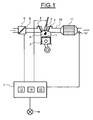
- a cylinder block 1 of an internal combustion engine for example diesel.
- the cylinder block 1 comprises a movably guided piston 2, a fuel injector 3, an intake valve 4 and an exhaust valve 5.
- An electronic control unit 7 controls the combustion, in particular by sending set values to the fuel injector 3, and the processing of the different signals.
- the electronic control unit 7 can also control a device 8, for example a valve, controlling the quantity of air supplying the combustion chamber 6.
- the amount of combustion air required and determined by the valve device 8 can be introduced from the intake pipe 9 to the combustion chamber 6.
- the exhaust gases exit the combustion chamber 6 through the exhaust valve 5 and are conveyed by an exhaust pipe 10 to one or more catalysts 11 (or catalytic converters) capable of treating NOx.
- the catalyst (s) 11 make it possible to treat the NOx by reducing it to water H 2 O and nitrogen N 2 mainly.
- NOx traps and SCR reduction catalysts (English: “selective catalytic reduction”).
- SCR reduction catalysts make it possible to store the NOx in a lean mixture and then reduce it to a rich mixture, while the SCR reduction catalysts continuously treat the NOx by continuously sending reducing agents into the catalyst by reduction.
- the catalyst 11 can be poisoned and thus lose NOx storage or treatment efficiency. Its effectiveness is then determined in order to decide whether or not to purge. To determine this efficiency, using a NOx sensor 12 mounted on the exhaust pipe 10, downstream of the catalyst 11, and for measuring the amount of NOx leaving the catalyst 11. The amount of NOx entering and / or stored in the catalyst 1 1, either by a model or by a NOx sensor mounted upstream of the catalyst 11.
- the electronic control unit 7 From the quantity of NOx entering and / or stored in the catalyst 11 and the amount of NOx leaving the catalyst 11, the electronic control unit 7 will determine the operating state of the catalyst 11, and in particular its possible poisoning.
- sulfur if catalyst 11 is a NOx trap
- hydrocarbons if the Catalyst 11 is a reduction catalyst. This avoids the use of a model for estimating the amount of sulfur or hydrocarbons in the catalyst 11, such a model being dependent on quantities that are difficult to measure (fuel quality, oil quality, conductor behavior, etc. ).
- the unit 7 comprises a first means 13 capable of calculating the value E of a quantity representative of the efficiency of the catalyst 11 from the quantity of NOx entering and / or stored in the catalyst 11, and the amount of NOx leaving the catalyst 11.
- a second means 14 then makes it possible, from the value E of the quantity representative of the efficiency of the catalyst 11 calculated by the first means 13, to compare this value at one or more thresholds and trigger, according to the result of the comparison, a purge procedure of the catalyst 11 (via, for example, the fuel injector 3 and / or the valve device 8) or information means 16.
- the embodiment shown on the figure 1 does not include a NOx sensor mounted upstream of the catalyst 11, and the amount of NOx entering and / or stored in the catalyst 11 is determined from a third means 15 included in the unit 7.
- the third means 15 can use, for example, a model for calculating the amount of NOx entering and / or stored in the catalyst 11.
- the model for calculating the amount of NOx entering and / or stored can thus be more or less complex depending on whether it does not take into account the normal aging of the catalyst 11.
- the third means 15 may then comprise representative stored values E th the theoretical evolution of the efficiency of the catalyst 11 as a function of time.
- the third means 15 is capable of calculating the difference between the value E of the quantity representative of the efficiency of the catalyst 11 and the theoretical value E th of the corresponding efficiency.
- the third means 15 again determines the quantity of NOx entering and / or stored taking into account the previously calculated deviation, so as to take account of the theoretical aging of the catalyst 11.
- the catalyst 11 is a NOx trap, and therefore that the degradation of the catalyst efficiency is due to sulfur poisoning of the NOx trap.
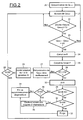
- the figure 2 illustrates a mode of implementation of the method according to the invention in the case of the first embodiment.
- the process starts with a step 20 for determining the amount NOx1 of NOx entering and / or stored in the NOx trap 11. It is considered in the following description that step 20 is carried out by the third means 15 (shown in FIG. on the figure 1 ) using a model for example, and is transmitted to the first means 13.
- the first means 13 also receives the measurement, made by the NOx sensor 12, of the amount of NOx leaving the NOx trap 11.
- This measurement can be expressed in moles and be directly usable by the first means. 13, for example when the sensor 12 measures the mass flow rate of NOx at the outlet of the NOx trap 11 and integrates this measurement over a predefined period.
- the first means 13 can use the control values of the valve device 8 and the fuel injector 3, supplied by the electronic control unit 7, to determine the flow rates D air and D carb .
- the speed of rotation N it can be measured in a conventional manner using, for example, a disc mounted on a crankshaft and associated with an angular mark sensor.
- the first means 13 can then calculate the value E of a magnitude representative of the efficiency of the NOx trap 11. To calculate this value in a reliable and robust manner, the first means 13 can firstly verify the relevance of the values received by the third means 15 and by the NOx sensor 12. Thus, in a step 22, the first means 13 can verify that the measurement of the quantity NOx2 NOx2 leaving the NOx trap 11 has been carried out during an integration time greater than a predefined threshold duration T0 for example 30 seconds. If the measurement of outgoing NOx has been made for a duration less than or equal to T0, then the process resumes in step 21; otherwise, the quantity Q NOx2 of outgoing NOx is considered sufficiently reliable.
- the first means 13 can verify that the amount of NOx entering and / or stored, determined by the third means 15, allows a reliable and robust calculation of the magnitude representative of the efficiency of the NOx trap 11
- the first means 13 can verify that the quantity of NOx leaving and / or stored Q NOx1 is greater than a predefined threshold Q0, for example 0.2 grams. If the quantity Q NOx1 is less than or equal to Q0, then the process resumes in step 20; otherwise, the amount of NOx1 entering NOx is considered sufficient to allow a reliable calculation of the magnitude representative of the efficiency of the trap.
- the calculation model of Q NOx1 of the third average 15 can be less complex and be corrected in a second step according to the method next.
- the third means 15 calculates for example the difference F between the value E of the efficiency calculated by the first means 13 and one of the stored values E th representing the evolution theoretical efficiency as a function of time.
- the values E th can be determined for example on a test bench or provided by the supplier of the NOx trap 11.
- the third means 15 compares the difference F with a predefined threshold F0, for example 20%.
- a predefined threshold F0 for example 20%.
- the difference F is greater than the threshold F0, it can be estimated that the calculation model of Q NOx1 determining the amount of NOx entering and / or stored in the trap NOx 11 is not sufficiently accurate. More specifically, the difference may be due to the natural aging of the NOx trap 11, which may not be taken into account by the calculation model of Q NOx1 and which, without correction, may lead to a poisoning of the NOx trap. 11 and purge unnecessary sulfur.
- the model of the third means 15 is modified or corrected, so as to take into account this natural aging of the NOx trap 11.
- the third means 15 recalculates, in step 27, the quantity Q NOx1 in taking into account the difference F, so that the quantity Q NOX1 thus recalculated takes into account the natural aging of the trap NOx 11.
- a counter A is incremented by 1.
- the counter A makes it possible to know how many successive corrections of the model of calculation of the quantity Q NOx1 have been made, and, during a step 29, the third means 15 compares the value of the counter A with a threshold A0, for example 5, in order to to determine if the efficiency drift calculated by the third means 15 with respect to the stored values E th is actually due to the NOx trap aging 11, or is due to sulfur poisoning of the NOx trap 11.
- a threshold A0 for example 5
- step 26 When, during step 26, the difference F is less than the threshold F0, then the calculation model of Q NOx1 is considered to be correct.
- the counter A is then reset in a step 30, and the value E of the efficiency is processed by the second means 14 to determine the action to be performed.
- the second means 14 receives the value E and compares it, in a step 31, with a first threshold S1 and a second threshold S2 lower than the first threshold S1, for example 55% and 40% respectively.
- a first threshold S1 and a second threshold S2 lower than the first threshold S1, for example 55% and 40% respectively.
- the loss of efficiency of the NOx trap 11 is considered to be consistent.
- the distance traveled G by the vehicle from the last sulfur purge to a predefined threshold G0, for example 1000 km is then compared in order to determine whether the loss of efficiency of the NOx trap 11 originates from a sulfur poisoning or is the consequence of the aging of the NOx trap 11.
- the second means 14 triggers, in a step 33, a sulfur purge procedure, and then stopping the process or the return to step 20, in a step 34.
- the sulfur purge procedure can for example be triggered by the second means 14 from the set values of the injector 3 and the valve device 8 which control the quantity of air and fuel supplying the combustion chamber 6. It is then possible to increase the temperature of the exhaust gases and / or vary the richness of the exhaust gases before entering the NOx trap.
- the second means 14 then triggers, in a step 35, information means 16.
- the second means 14 compares the value E with a third predefined threshold S3 less than or equal to the second threshold S2, in a step 36.
- the third threshold S3 may be equal to 30%. If the value E is lower than the third threshold S3, then it is believed that even a sulfur purge procedure of the NOx trap 11 will not recover sufficient long-term efficiency. In particular, when the sulfur poisoning is too important, it can then become irreversible.
- the second means 14 then triggers the information means 16 during step 35. If the value E of the efficiency is greater than the third threshold S3, the second means 14 triggers the stopping of the process or the return to the step 20, in step 34.
- the system may comprise a second NOx sensor similar to the sensor 12 and mounted upstream of the catalyst 11.
- the quantity Q NOx1 entering the catalyst 11 is determined in such a way that analogous to the quantity Q NOx2 leaving the catalyst 11, and the third means 15 can be suppressed.
- the method is implemented analogously, except that the correction steps of the calculation model of Q NOx1 (steps 25 to 30) are no longer carried out.
- the system and the method according to the invention make it possible, thanks to a NOx sensor mounted downstream of the catalyst, to manage the sulfur or hydrocarbon purges of the catalyst.
- This management is more precise than a sulfur or hydrocarbon loading model, because the NOx sensor makes it possible to actually measure the NOx treatment while a loading model would estimate a quantity of sulfur or hydrocarbon depending on many parameters.
- the method makes it possible, especially from the measurements of the sensor, to determine the poisoning and aging of the catalyst.
- the purge management also makes it possible not to trigger purges unnecessarily, for example when the decrease in the efficiency of the catalyst is due to natural aging. This avoids further degradation of the catalyst caused by the purges, and especially additional emissions of hydrocarbons and carbon monoxide in particular at the exhaust outlet.
- the process according to the invention is carried out passively and has no consequences on the polluting emissions of the system or on the degradation of the system.
- the method can then be implemented frequently and the decision on the action to be triggered can then be made from several results provided by the method, rather than a single one.
Landscapes
- Engineering & Computer Science (AREA)
- Chemical & Material Sciences (AREA)
- Combustion & Propulsion (AREA)
- Mechanical Engineering (AREA)
- General Engineering & Computer Science (AREA)
- Chemical Kinetics & Catalysis (AREA)
- Exhaust Gas After Treatment (AREA)
Claims (8)
- Verfahren zur Verwaltung eines Moduls zur Behandlung der von einem Verbrennungsmotor eines Kraftfahrzeugs erzeugten Abgase, wobei das Behandlungsmodul einen Katalysator (11) enthält, der in den Abgasen vorhandene Stickoxide (NOx) behandeln kann, wobei der Katalysator eine NOx-Falle oder ein Reduktionskatalysator ist, dadurch gekennzeichnet, dass:- die Menge (QNOx2) von aus dem Katalysator austretenden NOx gemessen wird;- die in den Katalysator eintretende und/oder dort gespeicherte Menge (QNOx1) von NOx bestimmt wird;- ausgehend von der in den Katalysator eintretenden und/oder dort gespeicherten Menge (QNOx1) von NOx und von der aus dem Katalysator austretenden Menge (QNOx2) von NOx der Wert (E) einer Größe berechnet wird, die für die Wirksamkeit des Katalysators bei der Behandlung der NOx repräsentativ ist;- der Wert (E) der für die Wirksamkeit des Katalysators repräsentativen Größe mit einer ersten Schwelle (S1) und mit einer zweiten Schwelle (S2) unter der ersten Schwelle (S1) verglichen wird, und, wenn der Wert (E) der für die Wirksamkeit des Katalysators repräsentativen Größe unter der ersten Schwelle (S1) und über der zweiten Schwelle (S2) liegt, ein Entleerungsverfahren des Katalysators ausgelöst wird, Entleerung des Schwefels im Fall einer NOx-Falle, Entleerung mit Kohlenwasserstoffen im Fall eines Reduktionskatalysators, wenn die vom Kraftfahrzeug seit der letzten Entleerung zurückgelegte Strecke (G) über einem gespeicherten oder bestimmten Wert (G0) liegt, oder die Informationseinrichtungen (16) ausgelöst werden, wenn die zurückgelegte Strecke (G) unter dem gespeicherten oder bestimmten Wert (G0) liegt.
- Verfahren nach Anspruch 1, bei dem der Wert (E) der für die Wirksamkeit des Katalysators repräsentativen Größe mit einer dritten Schwelle (S3) verglichen wird, die unter der zweiten Schwelle (S2) liegt, und, wenn der Wert (E) der für die Wirksamkeit des Katalysators repräsentativen Größe unter der dritten Schwelle (S3) liegt, die Informationseinrichtungen (16) ausgelöst werden.
- Verfahren nach einem der Ansprüche 1 bis 2, bei dem die in den Katalysator eintretende Menge (QNOx1) von NOx ausgehend von gemessenen Werten bestimmt wird.
- Verfahren nach einem der Ansprüche 1 bis 2, bei dem die in den Katalysator eintretende und/oder dort gespeicherte Menge (QNOx1) von NOx ausgehend von gespeicherten oder bestimmten Werten bestimmt wird.
- Verfahren nach Anspruch 4, bei dem vor dem Vergleich des Werts (E) der für die Wirksamkeit des Katalysators repräsentativen Größe mit der ersten Schwelle (S1) die Abweichung (F) zwischen dem Wert (E) der für die Wirksamkeit des Katalysators repräsentativen Größe und einem gespeicherten oder bestimmten Wert (Eth) berechnet wird, und bei dem, wenn die Abweichung (F) über einer vierten Schwelle (F0) liegt, die in den Katalysator eintretende und/oder dort gespeicherte Menge (QNOx1) von NOx ausgehend von gespeicherten oder bestimmten Werten und ausgehend von der berechneten Abweichung (F) erneut bestimmt wird, um das Altern des Katalysators zu berücksichtigen.
- System zur Verwaltung eines Moduls zur Behandlung der von einem Verbrennungsmotor eines Kraftfahrzeugs erzeugten Abgase, dadurch gekennzeichnet, dass es enthält:- einen Beförderungskreis der Abgase,- einen Katalysator (11), der in den Beförderungskreis montiert ist und in den Abgasen vorhandene Stickoxide (NOx) behandeln kann, wobei der Katalysator eine NOx-Falle oder ein Reduktionskatalysator ist,- eine NOx-Sonde (12), die in den Beförderungskreis hinter dem Katalysator (11) montiert ist und die aus dem Katalysator austretende Menge (QNOx2) von NOx messen kann,- eine Einrichtung, die die in den Katalysator eintretende und/oder dort gespeicherte Menge (QNOx1) von NOx bestimmen kann, und- eine elektronische Steuereinheit (7), die enthält:- eine erste Einrichtung (13), die ausgehend von der in den Katalysator eintretenden und/oder dort gespeicherten Menge (QNOx1) von NOx und von der aus dem Katalysator austretenden Menge (QNOx2) von NOx den Wert (E) einer für die Wirksamkeit des Katalysators bei der Behandlung der NOx repräsentativen Größe berechnen kann;- eine zweite Einrichtung (14), die den Wert (E) der für die Wirksamkeit des Katalysators repräsentativen Größe mit einer ersten Schwelle (S1) und mit einer zweiten Schwelle (S2) unter der ersten Schwelle (S1) vergleichen kann, und die, wenn der Wert (E) der für die Wirksamkeit des Katalysators repräsentativen Größe unter der ersten Schwelle (S1) und über der zweiten Schwelle (S2) liegt, eine Entleerungsprozedur des Katalysators auslösen kann, Entleerung des Schwefels im Fall einer NOx-Falle, Entleerung mit Kohlenwasserstoffen im Fall eines Reduktionskatalysators, wenn die vom Kraftfahrzeug seit der letzten Entleerung zurückgelegte Strecke (G) über einem gespeicherten oder bestimmten Wert (G0) liegt, oder die Informationseinrichtungen (16) auslösen kann, wenn die zurückgelegte Strecke (G) unter dem gespeicherten oder bestimmten Wert (G0) liegt.
- Verwaltungssystem nach Anspruch 6, bei dem die zweite Einrichtung (14) den Wert (E) der für die Wirksamkeit des Katalysators repräsentative Größe mit einer dritten Schwelle (S3) unter der zweiten Schwelle (S2) vergleichen kann, und wenn der Wert (E) der für die Wirksamkeit des Katalysators repräsentativen Größe unter der dritten Schwelle (S3) liegt, die Informationseinrichtungen (16) auslösen kann.
- Verwaltungssystem nach einem der Ansprüche 6 bis 7, bei dem die Einrichtung, die die in den Katalysator eintretende und/oder dort gespeicherte Menge (QNOx1) von NOx bestimmen kann, eine dritte Einrichtung (15) ist, die in der elektronischen Steuereinheit (7) enthalten ist, wobei die dritte Einrichtung (15) die in den Katalysator eintretende und/oder dort gespeicherte Menge (QNOx1) von NOx ausgehend von gespeicherten oder bestimmten Werten bestimmen und die Abweichung (F) zwischen dem Wert (E) der für die Wirksamkeit des Katalysators repräsentativen Größe und einem gespeicherten oder bestimmten Wert (Eth) berechnen kann, damit, wenn die Abweichung (F) über einer vierten Schwelle (F0) liegt, die dritte Einrichtung (15) erneut die in den Katalysator eintretende und/oder dort gespeicherte Menge (QNOx1) von NOx ausgehend von gespeicherten oder bestimmten Werten und ausgehend von der berechneten Abweichung (F) bestimmen kann, um das Altern des Katalysators (11) zu berücksichtigen.
Applications Claiming Priority (2)
| Application Number | Priority Date | Filing Date | Title |
|---|---|---|---|
| FR0757831A FR2921418B1 (fr) | 2007-09-25 | 2007-09-25 | Procede et systeme de gestion d'un module de traitement des gaz d'echappement |
| PCT/FR2008/051450 WO2009040485A2 (fr) | 2007-09-25 | 2008-08-01 | Procede et systeme de gestion d'un module de traitement des gaz d'echappement |
Publications (2)
| Publication Number | Publication Date |
|---|---|
| EP2193261A2 EP2193261A2 (de) | 2010-06-09 |
| EP2193261B1 true EP2193261B1 (de) | 2012-01-04 |
Family
ID=39408015
Family Applications (1)
| Application Number | Title | Priority Date | Filing Date |
|---|---|---|---|
| EP08834427A Not-in-force EP2193261B1 (de) | 2007-09-25 | 2008-08-01 | Verfahren und vorrichtung zur handhabung eines abgasbehandlungsmoduls |
Country Status (4)
| Country | Link |
|---|---|
| EP (1) | EP2193261B1 (de) |
| AT (1) | ATE540204T1 (de) |
| FR (1) | FR2921418B1 (de) |
| WO (1) | WO2009040485A2 (de) |
Families Citing this family (2)
| Publication number | Priority date | Publication date | Assignee | Title |
|---|---|---|---|---|
| GB2513614A (en) * | 2013-05-01 | 2014-11-05 | Gm Global Tech Operations Inc | Method of operating a lean NOx trap in an internal combustion engine |
| JP6435369B2 (ja) * | 2017-04-26 | 2018-12-05 | 株式会社キャタラー | 排ガス浄化システム及び自動推進車両 |
Family Cites Families (2)
| Publication number | Priority date | Publication date | Assignee | Title |
|---|---|---|---|---|
| ITBO20010762A1 (it) * | 2001-12-14 | 2003-06-16 | Magneti Marelli Powertrain Spa | Metodo per la stima del contenuto di zolfo nel carburante di un motore a combustione interna |
| US20040031261A1 (en) * | 2002-08-13 | 2004-02-19 | Jing Sun | System and method for lean NOx trap control and diagnosis |
-
2007
- 2007-09-25 FR FR0757831A patent/FR2921418B1/fr not_active Expired - Fee Related
-
2008
- 2008-08-01 WO PCT/FR2008/051450 patent/WO2009040485A2/fr not_active Ceased
- 2008-08-01 AT AT08834427T patent/ATE540204T1/de active
- 2008-08-01 EP EP08834427A patent/EP2193261B1/de not_active Not-in-force
Also Published As
| Publication number | Publication date |
|---|---|
| FR2921418A1 (fr) | 2009-03-27 |
| EP2193261A2 (de) | 2010-06-09 |
| FR2921418B1 (fr) | 2014-01-24 |
| ATE540204T1 (de) | 2012-01-15 |
| WO2009040485A2 (fr) | 2009-04-02 |
| WO2009040485A3 (fr) | 2009-05-14 |
Similar Documents
| Publication | Publication Date | Title |
|---|---|---|
| EP3014082B1 (de) | System und verfahren zur diagnose des selektiven katalytischen reduktionssystems eines kraftfahrzeugs | |
| EP2274506B1 (de) | Verfahren zur korrektur von stickoxidemissionsmodellen | |
| EP3819483B1 (de) | Verfahren zur bestimmung der quantität von stickoxiden (nox) und/oder der quantität von ammoniak (nh3) stromab einer nox-falle | |
| EP3090154B1 (de) | Nachweis und quantifizierung von ammoniaklecks abwärts von einem system zur selektiven katalytischen reduktion von stickoxiden | |
| EP1759107B1 (de) | Verfahren und vorrichtung zur verwaltung des betriebs einer stickoxidfalle und diagnostizierung ihres alterungszustandes | |
| WO2007090975A2 (fr) | SYSTEME ET PROCEDE D'ELIMINATION DE SOx (OXYDE DE SOUFRE), SUPERVISEUR POUR CE SYSTEME | |
| EP2193261B1 (de) | Verfahren und vorrichtung zur handhabung eines abgasbehandlungsmoduls | |
| EP2802760B1 (de) | Optimierte verwaltung eines scr-katalysators mittels periodischer regeneration eines partikelfilters | |
| EP2935814B1 (de) | Verfahren zur diagnose einer stickoxidfalle und zugehöriger motor | |
| EP3765720A1 (de) | Verfahren und vorrichtung zur bestimmung des vorhandenseins und des betriebs eines partikelfilters | |
| EP3237738B1 (de) | Verfahren zur regeneration einer stickoxidfalle | |
| WO2022084067A1 (fr) | Calculateur pour diagnostic d'encrassement d'une sonde pour vehicule | |
| FR2862709A1 (fr) | Procede pour optimiser les valeurs des gaz d'echappement d'un moteur thermique | |
| WO2013139526A1 (fr) | Procédé de détermination de la quantité d'ammoniac stockée dans un catalyseur, et système correspondant | |
| FR2929988A1 (fr) | Procede de determination de la capacite de stockage d'un piege a oxydes d'azote. | |
| EP2147200B1 (de) | Verfahren und vorrichtung zur anpassung der temperaturschätzvorrichtung eines abgasnachbehandlungssystems | |
| FR2953559A1 (fr) | Systeme et procede d'estimation de la masse de particules stockees dans un filtre a particules de vehicule automobile | |
| FR2893979A1 (fr) | Procede de mesure de la pression dans un systeme de post-traitement d'un moteur thermique. | |
| FR3154143A1 (fr) | Procede pour calculer une quantite d’effluents azotes dans un moteur a combustion interne | |
| EP3536920A1 (de) | Korrekturverfahren einer schätzung einer menge an stickoxiden in abhängigkeit von der luftfeuchtigkeitsrate | |
| FR2933737A1 (fr) | Procede de detection de soufre dans un carburant et moteur a combustion interne utilisant ce procede | |
| FR2846708A1 (fr) | Procede pour la determination d'une charge d'un filtre a particules dans le trajet d'echappement d'un moteur a combustion interne | |
| FR2980521A1 (fr) | Systeme et procede d'estimation de la masse d'oxydes de soufre stockee dans un piege a oxydes d'azote | |
| FR2927363A1 (fr) | Procede de diagnostic de l'etat d'un filtre a particules de moteur thermique | |
| FR2934313A3 (fr) | DIAGNOSTIC D'UN PIEGE A NOx DE VEHICULE AUTOMOBILE |
Legal Events
| Date | Code | Title | Description |
|---|---|---|---|
| PUAI | Public reference made under article 153(3) epc to a published international application that has entered the european phase |
Free format text: ORIGINAL CODE: 0009012 |
|
| 17P | Request for examination filed |
Effective date: 20100309 |
|
| AK | Designated contracting states |
Kind code of ref document: A2 Designated state(s): AT BE BG CH CY CZ DE DK EE ES FI FR GB GR HR HU IE IS IT LI LT LU LV MC MT NL NO PL PT RO SE SI SK TR |
|
| AX | Request for extension of the european patent |
Extension state: AL BA MK RS |
|
| 17Q | First examination report despatched |
Effective date: 20101111 |
|
| GRAP | Despatch of communication of intention to grant a patent |
Free format text: ORIGINAL CODE: EPIDOSNIGR1 |
|
| DAX | Request for extension of the european patent (deleted) | ||
| GRAS | Grant fee paid |
Free format text: ORIGINAL CODE: EPIDOSNIGR3 |
|
| GRAA | (expected) grant |
Free format text: ORIGINAL CODE: 0009210 |
|
| AK | Designated contracting states |
Kind code of ref document: B1 Designated state(s): AT BE BG CH CY CZ DE DK EE ES FI FR GB GR HR HU IE IS IT LI LT LU LV MC MT NL NO PL PT RO SE SI SK TR |
|
| REG | Reference to a national code |
Ref country code: GB Ref legal event code: FG4D Free format text: NOT ENGLISH |
|
| REG | Reference to a national code |
Ref country code: CH Ref legal event code: EP |
|
| REG | Reference to a national code |
Ref country code: AT Ref legal event code: REF Ref document number: 540204 Country of ref document: AT Kind code of ref document: T Effective date: 20120115 |
|
| REG | Reference to a national code |
Ref country code: IE Ref legal event code: FG4D |
|
| REG | Reference to a national code |
Ref country code: DE Ref legal event code: R096 Ref document number: 602008012526 Country of ref document: DE Effective date: 20120308 |
|
| REG | Reference to a national code |
Ref country code: NL Ref legal event code: VDEP Effective date: 20120104 |
|
| PG25 | Lapsed in a contracting state [announced via postgrant information from national office to epo] |
Ref country code: SI Free format text: LAPSE BECAUSE OF FAILURE TO SUBMIT A TRANSLATION OF THE DESCRIPTION OR TO PAY THE FEE WITHIN THE PRESCRIBED TIME-LIMIT Effective date: 20120104 |
|
| LTIE | Lt: invalidation of european patent or patent extension |
Effective date: 20120104 |
|
| PG25 | Lapsed in a contracting state [announced via postgrant information from national office to epo] |
Ref country code: BG Free format text: LAPSE BECAUSE OF FAILURE TO SUBMIT A TRANSLATION OF THE DESCRIPTION OR TO PAY THE FEE WITHIN THE PRESCRIBED TIME-LIMIT Effective date: 20120404 Ref country code: HR Free format text: LAPSE BECAUSE OF FAILURE TO SUBMIT A TRANSLATION OF THE DESCRIPTION OR TO PAY THE FEE WITHIN THE PRESCRIBED TIME-LIMIT Effective date: 20120104 Ref country code: LT Free format text: LAPSE BECAUSE OF FAILURE TO SUBMIT A TRANSLATION OF THE DESCRIPTION OR TO PAY THE FEE WITHIN THE PRESCRIBED TIME-LIMIT Effective date: 20120104 Ref country code: NO Free format text: LAPSE BECAUSE OF FAILURE TO SUBMIT A TRANSLATION OF THE DESCRIPTION OR TO PAY THE FEE WITHIN THE PRESCRIBED TIME-LIMIT Effective date: 20120404 Ref country code: NL Free format text: LAPSE BECAUSE OF FAILURE TO SUBMIT A TRANSLATION OF THE DESCRIPTION OR TO PAY THE FEE WITHIN THE PRESCRIBED TIME-LIMIT Effective date: 20120104 Ref country code: IS Free format text: LAPSE BECAUSE OF FAILURE TO SUBMIT A TRANSLATION OF THE DESCRIPTION OR TO PAY THE FEE WITHIN THE PRESCRIBED TIME-LIMIT Effective date: 20120504 |
|
| REG | Reference to a national code |
Ref country code: IE Ref legal event code: FD4D |
|
| PG25 | Lapsed in a contracting state [announced via postgrant information from national office to epo] |
Ref country code: LV Free format text: LAPSE BECAUSE OF FAILURE TO SUBMIT A TRANSLATION OF THE DESCRIPTION OR TO PAY THE FEE WITHIN THE PRESCRIBED TIME-LIMIT Effective date: 20120104 Ref country code: PT Free format text: LAPSE BECAUSE OF FAILURE TO SUBMIT A TRANSLATION OF THE DESCRIPTION OR TO PAY THE FEE WITHIN THE PRESCRIBED TIME-LIMIT Effective date: 20120504 Ref country code: GR Free format text: LAPSE BECAUSE OF FAILURE TO SUBMIT A TRANSLATION OF THE DESCRIPTION OR TO PAY THE FEE WITHIN THE PRESCRIBED TIME-LIMIT Effective date: 20120405 Ref country code: PL Free format text: LAPSE BECAUSE OF FAILURE TO SUBMIT A TRANSLATION OF THE DESCRIPTION OR TO PAY THE FEE WITHIN THE PRESCRIBED TIME-LIMIT Effective date: 20120104 Ref country code: FI Free format text: LAPSE BECAUSE OF FAILURE TO SUBMIT A TRANSLATION OF THE DESCRIPTION OR TO PAY THE FEE WITHIN THE PRESCRIBED TIME-LIMIT Effective date: 20120104 |
|
| REG | Reference to a national code |
Ref country code: AT Ref legal event code: MK05 Ref document number: 540204 Country of ref document: AT Kind code of ref document: T Effective date: 20120104 |
|
| PG25 | Lapsed in a contracting state [announced via postgrant information from national office to epo] |
Ref country code: CY Free format text: LAPSE BECAUSE OF FAILURE TO SUBMIT A TRANSLATION OF THE DESCRIPTION OR TO PAY THE FEE WITHIN THE PRESCRIBED TIME-LIMIT Effective date: 20120104 |
|
| PG25 | Lapsed in a contracting state [announced via postgrant information from national office to epo] |
Ref country code: DK Free format text: LAPSE BECAUSE OF FAILURE TO SUBMIT A TRANSLATION OF THE DESCRIPTION OR TO PAY THE FEE WITHIN THE PRESCRIBED TIME-LIMIT Effective date: 20120104 Ref country code: IE Free format text: LAPSE BECAUSE OF FAILURE TO SUBMIT A TRANSLATION OF THE DESCRIPTION OR TO PAY THE FEE WITHIN THE PRESCRIBED TIME-LIMIT Effective date: 20120104 Ref country code: SE Free format text: LAPSE BECAUSE OF FAILURE TO SUBMIT A TRANSLATION OF THE DESCRIPTION OR TO PAY THE FEE WITHIN THE PRESCRIBED TIME-LIMIT Effective date: 20120104 Ref country code: CZ Free format text: LAPSE BECAUSE OF FAILURE TO SUBMIT A TRANSLATION OF THE DESCRIPTION OR TO PAY THE FEE WITHIN THE PRESCRIBED TIME-LIMIT Effective date: 20120104 Ref country code: EE Free format text: LAPSE BECAUSE OF FAILURE TO SUBMIT A TRANSLATION OF THE DESCRIPTION OR TO PAY THE FEE WITHIN THE PRESCRIBED TIME-LIMIT Effective date: 20120104 Ref country code: RO Free format text: LAPSE BECAUSE OF FAILURE TO SUBMIT A TRANSLATION OF THE DESCRIPTION OR TO PAY THE FEE WITHIN THE PRESCRIBED TIME-LIMIT Effective date: 20120104 |
|
| PLBE | No opposition filed within time limit |
Free format text: ORIGINAL CODE: 0009261 |
|
| STAA | Information on the status of an ep patent application or granted ep patent |
Free format text: STATUS: NO OPPOSITION FILED WITHIN TIME LIMIT |
|
| PG25 | Lapsed in a contracting state [announced via postgrant information from national office to epo] |
Ref country code: IT Free format text: LAPSE BECAUSE OF FAILURE TO SUBMIT A TRANSLATION OF THE DESCRIPTION OR TO PAY THE FEE WITHIN THE PRESCRIBED TIME-LIMIT Effective date: 20120104 Ref country code: SK Free format text: LAPSE BECAUSE OF FAILURE TO SUBMIT A TRANSLATION OF THE DESCRIPTION OR TO PAY THE FEE WITHIN THE PRESCRIBED TIME-LIMIT Effective date: 20120104 |
|
| 26N | No opposition filed |
Effective date: 20121005 |
|
| PG25 | Lapsed in a contracting state [announced via postgrant information from national office to epo] |
Ref country code: AT Free format text: LAPSE BECAUSE OF FAILURE TO SUBMIT A TRANSLATION OF THE DESCRIPTION OR TO PAY THE FEE WITHIN THE PRESCRIBED TIME-LIMIT Effective date: 20120104 |
|
| REG | Reference to a national code |
Ref country code: DE Ref legal event code: R097 Ref document number: 602008012526 Country of ref document: DE Effective date: 20121005 |
|
| BERE | Be: lapsed |
Owner name: RENAULT S.A.S. Effective date: 20120831 |
|
| REG | Reference to a national code |
Ref country code: CH Ref legal event code: PL |
|
| PG25 | Lapsed in a contracting state [announced via postgrant information from national office to epo] |
Ref country code: MC Free format text: LAPSE BECAUSE OF NON-PAYMENT OF DUE FEES Effective date: 20120831 |
|
| GBPC | Gb: european patent ceased through non-payment of renewal fee |
Effective date: 20120801 |
|
| PG25 | Lapsed in a contracting state [announced via postgrant information from national office to epo] |
Ref country code: LI Free format text: LAPSE BECAUSE OF NON-PAYMENT OF DUE FEES Effective date: 20120831 Ref country code: CH Free format text: LAPSE BECAUSE OF NON-PAYMENT OF DUE FEES Effective date: 20120831 Ref country code: ES Free format text: LAPSE BECAUSE OF FAILURE TO SUBMIT A TRANSLATION OF THE DESCRIPTION OR TO PAY THE FEE WITHIN THE PRESCRIBED TIME-LIMIT Effective date: 20120415 |
|
| PG25 | Lapsed in a contracting state [announced via postgrant information from national office to epo] |
Ref country code: BE Free format text: LAPSE BECAUSE OF NON-PAYMENT OF DUE FEES Effective date: 20120831 |
|
| PG25 | Lapsed in a contracting state [announced via postgrant information from national office to epo] |
Ref country code: GB Free format text: LAPSE BECAUSE OF NON-PAYMENT OF DUE FEES Effective date: 20120801 |
|
| PG25 | Lapsed in a contracting state [announced via postgrant information from national office to epo] |
Ref country code: MT Free format text: LAPSE BECAUSE OF FAILURE TO SUBMIT A TRANSLATION OF THE DESCRIPTION OR TO PAY THE FEE WITHIN THE PRESCRIBED TIME-LIMIT Effective date: 20120104 |
|
| PG25 | Lapsed in a contracting state [announced via postgrant information from national office to epo] |
Ref country code: TR Free format text: LAPSE BECAUSE OF FAILURE TO SUBMIT A TRANSLATION OF THE DESCRIPTION OR TO PAY THE FEE WITHIN THE PRESCRIBED TIME-LIMIT Effective date: 20120104 |
|
| PG25 | Lapsed in a contracting state [announced via postgrant information from national office to epo] |
Ref country code: LU Free format text: LAPSE BECAUSE OF NON-PAYMENT OF DUE FEES Effective date: 20120801 |
|
| PG25 | Lapsed in a contracting state [announced via postgrant information from national office to epo] |
Ref country code: HU Free format text: LAPSE BECAUSE OF FAILURE TO SUBMIT A TRANSLATION OF THE DESCRIPTION OR TO PAY THE FEE WITHIN THE PRESCRIBED TIME-LIMIT Effective date: 20080801 |
|
| REG | Reference to a national code |
Ref country code: FR Ref legal event code: PLFP Year of fee payment: 8 |
|
| REG | Reference to a national code |
Ref country code: FR Ref legal event code: PLFP Year of fee payment: 9 |
|
| PGFP | Annual fee paid to national office [announced via postgrant information from national office to epo] |
Ref country code: DE Payment date: 20160822 Year of fee payment: 9 |
|
| PGFP | Annual fee paid to national office [announced via postgrant information from national office to epo] |
Ref country code: FR Payment date: 20160822 Year of fee payment: 9 |
|
| REG | Reference to a national code |
Ref country code: DE Ref legal event code: R119 Ref document number: 602008012526 Country of ref document: DE |
|
| REG | Reference to a national code |
Ref country code: FR Ref legal event code: ST Effective date: 20180430 |
|
| PG25 | Lapsed in a contracting state [announced via postgrant information from national office to epo] |
Ref country code: DE Free format text: LAPSE BECAUSE OF NON-PAYMENT OF DUE FEES Effective date: 20180301 |
|
| PG25 | Lapsed in a contracting state [announced via postgrant information from national office to epo] |
Ref country code: FR Free format text: LAPSE BECAUSE OF NON-PAYMENT OF DUE FEES Effective date: 20170831 |