EP2193671B1 - Reduzierung einer falschen zugangsberechtigung für eine multicast-sitzung in einem mobil-kommunikation netzwerk - Google Patents
Reduzierung einer falschen zugangsberechtigung für eine multicast-sitzung in einem mobil-kommunikation netzwerk Download PDFInfo
- Publication number
- EP2193671B1 EP2193671B1 EP08833944.5A EP08833944A EP2193671B1 EP 2193671 B1 EP2193671 B1 EP 2193671B1 EP 08833944 A EP08833944 A EP 08833944A EP 2193671 B1 EP2193671 B1 EP 2193671B1
- Authority
- EP
- European Patent Office
- Prior art keywords
- message
- announce
- announce message
- multicast session
- available
- Prior art date
- Legal status (The legal status is an assumption and is not a legal conclusion. Google has not performed a legal analysis and makes no representation as to the accuracy of the status listed.)
- Not-in-force
Links
- 238000004891 communication Methods 0.000 title claims description 49
- 238000000034 method Methods 0.000 claims description 38
- 230000005540 biological transmission Effects 0.000 claims description 11
- 230000004044 response Effects 0.000 claims description 9
- 230000011664 signaling Effects 0.000 claims description 5
- 230000000977 initiatory effect Effects 0.000 claims 2
- 230000006870 function Effects 0.000 description 11
- 230000001413 cellular effect Effects 0.000 description 10
- 230000008569 process Effects 0.000 description 9
- 230000009471 action Effects 0.000 description 7
- 239000003999 initiator Substances 0.000 description 7
- 238000005516 engineering process Methods 0.000 description 5
- 238000012546 transfer Methods 0.000 description 5
- 239000011157 advanced composite material Substances 0.000 description 4
- 230000003287 optical effect Effects 0.000 description 4
- 239000000835 fiber Substances 0.000 description 3
- 238000010295 mobile communication Methods 0.000 description 3
- 230000032258 transport Effects 0.000 description 3
- 230000008901 benefit Effects 0.000 description 2
- 238000010586 diagram Methods 0.000 description 2
- 239000002245 particle Substances 0.000 description 2
- 239000002699 waste material Substances 0.000 description 2
- 238000013475 authorization Methods 0.000 description 1
- 238000006243 chemical reaction Methods 0.000 description 1
- 239000003795 chemical substances by application Substances 0.000 description 1
- 238000004590 computer program Methods 0.000 description 1
- 238000013461 design Methods 0.000 description 1
- 230000002452 interceptive effect Effects 0.000 description 1
- 238000012986 modification Methods 0.000 description 1
- 230000004048 modification Effects 0.000 description 1
- 238000012544 monitoring process Methods 0.000 description 1
- 238000012545 processing Methods 0.000 description 1
- 238000001228 spectrum Methods 0.000 description 1
- 230000001629 suppression Effects 0.000 description 1
Images


Classifications
-
- H—ELECTRICITY
- H04—ELECTRIC COMMUNICATION TECHNIQUE
- H04W—WIRELESS COMMUNICATION NETWORKS
- H04W4/00—Services specially adapted for wireless communication networks; Facilities therefor
- H04W4/06—Selective distribution of broadcast services, e.g. multimedia broadcast multicast service [MBMS]; Services to user groups; One-way selective calling services
- H04W4/10—Push-to-Talk [PTT] or Push-On-Call services
-
- H—ELECTRICITY
- H04—ELECTRIC COMMUNICATION TECHNIQUE
- H04W—WIRELESS COMMUNICATION NETWORKS
- H04W76/00—Connection management
- H04W76/10—Connection setup
- H04W76/18—Management of setup rejection or failure
-
- H—ELECTRICITY
- H04—ELECTRIC COMMUNICATION TECHNIQUE
- H04W—WIRELESS COMMUNICATION NETWORKS
- H04W76/00—Connection management
- H04W76/40—Connection management for selective distribution or broadcast
- H04W76/45—Connection management for selective distribution or broadcast for Push-to-Talk [PTT] or Push-to-Talk over cellular [PoC] services
-
- H—ELECTRICITY
- H04—ELECTRIC COMMUNICATION TECHNIQUE
- H04W—WIRELESS COMMUNICATION NETWORKS
- H04W72/00—Local resource management
- H04W72/30—Resource management for broadcast services
Definitions
- the invention relates to communications in a wireless telecommunication system and, more particularly to methods of reducing an occurrence of false grants for a multicast session within a wireless communications network.
- Wireless communication systems have developed through various generations, including a first-generation analog wireless phone service (1G), a second-generation (2G) digital wireless phone service (including interim 2.5G and 2.75G networks) and a third-generation (3G) high speed data / Internet-capable wireless service.
- 1G first-generation analog wireless phone service
- 2G second-generation digital wireless phone service
- 3G third-generation
- technologies including Cellular and Personal Communications Service (PCS) systems.
- Examples of known cellular systems include the cellular Analog Advanced Mobile Phone System (AMPS), and digital cellular systems based on Code Division Multiple Access (CDMA), Frequency Division Multiple Access (FDMA), Time Division Multiple Access (TDMA), the Global System for Mobile access (GSM) variation of TDMA, and newer hybrid digital communication systems using both TDMA and CDMA technologies.
- CDMA Code Division Multiple Access
- FDMA Frequency Division Multiple Access
- TDMA Time Division Multiple Access
- GSM Global System for Mobile access
- newer hybrid digital communication systems using both TDMA and CDMA technologies
- the method for providing CDMA mobile communications was standardized in the United States by the Telecommunications Industry Association/Electronic Industries Association in TIA/EIA/IS-95-A entitled "Mobile Station-Base Station Compatibility Standard for Dual-Mode Wideband Spread Spectrum Cellular System," referred to herein as IS-95.
- Combined AMPS & CDMA systems are described in TIA/EIA Standard IS-98.
- Other communications systems are described in the IMT-2000/UM, or International Mobile Telecommunications System 2000/Universal Mobile Telecommunications System, standards covering what are referred to as wideband CDMA (WCDMA), CDMA2000 (such as CDMA2000 1xEV-DO standards, for example) or TD-SCDMA.
- mobile stations, handsets, or access terminals receive signals from fixed position base stations (also referred to as cell sites or cells) that support communication links or service within particular geographic regions adjacent to or surrounding the base stations.
- Base stations provide entry points to an access network (AN) / radio access network (RAN), which is generally a packet data network using standard Internet Engineering Task Force (IETF) based protocols that support methods for differentiating traffic based on Quality of Service (QoS) requirements. Therefore, the base stations generally interact with ATs through an over the air interface and with the AN through Internet Protocol (IP) network data packets.
- AN access network
- RAN radio access network
- IP Internet Protocol
- Push-to-talk (PTT) capabilities are becoming popular with service sectors and consumers.
- PTT can support a "dispatch" voice service that operates over standard commercial wireless infrastructures, such as CDMA, FDMA, TDMA, GSM, etc.
- a dispatch model communication between endpoints (ATs) occurs within virtual groups, wherein the voice of one "talker" is transmitted to one or more "listeners.”
- a single instance of this type of communication is commonly referred to as a dispatch call, or simply a PTT call.
- a PTT call is an instantiation of a group, which defines the characteristics of a call.
- a group in essence is defined by a member list and associated information, such as group name or group identification.
- a transmission of data to a single destination is referred to as "unicast".
- a “broadcast” refers to a transmission of data packets to all destinations or access terminals (e.g., within a given cell, served by a given service provider, etc.), while a “multicast” refers to a transmission of data packets to a given group of destinations or access terminals.
- the given group of destinations or "multicast group” may include more than one and less than all of possible destinations or access terminals (e.g., within a given group, served by a given service provider, etc.). However, it is at least possible in certain situations that the multicast group comprises only one access terminal, similar to a unicast, or alternatively that the multicast group comprises all access terminals (e.g., within a cell or sector), similar to a broadcast.
- Broadcasts and/or multicasts may be performed within wireless communication systems in a number of ways, such as performing a plurality of sequential unicast operations to accommodate the multicast group, allocating a unique broadcast/multicast channel (BCH) for handling multiple data transmissions at the same time and the like.
- BCH broadcast/multicast channel
- a conventional system using a broadcast channel for push-to-talk communications is described in United States Patent Application Publication No. 2007/0049314 dated March 1 , 2007 and entitled "Push-To-Talk Group Call System Using CDMA Ix-EVDO Cellular Network".
- a broadcast channel can be used for push-to-talk calls using conventional signaling techniques.
- the use of a broadcast channel may improve bandwidth requirements over conventional unicast techniques, the conventional signaling of the broadcast channel can still result in additional overhead and/or delay and may degrade system performance.
- 3GPP2 The 3 rd Generation Partnership Project 2 (“3GPP2") defines a broadcast-multicast service (BCMCS) specification for supporting multicast communications in CDMA2000 networks. Accordingly, a version of 3GPP2's BCMCS specification, entitled “CDMA2000 High Rate Broadcast-Multicast Packet Data Air interface Specification", dated February 14, 2006, Version 1.0 C.S0054-A, is referred to herein.
- BCMCS broadcast-multicast service
- US Patent Application Publication No. 2007/192439 relates to a system and method for providing an early notification when paging a wireless device.
- US Patent Application Publication No. 2004/162071 relates to a method and apparatus to track count of broadcast content recipients in a wireless telephone network.
- Embodiments of the invention are directed to systems and methods of reducing an occurrence of false grants for a multicast session within a wireless communications network. For example, an access network receives an announce message to be transmitted to a plurality of access terminals, the received announce message configured to announce a given multicast session. The access network determines whether sufficient resources are available to support the given multicast session, The access network configures the received announce message to convey whether sufficient resources are available to support the given multicast session based on the determining step, and transmits the configured announce message to the plurality of access terminals. A given access terminal receives the announce message, and determines whether the received announce message indicates whether sufficient resources are available to support the given multicast session. The given access terminal sends an announce acknowledgment (ACK) message that indicates an acceptance or rejection of the given multicast session, in response to the received announce message, based on the determining step.
- ACK announce acknowledgment
- FIG. 1 is a diagram of a wireless network architecture that supports access terminals and access networks in accordance with at least one embodiment of the invention.
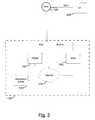
- FIG. 2 illustrates the carrier network according to an embodiment of the present invention.
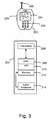
- FIG. 3 is an illustration of an access terminal in accordance with at least one embodiment of the invention.
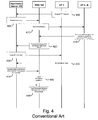
- FIG. 4 illustrates a conventional multicast messaging process.
- FIG. 5 illustrates a multicast messaging process according to an embodiment of the present invention.
- a High Data Rate (HDR) subscriber station may be mobile or stationary, and may communicate with one or more HDR base stations, referred to herein as modem pool transceivers (MPTs) or base stations (BS).
- An access terminal transmits and receives data packets through one or more modem pool transceivers to an HDR base station controller, referred to as a modem pool controller (MPC), base station controller (BSC) and/or packet control function (PCF).
- Modem pool transceivers and modem pool controllers are parts of a network called an access network.
- An access network transports data packets between multiple access terminals.
- the access network may be further connected to additional networks outside the access network, such as a corporate intranet or the Internet, and may transport data packets between each access terminal and such outside networks.
- An access terminal that has established an active traffic channel connection with one or more modem pool transceivers is called an active access terminal, and is said to be in a traffic state.
- An access terminal that is in the process of establishing an active traffic channel connection with one or more modem pool transceivers is said to be in a connection setup state.
- An access terminal may be any data device that communicates through a wireless channel or through a wired channel, for example using fiber optic or coaxial cables.
- An access terminal may further be any of a number of types of devices including but not limited to PC card, compact flash, external or internal modem, or wireless or wireline phone.
- the communication link through which the access terminal sends signals to the modem pool transceiver is called a reverse link or traffic channel.
- the communication link through which a modem pool transceiver sends signals to an access terminal is called a forward link or traffic channel.
- traffic channel can refer to either a forward or reverse traffic channel.
- FIG. 1 illustrates a block diagram of one exemplary embodiment of a wireless communication system 100 in accordance with at least one embodiment of the invention.
- System 100 can contain access terminals, such as cellular telephone 102, in communication across an air interface 104 with an access network or radio access network (RAN) 120 that can connect the access terminal 102 to network equipment providing data connectivity between a packet switched data network (e.g., an intranet, the Internet, and/or carrier network 126) and the access terminals 102, 108, 110, 112.
- RAN radio access network
- the access terminal can be a cellular telephone 102, a personal digital assistant 108, a pager 110, which is shown here as a two-way text pager, or even a separate computer platform 112 that has a wireless communication portal.
- Embodiments of the invention can thus be realized on any form of access terminal including a wireless communication portal or having wireless communication capabilities, including without limitation, wireless modems, PCMCIA cards, personal computers, telephones, or any combination or subcombination thereof.
- access terminal including a wireless communication portal or having wireless communication capabilities, including without limitation, wireless modems, PCMCIA cards, personal computers, telephones, or any combination or subcombination thereof.
- wireless modems including without limitation, wireless modems, PCMCIA cards, personal computers, telephones, or any combination or subcombination thereof.
- PCMCIA cards personal computers, telephones, or any combination or subcombination thereof.
- System 100 is merely exemplary and can include any system that allows remote access terminals, such as wireless client computing devices 102, 108, 110, 112 to communicate over-the-air between and among each other and/or between and among components connected via the air interface 104 and RAN 120, including, without limitation, carrier network 126, the Internet, and/or other remote servers.
- remote access terminals such as wireless client computing devices 102, 108, 110, 112 to communicate over-the-air between and among each other and/or between and among components connected via the air interface 104 and RAN 120, including, without limitation, carrier network 126, the Internet, and/or other remote servers.
- the RAN 120 controls messages (typically sent as data packets) sent to a base station controller/packet control function (BSC/PCF) 122.
- the BSC/PCF 122 is responsible for signaling, establishing, and tearing down bearer channels (i.e., data channels) between a packet data service node 100 ("PDSN") and the access terminals 102/108/110/112. If link layer encryption is enabled, the BSC/PCF 122 also encrypts the content before forwarding it over the air interface 104.
- the function of the BSC/PCF 122 is well-known in the art and will not be discussed further for the sake of brevity.
- the carrier network 126 may communicate with the BSC/PCF 122 by a network, the Internet and/or a public switched telephone network (PSTN).
- PSTN public switched telephone network
- the BSC/PCF 122 may connect directly to the Internet or external network.
- the network or Internet connection between the carrier network 126 and the BSC/PCF 122 transfers data, and the PSTN transfers voice information.
- the BSC/PCF 122 can be connected to multiple base stations (BS) or modem pool transceivers (MPT) 124.
- BS base stations
- MPT modem pool transceivers
- the BSC/PCF 122 is typically connected to the MPT/BS 124 by a network, the Internet and/or PSTN for data transfer and/or voice information.
- the MPT/BS 124 can broadcast data messages wirelessly to the access terminals, such as cellular telephone 102.
- the MPT/BS 124, BSC/PCF 122 and other components may form the RAN 120, as is known in the art.
- alternate configurations may also be used and the invention is not limited to the configuration illustrated.
- the functionality of the BSC/PCF 122 and one or more of the MPT/BS 124 may be collapsed into a single "hybrid" module having the functionality of both the BSC/PCF 122 and the MPT/BS 124.
- FIG. 2 illustrates the carrier network 126 according to an embodiment of the present invention.
- the carrier network 126 includes a packet data serving node (PDSN) 160, a broadcast serving node (BSN) 165, an application server 170 and an Internet 175.
- application server 170 and other components may be located outside the carrier network.
- the PDSN 160 provides access to the Internet 175, intranets and/or remote servers (e.g., application server 170) for mobile stations (e.g., access terminals, such as 102, 108, 110, 112 from FIG. 1 ) utilizing, for example, a cdma2000 Radio Access Network (RAN) (e.g., RAN 120 of FIG. 1 ).
- RAN Radio Access Network
- the PDSN 160 may provide simple IP and mobile IP access, foreign agent support, and packet transport.
- the PDSN 160 can act as a client for Authentication, Authorization, and Accounting (AAA) servers and other supporting infrastructure and provides mobile stations with a gateway to the IP network as is known in the art.
- AAA Authentication, Authorization, and Accounting
- the PDSN 160 may communicate with the RAN 120 (e.g., the BSC/PCF 122) via a conventional A10 connection.
- the A10 connection is well-known in the art and will not be described further for the sake of brevity.
- the broadcast serving node (BSN) 165 may be configured to support multicast and broadcast services.
- the BSN 165 will be described in greater detail below.
- the BSN 165 communicates with the RAN 120 (e.g., the BSC/PCF 122) via a broadcast (BC) A10 connection, and with the application server 170 via the Internet 175.
- the BCA10 connection is used to transfer multicast and/or broadcast messaging. Accordingly, the application server 170 sends unicast messaging to the PDSN 160 via the Internet 175, and sends multicast messaging to the BSN 165 via the Internet 175.
- the RAN 120 transmits multicast messages, received from the BSN 165 via the BCA10 connection, over a broadcast channel (BCH) of the air interface 104 to one or more access terminals 200.
- BCH broadcast channel
- an access terminal 200 (here a wireless device), such as a cellular telephone, has a platform 202 that can receive and execute software applications, data and/or commands transmitted from the RAN 120 that may ultimately come from the carrier network 126, the Internet and/or other remote servers and networks.
- the platform 202 can include a transceiver 206 operably coupled to an application specific integrated circuit ("ASIC" 208), or other processor, microprocessor, logic circuit, or other data processing device.
- ASIC 208 or other processor executes the application programming interface ("API') 210 layer that interfaces with any resident programs in the memory 212 of the wireless device.
- API' application programming interface
- the memory 212 can be comprised of read-only or random-access memory (RAM and ROM), EEPROM, flash cards, or any memory common to computer platforms.
- the platform 202 also can include a local database 214 that can hold applications not actively used in memory 212.
- the local database 214 is typically a flash memory cell, but can be any secondary storage device as known in the art, such as magnetic media, EEPROM, optical media, tape, soft or hard disk, or the like.
- the internal platform 202 components can also be operably coupled to external devices such as antenna 222, display 224, push-to-talk button 228 and keypad 226 among other components, as is known in the art.
- an embodiment of the invention can include an access terminal including the ability to perform the functions described herein.
- the various logic elements can be embodied in discrete elements, software modules executed on a processor or any combination of software and hardware to achieve the functionality disclosed herein.
- ASIC 208, memory 212, API 210 and local database 214 may all be used cooperatively to load, store and execute the various functions disclosed herein and thus the logic to perform these functions may be distributed over various elements.
- the functionality could be incorporated into one discrete component. Therefore, the features of the access terminal in FIG. 3 are to be considered merely illustrative and the invention is not limited to the illustrated features or arrangement.
- the wireless communication between the access terminal 102 and the RAN 120 can be based on different technologies, such as code division multiple access (CDMA), WCDMA, time division multiple access (TDMA), frequency division multiple access (FDMA), Orthogonal Frequency Division Multiplexing (OFDM), the Global System for Mobile Communications (GSM), or other protocols that may be used in a wireless communications network or a data communications network.
- CDMA code division multiple access
- WCDMA time division multiple access
- FDMA frequency division multiple access
- OFDM Orthogonal Frequency Division Multiplexing
- GSM Global System for Mobile Communications
- the data communication is typically between the client device 102, MPT/BS 124, and BSC/PCF 122.
- the BSC/PCF 122 can be connected to multiple data networks such as the carrier network 126, PSTN, the Internet, a virtual private network, and the like, thus allowing the access terminal 102 access to a broader communication network.
- voice transmission and/or data can be transmitted to the access terminals from the RAN using a variety of networks and configurations. Accordingly, the illustrations provided herein are not intended to limit the invention and are merely to aid in the description of aspects of the invention.
- FIG. 4 illustrates a conventional multicast messaging process.
- FIG. 4 illustrates a conventional manner in which the floor is granted to an access terminal to begin a multicast session.
- one of a plurality of access terminals in communication with the RAN 120 (“PTT initiator") requests to initiate a PTT session, or multicast session. Accordingly, the PTT initiator sends a PTT call request to the application server 170 (e.g., a PTT server).
- the application server 170 forwards an announce message to the RAN 120, and the RAN 120 transmits the announce message, 410, announcing the PTT session to each multicast group member for the PTT session.
- the application server 170 forwards the announce message to the RAN 120 via the PDSN 160 and/or BSN 165, 405, and the RAN 120 transmits the announce message over the air interface 104 to a plurality of ATs 1...N, 410.
- the announce message is transmitted in multiple sectors within the wireless communication system 100.
- ATs 1...N may each be present within the same sector, or alternatively may be present within different sectors of the wireless communications system 100.
- the RAN 120 communicating with AT 1 and the RAN 120 communicating with ATs 2...N may be different.
- a given AT among ATs 2...N responds to the announce message by sending an announce acknowledgment (ACK) message on a reverse link access channel to the RAN 120.
- the announce ACK message may indicate either of an acceptance (i.e., indicating AT 2 is interested in the announced PTT session) or a rejection (i.e., indicating AT 2 is not interested in the announced PTT session) of the announced PTT session.
- an acceptance i.e., indicating AT 2 is interested in the announced PTT session
- a rejection i.e., indicating AT 2 is not interested in the announced PTT session
- the RAN 120 forwards the announce ACK message to the application or PTT server 170. While not shown explicitly within FIG. 4 , the announce ACK message is sent along with a BCMCSFlowRegistration message to register for the BCMCS flow associated with the announce message. The RAN 120 receives the BCMCSFlowRegistration message and adds AT A to a multicast group for the announced PTT session (not shown).
- the application server 170 sends the PTT initiator AT 1 a message granting AT 1 the floor.
- the user of AT 1 can begin sending data (e.g., speaking, video streaming, text messaging, etc.) to one or more multicast group members that have registered for or are otherwise monitoring the announced PTT session.
- the multicast data (i.e., the spoken words or other audio/video, from 430) are received at the application server 170, and are forwarded to the RAN 120 for transmission on a downlink broadcast channel (BCH) within sectors containing or in proximity to sectors known/expected to contain one or more interested multicast group members.
- BCH downlink broadcast channel
- the RAN 120 determines, whether sufficient resources are actually available for allocation. In an example, this determination may be performed on a sector-by-sector basis.
- the RAN determines, 440, that sufficient BCH resources are not available, and drops the forwarded multicast messages, 445.
- the granting of the floor to the PTT initiator AT 1 when the PTT session cannot actually be handled by the RAN 120 referred to as a "false grant"
- embodiments of the present invention are directed to reducing the occurrence of false grants.
- FIG. 5 illustrates a multicast messaging process according to an embodiment of the present invention.
- one of a plurality of access terminals (“AT 1 ") in communication with the RAN 120 (“PTT initiator") requests to initiate a PTT session, or multicast session.
- the PTT initiator sends a PTT call request to the application server 170 (e.g., a PTT server).
- the application server 170 forwards an announce message to the RAN 120.
- the RAN 120 determines whether sufficient BCH resources are available to support the PTT session within each sector of the wireless communication system 100.
- the level of load on the downlink BCH can vary from sector to sector because each sector can be carrying different multicast sessions at different times (e.g., based on where interested multicast group members are located).
- the RAN 120 may compare the current load on the downlink BCH, within each sector, with a threshold load value. If the current load is greater than the threshold load value, the RAN 120 determines sufficient BCH resources to be unavailable for that sector. Otherwise, if the current load is not greater than the threshold load value, the RAN 120 determines sufficient BCH resources to be available for that sector.
- the announce message forwarded in 505 is associated with the downlink BCH.
- this association is not known at the RAN 120, which simply acts as a conduit for transmission of the announce message from the application server 170 to the ATs 1...N.
- the announce message is an application-layer message, and the RAN 120 conventionally does not analyze the content of messaging transferred via the RAN 120 at the application level.
- the RAN 120 is configured to perform the determining of 510 responsive to announce messages for PTT or multicast sessions, and as such includes functionality to recognize announce messages.
- the RAN 120 determines, at 510, that sufficient BCH resources are unavailable for at least one sector.
- the RAN 120 configures the announce message to include an indication, for target ATs within the at least one sector, that sufficient BCH resources are not available to support the PTT session in that sector(s).
- the announce message is not simply dropped after the RAN 120 determines the PTT session cannot be supported in one or more sectors because the application server 170 would interpret the drop as unintentional (i.e., the application server 170 would have no way of knowing that the RAN 120 determined to drop the announce message), and may resend the announce message again and again until one or more announce ACKs are received at the application server 170.
- the configuring of 515 may be performed in a number of ways, which will now be described in greater detail with respect to a number of illustrative examples.
- the RAN 120 can transmit the announce message including and/or along with an access control message (ACM).
- ACM access control message
- the announce message if an announce message is sent along with an ACM, the combination of the announce message and ACM may collectively be referred to as the announce message, in an example.
- the ACM controls how ATs receiving the announce message and interested in registering for the announced PTT session can access the reverse link channel in order to respond/register for the announced PTT session.
- ACMs are discussed in greater detail within U.S. Provisional Patent Application no. 60/974,796 , entitled "METHODS OF RESPONDING TO AN INTERACTIVE MULTICAST MESSAGE WITHIN A WIRELESS COMMUNICATION SYSTEM", filed on September 24, 2007, assigned to the assignee hereof.
- ACMs can include (i) a listing of UATIs for designating an order in which the listed access terminals can access the reverse link traffic channel to respond to the announce message, (ii) an APersistence value or a number from which each access terminal can calculate an APersistence value for a probabilistic response procedure or (iii) both (i) and (ii).
- the format of ACM can be as follows: Table 1 ATI Type First AT Second AT Remaining AT(s) ACM Example 1 MATI: ["01"] UATI1: ["AT 2"] UATI2: ["AT 3"] APersistence wherein the ATI type field indicates that the ACM is a multicast message, the first listed AT UATI1 (“AT 2") is the AT that is reserved the first slot or time period in which to respond to the announce message and the second listed AT UATI2 (“AT 3") is the AT that is reserved the second slot or time period in which to respond to the announce message (e.g., such that the responses of AT 2 and AT 3 do not collide or interfere with each other on the reverse link).
- the ACM can be expanded so as to include a Resource Availability (RA) field within the ACM.
- RA Resource Availability
- the RA field is a single bit field that indicates whether the announced PTT session can be supported by the RAN 120 within a particular sector.
- the RA field is set to a first logic level (e.g., a higher logic level or logic "1 ")
- the RA field indicates that sufficient BCH resources are available to support the PTT session in that sector.
- a second logic level e.g., a lower logic level or logic "0”
- Table 2 illustrates an ACM configured to include (i) the listing of UATIs, (ii) the APersistence value, and the RA field: Table 2 ATI Type First AT Second AT Remaining AT(s) RA Field
- DOS messages are well-known in the art within EV-DO protocols. DOS messages are defined by EV-DO standards as a unicast message addressed to a unicast access terminal identifier (UATI) that identifies a single intended access terminal recipient, and are not associated with multicast messaging in the EV-DO standard.
- UATI unicast access terminal identifier
- the announce message can be addressed to the multicast access terminal identifier (MATI) and can be transmitted on a downlink control channel to ATs 1 ...N, with ATs 1 ...N each being configured to recognize that a DOS message addressed to the MATI, or a "multicast DOS message", is intended to be interpreted as a multicast message (i.e., an announce message).
- a multicast message i.e., an announce message.
- the conversion of an announce message into a multicast DOS message is discussed in greater detail in U.S. Provisional Patent Application no. 60/974,833 , entitled "MULTICAST MESSAGING WITHIN A WIRELESS COMMUNICATION SYSTEM", filed on September 24, 2007, assigned to the assignee hereof.
- DOS messages Conventional unicast DOS messages, or DOS messages addressed to the UATI with a single intended AT recipient, include a 1-bit Acknowledgment Required ("ACK_REQ") field.
- ACK_REQ Acknowledgment Required
- the ACK_REQ field is set to a first logic level (e.g., a higher logic level or logic "1 ")
- a given AT is prompted to transmit an acknowledgment to the unicast DOS message
- ACK_REQ field is set to a second logic level (e.g., a lower logic level or logic "0")
- the given AT is not prompted to transmit the acknowledgment.
- acknowledgment messages are not logical in the sense that the number of AT recipients of the multicast DOS message can be relatively high, and acknowledgments sent by ATs in response to a multicast DOS message would interfere with each other and clog the reverse link channel.
- the configuring of 515 may set the ACK_REQ field to the first logic level so as to indicate the BCH resource status to ATs 1...N.
- the RAN 120 can transmit the announce message including and/or along with a BRM if the BCH resources are not available.
- the announce message is not sent included within and/or along with a BRM, ATs interpret the announce message as indicating that sufficient BCH resources are available to handle the announced PTT session.
- the announce message may collectively be referred to as the announce message, in an example.
- the RAN 120 transmits the configured announce message (e.g., including an ACM having an RA field set to a given logic level, packaged as a multicast DOS message, etc.) in 520, within sectors that have been determined not to have sufficient BCH resources, 510, to announce the PTT session to each of ATs 1...N.
- the configured announce message e.g., including an ACM having an RA field set to a given logic level, packaged as a multicast DOS message, etc.
- a conventional announce message, or an announce message not configured to indicate BCH resource unavailability can be transmitted in sectors that have sufficient BCH resources to support the PTT session as determined in 510.
- Each of ATs 1...N receive the configured announce message and determine whether the configured announce message indicates that sufficient BCH resources are not available in 525. For example, in 525, each of ATs 1...N check the status or logic level of the RA field included in the ACM that is appended to the announce message to determine whether the configured announce message indicates that sufficient BCH resources are not available. In another example, in 525, each of ATs 1...N check the status or logic level of the ACK_REQ field of the multicast DOS message to determine whether the configured announce message indicates that sufficient BCH resources are not available.
- each of ATs 1...N may check the status or logic levels of both the RA field of the ACM and the ACK_REQ field of the multicast DOS message to determine whether the configured announce message indicates that sufficient BCH resources are not available.
- the logic level of a field e.g., the RA field of the ACM, the ACK_REQ field of the multicast DOS message, etc.
- the present invention need not be limited to conveying the BCH resource status information with ACMs and/or multicast DOS messages, but rather any type of message format or field may be used to convey this information.
- AT 2 determines, in 525, that sufficient BCH resources are not available to support the announced PTT session in AT 2's current sector.
- AT 2 sends an announce ACK to the RAN 120 to indicate a rejection of the announced PTT session.
- the announce ACK "reject" message is sent by ATs that are not interested in joining or participating in an announced PTT session.
- AT 2 determines that insufficient BCH resources are available to support the announced PTT session, 525, AT 2 sends the announce ACK rejection irrespective of whether AT 2 is interested in the announced PTT session, 530. It will be appreciated that steps 525 and 530 of FIG. 5 can concurrently be performed at any number of ATs among ATs 2...N.
- the RAN 120 receives the announce ACK reject message from AT 2 and forwards the announce ACK reject message to the application server 170.
- the application server 170 does not grant the floor to AT 1 because the received announce ACK message is rejecting, and not accepting, the announced PTT session. Accordingly, the condition of "falsely" granting AT 1 the floor is avoided.
- the RAN 120 transmits a broadcast reject message (BRM) in each sector that is determined, in 510, to lack sufficient BCH resources to support the announced PTT session.
- the BRM instructs ATs to ignore the announced PTT session such that no announce ACK message (e.g., neither an announce ACK "accept” message nor an announce ACK “reject” message) need be sent.
- announce ACK message suppression methodologies see U.S. Provisional Patent Application no.
- the number of false grants can be reduced.
- the BCH resource status can be conveyed from the RAN 120 to one or more ATs in any number of ways, including but not limited to an RA field within an ACM included along with the announce message, an ACK_REQ field of the announce message if the announce message is converted into a multicast DOS message and transmitted on the downlink control channel, a BRM sent along with the announce message, and/or any combination thereof.
- DSP digital signal processor
- ASIC application specific integrated circuit
- FPGA field programmable gate array
- a general purpose processor may be a microprocessor, but in the alternative, the processor may be any conventional processor, controller, microcontroller, or state machine.
- a processor may also be implemented as a combination of computing devices, e.g., a combination of a DSP and a microprocessor, a plurality of microprocessors, one or more microprocessors in conjunction with a DSP core, or any other such configuration.
- aspects of the invention can include logical implementations of the functions described herein.
- the invention can further include logic configured to perform the steps, sequence of actions, processes and/or algorithms disclosed herein. Accordingly, those skilled in the art will appreciate that the invention is not limited to the examples provided herein.
- Computer-readable media includes both computer storage media and communication media including any medium that facilitates transfer of a computer program from one place to another.
- a storage media may be any available media that can be accessed by a computer.
- such computer-readable media can comprise RAM, ROM, EEPROM, CD-ROM or other optical disk storage, magnetic disk storage or other magnetic storage devices, or any other medium that can be used to carry or store desired program code in the form of instructions or data structures and that can be accessed by a computer.
- any connection is properly termed a computer-readable medium.
- the software is transmitted from a website, server, or other remote source using a coaxial cable, fiber optic cable, twisted pair, digital subscriber line (DSL), or wireless technologies such as infrared, radio, and microwave
- DSL digital subscriber line
- wireless technologies such as infrared, radio, and microwave
- Disk and disc includes compact disc (CD), laser disc, optical disc, digital versatile disc (DVD), floppy disk and blu-ray disc where disks usually reproduce data magnetically, while discs reproduce data optically with lasers. Combinations of the above should also be included within the scope of computer-readable media.
- an embodiment of the invention can include a computer-readable medium including code stored thereon for performing the steps, functions, algorithms and/or sequence of actions disclosed herein.
Landscapes
- Engineering & Computer Science (AREA)
- Computer Networks & Wireless Communication (AREA)
- Signal Processing (AREA)
- Multimedia (AREA)
- Mobile Radio Communication Systems (AREA)
- Telephonic Communication Services (AREA)
Claims (16)
- Ein Verfahren zur Floor-Gewährung bzw. Gewährung eines exklusiven Zugriffsrechts für ein Zugriffsendgerät, das eine Multicast-Sitzung in einem drahtlosen Kommunikationssystem, das gemäß einem drahtlosen Kommunikationsprotokoll betrieben wird, einleitet, wobei das Verfahren folgende Schritte aufweist:Empfangen, in einem Zugriffsnetzwerk, einer Ankündigungsnachricht, die an eine Vielzahl von Zugriffsendgeräten zu senden ist, wobei die empfangene Ankündigungsnachricht konfiguriert ist, um eine gegebene Multicast-Sitzung anzukündigen,Bestimmen, in dem Zugriffsnetzwerk, ob ausreichende Ressourcen für eine Unterstützung der gegebenen Multicast-Sitzung verfügbar sind,in dem Zugriffsnetzwerk, Konfigurieren der empfangenen Ankündigungsnachricht, um basierend auf dem Bestimmungsschritt zu vermitteln, ob ausreichende Ressourcen für eine Unterstützung der gegebenen Multicast-Sitzung verfügbar sind, undSenden der konfigurierten Ankündigungsnachricht von dem Zugriffsnetzwerk an die Vielzahl von Zugriffsendgeräten.
- Verfahren nach Anspruch 1, wobei der Bestimmungsschritt bestimmt, ob ausreichende Ressourcen verfügbar sind, indem er einen Lastlevel auf einem Abwärtsstreckenkanal zum Tragen von Medien für die gegebene Multicast-Sitzung mit einem Lastschwellwert vergleicht.
- Verfahren nach Anspruch 1, wobei der Bestimmungsschritt bestimmt, ob ausreichende Ressourcen in jedem aus einer Vielzahl von Sektoren des drahtlosen Kommunikationssystems zum Tragen der gegebenen Multicast-Sitzung auf einem Abwärtsstrecken-Broadcastkanal bzw. BCH verfügbar sind.
- Verfahren nach Anspruch 1, das weiterhin aufweist:Erkennen, an einem Zugriffsnetzwerk, der empfangenen Ankündigungsnachricht als einer Anwendungsschicht-Nachricht, die eine Multicast-Kommunikation auf einem Abwärtsstrecken-Broadcastkanal bzw. BCH ankündigt,wobei der Bestimmungsschritt in dem Zugriffsnetzwerk in Antwort auf das Erkennen durchgeführt wird.
- Verfahren nach Anspruch 1, wobei der Konfigurationsschritt enthält:Erzeugen einer Zugriffssteuernachricht bzw. ACM, die Befehle in Bezug darauf, wie die Vielzahl von Zugriffsendgeräten eine Antwort auf die Ankündigungsnachricht senden soll, enthält,Konfigurieren der ACM, um einen Ressourcenverfügbarkeitsindikator einzufügen, der vermittelt, ob der Bestimmungsschritt bestimmt, dass ausreichende Ressourcen für eine Unterstützung der gegebenen MulticastSitzung verfügbar sind, undwobei der Sendeschritt die ACM zusammen mit der Ankündigungsnachricht sendet, sodass die Kombination aus der ACM und der Ankündigungsnachricht der konfigurierten Ankündigungsnachricht entspricht.
- Verfahren nach Anspruch 5, wobei der Ressourcenverfügbarkeitsindikator einem ein Bit großen Ressourcenverfügbarkeits- bzw. RA-Feld der ACM entspricht.
- Verfahren nach Anspruch 1, wobei der Konfigurationsschritt enthält:Formatieren der empfangenen Ankündigungsnachricht als einer Daten-über-Signaliserung- bzw. DOS-Nachricht, die für eine MulticastSendung an die Vielzahl von Zugriffsendgeräten konfiguriert ist, undKonfigurieren der DOS-Ankündigungsnachricht, sodass diese einen Ressourcenverfügbarkeitsindikator enthält, der vermittelt, ob der Bestimmungsschritt bestimmt, dass ausreichende Ressourcen für eine Unterstützung der gegebenen Multicast-Sitzung verfügbar sind,wobei die DOS-Ankündigungsnachricht der konfigurierten Ankündigungsnachricht entspricht.
- Verfahren nach Anspruch 7, wobei der Ressourcenverfügbarkeitsindikator einem ein Bit großen Bestätigungserfordernis- bzw. ACK_REQ-Feld der DOS-Ankündigungsnachricht entspricht.
- Verfahren nach Anspruch 1, wobei der Bestimmungsschritt bestimmt, dass keine ausreichenden Ressourcen verfügbar sind,
wobei der Konfigurationsschritt das Erzeugen einer Broadcast-Ablehnungsnachricht bzw. BRM enthält, und
wobei der Sendeschritt die Kombination aus der Ankündigungsnachricht und der BRM als die konfigurierte Ankündigungsnachricht sendet, wobei die Einfügung der BRM in die Ankündigungsnachricht für die Vielzahl von Zugriffsendgeräten angibt, dass keine ausreichenden Ressourcen für eine Unterstützung der gegebenen Multicast-Sitzung verfügbar sind. - Verfahren nach Anspruch 1, wobei der Bestimmungsschritt bestimmt, dass ausreichende Ressourcen verfügbar sind, und
wobei der Sendeschritt die Ankündigungsnachricht ohne eine Broadcast-Ablehnungsnachricht bzw. BRM als die konfigurierte Ankündigungsnachricht sendet, wobei die Abwesenheit der BRM für die Vielzahl von Zugriffsendgeräten angibt, dass ausreichende Ressourcen für eine Unterstützung der gegebenen Multicast-Sitzung verfügbar sind. - Verfahren nach Anspruch 1, das weiterhin aufweist:Empfangen, in Antwort auf die gesendete konfigurierte Ankündigungsnachricht, einer Ankündigungs-Bestätigungs- bzw. Ankündigungs-ACK-Nachricht von einer aus der Vielzahl von Zugriffsendgeräten, wobei die Ankündigungs-ACK-Nachricht konfiguriert ist, um eine Ablehnung der angekündigten Multicast-Sitzung anzugeben,Weiterleiten der Ankündigungs-ACK-Nachricht an einen Anwendungsserver, von dem der Empfangsschritt die Ankündigungsnachricht empfangen hat, undSenden einer Broadcast-Ablehnungsnachricht bzw. BRM an die Vielzahl von Zugriffsendgeräten, nachdem die ACK-Nachricht empfangen wurde.
- Ein Verfahren zur Floor-Gewährung bzw. Gewährung eines exklusiven Zugriffsrechts für ein Zugriffsendgerät, das eine Multicast-Sitzung in einem drahtlosen Kommunikationssystem, das gemäß einem drahtlosen Kommunikationsprotokoll betrieben wird, einleitet, wobei das Verfahren folgende Schritte aufweist:Empfangen, an einem Zugriffsendgerät, einer Ankündigungsnachricht, die eine gegebene Multicast-Sitzung ankündigt,Bestimmen, an dem Zugriffsendgerät, ob die empfangene Ankündigungsnachricht angibt, ob ausreichende Ressourcen für eine Unterstützung der gegebenen Multicast-Sitzung verfügbar sind, undSenden, von einem Zugriffsendgerät, einer Ankündigungs-Bestätigungs- bzw. Ankündigungs-ACK-Nachricht, die basierend auf dem Bestimmungsschritt eine Annahme oder Ablehnung der gegebenen Multicast-Sitzung angibt, in Antwort auf die empfangene Ankündigungsnachricht.
- Ein Zugriffsnetzwerk für ein drahtloses Kommunikationssystem, das gemäß einem drahtlosen Kommunikationsprotokoll betrieben wird, wobei das Zugriffsnetzwerk aufweist:Mittel zum Empfangen einer Ankündigungsnachricht, die an eine Vielzahl von Zugriffsendgeräten zu senden ist, wobei die empfangene Ankündigungsnachricht konfiguriert ist, um eine gegebene Multicast-Sitzung anzukündigen,Mittel zum Bestimmen, ob ausreichende Ressourcen für eine Unterstützung der gegebenen Multicast-Sitzung verfügbar sind,Mittel zum Konfigurieren der empfangenen Ankündigungsnachricht, um basierend auf der Bestimmung der Mittel zum Bestimmen zu vermitteln, ob ausreichende Ressourcen für eine Unterstützung der gegebenen Multicast-Sitzung verfügbar sind, undMittel zum Senden der konfigurierten Ankündigungsnachricht an die Vielzahl von Zugriffsendgeräten.
- Ein Zugriffsendgerät für ein drahtloses Kommunikationssystem, das gemäß einem drahtlosen Kommunikationsprotokoll betrieben wird, wobei das Zugriffsendgerät aufweist:Mittel zum Empfangen einer Ankündigungsnachricht, die eine gegebene Multicast-Sitzung ankündigt,Mittel zum Bestimmen, ob die empfangene Ankündigungsnachricht angibt, ob ausreichende Ressourcen für eine Unterstützung der gegebenen Multicast-Sitzung verfügbar sind, undMittel zum Senden einer Ankündigungs-Bestätigungs- bzw. Ankündigungs-ACK-Nachricht, die basierend auf der Bestimmung der Mittel zum Bestimmen eine Annahme oder Ablehnung der gegebenen MulticastSitzung angibt, in Antwort auf die empfangene Ankündigungsnachricht.
- Ein computerlesbares Medium mit einem darin gespeicherten Programmcode, wobei der Programmcode konfiguriert ist, um das Verfahren nach einem der Ansprüche 1 bis 11 durchzuführen, wenn er durch einen Prozessor eines Zugriffsnetzwerks eines drahtlosen Kommunikationssystems ausgeführt wird.
- Ein computerlesbares Medium mit einem darin gespeicherten Programmcode, wobei der Programmcode konfiguriert ist, um das Verfahren nach Anspruch 12 durchzuführen, wenn er durch einen Prozessor eines Zugriffsendgeräts eines drahtlosen Kommunikationssystems ausgeführt wird.
Applications Claiming Priority (3)
| Application Number | Priority Date | Filing Date | Title |
|---|---|---|---|
| US97480507P | 2007-09-24 | 2007-09-24 | |
| US12/212,966 US8427995B2 (en) | 2007-09-24 | 2008-09-18 | Reducing an occurrence of false grants for a multicast session within a wireless communications network |
| PCT/US2008/077544 WO2009042699A1 (en) | 2007-09-24 | 2008-09-24 | Reducing an occurrence of false grants for a multicast session within a wireless communications network |
Publications (2)
| Publication Number | Publication Date |
|---|---|
| EP2193671A1 EP2193671A1 (de) | 2010-06-09 |
| EP2193671B1 true EP2193671B1 (de) | 2013-09-11 |
Family
ID=40471462
Family Applications (1)
| Application Number | Title | Priority Date | Filing Date |
|---|---|---|---|
| EP08833944.5A Not-in-force EP2193671B1 (de) | 2007-09-24 | 2008-09-24 | Reduzierung einer falschen zugangsberechtigung für eine multicast-sitzung in einem mobil-kommunikation netzwerk |
Country Status (6)
| Country | Link |
|---|---|
| US (1) | US8427995B2 (de) |
| EP (1) | EP2193671B1 (de) |
| JP (1) | JP5074595B2 (de) |
| KR (1) | KR101155167B1 (de) |
| CN (1) | CN101810013B (de) |
| WO (1) | WO2009042699A1 (de) |
Families Citing this family (10)
| Publication number | Priority date | Publication date | Assignee | Title |
|---|---|---|---|---|
| US8577404B2 (en) | 2008-07-15 | 2013-11-05 | Qualcomm Incorporated | Prioritization of group communications at a wireless communication device |
| US8755831B2 (en) * | 2009-03-24 | 2014-06-17 | QYALCOMM Incorporated | Selectively allocating data channel resources to wireless communication devices within a wireless communications system |
| US8700081B2 (en) * | 2009-03-30 | 2014-04-15 | Qualcomm Incorporated | Determining whether to switch between group calls based on priority within a wireless communications system |
| US8738058B2 (en) * | 2009-04-06 | 2014-05-27 | Qualcomm Incorporated | High-priority communications sessions within a wireless communications system |
| US8891425B2 (en) * | 2009-04-10 | 2014-11-18 | Qualcomm Incorporated | Paging access terminals in a wireless communications system |
| KR100922000B1 (ko) * | 2009-08-18 | 2009-10-14 | 세영정보통신(주) | 바이너리 코드분할다중접속 기반 양방향 오디오데이터 통신을 이용한 동시통역시스템 |
| JP6012590B2 (ja) * | 2010-03-22 | 2016-10-26 | クアルコム,インコーポレイテッド | ワイヤレス通信システム内での高優先度通信セッション |
| KR101681094B1 (ko) | 2010-06-29 | 2016-12-01 | 삼성전자주식회사 | 무선 네트워크에서의 송신 전력 제어 방법 및 장치 |
| KR101719188B1 (ko) | 2010-09-28 | 2017-03-24 | 삼성전자주식회사 | 멀티 라디오를 이용한 통신 방법 및 통신 장치 |
| US9414303B1 (en) * | 2015-01-16 | 2016-08-09 | Kyynel Ltd | Network access using mobile base stations |
Family Cites Families (10)
| Publication number | Priority date | Publication date | Assignee | Title |
|---|---|---|---|---|
| JP3704003B2 (ja) * | 1999-08-16 | 2005-10-05 | 株式会社東芝 | 無線基地局装置、無線端末装置及び情報通信方法 |
| JP3687631B2 (ja) * | 2002-06-26 | 2005-08-24 | 日本電気株式会社 | コンテンツ配信システム、コンテンツ配信方法、無線回線制御装置及びプログラム |
| US7062272B2 (en) * | 2003-02-18 | 2006-06-13 | Qualcomm Incorporated | Method and apparatus to track count of broadcast content recipients in a wireless telephone network |
| BRPI0406406B1 (pt) | 2003-09-16 | 2018-03-13 | Samsung Electronics Co., Ltd. | Método e sistema para fornecer informação de situação para o serviço de difusão/multicast em um sistema de comunicação móvel |
| KR100689390B1 (ko) * | 2003-10-02 | 2007-03-02 | 삼성전자주식회사 | 멀티미디어 방송/멀티캐스트 서비스의 서비스 유효성 정보를 송수신하는 방법 |
| US8503446B2 (en) * | 2005-08-29 | 2013-08-06 | Alcatel Lucent | Multicast host authorization tracking, and accounting |
| US7970425B2 (en) * | 2005-08-30 | 2011-06-28 | Alcatel-Lucent Usa Inc. | Push-to-talk group call system using CDMA 1x-EVDO cellular network |
| US7792025B2 (en) * | 2005-10-11 | 2010-09-07 | Alcatel Lucent | Multi-service session admission control |
| US8868685B2 (en) * | 2006-02-13 | 2014-10-21 | Qualcomm Incorporate | System and method for providing an early notification when paging a wireless device |
| DE102006030297B4 (de) * | 2006-06-30 | 2009-02-12 | Siemens Ag | Verfahren und Netzwerkknoten zur Broadcast-Übertragung von Daten mit garantierter Datenzustellung |
-
2008
- 2008-09-18 US US12/212,966 patent/US8427995B2/en not_active Expired - Fee Related
- 2008-09-24 JP JP2010527115A patent/JP5074595B2/ja not_active Expired - Fee Related
- 2008-09-24 EP EP08833944.5A patent/EP2193671B1/de not_active Not-in-force
- 2008-09-24 KR KR1020107008999A patent/KR101155167B1/ko not_active Expired - Fee Related
- 2008-09-24 CN CN2008801084632A patent/CN101810013B/zh not_active Expired - Fee Related
- 2008-09-24 WO PCT/US2008/077544 patent/WO2009042699A1/en not_active Ceased
Also Published As
| Publication number | Publication date |
|---|---|
| CN101810013A (zh) | 2010-08-18 |
| US20090080360A1 (en) | 2009-03-26 |
| KR101155167B1 (ko) | 2012-06-11 |
| EP2193671A1 (de) | 2010-06-09 |
| US8427995B2 (en) | 2013-04-23 |
| CN101810013B (zh) | 2013-11-06 |
| JP5074595B2 (ja) | 2012-11-14 |
| JP2010541404A (ja) | 2010-12-24 |
| WO2009042699A1 (en) | 2009-04-02 |
| KR20100076989A (ko) | 2010-07-06 |
Similar Documents
| Publication | Publication Date | Title |
|---|---|---|
| US9294955B2 (en) | Managing acknowledgment transmissions from multicast group members of a multicast group within a wireless communications network | |
| EP2193671B1 (de) | Reduzierung einer falschen zugangsberechtigung für eine multicast-sitzung in einem mobil-kommunikation netzwerk | |
| US8331278B2 (en) | Managing an assignment of unicast traffic channels to access terminals participating in a multicast session within a wireless communications network | |
| US11026057B2 (en) | Multicast messaging within a wireless communication system | |
| US9344290B2 (en) | Terminating a multicast session within a wireless communications network | |
| US20100157870A1 (en) | Managing a multicast group membership table at an access network within a wireless communications system | |
| US8761823B2 (en) | Determining session setup latency in a wireless communications system | |
| US8611898B2 (en) | Reducing a number of flow references in messaging associated with a multicast session in a wireless communications system | |
| US8824351B2 (en) | Regulating broadcast overhead messages within a wireless communications network | |
| WO2010080633A1 (en) | Managing transmission protocols for group communications within a wireless communications network |
Legal Events
| Date | Code | Title | Description |
|---|---|---|---|
| PUAI | Public reference made under article 153(3) epc to a published international application that has entered the european phase |
Free format text: ORIGINAL CODE: 0009012 |
|
| 17P | Request for examination filed |
Effective date: 20100323 |
|
| AK | Designated contracting states |
Kind code of ref document: A1 Designated state(s): AT BE BG CH CY CZ DE DK EE ES FI FR GB GR HR HU IE IS IT LI LT LU LV MC MT NL NO PL PT RO SE SI SK TR |
|
| AX | Request for extension of the european patent |
Extension state: AL BA MK RS |
|
| DAX | Request for extension of the european patent (deleted) | ||
| 17Q | First examination report despatched |
Effective date: 20121011 |
|
| GRAP | Despatch of communication of intention to grant a patent |
Free format text: ORIGINAL CODE: EPIDOSNIGR1 |
|
| INTG | Intention to grant announced |
Effective date: 20130404 |
|
| GRAS | Grant fee paid |
Free format text: ORIGINAL CODE: EPIDOSNIGR3 |
|
| GRAA | (expected) grant |
Free format text: ORIGINAL CODE: 0009210 |
|
| AK | Designated contracting states |
Kind code of ref document: B1 Designated state(s): AT BE BG CH CY CZ DE DK EE ES FI FR GB GR HR HU IE IS IT LI LT LU LV MC MT NL NO PL PT RO SE SI SK TR |
|
| REG | Reference to a national code |
Ref country code: GB Ref legal event code: FG4D |
|
| REG | Reference to a national code |
Ref country code: CH Ref legal event code: EP |
|
| REG | Reference to a national code |
Ref country code: AT Ref legal event code: REF Ref document number: 632191 Country of ref document: AT Kind code of ref document: T Effective date: 20130915 |
|
| REG | Reference to a national code |
Ref country code: IE Ref legal event code: FG4D |
|
| REG | Reference to a national code |
Ref country code: DE Ref legal event code: R096 Ref document number: 602008027527 Country of ref document: DE Effective date: 20131107 |
|
| PG25 | Lapsed in a contracting state [announced via postgrant information from national office to epo] |
Ref country code: CY Free format text: LAPSE BECAUSE OF FAILURE TO SUBMIT A TRANSLATION OF THE DESCRIPTION OR TO PAY THE FEE WITHIN THE PRESCRIBED TIME-LIMIT Effective date: 20130828 Ref country code: SE Free format text: LAPSE BECAUSE OF FAILURE TO SUBMIT A TRANSLATION OF THE DESCRIPTION OR TO PAY THE FEE WITHIN THE PRESCRIBED TIME-LIMIT Effective date: 20130911 Ref country code: NO Free format text: LAPSE BECAUSE OF FAILURE TO SUBMIT A TRANSLATION OF THE DESCRIPTION OR TO PAY THE FEE WITHIN THE PRESCRIBED TIME-LIMIT Effective date: 20131211 Ref country code: LT Free format text: LAPSE BECAUSE OF FAILURE TO SUBMIT A TRANSLATION OF THE DESCRIPTION OR TO PAY THE FEE WITHIN THE PRESCRIBED TIME-LIMIT Effective date: 20130911 Ref country code: HR Free format text: LAPSE BECAUSE OF FAILURE TO SUBMIT A TRANSLATION OF THE DESCRIPTION OR TO PAY THE FEE WITHIN THE PRESCRIBED TIME-LIMIT Effective date: 20130911 |
|
| REG | Reference to a national code |
Ref country code: NL Ref legal event code: VDEP Effective date: 20130911 |
|
| REG | Reference to a national code |
Ref country code: AT Ref legal event code: MK05 Ref document number: 632191 Country of ref document: AT Kind code of ref document: T Effective date: 20130911 |
|
| REG | Reference to a national code |
Ref country code: LT Ref legal event code: MG4D |
|
| PG25 | Lapsed in a contracting state [announced via postgrant information from national office to epo] |
Ref country code: SI Free format text: LAPSE BECAUSE OF FAILURE TO SUBMIT A TRANSLATION OF THE DESCRIPTION OR TO PAY THE FEE WITHIN THE PRESCRIBED TIME-LIMIT Effective date: 20130911 Ref country code: ES Free format text: LAPSE BECAUSE OF FAILURE TO SUBMIT A TRANSLATION OF THE DESCRIPTION OR TO PAY THE FEE WITHIN THE PRESCRIBED TIME-LIMIT Effective date: 20130911 Ref country code: LV Free format text: LAPSE BECAUSE OF FAILURE TO SUBMIT A TRANSLATION OF THE DESCRIPTION OR TO PAY THE FEE WITHIN THE PRESCRIBED TIME-LIMIT Effective date: 20130911 Ref country code: FI Free format text: LAPSE BECAUSE OF FAILURE TO SUBMIT A TRANSLATION OF THE DESCRIPTION OR TO PAY THE FEE WITHIN THE PRESCRIBED TIME-LIMIT Effective date: 20130911 Ref country code: GR Free format text: LAPSE BECAUSE OF FAILURE TO SUBMIT A TRANSLATION OF THE DESCRIPTION OR TO PAY THE FEE WITHIN THE PRESCRIBED TIME-LIMIT Effective date: 20131212 |
|
| PG25 | Lapsed in a contracting state [announced via postgrant information from national office to epo] |
Ref country code: CY Free format text: LAPSE BECAUSE OF FAILURE TO SUBMIT A TRANSLATION OF THE DESCRIPTION OR TO PAY THE FEE WITHIN THE PRESCRIBED TIME-LIMIT Effective date: 20130911 Ref country code: BE Free format text: LAPSE BECAUSE OF FAILURE TO SUBMIT A TRANSLATION OF THE DESCRIPTION OR TO PAY THE FEE WITHIN THE PRESCRIBED TIME-LIMIT Effective date: 20130911 |
|
| PG25 | Lapsed in a contracting state [announced via postgrant information from national office to epo] |
Ref country code: IS Free format text: LAPSE BECAUSE OF FAILURE TO SUBMIT A TRANSLATION OF THE DESCRIPTION OR TO PAY THE FEE WITHIN THE PRESCRIBED TIME-LIMIT Effective date: 20140111 Ref country code: NL Free format text: LAPSE BECAUSE OF FAILURE TO SUBMIT A TRANSLATION OF THE DESCRIPTION OR TO PAY THE FEE WITHIN THE PRESCRIBED TIME-LIMIT Effective date: 20130911 Ref country code: EE Free format text: LAPSE BECAUSE OF FAILURE TO SUBMIT A TRANSLATION OF THE DESCRIPTION OR TO PAY THE FEE WITHIN THE PRESCRIBED TIME-LIMIT Effective date: 20130911 Ref country code: SK Free format text: LAPSE BECAUSE OF FAILURE TO SUBMIT A TRANSLATION OF THE DESCRIPTION OR TO PAY THE FEE WITHIN THE PRESCRIBED TIME-LIMIT Effective date: 20130911 Ref country code: CZ Free format text: LAPSE BECAUSE OF FAILURE TO SUBMIT A TRANSLATION OF THE DESCRIPTION OR TO PAY THE FEE WITHIN THE PRESCRIBED TIME-LIMIT Effective date: 20130911 Ref country code: RO Free format text: LAPSE BECAUSE OF FAILURE TO SUBMIT A TRANSLATION OF THE DESCRIPTION OR TO PAY THE FEE WITHIN THE PRESCRIBED TIME-LIMIT Effective date: 20130911 |
|
| REG | Reference to a national code |
Ref country code: CH Ref legal event code: PL |
|
| PG25 | Lapsed in a contracting state [announced via postgrant information from national office to epo] |
Ref country code: AT Free format text: LAPSE BECAUSE OF FAILURE TO SUBMIT A TRANSLATION OF THE DESCRIPTION OR TO PAY THE FEE WITHIN THE PRESCRIBED TIME-LIMIT Effective date: 20130911 Ref country code: PL Free format text: LAPSE BECAUSE OF FAILURE TO SUBMIT A TRANSLATION OF THE DESCRIPTION OR TO PAY THE FEE WITHIN THE PRESCRIBED TIME-LIMIT Effective date: 20130911 |
|
| REG | Reference to a national code |
Ref country code: DE Ref legal event code: R097 Ref document number: 602008027527 Country of ref document: DE |
|
| PG25 | Lapsed in a contracting state [announced via postgrant information from national office to epo] |
Ref country code: PT Free format text: LAPSE BECAUSE OF FAILURE TO SUBMIT A TRANSLATION OF THE DESCRIPTION OR TO PAY THE FEE WITHIN THE PRESCRIBED TIME-LIMIT Effective date: 20140113 Ref country code: MC Free format text: LAPSE BECAUSE OF FAILURE TO SUBMIT A TRANSLATION OF THE DESCRIPTION OR TO PAY THE FEE WITHIN THE PRESCRIBED TIME-LIMIT Effective date: 20130911 |
|
| REG | Reference to a national code |
Ref country code: IE Ref legal event code: MM4A |
|
| PLBE | No opposition filed within time limit |
Free format text: ORIGINAL CODE: 0009261 |
|
| STAA | Information on the status of an ep patent application or granted ep patent |
Free format text: STATUS: NO OPPOSITION FILED WITHIN TIME LIMIT |
|
| PG25 | Lapsed in a contracting state [announced via postgrant information from national office to epo] |
Ref country code: IE Free format text: LAPSE BECAUSE OF NON-PAYMENT OF DUE FEES Effective date: 20130924 Ref country code: LI Free format text: LAPSE BECAUSE OF NON-PAYMENT OF DUE FEES Effective date: 20130930 Ref country code: CH Free format text: LAPSE BECAUSE OF NON-PAYMENT OF DUE FEES Effective date: 20130930 |
|
| REG | Reference to a national code |
Ref country code: FR Ref legal event code: ST Effective date: 20140709 |
|
| 26N | No opposition filed |
Effective date: 20140612 |
|
| PG25 | Lapsed in a contracting state [announced via postgrant information from national office to epo] |
Ref country code: IT Free format text: LAPSE BECAUSE OF FAILURE TO SUBMIT A TRANSLATION OF THE DESCRIPTION OR TO PAY THE FEE WITHIN THE PRESCRIBED TIME-LIMIT Effective date: 20130911 |
|
| REG | Reference to a national code |
Ref country code: DE Ref legal event code: R097 Ref document number: 602008027527 Country of ref document: DE Effective date: 20140612 |
|
| PG25 | Lapsed in a contracting state [announced via postgrant information from national office to epo] |
Ref country code: DK Free format text: LAPSE BECAUSE OF FAILURE TO SUBMIT A TRANSLATION OF THE DESCRIPTION OR TO PAY THE FEE WITHIN THE PRESCRIBED TIME-LIMIT Effective date: 20130911 |
|
| PG25 | Lapsed in a contracting state [announced via postgrant information from national office to epo] |
Ref country code: FR Free format text: LAPSE BECAUSE OF NON-PAYMENT OF DUE FEES Effective date: 20131112 |
|
| PG25 | Lapsed in a contracting state [announced via postgrant information from national office to epo] |
Ref country code: TR Free format text: LAPSE BECAUSE OF FAILURE TO SUBMIT A TRANSLATION OF THE DESCRIPTION OR TO PAY THE FEE WITHIN THE PRESCRIBED TIME-LIMIT Effective date: 20130911 Ref country code: MT Free format text: LAPSE BECAUSE OF FAILURE TO SUBMIT A TRANSLATION OF THE DESCRIPTION OR TO PAY THE FEE WITHIN THE PRESCRIBED TIME-LIMIT Effective date: 20130911 |
|
| PG25 | Lapsed in a contracting state [announced via postgrant information from national office to epo] |
Ref country code: BG Free format text: LAPSE BECAUSE OF FAILURE TO SUBMIT A TRANSLATION OF THE DESCRIPTION OR TO PAY THE FEE WITHIN THE PRESCRIBED TIME-LIMIT Effective date: 20130911 Ref country code: HU Free format text: LAPSE BECAUSE OF FAILURE TO SUBMIT A TRANSLATION OF THE DESCRIPTION OR TO PAY THE FEE WITHIN THE PRESCRIBED TIME-LIMIT; INVALID AB INITIO Effective date: 20080924 Ref country code: LU Free format text: LAPSE BECAUSE OF NON-PAYMENT OF DUE FEES Effective date: 20130924 |
|
| PGFP | Annual fee paid to national office [announced via postgrant information from national office to epo] |
Ref country code: DE Payment date: 20180815 Year of fee payment: 11 |
|
| REG | Reference to a national code |
Ref country code: DE Ref legal event code: R119 Ref document number: 602008027527 Country of ref document: DE |
|
| PG25 | Lapsed in a contracting state [announced via postgrant information from national office to epo] |
Ref country code: DE Free format text: LAPSE BECAUSE OF NON-PAYMENT OF DUE FEES Effective date: 20200401 |
|
| PGFP | Annual fee paid to national office [announced via postgrant information from national office to epo] |
Ref country code: GB Payment date: 20200828 Year of fee payment: 13 |
|
| GBPC | Gb: european patent ceased through non-payment of renewal fee |
Effective date: 20210924 |
|
| PG25 | Lapsed in a contracting state [announced via postgrant information from national office to epo] |
Ref country code: GB Free format text: LAPSE BECAUSE OF NON-PAYMENT OF DUE FEES Effective date: 20210924 |