EP2193710A1 - Beschichtung für Lilienzwiebeln - Google Patents
Beschichtung für Lilienzwiebeln Download PDFInfo
- Publication number
- EP2193710A1 EP2193710A1 EP08170814A EP08170814A EP2193710A1 EP 2193710 A1 EP2193710 A1 EP 2193710A1 EP 08170814 A EP08170814 A EP 08170814A EP 08170814 A EP08170814 A EP 08170814A EP 2193710 A1 EP2193710 A1 EP 2193710A1
- Authority
- EP
- European Patent Office
- Prior art keywords
- coating
- bulbs
- composition
- lily
- pva
- Prior art date
- Legal status (The legal status is an assumption and is not a legal conclusion. Google has not performed a legal analysis and makes no representation as to the accuracy of the status listed.)
- Granted
Links
Images

Classifications
-
- A—HUMAN NECESSITIES
- A01—AGRICULTURE; FORESTRY; ANIMAL HUSBANDRY; HUNTING; TRAPPING; FISHING
- A01N—PRESERVATION OF BODIES OF HUMANS OR ANIMALS OR PLANTS OR PARTS THEREOF; BIOCIDES, e.g. AS DISINFECTANTS, AS PESTICIDES OR AS HERBICIDES; PEST REPELLANTS OR ATTRACTANTS; PLANT GROWTH REGULATORS
- A01N3/00—Preservation of plants or parts thereof, e.g. inhibiting evaporation, improvement of the appearance of leaves or protection against physical influences such as UV radiation using chemical compositions; Grafting wax
Definitions
- the invention relates to a composition for coating lily bulbs to inhibit degradation of the bulbs during storage, a method of inhibiting degradation of lily bulbs during storage, a container for storing lily bulbs and a use of the coating composition.
- JP 59-148701 discloses the use of a coating based on polyvinyl alcohol, dissolved in water or mixtures of water and non-aqueous organic solvents of molecular weights between 10,000 and 82,000 D. The intent is to protect tulips during short periods of dry sales storage, transport and display against mechanical damage which would cause rotting, premature sprouting and loss of value.
- An earlier application, JP 51-146730 had a similar object, however, did not work with tulip bulbs of a less mature type as the coating did not adhere to or spread over the surface of bulbs resulting in poor attachment of a non-continuous protective layer.
- saponification degrees of less than 85 mol% result in similar poor spreading and attachment of the coating.
- plasticizers such as glycerin, ethylene glycol, propylene glycol and others
- surfactants may be, or need to be added to achieve consistent thickness of completely attached coatings to, often water-repellant, surfaces of biological structures as required for mechanical protection which is optimal at thicknesses of 8 to 30 microns.
- Color dies may be added for identification or increase of sales attractiveness.
- JP 59-148701 do not use any plasticizer, but only organic surfactants in order to improve adherence and spread of the thin coatings to achieve the thin layers required to avoid suffocation.
- Objects of the invention are therefore to provide a storage means and storage method, that effectively controls a mini-environment surrounding each individual lily bulb, wherein the bulb is further protected from harmful influences, in which the storage life of the bulb is extended and whereby the bulbs remain appreciable to clients for a longer period of time.
- a composition for coating lily bulbs comprising a polyvinyl alcohol (PVA) having a molecular weight of 4,000 to 14,000, glycerol and water, the composition being in the form of a sol.
- PVA polyvinyl alcohol
- the glycerol functions as a respiratory control substance rather than its common application as a "spacing agent" aimed at increasing deformability.
- the invention further relates to a method for applying the sol composition to lily bulbs in order to create an enclosure around said bulbs.
- the coating formed has a high water permeability and a controllable low permeability to oxygen and carbon dioxide. Thereby, the amounts of water, oxygen and carbon dioxide are effectively controlled.
- the coating of the invention prevents the loss of weight of the lily bulbs, due to water loss by evaporation, and reduces metabolic activity, further reducing weight loss. It decreases the risk of individual lily bulbs from being infected, decreases the amount of infection that may be present anyhow and forms a barrier to micro-organisms, such as bacteria and fungi, that would otherwise flourish on the bulbs. It creates a stable mini-environment for each of the individual bulbs, forms a selective barrier to sprouting enhancing UV light, which also may be harmful to bulbs while the coating does not adversely affect the bulbs otherwise.
- the present coating sol once applied, has considerable potential for reduction of water vapor loss but, due to its reduced but still sufficient CO 2 and O 2 permeability, will avoid death of bulb tissue and subsequent rotting, a well known complication of (ultra-) low oxygen storage. On the other hand, the coating is sufficiently permeable for water to prevent accumulation under the coating of too much water.
- the coating may also be applied on lily bulbs before handling or transportation thereof.
- lily bulbs are often packed in voluminous containers, supplemented with peat surrounding the bulbs, in order to prevent damage to same.
- peat surrounding the bulbs
- the present coating having the required permeability to water and gasses and effectively restricting metabolic breakdown of stored starch, fulfils the existing needs.
- Glycerol for controlling permeability to gasses rather than as "Plasticizer” or "Spacing Agent"
- plasticizers may improve the mechanical final state of the polymer product such as reducing brittleness and the tendency to break.
- plasticizers are considered to create, under certain circumstances, novel properties. This is more common to occur with a different group of substances described as "spacing agents" rather than plasticizers.
- “plasticizers” are considered to have an effect disproportional to their concentrations and in principle alter the molecular state of the base polymer.
- “spacing agents” are inactive substances, oily or highly deformable in nature that, when mixed in high concentrations in the polymer solution, strongly alter the mechanical properties during the usual industrial processes described above but may also alter such properties in films or solids developed by simple drying of the sol to a film. Although not well defined, a certain common understanding is that such agents have this function and these will be referred to hereinafter under the descriptive term "spacing agent".
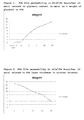
- Fig. 1 shows the oxygen permeability of a PVA film as a function of glycerol content in the PVA film. From the results it can be derived that a near logarithmic relationship exists.
- Fig. 2 shows the oxygen permeability of a PVA film as a function of the thickness of the film. From the results it can be derived that an inverse, near logarithmic relationship exists. These relationships have not been disclosed before.
- Fig. 3 shows the sugar and starch contents of lily bulb tissue as a function of time, comparing bulbs without a coating and bulbs having a PVA coating containing 5 % of glycerol.
- the present invention uses glycerol in the coating composition in concentrations that mainly are well outside the range in which it is known to function similarly as a "plasticizer” and "spacing agent". This novel range of concentrations provides a novel effect.
- glycerol will be defined as a Respiration Controlling Substance or RCS. This will be used throughout the following when not using the chemical descriptor with the specific aim of avoiding confusion in comparing the present invention with the prior art.
- the invention relates to a composition for coating a lily bulb to inhibit degradation of the bulb during storage, which composition comprises a polyvinyl alcohol (PVA) having a molecular weight of 4,000-14,000 D, glycerol and water, the composition being in the form of a sol.
- PVA polyvinyl alcohol
- the present PVA polymer is a resin which is commercially produced by the hydrolysis of polyvinyl acetate.
- the properties of the aqueous composition as well as the properties of the coating obtained using the composition of the invention may be varied as desired by adjusting the degree of hydrolysis and the molecular weight of the polyvinyl alcohol.
- the degree of hydrolysis for example, may suitably range from 50 to 95 %.
- Examples of such PVA polymers are for instance disclosed in WO 2004/046229 and WO 97/09379 .
- a bag made from a novel polyvinyl alcohol composition and film thereof have been disclosed.
- the composition is not a sol but a form of granulate.
- the film can however only be formed by standard processes, e.g. by extrusion and blowing. Further, the specification of these films is focused on, and limited to a very narrow range of variability with respect to its detailed formulation and its mechanical and structural properties. It is not designed for or defined by a need for permeability as is the present invention. In fact such PVA films have an almost negligible permeability for gasses, in particular oxygen and carbon dioxide.
- PVA films and material thereof are also described in WO 97/09379 .
- the PVA used therein typically has a molecular weight of 20,000 to 90,000 D. Further no composition is disclosed comprising water. In fact water seems quite detrimental for the production of PVA films according to this patent application (see e.g. page 9, 1. 9-15).
- MEK methyl ethyl keton
- the molecular weight of the polymer used in the sol influences the characteristics of the coating. If the Mw is too high (e.g. > 15,000), a brittle-like coating will be formed. It will have a greasy appearance, due to the spacing agent, which is then (in contrast to the novel experience at lower Mw's) believed to migrate to, or be forced (“sequestered") to the surface of the coating. If the Mw is too low (e.g. ⁇ 2,000), sequestration of the inclusions (the RCS) within the coating will occur, giving the coating a more gel-like appearance. Consequently, in both cases the desired permeability characteristics are not obtained.
- the Mw of the polymer used in the sol is 8,000-12,000 D, a Mw of about 10,000 being even more preferred.
- the coating is water soluble.
- the coating is easily washed off, if required prior to use such as in planting of bulbs. In this case, generous wetting of the planting substrate after planting is sufficient.
- the coating according to the invention may be totally degraded within a few months, in contrast to much longer periods, typically tens of years, for biodegradable PVA polymers of the state of the art. Even compared to a PVA polymer as such, the present coating dissolves significantly faster.
- the coating dissolves in water at a relatively low temperature, such as 30 °C or below.
- the coating sol is directly applied to the lily bulbs, the sol is preferably not too warm, that is preferably below 30 °C and therefore under some distribution formulations, the polymer used needs to at least remain dissolved in water at such a temperature.
- the biodegradable PV polymer provided as either a granulate or as a powder, preferably dissolves at a temperature below values of 30 to 100 °C. With respect to the water content, practically it is required that the coating is applied as a sol to the lily bulbs. As the most preferred option is to apply the coating by spraying, the coating sol at the time of use must be pumpable, i.e. contain enough water. On the other hand, as the viscosity of the coating will have an effect on the layer thickness of the coating after drying with a concomitant effect on permeability after drying, the coating sol should not be too thin, otherwise the coating forming properties thereof as well as the final restrictive qualities may be in jeopardy or develop outside the intended margins.
- concentrated sol compositions are envisaged, that is with a low water content, such as less than 50 wt.%, preferably less than 30 wt.%. These concentrated sol compositions may therefore be transported easier, and can be diluted prior to use to the desired concentrations.
- the composition according to the invention preferably comprises the PVA in an amount of from 5 to 15 % by weight of the composition, more preferably in an amount of from 7 to 15 %, and most preferably in an amount of from 7 to 10 % by weight of the composition.
- the composition according to the invention preferably comprises glycerol in an amount of from 1 to 10 % by weight of the PVA content, more preferably from 1 to 5 % by weight of the PVA content.
- the amount of biodegradable PVA and the amount of glycerol will determine the permeability of the coating formed from the sol.
- the person skilled in the art will appreciate that, by varying the relative amounts of biodegradable PVA polymer and glycerol, the permeability to water and gasses may be controlled. If a coating less open to water is desired, the amount of polymer may be increased, whereas if a coating less open to gas is desired, less glycerol is required. In this respect, also the choice of the polymer plays a role.
- the permeability to water should be sufficient to allow excess water (a product of metabolic breakdown of starches) to pass through the coating, once the coating is applied to a lily bulb.
- excess water a product of metabolic breakdown of starches
- the coating once applied should limit the amount of water loss of the bulbs.
- the coating should be relatively impermeable to gasses, specifically to oxygen and carbon dioxide. If so, the enclosure effectively controls the levels of such gasses within its confines, thereby forming stable conditions in the mini-environment enclosing the bulbs.
- the conditions in the mini-environment are beneficial for the crops with e.g. respect to storage lifespan and appreciation.
- Typical physical values associated with the preferred permeability to gasses and water for such a coating are for instance, a water permeability of larger than 300 ml/m 2 .bar.day, an oxygen permeability of less than 100 ml/m 2 .bar.day, and a carbon dioxide permeability of less than 200 ml/m 2 .bar.day, as measured at 25 °C, with a coating membrane thickness of 25 ⁇ m, and a relative humidity of 0 %.
- the coating further acts as a UV-absorber and/or UV-reflector.
- the coating supports the formation of a mini-environment. Such a mini-environment may protect the enclosed lily bulb from light, more specifically from UV-light. Light typically has a negative effect on the storage life and appearance of lily bulbs. If the coating acts as a UV-absorber and/or a UV-reflector, thereby effectively limiting the exposure of the bulbs to UV-light, storage life will be increased and the appearance of the bulbs will remain acceptable for a longer time. To this end, additional UV-blockers and/or UV-stabilizers may be added to the composition.
- composition according to the invention comprises a PVA polymer which has a hydrolysis degree of 50 to 95 %.
- coatings may be formed according to the invention. More specific, coatings varying in temperature at which dissolution in water takes place can be formed. A so-called High Temperature coating dissolves in the range of 60-85 °C, and a so-called Low Temperature coating dissolves in the range of 5-40 °C. This depends among others on the degree of hydrolysis of the polymer used, which may vary from 50 % to 100 %. A high degree of hydrolysis, such as 95 %, will lead to a High Temperature coating. A low hydrolysis degree, such as 65 %, will lead to a Low Temperature coating.
- the viscosity of the sol composition is related to the molecular weight (Mw) of the polymer used. Typical Mw values are from 4,000 to 14,000. The viscosity further relates to the amount of polymer brought into dissolution. A large amount, or High Dose, will lead to more viscous solution than a small amount, or Low Dose. Typical values for the viscosity of the sol compositions are from 1-10 mPa.s (as determined according to the Hoeppler falling ball method, with a 4 wt.% solution at 20 °C). In this respect, preferably the polymer has a hydrolysis degree of between 70 and 85 % and molecular weights ranging from 8,000 to 12,000 D. Preferably the coating is formed from a blend of PVA and glycerol or granulates thereof.
- the coating sol may further comprise one or more (water soluble) additives selected from the group of antimicrobiotics, fungicides, nutritional supplements, fertilisers, stabilizers, plasticizers, anti-parasitics, anti-infection means, biologically active compounds, growth enhancing compounds, compounds controlling biological active molecules, useful bacteria, useful fungi, useful enzymes, UV-stabilizers, UV-blockers, etc.
- additives can be chosen from any available and suitable additives.
- Such additives will be used in order to further improve the condition during storage of the lily bulbs and to further promote growth in a later stage of commercial use.
- the additives do not form a health or environmental risk.
- the additives are used in a total amount of less than 5 wt.%, based on the total PVA mass forming the sol or coating composition.
- the additives are preferably water soluble, though other additives, which can be made watersoluble, such as by using a carrier or encapsulation, are also applicable. In other cases an emulsifier may be added. Based on experiences gleaned from the experiments and studies described in the illustrations below, such additives are released in a protracted manner, improving bioavailability thereof.
- the coatings of the invention comprising various other ingredients which are releasable, surprisingly offer a further advantage of slowly, and thereby more effectively, releasing these ingredients.
- the use of these coatings thereby allows for a significant reduction in the amounts of ingredients required for any biological purpose, notably in some cases only 1 to 5 % of the amount required conventionally (e.g. short dipping aqueous solutions containing fungicides) is needed. Not only are such included ingredients more effective with respect to their intended purpose, but also a reduction of amounts required is achieved, reducing the costs involved therewith while simultaneously reducing any possible adverse effects on the environment associated with their use.
- Preferred additives are selected from the group of anti-biotics, fungicides, pesticides, fertilizers and anti-parasitics.
- the coating according to the invention preferably has a thickness after formation of 10 to 100 ⁇ m. It is clear that if the coating is too thick, permeability towards water will be hampered too much, and if the coating is too thin, the enclosure will be too open to gasses, and further a risk of uneven coatings, which may show ruptures or holes, arises.
- the composition of the invention is essentially free of any volatile solvents, especially free of alcohol solvents, since such solvents are toxic for lily bulbs.
- the invention in a second aspect relates to a method for protecting lily bulbs, wherein the bulbs are coated with a coating according to the invention surrounding the bulbs, thereby creating a mini-environment.
- a mini-environment effectively controls the water and gas levels inside.
- the coating according to the invention is applied as a sol one or more times directly on the bulbs, thereby forming a coating.
- the sol is applied once, but may be applied three or more times.
- the coating sol can be applied by several techniques, preferably by spraying or immersion.
- an immersion technique is used for applying the sol, whereas with a polymer with a low Mw and/or when the sol has a low viscosity, preferably a spraying technique is used.
- the coating is allowed or made to dry after being applied.
- the coating according to the invention is applied to a package or forms a package enclosing the lily bulbs.
- the coating also effectively forms a mini-environment enclosing the bulbs.
- the coating according to the invention preferably has a thickness after formation of the coating of 10 too 100 ⁇ m, more preferably of 20-40 ⁇ m.
- the coating may be applied to a package of any sort surrounding the bulbs.
- the package itself has an open structure with respect to the passing of water and gasses such as oxygen and carbon dioxide, in order to allow relatively free migration of water and these gasses other than as determined by the chosen permeability of the coating as formulated and applied.
- the coating according to the invention will supply the preferred enclosing conditions.
- the coating is applied to a paper bag.
- the paper bag can be any type of paper bag, such as grocery bags used for packaging.
- the coating is preferably water soluble. Thereby, e.g. bacteria easily break down the coating after its use into harmless products, i.e. carbon dioxide and water.
- the lily bulbs are selected from the standard sorting size range of 12 to 20 and upwards.
- the standard sorting size range 12 to 20 and upwards.
- special formulations for much smaller seedling bulbs or bulb fragments intended as base material for amplification may be developed and will most likely have equivalent beneficial effects.
- the invention in a third aspect relates to the use of a coating according to the invention, comprising a releasable compound for improving the release characteristics of said releasable compound.
- a coating according to the invention comprising a releasable compound for improving the release characteristics of said releasable compound.
- the releasable compound is selected from the group of anti-biotics, fungicides, pesticides, fertilizers and anti-parasitics.
- the release characteristics of the coatings according to the invention are significantly better than those of the prior art. Therefore much less additives can be used, and still a similar effect thereof can be observed.
- Coating composition Coating was prepared from polyvinyl alcohol granulate (Polyval Ltd, Milton Keynes, UK), formulated so as to have a dissolution temperature of 85 °C, a molecular weight of between 12,000 and 14,000 D.
- the PVA was used in an amount of 10 % by weight in water with addition of glycerol in an amount of 10 % by weight of the PVA.
- the granulate was dissolved in gently boiling tap water after 5 - 10 minutes of gentle stirring. The resultant sol was allowed to cool to room temperature (12-18 °C) for 24 hours before application and use.
- bulbs for testing were all coated by immersion in full strength coating, followed by manual removal of excess coating, dripping of by resting on screens for a minimum of 10 minutes and subsequent air drying at room temperature for 24 hours on a non-adhesive surface, before further assessments, or application of further coatings as part of experimental procedures.
- Final thickness of a single coating was estimated to be between 15 and 25 microns based on polymer / solution used per calculated square unit of surface area of lily bulbs.
- Study groups 2 x 3 groups of 10 lily bulbs were used (see results Table 1) either not coated or coated with 1 or 2 layers of coating. Lily bulbs used were of type Lombardia, size 18-20, provided from routine sale stock approximately 4 weeks after harvest of that year. All lily bulbs were randomized to study groups and individually numbered for study of individual weight loss in time.
- All bulbs were stored in a single crate without addition of peat, placed within a standard perforated polyethylene bag, at temperatures of -1.5 °C in a conventional commercial store room, routinely ventilated, for up to 6 months and monitored monthly for weight.
- Coating with a polyvinyl alcohol-based sol formulated as described in the invention results in significant protection against weight loss of commercially acquired lily bulbs under routine storage and operational conditions.
- Coating composition was prepared from polyvinyl alcohol solution (Wacker GmbH, Burghausen, Germany) formulated so as to have a dissolution temperature of 90 °C, a molecular weight of between 8,000 and 12,000 D.
- the PVA was used in an amount of 20, 10 or 5 % by weight in water with addition of glycerol in an amount of 10, 5 or 1 % by weight of the PVA.
- the stock solution was diluted and dosed with RCS by 10 - 20 minutes of gentle stirring. The resultant sol was allowed to settle out for purpose of homogenization at room temperature (12-18 °C) for 24 hours before application and use.
- bulbs for testing were all coated by immersion in full strength coating, followed by manual removal of excess coating, dripping of by resting on screens for a minimum of 10 minutes and subsequent air drying at room temperature for 24 hours on a non-adhesive surface, before further assessments.
- Final thickness of a single coating was estimated to be between 11 and 40 microns based on polymer / solution used per calculated unit of square surface area per lily bulb.
- Study groups 10 groups of 20 lily bulbs were used (see results Table 2) either not coated or coated with one of 3 different coatings each varying additionally in relative glycerol content. Lily bulbs used were of type Lombardia, size 18-20, provided from routine sale stock approximately 4 weeks after harvest of that year. All lily bulbs were randomized to study groups, and stored in net sacks to maintain groups.
- All bulbs were stored in a single crate without addition of peat, placed within a standard perforated polyethylene bag, at temperatures of -1.5 °C in a conventional commercial store room, routinely ventilated, for up to 6 months and monitored 3-monthly for weight.
- Coating with a PVA based sol formulated as described in the invention results in significant protection against weight loss of commercially acquired lily bulbs under routine storage and operational conditions.
- the effect is clearly dependent on time with an increase of the effect with increased layer thickness as a result of increased solid content of the coating solution, most likely resulting from increases in viscosity / layer thickness, and is equally increased by limiting the quantity of glycerol added suggesting a primary effect of the coating based on reduction of water loss from the lily bulb surface as well as an inhibitory effect on the metabolic breakdown of bulb starch.
- Coating composition A sol prepared from a polyvinyl alcohol granulate (Polyval Ltd, Milton Keynes, UK), as previously described in Experiment I.
- Additives expected to provide protection against fungal infection based on effective bioavailability due to continued slow release of included fungicide at low dose (1/20 th of conventional dose / bulb).
- Lily bulbs for testing were all coated by single immersion as previously described in both Experiment I and II.
- Study groups For study of the effect of coating on lily bulb weight loss in time, 3 groups of 2100 lily bulbs each, from the same stock as used for experiments I and II were used (see results Table 3): uncoated, coating only without additives and coating with inclusion of biologically active fungicides.
- Tables were prepared for weights per 10 bulbs, weight loss for whole group as a mean percentage of starting weights per 10 bulbs were calculated for each bulb group. Statistical analysis of probability of non-difference between mean normalized weight was calculated using T-test.
- Coating with a polyvinyl alcohol based sol formulated as described in the invention results in significant protection against weight loss at 8.5 months of sub-zero storage of lily bulbs.
Landscapes
- Life Sciences & Earth Sciences (AREA)
- General Health & Medical Sciences (AREA)
- Health & Medical Sciences (AREA)
- Engineering & Computer Science (AREA)
- Plant Pathology (AREA)
- Toxicology (AREA)
- Agronomy & Crop Science (AREA)
- Dentistry (AREA)
- Wood Science & Technology (AREA)
- Zoology (AREA)
- Environmental Sciences (AREA)
- Agricultural Chemicals And Associated Chemicals (AREA)
- Paints Or Removers (AREA)
Priority Applications (2)
| Application Number | Priority Date | Filing Date | Title |
|---|---|---|---|
| EP20080170814 EP2193710B1 (de) | 2008-12-05 | 2008-12-05 | Beschichtung für Lilienzwiebeln |
| PCT/NL2009/050742 WO2010064917A2 (en) | 2008-12-05 | 2009-12-07 | Coating for lily bulbs |
Applications Claiming Priority (1)
| Application Number | Priority Date | Filing Date | Title |
|---|---|---|---|
| EP20080170814 EP2193710B1 (de) | 2008-12-05 | 2008-12-05 | Beschichtung für Lilienzwiebeln |
Publications (2)
| Publication Number | Publication Date |
|---|---|
| EP2193710A1 true EP2193710A1 (de) | 2010-06-09 |
| EP2193710B1 EP2193710B1 (de) | 2014-04-09 |
Family
ID=41021042
Family Applications (1)
| Application Number | Title | Priority Date | Filing Date |
|---|---|---|---|
| EP20080170814 Not-in-force EP2193710B1 (de) | 2008-12-05 | 2008-12-05 | Beschichtung für Lilienzwiebeln |
Country Status (2)
| Country | Link |
|---|---|
| EP (1) | EP2193710B1 (de) |
| WO (1) | WO2010064917A2 (de) |
Cited By (3)
| Publication number | Priority date | Publication date | Assignee | Title |
|---|---|---|---|---|
| WO2019129822A1 (en) * | 2017-12-29 | 2019-07-04 | Liquidseal Holding B.V. | Coating for fruit |
| WO2019200774A1 (zh) * | 2018-04-16 | 2019-10-24 | 北京师范大学 | 一种基于鱼致死函数的鱼死亡风险确定方法及系统 |
| US20210076669A1 (en) * | 2019-09-18 | 2021-03-18 | Liquidseal Holding B.V. | Coating for flower heads |
Families Citing this family (2)
| Publication number | Priority date | Publication date | Assignee | Title |
|---|---|---|---|---|
| EP2508070A1 (de) * | 2011-03-14 | 2012-10-10 | Patent 06-001 B.V. | Beschichtung für Blumenköpfe |
| CN115606586A (zh) * | 2022-10-28 | 2023-01-17 | 华中农业大学 | 郁金香/百合种球延长低温贮藏时间和花期调控的方法 |
Citations (8)
| Publication number | Priority date | Publication date | Assignee | Title |
|---|---|---|---|---|
| US3997674A (en) * | 1975-02-25 | 1976-12-14 | Tsukihoshi Kasei Kabushiki Kaisha | Preservation of agricultural products |
| JPS51146730A (en) | 1975-06-10 | 1976-12-16 | Onishi Sumiko | Method of feeding urethane resin liquid for water stopping* water proofing* vapor proofing* sound insulating* cold protecting* vibration proofing* fire proofing* and pressure proofing purpose under pr |
| JPS59148701A (ja) | 1983-02-08 | 1984-08-25 | Nitto Electric Ind Co Ltd | 球根類の保護および保存方法 |
| WO1997009379A1 (en) | 1995-09-08 | 1997-03-13 | Solplax Limited | Biodegradable plastic material and a method for its manufacture |
| EP1020124A2 (de) * | 1999-01-13 | 2000-07-19 | Planet Polymer Technologies Inc. | Verfahren zur Konservierung von frischen Produkten und dafür geeignete Überzugsmischung |
| WO2001004195A1 (en) * | 1999-07-09 | 2001-01-18 | Berwind Pharmaceutical Services, Inc. | Film coatings and film coating compositions based on polyvinyl alcohol |
| JP2004155922A (ja) * | 2002-11-07 | 2004-06-03 | Nippon Synthetic Chem Ind Co Ltd:The | ポリビニルアルコール系フィルム及びその製造方法 |
| WO2004046229A1 (en) | 2002-11-15 | 2004-06-03 | Polyval Plc | Polyvinyl alcohol composition and film |
Family Cites Families (2)
| Publication number | Priority date | Publication date | Assignee | Title |
|---|---|---|---|---|
| SU888903A1 (ru) * | 1980-03-05 | 1981-12-15 | Московский технологический институт мясной и молочной промышленности | Состав дл защитного покрыти рыбы и рыбопродуктов |
| JPS604566A (ja) * | 1983-06-23 | 1985-01-11 | Mine Eizai Kk | 水溶性固形塗料 |
-
2008
- 2008-12-05 EP EP20080170814 patent/EP2193710B1/de not_active Not-in-force
-
2009
- 2009-12-07 WO PCT/NL2009/050742 patent/WO2010064917A2/en not_active Ceased
Patent Citations (8)
| Publication number | Priority date | Publication date | Assignee | Title |
|---|---|---|---|---|
| US3997674A (en) * | 1975-02-25 | 1976-12-14 | Tsukihoshi Kasei Kabushiki Kaisha | Preservation of agricultural products |
| JPS51146730A (en) | 1975-06-10 | 1976-12-16 | Onishi Sumiko | Method of feeding urethane resin liquid for water stopping* water proofing* vapor proofing* sound insulating* cold protecting* vibration proofing* fire proofing* and pressure proofing purpose under pr |
| JPS59148701A (ja) | 1983-02-08 | 1984-08-25 | Nitto Electric Ind Co Ltd | 球根類の保護および保存方法 |
| WO1997009379A1 (en) | 1995-09-08 | 1997-03-13 | Solplax Limited | Biodegradable plastic material and a method for its manufacture |
| EP1020124A2 (de) * | 1999-01-13 | 2000-07-19 | Planet Polymer Technologies Inc. | Verfahren zur Konservierung von frischen Produkten und dafür geeignete Überzugsmischung |
| WO2001004195A1 (en) * | 1999-07-09 | 2001-01-18 | Berwind Pharmaceutical Services, Inc. | Film coatings and film coating compositions based on polyvinyl alcohol |
| JP2004155922A (ja) * | 2002-11-07 | 2004-06-03 | Nippon Synthetic Chem Ind Co Ltd:The | ポリビニルアルコール系フィルム及びその製造方法 |
| WO2004046229A1 (en) | 2002-11-15 | 2004-06-03 | Polyval Plc | Polyvinyl alcohol composition and film |
Non-Patent Citations (2)
| Title |
|---|
| DATABASE WPI Week 198440, Derwent World Patents Index; AN 1984-246905, XP002544655 * |
| DATABASE WPI Week 200446, Derwent World Patents Index; AN 2004-483312, XP002544654 * |
Cited By (3)
| Publication number | Priority date | Publication date | Assignee | Title |
|---|---|---|---|---|
| WO2019129822A1 (en) * | 2017-12-29 | 2019-07-04 | Liquidseal Holding B.V. | Coating for fruit |
| WO2019200774A1 (zh) * | 2018-04-16 | 2019-10-24 | 北京师范大学 | 一种基于鱼致死函数的鱼死亡风险确定方法及系统 |
| US20210076669A1 (en) * | 2019-09-18 | 2021-03-18 | Liquidseal Holding B.V. | Coating for flower heads |
Also Published As
| Publication number | Publication date |
|---|---|
| WO2010064917A3 (en) | 2011-05-05 |
| EP2193710B1 (de) | 2014-04-09 |
| WO2010064917A2 (en) | 2010-06-10 |
Similar Documents
| Publication | Publication Date | Title |
|---|---|---|
| US11453801B2 (en) | Bio-degradable compositions and use thereof | |
| ES2769894T3 (es) | Formulación activada por humedad para compuestos volátiles | |
| KR102721195B1 (ko) | 나노-셀룰로오스 식용 코팅 및 이의 사용 | |
| US8017667B2 (en) | Antimicrobial packaging material | |
| EP2193710B1 (de) | Beschichtung für Lilienzwiebeln | |
| BR112015012670B1 (pt) | Laminado tratado e recipiente tratado tendo complexo de inclusão de ciclodextrina e método para produzir um substrato tratado útil para liberar um composto complexado | |
| TWI678154B (zh) | 用於阻礙植物乙烯反應的層合物及其製備方法 | |
| WO2017106984A1 (es) | Pelicula de empaque degradable para frutas y hortalizas | |
| BR112014004801B1 (pt) | composiçãode concetrado em suspensão aquosa, e, método de tratamento de uma semente | |
| Xue et al. | Janus hydrogel loaded with a CO2-generating chemical reaction system: Construction, characterization, and application in fruit and vegetable preservation | |
| US20210246084A1 (en) | Fertilizer Pouch and Method of Use Thereof | |
| PT1890731E (pt) | Processo para produzir um revestimento microbiano sobre uma superfície técnica | |
| EP2685818B1 (de) | Beschichtung für blumenköpfe | |
| Kongklom et al. | Improved keeping quality of Dendrobium “Bom” orchids using nutrients entrapped in a biodegradable hydrogel | |
| US20230124125A1 (en) | Protected plants and methods of obtaining them | |
| NL2023845B1 (en) | Coating for flower heads | |
| JP5567386B2 (ja) | グレープバインモス及びヨーロピアングレープベリーモスの交信撹乱方法 | |
| CN109042647A (zh) | β-月桂烯作为二化螟雌虫驱避剂组分的用途及驱避剂 | |
| TW202420995A (zh) | 具有長期持續作用之植物耐受性增強劑 | |
| WO2025032165A1 (en) | Castor oil-based material for the release of biogenic volatile organic compounds for agricultural applications | |
| CN118531661A (zh) | 基于水凝胶体系的复合VOCs缓释涂膜保鲜抑菌纸及其制备方法和应用 | |
| AU2005256153A1 (en) | Antimicrobial packaging material |
Legal Events
| Date | Code | Title | Description |
|---|---|---|---|
| PUAI | Public reference made under article 153(3) epc to a published international application that has entered the european phase |
Free format text: ORIGINAL CODE: 0009012 |
|
| AK | Designated contracting states |
Kind code of ref document: A1 Designated state(s): AT BE BG CH CY CZ DE DK EE ES FI FR GB GR HR HU IE IS IT LI LT LU LV MC MT NL NO PL PT RO SE SI SK TR |
|
| AX | Request for extension of the european patent |
Extension state: AL BA MK RS |
|
| 17P | Request for examination filed |
Effective date: 20101209 |
|
| AKX | Designation fees paid |
Designated state(s): AT BE BG CH CY CZ DE DK EE ES FI FR GB GR HR HU IE IS IT LI LT LU LV MC MT NL NO PL PT RO SE SI SK TR |
|
| 17Q | First examination report despatched |
Effective date: 20110216 |
|
| RIN1 | Information on inventor provided before grant (corrected) |
Inventor name: VAN DER LUIT, JOHAN, LOUIS Inventor name: VAN DEN BERG, EUGENE ROBERT Inventor name: VAN VELZEN, DICK Inventor name: MONSTER, VICTOR STEVEN |
|
| GRAP | Despatch of communication of intention to grant a patent |
Free format text: ORIGINAL CODE: EPIDOSNIGR1 |
|
| INTG | Intention to grant announced |
Effective date: 20131108 |
|
| GRAS | Grant fee paid |
Free format text: ORIGINAL CODE: EPIDOSNIGR3 |
|
| GRAA | (expected) grant |
Free format text: ORIGINAL CODE: 0009210 |
|
| AK | Designated contracting states |
Kind code of ref document: B1 Designated state(s): AT BE BG CH CY CZ DE DK EE ES FI FR GB GR HR HU IE IS IT LI LT LU LV MC MT NL NO PL PT RO SE SI SK TR |
|
| REG | Reference to a national code |
Ref country code: GB Ref legal event code: FG4D |
|
| REG | Reference to a national code |
Ref country code: AT Ref legal event code: REF Ref document number: 660796 Country of ref document: AT Kind code of ref document: T Effective date: 20140415 Ref country code: CH Ref legal event code: EP |
|
| REG | Reference to a national code |
Ref country code: IE Ref legal event code: FG4D |
|
| REG | Reference to a national code |
Ref country code: DE Ref legal event code: R096 Ref document number: 602008031358 Country of ref document: DE Effective date: 20140522 |
|
| REG | Reference to a national code |
Ref country code: NL Ref legal event code: T3 |
|
| REG | Reference to a national code |
Ref country code: AT Ref legal event code: MK05 Ref document number: 660796 Country of ref document: AT Kind code of ref document: T Effective date: 20140409 |
|
| REG | Reference to a national code |
Ref country code: LT Ref legal event code: MG4D |
|
| PG25 | Lapsed in a contracting state [announced via postgrant information from national office to epo] |
Ref country code: NO Free format text: LAPSE BECAUSE OF FAILURE TO SUBMIT A TRANSLATION OF THE DESCRIPTION OR TO PAY THE FEE WITHIN THE PRESCRIBED TIME-LIMIT Effective date: 20140709 Ref country code: FI Free format text: LAPSE BECAUSE OF FAILURE TO SUBMIT A TRANSLATION OF THE DESCRIPTION OR TO PAY THE FEE WITHIN THE PRESCRIBED TIME-LIMIT Effective date: 20140409 Ref country code: LT Free format text: LAPSE BECAUSE OF FAILURE TO SUBMIT A TRANSLATION OF THE DESCRIPTION OR TO PAY THE FEE WITHIN THE PRESCRIBED TIME-LIMIT Effective date: 20140409 Ref country code: IS Free format text: LAPSE BECAUSE OF FAILURE TO SUBMIT A TRANSLATION OF THE DESCRIPTION OR TO PAY THE FEE WITHIN THE PRESCRIBED TIME-LIMIT Effective date: 20140809 Ref country code: BG Free format text: LAPSE BECAUSE OF FAILURE TO SUBMIT A TRANSLATION OF THE DESCRIPTION OR TO PAY THE FEE WITHIN THE PRESCRIBED TIME-LIMIT Effective date: 20140709 Ref country code: GR Free format text: LAPSE BECAUSE OF FAILURE TO SUBMIT A TRANSLATION OF THE DESCRIPTION OR TO PAY THE FEE WITHIN THE PRESCRIBED TIME-LIMIT Effective date: 20140710 |
|
| PG25 | Lapsed in a contracting state [announced via postgrant information from national office to epo] |
Ref country code: ES Free format text: LAPSE BECAUSE OF FAILURE TO SUBMIT A TRANSLATION OF THE DESCRIPTION OR TO PAY THE FEE WITHIN THE PRESCRIBED TIME-LIMIT Effective date: 20140409 Ref country code: HR Free format text: LAPSE BECAUSE OF FAILURE TO SUBMIT A TRANSLATION OF THE DESCRIPTION OR TO PAY THE FEE WITHIN THE PRESCRIBED TIME-LIMIT Effective date: 20140409 Ref country code: SE Free format text: LAPSE BECAUSE OF FAILURE TO SUBMIT A TRANSLATION OF THE DESCRIPTION OR TO PAY THE FEE WITHIN THE PRESCRIBED TIME-LIMIT Effective date: 20140409 Ref country code: AT Free format text: LAPSE BECAUSE OF FAILURE TO SUBMIT A TRANSLATION OF THE DESCRIPTION OR TO PAY THE FEE WITHIN THE PRESCRIBED TIME-LIMIT Effective date: 20140409 Ref country code: PL Free format text: LAPSE BECAUSE OF FAILURE TO SUBMIT A TRANSLATION OF THE DESCRIPTION OR TO PAY THE FEE WITHIN THE PRESCRIBED TIME-LIMIT Effective date: 20140409 Ref country code: LV Free format text: LAPSE BECAUSE OF FAILURE TO SUBMIT A TRANSLATION OF THE DESCRIPTION OR TO PAY THE FEE WITHIN THE PRESCRIBED TIME-LIMIT Effective date: 20140409 |
|
| PG25 | Lapsed in a contracting state [announced via postgrant information from national office to epo] |
Ref country code: PT Free format text: LAPSE BECAUSE OF FAILURE TO SUBMIT A TRANSLATION OF THE DESCRIPTION OR TO PAY THE FEE WITHIN THE PRESCRIBED TIME-LIMIT Effective date: 20140811 |
|
| REG | Reference to a national code |
Ref country code: DE Ref legal event code: R097 Ref document number: 602008031358 Country of ref document: DE |
|
| PG25 | Lapsed in a contracting state [announced via postgrant information from national office to epo] |
Ref country code: CZ Free format text: LAPSE BECAUSE OF FAILURE TO SUBMIT A TRANSLATION OF THE DESCRIPTION OR TO PAY THE FEE WITHIN THE PRESCRIBED TIME-LIMIT Effective date: 20140409 Ref country code: BE Free format text: LAPSE BECAUSE OF FAILURE TO SUBMIT A TRANSLATION OF THE DESCRIPTION OR TO PAY THE FEE WITHIN THE PRESCRIBED TIME-LIMIT Effective date: 20140409 Ref country code: RO Free format text: LAPSE BECAUSE OF FAILURE TO SUBMIT A TRANSLATION OF THE DESCRIPTION OR TO PAY THE FEE WITHIN THE PRESCRIBED TIME-LIMIT Effective date: 20140409 Ref country code: DK Free format text: LAPSE BECAUSE OF FAILURE TO SUBMIT A TRANSLATION OF THE DESCRIPTION OR TO PAY THE FEE WITHIN THE PRESCRIBED TIME-LIMIT Effective date: 20140409 Ref country code: EE Free format text: LAPSE BECAUSE OF FAILURE TO SUBMIT A TRANSLATION OF THE DESCRIPTION OR TO PAY THE FEE WITHIN THE PRESCRIBED TIME-LIMIT Effective date: 20140409 Ref country code: SK Free format text: LAPSE BECAUSE OF FAILURE TO SUBMIT A TRANSLATION OF THE DESCRIPTION OR TO PAY THE FEE WITHIN THE PRESCRIBED TIME-LIMIT Effective date: 20140409 |
|
| PLBE | No opposition filed within time limit |
Free format text: ORIGINAL CODE: 0009261 |
|
| STAA | Information on the status of an ep patent application or granted ep patent |
Free format text: STATUS: NO OPPOSITION FILED WITHIN TIME LIMIT |
|
| 26N | No opposition filed |
Effective date: 20150112 |
|
| PG25 | Lapsed in a contracting state [announced via postgrant information from national office to epo] |
Ref country code: IT Free format text: LAPSE BECAUSE OF FAILURE TO SUBMIT A TRANSLATION OF THE DESCRIPTION OR TO PAY THE FEE WITHIN THE PRESCRIBED TIME-LIMIT Effective date: 20140409 |
|
| REG | Reference to a national code |
Ref country code: DE Ref legal event code: R097 Ref document number: 602008031358 Country of ref document: DE Effective date: 20150112 |
|
| REG | Reference to a national code |
Ref country code: DE Ref legal event code: R119 Ref document number: 602008031358 Country of ref document: DE |
|
| PG25 | Lapsed in a contracting state [announced via postgrant information from national office to epo] |
Ref country code: LU Free format text: LAPSE BECAUSE OF FAILURE TO SUBMIT A TRANSLATION OF THE DESCRIPTION OR TO PAY THE FEE WITHIN THE PRESCRIBED TIME-LIMIT Effective date: 20141205 Ref country code: SI Free format text: LAPSE BECAUSE OF FAILURE TO SUBMIT A TRANSLATION OF THE DESCRIPTION OR TO PAY THE FEE WITHIN THE PRESCRIBED TIME-LIMIT Effective date: 20140409 |
|
| REG | Reference to a national code |
Ref country code: CH Ref legal event code: PL |
|
| GBPC | Gb: european patent ceased through non-payment of renewal fee |
Effective date: 20141205 |
|
| REG | Reference to a national code |
Ref country code: IE Ref legal event code: MM4A |
|
| PG25 | Lapsed in a contracting state [announced via postgrant information from national office to epo] |
Ref country code: DE Free format text: LAPSE BECAUSE OF NON-PAYMENT OF DUE FEES Effective date: 20150701 Ref country code: IE Free format text: LAPSE BECAUSE OF NON-PAYMENT OF DUE FEES Effective date: 20141205 Ref country code: LI Free format text: LAPSE BECAUSE OF NON-PAYMENT OF DUE FEES Effective date: 20141231 Ref country code: CH Free format text: LAPSE BECAUSE OF NON-PAYMENT OF DUE FEES Effective date: 20141231 Ref country code: GB Free format text: LAPSE BECAUSE OF NON-PAYMENT OF DUE FEES Effective date: 20141205 |
|
| REG | Reference to a national code |
Ref country code: FR Ref legal event code: PLFP Year of fee payment: 8 |
|
| PG25 | Lapsed in a contracting state [announced via postgrant information from national office to epo] |
Ref country code: MC Free format text: LAPSE BECAUSE OF FAILURE TO SUBMIT A TRANSLATION OF THE DESCRIPTION OR TO PAY THE FEE WITHIN THE PRESCRIBED TIME-LIMIT Effective date: 20140409 |
|
| PG25 | Lapsed in a contracting state [announced via postgrant information from national office to epo] |
Ref country code: CY Free format text: LAPSE BECAUSE OF FAILURE TO SUBMIT A TRANSLATION OF THE DESCRIPTION OR TO PAY THE FEE WITHIN THE PRESCRIBED TIME-LIMIT Effective date: 20140409 |
|
| PG25 | Lapsed in a contracting state [announced via postgrant information from national office to epo] |
Ref country code: HU Free format text: LAPSE BECAUSE OF FAILURE TO SUBMIT A TRANSLATION OF THE DESCRIPTION OR TO PAY THE FEE WITHIN THE PRESCRIBED TIME-LIMIT; INVALID AB INITIO Effective date: 20081205 Ref country code: MT Free format text: LAPSE BECAUSE OF FAILURE TO SUBMIT A TRANSLATION OF THE DESCRIPTION OR TO PAY THE FEE WITHIN THE PRESCRIBED TIME-LIMIT Effective date: 20140409 Ref country code: TR Free format text: LAPSE BECAUSE OF FAILURE TO SUBMIT A TRANSLATION OF THE DESCRIPTION OR TO PAY THE FEE WITHIN THE PRESCRIBED TIME-LIMIT Effective date: 20140409 |
|
| REG | Reference to a national code |
Ref country code: FR Ref legal event code: PLFP Year of fee payment: 9 |
|
| REG | Reference to a national code |
Ref country code: FR Ref legal event code: PLFP Year of fee payment: 10 |
|
| P01 | Opt-out of the competence of the unified patent court (upc) registered |
Effective date: 20230417 |
|
| PGFP | Annual fee paid to national office [announced via postgrant information from national office to epo] |
Ref country code: NL Payment date: 20231218 Year of fee payment: 16 Ref country code: FR Payment date: 20231212 Year of fee payment: 16 |
|
| REG | Reference to a national code |
Ref country code: NL Ref legal event code: MM Effective date: 20250101 |
|
| PG25 | Lapsed in a contracting state [announced via postgrant information from national office to epo] |
Ref country code: NL Free format text: LAPSE BECAUSE OF NON-PAYMENT OF DUE FEES Effective date: 20250101 |
|
| PG25 | Lapsed in a contracting state [announced via postgrant information from national office to epo] |
Ref country code: FR Free format text: LAPSE BECAUSE OF NON-PAYMENT OF DUE FEES Effective date: 20241231 |