EP2194457A2 - Dispositif de production d'un flux de données de référence marqué - Google Patents
Dispositif de production d'un flux de données de référence marqué Download PDFInfo
- Publication number
- EP2194457A2 EP2194457A2 EP09015132A EP09015132A EP2194457A2 EP 2194457 A2 EP2194457 A2 EP 2194457A2 EP 09015132 A EP09015132 A EP 09015132A EP 09015132 A EP09015132 A EP 09015132A EP 2194457 A2 EP2194457 A2 EP 2194457A2
- Authority
- EP
- European Patent Office
- Prior art keywords
- reference data
- data stream
- sub
- test object
- partial
- Prior art date
- Legal status (The legal status is an assumption and is not a legal conclusion. Google has not performed a legal analysis and makes no representation as to the accuracy of the status listed.)
- Granted
Links
Images






Classifications
-
- G—PHYSICS
- G06—COMPUTING OR CALCULATING; COUNTING
- G06F—ELECTRIC DIGITAL DATA PROCESSING
- G06F11/00—Error detection; Error correction; Monitoring
- G06F11/22—Detection or location of defective computer hardware by testing during standby operation or during idle time, e.g. start-up testing
- G06F11/26—Functional testing
- G06F11/261—Functional testing by simulating additional hardware, e.g. fault simulation
Definitions
- Embodiments according to the invention relate to a device for generating a marked reference data stream and to a method for generating a marked reference data stream.
- test object or DUT device under test
- a problem with this is that the software component of the DUT to be compared usually has a different functional structure and / or only the binary files (binary data) are available.
- a white box test (white box test, comparison of the models on a functional level) is therefore not possible.
- the output values (results) of the reference model and the implementation under test on the DUT should be the same or at least similar.
- the specification usually leaves room for maneuver, whereby DUT and prototype (reference model) usually do not exactly match.
- the output values may be non-deterministic, for example, due to parallel behaviors in a particular frame.
- Model and DUT outputs can be in different order, although both behave in a manner that is specification-compliant. Thus, an orderly output comparison (output data comparison) makes no statement about the test result possible.
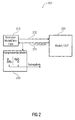
- a so-called complementary model is used for testing, as is described, for example, in US Pat.
- Fig. 2 is shown.
- This model 230 expects the output 222 of the DUT 220 or a model as input stimuli and validates them.
- the DUT 220 is driven by a controller 210 or other stimuli with test cases or, more generally, with input data 212.
- the output 222 of the DUT serves as an input model trigger (model trigger) for the complementary model 230.
- model trigger model inverse to the reference model must be generated.
- Expected messages from the DUT are expected and validated in model 230 as input.
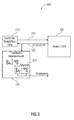
- FIG. 300 Another known approach 300 relates to a change in the implementation of the reference model 230, as described, for example, in US Pat Fig. 3 is shown.
- the reference model 230 is modified by states 310 and behavior such that within the model 230 the DUT output 222 is validated can be.
- the reference model 230 must validate the actual output as input in a mode extended for validation.
- the output 222 of the DUT 220 generated by stimuli 212 serves as an input to the modified implementation of the reference model 230.
- a reference model can represent a special characteristic of the permissible system behavior. So it can not always be assumed that the application under test (DUT) behaves exactly like the reference model. Rather, certain deviations are perfectly permissible and often unavoidable.
- the system behavior of parallel and temporally dependent (for example, processing speed or data) dependent functions even deviates from the application and reference model in general. Due to independently specified subfunctions or parallelism in the reference model, some dependencies exist within the output data streams to be compared. An exact match of the two output data streams will therefore hardly occur; rather, a fuzzy assessment of the agreement must be expected.
- a reference model may include multiple final state machines or finite state machines (FSM, finite state machine, or generally parallel submodel). Expenditures from parallel finite state machines can overtake themselves (races, run-time behavior). By varying the timing of the parallel submodels as well as the reference model and the DUT, the order of the output can vary. Within In contrast, the order of the output of a parallel submodel is ordered.
- FSM finite state machines
- Expenditures from parallel finite state machines can overtake themselves (races, run-time behavior).
- the object of the present invention is to provide a device which is designed to enable a statement as to whether a temporal order of the occurrence of the individual parts in the reference data stream is prescribed between individual parts of a reference data stream.
- An embodiment according to the invention provides apparatus for generating a tagged reference data stream, the apparatus comprising a reference data generator configured to generate a reference data stream based on an input data stream.
- the reference data stream in this case has a plurality of partial reference data streams, wherein a first partial reference data stream has a first marker and a second partial reference data stream has a second marker.
- the first marker and the second marker indicate whether a time sequence between an occurrence of the first partial reference data stream and an occurrence of the second partial reference data stream in the reference data stream is prescribed.
- Embodiments according to the invention are based on the core idea that when generating partial reference data streams of a reference data stream, a label is added to a partial reference data stream, whereby the label can determine whether a temporal order of the occurrence of the partial reference data stream in the reference data stream is prescribed.
- a distinction can be made as to whether the partial reference data stream was generated in parallel with another partial reference data stream, and thus the order of which of the two partial reference data streams is first output in the reference data stream from the reference data generator, or if the two partial reference data streams have a prescribed order, and therefore, must be output from the reference data generator in the reference data stream in the prescribed order.
- Some other embodiments according to the invention provide a method for generating a tagged reference data stream comprising generating a reference data stream based on an input data stream.
- the reference data stream has a plurality of sub-reference data streams, wherein a first sub-reference data stream has a first marking and a second sub-reference data stream has a second marking.
- the first mark and the second mark indicate whether a time sequence between an occurrence of the first partial reference data stream and an occurrence of the second partial reference data stream in the reference data stream is prescribed.
- Some embodiments according to the invention relate to a device for testing a test object with a device for generating a marked reference data stream.
- Some further embodiments according to the invention relate to a method for testing a test object.
- Fig. 1 shows a schematic representation of an apparatus 100 for generating a marked reference data stream 120 according to an embodiment of the invention.
- the apparatus 100 in this case has a reference data generator 110 which is designed to generate a reference data stream 120 based on an input data stream 102.
- the reference data stream 120 includes a plurality of sub-reference data streams, wherein a first sub-reference data stream has a first marker and a second sub-reference data stream has a second marker.
- the first marker and the second marker indicate whether a time sequence between an occurrence of the first partial reference data stream and an occurrence of the second partial reference data stream in the reference data stream is prescribed.
- the markings of the sub-reference data streams of the reference data stream can thus be used to determine whether the order of occurrence of two sub-reference data streams in the reference data stream is prescribed, or whether the two sub-reference data streams can be output from the reference data producer in the reference data stream in any order.
- partial reference data streams generated by parallel-operating parts of the reference data generator may occur in any desired time sequence relative to one another in the reference data stream.
- the order of occurrence of partial reference data streams generated by one and the same part of the reference data generator is prescribed.
- the markings of the two partial reference data streams can be used to determine, for example, in which chronological order the two partial reference data streams must occur in the reference data stream.
- the reference data generator comprises a plurality of partial reference data generators.
- a marking of a partial reference data stream may contain information from which partial reference data generator the partial reference data stream was generated.
- Parallel operating partial reference data generators the z. B. correspond to the aforementioned parts of the reference data generator can independently generate sub-reference data streams, for which therefore no temporal order of occurrence is prescribed in the reference data stream.
- Partial reference data generators may be implemented, for example, as finite state machines.
- a partial reference data generator can be z.
- B. generate a partial reference data stream when transitioning from a first state to a second state.
- the sub-reference data stream may in turn comprise a plurality of transient sub-reference data streams, wherein the transient sub-reference data streams may also have a marker.
- the marker can in turn indicate if a time order between occurrence of the various transition part reference data streams in the part reference data stream is prescribed.
- a state transition of a portion of the reference data generator produces a partial reference data stream consisting of multiple parts (transition sub-reference data streams or simply called messages), these may also be tagged and indicated as to whether the messages are timed in order must occur to the reference data stream or whether the time sequence can be arbitrary.
- Fig. 4 1 shows a schematic illustration of a device 400 for testing a test object 402 with a device for generating a marked reference data stream 120 according to an embodiment according to the invention.
- the device 400 for testing a test object 402 in this case comprises a device for generating a marked reference data stream, such as in FIG Fig. 1 and an analysis module 420 configured to enable evaluation of the test object 402 based on the reference data stream 120 and a test object output data stream 404.
- the test object 402 is configured to generate the test object output data stream 404 based on the input data stream 102.
- the evaluation of the test object 402 may be based, for example, on a comparison of the reference data stream 120 and the test object output data stream 404.
- the test object output data stream 404 has a plurality of sub-test object output data streams.
- the analysis module 420 can thus z. For example, compare the partial reference data streams to the partial test object output data streams.
- the difficulty hitherto has been that the partial reference data streams and the partial test object output data streams did not have to have the same chronological order, since, for example, partial data streams of parts of the reference data generator 110 and of the test object 402 operating in parallel can overtake each other.
- the chronological order of such partial data streams does not have to be prescribed.
- the analysis module 420 can now determine whether a deviation of the time order of the partial test object output data streams from the partial reference data streams was caused by a faulty behavior or the deviation is allowed, since the different temporal sequence were generated, for example due to parallel operations.
- an assignment of the two output data streams can be achieved, so that a comparison of the output behaviors is possible.
- a data stream can consist of a plurality of independent individual data streams (partial data streams), which can each be assigned to a single function (part of the test object or of the reference data generator).
- the reference data generator 110 may be, for example, an instrumented reference model.
- An instrumented reference model can, for. B. by adapting an existing reference model for the test object 402 (DUT) are created.
- the adaptation of the reference model can be automated, for example, by a macro.
- a minimal instrumentation of the reference model may be sufficient for the creation of the instrumented reference model (of a reference data generator), which if necessary can also be generated automatically by a macro.
- the reference model has a central output or send function that is called each time a part of the reference model wants to output a message or a partial data stream.
- an adaptation can be made at this point of the reference model, so that a corresponding marking is output with the respective partial data stream.
- the test object 402 may be, for example, a prototype, another model or, in general, a DUT.
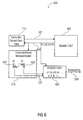
- Fig. 5 1 shows a schematic representation of a device 500 for testing a test object 402 with a device for generating a marked reference data stream 120 according to an embodiment according to the invention.
- the device 500 shown corresponds in principle to the previously in Fig. 4 shown device.
- a controller model 510 or test case generator is shown.
- the test case generator 510 may provide, for example, the input data stream 102, also called stimuli.
- the test object 402 eg, model, DUT
- the reference data generator 110 eg, instrumented reference model
- a reference data stream 120 output validation model or output of the reference model to the analysis module, also called a validation model
- Test object output data stream 404 eg, DUT output
- the analysis module 420 is designed to be based on the reference data stream 120 and provide the test object output data stream 404 with an evaluation of the test object 402, for example in the form of a test result 520.
- a black-box test of a DUT can be performed.
- test object 402 or DUT for example, a device to be tested as well as a model can be used.
- the analysis module 420 may, for. For example, consider the input data streams 102 and the output data streams of the reference model 110 and the implementation under test (test object). In this case, the input signals (the input data stream) in the form of stimuli, z. From a controller 510 or test generator. If a deviation is detected, the system behavior (input signals and output signals) and the detected differences can be recorded.
- the output (reference data stream) is supplemented by an unambiguous marking or identifier for each parallel finite state machine (generally parallel partial model, partial reference data generator).
- This adds additional model information to the model output data through a sufficiently abstract representation in the form of a marker.
- This mark can z. B. at runtime, if the model information is available during this sufficient. It can be static at design time, for example, automated, such. For example, by macros or scripting (running a script), done and updated automatically after changing or adapting the model (reference model). For example, this allows the output data for each parallel submodel to be evaluated separately.
- the analysis module 420 can then z. B. perform a comparison of the output data in an ordered order.
- Expenditure partial data streams
- FSMs parallel state machines
- Output data of the DUT does not contain any marking so that the assignment can be ordered. The test statement can be made from this comparison.
- An example of a flow of the described black box test with a device for testing a test object begins stimulating the instrumented reference model 110 (the reference data generator) and the DUT 402 (the test object) with the same input data.
- the parallel output data streams (partial reference data streams) of the instrumented reference model 110 for validation are tagged.
- the output can be redirected directly to the analysis module 420. If the output data (of the reference model and the DUT) differ in format, they can be transformed into a uniform data format.
- the analysis module 420 compares the outgoing data streams of the DUT 402 and the instrumented reference model 110 with each other.
- the data stream of the instrumented reference model can be broken down, for example, into several parallel partial data streams. These can then be checked individually, for example, for compliance with the order of chronological order, temporal behavior and / or completeness.
- An instrumentation of a (already existing) reference model can thus be done for example by adding a marker. This results in a reusability of the reference model for testing a DUT against a running model. This can result in a significant cost and time savings and an enormous quality gain, since original reference models used can be minimized and error-prone modifications of the models can be minimized.
- Fig. 6 a schematic representation of a device 600 for testing a test object 402 with two drawn partial data streams of the reference data stream 120 is shown.
- the device 600 corresponds in principle to the in Fig. 5 shown device.
- the analysis module 420 compares partial test object output data streams (o1, o2, o4, o3) with partial reference data streams (a, b, b, a) of the instrumented reference model 110.
- the sub-reference data streams each have a flag in the example indicating whether a sub-reference data stream has been generated by a sub-model a 610 or a sub-model b 620.
- the subtest object output stream o3 would appear after the subtest object output stream o4 in the test object output stream 404.
- the analysis module 420 may determine when comparing the reference data stream 120 and the test object output data stream 404 that the two messages in the reference data stream occur in reverse order.
- the analysis module 420 can recognize that the two messages were generated by different parallel partial models (partial reference data generators) and thus may have any time sequence.
- the test object output data stream 404 therefore conforms to the specification in this example, although the reference data stream 120 and the test object output data stream 404 do not exactly match due to the different temporal order of the partial data streams.
- the evaluation of the test object 402 can be carried out by marking the partial reference data streams become. There is thus a resolution of the output behavior of the model 110 executed in parallel for the correct comparison of the output with the DUT 402. As a result, the assignment problem can be solved.
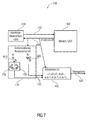
- Fig. 7 1 shows a schematic representation of an apparatus 700 for testing a test object 402 with a device for generating a marked reference data stream 120 according to an embodiment according to the invention.
- the device 700 corresponds in principle to in Fig. 5 shown device.
- Hierarchically ordered submodels of the reference model 110 result in a partial dependency of the output data.
- z. B sub-data streams of the output data, which themselves consist of independent sub-data streams, sequentially dependent.
- sub-reference data streams may comprise sub-reference data streams having a prescribed temporal order, depending on whether they originate from sub-models of the same level of the hierarchy or sub-models of different levels of the hierarchy. A pure marking of the parallel partial model is not sufficient for the assignment of these.
- a first hierarchical level is shown comprising submodule a 610 and submodel b 620, and a second hierarchical level showing submodel 1 710 and submodel 2 720 as subordinate submodels of submodule a 610.
- the sub-reference data streams then receive, for example, a marker a, if generated by sub-model a 610, a marker b, if generated by sub-model b 620, a marker (a, 1) when generated by sub-model 1 710, and a marker (a, 2) when generated by sub-model 2 720.
- the dependence on sub-data streams is given when they occur in the same state space or sub-state space.
- a temporal order is z. B. prescribed when partial data streams were generated by one and the same hierarchical sub-model.
- This state space and the dependence of the state spaces among one another are represented, for example, as hierarchy (substates) in the models.
- a state space represents the totality of all states that submodels of this state space can assume.
- output data is represented as atomic, i. H. modeled as independent of each other.
- partial data streams are generated by a partial model in a specific state, these partial data streams have a prescribed chronological order. If partial data streams are generated during a transition between two states of a partial model, then these partial data streams can also have a prescribed chronological order.
- Parallel-modeled behavior can take place in explicitly parallel-modeled state spaces or sub-state spaces. For example, the flag is extended by one entry for each sub-state, so that the hierarchy and parallelism remain traceable.
- Fig. 8 1 shows a schematic illustration of a device 800 for testing a test object 402 with a device for generating a marked reference data stream 120 according to an embodiment according to the invention.
- the device 800 corresponds in principle to the in Fig. 5 shown device. However, a filter 810 and a memory device 820 (Log) are optionally shown.
- the DUT 402 and the instrumented reference model 110 are stimulated by input data 102.
- a filter 810 may then extract specified output data from the output 404 of the DUT 402.
- This possibly filtered DUT output 404 and the output 120 of the instrumented reference model 110 may now be held in a memory device 820 (Log) and then used as an input to the analysis module 420 in an off-line analysis (at a later time).
- the two output data streams are passed directly to the analysis module 420. This can then make an allocation of the output data of the DUT 402 and the instrumented reference model 110.
- the filter 810 can use, for example, a simple list of possible messages up to a list including all relevant parameters. As a result, a coarse up to a specific filtering of the output data 404 of the DUT 402 to be analyzed is possible.
- effects can be a transition of a state machine from one state to another state or an entry, in e.g. An initial state of a state machine.
- sequential regions can be inserted in the effects.
- special characters or macros within effects can be used to specify scope for order-based validation.
- the output data can be marked as sequentially dependent on the order and can be validated as such by the analysis module.
- these partial data streams may also be checked for compliance with their time order, if prescribed, by the analysis module.
- a distance measure and / or a mask is used to detect similarities and delineations of messages (partial data streams). If, for example, several similar outputs are possible at one time, they must be assigned to a reference output in order to be able to make a statement. A complete comparison of the data can z. Due to data dependencies, non-determinism of the data or inaccurate reference modeling.
- a similarity mask may be used to identify diversification characteristics of the output data.
- This identifier can be in a message (partial data stream) distinguishable data shares such.
- mask As individual parameters or individual bits, mask.
- Such a mask can be specified as additional information similar to the filter information.
- a stochastic determination of this based on reference data is possible. If similar output data associated with each other, so a distance metric, such. As a simple factor of the same parameters or a Hamming distance, are applied. If a similarity mask exists for the output data / message, only the masked data shares can be used for the distance calculation.
- Some embodiments according to the invention include an analysis module for online analysis.
- An allocation of output data streams (of the reference model and of the test object) can be carried out, for example, if both data streams have been completely generated and stored (in a memory device), here also called “offline analysis”.
- offline analysis An analysis of the output data streams at runtime (“online analysis”) is not readily possible due to different time behavior (temporal order of the partial data streams) of instrumented reference model and DUT.
- the maximum time window to be held depends on the specified time behavior (of the reference model and the test object) plus a variable time that sets the frame for a different time frame Determines behavior.
- the way of implementing a list as e.g. Chained list, heap (special data structure) or balanced tree is not restricted here.
- the nature of the memory device and the data structure used is not critical here.
- the messages to be validated may be stored in a first list.
- This list is also called “V-list” below.
- the output (reference data stream) of the instrumented reference model is flagged.
- the mark z. B. the valid state space or Unterschreibsraum the respective message (the respective partial reference data stream) to.
- Each message can be timestamped, which also allows analysis of temporal behavior.
- the messages received by the DUT can be stored in another list, which is also referred to below as the "E-list”.
- This list may hold outputs (the test object output stream) from the DUT, e.g. For example, they are not filtered and have not been previously issued by the instrumented reference model. Such messages are also referred to here as "spontaneous message".
- the time of arrival of each message can be recorded to analyze the timing of the DUT.
- the length of the list can be reduced for example by a defined time window, so that z. For example, only spontaneous messages of the last x seconds (a predefined number of seconds) can be held.
- a list of time-invalid messages can be generated.
- News from the instrumented Reference model can be output and within the specified time behavior does not arrive can be stored in this data maintenance list.
- These messages can be removed from the list of messages to be validated if the timing deviates and added to the list of invalid messages.
- the X list can be z. B. also include only a certain time window, which is moved at runtime. For example, only all output data will be stored within the last x seconds.
- the output of the DUT (the test object output data stream) is incomplete. If such a gap is detected in the output of the DUT, the outputs of the reference model corresponding to this gap can also be removed from the list of messages to be validated or marked as invalid.
- stimuli an input data stream
- the instrumented reference model may generate tagged outputs (a reference data stream) "passed" to an analysis module.
- the DUT generates output data (a test object output data stream) based on the input data stream.
- An optional filter forwards defined messages to the analysis module. Due to the optional filter and the external interface to the analysis module (analysis model), the output data at the analysis module usually arrive at those of the instrumented reference model. However, this is not a requirement and therefore no restriction.
- marked issues coming from the instrumented reference model are entered in the V-list with timestamp.
- the output generated by the DUT is compared with the output data held in the V-List. If a similar output was also generated by the instrumented reference model and stored in the V-list, this can be analyzed with regard to the chronological order, the temporal behavior and the completeness compared to the reference output. If a similar output is not in the V-list, it can be entered as a "spontaneous message" in the E-list. Alternatively, look for a similar message in the X list of invalid messages. Thus, for example, incoming, but not timely correct output data can be assigned. If output data arrives from the instrumented reference model after the corresponding outputs of the DUT, this can also be an analysis of such output data in the online analysis. In addition, it is possible by additional information to recognize whether the output data by pure time behavior or a state change in the model are not behavioral.
- the output of the DUT may be delayed.
- the output from the V-list is shifted into the X list of invalid outputs.
- the instrumented reference model leaves a state space or substate space
- the outdated and new state space can be communicated to the analysis module.
- the analysis module may then search the V-list for messages with the state space left highlighted and move it to the X list.
- the messages can additionally be marked as "invalid".
- FIG. 1 For embodiments according to the invention, relate to a device for testing a test object with an extension for the treatment of DUT events by evaluating history windows.
- DUT event events occurring at the DUT other than the interface observed by the output data stream
- the DUT event For example, when pressing a button on the DUT, only its effect on the output data can be observed.
- the DUT displays an output behavior which the instrumented reference model can only have after recognition of an abovementioned event. If such a DUT event is detected, a reaction (of the DUT) has mostly already occurred and an online analysis is too late.
- a DUT event may be detected by responding to such (in the test object output stream) and replicated as input to the instrumented reference model.
- an explicit marking of the output data (of the reference model) triggered by DUT events and assignment to already executed DUT outputs can take place.
- Such marked output data may e.g. B. from the analysis module in the history already arrived output data from the DUT be assigned.
- the E-list described above is checked by the DUT for incoming messages for similar output data.
- output data can also be analyzed after the state change in the instrumented reference model. This can also be done if there is no guarantee that output data from the instrumented reference model will arrive before that of the DUT.
- a partial reference data stream may be compared with the stored partial test object output data streams in the E-list prior to storage in the V-list to also find the corresponding partial test object output data stream when the partial test object output data stream arrives at the parsing module prior to the partial reference data stream.
- Some embodiments according to the invention relate to an apparatus for testing a test object used in the field of infotainment (integration of information technology with consumer electronics).
- reference models of control units of the infotainment in the vehicle can be adapted as described.
- communication infrastructure can here z.
- MOST Multimedia Oriented System Transportation
- a comparison of reference models or a reference model with a controller implementation can be performed.
- a statement about the interface conformity of the device or model to be tested can be made.
- C ++ source code can be generated from the created (already existing) reference models by means of code generation. If model information is missing at runtime or in the generated source code, each model can additionally be enriched with a marker at design time.
- state transition flags include, among others, state transition flags, explicit sequences of sequences (messages in prescribed order) within an effect (eg transition / transition / state). Since only the output following DUT events on the MOST ring (ring-shaped MOST bus), these events are treated separately. The temporal behavior is important. Therefore, for example, an explicit marking of transitions that are triggered by DUT events makes sense.
- the publish / subscribe procedure used in the MOST must also be observed separately by so-called notifications. Marking / outputting of the Instrumented Reference Model should only be done when registering for a value ("Notification Set").
- a value is, for example, a specific parameter of a device, such. B. the current song of a radio meant.
- an output should be extended with tags.
- a proprietary implementation of the notification service does not allow tagging. Then z. B. without limitation, a notification for the changed attributes of the reference model.
- the notification service stores the devices that are interested in a particular value and passes changes to that value to the stored devices.
- NEW_STATE_INFO (NEW_STAFF_INFO) macro.
- the name is made up, for example, of the overstate names and the state name by ",” separated, such.
- NEW_STATE_INFO ("Work, P1, Not Connected", "Work, P1, Connected").
- the transition combines the state “not connected” with "connected". Both states are sub-states of "works” and of the first parallel substate of work, here designated "P1". Internally, the state names can be kept in upper case to reduce errors due to different spellings.
- a tag may consist of a C ++ vector.
- the size of the vector can indicate the degree of parallelism of the effect (state or transition).
- parallel transactions extend the vector by two entries (1st ID or parallel state space identification, 2nd sequential event number or event number).
- values of the vector z As numbers or strings can be used.
- Fig. 9 shows a schematic representation of a state diagram 900 with a possible marking approach.
- tags are used in the form of integers.
- transition 902 to state_0 910 marked with the tag 0/1.
- transition 912 to the state_1 920 with the tag 0/2 and from there a transition 922 to the state_2 930, which is marked with the day 0/3.
- State_2 930 comprises two parallel processing branches in the form of parallel state machines.
- a branch begins with a transition 932 to state_5 940 marked 0/4/1/1 followed by a Transition 942 to a state_6 950 marked with a 0/4 / 1/2 tag.
- State_6 950 again comprises two state machines operating in parallel, the first at first passing transition 952 to state_9 960 marked 0/4/1/3/1/1 followed by transition 962 to state_10,964 which is marked with the day 0/4 / 1/3 / 1/2.
- State_6 950's second state parallel state machine starts with transition 954 in state_11 970 marked 0/4/1/3/2/1 followed by transition 972 into state_12,974 ending with day 0 / 4 / 1/3 / 2/2 is marked.
- State_2 930's second state parallel state machine first has a transition 934 to state_13 980 marked with a 0/4 / 2/1 tag, followed by a transition 982 to a state_14 990 ending with day 0/4 / 2/2 is marked.
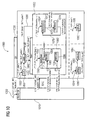
- FIG. 10 Another example is in Fig. 10 another schematic representation of a state diagram 1000 shown with a possible marking approach.
- a transition 1002 to a state NonOK 1010 takes place with a flag NEUE_ZUSTAND_INFO ("", “not OK”). From there, a transition 1012 to the state OK 1020 follows with the flag NEUE_ZUSTAND_INFO ("NichtOK", "OK”).
- State OK 1020 has three parallel state machines.
- the first state Start 1030 of the first state machine is reached by a transition 1022 with the mark ("", "OK, P1, Start”).
- a transition 1032 is made to the load 1040 state marked with ("OK, P1, Start”, “OK, P1, Load") followed by a Transition 1042 to a Ready 1050 state marked by ("OK, P1, Load", "OK, P1, Ready”).
- the state Ready 1050 again contains two parallel state machines.
- a transition 1052 is made to the state Mache Effectives 1060, which is marked with (”, "OK, P1, P1, Mache Constructions").
- the state MacheEas 1060 again has two parallel state machines, where the first state is Much 1064 of the first state machine through a transition 1062 labeled ("", “OK, P1, P1, MacheEas, MuchMore”), or through a transition 1065 , which is marked with ("OK, P1, P1, MacheEva”, “OK, P1, P1, MacheSomething, MuchMore”), and the first state is made at 1066 of the second state machine through a transition 1067 marked with ("OK , P1, P1, Mache endeavors “,” OK, P1, P1, Mache endeavors, MacheNichts ”) can be reached.
- the first state MacheParallel 1070 of the second state parallel state machine Ready 1050 may be achieved by a transition 1054 marked with ("", “OK, P1, P2, MacheParallel”). From the state MacheParallel 1070, a transition 1072 marked with ("OK, P1, P2, MacheParallel", “OK, P1, P2, ParallelFertig”) leads to a state ParallelFertig 1074. The state ParallelFertig 1074 is reached a transition 1076, which returns to the state MacheParallel 1070 with ("OK, P1, P2, ParallelFertig", "OK, P1, P2, MacheParallel”). Another transition 1056, which is terminated with ("OK, P1, Ready”). , "OK, P1, Load”), returns from the Ready 1050 state to the Load 1040 state.
- the second parallel state machine of state OK 1020 has a first state Status A 1080 reachable by a transition 1024 marked ("", "OK, P2, Status A”). From state StatusA 1080 introduces Transition 1082 marked ("OK, P2, StatusA”, "OK, P2, StatusA2") to StatusA2 1084.
- the third parallel state machine of state OK 1020 has only state StatusB 1090 reachable by a transition 1026 marked ("", "OK, P3, StatusB").
- Transitions triggered (triggered) by DUT events can be tagged directly to NEW_STATE_INFO with a DUT_EVENT_TRIGGER (DUT_ERVISOR_ACTIVATE) command.
- DUT_EVENT_TRIGGER DUT_ERVISOR_ACTIVATE
- the special treatment of DUT events can then take place in the instrumented reference model.
- Validated events / properties can be generated using VAL_SENDMOSTEVENT (VAL_SENDEMOSTEREIGNIS) or VAL_SEND_PROPERTY (VAL_SENDE_EIGENSCHAFT).
- the tags can be automatically created and updated in the implementation by a macro. In doing so, the hierarchical markings and the markings of the DUT events can be carried out. As a result, the expenditure on instrumentation can be kept very low (even after model changes).
- the analysis module of a concrete FBlock (function block) is derived, for example, from the abstract class AnalysisModel (analysis model), an implementation of a generic class for an analysis module.
- An ESK model a generic class for an application, may have an association, itsAnalyseModel, with this AnalysisModel class.
- FBlockIds uniquely identify a function block
- a function uniquely identifies a function of a function block
- an OpType an operation of a function block. This is filled, for example, in the constructor of the class or the initial default transition (default transition), the initialization of a state diagram.
- the mode of operation is then, for example, that with a new state transition, the instrumented reference model calls, via the association itsAnalyseModel, a method of the analysis module within the macro NEW_STATE_INFO (in this case, for example, updateStateInfo (), UpdatingStateInfo ()). For example, this sets all events (events) that should have already arrived by leaving the state as invalid.
- the instrumented reference model uses a method, referred to here as validate (validate), to send the expected events (events) with corresponding parameters to the analysis module. This z. B. waited for the event handed over by the DUT. Internally, a list with the event names (event names) as an index can be set up in the instrumented reference model, in which all expected events occur.
- the event can be considered a spontaneous event.
- Spontaneous events can be stored for a certain period of time. If a DUT event occurs (which, for example, was generated by a DUT event generator), then this time window can be searched for arrived and validated events. This happens because events triggered by DUT events can usually only be generated with the corresponding reaction on the MOST ring.
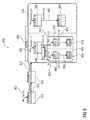
- Fig. 11 12 shows a schematic system structure 1100 of an implementation of a device for testing a test object 402 in a MOST system.
- the device 1100 corresponds in principle to the example in FIG Fig. 8 shown device.
- the test object output data stream 404 is output from the DUT 402 via a MOST bus and from there via an optional filter 810 to the analysis module 420.
- the controller model 510, the instrumented reference model 110 (reference data generator), the analysis module 410 and the optional filter 810 can be provided, for example, as a computer program and executed on a computer 1110.
- sequences triggered by stimuli 102 are provided with a marking are.
- This mark defines z.
- the marker may also contain a numbering.
- Events arriving from the DUT 402 may be searched in the sequence list generated by the instrumented reference model 110. If these are present, valid and occur within the correct order in the state space, then the event was generated correctly by the DUT 402. Events that do not appear in this list are called "spontaneous events" and can be included in the validation by an extension. Occur in the sequence list stored events z. B. within a period of time, these are considered missing (timeout, timeout).
- FIG. 12 shows a schematic physical structure of an apparatus 1200 for testing a test object 402 (DUT) in a MOST system.
- the device 1200 corresponds in principle to the in Fig. 11 described device.
- the MOST bus is annular and the individual devices or modules are connected to the MOST bus 1230.
- the structure of the device 1200 may be used, for example, to validate MOST sequences.
- a controller 510 (synonym shadow / shadow or stimulus generator) sends z. Eg MOST events (according to specified sequences) to the connected devices or the FBlock (function block) to be tested.
- an MMI 1210 man-machine interface
- a model 1220 UML / MOST tool such as Phyton.
- the device under test (DUT) is connected to the MOST ring.
- an instrumented reference model 110 (instrumented model) is connected to an analysis module 420.
- FIG. 12 shows a schematic representation of a process 1300 of a validation of a test object 402 by a device for testing a test object 402.
- the device corresponds in principle to FIG Fig. 12 shown device.
- Stimulus triggered (triggered) MOST events are picked up by the analysis module 420. This compares the specification-faithful sequence 120 (reference data stream) generated by the instrumented reference model 110 with the additional information (the markings) of the instrumented reference model 110 with the sequence 404 (test object output data stream) originating from the DUT 402 and can store any deviations.
- Fig. 14 shows a schematic representation of a triggered (triggered) function call 1400 of the analysis module in a device to the test object in a MOST system.
- the device corresponds in principle to the in Fig. 12 shown device.
- the resulting function calls of the analysis module 420 are shown, and an event generated by the instrumented reference model 110 can be passed to the analysis module with the method validate () (validate ()).
- This (method) passes z. Additional information about the validity and dependency of events (eg invalid state, valid state, sequence number, trigger type).
- Incoming events to be validated by the DUT 402 are, for example, by the method validateEvent () (validateEvent ()) checks (eg timeout).
- Fig. 15 a schematic representation of a sequence sequence 1500 of the validation at an expected event in a device for testing a test object.
- the various elements controller 510, instrumented model 110, DUT 402, analysis module 420
- the state validate event 1510 of the analysis module are shown in the horizontal direction.
- the vertical direction a time course of actions of the different elements of the device is shown.
- a MOST stimulus 102 (input data stream) is sent to the instrumented reference model 110 and the DUT 402.
- the instrumented reference model 110 sends a message with the call validate (event, invalid state, valid state, sequence number, trigger type) with the reference data stream 120 to the analysis module 420.
- an event occurs at the DUT 402 which can be seen in the test object output data stream 404.
- the analysis module 420 for example, a transition is made to the validate event 1510 state, and the best matching event is searched for and stored, whereupon the validate event 1510 state is exited.
- FIG. 12 shows a flowchart of a method 1600 for testing a test object according to an embodiment of the invention.
- a generation 1610 of a reference data stream is performed based on an input data stream, the reference data stream having a plurality of sub-reference data streams.
- a first partial reference data stream has a first marker and a second partial reference data stream has a second marker.
- Give the first mark and the second mark whether a time sequence between an occurrence of the first partial reference data stream and an occurrence of the second partial reference data stream in the reference data stream is prescribed.
- an evaluation 1620 of the test object is made based on the reference data stream and a test object output data stream, the test object configured to generate the test object output data stream based on the input data stream.
- the method makes it possible to judge whether and to what degree the output data streams of reference and DUT (test object) match.
- the assessment or evaluation can take place despite different temporal behavior of the reference data stream and the test object output data stream, as indicated by the markers, whether different partial data streams may pass or whether a temporal order of the partial data streams is prescribed.
- An analysis function can then, for example, calculate the corresponding test verdict (the corresponding test verdict).
- the sub-reference data stream may be stored in a first storage device, such as the V-list already mentioned. Thereafter, an incoming partial test object output data stream may be compared with the stored partial reference data streams.
- a sub-test object output data stream may be stored in a second memory device, such as the E-list described above, if no matching sub-reference data stream is found in the comparison of the sub-test object output data stream with the stored sub-reference data streams.
- time information may be provided for each sub-reference data stream and for each sub-test object output data stream, such as a timestamp, to be added.
- sub-reference data streams stored in the first memory device may be stored in a third memory device, such as the X-list described above, if the test object output data stream does not have a matching sub-test object output data stream within a prescribed time period (timeout).
- Some embodiments according to the invention relate to a method in which the reuse of functional models (reference models) programmed, for example, in UML (Unified Modeling Language) for testing realizations (DUTs) by a comparative execution (testing against the model) is made possible with minimal adaptation of the model (instrumentation of the reference model).
- UML Unified Modeling Language
- the use of macros allows the marking of state diagrams (of reference data streams) to be largely automated.
- instrumentation of the reference model is both maintainable and possible with very little effort.
- FIG. 1 For example, a device for testing a test object, which comprises a DUT event generator or an event detector.
- the instrumented reference model is to respond to DUT events, they must be detected and generated.
- z. B. an FBlock-specific model as, Eventgenerator be generated. For example, this may trigger on the first event after a respective DUT event and may trigger the corresponding DUT event on the instrumented reference model produce.
- the instrumented reference model can also evaluate this despite delay. If data-dependent transitions exist in the model, the model data should also be set accordingly by the DUT event generator or event detector.
- a concrete analysis module may be derived from the abstract class AnalysisModel ( analysis model ).
- the loadEventIds method which sets all events to be validated by the analysis module, can be overwritten so that the events (events) of the FBlock (function block) to be validated are initially entered.
- the described apparatus and method for instrumentation and use of reference models may be used in model-based development. If model-based procedures are used for the specification or as a prototypical implementation, instrumentation of these reference models can take place. This allows DUTs to be tested with the same expected behavior.
- the reference data generator can be easily created by instrumentation of an already existing reference model.
- a reference data generator and thus a device for generating a marked reference data stream can be provided with minimal effort.
- a device for testing a test object can be provided without great effort by adding an analysis module
- the test object may be another model, a prototype, or generally a device under test.
- the analysis module is arranged to, if appropriate, store, based on an event, in violation of a prescribed order or if the test object output data stream does not have a matching partial reference data stream to a possibly stored partial test object output data stream within a prescribed period of time, the optionally stored partial test object output data stream Add, mark or delete invalid data streams.
- the analysis module is arranged to mark as invalid or, based on an event, in violation of a prescribed order or if the test object output data stream does not have a matching partial reference data stream to a stored partial test object output data stream within a prescribed period of time, add the stored partial test object output data stream to a list of invalid data streams to delete.
- the analysis module is arranged to compare a partial reference data stream for which no matching sub-test object output data stream is stored to a sub-test object output data stream in the list of possibly invalid data streams or to a marked partial reference data stream.
- the analysis module is configured to include a sub-reference data stream for which no matching sub-test object output data stream is stored with a sub-test object output data stream in the list of invalid data streams or compare with a partial reference data stream marked as invalid.
- sequences can refer, on the one hand, to a sequence of partial data streams or messages or to a route through a state machine or state machine.
- the first tag and the second tag indicate in which prescribed temporal order the first sub-reference data stream and the second sub-reference data stream are located in the reference data stream 120 when a time order is prescribed.
- the first sub-reference data stream may include a plurality of sub-reference data streams, a first sub-reference data stream having a first extended tag and a second sub-reference data stream having a second extended tag.
- the first extended tag and the second extended tag are based on the tag of the first sub-reference data stream and indicate whether a timing order between an occurrence of the first sub-reference data stream and an occurrence of the second sub-reference data stream in the sub-reference data stream is prescribed.
- FIG. 1 For embodiments according to the invention, relate to a reference data generator having a plurality of sub-reference data generators.
- the first extended tag indicates from which subset reference data generator of the plurality of subpart reference data generators the first subpart reference data stream has been generated
- the second extended tag indicates from which subset reference data generator of the plurality of subpart reference data generators the second subpartial reference data stream has been generated.
- a sub-sub-reference data stream of a first sub-reference data generator and a sub-sub-reference data stream of a second sub-reference data generator may also have no prescribed timing between occurrence of the sub-reference data stream of the first sub-reference data generator and the sub-reference data stream of the second sub-reference data generator in the reference data stream when the first sub-reference data generator and the second sub-reference data generator generate data streams in parallel with each other.
- the analysis module (420) may be configured to optionally, based on an event, violate a prescribed order or if the test object output data stream (404) does not have a matching partial reference data stream to a possibly stored partial test object output data stream within a prescribed period of time add, mark or delete stored partial test object output data stream to a list of possibly invalid data streams.
- the analysis module 420 may be configured to compare a partial reference data stream for which no matching sub-test object output data stream is stored with a sub-test object output data stream in the list of invalid data streams or with a selected sub-reference data stream.
- the reference data generator 110 or the analysis module 420 may be configured to add time information to a sub-reference data stream.
- the device comprises a retarder that is designed is to delay the test object output data stream in time.
- the device may include a filter, wherein the filter is configured to filter the test object output data stream.
- the analysis module 420 is also configured to determine a similarity value when comparing a partial reference data stream and a partial test object output data stream and to judge based on the similarity value whether the partial reference data stream and the partial test object output data stream match each other.
- Some other embodiments according to the invention include a central storage device configured to store the reference data stream 120 and the test object output data stream 404. Furthermore, the central memory device is designed to provide the reference data stream 120 and the test object output data stream 404 at a later time to the analysis module 420 for evaluating the test object 402.
- Some embodiments according to the invention relate to a method for testing a test object.
- the method includes storing a partial reference data stream and comparing a partial test object output data stream with a stored partial reference data stream.
- the sub-test object output data stream is part of the test object output data stream.
- the method includes storing the sub-test object output data stream if no matching sub-reference data stream is found in the comparison of the sub-test object output data stream with the stored sub-reference data streams.
- the method includes adding time information to one Partial reference data stream and adding time information to a sub-test object output data stream.
- the method may also include adding a partial reference data stream to a list of invalid data streams if the test object output data stream does not have a matching partial test object output data stream within a prescribed period of time.
- the inventive scheme can also be implemented in software.
- the implementation may be on a digital storage medium, in particular a floppy disk or a CD with electronically readable control signals, which may cooperate with a programmable computer system such that the corresponding method is executed.
- the invention thus also consists in a computer program product with program code stored on a machine-readable carrier for carrying out the method according to the invention when the computer program product runs on a computer.
- the invention can thus be realized as a computer program with a program code for carrying out the method when the computer program product runs on a computer.
Landscapes
- Engineering & Computer Science (AREA)
- Computer Hardware Design (AREA)
- General Engineering & Computer Science (AREA)
- Theoretical Computer Science (AREA)
- Quality & Reliability (AREA)
- Physics & Mathematics (AREA)
- General Physics & Mathematics (AREA)
- Tests Of Electronic Circuits (AREA)
- Test And Diagnosis Of Digital Computers (AREA)
- Debugging And Monitoring (AREA)
Applications Claiming Priority (1)
| Application Number | Priority Date | Filing Date | Title |
|---|---|---|---|
| DE102008060970.6A DE102008060970B4 (de) | 2008-12-08 | 2008-12-08 | Vorrichtung zum Erzeugen eines markierten Referenzdatenstroms |
Publications (3)
| Publication Number | Publication Date |
|---|---|
| EP2194457A2 true EP2194457A2 (fr) | 2010-06-09 |
| EP2194457A3 EP2194457A3 (fr) | 2014-01-22 |
| EP2194457B1 EP2194457B1 (fr) | 2018-09-19 |
Family
ID=41682703
Family Applications (1)
| Application Number | Title | Priority Date | Filing Date |
|---|---|---|---|
| EP09015132.5A Not-in-force EP2194457B1 (fr) | 2008-12-08 | 2009-12-07 | Dispositif de production d'un flux de données de référence marqué |
Country Status (2)
| Country | Link |
|---|---|
| EP (1) | EP2194457B1 (fr) |
| DE (1) | DE102008060970B4 (fr) |
Cited By (2)
| Publication number | Priority date | Publication date | Assignee | Title |
|---|---|---|---|---|
| CN107632551A (zh) * | 2017-10-10 | 2018-01-26 | 航天科技控股集团股份有限公司 | 一种基于智能检测系统的数字量检测方法及系统 |
| CN112180890A (zh) * | 2019-07-05 | 2021-01-05 | 北京新能源汽车股份有限公司 | 一种测试用例的生成方法、装置及设备 |
Family Cites Families (2)
| Publication number | Priority date | Publication date | Assignee | Title |
|---|---|---|---|---|
| US7747985B2 (en) * | 2005-03-18 | 2010-06-29 | Microsoft Corporation | Conformance testing of multi-threaded and distributed software systems |
| US7548911B2 (en) * | 2005-05-28 | 2009-06-16 | Microsoft Corporation | Diagnosing problems in distributed systems |
-
2008
- 2008-12-08 DE DE102008060970.6A patent/DE102008060970B4/de not_active Expired - Fee Related
-
2009
- 2009-12-07 EP EP09015132.5A patent/EP2194457B1/fr not_active Not-in-force
Cited By (2)
| Publication number | Priority date | Publication date | Assignee | Title |
|---|---|---|---|---|
| CN107632551A (zh) * | 2017-10-10 | 2018-01-26 | 航天科技控股集团股份有限公司 | 一种基于智能检测系统的数字量检测方法及系统 |
| CN112180890A (zh) * | 2019-07-05 | 2021-01-05 | 北京新能源汽车股份有限公司 | 一种测试用例的生成方法、装置及设备 |
Also Published As
| Publication number | Publication date |
|---|---|
| EP2194457B1 (fr) | 2018-09-19 |
| DE102008060970A1 (de) | 2010-06-17 |
| DE102008060970B4 (de) | 2016-05-12 |
| EP2194457A3 (fr) | 2014-01-22 |
Similar Documents
| Publication | Publication Date | Title |
|---|---|---|
| DE102015207656B4 (de) | Verfahren und System zum Testen von Steuersoftware eines gesteuerten Systems | |
| DE60017457T2 (de) | Verfahren zur isolierung eines fehlers in fehlernachrichten | |
| DE102014210854A1 (de) | Computerimplementiertes Verfahren und Signalfolge für ein Programm zur Wiederverwendung von ausführbaren Softwarekonfigurationen für Softwaresysteme sowie Rechneranlage und ein Computerprogramm mit Programmcode zur Durchführung des Verfahrens | |
| DE102020211679A1 (de) | Computer-implementiertes system und verfahren mit einem digitalen zwilling und einer graphen-basierten struktur | |
| EP0966703B1 (fr) | Procede d'analyse assistee par ordinateur de defaillances de capteurs et/ou d'actionneurs dans un systeme technique | |
| EP4412183B1 (fr) | Procédé et système de transformation de données de communication enregistrées | |
| DE69127798T2 (de) | Verfahren und Gerät zum Organisieren und Analysieren von Zeitsteuerungsinformationen | |
| WO2017005783A1 (fr) | Procédé mis en oeuvre par ordinateur pour le traitement de variantes d'objet de données | |
| DE102013223833A1 (de) | System zum rechnergestützten Erstellen von Regeln zur Überwachung und/oder Diagnose einer technischen Anlage | |
| DE102021116315A1 (de) | Verfahren zum Zusammenführen von Architekturinformationen | |
| WO2007006671A1 (fr) | Procede et systeme logiciel pour configurer un systeme modulaire | |
| EP2194457B1 (fr) | Dispositif de production d'un flux de données de référence marqué | |
| EP3232327A1 (fr) | Procede d'essai d'un programme de commande d'un appareil de commande dans un environnement de simulation sur un ordinateur | |
| DE10133670A1 (de) | Verfahren zur automatischen Erzeugung einer Wissensbasis für ein Diagnosesystem | |
| DE112010005924T5 (de) | Verfahren und System zum Weitergeben von Änderungen an einer Master-Einheit zu Duplikaten | |
| DE102022113104A1 (de) | Eindeutige Identitätskennung für Lognachrichtenquellen in Fahrzeugen | |
| EP4160446A1 (fr) | Analyse de capacité d'un composant dans une installation d'automatisation industrielle | |
| DE102004020873A1 (de) | System und Verfahren zum Bestimmen von anwendbaren Konfigurationsinformationen zur Verwendung bei einer Analyse eines computergestützten Entwurfs | |
| AT511297B1 (de) | Verfahren zur Erzeugung eines Modells einer Kommunikationsaufgabe | |
| DE102020102996A1 (de) | Verfahren für einen integrierten Entwurf zur Modellierung, Simulation und Test einer Echtzeit-Architektur innerhalb einer modellbasierten System- und Softwareentwicklung | |
| DE102004050293B3 (de) | Verfahren zur Simulation des Betriebs eines Netzwerks | |
| DE102022125715A1 (de) | Verfahren und Unterstützungseinrichtung zum Unterstützen einer Robustheitsoptimierung für ein Datenverarbeitungssystem und korrespondierendes CI-System | |
| EP2267562A1 (fr) | Procédé et appareil de contrôle de données devant être échangées entre des composants dans un format XML | |
| WO2026073738A1 (fr) | Procédé pour afficher au moyen d'un dispositif informatique électronique un agencement de circuit pour commander une machine, produit-programme informatique, support de stockage lisible par ordinateur et dispositif informatique électronique | |
| DE102023107067A1 (de) | Computerimplementiertes Verfahren zum Absichern eines ein Fahrzeug und/oder ein System des Fahrzeugs repräsentierenden Signalnetzwerkes, Computerprogramm und/oder computerlesbares Medium und Datenverarbeitungsvorrichtung |
Legal Events
| Date | Code | Title | Description |
|---|---|---|---|
| PUAI | Public reference made under article 153(3) epc to a published international application that has entered the european phase |
Free format text: ORIGINAL CODE: 0009012 |
|
| AK | Designated contracting states |
Kind code of ref document: A2 Designated state(s): AT BE BG CH CY CZ DE DK EE ES FI FR GB GR HR HU IE IS IT LI LT LU LV MC MK MT NL NO PL PT RO SE SI SK SM TR |
|
| AX | Request for extension of the european patent |
Extension state: AL BA RS |
|
| PUAL | Search report despatched |
Free format text: ORIGINAL CODE: 0009013 |
|
| RIC1 | Information provided on ipc code assigned before grant |
Ipc: G06F 11/26 20060101AFI20131205BHEP |
|
| AK | Designated contracting states |
Kind code of ref document: A3 Designated state(s): AT BE BG CH CY CZ DE DK EE ES FI FR GB GR HR HU IE IS IT LI LT LU LV MC MK MT NL NO PL PT RO SE SI SK SM TR |
|
| AX | Request for extension of the european patent |
Extension state: AL BA RS |
|
| RIC1 | Information provided on ipc code assigned before grant |
Ipc: G06F 11/26 20060101AFI20131219BHEP |
|
| 17P | Request for examination filed |
Effective date: 20140716 |
|
| RBV | Designated contracting states (corrected) |
Designated state(s): AT BE BG CH CY CZ DE DK EE ES FI FR GB GR HR HU IE IS IT LI LT LU LV MC MK MT NL NO PL PT RO SE SI SK SM TR |
|
| 17Q | First examination report despatched |
Effective date: 20160428 |
|
| STAA | Information on the status of an ep patent application or granted ep patent |
Free format text: STATUS: EXAMINATION IS IN PROGRESS |
|
| GRAP | Despatch of communication of intention to grant a patent |
Free format text: ORIGINAL CODE: EPIDOSNIGR1 |
|
| STAA | Information on the status of an ep patent application or granted ep patent |
Free format text: STATUS: GRANT OF PATENT IS INTENDED |
|
| INTG | Intention to grant announced |
Effective date: 20180228 |
|
| GRAJ | Information related to disapproval of communication of intention to grant by the applicant or resumption of examination proceedings by the epo deleted |
Free format text: ORIGINAL CODE: EPIDOSDIGR1 |
|
| STAA | Information on the status of an ep patent application or granted ep patent |
Free format text: STATUS: EXAMINATION IS IN PROGRESS |
|
| GRAR | Information related to intention to grant a patent recorded |
Free format text: ORIGINAL CODE: EPIDOSNIGR71 |
|
| GRAS | Grant fee paid |
Free format text: ORIGINAL CODE: EPIDOSNIGR3 |
|
| STAA | Information on the status of an ep patent application or granted ep patent |
Free format text: STATUS: GRANT OF PATENT IS INTENDED |
|
| INTC | Intention to grant announced (deleted) | ||
| RBV | Designated contracting states (corrected) |
Designated state(s): AT BE BG CH CY CZ DK EE ES FI FR GB GR HR HU IE IS IT LI LT LU LV MC MK MT NL NO PL PT RO SE SI SK SM TR |
|
| REG | Reference to a national code |
Ref country code: DE Ref legal event code: R108 |
|
| GRAA | (expected) grant |
Free format text: ORIGINAL CODE: 0009210 |
|
| STAA | Information on the status of an ep patent application or granted ep patent |
Free format text: STATUS: THE PATENT HAS BEEN GRANTED |
|
| INTG | Intention to grant announced |
Effective date: 20180809 |
|
| AK | Designated contracting states |
Kind code of ref document: B1 Designated state(s): AT BE BG CH CY CZ DK EE ES FI FR GB GR HR HU IE IS IT LI LT LU LV MC MK MT NL NO PL PT RO SE SI SK SM TR |
|
| REG | Reference to a national code |
Ref country code: GB Ref legal event code: FG4D Free format text: NOT ENGLISH |
|
| REG | Reference to a national code |
Ref country code: CH Ref legal event code: EP |
|
| REG | Reference to a national code |
Ref country code: AT Ref legal event code: REF Ref document number: 1044046 Country of ref document: AT Kind code of ref document: T Effective date: 20181015 |
|
| REG | Reference to a national code |
Ref country code: IE Ref legal event code: FG4D Free format text: LANGUAGE OF EP DOCUMENT: GERMAN |
|
| REG | Reference to a national code |
Ref country code: NL Ref legal event code: MP Effective date: 20180919 |
|
| PG25 | Lapsed in a contracting state [announced via postgrant information from national office to epo] |
Ref country code: FI Free format text: LAPSE BECAUSE OF FAILURE TO SUBMIT A TRANSLATION OF THE DESCRIPTION OR TO PAY THE FEE WITHIN THE PRESCRIBED TIME-LIMIT Effective date: 20180919 Ref country code: GR Free format text: LAPSE BECAUSE OF FAILURE TO SUBMIT A TRANSLATION OF THE DESCRIPTION OR TO PAY THE FEE WITHIN THE PRESCRIBED TIME-LIMIT Effective date: 20181220 Ref country code: LT Free format text: LAPSE BECAUSE OF FAILURE TO SUBMIT A TRANSLATION OF THE DESCRIPTION OR TO PAY THE FEE WITHIN THE PRESCRIBED TIME-LIMIT Effective date: 20180919 Ref country code: BG Free format text: LAPSE BECAUSE OF FAILURE TO SUBMIT A TRANSLATION OF THE DESCRIPTION OR TO PAY THE FEE WITHIN THE PRESCRIBED TIME-LIMIT Effective date: 20181219 Ref country code: NO Free format text: LAPSE BECAUSE OF FAILURE TO SUBMIT A TRANSLATION OF THE DESCRIPTION OR TO PAY THE FEE WITHIN THE PRESCRIBED TIME-LIMIT Effective date: 20181219 Ref country code: SE Free format text: LAPSE BECAUSE OF FAILURE TO SUBMIT A TRANSLATION OF THE DESCRIPTION OR TO PAY THE FEE WITHIN THE PRESCRIBED TIME-LIMIT Effective date: 20180919 |
|
| REG | Reference to a national code |
Ref country code: LT Ref legal event code: MG4D |
|
| PG25 | Lapsed in a contracting state [announced via postgrant information from national office to epo] |
Ref country code: HR Free format text: LAPSE BECAUSE OF FAILURE TO SUBMIT A TRANSLATION OF THE DESCRIPTION OR TO PAY THE FEE WITHIN THE PRESCRIBED TIME-LIMIT Effective date: 20180919 Ref country code: LV Free format text: LAPSE BECAUSE OF FAILURE TO SUBMIT A TRANSLATION OF THE DESCRIPTION OR TO PAY THE FEE WITHIN THE PRESCRIBED TIME-LIMIT Effective date: 20180919 |
|
| PG25 | Lapsed in a contracting state [announced via postgrant information from national office to epo] |
Ref country code: CZ Free format text: LAPSE BECAUSE OF FAILURE TO SUBMIT A TRANSLATION OF THE DESCRIPTION OR TO PAY THE FEE WITHIN THE PRESCRIBED TIME-LIMIT Effective date: 20180919 Ref country code: IT Free format text: LAPSE BECAUSE OF FAILURE TO SUBMIT A TRANSLATION OF THE DESCRIPTION OR TO PAY THE FEE WITHIN THE PRESCRIBED TIME-LIMIT Effective date: 20180919 Ref country code: IS Free format text: LAPSE BECAUSE OF FAILURE TO SUBMIT A TRANSLATION OF THE DESCRIPTION OR TO PAY THE FEE WITHIN THE PRESCRIBED TIME-LIMIT Effective date: 20190119 Ref country code: PL Free format text: LAPSE BECAUSE OF FAILURE TO SUBMIT A TRANSLATION OF THE DESCRIPTION OR TO PAY THE FEE WITHIN THE PRESCRIBED TIME-LIMIT Effective date: 20180919 Ref country code: EE Free format text: LAPSE BECAUSE OF FAILURE TO SUBMIT A TRANSLATION OF THE DESCRIPTION OR TO PAY THE FEE WITHIN THE PRESCRIBED TIME-LIMIT Effective date: 20180919 Ref country code: ES Free format text: LAPSE BECAUSE OF FAILURE TO SUBMIT A TRANSLATION OF THE DESCRIPTION OR TO PAY THE FEE WITHIN THE PRESCRIBED TIME-LIMIT Effective date: 20180919 Ref country code: RO Free format text: LAPSE BECAUSE OF FAILURE TO SUBMIT A TRANSLATION OF THE DESCRIPTION OR TO PAY THE FEE WITHIN THE PRESCRIBED TIME-LIMIT Effective date: 20180919 Ref country code: NL Free format text: LAPSE BECAUSE OF FAILURE TO SUBMIT A TRANSLATION OF THE DESCRIPTION OR TO PAY THE FEE WITHIN THE PRESCRIBED TIME-LIMIT Effective date: 20180919 |
|
| PG25 | Lapsed in a contracting state [announced via postgrant information from national office to epo] |
Ref country code: PT Free format text: LAPSE BECAUSE OF FAILURE TO SUBMIT A TRANSLATION OF THE DESCRIPTION OR TO PAY THE FEE WITHIN THE PRESCRIBED TIME-LIMIT Effective date: 20190119 Ref country code: SM Free format text: LAPSE BECAUSE OF FAILURE TO SUBMIT A TRANSLATION OF THE DESCRIPTION OR TO PAY THE FEE WITHIN THE PRESCRIBED TIME-LIMIT Effective date: 20180919 Ref country code: SK Free format text: LAPSE BECAUSE OF FAILURE TO SUBMIT A TRANSLATION OF THE DESCRIPTION OR TO PAY THE FEE WITHIN THE PRESCRIBED TIME-LIMIT Effective date: 20180919 |
|
| PLBE | No opposition filed within time limit |
Free format text: ORIGINAL CODE: 0009261 |
|
| STAA | Information on the status of an ep patent application or granted ep patent |
Free format text: STATUS: NO OPPOSITION FILED WITHIN TIME LIMIT |
|
| PG25 | Lapsed in a contracting state [announced via postgrant information from national office to epo] |
Ref country code: DK Free format text: LAPSE BECAUSE OF FAILURE TO SUBMIT A TRANSLATION OF THE DESCRIPTION OR TO PAY THE FEE WITHIN THE PRESCRIBED TIME-LIMIT Effective date: 20180919 |
|
| REG | Reference to a national code |
Ref country code: CH Ref legal event code: PL |
|
| 26N | No opposition filed |
Effective date: 20190620 |
|
| PG25 | Lapsed in a contracting state [announced via postgrant information from national office to epo] |
Ref country code: LU Free format text: LAPSE BECAUSE OF NON-PAYMENT OF DUE FEES Effective date: 20181207 Ref country code: MC Free format text: LAPSE BECAUSE OF FAILURE TO SUBMIT A TRANSLATION OF THE DESCRIPTION OR TO PAY THE FEE WITHIN THE PRESCRIBED TIME-LIMIT Effective date: 20180919 |
|
| REG | Reference to a national code |
Ref country code: IE Ref legal event code: MM4A |
|
| REG | Reference to a national code |
Ref country code: BE Ref legal event code: MM Effective date: 20181231 |
|
| PG25 | Lapsed in a contracting state [announced via postgrant information from national office to epo] |
Ref country code: SI Free format text: LAPSE BECAUSE OF FAILURE TO SUBMIT A TRANSLATION OF THE DESCRIPTION OR TO PAY THE FEE WITHIN THE PRESCRIBED TIME-LIMIT Effective date: 20180919 Ref country code: IE Free format text: LAPSE BECAUSE OF NON-PAYMENT OF DUE FEES Effective date: 20181207 |
|
| PG25 | Lapsed in a contracting state [announced via postgrant information from national office to epo] |
Ref country code: BE Free format text: LAPSE BECAUSE OF NON-PAYMENT OF DUE FEES Effective date: 20181231 |
|
| PG25 | Lapsed in a contracting state [announced via postgrant information from national office to epo] |
Ref country code: CH Free format text: LAPSE BECAUSE OF NON-PAYMENT OF DUE FEES Effective date: 20181231 Ref country code: LI Free format text: LAPSE BECAUSE OF NON-PAYMENT OF DUE FEES Effective date: 20181231 |
|
| PG25 | Lapsed in a contracting state [announced via postgrant information from national office to epo] |
Ref country code: MT Free format text: LAPSE BECAUSE OF FAILURE TO SUBMIT A TRANSLATION OF THE DESCRIPTION OR TO PAY THE FEE WITHIN THE PRESCRIBED TIME-LIMIT Effective date: 20180919 |
|
| REG | Reference to a national code |
Ref country code: AT Ref legal event code: MM01 Ref document number: 1044046 Country of ref document: AT Kind code of ref document: T Effective date: 20181207 |
|
| PG25 | Lapsed in a contracting state [announced via postgrant information from national office to epo] |
Ref country code: TR Free format text: LAPSE BECAUSE OF FAILURE TO SUBMIT A TRANSLATION OF THE DESCRIPTION OR TO PAY THE FEE WITHIN THE PRESCRIBED TIME-LIMIT Effective date: 20180919 |
|
| PG25 | Lapsed in a contracting state [announced via postgrant information from national office to epo] |
Ref country code: AT Free format text: LAPSE BECAUSE OF NON-PAYMENT OF DUE FEES Effective date: 20181207 |
|
| PG25 | Lapsed in a contracting state [announced via postgrant information from national office to epo] |
Ref country code: HU Free format text: LAPSE BECAUSE OF FAILURE TO SUBMIT A TRANSLATION OF THE DESCRIPTION OR TO PAY THE FEE WITHIN THE PRESCRIBED TIME-LIMIT; INVALID AB INITIO Effective date: 20091207 Ref country code: MK Free format text: LAPSE BECAUSE OF NON-PAYMENT OF DUE FEES Effective date: 20180919 Ref country code: CY Free format text: LAPSE BECAUSE OF FAILURE TO SUBMIT A TRANSLATION OF THE DESCRIPTION OR TO PAY THE FEE WITHIN THE PRESCRIBED TIME-LIMIT Effective date: 20180919 |
|
| PGFP | Annual fee paid to national office [announced via postgrant information from national office to epo] |
Ref country code: FR Payment date: 20201218 Year of fee payment: 12 Ref country code: GB Payment date: 20201222 Year of fee payment: 12 |
|
| GBPC | Gb: european patent ceased through non-payment of renewal fee |
Effective date: 20211207 |
|
| PG25 | Lapsed in a contracting state [announced via postgrant information from national office to epo] |
Ref country code: GB Free format text: LAPSE BECAUSE OF NON-PAYMENT OF DUE FEES Effective date: 20211207 |
|
| PG25 | Lapsed in a contracting state [announced via postgrant information from national office to epo] |
Ref country code: FR Free format text: LAPSE BECAUSE OF NON-PAYMENT OF DUE FEES Effective date: 20211231 |