EP2196046B1 - Angabe von multicast-steuerinformationen - Google Patents
Angabe von multicast-steuerinformationen Download PDFInfo
- Publication number
- EP2196046B1 EP2196046B1 EP07845553A EP07845553A EP2196046B1 EP 2196046 B1 EP2196046 B1 EP 2196046B1 EP 07845553 A EP07845553 A EP 07845553A EP 07845553 A EP07845553 A EP 07845553A EP 2196046 B1 EP2196046 B1 EP 2196046B1
- Authority
- EP
- European Patent Office
- Prior art keywords
- mbms
- information
- mcch
- control information
- transmission
- Prior art date
- Legal status (The legal status is an assumption and is not a legal conclusion. Google has not performed a legal analysis and makes no representation as to the accuracy of the status listed.)
- Not-in-force
Links
- 230000005540 biological transmission Effects 0.000 claims abstract description 32
- 238000000034 method Methods 0.000 claims abstract description 25
- 238000012545 processing Methods 0.000 description 25
- 238000004891 communication Methods 0.000 description 15
- 230000006870 function Effects 0.000 description 14
- 230000015654 memory Effects 0.000 description 11
- 230000001413 cellular effect Effects 0.000 description 10
- 238000010586 diagram Methods 0.000 description 9
- 230000001131 transforming effect Effects 0.000 description 6
- 238000005516 engineering process Methods 0.000 description 5
- 125000004122 cyclic group Chemical group 0.000 description 4
- 230000000694 effects Effects 0.000 description 4
- 238000007726 management method Methods 0.000 description 3
- 230000007246 mechanism Effects 0.000 description 3
- 230000007480 spreading Effects 0.000 description 3
- 238000006243 chemical reaction Methods 0.000 description 2
- 238000013500 data storage Methods 0.000 description 2
- 230000000994 depressogenic effect Effects 0.000 description 2
- 238000012905 input function Methods 0.000 description 2
- 239000004973 liquid crystal related substance Substances 0.000 description 2
- 230000003287 optical effect Effects 0.000 description 2
- 230000002093 peripheral effect Effects 0.000 description 2
- 230000010363 phase shift Effects 0.000 description 2
- 230000004044 response Effects 0.000 description 2
- 241000699670 Mus sp. Species 0.000 description 1
- 230000000295 complement effect Effects 0.000 description 1
- 238000004590 computer program Methods 0.000 description 1
- 239000004020 conductor Substances 0.000 description 1
- 238000013479 data entry Methods 0.000 description 1
- 230000001419 dependent effect Effects 0.000 description 1
- 239000000835 fiber Substances 0.000 description 1
- 230000003993 interaction Effects 0.000 description 1
- 230000007774 longterm Effects 0.000 description 1
- 238000010295 mobile communication Methods 0.000 description 1
- 239000013307 optical fiber Substances 0.000 description 1
- 238000013515 script Methods 0.000 description 1
- 238000012546 transfer Methods 0.000 description 1
- 230000001960 triggered effect Effects 0.000 description 1
Images



Classifications
-
- H—ELECTRICITY
- H04—ELECTRIC COMMUNICATION TECHNIQUE
- H04W—WIRELESS COMMUNICATION NETWORKS
- H04W48/00—Access restriction; Network selection; Access point selection
- H04W48/08—Access restriction or access information delivery, e.g. discovery data delivery
- H04W48/12—Access restriction or access information delivery, e.g. discovery data delivery using downlink control channel
-
- H—ELECTRICITY
- H04—ELECTRIC COMMUNICATION TECHNIQUE
- H04W—WIRELESS COMMUNICATION NETWORKS
- H04W72/00—Local resource management
- H04W72/30—Resource management for broadcast services
Definitions
- LTE long-term evolution
- LTE equipment the region in which a wireless device can gain access to a telecommunications network might be referred to by a name other than "cell", such as "hot spot".
- the term "cell” will be used to refer to any region in which a wireless device can gain access to a telecommunications network, regardless of whether the wireless device is a traditional cellular device, an LTE device, or some other device.
- Devices that might be used by users in a telecommunications network can include both mobile terminals, such as mobile telephones, personal digital assistants, handheld computers, portable computers, laptop computers, tablet computers and similar devices, and fixed terminals such as residential gateways, televisions, set-top boxes and the like. Such devices will be referred to herein as user equipment or UE.
- mobile terminals such as mobile telephones, personal digital assistants, handheld computers, portable computers, laptop computers, tablet computers and similar devices
- fixed terminals such as residential gateways, televisions, set-top boxes and the like.
- Such devices will be referred to herein as user equipment or UE.
- a group of LTE-based cells might be under the control of a single entity known as a central control.
- the central control typically manages and coordinates certain activities with a group of cells such as the scheduling of transmissions and the control of a modulation and coding scheme for the cells.
- the modulation and coding schemes might include binary phase-shift keying (BPSK), quadrature phase-shift keying (QPSK), quadrature amplitude modulation (QAM), or other schemes that will be familiar to one of skill in the art.
- Services that might be provided by LTE-based equipment can include broadcasts or multicasts of television programs, streaming video, streaming audio, and other multimedia content. Such services are commonly referred to as multimedia broadcast multicast services (MBMS).
- An MBMS might be transmitted throughout a single cell or throughout several contiguous or overlapping cells.
- a set of cells receiving an MBMS can be referred to as a service area.
- a service area and a region under the control of a central control do not necessarily coincide. For example, a central control might specify that a first subset of cells under its control will deliver a first MBMS and that a second subset of cells under its control will deliver a second MBMS.
- a UE within the overlapped region can receive transmissions from multiple ENBs. It is well known in the art that when a UE receives substantially identical data from a plurality of ENBs, the transmissions from the ENBs can augment one another to provide a signal of significantly higher quality than would be the case if only one ENB were transmitting the signal. That is, a higher signal-to-noise ratio can be achieved when substantially the same data is transmitted at substantially the same time on substantially the same resource with substantially the same modulation and coding.
- a region in which a plurality of substantially identical signals are present is known as a single frequency network, or SFN. hi the case where all of the ENBs in a service area are transmitting an MBMS with substantially identical signals, the service area can be referred to a multicast/broadcast SFN (MBSFN).
- MBSFN multicast/broadcast SFN
- a method for indicating the structure of control information for a multimedia broadcast multicast service (MBMS).
- the method comprises separating a multicast control channel (MCCH) of an MBMS transmission into a first portion and a second portion and arranging the separated MCCH into either a first structure wherein the first portion includes at least one pointer to a location of the second structure, or a second structure wherein the first portion directly includes the second portion.
- the method further includes including in a downlink transmission an indicator to indicate which of the first structure and the second structure is used.
- a user equipment in another exemplary embodiment, includes one or more processors.
- the processors are configured to promote receiving a multicast control channel (MCCH) of a multimedia broadcast multicast service (MBMS) transmission.
- the MCCH includes a first portion and a second portion.
- the first portion has either a first structure wherein the first portion includes at least one pointer to a location of the second structure or a second structure wherein the first portion directly includes the second portion.
- the processors are further configured to receive an indicator that indicates which of first structure and the second structure is used.
- a system in a wireless telecommunications network for transmitting multimedia broadcast multicast service (MBMS) control information includes one or more processors configured to promote transmission of a multicast control channel (MCCH) associated with a transmission of the MBMS.
- the MCCH includes a first portion and a second portion.
- the first portion has either a first structure wherein the first portion includes at least one pointer to a location of the second structure or a second structure wherein the first portion directly includes the second portion.
- the processor or processors are further configured to promote transmission of an indicator that indicates which of the first structure and the second structure is used.
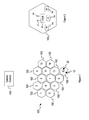
- FIG. 1 illustrates an exemplary cellular network 100 according to an exemplary embodiment of the disclosure.
- the cellular network 100 may include a plurality of cells 102 1 , 102 2, 102 3 , 102 4 , 102 5 , 102 6 , 102 7 , 102 8 , 102 9 , 102 10 , 102 11 , 102 12 , 102 13 , and 102 14 (collectively referred to as cells 102).
- each of the cells 102 represents a coverage area for providing cellular services of the cellular network 100. While the cells 102 are depicted as having non-overlapping coverage areas, persons of ordinary skill in the art will recognize that one or more of the cells 102 may have partially overlapping coverage with adjacent cells. Further, while a particular number of the cells 102 are depicted, persons of ordinary skill in the art will recognize that a larger or smaller number of the cells 102 may be included in the cellular network 100.
- One or more UEs 10 may be present in each of the cells 102. Although only one UE 10 is depicted and is shown in only one cell 102 12 , it will be apparent to one of skill in the art that a plurality of UEs 10 might be present in each of the cells 102.
- An ENB 20 in each of the cells 102 performs functions similar to those of a traditional base station. That is, the ENBs 20 provide a radio link between the UEs 10 and other components in a telecommunications network. While the ENB 20 is shown only in cell 102 12 , it should be understood that an ENB would be present in each of the cells 102. Also, radio links other than the ENBs 20 could be used.
- a central control 110 oversees the wireless data transmissions within the cells 102 by providing centralized management and coordination for the cells 102 and their corresponding ENBs 20.
- FIG. 1 depicts a more detailed view of the cell 102 12.
- the ENB 20 in cell 102 12 can promote communication via a transmitter 27, a receiver 29, and/or other well known equipment. Similar equipment might be present in the other cells 102.
- a plurality of UEs 10 are present in the cell 102 12 , as might be the case in the other cells 102.
- the transmission of an MBMS in one or more of the cells 102 can include two components, a multicast control channel (MCCH) and a multicast traffic channel (MTCH).
- the MTCH delivers the actual content of the MBMS while the MCCH delivers control information related to the MBMS.
- the MCCH might include key control information that specifies how the content in the MTCH is to be delivered.
- Configuration information for the MCCH might be transmitted in a broadcast control channel (BCCH).
- BCCH broadcast control channel
- Each of the cells 102 might transmit information over a BCCH to provide the UEs 10 with information about the MBMSs available in the cells 102 and with other information.
- the MCCH control information is divided into two portions: master control information and service control information.
- the master control information can also be referred to as primary MCCH (P-MCCH) information and the service control information can also be referred to as secondary MCCH (S-MCCH) information.
- the S-MCCH information can include information about how an MTCH can be received.
- the P-MCCH information can directly include the S-MCCH information or can include a pointer to a location where the S-MCCH information can be retrieved.
- the S-MCCH information includes control information for one or more MTCH transmissions. This might include scheduling information for one or more MTCHs, modulation and coding information for one or more MTCHs, and SFN-related parameters such as a blocked cell list. Since multiple MTCHs might be transmitted by a single ENB 20, and a different set of S-MCCH information might be needed for each MTCH, multiple sets of S-MCCH information might be associated with the BCCH transmitted by the single ENB 20. A single set of P-MCCH information might be associated with the multiple sets of S-MCCH information.
- the P-MCCH information contains or points to scheduling information for the S-MCCH information. That is, the P-MCCH information specifies when and where the S-MCCH information is available. The UEs 10 can then use the scheduling information in the S-MCCH information to receive one or more MTCHs.
- the P-MCCH information may also contain service advertisement information, session start information, and modulation and coding information for the S-MCCH information.
- Service advertisement information might refer to which MBMSs are available within an MBSFN and to similar information.
- Session start information might refer to the counting information for MBMS transmissions and to similar information.
- the P-MCCH information can point to scheduling information for each of the sets of S-MCCH information associated with each of the MTCHs. That is, the sets of S-MCCH information that specify how the MTCHs can be received might reside in various locations/resources in the downlink transmissions, and the P-MCCH information can include pointers to these locations/resources.
- One of the UEs 10 that wishes to receive a particular MBMS can read the P-MCCH information, find the pointer for the desired MBMS, go to the location/resources referred to by the pointer, retrieve the S-MCCH information at that location, and use the S-MCCH information to receive the MBMS.
- the pointer can remain the same even when the S-MCCH information that it points to changes.
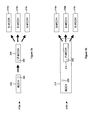
- Figure 3a illustrates such a structure 310a for transmitting MCCH control information.
- a BCCH 312 points to a set of P-MCCH information 314.
- the P-MCCH information 314 contains pointers to the locations where a plurality of sets of S-MCCH information 316 can be found.
- Each of the sets of S-MCCH information 316 contains service information for a different MTCH, each of which is associated with a different MBMS.
- Figure 3b illustrates an alternative perspective of these embodiments.
- the BCCH 312 can be viewed as containing, rather than pointing to, the P-MCCH information 314.
- the P-MCCH information 314 might then contain pointers to the locations where the plurality of sets of S-MCCH information 316 can be found.
- the structures 310a and 310b should be considered equivalent. They are depicted differently here merely to illustrate two different viewpoints from which the P-MCCH information 314 and the sets of S-MCCH information 316 can be conceived.
- only a single set of S-MCCH information 316 might be used. For example, if only a single MBMS is being transmitted by an ENB 20, only a single set of S-MCCH information 316 would be transmitted by that ENB 20. In such cases, pointers would not be needed and the S-MCCH information 316 could be carried directly within the P-MCCH information 314.
- One of the UEs 10 that wishes to receive the single MBMS can read the S-MCCH information 316 for the MBMS directly from the P-MCCH information 314 rather than being directed to S-MCCH information 316 by a pointer. The UE 10 can then use the S-MCCH information 316 retrieved in this manner to receive the MBMS.
- Figure 4a illustrates such a structure 320a for transmitting MCCH control information.
- the BCCH 312 points to the set of P-MCCH information 314, which includes within itself the single set of S-MCCH information 316.
- Figure 4b illustrates an alternative perspective of the embodiment of Figure 4a .
- the BCCH 312 can be viewed as containing, rather than pointing to, the P-MCCH information 314.
- the P-MCCH information 314 might then contain within itself the single set of S-MCCH information 316.
- the structures 320a and 320b of Figures 4a and 4b should be considered equivalent. They are depicted differently here to illustrate two complementary viewpoints of the P-MCCH information 314 and the S-MCCH information 316.
- the UE 10 may need to know whether one of the structures 310 of Figures 3a and 3b or one of the structures 320 of Figures 4a and 4b is being used. That is, the UE 10 may need to know whether to find the S-MCCH information 316 directly within the P-MCCH information 314, as in one of the second structures 320, or in a location pointed to by the P-MCCH information 314, as in one of the first structures 310.
- a signal sent to the UE 10 might include an indication of whether the first structure 310 or the second structure 320 is being used to transmit control information. The UE 10 can then use this indication to determine where to find the S-MCCH information 316. The indication might be included in the MBMS transmission or might be included in some other downlink transmission.
- a bit 350 that indicates whether the first structure 310 or the second structure 320 is being used is included in the BCCH 312.
- a first value of the bit 350 might indicate that the first structure 310 is being used and a second value of the bit 350 might indicate that the second structure 320 is being used.
- the UE 10 can determine the value of this bit 350 and thereby determine whether to look directly in the P-MCCH information 314 for the S-MCCH information 316 or to look in the P-MCCH information 314 for a pointer to the S-MCCH information 316.
- bit 350 might be included in the P-MCCH information 314, rather than in the BCCH 312.
- a first value of the bit 350 might indicate that the P-MCCH information 314 points to the S-MCCH information 316 (as in Figures 3a and 3b ) and that the UE 10 should look in the P-MCCH information 314 for the pointer to the location of the S-MCCH information 316.
- a second value of the bit 350 might indicate that the P-MCCH information 314 directly includes the S-MCCH information 316 (as in Figures 4a and 4b ) and that the UE 10 should look directly in the P-MCCH information 314 for the S-MCCH information 316.
- bit 350 is shown in Figures 3a, 3b , 4a, and 4b in both the BCCH 312 and the P-MCCH 314, it should be understood that the bit 350 would actually be located only in the BCCH 312 or only in the P-MCCH 314 but not in both.
- the UE 10 might include appropriate hardware and/or software to receive the bit 350 and to interpret the bit 350 appropriately in order to retrieve the S-MCCH information 316.
- a channel other than the BCCH 312 or an information set other than the P-MCCH information 314 could be used to carry the bit 350 indicating which structure is being used.
- an indicator other than the bit 350 could be used.
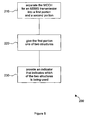
- Figure 5 illustrates a method 200 for indicating a structure of control information for an MBMS.
- the MCCH for an MBMS transmission is separated into a first portion and a second portion.
- the first portion is given one of two structures.
- the first portion contains a pointer to the location of the second portion.
- the second structure the first portion directly contains the second portion.
- an indicator is provided that indicates which of the two structures is being used.
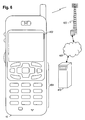
- FIG. 6 illustrates a wireless communications system including an embodiment of the UE 10.
- the UE 10 is operable for implementing aspects of the disclosure, but the disclosure should not be limited to these implementations.
- the UE 10 may take various forms including a wireless handset, a pager, a personal digital assistant (PDA), a portable computer, a tablet computer, or a laptop computer. Many suitable devices combine some or all of these functions.
- the UE 10 is not a general purpose computing device like a portable, laptop or tablet computer, but rather is a special-purpose communications device such as a mobile phone, a wireless handset, a pager, a PDA, or a telecommunications device installed in a vehicle.
- the UE 10 may be a portable, laptop or other computing device.
- the UE 10 may support specialized activities such as gaming, inventory control, job control, and/or task management functions, and so on.
- the UE 10 includes a display 402.
- the UE 10 also includes a touch-sensitive surface, a keyboard or other input keys generally referred as 404 for input by a user.
- the keyboard may be a full or reduced alphanumeric keyboard such as QWERTY, Dvorak, AZERTY, and sequential types, or a traditional numeric keypad with alphabet letters associated with a telephone keypad.
- the input keys may include a trackwheel, an exit or escape key, a trackball, and other navigational or functional keys, which may be inwardly depressed to provide further input function.
- the UE 10 may present options for the user to select, controls for the user to actuate, and/or cursors or other indicators for the user to direct.
- the UE 10 may further accept data entry from the user, including numbers to dial or various parameter values for configuring the operation of the UE 10.
- the UE 10 may further execute one or more software or firmware applications in response to user commands. These applications may configure the UE 10 to perform various customized functions in response to user interaction. Additionally, the UE 10 may be programmed and/or configured over-the-air, for example from a wireless base station, a wireless access point, or a peer UE 10.
- the various applications executable by the UE 10 are a web browser, which enables the display 402 to show a web page.
- the web page may be obtained via wireless communications with a wireless network access node, a cell tower, a peer UE 10, or any other wireless communication network or system 400.
- the network 400 is coupled to a wired network 408, such as the Internet.
- the UE 10 has access to information on various servers, such as a server 410.
- the server 410 may provide content that may be shown on the display 402.
- the UE 10 may access the network 400 through a peer UE 10 acting as an intermediary, in a relay type or hop type of connection.
- FIG 7 shows a block diagram of the UE 10. While a variety of known components of UEs 10 are depicted, in an embodiment a subset of the listed components and/or additional components not listed may be included in the UE 10.
- the UE 10 includes a digital signal processor (DSP) 502 and a memory 504.
- DSP digital signal processor
- the UE 10 may further include an antenna and front end unit 506, a radio frequency (RF) transceiver 508, an analog baseband processing unit 510, a microphone 512, an earpiece speaker 514, a headset port 516, an input/output interface 518, a removable memory card 520, a universal serial bus (USB) port 522, a short range wireless communication sub-system 524, an alert 526, a keypad 528, a liquid crystal display (LCD), which may include a touch sensitive surface 530, an LCD controller 532, a charge-coupled device (CCD) camera 534, a camera controller 536, and a global positioning system (GPS) sensor 538.
- the UE 10 may include another kind of display that does not provide a touch sensitive screen.
- the DSP 502 may communicate directly with the memory 504 without passing through the input/output interface 518.
- the DSP 502 or some other form of controller or central processing unit operates to control the various components of the UE 10 in accordance with embedded software or firmware stored in memory 504 or stored in memory contained within the DSP 502 itself.
- the DSP 502 may execute other applications stored in the memory 504 or made available via information carrier media such as portable data storage media like the removable memory card 520 or via wired or wireless network communications.
- the application software may comprise a compiled set of machine-readable instructions that configure the DSP 502 to provide the desired functionality, or the application software may be high-level software instructions to be processed by an interpreter or compiler to indirectly configure the DSP 502.
- the antenna and front end unit 506 may be provided to convert between wireless signals and electrical signals, enabling the UE 10 to send and receive information from a cellular network or some other available wireless communications network or from a peer UE 10.
- the antenna and front end unit 506 may include multiple antennas to support beam forming and/or multiple input multiple output (MIMO) operations.
- MIMO operations may provide spatial diversity which can be used to overcome difficult channel conditions and/or increase channel throughput.
- the antenna and front end unit 506 may include antenna tuning and/or impedance matching components, RF power amplifiers, and/or low noise amplifiers.
- the RF transceiver 508 provides frequency shifting, converting received RF signals to baseband and converting baseband transmit signals to RF.
- a radio transceiver or RF transceiver may be understood to include other signal processing functionality such as modulation/demodulation, coding/decoding, interleaving/deinterleaving, spreading/despreading, inverse fast Fourier transforming (IFFT)/fast Fourier transforming (FFT), cyclic prefix appending/removal, and other signal processing functions.
- IFFT inverse fast Fourier transforming
- FFT fast Fourier transforming
- cyclic prefix appending/removal and other signal processing functions.
- the description here separates the description of this signal processing from the RF and/or radio stage and conceptually allocates that signal processing to the analog baseband processing unit 510 and/or the DSP 502 or other central processing unit.
- the RF Transceiver 508, portions of the Antenna and Front End 506, and the analog baseband processing unit 510
- the analog baseband processing unit 510 may provide various analog processing of inputs and outputs, for example analog processing of inputs from the microphone 512 and the headset 516 and outputs to the earpiece 514 and the headset 516.
- the analog baseband processing unit 510 may have ports for connecting to the built-in microphone 512 and the earpiece speaker 514 that enable the UE 10 to be used as a cell phone.
- the analog baseband processing unit 510 may further include a port for connecting to a headset or other hands-free microphone and speaker configuration.
- the analog baseband processing unit 510 may provide digital-to-analog conversion in one signal direction and analog-to-digital conversion in the opposing signal direction.
- at least some of the functionality of the analog baseband processing unit 510 may be provided by digital processing components, for example by the DSP 502 or by other central processing units.
- the DSP 502 may perform modulation/demodulation, coding/decoding, interleaving/deinterleaving, spreading/despreading, inverse fast Fourier transforming (IFFT)/fast Fourier transforming (FFT), cyclic prefix appending/removal, and other signal processing functions associated with wireless communications.
- IFFT inverse fast Fourier transforming
- FFT fast Fourier transforming
- cyclic prefix appending/removal and other signal processing functions associated with wireless communications.
- CDMA code division multiple access
- the DSP 502 may perform modulation, coding, interleaving, inverse fast Fourier transforming, and cyclic prefix appending, and for a receiver function the DSP 502 may perform cyclic prefix removal, fast Fourier transforming, deinterleaving, decoding, and demodulation.
- OFDMA orthogonal frequency division multiplex access
- the DSP 502 may communicate with a wireless network via the analog baseband processing unit 510.
- the communication may provide Internet connectivity, enabling a user to gain access to content on the Internet and to send and receive e-mail or text messages.
- the input/output interface 518 interconnects the DSP 502 and various memories and interfaces.
- the memory 504 and the removable memory card 520 may provide software and data to configure the operation of the DSP 502.
- the interfaces may be the USB interface 522 and the short range wireless communication sub-system 524.
- the USB interface 522 may be used to charge the UE 10 and may also enable the UE 10 to function as a peripheral device to exchange information with a personal computer or other computer system.
- the short range wireless communication sub-system 524 may include an infrared port, a Bluetooth interface, an IEEE 802.11 compliant wireless interface, or any other short range wireless communication sub-system, which may enable the UE 10 to communicate wirelessly with other nearby mobile devices and/or wireless base stations.
- the input/output interface 518 may further connect the DSP 502 to the alert 526 that, when triggered, causes the UE 10 to provide a notice to the user, for example, by ringing, playing a melody, or vibrating.
- the alert 526 may serve as a mechanism for alerting the user to any of various events such as an incoming call, a new text message, and an appointment reminder by silently vibrating, or by playing a specific pre-assigned melody for a particular caller.
- the keypad 528 couples to the DSP 502 via the interface 518 to provide one mechanism for the user to make selections, enter information, and otherwise provide input to the UE 10.
- the keyboard 528 may be a full or reduced alphanumeric keyboard such as QWERTY, Dvorak, AZERTY and sequential types, or a traditional numeric keypad with alphabet letters associated with a telephone keypad.
- the input keys may include a trackwheel, an exit or escape key, a trackball, and other navigational or functional keys, which may be inwardly depressed to provide further input function.
- Another input mechanism may be the LCD 530, which may include touch screen capability and also display text and/or graphics to the user.
- the LCD controller 532 couples the DSP 502 to the LCD 530.
- the CCD camera 534 if equipped, enables the UE 10 to take digital pictures.
- the DSP 502 communicates with the CCD camera 534 via the camera controller 536.
- a camera operating according to a technology other than Charge Coupled Device cameras may be employed.
- the GPS sensor 538 is coupled to the DSP 502 to decode global positioning system signals, thereby enabling the UE 10 to determine its position.
- Various other peripherals may also be included to provide additional functions, e.g., radio and television reception.
- FIG 8 illustrates a software environment 602 that may be implemented by the DSP 502.
- the DSP 502 executes operating system drivers 604 that provide a platform from which the rest of the software operates.
- the operating system drivers 604 provide drivers for the wireless device hardware with standardized interfaces that are accessible to application software.
- the operating system drivers 604 include application management services ("AMS") 606 that transfer control between applications running on the UE 10.
- AMS application management services
- Also shown in Figure 8 are a web browser application 608, a media player application 610, and Java applets 612.
- the web browser application 608 configures the UE 10 to operate as a web browser, allowing a user to enter information into forms and select links to retrieve and view web pages.
- the media player application 610 configures the UE 10 to retrieve and play audio or audiovisual media.
- the Java applets 612 configure the UE 10 to provide games, utilities, and other functionality.
- a component 614 might provide functionality related to control information transmission.
- the UEs 10, ENBs 20, and central control 110 of Figure 1 and other components that might be associated with the cells 102 may include any general-purpose computer with sufficient processing power, memory resources, and network throughput capability to handle the necessary workload placed upon it.
- Figure 9 illustrates a typical, general-purpose computer system 700 that may be suitable for implementing one or more embodiments disclosed herein.
- the computer system 700 includes a processor 720 (which may be referred to as a central processor unit or CPU) that is in communication with memory devices including secondary storage 750, read only memory (ROM) 740, random access memory (RAM) 730, input/output (I/O) devices 710, and network connectivity devices 760.
- the processor may be implemented as one or more CPU chips.
- the secondary storage 750 is typically comprised of one or more disk drives or tape drives and is used for non-volatile storage of data and as an over-flow data storage device if RAM 730 is not large enough to hold all working data. Secondary storage 750 may be used to store programs which are loaded into RAM 730 when such programs are selected for execution.
- the ROM 740 is used to store instructions and perhaps data which are read during program execution. ROM 740 is a non-volatile memory device which typically has a small memory capacity relative to the larger memory capacity of secondary storage.
- the RAM 730 is used to store volatile data and perhaps to store instructions. Access to both ROM 740 and RAM 730 is typically faster than to secondary storage 750.
- I/O devices 710 may include printers, video monitors, liquid crystal displays (LCDs), touch screen displays, keyboards, keypads, switches, dials, mice, track balls, voice recognizers, card readers, paper tape readers, or other well-known input devices.
- LCDs liquid crystal displays
- touch screen displays keyboards, keypads, switches, dials, mice, track balls, voice recognizers, card readers, paper tape readers, or other well-known input devices.
- the network connectivity devices 760 may take the form of modems, modem banks, ethernet cards, universal serial bus (USB) interface cards, serial interfaces, token ring cards, fiber distributed data interface (FDDI) cards, wireless local area network (WLAN) cards, radio transceiver cards such as code division multiple access (CDMA) and/or global system for mobile communications (GSM) radio transceiver cards, and other well-known network devices.
- These network connectivity 760 devices may enable the processor 720 to communicate with an Internet or one or more intranets. With such a network connection, it is contemplated that the processor 720 might receive information from the network, or might output information to the network in the course of performing the above-described method steps. Such information, which is often represented as a sequence of instructions to be executed using processor 720, may be received from and outputted to the network, for example, in the form of a computer data signal embodied in a carrier wave.
- Such information may be received from and outputted to the network, for example, in the form of a computer data baseband signal or signal embodied in a carrier wave.
- the baseband signal or signal embodied in the carrier wave generated by the network connectivity 760 devices may propagate in or on the surface of electrical conductors, in coaxial cables, in waveguides, in optical media, for example optical fiber, or in the air or free space.
- the information contained in the baseband signal or signal embedded in the carrier wave may be ordered according to different sequences, as may be desirable for either processing or generating the information or transmitting or receiving the information.
- the baseband signal or signal embedded in the carrier wave, or other types of signals currently used or hereafter developed, referred to herein as the transmission medium may be generated according to several methods well known to one skilled in the art.
- the processor 720 executes instructions, codes, computer programs, scripts which it accesses from hard disk, floppy disk, optical disk (these various disk-based systems may all be considered secondary storage 750), ROM 740, RAM 730, or the network connectivity devices 760. While only one processor 720 is shown, multiple processors may be present. Thus, while instructions may be discussed as executed by a processor, the instructions may be executed simultaneously, serially, or otherwise executed by one or multiple processors.
Landscapes
- Engineering & Computer Science (AREA)
- Computer Security & Cryptography (AREA)
- Computer Networks & Wireless Communication (AREA)
- Signal Processing (AREA)
- Mobile Radio Communication Systems (AREA)
- Circuits Of Receivers In General (AREA)
- Data Exchanges In Wide-Area Networks (AREA)
Claims (17)
- Benutzereinrichtung (10), die aufweist:einen oder mehrere Prozessor(en) (502, 720), der/die konfiguriert ist/sind zum Fördern eines Empfangens einer Multicast-Steuerungsinformation, die in einem Multicast-Steuerungskanal (MCCH - multicast control channel) enthalten ist, einer Multimedia-Broadcast-Multicast-Dienst(MBMS - multimedia broadcast multicast service)-Übertragung, wobei die Multicast-Steuerungsinformation einen ersten Teil und einen zweiten Teil aufweist,wobei der erste Teil eine aus einer ersten Struktur, wobei der erste Teil zumindest einen Zeiger zu einer Position des zweiten Teils umfasst, oder einer zweiten Struktur hat, wobei der erste Teil direkt den zweiten Teil umfasst, und weiter konfiguriert ist/sind zum Anzeigen, welche der ersten Struktur und der zweiten Struktur verwendet wird.
- Netzwerkzugangseinrichtung (700) in einem drahtlosen Telekommunikationsnetzwerk (100) zum Übertragen von Multimedia-Broadcast-Multicast-Dienst(MBMS - multimedia broadcast multicast service)-Steuerungsinformation, die in einem Multicast-Steuerungskanal (MCCH - multicast control channel) enthalten ist, die aufweist:einen oder mehrere Prozessor(en) (720), der/die konfiguriert ist/sind zum Fördern einer Übertragung einer Multicast-Steuerungsinformation, die zu einer Übertragung des MBMS gehört, wobei die Multicast-Steuerungsinformation einen ersten Teil und einen zweiten Teil aufweist,wobei der erste Teil eine aus einer ersten Struktur, wobei der erste Teil zumindest einen Zeiger zu einer Position des zweiten Teils umfasst, oder einer zweiten Struktur hat, wobei der erste Teil direkt den zweiten Teil umfasst, wobei der eine oder mehrere Prozessor(en) konfiguriert ist/sind zum Anzeigen, welche der ersten Struktur und der zweiten Struktur verwendet wird.
- Benutzereinrichtung oder Netzwerkzugangseinrichtung gemäß Anspruch 1 oder 2, wobei die erste Struktur verwendet wird, wenn der MBMS einer aus einer Vielzahl von MBMSs ist, die durch eine bestimmte Übertragungskomponente übertragen werden.
- Benutzereinrichtung oder Netzwerkzugangseinrichtung gemäß Anspruch 1 oder 2, wobei die zweite Struktur verwendet wird, wenn der MBMS der einzige MBMS ist, der durch eine bestimmte Übertragungskomponente übertragen wird.
- Benutzereinrichtung oder Netzwerkzugangseinrichtung gemäß Anspruch 1 oder 2, wobei der erste Teil weiter zumindest eines umfasst aus:Dienstankündigungsinformation für den MBMS;Sitzungsbeginninformation für den MBMS; undModulations- und Codierungsinformation für den zweiten Teil.
- Benutzereinrichtung oder Netzwerkzugangseinrichtung gemäß Anspruch 1 oder 2, wobei der zweite Teil zumindest eines umfasst aus:Scheduling-Information für zumindest einen Multicast-Verkehrskanal(MTCH - multicast traffic channel)-Teil der MBMS-Übertragung;Modulations- und Codierungsinformation für zumindest einen MTCH-Teil der MBMS-Übertragung; undeine gesperrte-Zellen-Liste.
- Benutzereinrichtung oder Netzwerkzugangseinrichtung gemäß Anspruch 1 oder 2, wobei die Anzeige in einem Broadcast-Steuerungskanal enthalten ist.
- Benutzereinrichtung oder Netzwerkzugangseinrichtung gemäß Anspruch 1 oder 2, wobei die Anzeige in dem ersten Teil der Multicast-Steuerungsinformation enthalten ist.
- Netzwerkzugangseinrichtung gemäß Anspruch 2, wobei die Netzwerkzugangseinrichtung ein erweiterter Knoten B ist.
- Verfahren zum Anzeigen einer Struktur einer Steuerungsinformation für einen Multimedia-Broadcast-Multicast-Dienst (MBMS - multimedia broadcast multicast service) in einer Netzwerkzugangseinrichtung (700), das aufweist:Trennen einer Multicast-Steuerungsinformation, die in einem Multicast-Steuerungskanal (MCCH - multicast control channel) enthalten ist, einer MBMS-Übertragung in einen ersten Teil und einen zweiten Teil;Anordnen der getrennten Multicast-Steuerungsinformation in eine aus:eine erste Struktur, wobei der erste Teil zumindest einen Zeiger zu einer Position des zweiten Teils umfasst, undeine zweite Struktur, wobei der erste Teil direkt den zweiten Teil umfasst; undAufnehmen in eine Downlink-Übertragung, um anzuzeigen, welche der ersten Struktur und der zweiten Struktur verwendet wird.
- Verfahren gemäß Anspruch 11, wobei die erste Struktur verwendet wird, wenn der MBMS einer aus einer Vielzahl von MBMSs ist, die durch eine bestimmte Übertragungskomponente übertragen werden.
- Verfahren gemäß Anspruch 11, wobei die zweite Struktur verwendet wird, wenn der MBMS der einzige MBMS ist, der durch eine bestimmte Übertragungskomponente übertragen wird.
- Verfahren gemäß Anspruch 11, wobei der erste Teil weiter zumindest eines umfasst aus:Dienstankündigungsinformation für den MBMS;Sitzungsbeginninformation für den MBMS; undModulations- und Codierungsinformation für den zweiten Teil.
- Verfahren gemäß Anspruch 11, wobei der zweite Teil zumindest eines umfasst aus:Scheduling-Information für zumindest einen Multicast-Verkehrskanal(MTCH - multicast traffic channel)-Teil der MBMS-Übertragung;Modulations- und Codierungsinformation für zumindest einen MTCH-Teil der MBMS-Übertragung; undeine gesperrte-Zellen-Liste.
- Verfahren gemäß Anspruch 11, wobei die Anzeige in einem Broadcast-Steuerungskanal enthalten ist.
- Verfahren gemäß Anspruch 11, wobei die Anzeige in dem ersten Teil der Multicast-Steuerungsinformation enthalten ist.
- Computerlesbares Medium, das Anweisungen enthält, die bei Ausführung durch einen Prozessor die Schritte gemäß Anspruch 11 bis 17 durchführen.
Priority Applications (1)
| Application Number | Priority Date | Filing Date | Title |
|---|---|---|---|
| EP11189594.2A EP2421301B1 (de) | 2007-09-13 | 2007-11-16 | Multicast-Steuerinformationen |
Applications Claiming Priority (2)
| Application Number | Priority Date | Filing Date | Title |
|---|---|---|---|
| US97196707P | 2007-09-13 | 2007-09-13 | |
| PCT/CA2007/002083 WO2009033252A1 (en) | 2007-09-13 | 2007-11-16 | Indication of multicast control information |
Related Child Applications (1)
| Application Number | Title | Priority Date | Filing Date |
|---|---|---|---|
| EP11189594.2 Division-Into | 2011-11-17 |
Publications (3)
| Publication Number | Publication Date |
|---|---|
| EP2196046A1 EP2196046A1 (de) | 2010-06-16 |
| EP2196046A4 EP2196046A4 (de) | 2010-11-10 |
| EP2196046B1 true EP2196046B1 (de) | 2011-12-28 |
Family
ID=40451500
Family Applications (2)
| Application Number | Title | Priority Date | Filing Date |
|---|---|---|---|
| EP11189594.2A Not-in-force EP2421301B1 (de) | 2007-09-13 | 2007-11-16 | Multicast-Steuerinformationen |
| EP07845553A Not-in-force EP2196046B1 (de) | 2007-09-13 | 2007-11-16 | Angabe von multicast-steuerinformationen |
Family Applications Before (1)
| Application Number | Title | Priority Date | Filing Date |
|---|---|---|---|
| EP11189594.2A Not-in-force EP2421301B1 (de) | 2007-09-13 | 2007-11-16 | Multicast-Steuerinformationen |
Country Status (4)
| Country | Link |
|---|---|
| US (2) | US8077649B2 (de) |
| EP (2) | EP2421301B1 (de) |
| AT (1) | ATE539577T1 (de) |
| WO (1) | WO2009033252A1 (de) |
Families Citing this family (22)
| Publication number | Priority date | Publication date | Assignee | Title |
|---|---|---|---|---|
| US8649795B2 (en) | 2007-09-05 | 2014-02-11 | Blackberry Limited | Multicast/broadcast single frequency network control information transmission |
| US8798665B2 (en) * | 2007-11-15 | 2014-08-05 | Qualcomm Incorporated | Beacon-based control channels |
| US9326253B2 (en) * | 2007-11-15 | 2016-04-26 | Qualcomm Incorporated | Wireless communication channel blanking |
| US8761032B2 (en) * | 2007-11-16 | 2014-06-24 | Qualcomm Incorporated | Random reuse based control channels |
| US9009573B2 (en) * | 2008-02-01 | 2015-04-14 | Qualcomm Incorporated | Method and apparatus for facilitating concatenated codes for beacon channels |
| WO2009116795A2 (en) * | 2008-03-18 | 2009-09-24 | Lg Electronics Inc. | Method of receiving a disaster warning message in mobile communication system |
| WO2009116798A2 (en) * | 2008-03-18 | 2009-09-24 | Lg Electronics Inc. | Method of receiving a disaster waring message through a broadcast/multicast channel |
| US8374109B2 (en) * | 2008-03-27 | 2013-02-12 | Qualcomm Incorporated | Methods of sending control information for users sharing the same resource |
| US8675537B2 (en) * | 2008-04-07 | 2014-03-18 | Qualcomm Incorporated | Method and apparatus for using MBSFN subframes to send unicast information |
| US9107239B2 (en) | 2008-04-07 | 2015-08-11 | Qualcomm Incorporated | Systems and methods to define control channels using reserved resource blocks |
| KR101147915B1 (ko) * | 2009-03-31 | 2012-05-24 | 경희대학교 산학협력단 | 적응 멀티캐스트/브로드캐스트 서비스 장치 및 방법 |
| CN101867880B (zh) * | 2009-04-14 | 2014-04-30 | 中兴通讯股份有限公司 | Mcch及mcch更新指示信息控制信息的承载、接收方法与装置 |
| CN101959131B (zh) * | 2009-07-13 | 2015-06-10 | 中兴通讯股份有限公司 | Mbms通知信息的承载方法与装置 |
| CN102158808B (zh) * | 2010-02-11 | 2016-03-30 | 中兴通讯股份有限公司 | Mcch信息的接收方法及装置、用户设备 |
| CN102158807B (zh) | 2010-02-11 | 2015-01-28 | 中兴通讯股份有限公司 | Mcch通知信息的监听方法及装置、用户设备 |
| US9008661B2 (en) * | 2011-08-05 | 2015-04-14 | Industrial Technology Research Institute | Systems and methods for service in multimedia broadcast multicast services |
| FR2980949B1 (fr) * | 2011-09-30 | 2014-06-20 | Sagemcom Energy & Telecom Sas | Systeme de communication entre un equipement non connecte et un serveur de gestion |
| CN104113914B (zh) * | 2013-04-17 | 2019-04-19 | 中兴通讯股份有限公司 | 一种物理多播信道的配置、发送和接收方法及系统 |
| US20150350284A1 (en) * | 2014-05-27 | 2015-12-03 | Acer Incorporated | Method of Enhancement of Data Transmission in Multimedia Service |
| US20150358374A1 (en) * | 2014-06-04 | 2015-12-10 | Acer Incorporated | Method of Data Transmission in Multicast or Broadcast Service |
| EP3340692B1 (de) | 2015-09-18 | 2020-08-05 | Huawei Technologies Co., Ltd. | Verfahren, vorrichtung und system zur auswahl eines kernnetzwerks |
| CN107889063B (zh) * | 2016-09-29 | 2022-02-18 | 中兴通讯股份有限公司 | 多播业务的业务信息、业务信息变更通知方法及装置 |
Family Cites Families (28)
| Publication number | Priority date | Publication date | Assignee | Title |
|---|---|---|---|---|
| US5404355A (en) | 1992-10-05 | 1995-04-04 | Ericsson Ge Mobile Communications, Inc. | Method for transmitting broadcast information in a digital control channel |
| JP4002204B2 (ja) | 2002-04-09 | 2007-10-31 | 三星電子株式会社 | 移動通信システムにおけるマルチメディア放送/マルチキャストサービスのための制御情報伝送装置及びその方法 |
| US7177658B2 (en) | 2002-05-06 | 2007-02-13 | Qualcomm, Incorporated | Multi-media broadcast and multicast service (MBMS) in a wireless communications system |
| KR100936586B1 (ko) | 2002-09-19 | 2010-01-13 | 엘지전자 주식회사 | 멀티미디어 방송 및 멀티캐스트 서비스에서의 데이터 전송 방법 및 시스템 |
| CN100340125C (zh) | 2002-09-23 | 2007-09-26 | Lg电子株式会社 | 提供多媒体广播和组播服务(mbms)的无线电通信方法 |
| WO2004068884A1 (de) | 2003-01-13 | 2004-08-12 | Siemens Aktiengesellschaft | Verfahren, teilnehmergerät sowie funkkommunikationssystem zur übertragung von gruppennachrichten |
| ATE343882T1 (de) | 2003-05-16 | 2006-11-15 | Siemens Ag | Verfahren zum betreiben eines mbms (multimedia broadcast multicast service) für eine mobilstation nach ort oder qualität des signals |
| KR100651405B1 (ko) | 2003-07-24 | 2006-11-29 | 삼성전자주식회사 | 이동통신 시스템에서 멀티미디어 브로드캐스트/멀티캐스트 서비스의 제어 정보 송수신 장치 및 방법 |
| KR20050019388A (ko) * | 2003-08-19 | 2005-03-03 | 엘지전자 주식회사 | 멀티미디어 방송 및 멀티캐스트 서비스를 위한 패킷데이터와 관련 제어정보를 송수신하는 방법 |
| US20050043035A1 (en) | 2003-08-21 | 2005-02-24 | Diesen Michael J. | Method and apparatus for providing multimedia broadcast multicast service data to a subscriber to a multimedia broadcast multicast service |
| US7403790B2 (en) | 2003-09-04 | 2008-07-22 | Lucent Technologies Inc. | Methods for signaling broadcast and multicast information in communication networks |
| GB0400255D0 (en) | 2004-01-07 | 2004-02-11 | Samsung Electronics Co Ltd | Radio messages |
| KR101010774B1 (ko) | 2004-02-11 | 2011-01-25 | 엘지전자 주식회사 | 이동통신 시스템에서 점대다 서비스 데이터의 송수신방법 |
| KR101114175B1 (ko) | 2004-02-13 | 2012-02-22 | 엘지전자 주식회사 | 이동통신 시스템에서 점대점 서비스의 송수신방법 |
| US8577299B2 (en) * | 2004-06-04 | 2013-11-05 | Qualcomm Incorporated | Wireless communication system with configurable cyclic prefix length |
| EP1784652A4 (de) | 2004-08-16 | 2010-05-12 | Qualcomm Inc | Verfahren und vorrichtung zum senden von gruppenkommunikationssignalen |
| JP4523447B2 (ja) | 2004-09-24 | 2010-08-11 | 株式会社エヌ・ティ・ティ・ドコモ | 無線制御装置、移動局及び移動通信方法 |
| RU2340118C1 (ru) | 2004-09-30 | 2008-11-27 | Самсунг Электроникс Ко., Лтд. | Способ и устройство частичного комбинирования для услуги мультимедийной широковещательной/групповой передачи |
| CN1297109C (zh) | 2004-11-11 | 2007-01-24 | 华为技术有限公司 | 一种读取多媒体广播/组播服务接入信息的方法 |
| KR100983277B1 (ko) | 2005-02-15 | 2010-09-24 | 엘지전자 주식회사 | 멀티미디어 방송/멀티캐스트 서비스 송수신 방법 |
| JP4677490B2 (ja) | 2005-10-31 | 2011-04-27 | エルジー エレクトロニクス インコーポレイティド | 無線移動通信システムにおける無線接続情報送受信方法 |
| KR101333918B1 (ko) | 2006-01-05 | 2013-11-27 | 엘지전자 주식회사 | 이동 통신 시스템의 점-대-다 서비스 통신 |
| US7672667B2 (en) | 2006-01-17 | 2010-03-02 | Telefonaktiebolaget L M Ericsson (Publ) | Broadcast-centric cellular communication system |
| US8059625B2 (en) | 2006-02-03 | 2011-11-15 | Motorola Mobility, Inc. | Distributed architecture and methods for broadcast/multicast service |
| US20080031245A1 (en) | 2006-03-06 | 2008-02-07 | Nokia Corporation | Uplink signaling for multicast transmission |
| USRE46756E1 (en) * | 2006-03-21 | 2018-03-13 | Lg Electronics Inc. | Method of transmitting/receiving LTE system information in a wireless communication system |
| KR101476194B1 (ko) * | 2007-06-18 | 2014-12-24 | 엘지전자 주식회사 | 방송 또는 멀티캐스트 서비스 수신을 위한 제어채널 수신방식 |
| US8649795B2 (en) * | 2007-09-05 | 2014-02-11 | Blackberry Limited | Multicast/broadcast single frequency network control information transmission |
-
2007
- 2007-11-09 US US11/938,000 patent/US8077649B2/en not_active Expired - Fee Related
- 2007-11-16 EP EP11189594.2A patent/EP2421301B1/de not_active Not-in-force
- 2007-11-16 WO PCT/CA2007/002083 patent/WO2009033252A1/en not_active Ceased
- 2007-11-16 AT AT07845553T patent/ATE539577T1/de active
- 2007-11-16 EP EP07845553A patent/EP2196046B1/de not_active Not-in-force
-
2011
- 2011-11-08 US US13/291,824 patent/US8867423B2/en not_active Expired - Fee Related
Also Published As
| Publication number | Publication date |
|---|---|
| EP2421301B1 (de) | 2013-04-17 |
| US20120051280A1 (en) | 2012-03-01 |
| US8077649B2 (en) | 2011-12-13 |
| ATE539577T1 (de) | 2012-01-15 |
| US20090073908A1 (en) | 2009-03-19 |
| EP2421301A1 (de) | 2012-02-22 |
| EP2196046A4 (de) | 2010-11-10 |
| US8867423B2 (en) | 2014-10-21 |
| EP2196046A1 (de) | 2010-06-16 |
| WO2009033252A1 (en) | 2009-03-19 |
Similar Documents
| Publication | Publication Date | Title |
|---|---|---|
| USRE48248E1 (en) | Multicast/broadcast single frequency network control information transmission | |
| EP2196046B1 (de) | Angabe von multicast-steuerinformationen | |
| EP3739809B1 (de) | Mapping und multiplexing von dienstkanälen zum multimedia-broadcast/-multicast | |
| US10123304B2 (en) | Multicast control channel design | |
| CA2686862C (en) | Providing neighbor cell transmission information |
Legal Events
| Date | Code | Title | Description |
|---|---|---|---|
| PUAI | Public reference made under article 153(3) epc to a published international application that has entered the european phase |
Free format text: ORIGINAL CODE: 0009012 |
|
| 17P | Request for examination filed |
Effective date: 20100412 |
|
| AK | Designated contracting states |
Kind code of ref document: A1 Designated state(s): AT BE BG CH CY CZ DE DK EE ES FI FR GB GR HU IE IS IT LI LT LU LV MC MT NL PL PT RO SE SI SK TR |
|
| AX | Request for extension of the european patent |
Extension state: AL BA HR MK RS |
|
| A4 | Supplementary search report drawn up and despatched |
Effective date: 20101007 |
|
| RIC1 | Information provided on ipc code assigned before grant |
Ipc: H04W 48/12 20090101AFI20101001BHEP |
|
| DAX | Request for extension of the european patent (deleted) | ||
| REG | Reference to a national code |
Ref country code: DE Ref legal event code: R079 Ref document number: 602007019742 Country of ref document: DE Free format text: PREVIOUS MAIN CLASS: H04W0016000000 Ipc: H04W0048120000 |
|
| RIC1 | Information provided on ipc code assigned before grant |
Ipc: H04W 48/12 20090101AFI20110525BHEP |
|
| GRAP | Despatch of communication of intention to grant a patent |
Free format text: ORIGINAL CODE: EPIDOSNIGR1 |
|
| GRAS | Grant fee paid |
Free format text: ORIGINAL CODE: EPIDOSNIGR3 |
|
| GRAA | (expected) grant |
Free format text: ORIGINAL CODE: 0009210 |
|
| AK | Designated contracting states |
Kind code of ref document: B1 Designated state(s): AT BE BG CH CY CZ DE DK EE ES FI FR GB GR HU IE IS IT LI LT LU LV MC MT NL PL PT RO SE SI SK TR |
|
| REG | Reference to a national code |
Ref country code: GB Ref legal event code: FG4D |
|
| REG | Reference to a national code |
Ref country code: CH Ref legal event code: EP |
|
| REG | Reference to a national code |
Ref country code: AT Ref legal event code: REF Ref document number: 539577 Country of ref document: AT Kind code of ref document: T Effective date: 20120115 |
|
| REG | Reference to a national code |
Ref country code: IE Ref legal event code: FG4D |
|
| REG | Reference to a national code |
Ref country code: DE Ref legal event code: R096 Ref document number: 602007019742 Country of ref document: DE Effective date: 20120301 |
|
| REG | Reference to a national code |
Ref country code: NL Ref legal event code: VDEP Effective date: 20111228 |
|
| PG25 | Lapsed in a contracting state [announced via postgrant information from national office to epo] |
Ref country code: LT Free format text: LAPSE BECAUSE OF FAILURE TO SUBMIT A TRANSLATION OF THE DESCRIPTION OR TO PAY THE FEE WITHIN THE PRESCRIBED TIME-LIMIT Effective date: 20111228 |
|
| LTIE | Lt: invalidation of european patent or patent extension |
Effective date: 20111228 |
|
| PG25 | Lapsed in a contracting state [announced via postgrant information from national office to epo] |
Ref country code: GR Free format text: LAPSE BECAUSE OF FAILURE TO SUBMIT A TRANSLATION OF THE DESCRIPTION OR TO PAY THE FEE WITHIN THE PRESCRIBED TIME-LIMIT Effective date: 20120329 Ref country code: LV Free format text: LAPSE BECAUSE OF FAILURE TO SUBMIT A TRANSLATION OF THE DESCRIPTION OR TO PAY THE FEE WITHIN THE PRESCRIBED TIME-LIMIT Effective date: 20111228 Ref country code: SE Free format text: LAPSE BECAUSE OF FAILURE TO SUBMIT A TRANSLATION OF THE DESCRIPTION OR TO PAY THE FEE WITHIN THE PRESCRIBED TIME-LIMIT Effective date: 20111228 Ref country code: SI Free format text: LAPSE BECAUSE OF FAILURE TO SUBMIT A TRANSLATION OF THE DESCRIPTION OR TO PAY THE FEE WITHIN THE PRESCRIBED TIME-LIMIT Effective date: 20111228 |
|
| PG25 | Lapsed in a contracting state [announced via postgrant information from national office to epo] |
Ref country code: BE Free format text: LAPSE BECAUSE OF FAILURE TO SUBMIT A TRANSLATION OF THE DESCRIPTION OR TO PAY THE FEE WITHIN THE PRESCRIBED TIME-LIMIT Effective date: 20111228 Ref country code: CY Free format text: LAPSE BECAUSE OF FAILURE TO SUBMIT A TRANSLATION OF THE DESCRIPTION OR TO PAY THE FEE WITHIN THE PRESCRIBED TIME-LIMIT Effective date: 20111228 |
|
| PG25 | Lapsed in a contracting state [announced via postgrant information from national office to epo] |
Ref country code: NL Free format text: LAPSE BECAUSE OF FAILURE TO SUBMIT A TRANSLATION OF THE DESCRIPTION OR TO PAY THE FEE WITHIN THE PRESCRIBED TIME-LIMIT Effective date: 20111228 Ref country code: EE Free format text: LAPSE BECAUSE OF FAILURE TO SUBMIT A TRANSLATION OF THE DESCRIPTION OR TO PAY THE FEE WITHIN THE PRESCRIBED TIME-LIMIT Effective date: 20111228 Ref country code: CZ Free format text: LAPSE BECAUSE OF FAILURE TO SUBMIT A TRANSLATION OF THE DESCRIPTION OR TO PAY THE FEE WITHIN THE PRESCRIBED TIME-LIMIT Effective date: 20111228 Ref country code: IS Free format text: LAPSE BECAUSE OF FAILURE TO SUBMIT A TRANSLATION OF THE DESCRIPTION OR TO PAY THE FEE WITHIN THE PRESCRIBED TIME-LIMIT Effective date: 20120428 Ref country code: BG Free format text: LAPSE BECAUSE OF FAILURE TO SUBMIT A TRANSLATION OF THE DESCRIPTION OR TO PAY THE FEE WITHIN THE PRESCRIBED TIME-LIMIT Effective date: 20120328 Ref country code: SK Free format text: LAPSE BECAUSE OF FAILURE TO SUBMIT A TRANSLATION OF THE DESCRIPTION OR TO PAY THE FEE WITHIN THE PRESCRIBED TIME-LIMIT Effective date: 20111228 |
|
| PG25 | Lapsed in a contracting state [announced via postgrant information from national office to epo] |
Ref country code: PL Free format text: LAPSE BECAUSE OF FAILURE TO SUBMIT A TRANSLATION OF THE DESCRIPTION OR TO PAY THE FEE WITHIN THE PRESCRIBED TIME-LIMIT Effective date: 20111228 Ref country code: RO Free format text: LAPSE BECAUSE OF FAILURE TO SUBMIT A TRANSLATION OF THE DESCRIPTION OR TO PAY THE FEE WITHIN THE PRESCRIBED TIME-LIMIT Effective date: 20111228 Ref country code: PT Free format text: LAPSE BECAUSE OF FAILURE TO SUBMIT A TRANSLATION OF THE DESCRIPTION OR TO PAY THE FEE WITHIN THE PRESCRIBED TIME-LIMIT Effective date: 20120430 |
|
| REG | Reference to a national code |
Ref country code: AT Ref legal event code: MK05 Ref document number: 539577 Country of ref document: AT Kind code of ref document: T Effective date: 20111228 |
|
| PG25 | Lapsed in a contracting state [announced via postgrant information from national office to epo] |
Ref country code: DK Free format text: LAPSE BECAUSE OF FAILURE TO SUBMIT A TRANSLATION OF THE DESCRIPTION OR TO PAY THE FEE WITHIN THE PRESCRIBED TIME-LIMIT Effective date: 20111228 |
|
| PLBE | No opposition filed within time limit |
Free format text: ORIGINAL CODE: 0009261 |
|
| STAA | Information on the status of an ep patent application or granted ep patent |
Free format text: STATUS: NO OPPOSITION FILED WITHIN TIME LIMIT |
|
| PG25 | Lapsed in a contracting state [announced via postgrant information from national office to epo] |
Ref country code: IT Free format text: LAPSE BECAUSE OF FAILURE TO SUBMIT A TRANSLATION OF THE DESCRIPTION OR TO PAY THE FEE WITHIN THE PRESCRIBED TIME-LIMIT Effective date: 20111228 |
|
| 26N | No opposition filed |
Effective date: 20121001 |
|
| REG | Reference to a national code |
Ref country code: DE Ref legal event code: R097 Ref document number: 602007019742 Country of ref document: DE Effective date: 20121001 |
|
| PG25 | Lapsed in a contracting state [announced via postgrant information from national office to epo] |
Ref country code: AT Free format text: LAPSE BECAUSE OF FAILURE TO SUBMIT A TRANSLATION OF THE DESCRIPTION OR TO PAY THE FEE WITHIN THE PRESCRIBED TIME-LIMIT Effective date: 20111228 |
|
| PG25 | Lapsed in a contracting state [announced via postgrant information from national office to epo] |
Ref country code: ES Free format text: LAPSE BECAUSE OF FAILURE TO SUBMIT A TRANSLATION OF THE DESCRIPTION OR TO PAY THE FEE WITHIN THE PRESCRIBED TIME-LIMIT Effective date: 20120408 |
|
| PG25 | Lapsed in a contracting state [announced via postgrant information from national office to epo] |
Ref country code: FI Free format text: LAPSE BECAUSE OF FAILURE TO SUBMIT A TRANSLATION OF THE DESCRIPTION OR TO PAY THE FEE WITHIN THE PRESCRIBED TIME-LIMIT Effective date: 20111228 |
|
| REG | Reference to a national code |
Ref country code: CH Ref legal event code: PL |
|
| PG25 | Lapsed in a contracting state [announced via postgrant information from national office to epo] |
Ref country code: LI Free format text: LAPSE BECAUSE OF NON-PAYMENT OF DUE FEES Effective date: 20121130 Ref country code: CH Free format text: LAPSE BECAUSE OF NON-PAYMENT OF DUE FEES Effective date: 20121130 |
|
| REG | Reference to a national code |
Ref country code: IE Ref legal event code: MM4A |
|
| PG25 | Lapsed in a contracting state [announced via postgrant information from national office to epo] |
Ref country code: IE Free format text: LAPSE BECAUSE OF NON-PAYMENT OF DUE FEES Effective date: 20121116 |
|
| PG25 | Lapsed in a contracting state [announced via postgrant information from national office to epo] |
Ref country code: MT Free format text: LAPSE BECAUSE OF FAILURE TO SUBMIT A TRANSLATION OF THE DESCRIPTION OR TO PAY THE FEE WITHIN THE PRESCRIBED TIME-LIMIT Effective date: 20111228 |
|
| PG25 | Lapsed in a contracting state [announced via postgrant information from national office to epo] |
Ref country code: TR Free format text: LAPSE BECAUSE OF FAILURE TO SUBMIT A TRANSLATION OF THE DESCRIPTION OR TO PAY THE FEE WITHIN THE PRESCRIBED TIME-LIMIT Effective date: 20111228 Ref country code: MC Free format text: LAPSE BECAUSE OF NON-PAYMENT OF DUE FEES Effective date: 20121130 |
|
| PG25 | Lapsed in a contracting state [announced via postgrant information from national office to epo] |
Ref country code: LU Free format text: LAPSE BECAUSE OF NON-PAYMENT OF DUE FEES Effective date: 20121116 |
|
| PG25 | Lapsed in a contracting state [announced via postgrant information from national office to epo] |
Ref country code: HU Free format text: LAPSE BECAUSE OF FAILURE TO SUBMIT A TRANSLATION OF THE DESCRIPTION OR TO PAY THE FEE WITHIN THE PRESCRIBED TIME-LIMIT Effective date: 20071116 |
|
| REG | Reference to a national code |
Ref country code: DE Ref legal event code: R082 Ref document number: 602007019742 Country of ref document: DE Representative=s name: MERH-IP MATIAS ERNY REICHL HOFFMANN, DE |
|
| REG | Reference to a national code |
Ref country code: DE Ref legal event code: R081 Ref document number: 602007019742 Country of ref document: DE Owner name: BLACKBERRY LIMITED, WATERLOO, CA Free format text: FORMER OWNER: RESEARCH IN MOTION LIMITED, WATERLOO, ONTARIO, CA Effective date: 20140925 Ref country code: DE Ref legal event code: R082 Ref document number: 602007019742 Country of ref document: DE Representative=s name: MERH-IP MATIAS ERNY REICHL HOFFMANN, DE Effective date: 20140925 Ref country code: DE Ref legal event code: R082 Ref document number: 602007019742 Country of ref document: DE Representative=s name: MERH-IP MATIAS ERNY REICHL HOFFMANN PATENTANWA, DE Effective date: 20140925 |
|
| PGFP | Annual fee paid to national office [announced via postgrant information from national office to epo] |
Ref country code: FR Payment date: 20141118 Year of fee payment: 8 Ref country code: GB Payment date: 20141127 Year of fee payment: 8 Ref country code: DE Payment date: 20141128 Year of fee payment: 8 |
|
| REG | Reference to a national code |
Ref country code: DE Ref legal event code: R119 Ref document number: 602007019742 Country of ref document: DE |
|
| GBPC | Gb: european patent ceased through non-payment of renewal fee |
Effective date: 20151116 |
|
| REG | Reference to a national code |
Ref country code: FR Ref legal event code: ST Effective date: 20160729 |
|
| PG25 | Lapsed in a contracting state [announced via postgrant information from national office to epo] |
Ref country code: DE Free format text: LAPSE BECAUSE OF NON-PAYMENT OF DUE FEES Effective date: 20160601 Ref country code: GB Free format text: LAPSE BECAUSE OF NON-PAYMENT OF DUE FEES Effective date: 20151116 |
|
| PG25 | Lapsed in a contracting state [announced via postgrant information from national office to epo] |
Ref country code: FR Free format text: LAPSE BECAUSE OF NON-PAYMENT OF DUE FEES Effective date: 20151130 |