EP2196059B1 - Zugangskontrolle während der relokalisierung eines benutzergeräts in eine femto-basisstation - Google Patents
Zugangskontrolle während der relokalisierung eines benutzergeräts in eine femto-basisstation Download PDFInfo
- Publication number
- EP2196059B1 EP2196059B1 EP08754003.5A EP08754003A EP2196059B1 EP 2196059 B1 EP2196059 B1 EP 2196059B1 EP 08754003 A EP08754003 A EP 08754003A EP 2196059 B1 EP2196059 B1 EP 2196059B1
- Authority
- EP
- European Patent Office
- Prior art keywords
- femto base
- base station
- identity
- relocation
- short
- Prior art date
- Legal status (The legal status is an assumption and is not a legal conclusion. Google has not performed a legal analysis and makes no representation as to the accuracy of the status listed.)
- Not-in-force
Links
- 238000000034 method Methods 0.000 claims description 62
- 230000004044 response Effects 0.000 claims description 19
- 230000001960 triggered effect Effects 0.000 claims description 4
- 230000000737 periodic effect Effects 0.000 claims 2
- 230000011664 signaling Effects 0.000 description 27
- 208000019061 glycogen storage disease due to GLUT2 deficiency Diseases 0.000 description 26
- 230000008901 benefit Effects 0.000 description 9
- 238000005516 engineering process Methods 0.000 description 9
- 238000005259 measurement Methods 0.000 description 9
- 229920009204 Methacrylate-butadiene-styrene Polymers 0.000 description 7
- 230000000694 effects Effects 0.000 description 6
- 239000000969 carrier Substances 0.000 description 4
- 230000006870 function Effects 0.000 description 4
- 238000010586 diagram Methods 0.000 description 2
- 230000008450 motivation Effects 0.000 description 2
- 230000008569 process Effects 0.000 description 2
- 230000003466 anti-cipated effect Effects 0.000 description 1
- 230000004888 barrier function Effects 0.000 description 1
- 230000009286 beneficial effect Effects 0.000 description 1
- 230000009087 cell motility Effects 0.000 description 1
- 230000008859 change Effects 0.000 description 1
- 238000001514 detection method Methods 0.000 description 1
- 230000009977 dual effect Effects 0.000 description 1
- VJYFKVYYMZPMAB-UHFFFAOYSA-N ethoprophos Chemical compound CCCSP(=O)(OCC)SCCC VJYFKVYYMZPMAB-UHFFFAOYSA-N 0.000 description 1
- 230000007774 longterm Effects 0.000 description 1
- 230000007246 mechanism Effects 0.000 description 1
- 238000002360 preparation method Methods 0.000 description 1
- 238000000060 site-specific infrared dichroism spectroscopy Methods 0.000 description 1
- 230000007704 transition Effects 0.000 description 1
Images










Classifications
-
- H—ELECTRICITY
- H04—ELECTRIC COMMUNICATION TECHNIQUE
- H04W—WIRELESS COMMUNICATION NETWORKS
- H04W36/00—Hand-off or reselection arrangements
- H04W36/0005—Control or signalling for completing the hand-off
- H04W36/0055—Transmission or use of information for re-establishing the radio link
- H04W36/0061—Transmission or use of information for re-establishing the radio link of neighbour cell information
-
- H—ELECTRICITY
- H04—ELECTRIC COMMUNICATION TECHNIQUE
- H04J—MULTIPLEX COMMUNICATION
- H04J11/00—Orthogonal multiplex systems, e.g. using WALSH codes
- H04J11/0069—Cell search, i.e. determining cell identity [cell-ID]
-
- H—ELECTRICITY
- H04—ELECTRIC COMMUNICATION TECHNIQUE
- H04W—WIRELESS COMMUNICATION NETWORKS
- H04W36/00—Hand-off or reselection arrangements
- H04W36/04—Reselecting a cell layer in multi-layered cells
-
- H—ELECTRICITY
- H04—ELECTRIC COMMUNICATION TECHNIQUE
- H04W—WIRELESS COMMUNICATION NETWORKS
- H04W48/00—Access restriction; Network selection; Access point selection
- H04W48/02—Access restriction performed under specific conditions
Definitions
- the described technology generally relates to method(s) and arrangement(s) in a telecommunication system.
- the technology is related to method(s) and arrangement(s) for access control during a relocation of a user equipment (UE) from a macro base station (MBS) to a femto base station (FBS) and dynamic triggering of the relocation.
- UE user equipment
- MBS macro base station
- FBS femto base station
- E-UTRAN Evolved Universal Terrestrial Radio Access Network
- LTE Long Term Evolution
- RAN Radio Access Network
- a base station in this concept is referred to as an eNB (E-UTRAN NodeB).
- the studies also include the possibility to have base station functionalities for home or small area coverage for a limited number of users.
- This type base station is referred to as a HNB (HomeNodeB) or FBS (femto base station).
- the FBS provides normal coverage for the end users within the small area and are connected to the mobile core network using readily available internet connectivity.
- the coverage provided by the FBS is called a femto cell, also known as a Closed Subscriber Group (CSG) cell in 3GPP.
- CSG Closed Subscriber Group
- the FBS would in most instances use the end users already existing broadband connection (e.g. xDSL, Cable) to achieve connectivity to the operators mobile core network and possibly to other eNB/FBS.
- femto cells Unlike the current radio access networks in which operators integrate relatively few (hundreds) high-capacity radio base stations connected over relatively secure private networks to Radio Network Controllers (RNCs), access via femto cells is likely to require the operators to integrate relatively many (hundreds of thousands or more) low-capacity FBSs connected over relatively insecure/untrusted public Internet. Complicating the matter is that the FBSs can be moved, added or changed at any time.
- the femto cell idea promises many benefits, but also presents many challenges including challenges to access control.
- Document WO 2009/044317 A2 discloses a closed subscriber group cell identification method for active mode mobility, which involves decoding unique identifier for private network of private cell when criteria is satisfied based on information received from network.
- VODAFONE GROUP "Measurement Control in LTE_ACTIVE state (for CSG Cells)",3GPP DRAFT; R2-072829, 3RD GENERATION PARTNERSHIP PROJECT (3GPP), MOBILE COMPETENCE CENTRE ; 650, ROUTE DES LUCIOLES ; F-06921 SOPHIA-ANTIPOLIS CEDEX ; FRANCE, vol. RAN WG2, no. Orlando, USA; 20070702, 2 July 2007 (2007-07-02 ), discloses a measurement control LTE_ACTIVE state for mobility procedures using CSG cells.
- the source eNB configures Inter-Freq Cell Search measurement gaps (X and Y slots) in order for the UE to measure a short cell ID and the Full Cell ID of a target cell.
- the described technology generally relates to method(s) and arrangement(s) for access control during relocation of a user equipment into a femto base station and dynamic triggering of the relocation into the femto base station.
- Femto base stations allow users to leverage already existing broadband connections to off load demands for service from base stations.
- the invention is set out in the appended set of claims. The embodiments and/or examples of the following description which are not covered by the appended claims are considered as not being part of the present invention.
- a white list is maintained in the user equipment.
- the white list includes information on one or more femto base stations that are available to provide connectivity to the user equipment.
- Each femto base station can be identified by a short identity and a long identity.
- the long identity uniquely identifies each base station while the short identity non-uniquely identifies the base stations.
- the length of the short identity is shorter than the long identity. Advantages of the short identity is that less information needs to be broadcasted frequently by the femto base station and the user equipment can obtain the identity faster and not need to spend battery and processing power.
- the white list can include other information regarding the femto base stations such as a macro cell (macro base station) that over lays the femto cell corresponding to the femto base station, a timing advance of the macro base station, location of the femto base station, a list of time the femto base station is normally accessed, etc.
- a macro cell macro base station
- a timing advance of the macro base station a timing advance of the macro base station
- location of the femto base station a list of time the femto base station is normally accessed, etc.
- a non-limiting method to perform a relocation of a user equipment from a source macro base station to a target femto base station comprises the following activities. Based on the white list, the user equipment detects the target femto base station. As an example, the target femto base station is arranged to periodically transmit its short and long identities and the user equipment is arranged to read the transmitted identities. The user equipment reports the detected target femto base station to the source macro base station.
- the source macro base station issues a command to update the white list to the user equipment.
- the user equipment Upon receipt of the white list update command, the user equipment updates its white list.
- the target femto base station entry in the white list is removed as being available to provide connectivity to the user equipment.
- a non-limiting example method performed by the user equipment to detect and report the target femto base station include the following activities.
- the user equipment determines, based on the white list, that there are possible femto base stations for the relocation of the user equipment. For example, the user equipment may detect a presence of a base station whose short identity matches one or more short identities in the white list.
- the source macro base station may be listed in the white list as having a macro cell that over lays one or more femto cell areas corresponding to one or more femto base stations.
- a timing advance of the source macro base station matches one or more timing advances in the white list.
- the current location of the user equipment may be within a predetermined distance from one or more femto base stations in the white list.
- the current time may match, within a predetermined tolerance, of normal access times of one or more femto base stations in the white list.
- the user equipment After determining that there are possible femto base stations, the user equipment identifies a femto base station as the target femto base station. In this activity, the user equipment retrieves (reads) the short identity of a detected femto base station. If the short identity is in the white list, i.e., if it is determined that relocation to the detected femto base station is possible based on the short identity, then the user equipment retrieves (reads) the long identity.
- the user equipment retrieves reports the long identity of the detected femto base station to the source macro base station.
- a non-limiting example method to retrieve the short identity and to determine whether the relocation is possible based on the short identity includes the following activities.
- the user equipment makes a request to the source macro base station for a short gap.
- the short gap is a time slot in which the source macro base station will not transmit data to the user equipment. This allows the user equipment to read the short identity transmitted by the detected femto base station.
- the user equipment proceeds to read the short identity transmitted by the femto base station and compares the read short identity against the white list.
- the femto base station can provide connectivity.
- the short identity is not necessarily unique, a similar procedure is followed to retrieve the long identity which is unique. That is, the user equipment makes a request for a long gap and upon being granted the long gap, the user equipment reads the long identity and compares the read long gap to the long identities in the white list.
- the long gap is also a time slot in which the source macro base station will not transmit data to the user equipment. The duration of the long gap is greater than that of the short gap.
- the target femto base station and the source macro base station are on a same carrier, then only the long gap need to be requested.
- the user equipment is equipment with a dual receiver, then the short and long gaps need not be requested since the user equipment is able to read the identities transmitted by the femto base station simultaneously with receiving data from the source macro base station.
- the source macro base station need not be preconfigured with knowledge of the target femto base stations.
- processors may be provided through the use of dedicated hardware as well as hardware capable of executing software in association with appropriate software.
- the functions may be provided by a single dedicated processor, by a single shared processor, or by a plurality of individual processors, some of which may be shared or distributed.
- explicit use of the term "processor” or “controller” should not be construed to refer exclusively to hardware capable of executing software, and may include, without limitation, digital signal processor (DSP) hardware, read only memory (ROM) for storing software, random access memory (RAM), and nonvolatile storage.
- DSP digital signal processor
- ROM read only memory
- RAM random access memory
- MBS macro base station
- FBS femto base station
- HNB femto base station
- MBSs work very well in outdoor settings.
- the MBSs do not work as effectively in providing services in an indoor setting such as a home or an office.
- the presence of physical barriers such as walls hinders the effectiveness of the MBSs indoors.
- FBSs on the other hand can work very well in indoor settings.
- relocating the UE from the MBS to the FBS would benefit the UE when the UE moves to an indoor setting.
- FBSs can provide wireless services similar to the MBSs, but the services are provided on a correspondingly smaller scale.
- the FBSs access the network through a publicly-switched telephone network, which can be made available through conventional broadband access such as DSL and cable.
- DSL and cable broadband access
- the UE communicates with a FBS, the UE is offloaded from the MBS that would normally provide the service.
- the FBS can be viewed as a dedicated, personal base station to the UE.
- FBSs are relatively inexpensive ways to enhance the capacity of the underlying network which is another advantage of relocating the UE from the MBS to the FBS.
- FBSs can be moved from one location to another without much difficulty. Also, more FBSs can be added to a macro cell area without incurring too much additional expense.
- the FBS may be owned by an end user or the end user may rent the FBS from a network operator or service provider. But regardless of who owns the FBS device itself, it is preferred the end user to be in control of specifying who can access the FBS and the broadband connection. That is, it would be desirable for the end user to have access control over which UE(s) can access the FBS.
- a handover or relocation is enabled to relocate the UE, which is currently served by a MBS (source MBS) to be served by a FBS (target FBS).
- MBS source MBS
- FBS target FBS
- One of many complicating factors that stand in the way is the definition of the femto cells in the neighboring cell lists in the macro network. The number of femto cells is estimated to be in the order of tens of thousands or more.
- the neighboring cell lists in networks such as WCDMA/UTRAN can currently contain only a limited number - 32 - of cells for each of the different types of cells: Intra-frequency, Inter-frequency and GSM - for 96 in total.
- Fig. 1-1 illustrates a non-limiting embodiment of a wireless network 100 in which a relocation of a UE 130 from a source MBS 110 to a target FBS 120 occurs.
- the source MBS 110 is operatively connected to a source mobility controller 140 and the target FBS 120 is operatively connected to a target mobility controller 150. Further, the source and target mobility controllers 140 and 150 are connected to each other. Examples of mobility controllers include Mobility Management Entity (MME) in the LTE.
- MME Mobility Management Entity
- the source MBS 110 signals the source mobility controller 140, which in turn signals the target mobility controller 150.
- the mobility controller 150 may decide to grant the relocation request itself or may further signal the target FBS 120 to make the decision.
- response signals flow to the target mobility controller 150, the source mobility controller 140 and to the source MBS 110.
- the source MBS 110 and the target FBS 120 can be connected to the same mobility controller 140 as illustrated in Fig. 1-2 . In this instance, the number of signals are correspondingly reduced. The signaling details will be explained further below with reference to Figs. 2-1 through 3-4 .
- the source MBS 110 provides wireless services to UEs in a corresponding macro cell and the target FBS 120 provides wireless services to UEs in a corresponding femto cell.
- the macro cell is relatively large and can overlay femto cells of multiple femto base stations.
- the identity of the UE 130 can be its IMSI (International Mobile Subscriber Identification) which uniquely identifies the UE 130.
- IMSI International Mobile Subscriber Identification
- the identity of the target FBS 120 maybe its "long" identity which also uniquely identifies target FBS 120.
- the access control i.e., make decision to allow or deny access, to the target FBS 120 may be performed by either by the target FBS 120 or by the mobility controller (target mobility controller 150 in Fig. 1-1 or mobility controller 140 in Fig. 1-2 ) connected to the target FBS 120. If the relocation is denied, then the "white list" of the UE 130 is updated (again explained further below).
- Fig. 2-1 is an example chart of signaling flow between nodes of the wireless network for relocation where source and target mobility controllers 140 and 150 are involved and the decision to allow access to the target FBS 120 is made by the target mobility controller 150.
- the sequence can be generally described as follows.
- the target mobility controller 150 can perform the access control using similar steps as for idle mode Access Control.
- the target mobility controller 150 can be configured with a list of UE identifications (IMSI's) allowed to access a specific FBS or the target mobility controller 150 can have access to a central database with this information.
- IMSI's UE identifications
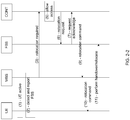
- Fig. 2-2 is an example chart of signaling flow between nodes of the wireless network for relocation when there is one mobility controller 140 involved and the mobility controller 140 decides whether access to the target FBS 120 is allowed.
- the signaling flow is similar to that of Fig. 2-1 except that the signals between the mobility controllers - signals (4) and (8) - are now unnecessary.
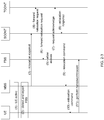
- Fig. 2-3 is an example chart of signaling flow between nodes of the wireless network for relocation where source and target mobility controllers 140 and 150 are involved and the decision to allow access to the target FBS 120 is made by target FBS 120.
- the signaling flow is similar to that of Fig. 2-1 except that the access control decision (5) is performed in the target FBS 120.
- the target FBS 120 can be configured with a list of UE identifications (IMSI's) allowed to access the FBS 120 or the target FBS 120 can have access to the central database.
- IMSI's UE identifications
- Fig. 2-4 is an example chart of signaling flow between nodes of the wireless network for relocation when there is one mobility controller 140 involved and the target FBS 120 decides whether access is allowed.
- the signaling flow is similar to that of Fig. 2-3 except that the signals between the mobility controllers - signals (4) and (8) - are unnecessary.
- Figs. 2-1 through 2-4 illustrate the signal flows when the relocation is successful.
- Figs. 3-1 through 3-4 illustrate the signal flows when the access control denies the relocation.
- Fig. 3-1 is an example chart of signaling flow between nodes of the wireless network not allowing relocation where source and target mobility controllers 140 and 150 are involved and the decision to deny access is made by the target mobility controller 150. The sequence can be generally described as follows:
- the target mobility controller 150 can include information on the cause of the reject as well as the FBS identifier.
- the cause may be that the UE 130 is not on the accessible list in the database.
- Another reason may be that the target FBS 120 is currently serving a maximum number of other UEs.
- the FBS identifier can be TAI+CI for LTE. If the cause of the rejection indicated that the UE 130 is not allowed to access the target FBS 120, then the white list of the UE 130 can be updated accordingly, for example, by removing the target FBS 120 from the white list.
- Fig. 3-2 is an example chart of signaling flow between nodes of the wireless network not allowing relocation when there is one mobility controller 140 involved and the decision is made by the mobility controller 140.
- the signaling flow is similar to that of Fig. 3-1 except that the signals between the mobility controllers - signals (4) and (8') - are now unnecessary.
- Fig. 3-3 is an example chart of signaling flow between nodes of the wireless network not allowing relocation where source and target mobility controllers 140 and 150 are involved and the decision to deny is made by the FBS 120.
- the signaling flow is similar to that of Fig. 3-1 except that the access control decision (5') is performed in the target FBS 120. Also signals (6) to forward the relocation request from the target mobility controller 150 to the target FBS 120 and (7') to send a relocation reject response from the target FBS 120 to the target mobility controller 150 are included to complete the signal flow.
- Fig. 3-4 is an example chart of signaling flow between nodes of the wireless network not allowing relocation when there is one mobility controller 140 involved and the decision is made by the FBS 120.
- the signaling flow is similar to that of Fig. 3-3 except that the signals between the mobility controllers - signals (4) and (8') - are unnecessary.
- Each femto cell associated with a FBS can have at least two different identities associated with it, so called “short identity” and "long identity".
- the short identity is an identifier on the lower radio layers and does not necessarily uniquely identify the femto cell (the FBS) as it is reused in the radio access network.
- the long identity also referred to as the "long cell identifier” can be included as part of the system information and uniquely identifies the femto cell.
- the long identify of the FBS can be sufficient to trigger the handover / relocation from the source macro cell to the target femto cell, i.e., from the source MBS 110 to the target FBS 120.
- the long identity is longer relative to the short identity. Thus, it takes less time to read the short identity than the long identity.
- the determination should be made based on the unique identification of the FBS 120, i.e., based on the long identity. However, if the FBS can be removed as a possibility for relocation based on its short identity alone, then there is no need to determine the long identity. Thus, the use of the short identity can potentially save time and resources.
- the network and specifically the source MBS 110, grants "gaps" which are predefined time periods in which no downlink data from the source MBS 110 to the UE 130 is sent.
- the gaps allow the UE 130 opportunities to read the short and long identities transmitted from the target FBS 120. Since the short identity takes less time to read, if the FBS can be removed as a possible target on the basis of the short identity alone, the amount of time in which the source MBS 110 does not transmit data is minimized, which is an advantage.
- the white list can be populated and maintained in the UE 130.
- the UE 130 can read the broadcasted system information in a cell (either macro or femto) and can identity that the base station is a FBS.
- the UE 130 can read the long identity of the FBS to further check the contents of the white list to determine whether the UE 130 is allowed to access that specific FBS.
- the main issue becomes deciding when to trigger the gaps for measurements and reading of the short and long identities for the FBSs either on the same carrier as the source MBS 110 or on a different carrier.
- the relocation is unsuccessful, it is a simple matter to update the white list in the UE 130. It is preferred that the relocation be triggered without any preconfiguration of target FBSs information in the source MBSs.
- the white list allows for this to occur.
- the UE 130 triggers the gaps for measurements. That is, the UE 130 determines when it needs the gaps and requests these from the network.
- the white list is extended with additional information about the location of potential FBSs so that the UE 130 can optimize the search for the FBSs.
- the outcome is that the UE 130 reports all the needed FBS identifiers to the current source MBS 110 using extended measurement reports so that relocation into to the target FBS 120 can be triggered dynamically without any preconfigured information in the source MBS 110. It is preferred that the UE 130 can report on unknown cells operating in different frequencies and/or technologies. These reports can result in the source MBS 110 triggering the relocation.
- the UE 130 is allowed to report on cells on all the needed frequencies (i.e., not only the current frequency) and radio access technologies (RATs). Further, it is preferred that the UE 130 be allowed to report unique information about the detected FBS (i.e., not only its scrambling code).
- This can allow for different types of handovers, for example, from E-UTRAN MBS to GSM FBS which is a type of an inter-RAT handover, from E-UTRAN MBS to WCDMA FBS which is another type of the inter-RAT handover, and/or from E-UTRAN MBS to E-UTRAN FBS, either as inter-frequency or as intra-frequency handovers.
- Different types of identifiers may be utilized.
- the UE can report the long identity in a GSM format, i.e., report the CGI (cell global identity). This identity can be used to uniquely identify the target GSM femto cell.
- CGI cell global identity
- the source MBS 110 receives the measurement report indicating that a FBS is detected, it is possible to trigger the relocation to this target FBS 120 based on the received information identifying the target FBS 120.
- the UE 130 needs gaps to be able to read the different FBS identities and to be able to report these to the source MBS 110.
- the UE 130 identifies when it should try to detect a FBS and when to request the gaps from the network.
- the contents of the white list allows the UE 130 perform these functions.
- the white list can include one or more of the following for each of one or more FBSs in the white list:
- This information can be used in any one or more of the following ways by the UE 130 to detect the need for gaps:
- the UE 130 When the UE 130 detects the need for the gaps, it requests these from the network (source MBS 110 for example) and network can allows this. Once UE detects a FBS during the gaps, it can further check if the read information matches the white list contents. In some cases, the UE may initially request short gaps and if the found information (e.g., short identity) matches information in the white list, then the UE may request even longer gaps so that is able to read more information about the detected FBS (e.g., long identity). If the read long identity of the detected FBS is an allowed cell according to white list, then the UE reports this identity to the current serving cell.
- the network source MBS 110 for example
- the UE 130 can detect the FBS and the associated short identity without the short gap. In this instance, the UE may directly request the long gaps.
- the UE 130 can be a "dual-receiver" type. This type of UE doesn't need any "gaps" to be able to read the long identities of the FBSs. In this instance, it is enough that the UE 130 reads the needed information and checks the content of the white list to decide whether the detected FBS should be reported to the source MBS 110.
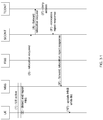
- Fig. 4 illustrates an example signaling flow between the UE 130 and the source MBS 110 to detect and report the target FBS 120 after the UE 130 enters the active state (1) in the macro cell of the source MBS 110.
- the FBS is dynamically detected by the UE 120.
- the source MBS 110 and the target FBS 120 are assumed to be on different carriers. Also, when the FBS is powered on and the unique identifier(s) are allocated for the FBS, these identifiers are broadcasted as part of the system information. No special information needs to be preconfigured in the source MBS 110 regarding the individual FBSs.
- the sequence of detecting and reporting (2) the target FBS 120 can be generally described as follows:
- the signaling flow picks up from (3) as detailed in Figs. 2-1 through 3-4.
- the network provides the UE 130 identification (IMSI) to the mobility controller 140, 150 or to the target FBS 120.
- IMSI UE 130 identification
- the mobility controller 140, 150 or the target FBS 120 can perform the access control in a similar way as the idle case.
- Either the mobility controller 140, 150 or the target FBS 120 or both can be configured with the allowed IMSIs per each FBS or this information can be stored in a central database with access from the mobility controller 140, 150 or the target FBS 120.
- the possibility and the time needed to read the two identities varies depending on whether the current serving source MBS and the target FBS are on the same carrier (frequency) or not. If both are on the same carrier, then the UE is capable to detect the short identity of the FBS without requesting the short gap, but more time is needed to read the long identity This is similar in principle as the "Compressed Mode" in WCDMA.
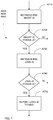
- Fig. 5 is a flow chart of an example method M500 to perform a relocation of a user equipment (UE 130) from a source macro base station (MBS 110) to a target femto base station (FBS 120) from the perspective of the user equipment.
- the method begins with detecting the target FBS 120 based on a white list of the UE 130 in A510.
- the detected target FBS 120 is reported to the source MBS (110) in A520. See sequence (2) in Figs. 2-1 through 3-4 .
- the UE 130 then receives a command from the source MBS 110 in A530 and the type of command is determined in A540. If the command is to relocate - i.e., the access has been granted - then the UE 130 performs the relocation in A550. See sequences (10) and (11) in Figs. 2-1 through 2-4 . If the command is to update the white list - i.e., the access has been denied - then the UE 130 performs the updates the white list in A560. See sequence (10') in Figs. 3-1 through 3-4 .
- the white list includes information on one or more FBSs available to provide connectivity to the UE 130. This information can include for each FBS a short identity and a long identity. The UE 130 can determine that relocation to the target FBS 120 is possible based on the short and the long identities of the target FBS 120.
- the white list is modified to indicate that the UE 130 is not allowed to access the target FBS 120.
- the entry for the FBS 120 may be removed altogether.
- the entry for the FBS 120 may be kept except for a change in the "allowable" status.
- Fig. 6 is a flow chart of an example method of performing A510 and A520 of Fig. 5 .
- the UE 130 can determine whether there are possible FBSs for the relocation based on the white list in A610. This can be determined in many ways. The examples of such ways include:
- the UE 130 may continuously search for potential target FBSs in A610. However, this may drain the battery unnecessarily.
- the UE 130 may be manually triggered to detect for possible FBSs. For example, when a user arrives at his home or office in which he/she knows that there is a FBS that the UE 130 is allowed to access, the user may simply initiate A610 by pushing a button on the UE 130. The trigger may be automatic as well.
- the UE 130 may be arranged to listen for FBSs periodically, for example, once every minute. In this way, minimal battery power is consumed while retaining the advantage of automatic detection.
- alternative short range wireless protocol signals such as Wi-Fi or Bluetooth - may be used when the UE 130 is properly equipped. That is, the UE 130 is capable of communicating via the short range wireless signal in addition to being capable of communicating with the MBS and FBS via 3GPP wireless signals.
- One advantage of using the alternative short range wireless signals is that if an FBS is detected, it is relatively assured that the FBS is nearby. Also, if the FBS transmits the short and/or long identities using the alternative short range wireless signals, then the need to create measurement gaps so that the identities can be read would be removed.
- the UE 130 proceeds to identify a FBS as a possible target FBS in A620. The UE 130 determines if relocation is allowable to the identified FBS in A630. If the UE 130 determines that the relocation is allowable, the UE 130 reports the target FBS 120 to the source MBS 110 in A640.
- Fig. 7 is a flow chart of an example method of performing A620, A630 and A640 of Fig. 6 .
- the UE 130 retrieves the short identification of the detected FBS in A710. See sequences (2a) - (2d) in Fig. 4 .
- the UE 130 determines if the detected FBS is a possible candidate for relocation based on the short identity. See sequence (2e) in Fig. 4 . If the UE 130 determines based on the short identity that the relocation to the FBS is possible, then in A730, the UE 130 retrieves the long identity. See sequences (2f) - (2h) in Fig. 4 .
- the UE 130 determines if the detected FBS is a possible candidate for relocation based on the long identity. If so, the long identity of the FBS is reported to the source MBS 110 in A750. See sequence (2i) in Fig. 4 .
- Fig. 8-1 is a flow chart of an example method for performing A710 and A720 of Fig. 7 .
- the method begin in A810 in which the UE 130 requests the source MBS 110 for a short gap. See sequence (2b) in Fig. 4 .
- the UE 130 receives a grant of the short gap from the source MBS 110 in A820. See sequence (2c) in Fig. 4 .
- the UE 130 reads the short identity of the detected FBS during the short gap. See sequence (2d) in Fig. 4 .
- the UE 130 determines whether the short identity read during the short gap is in the white list. If so, relocation to detected FBS is possible. See sequence (2e) in Fig. 4 .
- Fig. 8-2 is a flow chart of an example method for performing A730 and A740 of Fig. 7 .
- the method begin in A850 in which the UE 130 requests the source MBS 110 for a long gap. See sequence (2f) in Fig. 4 .
- the UE 130 receives a grant of the long gap from the source MBS 110 in A860. See sequence (2g) in Fig. 4 .
- the UE 130 reads the long identity of the detected FBS during the long gap. See sequence (2h) in Fig. 4 .
- the UE 130 determines whether the long identity read during the long gap is in the white list. See sequence (2i) in Fig. 4 . If so, relocation to detected FBS is possible.
- the source MBS 110 does not transmit downlink data during the short and long gaps. Also, the duration of the short and long gaps are sufficient to read the short and long identities, respectively.
- Figs. 8-1 and 8-2 illustrate the process when the source MBS 110 and the target FBS 120 operate on different carriers. However, if the two operate on the same carrier, then performing A620 and A630 of Fig. 6 become much simpler.
- the UE 130 can read the short identity without the short gap being specifically provided. That is, the UE 130 can proceed directly to requesting the long gap as illustrated in Fig. 9-1 .
- the UE 130 determines if the source MBS 110 and the detected FBS are on the same carrier in A910. If so, the UE 130 requests the source MBS 110 for a long gap in A920. See sequence (2f) in Fig. 4 . This is because the UE 130 can read the short identity without requesting the short gap.
- the UE 130 receives the long gap grant from the source MBS 110 in A930. See sequence (2g) in Fig. 4 .
- the UE 130 reads the long identity of the detected FBS during the long gap. See sequence (2h) in Fig. 4 .
- the UE 130 determines whether the long identity read during the long gap is in the white list. See sequence (2i) in Fig. 4 . If so, relocation to detected FBS is possible.
- the UE 130 may be a dual-receiver type device.
- the UE 130 is capable of communicating with MBSs via at least two 3GPP radio protocols (GSM, E-UTRAN, WCDMA, etc.)
- the UE 130 is capable of communicating with MBS via at least one 3GPP radio protocol and is capable of communicating via the alternative short range wireless protocol signals as noted above.
- the UE 130 is a dual-receiver type, then performing A620 and A630 become simpler still.
- the UE 130 need not request for the short and long gaps and can proceed directly to reading long identity transmitted from the FBS as illustrated in Fig. 9-2 .
- the dual-receiver type UE 130 reads the long identity in A945. See sequence (2h) in Fig. 4 .
- the UE 130 determines whether the long identity read during the long gap is in the white list. See sequence (2i) in Fig. 4 . If so, relocation to detected FBS is possible.
- Fig. 10 illustrates an embodiment of a user equipment such as the UE 130.
- the UE 130 includes, among other elements, a radio communications unit 1010, a storage unit 1030 and a processing unit 1020.
- the radio communications unit 1010 is arranged to communicate with the source MBS 110 and the target FBS 120 in the network.
- the storage unit 1030 is arranged to store the white list as described above.
- the processing unit 1020 controls the radio communications unit 1010 and the storage unit 1030, and in general is arranged to control the operations of the UE 130 to perform the methods described above.
- the UE 130 can also include a location unit 1040 to determine the current location of the UE 130.
- the location unit 1040 may be a GPS unit for example. The location determined by the location unit 1040 can be used by the processing unit 1020 to perform the described methods.
- Fig. 11 is a flow chart of an example method M1100 to perform the relocation of the UE 130 from the source MBS 110 to the target FBS 120 from the perspective of the source MBS 110. Note that the method can begin in A1110 (if the source MBS 110 and the target FBS 120 are on different carriers), A1130 (if the source MBS 110 and the target FBS 120 are on the same carrier) or A1150 (if the UE 130 is a dual-receiver type).
- the source MBS 110 receives a request for the short gap from the UE 130 ( sequence (2b) in Fig. 4 ), grants the short gap ( sequence (2c) ), receives a request for the long gap from the UE 130 ( sequence (2f) ), grants the long gap ( sequence (2g) ), and receives measurement reports for the long identity of the target FBS 120 ( sequence (2j) ).
- the source MBS 110 sends a Relocation Required message to the mobility controller 140 ( sequence (3) in Figs. 2-1 through 3-4 ) and receives a response from the mobility controller 140.
- the source MBS 110 sends a command to relocate to the UE 130 in A1190. If the response indicates that relocation is denied in A1180 ( sequence (9') in Figs. 3-1 through 3-4 ), then the source MBS 110 sends a command to update the white list to the UE 130 in A1195.
- Fig. 12 illustrates an embodiment of a macro base station such as the source MBS 110.
- the MBS 110 includes, among other elements, a radio communications unit 1210 arranged to communicate with the UE 130 and a processing unit 1220 arranged to control the radio communications unit 1210 and to generally perform the methods described above.
- the MBS 110 can also include a network communications unit 1230 arranged to communicate with a mobility controller 140 also controlled by the processing unit 1220 to perform the methods.
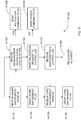
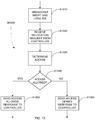
- Fig. 13 is a flow chart of an example method M1300 to perform access control for the UE 130 from the perspective of the target FBS 120.
- the target FBS 120 broadcasts its short and long identities in A1310.
- the identities can be broadcasted intermittently or continually. It is preferred that the identities are broadcasted at specific time intervals and/or in predetermined time slots.
- the FBS 120 receives the relocation request from the mobility controller 140, 150 ( sequence (6) in Figs. 2-1 through 2-4 and 3-3 through 3-4 ).
- the FBS 120 determines whether to allow access to the UE 130 or not. If access is allowed, then the FBS 120 sends an acknowledgment to the mobility controller 140, 150 in A1350 ( sequence (7) in Figs. 2-1 through 2-4 ). Otherwise, the FBS 120 sends a rejection response ( sequence (7) in Figs. 3-3 and 3-4 ).
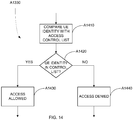
- Fig. 14 is a flow chart of an example method to perform A1330 of Fig. 13 .
- the FBS 120 compares the identity of the UE 130 against an access control list in A1410.
- the access control list can be maintained within the FBS 120 or can be maintained in a central database accessible to the FBS 120.
- the access control list includes identities of UEs that are allowed to access the target FBS 120. If the UE 130 is in the control list in A1420, then access is allowed in A1430. Other wise, the FBS 120 denies access in A1440.
- Fig. 15 illustrates an embodiment of a femto base station such as the FBS 120.
- the FBS 120 includes, among other elements, a radio communications unit 1510 arranged to communicate with the UE 130, a network communications unit 1530 arranged to communicate with a mobility controller 140, 150 of a network, and a processing unit 1520 arranged to control the radio communications unit 1510, the network communications unit 1530, and to generally perform the methods described above.
- the FBS 120 can also include a storage unit 1540 arranged to store the access control list. The access control list is accessible to the processing unit 1520.
- Fig. 16-1 is a flow chart of an example method M1600-1 to perform access control for the UE 130 from the perspective of the mobility controller 140,150.
- the mobility controller 140,150 makes the access control decision.
- A1610 a request for relocation is received. The request may be received from either the source mobility controller 140 ( sequence (4) in Figs. 2-1 and 3-1 ) or from the source MBS 110 ( sequence (3) in Figs. 2-2 and 3-2 ).
- the mobility controller 140,150 determines whether access should be allowed, for example, by consulting an access control list maintained within the mobility controller 140,150 or in an accessible data base.
- the mobility controller 140,150 If the access is allowed in A1630 ( sequence (5) in Figs. 2-1 and 2-2 ), then the mobility controller 140,150 notifies the target FBS 120 in A1640, receives an acknowledgement from the target FBS 120 in A1650, and sends an access allowed response to the source mobility controller 140 or to the source MBS 110 in A1660. Sequences (6), (7), (8) and (9) in Figs. 2-1 and 2-2 . If the access is not allowed, then the mobility controller 140,150 sends an access denied response in A1670. Sequences (8') and (9') in Figs. 3-1 and 3-2 .
- Fig. 16-2 is a flow chart of another example method M1600-2 to perform access control for the UE 130 from the perspective of the mobility controller 140,150.
- the mobility controller 140,150 forwards the access request so that the target FBS 120 can make the access control decision.
- A1610 a request for relocation is received just as in Fig. 16-1 . ( sequence (4) in Figs. 2-3 and 2-4 ) or ( sequence (3) in Figs. 3-3 and 3-4 ).
- the request is forwarded to the target FBS 120 ( sequence (6) in Figs. 2-3 , 2-4 , 3-3 and 3-4 ).
- A1635 a response is received from the FBS 120.
- the mobility controller 140,150 forwards the access allowed response to the source mobility controller 140 or to the source MBS 110 ( sequences (8) and (9) in Figs. 2-3 and 2-4 ). If access is not allowed ( sequence (7') in Figs. 3-3 and 3-4 ), then the access denied response is forwarded ( sequences (8') and (9') in Figs. 3-3 and 3-4 ) in A1670.
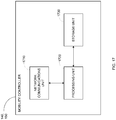
- Fig. 17 illustrates an embodiment of a mobility controller such as the mobility controller 140, 150.
- the mobility controller 140,150 includes, among other elements, a network communications unit 1710 arranged to communicate with network elements such as other mobility controllers, the target FBS 120 and the source MBS 110.
- the mobility controller 140,150 can include a storage unit 1730 arranged to store the access control list.
- the mobility controller 140,150 includes a processing unit 1720 arranged to control the network communications unit 1710 and the storage unit 1730, and to generally perform the methods described above.
Landscapes
- Engineering & Computer Science (AREA)
- Computer Networks & Wireless Communication (AREA)
- Signal Processing (AREA)
- Mobile Radio Communication Systems (AREA)
Claims (15)
- Verfahren (M500), das von einem Benutzergerät, UE, ausgeführt wird, um eine Relokalisierung des UE (130) von einer Ausgangs-Makro-Basisstation, MBS, (110) in eine Ziel-Femto-Basisstation, FBS, (120) auszuführen, umfassend:Bestimmen (A610) basierend auf der Whitelist, ob es mögliche Femto-Basisstationen für die Relokalisierung der UE (130) gibt;Identifizieren (A620) einer Femto-Basisstation als die Ziel-FBS (120), wenn bestimmt wird, dass es mögliche Femto-Basisstationen für die Relokalisierung gibt;Bestimmen (A630) nach dem Identifizieren der Ziel-FBS (120), ob die Relokalisierung in die Ziel-FBS (120) zulässig ist; undMelden (A640) der langen Kennung der Ziel-FBS (120) an die Ausgangs-MBS (110), wenn bestimmt wird, dass die Relokalisierung in die Ziel-FBS (120) zulässig ist;Empfangen (A530) eines Befehls von der Ausgangs-MBS (110);Relokalisieren (A550), so dass das UE (130) von der Ausgangs-MBS (110) an die Ziel-FBS (120) übergeben wird, wenn der Befehl von der Ausgangs-MBS (110) ist, das UE (130) zu relokalisieren,wobei die Whitelist Informationen über eine oder mehrere Femto-Basisstationen beinhaltet, die verfügbar sind, um Konnektivität zu dem UE (130) bereitzustellen, einschließlich einer kurzen Kennung und einer langen Kennung für jede der einen oder der mehreren Femto-Basisstationen,wobei die lange Kennung jede Femto-Basisstation eindeutig identifiziert und die kurze Kennung jede Femto-Basisstation nicht eindeutig identifiziert undwobei beim Vorgang des Erfassens der Ziel-FBS (120) die Ziel-FBS (120) basierend auf der kurzen und der langen Kennung der Ziel-FBS (120) erfasst wird,wobei ein Identifizieren (A620) einer Femto-Basisstation als die Ziel-FBS (120) und ein Bestimmen (A630), ob die Relokalisierung in die Ziel-FBS (120) zulässig ist, ein Anfordern (A810) einer kurzen Lücke von der Ausgangs-MBS (110); ein Empfangen (A820) einer Gewährung der kurzen Lücke von der Ausgangs-MBS (110); ein Lesen (A830) der kurzen Kennung der erfassten Femto-Basisstation während der kurzen Lücke nach dem Empfangen der Gewährung der kurzen Lücke; und ein Bestimmen (A840), ob die gelesene kurze Kennung in der Whitelist ist und ein Bestimmen umfassen, dass die Relokalisierung möglich ist, wenn die kurze Kennung in der Whitelist ist und ansonsten nicht möglich ist, wobei die kurze Lücke ein Zeitfenster ist, in dem die Ausgangs-MBS (110) keine Daten an das UE (130) überträgt, um zu ermöglichen, dass das UE (130) die von der erfassten Femto-Basisstation übertragene kurze Kennung liest.
- Verfahren (M500) nach Anspruch 1, ferner umfassend:
Aktualisieren (A560) der Whitelist des UE (130), um Informationen bezüglich der Ziel-FBS (120) zu modifizieren, um anzuzeigen, dass das UE (130) keinen Zugang zu der Ziel-FBS (120) hat, wenn der Befehl von der Ausgangs-MBS (110) ist, die Whitelist zu aktualisieren. - Verfahren (M500) nach Anspruch 1, wobei der Vorgang des Bestimmens (A610), ob es mögliche Femto-Basisstationen für die Relokalisierung des UE (130) gibt, auf einem oder mehreren von Folgendem basiert:einem Vorhandensein einer Basisstation mit einer kurzen Kennung, die in der Whitelist als Femto-Basisstation aufgeführt ist,die Ausgangs-MBS (110), die in der Whitelist aufgeführt ist, weist eine Makrozelle auf, die einen oder mehrere Femto-Zellenbereiche überlagert, die einer oder mehreren Femto-Basisstationen entsprechen,eine Zeitvoreilung der Ausgangs-MBS (110), die mit einer oder mehreren Zeitvoreilungen in der Whitelist übereinstimmt,eine Position des UE (130), die sich innerhalb einer vorbestimmten Entfernung von einer oder mehreren Femto-Basisstationen in der Whitelist befindet, undeine aktuelle Zeit, die innerhalb einer vorbestimmten Toleranz mit einer oder mehreren normalen Zugangszeiten übereinstimmt, die für eine oder mehrere Femto-Basisstationen in der Whitelist aufgeführt sind.
- Verfahren (M500) nach Anspruch 1, wobei die Vorgänge des Identifizierens (A620) der Ziel-FBS (120) und des Bestimmens (A630), ob die Relokalisierung in die Ziel-FBS (120) zulässig ist, Folgendes umfassen:Abrufen (A710) der kurzen Kennung einer erfassten Femto-Basisstation;Bestimmen (A720) basierend auf der kurzen Kennung, ob die Relokalisierung in die erfasste Femto-Basisstation möglich ist;Abrufen (A730) der langen Kennung der erfassten Femto-Basisstation, wenn basierend auf der kurzen Kennung bestimmt wird, dass die Relokalisierung in die erfasste Femto-Basisstation möglich ist;Bestimmen (A740) basierend auf der langen Kennung, ob die Relokalisierung in die erfasste Femto-Basisstation möglich ist; undMelden (A750) der langen Kennung der erfassten Femto-Basisstation als die Ziel-FBS (120) an die Ausgangs-MBS (110), wenn basierend auf der langen Kennung bestimmt wird, dass die Relokalisierung in die erfasste Femto-Basisstation möglich ist.
- Verfahren (M500) nach Anspruch 4, wobei die Vorgänge des Abrufens (A730) der langen Kennung der erfassten Femto-Basisstation und des Bestimmens (A740) basierend auf der kurzen Kennung, ob die Relokalisierung in die erfasste Femto-Basisstation möglich ist, Folgendes umfassen:Anfordern (A850) einer langen Lücke von der Ausgangs-MBS (110);Empfangen (A860) einer Gewährung der langen Lücke von der Ausgangs-MBS (110);Lesen (A830) der langen Kennung der Femto-Basisstation während der langen Lücke nach dem Erhalten einer Gewährung der langen Lücke; undBestimmen (A840), ob die gelesene lange Kennung in der Whitelist ist und Bestimmen, dass die Relokalisierung möglich ist, wenn die lange Kennung in der Whitelist ist und ansonsten nicht möglich ist,wobei die lange Lücke ein Zeitfenster ist, in dem die Ausgangs-MBS (110) keine Daten an das UE (130) überträgt, um zu ermöglichen, dass das UE (130) die von der Femto-Basisstation übertragene lange Kennung liest, undwobei eine Dauer der langen Lücke länger als eine Dauer der kurzen Lücke ist.
- Verfahren (M500) nach Anspruch 1, wobei der Vorgang des Bestimmens (A610), ob es mögliche Femto-Basisstationen für die Relokalisierung des UE (130) gibt, als Reaktion auf eine manuelle Betätigung durch einen Benutzer und/oder automatisch auf einer periodischen Basis ausgelöst wird.
- Verfahren (M500) nach Anspruch 1, wobei ein Nahbereich-Drahtlosprotokollsignal bei dem Vorgang des Bestimmens (A610), ob es mögliche Femto-Basisstationen für die Relokalisierung des UE (130) gibt, eingesetzt wird.
- Verfahren (M500) nach Anspruch 1, wobei die von der Ziel-FBS (120) übertragene lange Kennung auf einem 3GPP-Funksignal übertragen wird, das sich von einem 3GPP-Funksignal unterscheidet, das von der Ausgangs-MBS (110) übertragen wird oder auf einem Nahbereich-Drahtlosprotokollsignal übertragen wird.
- Benutzergerät, UE, (130), umfassend:eine Funkkommunikationseinheit (1010), die eingerichtet ist, um mit einer Ausgangs-Makro-Basisstation, MBS, (110) und einer Ziel-Femto-Basisstation, FBS, (120) in einem Netzwerk zu kommunizieren;eine Speichereinheit (1030), die eingerichtet ist, um eine Whitelist zu speichern; undeine Verarbeitungseinheit (1020), die eingerichtet ist, um eine Relokalisierung des UE (130) von der Ausgangs-MBS (110) in die Ziel-FBS (120) auszulösen,wobei die Verarbeitungseinheit (1020) für Folgendes eingerichtet ist:Bestimmen basierend auf der Whitelist, ob es mögliche Femto-Basisstationen für die Relokalisierung des UE (130) gibt,Identifizieren einer Femto-Basisstation als die Ziel-FBS (120), wenn bestimmt wird, dass es mögliche Femto-Basisstationen für die Relokalisierung gibt,Bestimmen, ob die Relokalisierung in die Ziel-FBS (120) zulässig ist, nachdem die Ziel-FBS (120) identifiziert worden ist, undMelden der Ziel-FBS (120) an die Ausgangs-MBS (110), wenn bestimmt wird, dass die Relokalisierung in die Ziel-FBS (120) zulässig ist, Empfangen eines Befehls von der Ausgangs-MBS (110),Relokalisieren, so dass das UE (130) von der Ausgangs-MBS (110) an die Ziel-FBS (120) übergeben wird, wenn der Befehl von der Ausgangs-MBS (110) ist, das UE (130) zu relokalisieren,wobei die Whitelist in der Speichereinheit (1030) Informationen über eine oder mehrere Femto-Basisstationen enthält, die verfügbar sind, um Konnektivität zu dem UE (130) bereitzustellen, einschließlich einer kurzen Kennung und einer langen Kennung für jede der einen oder mehreren Femto-Basisstationen;wobei die lange Kennung jede Femto-Basisstation eindeutig identifiziert und die kurze Kennung jede Femtobasisstation nicht eindeutig identifiziert, undwobei die Verarbeitungseinheit (1020) eingerichtet ist, die Ziel-FBS (120) basierend auf der kurzen und der langen Kennung der Ziel-FBS (120) zu erfassen,wobei die Verarbeitungseinheit (1020) zur Relokalisierung und zum Bestimmen, ob die Relokalisierung in die Ziel-FBS (120) zulässig ist, durch Folgendes eingerichtet ist:Anfordern einer kurzen Lücke von der Ausgangs-MBS (110),Empfangen einer Gewährung der kurzen Lücke von der Ausgangs-MBS (110) ;Lesen (der kurzen Kennung der erfassten Femto-Basisstation während der kurzen Lücke nach dem Empfangen der Gewährung der kurzen Lücke; undBestimmen, ob die gelesene kurze Kennung in der Whitelist ist und Bestimmen, dass die Relokalisierung möglich ist, wenn die kurze Kennung in der Whitelist ist und ansonsten nicht möglich ist,wobei die kurze Lücke ein Zeitfenster ist, in dem die Ausgangs-MBS (110) keine Daten an das UE (130) überträgt, um zu ermöglichen, dass das UE (130) die von der erfassten Femto-Basisstation übertragene kurze Kennung liest.
- UE (130) nach Anspruch 9, wobei die Verarbeitungseinheit (1020) eingerichtet ist, die Whitelist in der Speichereinheit (1030) zu aktualisieren, um Informationen bezüglich der Ziel-FBS (120) zu modifizieren, um anzuzeigen, dass das UE (130) keinen Zugang zu der Ziel-FBS (120) hat, wenn der Befehl von der Ausgangs-MBS (110) ist, die Whitelist zu aktualisieren.
- UE (130) nach Anspruch 9, wobei die Verarbeitungseinheit (1020) eingerichtet ist, zu bestimmen, ob es mögliche Femto-Basisstationen für die Relokalisierung der UE (130) basierend darauf gibt, dass mindestens eine der folgenden Bedingungen erfüllt ist:ein Vorhandensein einer Basisstation mit einer kurzen Kennung, die in der Whitelist als Femto-Basisstation aufgeführt ist, wobei die kurze Kennung die Femto-Basisstation nicht eindeutig identifiziert,die Ausgangs-MBS (110) ist in der Whitelist als eine Makrozelle aufweisend aufgeführt, die einen oder mehrere Femto-Zellenbereiche überlagert,eine Zeitvoreilung der Ausgangs-MBS (110) stimmt mit einer oder mehreren Zeitvoreilungen in der Whitelist überein,eine Position des UE (130) befindet sich innerhalb einer vorbestimmten Entfernung von einer oder mehreren Femto-Basisstationen in der Whitelist, undeine aktuelle Zeit stimmt innerhalb einer vorbestimmten Toleranz mit einer oder mehreren normalen Zugangszeiten überein, die für eine oder mehrere Femto-Basisstationen in der Whitelist aufgeführt sind.
- UE (130) nach Anspruch 9, wobei die Verarbeitungseinheit (1020) eingerichtet ist, durch Folgendes die Ziel-FBS (120) zu identifizieren und zu bestimmen, ob die Relokalisierung in die Ziel-FBS (120) zulässig ist:Abrufen der kurzen Kennung einer erfassten Femto-Basisstation, Bestimmen basierend auf der kurzen Kennung, ob die Relokalisierung in die erfasste Femto-Basisstation möglich ist, Abrufen der langen Kennung der erfassten Femto-Basisstation, wenn basierend auf der kurzen Kennung bestimmt wird, dass die Relokalisierung in die erfasste Femto-Basisstation möglich ist, Bestimmen basierend auf der langen Kennung, ob die Relokalisierung in die erfasste Femto-Basisstation möglich ist, undMelden der langen Kennung der erfassten Femto-Basisstation als die Ziel-FBS (120) an die Ausgangs-MBS (110), wenn basierend auf der langen Kennung bestimmt wird, dass die Relokalisierung in die erfasste Femto-Basisstation möglich ist.
- UE (130) nach Anspruch 9, wobei die Verarbeitungseinheit (1020) eingerichtet ist, um zu bestimmen, ob es mögliche Femto-Basisstationen für eine Relokalisierung gibt, als Reaktion auf eine manuelle Auslöseoperation durch einen Benutzer und/oder automatisch auf einer periodischen Basis.
- UE (130) nach Anspruch 9, wobei die Verarbeitungseinheit (1020) eingerichtet ist, ein Nahbereich-Drahtlosprotokollsignal einzusetzen, um zu bestimmen, ob es mögliche Femto-Basisstationen für eine Relokalisierung gibt.
- UE (130) nach Anspruch 9, wobei die Funkkommunikationseinheit (1010) eingerichtet ist, die lange Kennung, die von der Ziel-FBS (120) auf einem 3GPP-Funksignal übertragen wird, das sich von einem 3GPP-Funksignal unterscheidet, das von der Ausgangs-MBS (110) übertragen wird, oder auf einem Nahbereich-Drahtlosprotokollsignal übertragen wird, zu lesen.
Applications Claiming Priority (2)
| Application Number | Priority Date | Filing Date | Title |
|---|---|---|---|
| US97720207P | 2007-10-03 | 2007-10-03 | |
| PCT/SE2008/050607 WO2009045149A1 (en) | 2007-10-03 | 2008-05-23 | Access control during relocation of a user equipment into a femto base station |
Publications (3)
| Publication Number | Publication Date |
|---|---|
| EP2196059A1 EP2196059A1 (de) | 2010-06-16 |
| EP2196059A4 EP2196059A4 (de) | 2016-11-02 |
| EP2196059B1 true EP2196059B1 (de) | 2018-10-17 |
Family
ID=40523169
Family Applications (1)
| Application Number | Title | Priority Date | Filing Date |
|---|---|---|---|
| EP08754003.5A Not-in-force EP2196059B1 (de) | 2007-10-03 | 2008-05-23 | Zugangskontrolle während der relokalisierung eines benutzergeräts in eine femto-basisstation |
Country Status (4)
| Country | Link |
|---|---|
| US (1) | US8243682B2 (de) |
| EP (1) | EP2196059B1 (de) |
| CN (1) | CN101816209B (de) |
| WO (1) | WO2009045149A1 (de) |
Cited By (1)
| Publication number | Priority date | Publication date | Assignee | Title |
|---|---|---|---|---|
| US12192833B2 (en) | 2015-12-31 | 2025-01-07 | Huawei Technologies Co., Ltd. | Mobility management method for low overhead state |
Families Citing this family (80)
| Publication number | Priority date | Publication date | Assignee | Title |
|---|---|---|---|---|
| US7623857B1 (en) * | 2005-10-21 | 2009-11-24 | At&T Intellectual Property I, L.P. | Intelligent pico-cell for transport of wireless device communications over wireline networks |
| US8326296B1 (en) | 2006-07-12 | 2012-12-04 | At&T Intellectual Property I, L.P. | Pico-cell extension for cellular network |
| US8121089B2 (en) * | 2007-08-22 | 2012-02-21 | Cellco Partnership | Femto-BTS RF access mechanism |
| US8248923B2 (en) * | 2007-10-05 | 2012-08-21 | Via Telecom, Inc. | Automatic provisioning of admission policy for femtocell |
| US8223683B2 (en) * | 2007-10-05 | 2012-07-17 | VIA Telecom, Inc | Automatic provisioning of femtocell |
| US9363770B2 (en) * | 2007-10-05 | 2016-06-07 | Ipcomm | Automatic provisioning of handoff parameters for femtocell |
| US8213391B2 (en) * | 2007-10-05 | 2012-07-03 | Via Telecom, Inc. | Time synchronization of femtocell |
| US8937936B2 (en) * | 2007-10-05 | 2015-01-20 | Via Telecom Inc. | Acquiring time synchronization and location information with a femtocell |
| CN101527941A (zh) * | 2008-03-06 | 2009-09-09 | 三星电子株式会社 | 支持ue在宏基站和家用基站间切换的方法 |
| CN101547242B (zh) * | 2008-03-24 | 2010-12-22 | 华为技术有限公司 | 一种列表管理方法及其装置 |
| US20090270092A1 (en) * | 2008-04-28 | 2009-10-29 | Research In Motion Limited | Method for Assisting a Wireless Device to Find Closed Subscriber Group Cells |
| WO2009134659A2 (en) * | 2008-04-28 | 2009-11-05 | Interdigital Patent Holdings, Inc. | Method and apparatus for detecting closed subscriber group cells |
| KR101344760B1 (ko) | 2008-04-30 | 2013-12-24 | 삼성전자주식회사 | 광대역 무선통신 시스템에서 시스템 정보 블럭 송수신 방법및 장치 |
| US8626223B2 (en) | 2008-05-07 | 2014-01-07 | At&T Mobility Ii Llc | Femto cell signaling gating |
| US8094551B2 (en) | 2008-05-13 | 2012-01-10 | At&T Mobility Ii Llc | Exchange of access control lists to manage femto cell coverage |
| US8719420B2 (en) * | 2008-05-13 | 2014-05-06 | At&T Mobility Ii Llc | Administration of access lists for femtocell service |
| US8744493B2 (en) * | 2008-05-28 | 2014-06-03 | Via Telecom, Inc. | Localized silence area for mobile devices |
| GB0810004D0 (en) * | 2008-06-02 | 2008-07-09 | Nec Corp | Microwave radio communications device and related method of operation and network arrangement |
| US8743776B2 (en) | 2008-06-12 | 2014-06-03 | At&T Mobility Ii Llc | Point of sales and customer support for femtocell service and equipment |
| US9143991B2 (en) * | 2008-06-13 | 2015-09-22 | Fujitsu Limited | Seamless handover of a mobile station from a macro base station to a privately accessible femto base station |
| US8755350B2 (en) * | 2008-06-13 | 2014-06-17 | Qualcomm Incorporated | Mobile devices with femto cell functionality |
| US9049581B2 (en) * | 2008-06-23 | 2015-06-02 | Qualcomm Incorporated | Utilizing system access sequences to request resources for GCI reporting in wireless networks |
| US8000709B2 (en) * | 2008-06-26 | 2011-08-16 | Alcatel Lucent | User initiated mobile learning of preferred femtocell |
| KR101524283B1 (ko) * | 2008-07-07 | 2015-05-29 | 삼성전자주식회사 | 광대역 무선통신 시스템에서 핸드오버 절차와 그에 따른펨토 기지국의 송신기 파워 제어 방법 및 장치 |
| US20100008293A1 (en) * | 2008-07-09 | 2010-01-14 | Qualcomm Incorporated | X2 interfaces for access point base stations in self-organizing networks (son) |
| CN101646248B (zh) * | 2008-08-07 | 2011-11-02 | 华为技术有限公司 | 封闭用户组信息处理方法、接入控制方法及系统和设备 |
| KR101381776B1 (ko) * | 2008-08-13 | 2014-04-07 | 삼성전자주식회사 | 광대역 무선통신 시스템에서 페이징 방법 및 장치 |
| US8666410B2 (en) | 2008-09-22 | 2014-03-04 | Htc Corporation | Method of controlling cell selection for a wireless communication system and related device |
| US20110045830A1 (en) * | 2009-08-23 | 2011-02-24 | Chih-Hsiang Wu | Method of managing home cell selection for a wireless communication system and related device |
| US8433317B2 (en) * | 2008-11-27 | 2013-04-30 | Htc Corporation | Method of controlling home cell selection for a wireless communication system and related device |
| KR20100042204A (ko) * | 2008-10-15 | 2010-04-23 | 엘지전자 주식회사 | 위치갱신 수행방법 |
| EP2180744A1 (de) * | 2008-10-24 | 2010-04-28 | Mitsubishi Electric R&D Centre Europe B.V. | Verfahren und Vorrichtung zur Ermöglichung des Zugriffs eines mobilen Endgeräts auf ein drahtloses Telekommunikationsnetzwerk |
| AU2014201715B2 (en) * | 2008-10-30 | 2015-04-30 | Panasonic Intellectual Property Corporation Of America | Radio Transmitting/Receiving Apparatus and Method, Terminal Apparatus, Base Station Apparatus and Wireless Communication System |
| JP5155819B2 (ja) | 2008-10-30 | 2013-03-06 | パナソニック株式会社 | 無線送受信装置および方法、ならびに、端末装置、基地局装置および無線通信システム |
| US9516553B2 (en) * | 2008-12-23 | 2016-12-06 | Qualcomm Incorporated | Handover control based on closed subscriber group subscription information |
| US20100178916A1 (en) * | 2009-01-12 | 2010-07-15 | Samsung Electronics Co., Ltd. | Method and system for notifying availability of femtocells to an electronic device |
| CN101860940A (zh) * | 2009-04-10 | 2010-10-13 | 北京三星通信技术研究有限公司 | 一种进行接入控制的方法和系统以及无线资源管理实体 |
| US8498267B2 (en) | 2009-05-01 | 2013-07-30 | At&T Mobility Ii Llc | Access control for macrocell to femtocell handover |
| US9002356B2 (en) * | 2009-05-04 | 2015-04-07 | Qualcomm Incorporated | Access mode-based access control |
| US8755749B2 (en) * | 2009-05-19 | 2014-06-17 | Qualcomm Incorporated | Minimizing interference to non-associated users |
| CN101932049A (zh) * | 2009-06-18 | 2010-12-29 | 中兴通讯股份有限公司 | 一种用户接入模式的通知方法及系统 |
| US20110030035A1 (en) * | 2009-07-31 | 2011-02-03 | Chih-Hsiang Wu | Method of managing authorization of private node b in a wireless communication system and related device |
| WO2011027091A1 (en) * | 2009-09-03 | 2011-03-10 | Toshiba Research Europe Limited | Wireless communication method and apparatus |
| US8510801B2 (en) | 2009-10-15 | 2013-08-13 | At&T Intellectual Property I, L.P. | Management of access to service in an access point |
| US8280383B2 (en) * | 2009-10-21 | 2012-10-02 | At&T Mobility Ii Llc | Femto jamming of macro pilot |
| JP4695213B1 (ja) * | 2009-11-02 | 2011-06-08 | 株式会社エヌ・ティ・ティ・ドコモ | 移動通信方法及び移動局 |
| US8559958B2 (en) * | 2009-11-30 | 2013-10-15 | Samsung Electronics Co., Ltd | Methods and apparatus for handover between macro base station and home base station |
| KR20110065825A (ko) * | 2009-12-10 | 2011-06-16 | 삼성전자주식회사 | 중첩 네트워크 환경에서 핸드오버를 수행하기 위한 방법 및 시스템 |
| US8843129B2 (en) * | 2009-12-21 | 2014-09-23 | Samsung Electronics Co., Ltd. | Methods and apparatus to support base station detection and selection in multi-tier wireless networks |
| KR20110073251A (ko) * | 2009-12-21 | 2011-06-29 | 엘지전자 주식회사 | 펨토 셀에서 csg 단말을 발견하기 위한 방법 및 장치 |
| WO2011086934A1 (ja) * | 2010-01-15 | 2011-07-21 | パナソニック株式会社 | ハンドオーバ前処理システム、移動端末、基地局 |
| US8817743B2 (en) * | 2010-01-20 | 2014-08-26 | Blackberry Limited | Systems and methods for informing serving cell of target cell handover capability |
| US9516559B2 (en) | 2010-01-20 | 2016-12-06 | Blackberry Limited | Methods of performing cell change without receiving description of resources in a target cell |
| TWI404432B (zh) * | 2010-04-02 | 2013-08-01 | 亞旭電腦股份有限公司 | 由巨細胞式基地台接入至微型式基地台的處理系統及其處理方法 |
| US8838117B2 (en) | 2010-04-23 | 2014-09-16 | Qualcomm Incorporated | Active macro-femto hand-in with help from out-of-band proxy |
| US8954051B2 (en) | 2010-04-23 | 2015-02-10 | Qualcomm Incorporated | Uniquely identifying target femtocell to facilitate femto-assisted active hand-in |
| WO2011160009A2 (en) * | 2010-06-18 | 2011-12-22 | Interdigital Patent Holdings, Inc. | Home nodeb (hnb) mobility in a cell forward access channel (cell_fach) state |
| US8913553B2 (en) * | 2010-07-23 | 2014-12-16 | Htc Corporation | Method of handling close subscriber group list synchronization |
| GB2482869B (en) * | 2010-08-16 | 2013-11-06 | Picochip Designs Ltd | Femtocell access control |
| US9723540B2 (en) * | 2010-08-16 | 2017-08-01 | At&T Mobility Ii Llc | Bluetooth-enabled femto access control |
| CN102413419B (zh) * | 2010-09-26 | 2015-07-15 | 中国电信股份有限公司 | 第三方定位方法、平台及系统 |
| US9781659B2 (en) | 2010-10-15 | 2017-10-03 | Qualcomm Incorporated | Proximity detection for femtocells using out-of-band links |
| CN101969678A (zh) * | 2010-11-11 | 2011-02-09 | 北京邮电大学 | 宽带无线多媒体系统中大小基站的非对称无缝切换方法 |
| CN102469557B (zh) * | 2010-11-15 | 2014-08-13 | 华为技术有限公司 | 接入基站方法、基站和用户设备 |
| US8655354B2 (en) * | 2011-06-30 | 2014-02-18 | Nokia Siemens Networks Oy | Handling closed subscriber group lists |
| CN102883440B (zh) * | 2011-07-15 | 2015-11-25 | 华为技术有限公司 | 一种无线宽带通信方法,装置和系统 |
| US8693397B2 (en) | 2011-07-29 | 2014-04-08 | At&T Mobility Ii Llc | Macro network optimization with assistance from Femto cells |
| TWI473510B (zh) * | 2011-08-18 | 2015-02-11 | Nat Univ Tsing Hua | 在毫微微蜂窩式網路中利用通訊裝置減少換手次數之方法 |
| US9642058B2 (en) | 2011-09-30 | 2017-05-02 | Kyocera Corporation | Systems and methods for small cell uplink interference mitigation |
| CN103517357B (zh) * | 2012-06-28 | 2017-11-07 | 电信科学技术研究院 | 一种进行切换的方法、系统和设备 |
| CN103580778B (zh) * | 2012-07-20 | 2016-12-21 | 华为技术有限公司 | 一种数据传输方法、装置及通信系统 |
| CN109327246B (zh) * | 2012-12-28 | 2022-02-08 | 日本电气株式会社 | 移动通信系统、无线电站、核心网络及其方法 |
| WO2014121490A1 (en) * | 2013-02-07 | 2014-08-14 | Broadcom Corporation | Handover procedure between local area cells which are under the same coverage of a macro cell |
| CN104053146B (zh) * | 2013-03-12 | 2017-09-15 | 中国移动通信集团公司 | 小小区承载的激活与去激活方法及设备 |
| CN108650691B (zh) * | 2013-04-16 | 2021-08-13 | 华为技术有限公司 | 小区切换方法及设备 |
| US9699696B2 (en) * | 2014-06-09 | 2017-07-04 | Cisco Technology, Inc. | System and method for providing handover to an ambiguous small cell access point in a network environment |
| CN113630797B (zh) * | 2014-11-14 | 2024-04-12 | 索尼公司 | 管理移动基站的设备和方法 |
| US11343754B2 (en) * | 2016-02-16 | 2022-05-24 | Sharp Kabushiki Kaisha | Terminal apparatus, mobility management entity (MME), and communication control method |
| WO2022133877A1 (zh) * | 2020-12-24 | 2022-06-30 | Oppo广东移动通信有限公司 | 一种mbs业务的指示方法及装置、终端设备、网络设备 |
| CN117221812B (zh) * | 2023-10-07 | 2024-12-27 | 浙江三维通信科技有限公司 | 终端设备的定位方法和装置、存储介质及电子装置 |
Family Cites Families (15)
| Publication number | Priority date | Publication date | Assignee | Title |
|---|---|---|---|---|
| GB2352586B (en) * | 1999-06-07 | 2004-03-10 | Nec Corp | Handover between mobile networks |
| CN101278580B (zh) * | 2005-10-04 | 2012-10-17 | 艾利森电话股份有限公司 | Ip连接的无线电基站的无线电网络控制器选择 |
| US7613444B2 (en) * | 2006-04-28 | 2009-11-03 | Telefonaktiebolaget Lm Ericsson (Publ) | Dynamic building of monitored set |
| US8116736B2 (en) * | 2007-02-09 | 2012-02-14 | Nokia Corporation | Forbidden tracking area optimization for private/home networks |
| US8027681B2 (en) * | 2007-06-05 | 2011-09-27 | Alcatel Lucent | Method and apparatus to allow hand-off from a macrocell to a femtocell |
| KR20100039345A (ko) * | 2007-06-20 | 2010-04-15 | 지티이 (유에스에이) 인크. | 무선 통신에서 무선 셀룰러 네트워크와 프라이빗 네트워크간의 핸드오버 |
| GB2450575B (en) * | 2007-06-29 | 2012-06-20 | Vodafone Plc | Controlling the use of access points in a telecommunications network |
| GB2452016A (en) * | 2007-06-29 | 2009-02-25 | Motorola Inc | Method of handoff in a multi-layer cellular communication network |
| US8265033B2 (en) * | 2007-08-13 | 2012-09-11 | Telefonakatiebolaget Lm Ericsson (Publ) | Closed subscriber group cell handover |
| US8923212B2 (en) * | 2007-08-17 | 2014-12-30 | Qualcomm Incorporated | Method and apparatus for interference management |
| US8121089B2 (en) * | 2007-08-22 | 2012-02-21 | Cellco Partnership | Femto-BTS RF access mechanism |
| US8219100B2 (en) * | 2007-08-31 | 2012-07-10 | Cellco Partnership | Active service redirection for a private femto cell |
| EP2201797B1 (de) * | 2007-09-10 | 2019-02-27 | Nokia Solutions and Networks Oy | Zugangskontrolle für geschlossene teilnehmergruppen |
| US20090086691A1 (en) * | 2007-10-01 | 2009-04-02 | Qual Comm Incorporated | System and method to facilitate handling of access terminals camped onto an access point base station |
| EP2198655A2 (de) * | 2007-10-01 | 2010-06-23 | Nokia Corporation | Zellenidentifikation geschlossener teilnehmergruppen für aktivmodus-mobilität |
-
2008
- 2008-05-23 CN CN2008801099765A patent/CN101816209B/zh not_active Expired - Fee Related
- 2008-05-23 US US12/126,614 patent/US8243682B2/en not_active Expired - Fee Related
- 2008-05-23 EP EP08754003.5A patent/EP2196059B1/de not_active Not-in-force
- 2008-05-23 WO PCT/SE2008/050607 patent/WO2009045149A1/en not_active Ceased
Non-Patent Citations (1)
| Title |
|---|
| None * |
Cited By (2)
| Publication number | Priority date | Publication date | Assignee | Title |
|---|---|---|---|---|
| US12192833B2 (en) | 2015-12-31 | 2025-01-07 | Huawei Technologies Co., Ltd. | Mobility management method for low overhead state |
| US12335793B2 (en) | 2015-12-31 | 2025-06-17 | Huawei Technologies Co., Ltd. | Mobility management method, terminal, and base station |
Also Published As
| Publication number | Publication date |
|---|---|
| CN101816209B (zh) | 2013-04-24 |
| WO2009045149A1 (en) | 2009-04-09 |
| EP2196059A4 (de) | 2016-11-02 |
| US20090092097A1 (en) | 2009-04-09 |
| EP2196059A1 (de) | 2010-06-16 |
| US8243682B2 (en) | 2012-08-14 |
| CN101816209A (zh) | 2010-08-25 |
Similar Documents
| Publication | Publication Date | Title |
|---|---|---|
| EP2196059B1 (de) | Zugangskontrolle während der relokalisierung eines benutzergeräts in eine femto-basisstation | |
| EP2732661B1 (de) | Verfahren und vorrichtung für mehrstufige bereitstellung einer näherungsanzeige und entdeckung kleiner zellen | |
| JP5358735B2 (ja) | 限定加入者グループに対してインバウンドモビリティを提供するためのpciの混乱を解決する方法および装置 | |
| KR101323077B1 (ko) | 폐쇄된 가입자 그룹 셀들을 검색하기 위한 방법 및 장치 | |
| EP2698006B1 (de) | Verfahren und vorrichtung zur effektiven steuerung einer zellenneuauswahlpriorität von benutzergeräten in einer csg-zelle | |
| EP3651496B1 (de) | Funksender/-empfänger und verfahren, endgerätevorrichtung, basisstation und drahtloskommunikationssystem | |
| JP4648469B2 (ja) | 移動通信方法、移動局及び無線基地局 | |
| CN102598799B (zh) | 用于在无线通信系统中检测csg小区的方法及其设备 | |
| US20090305699A1 (en) | Registration and access control in femto cell deployments | |
| WO2009001269A2 (en) | Apparatus, method and computer program product providing signaling between mobile terminal and network in presence of private cells/closed subscriber groups | |
| WO2013026319A1 (zh) | 小区测量方法、信息处理方法、终端、基站和网络系统 | |
| US20160037443A1 (en) | Method and apparatus for wireless communication | |
| WO2016141752A1 (zh) | 小区选择的方法、anr配置方法、设备及计算机存储介质 | |
| WO2015142147A1 (ko) | 무선 통신 시스템에서 단말에 의해 수행되는 d2d(device-to-device) 동작 방법 및 상기 방법을 이용하는 단말 | |
| CN102340844A (zh) | 切换过程中确定目标基站的方法、ue及mme | |
| US9307461B2 (en) | Femtocell network | |
| US9374742B1 (en) | Methods and systems for establishing a circuit-switched fallback scan-list | |
| EP3397005B1 (de) | Aufbau einer rrc-verbindung mit niedriger leistung | |
| JP2011087320A (ja) | 移動通信方法、移動局及び無線基地局 | |
| HK1151412A (en) | Method and apparatus for searching for closed subscriber group cells |
Legal Events
| Date | Code | Title | Description |
|---|---|---|---|
| PUAI | Public reference made under article 153(3) epc to a published international application that has entered the european phase |
Free format text: ORIGINAL CODE: 0009012 |
|
| 17P | Request for examination filed |
Effective date: 20100325 |
|
| AK | Designated contracting states |
Kind code of ref document: A1 Designated state(s): AT BE BG CH CY CZ DE DK EE ES FI FR GB GR HR HU IE IS IT LI LT LU LV MC MT NL NO PL PT RO SE SI SK TR |
|
| AX | Request for extension of the european patent |
Extension state: AL BA MK RS |
|
| DAX | Request for extension of the european patent (deleted) | ||
| RIC1 | Information provided on ipc code assigned before grant |
Ipc: H04W 36/04 20090101ALN20160622BHEP Ipc: H04J 11/00 20060101ALN20160622BHEP Ipc: H04W 36/00 20090101AFI20160622BHEP Ipc: H04W 48/02 20090101ALN20160622BHEP |
|
| RA4 | Supplementary search report drawn up and despatched (corrected) |
Effective date: 20160930 |
|
| RIC1 | Information provided on ipc code assigned before grant |
Ipc: H04J 11/00 20060101ALN20160926BHEP Ipc: H04W 48/02 20090101ALN20160926BHEP Ipc: H04W 36/00 20090101AFI20160926BHEP Ipc: H04W 36/04 20090101ALN20160926BHEP |
|
| REG | Reference to a national code |
Ref country code: DE Ref legal event code: R079 Ref document number: 602008057456 Country of ref document: DE Free format text: PREVIOUS MAIN CLASS: H04W0048160000 Ipc: H04W0036000000 |
|
| GRAP | Despatch of communication of intention to grant a patent |
Free format text: ORIGINAL CODE: EPIDOSNIGR1 |
|
| STAA | Information on the status of an ep patent application or granted ep patent |
Free format text: STATUS: GRANT OF PATENT IS INTENDED |
|
| RIC1 | Information provided on ipc code assigned before grant |
Ipc: H04W 36/04 20090101ALN20180502BHEP Ipc: H04W 48/02 20090101ALN20180502BHEP Ipc: H04W 36/00 20090101AFI20180502BHEP Ipc: H04J 11/00 20060101ALN20180502BHEP |
|
| INTG | Intention to grant announced |
Effective date: 20180605 |
|
| GRAS | Grant fee paid |
Free format text: ORIGINAL CODE: EPIDOSNIGR3 |
|
| GRAA | (expected) grant |
Free format text: ORIGINAL CODE: 0009210 |
|
| STAA | Information on the status of an ep patent application or granted ep patent |
Free format text: STATUS: THE PATENT HAS BEEN GRANTED |
|
| AK | Designated contracting states |
Kind code of ref document: B1 Designated state(s): AT BE BG CH CY CZ DE DK EE ES FI FR GB GR HR HU IE IS IT LI LT LU LV MC MT NL NO PL PT RO SE SI SK TR |
|
| REG | Reference to a national code |
Ref country code: GB Ref legal event code: FG4D |
|
| REG | Reference to a national code |
Ref country code: CH Ref legal event code: EP |
|
| REG | Reference to a national code |
Ref country code: IE Ref legal event code: FG4D |
|
| REG | Reference to a national code |
Ref country code: DE Ref legal event code: R096 Ref document number: 602008057456 Country of ref document: DE Ref country code: AT Ref legal event code: REF Ref document number: 1055480 Country of ref document: AT Kind code of ref document: T Effective date: 20181115 |
|
| REG | Reference to a national code |
Ref country code: NL Ref legal event code: FP |
|
| REG | Reference to a national code |
Ref country code: LT Ref legal event code: MG4D |
|
| REG | Reference to a national code |
Ref country code: AT Ref legal event code: MK05 Ref document number: 1055480 Country of ref document: AT Kind code of ref document: T Effective date: 20181017 |
|
| PG25 | Lapsed in a contracting state [announced via postgrant information from national office to epo] |
Ref country code: AT Free format text: LAPSE BECAUSE OF FAILURE TO SUBMIT A TRANSLATION OF THE DESCRIPTION OR TO PAY THE FEE WITHIN THE PRESCRIBED TIME-LIMIT Effective date: 20181017 Ref country code: HR Free format text: LAPSE BECAUSE OF FAILURE TO SUBMIT A TRANSLATION OF THE DESCRIPTION OR TO PAY THE FEE WITHIN THE PRESCRIBED TIME-LIMIT Effective date: 20181017 Ref country code: ES Free format text: LAPSE BECAUSE OF FAILURE TO SUBMIT A TRANSLATION OF THE DESCRIPTION OR TO PAY THE FEE WITHIN THE PRESCRIBED TIME-LIMIT Effective date: 20181017 Ref country code: PL Free format text: LAPSE BECAUSE OF FAILURE TO SUBMIT A TRANSLATION OF THE DESCRIPTION OR TO PAY THE FEE WITHIN THE PRESCRIBED TIME-LIMIT Effective date: 20181017 Ref country code: FI Free format text: LAPSE BECAUSE OF FAILURE TO SUBMIT A TRANSLATION OF THE DESCRIPTION OR TO PAY THE FEE WITHIN THE PRESCRIBED TIME-LIMIT Effective date: 20181017 Ref country code: LV Free format text: LAPSE BECAUSE OF FAILURE TO SUBMIT A TRANSLATION OF THE DESCRIPTION OR TO PAY THE FEE WITHIN THE PRESCRIBED TIME-LIMIT Effective date: 20181017 Ref country code: BG Free format text: LAPSE BECAUSE OF FAILURE TO SUBMIT A TRANSLATION OF THE DESCRIPTION OR TO PAY THE FEE WITHIN THE PRESCRIBED TIME-LIMIT Effective date: 20190117 Ref country code: LT Free format text: LAPSE BECAUSE OF FAILURE TO SUBMIT A TRANSLATION OF THE DESCRIPTION OR TO PAY THE FEE WITHIN THE PRESCRIBED TIME-LIMIT Effective date: 20181017 Ref country code: IS Free format text: LAPSE BECAUSE OF FAILURE TO SUBMIT A TRANSLATION OF THE DESCRIPTION OR TO PAY THE FEE WITHIN THE PRESCRIBED TIME-LIMIT Effective date: 20190217 Ref country code: NO Free format text: LAPSE BECAUSE OF FAILURE TO SUBMIT A TRANSLATION OF THE DESCRIPTION OR TO PAY THE FEE WITHIN THE PRESCRIBED TIME-LIMIT Effective date: 20190117 |
|
| PG25 | Lapsed in a contracting state [announced via postgrant information from national office to epo] |
Ref country code: GR Free format text: LAPSE BECAUSE OF FAILURE TO SUBMIT A TRANSLATION OF THE DESCRIPTION OR TO PAY THE FEE WITHIN THE PRESCRIBED TIME-LIMIT Effective date: 20190118 Ref country code: PT Free format text: LAPSE BECAUSE OF FAILURE TO SUBMIT A TRANSLATION OF THE DESCRIPTION OR TO PAY THE FEE WITHIN THE PRESCRIBED TIME-LIMIT Effective date: 20190217 Ref country code: SE Free format text: LAPSE BECAUSE OF FAILURE TO SUBMIT A TRANSLATION OF THE DESCRIPTION OR TO PAY THE FEE WITHIN THE PRESCRIBED TIME-LIMIT Effective date: 20181017 |
|
| REG | Reference to a national code |
Ref country code: DE Ref legal event code: R097 Ref document number: 602008057456 Country of ref document: DE |
|
| PG25 | Lapsed in a contracting state [announced via postgrant information from national office to epo] |
Ref country code: DK Free format text: LAPSE BECAUSE OF FAILURE TO SUBMIT A TRANSLATION OF THE DESCRIPTION OR TO PAY THE FEE WITHIN THE PRESCRIBED TIME-LIMIT Effective date: 20181017 Ref country code: CZ Free format text: LAPSE BECAUSE OF FAILURE TO SUBMIT A TRANSLATION OF THE DESCRIPTION OR TO PAY THE FEE WITHIN THE PRESCRIBED TIME-LIMIT Effective date: 20181017 Ref country code: IT Free format text: LAPSE BECAUSE OF FAILURE TO SUBMIT A TRANSLATION OF THE DESCRIPTION OR TO PAY THE FEE WITHIN THE PRESCRIBED TIME-LIMIT Effective date: 20181017 |
|
| PLBE | No opposition filed within time limit |
Free format text: ORIGINAL CODE: 0009261 |
|
| STAA | Information on the status of an ep patent application or granted ep patent |
Free format text: STATUS: NO OPPOSITION FILED WITHIN TIME LIMIT |
|
| PG25 | Lapsed in a contracting state [announced via postgrant information from national office to epo] |
Ref country code: SK Free format text: LAPSE BECAUSE OF FAILURE TO SUBMIT A TRANSLATION OF THE DESCRIPTION OR TO PAY THE FEE WITHIN THE PRESCRIBED TIME-LIMIT Effective date: 20181017 Ref country code: EE Free format text: LAPSE BECAUSE OF FAILURE TO SUBMIT A TRANSLATION OF THE DESCRIPTION OR TO PAY THE FEE WITHIN THE PRESCRIBED TIME-LIMIT Effective date: 20181017 Ref country code: RO Free format text: LAPSE BECAUSE OF FAILURE TO SUBMIT A TRANSLATION OF THE DESCRIPTION OR TO PAY THE FEE WITHIN THE PRESCRIBED TIME-LIMIT Effective date: 20181017 |
|
| 26N | No opposition filed |
Effective date: 20190718 |
|
| PG25 | Lapsed in a contracting state [announced via postgrant information from national office to epo] |
Ref country code: SI Free format text: LAPSE BECAUSE OF FAILURE TO SUBMIT A TRANSLATION OF THE DESCRIPTION OR TO PAY THE FEE WITHIN THE PRESCRIBED TIME-LIMIT Effective date: 20181017 |
|
| REG | Reference to a national code |
Ref country code: CH Ref legal event code: PL |
|
| PG25 | Lapsed in a contracting state [announced via postgrant information from national office to epo] |
Ref country code: CH Free format text: LAPSE BECAUSE OF NON-PAYMENT OF DUE FEES Effective date: 20190531 Ref country code: LI Free format text: LAPSE BECAUSE OF NON-PAYMENT OF DUE FEES Effective date: 20190531 Ref country code: MC Free format text: LAPSE BECAUSE OF FAILURE TO SUBMIT A TRANSLATION OF THE DESCRIPTION OR TO PAY THE FEE WITHIN THE PRESCRIBED TIME-LIMIT Effective date: 20181017 |
|
| REG | Reference to a national code |
Ref country code: BE Ref legal event code: MM Effective date: 20190531 |
|
| PG25 | Lapsed in a contracting state [announced via postgrant information from national office to epo] |
Ref country code: LU Free format text: LAPSE BECAUSE OF NON-PAYMENT OF DUE FEES Effective date: 20190523 |
|
| PG25 | Lapsed in a contracting state [announced via postgrant information from national office to epo] |
Ref country code: TR Free format text: LAPSE BECAUSE OF FAILURE TO SUBMIT A TRANSLATION OF THE DESCRIPTION OR TO PAY THE FEE WITHIN THE PRESCRIBED TIME-LIMIT Effective date: 20181017 |
|
| PG25 | Lapsed in a contracting state [announced via postgrant information from national office to epo] |
Ref country code: IE Free format text: LAPSE BECAUSE OF NON-PAYMENT OF DUE FEES Effective date: 20190523 |
|
| PG25 | Lapsed in a contracting state [announced via postgrant information from national office to epo] |
Ref country code: BE Free format text: LAPSE BECAUSE OF NON-PAYMENT OF DUE FEES Effective date: 20190531 |
|
| PG25 | Lapsed in a contracting state [announced via postgrant information from national office to epo] |
Ref country code: FR Free format text: LAPSE BECAUSE OF NON-PAYMENT OF DUE FEES Effective date: 20190531 |
|
| PG25 | Lapsed in a contracting state [announced via postgrant information from national office to epo] |
Ref country code: CY Free format text: LAPSE BECAUSE OF FAILURE TO SUBMIT A TRANSLATION OF THE DESCRIPTION OR TO PAY THE FEE WITHIN THE PRESCRIBED TIME-LIMIT Effective date: 20181017 |
|
| PG25 | Lapsed in a contracting state [announced via postgrant information from national office to epo] |
Ref country code: HU Free format text: LAPSE BECAUSE OF FAILURE TO SUBMIT A TRANSLATION OF THE DESCRIPTION OR TO PAY THE FEE WITHIN THE PRESCRIBED TIME-LIMIT; INVALID AB INITIO Effective date: 20080523 Ref country code: MT Free format text: LAPSE BECAUSE OF FAILURE TO SUBMIT A TRANSLATION OF THE DESCRIPTION OR TO PAY THE FEE WITHIN THE PRESCRIBED TIME-LIMIT Effective date: 20181017 |
|
| PGFP | Annual fee paid to national office [announced via postgrant information from national office to epo] |
Ref country code: NL Payment date: 20220526 Year of fee payment: 15 |
|
| PGFP | Annual fee paid to national office [announced via postgrant information from national office to epo] |
Ref country code: GB Payment date: 20220527 Year of fee payment: 15 Ref country code: DE Payment date: 20220527 Year of fee payment: 15 |
|
| REG | Reference to a national code |
Ref country code: DE Ref legal event code: R119 Ref document number: 602008057456 Country of ref document: DE |
|
| REG | Reference to a national code |
Ref country code: NL Ref legal event code: MM Effective date: 20230601 |
|
| GBPC | Gb: european patent ceased through non-payment of renewal fee |
Effective date: 20230523 |
|
| PG25 | Lapsed in a contracting state [announced via postgrant information from national office to epo] |
Ref country code: NL Free format text: LAPSE BECAUSE OF NON-PAYMENT OF DUE FEES Effective date: 20230601 |
|
| PG25 | Lapsed in a contracting state [announced via postgrant information from national office to epo] |
Ref country code: DE Free format text: LAPSE BECAUSE OF NON-PAYMENT OF DUE FEES Effective date: 20231201 Ref country code: GB Free format text: LAPSE BECAUSE OF NON-PAYMENT OF DUE FEES Effective date: 20230523 |