EP2196499B1 - Composition durcissable, article moulé obtenu à partir de celle-ci et procédé servant à produire un article moulé - Google Patents
Composition durcissable, article moulé obtenu à partir de celle-ci et procédé servant à produire un article moulé Download PDFInfo
- Publication number
- EP2196499B1 EP2196499B1 EP10158624A EP10158624A EP2196499B1 EP 2196499 B1 EP2196499 B1 EP 2196499B1 EP 10158624 A EP10158624 A EP 10158624A EP 10158624 A EP10158624 A EP 10158624A EP 2196499 B1 EP2196499 B1 EP 2196499B1
- Authority
- EP
- European Patent Office
- Prior art keywords
- fluorine
- crosslinking agent
- group
- curable composition
- molded article
- Prior art date
- Legal status (The legal status is an assumption and is not a legal conclusion. Google has not performed a legal analysis and makes no representation as to the accuracy of the status listed.)
- Active
Links
Classifications
-
- C—CHEMISTRY; METALLURGY
- C08—ORGANIC MACROMOLECULAR COMPOUNDS; THEIR PREPARATION OR CHEMICAL WORKING-UP; COMPOSITIONS BASED THEREON
- C08F—MACROMOLECULAR COMPOUNDS OBTAINED BY REACTIONS ONLY INVOLVING CARBON-TO-CARBON UNSATURATED BONDS
- C08F214/00—Copolymers of compounds having one or more unsaturated aliphatic radicals, each having only one carbon-to-carbon double bond, and at least one being terminated by a halogen
- C08F214/18—Monomers containing fluorine
- C08F214/26—Tetrafluoroethene
- C08F214/262—Tetrafluoroethene with fluorinated vinyl ethers
-
- C—CHEMISTRY; METALLURGY
- C08—ORGANIC MACROMOLECULAR COMPOUNDS; THEIR PREPARATION OR CHEMICAL WORKING-UP; COMPOSITIONS BASED THEREON
- C08K—Use of inorganic or non-macromolecular organic substances as compounding ingredients
- C08K3/00—Use of inorganic substances as compounding ingredients
- C08K3/28—Nitrogen-containing compounds
-
- C—CHEMISTRY; METALLURGY
- C08—ORGANIC MACROMOLECULAR COMPOUNDS; THEIR PREPARATION OR CHEMICAL WORKING-UP; COMPOSITIONS BASED THEREON
- C08K—Use of inorganic or non-macromolecular organic substances as compounding ingredients
- C08K5/00—Use of organic ingredients
- C08K5/16—Nitrogen-containing compounds
-
- C—CHEMISTRY; METALLURGY
- C08—ORGANIC MACROMOLECULAR COMPOUNDS; THEIR PREPARATION OR CHEMICAL WORKING-UP; COMPOSITIONS BASED THEREON
- C08K—Use of inorganic or non-macromolecular organic substances as compounding ingredients
- C08K5/00—Use of organic ingredients
- C08K5/16—Nitrogen-containing compounds
- C08K5/17—Amines; Quaternary ammonium compounds
-
- C—CHEMISTRY; METALLURGY
- C08—ORGANIC MACROMOLECULAR COMPOUNDS; THEIR PREPARATION OR CHEMICAL WORKING-UP; COMPOSITIONS BASED THEREON
- C08L—COMPOSITIONS OF MACROMOLECULAR COMPOUNDS
- C08L27/00—Compositions of homopolymers or copolymers of compounds having one or more unsaturated aliphatic radicals, each having only one carbon-to-carbon double bond, and at least one being terminated by a halogen; Compositions of derivatives of such polymers
- C08L27/02—Compositions of homopolymers or copolymers of compounds having one or more unsaturated aliphatic radicals, each having only one carbon-to-carbon double bond, and at least one being terminated by a halogen; Compositions of derivatives of such polymers not modified by chemical after-treatment
- C08L27/12—Compositions of homopolymers or copolymers of compounds having one or more unsaturated aliphatic radicals, each having only one carbon-to-carbon double bond, and at least one being terminated by a halogen; Compositions of derivatives of such polymers not modified by chemical after-treatment containing fluorine atoms
-
- C—CHEMISTRY; METALLURGY
- C08—ORGANIC MACROMOLECULAR COMPOUNDS; THEIR PREPARATION OR CHEMICAL WORKING-UP; COMPOSITIONS BASED THEREON
- C08L—COMPOSITIONS OF MACROMOLECULAR COMPOUNDS
- C08L57/00—Compositions of unspecified polymers obtained by reactions only involving carbon-to-carbon unsaturated bonds
- C08L57/06—Homopolymers or copolymers containing elements other than carbon and hydrogen
- C08L57/08—Homopolymers or copolymers containing elements other than carbon and hydrogen containing halogen atoms
Definitions
- the present invention relates to a curable composition comprising a specific crosslinking agent, a fluorine-containing elastomer having a cure site crosslinkable with the crosslinking agent, and inorganic nitride particles.
- the present invention also relates to a molded article obtained by curing the above-mentioned curable composition.
- the present invention further relates to a process for production of a molded article comprising a step of primary vulcanization of the curable composition and a step of secondary vulcanization following the primary vulcanization.
- Fluorine-containing elastomers are molded into forms of an O-ring, a hose, a stem seal, a shaft seal and a diaphragm and are widely used in the fields of automobile industry, semiconductor industry and chemical industry because of their prominent heat resistance, chemical resistance, solvent resistance and fuel oil resistance.
- a curable composition comprising a perfluoro elastomer having a cyano group at its end and a nitrogen-containing nucleophilic compound and further a curable composition comprising an organotin compound as a curing agent (for example, cf. JP2004-500459A ) are known.
- a curable composition comprising a perfluoro elastomer having a cyano group at its end and a nitrogen-containing nucleophilic compound and further a curable composition comprising an organotin compound as a curing agent
- organotin compound for example, cf. JP2004-500459A
- the present invention provides a curable composition comprising a curable composition according to claim 1 comprising a specific crosslinking agent, a fluorine-containing elastomer having a cure site crosslinkable with the crosslinking agent, and inorganic silicon nitride particles.
- the present invention also provides a molded article obtained by curing the above-mentioned curable composition.
- the present invention further provides a process for production of a molded article comprising a step of primary vulcanization of the curable composition and a step of secondary vulcanization following the primary vulcanization.
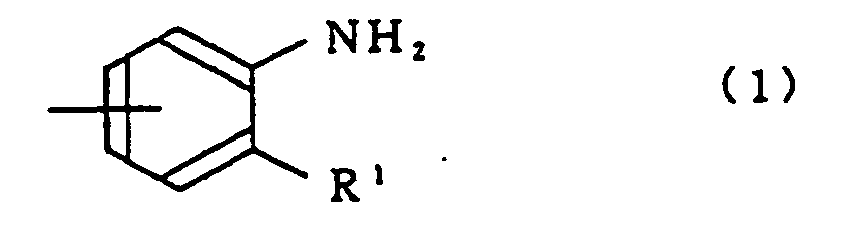
- the crosslinking agent is at least one compound selected from the group consisting of a compound having at least two crosslinkable reaction groups represented by the general formula (1): wherein R 1 s are the same or different and each is -NH 2 , -NHR 2 , -OH or -SH; R 2 is a fluorine atom or a monovalent organic group, a compound represented by the general formula (2): wherein R 3 is -SO 2 -, -O-, -CO-, an alkylene group having 1 to 6 carbon atoms, a perfluoroalkylene group having 1 to 10 carbon atoms or a single bond; R 4 is a compound represented by the general formula (3): wherein R f 1 is a perfluoroalkylene group having 1 to 10 carbon atoms, and a compound represented by the general formula (4): wherein n is an integer of 1 to 10.
- the present invention further relates to a process for production of a molded article comprising a step of primary vulcanization of the curable composition and a step of secondary vulcanization following the primary vulcanization.
- the present invention relates to a molded article obtained by curing the above-mentioned curable composition.
- the present invention relates to the - - curable composition
- a crosslinking agent selected from the group consisting of an oxazole crosslinking agent, an imidazole crosslinking agent and a thiazole crosslinking agent, a fluorine-containing elastomer having a cure site which is crosslinkable with the crosslinking agent and silicon nitride particles having a particle size of not more than 300 nm, said silicon nitride particle is contained in an amount of 0.01 to 1 parts by weight based on 100 parts by weight of the fluorine-containing elastomer.
- the cyano group forms a triazine ring by cyclization and trimerization to enable crosslinking of the elastomer, thereby imparting satisfactory compression set and heat resistance to the molded article.
- fluorine-containing elastomer examples include perfluoro fluorine-containing rubbers and non-perfluoro fluorine-containing rubbers.
- the perfluoro fluorine-containing rubber is one comprising not less than 90 % by mole of perfluoro monomers in its component units.
- Example of the perfluoro fluorine-containing rubber is one comprising tetrafluoroethylene, perfluoro(alkyl vinyl ether) and a monomer giving a cure site.
- a proportion of tetrafluoroethylene/perfluoro(alkyl vinyl ether) is preferably 50 to 90/10 to 50 % by mole, more preferably 50 to 80/20 to 50 % by mole, further preferably 55 to 75/25 to 45 % by mole.
- An amount of the monomer giving a cure site is preferably 0.1 to 5 % by mole, more preferably 0.3 to 3 % by mole based on the total amount of tetrafluoroethylene and perfluoro(alkyl vinyl ether) from the viewpoint of satisfactory crosslinking characteristics and heat resistance.
- perfluoro(alkyl vinyl ether) examples include perfluoro(methyl vinyl ether), perfluoro(propyl vinyl ether) and the like. These can be used alone or can be used in optional combination.
- CF 2 CFOCF 2 CF(CF 3 )OCF 2 CF 2 CN is more preferable.
- perfluoro fluorine-containing rubbers can be prepared by a usual method.
- Examples of such a perfluoro fluorine-containing rubber are fluorine-containing rubbers disclosed in WO97/24381 , JP61-57324B , JP4-81608B and JP5-13961B .
- non-perfluoro fluorine-containing rubbers examples include a fluorine-containing vinylidene fluoride (VdF) rubber, a fluorine-containing tetrafluoroethylene (TFE)/propylene rubber, a fluorine-containing tetrafluoroethylene (TFE)/propylene/vinylidene fluoride (VdF) rubber, a fluorine-containing ethylene/hexafluoropropylene (HFP) rubber, a fluorine-containing ethylene/hexafluoropropylene (HFP)/vinylidene fluoride (VdF) rubber, a fluorine-containing ethylene/hexafluoropropylene (HFP) /tetrafluoroethylene (TFE) rubber, a fluorine-containing fluorosilicone rubber and a fluorine-containing fluoro phosphazene rubber. These can be used alone or can be used in optional combination to an extent not to impure
- the fluorine-containing vinylidene fluoride rubber is a fluorine-containing copolymer comprising 45 to 85 % by mole of vinylidene fluoride and 55 to 15 % by mole of at least one kind of other monomer copolymerizable with the vinylidene fluoride, preferably a fluorine-containing copolymer comprising 50 to 80 % by mole of vinylidene fluoride and 50 to 20 % by mole of at least one kind of other monomer copolymerizable with the vinylidene fluoride.
- Examples of at least one kind of other monomer copolymerizable with vinylidene fluoride are, for instance, fluorine-containing monomers such as tetrafluoroethylene (TFE), chlorotrifluoroethylene (CTFE), trifluoroethylene, hexafluoropropylene (HFP), trifluoropropylene, tetrafluoropropylene, pentafluoropropylene, trifluorobutene, tetrafluoroisobutene, perfluoro(alkyl vinyl ether) (PAVE) and vinyl fluoride, and non-fluorine-containing monomers such as ethylene, propylene and alkyl vinyl ether.
- fluorine-containing monomers such as tetrafluoroethylene (TFE), chlorotrifluoroethylene (CTFE), trifluoroethylene, hexafluoropropylene (HFP), trifluoropropylene, tetrafluoropropylene, penta
- Examples of the rubbers are a VdF-HFP rubber, a VdF-HFP-TFE rubber, a VdF-CTFE rubber, a VdF-CTFE-TFE rubber and the like.
- the fluorine-containing tetrafluoroethylene / propylene rubber is a fluorine-containing copolymer comprising 45 to 70 % by mole of tetrafluoroethylene, 55 to 30 % by mole of propylene and further 0 to 5 % by mole of a monomer giving a cure site based on the total amount of tetrafluoroethylene and propylene.
- Examples of the monomer giving a cure site are cyano group-containing monomers disclosed in JP4-505345A and JP5-500070A and the monomers represented by the above-mentioned general formulas (5) to (21).
- non-perfluoro fluorine-containing rubbers can be prepared by a usual method.
- thermoplastic fluorine-containing rubber comprising an elastomeric fluorine-containing polymer chain segment and a non-elastomeric fluorine-containing polymer chain segment may be used as the fluorine-containing elastomer
- a rubber composition comprising the above-mentioned fluorine-containing rubber and a thermoplastic fluorine-containing rubber may also be used.
- a method of coagulation by acid treatment is preferable for simplification of a process.
- a method of subjecting a polymerization mixture to acid treatment and thereafter separating a polymerization product by means of freeze-drying or the like there can be employed a method of coagulation with ultrasonic wave or coagulation by a mechanical force.
- the curable composition of the present invention contains inorganic silicon nitride particles (Si 3 Nu).
- Si 3 Nu silicon nitride particles
- a mixture of two or more kinds of nitride particles may be used.
- Other nitride particles are lithium nitride, titanium nitride, aluminum nitride, boron nitride, vanadium nitride, zirconium nitride and the like.
- silicon nitride particles are preferable since fine particles of nano size are available and the particles do not contain metals causing any damage in a semiconductor manufacturing process.
- a particle size of the inorganic nitride particles is not more than 300 nm, further preferably not more than 100 nm. A lower limit thereof is not limited particularly.
- An amount of the inorganic nitride particles is 0. 01 to 1 parts by weight, based on 100 parts by weight of the fluorine-containing elastomer.
- the present invention relates to a curable composition
- a curable composition comprising at least one kind of a crosslinking agent selected from the group consisting of an oxazole crosslinking agent, an imidazole crosslinking agent and a thiazole crosslinking agent, a fluorine-containing elastomer having a cure site crosslinkable with the crosslinking agent and inorganic nitride particles.
- an imidazole crosslinking agent or a thiazole crosslinking agent is at least one compound selected from the group consisting of a compound having at least two crosslinkable reaction groups represented by the general formula (1): wherein R 1 s are the same or different and each is -NH 2 , -NHR 2 , -OH or -SH; R 2 is a fluorine atom or a monovalent organic group, a compound represented by the general formula (2): wherein R 3 is -SO 2 -, -O-, -CO-, an alkylene group having 1 to 6 carbon atoms, a perfluoroalkylene group having 1 to 10 carbon atoms or a single bond; R 4 is a compound represented by the general formula (3): wherein R f 1 is a perfluoroalkylene group having 1 to 10 carbon atoms, and a compound represented by the general formula (4): wherein n is an integer of 1 to 10, from the viewpoint
- An oxazole ring, an imidazole ring and a thiazole ring can be formed by a reaction of these crosslinking agents with a cure site of the fluorine-containing elastomer.
- these crosslinking agents a crosslinking agent being capable of forming an imidazole ring is preferable from the viewpoint of capability of providing a crosslinked article having excellent mechanical strength, heat resistance, chemical resistance and cold resistance, particularly one having well-balanced heat resistance and cold resistance.
- preferable is the compound having at least two crosslinkable reaction groups represented by the general formula (1) because the structure of a crosslinked article is stabilized by the aromatic ring, thereby enhancing heat resistance.
- the compound having at least two crosslinkable reaction groups represented by the general formula (1) has preferably 2 to 3 crosslinkable reaction groups, more preferably 2 crosslinkable reaction groups. When the number of crosslinkable reaction groups represented by the general formula (1) is less than 2, the elastomer cannot be crosslinked.
- the substituent R 2 in the crosslinkable reaction groups represented by the general formula (1) is a monovalent organic group other than a hydrogen atom, or a fluorine atom. Since a N-R 2 bond has higher oxidation resistance than a N-H bond, the N-R 2 bond is preferable.
- the monovalent organic group is not particularly limited, and examples thereof are an aliphatic hydrocarbon group, phenyl group, and benzyl group.
- R 2 s is a lower alkyl group having 1 to 10 carbon atoms, particularly 1 to 6 carbon atoms such as -CH 3 , -C 2 H 5 , or -C 3 H 7 ; a fluorine atom-containing lower alkyl group having 1 to 10 carbon atoms, particularly 1 to 6 carbon atoms such as -CF 3 , -C 2 F 5 , -CH 2 F, -CH 2 CF 3 , or -CH 2 C 2 F 5 ; phenyl group; benzyl group; phenyl group or benzyl group, in which 1 to 5 hydrogen atoms are replaced by fluorine atoms, such as -C 6 F 5 or -CH 2 C 6 F 5 ; phenyl group or benzyl group, in which 1 to 5 hydrogen atoms are replaced
- phenyl group and -CH 3 are preferable from the viewpoint that heat resistance is particularly excellent, crosslinking reactivity is good, and further, synthesis is relatively easy.
- an alkylene group having 1 to 6 carbon atoms are a methylene group, an ethylene group, a propylene group, a butylene group, a pentylene group, and a hexylene group, and an example of a perfluoroalkylene group having 1 to 10 carbon atoms is These compounds are known as the examples of bisdiaminophenyl compounds in JP2-59177B and JP8-120146A .
- R 6 s are the same or different, and each is a hydrogen atom, an alkyl group having 1 to 10 carbon atoms; a fluorine atom-containing alkyl group having 1 to 10 carbon atoms; phenyl group; benzyl group; phenyl group or benzyl group, in which 1 to 5 hydrogen atoms are replaced by fluorine atoms and / or -CF 3 .
- Nonlimiting examples thereof are 2,2-bis(3,4-diaminophenyl)hexafluoropropane, 2,2-bis[3-amino-4-(N-methylamino)phenyl]hexafluoropropane, 2,2-bis[3-amino-4-(N-ethylamino)phenyl]hexafluoropropane, 2,2-bis(3-amino-4-(N-propylamino)phenyl]hexafluoropropane, 2,2-bis[3-amino-4-(N-phenylamino)phenyl]hexafluoropropane, 2,2-bis[3-amino-4-(N-perfluorophenylamino)phenyl]hexafluoropropane, and 2,2-bis[3-amino-4-(N-benzylamino)phenyl]hexafluoropropane.
- Such a bisamidoxime crosslinking agent, a bisamidrazone crosslinking agent, a bisaminophenol crosslinking agent, a bisaminothiophenol crosslinking agent or a bisdiaminophenyl crosslinking agent reacts with a cyano group, a carboxyl group and an alkoxycarbonyl group contained in the fluorine-containing elastomer to form an oxazole ring, a thiazole ring or an imidazole ring, thereby giving a crosslinked product.
- a catalyst for triazine crosslinking can be used in combination.
- the catalyst for triazine crosslinking are organotin compounds such as tetraphenyltin and triphenyltin.
- An amount of the crosslinking agent and/or catalyst for triazine crosslinking is preferably 0.1 to 20 parts by weight, more preferably 0.3 to 10 parts by weight based on 100 parts by weight of the fluorine-containing elastomer.
- the amount of the crosslinking agent and/or catalyst for triazine crosslinking is less than 0.1 part by weight, there is a tendency that mechanical strength, heat resistance and chemical resistance sufficient for practical use cannot be obtained, and when exceeding 20 parts by weight, it takes much time for crosslinking and a crosslinked product becomes hard and is free from flexibility. Also there is a tendency that uneven crosslinking occurs and heat resistance and chemical resistance are deteriorated.
- the fluorine-containing elastomer is not limited particularly as far as it has a cure site being capable of crosslinking reaction with at least one kind of a crosslinking agent selected from the group consisting of an oxazole crosslinking agent, an imidazole crosslinking agent and a thiazole crosslinking agent.
- Examples of the cure site being capable of crosslinking reaction are a cyano group, a carboxyl group and an alkoxycarbonyl group.
- fluorine-containing elastomer examples include perfluoro fluorine-containing rubbers and non-perfluoro fluorine-containing rubbers.
- the perfluoro fluorine-containing rubber is one comprising not less than 90 % by mole of perfluoro monomers in its component units.
- Examples of the perfluoro fluorine-containing rubbers are those comprising tetrafluoroethylene/perfluoro(alkyl vinyl ether)/a monomer giving a cure site.
- a proportion of tetrafluoroethylene/perfluoro(alkyl vinyl ether) is preferably 50 to 90/10 to 50 % by mole, more preferably 50 to 80/20 to 50 % by mole, further preferably 55 to 70/30 to 45 % by mole.
- An amount of the monomer giving a cure site is preferably 0 to 5 % by mole, more preferably 0 to 2 % by mole based on the total amount of tetrafluoroethylene and perfluoro(alkyl vinyl ether).
- perfluoro(alkyl vinyl ether) examples include perfluoro(methyl vinyl ether), perfluoro(propyl vinyl ether) and the like. Those can be used alone or can be used in optional combination.
- X 1 may be a cyano group (-CN group), a carboxyl group (-COOH group) or an alkoxycarbonyl group (-COOR 7 group, where R 7 is an alkyl group having 1 to 10 carbon atoms which may have fluorine atom).
- perfluoro fluorine-containing rubbers can be prepared by a usual method.
- examples of the non-perfluoro fluorine-containing rubber are cyano group-containing monomers, carboxyl group-containing monomers and alkoxycarbonyl group-containing monomers described in JP5-500070A , and monomers represented by the above-mentioned general formulas (5) to (21), in which X 1 is a cyano group (-CN group), a carboxyl group (-COOH group) or an alkoxycarbonyl group (-COOR 7 group, where R 7 is an alkyl group having 1 to 10 carbon atoms which may have fluorine atom).
- non-perfluoro fluorine-containing rubbers can be prepared by a usual method.
- thermoplastic fluorine-containing rubber comprising an elastomeric fluorine-containing polymer chain segment and a non-elastomeric fluorine-containing polymer chain segment may be used as the fluorine-containing elastomer
- a rubber composition comprising the above-mentioned fluorine-containing rubber and a thermoplastic fluorine-containing rubber may also be used.
- a method of coagulation by acid treatment is preferable for simplification of a process.
- a method of subjecting a polymerization mixture to acid treatment and thereafter separating a polymerization product by means of freeze-drying or the like there can be employed a method of coagulation with ultrasonic wave or coagulation by a mechanical force.
- groups contained in the polymerization product such as a metallic salt and an ammonium salt of carboxylic acid can be converted to carboxyl groups.
- a method of washing with hydrochloric acid, sulfuric acid or nitric acid or a method of decreasing a pH value of the mixture system after the polymerization reaction to 3 or less with such an acid is suitable.
- a carboxylic acid can be introduced by oxidizing a crosslinkable elastomer containing iodine or bromine with fuming nitric acid.
- WO00/05959 can be used as a method of introducing a cyano group, a carboxylic group or an alkoxycarbonyl group.
- inorganic nitride particles examples include those exemplified supra.
- An amount of the inorganic nitride particles is 0.01 to 1 part by weight based on 100 parts by weight of the fluorine-containing elastomer.
- a lower limit thereof is preferably 0.03 part by weight, more preferably 0.05 part by weight, and an upper limit is preferably 0.7 part by weight, more preferably 0.5 part by weight.
- usual additives to be blended to a curable composition for example, a filler, a processing auxiliary, a plasticizer, a colorant, a stabilizer and an adhesion auxiliary can be blended to the composition, and in addition, one or more of usual crosslinking agents and crosslinking aids which differ from those mentioned above may be blended.
- the present invention further relates to a process for production of a molded article comprising a step of primary vulcanization of the curable composition and a step of secondary vulcanization following the primary vulcanization.
- the curable composition can be prepared by mixing the above-mentioned components with a usual elastomer processing equipment, for example, an open roll, a Banbury mixer or a kneader.
- a usual elastomer processing equipment for example, an open roll, a Banbury mixer or a kneader.
- the composition can be prepared also by a method of using a closed mixer.
- a pre-molded article For producing a pre-molded article from the above-mentioned composition, usual known methods may be employed, such as a method of heating and compressing the composition in a die, or a method of putting the composition in a heated die under pressure, and a method of extruding with an extruder, and thereafter, carrying out primary vulcanization and secondary vulcanization in this order.
- usual known methods may be employed, such as a method of heating and compressing the composition in a die, or a method of putting the composition in a heated die under pressure, and a method of extruding with an extruder, and thereafter, carrying out primary vulcanization and secondary vulcanization in this order.
- the primary vulcanization it is preferable to carry out the primary vulcanization at 150° to 200°C for 5 to 120 minutes, more preferably at 170° to 190°C for 5 to 60 minutes.
- known vulcanization means for example, press vulcanization may be employed.
- the secondary vulcanization is carried out at 250° to 320°C for 2 to 24 hours, more preferably at 280° to 310°C for 5 to 20 hours.
- known vulcanization means for example, oven vulcanization may be employed.
- the molded article of the present invention can be obtained by crosslinking and molding the curable composition of the present invention.
- the molded article of the present invention is excellent in compression set.
- the molded article of the present invention is useful as various molded articles in a variety of fields as raised below.
- O-rings and sealing materials for gate valves, O-rings and sealing materials for quartz windows, O-rings and sealing materials for chambers, O-rings and sealing materials for gates, O-rings and sealing materials for bell jars, O-rings and sealing materials for couplings, O-rings, sealing materials and diaphragms for pumps, O-rings and sealing materials for gas controllers for semiconductors, O-rings and sealing materials for resist developers and resist strippers, hoses and tubes for wafer cleaning solution, rolls for conveying wafer, lining and coating for resist developer baths and resist stripper baths, lining and coating for wafer cleaning solution baths, or lining and coating for wet etching baths.
- sealants and sealing agents are used for sealants and sealing agents, for covering materials of quartz in optical fibers, for potting, coating, and adhesive seals in electronic components and breadboards that have the purposes of electrical insulation, vibration control, waterproofing, and moisture-proofing, for gaskets for magnetic storages, for modifying agents of sealants such as epoxy resins, for sealants for clean rooms and clean equipment, and the like.
- a compression set of an O-ring (AS-568A-214) after left at 200°C, 250°C, 275°C and 300°C for 72 hours and 166 hours is measured according to JIS K6301.
- Kneading method Roll kneading
- a curable composition shown in Table 1 is formed into a 2 mm thick sheet by primary press vulcanization and secondary oven vulcanization under the standard vulcanization conditions, and 100 % modulus thereof is measured according to JIS-K6251.
- a curable composition shown in Table 1 is formed into a 2 mm thick sheet by primary press vulcanization and secondary oven vulcanization under the standard vulcanization conditions, and tensile strength at break (Tb) and tensile elongation at break (Eb) thereof are measured according to JIS-K6251.
- a vulcanization curve at 180°C is made in primary press vulcanization by using a JSR-type curastometer model II, and minimum viscosity (ML), vulcanization degree (MH), induction time (T10) and optimum vulcanization time (T90) are determined. Also evaluation is made with respect to whether or not scorching occurs.
- Shore A hardness is measured according to ASTM D2240. Specifically, the measurement is carried out with an analog hardness meter type A manufactured by KOBUNSHI KEIKI CO., LTD.
- a 6-liter stainless steel autoclave without an ignition source was charged with 2.3 liter of pure water, 23 g of as an emulsifier, and 0.2 g of ammonium carbonate as a pH regulator.
- an inside temperature was raised to 50°C while stirring at 600 rpm, and tetrafluoroethylene (TFE) and perfluoro(methyl vinyl ether) (PMVE) were charged thereto at TFE/PMVE-24/76 (molar ratio) so that an inside pressure became 0.8 MPa.
- 0.8 g of CF 2 CFOCF 2 CF(CF 3 )OCF 2 CF 2 CN (CNVE) was introduced by pressurized nitrogen.
- 10 ml of an aqueous solution of ammonium persulfate (APS) having a concentration of 1.2 g/ml was introduced by pressurized nitrogen and a reaction was initiated.
- APS ammonium persulfate
- TFE and PMVE were introduced by their own pressure. Thereafter, as the reaction proceeded, TFE and PMVE were introduced in the same manner, and increase and decrease in pressure were repeated between 0.7 MPa and 0.9 MPa, and at the same time, 1.5 g of CNVE was introduced by pressurized nitrogen every time when an addition amount of TFE and PMVE reached 80 g.
- This 3,110 g of the aqueous dispersion was diluted with 3,730 g of water, and slowly added with stirring to 3,450 g of a nitric acid solution having a concentration of 4.8 % by weight. After the solution was stirred for 30 minutes after the adding, coagulated substances were filtered, and the obtained polymer was washed with water and then subjected to vacuum drying to obtain 680 g of a fluorine-containing elastomer (A).
- characteristic absorption of a carboxyl group was recognized at around 1,774.9 cm -1 and 1,808.6 cm -1
- characteristic absorption of an OH group was recognized at around 3,557.5 cm -1 and 3,095.2 cm -1 .
- EXAMPLE 1 (Refrence Example) The fluorine-containing elastomer (A) having a cyano group at its terminal and obtained in Preparation Example 1 and silicon nitride (Si 3 N 4 , available from UBE INDUSTRIES, LTD., SN-A00, particle size: 30 nm) were mixed at a weight ratio of 100/0.2 and kneaded with an open roll to prepare a curable composition.
- This elastomer composition was press-crosslinked (primary crosslinking) at 180°C for a period of time corresponding to T90 and, then, oven-crosslinked (secondary crosslinking) at 290°C for 18 hours to prepare an O-ring (AS-568A-214).
- a vulcanization curve of the composition at 180°C was made by using a JSR-type curastometer model II (manufactured by JSR Trading Co., Ltd.), and minimum viscosity (ML), vulcanization degree (MH), induction time (T10) and optimum vulcanization time (T90) were determined.
- compression set 200°C, 250°C and 300°C, 72 hours), 100 % modulus, tensile strength at break, tensile elongation at break and Shore A hardness were measured. Results thereof are shown in Table 1.
- EXAMPLES 2 and 3 O-rings were produced in the same manner as in Example 1 except that the amount of silicon nitride was changed as shown in Table 1, and minimum viscosity (ML), vulcanization degree (MH), induction time (T10), optimum vulcanization time (T90), compression set (200°C, 250°C and 300°C, 72 hours), 100 % modulus, tensile strength at break, tensile elongation at break and Shore A hardness were measured. Results thereof are shown in Table 1.
- EXAMPLE 4 (Reference Example) An O-ring was produced in the same manner as in Example 1 except that the fluorine-containing elastomer (A) having a cyano group at its terminal and obtained in Preparation Example 1 and silicon nitride (Si 3 N 4 , pulverized SN-E10 available from UBE INDUSTRIES, LTD., particle size: 300 nm or less) were mixed at a weight ratio of 100/20 and kneaded with an open roll to prepare a curable composition.
- Si 3 N 4 silicon nitride
- EXAMPLE 5 (Reference Example) An O-ring was produced in the same manner as in Example 1 except that the fluorine-containing elastomer (A) having a cyano group at its terminal and obtained in Preparation Example 1 and aluminum nitride (AlN available from TOKUYAMA CORPORATION, pulverized particles of H grade) were mixed at a weight ratio of 100/20 and kneaded with an open roll to prepare a curable composition.
- AlN available from TOKUYAMA CORPORATION, pulverized particles of H grade
- polyimide UBE INDUSTRIES, LTD.
- silica silica
- This elastomer composition was press-crosslinked (primary crosslinking) at 180°C for a period of time corresponding to T90 and, then, oven-crosslinked (secondary crosslinking) at 290°C for 18 hours to prepare an O-ring (AS-568A-214).
- a vulcanization curve of the composition at 180°C was made by using a JSR-type curastometer model II (manufactured by JSR Trading Co., Ltd.), and minimum viscosity (ML), vulcanization degree (MH), induction time (T10) and optimum vulcanization time (T90) were determined.
- compression set 275°C and 300°C, 72 hours and 168 hours
- 100 % modulus, tensile strength at break, tensile elongation at break and Shore A hardness were measured. Results thereof are shown in Table 2.
- EXAMPLE 8 (Reference Example) An O-ring was produced in the same manner as in Example 6 except that the fluorine-containing elastomer (A) having a cyano group at its terminal and obtained in Preparation Example 1, 2,2-bis[3-amino-4-(N-phenylamino)phenyl]hexafluoropropane (AFTA-Ph) and silicon nitride (Si 3 N 4 , available from UBE INDUSTRIES, LTD., SN-E10, particle size: 300 nm or less) were mixed at a weight ratio of 100/1.0/5, and thereto was blended carbon (Thermax N990 available from Cancarb Limited.) as a filler, followed by kneading with an open roll to prepare a curable composition.
- AFTA-Ph 2,2-bis[3-amino-4-(N-phenylamino)phenyl]hexafluoropropane
- Si 3 N 4 silicon nitride
- O-rings were produced in the same manner as in Examples 6, 7 and 8 except that silicon nitride was not used, and minimum viscosity (ML), vulcanization degree (MH), induction time (T10), optimum vulcanization time (T90), compression set (275°C and 300°C, 72 hours and 168 hours), 100 % modulus, tensile strength at break, tensile elongation at break and Shore A hardness were measured. Results thereof are shown in Table 2. TABLE 2 Ex. 6 Ex. 1 Com. Ex. 7 Com. Ex. Ex. 2 8* Com. Ex.
- the curable composition of the present invention since the inorganic nitride particles act as a co-curing agent or a curing accelerator, a vulcanization time can be shortened and a molded article having excellent compression set can be provided.
- a process for production of a molded article comprising a step of primary vulcanization of the curable composition of the present invention and a step of secondary vulcanization following the primary vulcanization can be provided.
Landscapes
- Chemical & Material Sciences (AREA)
- Health & Medical Sciences (AREA)
- Chemical Kinetics & Catalysis (AREA)
- Medicinal Chemistry (AREA)
- Polymers & Plastics (AREA)
- Organic Chemistry (AREA)
- Compositions Of Macromolecular Compounds (AREA)
- Manufacture Of Macromolecular Shaped Articles (AREA)
- Processes Of Treating Macromolecular Substances (AREA)
- Laminated Bodies (AREA)
Claims (5)
- Composition durcissable comprenant au moins une sorte d'un agent de réticulation sélectionné à partir du groupe constitué par un agent de réticulation à l'oxazole, un agent de réticulation à l'imidazole et un agent de réticulation au thiazole, un élastomère contenant du fluor ayant un site de cuisson qui est réticulable avec l'agent de réticulation et des particules de nitrure de silicium ayant une taille de particule non supérieure à 300 nm, lesdites particules de nitrure de silicium sont contenues en une quantité de 0,01 à 1 parties en poids sur base de 100 parties en poids de l'élastomère contenant du fluor.
- Composition durcissable selon la revendication 1, dans laquelle ledit agent de réticulation comprend au moins un composé sélectionné à partir du groupe constitué par un composé ayant au moins deux groupes de réaction réticulables représentés par la formule générale (1) :


- Processus pour une production d'un article moulé comprenant une étape de vulcanisation primaire de la composition durcissable de la revendication 1 ou 2 et une étape de vulcanisation secondaire suivant la vulcanisation primaire.
- Processus pour une production d'un article moulé selon la revendication 3, dans lequel une température de vulcanisation primaire est de 150° à 200 °C et une température de vulcanisation secondaire est de 250° à 320 °C.
- Article moulé que l'on peut obtenir en cuisant la composition durcissable de la revendication 1 ou 2.
Applications Claiming Priority (2)
| Application Number | Priority Date | Filing Date | Title |
|---|---|---|---|
| JP2005215922 | 2005-07-26 | ||
| EP06781482A EP1908796B1 (fr) | 2005-07-26 | 2006-07-24 | Composition durcissable, article moulé obtenu à partir de celle-ci et procédé servant à produire un article moulé |
Related Parent Applications (1)
| Application Number | Title | Priority Date | Filing Date |
|---|---|---|---|
| EP06781482.2 Division | 2006-07-24 |
Publications (2)
| Publication Number | Publication Date |
|---|---|
| EP2196499A1 EP2196499A1 (fr) | 2010-06-16 |
| EP2196499B1 true EP2196499B1 (fr) | 2012-01-25 |
Family
ID=37683294
Family Applications (2)
| Application Number | Title | Priority Date | Filing Date |
|---|---|---|---|
| EP10158624A Active EP2196499B1 (fr) | 2005-07-26 | 2006-07-24 | Composition durcissable, article moulé obtenu à partir de celle-ci et procédé servant à produire un article moulé |
| EP06781482A Active EP1908796B1 (fr) | 2005-07-26 | 2006-07-24 | Composition durcissable, article moulé obtenu à partir de celle-ci et procédé servant à produire un article moulé |
Family Applications After (1)
| Application Number | Title | Priority Date | Filing Date |
|---|---|---|---|
| EP06781482A Active EP1908796B1 (fr) | 2005-07-26 | 2006-07-24 | Composition durcissable, article moulé obtenu à partir de celle-ci et procédé servant à produire un article moulé |
Country Status (8)
| Country | Link |
|---|---|
| US (3) | US8211964B2 (fr) |
| EP (2) | EP2196499B1 (fr) |
| JP (1) | JP4998267B2 (fr) |
| KR (2) | KR101004155B1 (fr) |
| AT (2) | ATE542856T1 (fr) |
| DE (1) | DE602006018939D1 (fr) |
| TW (1) | TWI358425B (fr) |
| WO (1) | WO2007013397A1 (fr) |
Families Citing this family (12)
| Publication number | Priority date | Publication date | Assignee | Title |
|---|---|---|---|---|
| KR101004155B1 (ko) * | 2005-07-26 | 2010-12-24 | 다이킨 고교 가부시키가이샤 | 경화성 조성물, 이를 포함하는 성형품 및 성형품의 제조방법 |
| WO2011125614A1 (fr) * | 2010-03-31 | 2011-10-13 | ダイキン工業株式会社 | Composition durcissable pour composant résistant à la chaleur de dispositif de fabrication de semi-conducteurs, de cristaux liquides, de cellules solaires ou d'éléments électroluminescents (el) organiques |
| JP5720774B2 (ja) | 2010-12-07 | 2015-05-20 | ダイキン工業株式会社 | 硬化性組成物、成形品及び成形品の製造方法 |
| WO2016072397A1 (fr) * | 2014-11-07 | 2016-05-12 | 旭硝子株式会社 | Élastomère contenant du fluor, composition d'élastomère contenant du fluor, et article réticulé d'élastomère contenant du fluor |
| KR102101241B1 (ko) | 2015-06-19 | 2020-04-17 | 다이킨 고교 가부시키가이샤 | 불소 함유 중합체를 포함하는 조성물 및 성형품 |
| KR102830613B1 (ko) * | 2018-07-30 | 2025-07-08 | 다이킨 고교 가부시키가이샤 | 불소 함유 폴리머를 함유하는 조성물 및 성형품 |
| CN111524883B (zh) * | 2020-04-29 | 2022-09-20 | 业成科技(成都)有限公司 | 膜内电子组件及其制备方法 |
| CN117534929B (zh) * | 2023-12-18 | 2024-09-24 | 上海芯密科技有限公司 | 一种低腐蚀性含氟密封圈组合物及其制备方法 |
| CN118388949B (zh) * | 2024-05-22 | 2024-12-13 | 上海芯密科技股份有限公司 | 一种高白度氟橡胶组合物及其制备方法和应用 |
| CN118459966B (zh) * | 2024-05-22 | 2025-02-28 | 上海芯密科技股份有限公司 | 一种半导体密封圈材料及其制备方法和应用 |
| CN119192756B (zh) * | 2024-09-23 | 2025-03-21 | 上海芯密科技股份有限公司 | 一种耐等离子体且低粘力的无金属全氟聚合物及其制备方法 |
| CN120005335B (zh) * | 2025-02-14 | 2026-03-20 | 上海芯密科技股份有限公司 | 一种全氟橡胶组合物及其制备方法和制品 |
Family Cites Families (18)
| Publication number | Priority date | Publication date | Assignee | Title |
|---|---|---|---|---|
| US3637628A (en) * | 1970-11-12 | 1972-01-25 | Hooker Chemical Corp | Metal nitride catalysts for preparing triazines and cross-linked nitrile polymers |
| JPS5871906A (ja) | 1981-10-22 | 1983-04-28 | Daikin Ind Ltd | 含フツ素弾性状共重合体の製法 |
| US4525539A (en) | 1982-12-02 | 1985-06-25 | E. I. Du Pont De Nemours And Company | Vulcanizable nitrile-containing perfluoroelastomer |
| US4513128A (en) | 1983-06-23 | 1985-04-23 | E. I. Du Pont De Nemours And Company | Fluorinated vinyl ether copolymers having low glass transition temperatures |
| JPS61223007A (ja) | 1985-03-28 | 1986-10-03 | Daikin Ind Ltd | フルオロエラストマ−の乳化重合法 |
| US4972038A (en) | 1989-05-19 | 1990-11-20 | E. I. Du Pont De Nemours And Company | Cyano-containing perfluoropolymers having iodine curesites |
| US4973634A (en) | 1989-05-19 | 1990-11-27 | E. I. Du Pont De Nemours And Company | Preparation of bromo-containing perfluoropolymers having iodine curesites |
| JP3398492B2 (ja) | 1994-10-21 | 2003-04-21 | 日本メクトロン株式会社 | 含フッ素エラストマー組成物 |
| WO1997024381A1 (fr) | 1995-12-28 | 1997-07-10 | Daikin Industries, Ltd. | Copolymeres elastiques contenant du fluor, composition durcissable les contenant et materiau d'etancheite prepare a l'aide de ces copolymeres |
| DE69918698T2 (de) | 1998-08-10 | 2005-08-04 | Dupont Dow Elastomers L.L.C., Wilmington | Härtbare perfluorelastomerzusammensetzung |
| JP2000259022A (ja) * | 1999-03-05 | 2000-09-22 | Fuji Xerox Co Ltd | 電子写真用定着部品、および定着装置 |
| US6638999B2 (en) | 2000-02-08 | 2003-10-28 | Dupont Dow Elastomers Llc. | Curable perfluoroelastomer composition |
| US7125598B2 (en) | 2000-04-19 | 2006-10-24 | Daikin Industries, Ltd. | Molded fluoroelastomer with excellent detachability and process for producing the same |
| CN1228391C (zh) | 2000-05-09 | 2005-11-23 | 大金工业株式会社 | 配合清洁填料的高分子聚合物组合物 |
| CN1891761B (zh) * | 2001-12-17 | 2010-10-06 | 大金工业株式会社 | 交联性弹性体组合物及由该组合物形成的成型品 |
| CN1286898C (zh) | 2001-12-17 | 2006-11-29 | 大金工业株式会社 | 弹性体成型品 |
| JP2006316112A (ja) | 2005-05-10 | 2006-11-24 | Daikin Ind Ltd | 含フッ素エラストマー組成物およびそれからなる成形品 |
| KR101004155B1 (ko) * | 2005-07-26 | 2010-12-24 | 다이킨 고교 가부시키가이샤 | 경화성 조성물, 이를 포함하는 성형품 및 성형품의 제조방법 |
-
2006
- 2006-07-24 KR KR1020087004463A patent/KR101004155B1/ko active Active
- 2006-07-24 AT AT10158624T patent/ATE542856T1/de active
- 2006-07-24 EP EP10158624A patent/EP2196499B1/fr active Active
- 2006-07-24 JP JP2007528451A patent/JP4998267B2/ja active Active
- 2006-07-24 DE DE602006018939T patent/DE602006018939D1/de active Active
- 2006-07-24 KR KR1020097009950A patent/KR100950352B1/ko active Active
- 2006-07-24 AT AT06781482T patent/ATE491747T1/de not_active IP Right Cessation
- 2006-07-24 WO PCT/JP2006/314570 patent/WO2007013397A1/fr not_active Ceased
- 2006-07-24 US US11/996,917 patent/US8211964B2/en active Active
- 2006-07-24 EP EP06781482A patent/EP1908796B1/fr active Active
- 2006-07-26 TW TW095127325A patent/TWI358425B/zh active
-
2011
- 2011-12-30 US US13/340,751 patent/US20120108727A1/en not_active Abandoned
-
2013
- 2013-02-25 US US13/776,384 patent/US9068057B2/en active Active
Also Published As
| Publication number | Publication date |
|---|---|
| WO2007013397A1 (fr) | 2007-02-01 |
| US8211964B2 (en) | 2012-07-03 |
| US20120108727A1 (en) | 2012-05-03 |
| KR20090069332A (ko) | 2009-06-30 |
| DE602006018939D1 (de) | 2011-01-27 |
| KR20080039934A (ko) | 2008-05-07 |
| JPWO2007013397A1 (ja) | 2009-02-05 |
| KR101004155B1 (ko) | 2010-12-24 |
| TW200710150A (en) | 2007-03-16 |
| ATE491747T1 (de) | 2011-01-15 |
| US20130165594A1 (en) | 2013-06-27 |
| JP4998267B2 (ja) | 2012-08-15 |
| US9068057B2 (en) | 2015-06-30 |
| EP1908796A4 (fr) | 2009-09-02 |
| ATE542856T1 (de) | 2012-02-15 |
| EP1908796B1 (fr) | 2010-12-15 |
| US20100144948A1 (en) | 2010-06-10 |
| TWI358425B (en) | 2012-02-21 |
| KR100950352B1 (ko) | 2010-03-29 |
| EP2196499A1 (fr) | 2010-06-16 |
| EP1908796A1 (fr) | 2008-04-09 |
Similar Documents
| Publication | Publication Date | Title |
|---|---|---|
| US9068057B2 (en) | Curable composition, molded article obtained from same and process for production of molded article | |
| US9169339B2 (en) | Curable composition, molded product and method for producing molded product | |
| EP1683837B1 (fr) | Elastomère fluoré et composition associée réticulable | |
| US8138271B2 (en) | Crosslinkable composition and molded article made of same | |
| US20110021716A1 (en) | Fluorine-containing elastomer and crosslinkable composition comprising same | |
| US20060293432A1 (en) | Fluorine-containing elastomer composition and molded article comprising the same | |
| EP2138539B1 (fr) | Composition élastomère à teneur en fluor et matériau d'étanchéité composé de celle-ci | |
| US20110319545A1 (en) | Process for preparing curable perfluoroelastomer compositions | |
| EP2230263B1 (fr) | Elastomère contenant du fluor | |
| US20150099850A1 (en) | Fluorine-containing elastomer and a vulcanizable composition thereof |
Legal Events
| Date | Code | Title | Description |
|---|---|---|---|
| PUAI | Public reference made under article 153(3) epc to a published international application that has entered the european phase |
Free format text: ORIGINAL CODE: 0009012 |
|
| AC | Divisional application: reference to earlier application |
Ref document number: 1908796 Country of ref document: EP Kind code of ref document: P |
|
| AK | Designated contracting states |
Kind code of ref document: A1 Designated state(s): AT BE BG CH CY CZ DE DK EE ES FI FR GB GR HU IE IS IT LI LT LU LV MC NL PL PT RO SE SI SK TR |
|
| 17P | Request for examination filed |
Effective date: 20101215 |
|
| GRAP | Despatch of communication of intention to grant a patent |
Free format text: ORIGINAL CODE: EPIDOSNIGR1 |
|
| RIC1 | Information provided on ipc code assigned before grant |
Ipc: C08K 3/34 20060101ALI20110131BHEP Ipc: C08L 27/12 20060101AFI20110131BHEP Ipc: C08K 3/28 20060101ALI20110131BHEP Ipc: C08K 5/29 20060101ALI20110131BHEP Ipc: C08K 5/17 20060101ALI20110131BHEP |
|
| GRAS | Grant fee paid |
Free format text: ORIGINAL CODE: EPIDOSNIGR3 |
|
| GRAA | (expected) grant |
Free format text: ORIGINAL CODE: 0009210 |
|
| AC | Divisional application: reference to earlier application |
Ref document number: 1908796 Country of ref document: EP Kind code of ref document: P |
|
| AK | Designated contracting states |
Kind code of ref document: B1 Designated state(s): AT BE BG CH CY CZ DE DK EE ES FI FR GB GR HU IE IS IT LI LT LU LV MC NL PL PT RO SE SI SK TR |
|
| REG | Reference to a national code |
Ref country code: GB Ref legal event code: FG4D |
|
| REG | Reference to a national code |
Ref country code: CH Ref legal event code: EP |
|
| REG | Reference to a national code |
Ref country code: AT Ref legal event code: REF Ref document number: 542856 Country of ref document: AT Kind code of ref document: T Effective date: 20120215 |
|
| REG | Reference to a national code |
Ref country code: IE Ref legal event code: FG4D |
|
| REG | Reference to a national code |
Ref country code: DE Ref legal event code: R096 Ref document number: 602006027383 Country of ref document: DE Effective date: 20120322 |
|
| REG | Reference to a national code |
Ref country code: NL Ref legal event code: VDEP Effective date: 20120125 |
|
| LTIE | Lt: invalidation of european patent or patent extension |
Effective date: 20120125 |
|
| PG25 | Lapsed in a contracting state [announced via postgrant information from national office to epo] |
Ref country code: NL Free format text: LAPSE BECAUSE OF FAILURE TO SUBMIT A TRANSLATION OF THE DESCRIPTION OR TO PAY THE FEE WITHIN THE PRESCRIBED TIME-LIMIT Effective date: 20120125 Ref country code: LT Free format text: LAPSE BECAUSE OF FAILURE TO SUBMIT A TRANSLATION OF THE DESCRIPTION OR TO PAY THE FEE WITHIN THE PRESCRIBED TIME-LIMIT Effective date: 20120125 Ref country code: BG Free format text: LAPSE BECAUSE OF FAILURE TO SUBMIT A TRANSLATION OF THE DESCRIPTION OR TO PAY THE FEE WITHIN THE PRESCRIBED TIME-LIMIT Effective date: 20120425 Ref country code: IS Free format text: LAPSE BECAUSE OF FAILURE TO SUBMIT A TRANSLATION OF THE DESCRIPTION OR TO PAY THE FEE WITHIN THE PRESCRIBED TIME-LIMIT Effective date: 20120525 Ref country code: BE Free format text: LAPSE BECAUSE OF FAILURE TO SUBMIT A TRANSLATION OF THE DESCRIPTION OR TO PAY THE FEE WITHIN THE PRESCRIBED TIME-LIMIT Effective date: 20120125 |
|
| PG25 | Lapsed in a contracting state [announced via postgrant information from national office to epo] |
Ref country code: PT Free format text: LAPSE BECAUSE OF FAILURE TO SUBMIT A TRANSLATION OF THE DESCRIPTION OR TO PAY THE FEE WITHIN THE PRESCRIBED TIME-LIMIT Effective date: 20120525 Ref country code: PL Free format text: LAPSE BECAUSE OF FAILURE TO SUBMIT A TRANSLATION OF THE DESCRIPTION OR TO PAY THE FEE WITHIN THE PRESCRIBED TIME-LIMIT Effective date: 20120125 Ref country code: LV Free format text: LAPSE BECAUSE OF FAILURE TO SUBMIT A TRANSLATION OF THE DESCRIPTION OR TO PAY THE FEE WITHIN THE PRESCRIBED TIME-LIMIT Effective date: 20120125 Ref country code: FI Free format text: LAPSE BECAUSE OF FAILURE TO SUBMIT A TRANSLATION OF THE DESCRIPTION OR TO PAY THE FEE WITHIN THE PRESCRIBED TIME-LIMIT Effective date: 20120125 Ref country code: GR Free format text: LAPSE BECAUSE OF FAILURE TO SUBMIT A TRANSLATION OF THE DESCRIPTION OR TO PAY THE FEE WITHIN THE PRESCRIBED TIME-LIMIT Effective date: 20120426 |
|
| REG | Reference to a national code |
Ref country code: AT Ref legal event code: MK05 Ref document number: 542856 Country of ref document: AT Kind code of ref document: T Effective date: 20120125 |
|
| PG25 | Lapsed in a contracting state [announced via postgrant information from national office to epo] |
Ref country code: CY Free format text: LAPSE BECAUSE OF FAILURE TO SUBMIT A TRANSLATION OF THE DESCRIPTION OR TO PAY THE FEE WITHIN THE PRESCRIBED TIME-LIMIT Effective date: 20120125 |
|
| PG25 | Lapsed in a contracting state [announced via postgrant information from national office to epo] |
Ref country code: RO Free format text: LAPSE BECAUSE OF FAILURE TO SUBMIT A TRANSLATION OF THE DESCRIPTION OR TO PAY THE FEE WITHIN THE PRESCRIBED TIME-LIMIT Effective date: 20120125 Ref country code: SE Free format text: LAPSE BECAUSE OF FAILURE TO SUBMIT A TRANSLATION OF THE DESCRIPTION OR TO PAY THE FEE WITHIN THE PRESCRIBED TIME-LIMIT Effective date: 20120125 Ref country code: DK Free format text: LAPSE BECAUSE OF FAILURE TO SUBMIT A TRANSLATION OF THE DESCRIPTION OR TO PAY THE FEE WITHIN THE PRESCRIBED TIME-LIMIT Effective date: 20120125 Ref country code: CZ Free format text: LAPSE BECAUSE OF FAILURE TO SUBMIT A TRANSLATION OF THE DESCRIPTION OR TO PAY THE FEE WITHIN THE PRESCRIBED TIME-LIMIT Effective date: 20120125 Ref country code: SI Free format text: LAPSE BECAUSE OF FAILURE TO SUBMIT A TRANSLATION OF THE DESCRIPTION OR TO PAY THE FEE WITHIN THE PRESCRIBED TIME-LIMIT Effective date: 20120125 Ref country code: EE Free format text: LAPSE BECAUSE OF FAILURE TO SUBMIT A TRANSLATION OF THE DESCRIPTION OR TO PAY THE FEE WITHIN THE PRESCRIBED TIME-LIMIT Effective date: 20120125 |
|
| PG25 | Lapsed in a contracting state [announced via postgrant information from national office to epo] |
Ref country code: SK Free format text: LAPSE BECAUSE OF FAILURE TO SUBMIT A TRANSLATION OF THE DESCRIPTION OR TO PAY THE FEE WITHIN THE PRESCRIBED TIME-LIMIT Effective date: 20120125 |
|
| PLBE | No opposition filed within time limit |
Free format text: ORIGINAL CODE: 0009261 |
|
| STAA | Information on the status of an ep patent application or granted ep patent |
Free format text: STATUS: NO OPPOSITION FILED WITHIN TIME LIMIT |
|
| 26N | No opposition filed |
Effective date: 20121026 |
|
| PG25 | Lapsed in a contracting state [announced via postgrant information from national office to epo] |
Ref country code: AT Free format text: LAPSE BECAUSE OF FAILURE TO SUBMIT A TRANSLATION OF THE DESCRIPTION OR TO PAY THE FEE WITHIN THE PRESCRIBED TIME-LIMIT Effective date: 20120125 |
|
| REG | Reference to a national code |
Ref country code: DE Ref legal event code: R097 Ref document number: 602006027383 Country of ref document: DE Effective date: 20121026 |
|
| PG25 | Lapsed in a contracting state [announced via postgrant information from national office to epo] |
Ref country code: MC Free format text: LAPSE BECAUSE OF NON-PAYMENT OF DUE FEES Effective date: 20120731 |
|
| REG | Reference to a national code |
Ref country code: CH Ref legal event code: PL |
|
| GBPC | Gb: european patent ceased through non-payment of renewal fee |
Effective date: 20120724 |
|
| REG | Reference to a national code |
Ref country code: FR Ref legal event code: ST Effective date: 20130329 |
|
| PG25 | Lapsed in a contracting state [announced via postgrant information from national office to epo] |
Ref country code: ES Free format text: LAPSE BECAUSE OF FAILURE TO SUBMIT A TRANSLATION OF THE DESCRIPTION OR TO PAY THE FEE WITHIN THE PRESCRIBED TIME-LIMIT Effective date: 20120506 Ref country code: GB Free format text: LAPSE BECAUSE OF NON-PAYMENT OF DUE FEES Effective date: 20120724 Ref country code: CH Free format text: LAPSE BECAUSE OF NON-PAYMENT OF DUE FEES Effective date: 20120731 Ref country code: LI Free format text: LAPSE BECAUSE OF NON-PAYMENT OF DUE FEES Effective date: 20120731 Ref country code: FR Free format text: LAPSE BECAUSE OF NON-PAYMENT OF DUE FEES Effective date: 20120731 |
|
| REG | Reference to a national code |
Ref country code: IE Ref legal event code: MM4A |
|
| PG25 | Lapsed in a contracting state [announced via postgrant information from national office to epo] |
Ref country code: IE Free format text: LAPSE BECAUSE OF NON-PAYMENT OF DUE FEES Effective date: 20120724 |
|
| PG25 | Lapsed in a contracting state [announced via postgrant information from national office to epo] |
Ref country code: TR Free format text: LAPSE BECAUSE OF FAILURE TO SUBMIT A TRANSLATION OF THE DESCRIPTION OR TO PAY THE FEE WITHIN THE PRESCRIBED TIME-LIMIT Effective date: 20120125 |
|
| PG25 | Lapsed in a contracting state [announced via postgrant information from national office to epo] |
Ref country code: LU Free format text: LAPSE BECAUSE OF NON-PAYMENT OF DUE FEES Effective date: 20120724 |
|
| PG25 | Lapsed in a contracting state [announced via postgrant information from national office to epo] |
Ref country code: HU Free format text: LAPSE BECAUSE OF FAILURE TO SUBMIT A TRANSLATION OF THE DESCRIPTION OR TO PAY THE FEE WITHIN THE PRESCRIBED TIME-LIMIT Effective date: 20060724 |
|
| P01 | Opt-out of the competence of the unified patent court (upc) registered |
Effective date: 20230525 |
|
| PGFP | Annual fee paid to national office [announced via postgrant information from national office to epo] |
Ref country code: DE Payment date: 20250528 Year of fee payment: 20 |
|
| PGFP | Annual fee paid to national office [announced via postgrant information from national office to epo] |
Ref country code: IT Payment date: 20250623 Year of fee payment: 20 |