EP2196930B1 - Modification allostérique d'interactions intermoléculaires induite par une cavité et méthodes permettant d'identifier les composés effectuant ces interaction - Google Patents
Modification allostérique d'interactions intermoléculaires induite par une cavité et méthodes permettant d'identifier les composés effectuant ces interaction Download PDFInfo
- Publication number
- EP2196930B1 EP2196930B1 EP10075092A EP10075092A EP2196930B1 EP 2196930 B1 EP2196930 B1 EP 2196930B1 EP 10075092 A EP10075092 A EP 10075092A EP 10075092 A EP10075092 A EP 10075092A EP 2196930 B1 EP2196930 B1 EP 2196930B1
- Authority
- EP
- European Patent Office
- Prior art keywords
- compounds
- cavity
- sigma
- compound
- formula
- Prior art date
- Legal status (The legal status is an assumption and is not a legal conclusion. Google has not performed a legal analysis and makes no representation as to the accuracy of the status listed.)
- Expired - Lifetime
Links
- 150000001875 compounds Chemical class 0.000 title claims abstract description 197
- 238000000034 method Methods 0.000 title claims abstract description 55
- 230000009878 intermolecular interaction Effects 0.000 title claims abstract description 27
- 230000003281 allosteric effect Effects 0.000 title claims description 8
- 230000000694 effects Effects 0.000 title description 17
- 239000000758 substrate Substances 0.000 claims abstract description 22
- 230000003197 catalytic effect Effects 0.000 claims abstract description 16
- 239000000126 substance Substances 0.000 claims description 29
- 102000006635 beta-lactamase Human genes 0.000 claims description 20
- 125000000524 functional group Chemical group 0.000 claims description 20
- 108090000204 Dipeptidase 1 Proteins 0.000 claims description 18
- 238000004458 analytical method Methods 0.000 claims description 14
- 239000013078 crystal Substances 0.000 claims description 11
- 238000005481 NMR spectroscopy Methods 0.000 claims description 8
- 238000012360 testing method Methods 0.000 claims description 5
- 238000005094 computer simulation Methods 0.000 claims description 4
- 238000000099 in vitro assay Methods 0.000 claims description 4
- 238000013507 mapping Methods 0.000 claims description 3
- 102000004169 proteins and genes Human genes 0.000 abstract description 56
- 108090000623 proteins and genes Proteins 0.000 abstract description 56
- 239000008194 pharmaceutical composition Substances 0.000 abstract description 44
- 239000003607 modifier Substances 0.000 abstract description 19
- 230000028993 immune response Effects 0.000 abstract description 3
- 208000035143 Bacterial infection Diseases 0.000 abstract description 2
- 208000022362 bacterial infectious disease Diseases 0.000 abstract description 2
- 230000001900 immune effect Effects 0.000 abstract description 2
- 230000004968 inflammatory condition Effects 0.000 abstract description 2
- 238000007877 drug screening Methods 0.000 abstract 1
- 125000000956 methoxy group Chemical group [H]C([H])([H])O* 0.000 description 42
- 230000027455 binding Effects 0.000 description 36
- 125000002496 methyl group Chemical group [H]C([H])([H])* 0.000 description 27
- 229910052736 halogen Inorganic materials 0.000 description 26
- 230000003993 interaction Effects 0.000 description 25
- 102000005962 receptors Human genes 0.000 description 21
- 108020003175 receptors Proteins 0.000 description 21
- 239000003446 ligand Substances 0.000 description 20
- 108090000765 processed proteins & peptides Proteins 0.000 description 19
- XLYOFNOQVPJJNP-UHFFFAOYSA-N water Substances O XLYOFNOQVPJJNP-UHFFFAOYSA-N 0.000 description 19
- 208000037265 diseases, disorders, signs and symptoms Diseases 0.000 description 17
- 108060008682 Tumor Necrosis Factor Proteins 0.000 description 16
- 239000000816 peptidomimetic Substances 0.000 description 16
- 238000013459 approach Methods 0.000 description 15
- 108060008683 Tumor Necrosis Factor Receptor Proteins 0.000 description 14
- 102000003298 tumor necrosis factor receptor Human genes 0.000 description 14
- 102000004190 Enzymes Human genes 0.000 description 12
- 108090000790 Enzymes Proteins 0.000 description 12
- -1 for example Substances 0.000 description 12
- 239000012634 fragment Substances 0.000 description 12
- 125000004429 atom Chemical group 0.000 description 11
- 238000013461 design Methods 0.000 description 11
- 150000002367 halogens Chemical class 0.000 description 11
- 239000003112 inhibitor Substances 0.000 description 11
- 239000000243 solution Substances 0.000 description 11
- 102000000852 Tumor Necrosis Factor-alpha Human genes 0.000 description 10
- 201000010099 disease Diseases 0.000 description 10
- 239000000523 sample Substances 0.000 description 10
- DNIAPMSPPWPWGF-UHFFFAOYSA-N Propylene glycol Chemical compound CC(O)CO DNIAPMSPPWPWGF-UHFFFAOYSA-N 0.000 description 9
- FAPWRFPIFSIZLT-UHFFFAOYSA-M Sodium chloride Chemical compound [Na+].[Cl-] FAPWRFPIFSIZLT-UHFFFAOYSA-M 0.000 description 9
- 102100036011 T-cell surface glycoprotein CD4 Human genes 0.000 description 9
- KRKNYBCHXYNGOX-UHFFFAOYSA-N citric acid Chemical compound OC(=O)CC(O)(C(O)=O)CC(O)=O KRKNYBCHXYNGOX-UHFFFAOYSA-N 0.000 description 9
- 239000008297 liquid dosage form Substances 0.000 description 9
- 150000003384 small molecules Chemical class 0.000 description 9
- 239000003826 tablet Substances 0.000 description 9
- RJURFGZVJUQBHK-UHFFFAOYSA-N actinomycin D Natural products CC1OC(=O)C(C(C)C)N(C)C(=O)CN(C)C(=O)C2CCCN2C(=O)C(C(C)C)NC(=O)C1NC(=O)C1=C(N)C(=O)C(C)=C2OC(C(C)=CC=C3C(=O)NC4C(=O)NC(C(N5CCCC5C(=O)N(C)CC(=O)N(C)C(C(C)C)C(=O)OC4C)=O)C(C)C)=C3N=C21 RJURFGZVJUQBHK-UHFFFAOYSA-N 0.000 description 8
- 239000003795 chemical substances by application Substances 0.000 description 8
- 239000003814 drug Substances 0.000 description 8
- 238000003032 molecular docking Methods 0.000 description 8
- 102000004196 processed proteins & peptides Human genes 0.000 description 8
- WQZGKKKJIJFFOK-GASJEMHNSA-N Glucose Natural products OC[C@H]1OC(O)[C@H](O)[C@@H](O)[C@@H]1O WQZGKKKJIJFFOK-GASJEMHNSA-N 0.000 description 7
- 230000004071 biological effect Effects 0.000 description 7
- 210000004027 cell Anatomy 0.000 description 7
- 208000035475 disorder Diseases 0.000 description 7
- 125000005843 halogen group Chemical group 0.000 description 7
- 230000005764 inhibitory process Effects 0.000 description 7
- 238000012216 screening Methods 0.000 description 7
- 230000001225 therapeutic effect Effects 0.000 description 7
- CIWBSHSKHKDKBQ-JLAZNSOCSA-N Ascorbic acid Chemical compound OC[C@H](O)[C@H]1OC(=O)C(O)=C1O CIWBSHSKHKDKBQ-JLAZNSOCSA-N 0.000 description 6
- 229930182555 Penicillin Natural products 0.000 description 6
- JGSARLDLIJGVTE-MBNYWOFBSA-N Penicillin G Chemical compound N([C@H]1[C@H]2SC([C@@H](N2C1=O)C(O)=O)(C)C)C(=O)CC1=CC=CC=C1 JGSARLDLIJGVTE-MBNYWOFBSA-N 0.000 description 6
- 150000001413 amino acids Chemical class 0.000 description 6
- 230000003064 anti-oxidating effect Effects 0.000 description 6
- 238000003556 assay Methods 0.000 description 6
- 230000008827 biological function Effects 0.000 description 6
- 230000037396 body weight Effects 0.000 description 6
- 239000002775 capsule Substances 0.000 description 6
- 230000000295 complement effect Effects 0.000 description 6
- 239000003085 diluting agent Substances 0.000 description 6
- 239000002552 dosage form Substances 0.000 description 6
- 229940079593 drug Drugs 0.000 description 6
- 230000006870 function Effects 0.000 description 6
- HQKMJHAJHXVSDF-UHFFFAOYSA-L magnesium stearate Chemical compound [Mg+2].CCCCCCCCCCCCCCCCCC([O-])=O.CCCCCCCCCCCCCCCCCC([O-])=O HQKMJHAJHXVSDF-UHFFFAOYSA-L 0.000 description 6
- 230000001404 mediated effect Effects 0.000 description 6
- LXCFILQKKLGQFO-UHFFFAOYSA-N p-hydroxybenzoic acid methyl ester Natural products COC(=O)C1=CC=C(O)C=C1 LXCFILQKKLGQFO-UHFFFAOYSA-N 0.000 description 6
- 238000007911 parenteral administration Methods 0.000 description 6
- 229940049954 penicillin Drugs 0.000 description 6
- 239000002953 phosphate buffered saline Substances 0.000 description 6
- 239000003755 preservative agent Substances 0.000 description 6
- QELSKZZBTMNZEB-UHFFFAOYSA-N propylparaben Chemical compound CCCOC(=O)C1=CC=C(O)C=C1 QELSKZZBTMNZEB-UHFFFAOYSA-N 0.000 description 6
- 150000003839 salts Chemical class 0.000 description 6
- GEHJYWRUCIMESM-UHFFFAOYSA-L sodium sulfite Chemical compound [Na+].[Na+].[O-]S([O-])=O GEHJYWRUCIMESM-UHFFFAOYSA-L 0.000 description 6
- 238000013268 sustained release Methods 0.000 description 6
- 239000012730 sustained-release form Substances 0.000 description 6
- 102000003390 tumor necrosis factor Human genes 0.000 description 6
- 230000009042 allosteric modification Effects 0.000 description 5
- 238000004422 calculation algorithm Methods 0.000 description 5
- 239000003623 enhancer Substances 0.000 description 5
- 201000006417 multiple sclerosis Diseases 0.000 description 5
- GUBGYTABKSRVRQ-XLOQQCSPSA-N Alpha-Lactose Chemical compound O[C@@H]1[C@@H](O)[C@@H](O)[C@@H](CO)O[C@H]1O[C@@H]1[C@@H](CO)O[C@H](O)[C@H](O)[C@H]1O GUBGYTABKSRVRQ-XLOQQCSPSA-N 0.000 description 4
- FBPFZTCFMRRESA-KVTDHHQDSA-N D-Mannitol Chemical compound OC[C@@H](O)[C@@H](O)[C@H](O)[C@H](O)CO FBPFZTCFMRRESA-KVTDHHQDSA-N 0.000 description 4
- 108010092160 Dactinomycin Proteins 0.000 description 4
- GUBGYTABKSRVRQ-QKKXKWKRSA-N Lactose Natural products OC[C@H]1O[C@@H](O[C@H]2[C@H](O)[C@@H](O)C(O)O[C@@H]2CO)[C@H](O)[C@@H](O)[C@H]1O GUBGYTABKSRVRQ-QKKXKWKRSA-N 0.000 description 4
- 241000124008 Mammalia Species 0.000 description 4
- 229930195725 Mannitol Natural products 0.000 description 4
- JUJWROOIHBZHMG-UHFFFAOYSA-N Pyridine Chemical compound C1=CC=NC=C1 JUJWROOIHBZHMG-UHFFFAOYSA-N 0.000 description 4
- 206010067584 Type 1 diabetes mellitus Diseases 0.000 description 4
- RJURFGZVJUQBHK-IIXSONLDSA-N actinomycin D Chemical compound C[C@H]1OC(=O)[C@H](C(C)C)N(C)C(=O)CN(C)C(=O)[C@@H]2CCCN2C(=O)[C@@H](C(C)C)NC(=O)[C@H]1NC(=O)C1=C(N)C(=O)C(C)=C2OC(C(C)=CC=C3C(=O)N[C@@H]4C(=O)N[C@@H](C(N5CCC[C@H]5C(=O)N(C)CC(=O)N(C)[C@@H](C(C)C)C(=O)O[C@@H]4C)=O)C(C)C)=C3N=C21 RJURFGZVJUQBHK-IIXSONLDSA-N 0.000 description 4
- 229960000640 dactinomycin Drugs 0.000 description 4
- 239000008121 dextrose Substances 0.000 description 4
- 238000005516 engineering process Methods 0.000 description 4
- 230000036541 health Effects 0.000 description 4
- 229910052739 hydrogen Inorganic materials 0.000 description 4
- 239000001257 hydrogen Substances 0.000 description 4
- 230000002209 hydrophobic effect Effects 0.000 description 4
- 238000011534 incubation Methods 0.000 description 4
- 239000008101 lactose Substances 0.000 description 4
- 239000000594 mannitol Substances 0.000 description 4
- 235000010355 mannitol Nutrition 0.000 description 4
- 238000000302 molecular modelling Methods 0.000 description 4
- 239000000825 pharmaceutical preparation Substances 0.000 description 4
- 230000003285 pharmacodynamic effect Effects 0.000 description 4
- 125000001997 phenyl group Chemical group [H]C1=C([H])C([H])=C(*)C([H])=C1[H] 0.000 description 4
- 230000002829 reductive effect Effects 0.000 description 4
- 206010039073 rheumatoid arthritis Diseases 0.000 description 4
- 238000005096 rolling process Methods 0.000 description 4
- 230000019491 signal transduction Effects 0.000 description 4
- 239000003381 stabilizer Substances 0.000 description 4
- 208000024891 symptom Diseases 0.000 description 4
- 208000035408 type 1 diabetes mellitus 1 Diseases 0.000 description 4
- LEVWYRKDKASIDU-IMJSIDKUSA-N L-cystine Chemical compound [O-]C(=O)[C@@H]([NH3+])CSSC[C@H]([NH3+])C([O-])=O LEVWYRKDKASIDU-IMJSIDKUSA-N 0.000 description 3
- DWAQJAXMDSEUJJ-UHFFFAOYSA-M Sodium bisulfite Chemical compound [Na+].OS([O-])=O DWAQJAXMDSEUJJ-UHFFFAOYSA-M 0.000 description 3
- 229920002472 Starch Polymers 0.000 description 3
- 235000021355 Stearic acid Nutrition 0.000 description 3
- CZMRCDWAGMRECN-UGDNZRGBSA-N Sucrose Chemical compound O[C@H]1[C@H](O)[C@@H](CO)O[C@@]1(CO)O[C@@H]1[C@H](O)[C@@H](O)[C@H](O)[C@@H](CO)O1 CZMRCDWAGMRECN-UGDNZRGBSA-N 0.000 description 3
- 229930006000 Sucrose Natural products 0.000 description 3
- 230000006044 T cell activation Effects 0.000 description 3
- 229940125528 allosteric inhibitor Drugs 0.000 description 3
- 239000000427 antigen Substances 0.000 description 3
- 102000036639 antigens Human genes 0.000 description 3
- 108091007433 antigens Proteins 0.000 description 3
- 235000010323 ascorbic acid Nutrition 0.000 description 3
- 239000011668 ascorbic acid Substances 0.000 description 3
- 229960005070 ascorbic acid Drugs 0.000 description 3
- 230000008901 benefit Effects 0.000 description 3
- 229960000686 benzalkonium chloride Drugs 0.000 description 3
- CADWTSSKOVRVJC-UHFFFAOYSA-N benzyl(dimethyl)azanium;chloride Chemical compound [Cl-].C[NH+](C)CC1=CC=CC=C1 CADWTSSKOVRVJC-UHFFFAOYSA-N 0.000 description 3
- 238000004166 bioassay Methods 0.000 description 3
- 239000000872 buffer Substances 0.000 description 3
- 239000000969 carrier Substances 0.000 description 3
- 239000001913 cellulose Substances 0.000 description 3
- 229920002678 cellulose Polymers 0.000 description 3
- 235000010980 cellulose Nutrition 0.000 description 3
- OSASVXMJTNOKOY-UHFFFAOYSA-N chlorobutanol Chemical compound CC(C)(O)C(Cl)(Cl)Cl OSASVXMJTNOKOY-UHFFFAOYSA-N 0.000 description 3
- 229960004926 chlorobutanol Drugs 0.000 description 3
- 235000015165 citric acid Nutrition 0.000 description 3
- 238000004040 coloring Methods 0.000 description 3
- 238000009510 drug design Methods 0.000 description 3
- 125000001495 ethyl group Chemical group [H]C([H])([H])C([H])([H])* 0.000 description 3
- 239000007903 gelatin capsule Substances 0.000 description 3
- 239000008103 glucose Substances 0.000 description 3
- 150000002334 glycols Chemical class 0.000 description 3
- 238000003780 insertion Methods 0.000 description 3
- 230000037431 insertion Effects 0.000 description 3
- 235000019359 magnesium stearate Nutrition 0.000 description 3
- 239000002609 medium Substances 0.000 description 3
- 235000010270 methyl p-hydroxybenzoate Nutrition 0.000 description 3
- 239000004292 methyl p-hydroxybenzoate Substances 0.000 description 3
- 229960002216 methylparaben Drugs 0.000 description 3
- 238000012900 molecular simulation Methods 0.000 description 3
- 229930014626 natural product Natural products 0.000 description 3
- QIQXTHQIDYTFRH-UHFFFAOYSA-N octadecanoic acid Chemical compound CCCCCCCCCCCCCCCCCC(O)=O QIQXTHQIDYTFRH-UHFFFAOYSA-N 0.000 description 3
- OQCDKBAXFALNLD-UHFFFAOYSA-N octadecanoic acid Natural products CCCCCCCC(C)CCCCCCCCC(O)=O OQCDKBAXFALNLD-UHFFFAOYSA-N 0.000 description 3
- 238000006384 oligomerization reaction Methods 0.000 description 3
- 230000037361 pathway Effects 0.000 description 3
- 229920001223 polyethylene glycol Polymers 0.000 description 3
- 239000000843 powder Substances 0.000 description 3
- 238000012545 processing Methods 0.000 description 3
- 235000010232 propyl p-hydroxybenzoate Nutrition 0.000 description 3
- 239000004405 propyl p-hydroxybenzoate Substances 0.000 description 3
- 229960003415 propylparaben Drugs 0.000 description 3
- 235000010267 sodium hydrogen sulphite Nutrition 0.000 description 3
- 235000010265 sodium sulphite Nutrition 0.000 description 3
- 239000007909 solid dosage form Substances 0.000 description 3
- 239000008107 starch Substances 0.000 description 3
- 235000019698 starch Nutrition 0.000 description 3
- 239000008117 stearic acid Substances 0.000 description 3
- 239000005720 sucrose Substances 0.000 description 3
- 239000000725 suspension Substances 0.000 description 3
- 235000020357 syrup Nutrition 0.000 description 3
- 239000006188 syrup Substances 0.000 description 3
- UEUXEKPTXMALOB-UHFFFAOYSA-J tetrasodium;2-[2-[bis(carboxylatomethyl)amino]ethyl-(carboxylatomethyl)amino]acetate Chemical compound [Na+].[Na+].[Na+].[Na+].[O-]C(=O)CN(CC([O-])=O)CCN(CC([O-])=O)CC([O-])=O UEUXEKPTXMALOB-UHFFFAOYSA-J 0.000 description 3
- 231100000419 toxicity Toxicity 0.000 description 3
- 230000001988 toxicity Effects 0.000 description 3
- OISVCGZHLKNMSJ-UHFFFAOYSA-N 2,6-dimethylpyridine Chemical compound CC1=CC=CC(C)=N1 OISVCGZHLKNMSJ-UHFFFAOYSA-N 0.000 description 2
- HWWYDZCSSYKIAD-UHFFFAOYSA-N 3,5-dimethylpyridine Chemical compound CC1=CN=CC(C)=C1 HWWYDZCSSYKIAD-UHFFFAOYSA-N 0.000 description 2
- ITQTTZVARXURQS-UHFFFAOYSA-N 3-methylpyridine Chemical compound CC1=CC=CN=C1 ITQTTZVARXURQS-UHFFFAOYSA-N 0.000 description 2
- VHYFNPMBLIVWCW-UHFFFAOYSA-N 4-Dimethylaminopyridine Chemical compound CN(C)C1=CC=NC=C1 VHYFNPMBLIVWCW-UHFFFAOYSA-N 0.000 description 2
- DBOLXXRVIFGDTI-UHFFFAOYSA-N 4-benzylpyridine Chemical compound C=1C=NC=CC=1CC1=CC=CC=C1 DBOLXXRVIFGDTI-UHFFFAOYSA-N 0.000 description 2
- VJXRKZJMGVSXPX-UHFFFAOYSA-N 4-ethylpyridine Chemical compound CCC1=CC=NC=C1 VJXRKZJMGVSXPX-UHFFFAOYSA-N 0.000 description 2
- FKNQCJSGGFJEIZ-UHFFFAOYSA-N 4-methylpyridine Chemical compound CC1=CC=NC=C1 FKNQCJSGGFJEIZ-UHFFFAOYSA-N 0.000 description 2
- 206010002556 Ankylosing Spondylitis Diseases 0.000 description 2
- 101100347605 Arabidopsis thaliana VIII-A gene Proteins 0.000 description 2
- 101100347612 Arabidopsis thaliana VIII-B gene Proteins 0.000 description 2
- 101100025412 Arabidopsis thaliana XI-A gene Proteins 0.000 description 2
- 101100025420 Arabidopsis thaliana XI-C gene Proteins 0.000 description 2
- 101100515508 Arabidopsis thaliana XI-D gene Proteins 0.000 description 2
- 101100515513 Arabidopsis thaliana XI-E gene Proteins 0.000 description 2
- 206010003267 Arthritis reactive Diseases 0.000 description 2
- 208000023275 Autoimmune disease Diseases 0.000 description 2
- 206010050245 Autoimmune thrombocytopenia Diseases 0.000 description 2
- 241000894006 Bacteria Species 0.000 description 2
- 108020004256 Beta-lactamase Proteins 0.000 description 2
- 108091003079 Bovine Serum Albumin Proteins 0.000 description 2
- 206010009900 Colitis ulcerative Diseases 0.000 description 2
- 208000011231 Crohn disease Diseases 0.000 description 2
- 229910005143 FSO2 Inorganic materials 0.000 description 2
- 206010072579 Granulomatosis with polyangiitis Diseases 0.000 description 2
- 208000003807 Graves Disease Diseases 0.000 description 2
- 208000015023 Graves' disease Diseases 0.000 description 2
- 208000030836 Hashimoto thyroiditis Diseases 0.000 description 2
- 208000035186 Hemolytic Autoimmune Anemia Diseases 0.000 description 2
- 231100000002 MTT assay Toxicity 0.000 description 2
- 238000000134 MTT assay Methods 0.000 description 2
- 229910003844 NSO2 Inorganic materials 0.000 description 2
- 208000031845 Pernicious anaemia Diseases 0.000 description 2
- 201000004681 Psoriasis Diseases 0.000 description 2
- 238000004617 QSAR study Methods 0.000 description 2
- 206010039710 Scleroderma Diseases 0.000 description 2
- 208000034189 Sclerosis Diseases 0.000 description 2
- 208000021386 Sjogren Syndrome Diseases 0.000 description 2
- 208000031981 Thrombocytopenic Idiopathic Purpura Diseases 0.000 description 2
- 201000006704 Ulcerative Colitis Diseases 0.000 description 2
- 206010047115 Vasculitis Diseases 0.000 description 2
- 238000002441 X-ray diffraction Methods 0.000 description 2
- 239000012637 allosteric effector Substances 0.000 description 2
- 230000006907 apoptotic process Effects 0.000 description 2
- 208000006673 asthma Diseases 0.000 description 2
- 201000000448 autoimmune hemolytic anemia Diseases 0.000 description 2
- 230000000975 bioactive effect Effects 0.000 description 2
- 230000015572 biosynthetic process Effects 0.000 description 2
- 229940098773 bovine serum albumin Drugs 0.000 description 2
- 238000004364 calculation method Methods 0.000 description 2
- 230000008859 change Effects 0.000 description 2
- 238000007385 chemical modification Methods 0.000 description 2
- 230000009918 complex formation Effects 0.000 description 2
- 238000002884 conformational search Methods 0.000 description 2
- 201000003278 cryoglobulinemia Diseases 0.000 description 2
- 229960003067 cystine Drugs 0.000 description 2
- 201000001981 dermatomyositis Diseases 0.000 description 2
- 238000002050 diffraction method Methods 0.000 description 2
- 238000009826 distribution Methods 0.000 description 2
- 239000003937 drug carrier Substances 0.000 description 2
- 238000002474 experimental method Methods 0.000 description 2
- 208000015181 infectious disease Diseases 0.000 description 2
- 208000027866 inflammatory disease Diseases 0.000 description 2
- 238000001990 intravenous administration Methods 0.000 description 2
- 150000002611 lead compounds Chemical class 0.000 description 2
- 206010025135 lupus erythematosus Diseases 0.000 description 2
- 230000007246 mechanism Effects 0.000 description 2
- 239000000203 mixture Substances 0.000 description 2
- 230000004048 modification Effects 0.000 description 2
- 238000012986 modification Methods 0.000 description 2
- 238000000329 molecular dynamics simulation Methods 0.000 description 2
- 206010028417 myasthenia gravis Diseases 0.000 description 2
- VMGAPWLDMVPYIA-HIDZBRGKSA-N n'-amino-n-iminomethanimidamide Chemical compound N\N=C\N=N VMGAPWLDMVPYIA-HIDZBRGKSA-N 0.000 description 2
- 239000013618 particulate matter Substances 0.000 description 2
- 208000005987 polymyositis Diseases 0.000 description 2
- 230000008569 process Effects 0.000 description 2
- 208000002574 reactive arthritis Diseases 0.000 description 2
- BOLDJAUMGUJJKM-LSDHHAIUSA-N renifolin D Natural products CC(=C)[C@@H]1Cc2c(O)c(O)ccc2[C@H]1CC(=O)c3ccc(O)cc3O BOLDJAUMGUJJKM-LSDHHAIUSA-N 0.000 description 2
- 201000000306 sarcoidosis Diseases 0.000 description 2
- 239000011780 sodium chloride Substances 0.000 description 2
- 238000003786 synthesis reaction Methods 0.000 description 2
- 229940124597 therapeutic agent Drugs 0.000 description 2
- 238000012876 topography Methods 0.000 description 2
- 0 **c(cc(cc1)*(O)=O)c1N Chemical compound **c(cc(cc1)*(O)=O)c1N 0.000 description 1
- MFEIKQPHQINPRI-UHFFFAOYSA-N 3-Ethylpyridine Chemical group CCC1=CC=CN=C1 MFEIKQPHQINPRI-UHFFFAOYSA-N 0.000 description 1
- 108010088751 Albumins Proteins 0.000 description 1
- 102000009027 Albumins Human genes 0.000 description 1
- 241000682622 Andracantha sigma Species 0.000 description 1
- 101100025413 Arabidopsis thaliana XI-B gene Proteins 0.000 description 1
- BCKAUXMBRYEWSW-SGAXSIHGSA-N C/C=N\c1cc(F)ccc1 Chemical compound C/C=N\c1cc(F)ccc1 BCKAUXMBRYEWSW-SGAXSIHGSA-N 0.000 description 1
- BXMBWHLRKBFEBT-UHFFFAOYSA-N CCC(Nc1c(C)cc(C(C)CC(C)(C)N2CC)c2c1)=O Chemical compound CCC(Nc1c(C)cc(C(C)CC(C)(C)N2CC)c2c1)=O BXMBWHLRKBFEBT-UHFFFAOYSA-N 0.000 description 1
- 108010041397 CD4 Antigens Proteins 0.000 description 1
- WDLAIWNAKSXYPC-UHFFFAOYSA-N COc(cc1)cc(NC(NC(CCC(N=O)=C2)=C2OC)=O)c1OC Chemical compound COc(cc1)cc(NC(NC(CCC(N=O)=C2)=C2OC)=O)c1OC WDLAIWNAKSXYPC-UHFFFAOYSA-N 0.000 description 1
- FUSVCSHPKDVBSF-UHFFFAOYSA-N COc(cc1)cc(NC(NNC(c(cc2)ccc2O)=O)=O)c1OC Chemical compound COc(cc1)cc(NC(NNC(c(cc2)ccc2O)=O)=O)c1OC FUSVCSHPKDVBSF-UHFFFAOYSA-N 0.000 description 1
- FWVZTSIVGZPNHS-UHFFFAOYSA-N COc(ccc(Cl)c1)c1NC(NNC(c(ccc(Cl)c1)c1Cl)=O)=O Chemical compound COc(ccc(Cl)c1)c1NC(NNC(c(ccc(Cl)c1)c1Cl)=O)=O FWVZTSIVGZPNHS-UHFFFAOYSA-N 0.000 description 1
- UARQUXITZGPAEX-UHFFFAOYSA-N Cc(cc(cc1)N(CCCO)CCO)c1[N+]([O-])=O Chemical compound Cc(cc(cc1)N(CCCO)CCO)c1[N+]([O-])=O UARQUXITZGPAEX-UHFFFAOYSA-N 0.000 description 1
- 206010057248 Cell death Diseases 0.000 description 1
- 108010069514 Cyclic Peptides Proteins 0.000 description 1
- 102000001189 Cyclic Peptides Human genes 0.000 description 1
- FBPFZTCFMRRESA-FSIIMWSLSA-N D-Glucitol Natural products OC[C@H](O)[C@H](O)[C@@H](O)[C@H](O)CO FBPFZTCFMRRESA-FSIIMWSLSA-N 0.000 description 1
- FBPFZTCFMRRESA-JGWLITMVSA-N D-glucitol Chemical compound OC[C@H](O)[C@@H](O)[C@H](O)[C@H](O)CO FBPFZTCFMRRESA-JGWLITMVSA-N 0.000 description 1
- 206010059866 Drug resistance Diseases 0.000 description 1
- 239000006144 Dulbecco’s modified Eagle's medium Substances 0.000 description 1
- 102000001301 EGF receptor Human genes 0.000 description 1
- 108060006698 EGF receptor Proteins 0.000 description 1
- 108010010803 Gelatin Proteins 0.000 description 1
- 102000007474 Multiprotein Complexes Human genes 0.000 description 1
- 108010085220 Multiprotein Complexes Proteins 0.000 description 1
- 241001529936 Murinae Species 0.000 description 1
- 108090000137 Opioid Receptors Proteins 0.000 description 1
- 108700020474 Penicillin-Binding Proteins Proteins 0.000 description 1
- 229920001213 Polysorbate 20 Polymers 0.000 description 1
- 241000270295 Serpentes Species 0.000 description 1
- 108700012920 TNF Proteins 0.000 description 1
- 241000906446 Theraps Species 0.000 description 1
- HXYHMLVOAUFURS-QFEZKATASA-N [O-][N+](c(cc1/N=C\c2c(cccc3)c3cc(C(Nc3ccccc3)=O)c2O)ccc1O)=O Chemical compound [O-][N+](c(cc1/N=C\c2c(cccc3)c3cc(C(Nc3ccccc3)=O)c2O)ccc1O)=O HXYHMLVOAUFURS-QFEZKATASA-N 0.000 description 1
- 238000002835 absorbance Methods 0.000 description 1
- 230000009471 action Effects 0.000 description 1
- 239000013543 active substance Substances 0.000 description 1
- 239000000654 additive Substances 0.000 description 1
- 239000000556 agonist Substances 0.000 description 1
- 230000008856 allosteric binding Effects 0.000 description 1
- 125000000539 amino acid group Chemical group 0.000 description 1
- 230000003042 antagnostic effect Effects 0.000 description 1
- 239000005557 antagonist Substances 0.000 description 1
- 238000003782 apoptosis assay Methods 0.000 description 1
- 230000001580 bacterial effect Effects 0.000 description 1
- WPYMKLBDIGXBTP-UHFFFAOYSA-N benzoic acid Chemical compound OC(=O)C1=CC=CC=C1 WPYMKLBDIGXBTP-UHFFFAOYSA-N 0.000 description 1
- WQZGKKKJIJFFOK-VFUOTHLCSA-N beta-D-glucose Chemical compound OC[C@H]1O[C@@H](O)[C@H](O)[C@@H](O)[C@@H]1O WQZGKKKJIJFFOK-VFUOTHLCSA-N 0.000 description 1
- 230000003115 biocidal effect Effects 0.000 description 1
- 230000000903 blocking effect Effects 0.000 description 1
- 229910052794 bromium Inorganic materials 0.000 description 1
- 230000030833 cell death Effects 0.000 description 1
- 238000012512 characterization method Methods 0.000 description 1
- 229910052801 chlorine Inorganic materials 0.000 description 1
- 125000001309 chloro group Chemical group Cl* 0.000 description 1
- 125000004218 chloromethyl group Chemical group [H]C([H])(Cl)* 0.000 description 1
- 230000000052 comparative effect Effects 0.000 description 1
- 230000002860 competitive effect Effects 0.000 description 1
- 238000012866 crystallographic experiment Methods 0.000 description 1
- 230000009089 cytolysis Effects 0.000 description 1
- 231100000135 cytotoxicity Toxicity 0.000 description 1
- 230000003013 cytotoxicity Effects 0.000 description 1
- 238000002784 cytotoxicity assay Methods 0.000 description 1
- 231100000263 cytotoxicity test Toxicity 0.000 description 1
- 230000001419 dependent effect Effects 0.000 description 1
- 238000009795 derivation Methods 0.000 description 1
- 238000011161 development Methods 0.000 description 1
- 125000001664 diethylamino group Chemical group [H]C([H])([H])C([H])([H])N(*)C([H])([H])C([H])([H])[H] 0.000 description 1
- 239000000539 dimer Substances 0.000 description 1
- LOKCTEFSRHRXRJ-UHFFFAOYSA-I dipotassium trisodium dihydrogen phosphate hydrogen phosphate dichloride Chemical compound P(=O)(O)(O)[O-].[K+].P(=O)(O)([O-])[O-].[Na+].[Na+].[Cl-].[K+].[Cl-].[Na+] LOKCTEFSRHRXRJ-UHFFFAOYSA-I 0.000 description 1
- 229940126534 drug product Drugs 0.000 description 1
- 239000000284 extract Substances 0.000 description 1
- 239000011536 extraction buffer Substances 0.000 description 1
- 210000002950 fibroblast Anatomy 0.000 description 1
- 229910052731 fluorine Inorganic materials 0.000 description 1
- 238000009472 formulation Methods 0.000 description 1
- 102000037865 fusion proteins Human genes 0.000 description 1
- 108020001507 fusion proteins Proteins 0.000 description 1
- 229920000159 gelatin Polymers 0.000 description 1
- 239000008273 gelatin Substances 0.000 description 1
- 235000019322 gelatine Nutrition 0.000 description 1
- 235000011852 gelatine desserts Nutrition 0.000 description 1
- 238000013537 high throughput screening Methods 0.000 description 1
- 108091008039 hormone receptors Proteins 0.000 description 1
- 238000000338 in vitro Methods 0.000 description 1
- 230000002458 infectious effect Effects 0.000 description 1
- 230000036512 infertility Effects 0.000 description 1
- 230000002401 inhibitory effect Effects 0.000 description 1
- 238000007918 intramuscular administration Methods 0.000 description 1
- 238000010255 intramuscular injection Methods 0.000 description 1
- 239000007927 intramuscular injection Substances 0.000 description 1
- 238000002955 isolation Methods 0.000 description 1
- 239000000644 isotonic solution Substances 0.000 description 1
- 230000014759 maintenance of location Effects 0.000 description 1
- 229940126601 medicinal product Drugs 0.000 description 1
- 239000012528 membrane Substances 0.000 description 1
- MYWUZJCMWCOHBA-VIFPVBQESA-N methamphetamine Chemical compound CN[C@@H](C)CC1=CC=CC=C1 MYWUZJCMWCOHBA-VIFPVBQESA-N 0.000 description 1
- 230000003278 mimic effect Effects 0.000 description 1
- 230000009149 molecular binding Effects 0.000 description 1
- 230000004001 molecular interaction Effects 0.000 description 1
- 238000002703 mutagenesis Methods 0.000 description 1
- 231100000350 mutagenesis Toxicity 0.000 description 1
- 230000035772 mutation Effects 0.000 description 1
- 239000006225 natural substrate Substances 0.000 description 1
- 230000036963 noncompetitive effect Effects 0.000 description 1
- 238000010899 nucleation Methods 0.000 description 1
- 230000003287 optical effect Effects 0.000 description 1
- 238000005457 optimization Methods 0.000 description 1
- 229940021222 peritoneal dialysis isotonic solution Drugs 0.000 description 1
- 230000000144 pharmacologic effect Effects 0.000 description 1
- 239000000256 polyoxyethylene sorbitan monolaurate Substances 0.000 description 1
- 235000010486 polyoxyethylene sorbitan monolaurate Nutrition 0.000 description 1
- 229920001184 polypeptide Polymers 0.000 description 1
- 230000003389 potentiating effect Effects 0.000 description 1
- 238000011533 pre-incubation Methods 0.000 description 1
- 230000004850 protein–protein interaction Effects 0.000 description 1
- 230000017854 proteolysis Effects 0.000 description 1
- 239000002510 pyrogen Substances 0.000 description 1
- 230000001846 repelling effect Effects 0.000 description 1
- 230000002441 reversible effect Effects 0.000 description 1
- 210000002966 serum Anatomy 0.000 description 1
- 239000002904 solvent Substances 0.000 description 1
- 239000000600 sorbitol Substances 0.000 description 1
- 241000894007 species Species 0.000 description 1
- 238000010561 standard procedure Methods 0.000 description 1
- 238000007920 subcutaneous administration Methods 0.000 description 1
- 238000006467 substitution reaction Methods 0.000 description 1
- 230000004083 survival effect Effects 0.000 description 1
- 230000008685 targeting Effects 0.000 description 1
- 125000000999 tert-butyl group Chemical group [H]C([H])([H])C(*)(C([H])([H])[H])C([H])([H])[H] 0.000 description 1
- 238000012932 thermodynamic analysis Methods 0.000 description 1
- 229940056345 tums Drugs 0.000 description 1
- 239000003981 vehicle Substances 0.000 description 1
- 238000005406 washing Methods 0.000 description 1
Images
Classifications
-
- A—HUMAN NECESSITIES
- A61—MEDICAL OR VETERINARY SCIENCE; HYGIENE
- A61K—PREPARATIONS FOR MEDICAL, DENTAL OR TOILETRY PURPOSES
- A61K31/00—Medicinal preparations containing organic active ingredients
- A61K31/655—Azo (—N=N—), diazo (=N2), azoxy (>N—O—N< or N(=O)—N<), azido (—N3) or diazoamino (—N=N—N<) compounds
-
- G—PHYSICS
- G01—MEASURING; TESTING
- G01N—INVESTIGATING OR ANALYSING MATERIALS BY DETERMINING THEIR CHEMICAL OR PHYSICAL PROPERTIES
- G01N33/00—Investigating or analysing materials by specific methods not covered by groups G01N1/00 - G01N31/00
- G01N33/48—Biological material, e.g. blood, urine; Haemocytometers
- G01N33/50—Chemical analysis of biological material, e.g. blood, urine; Testing involving biospecific ligand binding methods; Immunological testing
- G01N33/53—Immunoassay; Biospecific binding assay; Materials therefor
- G01N33/573—Immunoassay; Biospecific binding assay; Materials therefor for enzymes or isoenzymes
-
- A—HUMAN NECESSITIES
- A61—MEDICAL OR VETERINARY SCIENCE; HYGIENE
- A61K—PREPARATIONS FOR MEDICAL, DENTAL OR TOILETRY PURPOSES
- A61K31/00—Medicinal preparations containing organic active ingredients
- A61K31/16—Amides, e.g. hydroxamic acids
- A61K31/17—Amides, e.g. hydroxamic acids having the group >N—C(O)—N< or >N—C(S)—N<, e.g. urea, thiourea, carmustine
-
- A—HUMAN NECESSITIES
- A61—MEDICAL OR VETERINARY SCIENCE; HYGIENE
- A61K—PREPARATIONS FOR MEDICAL, DENTAL OR TOILETRY PURPOSES
- A61K31/00—Medicinal preparations containing organic active ingredients
- A61K31/33—Heterocyclic compounds
- A61K31/395—Heterocyclic compounds having nitrogen as a ring hetero atom, e.g. guanethidine or rifamycins
- A61K31/40—Heterocyclic compounds having nitrogen as a ring hetero atom, e.g. guanethidine or rifamycins having five-membered rings with one nitrogen as the only ring hetero atom, e.g. sulpiride, succinimide, tolmetin, buflomedil
-
- A—HUMAN NECESSITIES
- A61—MEDICAL OR VETERINARY SCIENCE; HYGIENE
- A61K—PREPARATIONS FOR MEDICAL, DENTAL OR TOILETRY PURPOSES
- A61K8/00—Cosmetics or similar toiletry preparations
- A61K8/18—Cosmetics or similar toiletry preparations characterised by the composition
- A61K8/30—Cosmetics or similar toiletry preparations characterised by the composition containing organic compounds
- A61K8/40—Cosmetics or similar toiletry preparations characterised by the composition containing organic compounds containing nitrogen
- A61K8/42—Amides
-
- A—HUMAN NECESSITIES
- A61—MEDICAL OR VETERINARY SCIENCE; HYGIENE
- A61P—SPECIFIC THERAPEUTIC ACTIVITY OF CHEMICAL COMPOUNDS OR MEDICINAL PREPARATIONS
- A61P1/00—Drugs for disorders of the alimentary tract or the digestive system
- A61P1/16—Drugs for disorders of the alimentary tract or the digestive system for liver or gallbladder disorders, e.g. hepatoprotective agents, cholagogues, litholytics
-
- A—HUMAN NECESSITIES
- A61—MEDICAL OR VETERINARY SCIENCE; HYGIENE
- A61P—SPECIFIC THERAPEUTIC ACTIVITY OF CHEMICAL COMPOUNDS OR MEDICINAL PREPARATIONS
- A61P11/00—Drugs for disorders of the respiratory system
- A61P11/06—Antiasthmatics
-
- A—HUMAN NECESSITIES
- A61—MEDICAL OR VETERINARY SCIENCE; HYGIENE
- A61P—SPECIFIC THERAPEUTIC ACTIVITY OF CHEMICAL COMPOUNDS OR MEDICINAL PREPARATIONS
- A61P17/00—Drugs for dermatological disorders
-
- A—HUMAN NECESSITIES
- A61—MEDICAL OR VETERINARY SCIENCE; HYGIENE
- A61P—SPECIFIC THERAPEUTIC ACTIVITY OF CHEMICAL COMPOUNDS OR MEDICINAL PREPARATIONS
- A61P17/00—Drugs for dermatological disorders
- A61P17/06—Antipsoriatics
-
- A—HUMAN NECESSITIES
- A61—MEDICAL OR VETERINARY SCIENCE; HYGIENE
- A61P—SPECIFIC THERAPEUTIC ACTIVITY OF CHEMICAL COMPOUNDS OR MEDICINAL PREPARATIONS
- A61P19/00—Drugs for skeletal disorders
- A61P19/02—Drugs for skeletal disorders for joint disorders, e.g. arthritis, arthrosis
-
- A—HUMAN NECESSITIES
- A61—MEDICAL OR VETERINARY SCIENCE; HYGIENE
- A61P—SPECIFIC THERAPEUTIC ACTIVITY OF CHEMICAL COMPOUNDS OR MEDICINAL PREPARATIONS
- A61P25/00—Drugs for disorders of the nervous system
-
- A—HUMAN NECESSITIES
- A61—MEDICAL OR VETERINARY SCIENCE; HYGIENE
- A61P—SPECIFIC THERAPEUTIC ACTIVITY OF CHEMICAL COMPOUNDS OR MEDICINAL PREPARATIONS
- A61P29/00—Non-central analgesic, antipyretic or antiinflammatory agents, e.g. antirheumatic agents; Non-steroidal antiinflammatory drugs [NSAID]
-
- A—HUMAN NECESSITIES
- A61—MEDICAL OR VETERINARY SCIENCE; HYGIENE
- A61P—SPECIFIC THERAPEUTIC ACTIVITY OF CHEMICAL COMPOUNDS OR MEDICINAL PREPARATIONS
- A61P3/00—Drugs for disorders of the metabolism
- A61P3/08—Drugs for disorders of the metabolism for glucose homeostasis
- A61P3/10—Drugs for disorders of the metabolism for glucose homeostasis for hyperglycaemia, e.g. antidiabetics
-
- A—HUMAN NECESSITIES
- A61—MEDICAL OR VETERINARY SCIENCE; HYGIENE
- A61P—SPECIFIC THERAPEUTIC ACTIVITY OF CHEMICAL COMPOUNDS OR MEDICINAL PREPARATIONS
- A61P31/00—Antiinfectives, i.e. antibiotics, antiseptics, chemotherapeutics
- A61P31/04—Antibacterial agents
-
- A—HUMAN NECESSITIES
- A61—MEDICAL OR VETERINARY SCIENCE; HYGIENE
- A61P—SPECIFIC THERAPEUTIC ACTIVITY OF CHEMICAL COMPOUNDS OR MEDICINAL PREPARATIONS
- A61P37/00—Drugs for immunological or allergic disorders
-
- A—HUMAN NECESSITIES
- A61—MEDICAL OR VETERINARY SCIENCE; HYGIENE
- A61P—SPECIFIC THERAPEUTIC ACTIVITY OF CHEMICAL COMPOUNDS OR MEDICINAL PREPARATIONS
- A61P37/00—Drugs for immunological or allergic disorders
- A61P37/02—Immunomodulators
- A61P37/06—Immunosuppressants, e.g. drugs for graft rejection
-
- A—HUMAN NECESSITIES
- A61—MEDICAL OR VETERINARY SCIENCE; HYGIENE
- A61P—SPECIFIC THERAPEUTIC ACTIVITY OF CHEMICAL COMPOUNDS OR MEDICINAL PREPARATIONS
- A61P43/00—Drugs for specific purposes, not provided for in groups A61P1/00-A61P41/00
-
- A—HUMAN NECESSITIES
- A61—MEDICAL OR VETERINARY SCIENCE; HYGIENE
- A61P—SPECIFIC THERAPEUTIC ACTIVITY OF CHEMICAL COMPOUNDS OR MEDICINAL PREPARATIONS
- A61P7/00—Drugs for disorders of the blood or the extracellular fluid
- A61P7/06—Antianaemics
-
- A—HUMAN NECESSITIES
- A61—MEDICAL OR VETERINARY SCIENCE; HYGIENE
- A61P—SPECIFIC THERAPEUTIC ACTIVITY OF CHEMICAL COMPOUNDS OR MEDICINAL PREPARATIONS
- A61P9/00—Drugs for disorders of the cardiovascular system
-
- G—PHYSICS
- G01—MEASURING; TESTING
- G01N—INVESTIGATING OR ANALYSING MATERIALS BY DETERMINING THEIR CHEMICAL OR PHYSICAL PROPERTIES
- G01N33/00—Investigating or analysing materials by specific methods not covered by groups G01N1/00 - G01N31/00
- G01N33/48—Biological material, e.g. blood, urine; Haemocytometers
- G01N33/50—Chemical analysis of biological material, e.g. blood, urine; Testing involving biospecific ligand binding methods; Immunological testing
- G01N33/68—Chemical analysis of biological material, e.g. blood, urine; Testing involving biospecific ligand binding methods; Immunological testing involving proteins, peptides or amino acids
-
- G—PHYSICS
- G01—MEASURING; TESTING
- G01N—INVESTIGATING OR ANALYSING MATERIALS BY DETERMINING THEIR CHEMICAL OR PHYSICAL PROPERTIES
- G01N2500/00—Screening for compounds of potential therapeutic value
- G01N2500/02—Screening involving studying the effect of compounds C on the interaction between interacting molecules A and B (e.g. A = enzyme and B = substrate for A, or A = receptor and B = ligand for the receptor)
Definitions
- the present invention relates to the identification of compounds that modulate intermolecular interactions by allosterically modifying a functionally critical site of a protein involved in such interactions and to methods of identifying the same.
- High-throughput random screening is a standard procedure adopted by pharmaceutical companies for the discovery of lead compounds. This method relies upon availability of a large chemical database of natural/medicinal products. This procedure does not require the knowledge of principle components of biomolecules that cause disease. In short, it is a blind process to screen therapeutic lead compounds. The advantage of this approach is that it facilitates to build a large medicinal chemical database and can be repeatedly used to screen therapeutic compounds. Unfortunately, random screening is tedious and often requires isolation and characterization from natural extracts. Natural products are complex and include the stereochemical complexities inherent in their natural origin.
- Allosteric effectors in some cases, are considered superior to conventional substrate analog for reasons: (1) it is non-competitive with natural ligand, (2) it can be effective at a lower concentration, (3) allosteric binding sites are less conserved and thereby specificity and selectivity can be enhanced, and (4) in some cases allosteric effectors can inhibit the target molecules' function by trapping it in an intermediate non-native or molten globular state.
- Structure-based approaches represent a targeted pathway where therapeutic agents are designed towards the biomolecule responsible for disease.
- Substrate analogs are developed to compete with the natural substrate and occupy the active site. Thus, a potent therapeutic compound must have high affinity, exhibit selectivity and have longer retention time. Substrate analogs are better suited for enzymes, because many receptors and other non-enzyme molecules, such as receptors and their ligands have no defined active site but alter biological function. In such cases, a peptide's ability to mimic a protein's local structural features is one of the ways used to design therapeutic compounds. Substrate analog interactions are often not reversible.
- Peptidomimetics are developed both as therapeutic agents and as a probe to understand biological functions. Natural products targeting opioid and hormone receptors are historical examples of peptidomimetics because they validate many of the concepts invoked in rational design. These compounds provide a classic example of how structurally different non-peptides may be from their peptide parents (lacking flexibility, amide bonds and obvious pharmacophore similarity) and how their modification can lead to highly selective ligands for subtypes of receptors for both peptide and non-peptide compounds.
- Constraints imposed upon peptides to lock in a particular conformation often times emulate those imposed by the tertiary structure of protein ligands. Imposed constraints can reflect the use of amino acids that contribute to the propensity of a particular secondary structure such as amphipathic helical repeats.
- Protein structures have been elucidated using crystallography, NMR and molecular modeling.
- the three dimensional structures of proteins reveal (1) overall folding of the molecule, (2) scaffolds: secondary structural features such as ⁇ -helix, ⁇ -sheet, (3) functional units; b-tums and loops, and (4) surfaces that include cavities, clefts, pockets and crevices formed by the folding of amino acid chains on itself and, in the case of multimeric protein complexes, on itself and the amino acid chains of other subunits.
- Cavities, clefts, pockets and crevices can accommodate water molecules within an interior.
- the interior of these structural features have specific chemical and electrostatic properties as well as spatial dimensions.
- Allosteric modification is a well known technique that has been studied in several enzymes ( Iverson, L.F. et al., 1997, Protein Science, 6:971-982 ; Ladjimi, M.M. et al., 1985, J. Mol. Biol., 186:715-724 ; Ozaita, A. et al., 1997, Brit. J. Pharm., 121:901-912 ; Tang, J. et al., 1997, Chemistry & Biol., 4:453-459 ; and Tijane, M. et al., 1989, FEBS Lett., 245:30-34 ) and receptors ( Berthold, M. et al., 1997, Neurochem.
- the present invention relates to a method of identifying a compound that modulates intermolecular interactions between a ⁇ -lactamase and a substrate.
- the method of the invention is set out in claim 1.
- Modulators may be inhibitors, i.e. compounds that inhibit intermolecular interactions, or enhancers, i.e. compounds that enhances intermolecular interactions.
- a cavity, cleft, pocket or crevice in the protein target, ie. ⁇ -lactanase, which is proximal to a functionally critical site, ie. catalytic site, of the target protein involved in intermolecular interactions with the substrate is identified that may be distinct and proximal from the catalytic site.
- the volume of the cavity, cleft, pocket or crevice is calculated and its chemical and electrostatic properties are mapped.
- Functional groups and compounds are identified which can be accommodated by the cavity, cleft, pocket or crevice.
- the parameters for identifying such functional groups and compounds include size, charge and hydrophobicity/hydrophilicity characteristics.
- Compounds which contain functional groups that can be accommodated by the cavity, cleft, pocket or crevice, including compounds which can be completely accommodated by the cavity, cleft, pocket or crevice, are then tested in an in vitro assay to determine whether they modulate target-modifier interactions. Sub-embodiments of the invention are set out in the dependent claims.
- compositions and methods of treating an individual suffering from an inflammatory condition pharmaceutical compositions and methods of treating an individual suffering from an undesirable immune response or immunological condition, and pharmaceutical compositions and methods of treating an individual suffering from a bacterial infection.
- target protein is meant to refer to a protein that is involved in intermolecular interactions with a modifier.
- the target protein is a ⁇ -lactamase.
- modifier is meant to refer to a compound which is involved in intermolecular interactions with a target protein.
- the modifier is a substrate.
- modifier may be used interchangeably herein with the term "ligand”.
- intermolecular interactions is meant to refer to interactions that occur between a protein, which is referred to as the target protein, and a second molecule, which is referred to as a modifier.
- the interactions occur at a site on the target protein referred to as the target protein:modifier interaction site.
- Intermolecular interactions include for example: association, oligomerization, binding, and conformational/structural perturbances.
- the intermolecular interaction between the target protein and the modifier results in some biological activity, the enhancement or inhibition of which is desirable in some circumstances.
- Examples of intermolecular interactions which result in a biological activity include processing of substrates by enzymes, ligand induced signal transduction, allosteric modulators, signal transduction due oligomerization, and protein small molecule binding (antagonists/agonists).
- target protein:modifier interaction site is meant to refer to the location on the target protein in which interaction between the target protein and the modifier occurs.
- the target protein:modifier interaction site is the catalytic site.
- the terms "cavity”, “cleft”, “pocket”, “groove” and “crevice” are used interchangeable and are meant to refer to a molecular surface or location on a target protein that can accommodate at least one solvent such as for example water molecules, although some cavities may not be solvated.
- the identification process involves using molecular models in which a spherical probe of radius 1.4 A, which is approximate to a water molecule, is used to track the surface of the molecule.
- a cavity can accommodate a water molecule, i.e. the probe that is the equivalent size of a water molecule can fit within the cavity. Accordingly, a cavity has dimensions and a volume which can be measured.
- the term "functionally critical site” is meant to refer to a site or region or location or secondary structural element on a target protein that is involved in either altering or mediating a function, the modulation of which is desirable.
- the funtionally critical site is the catalytic site.
- the function can be processing of a modifier that is an enzyme substrate by-a-target protein that is an enzyme
- the functionally critical site is a target protein:modifier interaction site that is a catalytic site
- the desirable modulation is the inhibition of substrate processing by the enzyme.
- proximal is used interchangeably with the term “adjacent to” and is meant to refer to the distinct locations of the cavity and a functionally critical site which is at a measurable distance.
- the cavity is at a distinct location from the functionally critical site. The two locations are distinct from each other so that the modification of the functionally critical site that occurs when a functional group of a compound occupies the cavity is allosteric modification.
- a cavity is proximal to a functionally critical site if the functionally critical site can be altered by molecular interactions between the target protein and at least a functional group of a compound which can be accommodated by the cavity.
- the cavity is within 15-20 Angstroms of the functionally critical site.
- modulate is meant to refer to an effect upon intermolecular interactions may be caused by compounds according to the invention which allosterically modify molecular surfaces involved in such intermolecular interactions. Such compounds are referred to herein as "modulators".
- the effect caused by a modulator may be the inhibition of intermolecular interactions, in which case the modulator is an "inhibitor”.
- the effect caused by a modulator may be the enhancement of intermolecular interactions, in which case the modulator is an "enhancer".
- modulators such as inhibitors or enhancers, of intermolecular interactions may be identified or designed to allosterically modify molecular surfaces involved in such intermolecular interactions.
- any intermolecular interactions between a ⁇ -lactamase that has a cavity proximal to a catalytic site, and a second molecule, a substrate can be affected using compounds identified according to the invention.
- the ⁇ -lactamase must interact with a substrate and have a cavity proximal to a catalytic site.
- catalytic sites and cavities of a ⁇ -lactanase which can be done routinely, it has been discovered that such cavities, if proximal to the catalytic site, can be targets for compounds that can modulate the activity of the target protein with respect to its interaction with substrates. Since the interaction with substrates is necessary for a specific biological function attributed to the ⁇ -lactamase, inhibition of ⁇ -lactanase : substrate interaction inhibits the biological function associated with such interaction. Likewise, the enhancement of ⁇ -lactamase : substrate interaction may enhance the biological function associated with such interaction.
- the means to identify functionally critical sites on a target protein are numerous, varied and well known. For example, the identification of active or catalytic sites of enzymes, and the binding sites of receptors or ligands are well known.
- the functionally critical site of a target protein may be identified several different ways including, but not limited to: by identification of ⁇ -factors on the target protein structure as imaged using crystal or nuclear magnetic resonance (NMR) images either by thermal ⁇ -factors on the atoms of target protein from crystal structure or flexible loops inferred from NMR signals, or microcalorimetric analysis of complex or mutation analysis of molecule; by protein, peptide or peptidomimetic mapping of the target protein including immunomapping; and by identifying CDRs on the target protein structure.
- NMR nuclear magnetic resonance
- ⁇ -factors are parameters that define flexibility such as thermal parameters from crystallographic studies.
- Thermal ⁇ -factors are parameters that reflect the disordered (flexible) nature of atoms in the 3D structure determined by X-ray diffraction. When the structures are determined by X-ray diffraction, the data needed to determine ⁇ -factors are measured as diffracted intensities. Fourier transform analysis of these data reveal the ⁇ -factors associated with the atoms in the molecule and ⁇ -factors always determined as a part of the crystal structure analysis. These ⁇ -factors reflect the disorder or flexibility of the atoms in the molecule. Calorimetric values from thermodynamic studies can also be used to identify functionally critical site of a target protein.
- the cavity of the ⁇ -lactamase may be identified by any of several well known techniques including, but not limited to, crystal structure analysis, NMR and computer models.
- the cavity size must be able to accommodate at least one water molecule.
- the techniques for identifying cavities on the surface of proteins are well known and described for example in " Protein Engineering”, Edited by Dale L. Oxender, C. Fred Fox, Liss Co., New York (1987 ) (for crystallography & NMR) and " Guidebook on Molecular Modeling in Drug Design", Edited by N. Claude Cohen, Academic Press, 1996San Diego, Calif. (1996 ) (for computer modeling).
- the surface is probed with small sphere of radius 1.4 A, a size similar to that of a water molecule.
- the atoms touched by the probe sphere are marked as surface atoms. Mapping the surface atoms as a continuous surface defines the geometry of the surface. The geometry then allows one to classify cavities. To be proximal the cavity must not be at the same location as the catalytic site.
- certain physical parameters are ascertained. Such parameters include at least one and preferably more than one of the following: the volume and dimensions of the cavity are measured or otherwise calculated; the electrostatic properties of the cavity and/or the chemical properties, i.e. hydrophobicity/hydrophilicity, of the cavity may be mapped.
- the interior of the cavity is thus defined by the volume and dimensions of the interior of the cavity and/or the map of electrostatic properties within the interior of the cavity and/or the map of chemical properties within the interior of the cavity.
- the volume and dimensions of the interior of the cavity can be determined by rolling a probe radius of 1.4 A (equivalent of one water molecule) to generate a surface.
- the accessible surface is then calculated using among many other programs freely available the program MS (Michael S. Connolly).
- MS is available from QCPE (QCPE, Creative Arts Bldg., 181, Indiana University, Bloomington, IN 47405) for and also packaged in several graphic software such as INSIGHT and QUANTA (both available from Molecular Simulations, Inc. San Diego, CA).
- QCPE QCPE, Creative Arts Bldg., 181, Indiana University, Bloomington, IN 47405
- INSIGHT and QUANTA both available from Molecular Simulations, Inc. San Diego, CA.
- the program described in Kleywegt, G.J. et al., 1994, Acta, D50:178-185 can also be used to detect, measure and characterize cavities.
- the electrostatic properties and chemical properties, i.e. hydrophobicity/hydrophilicity, of the cavity can be mapped.
- the residues in the binding region are analyzed for site-points (atoms that are capable of forming hydrogen bonds, hydrophobic interactions) using the program GENSITES.
- Other equivalent programs such SPHGEN which is part of DOCK can also be used.
- the DOCK program is available from Prof. Kuntz laboratory, University of California at San Francisco, San Francisco CA.
- the program identifies possible locations based upon differences in surface accessibility of different sized spheres rolling over the molecular surface of the target protein.
- a three dimensional map of the interior of the cavity is generated which corresponds to the dimensions, charge and chemical properties of the interior surfaces.
- shape complementarity is used as initial screen for detecting fragments with different moieties.
- the molecular modeling approach assumes that the site is relatively rigid and that the intramolecular energy change upon target protein/modulator binding is small compared to the interaction energy between target protein/modifier conformations. Therefore, the binding mode specifies which molecular point (expressible as Cartesian coordinates) on the modulator should be bound to which site point (also Cartesian coordinates) at the binding site.
- the fitting procedure is tantamount to identifying common surface features with subsequent docking of complementary surfaces.
- a probe sphere is rolled on the binding surface as the locus of the possible positions which can be occupied by the atoms of the binding molecule.
- This continuum of loci can be reduced to a set of discrete points localized at each residue and assigned a type. An additional type assignment for each site point is given depending on the relative geometric description of this residue with its three closest neighbors. These points define regions for fitting fragments identified in the LUDI data base.
- Complexes are subjected to energy minimization and molecular dynamics calculations to optimize the relative orientations and to monitor conformational changes in the target protein that are induced upon complex formation. This procedure is done using AUTODOCK (Goodsell, et al.
- Novel molecular compounds based on site points may encounter difficulty in synthesis and suitability for biological assays.
- large three-dimensional chemical structure databases (MDL Corp., San Leandro, CA) are searched to identify compounds ( Good, A.C. et al., 1995, J. Comput. Aided Mol. Des., 9:1-12 ; Kuntz, I.D., 1992, Science, 257:1078-1082 ; and Li, S. et al., 1997, Proc. Natl. Acad. Sci. U.S.A., 94:73-78 ).
- the advantage of using the chemical database is two fold: (1) it offers a unique opportunity to search for novel molecules to small fragments that can be easily incorporated in a larger compound and (2) selection of chemical compounds is facilitated from the knowledge of their availability, synthetic pathway, toxicity, and solubility etc.
- the three-dimensional structure chemical database contains about 250,000 small molecules.
- Therapeutically useful compounds can be identified in the chemical databases using the DOCK ( Good, A.C. et al., 1995, J. Comput. Aided Mol. Des., 9:1-12 and Goodsell, D.S. et al., 1996, J. Mol. Recogn., 9:1-5 ) algorithm.
- the cavity is explored with each small molecule from the database for maximal interaction such as hydrophobic, hydrogen bonds and complement electrostatic properties by conformational search. Based on the binding energy, the molecules are ranked and, for example, the top 200 compounds are selected.
- molecules similar to the one constructed from de novo ligand design can be identified in the databases using a three-dimensionally constrained fragment search.
- the short listed molecules obtained both by database search (DOCK) and fragment search are used to create a small chemical database library using MDL's project library software.
- QSAR Quantitative Structure Activity Relation
- compounds selected by one of the various approaches or combinations thereof are evaluated for biological activity in an in vitro assay to determine whether they modulate target-modifier interactions.
- Biological assays are utilized for which intermolecular interactions are known to result in a detectable signal or phenotype or for which it is known that inhibition of intermolecular interactions result in a detectable signal or phenotype.
- comparative assays are performed in the presence or absence of the identified compounds to confirm biological activity of the compound.
- compositions disclosed herien include components identified by the methods of the invention which further comprise a pharmaceutically acceptable carriers or vehicles, such as, for example, saline. Any medium may be used which allows for successful delivery of the compound.
- a pharmaceutically acceptable carriers or vehicles such as, for example, saline. Any medium may be used which allows for successful delivery of the compound.
- pharmaceutically acceptable media that may be used in the present invention.
- pharmaceutical compositions are well known and widely understood by those skilled in the art.
- the terms “pharmaceutical compositions” and “injectable pharmaceutical compositions” are meant to have their ordinary meaning as understood by those skilled in the art.
- Pharmaceutical compositions, such as injectable pharmaceutical compositions are required to meet specific standards regarding sterility, pyrogens, particulate matter as well as isotonicity and pH, i.e. inter alia sterile, pyrogen-free and free of particulate matter.
- compositions may be formulated by one having ordinary skill in the art with compositions selected depending upon the chosen mode of administration. Suitable pharmaceutical carriers are described in Remington's Pharmaceutical Sciences, 18th Edition, A.R. Gennaro, Ed., Mack Publishing Company, Easton, PA , a standard reference text in this field.
- compositions may be administered by any means that enables the active agent to reach the agent's site of action in the body of a mammal.
- Pharmaceutical compositions may be administered parenterally, i.e., intratumor, intravenous, subcutaneous, intramuscular. Intravenous and intratumor administration are preferred routes.
- an isotonic formulation is preferably used.
- additives for isotonicity can include sodium chloride, dextrose, mannitol, sorbitol and lactose.
- isotonic solutions such as phosphate buffered saline are preferred.
- Stabilizers include gelatin and albumin.
- Dosage varies depending upon known factors such as the pharmacodynamic characteristics of the particular agent, and its mode and route of administration; age, health, and weight of the recipient; nature and extent of symptoms, kind of concurrent treatment, frequency of treatment, and the effect desired.
- CIAM technology is used to identify compounds that inhibit interactions between tumor necrosis factor (TNF) receptor and TNF ⁇ .
- Tumor necrosis factor receptor is one of the first receptors to be studied at the atomic detail both as a complex and uncomplexed polypeptide.
- the crystal structure of the TNF receptor both in complexed and uncomplexed forms provides a general understanding by which these receptors bind to their ligands ( Banner, D. et al., 1993, Cell, 73:431-45 ; Eck, M.J., et al. 1989, J. Biol. Chem., 264:17595-605 ; and Eck, M.J., et al. 1992, J. Biol. Chem., 267:2119-22 ) and associated ligand induced conformational changes.
- the cystine knot in the TNF receptor family consists of 42 amino acid residues with 6 cystine residues forming three inter chain disulfide bond to create the structural motif.
- the three dimensional structure reveals the cystine-knots repeats about 30 ⁇ in length are arranged in a head-to-tail fashion exposing the loops on one side of the receptor. These loops are either involved in oligomerization or ligand binding. Uncomplexed TNF receptors are observed as dimers.
- the first and last cystine domains involved dimeric contacts.
- the membrane proximal domain is disordered perhaps due to the lack of the transmembrane that normally holds this domain in a stable state. Crystal structure analysis of TNF receptor and TNF ⁇ complex shows that there are three distinct binding sites, referred to as "WP5", "WP8" and "WP9".
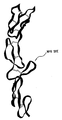
- Peptidomimetics were developed and tested from all three surface loops of the TNF receptor: loop (56-73) of domain 1; loop (76-83) of domain 2 and loop (107-114) of domain 3 ( Figure 1A ).
- the peptidomimetics are described in detail in Takasai, et al. 1997 Nature Biotechnology 15:1266-1270 .
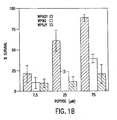
- the peptidomimetic protected cells against TNF ⁇ induced cell death when apoptosis was induced with 7 pg of TNF ⁇ suggesting that the peptide specifically bind to TNF ⁇ .
- the peptidomimetic (WP9QY) is one of the first peptides to show anti-TNF ⁇ activity ( Figure 1B ).
- the present method provides a novel strategy to modify the conformation of specific loops in an approach referred to as cavity induced allosteric modification (CIAM) between the target protein, TNF receptor, and the modifier, TNF.
- This strategy uses the known crystal structure of the TNF receptor.
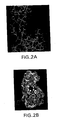
- the surface of the target protein was generated by rolling a probe radius of 1.4 ⁇ (equivalent of water molecule).
- the accessible surface was calculated using program MS ( Connolly, M.L. et al., 1993, J. Mol. Graph, 11:139-141 and Langridge, R. et al., 1981, Science, 211:661-666 ).
- the residues in the binding region are analyzed for site-points (atoms that are capable of forming hydrogen bonds, hydrophobic interactions) using the program GENSITES. which identifies possible locations based upon differences in surface accessibility of different sized spheres rolling over the molecular surface of the target protein.
- site points developed in the cavity possible molecular fragments were identified using the program LUDI ( Bohm, L.W. et al., J. Mol. Recogn., 6:131-137 ). Shape complementarity was used as initial screen for detecting fragments with different moieties.
- the molecular modeling approach assumes that the site is relatively rigid and that the intramolecular energy change upon ligand/inhibitor binding is small compared to the interaction energy between receptor/protein conformations. Therefore, the binding mode specifies which molecular point (expressible as Cartesian coordinates) on the inhibitor should be bound to which site point (also Cartesian coordinates) at the binding site.
- the fitting procedure is tantamount to identifying common surface features with subsequent docking of complementary surfaces.
- the three-dimensional structure chemical database contains about 250,000 small molecules.
- Therapeutically useful compounds can be identified in the chemical databases using the DOCK ( Good, A.C. et al., 1995, J. Comput. Aided Mol. Des., 9:1-12 and Goodsell, D.S. et al., 1996, J. Mol. Recogn., 9:1-5 ) algorithm.
- DOCK Good, A.C. et al., 1995, J. Comput. Aided Mol. Des., 9:1-12 and Goodsell, D.S. et al., 1996, J. Mol. Recogn., 9:1-5
- the cavity is explored with each small molecule from the database for maximal interaction such as hydrophobic, hydrogen bonds and complement electrostatic properties by conformational search. Based on the binding energy, the molecules are ranked and the top 200 compounds are selected.
- molecules similar to the one constructed from de novo ligand design can be identified in the databases using three-dimensionally constrained fragment search.
- the short listed molecules obtained both by database search (DOCK) and fragment search are used to create a small chemical database library using MDL's project library software.
- Quantitative Structure Activity Relation (QSAR) analysis in medicinal chemistry and pharmacology has proven useful in making predictions for molecules that are chemically similar to those of the original data set.
- Distance geometry directed QSAR allows for testing of a much wider class of compounds due to its independence from physico/chemical parameters.
- the molecules in the library are compared for a common motif and analysis similar to 3D-QSAR are carried out using ASP and TSAR (Oxford Molecular, Oxford, England) sequentially to find the suitable functional groups for maximal binding energy.
- ASP and TSAR OFxford Molecular, Oxford, England
- the murine fibroblast cell line, L929 is maintained in Dulbecco's modified Eagle's medium supplemented with 10% FCS, and the medium is replaced with serum free AIM-V medium (GIBCO BRL) right before seeding of the cells for an assay.
- L929 cells are seeded onto 96-well microtiter plates (2x10 4 cells/well), and incubated for 20 hr at 37°C under 5% CO 2 in air. After preincubation with actinomycin D (ACT-D) for 2 hr at a final concentration of 1 mg/ml, TNF ⁇ (7 pg) / inhibitor solution (100-80 ml), preincubated in PBS for 1 hr at 37°C, is added to the wells.
- actinomycin D ACT-D
- the cells are incubated with TNFa finally adjusted to 50 pg/ml for 7 hr at 37°C under 5% CO 2 , and stained with MTT (Sigma). Briefly, 10 ml of the 10 mg/ml solution of MTT is added to each well, and after 2 hr incubation at 37°C, the formazan formed is colored by overnight incubation at 37°C with 100 ml of extraction buffer (20% SDS in 50% DMF, pH 4.7). Finally the optical density of colored formazan is measured at 600 nm.
- TNF-receptor chimeric protein (100 ng/ml) diluted in PBS (100 ml) is immobilized onto MicroTest III flexible assay plate (Becton Dickinson, San Jose, CA) by an incubation at 4°C overnight. After blocking with PBS containing 1% bovine serum albumin (BSA) for 2 hr at room temperature and subsequent washing with PBS containing 0.1% Tween 20 (PBS-Tw), 125 I-labeled - TNF ⁇ (1ng)linhibitor solution (100 ml) preincubated in PBS for 1 hr at 37°C are added onto the TNF-receptor coated wells. After 2 hr incubation at 37°C, the plate is washed with PBS-Tw, and bound radioactivity is measured in Cobra gamma counter (Packard Instruments, Meriden, CT).
- Cobra gamma counter Packard Instruments, Meriden, CT.
- the pharmaceutical compositions disclosed herein comprise compounds having Formula I which is set forth in the section below entitled Formulae.
- R 1 and R 2 are, independently, selected from the group consisting of -H, -OCH 3 , -CH 2 CH 3 , - t -butyl, 3-carboxy-4-chlorophenylamino, -N-(CH 2 CH 2 OH) 2 , and -O(O)C-Ph.
- R 3 is selected from the group consisting of -H, ethyl, -OCH 3 , -Cl, Br, F, 3-carboxy-4-chlorophenylamino, -N-(CH 2 CH 2 OH) 2 , -t- butyl, and -OC(O)-Ph, and is not limited to attachment at any certain position on the phenyl ring to which it is attached.
- R 3 is attached at either the 1 or 4 position of the phenyl ring.
- R 4 is selected from the group consisting of -Br,-Cl, and -F.
- R 1 , R 2 , and R 3 are -OCH 3 , R 3 is attached at the 4 position, R 4 is - Cl; R 1 and R 2 are methyl, R 3 is ethyl, attached at the 4 position, R 4 is - Cl R 1 and R 2 are -OCH 3 , R 3 is -Cl, attached at the 2 position, R 4 is -Cl; R 1 and R 2 are -OCH 3 and R 3 is H, R 4 is -Cl; R 1 is H, R 2 and R 3 are 3-carboxy-4-chlorophenylamino, and R 3 is attached at the 4 position, R 4 is -Cl; R 1 and R 2 are -N(CH 2 CH 2 OH) 2 , R 3 is Cl, attached at the 4 position, R 4 is -Cl; R 1, R 2 , and R 3 are t-butyl, R 3 is attached at the 4 position, R 4 is -Cl; R 1 is -OCH 3 , R 3
- Some preferred compounds of Formula I have the structures I-A, I-B, I-C, I-D, I-E, I-F, I-G, I-H or I-I which are set forth below in the section entitled Formulae.
- the pharmaceutical compositions disclosed herein comprise compounds having Formula II which is set forth below in the section entitled Formulae.
- R 1 is selected from the group consisting of -diphenylchloro methyl, -di(4-cblorophenyl)chloro methyl, and 4-(diphenylchloromethyl)phenyl; and R 2 , R 3 , R 4 are independently selected from the group consisting of -Br, -Cl, and -F, and are preferably -Cl.
- Preferred compounds of Formula II have the structures II-A, II-B, II-C and II-D which are set forth below in the section entitled Formulae. These compounds are available from the following suppliers: Compound Catalog Number Supplier II-A S5,479-9 Aldrich, Milwaukee, WI II-B S5,755-0 Aldrich, Milwaukee, WI II-C S5,740-2 Aldrich, Milwaukee, WI II-D 55,751-8 Aldrich, Milwaukee, WI
- the pharmaceutical compositions disclosed herein comprise compounds having Formula III which is set forth in the section below entitled Formulae.
- R 1 is H or diethylamino
- R 2 is -O- or - N(C 6 H 6 )-
- R 3 is -Br, Cl, or F.
- Preferred compounds of Formula III have the structure III-A and III-B which are set forth below in the section entitled Formulae.
- compositions are prepared using compounds of Formulas I, II and III which are commercially available from chemical suppliers such as Sigma, Aldrich,ICN, Ryan Scientific, George Uhe (Paramus, NJ), and Biosynth (Naperville, IL).
- the pharmaceutical compositions are useful to treat individuals suffering from TNF-mediated diseases, disorders and conditions.
- TNF-mediated diseases, disorders and conditions include, for example, inflammatory diseases and autoimmune diseases such as rheumatoid arthritis (RA), multiple sclerosis (MS), Sjogren's syndrome, sarcoidosis, insulin dependent diabetes mellitus (IDDM), autoimmune thyroiditis, reactive arthritis, ankylosing spondylitis, scleroderma, polymyositis, dermatomyositis, psoriasis, vasculitis, Wegener's granulomatosis, Crohn's disease, ulcerative colitis.
- RA rheumatoid arthritis
- MS multiple sclerosis
- Sjogren's syndrome sarcoidosis
- IDM insulin dependent diabetes mellitus
- autoimmune thyroiditis reactive arthritis
- ankylosing spondylitis scleroderma
- polymyositis dermatomyositis
- psoriasis psoriasis
- vasculitis Wege
- Lupus SLE
- Grave's disease myasthenia gravis, autoimmune hemolytic anemia, autoimmune thrombocytopenia, asthma, cryoglobulinemia, primary biliary sclerosis and pernicious anemia.
- individuals suffering from such diseases, disorders and conditions may be treated by administering to them a therapeutically effective amount of a pharmaceutical composition that comprises a compound having Formula I, II and III.
- the method may include administration of compounds to mammals, preferably humans, in therapeutically effective amounts which are effective to inhibit TNF-mediated diseases.
- the dosage administered in any particular instance will depend upon factors such as the pharmacodynamic characteristics of the compound, its mode and route of administration; age, health, and weight of the recipient; nature and extent of symptoms; kind of concurrent treatment, frequency of treatment, and the effect desired.
- the daily dosage of a compound used in the method will be in the range of from about 1 ⁇ g to about 10 grams per day. In some preferred embodiments, the daily dosage compound will be in the range of from about 10 mg to about 1 gram per day. In some preferred embodiments, the daily dosage compound will be in the range of from about 100 mg to about 500 mg per day. It is contemplated that the daily dosage of a compound used in the method will be in the range of from about 1 ⁇ g to about 100 mg per kg of body weight, in some embodiments, from about 1 ⁇ g to about 40 mg per kg body weight; in some embodiments from about 10 ⁇ g to about 20 mg per kg per day, and in some embodiments 10 ⁇ g to about 1 mg per kg per day.
- compositions may be administered in a single dosage, divided dosages or in sustained release.
- the compound will be administered in multiple doses per day.
- the compound will be administered in 3-4 doses per day.
- the method of administering compounds include administration as a pharmaceutical composition orally in solid dosage forms, such as capsules, tablets, and powders, or in liquid dosage forms, such as elixirs, syrups, and suspensions.
- the compounds may also be administered parenterally in sterile liquid dosage forms or topically in a carrier.
- the compounds may be formulated into dosage forms according to standard practices in the field of pharmaceutical preparations. See Remington's Pharmaceutical Sciences, 18th Edition, A.R. Gennaro, Ed., Mack Publishing Company, East on, Pennsylvania.
- Compounds may be mixed with powdered carriers, such as lactose, sucrose, mannitol, starch, cellulose derivatives, magnesium stearate, and stearic acid for insertion into gelatin capsules, or for forming into tablets. Both tablets and capsules may be manufactured as sustained release products for continuous release of medication over a period of hours.
- powdered carriers such as lactose, sucrose, mannitol, starch, cellulose derivatives, magnesium stearate, and stearic acid
- Liquid dosage forms for oral administration may contain coloring and flavoring to increase patient acceptance, in addition to a pharmaceutically acceptable diluent such as water, buffer or saline solution.
- a pharmaceutically acceptable diluent such as water, buffer or saline solution.
- a compound may be mixed with a suitable carrier or diluent such as water, a oil, saline solution, aqueous dextrose (glucose), and related sugar solutions, and glycols such as propylene glycol or polyethylene glycols.
- Solutions for parenteral administration contain preferably a water soluble salt of the compound.
- Stabilizing agents, antioxidizing agents and preservatives may also be added.
- Suitable antioxidizing agents include sodium bisulfite, sodium sulfite, and ascorbic acid, citric acid and its salts, and sodium EDTA.
- Suitable preservatives include benzalkonium chloride, methyl- or propyl-paraben, and chlorbutanol.
- CIAM technology is used to identify compounds that inhibit interactions between CD4, and MHC/antigen/TCR complexes.
- the T cell activation associated with MHC/antigen/TCR complexes can be reduced and immune responses suppressed accordingly.
- the crystal structure of the CD4 complex shows distinct binding sites.
- Peptidomimetics were developed and tested from surface loops of CD4.
- a peptidomimetic engineered from a CD4 domain inhibited T cell activation associated with MHC/antigen/TCR complexes.
- compositions are prepared using the compound of Formula IV, V or VI which are set forth in the section below entitled Formulae.
- the pharmaceutical compositions are useful to treat individuals suffering from CD4-mediated diseases, disorders and conditions.
- CD4-mediated diseases, disorders and conditions include, for example, inflammatory diseases and autoimmune diseases such as rheumatoid arthritis (RA), multiple sclerosis (MS), Sjogren's syndrome, sarcoidosis, insulin dependent diabetes mellitus (IDDM), autoimmune thyroiditis, reactive arthritis, ankylosing spondylitis, scleroderma, polymyositis, dermatomyositis, psoriasis, vasculitis, Wegener's granulomatosis, Crohn's disease, ulcerative colitis, Lupus (SLE), Grave's disease, myasthenia gravis, autoimmune hemolytic anemia, autoimmune thrombocytopenia, asthma, cryoglobulinemia, primary biliary sclerosis and pernicious anemia
- the method may include administration of compounds to mammals, preferably humans, in therapeutically effective amounts which are effective to inhibit CD4-mediated diseases.
- the dosage administered in any particular instance will depend upon factors such as the pharmacodynamic characteristics of the compound, its mode and route of administration; age, health, and weight of the recipient; nature and extent of symptoms; kind of concurrent treatment, frequency of treatment, and the effect desired.
- the daily dosage of a compound used in the method will be in the range of from about 1 ⁇ g to about 10 grams per day. In some preferred embodiments, the daily dosage compound will be in the range of from about 10 mg to about 1 gram per day. In some preferred embodiments, the daily dosage compound will be in the range of from about 100 mg to about 500 mg per day. It is contemplated that the daily dosage of a compound used in the method will be in the range of from about 1 ⁇ g to about 100 mg per kg of body weight, in some embodiments, from about 1 ⁇ g to about 40 mg per kg body weight; in some embodiments from about 10 ⁇ g to about 20 mg per kg per day, and in some embodiments 10 ⁇ g to about 1 mg per kg per day.
- compositions may be administered in a single dosage, divided dosages or in sustained release.
- the compound will be administered in multiple doses per day.
- the compound will be administered in 3-4 doses per day.
- the method of administering compounds include administration as a pharmaceutical composition orally in solid dosage forms, such as capsules, tablets, and powders, or in liquid dosage forms, such as elixirs; syrups, and suspensions.
- the compounds may also be administered parenterally in sterile liquid dosage forms or topically in a carrier.
- the compounds may be formulated into dosage forms according to standard practices in the field of pharmaceutical preparations. See Remington's Pharmaceutical Sciences, 18 th Edition, A.R. Gennaro, Ed., Mack Publishing Company, Easton, Pennsylvania.
- Compounds may be mixed with powdered carriers, such as lactose, sucrose, mannitol, starch, cellulose derivatives, magnesium stearate, and stearic acid for insertion into gelatin capsules, or for forming into tablets. Both tablets and capsules may be manufactured as sustained release products for continuous release of medication over a period of hours.
- powdered carriers such as lactose, sucrose, mannitol, starch, cellulose derivatives, magnesium stearate, and stearic acid
- Liquid dosage forms for oral administration may contain coloring and flavoring to increase patient acceptance, in addition to a pharmaceutically acceptable diluent such as water, buffer or saline solution.
- a pharmaceutically acceptable diluent such as water, buffer or saline solution.
- a compound may be mixed with a suitable carrier or diluent such as water, a oil, saline solution, aqueous dextrose (glucose), and related sugar solutions, and glycols such as propylene glycol or polyethylene glycols.
- Solutions for parenteral administration contain preferably a water soluble salt of the compound.
- Stabilizing agents, antioxidizing agents and preservatives may also be added.
- Suitable antioxidizing agents include sodium bisulfite, sodium sulfite, and ascorbic acid, citric acid and its salts, and sodium EDTA.
- Suitable preservatives include benzalkonium chloride, methyl- or propyl-paraben, and chlorbutanol.
- CIAM technology is used to identify compounds that inhibit ⁇ -lactamase. Inhibition of the enzyme ⁇ -lactamase is useful to render penicillin-resistant strains of bacteria, penicillin-sensitive. A cavity with the criteria described above proximal from the active site of ⁇ -lactamase was identified by ⁇ -factors and thermodynamic analysis.
- compositions are prepared using one of the compounds selected from the group of Formula VII-XIX.
- the pharmaceutical compositions are useful to treat individuals suffering from bacterial infectious, particularly those which are penicillin resistant.
- individuals suffering from such infections may be treated by administering to them a therapeutically effective amount of a pharmaceutical composition that comprises a compound having Formula VII, VIII, IX, X, XI, XII, XIII, XIV, XV, XVI, XVII, XVIII or XIX in combination with penicillin-derived antibiotic.
- the method may include administration of compounds to mammals, preferably humans, in therapeutically effective amounts which are effective to inhibit ⁇ -lactamase in order to render penicillin-resistant strains of bacteria penicillin-sensitive.
- the dosage administered in any particular instance will depend upon factors such as the pharmacodynamic characteristics of the compound, its mode and route of administration; age, health, and weight of the recipient; nature and extent of symptoms; kind of concurrent treatment, frequency of treatment, and the effect desired.
- the daily dosage of the compound used in the method will be in the range of from about 1 ⁇ g to about 10 grams per day. In some preferred embodiments, the daily dosage compound will be in the range of from about 10 mg to about 1 gram per day. In some preferred embodiments, the daily dosage compound will be in the range of from about 100 mg to about 500 mg per day. It is contemplated that the daily dosage of a compound used in the method will be in the range of from about 1 ⁇ g to about 100 mg per kg of body weight, in some embodiments, from about 1 ⁇ g to about 40 mg per kg body weight; in some embodiments from about 10 ⁇ g to about 20 mg per kg per day, and in some embodiments 10 ⁇ g to about 1 mg per kg per day.
- compositions may be administered in a single dosage, divided dosages or in sustained release.
- the compound will be administered in multiple doses per day.
- the compound will be administered in 3-4 doses per day.
- the method of administering compounds include administration as a pharmaceutical composition orally in solid dosage forms, such as capsules, tablets, and powders, or in liquid dosage forms, such as elixirs, syrups, and suspensions.
- the compounds may also be administered parenterally in sterile liquid dosage forms or topically in a carrier.
- the compounds may be formulated into dosage forms according to standard practices in the field of pharmaceutical preparations. See Remington's Pharmaceutical Sciences, 18th Edition, A.R. Gennaro, Ed., Mack Publishing Company, Easton, Pennsylvania , which is incorporated herein by reference.
- Compounds may be mixed with powdered carriers, such as lactose, sucrose, mannitol, starch, cellulose derivatives, magnesium stearate, and stearic acid for insertion into gelatin capsules, or for forming into tablets. Both tablets and capsules may be manufactured as sustained release products for continuous release of medication over a period of hours.
- powdered carriers such as lactose, sucrose, mannitol, starch, cellulose derivatives, magnesium stearate, and stearic acid
- Liquid dosage forms for oral administration may contain coloring and flavoring to increase patient acceptance, in addition to a pharmaceutically acceptable diluent such as water, buffer or saline solution.
- a pharmaceutically acceptable diluent such as water, buffer or saline solution.
- a compound may be mixed with a suitable carrier or diluent such as water, a oil, saline solution, aqueous dextrose (glucose), and related sugar solutions, and glycols such as propylene glycol or polyethylene glycols.
- Solutions for parenteral administration contain preferably a water soluble salt of the compound.
- Stabilizing agents, antioxidizing agents and preservatives may also be added.
- Suitable antioxidizing agents include sodium bisulfite, sodium sulfite, and ascorbic acid, citric acid and its salts, and sodium EDTA.
- Suitable preservatives include benzalkonium chloride, methyl- or propyl-paraben, and chlorbutanol.
- compositions of the present disclosure used in the methods of the present disclosure comprise compounds having Formulae VII - XVI.
- compositions of the present disclosure comprise compounds having Formula VII.
- compositions of the present disclosure comprise compounds having Formula VIII.
- Compounds according to Formula VIII may have at position R 1 a group having Formula 8-1-1, 8-1-2, 8-1-3, 8-1-4, 8-1-5, 8-1-6, 8-1-7, 8-1-8, 8-1-9 and 8-1-10 which are set forth below in the section entitled Formulae.
- Compounds according to Formula VIII may have at position R 2 and R 2 are, independently, -H, -C 1 , -C 2 , -C 3 straight or branched, -C 4 straight or branched, -C 5 straight or branched, C 6 straight or branched, -C 7 straight or branched, and -C 8 straight or branched.
- R 2 and R 2 are preferably identical to each other.
- R 2 and R 2 are preferably-H or the -C 8 branched 4-tert-octyl.
- Some preferred compounds of Formula VIII include compounds wherein:
- Some preferred compounds of Formula VIII include structure VIII-A, VIII-B, VIII-C, VIII-D, VIII-E, VIII-F, VIII-G, VIII-H, VIII-I, VIII-J or VIII-K which are set forth below in the section entitled Formulae.
- compositions of the present disclosure comprise compounds having Formula IX.
- Compounds according to Formula IX may have at position R 1 , R 2 , R 3 and R 4 , independently, -H, -OC 6 -N(CH 3 ) 2 , -OCH 3 , -CH 3 , -OH or -halogen, and if halogen, preferably -Cl.
- R 1 is -OCH 3 , -OH or -halogen, and if halogen, preferably -Cl.
- R 2 is -H, -N(CH 3 ) 2 , - OCH 3 , -CH 3 , or -halogen, and if halogen, preferably -Cl.
- R 3 is -OCH 3 , -CH 3 , -OH or -halogen, and if halogen, preferably -Cl.
- Some preferred compounds of Formula IX include compounds wherein:
- Some preferred compounds of Formula IX include structure IX-A IX-B, IX-C, IX-D, IX-E, IX-F, IX-G, IX-H, IX-I, IX-J, IX-K, IX-L, IX-M or IX-N which are set forth below in the section entitled Formulae.
- Compound Source Catalog Number IX-A SIGMA-ALDRICH S50,872-1 IX-B.
- SIGMA-ALDRICH S69,613-7 IX-D.
- compositions of the present disclosure comprise compounds having Formula X.
- Compounds according to Formula X may have at position R 1 a group having Formula 10-1-1, 10-1-2 or 10-1-3 which are set forth below in the section entitled Formulae.
- Compounds according to Formula X may have at position R 2 , R 3 and R 4 are, independently, -H, -NO 2 , -NH 2 or -CH 3 .
- R 2 is preferably -H or -NH 2 .
- R 3 is preferably -NO 2 or -NH 2
- R 4 is preferably -H or -CH 3 .
- Some preferred compounds of Formula X include compounds wherein:
- Some preferred compounds of Formula X include structure X-A, X-B or X-C which are set forth below in the section entitled Formulae.
- compositions of the present disclosure comprise compounds having Formula XI.
- Compounds according to Formula XI may have at position R 1 and R 2 , independently, a group having Formula 11 - 1/2-1, 11-1/2-2, 11-1/2-3, 11-1/2-4, which are set forth below in the section entitled Formulae, or -H, -NO 2 or -OH.
- Compounds according to Formula XI may have at position R 3 either -H, - NH 2 , -OH, or halogen, and when R 3 is halogen, it is preferably -Cl or -Br.
- Compounds according to Formula XI may have at position R 3 either -H, - NH 2 , -OH, or halogen, and when R 3 is halogen, it is preferably -Cl or -Br.
- Compounds according to Formula XI may have at position R 4 either -H or - CH(CH 3 ) 3 .
- Some preferred compounds of Formula XI include compounds wherein:
- Some preferred compounds of Formula XI include structure XI-A, XI-B, XI-C, XI-D or XI-E which are set forth below in the section entitled Formulae.
- Compound Source Catalog Number XI-A SIGMA-ALDRICH S18,982-0 XI-B.
- compositions of the present disclosure comprise compounds having Formula XII.
- Compounds according to Formula XII may have at position R 1 either N-pyridinium, 4-methyl-N-pyridinium, 4-dimethylamino-N-pyridinium, 3-methyl-N-pyridinium, N-pyridinium, 2,6 dimethyl-N-pyridinium, 3,5 dimethyl-N-pyridinium, 3-ethyl-N-pyridinium,12-1-1, 12-1-2 which are set forth below in the section entitled Formulae, or 4-ethyl-N-pyridinium, 4-benzyl-N-pyridinium, N-quinolinyl or CH 3 .
- Some preferred compounds of Formula XII include compounds wherein:
- Some preferred compounds of Formula XII include structure XII-A, XII-B, XII-C, XII-D, XII-E, XII-F, XII-G, XII-H, XII-I, XIII-J, XII-K, XII-L, XII-M or XII-N, which are set forth below in the section entitled Formulae.
- Compound Source Catalog Number XII-A SIGMA S 14,318-9 XII-B.
- SIGMA S14,440-I XII-D Compound Source Catalog Number XII-A.
- SIGMA S14,440-I XII-D Compound Source Catalog Number XII-A
- SIGMA S96,664-9 XII-E.
- SIGMA S96,668-1 XII-F.
- SIGMA S96,670-3 XII.G.
- SIGMA S14,386-3 XII-H: SIGMA S96,674-6 XII-I.
- SIGMA S96,682-7 XII-J.
- SIGMA S96,679-7 XII-L.
- SIGMA S96,685-1 XII-M.
- SIGMA S14,675-7 XII-N.
- SIGMA-ALDRICH S67,954-2 SIGMA-ALDRICH S67,954-2
- compositions of the present disclosure comprise compounds having Formula XIII which is set forth in the section below entitled Formulae.
- Compounds having Formula XIII are available from SIGMA-ALDRICH, Catalog number S42,591-5.
- compositions of the present disclosure comprise compounds having Formula XIV.
- Compounds according to Formula XIV may have at position R 1 either - OCH 3 , -NO 2 or -halogen, and if -halogen, preferably -Cl.
- Compounds according to Formula XIV may have at position R 2 either -H, - NO 2 or -halogen, and if -halogen, preferably -Cl.
- Some preferred compounds of Formula XIV include compounds wherein:
- Some preferred compounds of Formula XIV include structure XIV-A, XIV-B, XIV-C or XIV-D which are set forth in the section below entitled Formulae.
- compositions of the present disclosure comprise compounds having Formula XV.
- Compounds according to Formula XV may have at position R, either -H, - NO 2 , -FSO 2 , -CH 3 , -OCH 3 , -SO 2 CH 3 , 15-1-1, 15-1-2 or 15-1-3 which are set forth in the section below entitled Formulae.
- Compounds according to Formula XV may have at position R 2 either -H, - OH, or -NO 2 .
- Compounds according to Formula XV may have at position R 3 either -H or -OH.
- Compounds according to Formula XV may have at position R 4 either -H, 15-4-1, 15-4-2, 15-4-3, 15-4-4, 15-4-5, 15-4-6, 15-4-7, 15-4-8, 15-4-9, 15-4-10, 15-4-11, 15-4-12 which are set forth in the section below entitled Formulae or halogen, and when R 4 is halogen, it is preferably -Cl.
- Some preferred compounds of Formula XV include compounds wherein:
- Some preferred compounds of Formula XV include structure XV-A, XV-B, XV-C, XV-D, XV-F, XV-F, XV-G, XV-H,XV-I, XV-J, XV-K, XV-L, XV-M, XV-N, XV-O, XV-P, XV-Q or XV-R which are set forth in the section below entitled Formulae.
- SIGMA S50,245-6 XV-F.
- SIGMA S65,507-4 XV-G.
- SIGMA S78,072-3 XV-H.
- SIGMA S79,426-0 XV-I.
- SIGMA S79,453-8 XV-J.
- SIGMA S84,486-1 XV-L. RYAN NRB01429 XV-M.
- SIGMA S92,407-5 XV-N.
- SIGMA S72,781-4 XV-E.
- SIGMA S65,507-4 XV-G.
- SIGMA S78,072-3 XV-H.
- SIGMA S79,426-0 XV-I.
- SIGMA S79,453-8 XV-J.
- SIGMA S80,012-0 XV-K.
- compositions of the present disclosure comprise compounds having Formula XVI.
- Compounds according to Formula XVI may have at position R 1 either -H, - SO 3 or halogen, and when R 4 is halogen, it is preferably -Cl.
- Compounds according to Formula XVI may have at position R 2 either -H or -CH 3 .
- Compounds according to Formula XVI may have at position R 3 either -H, - OCH 3 , NSO 2 -NO 2 , 16-3-1 which is set forth below in the section entitled Formulae, or halogen, and when R 3 is halogen, it is preferably -Fl.
- Compounds according to Formula XVI may have at position R 4 either -H, - OCH 3 , -SO 3 or halogen, and when R 4 is halogen, it is preferably -Cl.
- Compounds according to Formula XVI may have at position R 5 either -H, - NI 2 or halogen, and when R 5 is halogen, it is preferably -Cl.
- Compounds according to Formula XVI may have at position R 6 either -H, - C(CH 3 ) 2 or phenyl.
- Some preferred compounds of Formula XVI include compounds wherein:
- Some preferred compounds of Formula XVI include structure XVI-A, XVI-B, XVI-C, XVI-D, XVI-E, XVI-F,XVI-G, XVI-H, XVI-I, XVI-J, XVI-K, XVI-L, XVI-M or XVI-N which are set forth below in the section entitled Formulae.
- Compound Source Catalog Number XVI A SIGMA S53,065-4 XVI-B. SYNTEC, GERMANY ST 58/4 XVI-C.
- SIGMA S21,210-5 XVI-F are set forth below in the section entitled Formulae.
- compositions of the present disclosure comprise compounds having Formula XVII (SIGMA S86,927-9).
- compositions of the present disclosure comprise compounds having Formula XVIII (RYAN SCIENTIFIC B191B)
- compositions of the present disclosure comprise compounds having Formula XIX (SIGMA S 12,962-3).
Landscapes
- Health & Medical Sciences (AREA)
- Life Sciences & Earth Sciences (AREA)
- Chemical & Material Sciences (AREA)
- Engineering & Computer Science (AREA)
- General Health & Medical Sciences (AREA)
- Medicinal Chemistry (AREA)
- Veterinary Medicine (AREA)
- Public Health (AREA)
- Animal Behavior & Ethology (AREA)
- Pharmacology & Pharmacy (AREA)
- Immunology (AREA)
- Organic Chemistry (AREA)
- Nuclear Medicine, Radiotherapy & Molecular Imaging (AREA)
- General Chemical & Material Sciences (AREA)
- Chemical Kinetics & Catalysis (AREA)
- Bioinformatics & Cheminformatics (AREA)
- Hematology (AREA)
- Biomedical Technology (AREA)
- Urology & Nephrology (AREA)
- Molecular Biology (AREA)
- Epidemiology (AREA)
- Analytical Chemistry (AREA)
- Biotechnology (AREA)
- Diabetes (AREA)
- Physics & Mathematics (AREA)
- Food Science & Technology (AREA)
- Microbiology (AREA)
- Cell Biology (AREA)
- Pathology (AREA)
- General Physics & Mathematics (AREA)
- Biochemistry (AREA)
- Dermatology (AREA)
- Proteomics, Peptides & Aminoacids (AREA)
- Rheumatology (AREA)
- Pulmonology (AREA)
- Birds (AREA)
- Neurosurgery (AREA)
- Physical Education & Sports Medicine (AREA)
- Obesity (AREA)
- Emergency Medicine (AREA)
Claims (5)
- Méthode d'identification d'un composé qui module les interactions intermoléculaires entre une β-lactamase et un substrat comprenant les étapes de:a) identifier une cavité sur ladite β-lactamase, qui est à 1,5-2,0 nm (15-20 Angstroms) d'un site catalytique de ladite β-lactamase, ledit site catalytique se situe à un emplacement distinct de la cavité;b) calculer les dimensions de ladite cavité et mapper les propriétés chimiques et/ou électrostatiques de ladite cavité;c) utiliser les dimensions calculées, propriétés chimiques et/ou électrostatiques obtenues à l'étape b) pour identifier des composés qui contiennent un groupe fonctionnel qui peut être reçu par ladite cavité;d) tester lesdits composés dans un essai in vitro pour détecter un composé qui module les interactions intermoléculaires entre ladite β-lactamase et ledit substrat audit site catalytique.
- Méthode selon la revendication 1, dans laquelle l'étape c) comprend la détection d'une complémentarité de forme entre le groupe fonctionnel du composé et la cavité.
- Méthode selon la revendication 1 ou la revendication 2, dans laquelle l'étape (d) comprend la détection d'un composé qui inhibe les interactions intermoléculaires entre ladite β-lactamase et ledit substrat.
- Méthode selon l'une quelconque des revendications 1 à 3, dans laquelle l'identification de la cavité allostérique dans la structure de la β-lactamase à l'étape (a) comprend l'utilisation de la résonance magnétique nucléaire, de l'analyse de la structure cristalline, de valeurs calorimétriques d'études thermodynamiques ou le modelage par ordinateur.
- Méthode selon la revendication 4, dans laquelle la cavité allostérique est identifiée en utilisant la résonance magnétique nucléaire ou l'analyse de la structure cristalline, et comprend en outre l'identification de β-facteurs thermiques.
Applications Claiming Priority (3)
| Application Number | Priority Date | Filing Date | Title |
|---|---|---|---|
| US9143198P | 1998-07-01 | 1998-07-01 | |
| US13343599P | 1999-05-11 | 1999-05-11 | |
| EP99930864A EP1091974B1 (fr) | 1998-07-01 | 1999-07-01 | Modification allosterique d'interactions intermoleculaires induite par une cavite et methodes permettant d'identifier les composes effectuant ces interactions |
Related Parent Applications (1)
| Application Number | Title | Priority Date | Filing Date |
|---|---|---|---|
| EP99930864.6 Division | 1999-07-01 |
Publications (2)
| Publication Number | Publication Date |
|---|---|
| EP2196930A1 EP2196930A1 (fr) | 2010-06-16 |
| EP2196930B1 true EP2196930B1 (fr) | 2011-03-23 |
Family
ID=26783957
Family Applications (2)
| Application Number | Title | Priority Date | Filing Date |
|---|---|---|---|
| EP10075092A Expired - Lifetime EP2196930B1 (fr) | 1998-07-01 | 1999-07-01 | Modification allostérique d'interactions intermoléculaires induite par une cavité et méthodes permettant d'identifier les composés effectuant ces interaction |
| EP99930864A Expired - Lifetime EP1091974B1 (fr) | 1998-07-01 | 1999-07-01 | Modification allosterique d'interactions intermoleculaires induite par une cavite et methodes permettant d'identifier les composes effectuant ces interactions |
Family Applications After (1)
| Application Number | Title | Priority Date | Filing Date |
|---|---|---|---|
| EP99930864A Expired - Lifetime EP1091974B1 (fr) | 1998-07-01 | 1999-07-01 | Modification allosterique d'interactions intermoleculaires induite par une cavite et methodes permettant d'identifier les composes effectuant ces interactions |
Country Status (8)
| Country | Link |
|---|---|
| US (3) | US7653495B1 (fr) |
| EP (2) | EP2196930B1 (fr) |
| JP (1) | JP4401025B2 (fr) |
| AT (2) | ATE503231T1 (fr) |
| AU (1) | AU762749B2 (fr) |
| CA (1) | CA2336361C (fr) |
| DE (2) | DE69943308D1 (fr) |
| WO (1) | WO2000001349A2 (fr) |
Families Citing this family (19)
| Publication number | Priority date | Publication date | Assignee | Title |
|---|---|---|---|---|
| EP2196930B1 (fr) * | 1998-07-01 | 2011-03-23 | The Trustees of The University of Pennsylvania | Modification allostérique d'interactions intermoléculaires induite par une cavité et méthodes permettant d'identifier les composés effectuant ces interaction |
| EP1207873B1 (fr) * | 1999-07-28 | 2009-11-18 | The Trustees Of The University Of Pennsylvania | Procedes d'inhibition de l'activite des osteoclastes |
| US6673771B1 (en) | 1999-07-28 | 2004-01-06 | The Trustees Of The University Of Pennsylvania | Methods of inhibiting osteoclast activity |
| WO2001051456A2 (fr) * | 2000-01-13 | 2001-07-19 | Tularik Inc. | Agents antibacteriens |
| EP1847263A3 (fr) * | 2000-12-18 | 2009-08-26 | Institute of Medicinal Molecular Design, Inc. | Inhibiteurs de production et de libération de cytokines inflammatoires |
| WO2002098420A1 (fr) * | 2001-06-01 | 2002-12-12 | Cytovia, Inc. | 4-substitute-1-(arylmethylidene)thiosemicarbazide, 4-substitue-1-(arylcarbonyl)thiosemicarbazide et analogues en tant qu'activateurs de capsases et declencheurs d'apoptose, et leur utilisation |
| WO2003028712A2 (fr) * | 2001-09-28 | 2003-04-10 | Universite Libre De Bruxelles | Agonistes de recepteur purinergique et pyrimidinergique pour le traitement de maladies immunitaires mediees par le lymphocyte t cd4+ active |
| EP1574988B1 (fr) * | 2004-03-08 | 2014-06-18 | Siemens Product Lifecycle Management Software Inc. | Détermination et utilisation de données de caractéristiques géométriques |
| CA2561639A1 (fr) * | 2004-03-29 | 2005-10-06 | Neurosearch A/S | Nouveaux derives d'uree et leur utilisation medicale |
| EP2298295B1 (fr) | 2005-01-31 | 2013-08-28 | Cephalon, Inc. | Inhibiteurs du facteur de nécrose tumorale |
| US7671058B2 (en) | 2006-06-21 | 2010-03-02 | Institute Of Medicinal Molecular Design, Inc. | N-(3,4-disubstituted phenyl) salicylamide derivatives |
| WO2010083505A1 (fr) | 2009-01-19 | 2010-07-22 | The Trustees Of The University Of Pennsylvania | Procédé de traitement d'un cancer à l'aide d'un inhibiteur de survivine |
| US9969751B2 (en) * | 2009-06-10 | 2018-05-15 | Techfields Pharma Co., Ltd. | High penetration prodrug compositions of antimicrobials and antimicrobial-related compounds |
| CN101735113B (zh) * | 2009-12-14 | 2014-03-19 | 南京大学 | 一类尿素衍生物及其制法与用途 |
| EP3134411B1 (fr) | 2014-04-25 | 2021-06-30 | Boehringer Ingelheim International GmbH | Dérivés de la purine en tant qu'inhibiteurs pour le traitement du cancer |
| US9957393B2 (en) * | 2015-03-30 | 2018-05-01 | Enzo Biochem, Inc. | Monoazo dyes with cyclic amine as fluorescence quenchers |
| CN109776354B (zh) * | 2019-01-04 | 2021-11-19 | 上海应用技术大学 | 一种二羟基苯甲酰腙类神经氨酸酶抑制剂及其制备和应用 |
| CN109651189B (zh) * | 2019-01-31 | 2021-11-19 | 上海应用技术大学 | 一种苯甲酰腙类神经氨酸酶抑制剂及其制备方法和用途 |
| US11993775B2 (en) | 2020-07-27 | 2024-05-28 | National Cheng Kung University | Ubiquitin-specific peptidase 24 inhibitor, medicinal composition and method of delaying or reversing multidrug resistance in cancers using the same |
Family Cites Families (7)
| Publication number | Priority date | Publication date | Assignee | Title |
|---|---|---|---|---|
| US5597719A (en) * | 1994-07-14 | 1997-01-28 | Onyx Pharmaceuticals, Inc. | Interaction of RAF-1 and 14-3-3 proteins |
| WO1997034589A1 (fr) | 1996-03-20 | 1997-09-25 | President And Fellows Of Harvard College | Composes de triaryle methane pour la drepanocytose |
| US5571825A (en) | 1995-03-31 | 1996-11-05 | Warner-Lambert Company | Method of selectively inhibiting prostaglandin G/H synthase-2 |
| EP0818744A3 (fr) * | 1996-07-08 | 1998-07-08 | Proteus Molecular Design Limited | Procédé de sélection des compositions médicamenteuses potentielles |
| CA2289705A1 (fr) * | 1997-05-09 | 1998-11-12 | Smithkline Beecham Corporation | Beta-lactamines utilisees comme agents d'antiproliferation |
| EP2196930B1 (fr) | 1998-07-01 | 2011-03-23 | The Trustees of The University of Pennsylvania | Modification allostérique d'interactions intermoléculaires induite par une cavité et méthodes permettant d'identifier les composés effectuant ces interaction |
| DE102005052912A1 (de) * | 2005-11-03 | 2007-05-10 | Henkel Kgaa | Mittel zum Färben keratinhaltiger Fasern |
-
1999
- 1999-07-01 EP EP10075092A patent/EP2196930B1/fr not_active Expired - Lifetime
- 1999-07-01 EP EP99930864A patent/EP1091974B1/fr not_active Expired - Lifetime
- 1999-07-01 AU AU47308/99A patent/AU762749B2/en not_active Expired
- 1999-07-01 US US09/720,647 patent/US7653495B1/en not_active Expired - Fee Related
- 1999-07-01 JP JP2000557796A patent/JP4401025B2/ja not_active Expired - Fee Related
- 1999-07-01 CA CA2336361A patent/CA2336361C/fr not_active Expired - Lifetime
- 1999-07-01 DE DE69943308T patent/DE69943308D1/de not_active Expired - Lifetime
- 1999-07-01 DE DE69942454T patent/DE69942454D1/de not_active Expired - Lifetime
- 1999-07-01 AT AT10075092T patent/ATE503231T1/de not_active IP Right Cessation
- 1999-07-01 AT AT99930864T patent/ATE470195T1/de not_active IP Right Cessation
- 1999-07-01 WO PCT/US1999/015062 patent/WO2000001349A2/fr not_active Ceased
-
2009
- 2009-12-07 US US12/632,221 patent/US8019557B2/en not_active Expired - Fee Related
-
2011
- 2011-07-29 US US13/194,832 patent/US8785419B2/en not_active Expired - Fee Related
Also Published As
| Publication number | Publication date |
|---|---|
| JP4401025B2 (ja) | 2010-01-20 |
| AU762749B2 (en) | 2003-07-03 |
| EP1091974A4 (fr) | 2005-06-15 |
| EP2196930A1 (fr) | 2010-06-16 |
| US8785419B2 (en) | 2014-07-22 |
| US20110312920A1 (en) | 2011-12-22 |
| US8019557B2 (en) | 2011-09-13 |
| ATE503231T1 (de) | 2011-04-15 |
| US7653495B1 (en) | 2010-01-26 |
| US20100151507A1 (en) | 2010-06-17 |
| DE69942454D1 (de) | 2010-07-15 |
| EP1091974A2 (fr) | 2001-04-18 |
| JP2002519680A (ja) | 2002-07-02 |
| WO2000001349A2 (fr) | 2000-01-13 |
| ATE470195T1 (de) | 2010-06-15 |
| EP1091974B1 (fr) | 2010-06-02 |
| WO2000001349A3 (fr) | 2000-11-09 |
| AU4730899A (en) | 2000-01-24 |
| DE69943308D1 (de) | 2011-05-05 |
| CA2336361A1 (fr) | 2000-01-13 |
| CA2336361C (fr) | 2011-09-06 |
Similar Documents
| Publication | Publication Date | Title |
|---|---|---|
| US8785419B2 (en) | Cavity induced allosteric modification of intermolecular interactions and methods of identifying compounds that effect the same | |
| Piwnica-Worms et al. | Characterization of multidrug resistance P-glycoprotein transport function with an organotechnetium cation | |
| Tanaka et al. | Interaction of local anesthetics with calmodulin | |
| Saitoh et al. | Selective inhibition of catalytic activity of smooth muscle myosin light chain kinase. | |
| Zamora et al. | Physical-chemical properties shared by compounds that modulate multidrug resistance in human leukemic cells. | |
| TW498076B (en) | Modified amino acids and pharmaceutical compositions containing these compounds | |
| JP2002510963A (ja) | スキンケア用酵素修飾体 | |
| Tassaneeyakul et al. | Co-regulation of phenytoin and tolbutamide metabolism in humans | |
| CA2350597A1 (fr) | Procedes et compositions pour retablir la stabilite de conformation d'une proteine de la famille p53 | |
| EP1012178A1 (fr) | Inhibiteurs d'isomerases specifiquement phosphoserine et phosphothreonine-proline | |
| AU2007297573A1 (en) | Metallo-hydrolase inhibitors using metal binding moieties in combination with targeting moieties | |
| AU2003204310B2 (en) | Cavity induced allosteric modification of intermolecular interactions and methods of identifying compounds that effect the same | |
| Baker et al. | Effects of ligands on gold inhibition of selenium glutathione peroxidase | |
| Choudhuri et al. | Reversal of resistance against doxorubicin by a newly developed compound, oxalyl bis (N-phenyl) hydroxamic acid in vitro | |
| Prozialeck | Structure-activity relationships of calmodulin antagonists | |
| Maki et al. | Biochemical and pharmacological properties of an allosteric modulator site of the human P-glycoprotein (ABCB1) | |
| Jung et al. | Dissociation of TPA-induced down-regulation of T cell antigens from protein kinase C activation | |
| US10420755B2 (en) | Use of ciclopirox for the treatment of congenital erythropoietic porphyria | |
| Rohn et al. | Inhibition of GTP binding to Rac2 by peroxynitrite: Potential role for tyrosine modification | |
| Santos Barbosa et al. | Fluorescent Marinoquinoline Derivative as Inhibitors of Plasmodium falciparum: SAR Analysis, Mode of Action and In Vivo Studies | |
| Alım et al. | Rating of in vitro cytotoxicity activities and anti-xanthine oxidase activities of some non-proteoneogenic amino acid derivatives by molecular docking and molecular dynamics studies | |
| US20020127544A1 (en) | Modulators of US 28 | |
| Coy et al. | Antiproliferative effects of amphiphilic molecules | |
| Banerjee | Investigation of Structural Differences between the Oncogenic Mutants of KRas 4B | |
| JPH11171773A (ja) | ジヒドロ葉酸還元酵素の阻害剤 |
Legal Events
| Date | Code | Title | Description |
|---|---|---|---|
| PUAI | Public reference made under article 153(3) epc to a published international application that has entered the european phase |
Free format text: ORIGINAL CODE: 0009012 |
|
| AC | Divisional application: reference to earlier application |
Ref document number: 1091974 Country of ref document: EP Kind code of ref document: P |
|
| AK | Designated contracting states |
Kind code of ref document: A1 Designated state(s): AT BE CH CY DE DK ES FI FR GB GR IE IT LI LU MC NL PT SE |
|
| 17P | Request for examination filed |
Effective date: 20100602 |
|
| GRAP | Despatch of communication of intention to grant a patent |
Free format text: ORIGINAL CODE: EPIDOSNIGR1 |
|
| RIC1 | Information provided on ipc code assigned before grant |
Ipc: A61P 37/00 20060101ALI20100902BHEP Ipc: G06F 19/00 20060101AFI20100902BHEP Ipc: A61P 29/00 20060101ALI20100902BHEP Ipc: A61P 31/04 20060101ALI20100902BHEP Ipc: A61K 31/00 20060101ALI20100902BHEP Ipc: G01N 33/68 20060101ALI20100902BHEP Ipc: G01N 33/573 20060101ALI20100902BHEP |
|
| GRAS | Grant fee paid |
Free format text: ORIGINAL CODE: EPIDOSNIGR3 |
|
| GRAA | (expected) grant |
Free format text: ORIGINAL CODE: 0009210 |
|
| AC | Divisional application: reference to earlier application |
Ref document number: 1091974 Country of ref document: EP Kind code of ref document: P |
|
| AK | Designated contracting states |
Kind code of ref document: B1 Designated state(s): AT BE CH CY DE DK ES FI FR GB GR IE IT LI LU MC NL PT SE |
|
| REG | Reference to a national code |
Ref country code: GB Ref legal event code: FG4D |
|
| REG | Reference to a national code |
Ref country code: CH Ref legal event code: EP |
|
| REG | Reference to a national code |
Ref country code: IE Ref legal event code: FG4D |
|
| REF | Corresponds to: |
Ref document number: 69943308 Country of ref document: DE Date of ref document: 20110505 Kind code of ref document: P |
|
| REG | Reference to a national code |
Ref country code: DE Ref legal event code: R096 Ref document number: 69943308 Country of ref document: DE Effective date: 20110505 |
|
| REG | Reference to a national code |
Ref country code: NL Ref legal event code: VDEP Effective date: 20110323 |
|
| PG25 | Lapsed in a contracting state [announced via postgrant information from national office to epo] |
Ref country code: GR Free format text: LAPSE BECAUSE OF FAILURE TO SUBMIT A TRANSLATION OF THE DESCRIPTION OR TO PAY THE FEE WITHIN THE PRESCRIBED TIME-LIMIT Effective date: 20110624 Ref country code: SE Free format text: LAPSE BECAUSE OF FAILURE TO SUBMIT A TRANSLATION OF THE DESCRIPTION OR TO PAY THE FEE WITHIN THE PRESCRIBED TIME-LIMIT Effective date: 20110323 |
|
| PG25 | Lapsed in a contracting state [announced via postgrant information from national office to epo] |
Ref country code: CY Free format text: LAPSE BECAUSE OF FAILURE TO SUBMIT A TRANSLATION OF THE DESCRIPTION OR TO PAY THE FEE WITHIN THE PRESCRIBED TIME-LIMIT Effective date: 20110323 Ref country code: FI Free format text: LAPSE BECAUSE OF FAILURE TO SUBMIT A TRANSLATION OF THE DESCRIPTION OR TO PAY THE FEE WITHIN THE PRESCRIBED TIME-LIMIT Effective date: 20110323 Ref country code: AT Free format text: LAPSE BECAUSE OF FAILURE TO SUBMIT A TRANSLATION OF THE DESCRIPTION OR TO PAY THE FEE WITHIN THE PRESCRIBED TIME-LIMIT Effective date: 20110323 |
|
| PG25 | Lapsed in a contracting state [announced via postgrant information from national office to epo] |
Ref country code: BE Free format text: LAPSE BECAUSE OF FAILURE TO SUBMIT A TRANSLATION OF THE DESCRIPTION OR TO PAY THE FEE WITHIN THE PRESCRIBED TIME-LIMIT Effective date: 20110323 |
|
| PG25 | Lapsed in a contracting state [announced via postgrant information from national office to epo] |
Ref country code: PT Free format text: LAPSE BECAUSE OF FAILURE TO SUBMIT A TRANSLATION OF THE DESCRIPTION OR TO PAY THE FEE WITHIN THE PRESCRIBED TIME-LIMIT Effective date: 20110725 |
|
| PG25 | Lapsed in a contracting state [announced via postgrant information from national office to epo] |
Ref country code: ES Free format text: LAPSE BECAUSE OF FAILURE TO SUBMIT A TRANSLATION OF THE DESCRIPTION OR TO PAY THE FEE WITHIN THE PRESCRIBED TIME-LIMIT Effective date: 20110704 |
|
| PG25 | Lapsed in a contracting state [announced via postgrant information from national office to epo] |
Ref country code: NL Free format text: LAPSE BECAUSE OF FAILURE TO SUBMIT A TRANSLATION OF THE DESCRIPTION OR TO PAY THE FEE WITHIN THE PRESCRIBED TIME-LIMIT Effective date: 20110323 |
|
| PLBE | No opposition filed within time limit |
Free format text: ORIGINAL CODE: 0009261 |
|
| STAA | Information on the status of an ep patent application or granted ep patent |
Free format text: STATUS: NO OPPOSITION FILED WITHIN TIME LIMIT |
|
| 26N | No opposition filed |
Effective date: 20111227 |
|
| PG25 | Lapsed in a contracting state [announced via postgrant information from national office to epo] |
Ref country code: MC Free format text: LAPSE BECAUSE OF NON-PAYMENT OF DUE FEES Effective date: 20110731 |
|
| REG | Reference to a national code |
Ref country code: CH Ref legal event code: PL |
|
| GBPC | Gb: european patent ceased through non-payment of renewal fee |
Effective date: 20110701 |
|
| REG | Reference to a national code |
Ref country code: DE Ref legal event code: R097 Ref document number: 69943308 Country of ref document: DE Effective date: 20111227 |
|
| REG | Reference to a national code |
Ref country code: FR Ref legal event code: ST Effective date: 20120330 |
|
| REG | Reference to a national code |
Ref country code: IE Ref legal event code: MM4A |
|
| PG25 | Lapsed in a contracting state [announced via postgrant information from national office to epo] |
Ref country code: FR Free format text: LAPSE BECAUSE OF NON-PAYMENT OF DUE FEES Effective date: 20110801 Ref country code: DE Free format text: LAPSE BECAUSE OF NON-PAYMENT OF DUE FEES Effective date: 20120201 Ref country code: LI Free format text: LAPSE BECAUSE OF NON-PAYMENT OF DUE FEES Effective date: 20110731 Ref country code: CH Free format text: LAPSE BECAUSE OF NON-PAYMENT OF DUE FEES Effective date: 20110731 |
|
| REG | Reference to a national code |
Ref country code: DE Ref legal event code: R119 Ref document number: 69943308 Country of ref document: DE Effective date: 20120201 |
|
| PG25 | Lapsed in a contracting state [announced via postgrant information from national office to epo] |
Ref country code: IT Free format text: LAPSE BECAUSE OF FAILURE TO SUBMIT A TRANSLATION OF THE DESCRIPTION OR TO PAY THE FEE WITHIN THE PRESCRIBED TIME-LIMIT Effective date: 20110323 |
|
| REG | Reference to a national code |
Ref country code: DE Ref legal event code: R073 Ref document number: 69943308 Country of ref document: DE |
|
| REG | Reference to a national code |
Ref country code: DE Ref legal event code: R073 Ref document number: 69943308 Country of ref document: DE |
|
| REG | Reference to a national code |
Ref country code: GB Ref legal event code: S28 Free format text: APPLICATION FILED |
|
| PG25 | Lapsed in a contracting state [announced via postgrant information from national office to epo] |
Ref country code: GB Free format text: LAPSE BECAUSE OF NON-PAYMENT OF DUE FEES Effective date: 20110701 |
|
| REG | Reference to a national code |
Ref country code: FR Ref legal event code: RN Effective date: 20120618 |
|
| PG25 | Lapsed in a contracting state [announced via postgrant information from national office to epo] |
Ref country code: IE Free format text: LAPSE BECAUSE OF NON-PAYMENT OF DUE FEES Effective date: 20110701 |
|
| REG | Reference to a national code |
Ref country code: FR Effective date: 20120702 Ref legal event code: FC |
|
| REG | Reference to a national code |
Ref country code: DE Ref legal event code: R074 Ref document number: 69943308 Country of ref document: DE Effective date: 20120910 Ref country code: DE Ref legal event code: R074 Ref document number: 69943308 Country of ref document: DE Effective date: 20120913 |
|
| REG | Reference to a national code |
Ref country code: GB Ref legal event code: S28 Free format text: RESTORATION ALLOWED Effective date: 20120927 |
|
| PGRI | Patent reinstated in contracting state [announced from national office to epo] |
Ref country code: DE Effective date: 20120910 |
|
| PGRI | Patent reinstated in contracting state [announced from national office to epo] |
Ref country code: FR Effective date: 20120827 |
|
| PG25 | Lapsed in a contracting state [announced via postgrant information from national office to epo] |
Ref country code: LU Free format text: LAPSE BECAUSE OF NON-PAYMENT OF DUE FEES Effective date: 20110701 |
|
| REG | Reference to a national code |
Ref country code: FR Ref legal event code: PLFP Year of fee payment: 18 |
|
| REG | Reference to a national code |
Ref country code: FR Ref legal event code: PLFP Year of fee payment: 19 |
|
| PGFP | Annual fee paid to national office [announced via postgrant information from national office to epo] |
Ref country code: FR Payment date: 20170726 Year of fee payment: 19 Ref country code: GB Payment date: 20170727 Year of fee payment: 19 Ref country code: DE Payment date: 20170727 Year of fee payment: 19 |
|
| REG | Reference to a national code |
Ref country code: DE Ref legal event code: R079 Ref document number: 69943308 Country of ref document: DE Free format text: PREVIOUS MAIN CLASS: G06F0019000000 Ipc: G16Z0099000000 |
|
| REG | Reference to a national code |
Ref country code: DE Ref legal event code: R119 Ref document number: 69943308 Country of ref document: DE |
|
| GBPC | Gb: european patent ceased through non-payment of renewal fee |
Effective date: 20180701 |
|
| PG25 | Lapsed in a contracting state [announced via postgrant information from national office to epo] |
Ref country code: FR Free format text: LAPSE BECAUSE OF NON-PAYMENT OF DUE FEES Effective date: 20180731 Ref country code: GB Free format text: LAPSE BECAUSE OF NON-PAYMENT OF DUE FEES Effective date: 20180701 |
|
| PG25 | Lapsed in a contracting state [announced via postgrant information from national office to epo] |
Ref country code: DE Free format text: LAPSE BECAUSE OF NON-PAYMENT OF DUE FEES Effective date: 20190201 |