EP2198663B1 - Aufwärtsstrecken-scheduling-gewährung für zeitduplex mit asymmetrischer aufwärtsstrecken- und abwärtsstreckenkonfiguration - Google Patents
Aufwärtsstrecken-scheduling-gewährung für zeitduplex mit asymmetrischer aufwärtsstrecken- und abwärtsstreckenkonfiguration Download PDFInfo
- Publication number
- EP2198663B1 EP2198663B1 EP08807322.6A EP08807322A EP2198663B1 EP 2198663 B1 EP2198663 B1 EP 2198663B1 EP 08807322 A EP08807322 A EP 08807322A EP 2198663 B1 EP2198663 B1 EP 2198663B1
- Authority
- EP
- European Patent Office
- Prior art keywords
- subframes
- scheduling grant
- uplink
- downlink
- subframe
- Prior art date
- Legal status (The legal status is an assumption and is not a legal conclusion. Google has not performed a legal analysis and makes no representation as to the accuracy of the status listed.)
- Active
Links
Images




Classifications
-
- H—ELECTRICITY
- H04—ELECTRIC COMMUNICATION TECHNIQUE
- H04W—WIRELESS COMMUNICATION NETWORKS
- H04W72/00—Local resource management
- H04W72/20—Control channels or signalling for resource management
- H04W72/23—Control channels or signalling for resource management in the downlink direction of a wireless link, i.e. towards a terminal
-
- H—ELECTRICITY
- H04—ELECTRIC COMMUNICATION TECHNIQUE
- H04L—TRANSMISSION OF DIGITAL INFORMATION, e.g. TELEGRAPHIC COMMUNICATION
- H04L5/00—Arrangements affording multiple use of the transmission path
- H04L5/14—Two-way operation using the same type of signal, i.e. duplex
- H04L5/1469—Two-way operation using the same type of signal, i.e. duplex using time-sharing
-
- H—ELECTRICITY
- H04—ELECTRIC COMMUNICATION TECHNIQUE
- H04W—WIRELESS COMMUNICATION NETWORKS
- H04W72/00—Local resource management
- H04W72/50—Allocation or scheduling criteria for wireless resources
- H04W72/53—Allocation or scheduling criteria for wireless resources based on regulatory allocation policies
-
- H—ELECTRICITY
- H04—ELECTRIC COMMUNICATION TECHNIQUE
- H04W—WIRELESS COMMUNICATION NETWORKS
- H04W72/00—Local resource management
- H04W72/04—Wireless resource allocation
- H04W72/044—Wireless resource allocation based on the type of the allocated resource
- H04W72/0446—Resources in time domain, e.g. slots or frames
Definitions
- the teachings herein relate generally to wireless networks that allocate uplink and downlink resources to mobile equipment, particularly where the allocation is or may be asymmetric as between the uplink and downlink subframe resources being allocated.
- 3GPP is standardizing the long-term evolution (LTE) of the radio-access technology which aims to achieve reduced latency, higher user data rates, improved system capacity and coverage, and reduced cost for the operator.
- LTE long-term evolution
- TR 25.814 v7.1.0, 2006-09
- PHYSICAL LAYER ASPECTS OF EVOLVED UTRA Both FDD and TDD are considered in LTE. Due to their difference in frame structure and duplex mode, some designs for FDD and TDD can be different (see section 6.2 et seq. of TR 25.814).
- E-UTRA when operating in TDD mode-of-operation, may face additional interference scenarios, compared to when operating in FDD mode of operation. More specifically, direct UE-to-UE and BS-to-BS interference may occur both within one carrier and between neighbour carriers.” As LTE develops it is clear that there are to be some differences as between the FDD and TDD modes of operation.
- the Node B scheduler dynamically controls which time/frequency resources, such as subframes, are allocated to a certain user at a given time. Downlink control signalling informs UE(s) what resources/subframes and respective transmission formats have been allocated. The scheduler can instantaneously choose the best multiplexing strategy from the available methods; e.g. frequency localized or frequency distributed transmission. The flexibility in selecting subframes and multiplexing UEs will influence the available scheduling performance. Scheduling is tightly integrated with link adaptation and hybrid automatic repeat request HARQ.
- a TTI is one subframe.
- Those 3 OFDM symbols are to include DL and UL scheduling grants as well as CCFI/Cat0 information that gives the format of the control channel.
- the CCFI/Cat0 is length 2 bits and indicates how many OFDM symbols are used for control (see page 12 of document RP-070271, STATUS REPORT RAN WG1 TO TSG-RAN #36; Busan, Korea; 28 May-1 June 2007).
- the size of the DL control resource limits the number of UEs that can be scheduled.
- a rough calculation shows that if 3 OFDM symbols are reserved for control in each DL subframe, there are 8DL and 7UL UEs can be scheduled per TTI in a system having a 10msec radio frame as in LTE.
- the DL and UL configuration can be asymmetric, more limitations exist in the scheduling and so the 8DL/7UL limit may not be attainable in certain instances due to the asymmetry that may be present.
- This invention addresses some of those problems in TDD UL scheduling, which by the above framework must be done in conjunction with the DL scheduling.
- LTE Long Term Evolution
- frame structure 1 FS1 and frame structure 2 FS2 The TDD mode of LTE may have asymmetric DL and UL subframe allocation for both FS1 and FS2.
- TDD FS2 with 6DL subframes and 1UL subframe being allocated in a 5msec frame.
- One option is to constraint the UL scheduling grant for the UL subframe in the first DL subframe.
- Another option is to allow the UL scheduling grant for the UL subframe in more than the first DL subframe. And that choice must also enable one to send the UL scheduling grant for a TDD FS2 with an opposite symmetry, for example scheduling 5UL subframes and 2 DL subframes. The mapping becomes quite difficult, especially considering the limits on scheduling overhead already agreed in LTE.
- the present invention is defined by means of a method and an associated apparatus in accordance with independent claims 1 and 7. It is also defined by means of a method and an associated apparatus in accordance with independent claims 12 and 13. Preferred embodiments are defined in dependent claims.
- Embodiments of this invention relate to asymmetry in both directions, where there is a greater number of DL than UL subframes allocated/scheduled, and also where there is a greater number of UL than DL subframes allocated/scheduled.
- the scheduling grants for the UL subframes occurs within the DL subframes.
- the discussion below is in terms of scheduling grants for subframes/timeslots within a frame where the scheduled TDD resources/subframes are consecutive.
- the Node B scheduler will create or follow a mapping between the DL subframes and the UL subframes, since control signalling for the scheduling grants are in the DL subframes but they schedule also the UL subframes. Implicit mapping is seen to be too inflexible and as seen above in the background section, entails quite a bit of signaling overhead and complexity when more UL subframes are allocated than DL subframes.
- a TTI indicator in the resource grant maps explicitly to the granted UL subframe.
- the UL subframes are grouped, so the TTI indicator in one scheduling grant will map to more than one UL subframe of the overall frame.
- the number of groups into which all of the scheduled UL subframes are divided is equal to the number of DL subframes being scheduled in that same TTI, so the number of groups equals the number of DL subframes in the frame. So in this first aspect the UL subframes are divided into N groups, where N is the number of DL subframes, and the scheduling grant for the ith group is in the ith DL subframe. This is advantageous when the number of UL subframes is greater than the number of DL subframes in the frame.
- a second aspect of the invention there is a one-to-one mapping between grant and UL subframe, but the coupling between DL and UL grants that was detailed above in the background section is dissolved.
- there is a logical channel defined for a UL subframe and scheduling grants given on that logical channel are grants for the UL subframe associated with that logical channel.
- the control signaling resource for the UL subframes is divided into M parts, where each part is a logical control channel for UL scheduling grants and where M is the number of UL subframes in the frame. Then, the scheduling grant for the ith UL subframe is sent in the ith logical control channel, and this applies for any ratio of DL to UL subframe.
- a first option is an implicit one-to-one mapping between DL subframe in which a UL scheduling grant is received and UL subframe being allocated so that a UL scheduling grant on an ith DL subframe maps to an ith UL subframe.
- a second option is to allow the UL scheduling grant for one UL TTI to be indicated in more than one DL subframe, and use an explicit TTI indication in the UL scheduling grant only when necessary.
- a novel arrangement or pattern of the CCFI/Cat0 bits is exploited to indicate whether or not there is a UL scheduling grant in the ith DL subframe. This enables the UEs being scheduled to avoid blind detection, looking for their scheduling grant that is not there.
- the explicit TTI indication can be used to tell that the scheduling grant is for which UL subframe.
- TTI indication that maps the UL scheduling grant explicitly to a UL subframe. While this may be done by implicit mapping, this is seen to lack flexibility to a degree that makes it less favored than other approaches. Most simply, a sufficiently long TTI indication would assure that any number of UL subframes could be mapped.
- TTI index For example, three bits are sufficient for this TTI index is using single TTI scheduling. Five bits would be sufficient for this TTI index if multi-TTI scheduling is allowed in the TDD FS2 (with 2DL and 5 UL subframes). However many bits, there are a different number of bits indicating single TTI scheduling versus multi-TTI scheduling.
- the explicit TTI mapping for the case where DL ⁇ UL becomes costly in terms of bandwidth becomes costly in terms of bandwidth.
- the UL subframes are divided into groups, say N groups where N is an integer equal to the number of DL subframes in the TDD frame. Because in this instance DL ⁇ UL, then at least one of the N groups must include more than one of the UL subframes.
- the scheduling grant for the UL subframes in the ith group is sent in the ith DL subframe. Then in each UL scheduling grant the TTI indication is shortened as compared to the 3 or 5 bits noted above. As will be detailed below, in some DL subframes the TTI indication can even be avoided altogether.
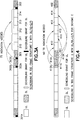
- This first aspect of the invention is shown by example at Figure 2-3 and 6 for various configurations of DL and UL subframes being scheduled in FS2 and FS1.
- a TDD FS2 with three DL subframes being scheduled, designated as 201, 202 and 203, and four UL subframes being scheduled, designated as 210, 211, 212 and 213.
- the DL subframes 201, 202 and 203 are scheduled in the DL scheduling grants 201A, 202A and 203A.
- the first and second groups have one UL subframe and the third group has two UL subframes.
- the first UL scheduling grant 202B schedules UEs for the first UL subframe 210.
- the second UL scheduling grant 203B schedules UEs for the second UL subframe 211.
- the third UL scheduling grant 204B schedules UEs for the third group of UL subframes, which include both subframe 212 and 213.
- no TTI indication is needed since there will be a one-to-one correspondence and implicit mapping when there is only one UL subframe in a particular group.
- the TTI indication is present and its bit length is one for the case of single TTI scheduling as shown, or it may be length two for the case where multi-TTI scheduling is allowed (a grant in one TTI grants resources in more than one TTI).
- Figure 3 shows an example of TDD FS2 with two DL subframes, designated 301 and 302 and scheduled by the DL grants 301A and 302A respectively, and five UL subframes designated as 310 through 314 scheduled by the UL grants 302B and 303B.
- the first group includes the first two UL subframes 310 and 311, and is scheduled by the UL grant 302B.
- the second group includes the remaining three UL subframes 312, 313 and 314.
- the TTI indication length can be as little as one bit in the first UL scheduling grant 302B, and as little as two bits in the second UL scheduling grant 303B. If multi-TTI scheduling grant is supported, the TTI indications may then be a minimum of two and three bits respectively for those grants 302B, 303B.
- TTI bit sequences and their meanings are shown below for the case where the network allows multi-TTI scheduling.
- the first group is UL subframes 610 and 611; the second group is UL subframe 612 only; and the third group is UL subframes 613 through 615.
- the first group is scheduled by the UL scheduling grant 601 B sent in the first DL subframe 601; the second group is scheduled by the UL scheduling grant 602B sent in the second DL subframe 602, and the third group is scheduled by the UL scheduling grant 603B sent in the third DL subframe 603.
- the length of the TTI indication for the scheduling grants of the first two groups is as little as two (since the first group has two UL subframes) and the length of the TTI indication for the third group is as little as three.
- directly indicating the UL resource being allocated in a TTI indicator would require the maximum TTI indication length to be seven.
- Figure 8 shows exemplary method steps for the first aspect of the invention detailed by example above.
- the Node B allocates a number N of DL subframes within a TDD frame for the downlink and a greater number >N of subframes within the TDD frame as uplink resources. Nothing yet is signalled or scheduled.
- the Node B then divides/groups the (more than N) UL subframes into only N groups, so necessarily there must be more than one UL subframe in at least one of those N groups (N is an integer).
- the Node B transmits its scheduling grants, denoted in Figure 8 as N grant messages. Each of those N grant messages schedules one of the DL subframes.
- each of those same N grant messages also schedules one of the groups of UL subframes.
- an indicator such as the TTI indicators noted above that indicate to the UE(s) which one(s) of the UL subframes are in the group being scheduled.
- the paradigm noted in the background section is changed so that the downlink scheduling information is decoupled from the uplink control information.
- one logical UL scheduling grant channel is associated with each UL subframe.
- One of those logical UL scheduling grant channels is mapped to some physical subframes within the over all OFDM symbols conveying the scheduling information. Note that this is a one-to-one mapping between a UL sub frame and a logical UL scheduling grant channel.
- An advantage of this third option is there is no explicit time information needed in the scheduling grant itself. There may however be an added limit on the Node B scheduler by the predefined implicit mapping, as this is not seen to be quite as flexible as the second option noted above with the explicit mapping and the avoidance of blind detection by use of the new Cat0 bit sequence.
- Figure 4 shows an example of this second aspect of the invention, for TDD FS2 with two DL subframes designated 401 and 402, and five UL subframes designated 410 through 414.
- Each of these UL scheduling grant channels are predefined and each is associated with one UL subframe, so for example if a UE receives a UL scheduling grant on channel 413A, it knows from the association stored in its memory that it is a UL grant for the fifth subframe in the frame.
- that fifth subframe is designated 413.
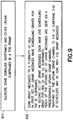
- This second aspect of the invention is shown at Figure 9 as process or method steps.
- the Node B allocates some subframes in a TDD frame as downlink subframes and others of the subframes as uplink subframes.
- the Node B sends grant messages scheduling the UEs according to the UL or DL allocation.
- those grant messages as being a first set and a second set of grant messages, mutually exclusive of one another.
- the first set of the grant messages includes the scheduling grants for the downlink subframes.
- Each grant message in the second set of grant messages includes a scheduling grant for one and only one of the UL subframes.
- the grant messages of the second set are sent over the pre-determined logical UL scheduling grant channels, one scheduling grant (and hence one UL subframe) per UL scheduling grant channel.
- the mapping as to this one-to-one correspondence may be sent with the grant messages themselves, or it may be relatively static (e.g., channel A corresponds to first subframe in the frame, channel B to the second, etc. with the Node B choosing frame by frame which if any of those subframes will be used for UL or DL) and broadcast on a broadcast channel at much less frequent intervals, such as with system information.
- the UL scheduling grant for the ith UL subframe is sent in the ith DL subframe.
- the advantage of this first option is that there is an implicit mapping and no TTI indication in the UL scheduling grant is needed, so the control signaling overhead is quite minimal-just sending the implicit mapping in current use to the UEs.
- This is advantageously done sometime when the particular UE is in the Node B's cell, such as sending the mapping over a broadcast channel whereby the UE stores the mapping and accesses it anytime it receives a scheduling grant.
- the number of UEs that can be scheduled is limited by the size of the control resource in the ith DL subframe. In systems with many VOIP UEs, it is preferable that the Node B be able to schedule a large number of UEs to support the retransmission of VOIP.
- scheduling of the UL subframes is not restricted to map to any particular DL subframe and can instead be given in any of the DL subframes.
- this second option instead there is a TTI indication in the UL scheduling grant.
- the CCFI/Cat0 bit field is enhanced as compared to current practice with a new bit sequence that shows whether there is UL subframe scheduling in the ith DL subframe. When that bit sequence shows there is no UL subframe scheduled, then the UE need not engage in detection.
- This second option encompasses additional flexibility over the first option in that the UL scheduling grant can occur in any of the DL subframes.
- FIG. 1 This second option is shown in the signalling diagrams of Figures 1 and 5 , Figure 1 showing an example for TDD FS2 and Figure 5 showing an example for TDD FS1.
- the legend in Figure 1 applies also to Figures 2-6 .
- the example of Figure 1 has six DL subframes, designated 101 through 106 and scheduled by the respective DL scheduling grants 101A through 106A, and one UL subframe, designated 110 and scheduled by the UL scheduling grants 102B, 103B and 104B.
- the scheduling grant for the UL subframe 110 is sent in the first three DL subframes 102', 103' and 104' following the last scheduled UL subframe 110'.
- the scheduling grant for the single UL subframe 110 is spread among three DL subframes.
- Figure 5 shows this second option in a TDD FS1 format, where there are eight DL subframes, designated 501 through 508, and 2 UL subframes, designated 510 and 511, being scheduled.
- the subframes in FS1 are generally referred to as timeslots and in FS2 as subframes.
- Figure 5 shows that the scheduling grant for the two UL subframes 510, 511 can be sent by the Node B in more than two DL subframes.
- the scheduling grant 502B and 503B for the first UL subframe 510 is spread among two DL subframes 502 and 503.
- the scheduling grant 506B and 507B for the second of the UL subframes 511 is spread among DL subframes 506 and 507.
- the TTI indicator in those UL scheduling grants 502B, 503B, 506B, 507B maps explicitly to the scheduled UL subframe.
- the Cat0 bit sequence enables the UE to avoid blind detection where no UL grant is sent.
- Figure 3B which uses the same TDD frame as in Figure 3A but assumes a three subframe processing delay. Reference numbers in Figure 3B are primed as compared to Figure 3A , and there are three subframes in the first group and two subframes in the second group as opposed to the two followed by three subframe groupings of Figure 3A .
- Uplink scheduling grant 302B' is for UL subframes 310', 311' and 312'
- uplink scheduling grant 303B' is for subframes 313' and 314' in Figure 3B .
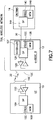
- a wireless network 708 is adapted for communication between a UE 10 and a Node B 12 (e-Node B).
- the network 708 may include a gateway GW/serving mobility entity MME/radio network controller RNC 14 or other radio controller function known by various terms in different wireless communication systems.
- the UE 10 includes a data processor (DP) 10A, a memory (MEM) 10B that stores a program (PROG) 10C, and a suitable radio frequency (RF) transceiver 10D coupled to one or more antennas 10E (one shown) for bidirectional wireless communications over one or more wireless links 20 with the Node B 12.
- DP data processor
- MEM memory
- PROG program
- RF radio frequency
- the Node B 12 also includes a DP 12A, a MEM 12B, that stores a PROG 12C, and a suitable RF transceiver 12D coupled to one or more antennas 12E.
- the Node B 12 may be coupled via a data path 30 (e.g., lub or S1 interface) to the serving or other GW/MME/RNC 14.
- the GW/MME/RNC 14 includes a DP 14A, a MEM 14B that stores a PROG 14C, and a suitable modem and/or transceiver (not shown) for communication with the Node B 12 over the lub link 30.
- a scheduler 12F that schedule the various UEs under its control for the various UL and DL subframes. Once scheduled, the Node B sends messages to the UEs with the scheduling grants (typically multiplexing grants for multiple UEs in one message). These grants are sent over the particular channels noted with the specific embodiments detailed above.
- the Node B 12 of an LTE system is fairly autonomous in its scheduling and need not coordinate with the GW/MME 14 excepting during handover of one of its UEs to another Node B.
- At least one of the PROGs 10C, 12C and 14C is assumed to include program instructions that, when executed by the associated DP, enable the electronic device to operate in accordance with the exemplary embodiments of this invention, as detailed above.
- Inherent in the DPs 10A, 12A, and 214A is a clock to enable synchronism among the various apparatus for transmissions and receptions within the appropriate time intervals and slots required, as the scheduling grants and the granted resources/subframes are time dependent.
- the PROGs 10C, 12C, 14C may be embodied in software, firmware and/or hardware, as is appropriate.
- the exemplary embodiments of this invention may be implemented by computer software stored in the MEM 10B and executable by the DP 10A of the UE 10 and similar for the other MEM 12B and DP 12A of the Node B 12, or by hardware, or by a combination of software and/or firmware and hardware in any or all of the devices shown.
- the various embodiments of the UE 10 can include, but are not limited to, mobile stations, cellular telephones, personal digital assistants (PDAs) having wireless communication capabilities, portable computers having wireless communication capabilities, image capture devices such as digital cameras having wireless communication capabilities, gaming devices having wireless communication capabilities, music storage and playback appliances having wireless communication capabilities, Internet appliances permitting wireless Internet access and browsing, as well as portable units or terminals that incorporate combinations of such functions.
- PDAs personal digital assistants
- portable computers having wireless communication capabilities
- image capture devices such as digital cameras having wireless communication capabilities
- gaming devices having wireless communication capabilities
- music storage and playback appliances having wireless communication capabilities
- Internet appliances permitting wireless Internet access and browsing, as well as portable units or terminals that incorporate combinations of such functions.
- the MEMs 10B, 12B and 14B may be of any type suitable to the local technical environment and may be implemented using any suitable data storage technology, such as semiconductor-based memory devices, magnetic memory devices and systems, optical memory devices and systems, fixed memory and removable memory.
- the DPs 10A, 12A and 14A may be of any type suitable to the local technical environment, and may include one or more of general purpose computers, special purpose computers, microprocessors, digital signal processors (DSPs) and processors based on a multi-core processor architecture, as non-limiting examples.
- embodiments of this invention may be implemented by computer software executable by a data processor of the Node B 12, such as the processor 12A shown, or by hardware, or by a combination of software and hardware.
- embodiments of this invention may be implemented by computer software executable by a data processor of the UE 10, such as the processor 10A shown, or by hardware, or by a combination of software and hardware.
- the various logical step descriptions above may represent program steps, or interconnected logic circuits, blocks and functions, or a combination of program steps and logic circuits, blocks and functions.
- the various embodiments may be implemented in hardware or special purpose circuits, software (computer readable instructions embodied on a computer readable medium), logic or any combination thereof.
- some aspects may be implemented in hardware, while other aspects may be implemented in firmware or software which may be executed by a controller, microprocessor or other computing device, although the invention is not limited thereto.
- firmware or software which may be executed by a controller, microprocessor or other computing device, although the invention is not limited thereto.
- While various aspects of the invention may be illustrated and described as block diagrams, flow charts, or using some other pictorial representation, it is well understood that these blocks, apparatus, systems, techniques or methods described herein may be implemented in, as non-limiting examples, hardware, software, firmware, special purpose circuits or logic, general purpose hardware or controller or other computing devices, or some combination thereof.
- Embodiments of the inventions may be practiced in various components such as integrated circuit modules.
- the design of integrated circuits is by and large a highly automated process.
- Complex and powerful software tools are available for converting a logic level design into a semiconductor circuit design ready to be etched and formed on a semiconductor substrate.
- Programs such as those provided by Synopsys, Inc. of Mountain View, California and Cadence Design, of San Jose, California automatically route conductors and locate components on a semiconductor chip using well established rules of design as well as libraries of pre-stored design modules.
- the resultant design in a standardized electronic format (e.g., Opus, GDSII, or the like) may be transmitted to a semiconductor fabrication facility or "fab" for fabrication.
Landscapes
- Engineering & Computer Science (AREA)
- Signal Processing (AREA)
- Computer Networks & Wireless Communication (AREA)
- Mobile Radio Communication Systems (AREA)
Claims (15)
- Verfahren, umfassend:Zuweisen, für eine Vielzahl von Teilrahmen in einem Zeitduplex-Rahmen, einer Anzahl N der Teilrahmen als Abwärtsstrecken-Teilrahmen und einer verbleibenden Anzahl größer als N der Teilrahmen als Aufwärtsstrecken-Teilrahmen (801); durch Folgendes gekennzeichnet:Aufteilen der Aufwärtsstrecken-Teilrahmen in N Gruppen (802), wobei die Anzahl von Gruppen gleich der Anzahl von Abwärtsstrecken-Teilrahmen in dem Rahmen ist, und mindestens eine der Gruppen mehr als einen der Aufwärtsstrecken-Teilrahmen umfasst; unddrahtloses Senden an eine Vielzahl von Benutzergeräten von N Erteilungsnachrichten (803); wobei jede der Erteilungsnachrichten eine Planungserteilung für einen der Abwärtsstrecken-Teilrahmen und eine Planungserteilung für eine der Gruppen von Aufwärtsstrecken-Teilrahmen umfasst; wobei für jede der Gruppen, die mehr als einen der Aufwärtsstrecken-Teilrahmen umfasst, die jeweilige Planungserteilung einen Übertragungszeitintervall(Transmission Time Interval, TTI)-Indikator umfasst, der den einzelnen der Aufwärtsstrecken-Teilrahmen in der jeweiligen Gruppe zugeordnet wird.
- Verfahren nach Anspruch 1, wobei für jede der Gruppen, die nur einen der Aufwärtsstrecken-Teilrahmen umfasst, die jeweilige Planungserteilung keinen Übertragungszeitintervall(Transmission Time Interval, TTI)-Indikator umfasst, der dem nur einen Aufwärtsstrecken-Teilrahmen der jeweiligen Gruppe zugeordnet ist.
- Verfahren nach Anspruch 1, wobei der Übertragungszeitintervall(Transmission Time Interval, TTI)-Indikator eine unterschiedliche Anzahl von Bits umfasst, die davon abhängt, ob die Planung sich auf einen einzigen Übertragungszeitintervall oder auf mehrere Übertragungszeitintervalle bezieht.
- Verfahren nach Anspruch 1, ferner umfassend:Zuweisen, für eine Vielzahl von Teilrahmen in einem nächsten Zeitduplex-Rahmen, einer Anzahl M der Teilrahmen als Abwärtsstrecken-Teilrahmen und einer verbleibenden Anzahl N1 kleiner oder gleich M der Teilrahmen als Aufwärtsstrecken-Teilrahmen;Zuordnen jedes i-ten Aufwärtsstrecken-Teilrahmens zu einem i-ten Abwärtsstrecken-Teilrahmen;drahtloses Senden von N1 Erteilungsnachrichten, die jeweils eine Planungserteilung für einen der Abwärtsstrecken-Teilrahmen und einen der Aufwärtsstrecken-Teilrahmen gemäß der Zuordnung umfassen.
- Verfahren nach Anspruch 1, ferner umfassend:Zuweisen, für eine Vielzahl von Teilrahmen in einem nächsten Zeitduplex-Rahmen, einer Anzahl M der Teilrahmen als Abwärtsstrecken-Teilrahmen und einer verbleibenden Anzahl N1 kleiner oder gleich M der Teilrahmen als Aufwärtsstrecken-Teilrahmen;drahtloses Senden an die Vielzahl von Benutzergeräten von M Erteilungsnachrichten; wobei eine Erteilungsnachricht, die in einem i-ten Abwärtsstrecken-Teilrahmen gesendet wird, eine Planungserteilung für den i-ten Abwärtsstrecken-Teilrahmen und eine Planungserteilung für einen oder mehrere Aufwärtsstrecken-Teilrahmen umfasst, die durch den Übertragungszeitintervall(Transmission Time Interval, TTI)-Indikator angezeigt werden.
- Verfahren nach Anspruch 5, wobei eine Cat0-Bitsequenz anzeigt, ob eine Planungserteilung für sowohl die Abwärtsstrecken- als auch die Aufwärtsstrecken-Teilrahmen oder nur für die Abwärtsstrecken-Teilrahmen vorhanden ist.
- Vorrichtung, umfassend:einen Scheduler, der konfiguriert ist, um für eine Vielzahl von Teilrahmen in einem Zeitduplex-Rahmen eine Anzahl N der Teilrahmen als Abwärtsstrecken-Teilrahmen und eine verbleibende Anzahl größer als N der Teilrahmen als Aufwärtsstrecken-Teilrahmen zuzuweisen; durch Folgendes gekennzeichnet:einen Prozessor, der konfiguriert ist, um die Aufwärtsstrecken-Teilrahmen in N Gruppen aufzuteilen, wobei die Anzahl von Gruppen gleich der Anzahl von Abwärtsstrecken-Teilrahmen in dem Rahmen ist und mindestens eine der Gruppen mehr als einen der Aufwärtsstrecken-Teilrahmen umfasst; undeinen Sender, der konfiguriert ist, um an eine Vielzahl von Benutzergeräten drahtlos N Erteilungsnachrichten zu senden;wobei jede der Erteilungsnachrichten eine Planungserteilung für einen der Abwärtsstrecken-Teilrahmen und eine Planungserteilung für eine der Gruppen von Aufwärtsstrecken-Teilrahmen umfasst; wobei für jede der Gruppen, die mehr als einen der Aufwärtsstrecken-Teilrahmen umfasst, die jeweilige Planungserteilung einen Übertragungszeitintervall(Transmission Time Interval, TTI)-Indikator umfasst, der den einzelnen der Aufwärtsstrecken-Teilrahmen in der jeweiligen Gruppe zugeordnet wird.
- Vorrichtung nach Anspruch 7, wobei der Übertragungszeitintervall(Transmission Time Interval, TTI)-Indikator eine unterschiedliche Anzahl von Bits umfasst, die davon abhängt, ob die Planung sich auf einen einzigen Übertragungszeitintervall oder auf mehrere Übertragungszeitintervalle bezieht.
- Vorrichtung nach Anspruch 7, wobei:der Scheduler ferner konfiguriert ist, um für eine Vielzahl von Teilrahmen in einem nächsten Zeitduplex-Rahmen eine Anzahl M der Teilrahmen als Abwärtsstrecken-Teilrahmen und eine verbleibende Anzahl N1 kleiner oder gleich M der Teilrahmen als Aufwärtsstrecken-Teilrahmen zuzuweisen; undder Sender konfiguriert ist, um an die Vielzahl von Benutzergeräten drahtlos M Erteilungsnachrichten zu senden;wobei die Erteilungsnachricht, die in einem i-ten Abwärtsstrecken-Teilrahmen gesendet wird, eine Planungserteilung für den i-ten Abwärtsstrecken-Teilrahmen und eine Planungserteilung für einen oder mehrere Aufwärtsstrecken-Teilrahmen umfasst, die durch den Übertragungszeitintervall(Transmission Time Interval, TTI)-Indikator angezeigt werden.
- Vorrichtung nach Anspruch 7, wobei:der Scheduler ferner konfiguriert ist, um für eine Vielzahl von Teilrahmen in einem nächsten Zeitduplex-Rahmen eine Anzahl M der Teilrahmen als Abwärtsstrecken-Teilrahmen und eine verbleibende Anzahl N1 kleiner oder gleich M der Teilrahmen als Aufwärtsstrecken-Teilrahmen zuzuweisen;der Prozessor ferner konfiguriert ist, um jeden i-ten Aufwärtsstrecken-Teilrahmen einem i-ten Abwärtsstrecken-Teilrahmen zuzuordnen;der Sender konfiguriert ist, um N1 Erteilungsnachrichten, die jeweils eine Planungserteilung für einen der Abwärtsstrecken-Teilrahmen und einen der Aufwärtsstrecken-Teilrahmen gemäß der Zuordnung umfassen, drahtlos zu senden.
- Vorrichtung nach Anspruch 7, einen Knoten B umfassend.
- Verfahren, umfassend:Empfangen einer Planungserteilungsnachricht in einem Abwärtsstrecken-Teilrahmen eines Zeitduplex-Rahmens, wobei der Zeitduplex-Rahmen eine Anzahl N von Abwärtsstrecken-Teilrahmen und eine verbleibende Anzahl von Aufwärtsstrecken-Teilrahmen umfasst, wobei die verbleibende Anzahl größer als N ist, gekennzeichnet durch:wobei die Planungserteilungsnachricht eine Planungserteilung für einen der Abwärtsstrecken-Teilrahmen und eine Planungserteilung für eine von N Gruppen der Aufwärtsstrecken-Teilrahmen umfasst, wobei die Anzahl von Gruppen gleich der Anzahl von Abwärtsstrecken-Teilrahmen in dem Rahmen ist, und für jede der Gruppen, die mehr als einen der Aufwärtsstrecken-Teilrahmen umfasst, die jeweilige Planungserteilung einen Übertragungszeitintervall(Transmission Time Interval, TTI)-Indikator umfasst, der den einzelnen der Aufwärtsstrecken-Teilrahmen in der jeweiligen Gruppe zugeordnet wird; Bestimmen eines einzelnen der Aufwärtsstrecken-Teilrahmen, für den die Planungserteilung in der Gruppe durch Zuordnung unter Verwendung des empfangenen Übertragungszeitintervall(Transmission Time Interval, TTI)-Indikators empfangen wird; undSenden auf dem bestimmten einzelnen der Aufwärtsstrecken-Teilrahmen.
- Vorrichtung, umfassend:einen Empfänger, der konfiguriert ist, um eine Planungserteilungsnachricht in einem Abwärtsstrecken-Teilrahmen eines Zeitduplex-Rahmens zu empfangen, wobei der Zeitduplex-Rahmen eine Anzahl N von Abwärtsstrecken-Teilrahmen und eine verbleibende Anzahl von Aufwärtsstrecken-Teilrahmen umfasst, wobei die verbleibende Anzahl größer als N ist, gekennzeichnet durch:wobei die Planungserteilungsnachricht eine Planungserteilung für einen der Abwärtsstrecken-Teilrahmen und eine Planungserteilung für eine von N Gruppen der Aufwärtsstrecken-Teilrahmen umfasst, wobei die Anzahl von Gruppen gleich der Anzahl von Abwärtsstrecken-Teilrahmen in dem Rahmen ist, und für jede der Gruppen, die mehr als einen der Aufwärtsstrecken-Teilrahmen umfasst, die jeweilige Planungserteilung einen Übertragungszeitintervall(Transmission Time Interval, TTI)-Indikator umfasst, der den einzelnen der Aufwärtsstrecken-Teilrahmen in der jeweiligen Gruppe zugeordnet wird;einen Prozessor, der konfiguriert ist, um einen einzelnen der Aufwärtsstrecken-Teilrahmen zu bestimmen, für den die Planungserteilung in der Gruppe durch Zuordnung unter Verwendung des empfangenen Übertragungszeitintervall(Transmission Time Interval, TTI)-Indikators empfangen wird; undeinen Sender, der konfiguriert ist, um auf dem bestimmten einzelnen der Aufwärtsstrecken-Teilrahmen zu senden.
- Vorrichtung nach Anspruch 13, wobei die Vorrichtung ein Benutzergerät umfasst.
- Vorrichtung nach Anspruch 13, wobei der Übertragungszeitintervall(Transmission Time Intervall, TTI)-Indikator eine unterschiedliche Anzahl von Bits umfasst, die davon abhängt, ob die Planung sich auf einen einzigen Übertragungszeitintervall oder auf mehrere Übertragungszeitintervalle bezieht.
Priority Applications (1)
| Application Number | Priority Date | Filing Date | Title |
|---|---|---|---|
| PL08807322T PL2198663T3 (pl) | 2007-08-14 | 2008-08-14 | Przyznanie szeregowania połączenia wstępującego dla dupleksu z podziałem czasu przy asymetrycznym układzie połączenia wstępującego i połączenia zstępującego |
Applications Claiming Priority (2)
| Application Number | Priority Date | Filing Date | Title |
|---|---|---|---|
| US11/891,901 US8000272B2 (en) | 2007-08-14 | 2007-08-14 | Uplink scheduling grant for time division duplex with asymmetric uplink and downlink configuration |
| PCT/IB2008/053273 WO2009022314A2 (en) | 2007-08-14 | 2008-08-14 | Uplink scheduling grant for time division duplex with asymmetric uplink and downlink configuration |
Publications (2)
| Publication Number | Publication Date |
|---|---|
| EP2198663A2 EP2198663A2 (de) | 2010-06-23 |
| EP2198663B1 true EP2198663B1 (de) | 2017-04-05 |
Family
ID=40342659
Family Applications (1)
| Application Number | Title | Priority Date | Filing Date |
|---|---|---|---|
| EP08807322.6A Active EP2198663B1 (de) | 2007-08-14 | 2008-08-14 | Aufwärtsstrecken-scheduling-gewährung für zeitduplex mit asymmetrischer aufwärtsstrecken- und abwärtsstreckenkonfiguration |
Country Status (6)
| Country | Link |
|---|---|
| US (1) | US8000272B2 (de) |
| EP (1) | EP2198663B1 (de) |
| KR (1) | KR101177526B1 (de) |
| CN (1) | CN101836493B (de) |
| PL (1) | PL2198663T3 (de) |
| WO (1) | WO2009022314A2 (de) |
Families Citing this family (68)
| Publication number | Priority date | Publication date | Assignee | Title |
|---|---|---|---|---|
| CA2393373A1 (en) | 2002-07-15 | 2004-01-15 | Anthony Gerkis | Apparatus, system and method for the transmission of data with different qos attributes. |
| KR20080092222A (ko) * | 2007-04-11 | 2008-10-15 | 엘지전자 주식회사 | Tdd 시스템에서의 데이터 전송 방법 |
| CN101365187B (zh) † | 2007-08-09 | 2011-08-10 | 华为技术有限公司 | 一种实现上行资源指示的方法、基站和用户终端 |
| CN101426267B (zh) * | 2007-11-02 | 2013-11-06 | 中国移动通信集团公司 | 资源调度方法及其装置 |
| AU2008336328B2 (en) | 2007-12-12 | 2013-08-01 | Optis Wireless Technology, Llc | Methods and devices for communicating on a radio channel based on jointly encoding a preamble format with random access configuration |
| US20090175232A1 (en) * | 2008-01-08 | 2009-07-09 | Nokia Siemens Networks Oy | Joint Coding of Multiple TTI Information and Quality Indication Requests |
| WO2009096846A1 (en) * | 2008-01-30 | 2009-08-06 | Telefonaktiebolaget L M Ericsson (Publ) | Configuration measurement time slots for mobile terminals in a tdd system |
| EP2291940B2 (de) * | 2008-02-06 | 2018-05-16 | Telefonaktiebolaget LM Ericsson (publ) | Verfahren und geräte betreffend zuweisungen für den abwärtskanal |
| KR101570350B1 (ko) * | 2008-02-22 | 2015-11-19 | 엘지전자 주식회사 | 동적 전송시간간격 할당방법 |
| US8522101B2 (en) * | 2008-04-15 | 2013-08-27 | Qualcomm Incorporated | Physical HARQ indicator channel (PHICH) resource assignment signaling in a wireless communication environment |
| EP2324677B1 (de) * | 2008-08-12 | 2015-07-08 | Koninklijke Philips N.V. | Kommunikationsverfahren für ein Netzwerk, Funkstationen und System dafür |
| JP5309218B2 (ja) * | 2008-09-26 | 2013-10-09 | リサーチ イン モーション リミテッド | ハーフデュプレックス通信プロトコルを協調させるためのシステムおよび方法 |
| EP2187691A1 (de) * | 2008-11-12 | 2010-05-19 | Alcatel, Lucent | Verfahren zur Funkkommunikation zwischen einer Basisstation und einem Benutzerendgerät unter Verwendung einer Übertragung auf Komponententrägern auf der Basis von Kontrollinformation sowie Basisstation, Benutzerendgerät und Kommunikationsnetz dafür |
| US8509124B2 (en) * | 2009-04-03 | 2013-08-13 | Lg Electronics Inc. | Method for transceiving a signal in wireless communication system |
| CN101860429B (zh) * | 2009-04-03 | 2014-05-28 | Lg电子株式会社 | 用于在无线通信系统中收发信号的方法 |
| US9144037B2 (en) | 2009-08-11 | 2015-09-22 | Qualcomm Incorporated | Interference mitigation by puncturing transmission of interfering cells |
| US9277566B2 (en) | 2009-09-14 | 2016-03-01 | Qualcomm Incorporated | Cross-subframe control channel design |
| US8942192B2 (en) | 2009-09-15 | 2015-01-27 | Qualcomm Incorporated | Methods and apparatus for subframe interlacing in heterogeneous networks |
| US9264184B2 (en) * | 2009-10-30 | 2016-02-16 | Sony Corporation | Coordinated signaling of scheduling information for uplink and downlink communications |
| CN102064877B (zh) * | 2009-11-11 | 2015-01-28 | 中兴通讯股份有限公司 | 子帧调度信息通知方法及装置 |
| US9237520B2 (en) | 2010-04-09 | 2016-01-12 | Lg Electronics Inc. | Method for transceiving contention-based uplink channel signal |
| KR101737842B1 (ko) | 2010-04-09 | 2017-05-29 | 엘지전자 주식회사 | 경쟁 기반의 상향링크 채널 신호 송수신 방법 |
| US9392608B2 (en) | 2010-04-13 | 2016-07-12 | Qualcomm Incorporated | Resource partitioning information for enhanced interference coordination |
| US9271167B2 (en) | 2010-04-13 | 2016-02-23 | Qualcomm Incorporated | Determination of radio link failure with enhanced interference coordination and cancellation |
| US9226288B2 (en) | 2010-04-13 | 2015-12-29 | Qualcomm Incorporated | Method and apparatus for supporting communications in a heterogeneous network |
| US9125072B2 (en) * | 2010-04-13 | 2015-09-01 | Qualcomm Incorporated | Heterogeneous network (HetNet) user equipment (UE) radio resource management (RRM) measurements |
| EP2398180A1 (de) | 2010-06-21 | 2011-12-21 | Panasonic Corporation | Konfiguration von Aufwärts- und Abwärtsstrecken-Zuweisungssuchräumen in einem OFDM-basierten mobilen Kommunikationssystem |
| US8644268B2 (en) * | 2010-06-25 | 2014-02-04 | Qualcomm Incorporated | TD-LTE hetnet partition |
| WO2012113131A1 (en) * | 2011-02-21 | 2012-08-30 | Renesas Mobile Corporation | Dynamic uplink/downlink configuration for time division duplex |
| US9294240B2 (en) | 2011-02-25 | 2016-03-22 | Qualcomm Incorporated | Multi-carrier operations with fast frequency hopping |
| US9407390B2 (en) * | 2011-03-23 | 2016-08-02 | Lg Electronics Inc. | Retransmission method for dynamic subframe setting in wireless communication system and apparatus for same |
| WO2013006193A1 (en) * | 2011-07-01 | 2013-01-10 | Intel Corporation | Layer shifting in open loop multiple-input, multiple-output communications |
| US10205569B2 (en) * | 2011-08-26 | 2019-02-12 | Lg Electronics Inc. | Method and user equipment for receiving downlink signals, and method and base station for transmitting downlink signals |
| WO2013095034A1 (ko) * | 2011-12-22 | 2013-06-27 | 엘지전자 주식회사 | 무선 접속 시스템에서 무선 통신 상태 측정 방법 및 이를 위한 장치 |
| WO2013095041A1 (ko) * | 2011-12-23 | 2013-06-27 | 엘지전자 주식회사 | 무선 통신 시스템에서 무선 자원 동적 변경에 기반한 신호 송수신 방법 및 이를 위한 장치 |
| US8553639B2 (en) | 2012-02-07 | 2013-10-08 | Hitachi, Ltd. | Allocation of subframes for uplink and downlink transmission in TDD-LTE |
| US9143984B2 (en) * | 2012-04-13 | 2015-09-22 | Intel Corporation | Mapping of enhanced physical downlink control channels in a wireless communication network |
| ES2777180T3 (es) * | 2012-05-03 | 2020-08-04 | Lg Electronics Inc | Método y aparato para realizar HARQ basado en el cambio dinámico de recursos inalámbricos en el sistema de comunicaciones inalámbricas |
| WO2014109683A1 (en) * | 2013-01-10 | 2014-07-17 | Telefonaktiebolaget L M Ericsson (Publ) | Over-the-air signaling for coordination of time-division duplexing |
| US20140328260A1 (en) * | 2013-02-26 | 2014-11-06 | Samsung Electronics Co., Ltd. | Scheduling over multiple transmission time intervals |
| WO2014157890A1 (ko) * | 2013-03-28 | 2014-10-02 | 주식회사 케이티 | 상향링크 참조신호를 송수신하는 방법 및 그 장치 |
| JP2016157990A (ja) * | 2013-06-27 | 2016-09-01 | シャープ株式会社 | 端末装置、基地局装置、および通信方法 |
| CN103490842B (zh) | 2013-09-26 | 2016-09-28 | 深圳市大疆创新科技有限公司 | 数据传输系统及方法 |
| US20150103715A1 (en) | 2013-10-14 | 2015-04-16 | Qualcomm Incorporated | Downlink control format indicator |
| WO2015103383A1 (en) * | 2014-01-02 | 2015-07-09 | Zte Wistron Telecom Ab | Method and apparatus for cross-node scheduling with non-ideal backhaul |
| US9942881B2 (en) * | 2014-03-14 | 2018-04-10 | Telefonaktiebolaget Lm Ericsson (Publ) | Uplink multi-TTI scheduling in TDD system |
| WO2015196523A1 (zh) * | 2014-06-27 | 2015-12-30 | 华为技术有限公司 | 资源指示的处理方法、处理装置、接入点和站点 |
| US10187186B2 (en) * | 2014-09-30 | 2019-01-22 | Qualcomm Incorporated | Uplink grant management for LTE in unlicensed spectrum |
| CN107006003B (zh) * | 2014-12-15 | 2020-07-14 | 瑞典爱立信有限公司 | 在多个时间实例中的上行链路资源调度 |
| US10122506B2 (en) * | 2014-12-23 | 2018-11-06 | Qualcomm Incorporated | Single TTI transmission of control data in wireless communications |
| WO2016114699A1 (en) * | 2015-01-15 | 2016-07-21 | Telefonaktiebolaget Lm Ericsson (Publ) | Resource scheduling of uplink resources |
| US10110363B2 (en) * | 2015-01-29 | 2018-10-23 | Qualcomm Incorporated | Low latency in time division duplexing |
| US10342012B2 (en) | 2015-03-15 | 2019-07-02 | Qualcomm Incorporated | Self-contained time division duplex (TDD) subframe structure |
| US9936519B2 (en) | 2015-03-15 | 2018-04-03 | Qualcomm Incorporated | Self-contained time division duplex (TDD) subframe structure for wireless communications |
| US10075970B2 (en) * | 2015-03-15 | 2018-09-11 | Qualcomm Incorporated | Mission critical data support in self-contained time division duplex (TDD) subframe structure |
| EP3298848B1 (de) * | 2015-05-22 | 2020-07-01 | LG Electronics Inc. | Verfahren zur durchführung einer ack/nack-indikation auf der grundlage von uplink-genehmigungen über mehrere subframes in einem drahtloskommunikationssystem und vorrichtung dafür |
| US9992790B2 (en) | 2015-07-20 | 2018-06-05 | Qualcomm Incorporated | Time division duplex (TDD) subframe structure supporting single and multiple interlace modes |
| WO2017028002A1 (en) | 2015-08-14 | 2017-02-23 | Lenovo Innovations Limited (Hong Kong) | Uplink/downlink scheduling in wireless communication system |
| US10841946B2 (en) * | 2015-08-31 | 2020-11-17 | Ntt Docomo, Inc. | User terminal, radio base station, and radio communication method |
| US10638502B2 (en) | 2015-08-31 | 2020-04-28 | Ntt Docomo, Inc. | User terminal, radio base station and radio communication method |
| CN107040347B (zh) | 2016-02-03 | 2021-05-25 | 电信科学技术研究院 | 一种上行传输方法及装置 |
| CN108271435B (zh) * | 2016-02-04 | 2022-05-24 | 韩国电子通信研究院 | 用于在通信网络中调度上行链路发送的方法 |
| KR102820057B1 (ko) | 2016-02-04 | 2025-06-12 | 한국전자통신연구원 | 통신 네트워크에서 상향링크 전송의 스케쥴링 방법 |
| US10326559B2 (en) * | 2016-04-20 | 2019-06-18 | Qualcomm Incorporated | Techniques for acknowledgment of transmissions in a wireless communication system |
| WO2017195815A1 (ja) * | 2016-05-12 | 2017-11-16 | シャープ株式会社 | 基地局装置、端末装置およびその通信方法 |
| US10219295B2 (en) * | 2016-05-13 | 2019-02-26 | Nokia Solutions And Networks Oy | Triggering of reference signals and control signaling |
| KR102295941B1 (ko) * | 2017-03-24 | 2021-08-31 | 노키아 테크놀로지스 오와이 | 비면허 스펙트럼 상에서의 업링크 할당 |
| US11483814B2 (en) | 2019-01-04 | 2022-10-25 | Qualcomm Incorporated | Control channel design for shared wireless communications |
Family Cites Families (15)
| Publication number | Priority date | Publication date | Assignee | Title |
|---|---|---|---|---|
| JPH04288010A (ja) | 1991-03-15 | 1992-10-13 | Max Fuakutaa Kk | 化粧料 |
| US5796726A (en) * | 1996-04-08 | 1998-08-18 | Ericsson Inc. | Systems and methods for random access in time division multiple access satellite radiotelephone communications |
| JP4535619B2 (ja) * | 1998-10-12 | 2010-09-01 | テレフオンアクチーボラゲット エル エム エリクソン(パブル) | Tdma/tddシステム用のリンクと無線セルの適用 |
| US8462810B2 (en) * | 1999-05-21 | 2013-06-11 | Wi-Lan, Inc. | Method and system for adaptively obtaining bandwidth allocation requests |
| AU2001288828A1 (en) * | 2000-09-14 | 2002-03-26 | Ensemble Communications, Inc. | A system and method for wireless communication in a frequency division duplexingregion |
| US7352714B2 (en) * | 2002-09-24 | 2008-04-01 | Lucent Technologies Inc. | Methods and apparatuses for allocating time slots to half duplex wireless mobile stations |
| CN100387066C (zh) * | 2003-04-07 | 2008-05-07 | 华为技术有限公司 | 一种上行业务资源调度的方法 |
| KR101042813B1 (ko) * | 2004-02-17 | 2011-06-20 | 삼성전자주식회사 | 시분할 듀플렉싱 이동 통신 시스템에서 상향 방향 전송증대를 위한 데이터 수신 여부 정보를 전송하는 방법 |
| US20050259629A1 (en) * | 2004-05-24 | 2005-11-24 | Neal Oliver | Adapting uplink/downlink subframe ratio in time division duplex physical frames |
| US7853205B2 (en) * | 2005-11-02 | 2010-12-14 | Texas Instruments Incorporated | Methods for improving transmission efficiency of control channels in communication systems |
| GB0525161D0 (en) * | 2005-12-09 | 2006-01-18 | Airspan Networks Inc | Antenna system for wireless communications |
| WO2007075559A2 (en) * | 2005-12-22 | 2007-07-05 | Interdigital Technology Corporation | Method and system for adjusting uplink transmission timing for long term evolution handover |
| TWI451774B (zh) * | 2006-01-31 | 2014-09-01 | Interdigital Tech Corp | 無線通信系統中提供及利用非競爭基礎頻道方法及裝置 |
| US7681092B2 (en) * | 2006-04-11 | 2010-03-16 | Sharp Laboratories Of America, Inc. | Systems and methods for interleaving and deinterleaving data in an OFDMA-based communication system |
| US8102802B2 (en) * | 2006-05-08 | 2012-01-24 | Motorola Mobility, Inc. | Method and apparatus for providing downlink acknowledgments and transmit indicators in an orthogonal frequency division multiplexing communication system |
-
2007
- 2007-08-14 US US11/891,901 patent/US8000272B2/en active Active
-
2008
- 2008-08-14 PL PL08807322T patent/PL2198663T3/pl unknown
- 2008-08-14 KR KR1020107005524A patent/KR101177526B1/ko active Active
- 2008-08-14 CN CN2008801029207A patent/CN101836493B/zh active Active
- 2008-08-14 WO PCT/IB2008/053273 patent/WO2009022314A2/en not_active Ceased
- 2008-08-14 EP EP08807322.6A patent/EP2198663B1/de active Active
Non-Patent Citations (1)
| Title |
|---|
| None * |
Also Published As
| Publication number | Publication date |
|---|---|
| CN101836493A (zh) | 2010-09-15 |
| CN101836493B (zh) | 2013-06-19 |
| KR20100052535A (ko) | 2010-05-19 |
| EP2198663A2 (de) | 2010-06-23 |
| WO2009022314A2 (en) | 2009-02-19 |
| US8000272B2 (en) | 2011-08-16 |
| US20090046605A1 (en) | 2009-02-19 |
| KR101177526B1 (ko) | 2012-08-27 |
| WO2009022314A3 (en) | 2009-04-30 |
| PL2198663T3 (pl) | 2017-08-31 |
Similar Documents
| Publication | Publication Date | Title |
|---|---|---|
| EP2198663B1 (de) | Aufwärtsstrecken-scheduling-gewährung für zeitduplex mit asymmetrischer aufwärtsstrecken- und abwärtsstreckenkonfiguration | |
| KR102851203B1 (ko) | Nr v2x 시스템을 위한 harq 동작을 수행하는 방법 및 장치 | |
| US12200722B2 (en) | Communications device, infrastructure equipment and methods | |
| US20090046649A1 (en) | Mapping of uplink ACK in TDD with asymmetric frame structure | |
| JP6174810B2 (ja) | キャリアアグリゲーションを使用するharqフィードバック | |
| US8351392B2 (en) | Method for acquiring resource region information for PHICH and method of receiving PDCCH | |
| CN101765988B (zh) | 发送装置、接收装置以及通信方法 | |
| US8274931B2 (en) | Signalling within a communication system | |
| CN110612688B (zh) | 在无线通信系统中终端发送信号以用于v2x通信的方法和使用该方法的终端 | |
| EP3566368A1 (de) | Signalisierung, verfahren, benutzergerät und basisstationen für extrem zuverlässige uplink-kommunikation mit niedriger latenz | |
| KR20230096125A (ko) | 무선 통신 시스템에서 짧은 전송 시간 간격에 의거하는 통신을 위한 방법 및 장치 | |
| CN107079437A (zh) | 用户装置、反馈控制方法及重发控制方法 | |
| EP4104343B1 (de) | Telekommunikationsvorrichtung und -verfahren | |
| WO2009022294A2 (en) | Power saving for uplink scheduling grant signaling and decoding | |
| US20080096571A1 (en) | Method, apparatus, network element and software product for shared channel allocation based on occurrence of hybrid automatic repeat request retransmissions | |
| US20250358078A1 (en) | Communications device, infrastructure equipment and methods | |
| JP2017208842A (ja) | キャリアアグリゲーションを使用するharqフィードバック | |
| WO2024082349A9 (en) | Methods and apparatuses for resource allocation | |
| US20220287056A1 (en) | Methods and communications devices | |
| JP2019176492A (ja) | キャリアアグリゲーションを使用するharqフィードバック |
Legal Events
| Date | Code | Title | Description |
|---|---|---|---|
| PUAI | Public reference made under article 153(3) epc to a published international application that has entered the european phase |
Free format text: ORIGINAL CODE: 0009012 |
|
| 17P | Request for examination filed |
Effective date: 20100312 |
|
| AK | Designated contracting states |
Kind code of ref document: A2 Designated state(s): AT BE BG CH CY CZ DE DK EE ES FI FR GB GR HR HU IE IS IT LI LT LU LV MC MT NL NO PL PT RO SE SI SK TR |
|
| AX | Request for extension of the european patent |
Extension state: AL BA MK RS |
|
| 17Q | First examination report despatched |
Effective date: 20110907 |
|
| DAX | Request for extension of the european patent (deleted) | ||
| RAP1 | Party data changed (applicant data changed or rights of an application transferred) |
Owner name: NOKIA CORPORATION |
|
| RAP1 | Party data changed (applicant data changed or rights of an application transferred) |
Owner name: NOKIA TECHNOLOGIES OY |
|
| GRAP | Despatch of communication of intention to grant a patent |
Free format text: ORIGINAL CODE: EPIDOSNIGR1 |
|
| INTG | Intention to grant announced |
Effective date: 20170112 |
|
| GRAS | Grant fee paid |
Free format text: ORIGINAL CODE: EPIDOSNIGR3 |
|
| GRAA | (expected) grant |
Free format text: ORIGINAL CODE: 0009210 |
|
| AK | Designated contracting states |
Kind code of ref document: B1 Designated state(s): AT BE BG CH CY CZ DE DK EE ES FI FR GB GR HR HU IE IS IT LI LT LU LV MC MT NL NO PL PT RO SE SI SK TR |
|
| REG | Reference to a national code |
Ref country code: GB Ref legal event code: FG4D |
|
| REG | Reference to a national code |
Ref country code: CH Ref legal event code: EP |
|
| REG | Reference to a national code |
Ref country code: AT Ref legal event code: REF Ref document number: 882884 Country of ref document: AT Kind code of ref document: T Effective date: 20170415 |
|
| REG | Reference to a national code |
Ref country code: IE Ref legal event code: FG4D |
|
| REG | Reference to a national code |
Ref country code: NL Ref legal event code: FP |
|
| REG | Reference to a national code |
Ref country code: DE Ref legal event code: R096 Ref document number: 602008049633 Country of ref document: DE |
|
| REG | Reference to a national code |
Ref country code: LT Ref legal event code: MG4D |
|
| REG | Reference to a national code |
Ref country code: AT Ref legal event code: MK05 Ref document number: 882884 Country of ref document: AT Kind code of ref document: T Effective date: 20170405 |
|
| PG25 | Lapsed in a contracting state [announced via postgrant information from national office to epo] |
Ref country code: HR Free format text: LAPSE BECAUSE OF FAILURE TO SUBMIT A TRANSLATION OF THE DESCRIPTION OR TO PAY THE FEE WITHIN THE PRESCRIBED TIME-LIMIT Effective date: 20170405 Ref country code: LT Free format text: LAPSE BECAUSE OF FAILURE TO SUBMIT A TRANSLATION OF THE DESCRIPTION OR TO PAY THE FEE WITHIN THE PRESCRIBED TIME-LIMIT Effective date: 20170405 Ref country code: AT Free format text: LAPSE BECAUSE OF FAILURE TO SUBMIT A TRANSLATION OF THE DESCRIPTION OR TO PAY THE FEE WITHIN THE PRESCRIBED TIME-LIMIT Effective date: 20170405 Ref country code: ES Free format text: LAPSE BECAUSE OF FAILURE TO SUBMIT A TRANSLATION OF THE DESCRIPTION OR TO PAY THE FEE WITHIN THE PRESCRIBED TIME-LIMIT Effective date: 20170405 Ref country code: GR Free format text: LAPSE BECAUSE OF FAILURE TO SUBMIT A TRANSLATION OF THE DESCRIPTION OR TO PAY THE FEE WITHIN THE PRESCRIBED TIME-LIMIT Effective date: 20170706 Ref country code: FI Free format text: LAPSE BECAUSE OF FAILURE TO SUBMIT A TRANSLATION OF THE DESCRIPTION OR TO PAY THE FEE WITHIN THE PRESCRIBED TIME-LIMIT Effective date: 20170405 Ref country code: NO Free format text: LAPSE BECAUSE OF FAILURE TO SUBMIT A TRANSLATION OF THE DESCRIPTION OR TO PAY THE FEE WITHIN THE PRESCRIBED TIME-LIMIT Effective date: 20170705 |
|
| PG25 | Lapsed in a contracting state [announced via postgrant information from national office to epo] |
Ref country code: IS Free format text: LAPSE BECAUSE OF FAILURE TO SUBMIT A TRANSLATION OF THE DESCRIPTION OR TO PAY THE FEE WITHIN THE PRESCRIBED TIME-LIMIT Effective date: 20170805 Ref country code: SE Free format text: LAPSE BECAUSE OF FAILURE TO SUBMIT A TRANSLATION OF THE DESCRIPTION OR TO PAY THE FEE WITHIN THE PRESCRIBED TIME-LIMIT Effective date: 20170405 Ref country code: LV Free format text: LAPSE BECAUSE OF FAILURE TO SUBMIT A TRANSLATION OF THE DESCRIPTION OR TO PAY THE FEE WITHIN THE PRESCRIBED TIME-LIMIT Effective date: 20170405 Ref country code: BG Free format text: LAPSE BECAUSE OF FAILURE TO SUBMIT A TRANSLATION OF THE DESCRIPTION OR TO PAY THE FEE WITHIN THE PRESCRIBED TIME-LIMIT Effective date: 20170705 |
|
| REG | Reference to a national code |
Ref country code: DE Ref legal event code: R097 Ref document number: 602008049633 Country of ref document: DE |
|
| PG25 | Lapsed in a contracting state [announced via postgrant information from national office to epo] |
Ref country code: DK Free format text: LAPSE BECAUSE OF FAILURE TO SUBMIT A TRANSLATION OF THE DESCRIPTION OR TO PAY THE FEE WITHIN THE PRESCRIBED TIME-LIMIT Effective date: 20170405 Ref country code: CZ Free format text: LAPSE BECAUSE OF FAILURE TO SUBMIT A TRANSLATION OF THE DESCRIPTION OR TO PAY THE FEE WITHIN THE PRESCRIBED TIME-LIMIT Effective date: 20170405 Ref country code: EE Free format text: LAPSE BECAUSE OF FAILURE TO SUBMIT A TRANSLATION OF THE DESCRIPTION OR TO PAY THE FEE WITHIN THE PRESCRIBED TIME-LIMIT Effective date: 20170405 Ref country code: RO Free format text: LAPSE BECAUSE OF FAILURE TO SUBMIT A TRANSLATION OF THE DESCRIPTION OR TO PAY THE FEE WITHIN THE PRESCRIBED TIME-LIMIT Effective date: 20170405 Ref country code: SK Free format text: LAPSE BECAUSE OF FAILURE TO SUBMIT A TRANSLATION OF THE DESCRIPTION OR TO PAY THE FEE WITHIN THE PRESCRIBED TIME-LIMIT Effective date: 20170405 |
|
| PLBE | No opposition filed within time limit |
Free format text: ORIGINAL CODE: 0009261 |
|
| STAA | Information on the status of an ep patent application or granted ep patent |
Free format text: STATUS: NO OPPOSITION FILED WITHIN TIME LIMIT |
|
| PG25 | Lapsed in a contracting state [announced via postgrant information from national office to epo] |
Ref country code: IT Free format text: LAPSE BECAUSE OF FAILURE TO SUBMIT A TRANSLATION OF THE DESCRIPTION OR TO PAY THE FEE WITHIN THE PRESCRIBED TIME-LIMIT Effective date: 20170405 |
|
| 26N | No opposition filed |
Effective date: 20180108 |
|
| REG | Reference to a national code |
Ref country code: CH Ref legal event code: PL |
|
| PG25 | Lapsed in a contracting state [announced via postgrant information from national office to epo] |
Ref country code: MC Free format text: LAPSE BECAUSE OF FAILURE TO SUBMIT A TRANSLATION OF THE DESCRIPTION OR TO PAY THE FEE WITHIN THE PRESCRIBED TIME-LIMIT Effective date: 20170405 |
|
| PG25 | Lapsed in a contracting state [announced via postgrant information from national office to epo] |
Ref country code: CH Free format text: LAPSE BECAUSE OF NON-PAYMENT OF DUE FEES Effective date: 20170831 Ref country code: LI Free format text: LAPSE BECAUSE OF NON-PAYMENT OF DUE FEES Effective date: 20170831 |
|
| REG | Reference to a national code |
Ref country code: FR Ref legal event code: ST Effective date: 20180430 |
|
| REG | Reference to a national code |
Ref country code: IE Ref legal event code: MM4A |
|
| PG25 | Lapsed in a contracting state [announced via postgrant information from national office to epo] |
Ref country code: SI Free format text: LAPSE BECAUSE OF FAILURE TO SUBMIT A TRANSLATION OF THE DESCRIPTION OR TO PAY THE FEE WITHIN THE PRESCRIBED TIME-LIMIT Effective date: 20170405 |
|
| REG | Reference to a national code |
Ref country code: BE Ref legal event code: MM Effective date: 20170831 |
|
| PG25 | Lapsed in a contracting state [announced via postgrant information from national office to epo] |
Ref country code: LU Free format text: LAPSE BECAUSE OF NON-PAYMENT OF DUE FEES Effective date: 20170814 |
|
| PG25 | Lapsed in a contracting state [announced via postgrant information from national office to epo] |
Ref country code: IE Free format text: LAPSE BECAUSE OF NON-PAYMENT OF DUE FEES Effective date: 20170814 |
|
| PG25 | Lapsed in a contracting state [announced via postgrant information from national office to epo] |
Ref country code: BE Free format text: LAPSE BECAUSE OF NON-PAYMENT OF DUE FEES Effective date: 20170831 Ref country code: FR Free format text: LAPSE BECAUSE OF NON-PAYMENT OF DUE FEES Effective date: 20170831 |
|
| PG25 | Lapsed in a contracting state [announced via postgrant information from national office to epo] |
Ref country code: MT Free format text: LAPSE BECAUSE OF NON-PAYMENT OF DUE FEES Effective date: 20170814 |
|
| PG25 | Lapsed in a contracting state [announced via postgrant information from national office to epo] |
Ref country code: HU Free format text: LAPSE BECAUSE OF FAILURE TO SUBMIT A TRANSLATION OF THE DESCRIPTION OR TO PAY THE FEE WITHIN THE PRESCRIBED TIME-LIMIT; INVALID AB INITIO Effective date: 20080814 |
|
| PG25 | Lapsed in a contracting state [announced via postgrant information from national office to epo] |
Ref country code: CY Free format text: LAPSE BECAUSE OF NON-PAYMENT OF DUE FEES Effective date: 20170405 |
|
| PG25 | Lapsed in a contracting state [announced via postgrant information from national office to epo] |
Ref country code: TR Free format text: LAPSE BECAUSE OF FAILURE TO SUBMIT A TRANSLATION OF THE DESCRIPTION OR TO PAY THE FEE WITHIN THE PRESCRIBED TIME-LIMIT Effective date: 20170405 |
|
| PG25 | Lapsed in a contracting state [announced via postgrant information from national office to epo] |
Ref country code: PT Free format text: LAPSE BECAUSE OF FAILURE TO SUBMIT A TRANSLATION OF THE DESCRIPTION OR TO PAY THE FEE WITHIN THE PRESCRIBED TIME-LIMIT Effective date: 20170405 |
|
| REG | Reference to a national code |
Ref country code: DE Ref legal event code: R079 Ref document number: 602008049633 Country of ref document: DE Free format text: PREVIOUS MAIN CLASS: H04W0072140000 Ipc: H04W0072200000 |
|
| P01 | Opt-out of the competence of the unified patent court (upc) registered |
Effective date: 20230527 |
|
| PGFP | Annual fee paid to national office [announced via postgrant information from national office to epo] |
Ref country code: NL Payment date: 20250704 Year of fee payment: 18 |
|
| PGFP | Annual fee paid to national office [announced via postgrant information from national office to epo] |
Ref country code: DE Payment date: 20250702 Year of fee payment: 18 |
|
| PGFP | Annual fee paid to national office [announced via postgrant information from national office to epo] |
Ref country code: PL Payment date: 20250714 Year of fee payment: 18 |
|
| PGFP | Annual fee paid to national office [announced via postgrant information from national office to epo] |
Ref country code: GB Payment date: 20250703 Year of fee payment: 18 |